

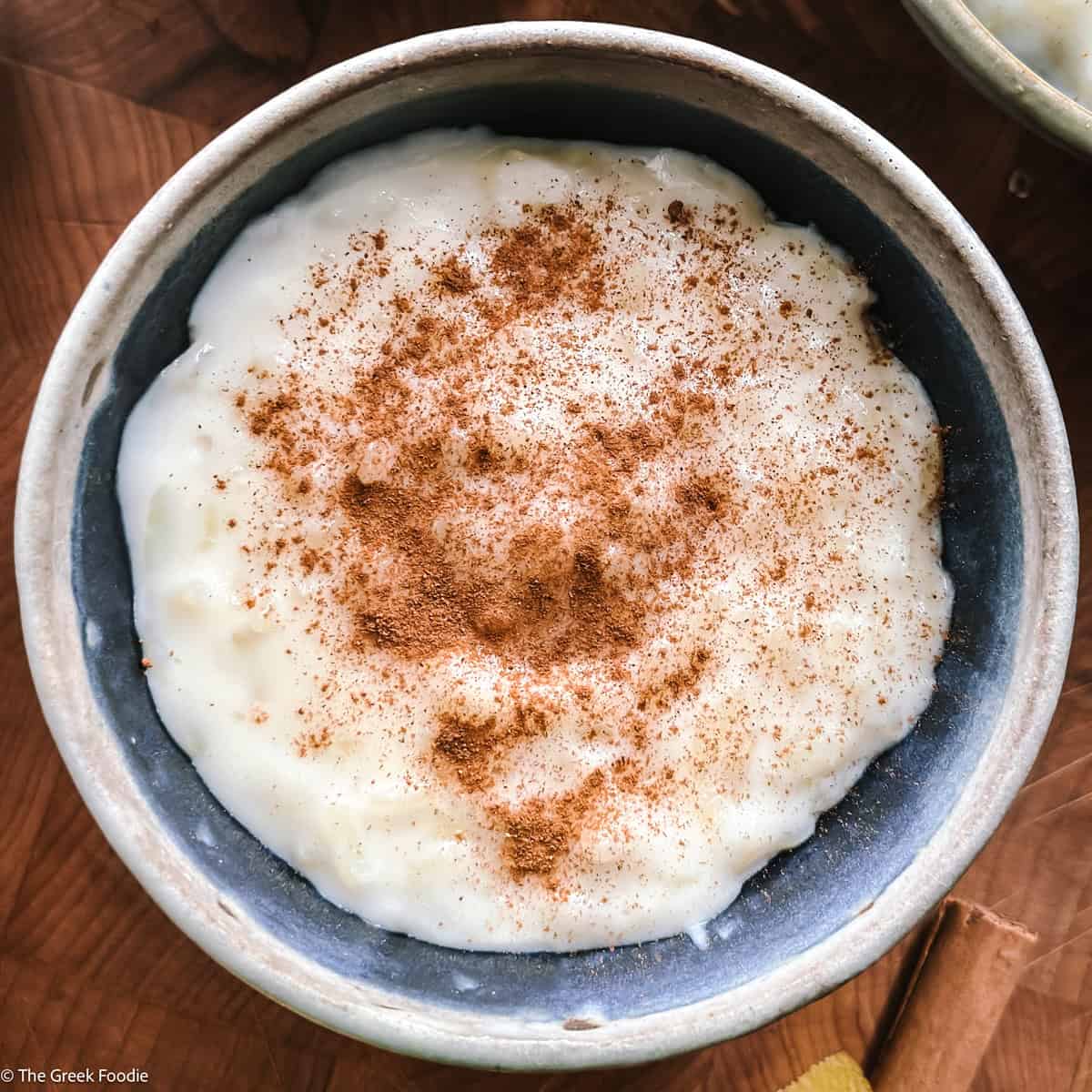
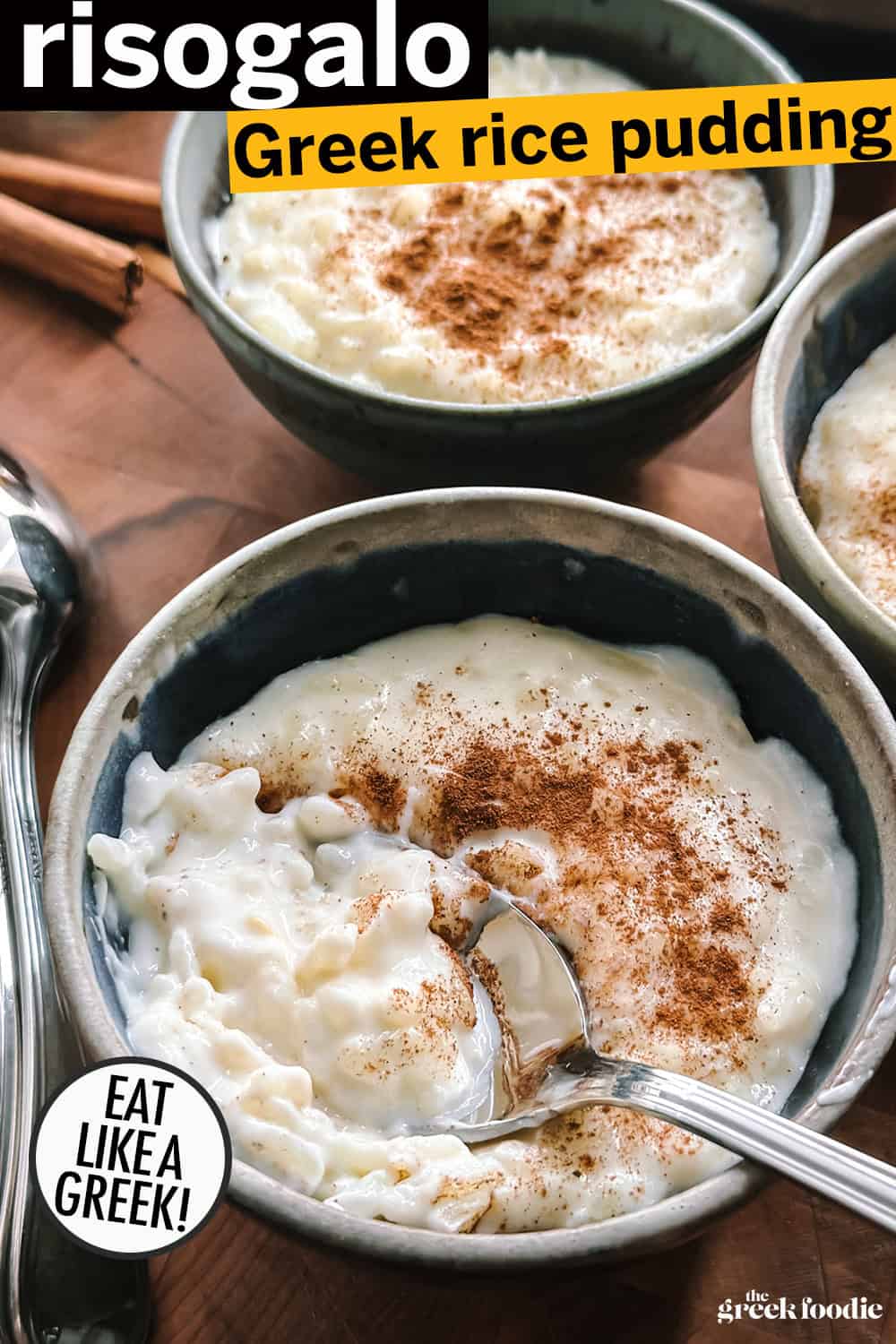
Rizogalo is Greek rice pudding at its simplest and best: short-grain rice simmered slowly in milk with a strip of lemon peel until it turns thick, creamy, and spoonable, then finished with a dusting of cinnamon. No eggs, no cornstarch, no oven. Just four ingredients and a wooden spoon.
In Greece, you’ll find rizogalo in little cups at every galaktopoleio (dairy shop) and pastry shop, and in just about every home kitchen. We eat it warm on a chilly evening, cold straight from the fridge in summer, and yes, sometimes for breakfast.
Love creamy Greek desserts? Try my galatopita (Greek milk pie), galaktoboureko, and Greek yogurt cake.
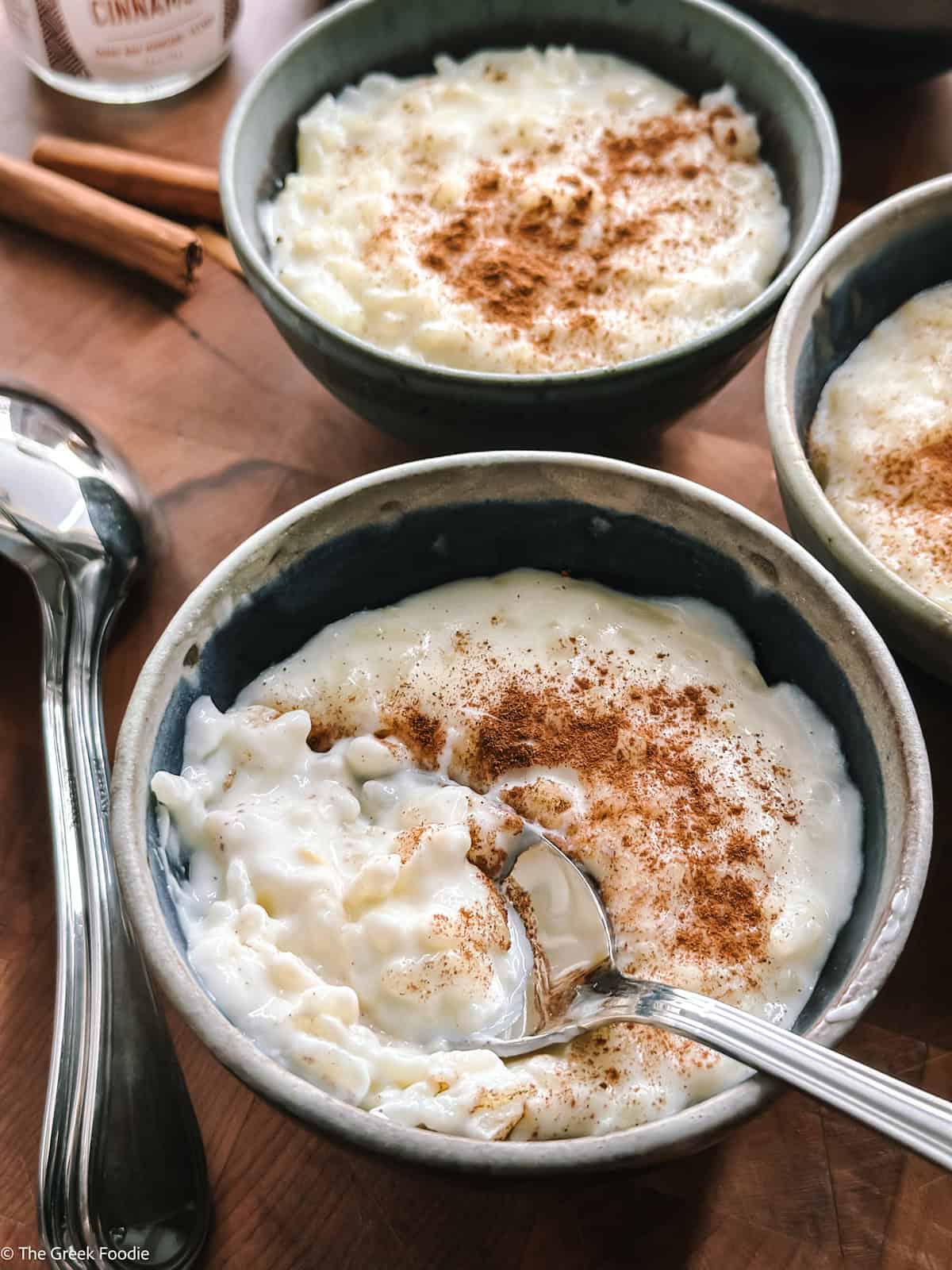
What is rizogalo?
Rizogalo (ρυζόγαλο, pronounced ree-ZO-gah-lo) is Greek rice pudding. The name simply means “rice milk”: rýzi (rice) + gála (milk). Short-grain rice is cooked slowly in whole milk until the starch thickens it into a creamy pudding, then sweetened, scented with lemon peel, and served warm or chilled with ground cinnamon on top.
Why you will love rizogalo
Ingredients for rizogalo
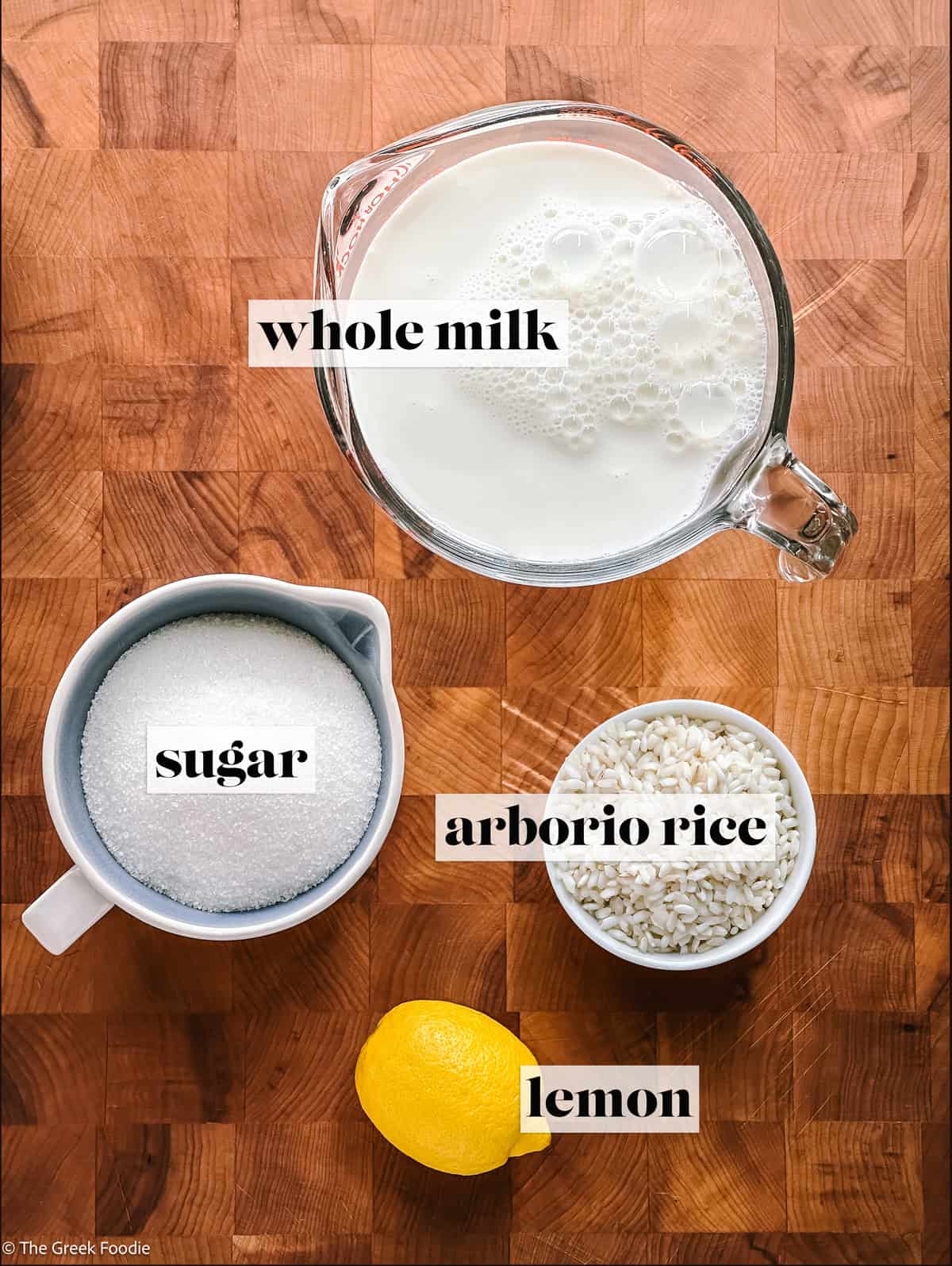
- Whole milk — gives the creamiest result. Low-fat and plant milks work too (see variations).
- Short-grain rice — see below; this is the one choice that really matters.
- Lemon peel — strips from 1 small lemon, yellow part only. It perfumes the milk without making it sour.
- Sugar — added at the end.
- Ground cinnamon — for serving (not pictured).
How to make it
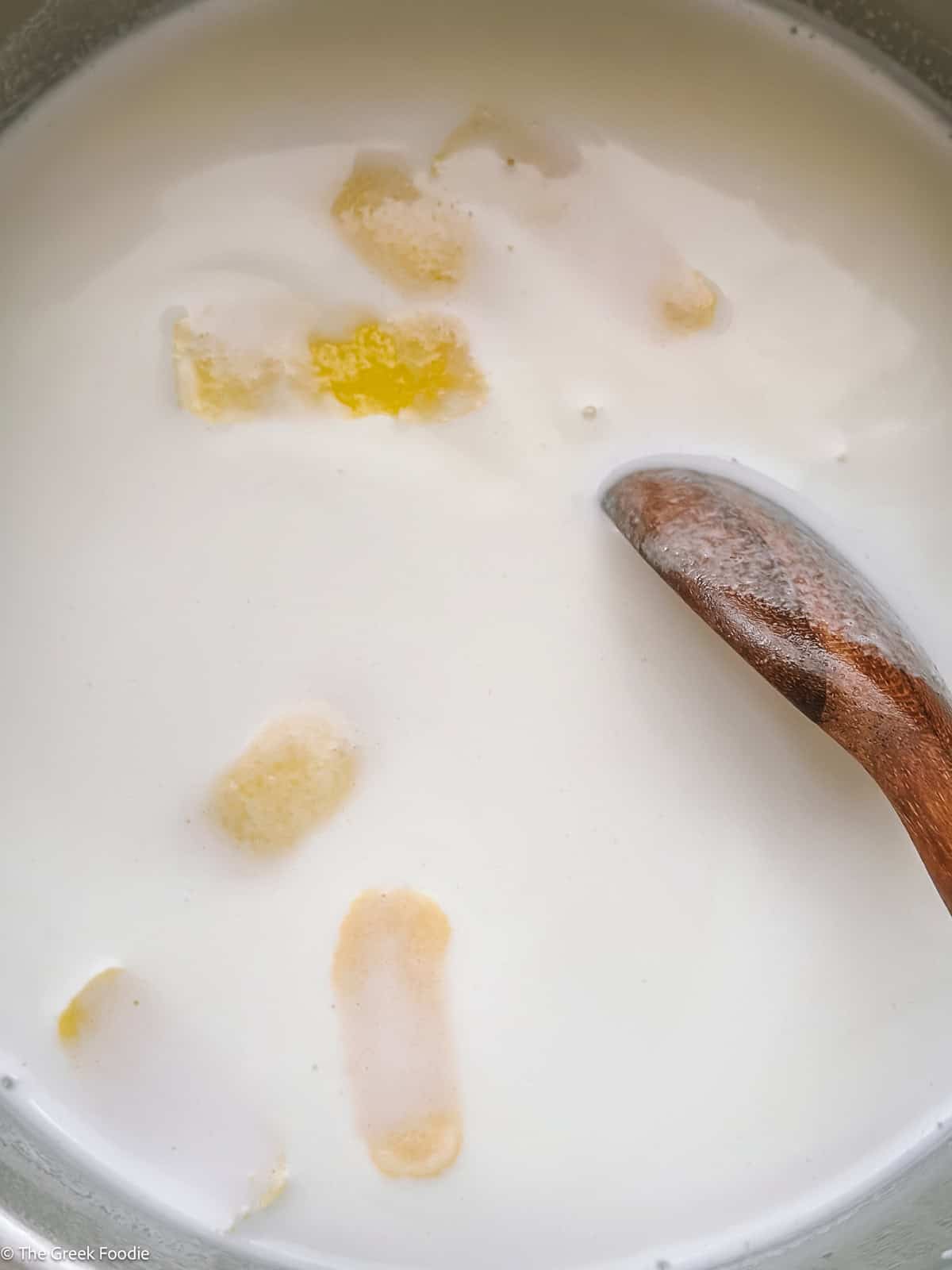
Simmer the rice in the milk. Add the milk, rice, and lemon peel to a large, heavy-bottomed pot over medium-high heat. Bring to a boil, stirring, then lower the heat and simmer for about 30 minutes, stirring often and scraping the bottom of the pot so nothing catches. It’s ready when the rice is completely tender and the pudding coats the back of a spoon.
Sweeten off the heat. Remove the pot from the heat, stir in the sugar until dissolved, and fish out the lemon peel.
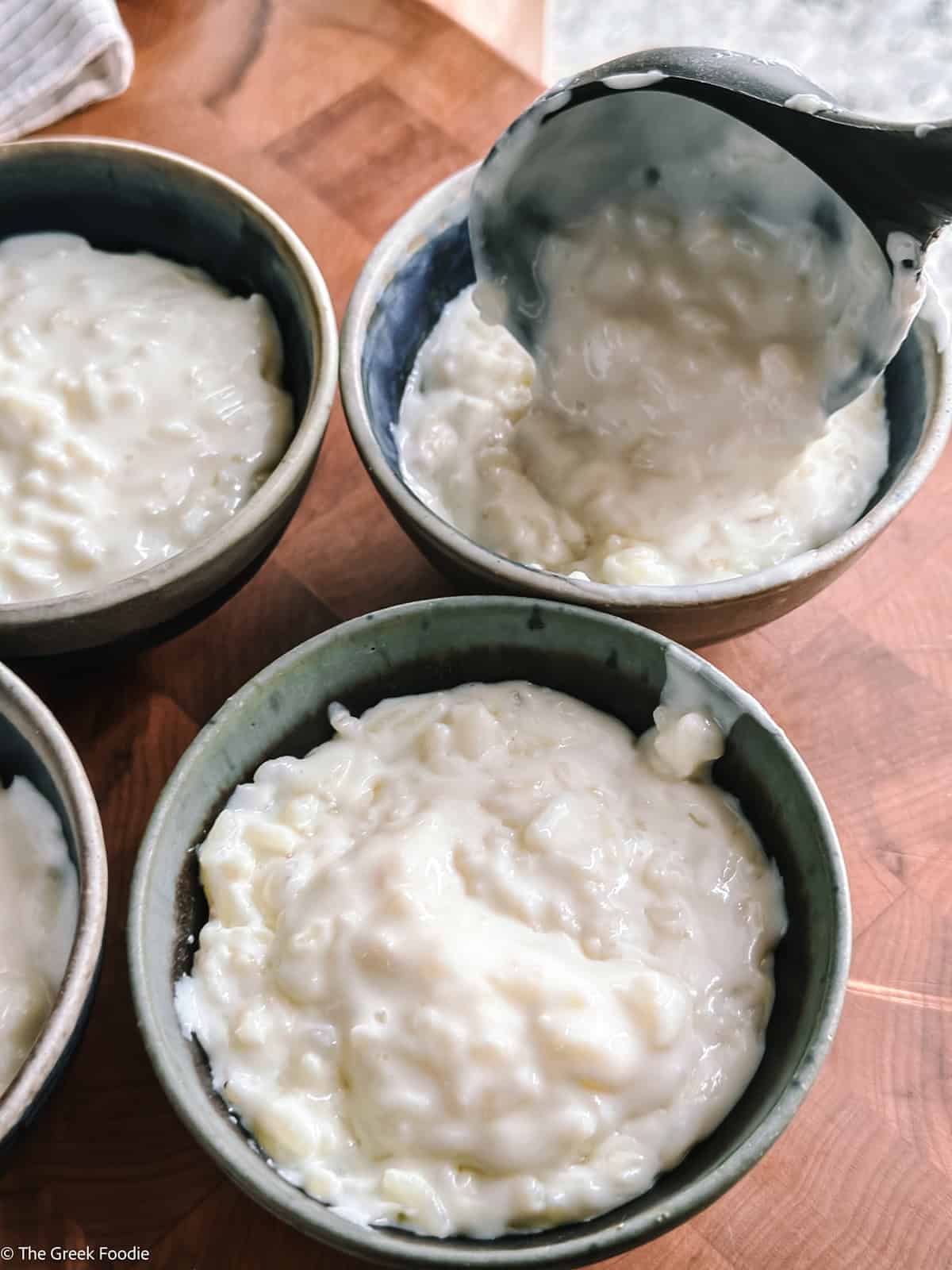
Divide and finish. Ladle into bowls or cups and sprinkle with cinnamon. Serve warm, or let cool, cover, and refrigerate to serve cold.
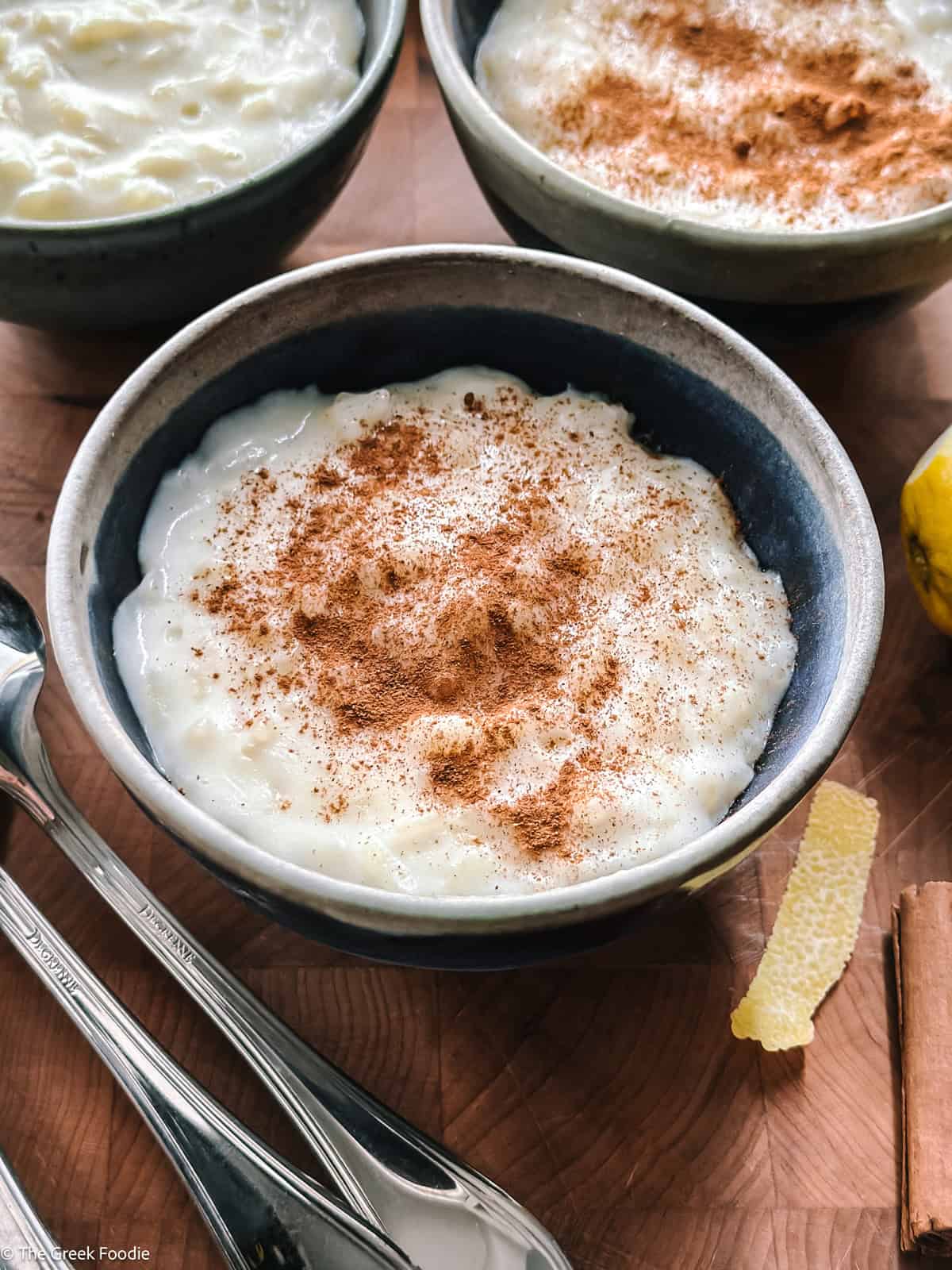
Tips for creamy rizogalo
- Use a heavy pot and stay close. Milk scorches easily. Low heat and frequent stirring, scraping the bottom, are what keep it creamy and burn-free.
- Add the sugar at the end. Sugar in the pot makes the bottom more likely to catch during the long simmer.
- Don’t overcook it. Rizogalo looks looser than you’d expect when it comes off the heat. It thickens a lot as it cools.
- Lemon peel, your way. I love mine lemony and fragrant, so I use the peel of a whole small lemon. Removing it before serving is tidier, but the peel is edible if you like the extra punch.
Rizogalo variations
- Vanilla: stir in a little vanilla extract with the sugar.
- Orange or tangerine: swap the lemon peel for orange or tangerine peel.
- Mastic: grind a pinch of mastic with a teaspoon of the sugar (so it doesn’t clump) and stir in at the end.
- Firmer, pastry-shop style: many Greek pastry shops thicken theirs with a little cornstarch for a firmer set. This version relies on the rice alone.
- Vegan rizogalo: use a creamy unsweetened plant milk; oat and soy give the richest result, almond makes a thinner pudding. Plant milks catch faster, so keep the heat low. Looking for another dairy-free Greek dessert? Try my vegan semolina halva cake.
- Rizogalo brûlée: sprinkle a thin layer of sugar over chilled rizogalo and caramelize it with a kitchen torch.
Rizogalo vs. other rice puddings
Rice pudding is made all over the world, and rizogalo is Greece’s version. What sets it apart is its simplicity: lemon peel instead of vanilla, no eggs, no raisins, cooked entirely on the stovetop, and always cinnamon on top.
Its closest cousin is Turkish sütlaç, which shares roots across the eastern Mediterranean; one popular version, fırın sütlaç, is finished under high heat for a caramelized top. American rice pudding often adds eggs, vanilla, and raisins, and is sometimes baked.
Serving and storing rizogalo
Traditional rizogalo needs nothing but cinnamon. For something different, try orange or lemon zest, chocolate shavings, a little granola or apple crumble, or a spoonful of Greek spoon sweet (glyko tou koutaliou) or your favorite preserve.
To store: cover and refrigerate within 2 hours of cooking. It keeps for 3 to 4 days. Rizogalo firms up as it chills; stir in a splash of milk if you prefer it looser. I don’t recommend freezing — the texture turns grainy when thawed.

Rizogalo FAQ
You may also like




Cooked it? Rate it!
If you tried this recipe, I’d love to know how you liked it — drop a comment below or tag me on Instagram @thegreekfoodie__.



Rizogalo (Greek Rice Pudding)
Ingredients
- 4 cups whole milk, whole, (1 liter)
- ½ cup arborio rice , (100 g), or other short-grain rice
- ⅓ cup sugar, + 1 tablespoon (80 g)
- 1 lemon, peel only, in strips, no white pith
for serving
- ground cinnamon
Instructions
- Add the milk, rice, and lemon peel to a large, heavy-bottomed pot over medium-high heat. Bring to a boil, stirring.
- Lower the heat and simmer for about 30 minutes, stirring often and scraping the bottom to prevent scorching, until the rice is completely tender and the pudding coats the back of a spoon.
- Remove from the heat. Stir in the sugar until dissolved and remove the lemon peel.
- Divide into bowls, sprinkle with cinnamon, and serve warm, or cover and refrigerate to serve cold.
Notes
- Rice: short-grain rice is essential. Arborio, Calrose, or sushi rice all work; long-grain or parboiled rice won’t thicken.
- Thickness: it looks loose off the heat and thickens a lot as it cools.
- Lemon peel: use as much as you like; the peel of a whole small lemon gives a fragrant, lemony pudding.
- Milk: low-fat or creamy plant milk (oat or soy) can replace whole milk; keep the heat lower, as they catch faster.
- Storage: refrigerate, covered, within 2 hours. Keeps 3 to 4 days. Do not freeze.
Nutrition



Jenny’s recipe reminds me of the creamy local deli rice pudding I enjoyed as a youth. We lived on the north shore of Suffolk County Long Island, NY. Delicious!