

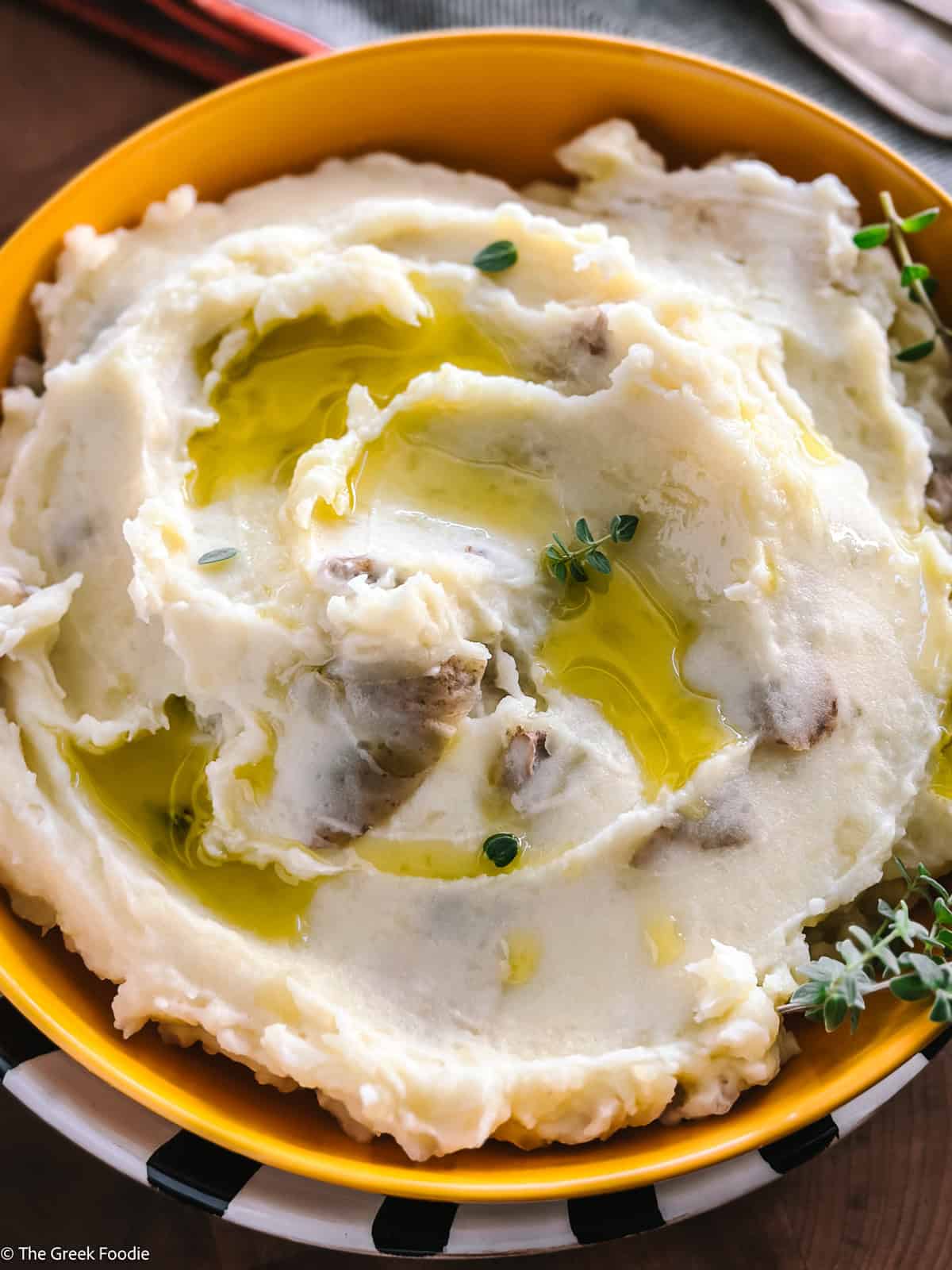
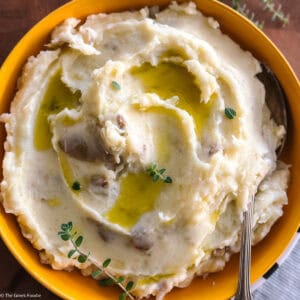
These olive oil mashed potatoes are pure comfort with a Mediterranean accent, silky, golden, and deeply flavorful. Good extra virgin olive oil does the heavy lifting here, giving the potatoes a fruity, peppery richness and a golden sheen that butter alone never gives you. Garlic and bay leaf steep quietly in warm milk, a pinch of nutmeg rounds everything out, and a handful of grated Kefalotiri brings the salt.
I make them two ways. The version below is the rich one, a little butter, a little cheese, the way I serve them under a Sunday roast. If you want them completely dairy-free, scroll to the olive-oil-only version further down. It’s the older, plainer, more Greek of the two, and honestly it’s the one I eat standing at the counter.
Looking for more sides to serve with stews? Browse my Greek side dish recipes.
Do Greeks eat mashed potatoes?
Not traditionally — not the way Americans do. There’s no old-country recipe for patates poure. In the villages, potatoes were boiled, mashed roughly with a fork, salted, and finished with a stream of good olive oil. They weren’t a side dish. They were what you gave a child with an upset stomach, or what you ate on a fasting day when butter and cheese were off the table.
That plainness is the point. A potato and a good oil is already a complete thing. Everything below, the milk, the bay leaf, the Kefalotiri, is a later, richer layer on top of something that was always good on its own.
Why you will love olive oil mashed potatoes
Here is what you need
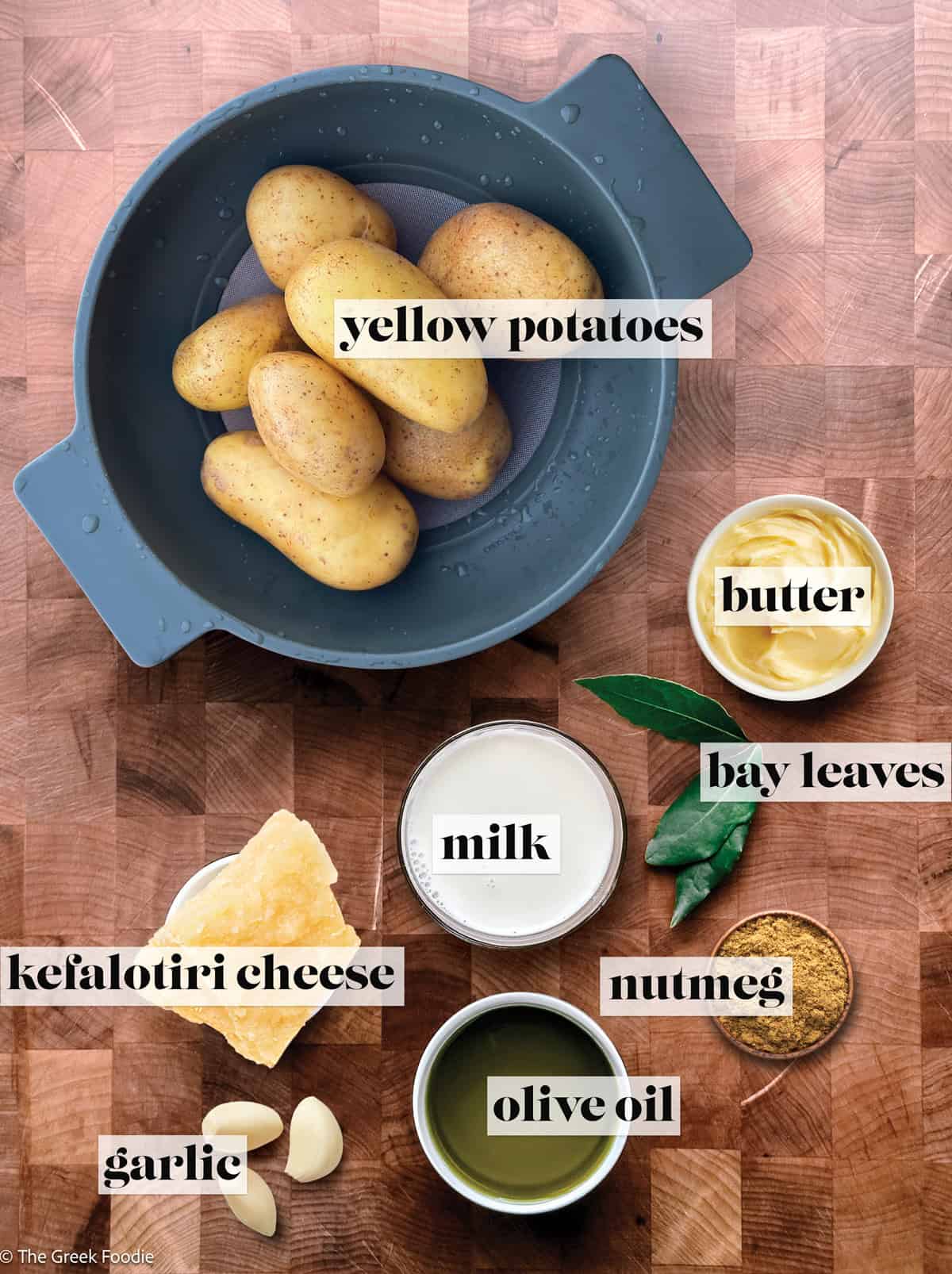
- Yellow potatoes – Yukon Golds are my favorite. Their thin, edible skin and naturally creamy flesh make them perfect for mashing. They hold their texture yet turn velvety smooth when blended with olive oil. In this recipe, I scrub the potatoes very well, remove hard bits and discolorations, and boil and mash with the peel. It adds another texture and a lot of flavor. You may ofcourse remove the peel, see the recipe notes.
- Extra virgin olive oil – Always choose a high-quality olive oil with a fruity, peppery aroma. Avoid generic “Mediterranean blends”, they’re often mixed with inferior oils. Use a trusted, single-origin oil (see my olive oil guide for tips).
- Milk – Whole milk adds body and silkiness. You can substitute with nut milk (almond or cashew) for a vegan version. Warm it gently before adding to the potatoes so the mash stays smooth.
- Bay leaves – Simmering the milk with a couple of bay leaves infuses it with a subtle earthy, woody fragrance that enhances the potatoes beautifully.
- Nutmeg – It adds warmth and depth. It’s that cozy, aromatic note that makes mashed potatoes taste elegant instead of plain.
- Butter – Though olive oil is the heart of this recipe, a spoonful of salted butter adds luxurious creaminess and ties the flavors together. You can skip it if you prefer a lighter or vegan version.
- Kefalotiri cheese – This salty Greek hard cheese adds a wonderful sharpness that complements the olive oil’s richness. Substitute with Pecorino Romano or Parmigiano-Reggiano if you can’t find it.
How to make olive oil mashed potatoes

Step 1. Infuse the milk.
In a saucepan over medium-high heat, combine the milk, butter, nutmeg, sliced garlic, and bay leaves. Bring to a gentle simmer, then turn off the heat. Cover and let it sit while the potatoes cook — this step infuses the milk with subtle, aromatic flavor.
Step 2. Cook the potatoes.
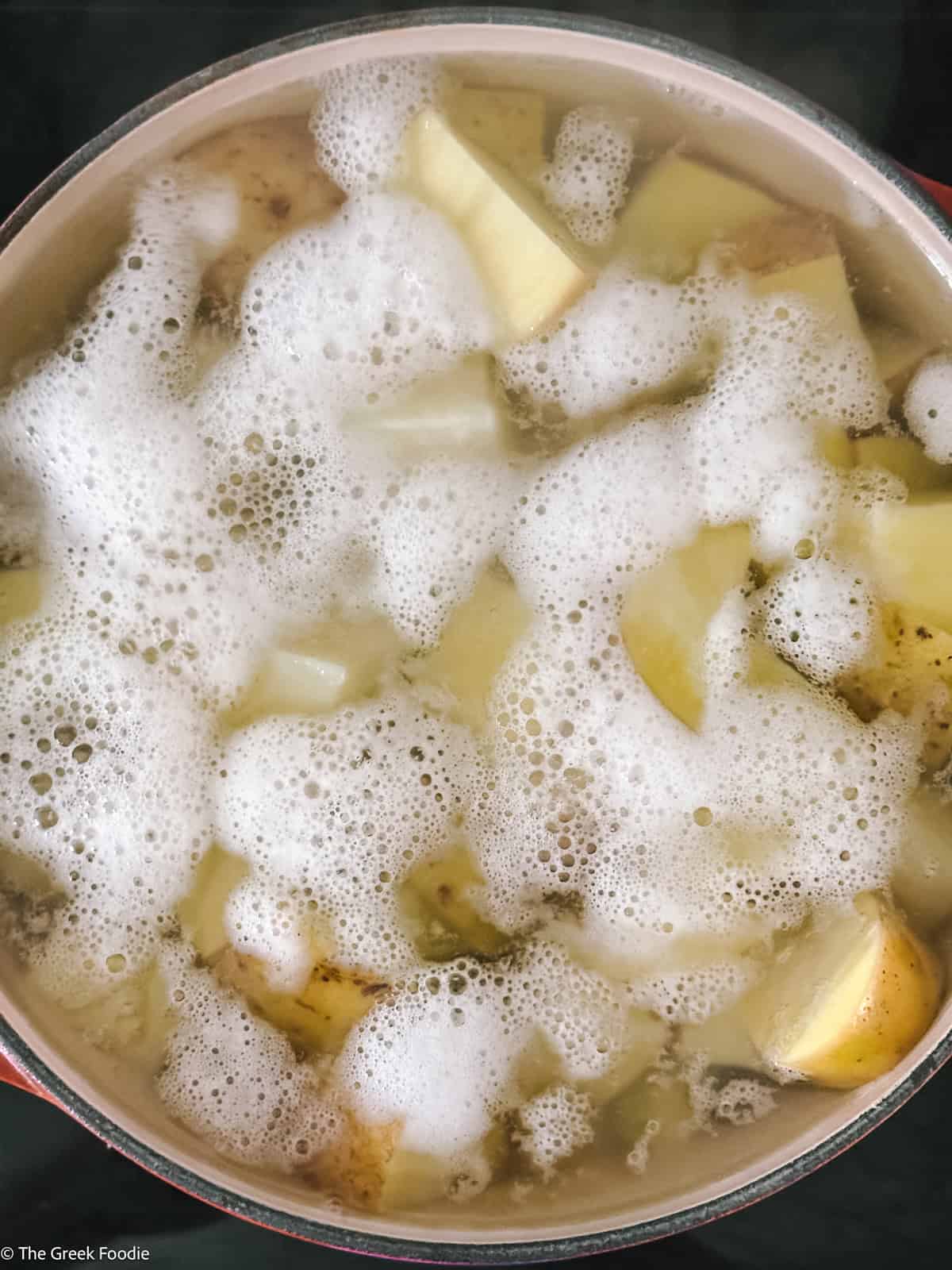
Fill a large pot with cold water. Scrub the potatoes clean, cut them into large cubes, and add them to the pot with a generous pinch of sea salt. Bring to a boil and cook until the potatoes are tender all the way through when pierced with a fork.
Step 3. Start mashing.
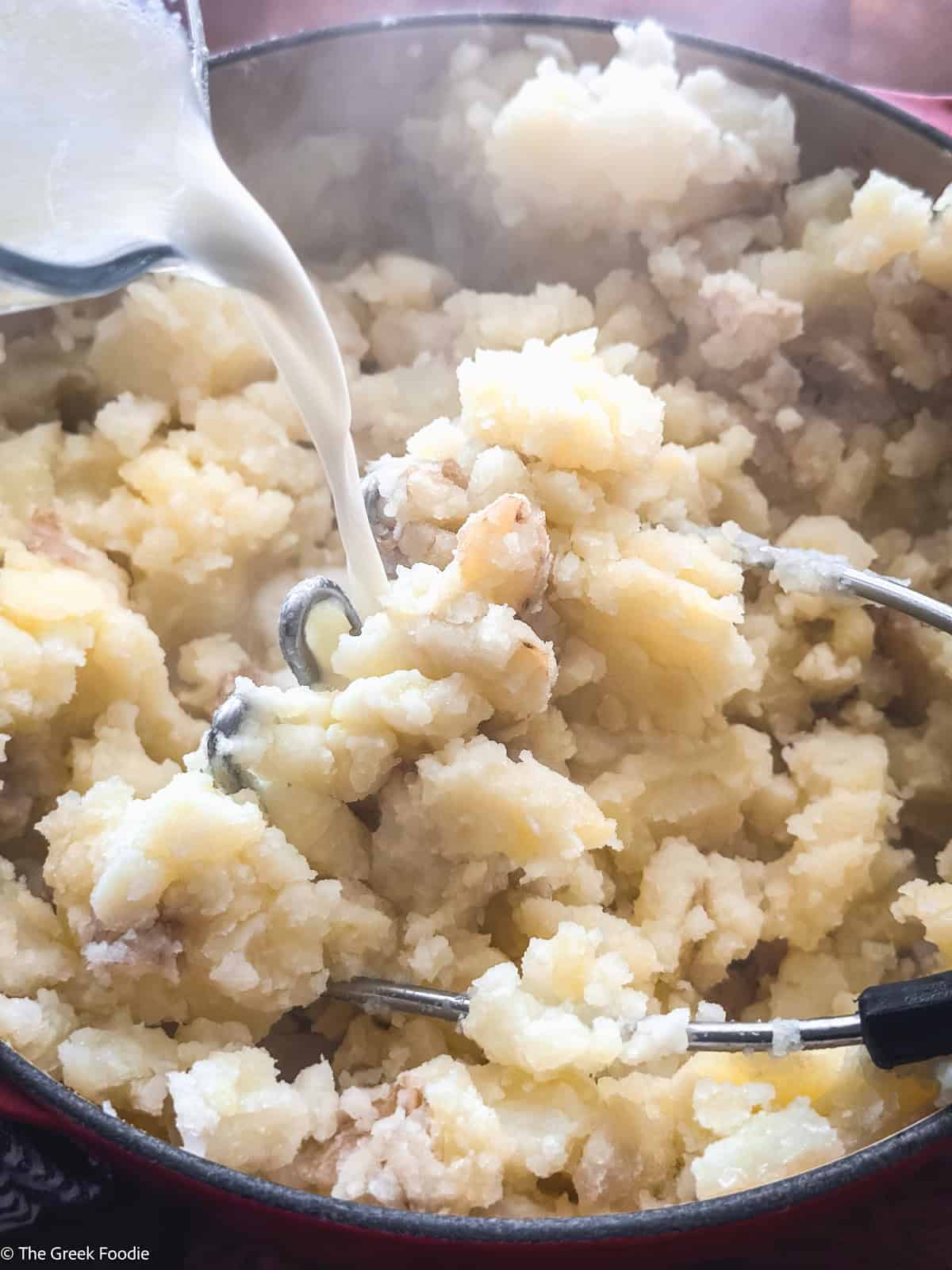
Remove and discard the bay leaves and garlic from the infused milk. Transfer the cooked potatoes to a large bowl and pour in half of the warm milk mixture. Use a potato masher to break down the potatoes until mostly smooth.
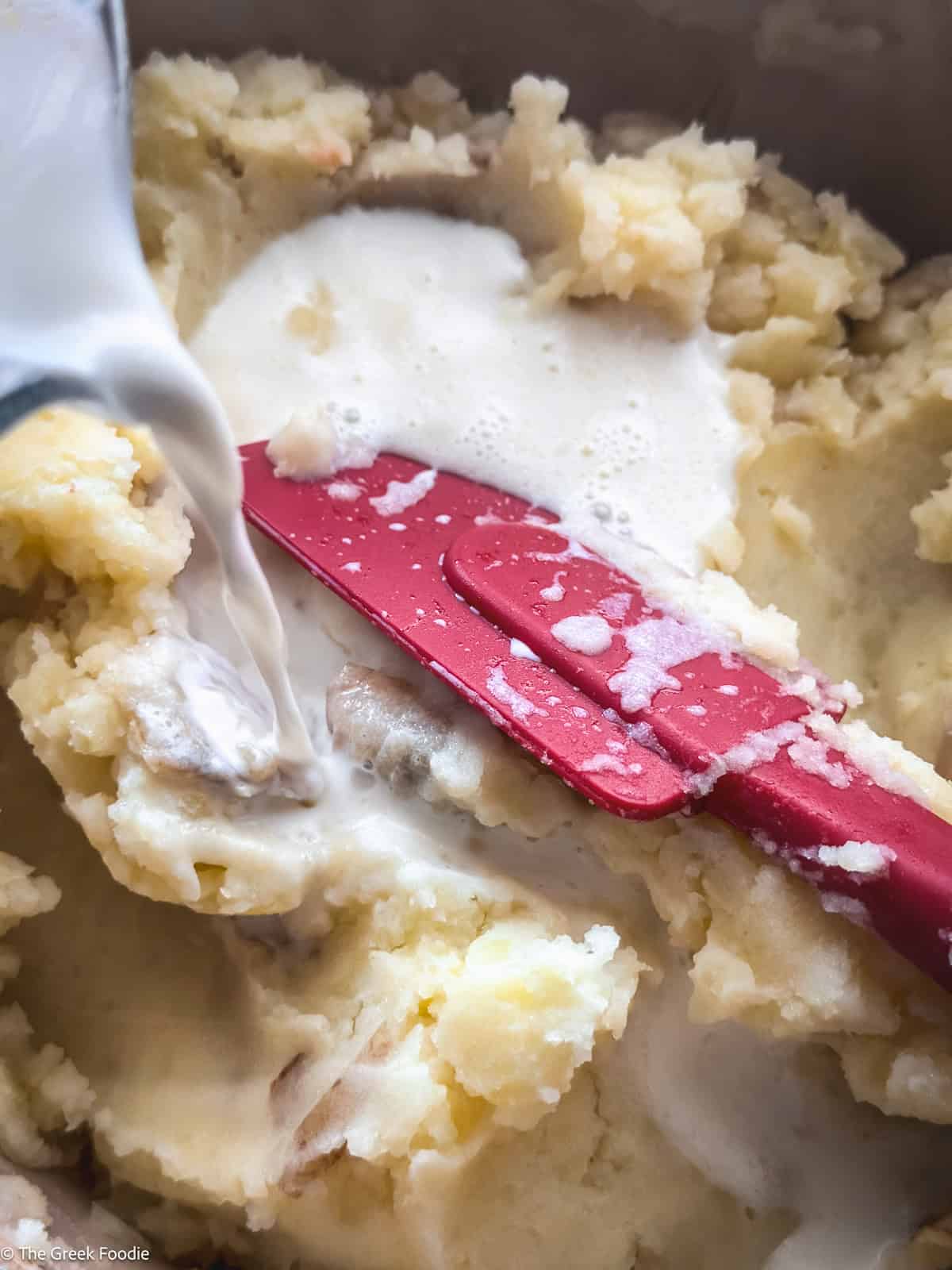
Step 4. Fold for creaminess.
Add a little more of the warm milk and switch to a spatula. Gently fold and scrape the sides and bottom of the bowl. This method keeps the mash light and silky rather than gluey.
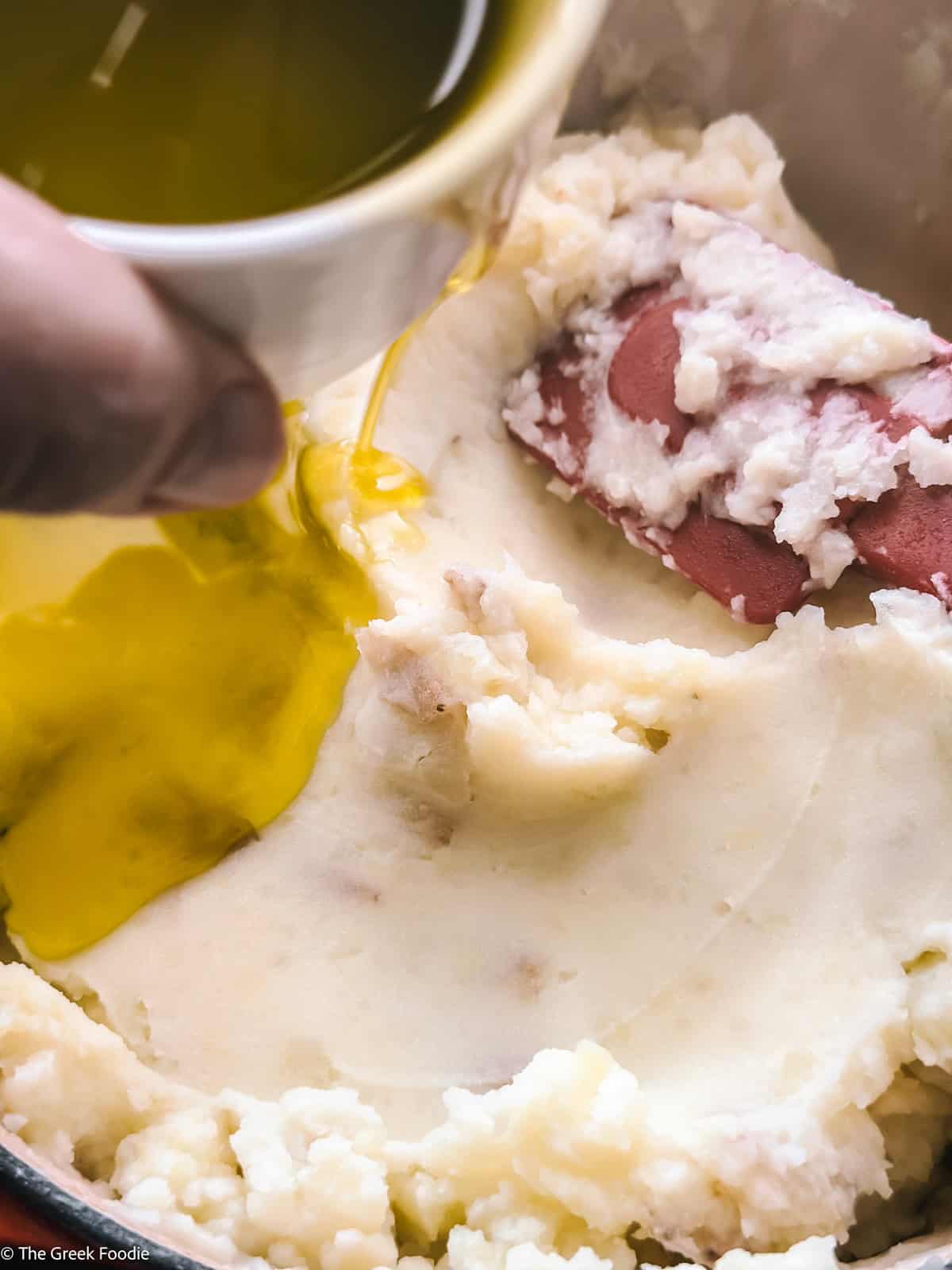
Step 5. Add the olive oil.
Pour in the extra virgin olive oil and continue folding gently until it’s fully absorbed. You’ll see the potatoes take on a beautiful golden sheen.

Step 6. Finish with cheese.
Add the grated Kefalotiri (or Parmesan) and fold one last time until creamy and smooth. Taste and season with sea salt and freshly ground black pepper.
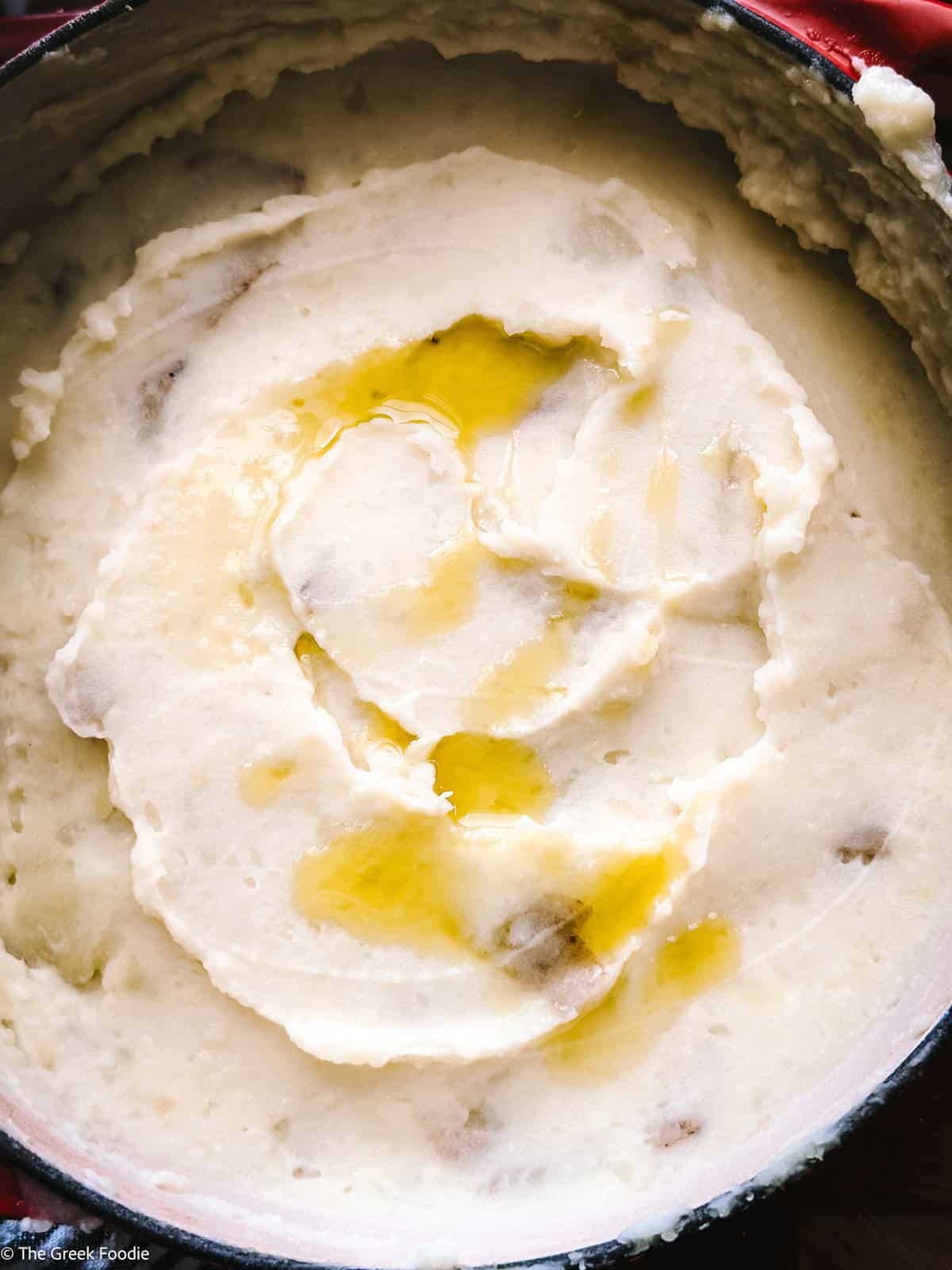
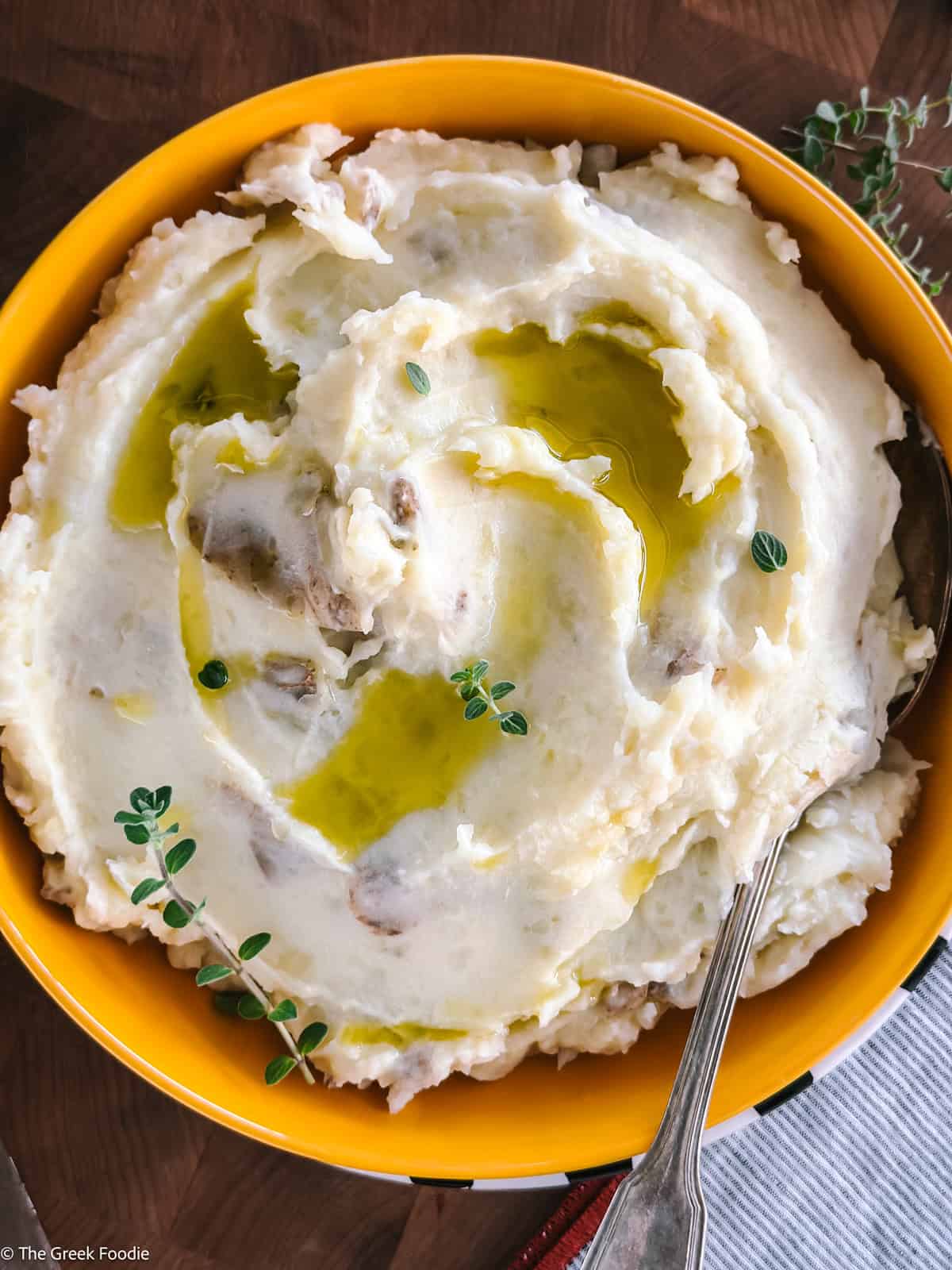
Serve. Spoon into a serving bowl, drizzle a little more olive oil on top, and finish with a pinch of cheese or herbs if you like. Serve warm and enjoy every luscious bite.
Pro tips for the creamiest olive oil mashed potatoes
- Infuse, don’t boil. Let the milk mixture steep off the heat — you’ll draw out the flavors of garlic, nutmeg, and bay without scorching the milk or butter.
- Start with cold water. Adding potatoes to cold, salted water helps them cook evenly from the inside out and prevents mushy edges.
- Cook the potatoes whole (if you can). If you have the time, boil the potatoes whole and unpeeled instead of quartering them. It enhances their natural flavor and keeps more of the starch inside, giving you a richer mash. To remove the peel, let the potatoes cool for a few minutes after boiling. The skin will slip off easily with a sharp paring knife, or you can use a ricer, which conveniently leaves the peel behind.
- Use a spatula, not a whisk. Folding with a rubber spatula gives you a smooth, silky texture without overworking the potatoes (which can make them gluey).
- Warm milk, always. Cold milk shocks the starches and leads to lumpy mash. Warm it gently before combining.
- Finish with olive oil, not butter. Pouring in the olive oil last keeps its fruity, peppery flavor intact — and gives the potatoes that signature golden glow.
- Taste as you go. The salt level will vary depending on your cheese. Adjust seasoning only after you’ve added the Kefalotiri or Parmesan.
- Nutmeg. Half a teaspoon is more than most mashed potato recipes call for, and that’s deliberate — it’s what gives these their warmth and keeps the olive oil and Kefalotiri from tasting flat. If you’re grating it fresh rather than using pre-ground, start with half and taste; freshly grated nutmeg is markedly stronger.
Dairy-free olive oil mashed potatoes (no butter, no milk)
This is the older way, and it’s what I’d serve during Lent or to anyone avoiding dairy. Nothing gets substituted, and the olive oil does it all.
You’ll need: 2 lbs (900 g) Yukon Gold potatoes · ⅔ cup (160 ml) extra virgin olive oil · 3–4 garlic cloves, sliced · 2 bay leaves · ¼ teaspoon ground nutmeg · sea salt.
- Warm the olive oil in a small pan over low heat with the garlic, bay leaves, and nutmeg. Let it steep for 5 minutes — the garlic should soften and perfume the oil, never color. Remove from the heat and let it infuse.
- Boil the potatoes as in the main recipe. Before you drain them, scoop out a cup of the cooking water. That starchy, salted water makes a dairy-free mash creamy instead of dry.
- Mash the potatoes, then strain the warm infused oil over them and fold it in with a spatula.
- Loosen with the reserved cooking water, a few tablespoons at a time, until it’s exactly as soft as you want it.
- Season generously. Without cheese, you’ll need more salt than you think; finish with a final drizzle of oil and cracked pepper.
For a vegan version, stop there or add a spoonful of vegan hard cheese. For a middle path, keep the milk and skip the butter and cheese.
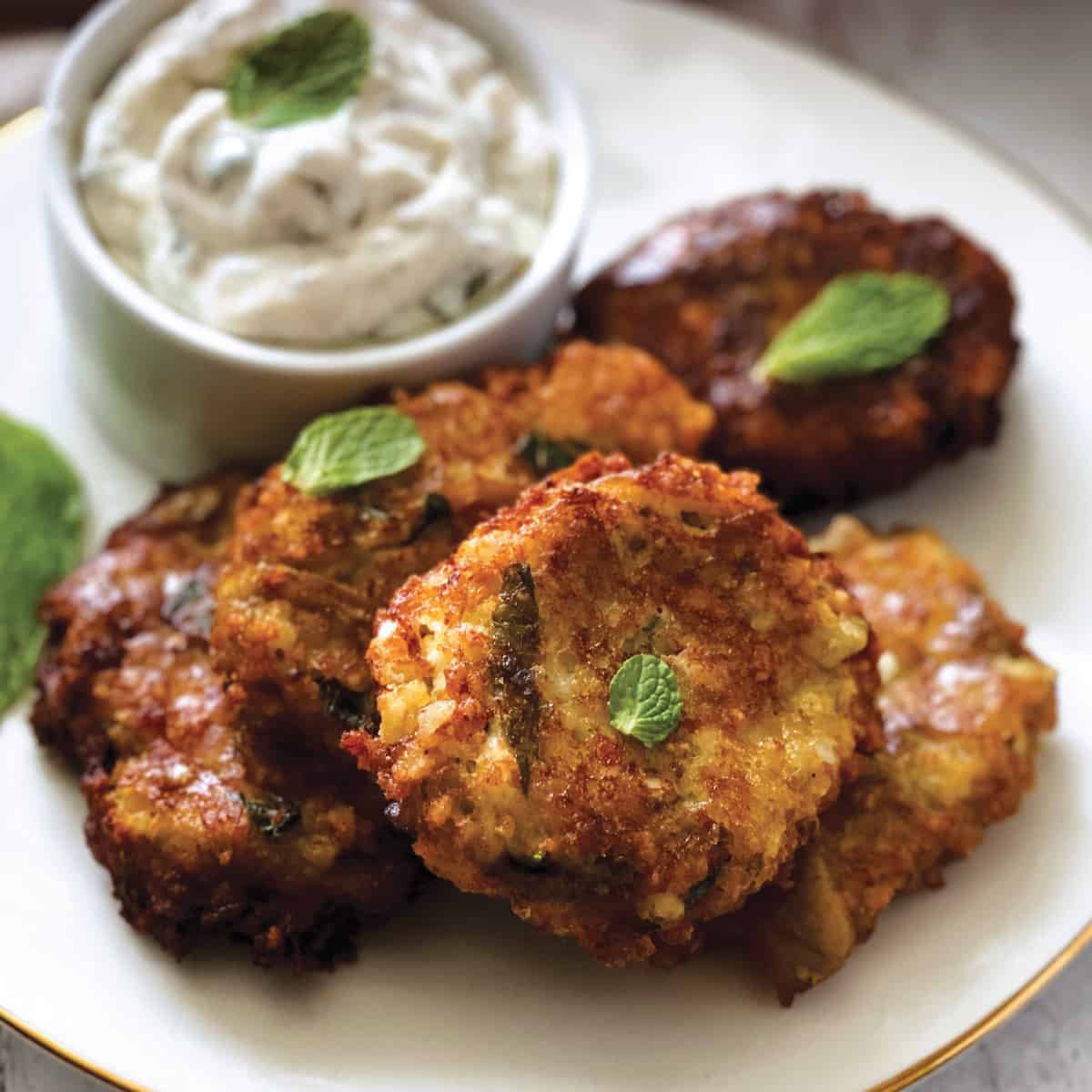
Pro Tip: Leftover mashed potatoes = opportunity. They become pure gold when baked into these cozy leftover pies with puff pastry. Or make these delectable potato fritters with feta!
Looking for more festive recipe ideas? Start with my easy cheese pie with kataifi pastry and Roquefort, then serve this pork pot roast with chestnuts as your centerpiece. End your meal with a slice of puff pastry apple pie, the perfect trio for a joyful holiday table.
Serving suggestions
These olive oil mashed potatoes are incredibly versatile — they fit beautifully on both rustic and elegant tables.
- With Greek lemon chicken – The bright, tangy juices pair perfectly with the creamy texture.
- Under a slow-cooked lamb or stifado beef stew – Let those savory sauces sink into the mash.
- Alongside grilled fish fillets or garlic shrimp – The olive oil notes tie the flavors together effortlessly.
- Topped with cooked vegetables – Try garlicky mushrooms, mushroom stew, caramelized carrots, or crispy Brussels sprouts.
- As a simple meal – I often enjoy a bowl topped with extra olive oil, cracked pepper, and a snowfall of Parmesan.
More Greek potato recipes
Cooked it? Rate it!
If you tried this recipe, I’d love to know how you liked it — drop a comment below or tag me on Instagram @thegreekfoodie__.


Olive-Oil Mashed Potatoes
Equipment
- potato masher
- spatula
Ingredients
- 1 cup whole milk, (240 ml)
- 2-3 garlic cloves, sliced
- 2 fresh bay leaves
- ½ teaspoon ground nutmeg
- ⅓ cup butter, (75 g)
- 2 lbs yukon gold potatoes, (900 g)
- ⅓ cup extra virgin olive oil, (80 ml)
- ½ cup kefalotiri cheese, 50 g) or Parmigiano-Reggiano, Pecorino Romano
- 1 tablespoon sea salt, , for the cooking water + ½ teaspoon sea salt, plus more to taste
- freshly ground pepper
Instructions
- In a saucepan over medium-high heat, bring the milk, butter, nutmeg, sliced garlic, and bay leaves to a simmer. Turn off the heat and cover. Let the aromatics infuse the milk and butter while the potatoes cook.
- Fill a large pot with cold water.Scrub the potatoes clean, cut them into large cubes and add them to the pot with a generous pinch of sea salt.Cook until the potatoes are fully done (check with a fork; it should pierce through easily), 20 to 30 minutes. Drain the potatoes in a colander.
- Remove the bay leaves and garlic from the milk.Add the potatoes to a bowl. Pour half of the milk over them, and use the masher to break and mash them for a few minutes.
- Pour some of the remaining milk into the potatoes. Use the spatula and gently fold them—scrape the sides and bottom of the bowl.Add the olive oil. Gently fold again and add the grated cheese. Add more milk if needed until you reach the desired texture.Season to taste with sea salt and freshly ground pepper.
Serve
- Transfer the potatoes to a large, deep dish or bowl. Drizzle the top with a bit of olive oil and serve.
Notes
- If you have time, cook the potatoes whole and unpeeled instead of quartering them, it adds extra flavor to the mash. Once cooked, let them cool slightly, then peel them with a sharp paring knife. You can also use a ricer, which conveniently leaves the peel behind.
- Yukon Gold potatoes have a thin, edible peel. Scrub them well, removing any hard or discolored spots. Boil and mash them with their skins on — it adds wonderful texture and earthy flavor.
- Since olive oil is one of the primary flavors in this recipe, choose a high-quality extra virgin olive oil labeled “cold-pressed” or “cold-extracted.” Its fruity, peppery notes are essential to the flavor.
- You can make the mashed potatoes in advance and store them in a resealable container in the refrigerator for up to 3 days. Reheat gently in a saucepan with a splash of milk over low heat, stirring until warmed through and creamy again.
- Nutmeg. Half a teaspoon is more than most mashed potato recipes call for, and that’s deliberate — it’s what gives these their warmth and keeps the olive oil and Kefalotiri from tasting flat. If you’re grating it fresh rather than using pre-ground, start with half and taste; freshly grated nutmeg is markedly stronger.
- Check the dairy-free version in the post.