

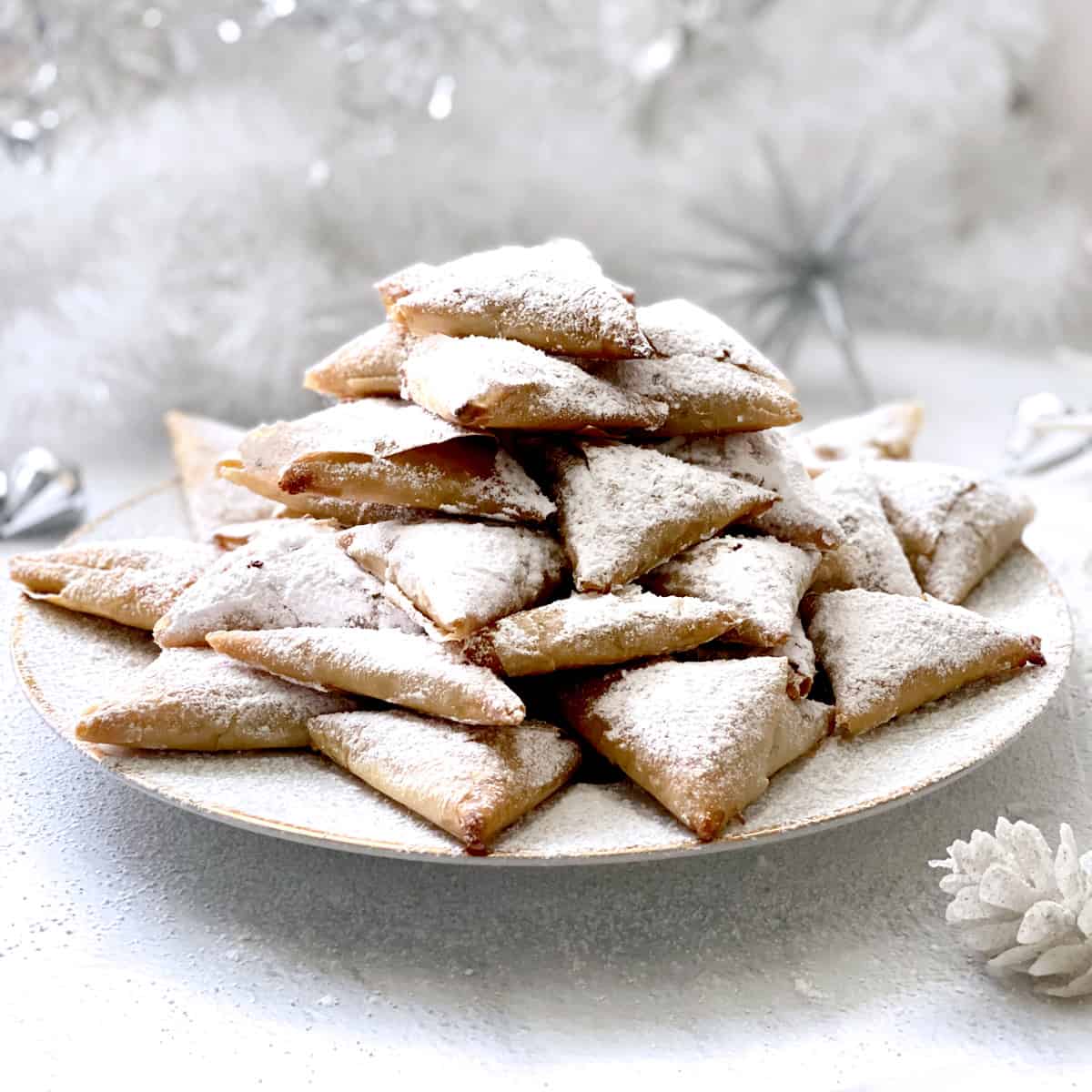
Trigona are Greek almond pastry triangles: crisp, buttery phyllo folded around a filling
of ground almonds, semolina, vanilla, and lemon, baked until golden and finished under a
heavy snow of powdered sugar. They’re small, they keep beautifully, and they disappear
faster than you can fold them.
The name is the Greek word for triangles. And the shape is what makes them, and once your hands find the rhythm you can turn out a full tray without thinking about it.
If you like Greek desserts built on phyllo, you’ll also want the pistachio baklava and portokalopita, a syrupy orange phyllo cake. For something completely different, there are melomakarona, the honey cookies, and tsoureki, the braided sweet bread.

What are trigona?
Trigona (τρίγωνα, “triangles”) are Greek almond pastries made by folding a buttered strip
of phyllo around a spoonful of sweet almond filling into a small sealed triangle, baking
it until crisp, and dusting it with powdered sugar. Unlike baklava, they aren’t soaked in
syrup — the sweetness comes from the filling and the sugar on top, which is why the phyllo
stays shatteringly crisp for days instead of softening.
A note on the name
If you search for trigona you’ll mostly turn up trigona Panoramatos, and they are not
these. Those are the famous cream-filled phyllo triangles from Panorama, a suburb of
Thessaloniki, a crisp cone of phyllo filled with pastry cream and brushed with syrup,
created by the Elenidis family in the middle of the last century and now genuinely a
symbol of the city. They’re assembled to order, because the cream softens the phyllo
within minutes.
Our trigona are my family’s recipe with the almond filling sealed inside, baked dry, dusted with powdered sugar, and sturdy enough to sit in a tin for two weeks or travel across town in a gift box.
Why you will love our sweet trigona
Here is what you need

- Phyllo pastry. One 1 lb / 450 g package of the thinnest phyllo you can find, #4 if
your shop grades it. Sheet counts vary between brands and even between packages, so buy by weight and don’t count sheets. Greek, Mediterranean and Middle Eastern grocers carry a range of thicknesses; the fine ones are what you want here, same as for baklava. - Butter. I always use salted butter unless it is necessary to use unsalted. By all means, use what you prefer.
- Eggs. Free range medium eggs.
- Blanched almonds. They will get ground to a medium-small size in a food processor or mortar and pestle.
- Coarse semolina. It thickens the filling and gives it a faint grain, so it doesn’t
go pasty. Two-thirds of a cup is plenty. - Cane sugar. You will use an equal amount of sugar to the almonds.
- Vanilla bean pod. I love using the vanilla seeds from the bean; they have an intense, pure aroma and flavor. You can substitute with one teaspoon of vanilla extract.
- Two eggs. Medium size. If your eggs are small, use three in the recipe.
- Lemon juice. The juice from one lemon balances out the flavors.
- Powdered sugar. It is sprinkled all over the baked almond triangles for a glorious finish!
Step by step
Prepare the filling

1. Ground the almonds in a food processor or with a mortar and pestle. Avoid grinding them too much. Go for medium-small pieces.

2. Place the sugar and 1 cup of water in a large pot over medium heat. Stir for sugar to melt.
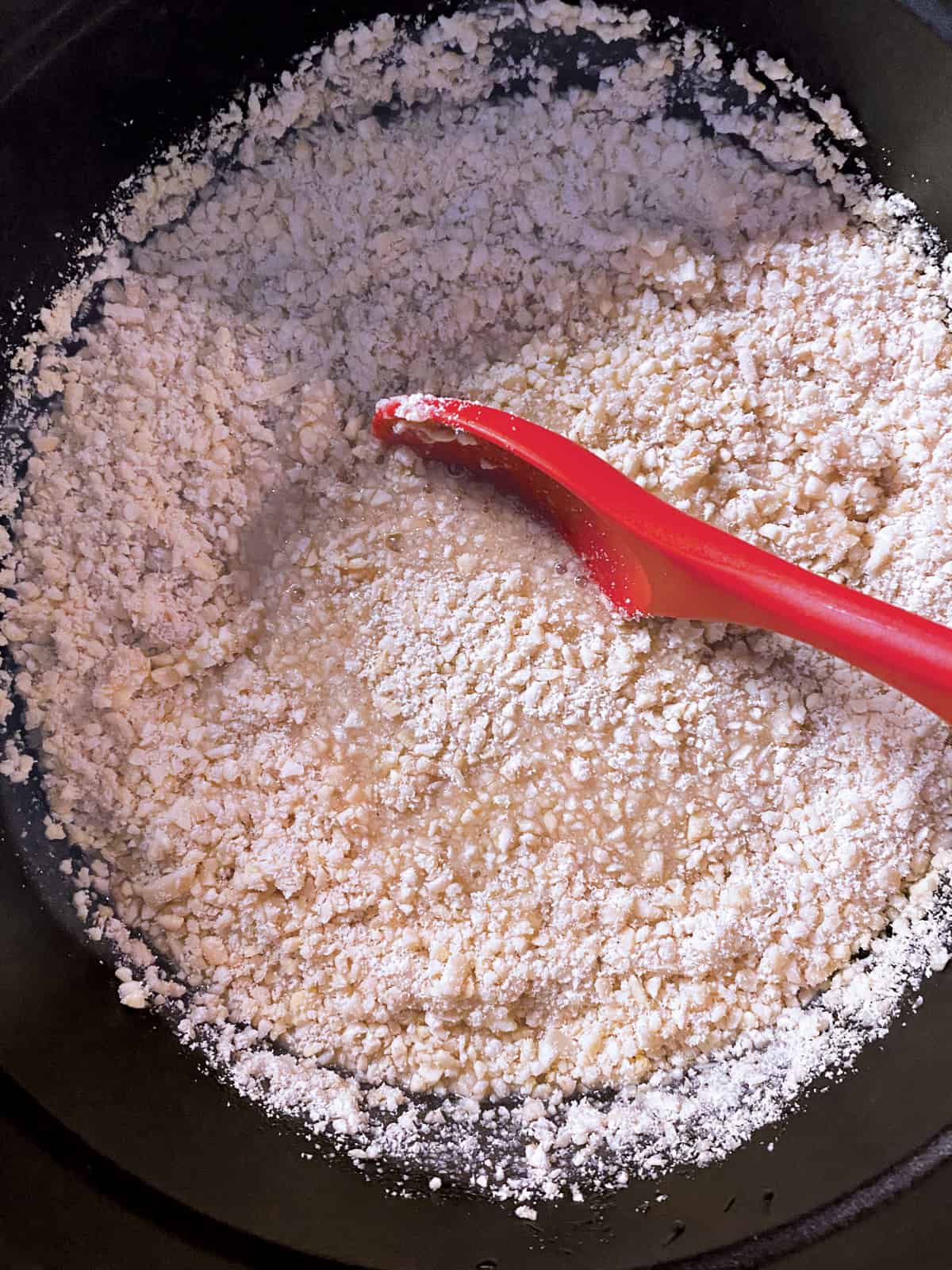
3. Add the ground almonds and stir.
4. When the mixture starts to boil add the semolina, juice from the lemon and vanilla beans seeds. Stir well and remove from heat.
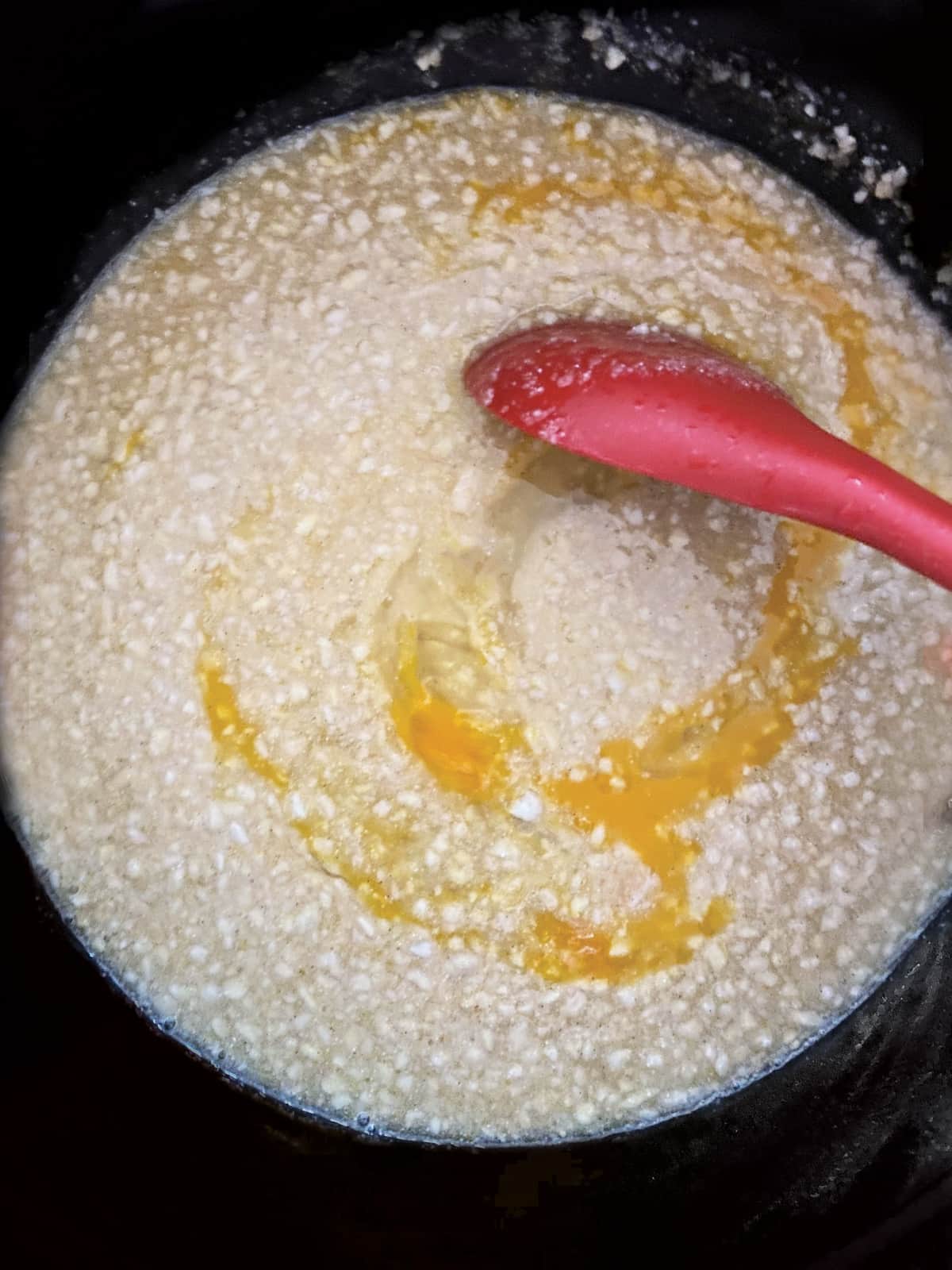
5. Add the eggs, one at a time while stirring well. The filling is ready. Set aside and prepare the phyllo.
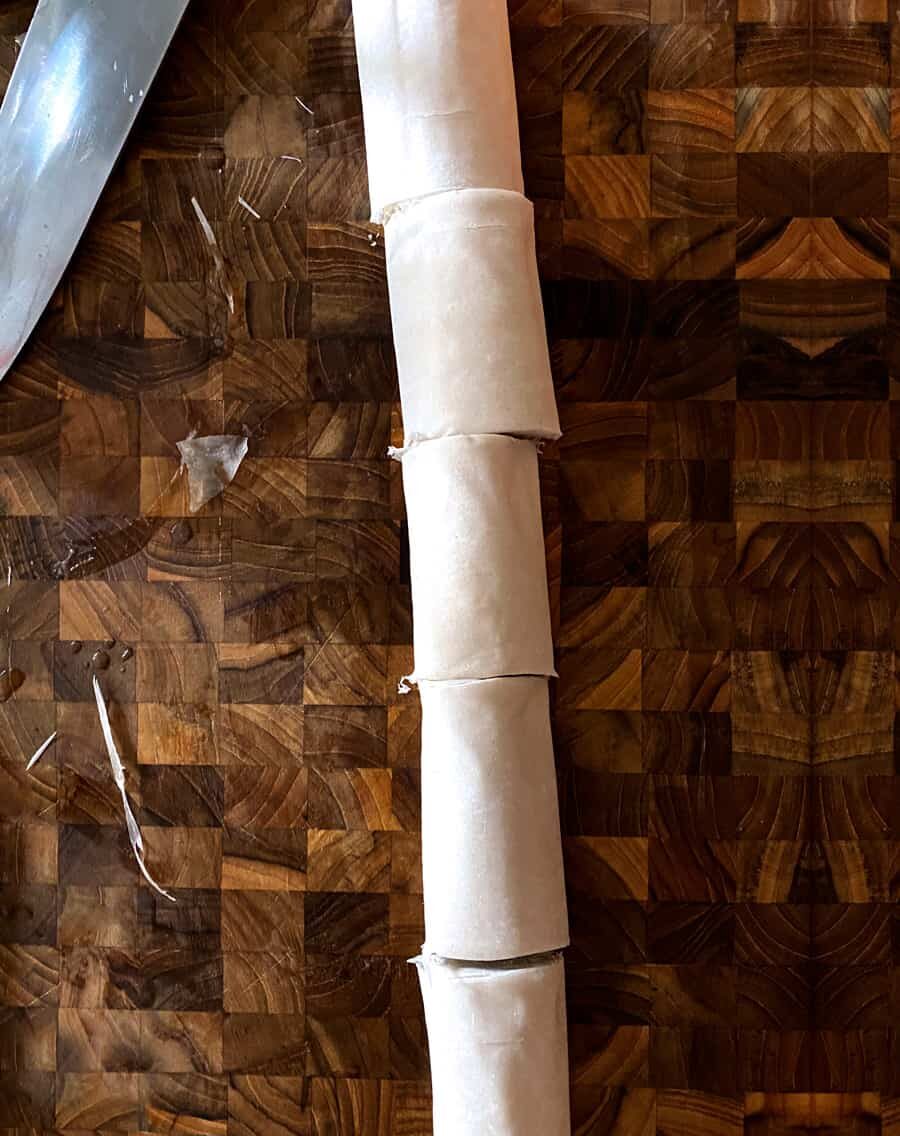
6. Divide and cut the phyllo roll into five equal pieces.
What size phyllo sheets to use
The phyllo sheets I use are approximately 14 inches x 18 inches / 35 cm x 45cm. I divide them into 3 inches / 6.5-7 cm pieces. You can find them at Greek and Mediterranean grocers, Whole Foods, and online.
Folding the almond pastry
- The perfect shape for these is an isosceles triangle, a triangle with all sides equal in length. They look really good in that shape.
- There is a trick to fold them into perfectly shaped isosceles triangles.
- Firstly, I unfold only one of the rolls and keep the rest under a damp towel to keep them moist. I keep the phyllo sheets stacked on top of each other and start with the one on top (Image 1).

First, brush some melted butter on the phyllo surface.
Image 1. A heaped tablespoon of the almond filling goes about 2.5 inches / 6 cm in
from the edge, centered. It should look like a generous amount — these are meant to be plump, and a shy spoonful gives you a flat, hollow triangle.
Image 2. Lift the upper left corner and fold diagonally downward, creating an isosceles triangle shape. You will have some extra phyllo hanging outside the shape. No worries, I will get folded next.
Images 3, 4, 5. Hold the triangle again gently and fold diagonally upwards. Repeat the same sequence to fold the rest of the triangle.
Bake

- Place triangles on a parchment paper-lined baking sheet.
- Brush a tiny amount of butter on top of each one as you finish folding to keep it moist while finishing up the rest of the almond pastry triangles.

- Bake for 20 minutes at 180°C / 350°F or until they have a light golden color.
Sprinkle!
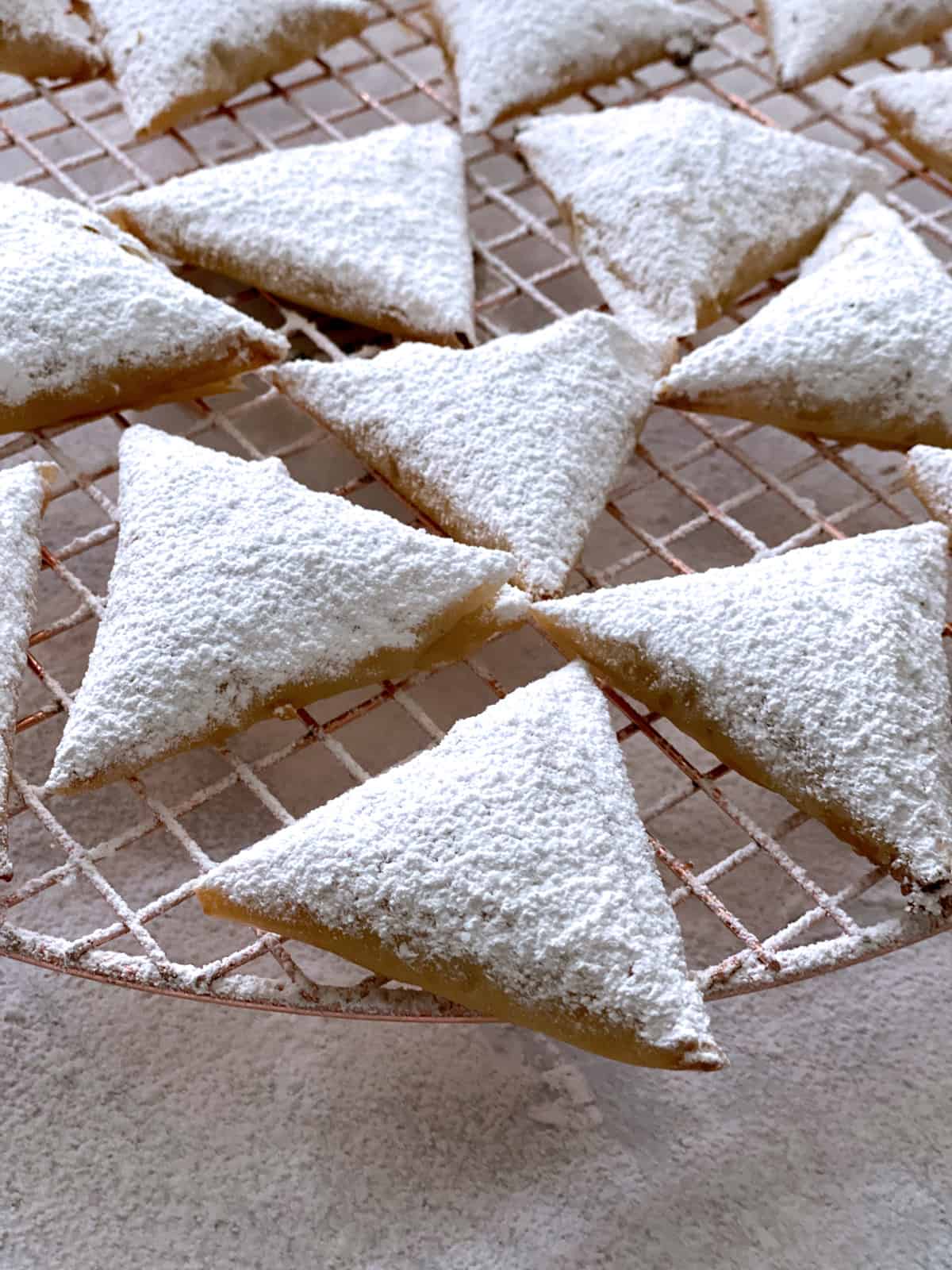
Transfer the almond pastries to a wire rack. Sprinkle powdered sugar all over the triangles, and enjoy!
Storing, freezing and making them ahead
At room temperature. Once completely cool, trigona keep in an airtight tin at room
temperature for up to two weeks. Because there’s no syrup, the phyllo stays crisp — this
is the real advantage they have over baklava. Don’t refrigerate them; the fridge softens
phyllo and there’s no getting it back.
Freezing unbaked — the best method. Fold the triangles, arrange them on a
parchment-lined sheet so they aren’t touching, and freeze until solid. Transfer to a
freezer bag or container and they’ll keep for three months. Bake straight from frozen at
180°C / 350°F, adding about five minutes. This is how you get freshly baked trigona in
December without spending December folding.
Freezing baked. Also fine, up to two months. Thaw at room temperature, then refresh in
a 150°C / 300°F oven for five to eight minutes to bring the crispness back, and dust with
fresh powdered sugar — the original dusting dissolves in the freezer.
If you’re making them as gifts. Dust just before packing, not before storing. Powdered
sugar draws moisture over time and goes patchy and grey on the surface. A tin lined with
parchment and a fresh sift of sugar on the day is the whole trick.
The same triangle, all around the Mediterranean
A folded triangle of thin pastry around a sweet almond filling is not only Greek. The
shape and the technique turn up right across the Eastern Mediterranean and North Africa.
Moroccan briouat are almond triangles scented with orange blossom, fried and then dipped
in honey. Tunisian samsa are close cousins. In Turkey, triangular filled pastries are
muska böreği, named for the muska — the small triangular amulet.
What makes the Greek version its own thing is restraint. No frying, no honey bath, no rose
or orange-flower water. Almonds, sugar, semolina, vanilla and lemon, baked dry until crisp,
then powdered sugar. If you’ve eaten briouat and found these quieter, that’s not an
accident — it’s the point.

When Greeks actually make these
Trigona are a Christmas pastry in the way a lot of Greek sweets are Christmas pastries:
not because anything in them is seasonal, but because December is when a Greek kitchen
turns into a small factory and everything gets made in quantity to be given away.
Alongside melomakarona and kourabiedes, trigona go into tins and travel, to neighbors,
to the office, to whoever’s hosting.
This is my godmother’s recipe, and she has made them every Christmas for as long as
I can remember. Trays and trays, a few for her guests, most of them boxed and sent out.
But there’s nothing about almonds, semolina and phyllo that belongs only to December.
They’re just as good in February with a coffee.

FAQs
More Greek desserts
Cooked it? Rate it!
If you tried this recipe, I’d love to know how you liked it — drop a comment below or tag me on Instagram @thegreekfoodie__.



Almond Pastry Triangles – Trigona
Equipment
- Rimmed baking sheet
- Parchment paper
- Medium pot
- Food processor or a mortar and pestle
- Food grade brush
Ingredients
- 3.5 cups blanched almonds, 500 gr
- 2¼ cups cane sugar, 500 gr
- 1 cup water
- ⅔ cup coarse semolina
- 1 lemon, juiced
- 1 vanilla bean pod
- 2 eggs
- 16 oz thin phyllo pastry, One packet of phyllo #4, 14" x 18"
- 1 cup butter, melted
- ½ cup powdered sugar
Instructions
- Ground the almonds in a food processor or with a mortar and pestle. Avoid grinding them too much. Go for medium-small pieces.
- Place the sugar and 1 cup of water in a large pot over medium heat. Stir for sugar to melt.
- Add the ground almonds and stir.
- When the mixture starts to boil add the semolina, juice from the lemon and vanilla beans seeds. Stir well and remove from heat.
- Add the eggs, one at a time while stirring well. The filling is ready. Set aside and prepare the phyllo.
- Heat the oven to 180°C / 350°F
- Divide and cut the phyllo roll into five equal pieces.
- Unfold only one of the rolls and keep the rest under a damp towel to keep them moist. Open up the roll and keep the phyllo sheets stacked on top of each other.Start with the one on top.
- Brush some melted butter on all the phyllo surface.
- Place a heaped tablespoon of the almond filling approximately 2.5 inches (6 cm) in from the edge, centered.
- Very gently lift the upper left corner and fold down diagonally, creating an isosceles triangle shape. Some extra phyllo will hang outside the shape. It will be folded with the next step.
- Hold the triangle gently and fold up this time up, diagonally. Repeat the same sequence to fold the rest of the triangle.Place finished triangles on a parchment paper-lined baking sheets.
- Brush a tiny amount of butter on top of each triangle to keep them moist while you are folding the rest.
- Bake for 20 minutes at 180°C / 350°F, or until triangles are light golden.
- Sprinkle powdered sugar all over triangles. Enjoy!
Notes
- Phyllo comes in a range of thicknesses. Buy by weight (one 1 lb / 450 g package), not by sheet count — counts vary between brands and even between packages of the same brand.
- Unbaked triangles freeze beautifully for three months. Freeze them flat on a tray, then bag them, and bake straight from frozen with an extra five minutes.
- Dust with powdered sugar just before serving or packing, not before storing.
- You can substitute the vanilla bean pod with one teaspoon of vanilla extract.
- I prefer using fresh juice from a real lemon. Bottled lemon juice is pasteurized. The process involves quick heating and cooling, which changes the flavor.
- Substitute regular semolina flour for coarse semolina.
- The perfect shape is an isosceles triangle, a triangle with two equal sides.
- Check the post for step-by-step images on how to fold them into perfectly shaped isosceles triangles.
Nutrition

I am just about to start my holiday baking. I need to add these to the list. What a great treat, and I know they will be a hit for sure.
Yes, they are a treat! Thanks so much, Gloria!
I’ve never heard of Trigona but phyllo dough is my favorite, so are almonds, and vanilla! Can’t wait to make these for dessert over the holidays this year.
Thank you, Veronika! These are really delicious and easy!
I love this! This is the perfect recipe for a Christmas dessert exchange! It will be a big hit but also it’s not your typical recipe used for exchanges..love it!
I just made these triangles yesterday and we already ate them all! They were absolutely delicious and very easy to make!
I’ve seen cookies like this before, but I’ve never tried them. Now that I can see the recipe, they sound absolutely delicious!
These were just incredible! I thought that they’d be super time-consuming and difficult, but I was wrong! My kid helped me and we had so much fun making them and then eating them. Thank you!
I have made something like this recently and I was in love with them! These are different types and I am excited to try them. Thank you for sharing this recipe!
These look like little pockets of wonderful! I love phyllo dough when it is dusted with powdered sugar. So yummy!
Phyllo dough is my favorite! I’ve never heard of Trigona but I’ll give them a try. The steps are so clear that I feel confident to make them. Thanks!