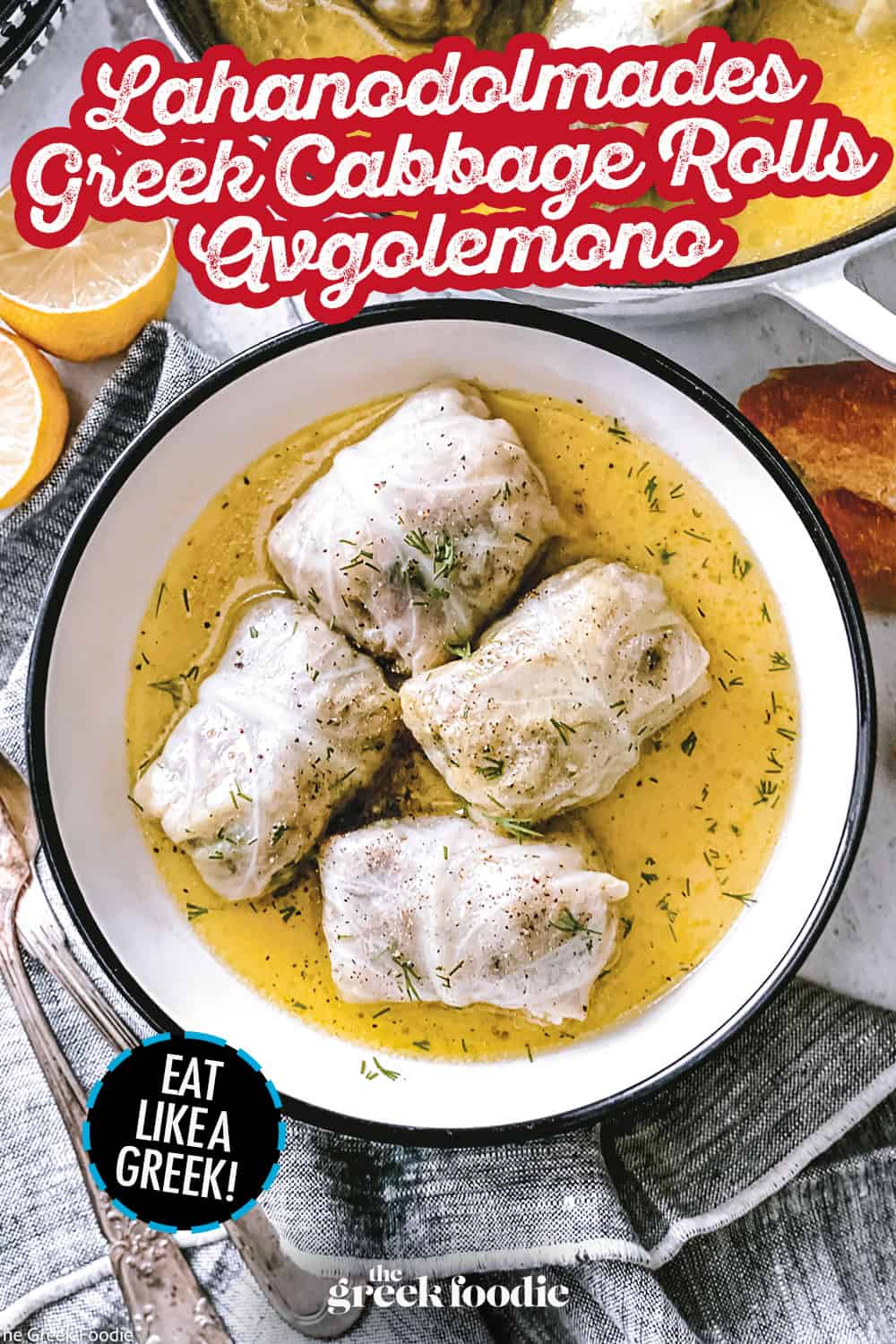

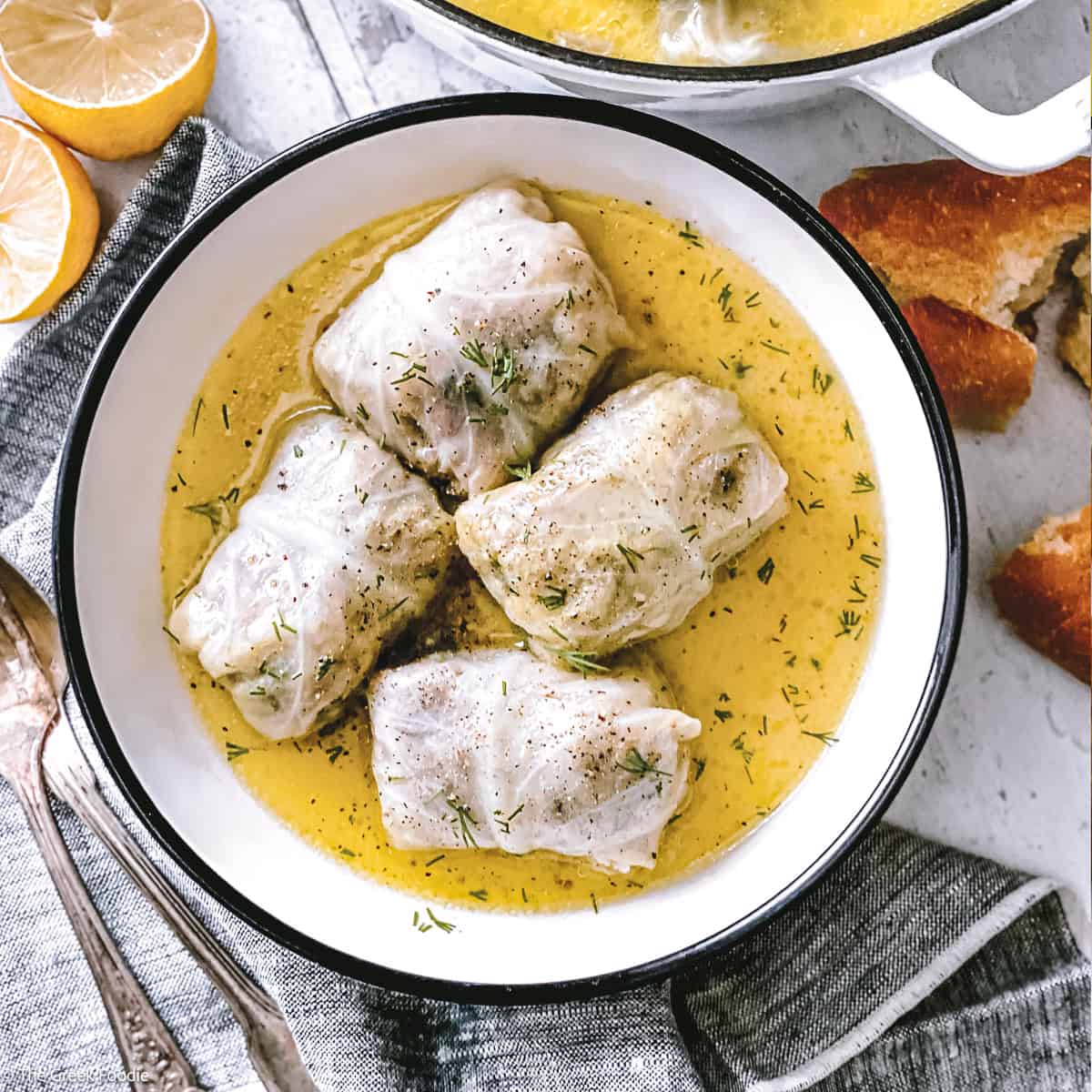
Lahanodolmades are cabbage leaves wrapped around ground meat and rice, simmered slowly in the pot until the leaves go silky, then finished with a lemony avgolemono that turns the broth into sauce. In Greece we eat them all winter. Sunday lunch, a cold Tuesday, the Christmas table.
They have a reputation for being fiddly. They aren’t. Boiling the cabbage and peeling the leaves off is the only part that takes patience, and if you cut the core out first the head comes apart in your hands. Everything after that is rolling, which goes faster than you think and is a good job to give to whoever is standing in your kitchen talking to you.
My husband claims these are the best thing I’ve cooked since we met. That was 2004, so, do the math.
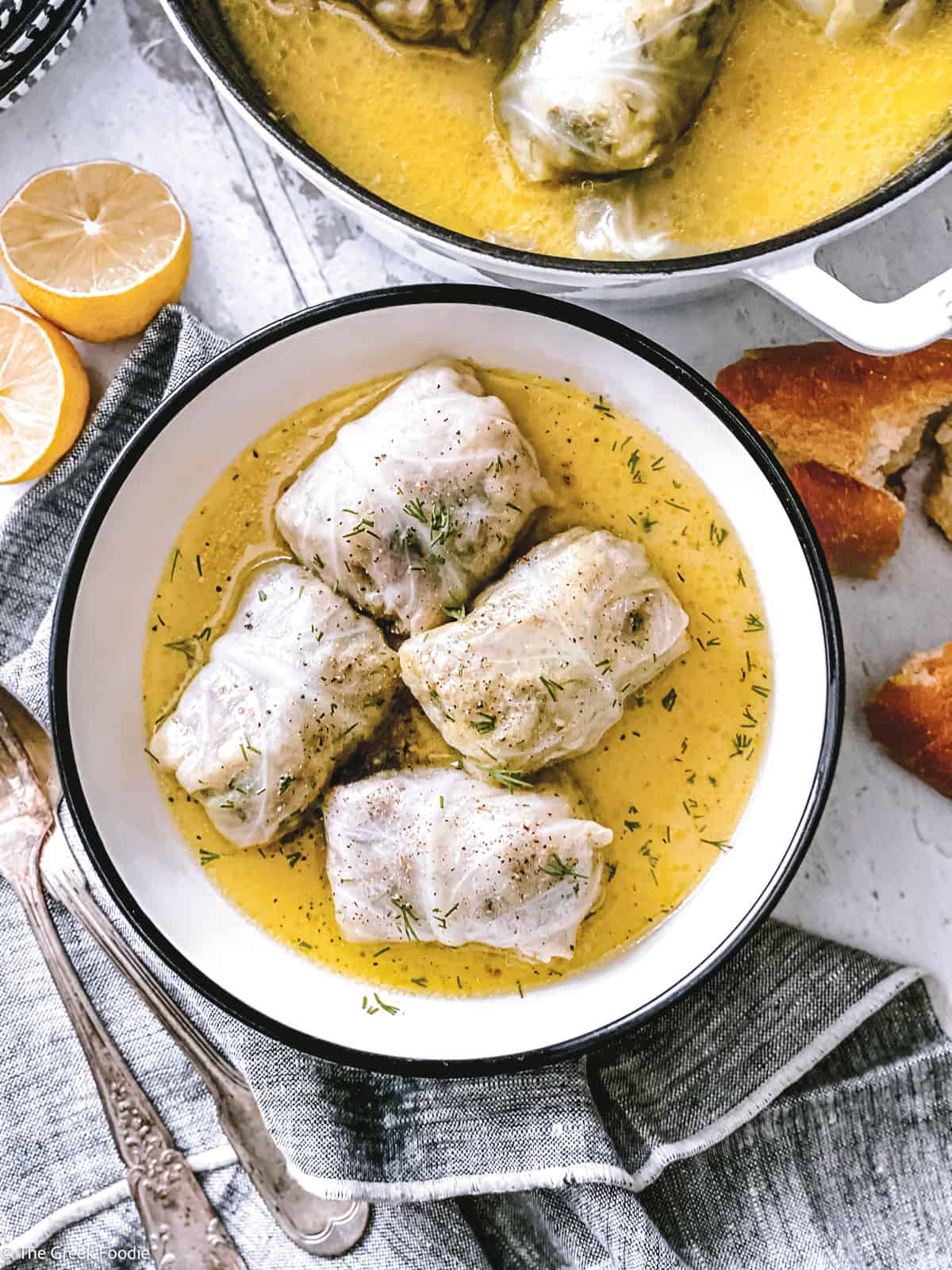
What are lahanodolmades?
Lahanodolmades (λαχανοντολμάδες) are the Greek version of stuffed cabbage rolls: blanched cabbage leaves rolled around a filling of ground meat, rice and a lot of fresh herbs, packed tight into a pot and simmered until tender. Most of Greece finishes them with avgolemono, the egg-and-lemon sauce that shows up in everything from soup to fricassee.
How to say it: lah-ha-no-dol-MA-thes. The stress lands on the second-to-last syllable, and that middle d is soft — closer to the th in “this” than the d in “dish.” You’ll also see it written lahanodolmathes, which is honestly closer to how it sounds.
The other names. In the north and among Pontic Greeks they’re sarmades (σαρμάδες), from the Turkish sarma, “wrapping.” In Thrace, Macedonia and parts of Epirus they’re giaprakia (γιαπράκια), from yaprak, “leaf.” Same dish, three names, depending on whose grandmother you’re standing next to.
What makes them Greek rather than Polish or Ukrainian or Lebanese — all of which have their own beautiful cabbage rolls — is the herb load and the finish. Dill, parsley and scallions go into the filling in quantities that would look excessive in another cuisine. And instead of a tomato or sour cream sauce, the pot liquid gets whisked with egg and lemon at the end.
Why you will love lahanodolmades
Here is what you need
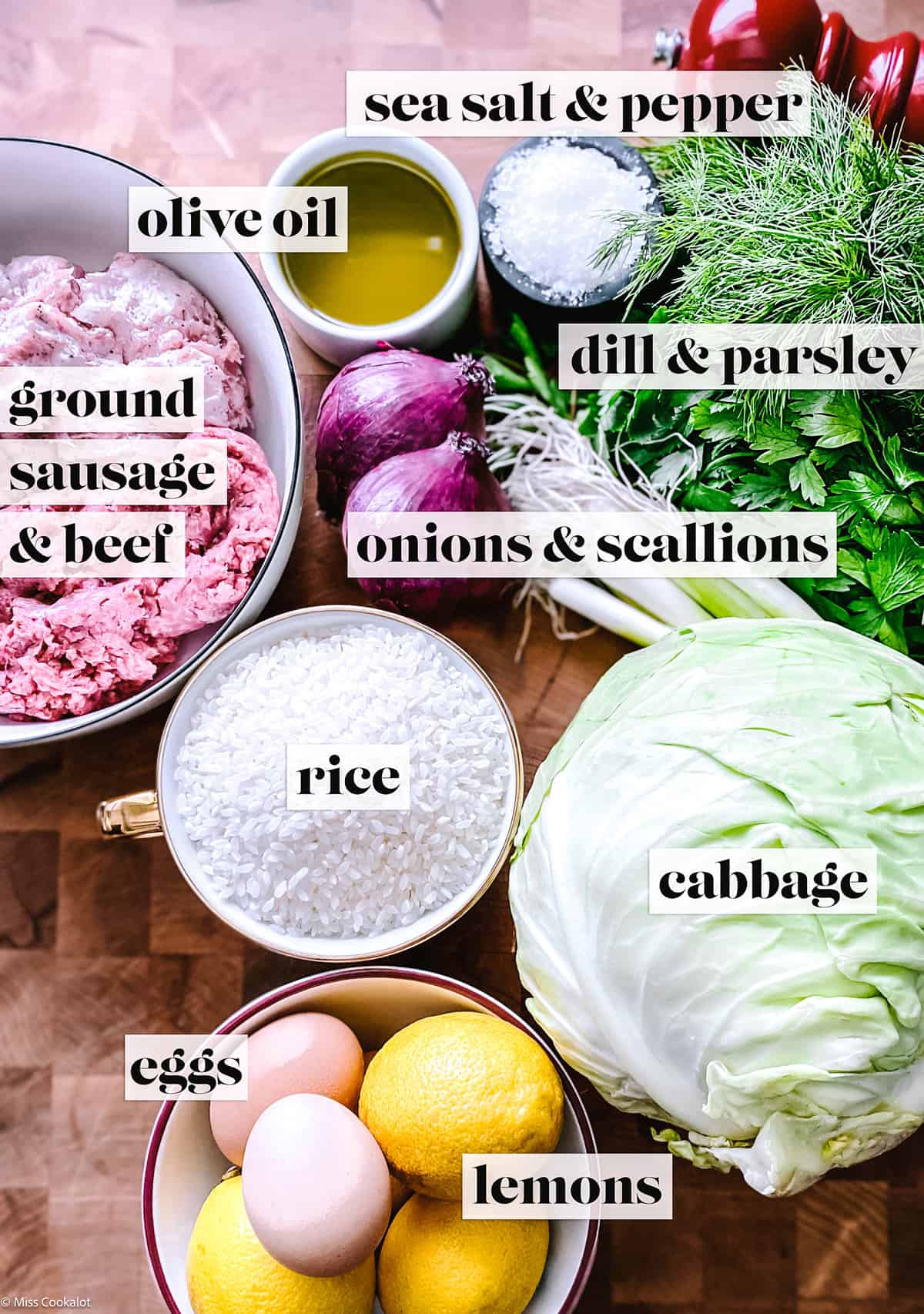
- Ground meat. Beef and pork in equal parts is the standard and what I’d start with. Beef alone works. Lamb and beef is richer. All pork is what most Greek villages actually did in December, for reasons that will make sense shortly.
- My own shortcut: I often swap the pork for ground sweet Italian sausage, because the fennel and seasoning already in it do a lot of work for free. It isn’t traditional and my mother would raise an eyebrow, but it’s excellent.
- A large fresh cabbage. Around 3 to 4 lb (1.4 to 1.8 kg). Pick the loosest, leafiest head in the bin. Tight little cabbages tear when you peel them.
- White rice. Long or medium grain, uncooked. I use Carolina or whatever is in the cupboard. It goes in raw and cooks inside the roll.
- Fresh dill, parsley and scallions. Lots. This is not a garnish situation. The herbs are half the flavour and the reason these taste Greek rather than generic.
- Onions. Red or yellow, which ever you prefer. One onion is finely diced for the filling, one sliced to line the bottom of the pot so nothing catches and scorches.
- Ground cumin. Just a pinch. My grandmother always added cumin to the mix, and at some point it stopped being her habit and became a family rule. It’s subtle and you’d miss it if it were gone.
- Extra virgin olive oil, sea salt, freshly ground pepper.
- Eggs and lemons. Two eggs, at room temperature — take them out of the fridge half an hour ahead, it matters more than you’d think. And have more lemons than you expect. I use four, sometimes five. Cabbage takes a lot of acid before it tastes lemony, and the sharpness cuts the richness of the meat and oil.
Substitutions and swaps
- No pork: all beef, or beef and lamb. Ground chicken or turkey makes a lighter version, but add an extra tablespoon of olive oil to the filling since there’s less fat to work with.
- No fresh dill: don’t substitute dried, it tastes like nothing here. Use all parsley and add a little more.
- Rice: short grain gives a softer, stickier filling. Arborio works. Avoid instant or parboiled rice, it turns to paste.
- Gluten-free: it already is.
- Savoy cabbage instead of green. More pliable leaves, prettier, slightly more delicate. Handle gently.
- Vegan: full method in the recipe notes. More rice plus raisins, pine nuts, walnuts and carrot, with a cornflour avgolemono instead of eggs.
How to make lahanodolmades
Although it may look labour intensive, the recipe is straightforward. The only real skill is getting the leaves off the cabbage intact, and cutting the core out first solves that.
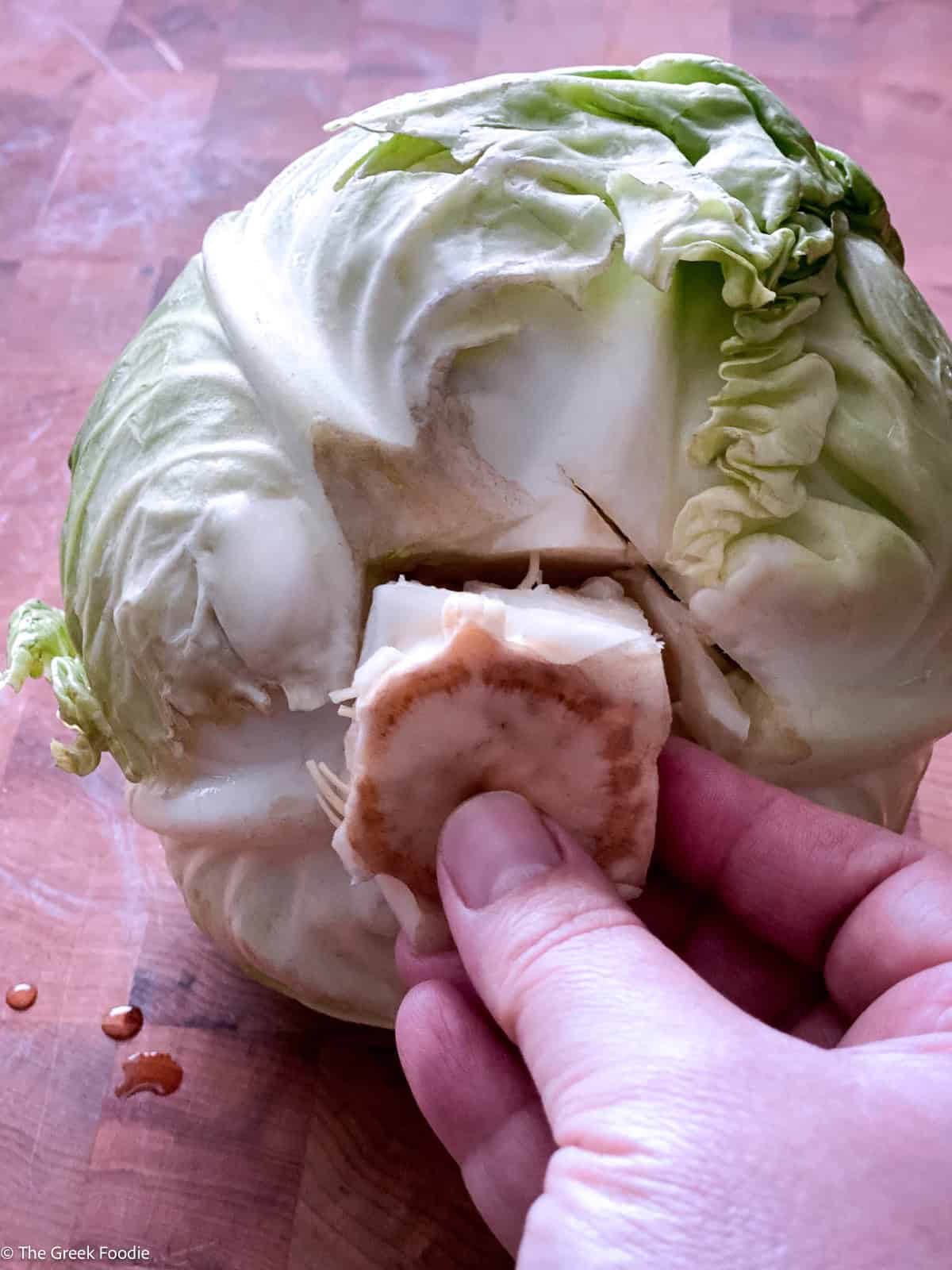
STEP 1. Remove the entire core of the cabbage with a knife.
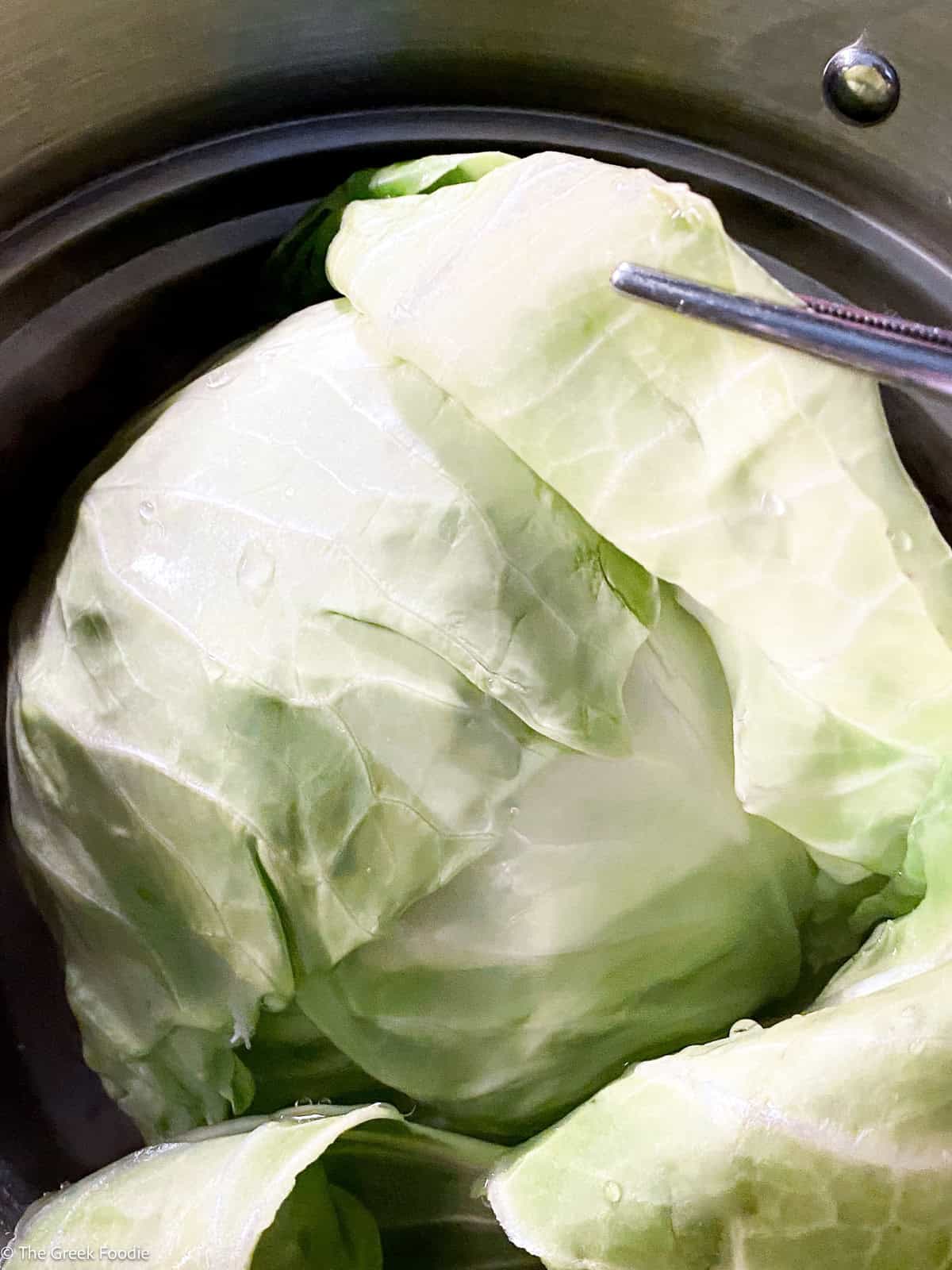
STEP 2. Immerse the head of cabbage in boiling water for 10 to 15 minutes. It will float, so don’t expect it to be covered. Turn it over occasionally and peel off each leaf with tongs as soon as it goes flexible.
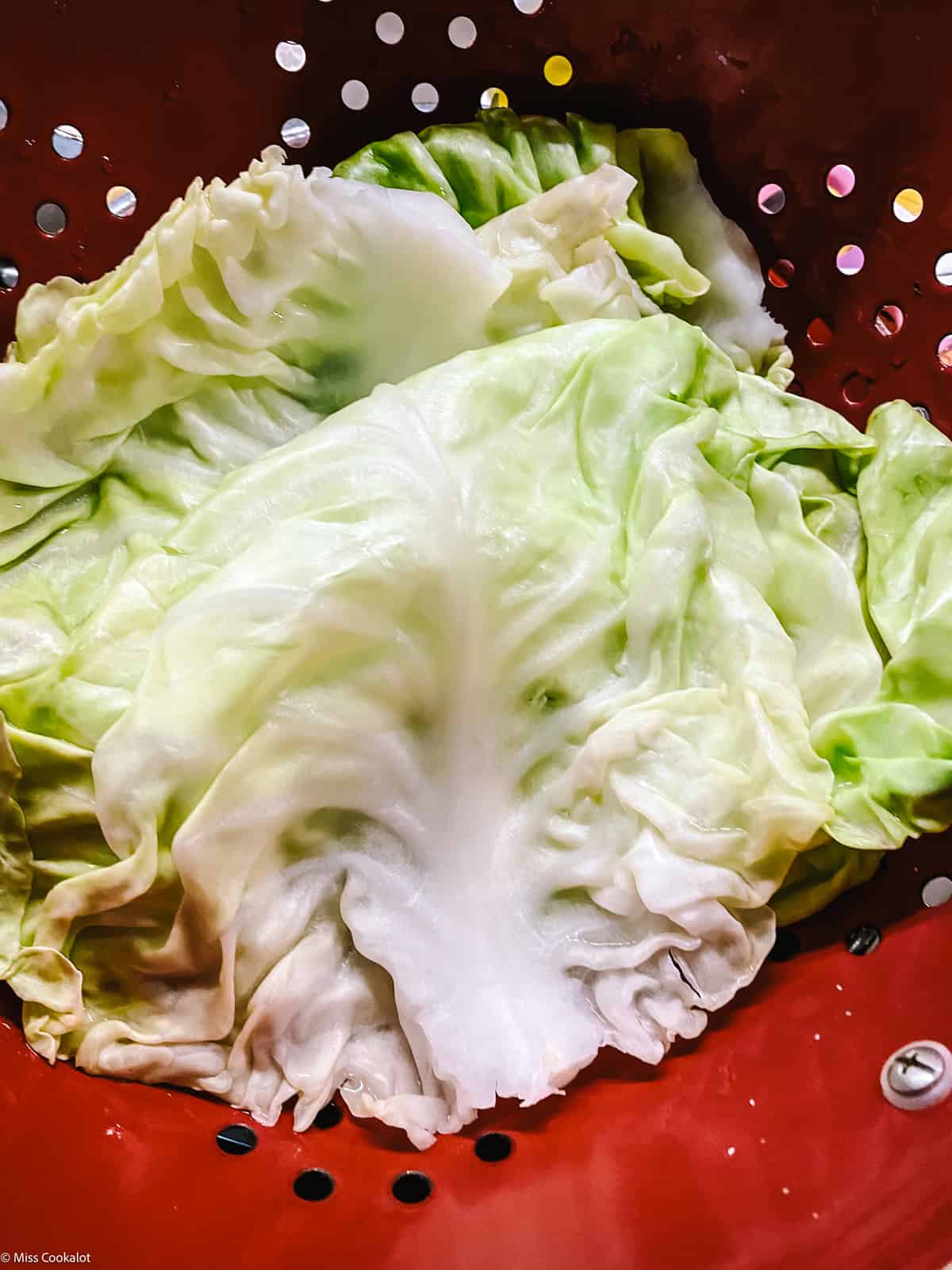
STEP 3. Set the leaves aside on a collander.
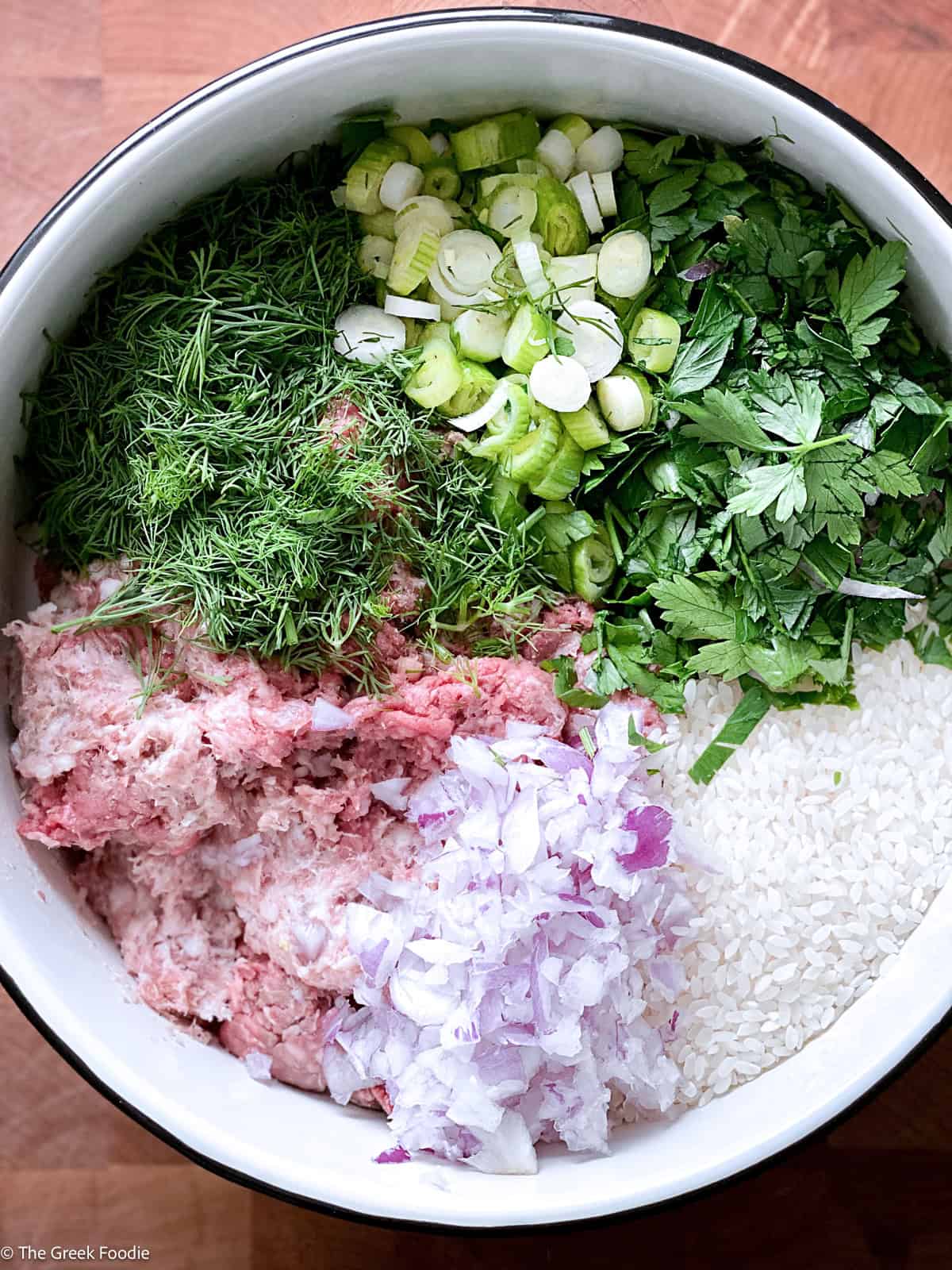
STEP 4. In a large bowl, combine all the ground meat, one onion diced, the rice, sliced scallions, chopped dill and parsley, a pinch of cumin and sea salt, and freshly ground pepper.
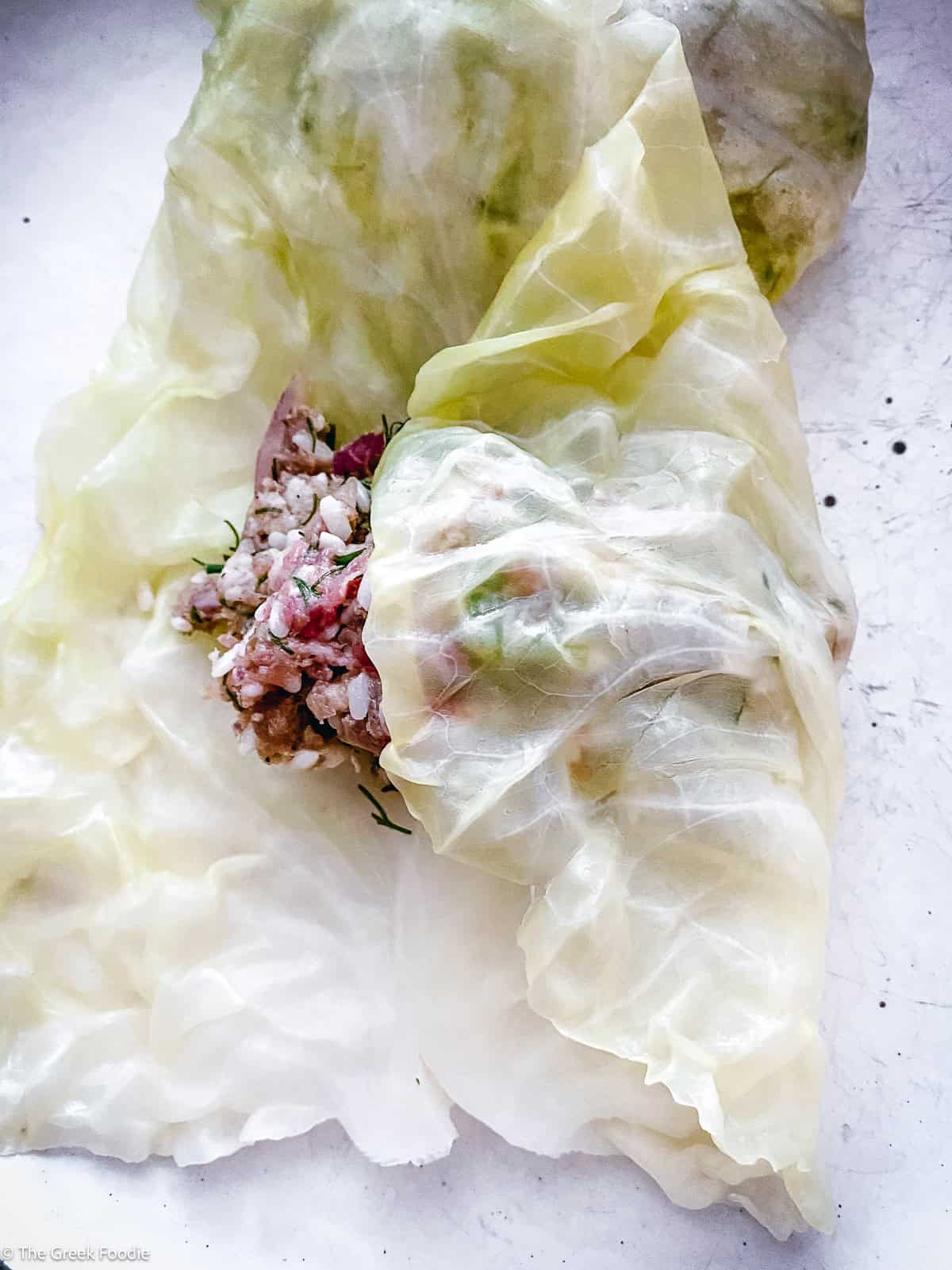
STEP 5. Remove the hard rib, if any, from the leaves with a knife. Place a spoonful of the stuffing mixture in the middle of each cabbage leaf. Fold the left and right side over…
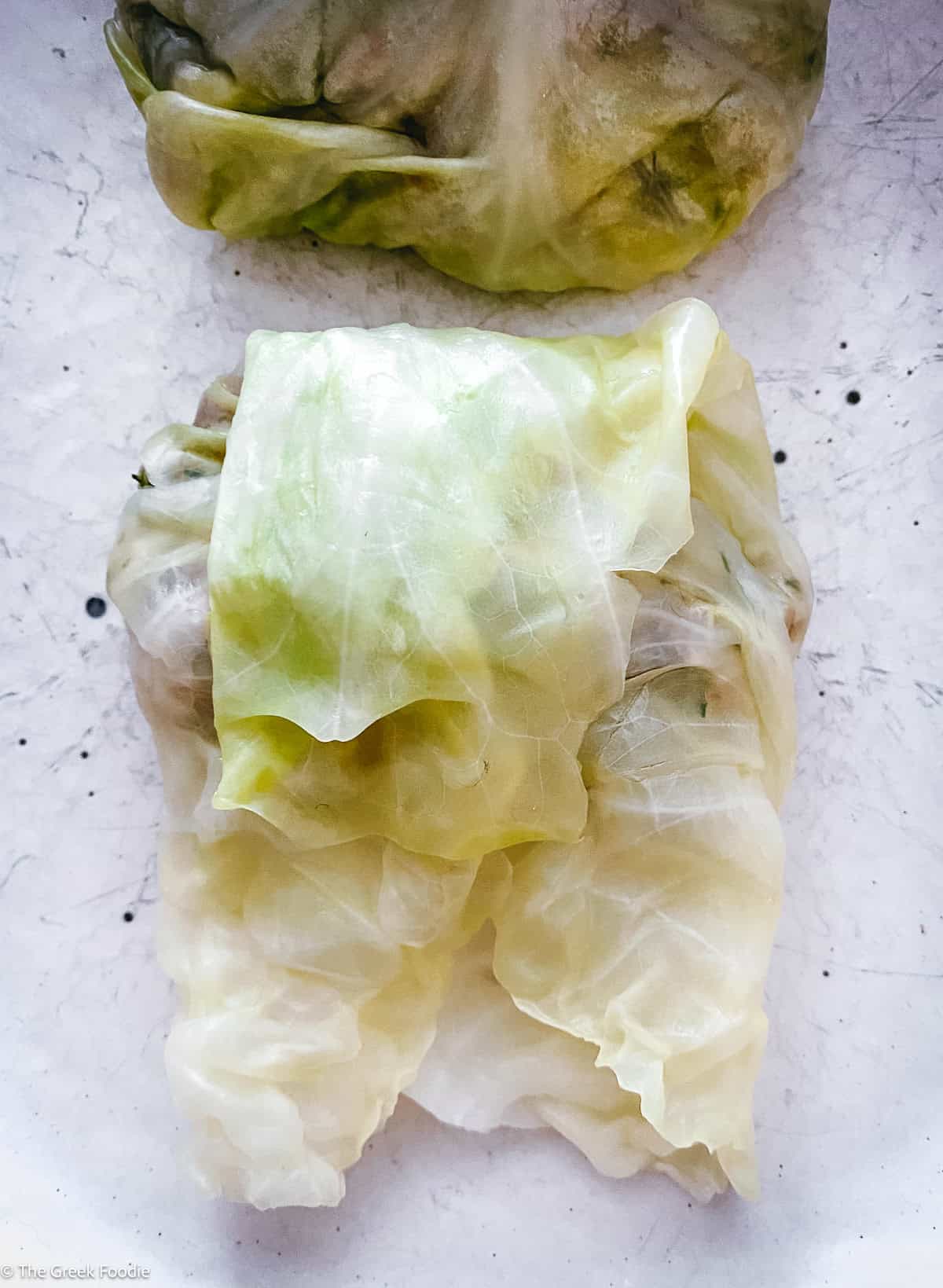
…and wrap into a roll.
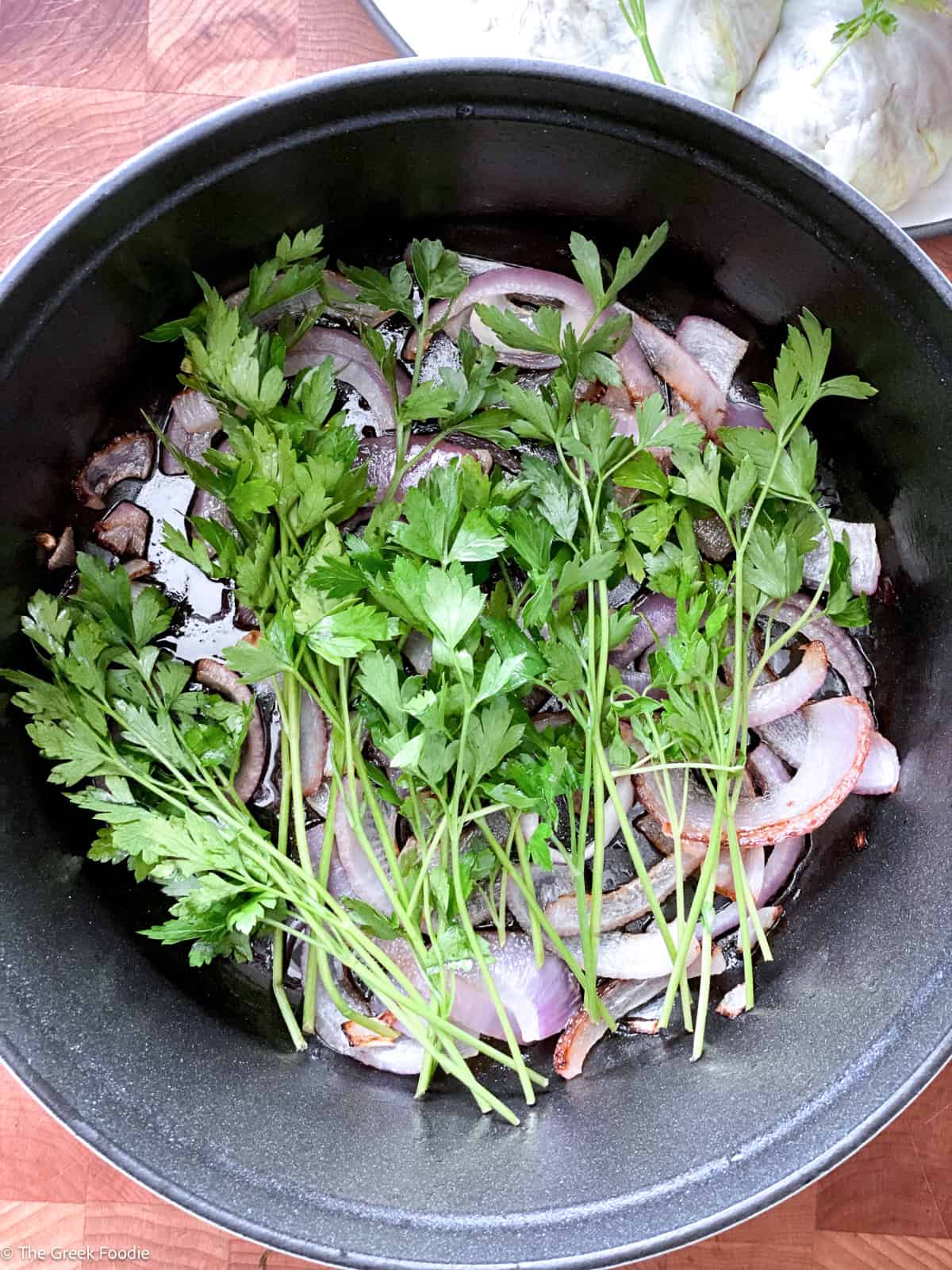
STEP 6. Add a tablespoon of olive oil to a large pot over medium-high heat and sauté the second onion for a few minutes. Once softened, lay a handful of fresh parsley on top, then any torn or leftover cabbage leaves.
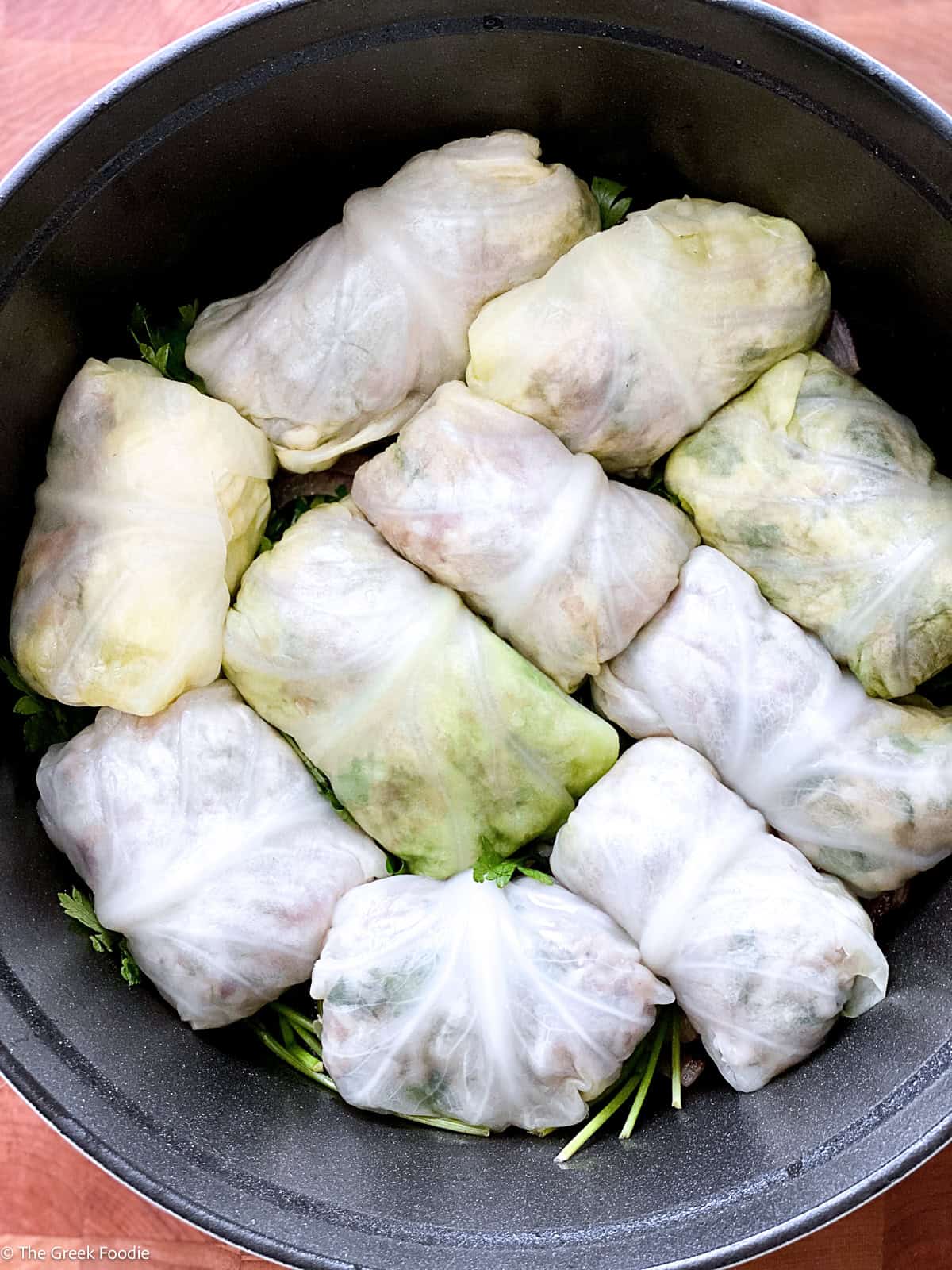
STEP 7. Transfer the cabbage rolls to the pot in layers next to one another.
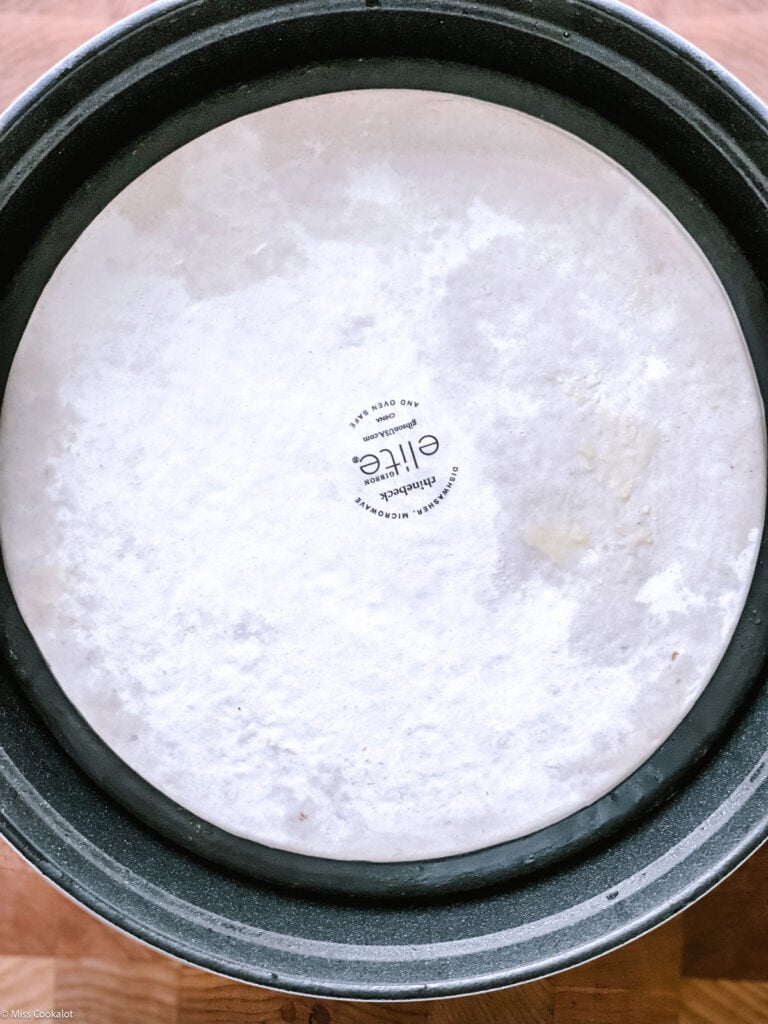
STEP 8. Cover with a plate so as not to unwrap while cooking. Pour enough water to cover the cabbage rolls, and add 1/3 cup olive oil. Cover and simmer in low for 60 minutes. Remove from heat, uncover, and let food sit for 10 minutes to cool the broth.
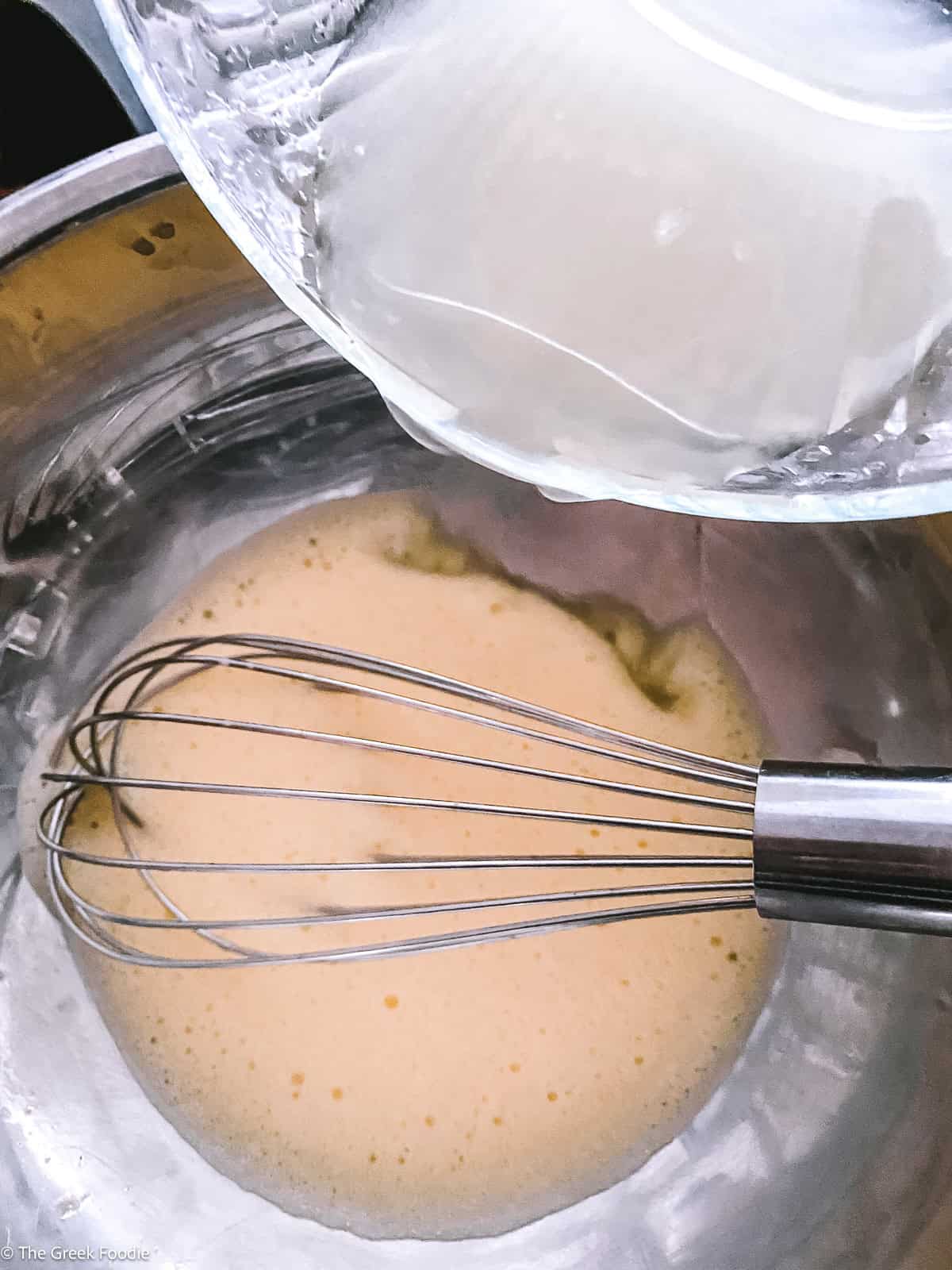
STEP 9. Whisk two eggs really well for about 2 minutes. Add the juice of 4 lemons and keep whisking.
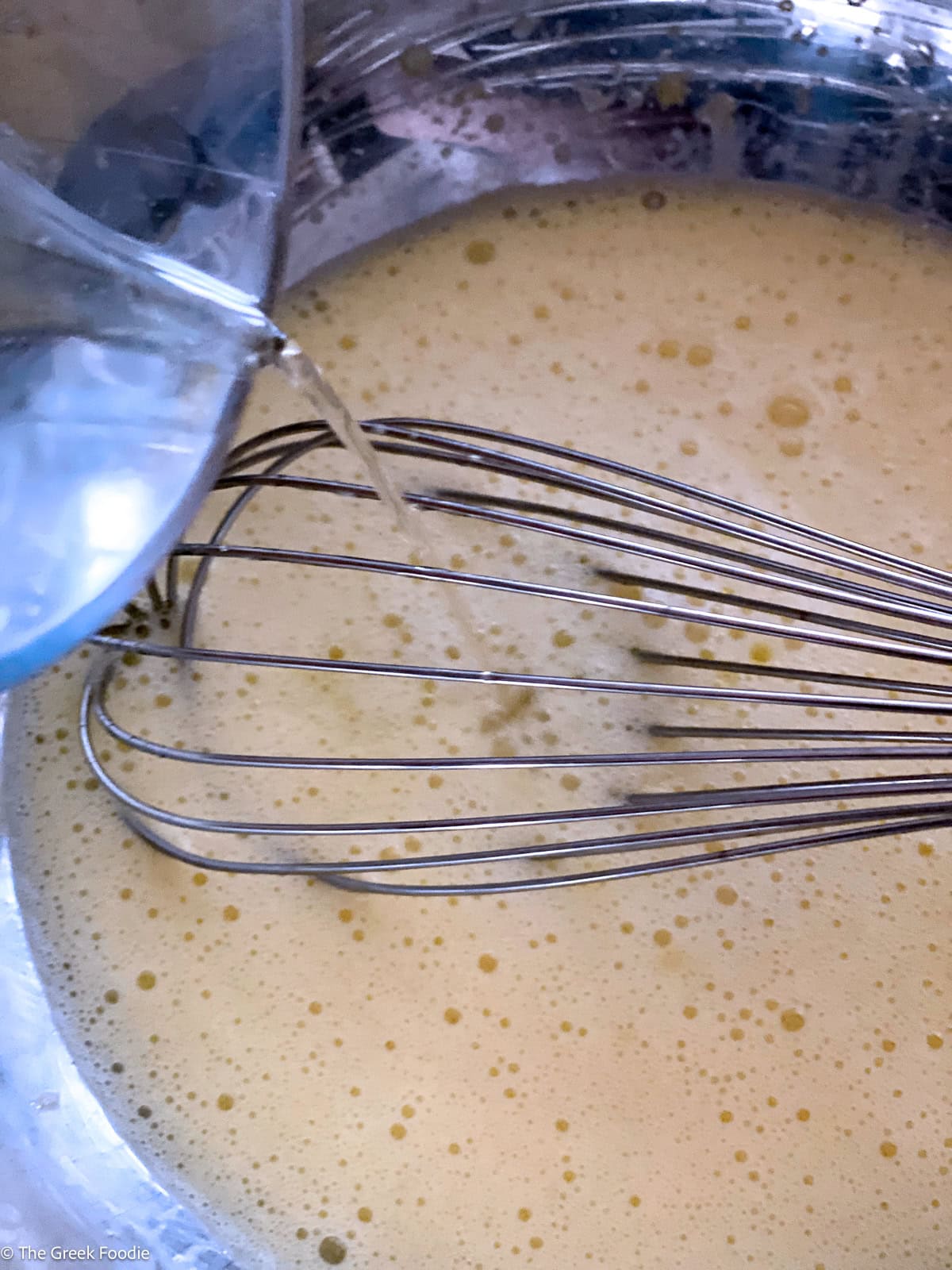
STEP 10. Drizzle in a ladleful of hot broth while whisking, then another.
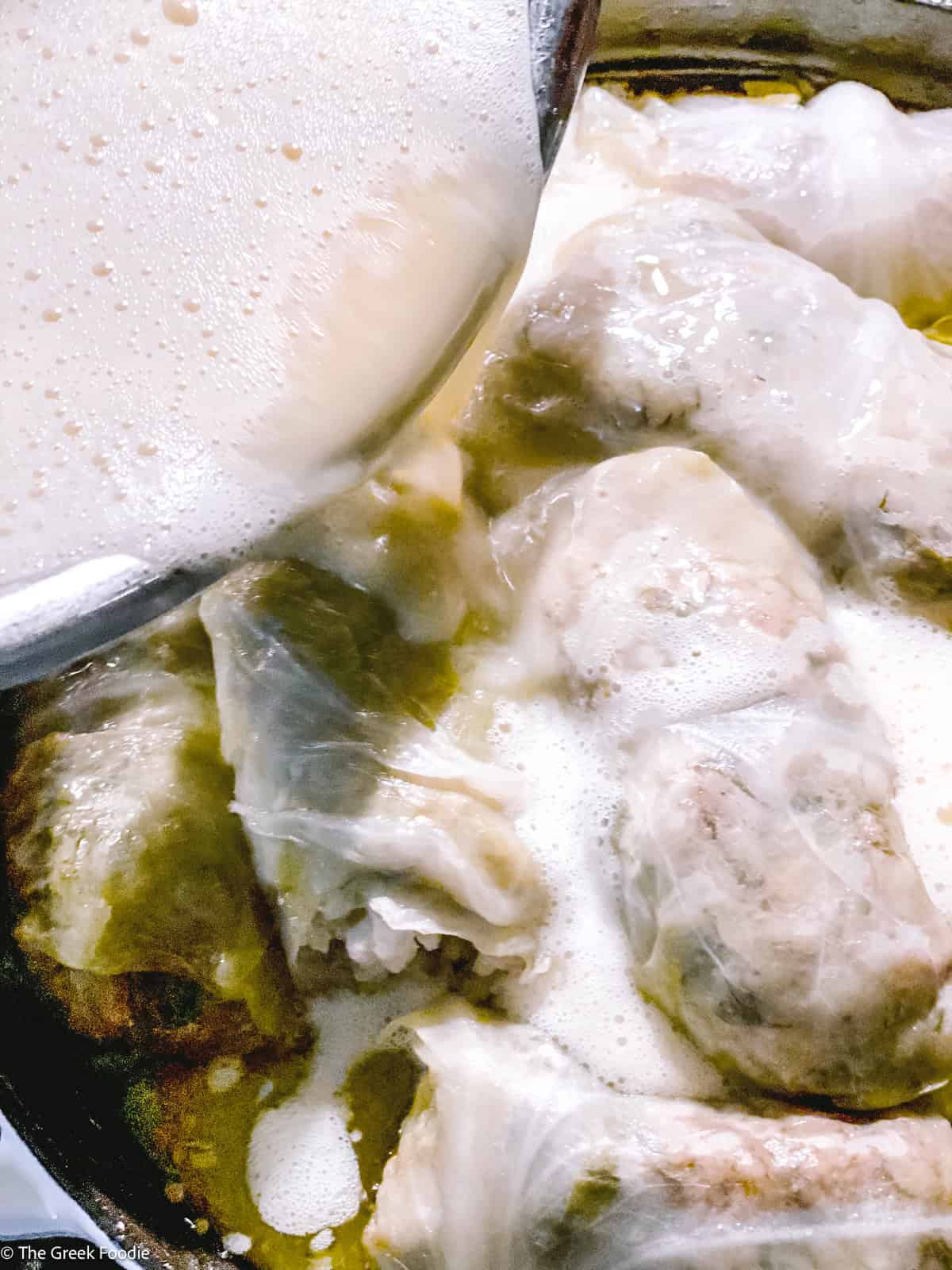
STEP 11. Pour the sauce over the rolls. Shake the pot to distribute. Serve.
How to make avgolemono that doesn’t split
Avgolemono splits for one reason: heat shock. Cold eggs hit the hot broth, the proteins seize, and you get scrambled egg in lemon water instead of a sauce. Here are the four things to prevent it:
- Start with room temperature eggs. Take them out of the fridge about half an hour before you need them. A cold egg going into hot broth is the biggest single temperature gap in the whole process, and it’s the one most people don’t think about. If you forgot, sit them in a bowl of warm tap water for 10 minutes while the pot cools. That’s enough.
- Let the pot cool. Off the heat, uncovered, a full 10 minutes. The broth should be hot, not simmering.
- Temper slowly. Whisk the eggs hard first, a good two minutes, until they’re pale and frothy. Room temperature eggs whip up faster and hold more air, which is a second reason not to use them cold. Add the lemon juice while whisking. Then add the hot broth one ladle at a time, whisking constantly. The first ladle is the one that breaks sauces. Go slower than feels necessary.
- Never boil it afterwards. Once the avgolemono is in, the dish is finished. Shake the pot to distribute and serve.
My tips for the best lahanodolmades
- Fry a teaspoon of the filling before you roll anything. Taste it, adjust the salt. Once it’s inside forty cabbage leaves it’s too late. This is the single most useful habit in this recipe.
- Don’t overfill. A heaping tablespoon per leaf, less for small leaves. The rice roughly doubles, and an overfilled roll bursts.
- Roll snug, not tight. The rice needs somewhere to expand. Firm enough to hold, loose enough to breathe.
- Shave the rib, don’t cut it out. Lay the knife almost flat and take the thick spine down to the level of the leaf. Cutting a V out of it means the roll has a hole in the bottom.
- Line the pot with the torn leaves. Every cabbage gives you a few casualties. They go on the bottom over the onion, where they protect the first layer from scorching and add flavour to the broth.
- A tall narrow pot beats a wide shallow one. Fewer, deeper layers hold together better than a single sprawling one.
- The plate is not optional. An upturned heavy plate, directly on the rolls, under the lid. It’s what keeps the pot still while it simmers and it’s the difference between forty cabbage rolls and one pot of cabbage and mince.
- Just cover with water, no more. Too much liquid and the broth is thin and the avgolemono has nothing to cling to.
- Never stir. Shake the pot by the handles instead. A spoon will wreck them.
- Take the eggs out of the fridge before you start rolling. By the time the pot has simmered an hour they’ll be at room temperature and your avgolemono has one less reason to split.
- Be generous with the lemon. Four is not a typo. Cabbage swallows acidity.
- Save any leftover broth. It’s excellent, and it’s what you’ll want to reheat leftovers in.
Where it usually goes wrong
The rolls unwrapped. Packed too loosely, or there was no plate on top. Both fixable next time.
The rice is still crunchy. Not enough liquid, or the rolls were packed so tightly the water couldn’t circulate. Add hot water and give it another 15 minutes.
The filling is gluey. You used pre-cooked rice. Rice goes in raw.
The leaves tore coming off the head. Either the cabbage wasn’t boiled long enough, or it was a tight small head. Give it more time in the water.
It tastes flat. Under-salted, or not enough herbs. Both are usually the same problem: people are cautious with a big bowl of raw meat. Some taste a tiny bit to check the salt. If that gives you the ick, fry or microwave a test spoonful instead.
The sauce split. Cold eggs, broth too hot, or added too fast. See above.
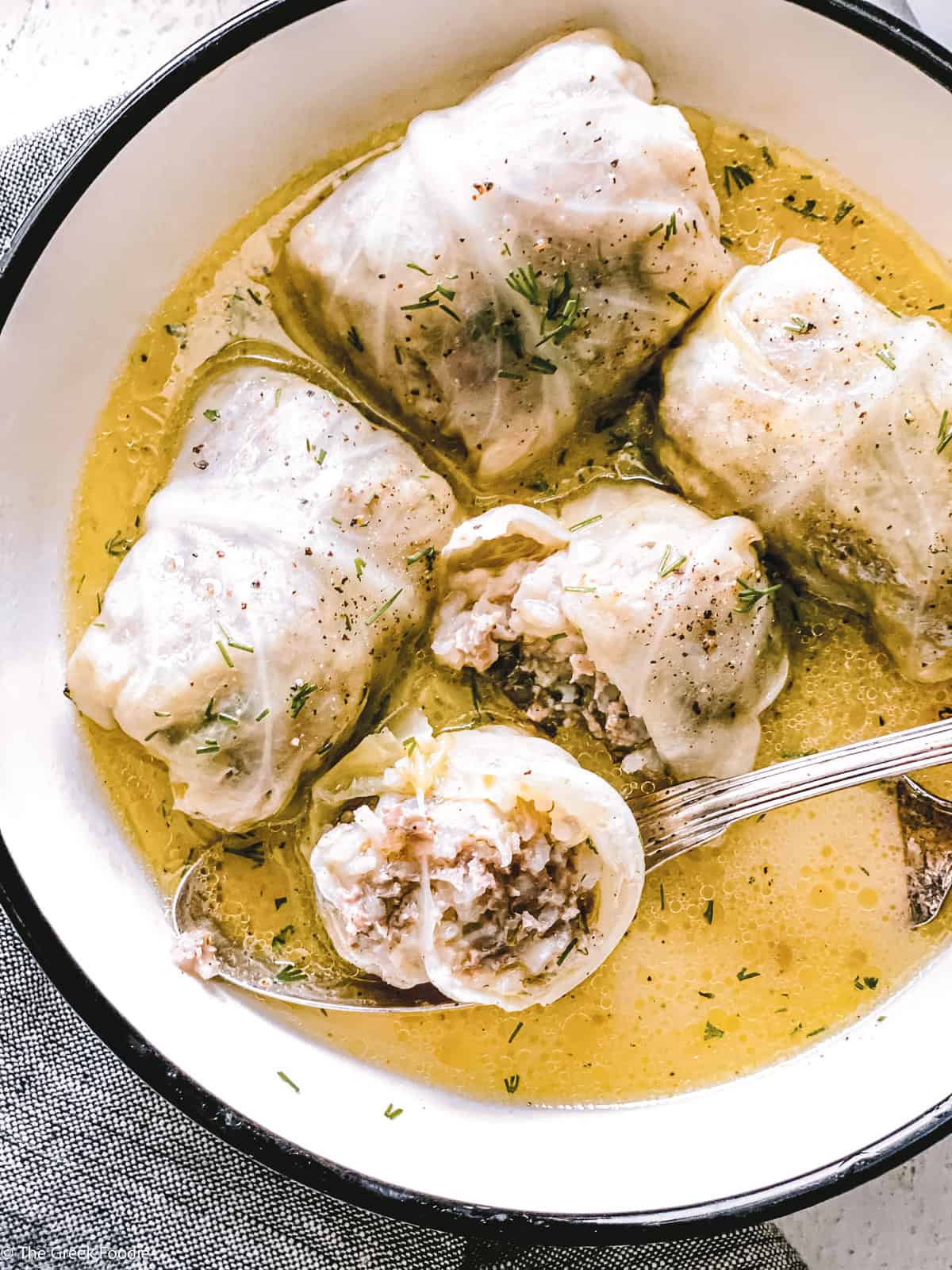
Why lahanodolmades are a Christmas dish in Greece
Ask someone from Thrace, Macedonia, Epirus or the Dodecanese what was on the Christmas table growing up, and lahanodolmades will come up before the turkey does. Among Pontic Greeks the same dish, as sarmades, holds the same place.
The reason is the shape. A cabbage leaf wrapped tightly around a filling looks like a swaddled infant, and Greek tradition reads them as the spargana, the swaddling clothes of the newborn Christ. In some parts of the country they’re called ta faskia tou Christou outright.
There’s a practical layer underneath the symbolic one. By Christmas time, in rural Greece the pork was suddenly plentiful and cabbage was at its best in the field. The dish is what those two facts produce when they meet. Tradition also holds that lahanodolmades bring good luck to the household, which is as good a reason as any to make a large pot.
None of which means you should wait for December. This is a winter dish before it’s a Christmas dish, and it’s on Greek tables from November through February. But if you’re building a Greek Christmas menu, they’ve earned their place on it.
Regional versions worth knowing
With sour cabbage. In Macedonia and Thrace they’re often made with armia, cabbage soured in brine over the winter. It gives the dish a sharper, deeper, almost funky edge fresh cabbage can’t. If you can find whole sauerkraut leaves, you’re most of the way there.
Smyrna style. Meat filling, but with tomato juice going into the pot liquid alongside the avgolemono at the end, so you get both the acidity of the tomato and the silk of the egg and lemon.
With tomato instead of avgolemono. Skip the egg-lemon entirely and simmer them in a light tomato sauce. Common across Greece, and the version plenty of people grew up with, especially where the dish is called giaprakia.
Kozani giaprakia. Pieces of pork go in the bottom of the pot and tucked between the layers, so the whole thing cooks in pork fat and the meat falls apart into the sauce.
The meat. Beef, pork or a mix is standard. Lamb and beef makes them richer. Mutton makes them properly robust but needs longer, since the meat is tougher. Ground chicken makes a lighter version.
What to serve with lahanodolmades
A fresh green salad and a lot of crusty bread are all you really need. The bread is not optional in my house, because the broth at the bottom of the plate is the best part and it has to go somewhere.
If you want more on the table, roasted vegetables or a silky pilaf work, though be aware you’re building a large meal. Feta and olives on the side, always.
Lahanodolmades are a Sunday lunch food, cold weeknight food, and Christmas and New Year’s table food, depending on the week you’re having.
Make ahead, storing and freezing
They’re genuinely better the next day. The filling settles, the flavours come together, the rice finishes absorbing.
Make ahead: Roll the dolmades and refrigerate them uncooked and covered for up to 24 hours, then cook the day you’re serving. If you want to cook ahead instead, stop before the avgolemono, refrigerate the pot as it is, and make the avgolemono sauce fresh when you reheat.
Fridge: 3 days in an airtight container with their broth.
Reheating: Low heat, covered, with a splash of water or leftover broth, until just heated through. Don’t let it boil or the sauce breaks. A microwave at 50% power in short bursts also works.
Freezing: Freeze them cooked but without the avgolemono, in their broth, up to 3 months. Thaw overnight in the fridge, reheat gently, then make the egg-lemon sauce fresh. Frozen avgolemono separates on thawing every single time.

Questions I get about lahanodolmades
You may also like
Cooked it? Rate it!
If you tried this recipe, I’d love to know how you liked it — drop a comment below or tag me on Instagram @thegreekfoodie__.


Lahanodolmades — Greek Stuffed Cabbage Rolls in Avgolemono
Ingredients
- 1 lb ground beef, (450 g)
- 1 lb ground pork, (450 g)
- ½ bunch of fresh dill , chopped
- ½ bunch of fresh parsley, chopped, plus a handful for the pot
- 2 onions, one finely diced, one sliced
- 3 scallions, sliced
- 1 cup white rice, (200 g) uncooked
- 1 large cabbage, about 3–4 lb (1.4–1.8 kg)
- ½ cup extra virgin olive oil, (80 ml), plus 1 tbsp (15 ml) for the pot
- 1 pinch ground cumin
- 1½ teaspoons sea salt
- 1 teaspoon freshly ground pepper
For the avgolemono
- 2 eggs, at room temperature
- 4 lemons, juiced
Instructions
- Bring a large pot of water to a boil.
- Remove the entire core of the cabbage with a knife. Immerse the head in the boiling water for 10 to 15 minutes, turning occasionally. Peel off each leaf with tongs as soon as it's flexible and set them aside in a colander.
- In a large bowl, combine the ground beef and pork, the diced onion, the rice, sliced scallions, chopped dill and parsley, cumin, salt and pepper. Fry a teaspoon of the mixture in a small pan and taste it, then adjust the seasoning.
- Shave the thick rib off each leaf with a knife held almost flat. Place a heaping tablespoon of filling in the middle of each leaf, fold the sides over, and wrap into a snug roll.
- Add 1 tbsp olive oil to a large pot over medium-high heat and sauté the sliced onion for a few minutes. Once softened, lay a handful of fresh parsley on top, then any torn or leftover cabbage leaves.
- Transfer the rolls to the pot in tight layers, seam side down. Cover them with an upturned heavy plate so they can't unwrap while cooking.
- Pour in enough water to just cover the rolls and add the remaining ⅓ cup olive oil.
- Put the lid on and simmer on low for 60 minutes. Remove from the heat, uncover, and let it sit for 10 minutes so the broth cools.
Prepare the egg-lemon sauce
- Whisk the room temperature eggs hard for about 2 minutes, until pale and frothy. Add the lemon juice and keep whisking. Drizzle in a ladleful of the hot broth while whisking constantly, then a second ladleful. Pour the sauce over the rolls and shake the pot to distribute. Serve.
Notes
- Substitute the meat with 1½ cups (300 g) of rice.
- Sauté the diced onion in a little olive oil before adding it to the mixture.
- Add the chopped parsley, dill and sliced scallions to the stuffing.
- Add 3 tbsp raisins, ⅓ cup (45 g) pine nuts and ⅓ cup (40 g) chopped walnuts.
- Finely dice 2 medium carrots and add them to the mix.
- For the vegan avgolemono: use 2 cups (480 ml) of the cooking broth, the juice of three lemons, and 2 tbsp cornflour to thicken. Sprinkle in chopped fresh dill. Adapted from Argiro.gr.
Nutrition