

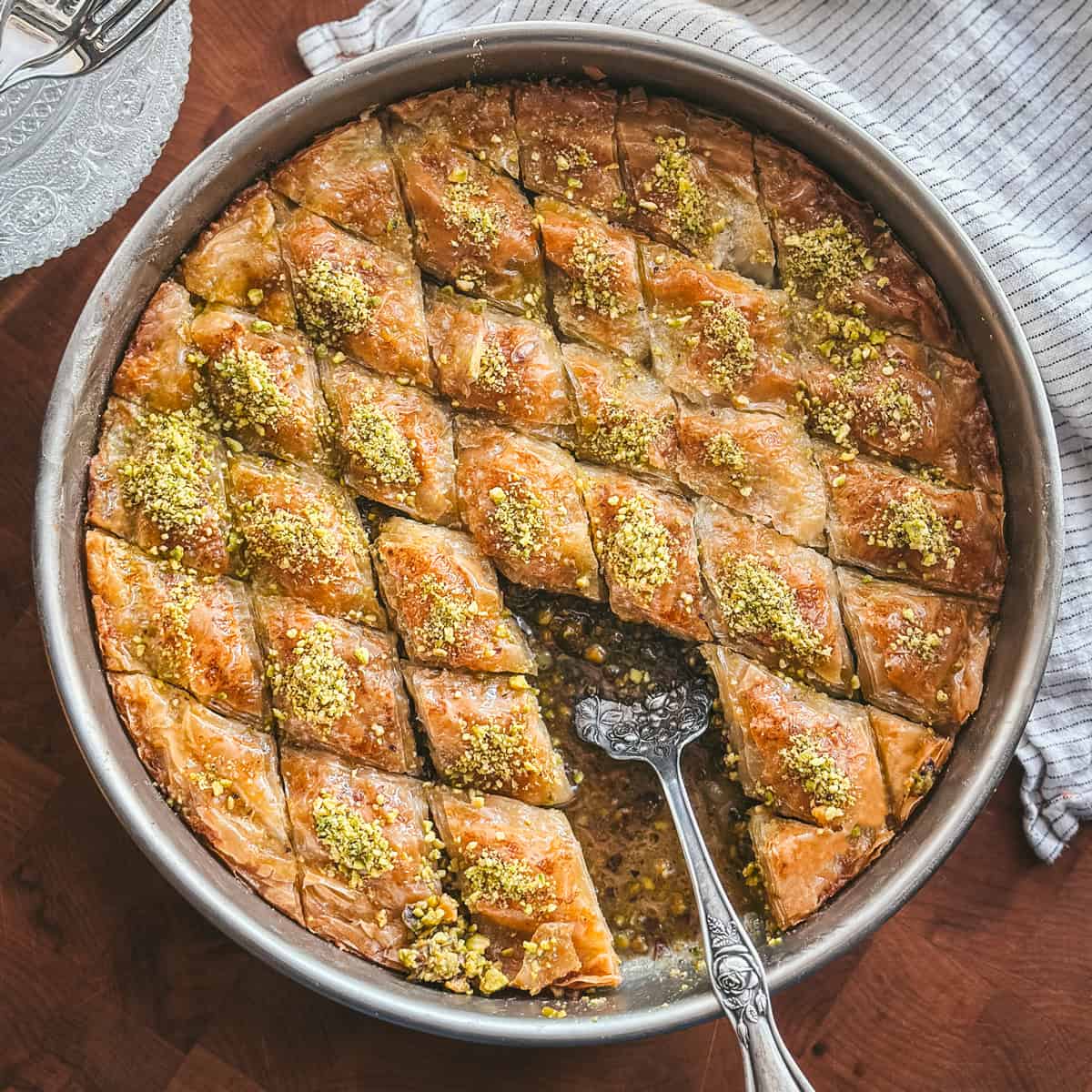
Pistachio baklava is the one I keep coming back to. Sweet green pistachios between sheets of thin phyllo, baked slowly so the nuts keep their color, and finished with a hot lemon syrup poured on a little at a time.
This is the Politiki version, the one that came to Greece from Constantinople. It is quieter than most baklava you will find, yet nothing competes with the pistachio, which is the whole point.
I bake it in a round pan and cut it small, the way it is sold in Greek pastry shops, zacharoplasteia. It makes about 32 pieces, and it gets better on the second day.
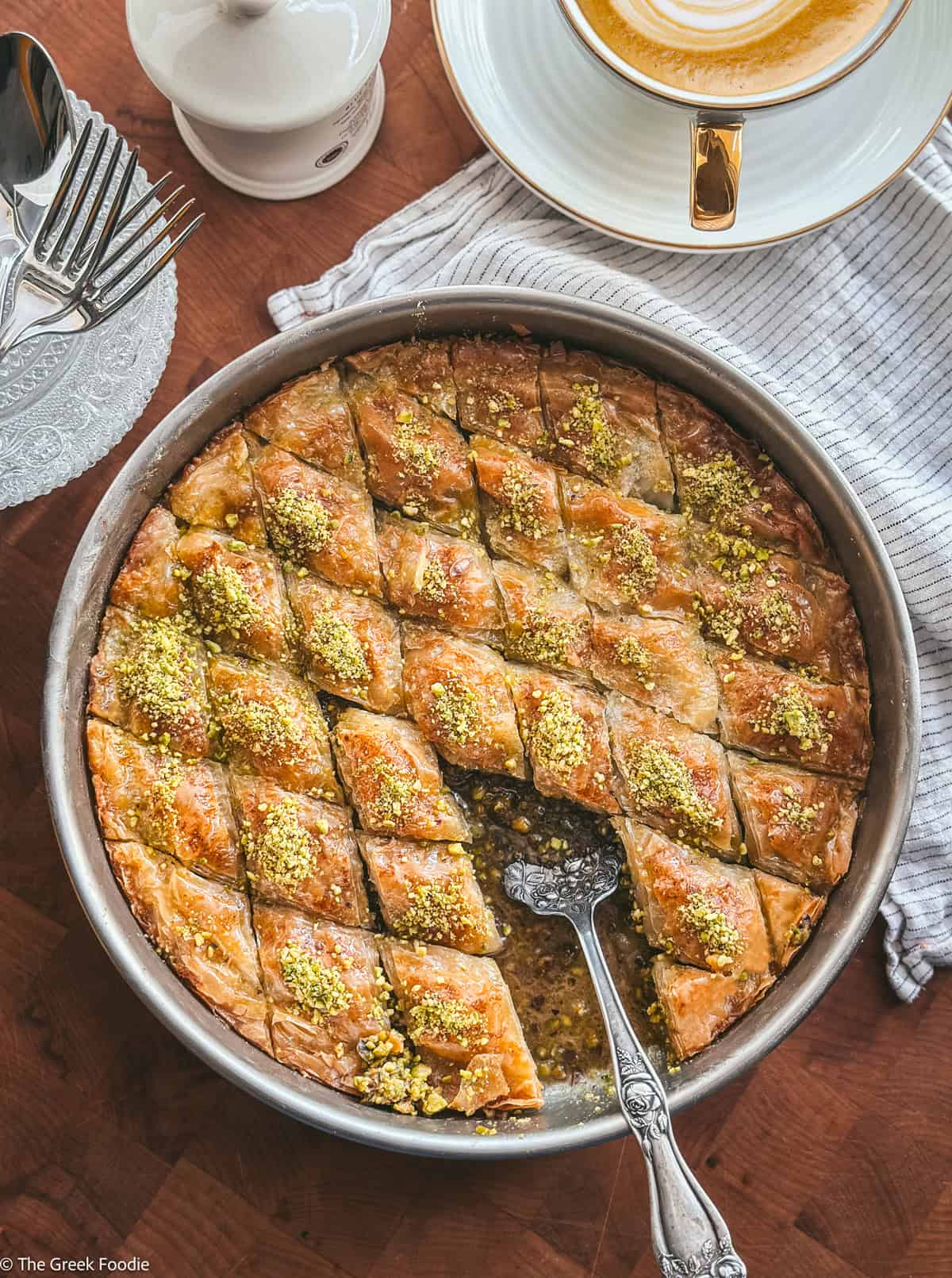
What is pistachio baklava?
Baklava is layered phyllo pastry filled with nuts and soaked in syrup. Pistachio baklava simply uses pistachios instead of the walnuts most Greek households use.
The difference is bigger than a swap. Walnut baklava is usually spiced with cinnamon, and sometimes clove, because walnuts are tannic and want the company. Pistachios do not. They are sweet and faintly resinous on their own, so this version leaves the spice out entirely.
The absence of spices is deliberate, if you add cinnamon here, that’s all you will taste.
The Constantinople version
My grandmother Evgenia came from Constantinople, and her table was the sweet-spiced, fruit-forward Politiki cuisine of that city. Her baklava was pistachio, never walnut.
This baklava is made in a small round pan instead of a large tray, using pistachios instead of walnuts with no spice in the filling. It features a thin lemon syrup rather than a heavy honey one and it feels a more delicate thing than the baklava most people picture.
Aegina pistachios
The best pistachios in Greece come from Aegina, an island very close to Athens. The island’s volcanic soil produces a nut that is intensely green, sweet, and slightly saline. The Aegina pistachios carry protected designation of origin status, which means a bag labelled Φιστίκι Αιγίνης genuinely came from there.
If you can find them, use them. If you cannot, buy the best raw unsalted shelled pistachios you can. Californian or Turkish Antep are both good. What matters far more than origin is that they are raw and unsalted. Roasted pistachios will taste toasted and dull after an hour in the oven, and salted ones will fight the syrup.
Ingredients
For the baklava
- 2 packages phyllo, 450 g each, the thinnest you can find
- 250 g raw unsalted shelled pistachios
- 1 tsp granulated sugar
- 250 g unsalted butter — 50 g soft for the pan, 200 g melted for the sheets
For the syrup
- 600 g granulated sugar
- 500 ml water
- 3 slices of lemon
To finish
- 40 g of the pistachios, ground finer and set aside
Ingredient notes:
Phyllo. Buy the thinnest grade your shop stocks. In the US, Fillo Factory #4 is a good option. Do not count sheets — packets vary, and the one in my freezer says “contains 12–14 sheets” because even the manufacturer will not commit. Two packages is two packages, and whether that gives you 24 thin layers or 28 makes no difference to the result.
One thing to know before you start: you will trim most of it away. Cutting rounds from rectangular sheets leaves a lot behind — I weighed my offcuts at 680 g, which means only about a quarter of what I bought went into the pan. That is not waste unless you throw it out. Wrap the trimmings and use them for tiropitakia.
Butter. I tested this with ghee and with plain butter, on consecutive days, everything else the same. Butter won, and not narrowly. Ghee behaves well and browns cleanly, but plain butter tastes better here, and taste is what you are after.
Pistachios. Weigh them. Cups are unreliable for nuts, and the difference between a scant cup and a generous one is the difference between a full layer and a thin one.
How to make pistachio baklava
Prepare the pistachios
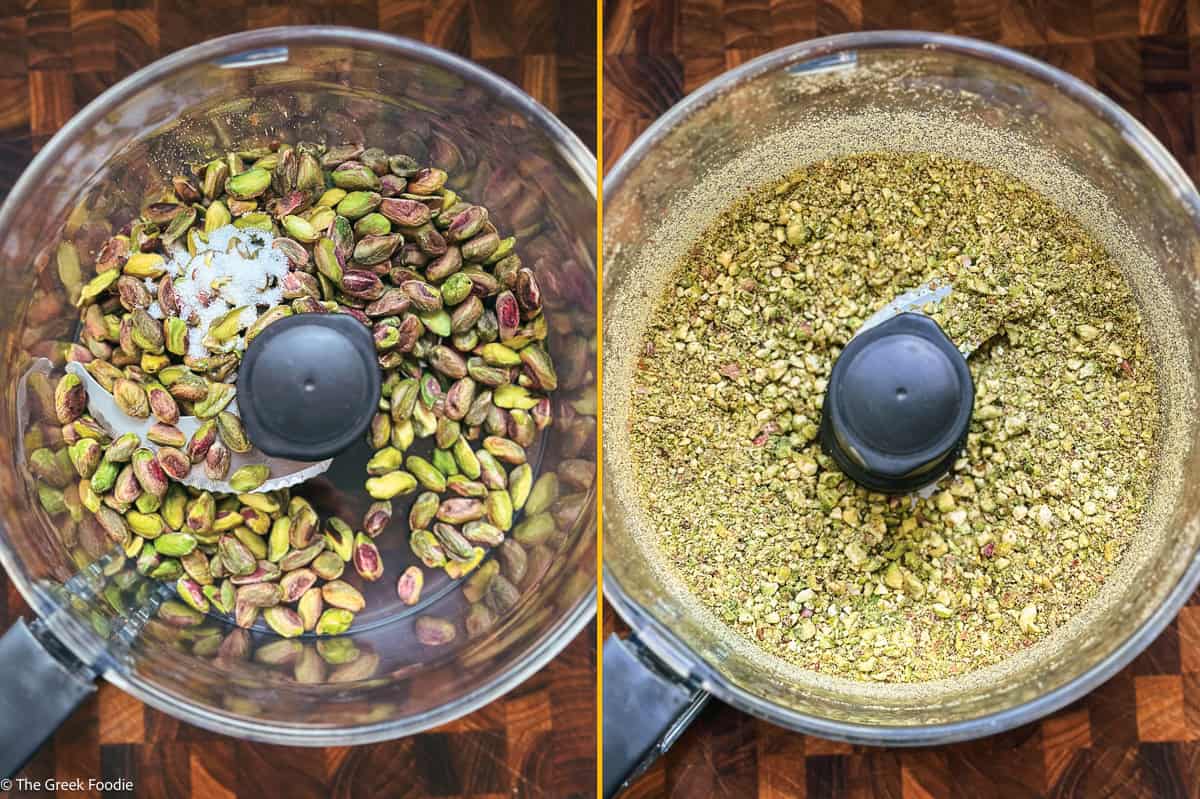
Grind the pistachios coarse in a food processor with a teaspoon of sugar. Pulse rather than run it — you want small pieces, not paste. The sugar absorbs some of the oil and keeps the nuts from clumping.
Take out about 40 g and grind it finer. That is your garnish, and it goes on at the very end, uncooked, which is how you keep the green.
A mortar and pestle gives a better texture if you have the patience. It is properly hard work, and the food processor is what I actually use.
Trim the phyllo
This is the difference between a neat baklava and a lumpy one.
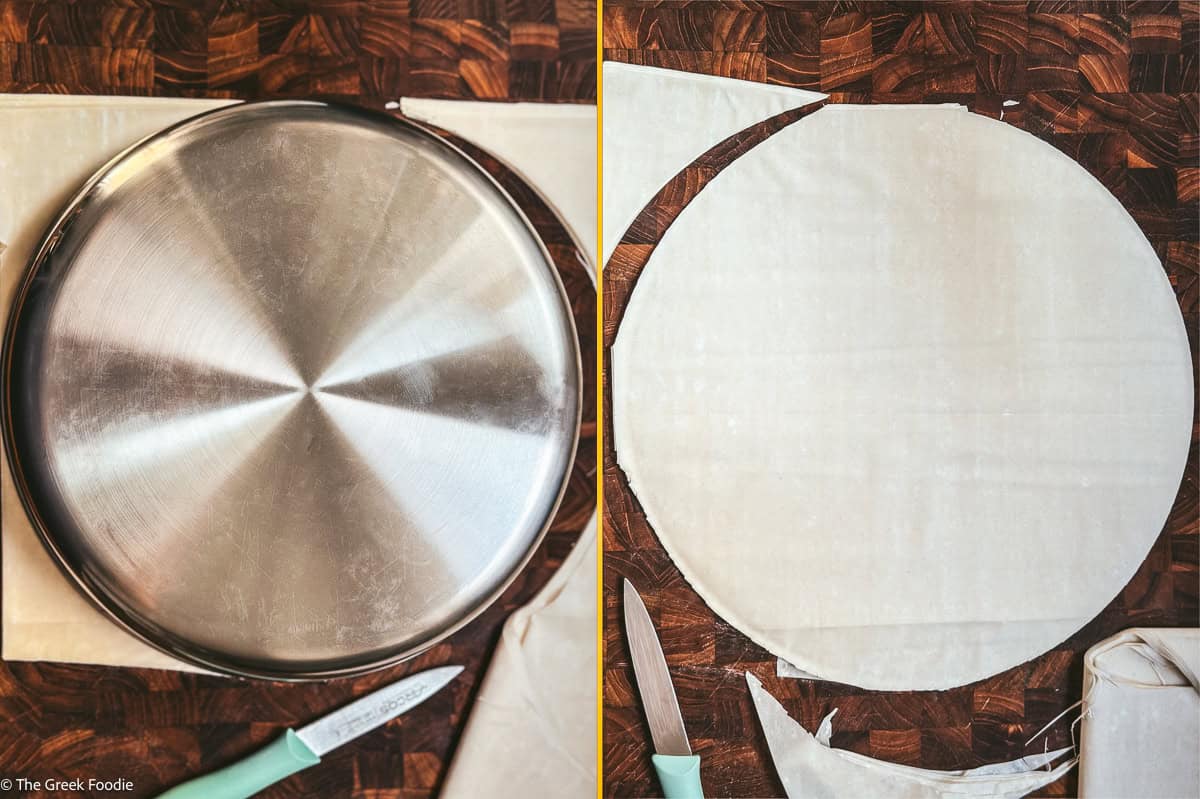
Unroll one package and lay the sheets flat. Set your pan upside down on top and cut around it with a sharp knife, so every sheet is exactly the size of the pan. Slide the trimmed stack straight back into its plastic sleeve so it does not dry out while you do the second package.
You could instead let the sheets hang over the sides and fold them in at the end. I tried it. It leaves too much bulk around the rim and the edges never look right. Trimming first is how it is done here, and the result is a clean, even edge.
Layer
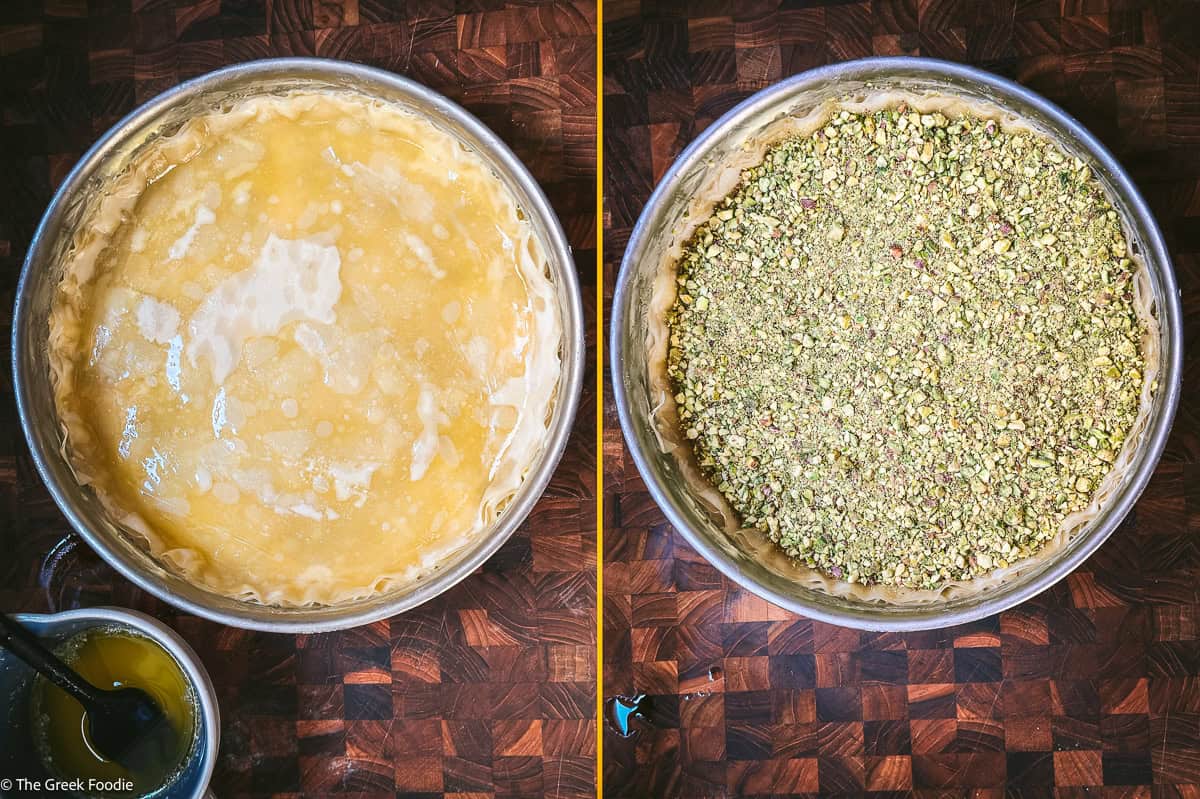
Butter the pan thoroughly with the 50 g of soft butter. Be generous, especially around the sides.
Lay the first package sheet by sheet, brushing each one with melted butter as you go.
Spread all the pistachios over the top in an even layer, leaving the reserved 40 g aside.
Lay the second package on top, buttering each sheet the same way. Tuck the edges down inside the pan, buttering as you go, and pour any remaining butter over the surface.
Chill, cut and bake
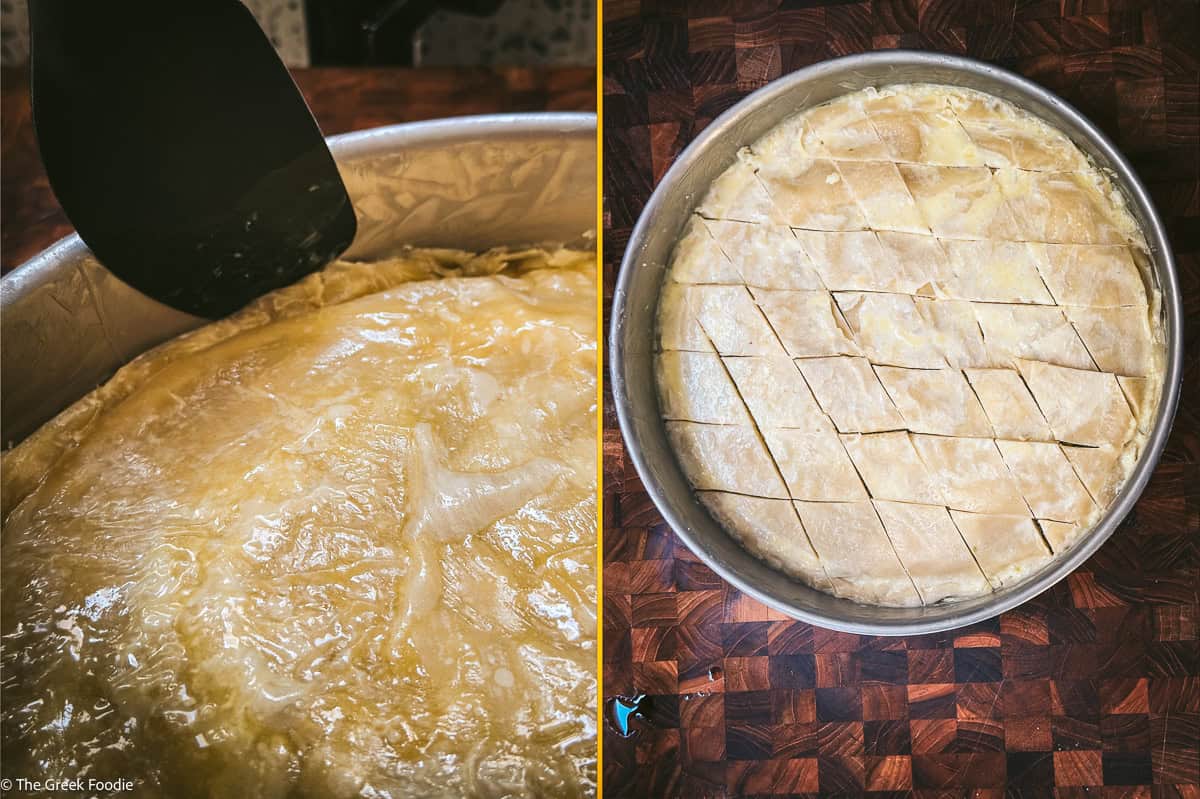
Refrigerate for 30 minutes. This firms the butter so the knife cuts cleanly instead of dragging and tearing the phyllo. Firmness is what you are waiting for, not the clock — if the knife still drags, give it longer.
Cut all the way through to the bottom of the pan, into diamonds. Use the largest, sharpest knife you have and let it press the sheets gently downward as it goes. This is what stops the top layers curling up in the oven.
Mist the surface lightly with water. It sounds odd and it works — it stops the top sheets scorching before the rest is done.
Bake at 170°C / 340°F, conventional heat, middle rack, for 30 minutes, until golden.
Then drop the oven to 150°C / 300°F and leave it there for 3 to 5 minutes while you bring the syrup to the boil.
The low temperature is not caution. Pistachios lose their color and much of their flavor in a hot oven. Bake this at 200°C and you will get brown nuts and a duller sweet. At 170°C they stay green and taste like themselves.
Syrup and finish
Put the sugar, water and lemon slices in a small pan and bring to the boil. That is all it needs — a thin syrup soaks in properly where a thick one sits on top.
Take the baklava out. If any butter has pooled, tip it off.
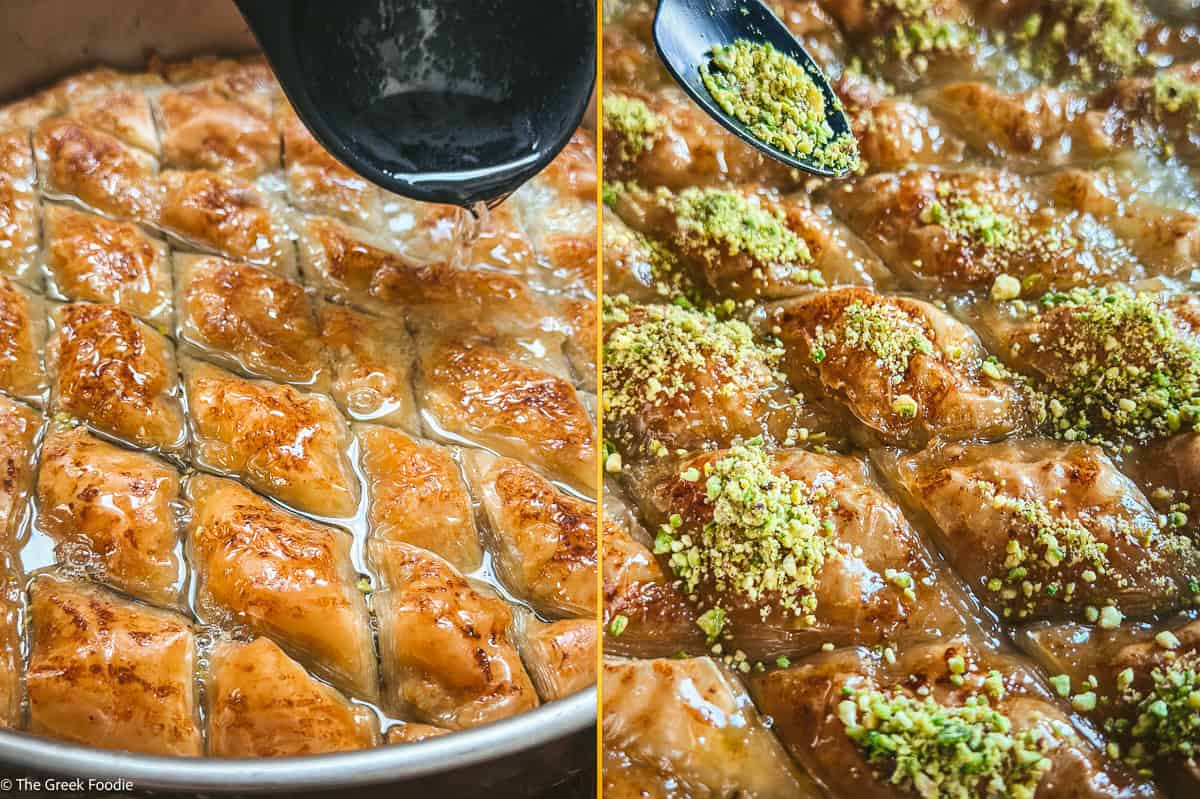
Now pour the hot syrup over the hot baklava, slowly. A ladle at a time, waiting for each pour to disappear before the next. This is the part people rush, and rushing it is what floods a baklava instead of soaking it. It takes a few minutes and it is worth every one of them. You will probably have half a cup of syrup left over, which is fine — better a little spare than running short halfway.
Scatter a pinch of the reserved raw pistachio over each diamond.
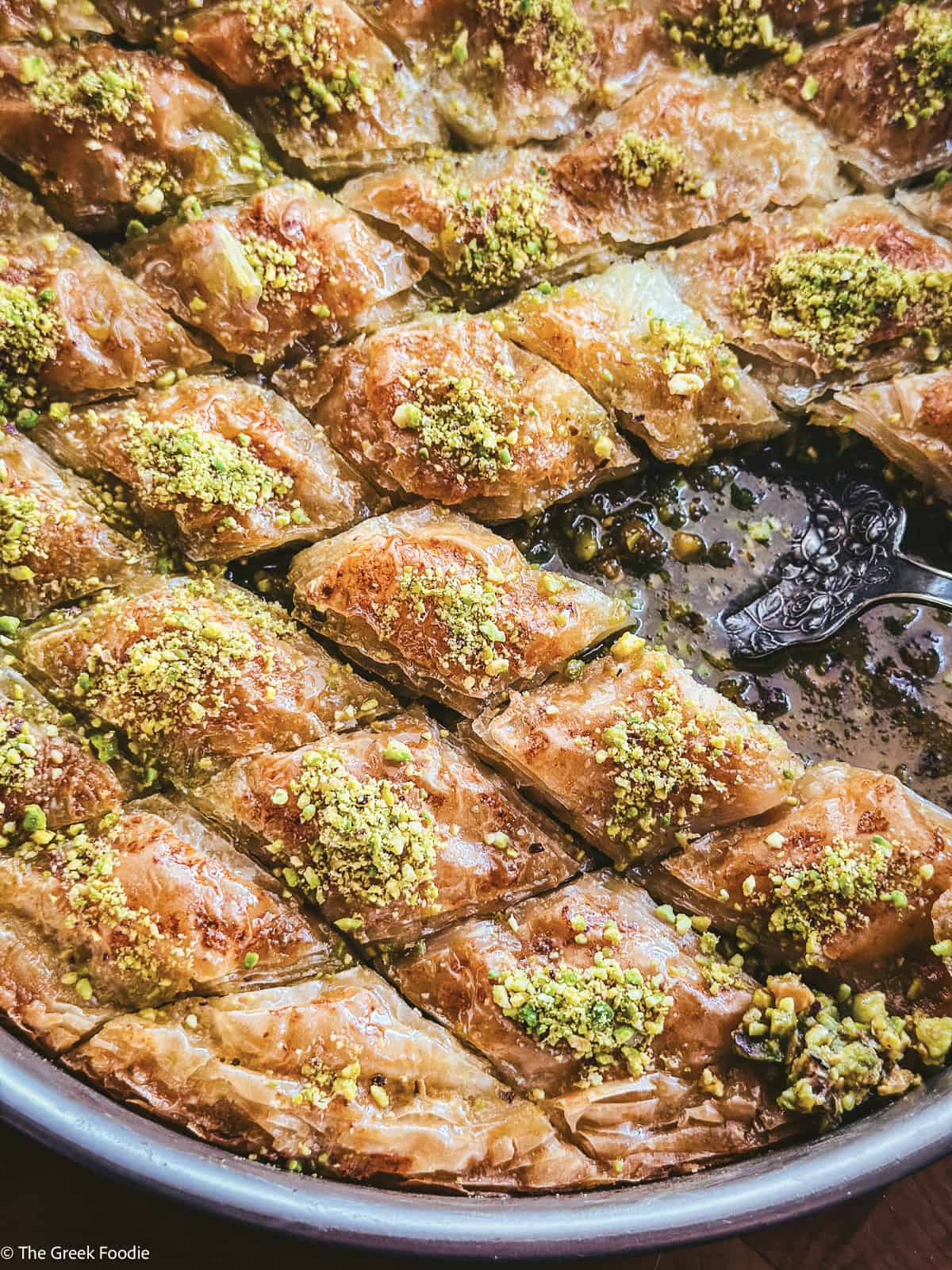
Leave it uncovered, out of the fridge, until completely cool.
How to cut baklava into diamonds
- Cut before baking, never after. Baked phyllo shatters.
- Make parallel cuts across the pan about 4 cm apart, then cut diagonally across them at an angle to form diamonds. In a round pan, the pieces at the edge will be smaller and oddly shaped. That is normal, and they are the ones everybody reaches for.
- Cut all the way to the bottom. Half-hearted scoring means the syrup only reaches the top layers and the base stays dry.
- A long, thin, very sharp blade is better than a heavy chef’s knife. You are slicing, not pressing.
Tips for crisp baklava
Keep the phyllo covered. It dries out in minutes. Work from one stack, covered, and take sheets one at a time.
Butter every sheet, but lightly. You are brushing, not painting a wall.
Do not skip the chill. Thirty minutes in the fridge is the difference between clean diamonds and torn ones.
Pour the syrup slowly. It is the single most important instruction in this recipe.
Never cover it while warm, and never refrigerate it. Trapped steam is what turns crisp baklava soft. Uncovered on the counter is correct.
Storage and leftovers
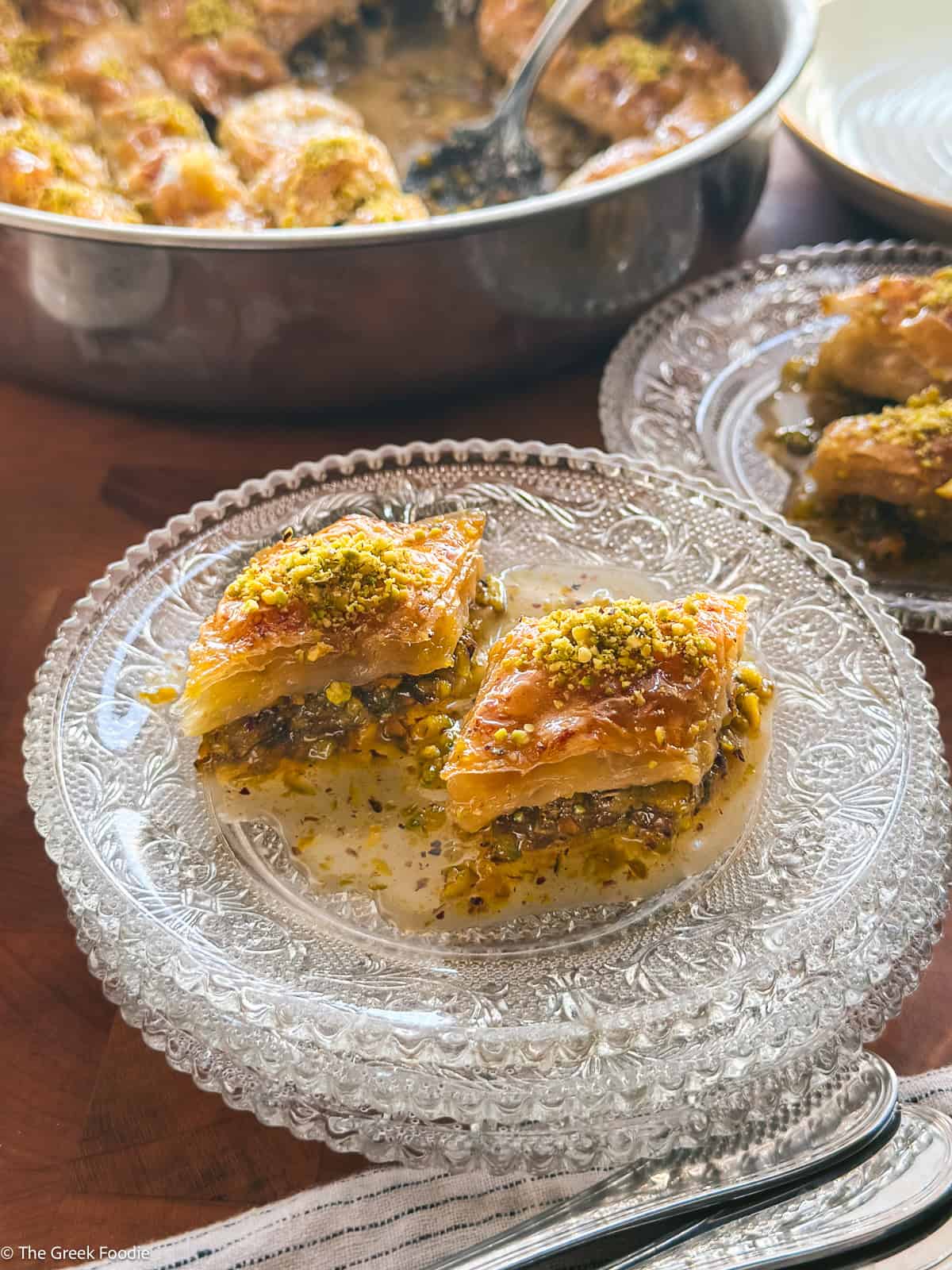
Baklava is better on the second day, and often better still on the third. The syrup finishes soaking in, the layers settle, and the flavor deepens. It is one of the few things that improves for sitting, so if you are making it for an occasion, make it two days before. At room temperature, loosely covered, it keeps for about a week.
Do not refrigerate it. The cold turns the phyllo soft, and no amount of time on the counter brings it back.
To freeze, let it cool completely, then freeze in a single layer in an airtight container, either whole or in pieces. It keeps for about three months. Thaw at room temperature, uncovered. If it has softened at all, five minutes in a low oven will crisp it up again.

FAQ
More Greek pastries & desserts
Cooked it? Rate it!
If you tried this recipe, I’d love to know how you liked it — drop a comment below or tag me on Instagram @thegreekfoodie__.


Greek Pistachio Baklava
Equipment
- Food processor
- 10-inch round metal pan
- Medium saucepan
Ingredients
For the baklava
- 250 grams raw unsalted shelled pistachios
- 250 gr unsalted butter , 50 g soft for the pan, 200 g melted for the sheets
- 2 packages phyllo sheets, 450 g each, the thinnest you can find
For the syrup
- 600 gr granulated sugar
- 500 ml water
- 3 lemon slices
To finish
- 40 gr raw unsalted pistachios, ground finer and set aside
Instructions
- Coarsely grind the pistachios in a food processor with the sugar, pulsing rather than running it. Remove 40 g, grind it finer, and set aside for the garnish.
- Unroll one package of phyllo and lay the sheets flat. Set the pan upside down on top and cut around it so every sheet matches the pan. Return the trimmed stack to its plastic sleeve. Repeat with the second package. Save the trimmings for another use.
- Gently melt 200 g of butter without letting it brown.
- Butter the pan thoroughly with the remaining 50 g of soft butter.
- Lay the first package of trimmed sheets into the pan one at a time, brushing each with melted butter.
- Spread the ground pistachios over the surface in an even layer.
- Lay the second package of trimmed sheets on top, brushing each with melted butter. Tuck the edges down inside the pan and pour any remaining butter over.
- Refrigerate for 30 minutes, until the butter is firm.
- Cut all the way through to the base of the pan, into diamonds, using a long sharp knife.
- Mist the surface lightly with water.
- Bake at 170°C / 340°F on the middle rack for 30 minutes, until golden.
- Reduce the oven to 150°C / 300°F. Meanwhile, bring the sugar, water, and lemon slices to the boil.
- Remove the baklava. Pour off any pooled butter.
- Slowly pour the hot syrup over the hot baklava, a ladleful at a time, letting each addition absorb before adding more.
- Scatter the reserved ground pistachio over each diamond.
- Cool completely, uncovered and out of the fridge, before serving. Best on the second or third day.
Notes
Nutrition
Unfortunately, and to the contrary of a popular belief, baklava isn’t Greek.
That is true! It is a Mediterannean dessert with lots of variations throughout the region. It is mentioned in the post. This version is my grandma’s; she was a Greek from Constantinople (Istanbul). The Greeks were under the Ottoman Empire regime for 400 years, so they share lots of dishes and cuisine.
Thanks so much, Rachael for checking us out!
x Jenny
I have made this using orange juice in the glaze/syrup, but this lemon adds a different flavor that I really enjoy.
Yes, orange juice is also great for baklava! Thanks so much, Patti! x Jenny
Crispy and mouth melting delicious. Trying these at home is surely Budget friendly and super yum.
This is one of our favorite greek desserts and I’m so happy I could make it at home! Thanks for the delicious recipe!
Delicious and thank you I had not know that Baklava was actually not difficult to make. Excite to explore other variations.
This baklava really melts in my mouth and every bite is full of flavors!
I can’t resist pistachio baklava at my favorite Greek cafe and your recipe was even better! Your instructions were easy to follow as well.
Thank you, Brianna! It is a labor-intensive dessert but worth it. Let me know how you liked it! x
I have never tried Baklava before, but your pictures look delicious! I’m going to have to give this a try!
Thank you, Liz! Hope you will liked it! x
This reminds me of home so much. I love your grandmother’s recipe and version. I’m definitely going to give it a try this holiday.
Thank you, Aya! Let me know how you liked it! x
Oh my, your Baklava looks spectacular! I’ve never attempted making baklava at home because I always thought it is hard to make. Your recipe definitely inspired me to give it a try and I’m going to make this over the festive period. Thank you so much for sharing!
Thank you, Ramona! It is a labor-intensive dessert but it’s not really difficult. Let me know how you liked it! x
Hello Jenny
This is Seema here from Malaysia.So far I was pouring cold sugar syrup on hot baklava.
Please explain the reason to
“Put the pan back into the hot oven for about 5 minutes. Remove baklava and let it cool completely before serving”
Hi Seema,
That’s the way my grandma used to make it. Always hot syrup over lukewarm baklava so as not to soften the golden thin phyllo sheets. She returned the baklava to the oven for five minutes to preserve its crispness.
Greek syrupy desserts have different methods for syrup. For example, galaktoboureko (custard dessert with phyllo) has cold syrup poured over it as soon as it is out of the oven. Walnut cake has to be completely cooled. It varies with each recipe and ingredients.
I hope that helps!
Thanks so much for checking us out!
x Jenny
Must’ve been my oven but at 40 mins it was beyond burnt 🙁 make sure to check periodically. I was multitasking. Live and learn.
Hi Michelle, coming back to this to tell you it was not your oven.
I have retested and rewritten this recipe since you made it, and the old version baked far too hot — 400°F for 45 minutes, when baklava this thin really wants a much gentler oven. It now goes in at 170°C / 340°F for 30 minutes, and there is a step before baking where you mist the surface with a little water, which protects the top sheets from scorching.
I am sorry it cost you a pan. If you ever feel like trying again, the new method is far more forgiving.
x Jenny