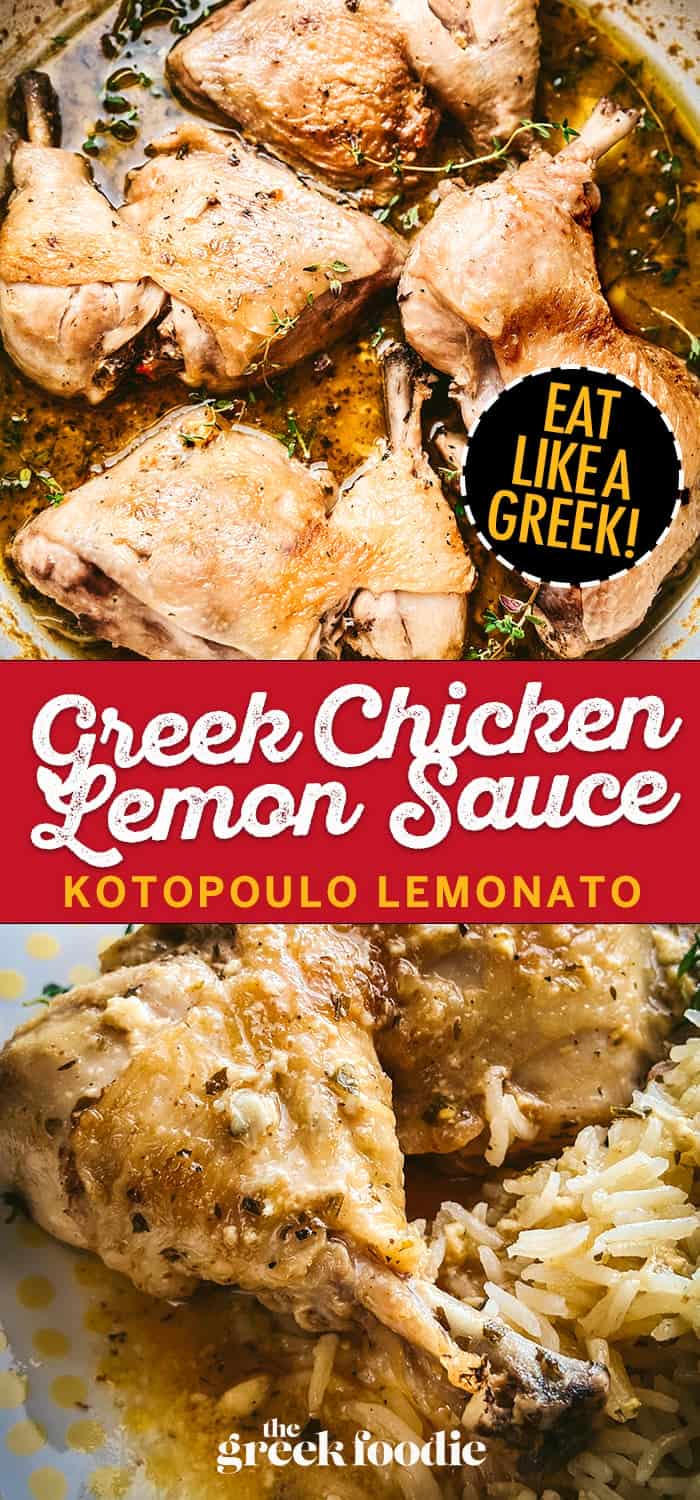

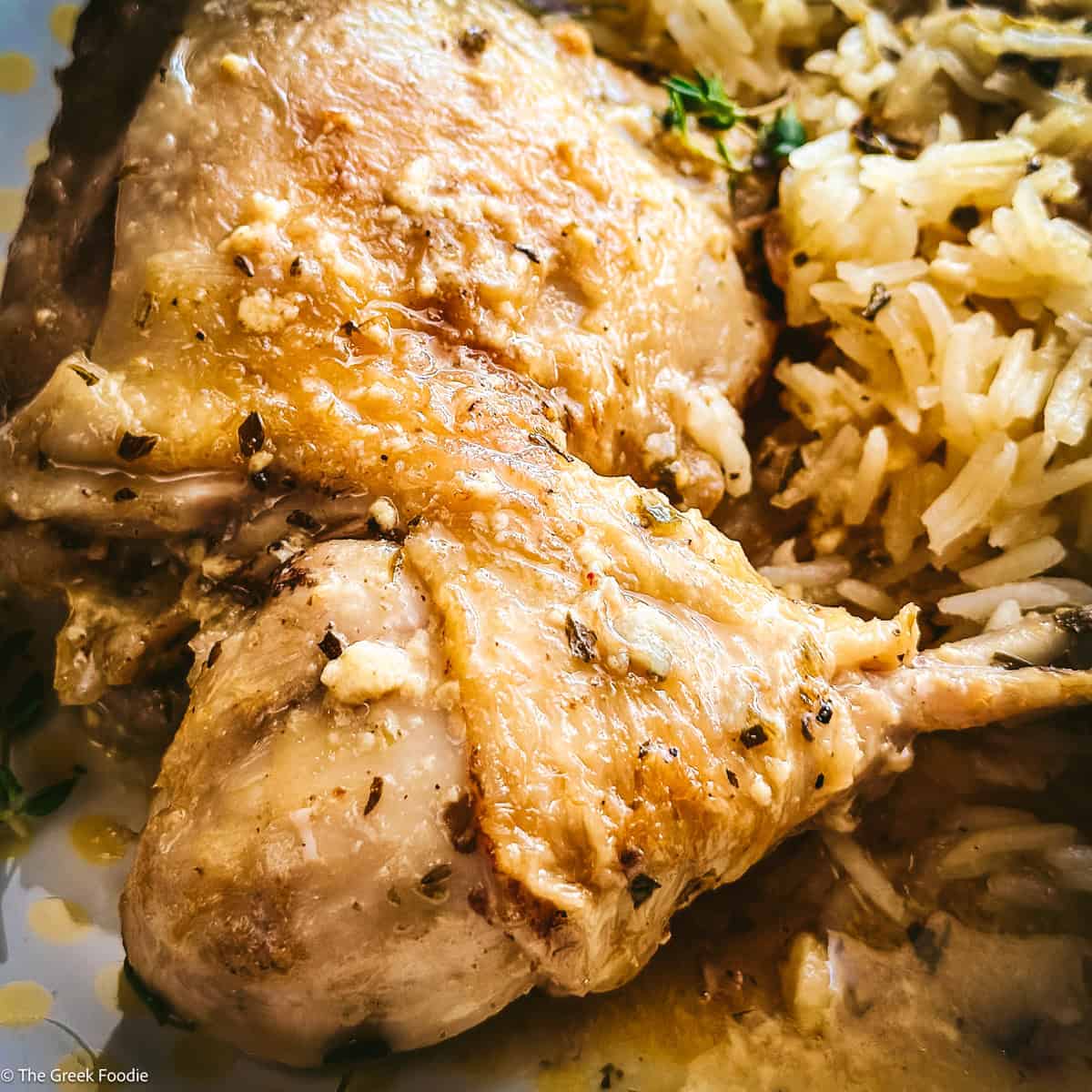
Kotópoulo Lemonáto — Chicken With Lemon Sauce — is the dish that appears on Greek tables regularly. The chicken simmers in a sauce with lemon, mustard, and garlic until it’s deliciously tender and the sauce is glossy and deeply flavored.
This is not Greek lemon chicken with potatoes baked in the oven (that is a different, equally beloved recipe). This is the stovetop version: chicken cooked directly in its lemon sauce, katsarola-style, so every bite is coated, and the sauce begs to be chased with bread or poured over rice.
It is the kind of meal that gets better as you eat it—the lemon mellows in the pot. The mustard and honey hold everything together, and the garlic softens into the sauce. Simple ingredients, honest cooking, extraordinary results.
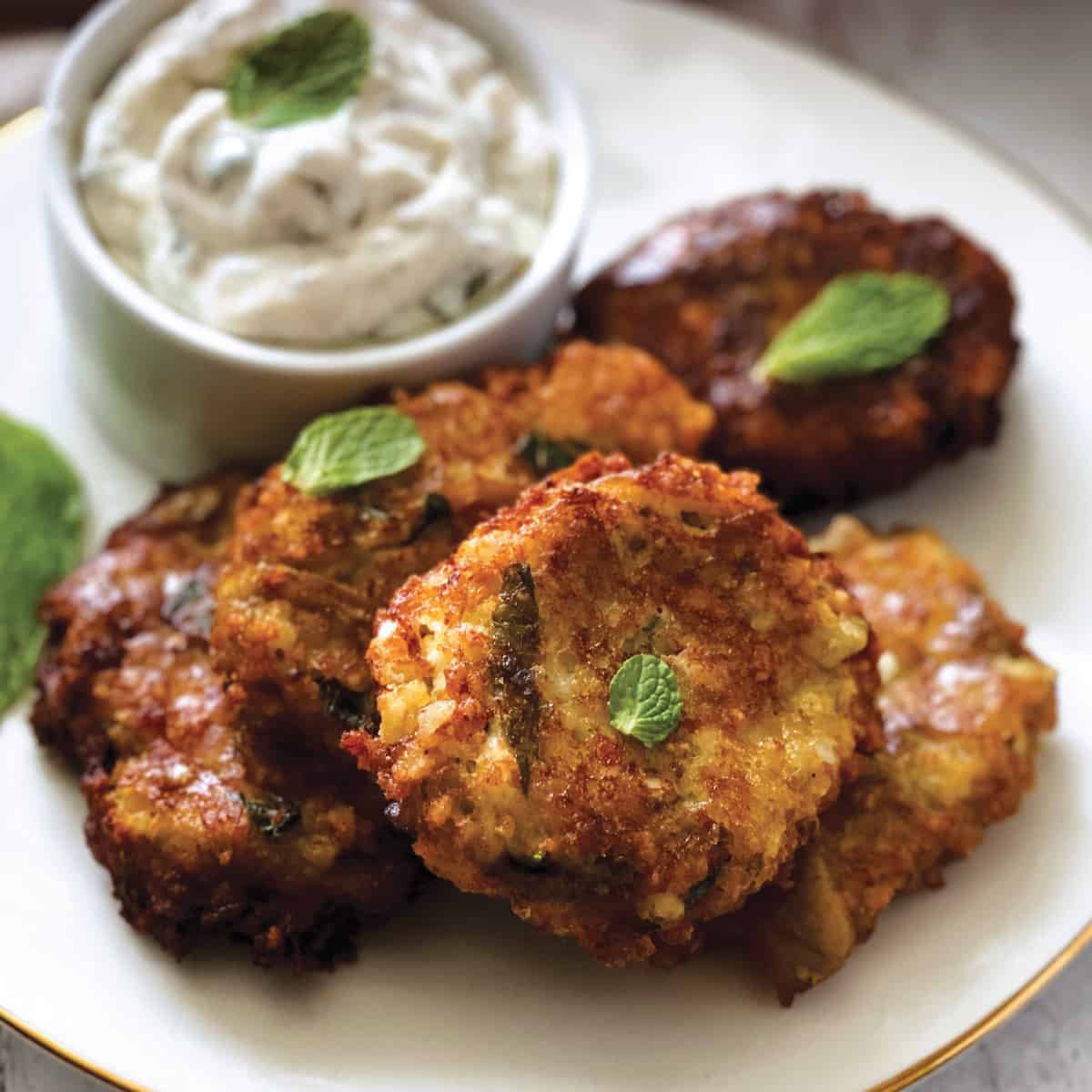
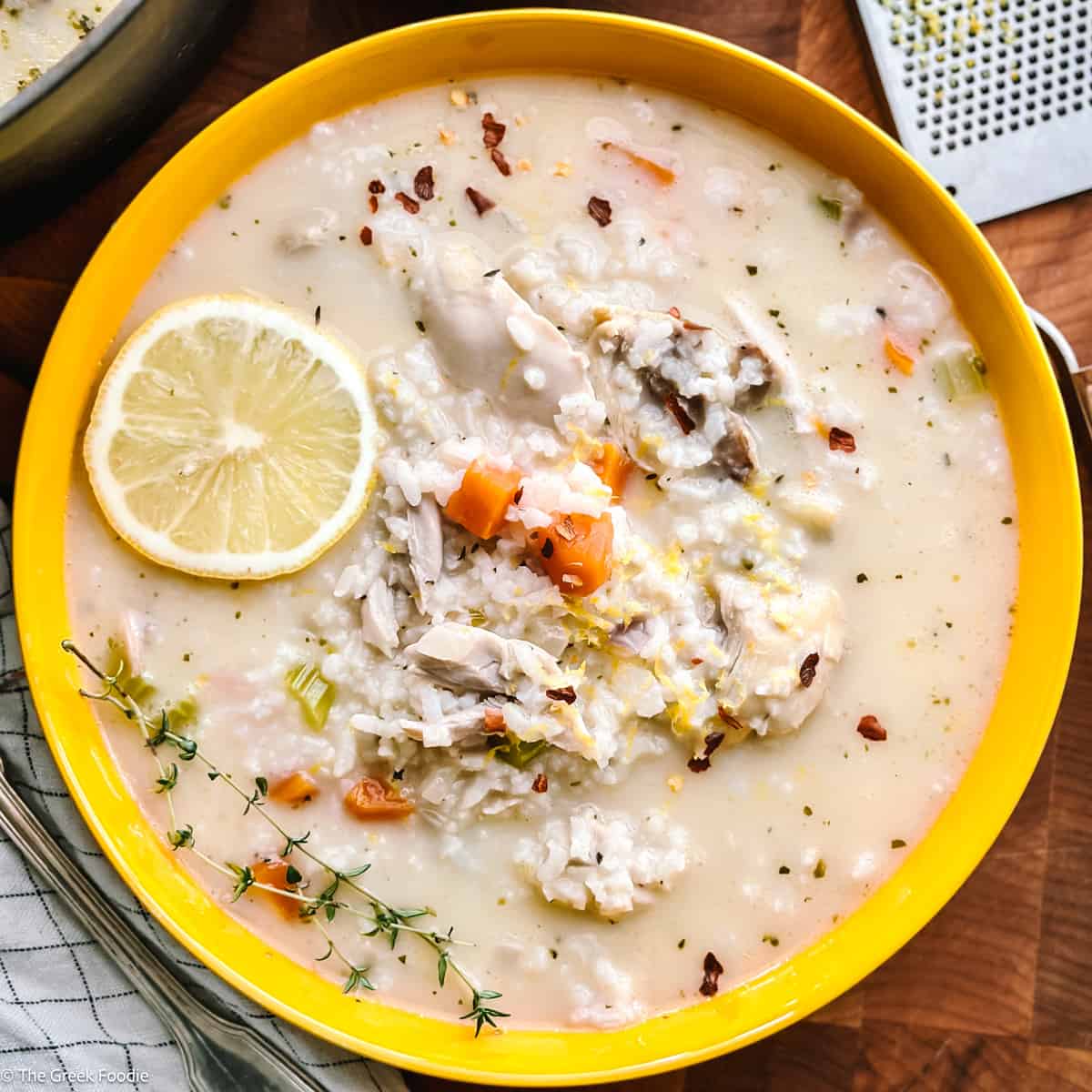
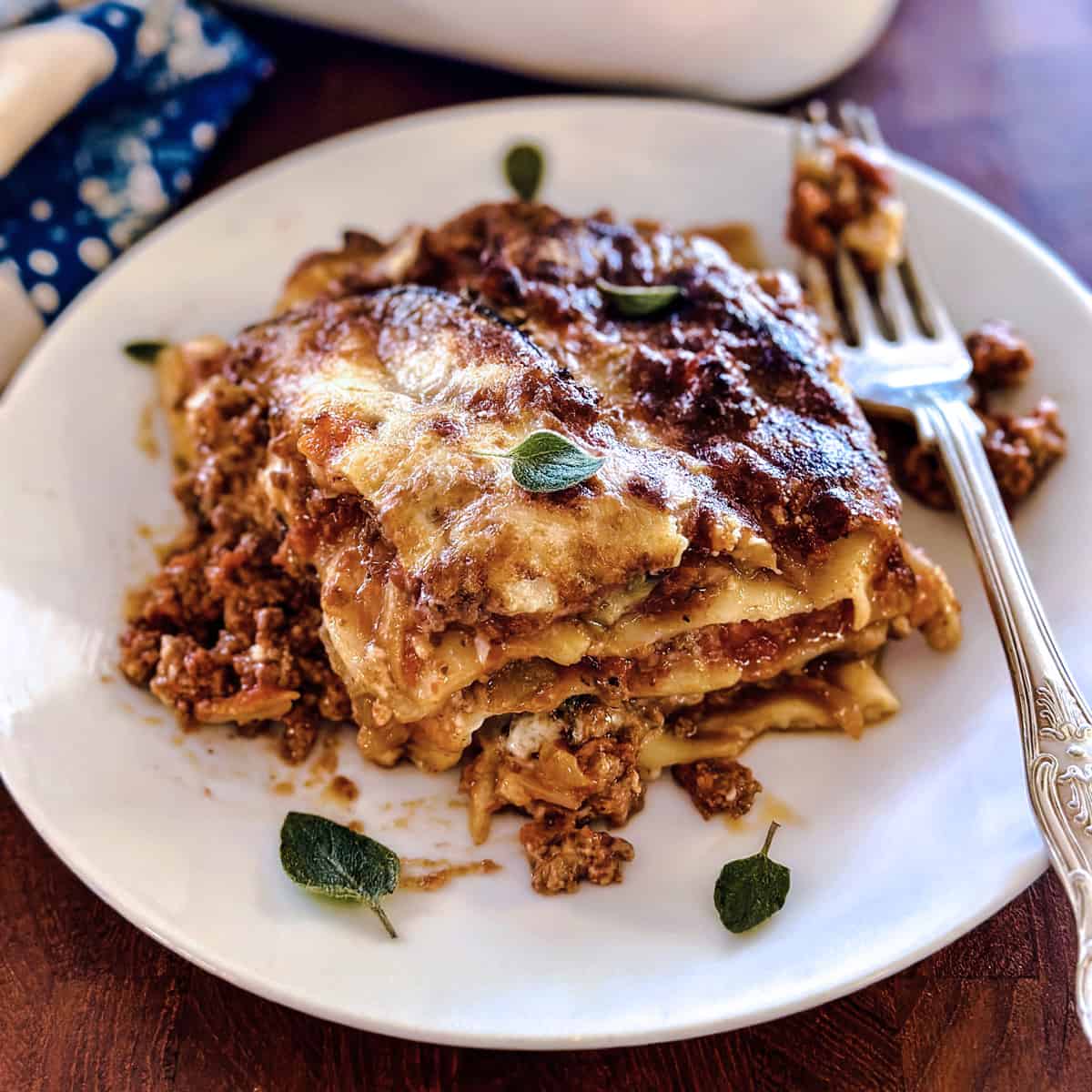
Looking for easy dinner ideas? Try Eggs and Tomatoes, Tzatziki Chicken Bowls, or Brown Butter Salmon with Capers and Sun-Dried Tomatoes for an easy Greek-inspired dinner that’s perfect for sharing.
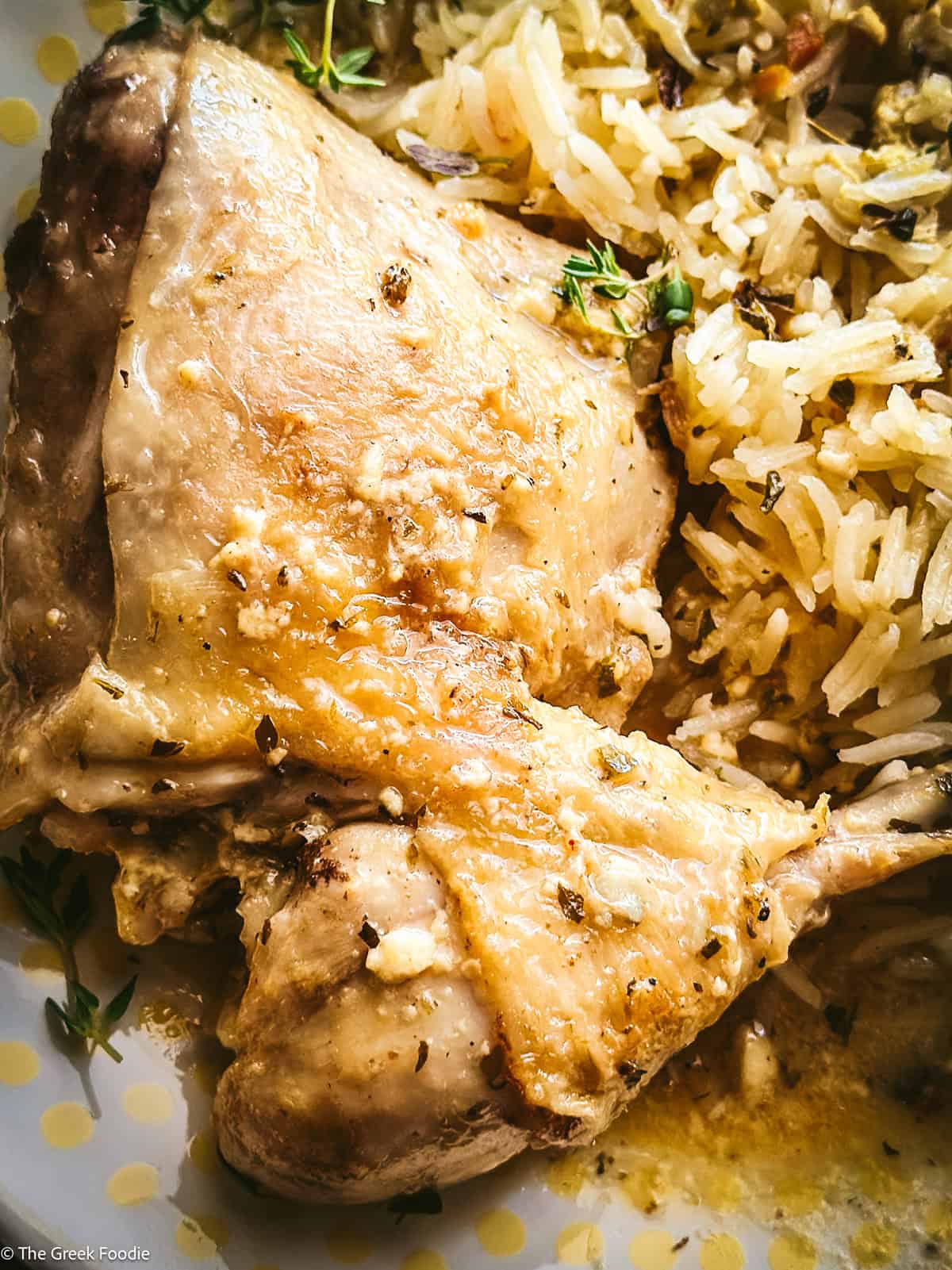
Why you will love chicken with lemon sauce
A little Greek food history
“In Greece, we do not make lemon rice, we make pilafi. Plain, simply cooked and the lemon comes from the sauce.”
Where Greek lemon rice actually comes from.
Kotópoulo lemonáto is, in a very real sense, the origin story of Greek lemon rice. In traditional Greek cooking, pilafi is served alongside braised and simmered dishes like this chicken, and as the plain rice sits next to the chicken and absorbs the lemony pan sauce, it becomes what Greek-Americans eventually turned into a standalone recipe: rizi lemonato.
The standalone “Greek lemon rice” recipe, with lemon cooked directly into the rice, is largely a Greek-American creation, born from the desire to bottle that flavor without needing a saucy main dish alongside it. It is not traditional in Greece, and it is completely delicious. If you want to experience where that flavor originally came from, make this chicken, serve it with plain pilafi, and spoon the sauce generously over the rice.
→ I wrote about the full story of rizi lemonáto, including why arborio rice makes it extraordinary, in my Greek lemon rice post.
Here is what you need
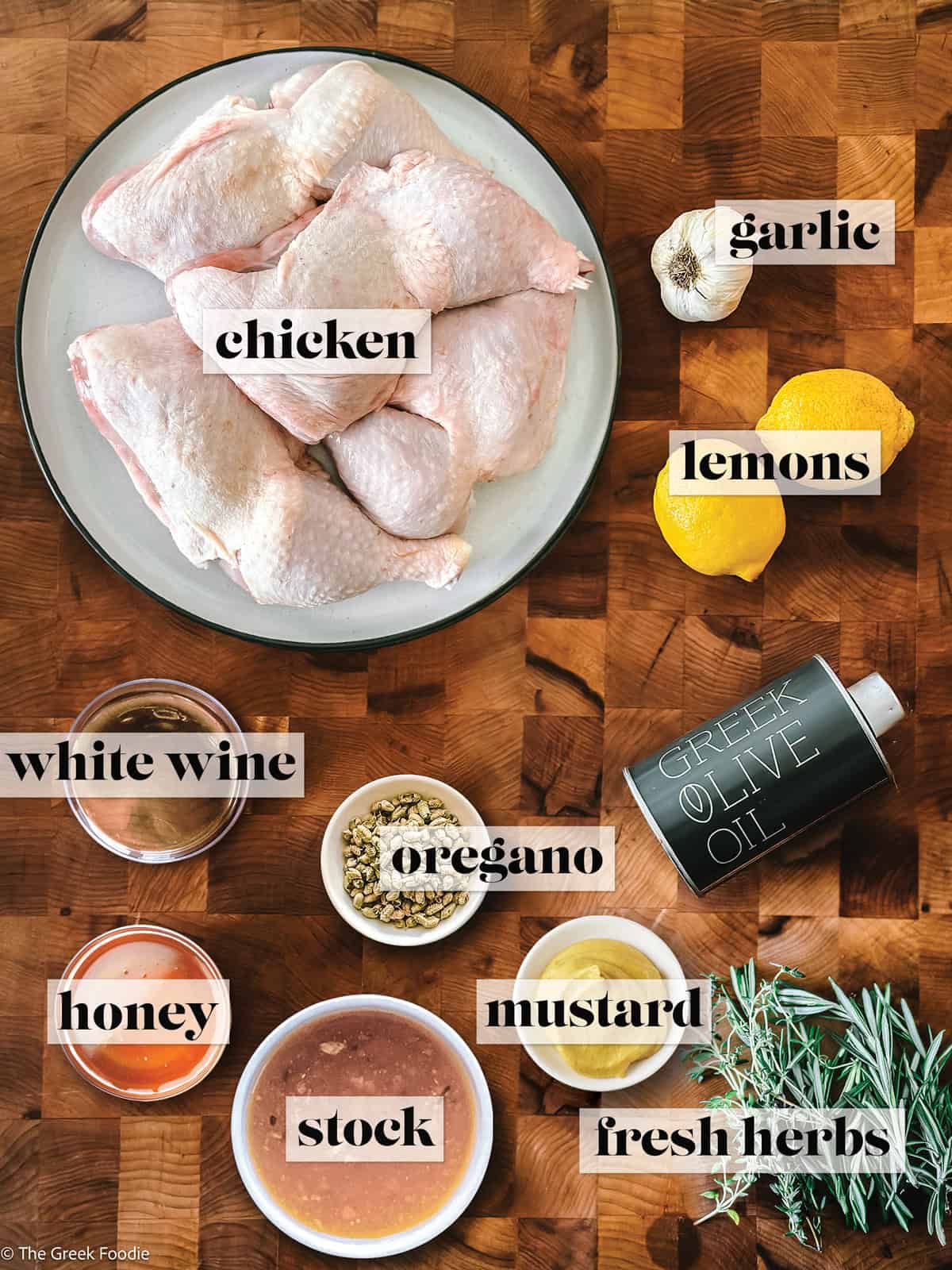
- Chicken thighs – Chicken thighs with the drumstick attached, skin on — this is the cut that defines the dish. The skin renders and crisps during the initial browning, building the flavorful fond that becomes the base of your sauce. Once you add the liquid and cover the pot, the skin softens and melts into the braise, contributing richness and body that boneless, skinless pieces cannot replicate. The bones release collagen throughout the long simmer, giving the sauce its glossy, almost sticky quality. Chicken breast will not work here — it dries out and produces a thin sauce with none of that depth.
- Garlic – Roughly chopped rather than minced or pressed — the pieces soften into the sauce during the long simmer and mellow completely. You will not find sharp raw garlic flavor in the finished dish. If you want a more pronounced garlic presence, add one or two extra cloves. Fresh garlic only; jarred has a sour note that clashes with the lemon.
- Dry white wine. The wine goes in at the deglaze stage, lifting all the browned bits the chicken left behind — that fond is concentrated flavor, and the wine is what brings it into the sauce. As it reduces, the alcohol cooks off completely and what remains is a gentle acidity and depth that rounds out the lemon without sharpening it. Use a dry white you would pour into a glass without hesitation; a Greek Assyrtiko is the natural choice here — its crisp minerality and citrus notes are a perfect match for lemon and olive oil. A dry Sauvignon Blanc or Pinot Grigio also works well. Avoid anything labeled “cooking wine” or anything sweet — both will throw the balance of the sauce off in ways that are hard to fix. To make without wine: deglaze with the chicken stock instead and add a small extra squeeze of lemon to compensate for the acidity.
- Lemon – Use both the juice and the zest — the zest carries the aromatic oils that give the dish its fragrant, bright character, while the juice provides the acidity. Always taste before adding more: lemon potency varies hugely depending on the variety and season. Greek lemons in spring and summer are intensely aromatic. Two lemons is the starting point; squeeze a third at the table if you want extra brightness after the simmer has mellowed the flavors.
- Mustard – This is the ingredient people are most skeptical about, and the one they always come back for. It does not make the dish taste of mustard — it acts as an emulsifier that binds the lemon juice and olive oil into a cohesive, silky sauce, and it adds a depth of flavor that you cannot quite name but would immediately notice if it were missing. Use a smooth Dijon-style mustard. Whole-grain mustard also works and adds a pleasant texture.
- Thyme honey – Greek thyme honey is one of the finest honeys in the world, and it earns its place here. Its subtle bitterness and herbal notes balance the acidity of the lemon without making the dish sweet. If you cannot find thyme honey, any good-quality raw honey works, but avoid heavily processed honey — it reads as pure sugar rather than flavor. The honey also helps the chicken develop a deeper color when browning.
- Dried Oregano – Greek dried oregano is more intensely flavored than most supermarket varieties — it is the one herb substitution that genuinely matters in Greek cooking. It is added during the simmer so it blooms into the sauce. Finely chop it before adding so it disperses evenly rather than sitting in clumps. If your dried oregano has been in the cupboard for over a year, it is time for a new jar — the flavor fades significantly with age.
- Fresh thyme – Added with the stock in step 4, the thyme sprigs simmer gently in the sauce, releasing a soft, earthy aroma that deepens without sharpening. They work in quiet harmony with the dried oregano and the rosemary. Fish out the stems before serving and finish with a small scatter of fresh leaves over the top. The contrast between the herb that cooked in the sauce and the one added at the end is subtle but lovely.
- Fresh rosemary – Rosemary goes in with the thyme at the stock stage — a sprig or two is all you need. It is more assertive than thyme, so it earns its place here by anchoring the herbal notes of the sauce without taking over. The long, slow simmer tames its piney intensity into something warmer and more rounded. As with the thyme, fish out the woody stems before serving — they have done their job by then and nobody wants to encounter them on the plate. Tip: Do not chop rosemary into the sauce , whole sprigs are easier to remove and release flavor more gradually.
- Chicken stock – Just a small splash to give the sauce enough liquid to simmer without scorching. Homemade stock adds depth, but a good low-sodium store-bought stock works perfectly well. If you only have water, use it — the chicken and lemon will carry the dish. Avoid full-sodium stock, which concentrates as it reduces and can make the dish too salty.
- Extra virgin olive oil – Use a good Greek extra virgin olive oil — this is not a dish that hides its fat. Olive oil is the cooking medium and becomes part of the sauce, so its flavor matters. A fruity, slightly peppery oil from Kalamata or Crete works beautifully here. Do not substitute with vegetable oil or light olive oil.
Step by step
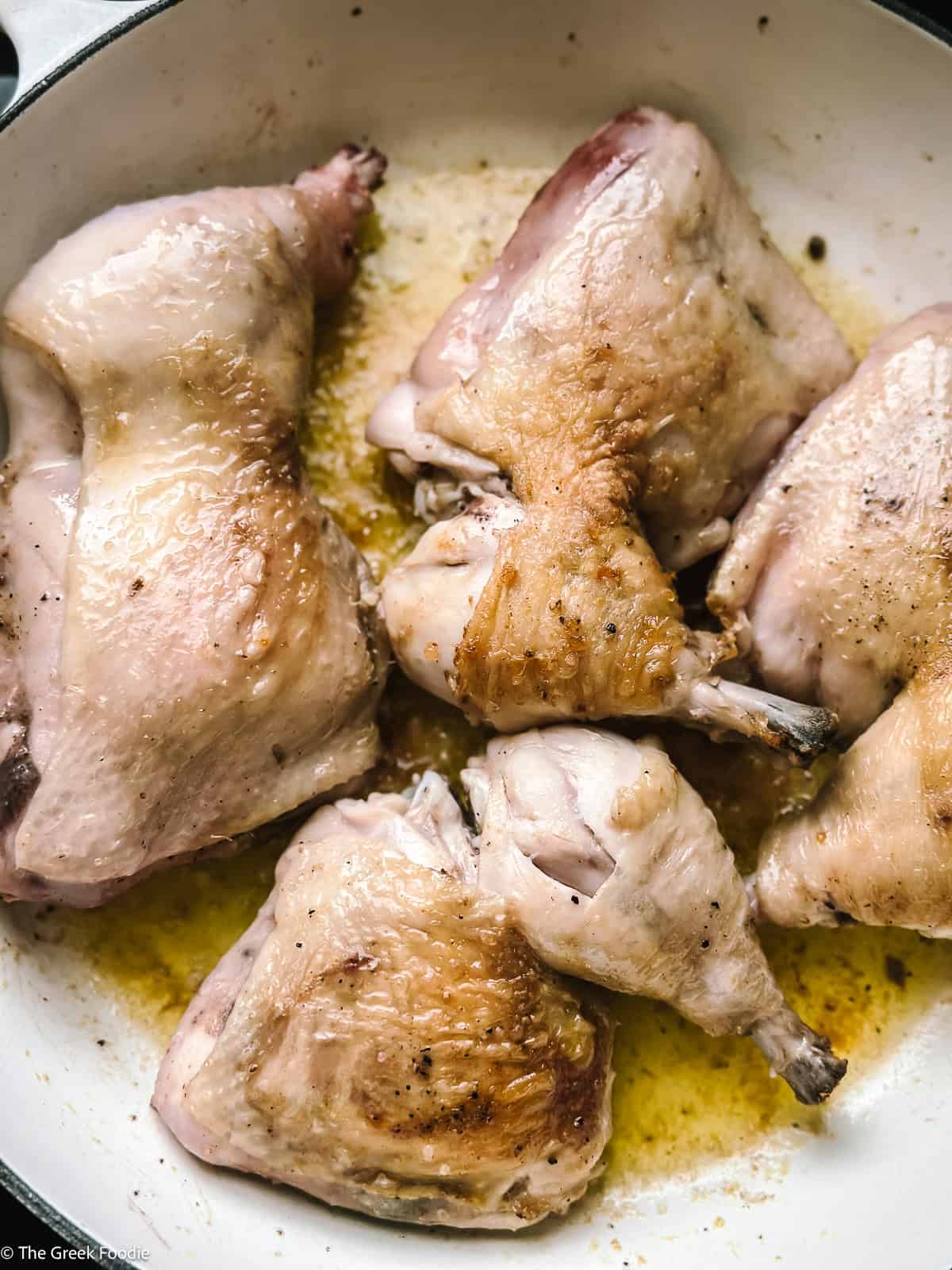
STEP 1. Season the chicken generously on all sides with sea salt and freshly ground pepper. Heat the olive oil in a wide pot or deep sauté pan over medium-high heat. Place the chicken skin-side down in a single layer. Leave it undisturbed until the skin is deeply golden and releases easily from the pan. Flip and brown the other side.
The rendered fat and fond on the bottom of the pan is the base of your sauce, do not discard any of it.
8–10 minutes
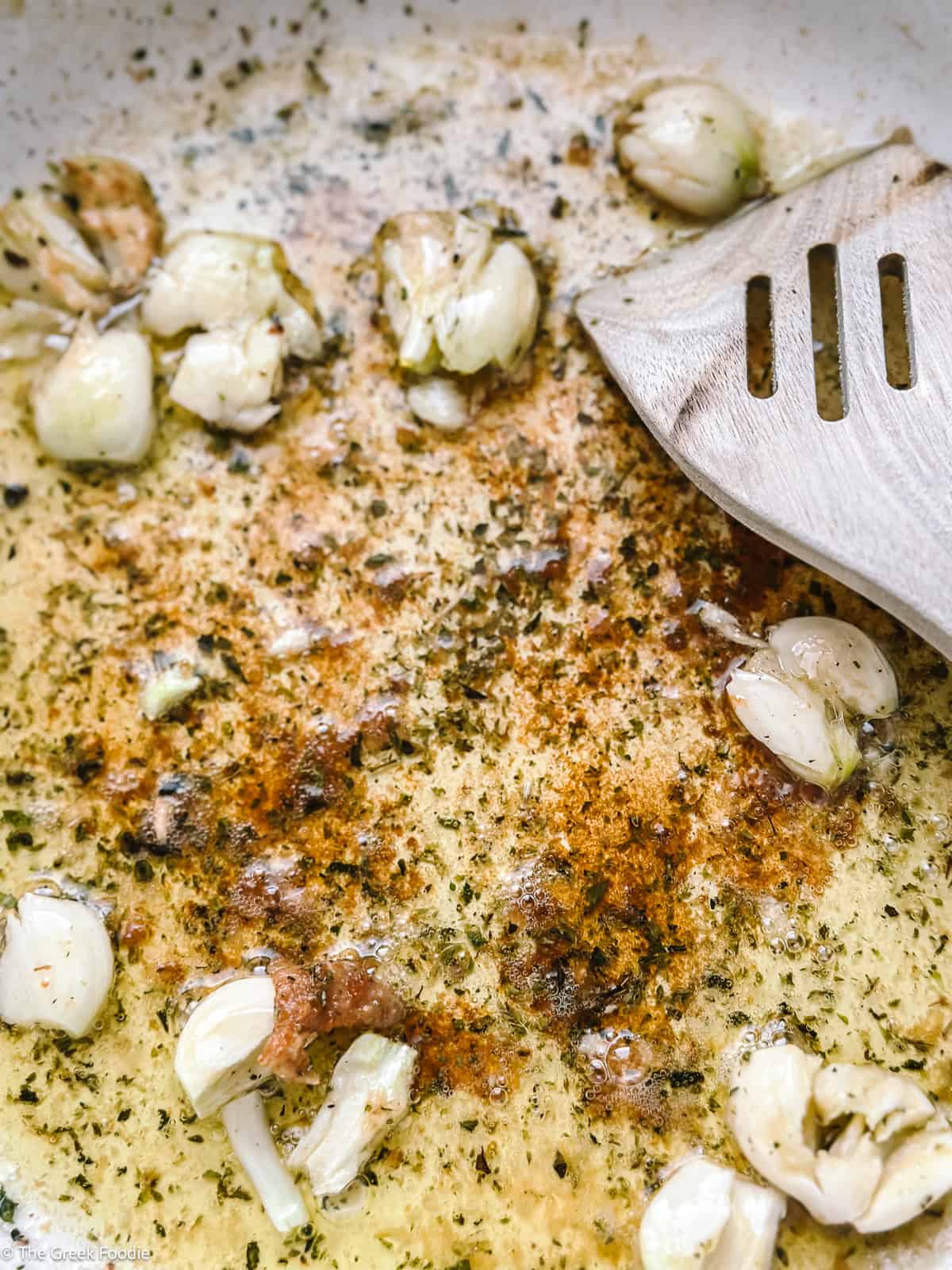
STEP 2. Remove the chicken to a plate. Reduce the heat to medium. Add the garlic and oregano to the same pot and cook, stirring, until soft and fragrant, about 2 minutes.
2 minutes
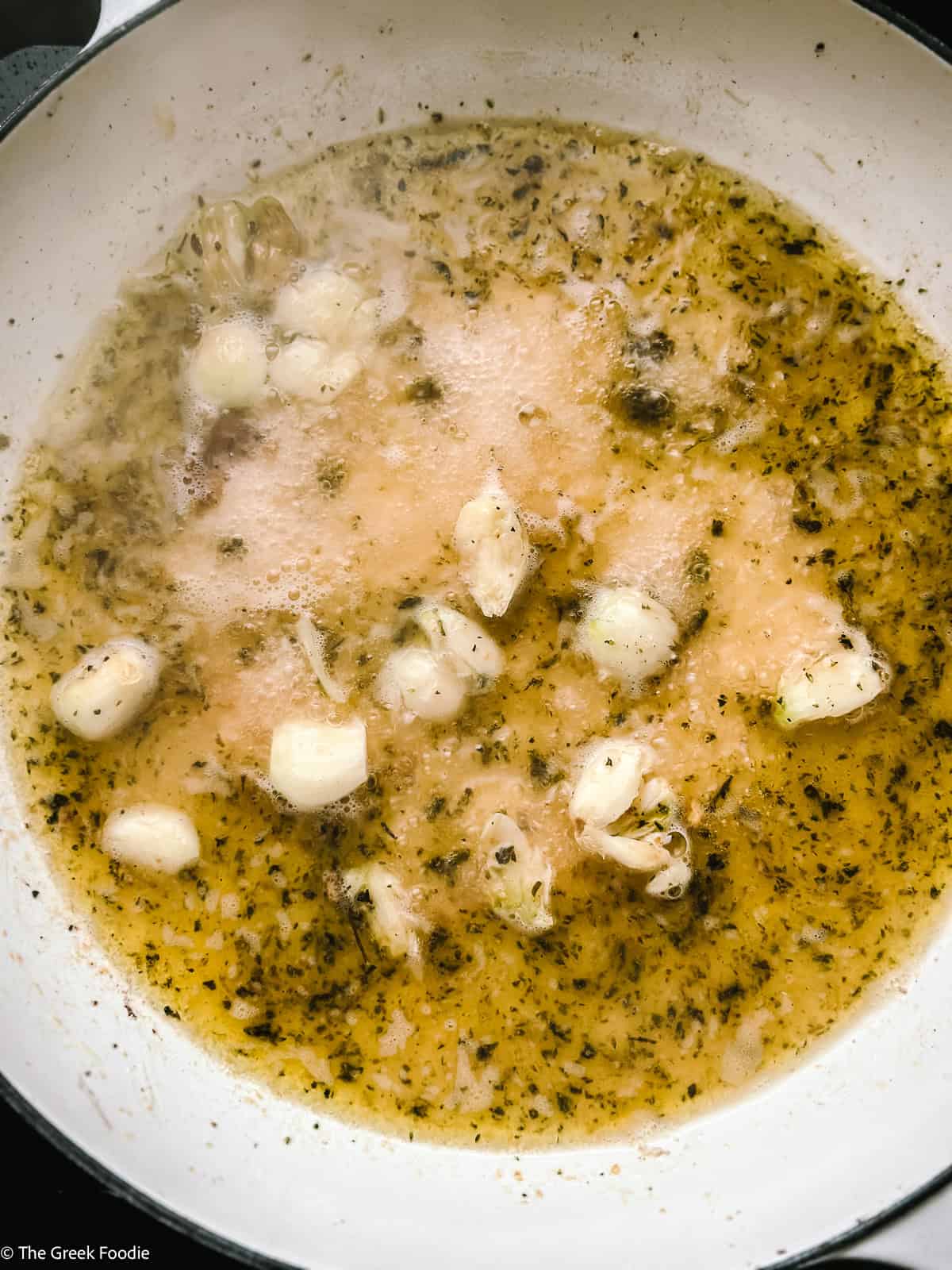
STEP 3. Pour in the white wine and let it bubble, scraping up all the browned bits from the bottom of the pan, this is where the flavor is. Let the wine reduce by half.
In a cup, stir together the stock, mustard, honey, and lemon juice.
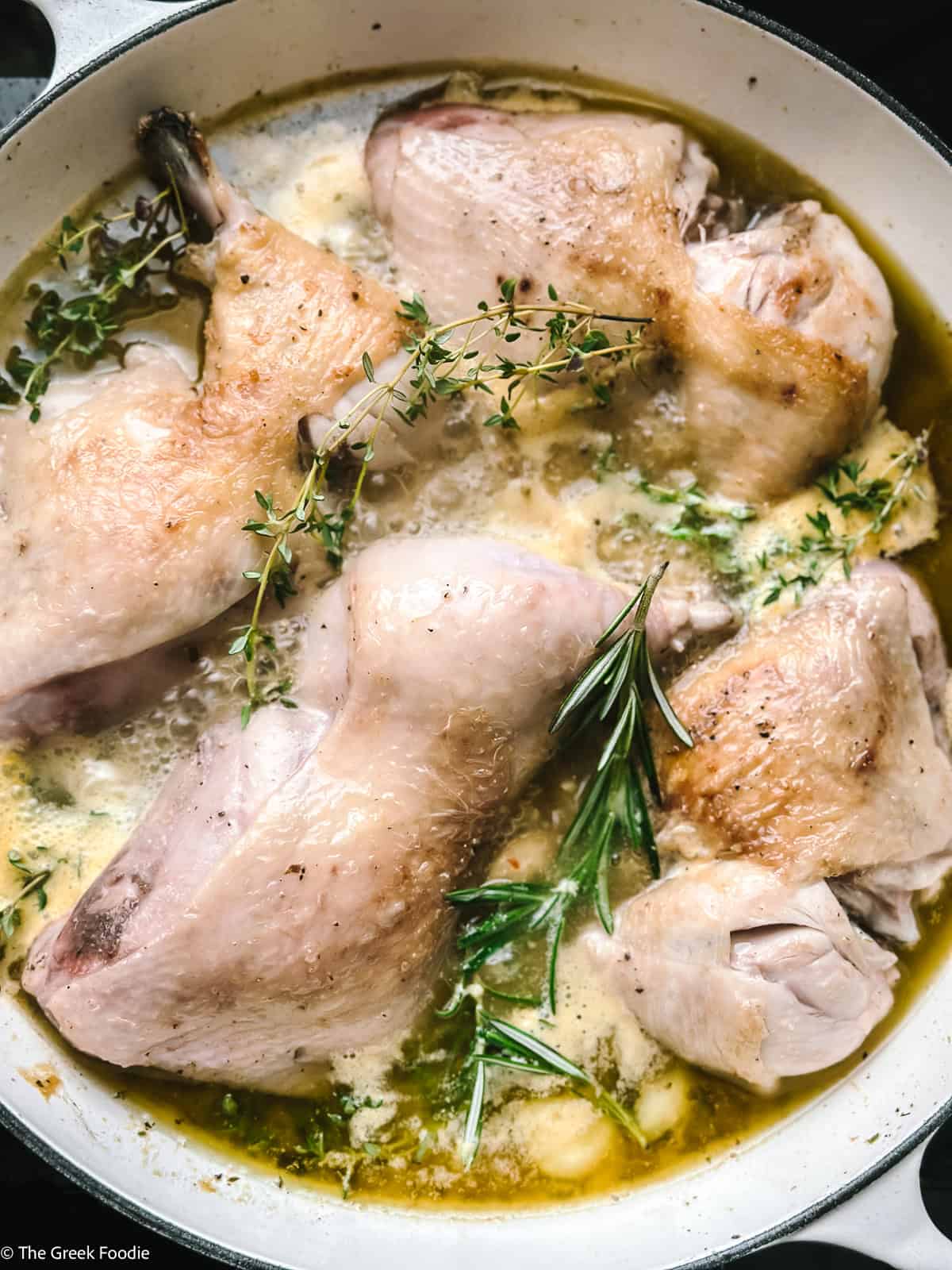
STEP 4. Return the chicken and any accumulated juices to the pot. Pour in the stock mixture and tuck in the fresh thyme and rosemary sprigs. Bring to a gentle boil, then reduce the heat to low. Partially cover the pot and simmer gently, turning the chicken once halfway through, until the chicken is very tender and the sauce has reduced but is not dry. Add a small splash of stock or water only if the pan looks dry.
30–40 minutes
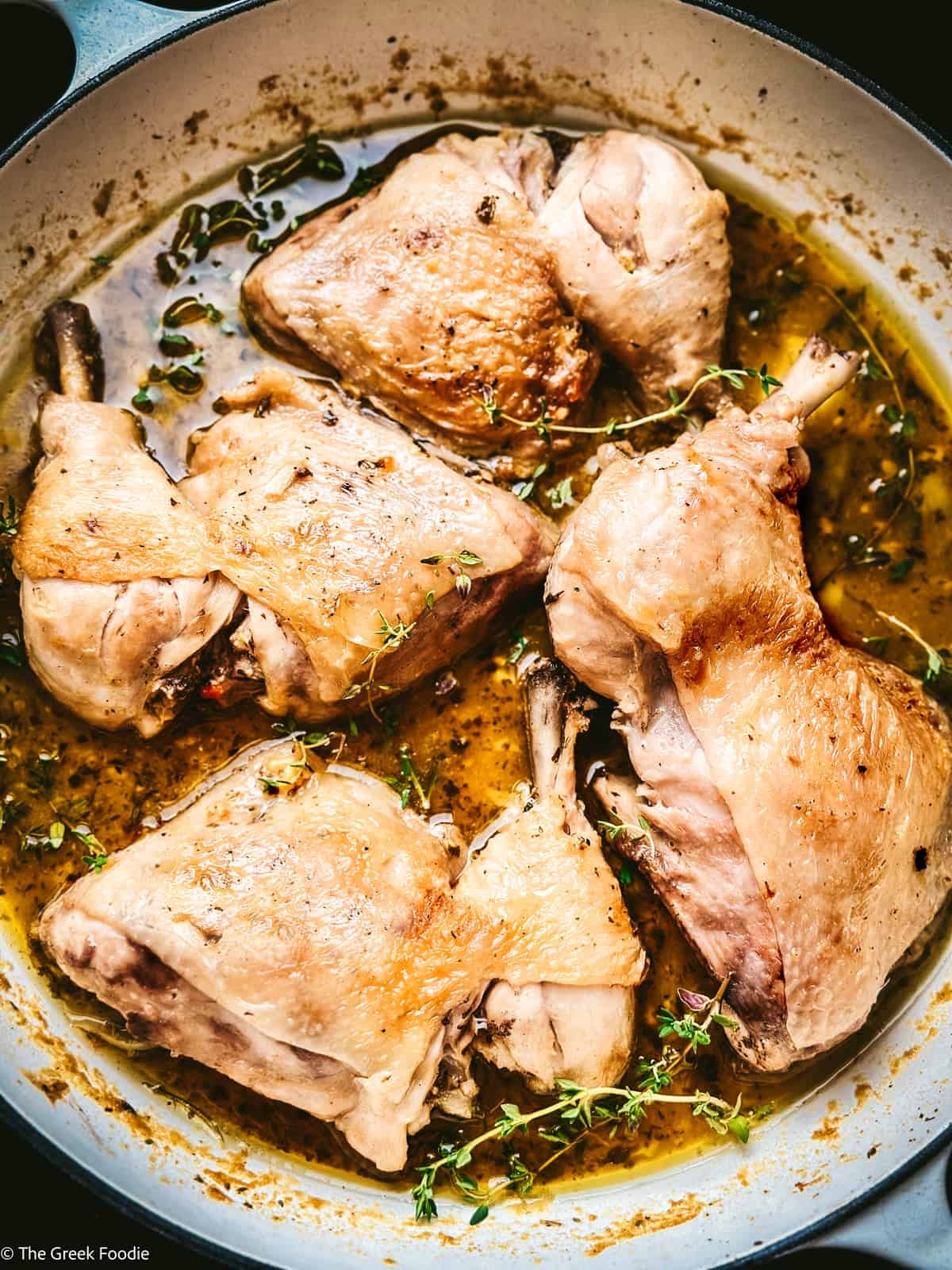
Remove from heat. Fish out and discard the herb sprigs. Let the dish rest uncovered — the sauce will thicken naturally as it sits. Taste and adjust for salt or lemon before serving. Finish with a sprinkle of fresh thyme leaves.
10–15 minutes
Add-ons and substitutions
The base recipe is already a complete dish, but kotópoulo lemonáto takes beautyfully to a few additions. Here are the variations worth trying — and the one optional ingredient that changes the whole character of the sauce.
Olives, capers, and sundried tomatoes – ADD-ON
Stir in a handful of Kalamata olives, a tablespoon of capers, and a few roughly chopped sundried tomatoes at the same time you add the lemon juice and mustard (step 3). They will warm through with the chicken during the simmer and soften slightly without losing their character. This addition takes the dish in a bolder, briny direction that is closer in spirit to Italian chicken piccata than traditional Greek lemonáto. It is not the classic version, but it is genuinely delicious, and the olives in particular feel right at home in olive oil and lemon. Great if you want to serve this to guests and want something with a little more complexity on the plate.
A whole chicken – SUBSTITUTION
The most traditional version of this dish in many Greek homes. Use a whole chicken cut into pieces — legs, thighs, drumsticks, and breast — keeping the skin on throughout. The breast pieces will cook faster than the dark meat, so add them to the pot 15 minutes after the legs and thighs. Expect a total simmering time of 50–60 minutes. The sauce will be even richer and more complex from the variety of bones.
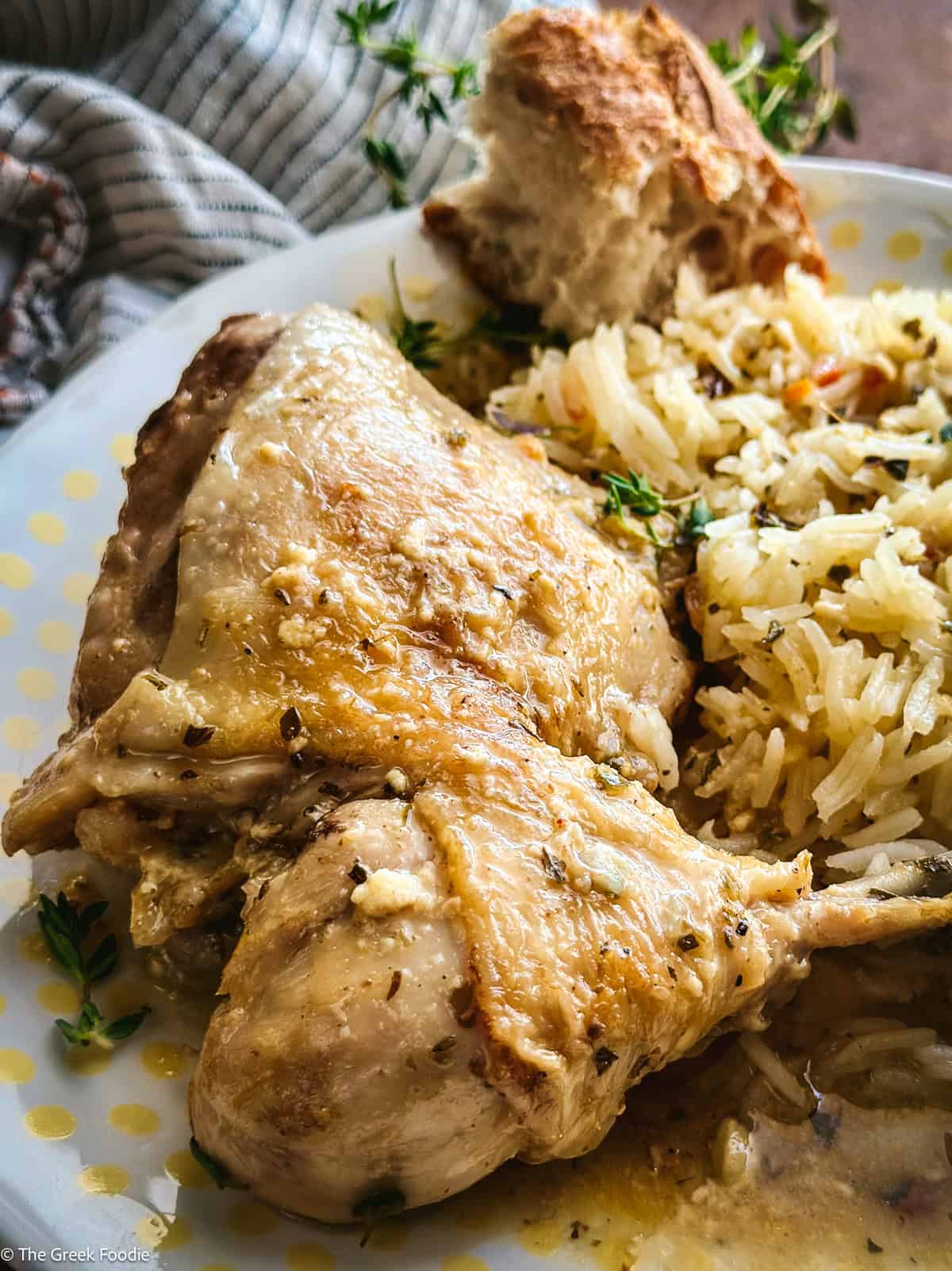
What to serve with kotópoulo lemonáto
This dish needs something starchy to carry the sauce — that is not optional, it is the whole point.
- Pilafi rice. The classic. Rice cooked in stock with a bit of butter. The sauce soaks right in.
- Crispy Greek-style fried potatoes. Crispy on the outside, soft inside. The contrast with the tender chicken is perfect.
- Mashed potatoes. For the most comforting version of this meal. Especially good in winter.
- Simple green salad with lemon vinaigrette
- Crusty bread. Non-negotiable for anyone who wants every drop of that sauce.
Storage and leftovers
- Fridge: Store in an airtight container for up to 3 days. The flavor deepens overnight.
- Reheat. Gently on the stovetop over low heat. Add a small splash of water if the sauce has thickened too much.
- Freezes well for up to 2 months. Thaw overnight in the fridge and reheat gently.

FAQs
Cooked it? Rate it!
If you tried this recipe, I’d love to know how you liked it — drop a comment below or tag me on Instagram @thegreekfoodie__.
More Greek recipes with chicken
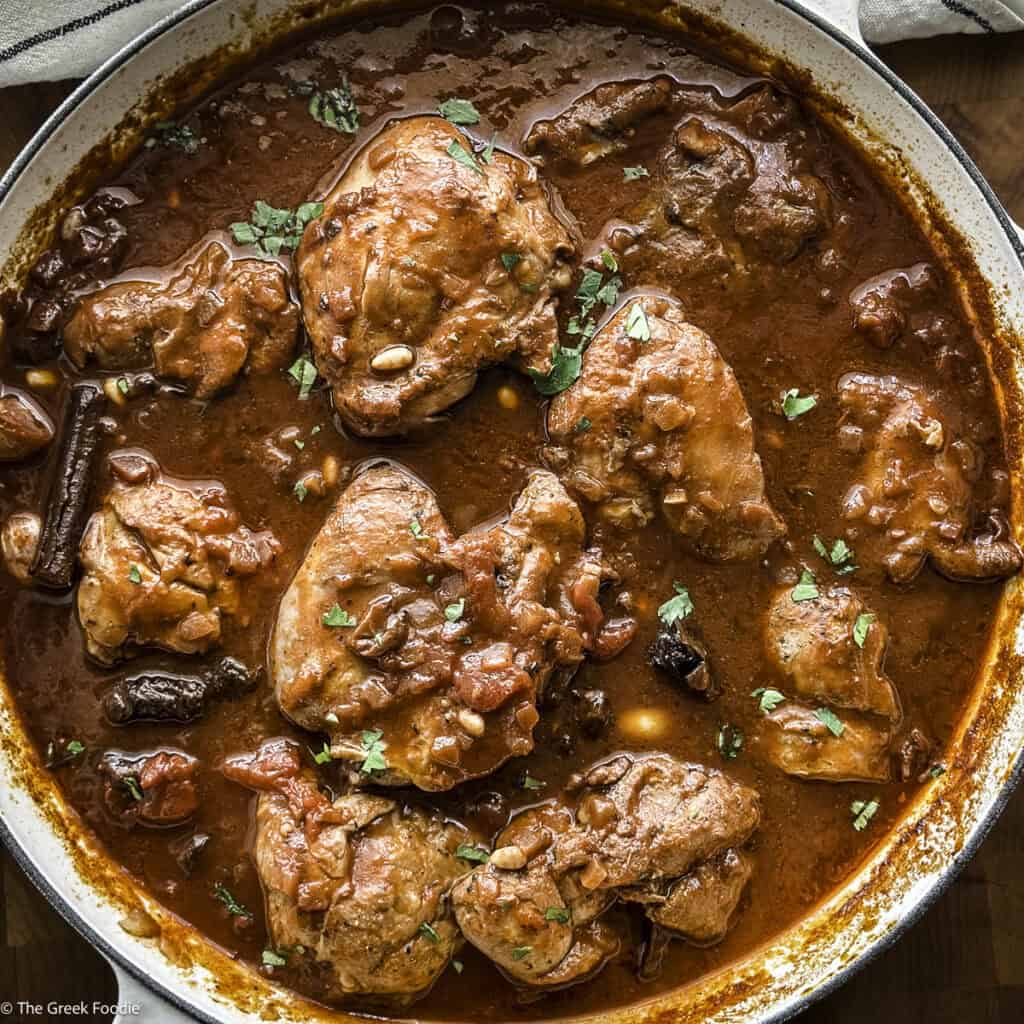
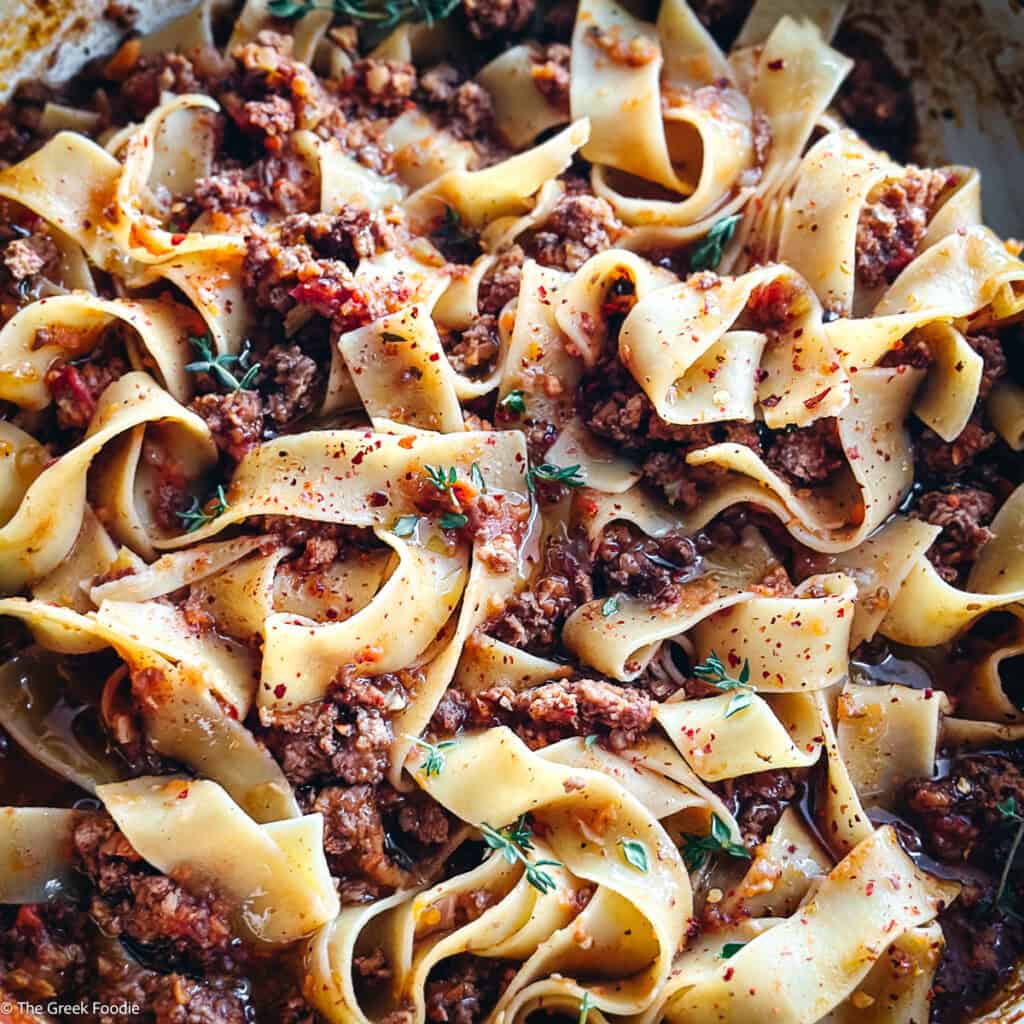



Chicken with Lemon Sauce (Kotópoulo Lemonáto)
Ingredients
- 2.2 lb chicken thighs with drumstick, skin on, (1 kg)
- ½ cup extra virgin olive oil
- 5 garlic cloves, peeled and roughly chopped
- ¾ cup dry white wine
- 1 tablespoon dried oregano, finely chopped
- 1½ cups stock, chicken or vegetable
- 1 tablespoon thyme honey
- 1 tablespoon mustard
- 2 lemons, juiced
- fresh thyme, , a few sprigs plus extra leaves to serve
- fresh rosemary, 1–2 sprigs
- sea salt
- freshly ground pepper
To serve
- pilafi rice
- Greek-style fried potatoes
- mashed potatoes
- Crusty bread, for the sauce
Instructions
- Season the chicken generously on all sides with sea salt and freshly ground pepper. Heat the olive oil in a wide pot or deep sauté pan over medium-high heat. Place the chicken skin-side down in a single layer. Leave it undisturbed until the skin is deeply golden and releases easily from the pan. Flip and brown the other side. 8–10 min2.2 lb chicken thighs with drumstick, skin on, ½ cup extra virgin olive oil, sea salt, freshly ground pepper
- Remove the chicken to a plate. Reduce the heat to medium. Add the garlic and oregano to the same pot and cook, stirring, until soft and fragrant. 2 min5 garlic cloves, 1 tablespoon dried oregano
- Pour in the white wine and let it bubble, scraping up all the browned bits from the bottom of the pan. Let the wine reduce by half. In a cup, stir together the stock, mustard, honey, and lemon juice. 2–3 min¾ cup dry white wine, 1½ cups stock, 1 tablespoon thyme honey, 1 tablespoon mustard, 2 lemons
- Return the chicken and any accumulated juices to the pot. Pour in the stock mixture and tuck in the fresh thyme and rosemary sprigs. Bring to a gentle boil, then reduce the heat to low. Partially cover and simmer gently, turning the chicken once halfway through, until very tender and the sauce has reduced but is not dry. Add a small splash of water only if the pan looks dry. 30–40 minfresh thyme, , fresh rosemary
- Remove from heat. Fish out and discard the herb sprigs. Let the dish rest uncovered — the sauce will thicken naturally as it sits. Taste and adjust for salt or lemon. Finish with a sprinkle of fresh thyme leaves. 10–15 min
Notes
- Chicken thighs with the drumstick, skin on — the skin renders and crisps during browning and melts into the braise, giving the sauce its richness and body.
- The mustard does not overpower — it binds the sauce and balances the lemon. Do not skip it.
- Letting the dish rest off the heat naturally thickens the sauce. Do not rush this step.
- Leftovers are even better — the lemon flavor deepens overnight. Reheat gently on the stovetop over low heat with a splash of water if needed. Keeps for up to 3 days in the fridge.
Nutrition