

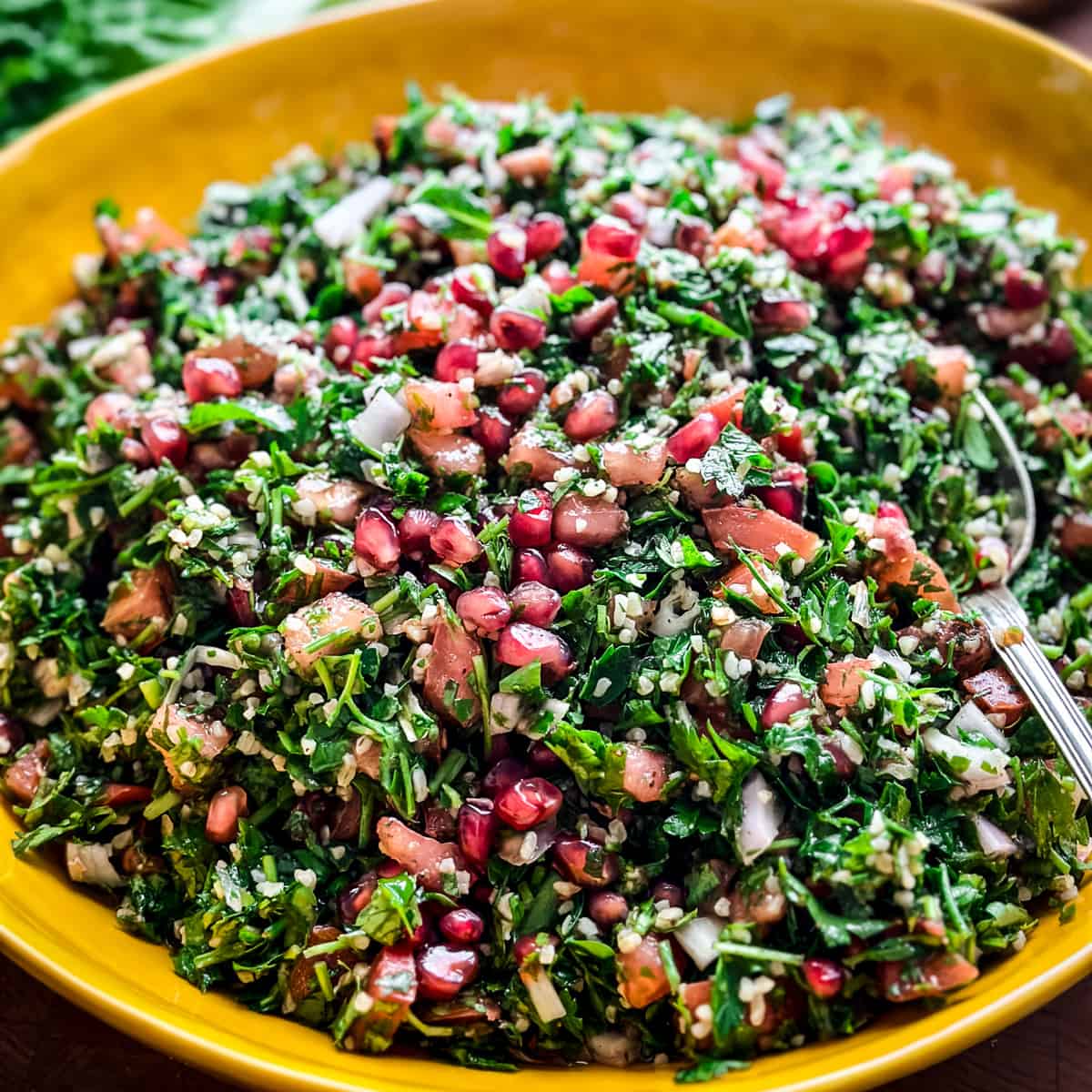
Every tabouli I ate before I understood it was wrong, was heavy on wet bulgur with some green flecks in it. Real tabouli is the opposite, it’s a parsley salad and the bulgur is only a guest, and not the host.
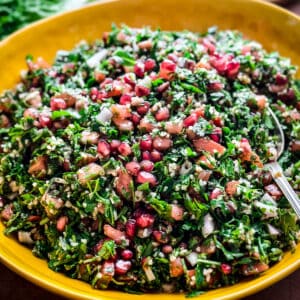
This is the version I love to make all summer: four fat bunches of flat-leaf parsley chopped to a whisper, mint, ripe tomatoes with their juices, sharp lemon, good Greek olive oil, and a small handful of fine bulgur. It only takes twenty minutes, with no cooking involved.
And yes, I’m Greek, and tabouli is not a Greek dish, it’s Lebanese. But it has been on Greek tables for a long time, and I’ll explain exactly how it got there, because it’s a better story than most people expect.
If you love this Tabouli (Tabouleh) salad, you will also love this Horiatiki-Greek Tomato Cucumber Salad, Maroulosalata-Lettuce salad, or Cauliflower-Broccoli salad!
What is tabouli?
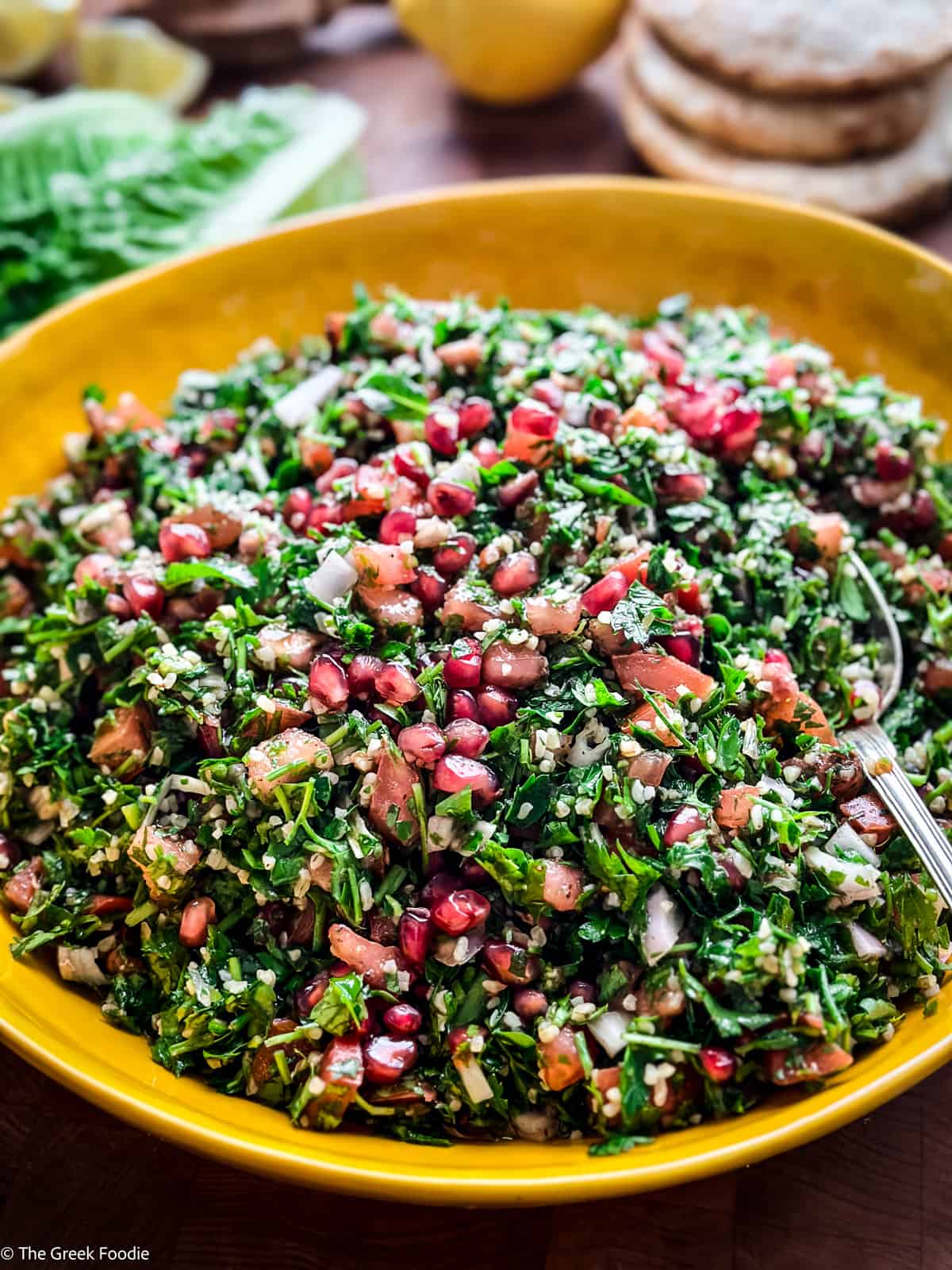
Tabouli (also spelled tabbouleh, tabouleh, or tabbouli — same salad) is a Levantine herb salad built on finely chopped flat-leaf parsley. Tomatoes, mint, onion or shallot, lemon juice and olive oil go in with it, and a small amount of fine bulgur wheat is soaked and stirred through for texture.
The proportions are the whole point. In a proper tabouli the bowl looks green, not beige. If you can see more grain than herb, what you have is a bulgur salad wearing tabouli’s name.
It’s traditionally eaten as part of a meze spread, scooped up with small romaine or cos lettuce leaves rather than eaten with a fork.
Why you will love this Tabouli (Tabbouleh)
Is tabouli Greek or Lebanese?
Lebanese.
Tabbouleh comes from the mountains of Lebanon and Syria — the Beqaa Valley, most say — and it’s Lebanon’s national dish in the way that moussaka is ours. Syria has a fair claim on it too. Nobody in Greece is claiming it, and neither am I.
But it has been on Greek tables for years, and that isn’t an accident or a food-trend import. Greek and Levantine kitchens are first cousins, they’ve been leaning on each other for centuries, through the Greek communities of Constantinople, Smyrna and Alexandria, and through the refugees who arrived in Greece after 1922 carrying the cooking of Asia Minor with them. That’s the same route that gave us soutzoukakia and our taste for cumin in savory food, and it’s why the urban meze table looks the way it does.
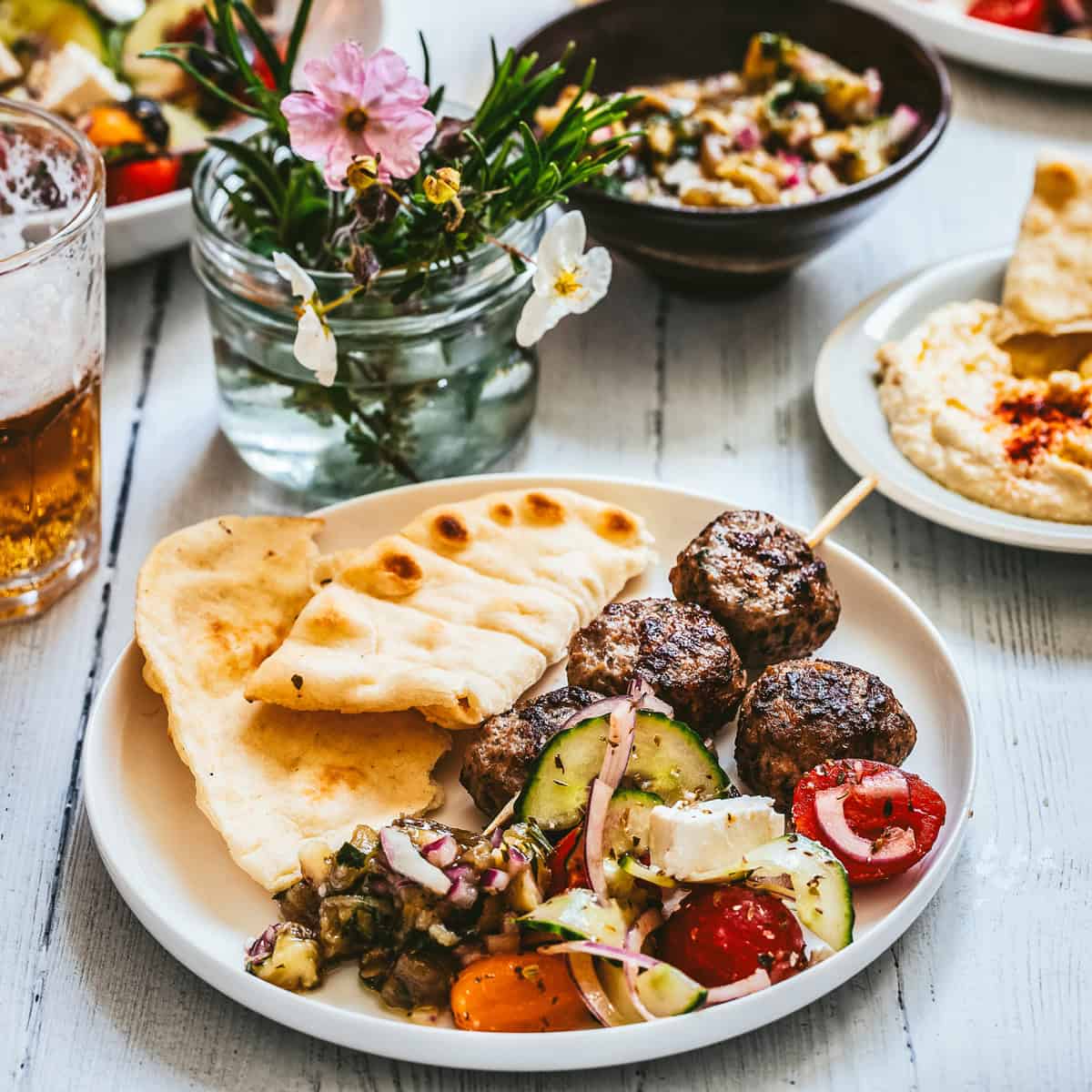
So tabouli doesn’t feel borrowed to me. When I have friends over it goes on the table next to keftedes, grilled octopus and a bottle of ouzo, and at our favorite place in Plaka, below the Acropolis, we order it instead of a salad almost every time. That texture and that sharp green aroma are made for seafood meze.
I’ve been eating it since I was in my twenties, back then it suited how I wanted to eat, fresh and light and not fussy about it. It still does.
Serve it as a side or a light lunch. More ideas are in my Greek side dishes.
Here is what you need
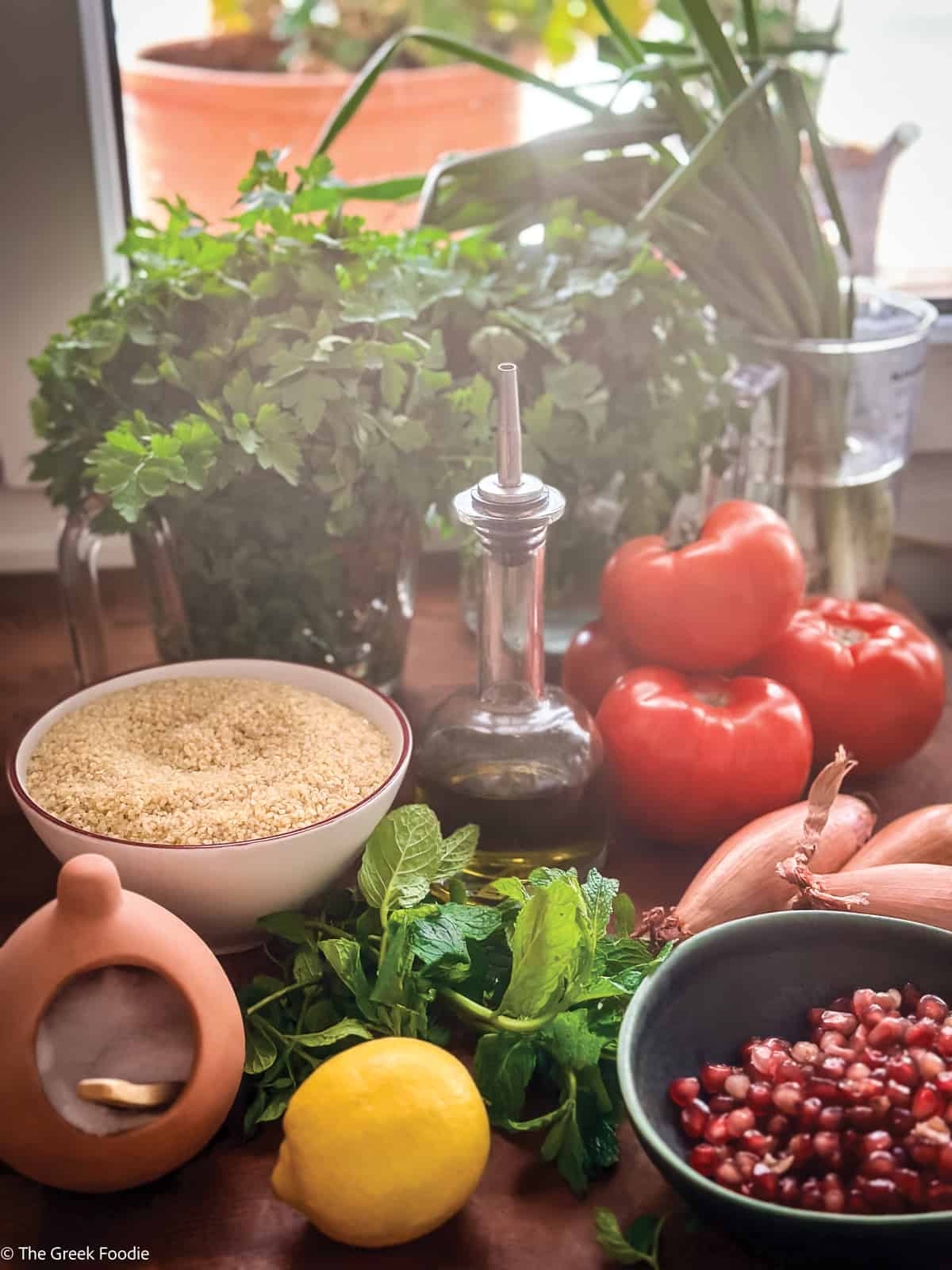
- Fine bulgur wheat — The classic choice for tabouli. If the package doesn’t specify the grade or you can’t find fine (#1) bulgur, soak regular bulgur in boiling water for a few minutes, then drain well and let it dry in a fine sieve so it doesn’t turn mushy.
- Tomatoes — Use ripe but firm tomatoes so they release less water and keep the salad fresh.
- Shallots — Mild and sweet. Spring onions (scallions) are a perfect substitute.
- Fresh flat-leaf parsley — The star of the salad. As Yotam and Sami say, tabbouleh is essentially a parsley salad, not a bulgur salad — so don’t skimp!
- Fresh mint — Adds brightness and fragrance. Fresh spearmint is a great substitute.
- Fresh lemon juice — Gives the salad its signature sharp, fresh flavor.
- Extra virgin olive oil — Use the best one you have. With such simple ingredients, good EVOO makes a big difference.
- Pomegranate kernels — Jewel-like, sweet, juicy bursts that make every bite exciting. Optional but highly recommended.
- Baharat(see below), allspice, sea salt, and black pepper — Warm spices + clean seasoning complete the flavor profile and balance the herbs and lemon.
About the Baharat Spice Blend
Baharat is wonderfully fragrant and adds incredible depth to salads, meat marinades, grains, and roasted vegetables. It’s absolutely worth making your own — the flavor is warmer, fresher, and more aromatic than anything prepackaged. Store it in a sealed jar for up to eight weeks and use it whenever you want a hit of Middle Eastern warmth.
For the best results, use a spice grinder to make this blend silky and even.
If you’re using a mortar and pestle, consider swapping whole cardamom pods for ground cardamom, since the pods can be stubborn to break down by hand.
See the recipe card for exact ground measurements.
- One teaspoon of black peppercorns*
- One teaspoon of coriander seeds
- One small cinnamon stick, roughly chopped
- ½ teaspoon whole cloves
- ½ teaspoon ground allspice
- Two teaspoons of cumin seeds
- One teaspoon of cardamom pods
- ½ whole nutmeg, grated
How to make it:
Place all the spices in a spice grinder or mortar and grind until you have a fine, even powder. Transfer the Baharat seasoning to an airtight container and store for up to eight weeks.
*See the recipe card for exact ground measurements.
The parsley is the recipe: how to chop it
This is the step people get wrong, and it’s the difference between a good tabouli and a great one.
Dry the parsley completely. Wet leaves bruise and go slimy under the knife, and they water down the salad. Wash it, spin it, then leave it out on a towel while you do everything else.
Don’t throw away all the stems. The thin upper stems have more flavour than the leaves. Cut off only the thick, woody bottom third.
Use the biggest, sharpest knife you own. A small knife tears. Gather the parsley into a tight bundle, hold it firm, and slice through it, then turn the pile and go over it again, twice. You want threads, not confetti.
Never use a food processor. It bruises the leaves and you end up with green paste that weeps water into the bowl within the hour. I have done it. It was sad.
Chop the herbs last, right before assembling. Parsley starts losing its perfume the moment it’s cut.
How to make tabouli
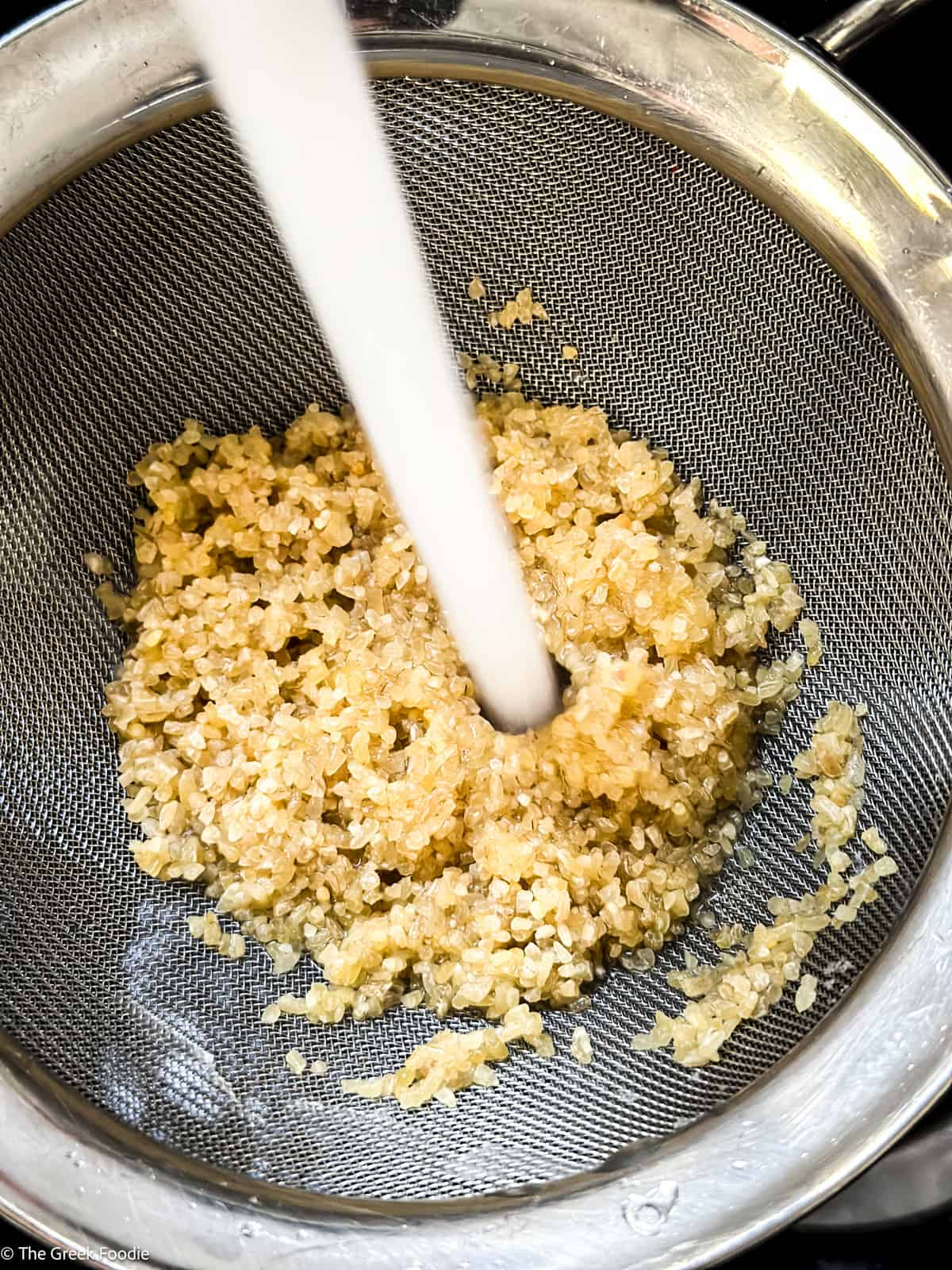
Step 1 — Rinse the bulgur.
Place the bulgur wheat in a fine sieve and rinse under cold running water to remove excess starch. Drain well, then transfer to a mixing bowl.

Step 2 — Prep the tomatoes and shallots.
Dice the tomatoes into ½ cm pieces and add them to the bowl along with their juices. Finely chop the shallots and add them in as well.
Step 3 — Chop the herbs.
Trim off the tough ends of the parsley stems. Gather a handful of parsley, pack it tightly, and chop as finely as possible with a large, sharp knife. Repeat with the remaining parsley, then go over it again if needed so the pieces are very fine.
Finely chop the mint leaves in the same way. Add all the chopped herbs to the bowl.
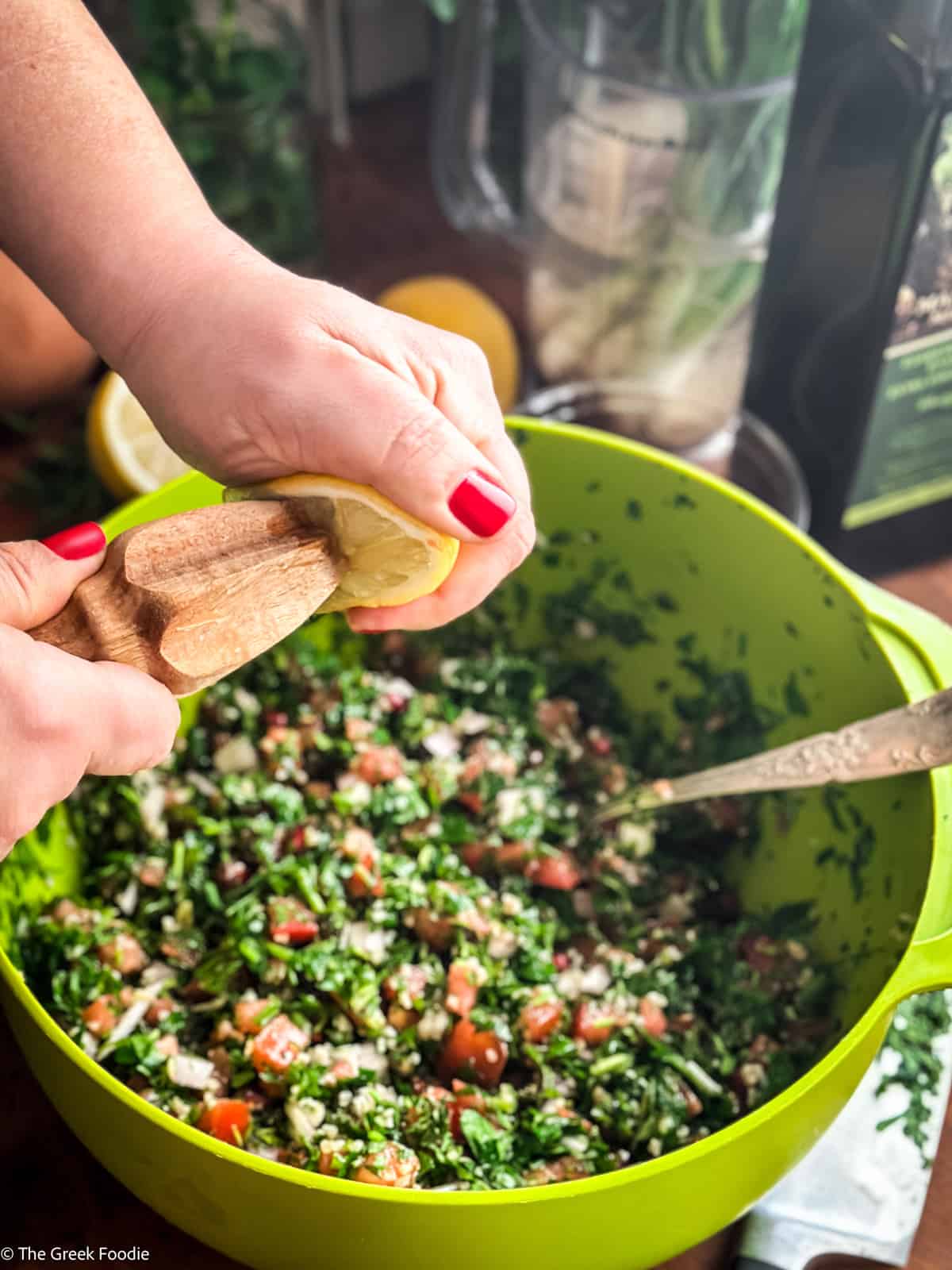
Step 4 — Season and finish.
Stir in the allspice, Baharat seasoning, fresh lemon juice (to taste), extra virgin olive oil, sea salt, and freshly ground black pepper. Toss gently to combine. Adjust seasoning and lemon as needed.
Serve at room temperature for the freshest flavor.
Pro Tips for the best Tabouli
- Use flat-leaf parsley. It has better flavor and texture than curly parsley and is the traditional choice.
- Chop the herbs very finely. You want delicate, thin pieces — no big chunks of parsley or mint. A sharp knife makes all the difference.
- Don’t drown the bulgur. Soak it briefly or use hot water so it becomes tender without turning mushy. Fluff it before adding it to the salad.
- Add the tomatoes last if they are very juicy. This keeps the salad fresh instead of watery.
- Taste and adjust the lemon. Tabouli is all about brightness — add more lemon to taste right before serving.
- Use the best olive oil you have. This salad is simple, so the quality of the EVOO really matters.
- Chill it. A short rest in the fridge helps the flavors meld and makes the salad even fresher.
Is tabouli healthy?
It genuinely is, and not in a joyless way.
A serving is mostly herbs and vegetables dressed in extra virgin olive oil, which puts it squarely in the Mediterranean-diet pattern. Parsley is unusually rich in vitamin K and vitamin C for something most treat as a garnish, and this recipe uses it by the bunch rather than by the sprig. The tomatoes bring lycopene, the lemon juice helps you absorb the iron in the parsley, and the olive oil carries the fat-soluble vitamins.
Fibre and digestion. Bulgur is a whole grain, and between the bulgur, the herbs and the vegetables a portion carries a decent amount of fibre, which is what people are really asking when they ask whether tabbouleh is good for the gut. It is roughage in the nicest possible form.
Naturally vegan and, if you swap the bulgur, easily gluten-free.
On gluten: bulgur is cracked wheat, so classic tabouli is not gluten-free. Quinoa is the best substitute. Rinse it well, cook it, cool it completely and fluff it before it goes anywhere near the herbs. Millet and buckwheat work too, but not couscous, which is wheat and trips people up constantly. The salad is so herb-dominant that the grain swap barely registers.

FAQs
Tabouli is great with skewers. Find them in my Greek Mediterranean diet dinner recipes.

How to serve tabouli (tabbouleh)
A traditional way to enjoy tabbouleh is with small cos lettuce leaves for scooping. Lay them out on a platter and let everyone help themselves — it’s fresh, fun, and perfect for sharing.
In Greece, tabouli is often served as part of a meze spread, where it pairs beautifully with almost anything. Try it alongside:
- Pork gyros or chicken souvlaki
- Grilled chicken chops
- Kalamarakia
- Juicy meatballs
- Traditional Greek lemon chicken
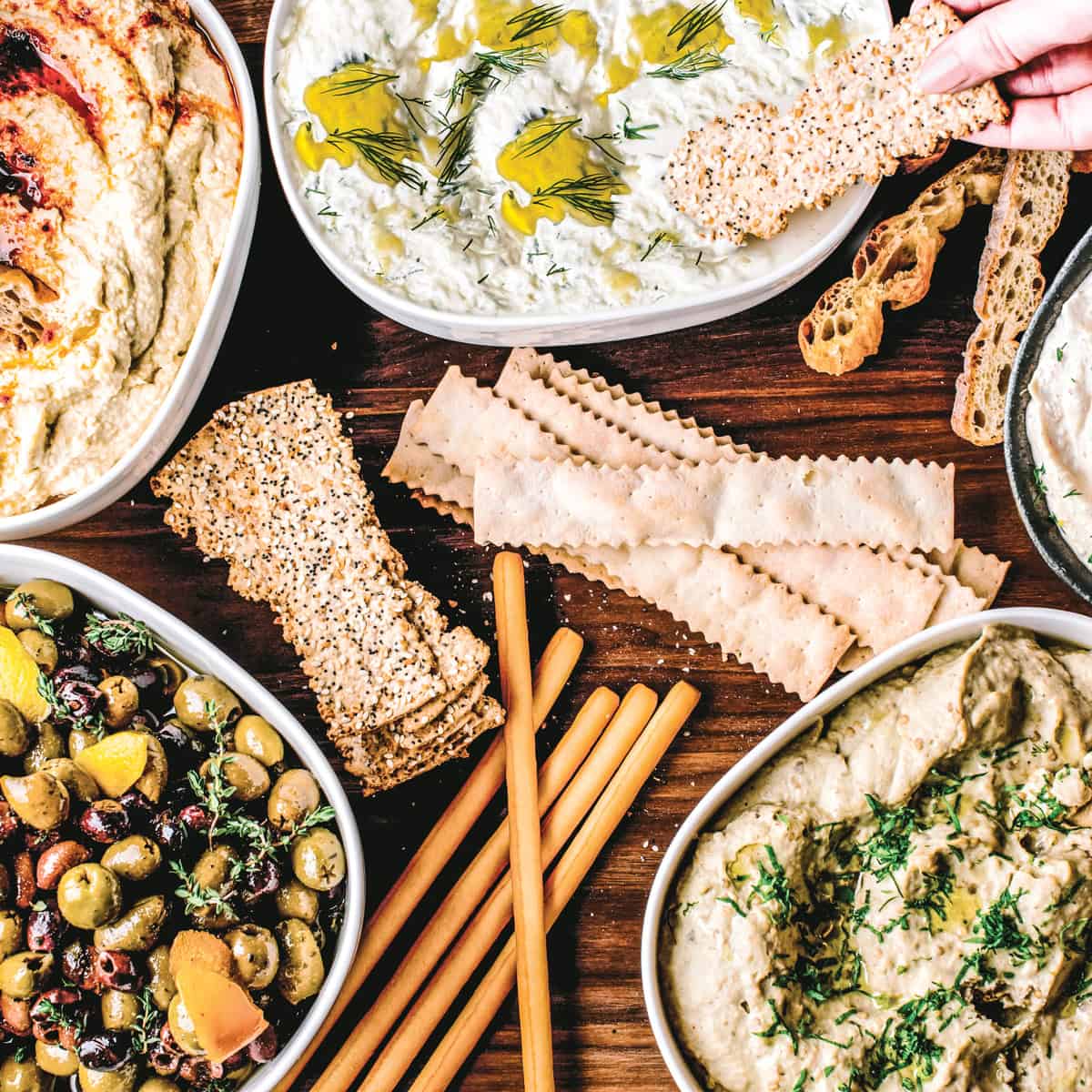
You can round out the table with classics like tzatziki yogurt dip, fried calamari, and homemade pita bread. Light, herby, and bright, tabouli is the perfect balance to rich grilled meats and savory Greek dishes.

Storage
- Storage: Store leftovers in an airtight container for up to 3 days. The flavor improves, but the herbs will soften over time.
- Reheating: Tabouli is a cold salad — do not reheat it.
- To refresh leftovers:
- Add a squeeze of lemon
- A splash of olive oil
- A little fresh parsley or mint if available
- This brings the salad back to life beautifully.
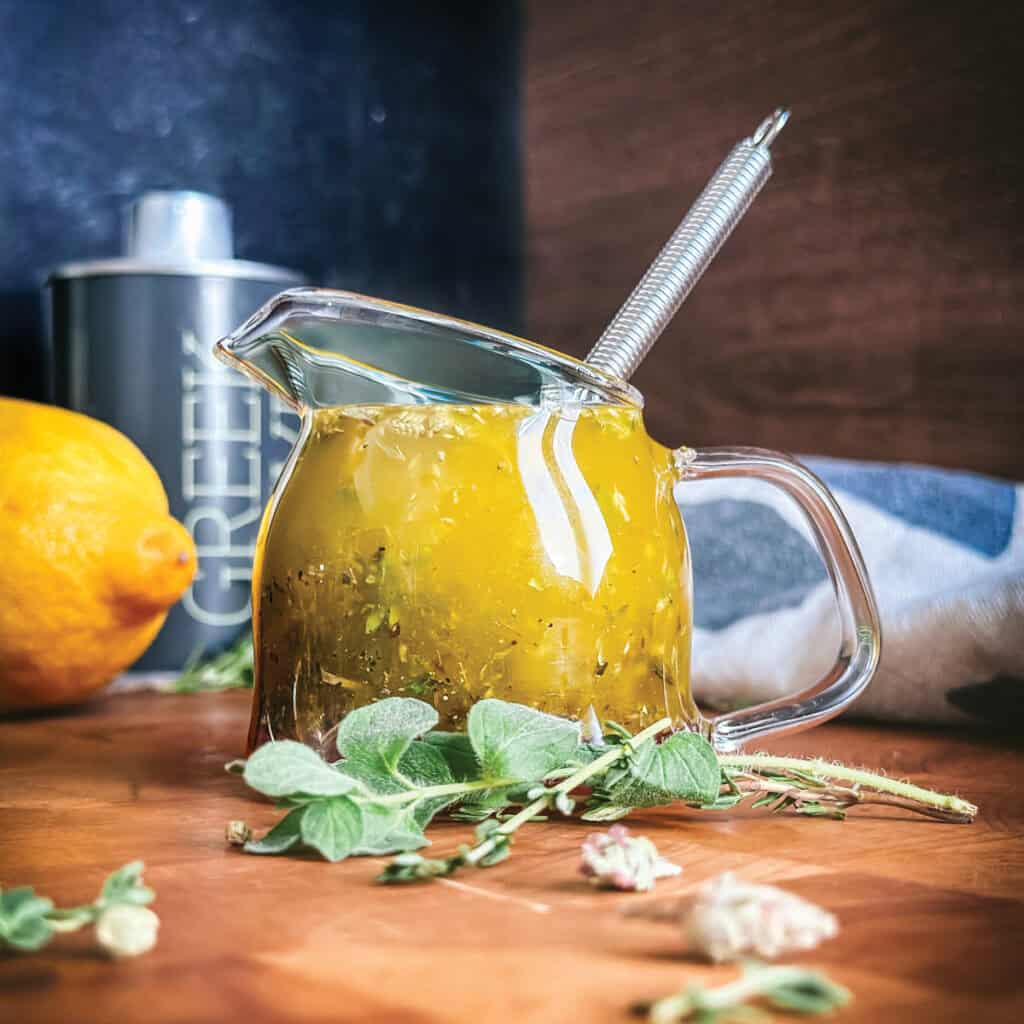
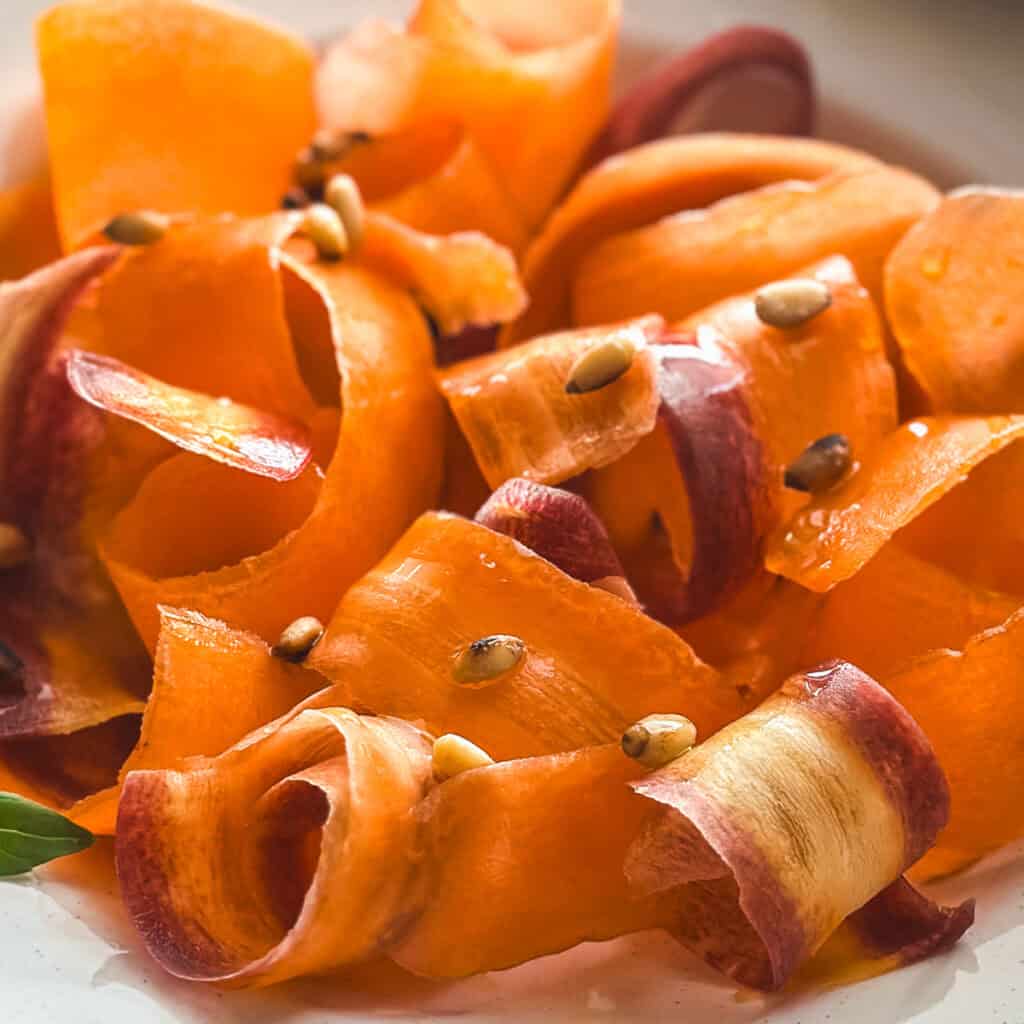
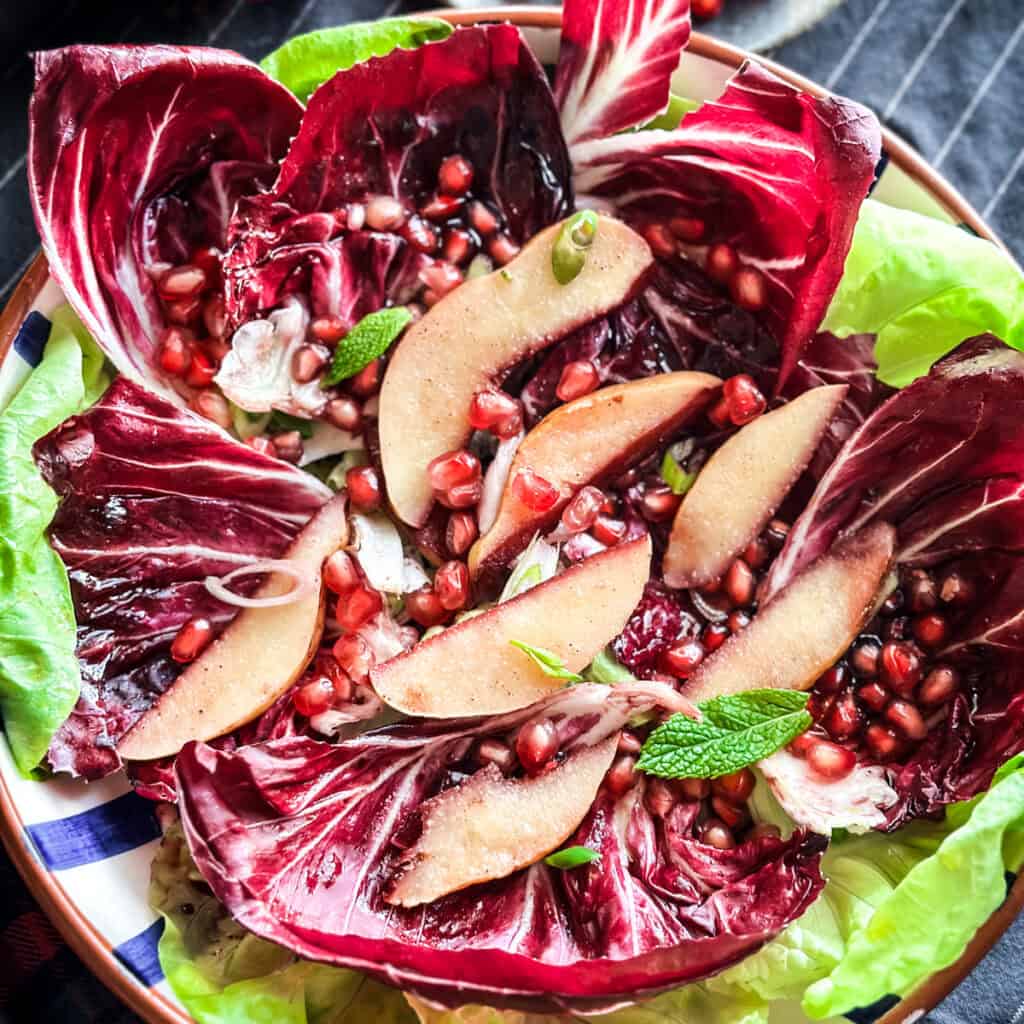
More salad recipes
Cooked it? Rate it!
If you tried this recipe, I’d love to know how you liked it — drop a comment below or tag me on Instagram @thegreekfoodie__.


Tabouli Salad (Tabbouleh)
Equipment
- sharp chef's knife
Ingredients
- 2 oz bulgur wheat, 60 grams
- 2 tomatoes, large ripe and firm, 1⅓ cup / 300g
- 1 shallot
- 4 bunches fresh flat-leaf parsley, ⅔ cup chopped packed / 160g
- 2 bunches fresh mint , ¼ cup chopped packed /30g
- 4 tablespoons lemon juice
- 1 teaspoon ground allspice
- ⅓ cup extra virgin olive oil
- sea salt
- freshly ground pepper
- 1 teaspoon baharat seasoning, (optional — see below)
- ⅓ cup pomegranate seeds, (optional)
Baharat spice blend
- 1 teaspoon whole black pepper, 1¼ teaspoons ground black pepper
- 1 teaspoon coriander seeds, 1¼ teaspoons ground coriander
- 1 small cinnamon stick, ⅓ teaspoon ground cinnamon
- 2-3 cloves, ¾ teaspoon ground cloves
- 2 teaspoons cumin seeds, 2½ teaspoons ground cumin
- ½ teaspoon cardamom pods, ¾ teaspoon ground cardamom
- ½ whole nutmeg, 1 teaspoon ground nutmeg
- ½ teaspoon ground all spice
Instructions
- Place the bulgur wheat in a fine sieve and put under running cold tap water to remove most of the starch. Transfer to a bowl.2 oz bulgur wheat
- Dice the tomatoes into 0.5cm pieces and add to the bowl, along with their juices. Chop the shallots and add to the bowl.2 tomatoes 1 shallot
- With a large, sharp knife trim off the end of the parsley stalks.T ake a couple stalks of parsley, pack them together tightly and chop as finely as possible. Do the same with the remaining stems and leaves. Go over the chopped parsley again if you need to. Add the chopped parsley to the bowl.4 bunches fresh flat-leaf parsley
- Chop the mint leaves as finely as the parsley and add to the bowl. 2 bunches fresh mint
- Finally stir in the pomegranate seeds, allspice, baharat seasoning, lemon juice to taste, olive oil, sea salt and freshly ground pepper. Adjust the seasoning to taste and serve at room temperature.⅓ cup pomegranate seeds 1 teaspoon ground allspice 1 teaspoon baharat seasoning 4 tablespoons lemon juice ⅓ cup extra virgin olive oil sea salt freshly ground pepper
Baharat seasoning
- Place all the spices in a spice grinder or pestle and mortar and grind until they are a fine powder. Alternatively place the ground versions of the spices in a jar, cover and shake well.Store baharat seasoning in an airtight container for 8 weeks.
Notes
- Use flat-leaf parsley and chop it very finely for the best texture.
- Rinse the bulgur well, then drain thoroughly so the salad doesn’t get watery.
- Add the tomatoes last if they’re very juicy to keep the salad fresh.
- Taste and adjust the lemon and salt before serving — tabouli should be bright.
- For gluten-free tabouli, replace bulgur with quinoa.
- Chill the salad for 15–20 minutes to let the flavors develop.
Nutrition



This is so fresh and delicious and tastes as good as it looks (which is beautiful!) The finishing touch of the pomegranate arils adds a lovely pop of colour and slight crunch. Wonderful recipe.
Thank you so much Alexandra!
This is such a flavorful salad and goes well with pizza and it was so easy to put together. We love tabouli and pizza so this was a HIT!
We love tabouli and pizza too! Thank you Kathryn! x Jenny
I am from a Middle Eastern salad and this is one of our favorite salads for family dinner parties. We serve it with soft pita bread and syrian kibbeh balls. It makes a great wholesome dinner.
This salad recipe looks awesome, the ingredients are accessible and the instructions are clear and easy to follow!
I love Tabouli salad-tabbouleh, it looks amazing and healthy. I can have this every day at dinner!!!!
I made this recipe and it was so easy, delicious, and nutritious.
I can’t wait to make this recipe again.
This is so flavorful and delicious. Love the mix of greens with mint and the seasonings are so refreshing.
I love this healthy salad and the extra pomegranate seeds add a beautiful touch!