

Rakomelo is Crete’s famous raki drink: tsikoudia (Cretan raki) gently warmed with honey, cinnamon and cloves until the whole kitchen smells like a Cretan village in December. It’s sweet, strong and fragrant. Cretans sip it from small glasses by the fire in winter, and in summer it comes ice-cold to the table at the end of a long meal.
It takes five minutes and one small saucepan. The only rule: warm it, never boil it.
For the whole holiday table, see my Greek Christmas Food guide. And if you’re setting out a Cretan meze to go with it, try my Cretan Dakos Salad and Kalitsounia.

What is Cretan raki (tsikoudia)?
Raki (ρακή), or tsikoudia (τσικουδιά) as it’s properly called in Crete, is a clear spirit distilled from grape pomace, the skins, seeds and stems left over after pressing grapes for wine. The pomace ferments for several weeks, then goes into a copper still called a kazani. Cretan raki is distilled only once and has no added flavorings, no anise, nothing but grape. Tsikoudia from Crete has protected geographical status in the EU.
Bottled tsikoudia is usually around 37.5–45% alcohol. Homemade village raki varies from family to family and is often stronger.
Mainland Greece has its own cousin, tsipouro, which is often distilled twice and sometimes flavored with anise.
Raki is the drink served in Crete on almost every occasion. It is consumed as a sign of friendship and as a means of social communication. It is simply the national drink of the Cretans. It is almost naturally served after every meal, and there is often the opportunity to enjoy raki. There is always a shot glass of raki when Cretans greet their guests, wish each other well, and chat about their everyday lives in traditional cafes.
Anyone who goes to Crete will not avoid drinking raki. Years ago, I traveled through Crete with friends and was looking for directions to a specific location hidden in the mountains. We were lost and stopped many times to ask the villagers for directions and every single one offered us a shot of raki to welcome us. In the Kandanos village supermarket, as we were shopping for supplies, the shop owner placed some parchment paper on a freezer, poured raki into shot glasses, and scattered nuts and dried fruit on the paper as an offering while we were shopping! Remembering the warmth and hospitality of Cretans always brings a smile to my face.

Raki is made in autumn, right after the grape harvest. From October into November, villages all over Crete fire up their stills, and the distilling turns into a party: the rakokazana, with food grilled on the coals, music, and the first warm raki of the year poured straight from the still.
Cretan raki vs. Turkish rakı vs. ouzo
The name causes a lot of confusion, so here’s the short version:
Cretan raki (tsikoudia): distilled once from grape pomace. No anise. Clear, smooth, grape-forward. Stays clear with water or ice. This is what you want for rakomelo.
Turkish rakı (Yeni Rakı is the best-known brand): distilled from grapes and flavored with anise. It turns milky white when you add water.
Ouzo: Greece’s anise spirit. Also turns milky with water.
Rakija: the Balkan cousin, usually a fruit brandy made from plums, apricots or pears.
Don’t use Turkish rakı or ouzo for rakomelo. The anise fights the honey and cinnamon.
Why you will love rakomelo
Here is what you need
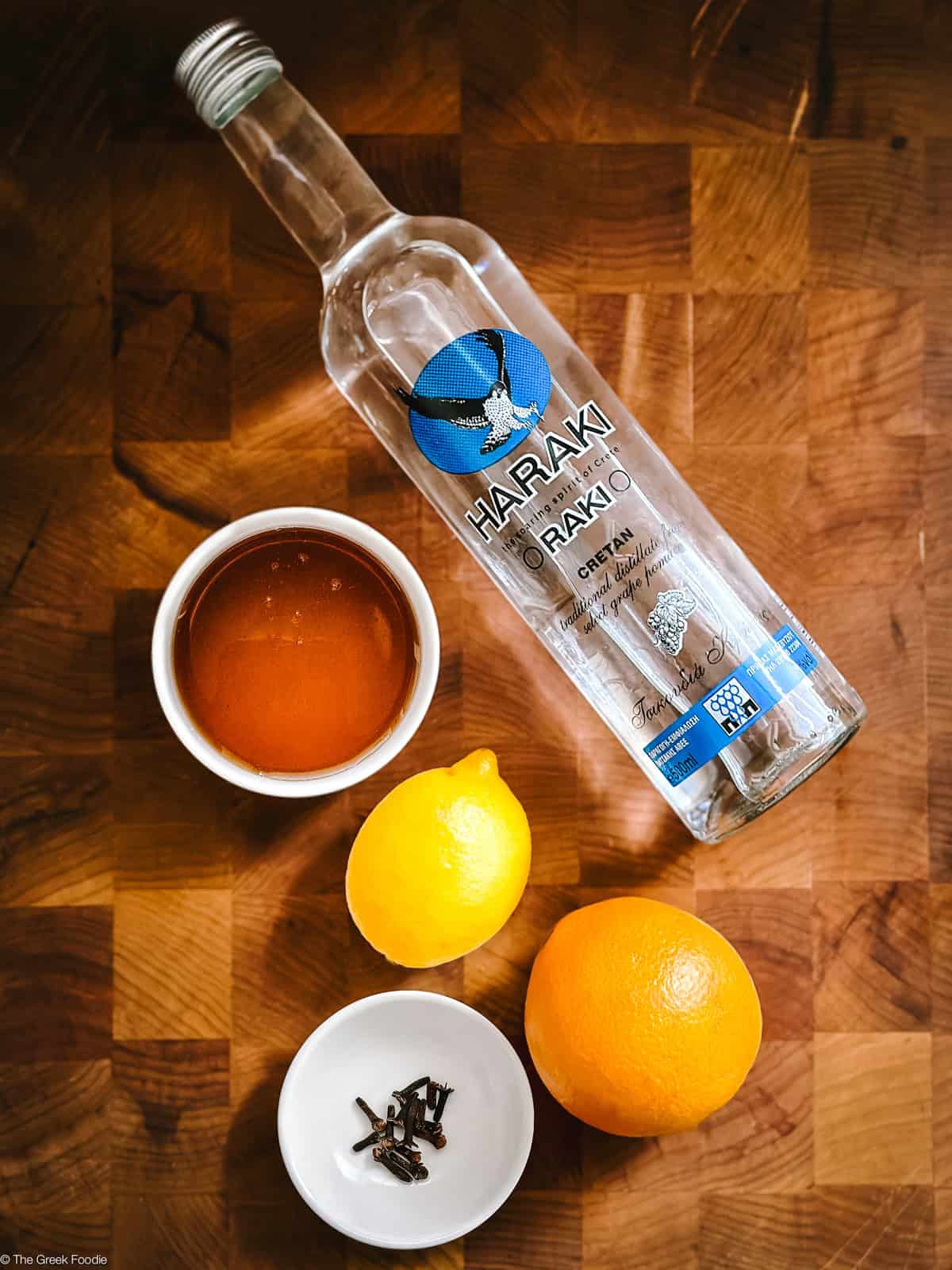
- Cretan raki (tsikoudia). Look for it at Greek groceries, specialty liquor stores, or online. Good substitutes: unflavored Greek tsipouro, or Italian grappa. Avoid anything with anise.
- Honey. Greek thyme honey is classic in Crete. Orange blossom honey is lovely too.
- Cinnamon stick and whole cloves.
- Lemon juice. Just a little, for a fresh note. Optional.
- Orange peel. For garnish. Optional.
How to make rakomelo
Warm rakomelo
- Combine. Put the raki, honey, lemon juice, cloves and cinnamon pieces in a small saucepan.
- Warm gently. Set over medium-low heat and stir until the honey melts. Heat until steaming, but don’t let it reach 167°F / 75°C or start to bubble. This takes about 3–5 minutes.
- Strain and serve. Take the pot off the heat, strain into small glasses or a mug, and garnish with orange peel and a cinnamon stick. Serve warm.
Cold rakomelo
- Serve. Pour into a tall glass over ice and garnish with orange peel.
- Warm and infuse. Warm the raki, honey, lemon juice, cloves and cinnamon exactly as above, just until the honey melts.
- Chill. Strain into a small pitcher or jar and refrigerate until cold, about 1 hour.
Warm, don’t boil. Keep rakomelo below 167°F / 75°C. Alcohol starts to evaporate as it nears boiling (about 173°F / 78°C), and you’ll lose the kick and the aroma. No thermometer? Pull the pot off the heat as soon as it’s steaming and the honey has melted, before any bubbles form. And keep your face back when you lift the lid: warm alcohol vapor is strong, and you don’t want it near an open flame.

How to serve rakomelo
In Crete, rakomelo comes in small glasses, the same ones used for raki. Sip it slowly. It’s a drink for talking, not shots.
- Warm: pour straight from the pot into small glasses or a little mug, with a cinnamon stick or strip of orange peel.
- Cold: chill it in the fridge and serve in a tall glass over ice. Raki is served ice-cold all summer in Crete.
- With meze: do it the Cretan way, with nuts, dried fruit, olives and a little cheese. Or set out a full spread: Cretan Dakos Salad, Kalitsounia and Greek Marinated Olives.
- After dinner: it’s a classic digestif, and at Christmas it’s perfect with Melomakarona and Kourabiedes.
Rakomelo vs. psimeni raki
Rakomelo has a sister in the Cyclades: psimeni raki (“baked raki”) from the island of Amorgos. It’s raki cooked with caramelized sugar, honey and a mix of local herbs and spices. It’s sweeter, usually milder, and served at room temperature rather than hot. Amorgos celebrates it every July with a psimeni raki festival in Katapola, and the monks at the Monastery of Hozoviotissa still offer it to visitors.
Rakomelo is the simpler Cretan version: raki, honey, cinnamon and cloves, served warm.

Rakomelo FAQ
More Cretan and Greek holiday recipes
- Cretan Dakos Salad
- Kalitsounia – Cretan Savory Hand Pies
- Bougatsa from Chania
- Kreatotourta Cretan meat pie
- Boureki – Cretan Potato & Zucchini Pie
- Melomakarona – Greek Christmas Honey Cookies
- Vasilopita – Greek New Year’s Cake
- Greek Christmas Food: 25 Traditional Recipes
Cooked it? Rate it!
If you tried this recipe, I’d love to know how you liked it — drop a comment below or tag me on Instagram @thegreekfoodie__.



Rakomelo (Cretan Raki Drink with Honey and Cinnamon)
Equipment
- Small saucepan
- Fine-mesh strainer
- Instant-read thermometer (optional)
Ingredients
For three shots of rakomelo or one mug
- ¼ cup (60 ml) Cretan raki (tsikoudia)
- 2 tablespoons (40 g) honey, preferably Greek thyme honey
- 1 teaspoon lemon juice, optional
- 4 whole cloves
- 1 cinnamon stick, broken into pieces
- Peel of ½ orange, for garnish
Cold rakomelo (1 tall glass)
- ¼ cup (60 ml) Cretan raki (tsikoudia)
- 1½ tablespoons (30 g) honey
- 1½ tablespoons (22 ml) lemon juice
- 4 whole cloves
- 1 cinnamon stick, broken into pieces
- Peel of ½ orange, for garnish
- Ice, for serving
Instructions
Warm rakomelo
- Combine. Put the raki, honey, lemon juice, cloves and cinnamon pieces in a small saucepan.
- Warm gently. Set over medium-low heat and stir until the honey melts. Heat until steaming, but don’t let it reach 167°F / 75°C or start to bubble. This takes about 3–5 minutes.
- Strain and serve. Take the pot off the heat, strain into small glasses or a mug, and garnish with orange peel and a cinnamon stick. Serve warm.
Cold rakomelo
- Warm and infuse. Warm the raki, honey, lemon juice, cloves and cinnamon exactly as above, just until the honey melts.
- Chill. Strain into a small pitcher or jar and refrigerate until cold, about 1 hour.
- Serve. Pour into a tall glass over ice and garnish with orange peel.
Notes
- Never let rakomelo boil. Above 167°F / 75°C the alcohol starts to evaporate, along with the aroma.
- Use unflavored Cretan raki (tsikoudia), tsipouro without anise, or grappa. Skip ouzo and Turkish rakı; their anise clashes with the honey.
- Taste and adjust the honey. Cretans like it sweeter in winter and drier in summer.
- Make a batch ahead: strain, cool and store in a sealed glass bottle in a cool, shady place for up to 6 months. No fridge needed; the alcohol and honey keep it.
- Nutritional info is an estimate and varies with the raki and honey you use.
Nutrition