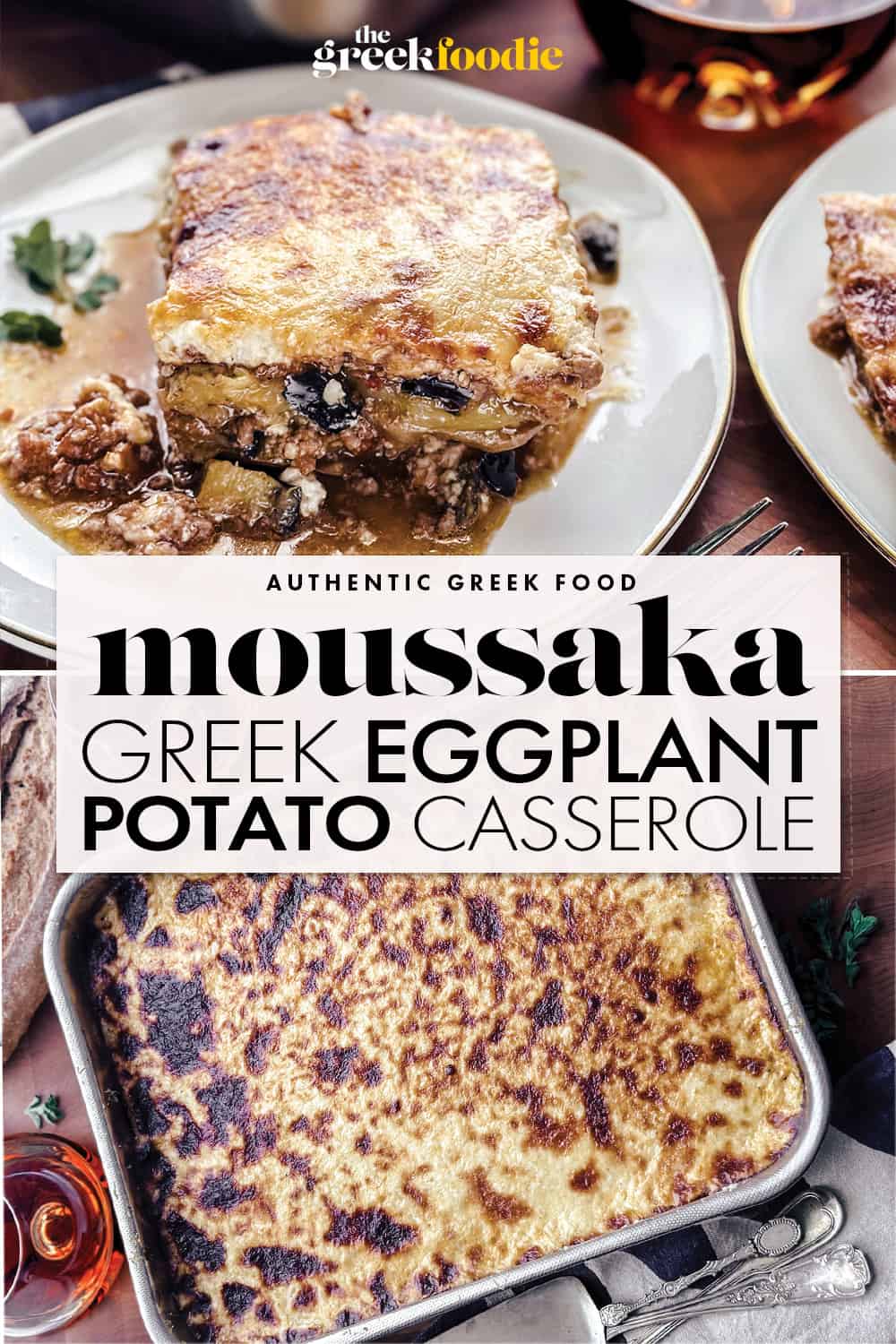

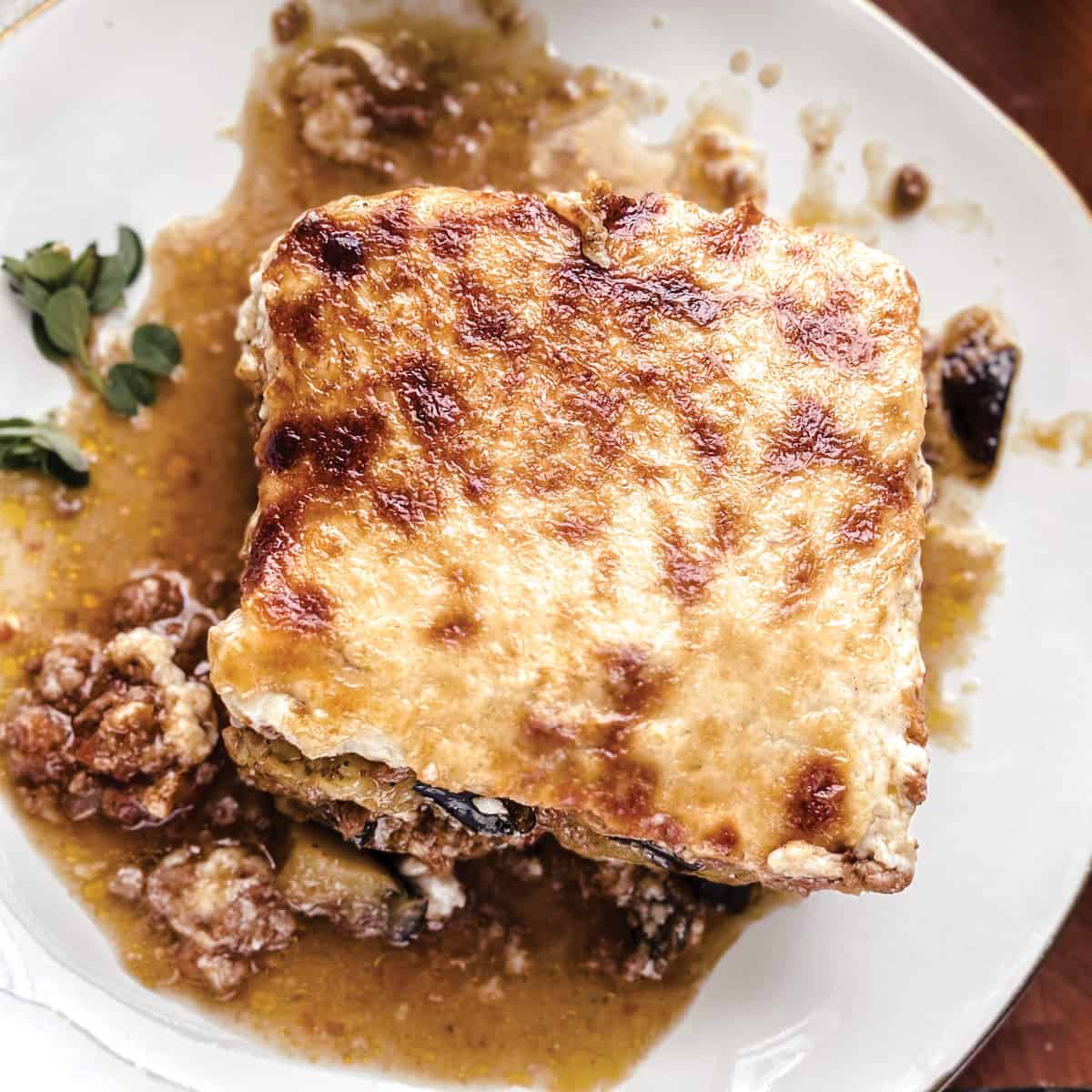
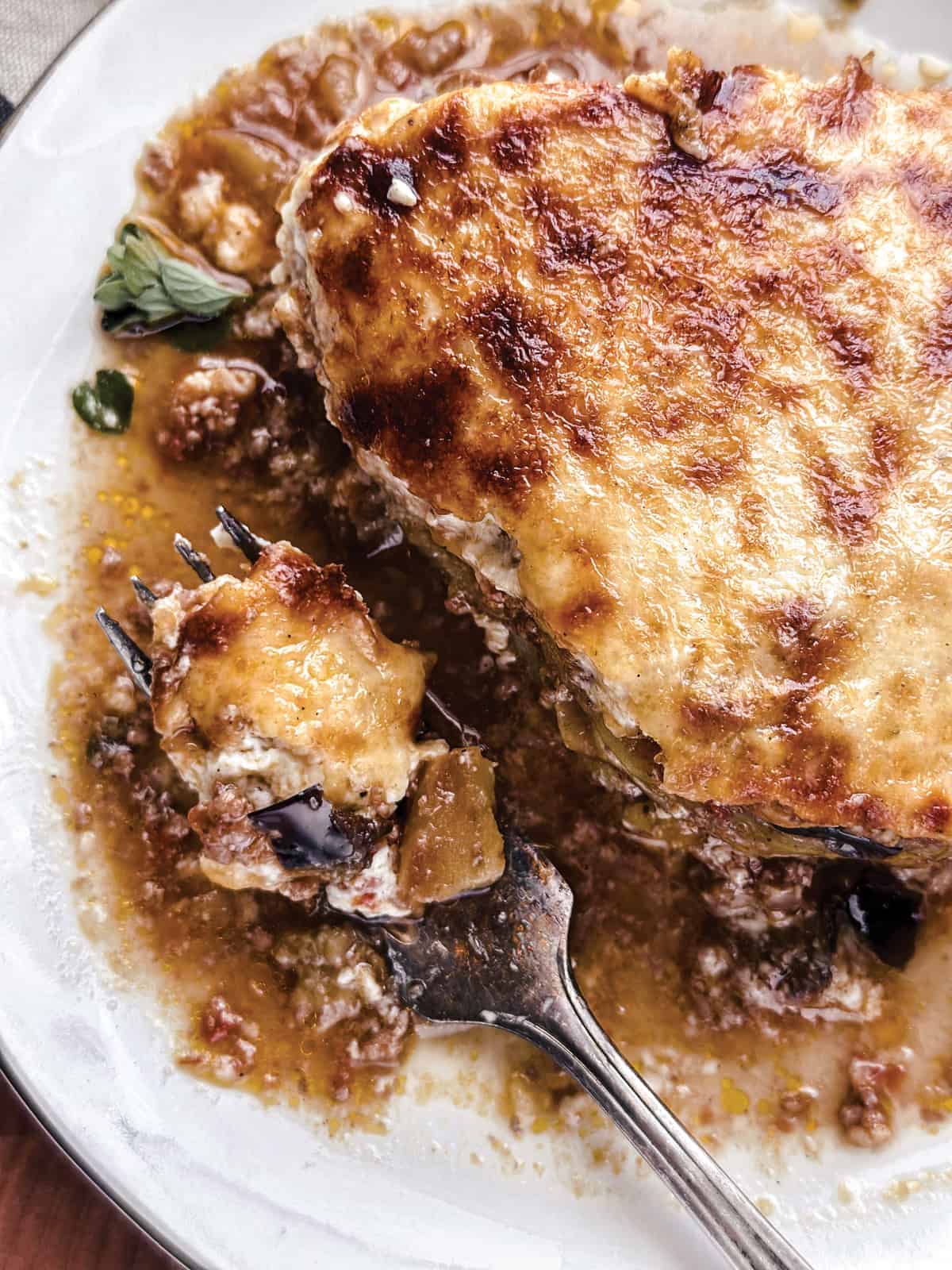
If there is one dish that defines Greek home cooking, it is moussaka. This is the real thing — the authentic Greek moussaka recipe I grew up with, made the way we actually make it at home in Greece. Layers of golden fried eggplant and potato, a slow-simmered beef ragù scented with cinnamon and cloves, and a silky, cloud-like béchamel on top. It is rich, savory, and impossibly comforting.
People fall in love with moussaka the first time they try it, usually on a holiday in Greece, at a little taverna with a glass of wine and the sun going down. Then they spend years trying to recreate it. Well, this is the recipe they are looking for.
I have been making this my whole life. It is not quick — good moussaka never is — but every single step is worth it. And once you have made it, you will understand why Greeks consider it nothing less than a national treasure.
If you love our Authentic Moussaka-Greek Eggplant Potato Casserole, you will also love this Greek pastitsio, Greek stuffed eggplants, or Soutzoukakia meatballs in red sauce!
What cooks say:
“I had this dish at a restaurant. I was craving it after a couple of weeks, so I used this recipe, and oh boy, it is spot on! I actually think this recipe turns out better than the dish I had at the restaurant. I will definitely be cooking this more often. Thanks!”
Pinyon T.
Why you will love our moussaka
The story behind this moussaka
My grandmother Evgenia made the best moussaka I have ever tasted. I say this not out of nostalgia — though there is plenty of that — but because it is simply true. She was from Constantinople, and she cooked with a confidence and generosity that I have spent my whole life trying to match.
Her moussaka always had both eggplants and potatoes. Always. She would never hear of leaving the potatoes out. She fried everything — the eggplant slices, the potato slices — in good olive oil until golden and fragrant, because she understood something that shortcuts forget: frying does not just cook the vegetables, it transforms them. It draws out sweetness from the eggplant, gives the potato a gentle crispness, and adds a depth of flavor that you cannot get any other way.
Every time I make moussaka, I make it with her in my mind.
Some recipes skip the frying to make the dish lighter. I understand the impulse — moussaka is not a quick weeknight dinner and every step takes time. But this dish does not come around every month. It is a celebration, a Sunday project, a reason to gather people you love around a table. It deserves to be decadent and luscious. It deserves the olive oil, the rich béchamel, the slow-cooked ragù. No corners cut.
My grandmother never worried about calories when she made moussaka, and neither do I.
Ingredients
For the eggplants and potatoes
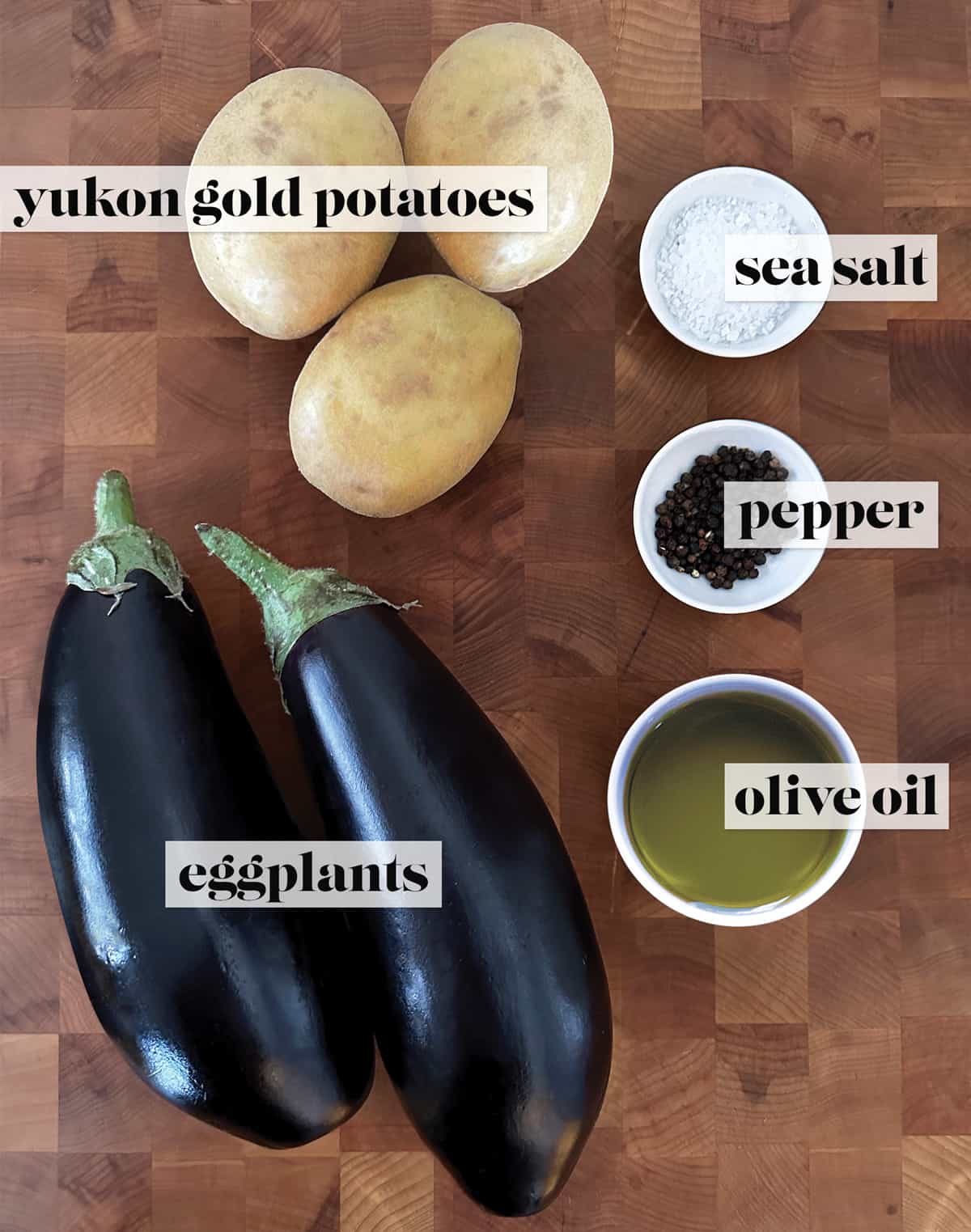
Eggplants. Choose large, firm eggplants that feel heavy for their size — a sign they are fresh and full of moisture. Ideally, buy them in season, when they are at their sweetest and least bitter. The eggplant is the soul of this dish, so it is worth being choosy about it.
Yukon gold potatoes. My potato of choice, and for good reason. Their skin is thin, soft, and perfectly edible — which means no peeling, just a good scrub. They crisp up beautifully when fried, and once baked inside the moussaka, they become soft, creamy, and wonderfully flavorful. They are simply a better potato for this dish. That said, if you use a different variety with tougher skin, peel them first.
Olive oil. I always fry the vegetables in extra virgin olive oil. Always. It adds a flavor you cannot replicate with any other oil. Eggplant is thirsty. It will absorb the oil as it fries, so do not be alarmed if you need to add a little more as you go. That is normal, and it’s fine. Use a good olive oil and do not be stingy.
For the meat ragù

Ground beef. I use an 85/15 ratio — not too lean. A little fat in the meat means more flavor in the sauce. You can also use a half-and-half mix of ground beef and pork, which is equally delicious. If you want a leaner version, ground turkey works, though the flavor will be milder.
San Marzano tomatoes. I use two cans and pulse them briefly in the food processor to make a rough passata. San Marzanos are sweeter and less acidic than regular canned tomatoes, and they make a genuinely better sauce. Worth seeking out.
The spices. This is where the magic lives. Cinnamon stick, whole cloves, ground cumin, ground nutmeg — this is the spice profile that makes Greek meat sauce distinctly, unmistakably Greek. Do not skip any of them, and do not substitute ground cinnamon for the stick if you can help it. A whole cinnamon stick simmers differently; it perfumes the sauce rather than overpowering it.
Red wine. A good, bold red. I drink what I cook with. It adds body and depth to the ragù that you will miss if you leave it out.
For the béchamel
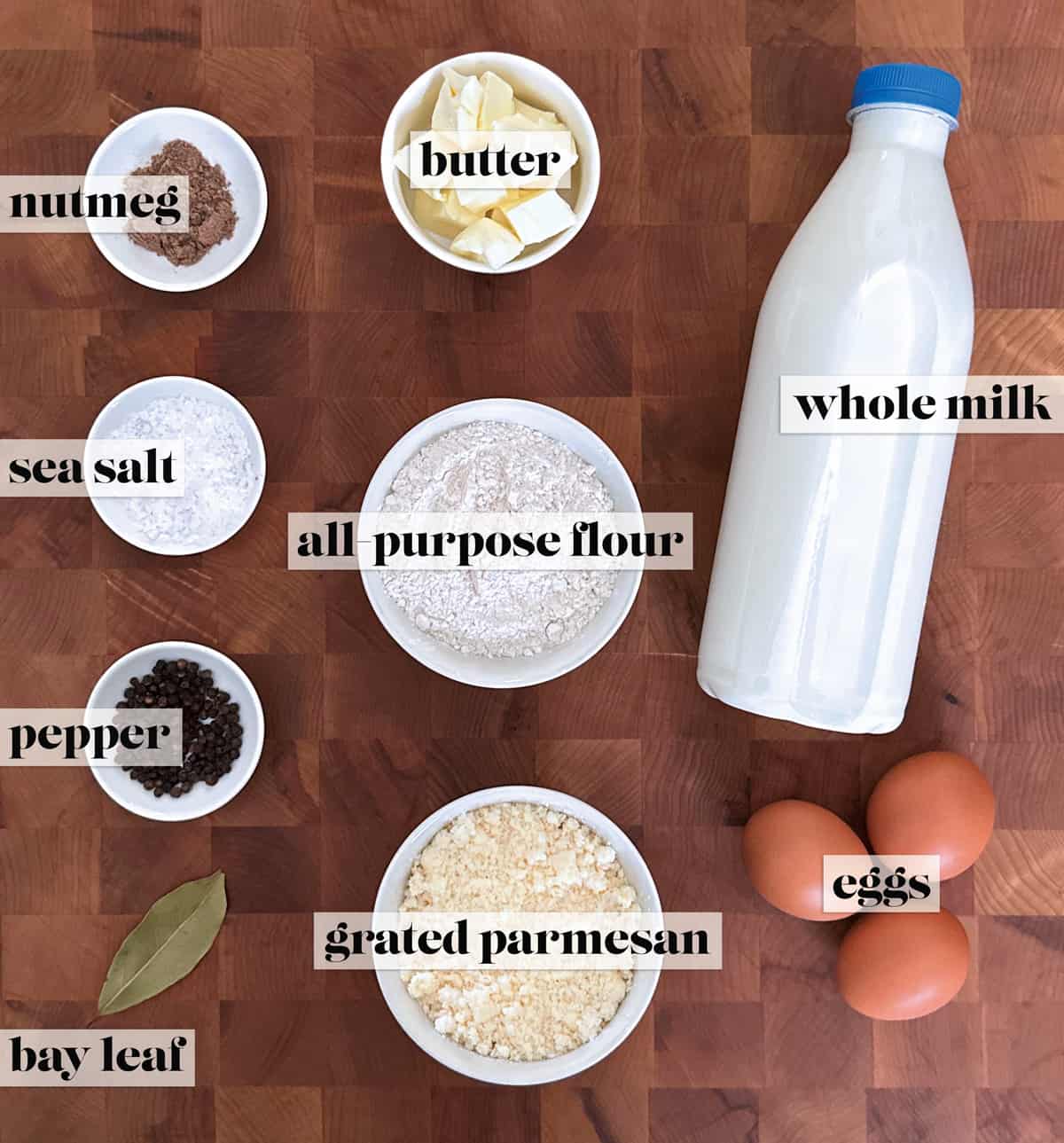
Butter and flour. The foundation of a proper béchamel. Take your time with the roux — cook it until it smells slightly nutty and turns a pale golden color before you add the milk. This step removes the raw flour taste and gives the sauce a richer base.
Whole milk. Do not use reduced-fat milk here. The béchamel should be rich and creamy — that is the point. Heat the milk gently before adding it to the roux; warm milk incorporates far more smoothly than cold.
Egg yolks. Only the yolks, not the whole egg. They enrich the sauce and give it a beautiful color and a silkiness that sets this béchamel apart from a basic white sauce.
Parmigiano Reggiano. Traditionally Greek cooks use kefalotiri — a hard, salty aged cheese similar to pecorino. Graviera, the Greek version of gruyère, is also wonderful. I use Parmigiano Reggiano because it is easy to find and melts beautifully into the sauce. Use whichever hard, aged cheese you love most.
A note before you start
Moussaka has a reputation for being complicated, and I will not lie to you — it has several components and it will take over your kitchen for a couple of hours. But it is not difficult. It is organized. Think of it less like a single recipe and more like three simple recipes that come together into something spectacular.
The key is timing. Here is the order I follow, every single time:
- Start the meat ragù first — it needs an hour to simmer and will happily look after itself.
- While the sauce cooks, prep and fry the vegetables — eggplant first, then potatoes.
- Assemble the base layers as soon as the sauce is done.
- Make the béchamel last — right before you need it, so it goes on fresh and pourable.
- Finish assembling and bake.
Follow this order and the whole process flows naturally. Try to do it out of order and you will feel like you are fighting the dish.
Step by step
Make the meat ragù
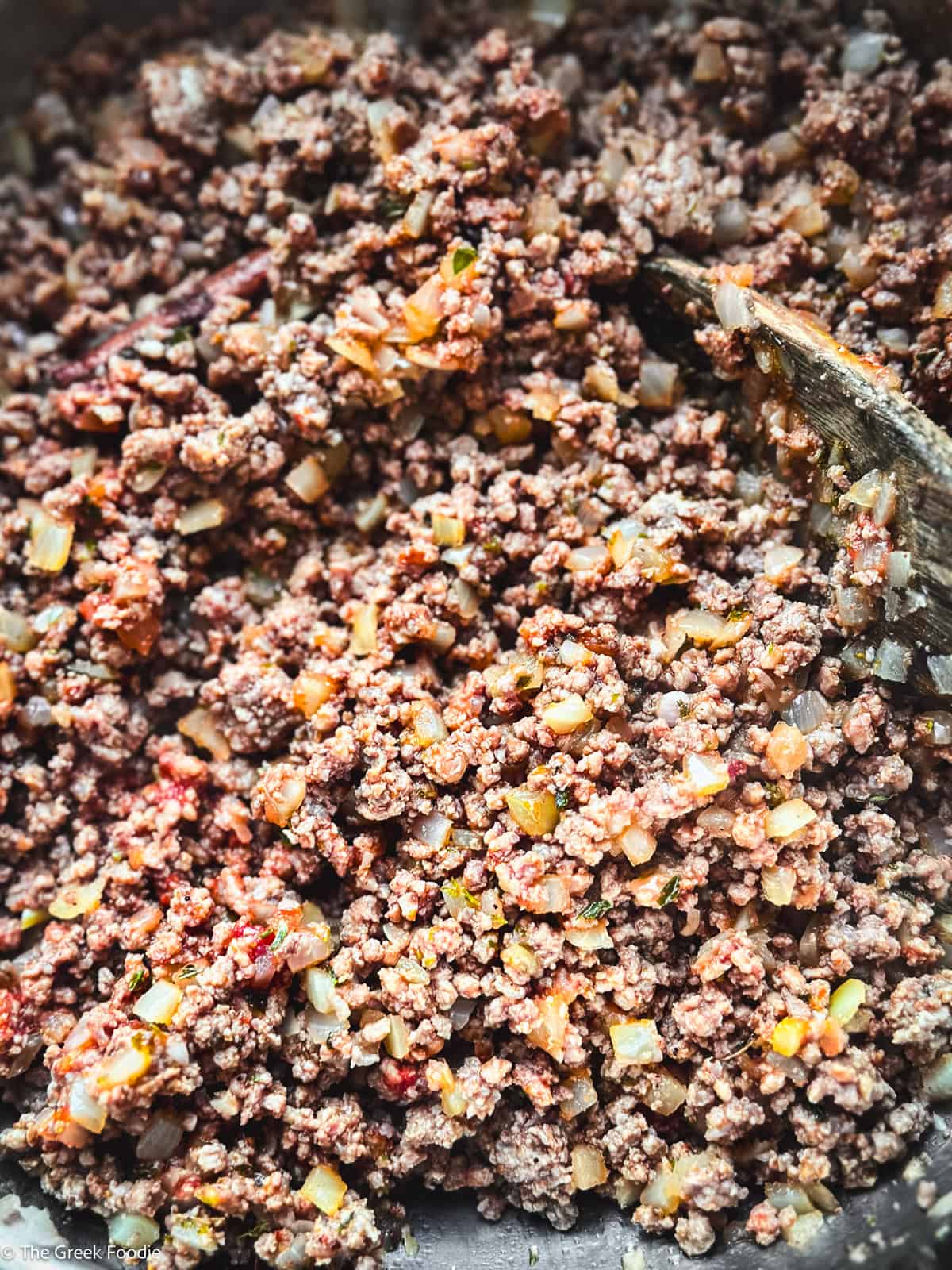
- Heat two tablespoons of olive oil in a large, deep saucepan over high heat. Add the ground beef and brown it well, breaking it up with a wooden spoon as you go. Do not rush this step — you want real color on the meat, not grey steaming. Color means flavor.
- Once the meat is browned, add the diced onion, minced garlic, cinnamon stick, whole cloves, ground cumin, and ground nutmeg. Stir everything together and let the onion soften for a few minutes, you will start to smell the spices blooming in the pan, which is one of the best smells in any kitchen.
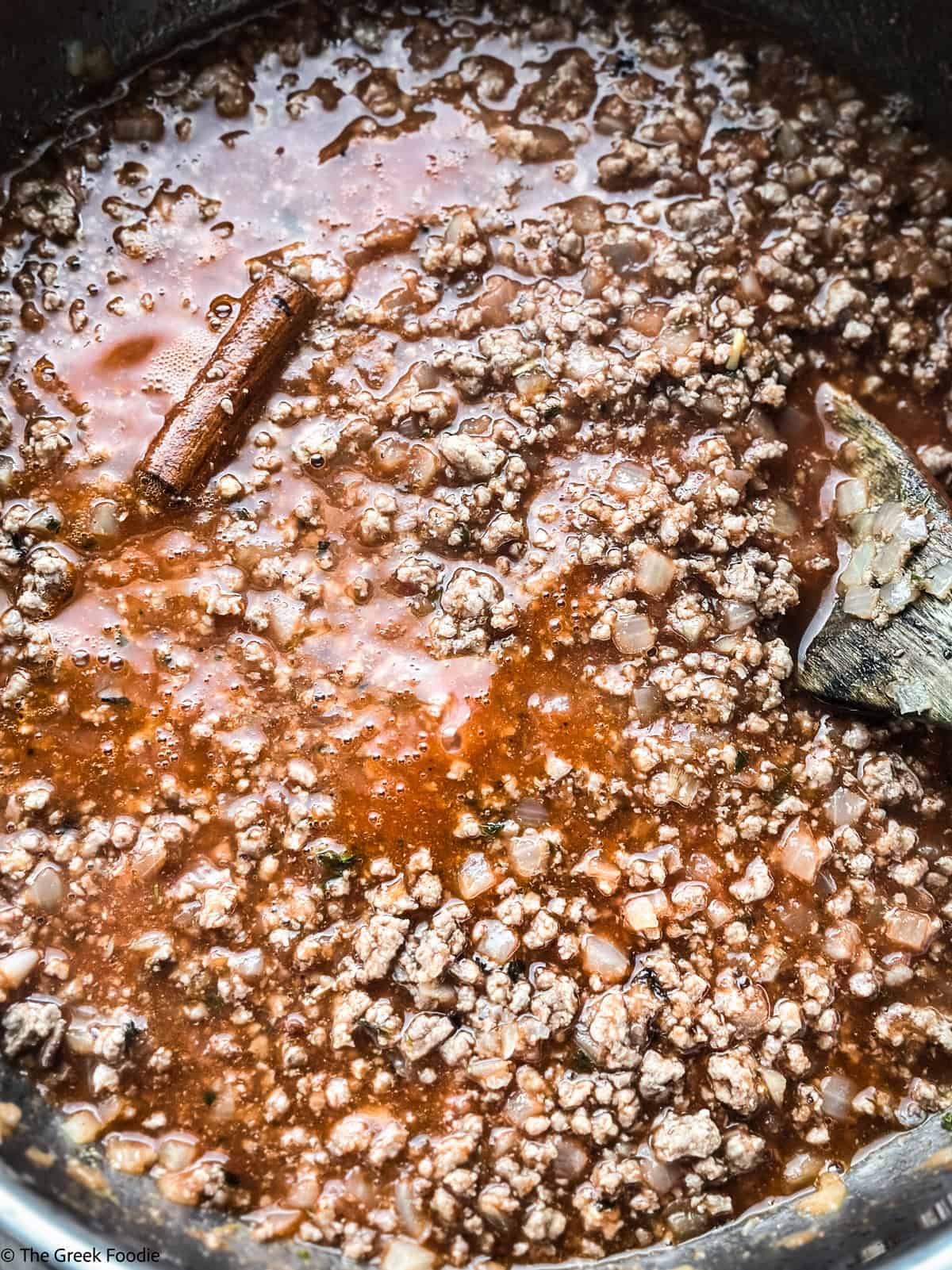
- Add the tomato paste, stir it into the meat, and cook for two to three minutes. It should darken slightly and smell rich and a little caramelized. Pour in the red wine and let the alcohol cook off completely before moving on.
- Add the crushed tomatoes and a teaspoon of sugar. Stir, reduce the heat to low, and leave the ragù to simmer gently for one full hour. It should thicken into a deep, intensely flavored sauce. Taste it before you assemble — it should be boldly spiced and a little sweet from the tomatoes.
Tip: Remove the cinnamon stick and fish out the whole cloves before assembling.
Prepare the eggplants
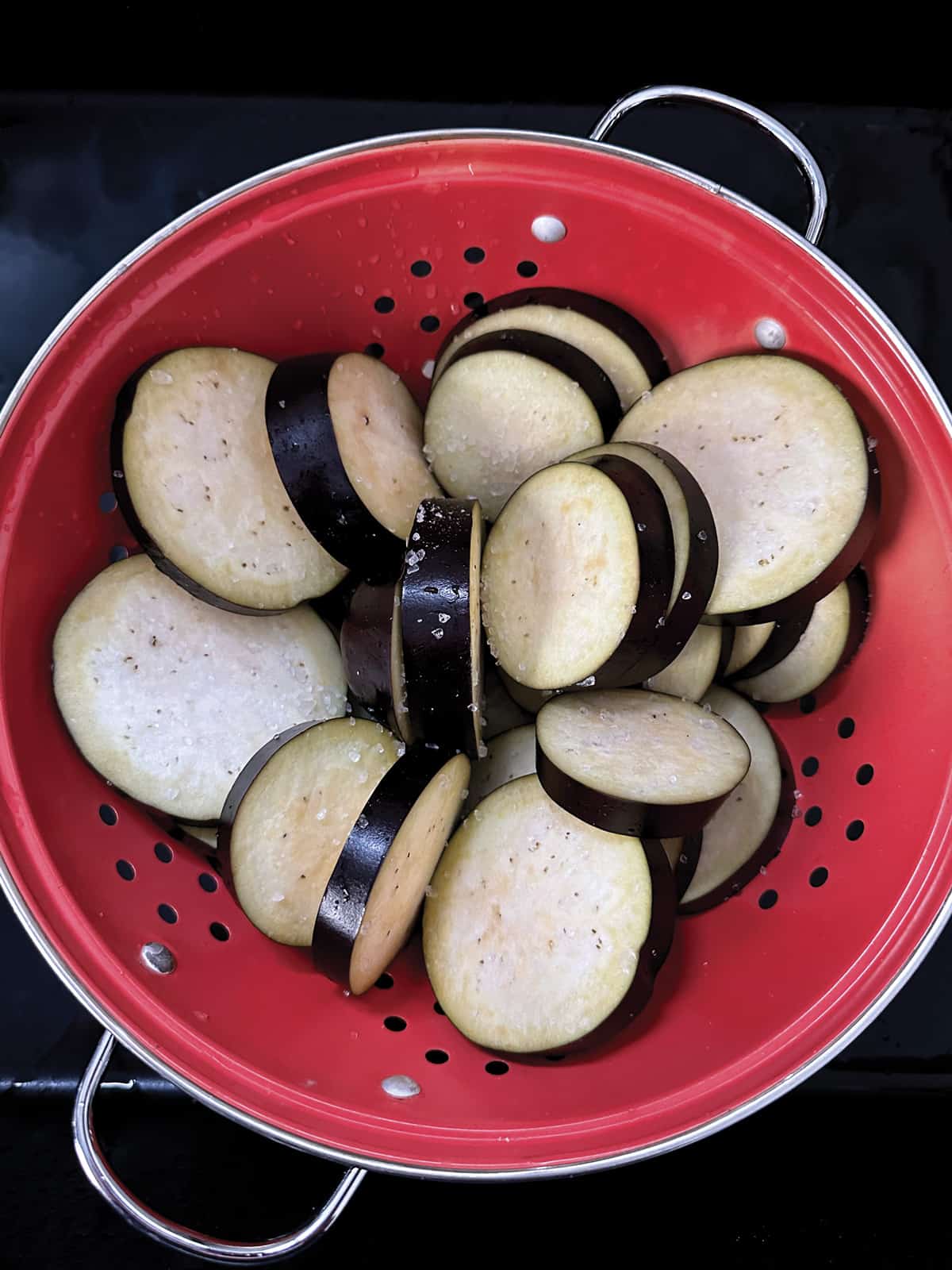
- Cut the eggplants into slices about 1 cm / ⅓ inch thick. Lay them in a colander, sprinkle generously with sea salt, and leave them to drain for 15 minutes. This draws out excess moisture and any bitterness. After 15 minutes, pat them thoroughly dry with kitchen paper — wet eggplant will steam rather than fry, and you want golden, not soggy.

- Heat a generous pour of olive oil in a skillet over medium-high heat. Fry the eggplant slices in batches until they are golden on both sides — about 2 to 3 minutes per side. Eggplant is thirsty and will absorb the oil as it cooks; add a little more as you go if the pan looks dry. Do not skimp here. Transfer the fried slices to a wire rack so air can circulate and they stay crisp.
Tip: Do not overcrowd the pan. Fry in batches and give each slice room. Crowded eggplant steams; it does not fry.
STEP 3 — Prepare the potatoes
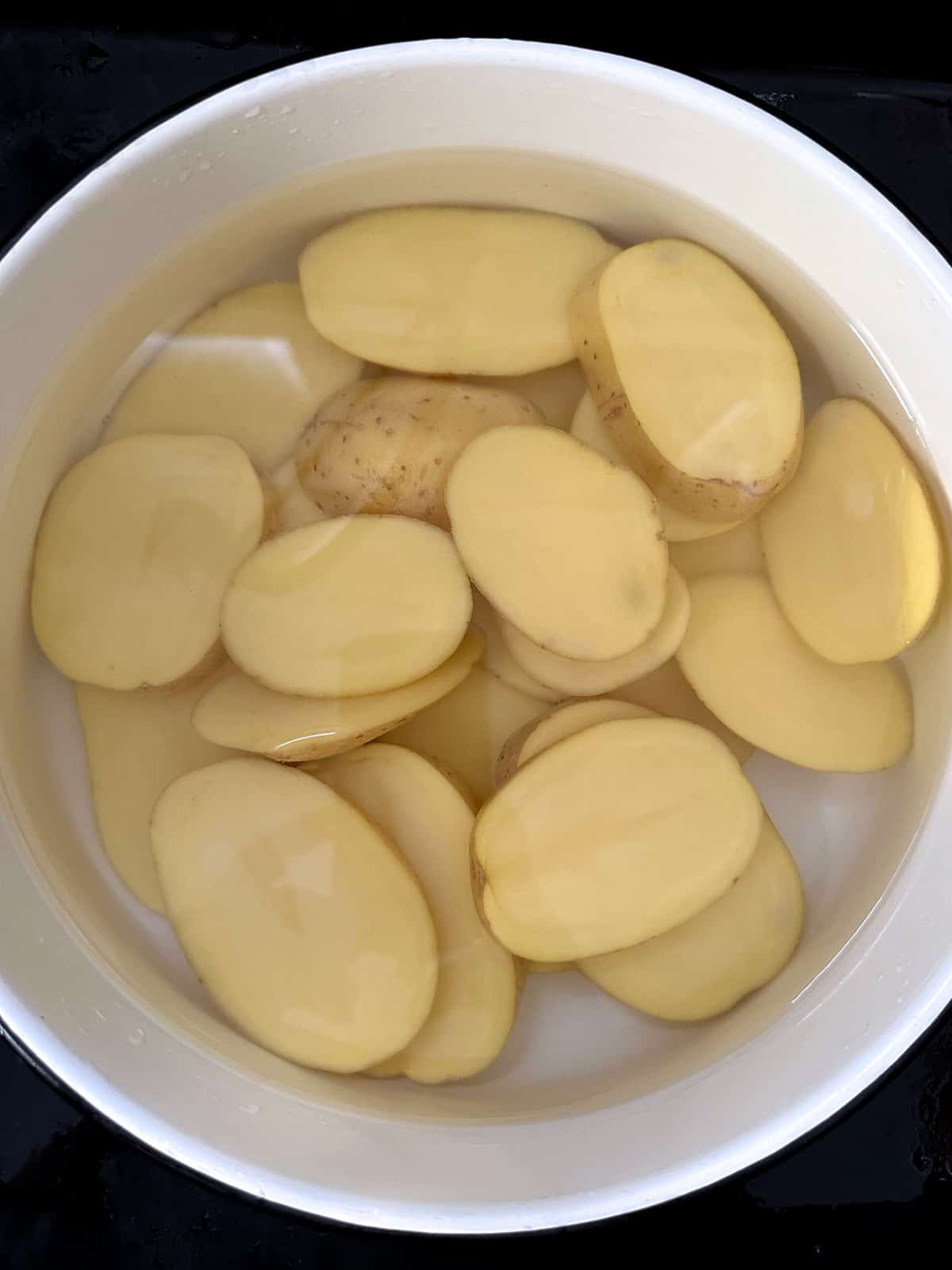
- Cut the potatoes into slices about 6 mm / ¼ inch thick — slightly thinner than the eggplant. As you slice, drop them into a bowl of cold water to prevent browning. When all the potatoes are sliced, drain them and pat them very dry.
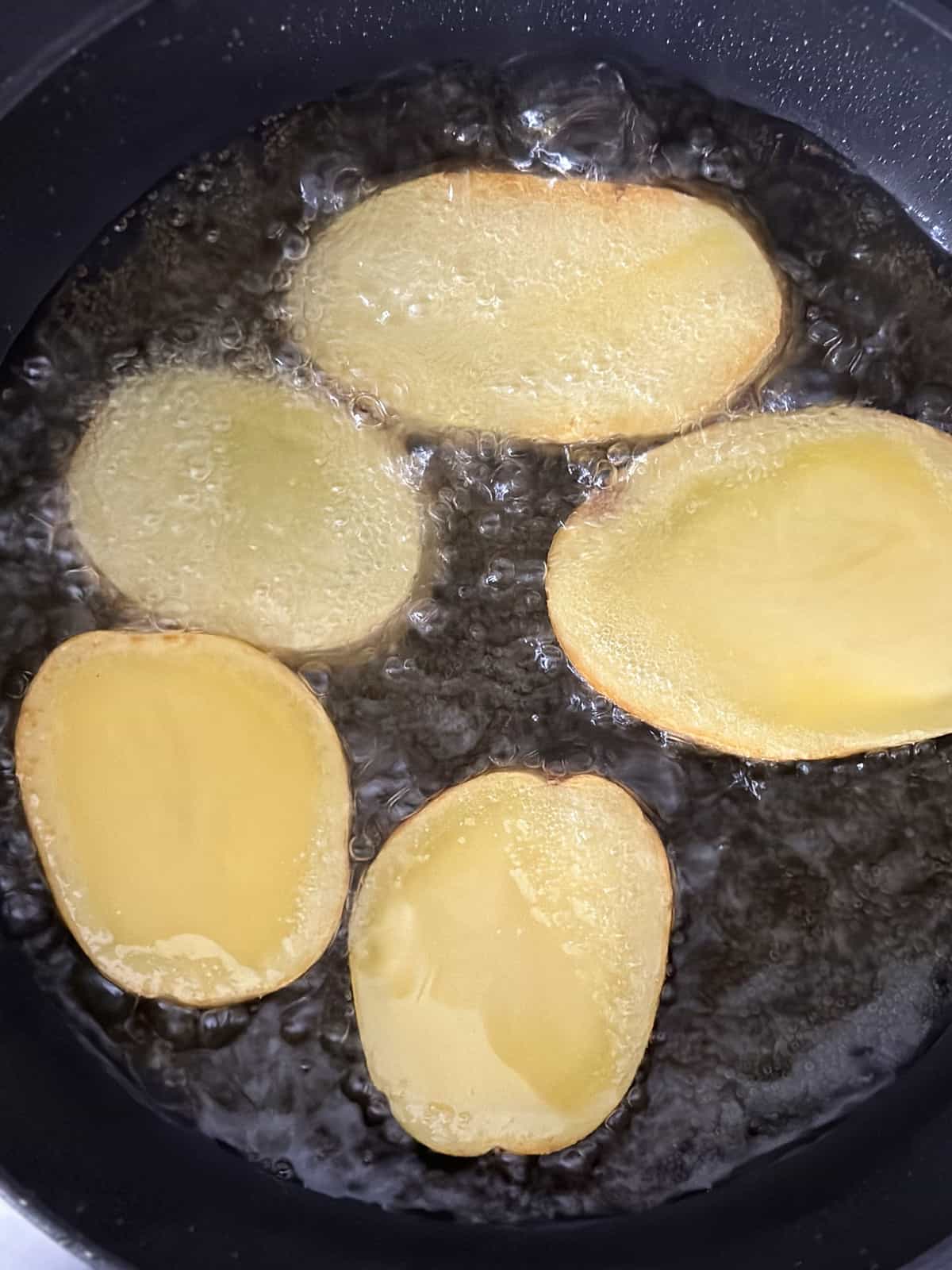
- Fry the potato slices in hot olive oil for 1 to 2 minutes per side until they take on a light golden color. They do not need to be fully cooked through at this stage — they will finish cooking in the oven. Transfer to the wire rack alongside the eggplant.
Tip: Yukon gold potatoes do not need peeling — their skin is thin and edible, and it crisps up beautifully in the pan. Just scrub them well before slicing. If you are using a different variety with tougher skin, peel it first.
Assemble the base
- Preheat your oven to 200°C / 390°F.
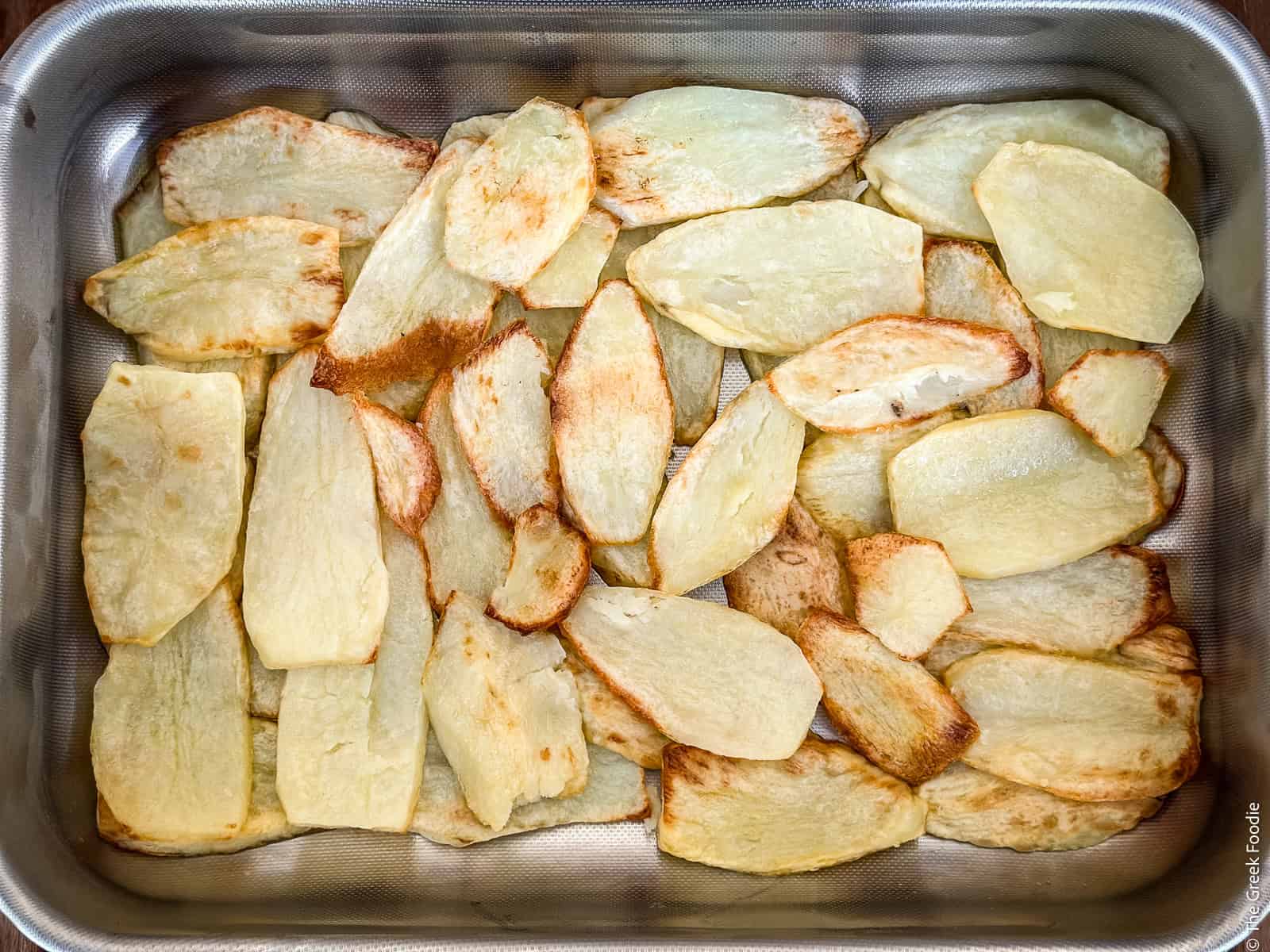
- Take your baking pan — I use one roughly 26cm x 35cm x 7.5cm / 10″ x 13″ x 3″, deep enough to hold all those glorious layers. Start with the potatoes. Lay them in an even layer across the bottom, slightly overlapping, and season with sea salt and black pepper. Add a second layer of potatoes if your pan and your potatoes allow for it.
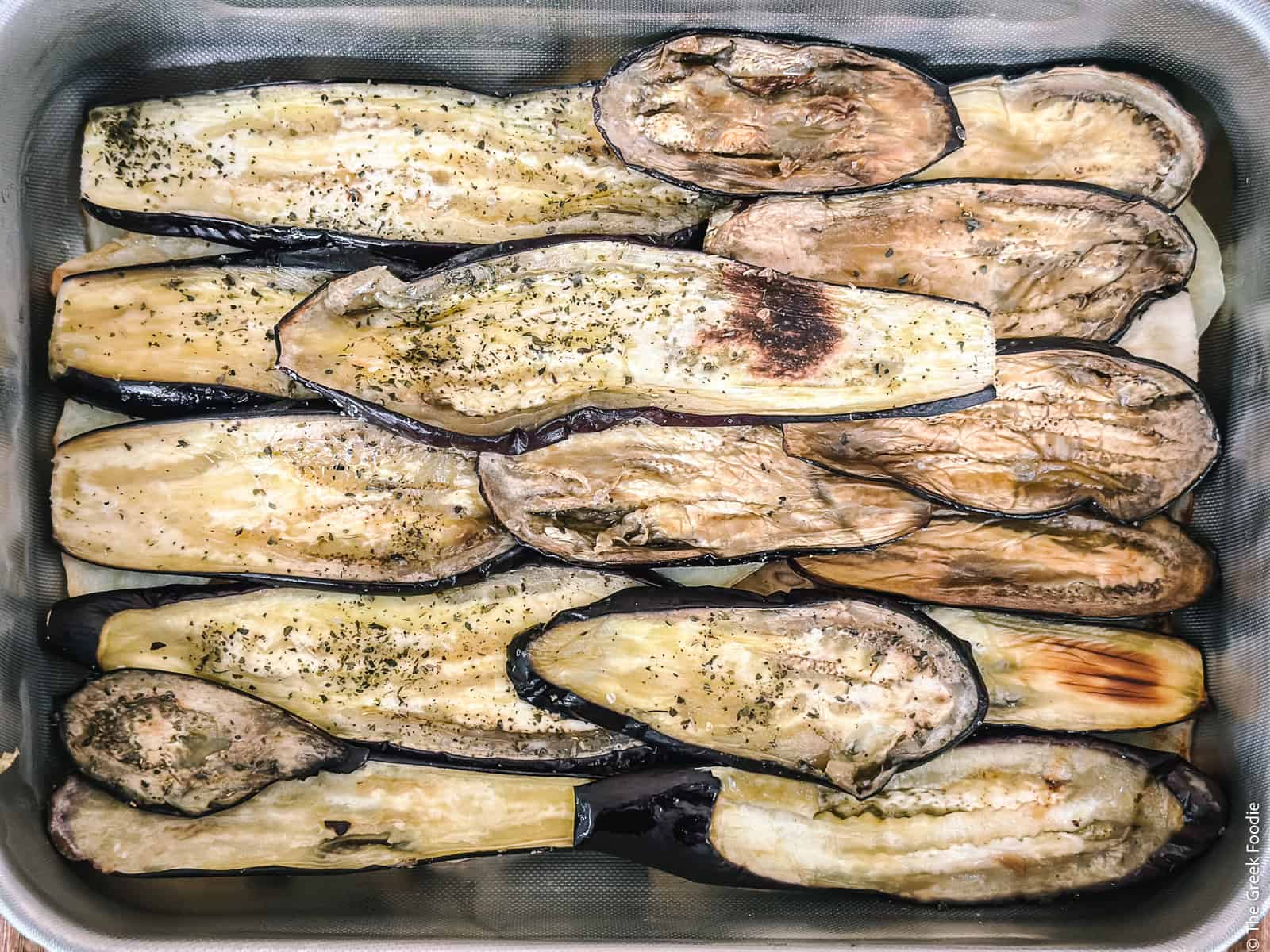
- Next, layer the eggplant slices over the potatoes. You can do one clean layer or alternate potato and eggplant if you prefer — there is no wrong answer here. This is your moussaka.
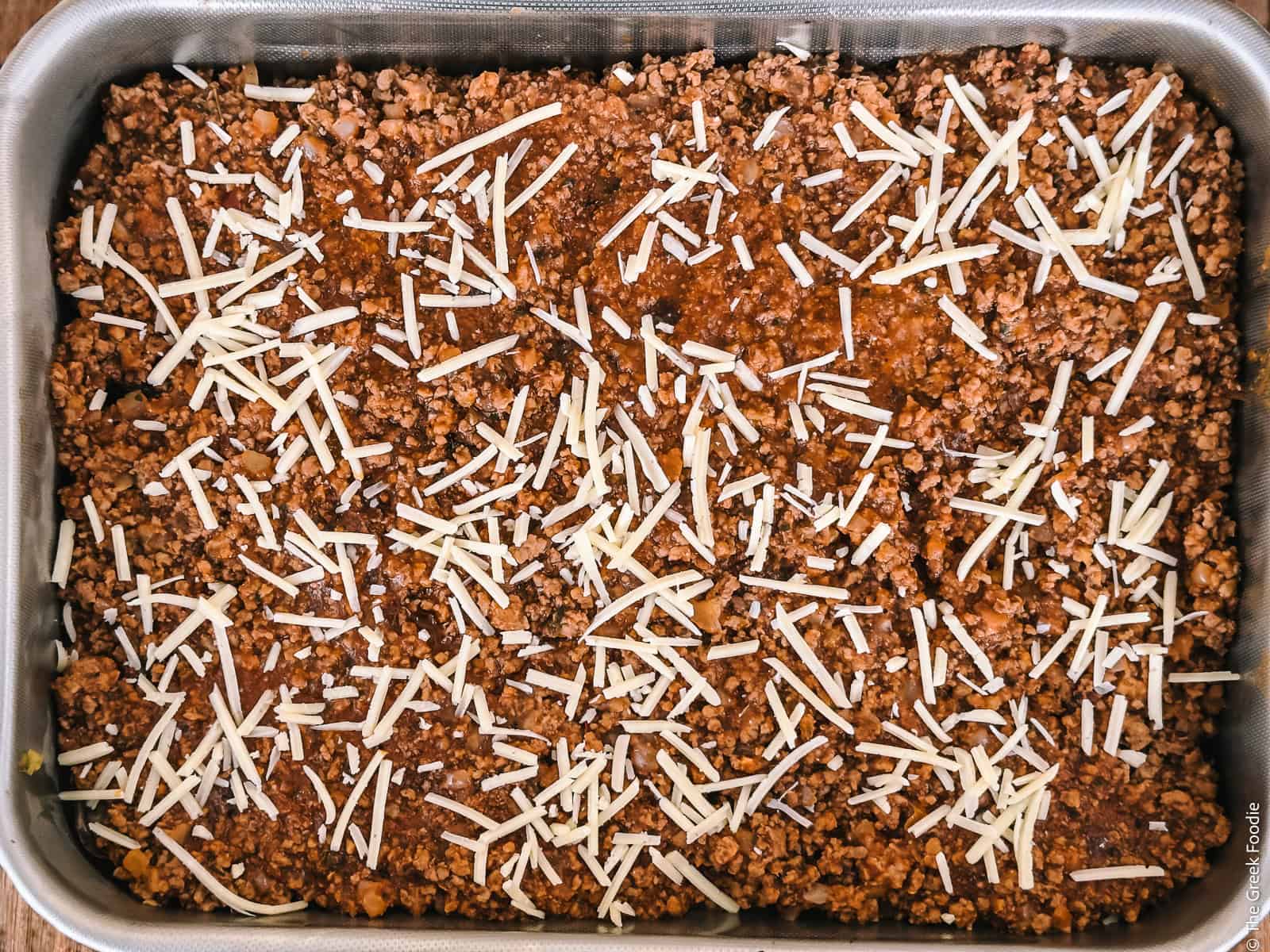
- Remove the cinnamon stick from the meat sauce and pour the ragù evenly over the vegetables. Use the back of a spoon to spread it all the way to the edges. Sprinkle a generous handful of grated cheese over the meat — this acts as a little barrier between the sauce and the béchamel, and adds another layer of flavor.
Make the béchamel

- Make the béchamel now, while everything is assembled in the pan and waiting. Do not make it too far ahead — béchamel develops a skin as it sits, and you want to pour it on while it is smooth, warm, and fluid.
- Pour the milk into a small saucepan with the bay leaf and warm it gently over medium heat. You want it hot but not boiling.

- In a separate large saucepan, melt the butter over medium heat. Add the flour all at once and stir constantly with a whisk or wooden spoon.

- Cook the roux for two to three minutes, stirring the whole time, until it turns a very pale golden color and smells faintly nutty. This is important — an under-cooked roux will make your béchamel taste of raw flour.
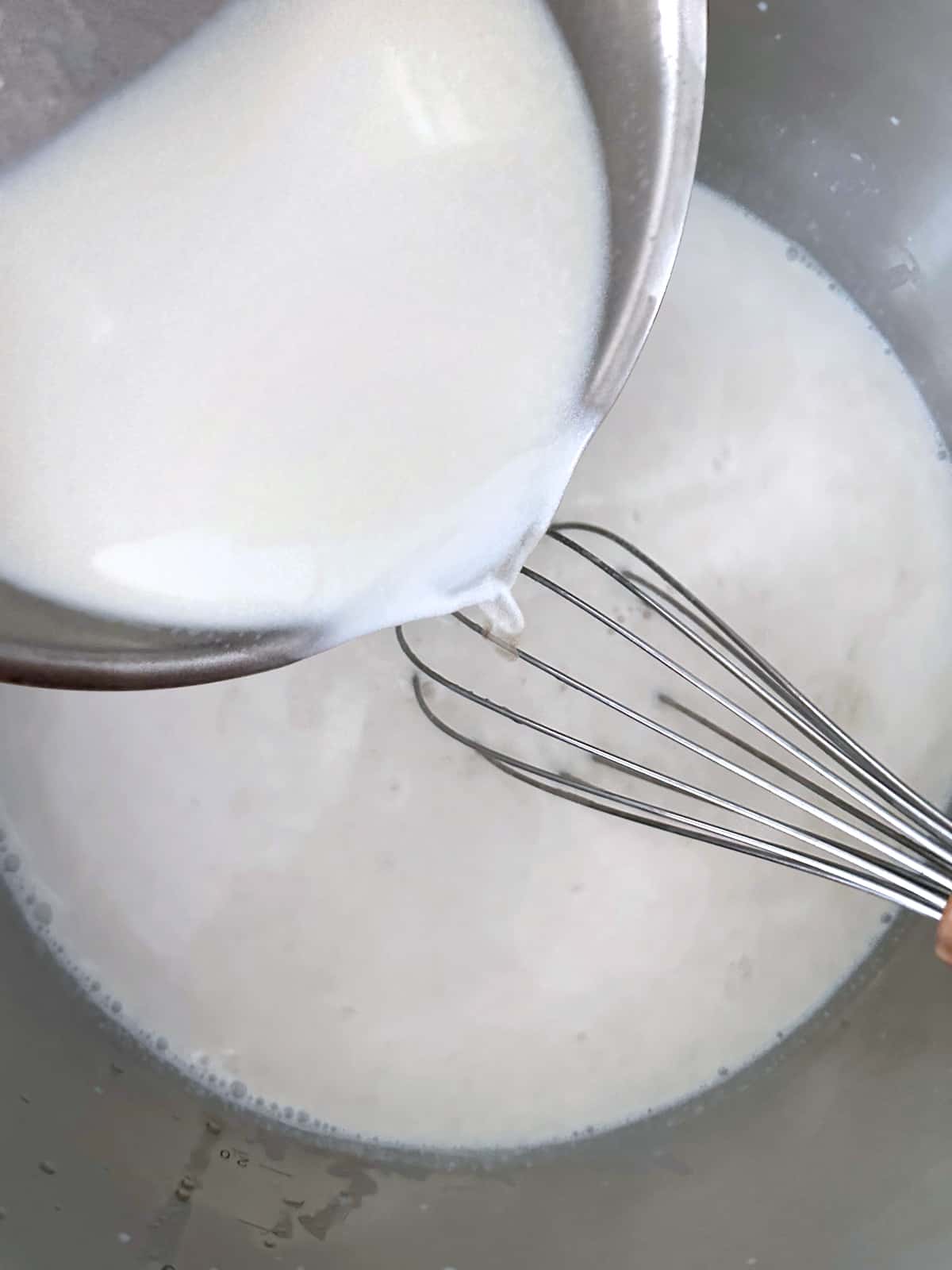
- Begin adding the warm milk gradually, a ladleful at a time, whisking continuously after each addition. Do not rush this — patience here is what gives you a smooth, lump-free sauce. Once all the milk is incorporated, continue stirring over medium heat until the sauce thickens enough to coat the back of a spoon.
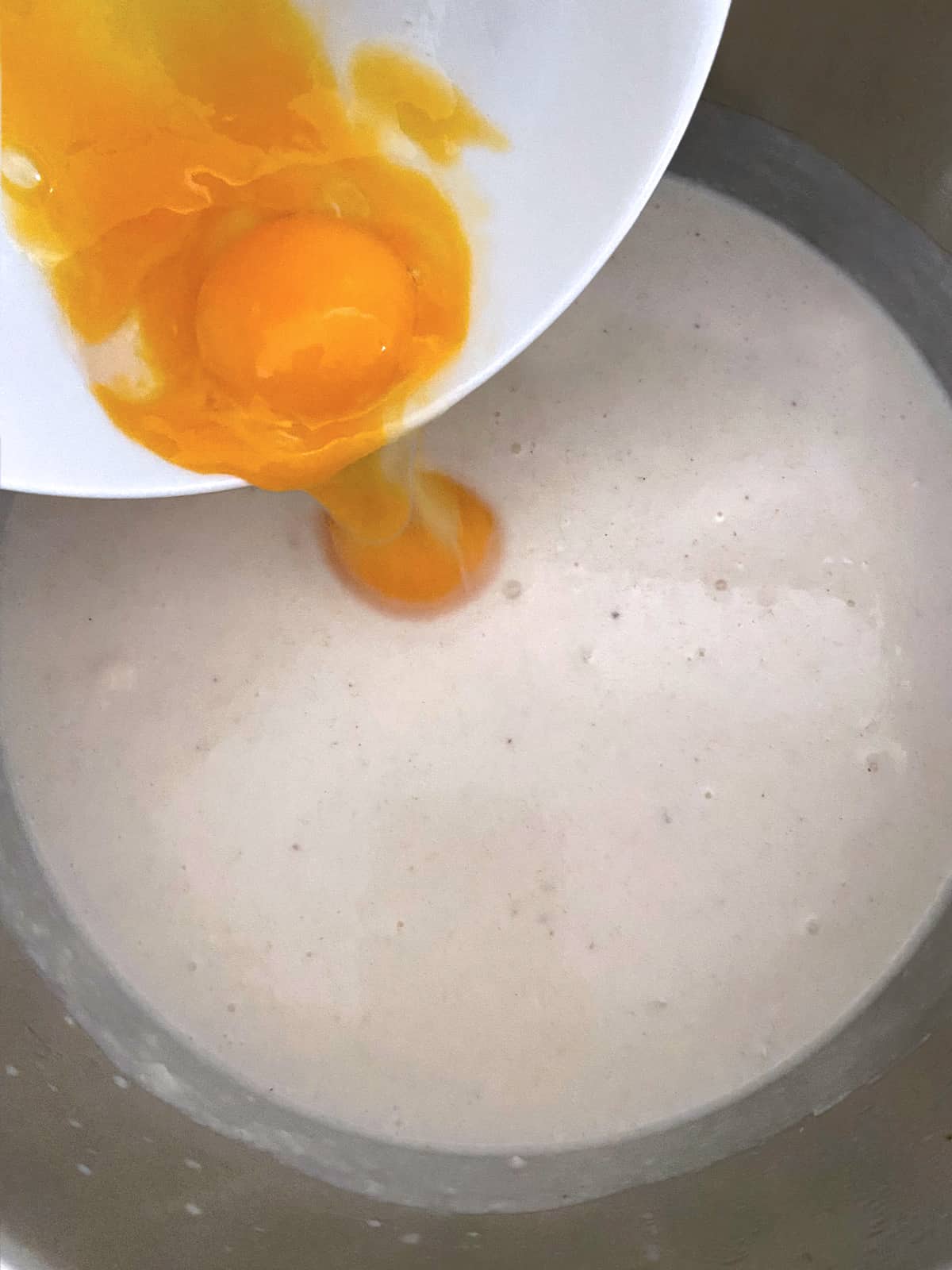
- Remove from heat. Season generously with sea salt, freshly ground black pepper, and ground nutmeg. Add the egg yolks one at a time, whisking quickly so they incorporate without scrambling.
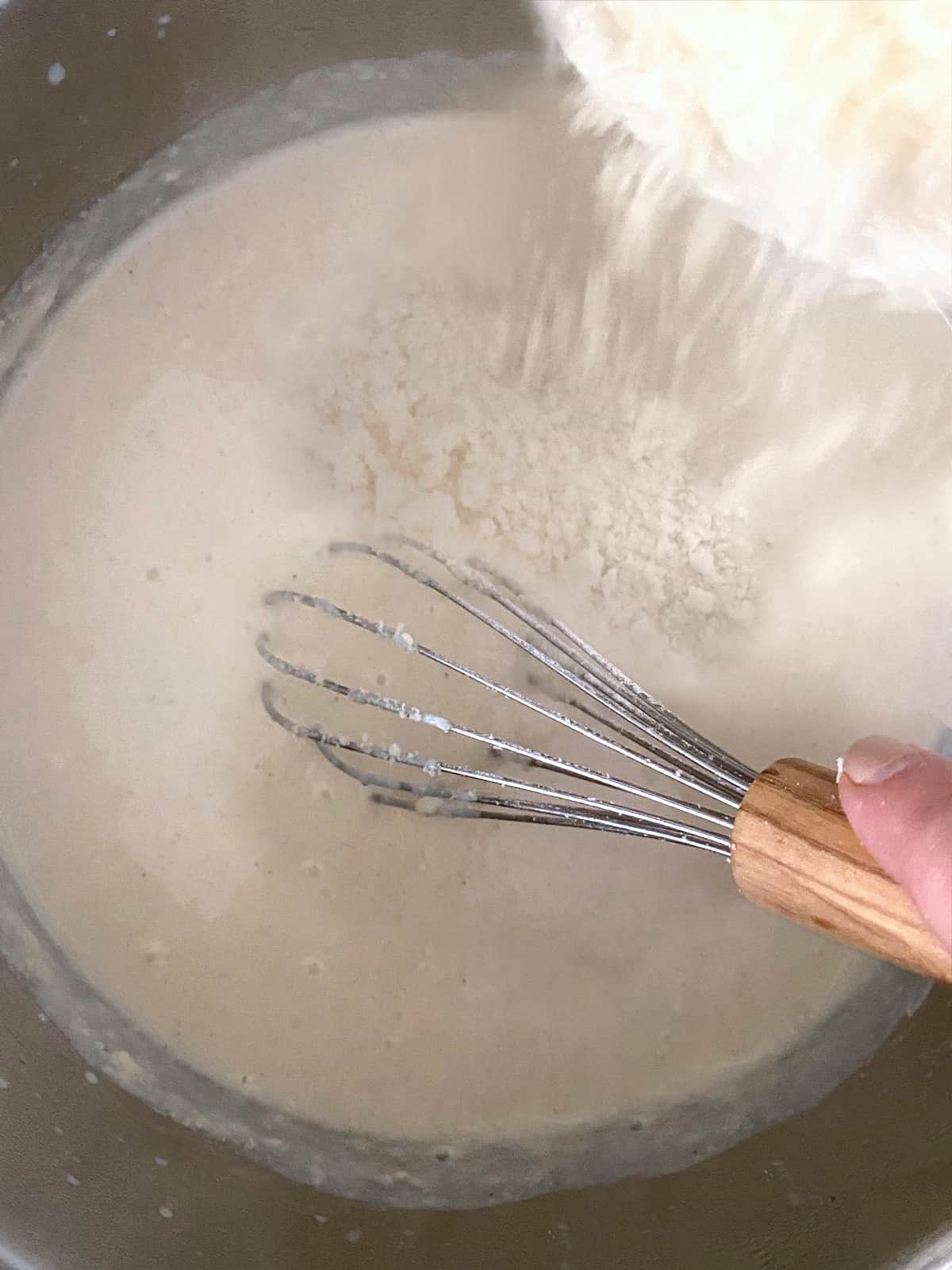
- Add one cup of the grated Parmigiano and whisk until the sauce is glossy and smooth.
Béchamel Troubleshooting
My béchamel has lumps. Do not panic. Remove the pan from the heat and whisk vigorously. If lumps persist, press the sauce through a fine sieve — it will come out perfectly smooth on the other side.
My béchamel is too thick. Add a splash of warm milk and whisk it in. Add more until you reach a consistency that pours easily but is not watery.
My béchamel is too thin. Mix one teaspoon of flour with a little cold milk until smooth, then whisk it into the sauce over medium heat. Give it a few minutes to thicken.
My béchamel has a skin on top. This happens when it sits too long before using. Press a piece of cling film directly onto the surface to prevent a skin from forming if you need to wait. Better yet, time it so you pour it on immediately.
Finish Assembling & Bake
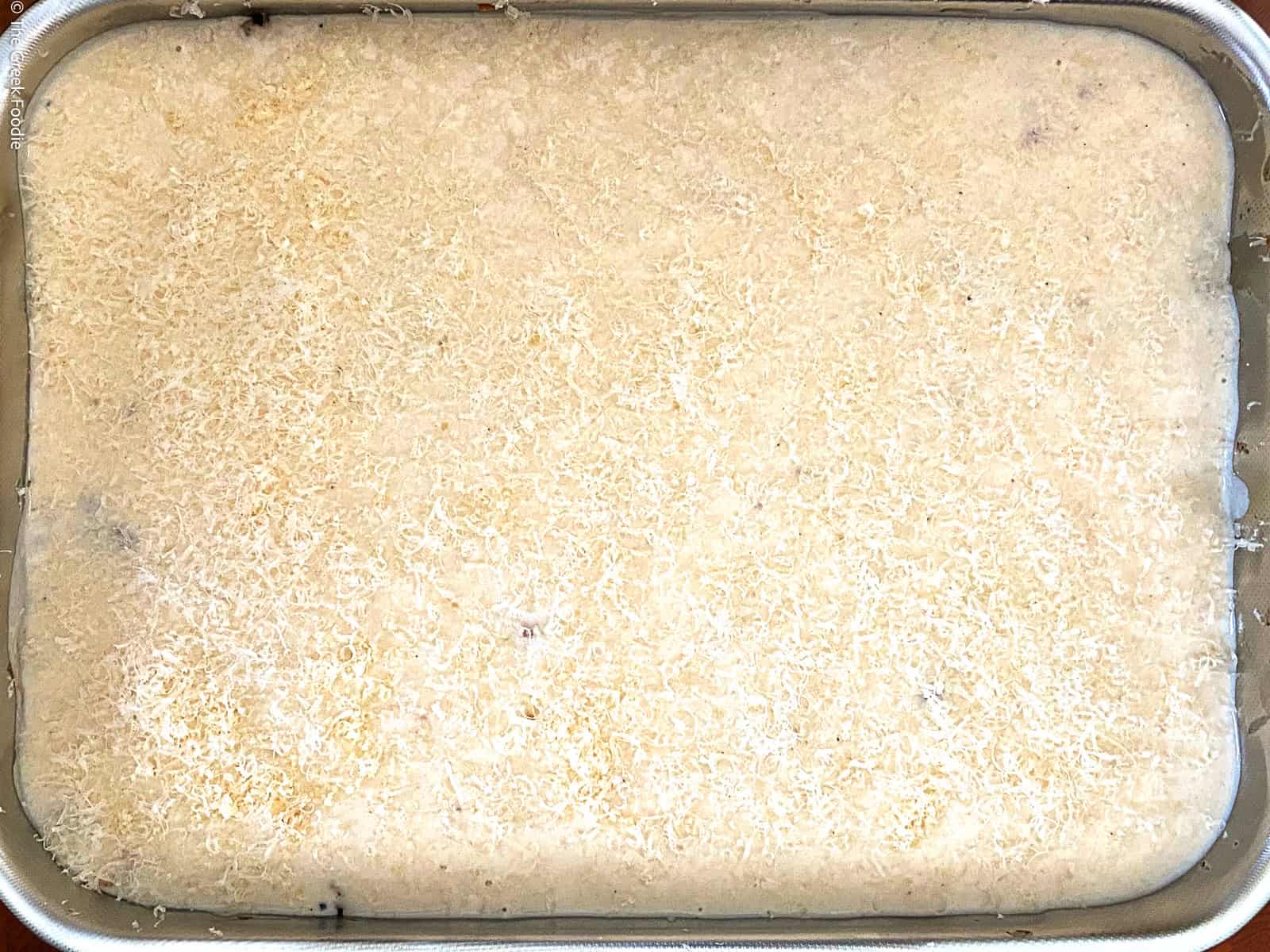
Pour the béchamel over the meat layer in one smooth, even pour. Use a spatula to spread it gently to all four corners. Sprinkle the remaining grated cheese over the top — for extra texture, you can mix a couple of tablespoons of breadcrumbs into the cheese before scattering.
Bake at 200°C / 390°F for 45 to 50 minutes, until the top is deeply golden and the edges are bubbling. Your kitchen will smell extraordinary.

This is the hardest part: let it rest for at least 15 minutes before cutting. I know. But moussaka needs to settle so the layers hold together when you slice it. Cut too soon and it will collapse into a delicious but shapeless pile. Fifteen minutes. You can do it.
Serve with a simple green salad, a wedge of feta, and a good glass of red wine. A Cabernet is wonderful, or if you want to go full Greek, an Agiorgitiko from Nemea is beautiful with this.
Make-Ahead, Storage & Reheating
Make it ahead — please do. Moussaka tastes even better the next day. Bake it completely, béchamel and all, let it cool, cover tightly, and refrigerate overnight. The next day, reheat the whole pan covered with foil at 170°C / 340°F for 25–30 minutes, uncovering for the last 5 to re-crisp the top. The baked béchamel holds its shape perfectly.
Prefer to add the béchamel fresh? Assemble the potato, eggplant, and meat layers up to a day ahead, cover, and refrigerate. On the day, make the béchamel, pour it over, and bake, adding about 15 minutes since the base goes in cold.
Leftovers. Moussaka keeps in the fridge for up to 4 days. Reheat single slices in the microwave or the oven. For a whole or half pan, always use the oven.
In the freezer. Moussaka freezes very well. Let it cool completely, then cut into portions and freeze in airtight containers for up to 3 months. Defrost overnight in the fridge and reheat in the oven at 170°C / 340°F until piping hot throughout. The béchamel holds up remarkably well.
Can you freeze the sauce separately? Yes — the meat ragù freezes perfectly on its own for up to 6 months. If you are a meal-prep person, make a double batch of the sauce and freeze half for your next moussaka.
Can I make moussaka with Lamb?
Absolutely, and in many parts of Greece, lamb is the traditional choice. Ground lamb gives moussaka a deeper, slightly gamey richness that pairs beautifully with the cinnamon and cloves in the ragù. If anything, the spice profile of this recipe was designed with lamb in mind.
To make lamb moussaka, substitute ground lamb for the ground beef in equal quantity. Everything else in the recipe stays the same. A few things to keep in mind:
- Ground lamb is fattier than beef, so you may want to drain off some of the excess fat after browning the meat.
- The flavor of lamb is stronger and more assertive — it stands up beautifully to the cinnamon, cloves, and nutmeg.
- For a wonderful depth of flavor, try a half-lamb, half-beef combination. This is actually my favorite variation when I can find good-quality ground lamb.
The result is a more rustic, robustly flavored moussaka — a little wilder than the beef version, and completely irresistible.

Can I make vegetarian moussaka?
Absolutely — and I have a full recipe for it. My vegetarian moussaka uses Beyond Beef in place of ground meat, and the result is genuinely stunning. It has all the layered depth of the traditional version — the same spices, the same golden béchamel, the same gorgeous layers of eggplant and potato — just completely meat-free.
Beyond Beef works beautifully here because it absorbs the cinnamon, cloves, and tomato sauce just like ground beef does. Nobody at the table will feel like they are eating a compromise. It is a full, hearty, deeply satisfying moussaka that happens to be vegetarian.
The recipe also includes a fully vegan béchamel option for anyone cooking dairy-free, and suggestions for using lentils or a lentil-walnut combination if you prefer to skip the plant-based meat entirely.
👉 Get the full recipe: Vegetarian Moussaka with Beyond Beef
Want to Try a Different Take? Sweet Potato Moussaka
If you are feeling adventurous, my sweet potato moussaka is a beautiful variation worth trying. Sweet potatoes replace the regular potatoes and add a gentle natural sweetness that plays wonderfully against the spiced meat sauce. It is a little more unexpected, a little more modern — but still unmistakably Greek at heart.
👉 Get the full recipe: Sweet Potato Moussaka
What to serve with moussaka
Moussaka is a rich, generous dish and it does not need much alongside it. Keep the sides simple so the star of the table can shine.
A simple green salad is the classic pairing. Something fresh and lightly dressed, like our Greek romaine lettuce salad with dill to cut through the richness of the béchamel.
Tzatziki is always welcome on a Greek table. Its cool creaminess is a perfect counterpoint to the warm spiced layers of moussaka. Here is my tzatziki dip recipe if you need one.
A good bread for mopping up the sauce that inevitably pools on the plate. A crusty loaf, a warm pita, whatever you have.
Wine. A bold red is the natural companion. A Greek Agiorgitiko from Nemea is my first choice — it has the body and the dark fruit to stand up to the spiced ragù beautifully. A good Cabernet Sauvignon works equally well if Greek wine is not on your shelf.
For a full spread, these dishes all work beautifully alongside moussaka:

FAQs
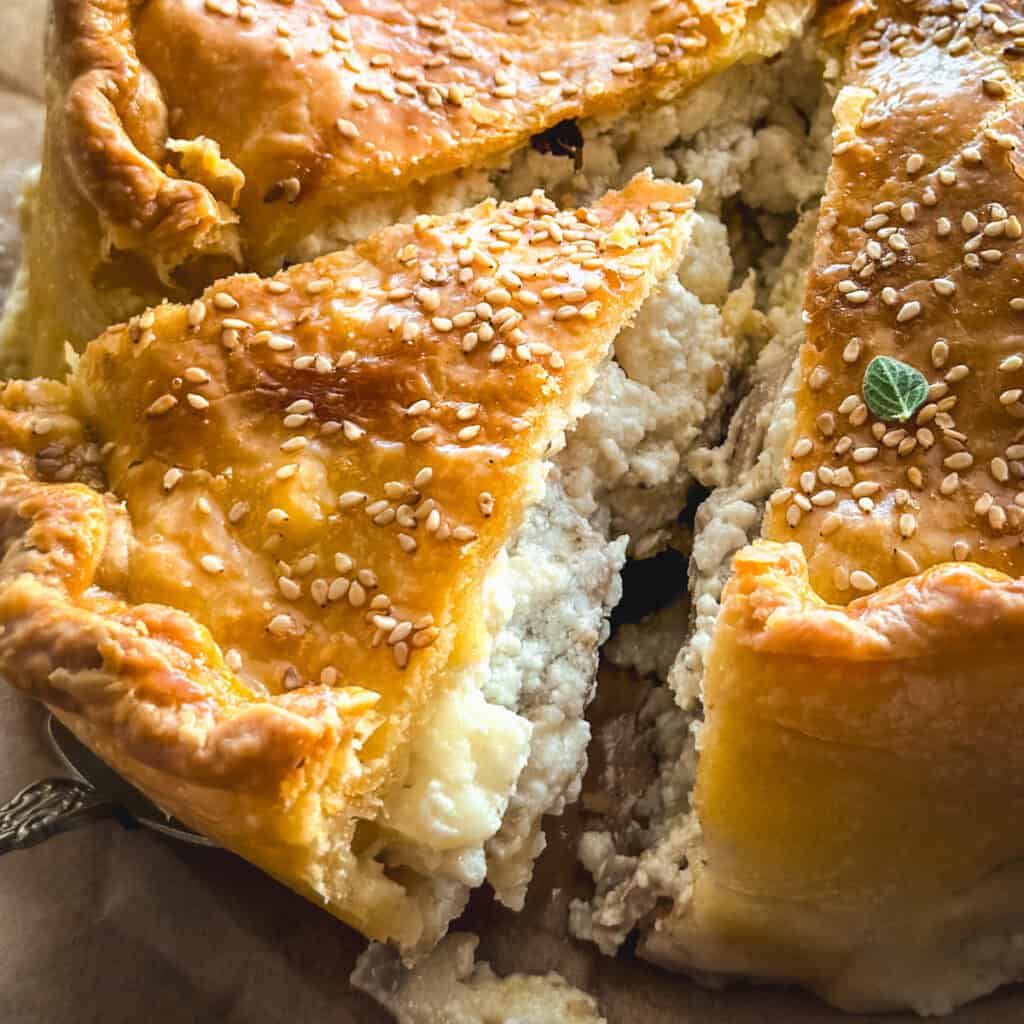
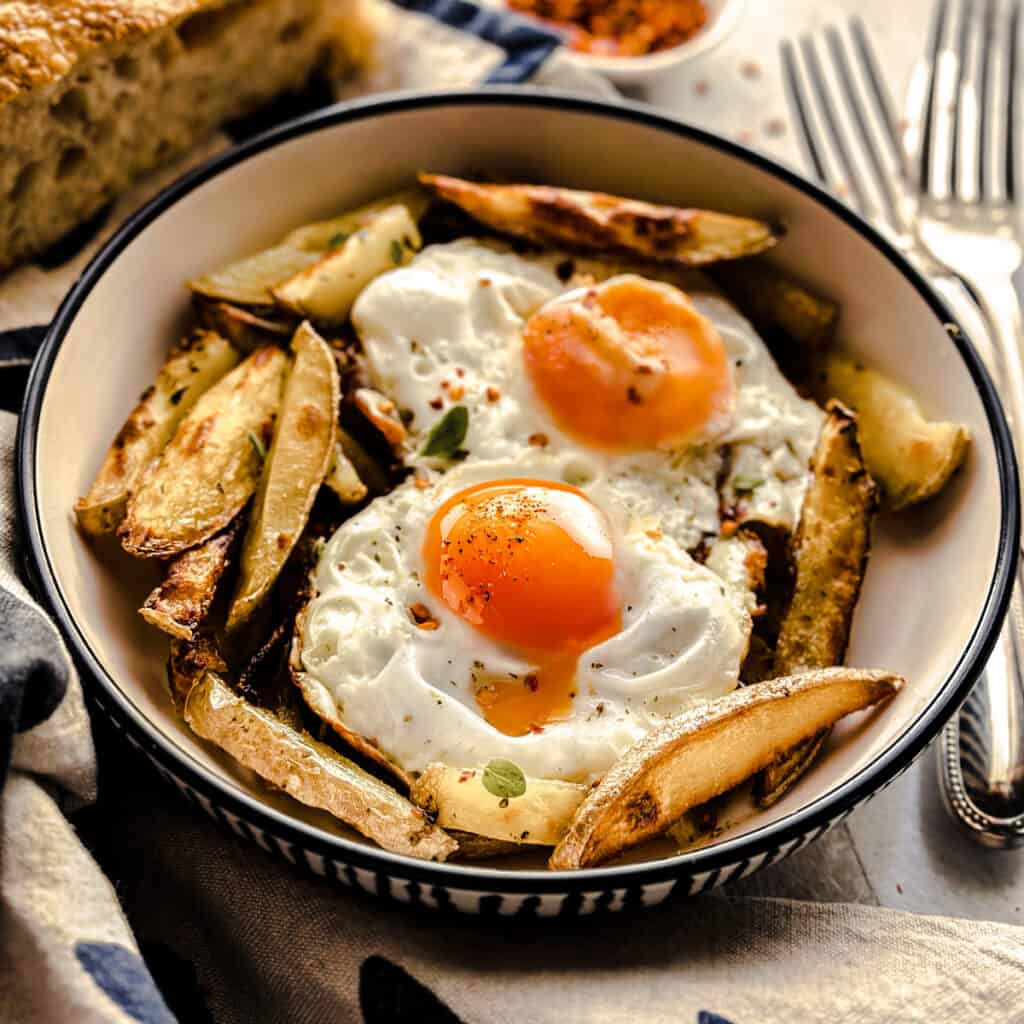
More traditional Greek dishes


Cooked it? Rate it!
If you tried this recipe, I’d love to know how you liked it — drop a comment below or tag me on Instagram @thegreekfoodie__.


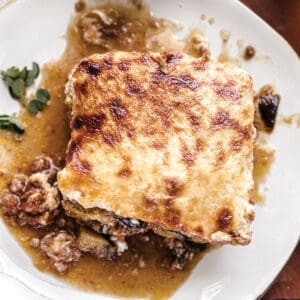
Moussaka-Greek Eggplant Potato Casserole
Equipment
- Skillet
- Medium saucepan
- large deep saucepan
- large baking pan
- Collander.
Ingredients
For the vegetables
- 2 large eggplants, Plus one extra in case it is needed
- 3 large Yukon gold potatoes, Plus one extra in case it is needed
- ⅓ cup extra virgin olive oil
For the meat ragu
- 1.5 lb ground beef
- 2 tablespoons extra virgin olive oil
- 2 onions, medium size, or one large, minced
- 2 garlic cloves, minced
- 1 tablespoon tomato paste
- 2 cups crushed tomatoes
- 1 cup red wine
- 1 cinnamon stick, or one teaspoon ground cinnamon
- 2-3 cloves, or one teaspoon ground cloves
- 1 teaspoon ground cumin
- 1 teaspoon ground nutmeg
For the béchamel
- 5 tablespoons butter
- 6 tablespoons all-purpose flour, plus more in case you need to thicken the sauce
- 1 litre whole milk, plus one cup in case you need to thin the sauce
- 1 bay leaf
- 1 teaspoon ground nutmeg
- 3 yolks
- 1½ cup Parmigiano Reggiano, grated
You also need
- sea salt
- freshly ground pepper
Instructions
Prepare the meat ragu
- Heat two tablespoons of olive oil in a deep large saucepan and brown the ground meat over high heat, stirring and breaking it with a spoon. After it browns, add the onion, garlic, ground nutmeg, cumin, cinnamon stick, and cloves.Let the onion soften for a few minutes, and add the tomato paste. Stir and cook for two-three minutes and pour in the wine. Let the alcohol evaporate. Add the tomatoes and a teaspoon of sugar and stir. Simmer meat ragu for an hour on low heat.
Prepare the eggplants
- Cut the eggplants into slices about 1 cm / ⅓ inch thick.Sprinkle slices with sea salt, and place them on a colander to drain their liquids for 15 minutes. Pat the eggplants dry.Fry eggplant slices in hot olive oil until they take on color, about 2-3 minutes.Transfer to a wire rack and set aside.
Prepare the potatoes
- Cut the potatoes into 6 mm / ¼ inch thick slices. Place slices into a bowl of water while you slice. When all are done, drain, and pat dry.Fry slices in hot olive oil until they take on color, about 1-2 minutes.Transfer to a wire rack and set aside.
Assemble
- Add a layer of potatoes to a baking pan—season with sea salt and pepper. Repeat with another layer of potatoes. Layer the eggplants.You can alternate with a layer of eggplants if you like or add another layer of potatoes and right after layers of eggplant.Remove the cinnamon stick from the meat sauce and pour it evenly over the eggplants.Next, sprinkle a generous amount of grated cheese.
Time to pre-heat the oven to 200°C / 390°F
- Start the bechamel when your meat sauce is done cooking and layering all the other components to the pan.
Make the béchamel
- Add the milk and the bay leaf to a saucepan and warm it on medium heat.
- Melt the butter in a large saucepan. Pour in the flour and cook while stirring with a wooden spoon until the roux takes on a slightly blond color. Gradually pour in the warm milk. Use a which and stir continuously to dissolve any lumps and create a smooth sauce. Remove from heat.Season with sea salt, freshly ground pepper, and nutmeg. Add the yolks and one cup of grated Parmigiano cheese. Reserve the rest of the cheese. Whisk until smooth.
Finish assembling and bake
- Pour the béchamel over the meat in an even layer. Sprinkle the reserved grated cheese on top.Bake for 45 minutes or until the top is golden brown.
- Let food cool for 15 minutes.Serve with a leafy green salad, feta cheese, and a glass of Cabernet. Enjoy!
Notes
- Start the sauce.
- While the sauce cooks, prepare the eggplants and potatoes.
- Start assembling as soon as the meat sauce finishes.
- Make the béchamel.
- Finish assembling and bake.
- Traditionally, the eggplants and potatoes are fried for a few minutes until golden. The shallow frying adds extra flavor to the dish. However, you can bake the slices with similar results, with a lighter taste. For a lighter moussaka, brush the sliced eggplants and potatoes with olive oil, season with sea salt and pepper, and bake them in parchment paper-lined sheet pans for 20 minutes at 180°C/350°F until they are partially cooked.
- I use Yukon gold potatoes because they don’t need peeling. Their skin is thin and perfectly edible; it gets a bit crisp from the frying. Remember to scrub potatoes clean before slicing. I suggest peeling the skin first if you use another kind of potato.
- You want the eggplant and potatoes ratio to be 2/3 eggplant to 1/3 potato.
- Have another potato available for quick slicing and frying if three potatoes are not enough to cover your whole pan. The same applies to eggplant.
- Start the béchamel when your meat sauce is done cooking and layer all the other components in the pan. It will allow the bechamel to be poured over immediately and not sit around. Béchamel develops a thin crusty layer after a while, so using it fresh off the stove is best.
- For the top, you can also mix half 1/3 cup of breadcrumbs with 1/3 cup of grated parmesan.
- This recipe calls for a large deep baking pan. The one I am using is Similar to 10″ x 13″ x 3″ / 26cm x 35cm x 7.5cm
Nutrition