

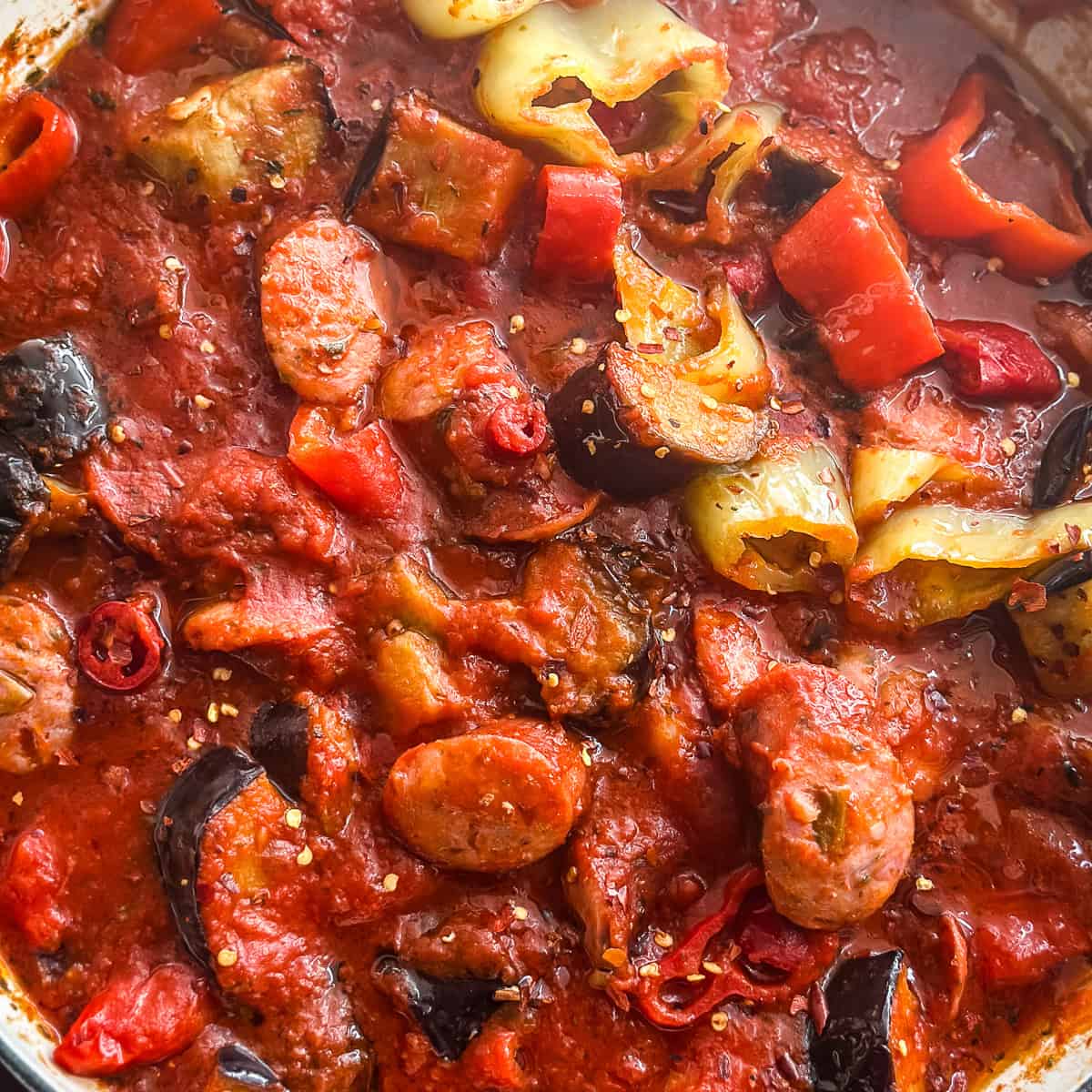
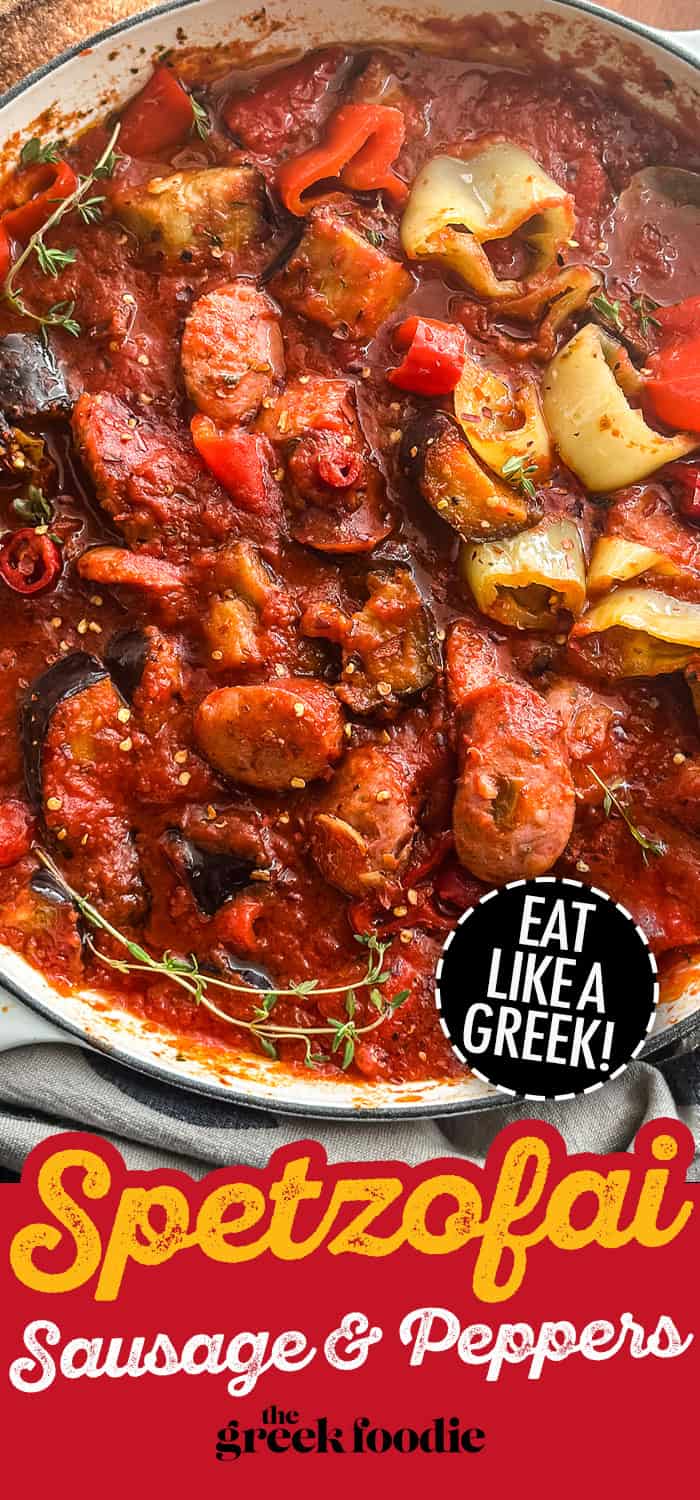
Spetzofai (also spelled spetsofai) is one of those deeply satisfying, no-fuss Greek stews that makes the whole kitchen smell like a summer in the Aegean. It’s essentially a sausage and peppers dish, but Greek, which means it’s richer, spicier, and more soulful than anything you’d expect. Chunky rustic sausage (loukaniko), sweet Florina red peppers, meaty eggplant, and a thick tomato sauce all come together in one pot. It’s rustic, bold, and utterly addictive. The name comes from spetzakia — the Greek word for those small, fiery chili peppers, itself borrowed from the Italian spezia, meaning spice. The heat makes this dish unforgettable. In Greece, it’s served with hunks of crusty bread to mop up the sauce, feta on the side, and a handful of olives, but it can also be enjoyed over rice or pasta.
Spetzofai is right at home alongside other loukaniko recipes. My Greek Sausage Bites with Tomato & Feta are a crowd-pleasing meze. If you want something hearty, the Gigantes Plaki with Sausage & Graviera is pure Greek comfort.
Why you will love spetzofai
What is spetzofai?
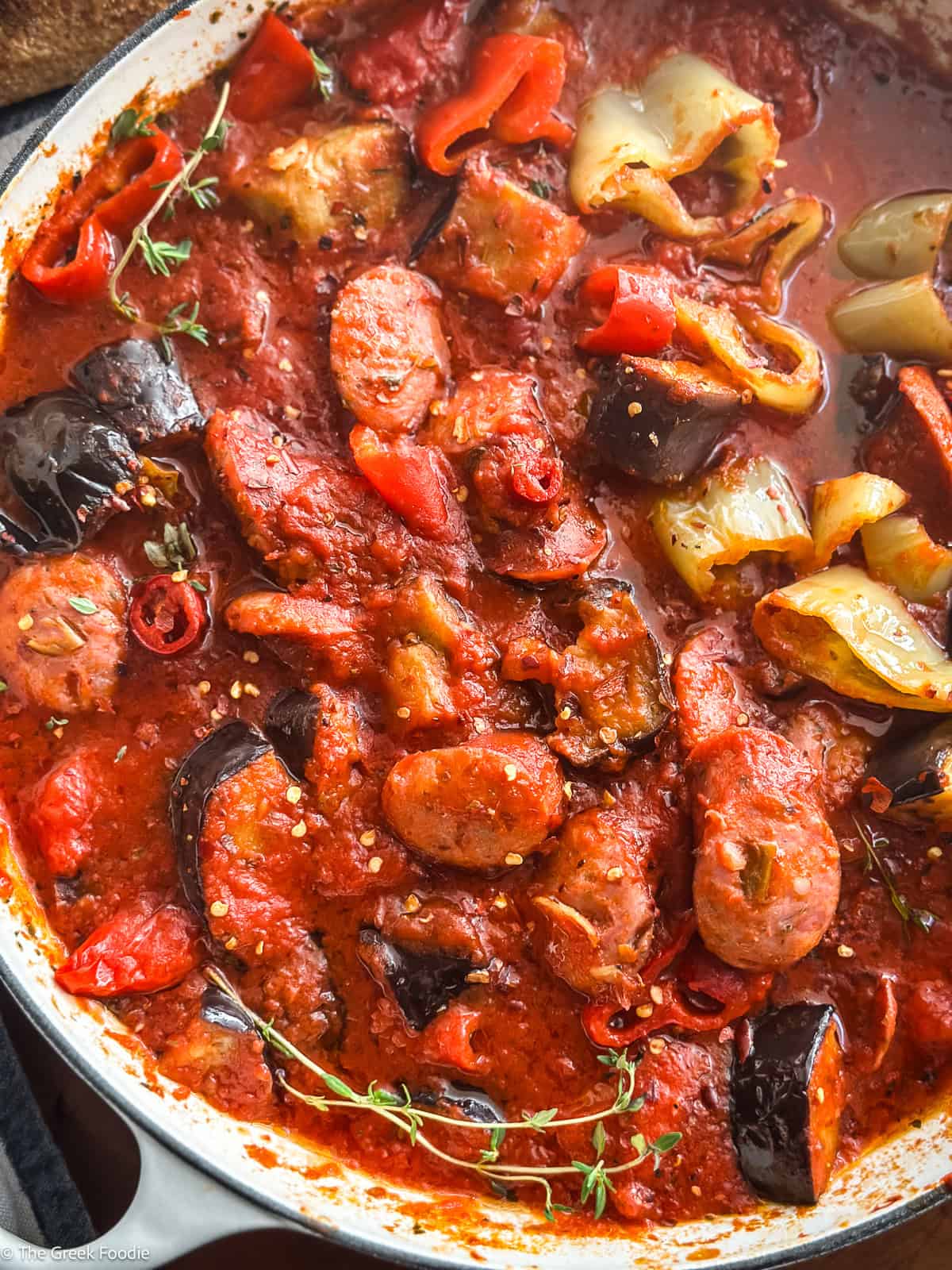
Spetzofai (σπετζοφάι) is a Greek and Italian dish, made with rustic village sausage (loukaniko), peppers, eggplant, and tomato sauce. The most famous version is from the Pelion peninsula in Thessaly, central Greece. It’s one of the signature dishes of Volos, the coastal city at the foot of Mt. Pelion, where it is served at almost every taverna as a staple of the local table.
The dish is named after spetzakia, as they are called in Greece, (from spezia, Italian for spice) — the small, fiery red peppers that are essential to the authentic recipe. Without the heat, it is simply sausage and peppers; with it, it becomes spetzofai. Think of it as the Greek answer to a sausage and peppers stew, but bolder, spicier, and with far more character.
Ingredient notes
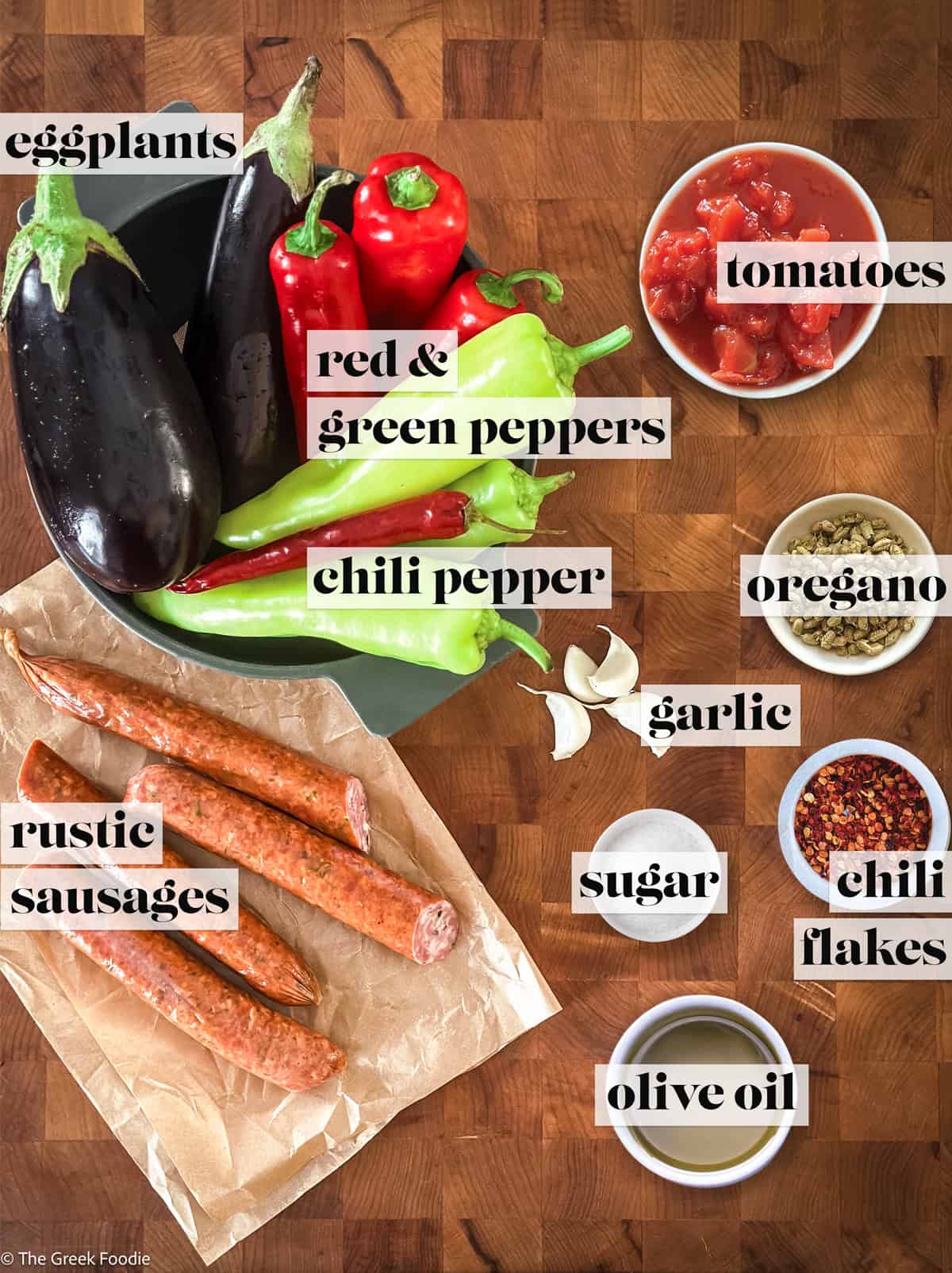
Rustic sausages: This is the soul of the dish. Loukaniko is a coarse-ground pork sausage seasoned with orange peel and herbs — you can find it at Greek or Middle Eastern delis, or online. In a pinch, a good quality coarse Italian pork sausage works well.
Florina peppers: These are the long, sweet red peppers from northern Greece — wonderfully fleshy and fruity. Look for them jarred in brine at Greek or Mediterranean grocery stores. If you can’t find them, use a mix of red and yellow bell peppers and add a tiny extra pinch of sugar.
Green peppers: Use large, meaty green longhorn peppers when in season. Together, they create a lovely, sweet-bitter balance.
Eggplant: The small, round “flask” variety is traditional — they hold their shape better and have fewer seeds. Regular eggplant is absolutely fine. Just cut into generous chunks so they don’t dissolve.
Tomatoes: Fresh tomatoes grated on a box grater in tomato season is the authentic way, and the flavour is noticeably better. A tin of quality crushed tomatoes works perfectly year-round.
Olive oil: You need enough to fry the vegetables properly. The oil you use for frying is what carries all the flavour into the sauce, so use good Greek extra virgin olive oil.
Step by step
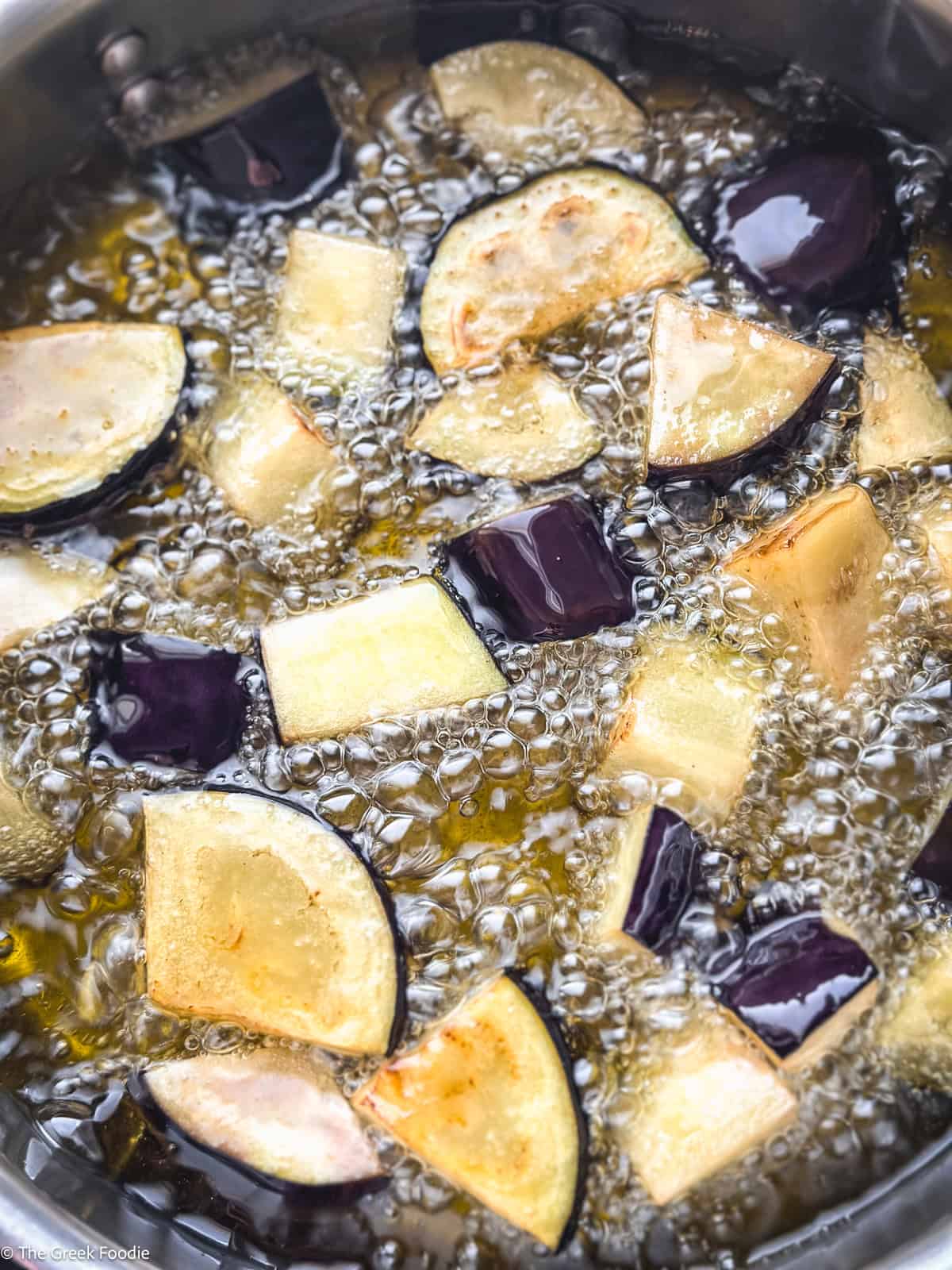
STEP 1. Start by getting your oil hot. Pour enough olive oil into a deep, wide frying pan to cover about a third of the base. Heat it over high heat until shimmering. Fry the eggplant and peppers in batches over high heat for 3–4 minutes per batch, turning, until golden on all sides.
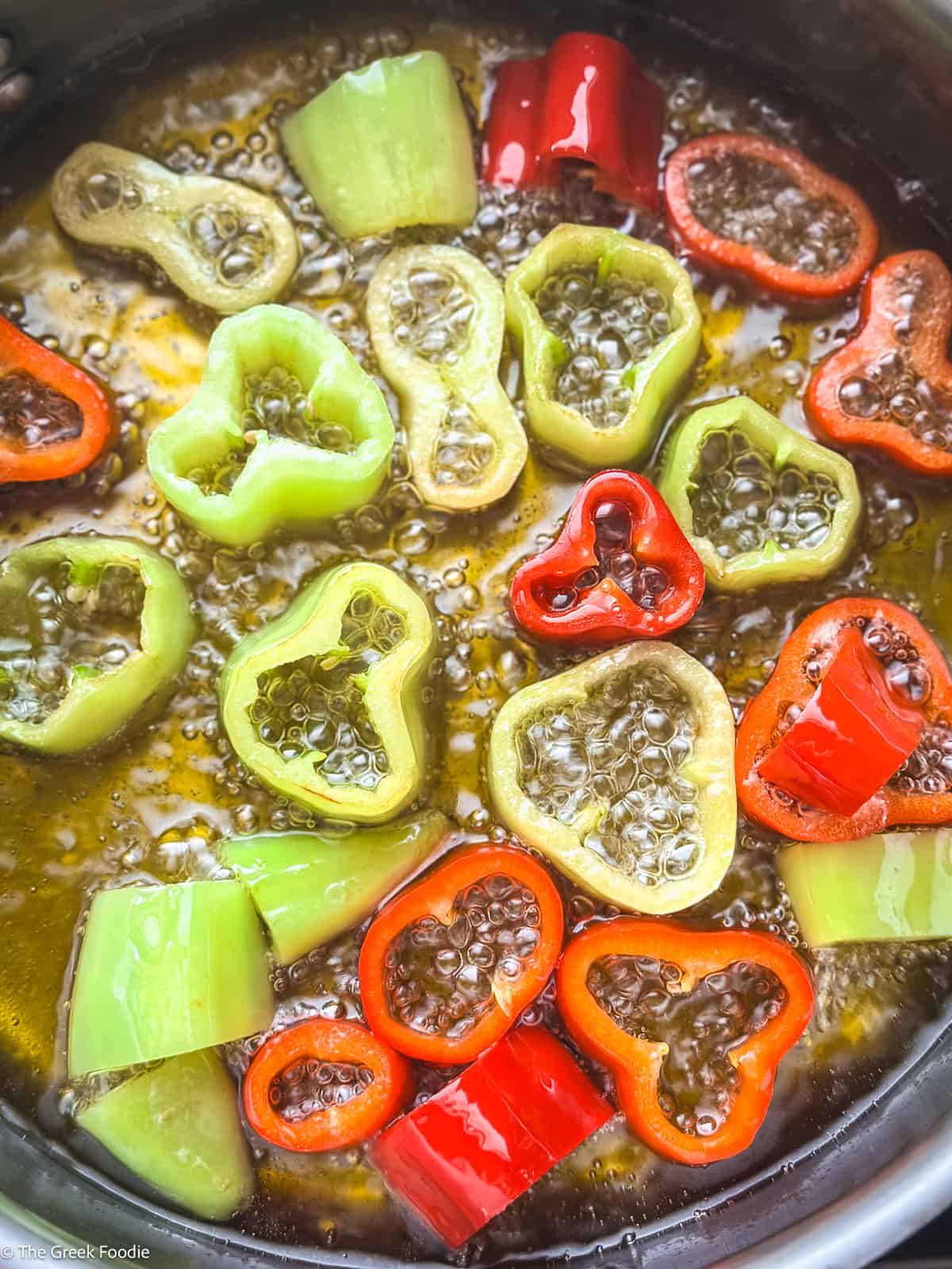
Don’t overcrowd the pan or they’ll steam instead of fry. You want colour and a little char on the edges, that’s flavour.
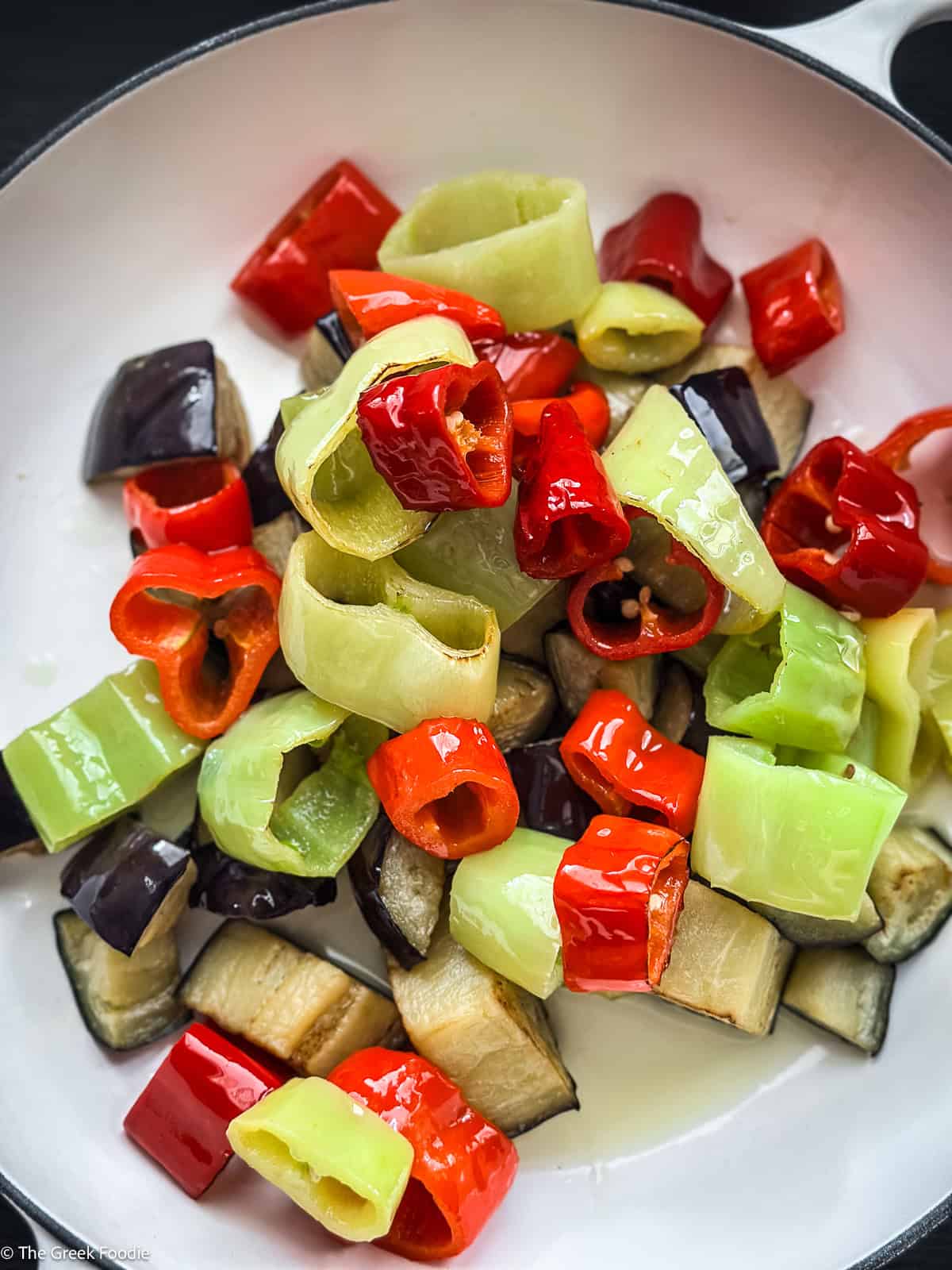
STEP 2. Here’s the key technique: once the vegetables are fried, transfer them with a slotted spoon into a wide, shallow pot, and bring as much of that fragrant, vegetable-infused oil with you as you can. No extra oil goes in from this point, everything you need is already there.
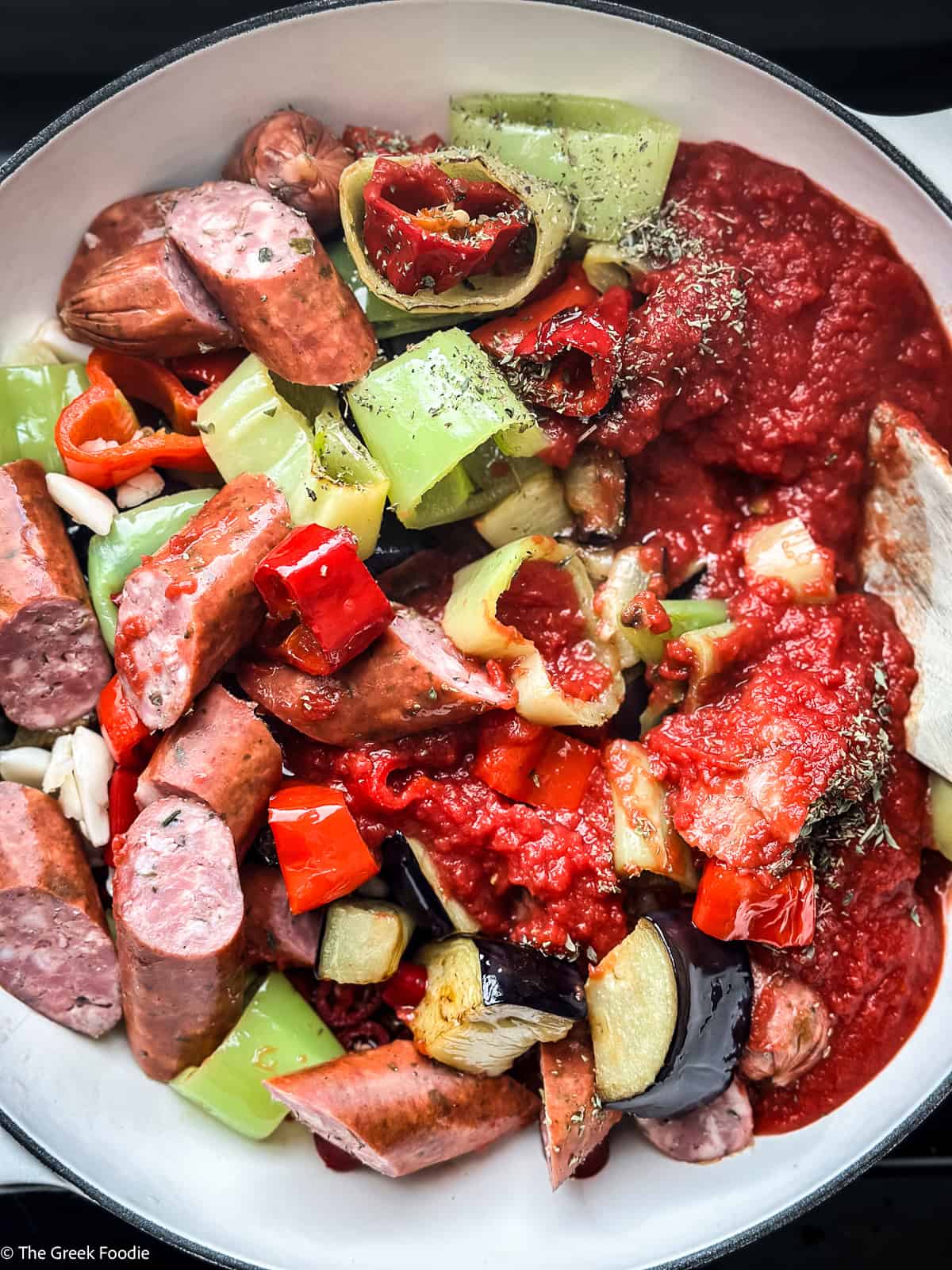
STEP 3. Add the sliced sausage, the grated tomatoes, the garlic, the chili (whole if you want mild heat, sliced if you want it to bite), the oregano, sugar, sea salt, and black pepper. Pour in about a glass of water (around 200ml). Gently mix everything together.
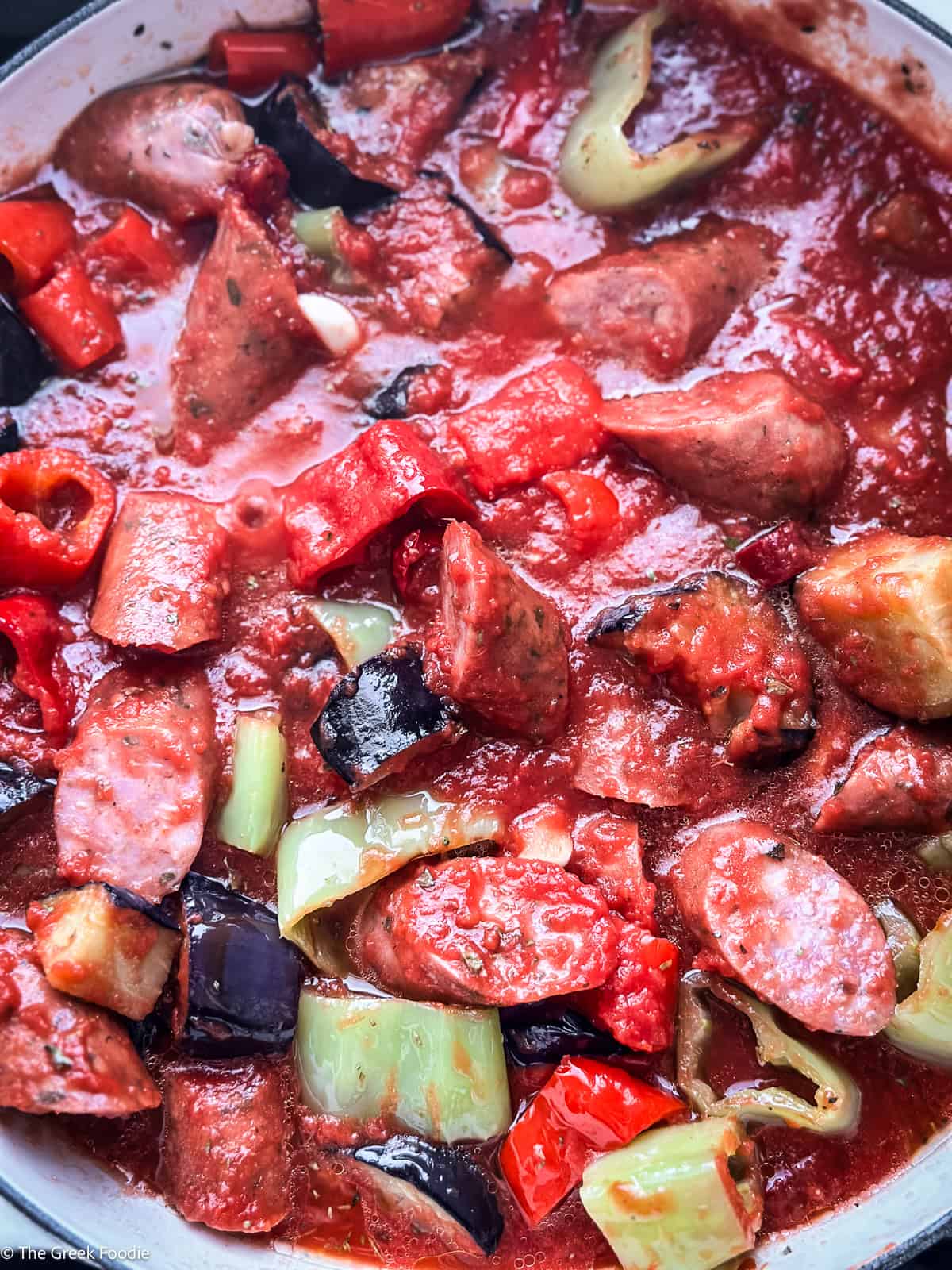
STEP 4. Now, and this is important, do not stir anymore. Close the lid and leave it to simmer over medium-low heat for 20–25 minutes. The liquid reduces into a thick, glossy sauce. If you need to mix things, gently shake the pot by the handles. This keeps the vegetables whole and gorgeous rather than turning them to mush.
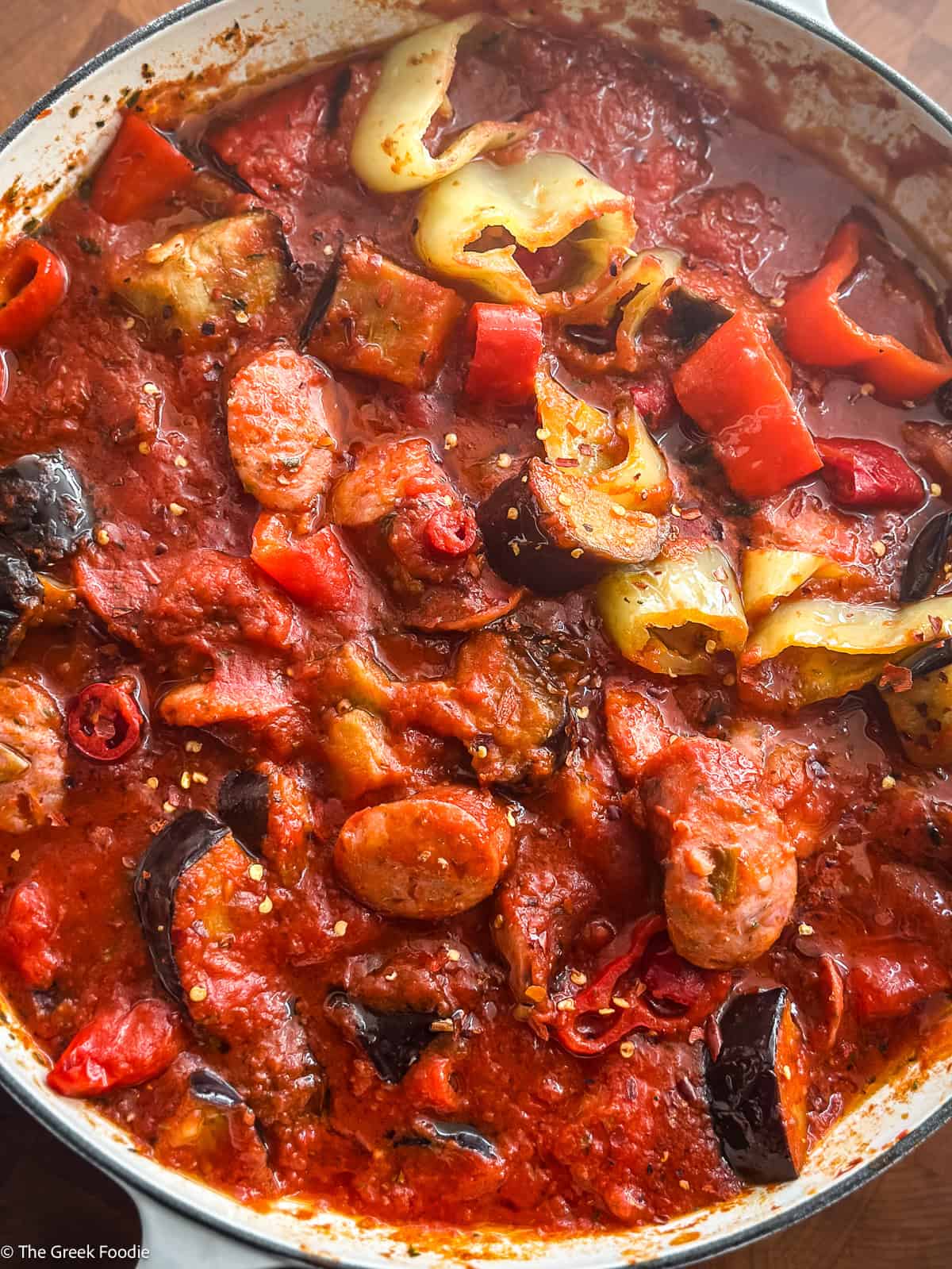
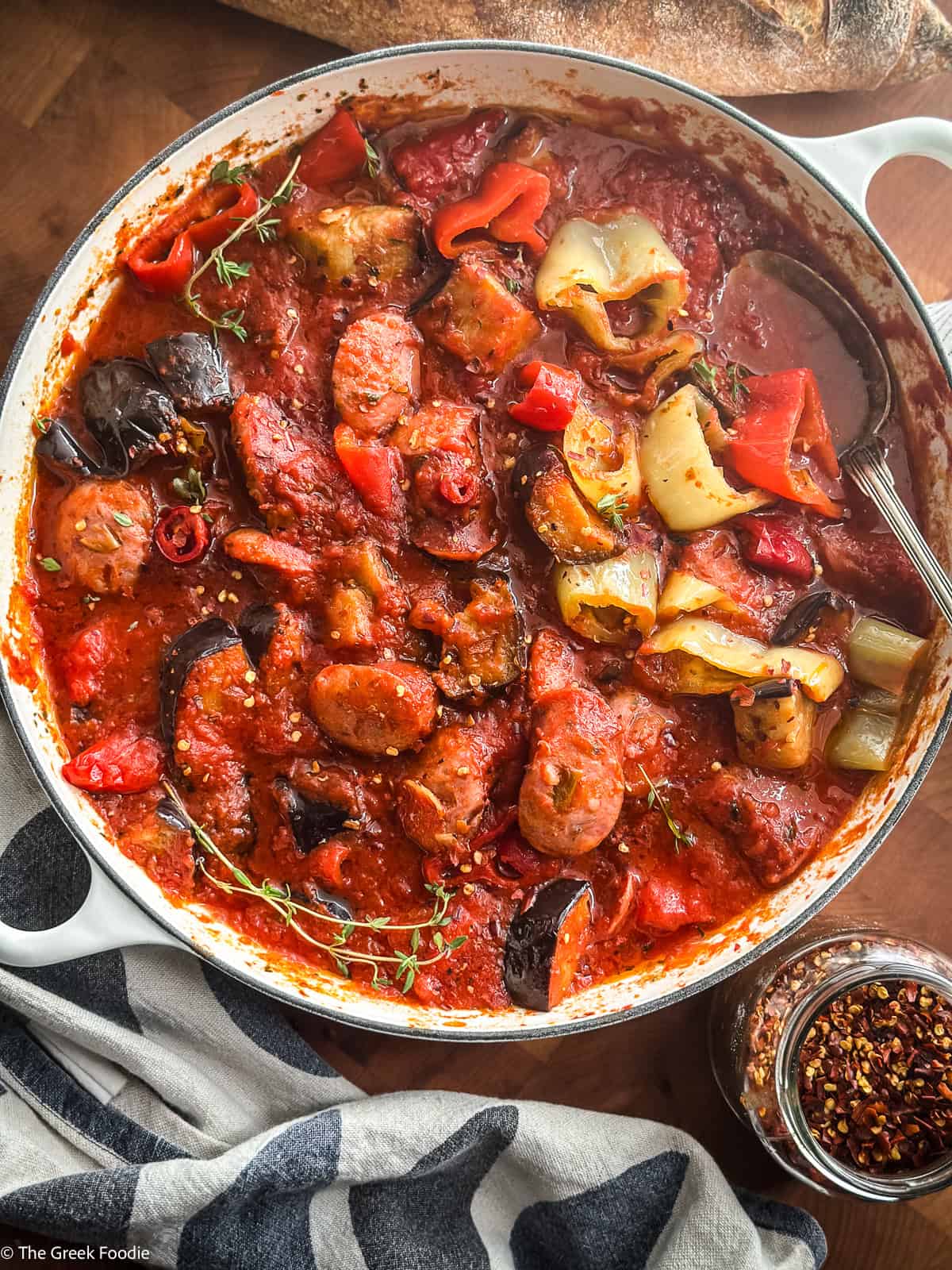
STEP 5. Taste at the end and adjust salt. If the sauce is thinner than you’d like, remove the lid and simmer for another 5 minutes. Serve it straight from the pot with plenty of fresh crusty bread.
Pro tips
- Fry in batches and don’t rush it. The frying step is where the depth of flavour is built. A crowded pan steams, not fries.
- Add sautéed onions. A finely sliced onion, softened in olive oil before the other vegetables go in, adds a subtle sweetness that rounds out the sauce beautifully.
- Deglaze with white wine. Once the eggplant, peppers, and sausage are in the pot and before you add the tomatoes, pour in a small glass of dry white wine and let it bubble for a minute or two. It lifts all the flavour from the bottom of the pot and adds a gentle depth to the sauce.
- Don’t stir — shake. It sounds counterintuitive, but stirring breaks the vegetables down. The shake method keeps everything intact.
- Make it spicier. The dish is named after the chili, “spetzia,” so don’t be afraid to lean into the heat. Add a second chilli, or more boukovo. It should have a kick.
- Source good sausages (loukaniko) if you can. The quality of the sausage makes a real difference. Ask at your local Greek deli or order online. Good Italian sausage or bratwurst will also work great.
- The day-after rule applies. Like most Greek stews, spetzofai is better the next day once the flavours have settled. Make it in advance if you can.
Storage and leftovers
Refrigerator: Store leftovers in an airtight container for up to 3 days. Reheat gently on the stovetop with a splash of water, or in the microwave.
Freezer: Spetzofai freezes well. Cool completely, then freeze in portions for up to 2 months. Defrost overnight in the fridge before reheating.
Note: The eggplant softens further after freezing, but the flavour is still excellent.
Serving suggestions
- The traditional way: thick slices of crusty sourdough bread to mop up every last drop of sauce, a wedge of salty feta, and a small plate of Kalamata olives.
- It also works beautifully alongside a simple green salad with lemon and olive oil.
- For a more substantial meal, serve over pilafi, creamy mashed potatoes or orzo.
- As a meze: spoon into small dishes and serve warm as part of a spread with tzatziki, taramasalata, and grilled pita.
More seafood recipes
Cooked it? Rate it!
If you tried this recipe, I’d love to know how you liked it — drop a comment below or tag me on Instagram @thegreekfoodie__.


Spetzofai (Greek Sausage and Peppers)
Ingredients
- 1 lb rustic sausage , sliced one inch thick
- 3 large green cowhorn peppers, sliced thick
- 3 large red cowhorn peppers, sliced thick
- 3 eggplants, small-medium size, sliced thick and quartered
- 1 chili pepper, seeds removed, thinly sliced
- 2 cups tomatoes, grated on a box grater — or tinned crushed tomatoes
- 1 teaspoon sugar
- 2 garlic cloves, roughly chopped
- chili flakes (boukovo) , to taste
- dried oregano
- sea salt
- freshly ground black pepper
- Olive oil for frying
Instructions
- Heat a generous amount of olive oil (enough to cover ⅓ of the pan base) in a deep frying pan over high heat.
- Fry the eggplant and peppers in batches for 3–4 minutes until golden and slightly charred on all sides. Remove with a slotted spoon.
- Transfer the fried vegetables to a wide shallow pot, bringing as much of the cooking oil with them as possible. No additional oil is added from this point.
- Add the sliced sausage, grated tomatoes, garlic, chili, oregano, sugar, salt, pepper, and about 200ml (1 glass) of water.
- Do not stir. Cover with a lid and simmer over medium-low heat for 20–25 minutes until the sauce has thickened.
- If you need to mix, gently shake the pot. Taste and adjust seasoning. If the sauce needs reducing, remove the lid and simmer for a further 5 minutes.
- Serve immediately with crusty bread, crumbled feta, and olives.
Notes
- The spicy chili is traditional and gives the dish its name . Adjust the quantity to your heat tolerance, or add one whole small chili and remove before serving for a milder result.
- Do not stir during cooking — shake the pot gently instead to keep the vegetables whole.
- Spetzofai tastes even better the next day. Make it ahead if possible.
It was very tasty! We had it as an appetizer with other dips and the next day had the leftovers with rice. Very nice.
Thank you so much my love. x J
Hi Jenny –
I am making this tonight but all I have on hand is mild Italian Sausage links. If I use these in this recipe – when do I add them so they are cooked through?
Hi Diana,
Sorry for my late reply.
They should work just fine.
Slice the sausages and sauté first with a bit of olive oil. Remove from the pan, transfer to a plate, then follow the recipe and add them in with the other ingredients at the appropriate time.
x Jenny