

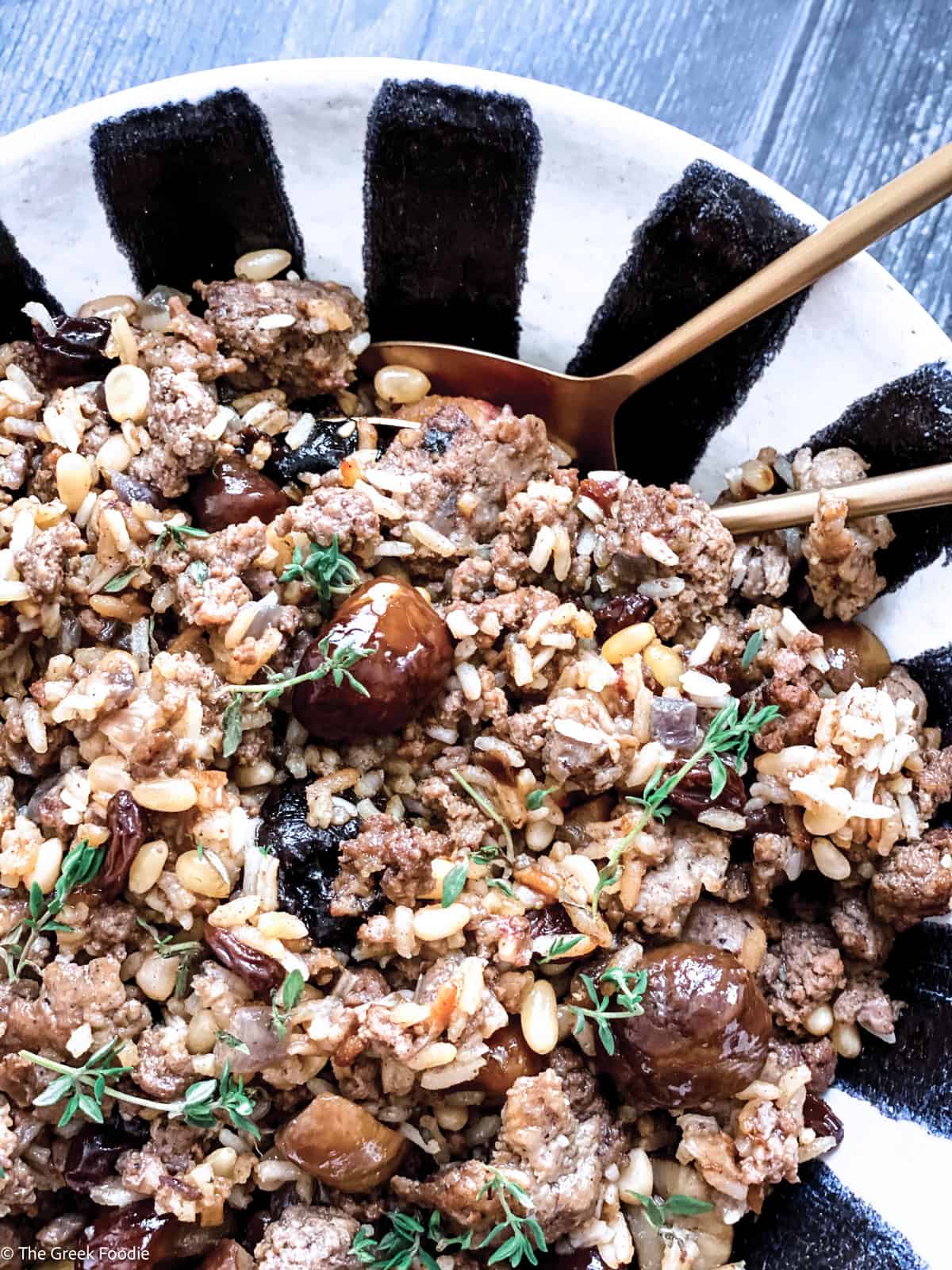
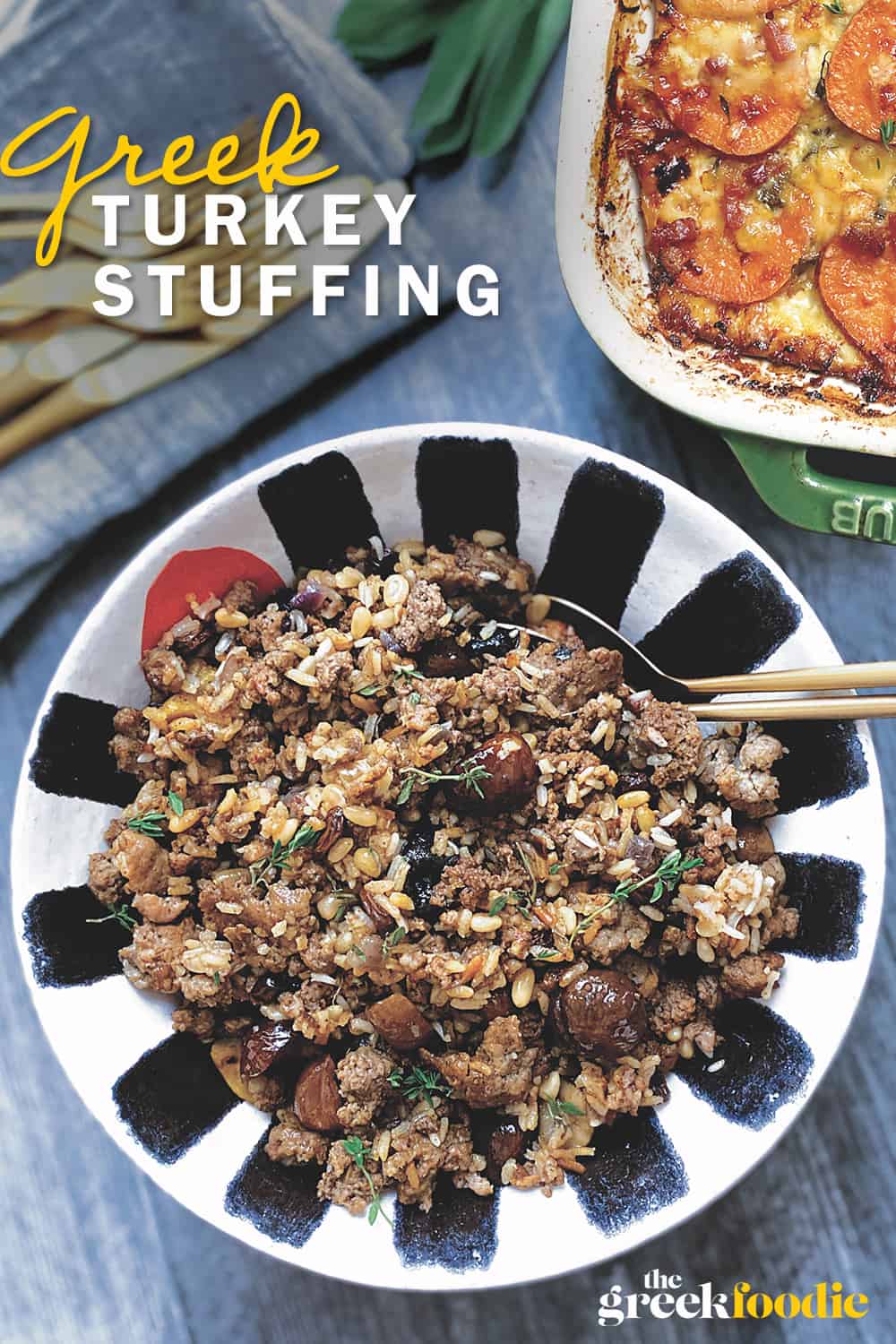
This traditional Greek turkey stuffing with sausage, chestnuts, dates, prunes, and pine nuts is a rich, savory-sweet blend that fills the kitchen with holiday aromas.
It’s the only reason I roast a turkey every year. Growing up in Greece, we didn’t celebrate Thanksgiving, but Christmas always meant a turkey stuffed with this hearty, aromatic mixture, festive, comforting, and gone by noon the next day.
What cooks say:
“This Greek turkey stuffing recipe is absolutely delightful! The combination of savory sausage, sweet dates, and aromatic spices creates a unique flavor profile that’s perfect for the holiday season. (…) Adding the turkey baste recipe is a game-changer, ensuring a juicy, flavorful bird. (…) This recipe is truly a must-try for anyone looking to elevate their Thanksgiving or Christmas feast! “
ANNA
Why you will love Greek turkey stuffing
Why there’s rice, not bread, in this stuffing
The first thing Americans notice about this stuffing is that there’s no bread in it. The second is the dried fruit. Both come from the same place: my grandmother Evgenia’s kitchen, and before that, the city she grew up in.
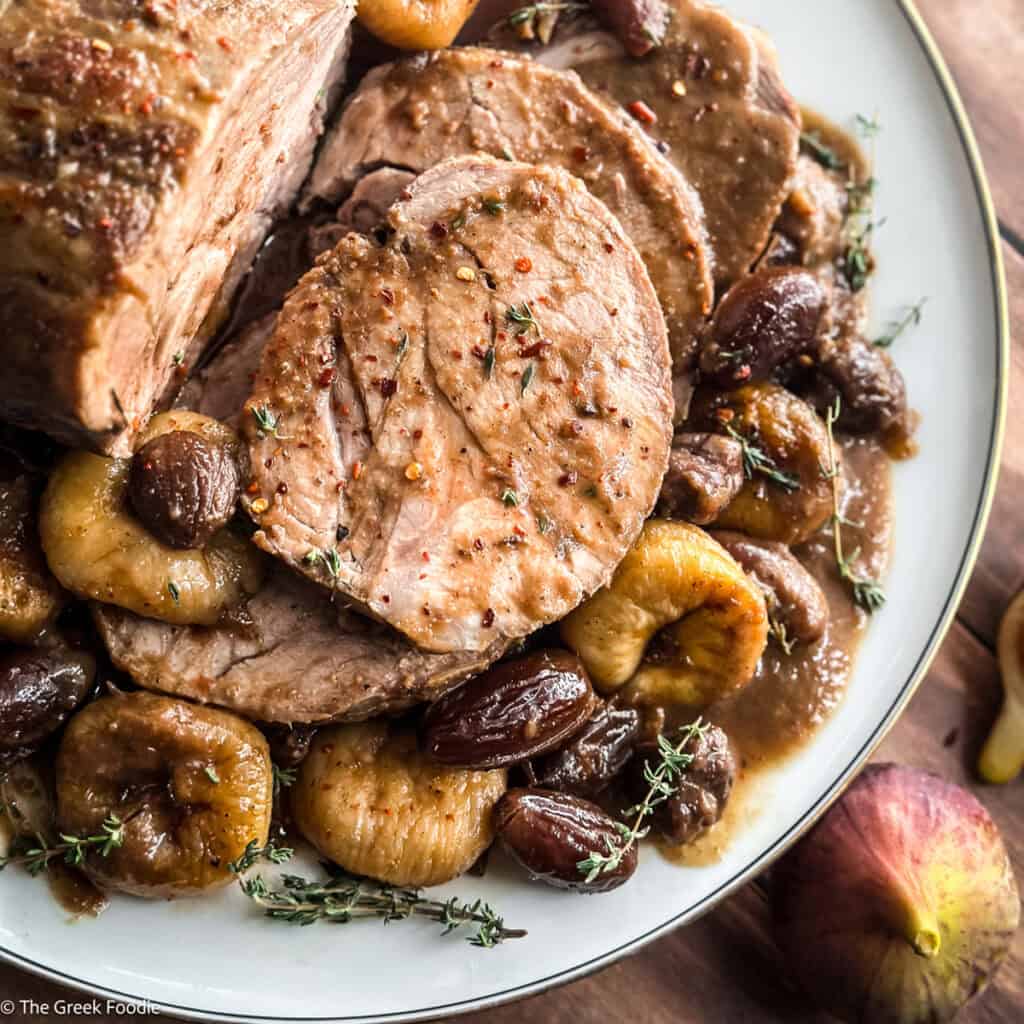
Evgenia was from Constantinople, and politiki cuisine, the food of the Greeks of the City, has always leaned on rice, toasted nuts, and warm spice where mainland Greek cooking might not. Chestnuts, pine nuts, dates, prunes, raisins, a couple of cloves: none of it is there for novelty. That sweet-and-savoury balance is simply how a festive table was built where she came from, and it’s the same instinct behind our pork pot roast with chestnuts and figs.
This recipe reached me the way most family recipes do, passed down and cooked alongside rather than written out. It’s still made the way she learned it at her mother’s table, and I haven’t changed much. There’s no reason to.
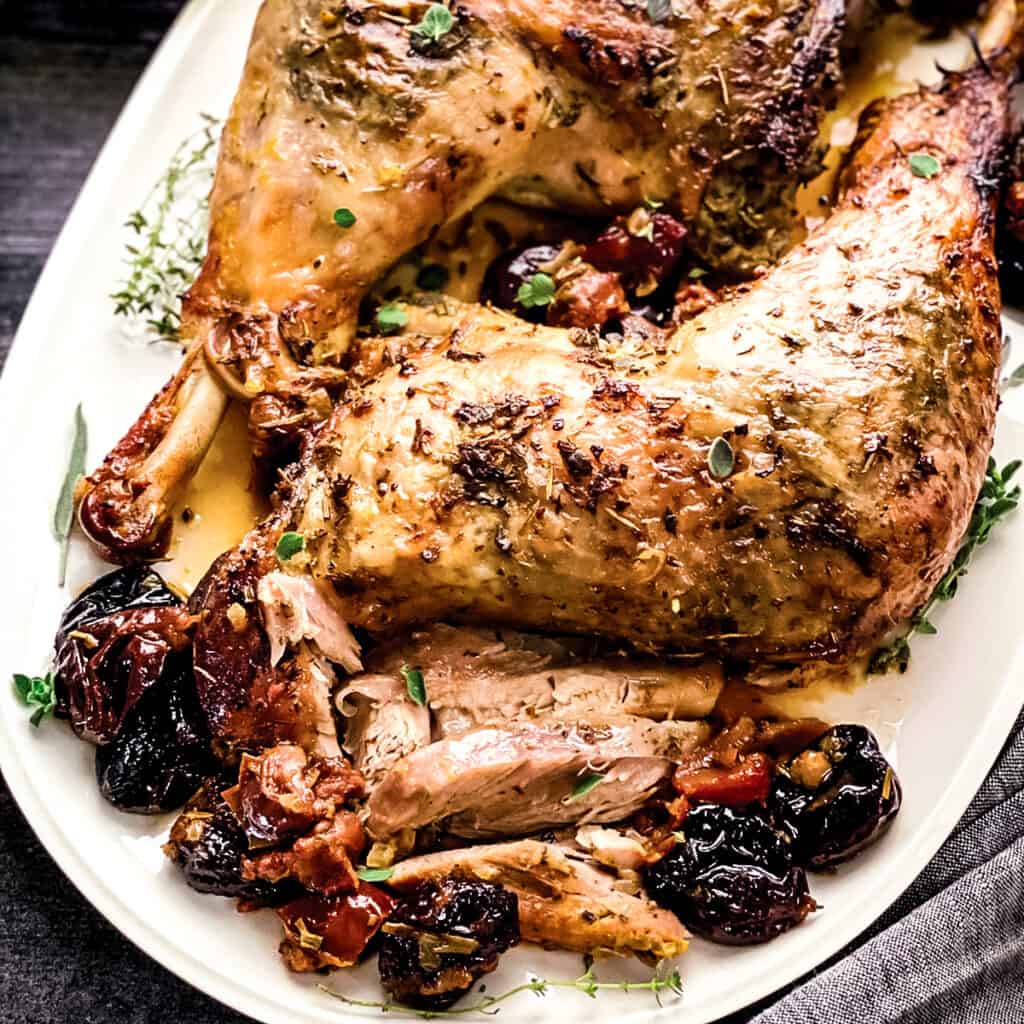
If you love our Greek turkey stuffing, you will also love our Herb butter turkey, Roasted turkey thighs, Festive Greek pilafi, and Roasted cabbage with bacon, raisins, and garlic!
Here is what you need

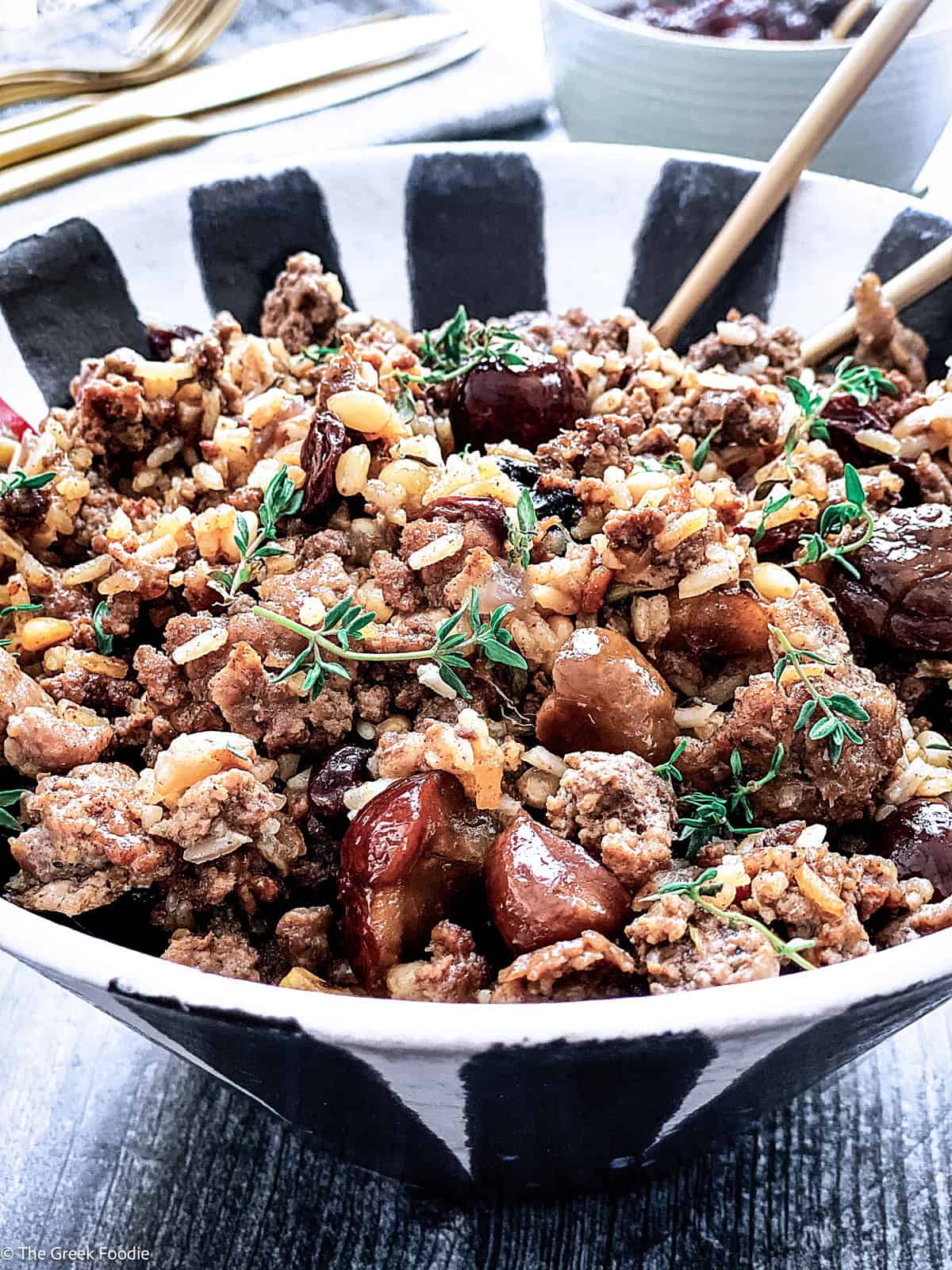
- Ground sausage and beef – This traditional Greek turkey stuffing combines two types of meat for depth and richness. While many Greek families use equal parts beef and pork, I prefer ground sausage. It brings a bolder, more aromatic flavor that pairs beautifully with the sweet dried fruits.
- Butter – I always use salted butter for its rich flavor, but unsalted works just as well if that’s your preference.
- Onion – Either red or white onions will do. They add a sweet base that anchors all the savory and fruity elements.
- Rice – Just a small handful of white rice helps bind everything together. It absorbs the broth and seasonings, making the stuffing moist and hearty.
- Chestnuts – A signature ingredient in many Greek holiday dishes. Their sweet, nutty flavor makes this stuffing feel truly special.
- Pine nuts, raisins, dates, and prunes – The combination of toasted nuts and plump dried fruit gives the stuffing that wonderful balance of sweet and savory.
- Broth – Chicken or vegetable broth both work beautifully. You can also dissolve a palm-oil-free bouillon cube in half a cup of hot water for a quick substitute.
- Fresh sage leaves – Sage brings a lovely earthiness, but you can easily swap it with rosemary or thyme for a different aromatic note.
- Cloves – A couple of whole cloves adds that delicate warmth that makes holiday dishes so inviting.
- Sea salt & freshly ground pepper – Season generously and taste as you go. The combination of sweet fruit and savory sausage needs a little salt to tie everything together.
- Turkey baste ingredients – Please see bellow (not shown above).
How to make the baste & cook the stuffed turkey
This method is for stuffing the turkey cavity and roasting it with the stuffing inside, not for cooking the stuffing separately. The result is a beautifully seasoned bird infused with the rich, aromatic flavors of the filling. To keep the turkey juicy and the stuffing perfectly moist, I use a simple citrus-herb baste that infuses the bird with incredible flavor as it roasts. The combination of orange, lemon, and fresh herbs gives a bright Mediterranean touch that balances the richness of the sausage and nuts.
This baste is part of how the turkey was always made in my family — it’s what I use when I’m roasting the bird my own way. If you’re making our herb butter turkey, skip the baste and the basting schedule entirely: the dry brine, the butter under the skin, and the injector already handle moisture there. Just use the stuffing.
Turkey baste ingredients
- 1 cup chicken or vegetable broth
- ½ cup melted butter
- ½ cup orange juice
- ¼ cup lemon juice
- Fresh herb sprigs – rosemary, thyme, and sage
- Sea salt and freshly ground pepper to taste
Method
In a small bowl or saucepan, combine the orange juice, lemon juice, and broth. Stir in the melted butter and season with a pinch of sea salt and black pepper.
Tuck in the sprigs of rosemary, thyme, and sage to infuse the liquid while you prepare and cook the turkey. Keep the baste warm on a low surface — I often rest mine above the stove so it stays gently heated throughout roasting.
Step by step
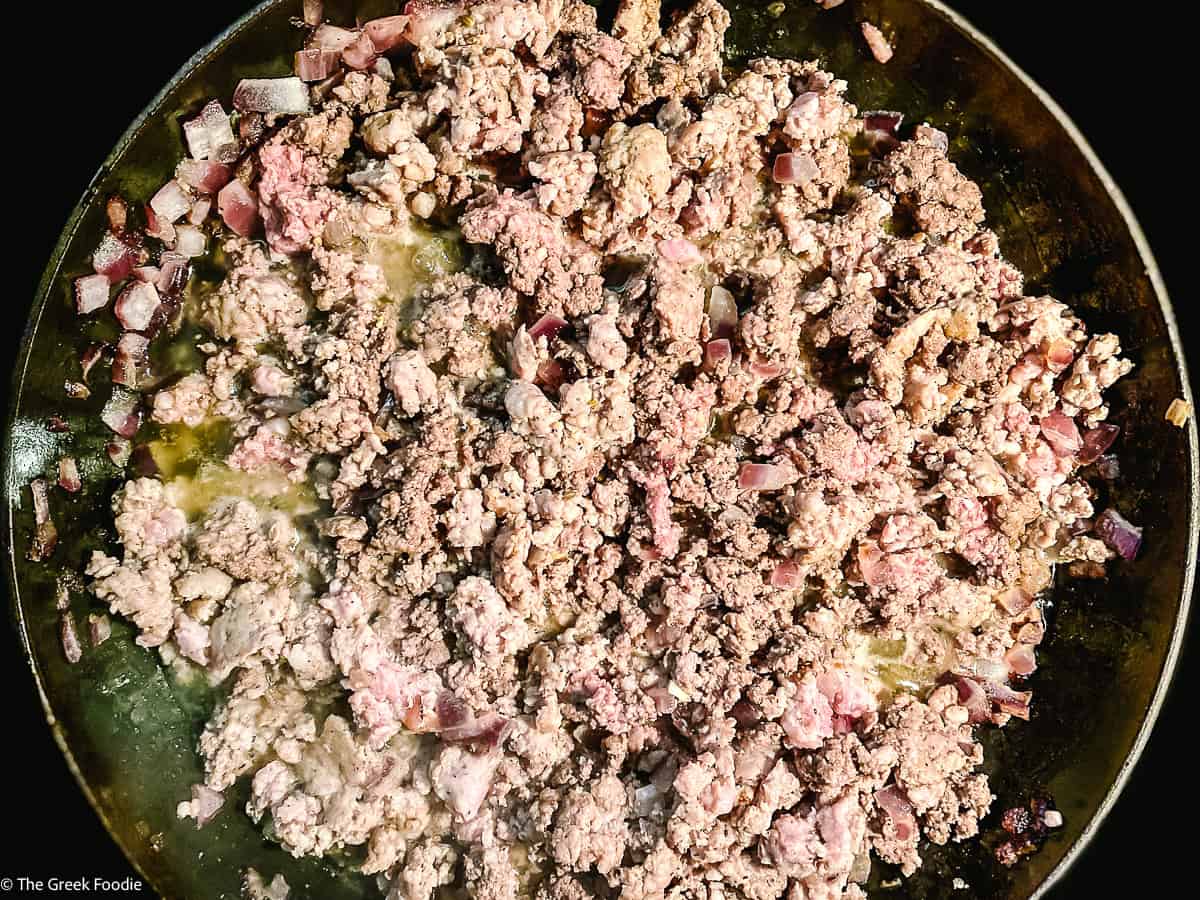
Step 1: In a large pot, melt the butter over medium heat. Add the onion and chopped sage leaves and sauté until the onion softens and becomes fragrant.
Add the ground beef and sausage, breaking up any large pieces with a wooden spoon. Cook for 3–4 minutes, until browned all over.
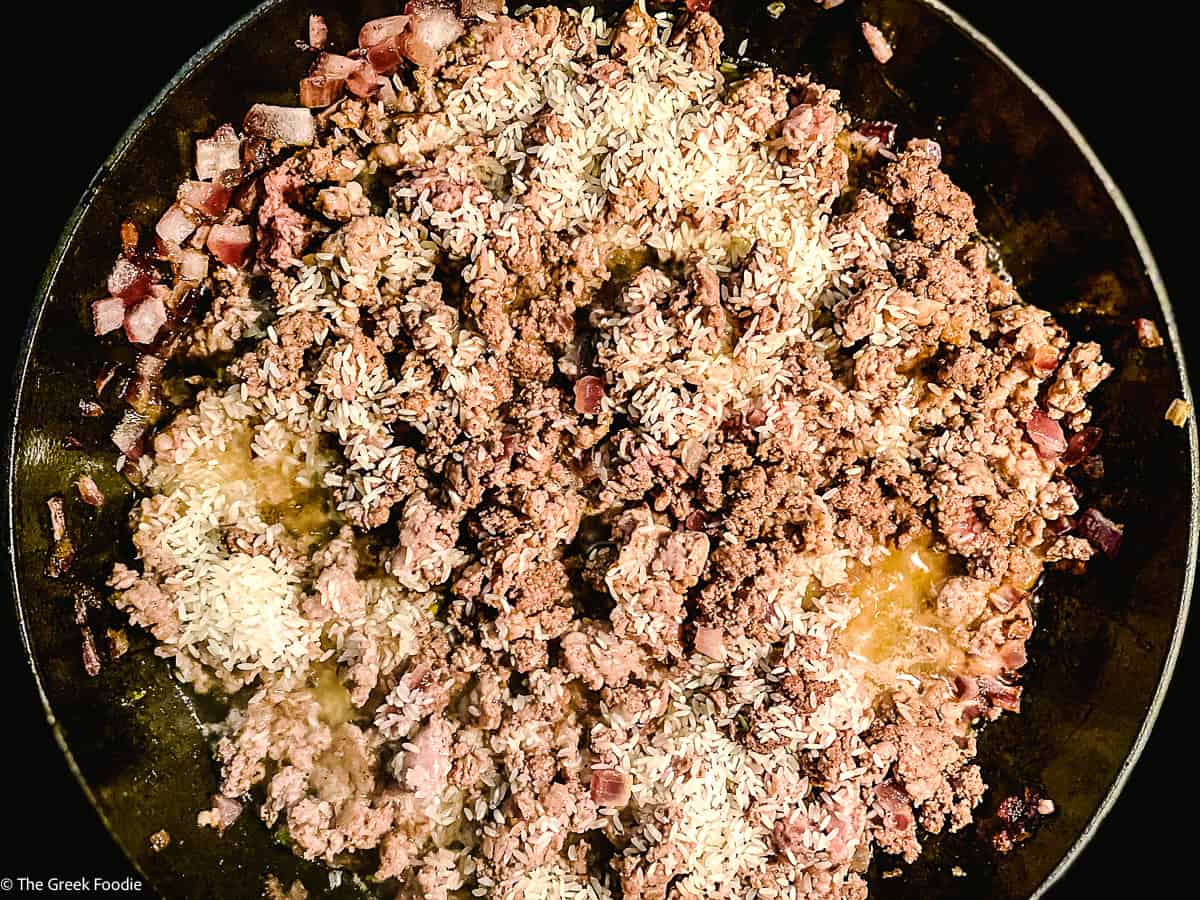
Step 2: Stir in the rice and sauté for another minute or two, allowing it to soak up the flavors.
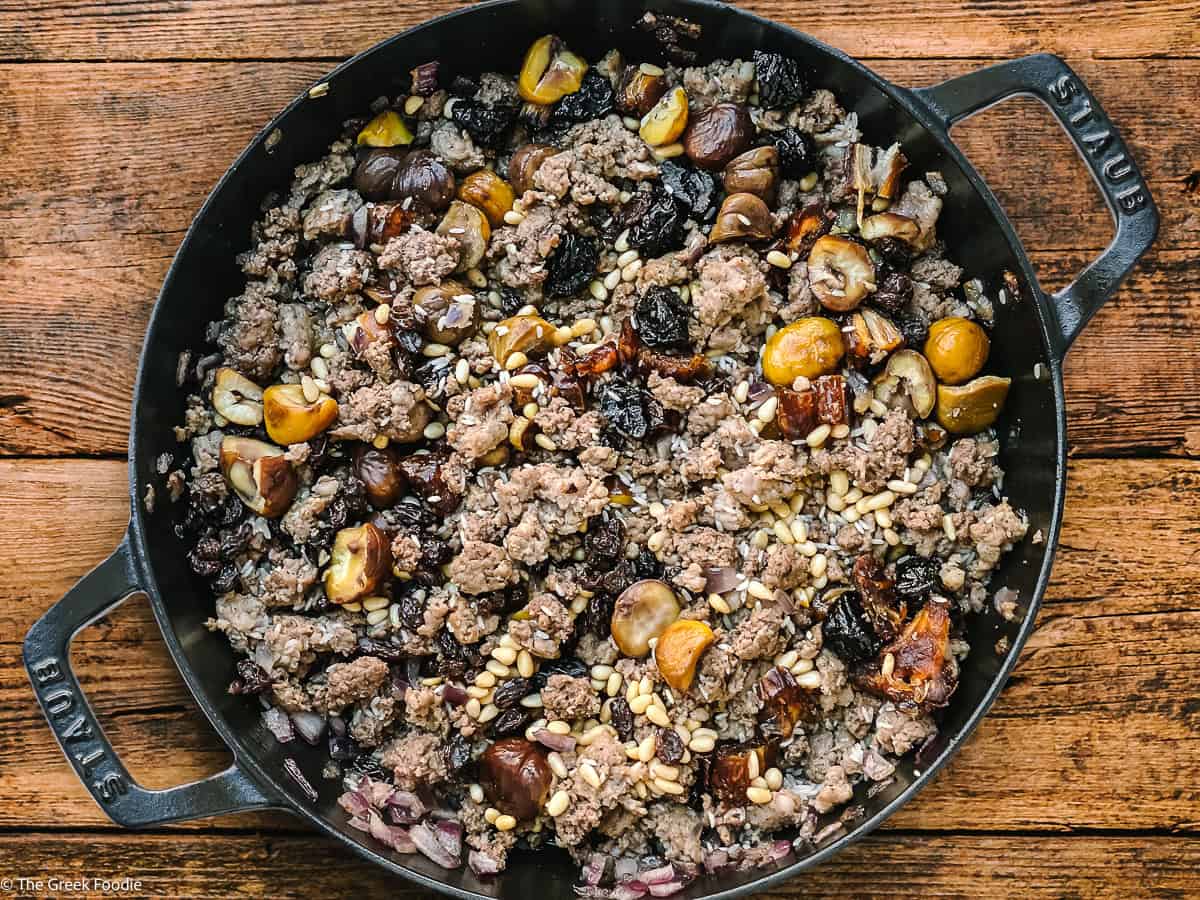
Add ½ cup of broth, then stir in the raisins, chestnuts, dates, prunes, cloves, and pine nuts. Mix everything gently to combine.
Season with sea salt and freshly ground pepper, then remove from heat.
Step 3. Prepare the turkey baste. In a bowl or a small saucepan, whisk together the orange juice, lemon juice, and broth. Add the melted butter, then season with a pinch of salt and pepper.
Tuck in sprigs of rosemary, thyme, and sage to infuse the liquid as it sits. Keep the baste warm on a low surface (I usually place mine in the microwave above the stove with the light on underneath).
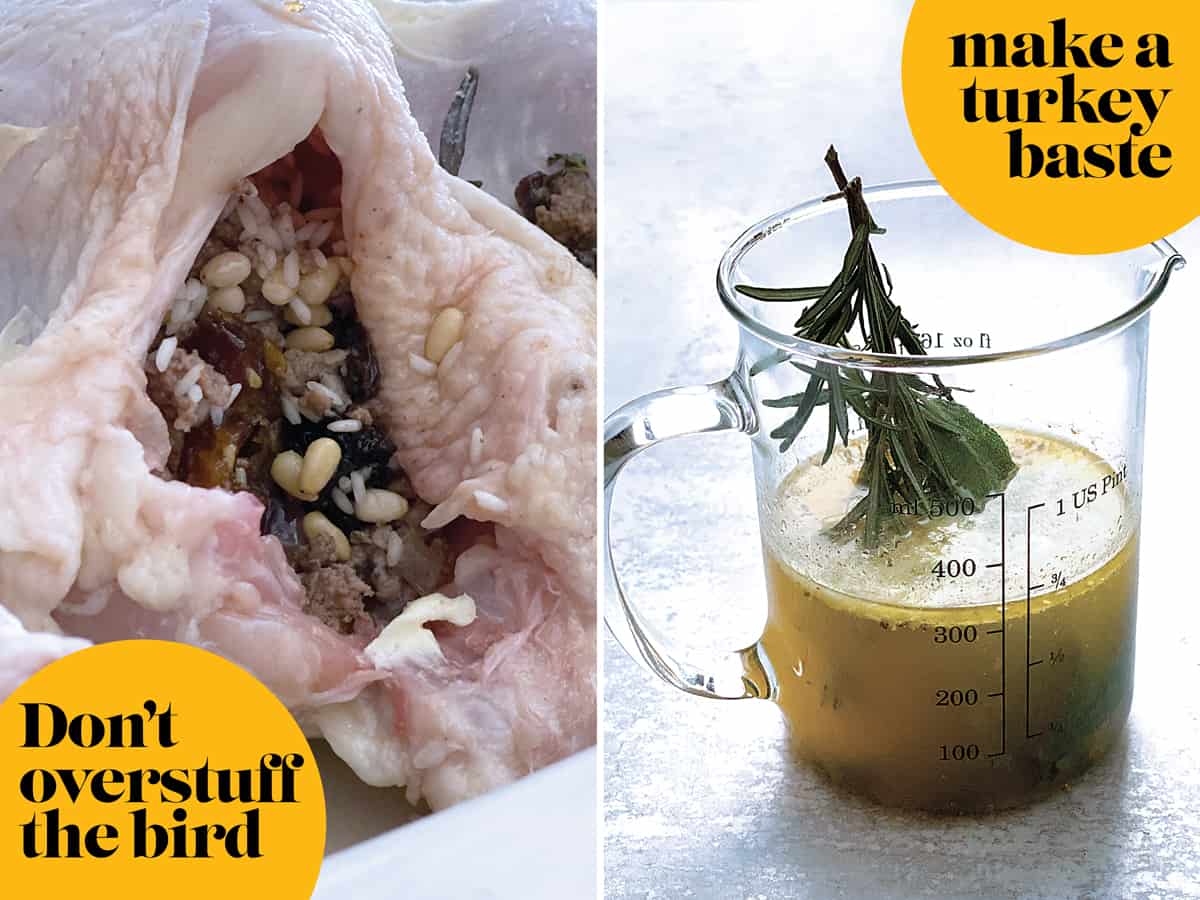
Step 4. Stuff and roast the turkey. Spoon the hot stuffing loosely into the neck cavity, folding the neck skin over the opening. Repeat with the larger cavity, leaving room for the stuffing to expand as it cooks. Tie the turkey legs together securely with kitchen twine. Roast according to your turkey’s weight and your preferred method, basting lightly every 15 minutes after the first hour of cooking. Always apply the baste warm.
Stop basting during the final 30 minutes to allow the skin to become golden and crisp.
When the turkey is ready, carefully scoop out the stuffing and transfer it to a serving bowl. Serve warm, it’s heavenly alongside the juicy roast.
This batch fills a 15–20 lb (7–9 kg) bird. Roasting something smaller, like the 10–12 lb (4.5–5.5 kg) bird in our herb butter turkey? Use about two-thirds of the stuffing and bake the rest separately as a side.
Pro Tip: Leftovers = opportunity. Extra stuffing becomes pure gold when baked into these cozy leftover pies with puff pastry.
Stuffing & roasting tips
- Stuff the turkey while the stuffing is still hot. This helps the filling reach a safe temperature faster and ensures it cooks evenly inside the bird. Get the bird into the oven right away once it’s stuffed, and never stuff a turkey ahead of time and refrigerate it.
- Don’t overstuff. Spoon it in loosely — about ¾ cup per pound of turkey. This matters more with rice than with bread stuffing, because the grains swell as they absorb the baste. A loosely filled turkey also cooks more evenly. If you have extra stuffing, cook it separately in a small baking dish. Before baking, drizzle a few tablespoons of the baste and a splash of broth over it for extra flavor.
- Baste often. This is key. Every 15 minutes, spoon or brush the baste generously over the turkey. It keeps the meat juicy and helps the rice inside the stuffing cook properly. If the rice ever comes out underdone, it usually means there wasn’t enough moisture — basting often solves that.
- Choose the right rice. I recommend white rice for this recipe. Avoid brown or wild rice, which require longer cooking times. If you’re making the stuffing separately on the stovetop, feel free to use your favorite variety — you’ll have more control over the texture.
- The meat goes in cooked. The sausage and beef are browned before they ever reach the bird, which is exactly what food safety guidance calls for with any meat stuffing.Check the stuffing, not just the bird. The centre of the stuffing should reach 74°C / 165°F, the same temperature as the thigh. Use a thermometer — it’s the only reliable way to tell.
Storage and reheating
- If the stuffing was cooked inside the turkey, scoop all of it out of the cavity before refrigerating. Don’t store the bird with stuffing still inside.
- Store any leftover stuffing in an airtight container in the refrigerator for up to 3 days.
- To reheat, transfer to a small baking dish, add a splash of broth, cover with foil, and warm at 350°F / 180°C for about 15–20 minutes.
- You can also freeze the stuffing for up to 3 months. Thaw overnight in the fridge, then reheat as above.

FAQs about Greek stuffing
Greek holiday desserts



Greek holiday traditional recipes

Cooked it? Rate it!
If you tried this recipe, I’d love to know how you liked it — drop a comment below or tag me on Instagram @thegreekfoodie__.


Greek Turkey Stuffing
Equipment
- A large saute pan.
Ingredients
This stuffing is good for a 15–20 lb (7–9 kg) turkey. For a smaller 10–12 lb (4.5–5.5 kg) bird, use about two-thirds.
- 1 lb ground sausage, (450 g)
- 1 lb ground beef, (450 g)
- 6 tbsp butter
- 1 red onion , diced
- 1/2 cup rice
- 1 cup boiled chestnuts , halved
- 1/2 cup raisins
- 5-6 dates , diced
- 5-6 prunes , diced
- 1/2 cup pine nuts
- 2-3 cloves
- 1/2 cup broth, chicken or veg
- fresh sage leaves, roughly chopped
- 1 teaspoon salt, or to taste
- ½ teaspoon freshly ground pepper, or to taste
for the turkey baste
- 2 cups chicken broth
- 6 tablespoons butter melted
- 3 oranges, juiced
- 3 lemons, juiced
- 1 rosemary sprig
- 1 thyme sprig
- 1 sage sprig
- sea salt
- freshly ground pepper
Instructions
- In a large pot, add the butter. In medium heat, add the onion and chopped sage leaves sauté until the onion is soft and fragrant. Add the ground beef and sausage. Break with a spoon any large pieces. Brown ground meat all over, 3-4 min.
- Add the rice. Stir well. Sauté mixture for 1-2 min. Add 1/2 cup broth, the raisins, chestnuts, dates, prunes, cloves and the pine nuts. Stir mixture well gently. Season with salt and fresh ground pepper. Remove from heat.
Prepare the turkey baste.
- Mix orange and lemon juice with the chicken broth. Add the melted butter. Season with a pinch of salt and fresh ground pepper. Stick the rosemary, thyme and sage sprigs in the baste to infuse it while you cook the turkey. Keep it in a warm surface.
Stuff the turkey and roast
- Spoon your stuffing into the neck cavity, very loosely. Fold neck skin over opening.
- Stuff the large cavity of the turkey loosely, stuffing will expand as it cooks.
- Using kitchen twine cross the legs together and tie them securely.
- Lightly baste the turkey every 15 minutes after the first hour of cooking. Apply the baste warm to the turkey. Stop basting during the last 30 minutes of cook time.
- When turkey is ready, empty the stuffing in a serving bowl and serve. Enjoy!
Notes
- Don’t overstuff the bird. A loosely filled turkey cooks evenly and stays moist.
- Bake leftover stuffing separately with a few tablespoons of turkey baste and a splash of broth.
- Baste often — every 15 minutes — to keep the turkey juicy and the rice perfectly cooked.
- Use white rice only. Brown, wild, or long-cooking rice won’t soften properly inside the bird.
- To cook the stuffing on the stovetop, sauté as directed, then cover and simmer on very low heat. Add broth as needed, and don’t over-stir toward the end.
- You can follow your own turkey recipe or brine — just use this stuffing and baste for that signature Greek flavor.
- Cook time depends on your bird. The stuffing itself takes about 15 minutes on the stovetop. Total time depends on the turkey — roughly 15 minutes per pound at 180°C once stuffed. Always confirm with a thermometer.
- Remove all stuffing from the cavity before refrigerating leftovers.
Nutrition

Ekplitikos!
Hi there. I was wondering if you can just make the stuffing without cooking it in the turkey? We always cook our turkey on the bbq and can’t cook it stuffed. This stuffing sounds amazing and I definitely want to try it out.
Vicki
Hi Vicky!
You can cook the stuffing on the stovetop, I do it all the time.
I am mentioning it in the post. Instead of stuffing the turkey, sauté everything, then cover and let it simmer. Add a little stock every once in a while; you need to have enough liquid for the rice to cook. Let it cook slowly on low heat and don’t stir too much at the end so it keeps its texture. I had a relative overmixing it one year and it turned out mashed 🙂 It still tasted good but I love the different textures of the chestnuts, dates, pinenuts, etc.
Let me know how it came out.
Happy Thanksgiving!
x Jenny
We never stuffed the turkey but serve it as side dish casserole and it’s a big hit. I make extra to freeze and omit the dried fruit but add pecans as well as the usual ingredients. The extra broth is good if you freeze and don’t cook the rice as it freezes well Enjoy!
That’s great to hear Mia! I think it works great cooked on the stovetop. My American mother in law makes it that way too, and it is great as a casserole. Thans so much Mia! x Jenny
I’ve never made a turkey in my life — my dad or my brother do that — and we’ve don’t stuff it, but I’m a HUGE fan of dressing and I’m totally going to make this. I don’t even want to wait for Thanksgiving — maybe just for a random Tuesday night supper with horiatiki?
Hi Angela!
I hear you! I am the same; I can eat this any day of the week. I have also made it a filling for pie, with a puff pastry on top and bottom. It was so good!
It will also go well with the greek lettuce salad. Check it out https://thegreekfoodie.com/traditional-greek-lettuce-salad-maroulosalata/
Thanks so much! Enjoy your dressing!
x Jenny
Just wondering why rice and not bread stuffing? If you use bread is the process different
Hi Georgia,
Rice is what we always use at home; greek stuffing does not have bread usually. I have never tried it. I think you could skip the rice, cook the stuffing halfway on the stovetop, mix with bread and then pour everything in a large buttered baking pan, cover with buttered foil, and bake for 30 minutes. Uncover and bake until you like the consistency of the top.
Let me know what you decide!
Happy Thanksgiving!
x Jenny
Can I make this stuffing on stovetop , refrigerate and serve4 days later on Thanksgiving?
Hi Cindy!
You can certainly make it on the stove top. I am not sure it will keep in the fridge for four days, we eat our leftover stuffing in a couple of days tops. I suggest you freeze it and take it out the morning of. Let it thaw and warm up in low heat without stirring too much (it will get mushy). You want to keep the texture intact as much as possible.
Let me know what you did and how it came out!
Happy Thanksgiving! x Jenny
I love this stuffing, but I’m not a fan of dates or prunes, so I added dried cranberries instead and it was wonderful. I also added a dash of cinnamon & nutmeg because Greeks add that to almost all their ground beef dishes. Haha! 🙂
That’s great Anna!
Yes, nutmeg suits this, and its true we Greeks do use it almost everywhere!
So glad you liked the stuffing!
Happy Thanksgiving to you and your family!
x Jenny
This Greek turkey stuffing recipe is absolutely delightful! The combination of savory sausage, sweet dates, and aromatic spices creates a unique flavor profile that’s perfect for the holiday season. I love how the step-by-step instructions make it approachable for both experienced and novice cooks. The addition of the turkey baste recipe is a game-changer, ensuring a juicy and flavorful bird. Pairing it with sweet potato gratin is a fantastic suggestion for a complete festive meal. This recipe is truly a must-try for anyone looking to elevate their Thanksgiving or Christmas feast! 🦃🍂✨
Thank you so much Anna! Happy Holidays! x Jenny
I am preparing this now for Easter Sunday dinner tomorrow (April 20, 2025) as a side dish rather than stuffing the turkey, and will be making the turkey baste as well.
My house smells heavenly right now, and a taste test confirmed that this stuffing is heavenly delicious.
We are also having ham, Greek lemon potatoes, lemon butter green beans, and Greek salad…it’s going to be a very delicious Easter!!! 😋
What a delicious Easter dinner! I love that you are making the stuffing for Easter, no reason to keep it only for Christmas holidays, it’s too good!
Hope you had a wonderful Easter!
Thank you so much, x Jenny