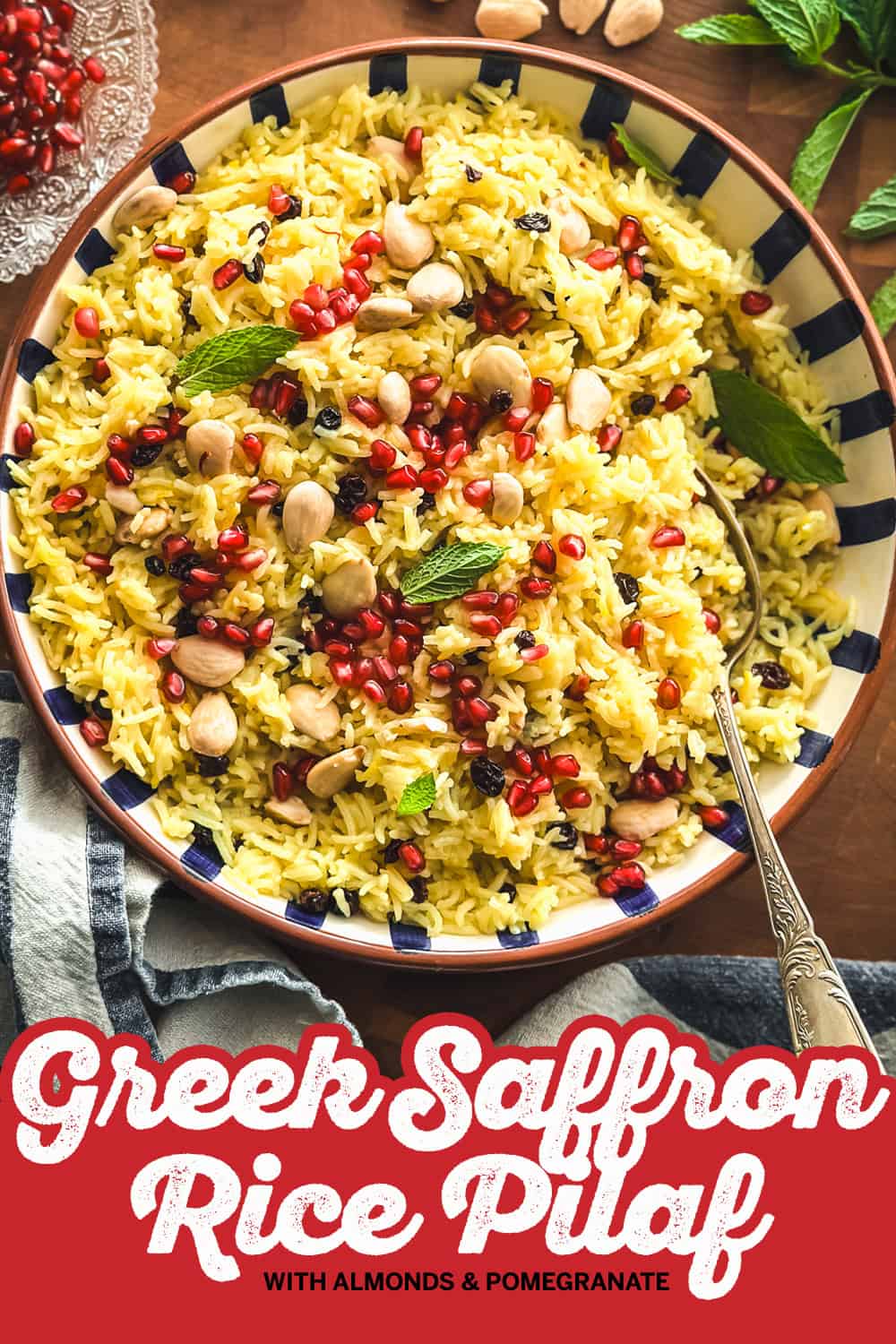

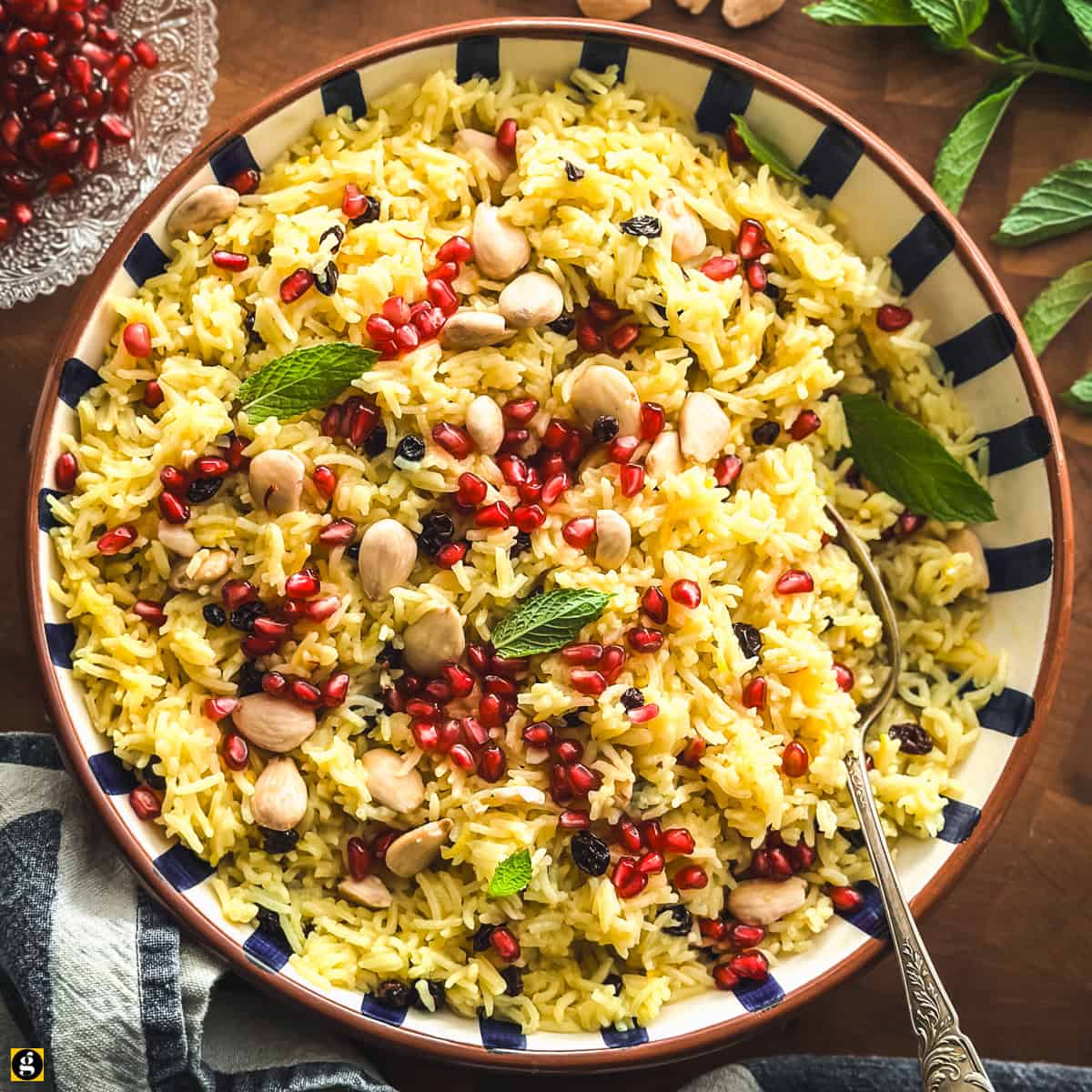
This Greek rice pilaf, or pilafi, is a dish from my grandmother Evgenia’s Politiki kitchen, the cooking of the Greeks of Constantinople and Asia Minor. In her kitchen, a good pilafi had one job: every grain was separate, it wass glossy with butter, and it was never sticky.
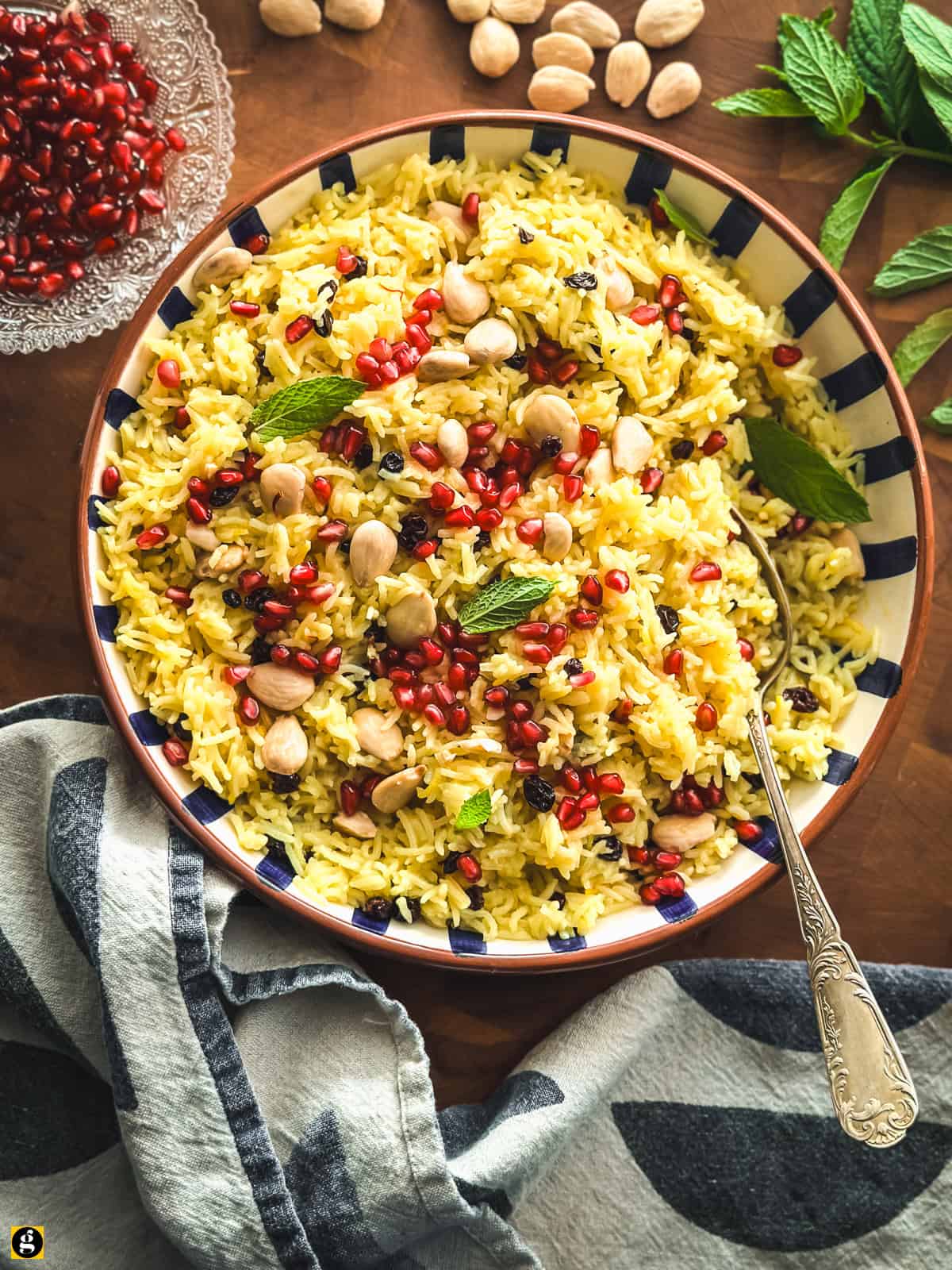
The rice bakes in a covered pot with butter, chicken stock, a cinnamon stick and Greek saffron from Kozani, which turns it a deep gold. Currants (Corinthian black raisins) plump in the steam. Right before serving it gets a handful of toasted almonds and a shower of pomegranate seeds, so there’s crunch, sweetness and a little sour in every spoonful.
It’s hands-off (the oven does the work) and it feeds a table of six to eight. Serve it with roast chicken on a Tuesday or next to the turkey on a feast day.
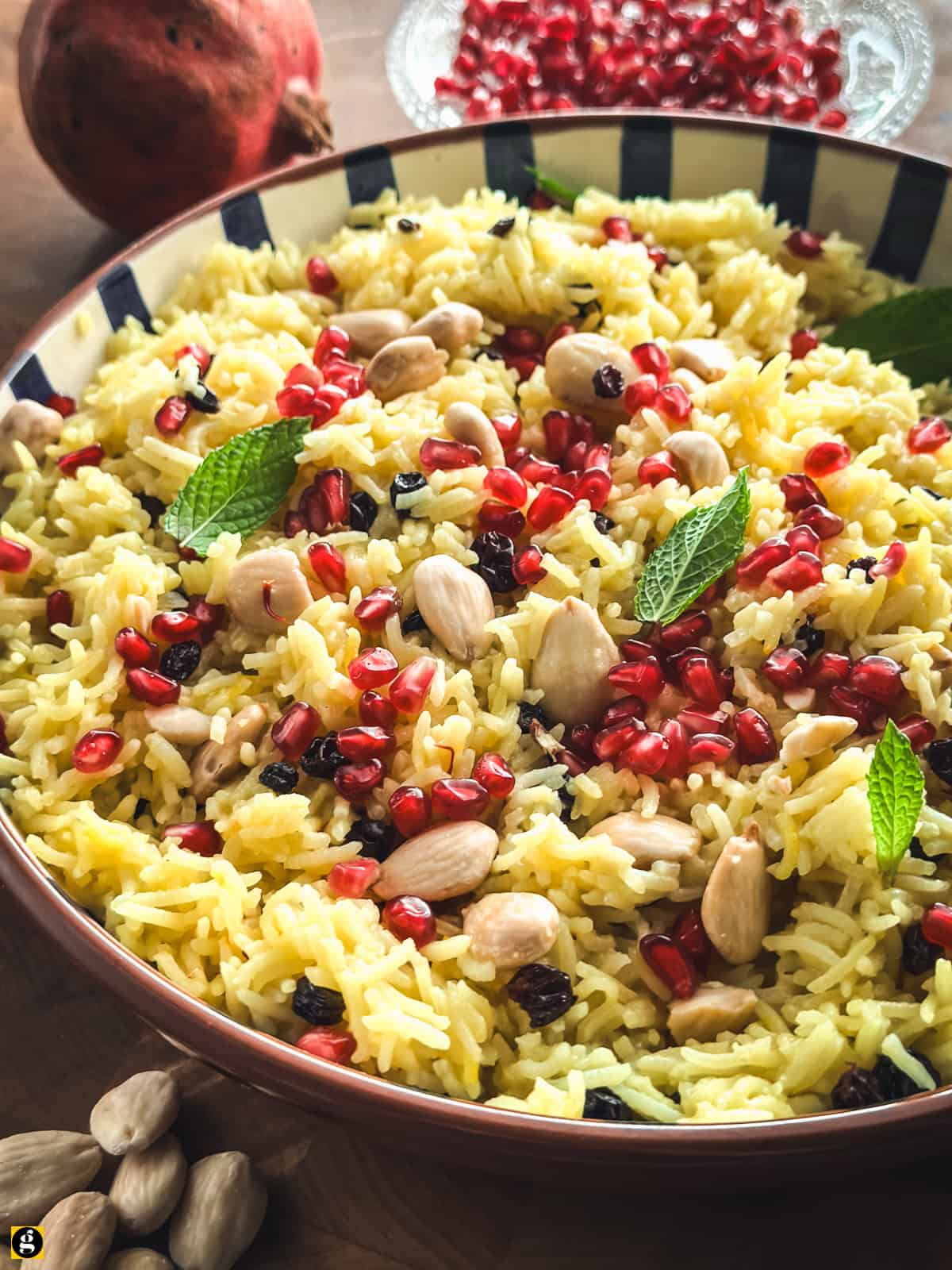
Why you will love this Greek rice pilaf
What is pilafi?
Pilafi (πιλάφι) is the Greek name for pilaf: long-grain rice that is first coated in hot fat, then cooked in a measured amount of seasoned liquid until the liquid is fully absorbed and the grains stay separate. The word traveled from Persian (polow) through Ottoman Turkish (pilav) into Greek, and the dish traveled with it, across the whole of the eastern Mediterranean.
What makes pilafi different from simply boiled rice is the method. The fat goes in first, the liquid is measured rather than drained, and the pot stays covered so the rice finishes in its own steam. In Greece, a plain pilafi made with butter and stock is the everyday version. Festive versions add dried fruit, nuts and spices.
Pilafi in Asia Minor and at Evgenia’s table
For the Greeks of Constantinople and Asia Minor, pilafi was never a side thought. In the Politiki cuisine, rice was cooked in butter, not olive oil, and the measure of a cook was whether the grains came out spyroto: loose, whole and separate. A sticky pilafi was a small household scandal.
When the Greek communities of Asia Minor came to Greece after 1922, and the Greeks of Constantinople in the decades that followed, they brought that standard with them. So much of what Greeks now think of as festive cooking, from spiced rice stuffings to pilafi dressed with nuts and dried fruit, carries their fingerprints. My grandmother Evgenia cooked in that tradition, and this pilafi is built on her rules: butter first, hot liquid, a tight lid, and no stirring once it’s in the oven. The flavors are the ones her table leaned toward, warm spice and fruit, finished with Greek ingredients I love.
Why Kozani saffron
Saffron has deep roots in the Aegean: a Bronze Age fresco from Akrotiri on Santorini shows young women gathering crocus flowers. Today Greece’s saffron comes from Kozani in western Macedonia, where Krokos Kozanis holds Protected Designation of Origin status. It’s harvested by hand every autumn, and Kozani’s merchants were trading it into central Europe centuries ago. It’s intensely coloring and floral, and half a gram is enough to turn a whole pot of rice gold. Any good-quality saffron threads will work, but if you can find Kozani saffron, use it.
Pomegranate, for abundance
In Greece the pomegranate stands for abundance and good fortune. It’s the fruit smashed on the doorstep for luck on New Year’s Day. My mother always kept two or three of them in a big decorative bowl on our coffee table, not to eat, just sitting there all season for good fortune. Scattering the seeds over a festive pilafi is the same wish, in a form you can eat.
Here is what you need
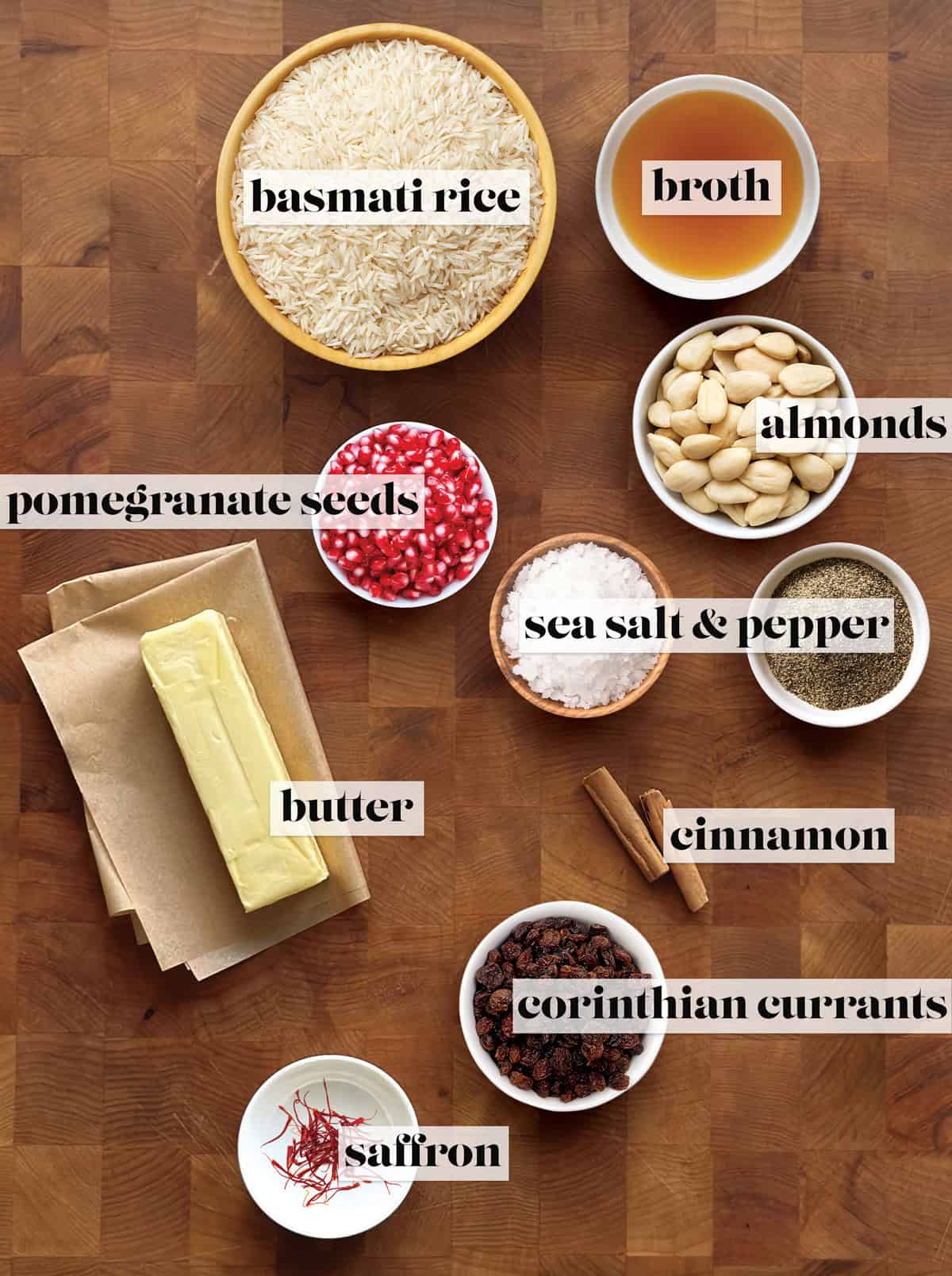
Basmati rice. Long, slender grains that stay separate and never turn creamy, which is exactly what a pilafi needs. Rinse it until the water runs clear and drain it well before it goes into the butter. Another good long-grain white rice will work, but basmati is what I use here.
Corinthian currants. Despite the name, these aren’t the berry you find in jam. They’re tiny dried grapes — a raisin, from a small seedless variety grown in Greece since antiquity. In Greek they’re korinthiaki stafida, literally the Corinthian raisin, and in the US and UK you’ll see them labelled Zante currants (the English word “currant” comes from Corinth). They’re smaller, darker and more concentrated than an ordinary raisin, so they scatter evenly through the rice instead of sitting in it in lumps. If you can’t find them, small dark raisins are the closest swap; sultanas or golden raisins are milder and a little sweeter, and chopped dried apricots or dried cranberries both work if you’d like more tartness. Chop anything much larger than a currant so it stays spoon-sized.
Chicken stock. Homemade is best; a good boxed low-sodium stock is fine. Use vegetable stock for a vegetarian pilafi.
Butter, and good butter. The butter is the flavor here, so use one with a high fat content (European-style, 82% or more). Traditionally this pilafi is made with Greek sheep’s-and-goat’s-milk butter, the jarred kind we keep for kourabiedes, sold melted but set solid in the jar. It’s rich, nutty and slightly tangy, and it’s what gives the dish its Politiki character. If you can’t find it, a good unsalted butter makes a lovely pilafi.
Saffron threads. One 0.5 g packet. Kozani saffron if you can find it.
Cinnamon stick. One small stick, for warmth, not sweetness.
Almonds. Coarsely chopped, then toasted in the oven while the rice finishes.
Pomegranate seeds. Fresh arils, added at the very end so they stay juicy.
Salt and freshly ground pepper. Start with 1 teaspoon of fine sea salt in the liquid, taste it, and add more only if it needs it. If your stock is a salted boxed one, start with less.
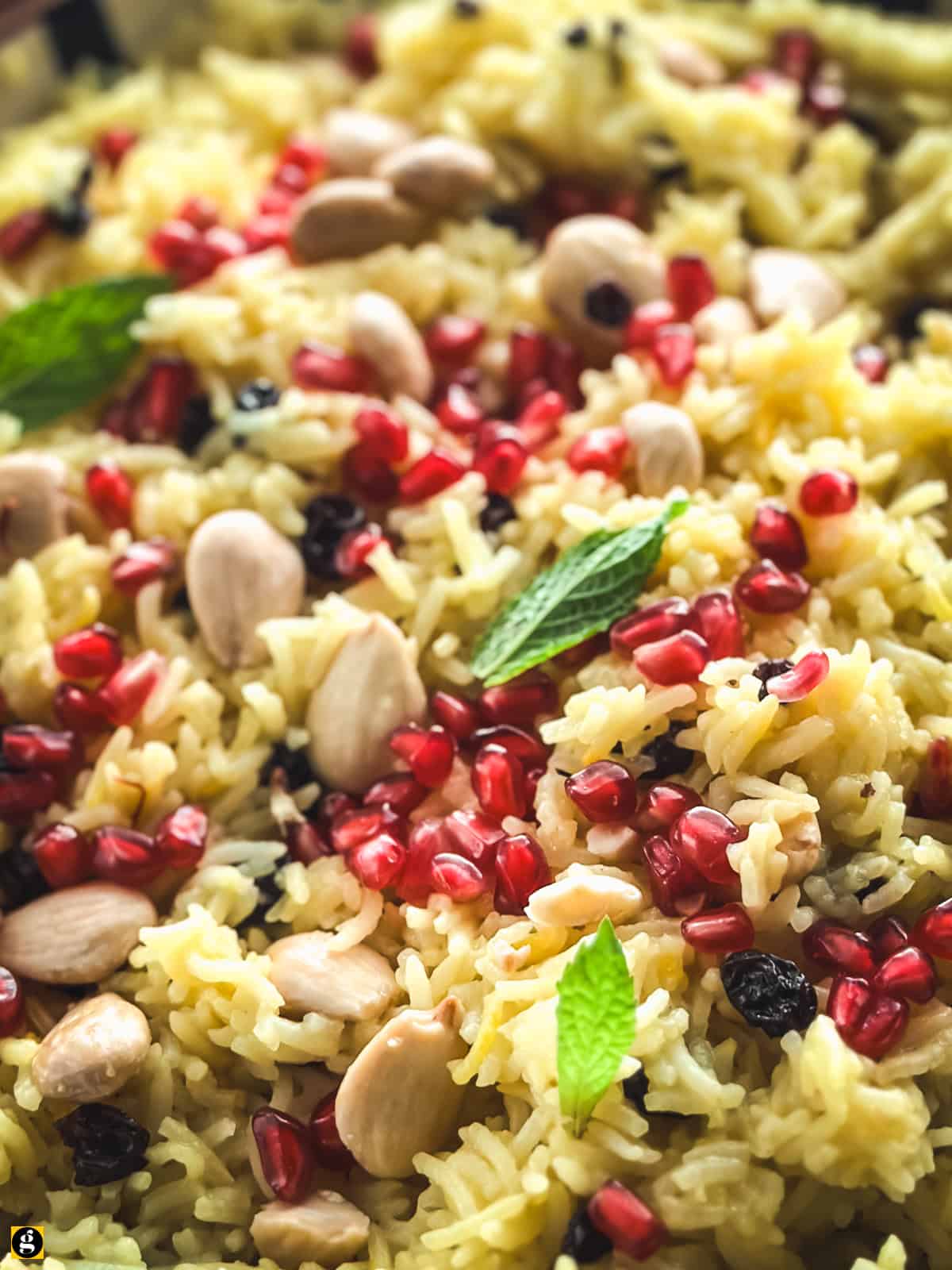
Step by step
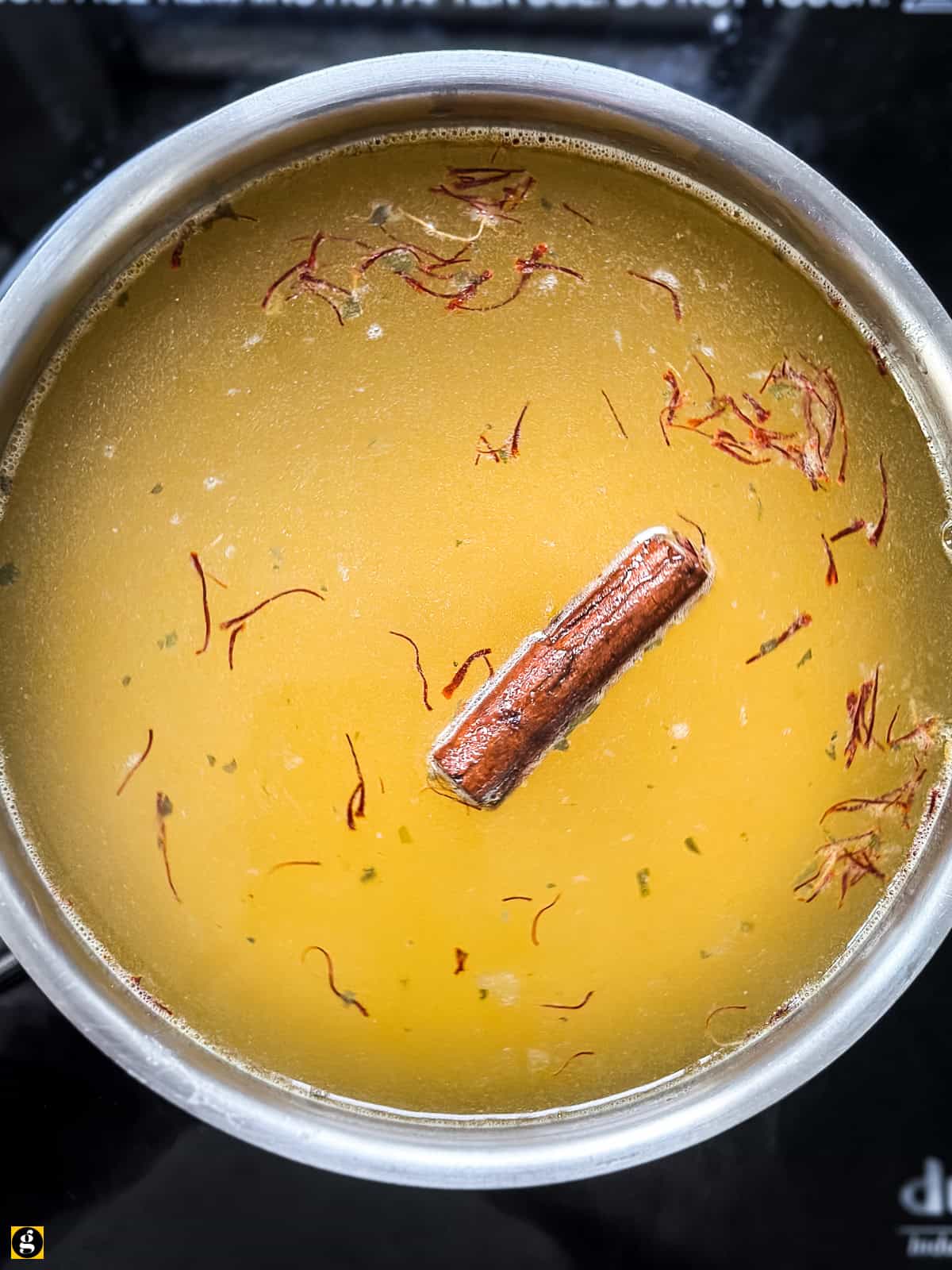
STEP 1. Warm the stock. In a saucepan, heat the chicken stock and water with the saffron, the cinnamon stick and the salt until steaming.
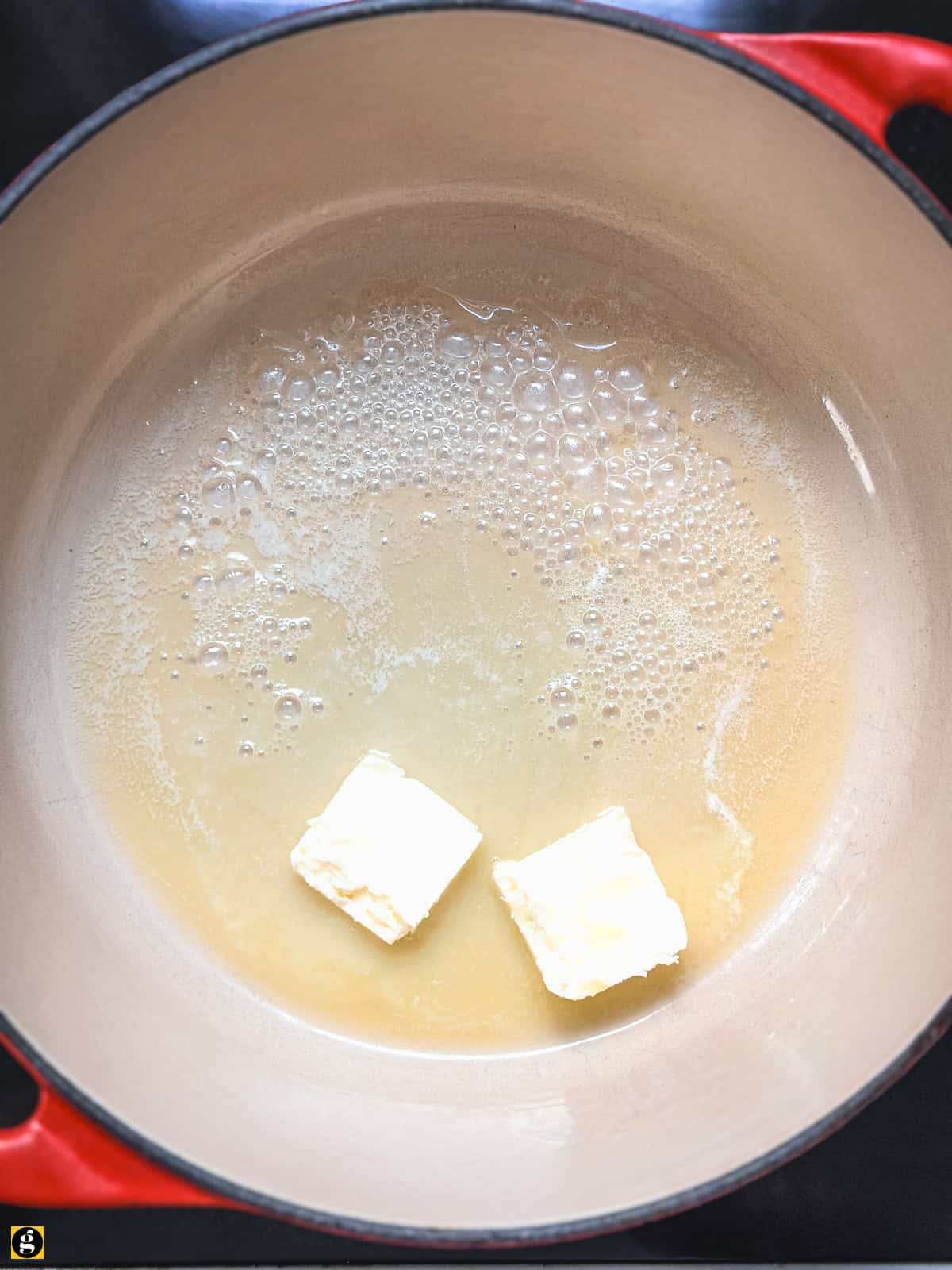
STEP 2. Heat the pot and butter. Preheat the oven to 180°C / 350°F fan (200°C / 400°F conventional). Put a large lidded baking dish, gastra or Dutch oven in the oven with the butter inside, so it melts as the oven heats.
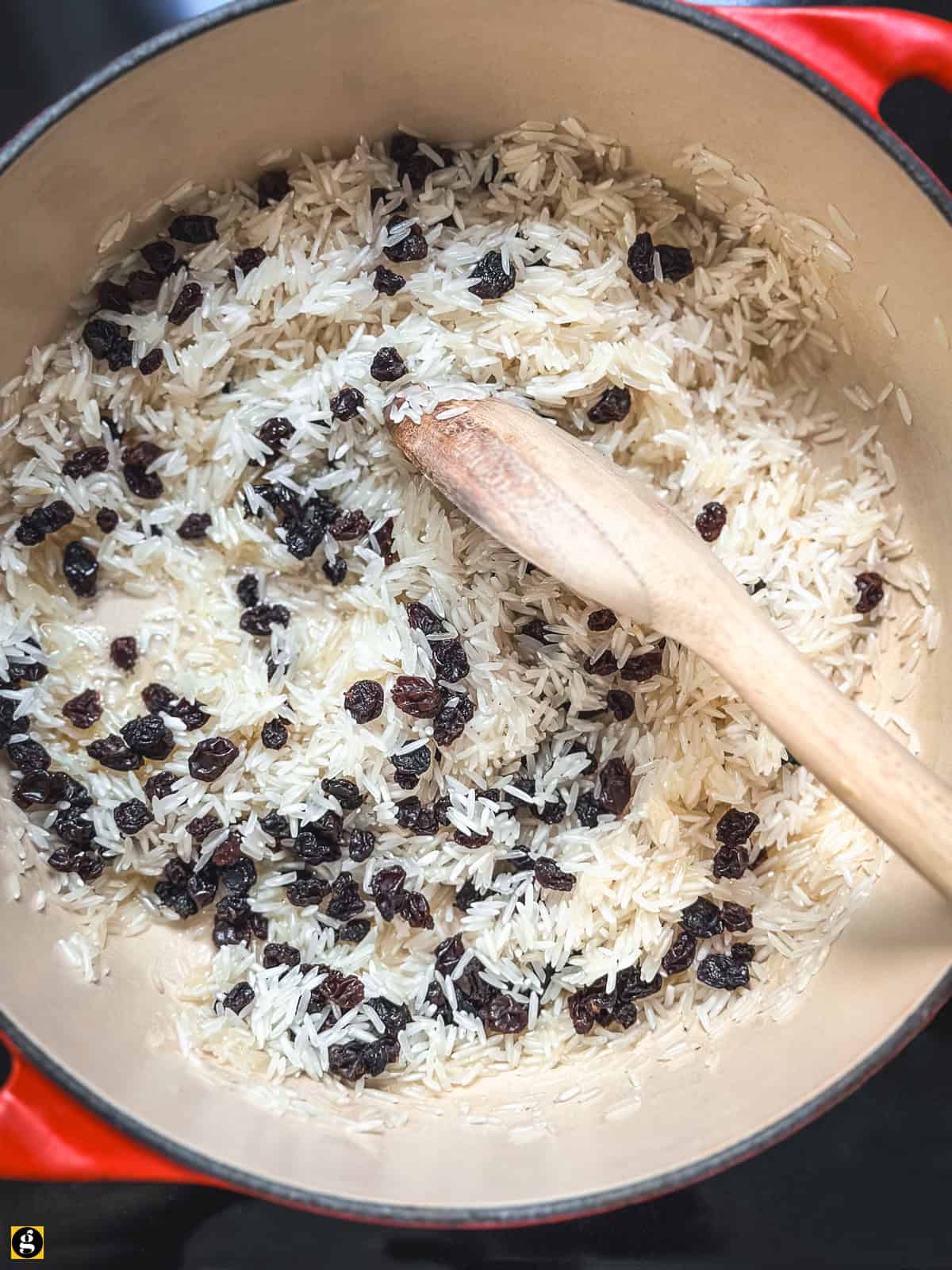
STEP 3. Coat the rice. Rinse the basmati in a sieve until the water runs clear, then drain it well. Once the butter has melted, carefully take the pot out (oven mitts; it’s very hot). Add the rice and currants and stir until every grain is glossy with butter.
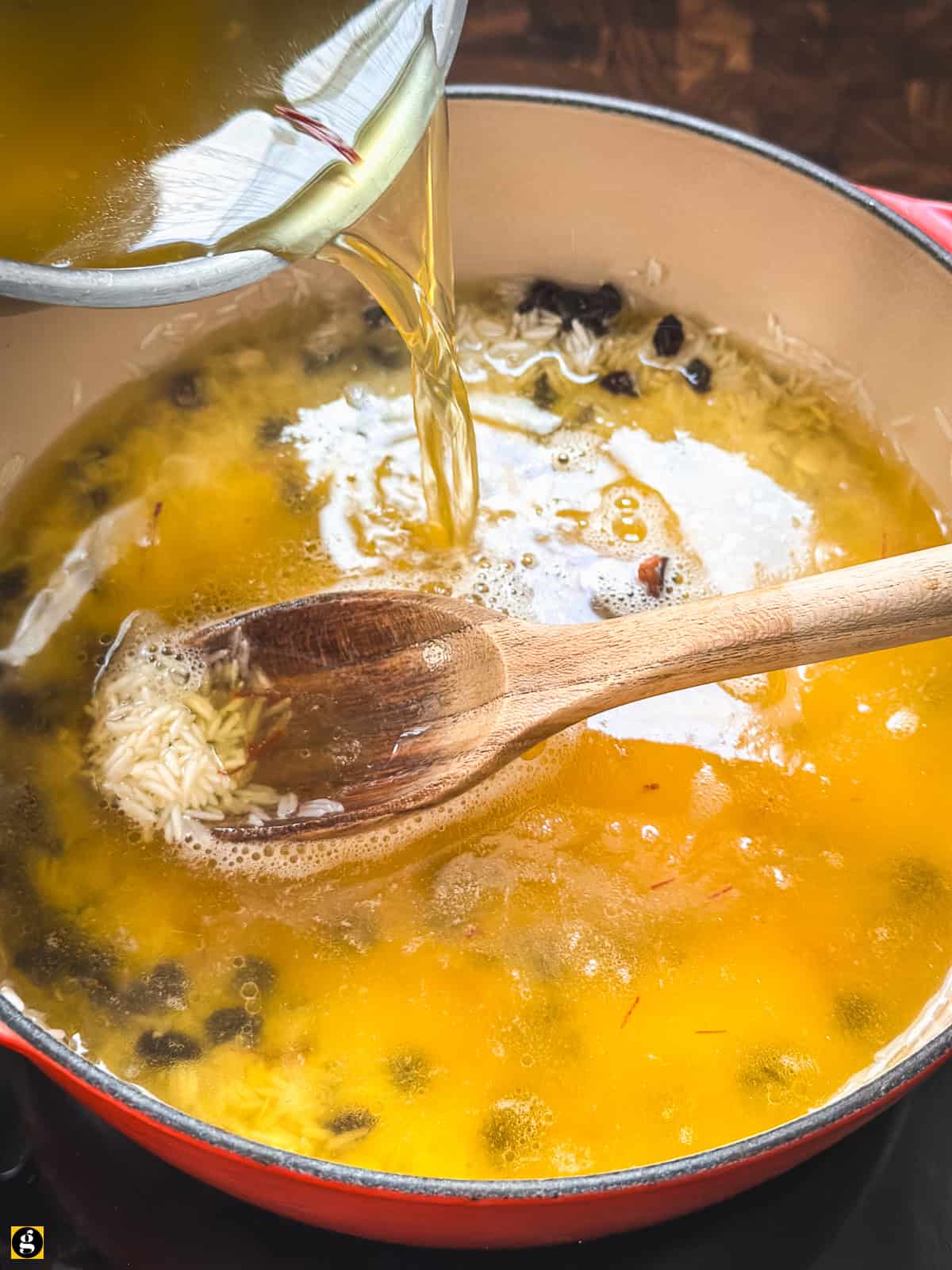
STEP 4. Add the liquid. Pour in the hot saffron stock, cinnamon stick and all.
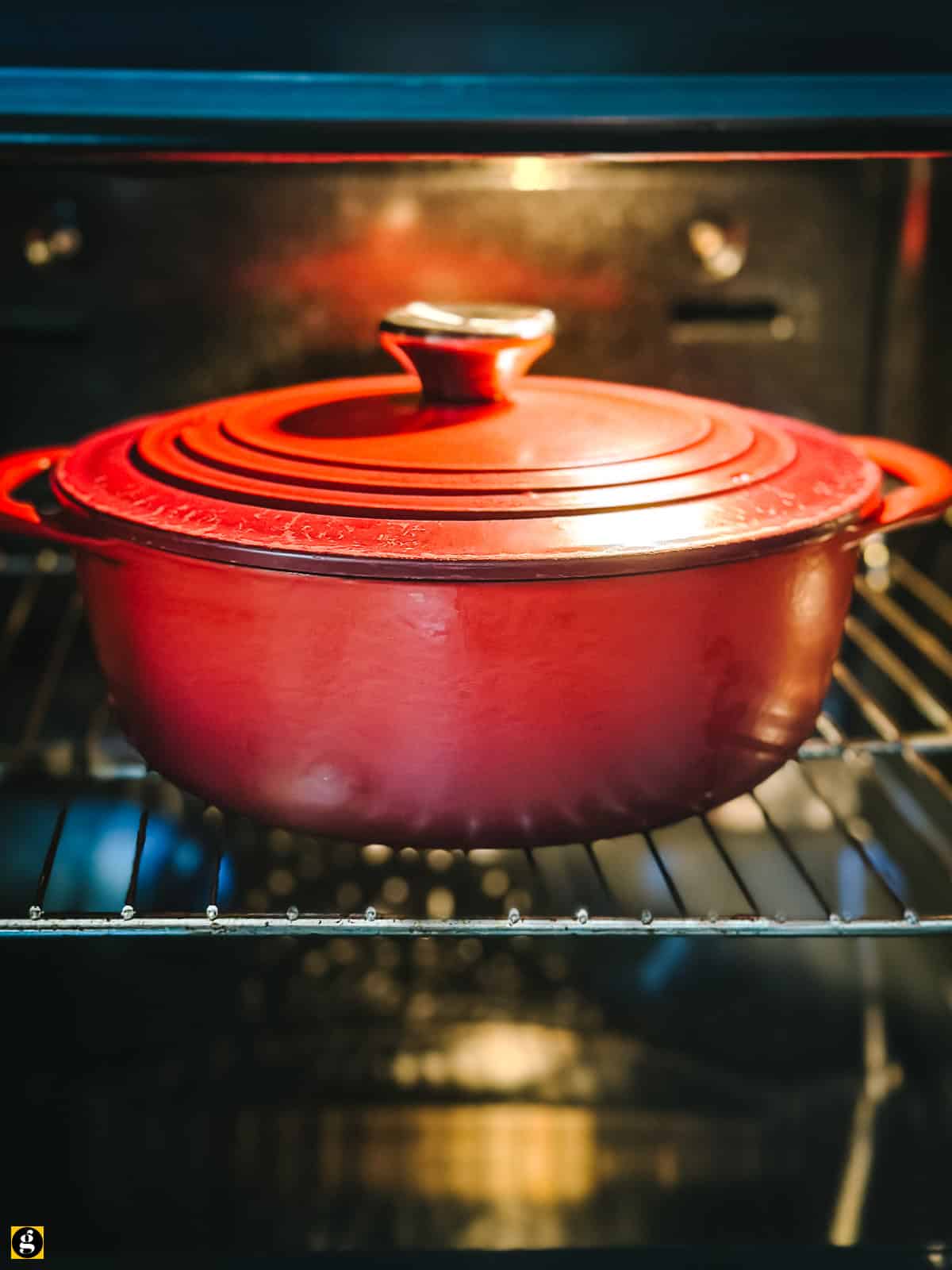
STEP 5. Cover and bake. Cover with the lid (or parchment and then a tight layer of foil if using a baking pan) and bake for 20–30 minutes, until all the liquid is absorbed. Rice batches vary, so start checking at 20 minutes.
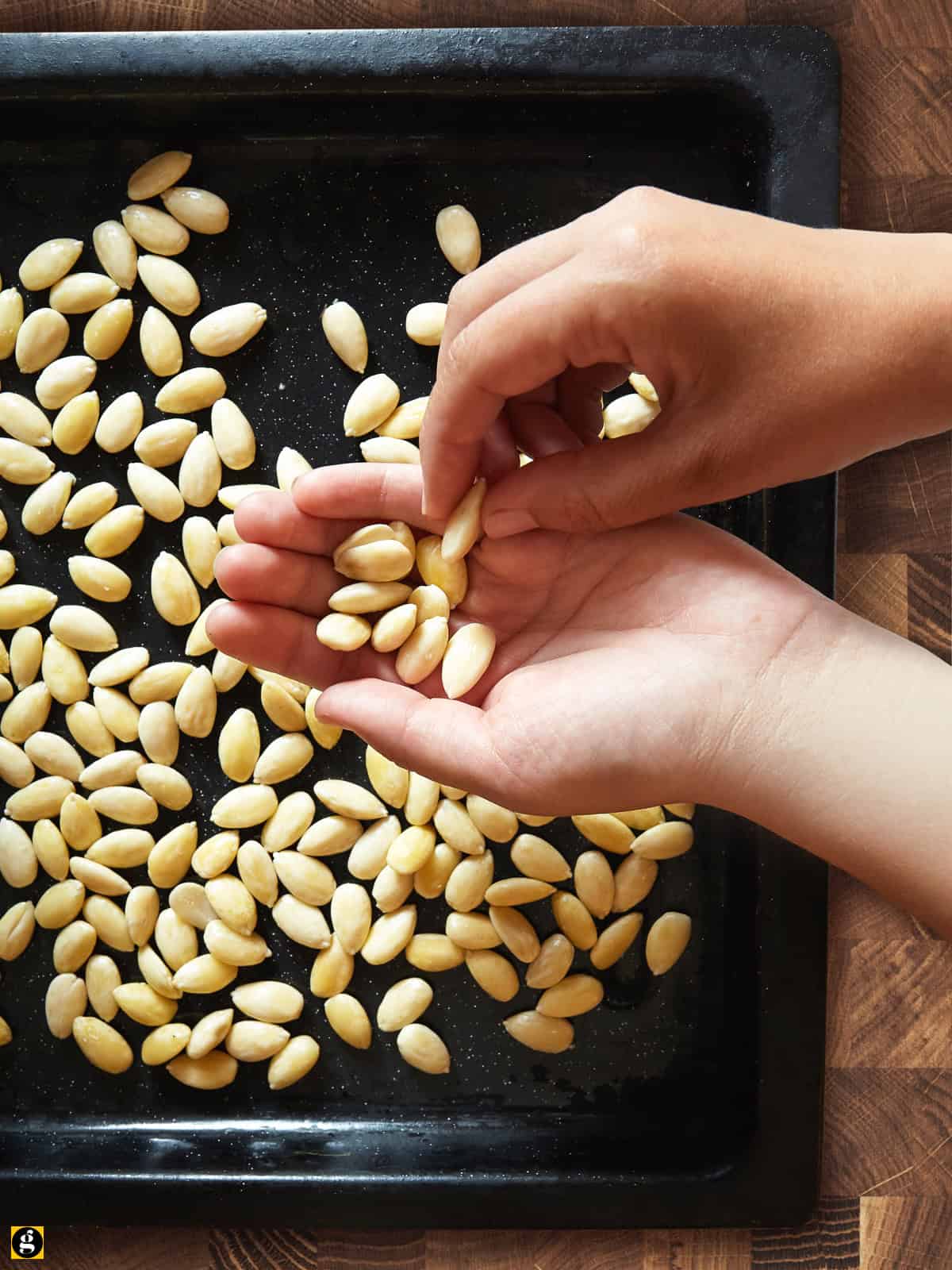
STEP 6. Toast the almonds. For the last 8–10 minutes of baking, spread the almonds on a small tray and toast them on another oven rack until golden. Watch them; they go from golden to burnt quickly.
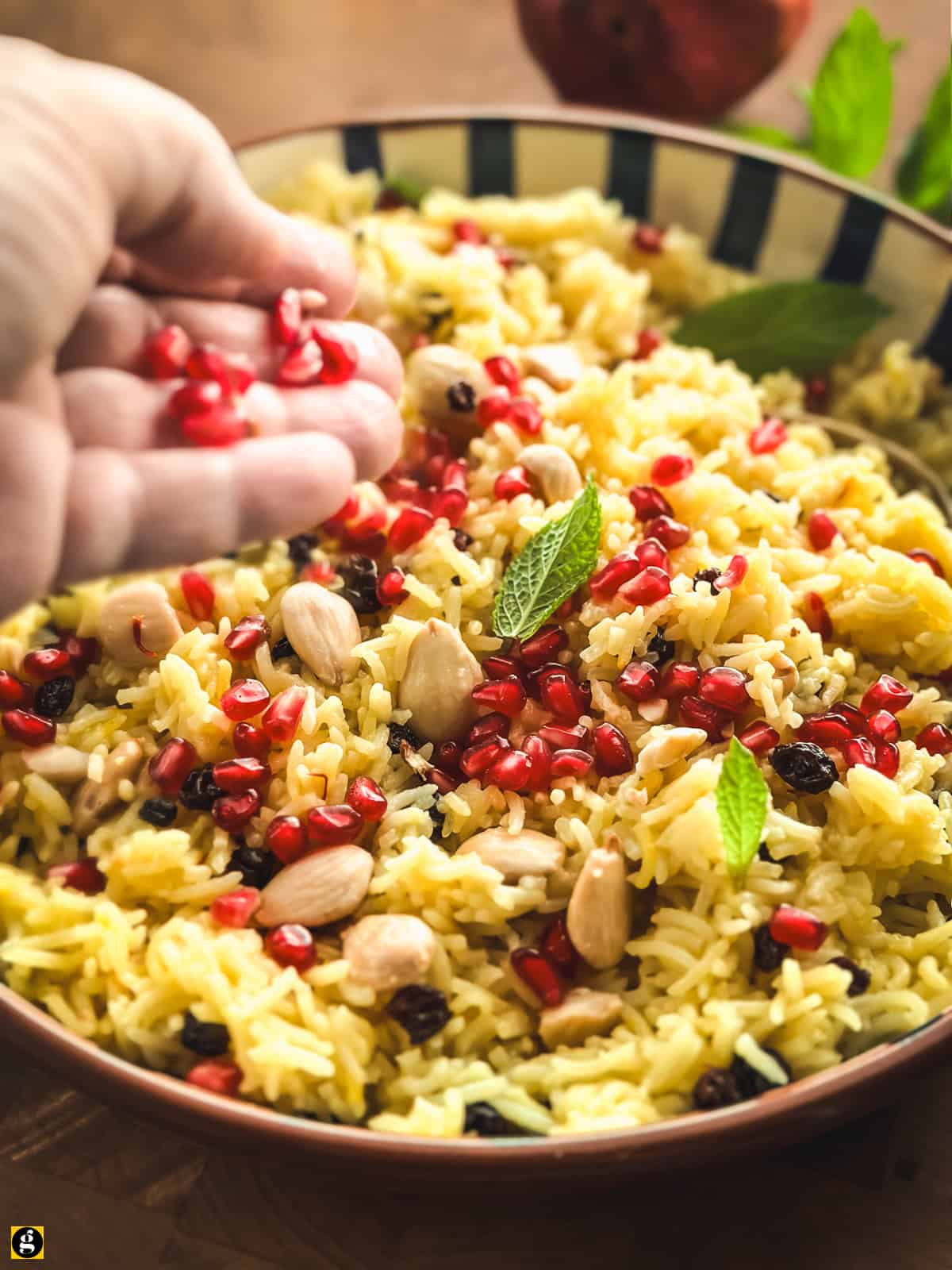
STEP 7: Finish and serve. Uncover the pilafi, remove the cinnamon stick and fluff gently with a fork. Scatter over the toasted almonds and pomegranate seeds and serve.
Tips for a perfect, grain-by-grain pilafi
- Rinse the rice, then drain it well. Rinsing washes off the loose surface starch that makes rice clump. Shake the sieve until the rice stops dripping so you’re not adding extra water to a measured amount of stock.
- Hot fat, hot liquid. Both the butter and the stock should be hot when they meet the rice. That’s what keeps the grains separate.
- Don’t stir once it’s in the oven. Stirring releases starch and makes pilafi sticky. Leave the lid on until you check for doneness.
- Seal it tightly. If you’re using a baking pan, parchment first, then foil crimped hard around the edges. Escaping steam means undercooked rice.
- Check early. Different rice batches absorb liquid at different speeds. If the rice is tender but there’s still liquid, give it 5 more minutes; if it’s dry but still firm, add a few tablespoons of hot stock and cover again.
- Toppings last. Almonds and pomegranate go on at the table so the nuts stay crunchy and the seeds stay bright.
Variations
Vegetarian: Use vegetable stock.
Pistachio pilafi: Swap the almonds for toasted pistachios (a nod to our pistachio baklava).
Pine nuts and currants: The classic Politiki pairing. Toast pine nuts in place of almonds.
Herb finish: A handful of chopped dill or mint just before serving.
Stovetop method
If the oven is busy, which it usually is on a feast day, pilafi cooks just as well on the stove. This is how I make it. Use a heavy pot with a tight-fitting lid, because the rice finishes in stored heat rather than over a flame.
- Melt the butter in the pot over medium heat. In a separate saucepan, heat the stock and water with the saffron, cinnamon stick, salt and pepper until steaming.
- Add the rinsed, well-drained rice and the currants to the melted butter. Stir for 2 to 3 minutes, until every grain is glossy and the edges look slightly translucent.
- Pour in the hot liquid and stir once to level the rice. Bring it to a full, rolling boil.
- Put the lid on, turn the heat off completely and leave the pot where it is. Set a timer for 15 minutes and don’t lift the lid. The rice cooks through in the stored heat of the pot and its own steam.
- Meanwhile, toast the almonds in a dry skillet over medium heat for 3 to 5 minutes, shaking often, until golden.
- Remove the cinnamon stick, fluff with a fork, and top with the almonds and pomegranate.
A note on hobs: I cook rice on a ceramic hob, where the ring stays hot long after you switch it off and keeps feeding heat into the pot. Induction works too, but there the heat is stored in the pot rather than the ring, so use a heavy one. On gas the burner goes cold the moment you turn it off, so the pot has to do all the work. If you cook on gas, use your heaviest pot, and if there’s still liquid in the bottom at 15 minutes, cover it again and give it 5 minutes on the lowest flame.
Make ahead, storage and reheating
Make ahead: Bake the pilafi up to a day ahead and keep the almonds and pomegranate separate. Reheat covered, then add the toppings just before serving.
Refrigerate: Cool the rice quickly (spread it out on a tray) and refrigerate within 1–2 hours of cooking. It keeps for 3–4 days in an airtight container.
Freeze: Up to 1 month, without the almonds and pomegranate.
Reheat: Sprinkle with a couple of tablespoons of stock or water, cover, and warm in a 160°C / 325°F oven (or covered in the microwave) until piping hot.
What to serve with pilafi
- Stews and braises: Pilafi is the classic partner for kokkinisto and for my braised short ribs.
- Roast chicken: Try it next to cinnamon chicken with sweet potatoes or Greek lemon chicken.
- Lamb: Slow-roasted Greek leg of lamb with pilafi is a Sunday table in itself.
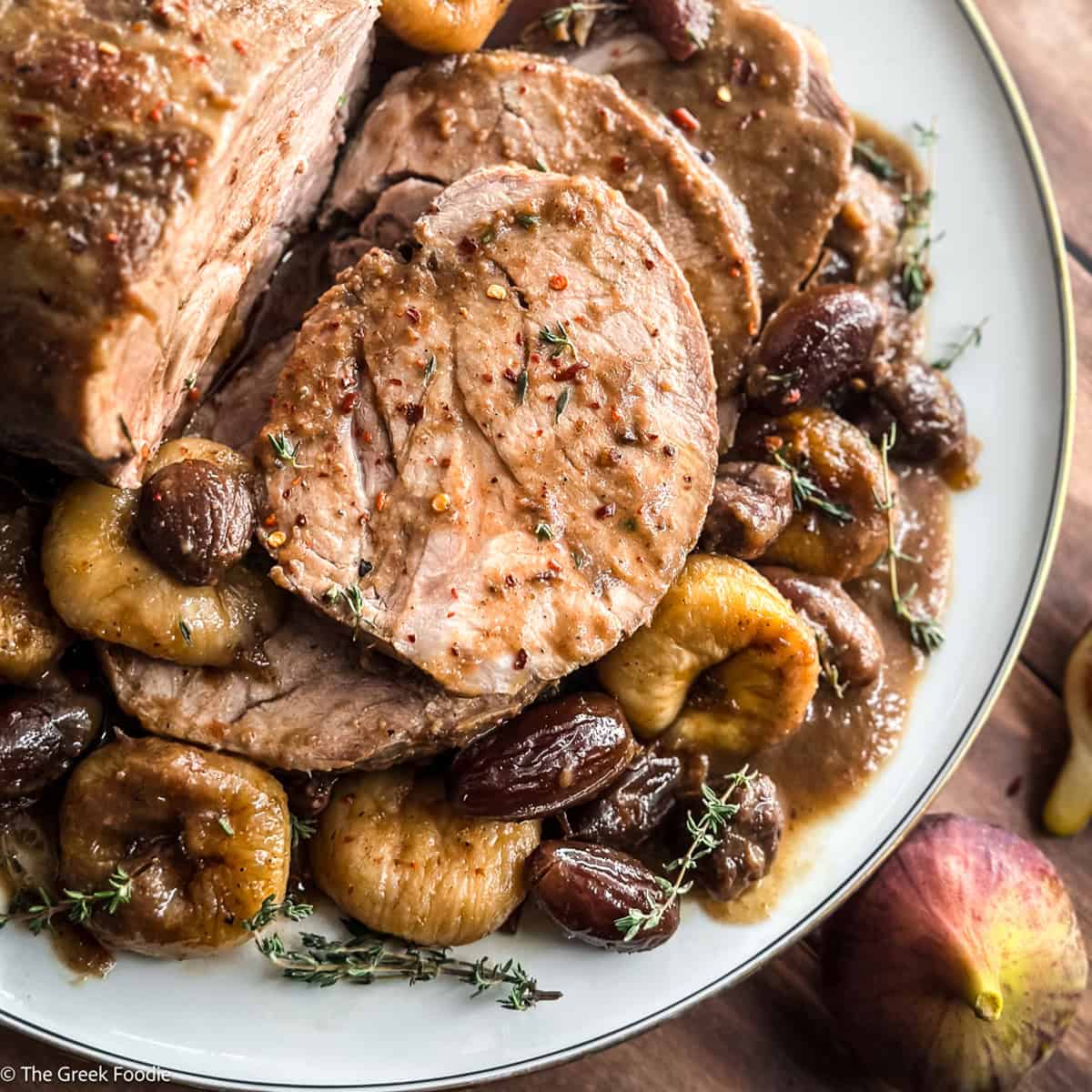
- For a feast: Serve it alongside the herb butter turkey, roasted turkey legs and thighs or the pork roast with figs and chestnuts.
In your glass
A fruity rosé stands up to the saffron and the sweetness of the currants. Look for one made from Grenache or, better still, Greek Xinomavro. The rosés of Amyndeon, a high plateau in western Macedonia near Kozani’s saffron fields, are made entirely from Xinomavro. If you prefer white, go for an unoaked Chardonnay with some body and plenty of fresh fruit.

FAQ
More Greek side dishes
Cooked it? Rate it!
If you tried this recipe, I’d love to know how you liked it — drop a comment below or tag me on Instagram @thegreekfoodie__.


Greek Saffron Rice Pilaf (Pilafi)
Equipment
- Large lidded baking dish, gastra or Dutch oven (about 5 qt / 5 L), or a deep baking pan with parchment and foil
- Saucepan
- Small baking tray
Ingredients
- 500 g basmati rice, about 2½ cups; rinsed and well drained
- ½ cup Corinthian (Zante) currants, about 75 g; tiny dried grapes, not the berry — or small dark raisins, sultanas, or chopped dried apricots
- 2 cups chicken stock, 500 ml; vegetable stock for vegetarian
- 100 g butter, about 7 tbsp; a good unsalted butter, 82% fat or more or sheep's-and-goat's-milk butter
- 0.5 g saffron threads, one packet; Kozani saffron if possible
- 1 cinnamon stick
- 2 cups water, 500 ml
- 1 teaspoon fine sea salt, plus more to taste; see notes
- freshly ground pepper
To finish
- 200 g blanched almonds, whole or coarsely chopped
- 1 cup pomegranate seeds, about 150 g
Instructions
- Preheat the oven to 180°C / 350°F fan (200°C / 400°F conventional). Place the butter in a large lidded baking dish or Dutch oven and put it in the oven while it heats, so the butter melts.
- Meanwhile, in a saucepan, heat the stock and water with the saffron, cinnamon stick, salt and pepper until steaming hot.
- Rinse the rice in a sieve until the water runs clear and drain it well. Once the butter has melted, carefully remove the pot from the oven. Add the rice and currants and stir well until every grain is coated in butter.
- Pour in the hot stock mixture, including the cinnamon stick. Cover tightly with the lid (or parchment, then a tight layer of foil) and bake for 20–30 minutes, depending on your rice, until all the liquid is absorbed.
- During the last 8–10 minutes of baking, spread the almonds on a small tray and toast them on another rack until golden.
- Uncover the pilafi, remove the cinnamon stick and fluff gently with a fork. Top with the toasted almonds and pomegranate seeds and serve.
Notes
Nutrition