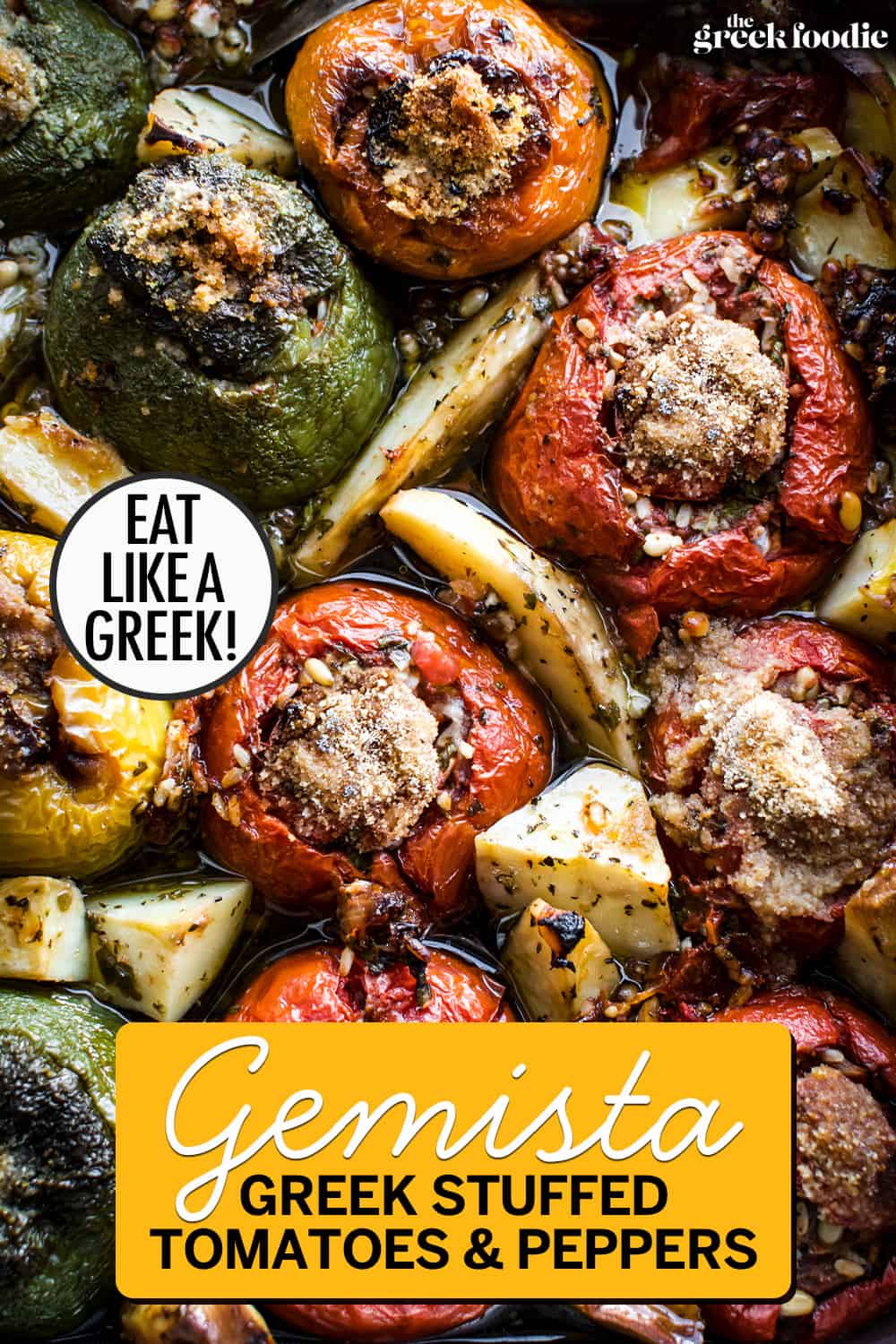

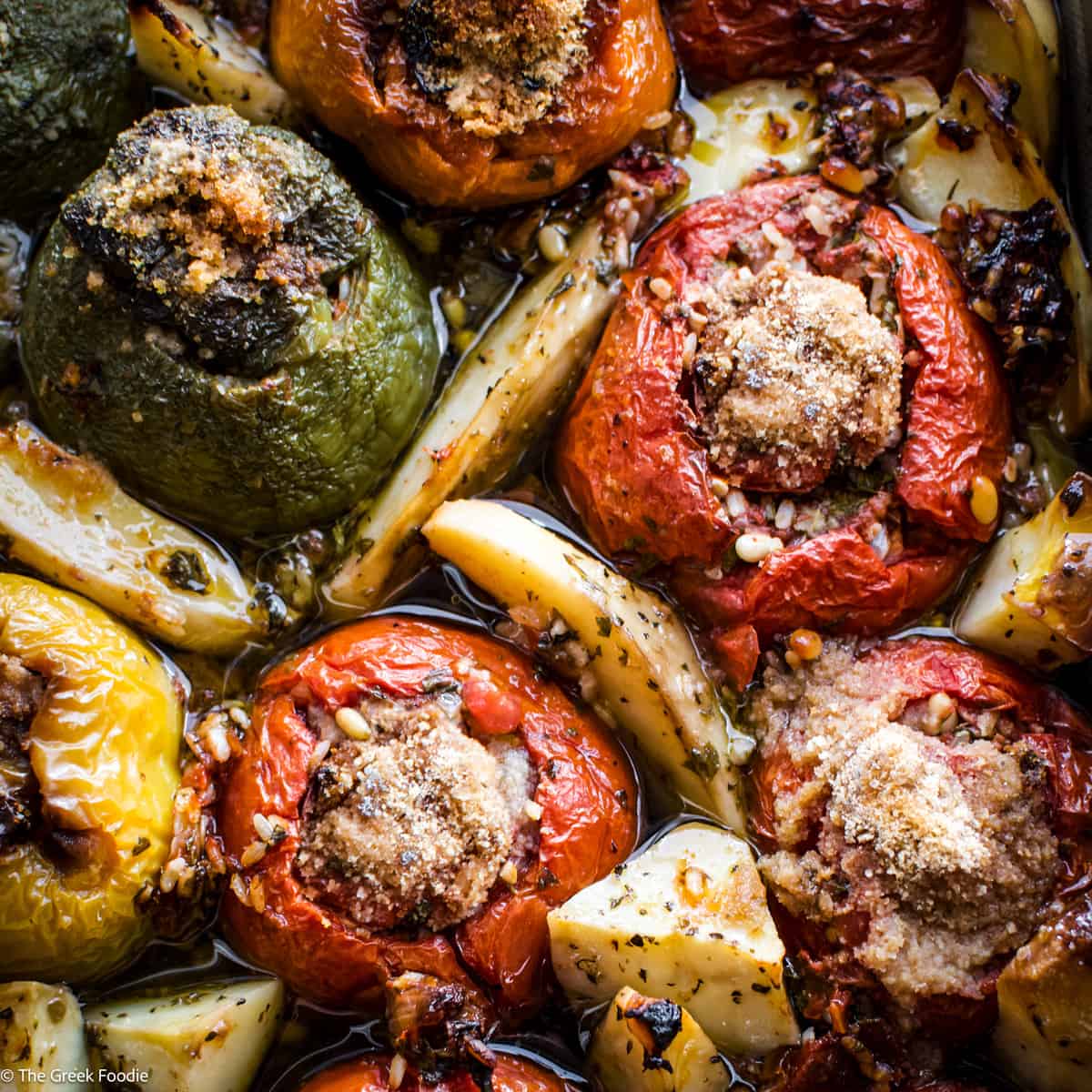
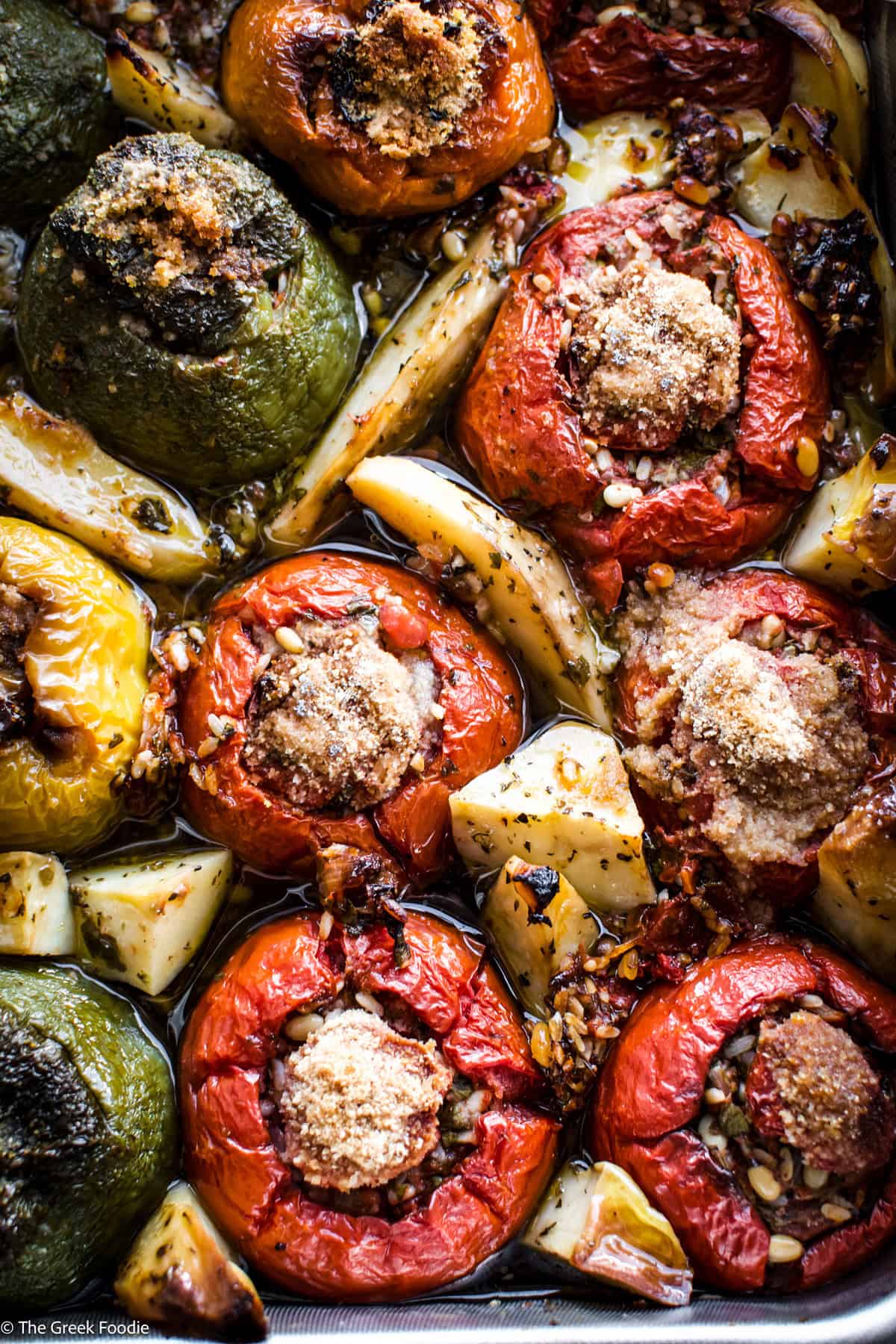
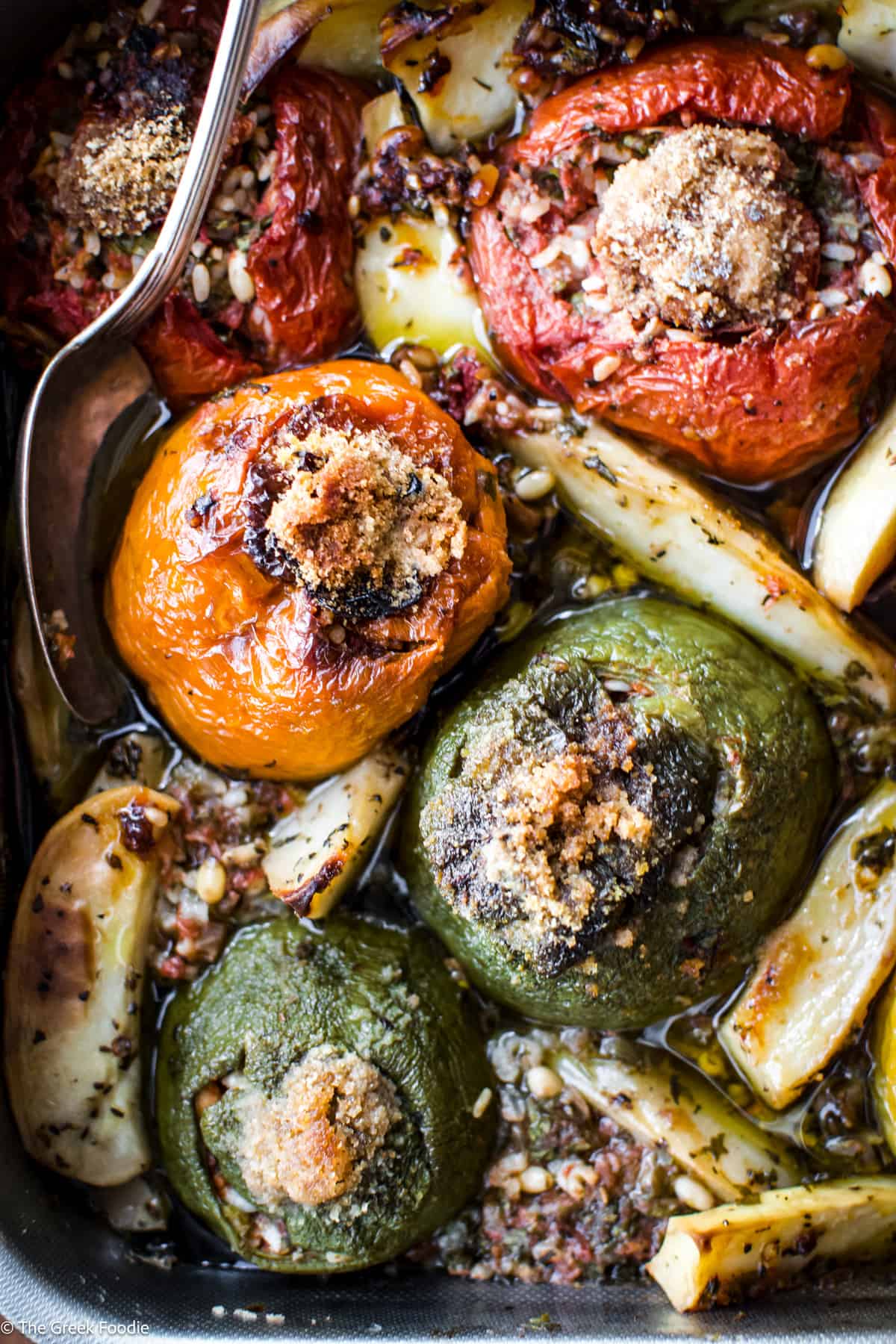
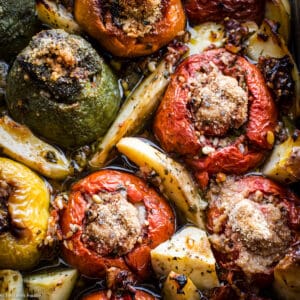
Gemista, stuffed tomatoes and peppers packed with herby rice and baked until jammy and golden, is one of those dishes that feels like a hug from the inside out.
In Greece, gemista is a summertime staple that shows up on every family table, every taverna menu, and basically every grandma’s oven from June through September. We make ours with ripe, firm tomatoes, colorful bell peppers, a fragrant rice filling loaded with fresh parsley and spearmint, and golden potato wedges tucked around the sides that soak up every last drop of flavor.
This is the real, traditional Greek recipe, vegetarian (what we call gemista orfana or “orphan gemista” back home), made exactly the way it’s been made for generations. No shortcuts, just incredible flavor.
If you love our Gemista, you will also love Briam-the Greek Rattatouille, Stuffed Squash Blossoms, or Green Beans in Tomato Sauce!
Why you will love gemista
Looking for fresh summer dinner ideas? Check out our 17 Mediterranean Summer Recipes — light, flavorful dishes that don’t require a grill, perfect for easy weeknight meals all season long.
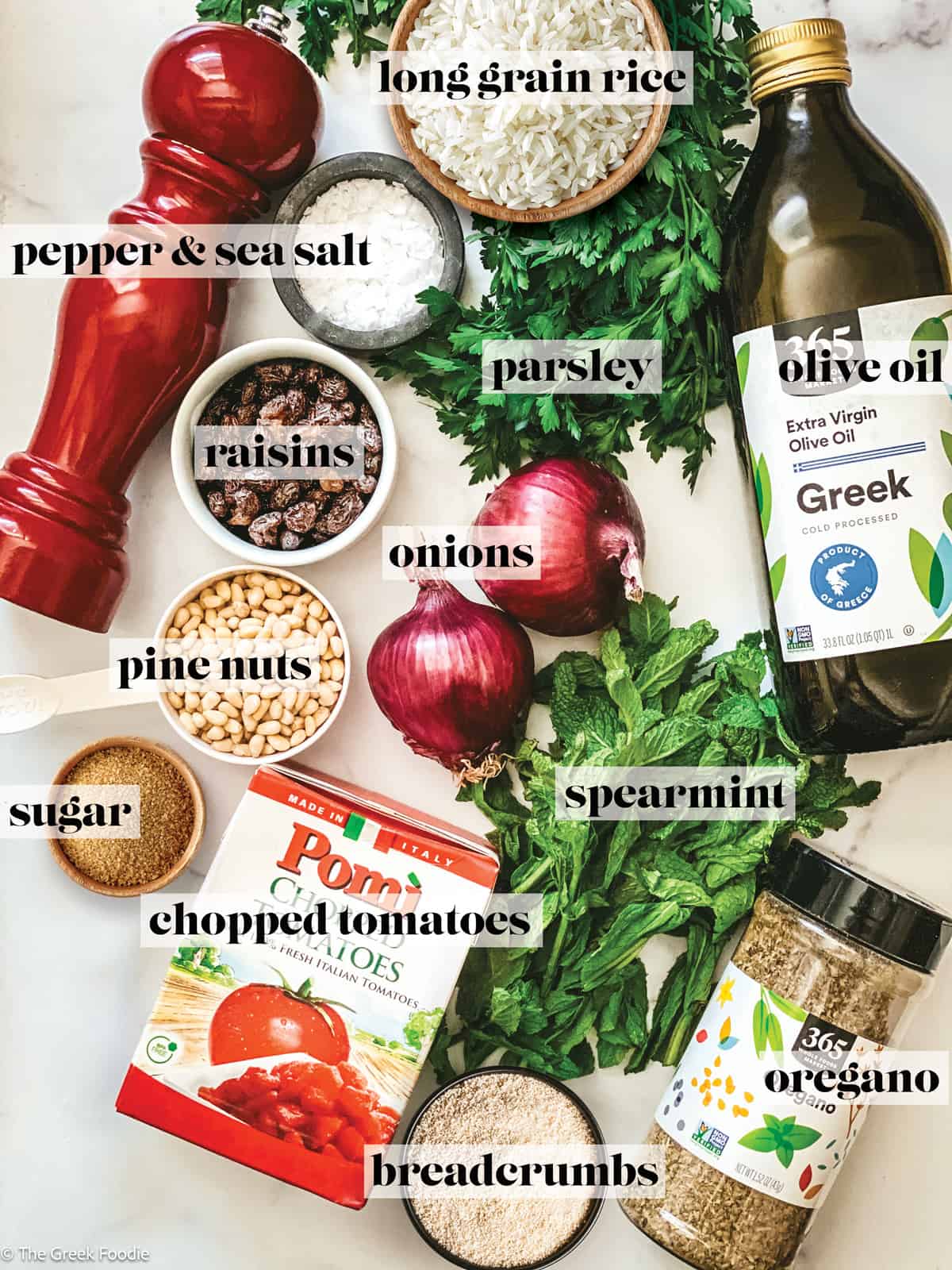
Here is what you need
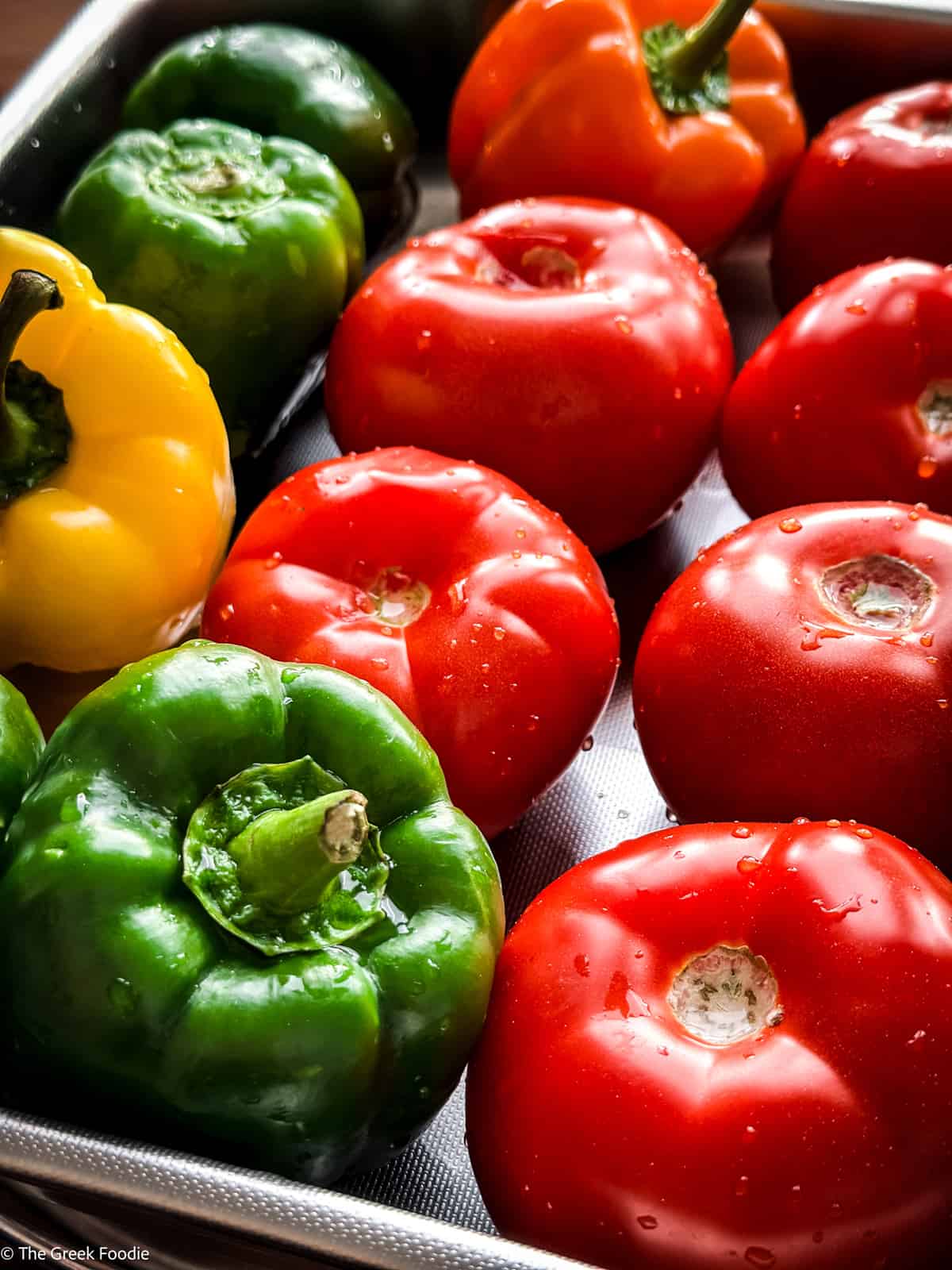
Tomatoes —The star of gemista. You want ripe but firm, not soft. A wobbly tomato will collapse in the oven. Large beefsteak or vine tomatoes are ideal. In Greece we use whatever’s coming out of the garden that week, peak-season tomatoes make all the difference.
Bell peppers —Use a mix of colors for a beautiful pan. Green peppers have a slightly bitter edge that balances the sweet filling; red, orange, and yellow are sweeter and caramelize beautifully when roasted.
Potatoes —Tucked between the stuffed vegetables, they slow-roast in the tomato-olive oil sauce and develop crispy golden edges with a buttery interior. Don’t skip them.
Carolina (long grain) rice — This is what Greek home cooks use. It holds its shape during the long bake and absorbs all the tomato juices without going mushy. Avoid parboiled or instant rice, they can’t absorb the cooking liquid properly and you’ll lose flavor. Short-grain (Arborio) is a common Greek substitute if you can’t find Carolina.
Fresh spearmint and parsley —Non-negotiable. Dried herbs are a pale substitute here. The combination of spearmint and parsley is the signature Greek flavor profile for gemista. If you can only find regular mint, it works but spearmint is more traditional.
Pine nuts and raisins — Optional but highly recommended. They’re the little surprise that tells your guests this is not just any stuffed tomato recipe. The pine nuts add richness, the raisins add a gentle sweetness that balances the acidity of the tomatoes.
Onions —Sauteing the onions before adding them to the stuffing brings out their sweetness, another key step in this recipe.
Breadcrumbs —A tiny amount of breadcrumbs is sprinkled on each vegetable, and they become crunchy and super delicious with baking.
Olive oil— You will use a lot of it. This is a lathera dish, a category of Greek olive oil-based vegetable dishes — and the olive oil is an ingredient, not just a cooking medium. Use a good extra virgin olive oil. It’s what makes the sauce pool at the bottom of the pan so irresistible you’ll want bread just to mop it up.
Sea salt, pepper, and sugar—A small amount of sugar is added to the bottom of each vegetable to break any acidity and bring out its sweet flavor.
How to make gemista
Preheat oven to 350°F / 180°C
- Remove all tomato stems and shorten the bell pepper stems with a knife.
- Turn the veggies bottom side up. Cut vertically with a pairing knife in a circle to create a little cap. Save it on the side. If too much flesh comes out, cut off the extra and add it to the stuffing mixture.*
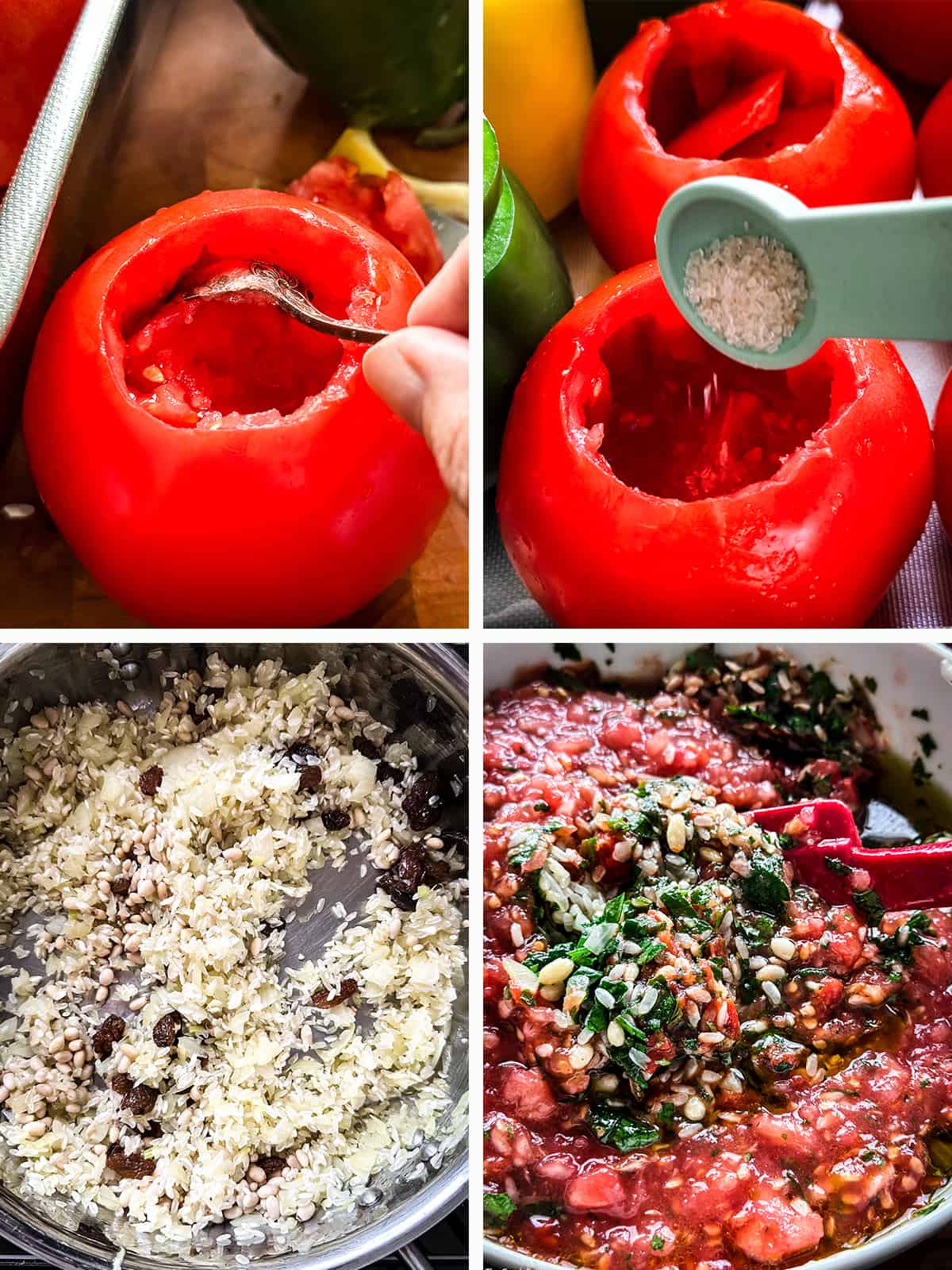
- Carefully scoop out the flesh, making sure you do not rip the tomato skin. *Place the flesh in a separate bowl and set it aside.
- Sprinkle each tomato with a little sugar and sea salt and turn them upside down to release their juices while you clean the peppers.
- Slice the bottom of the bell peppers, cut about 1/4 inch this time. Save the little pepper cap on the side. Carefully remove the bell pepper flesh, and rinse each pepper under water to remove any seeds.
- Place the peppers and tomatoes in a large baking pan, open side up this time. Cover each with their little caps.
- In a large sauté pan, add four tablespoons of olive oil. On medium heat, sauté the onion for 2-3 minutes until soft and fragrant. Add the rice, pine nuts, and raisins. Sauté for another 2-3 minutes.
- Chop up the tomato flesh and add it with its juices to the rice.
- Add the crushed tomatoes—season with sea salt, plenty of freshly ground black pepper, and half a teaspoon of sugar. Stir and simmer for 5 minutes.
- Remove the filling from the heat and mix in the chopped mint and parsley. Add one tablespoon of dried oregano, and check the seasoning to taste.
- Using a spoon, start filling your veggies. Fill around 3/4 from the top. The rice will grow in size as it cooks, and you don’t want to overflow your veggies. Cover each with their little caps
- In a separate bowl, mix the potatoes with two tablespoons of olive oil and season with sea salt, freshly ground pepper, and dried oregano.
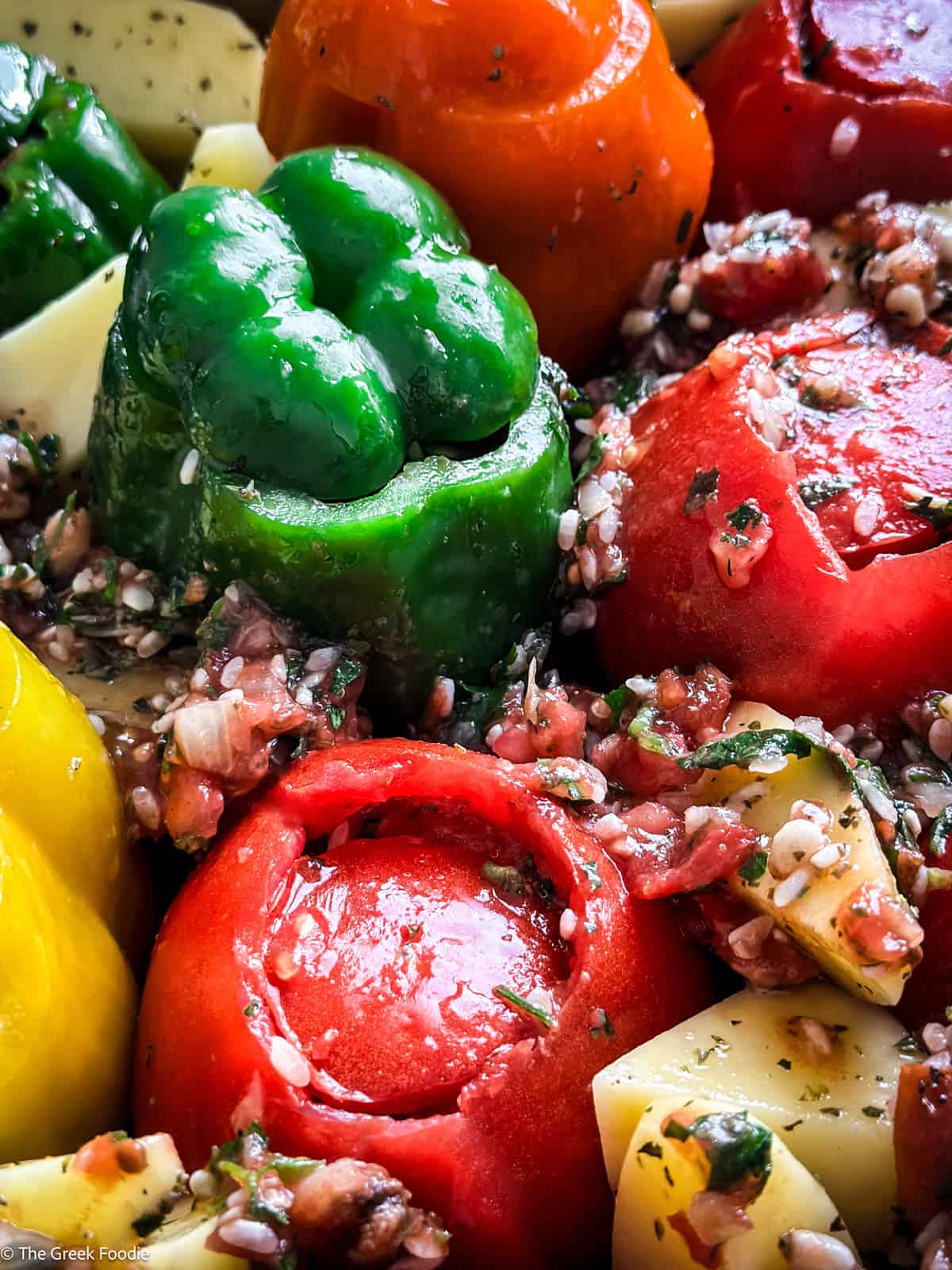
- Tuck the potatoes snugly between the tomatoes and peppers.
- Any remaining filling mixture can be added around the veggies and the bottom of the pan.
- Mix one tablespoon of sugar with the breadcrumbs. Add a teaspoon or so of the breadcrumb mix to each tomato and pepper.
- If you have any olive oil left, drizzle it evenly over the pan.
- Cover with aluminum foil and bake for 30 minutes.
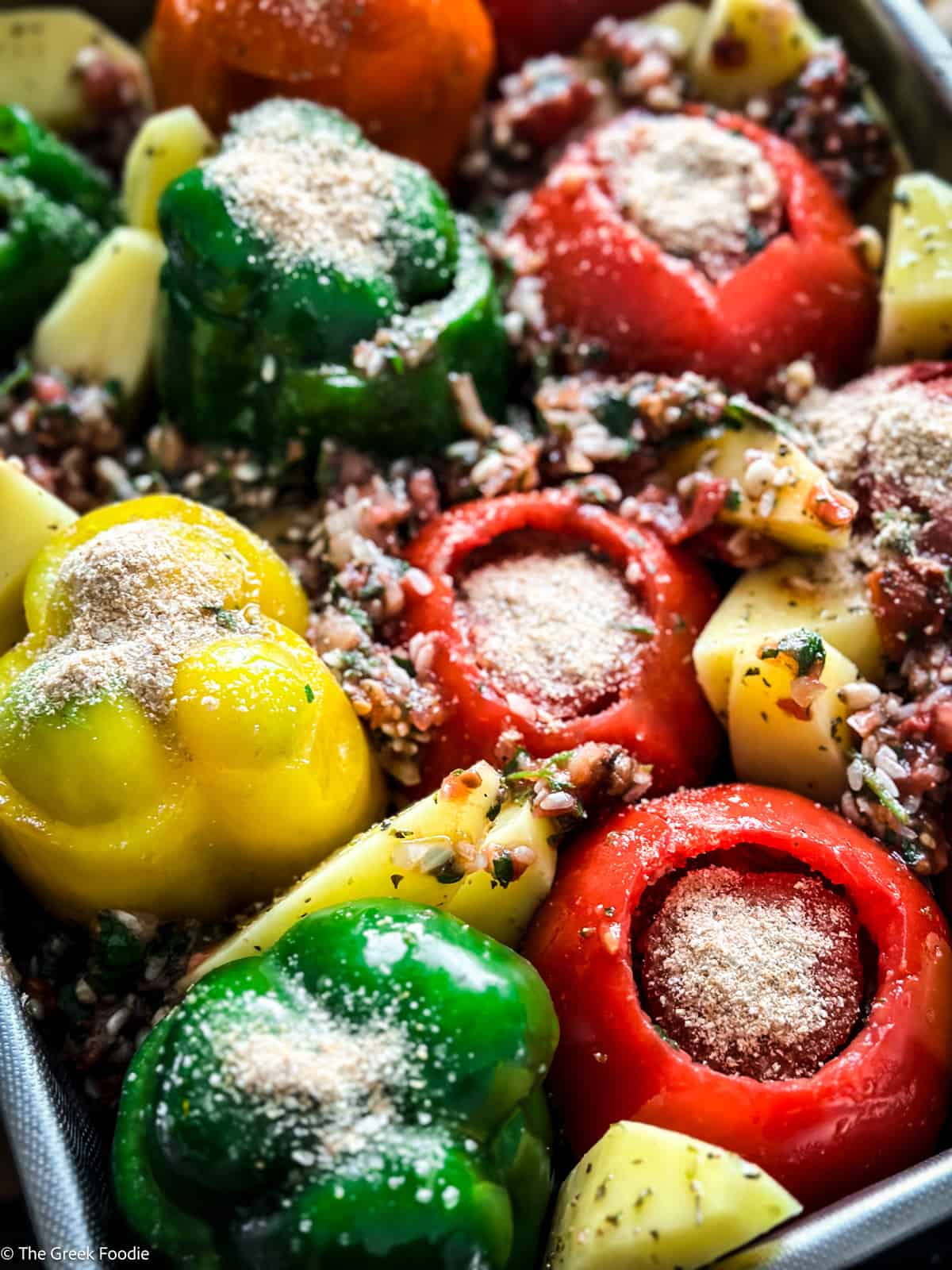
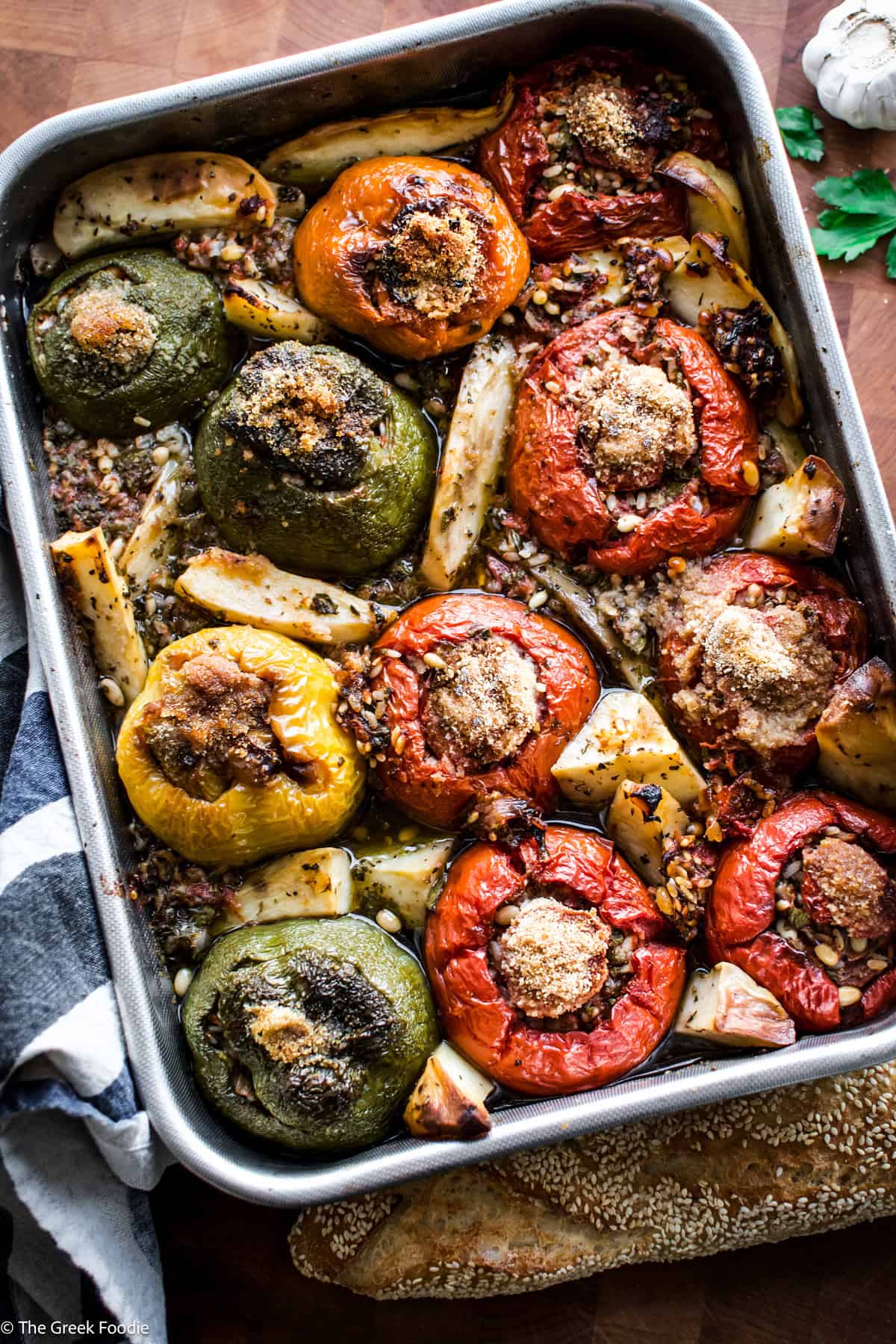
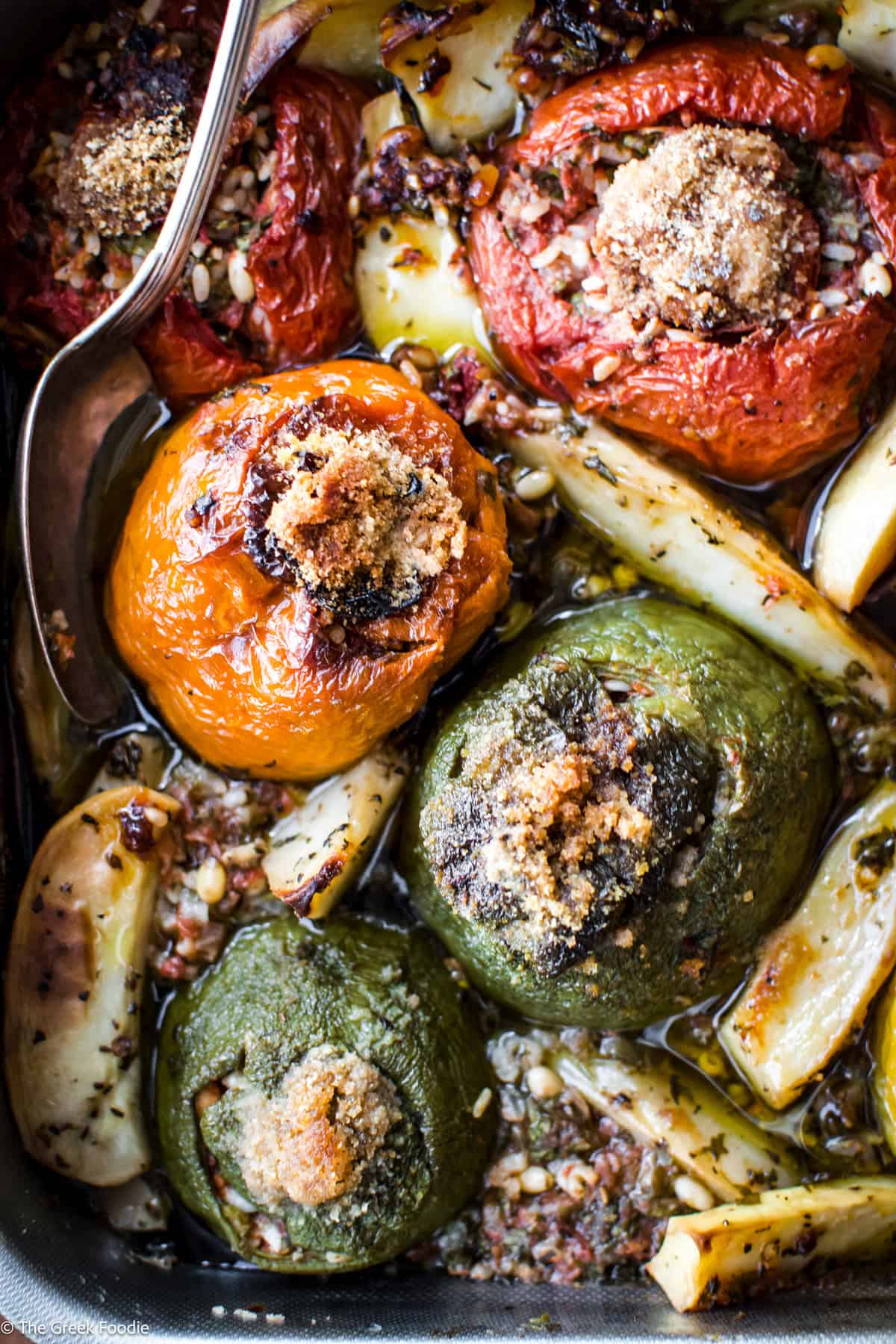
- Uncover and continue baking for another 90 minutes until most of the liquid has evaporated and the tops of the veggies are nice and golden. Every oven cooks differently, and you might need to cook them further. Check the potatoes first; they must have nice, crusty edges and a soft, buttery inside. The sauce will feel thicker, jammy, and irresistible.
Pro tips
- Sauté the onion first — this is the secret to great flavor. Skipping this step and adding raw onion to the rice produces a flat, one-dimensional filling. Sautéing releases the natural sweetness of the onion and builds depth from the very start.
- Don’t add green pepper flesh to the filling — the inner flesh of green bell peppers can be bitter and throw off the flavor balance. Red, yellow, or orange pepper flesh is fine.
- Sugar at the bottom — a small pinch of sugar in each hollowed vegetable before filling counteracts acidity and pulls out the natural sweetness of the tomato. This is a classic Greek home cook trick.
- Fill only 3/4 — the rice swells during baking. Overfilling will cause it to push the caps off and spill into the pan.
- Foil first, then uncovered — the first 30 minutes covered with foil steams the rice and softens the vegetables. The final 90 minutes uncovered concentrates the sauce, caramelizes the tops, and gets the potatoes crispy. Don’t rush this second stage.
- Check your oven — all ovens vary. Judge doneness by the potatoes: crusty golden edges, fork-tender inside. The sauce at the bottom should look thick and jammy, not watery.
- Let it rest — give the pan 15-20 minutes after coming out of the oven. This helps the filling set and the flavors meld. Gemista served at room temperature is traditional and honestly just as good as hot.
Love feta cheese with gemista? Try our Whipped Feta Dip (Tirokafteri) — a creamy, spicy Greek dip made with roasted peppers, hot peppers, and olive oil. It’s bold, tangy, and ready in 20 minutes.

FAQs
Serving and storage
Gemista is traditionally served warm or at room temperature — room temp is actually how most Greek families eat it, especially in summer. The flavors are more pronounced when it’s not steaming hot. In Greece, it’s often left out on the stovetop and eaten throughout the afternoon.
Leftovers: Store in an airtight container in the fridge for up to 5 days. The second day is genuinely the best — the rice keeps absorbing flavor overnight and becomes even more delicious. Bring to room temperature before serving or warm gently in the oven.
Freezer: Gemista doesn’t freeze particularly well (the tomato shells get quite soft when thawed) but the filling mixture freezes beautifully. Make a double batch and freeze extra filling for up to 3 months.
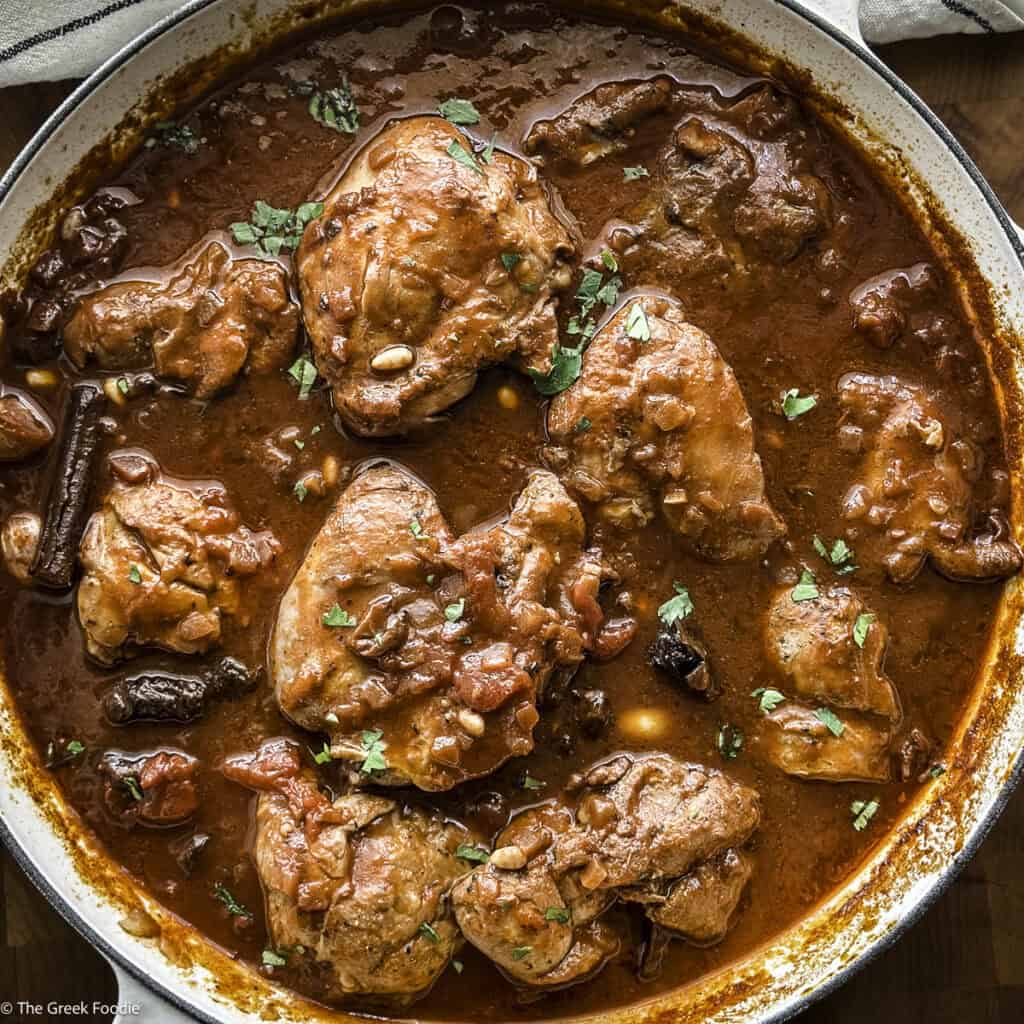
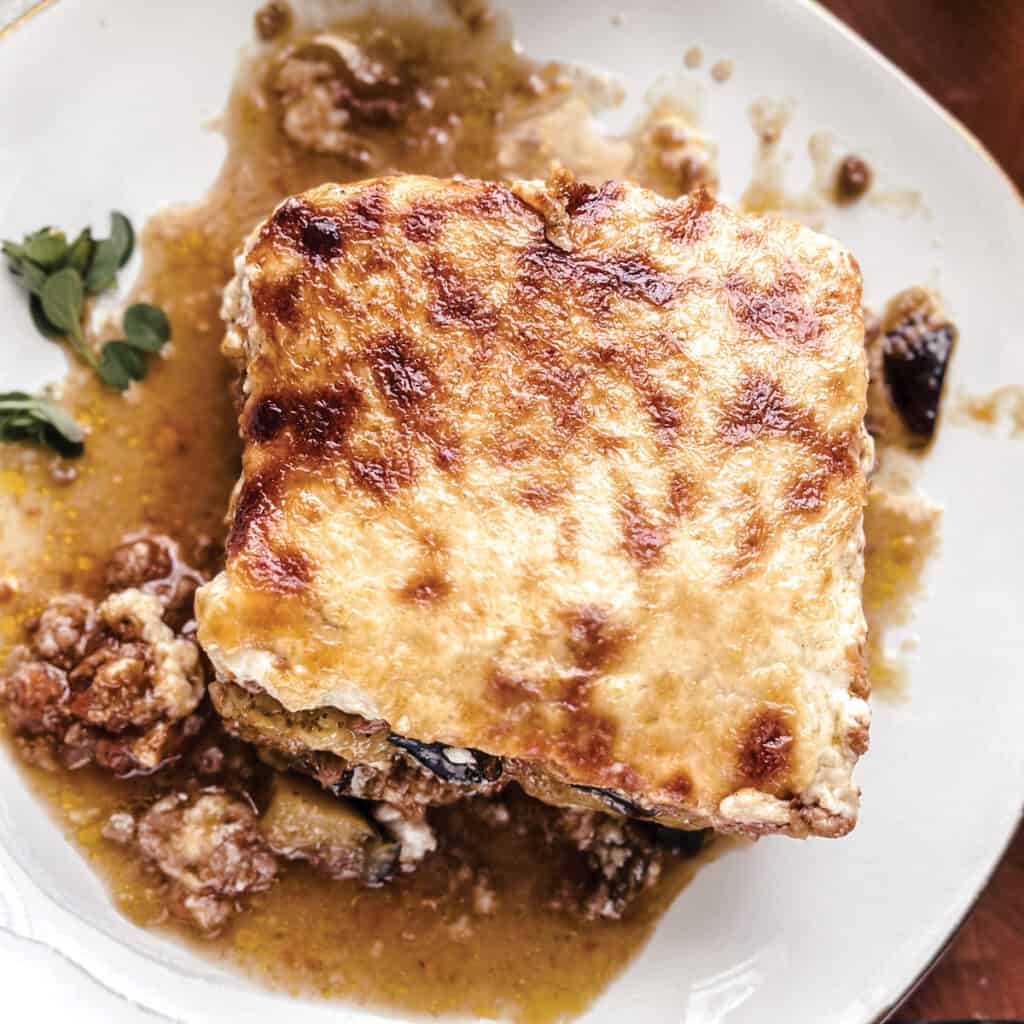
Great side dishes for gemista
- Greeks always enjoy gemista with a piece of feta cheese and bread to soak up the sauce. You need good crusty bread like our horiatiko – peasant bread.
- For a salad, the traditional Greek maroulosalata is light, full of leafy greens, and has an acidic dressing that is perfect next to the sweetness of stuffed tomatoes.
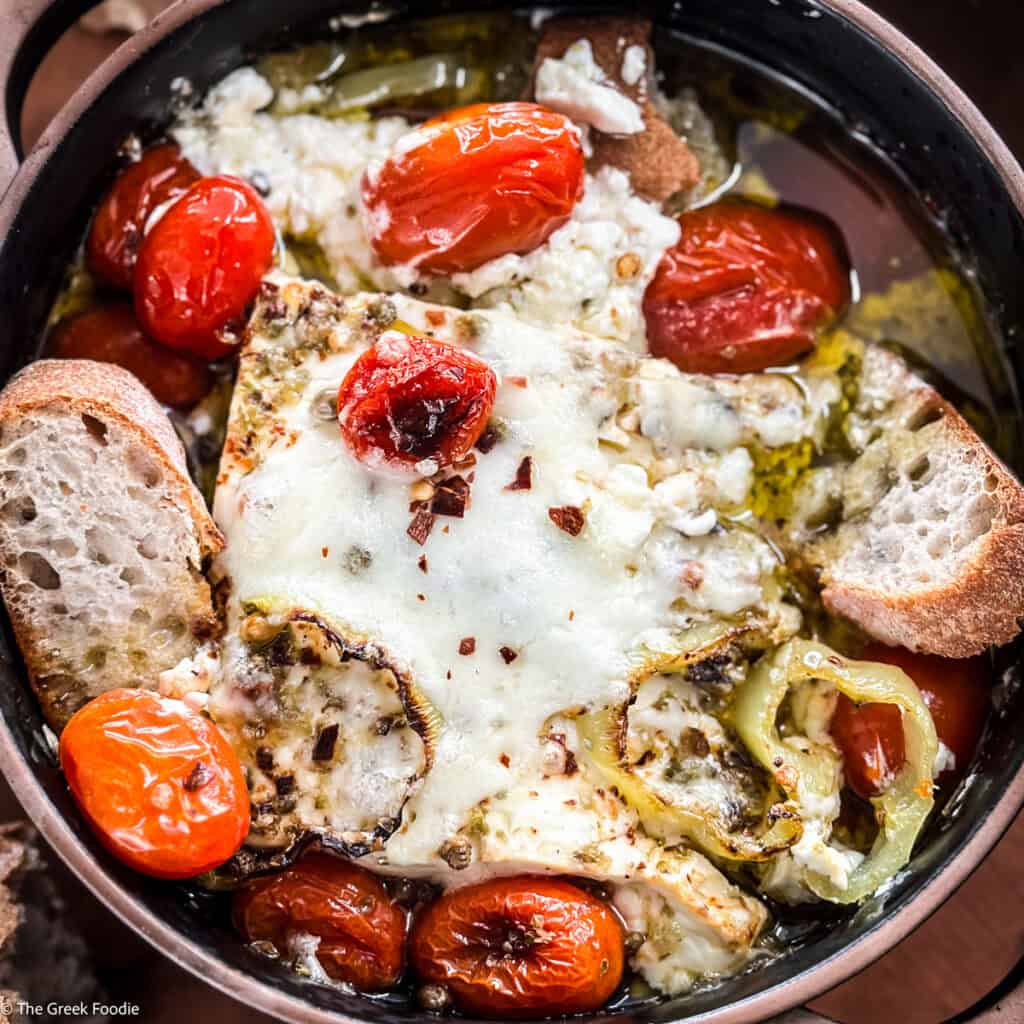
- You will love these marinated olives with feta, with gemista.
Cooked it? Rate it!
If you tried this recipe, I’d love to know how you liked it — drop a comment below or tag me on Instagram @thegreekfoodie__.


Gemista – Greek Stuffed Tomatoes and Peppers
Equipment
- 11"x14" roaster pan
Ingredients
- 6 tomatoes, ripe but firm large tomatoes
- 4 bell peppers, any color
- 4 yukon gold potatoes, cut in wedges
- 2 medium onions, finely chopped
- 1 cup extra virgin olive oil , in total
- 14 oz chopped tomatoes
- 1 cup long grain white rice, like Carolina
- 1 cup fresh parsley , finely chopped
- 1 cup fresh mint , finely chopped
- 5 tablespoon pine nuts, optional
- 5 teaspoon raisins, optional
- ½ cup breadcrumbs
- ⅓ cup sugar, total, you might not use all of it.
- dried oregano
- sea salt
- freshly ground pepper
for serving
- Greek feta cheese, optional
- crusty bread, optional
Instructions
- Remove all tomato stems and shorten the bell pepper stems with a knife.
- Turn the veggies bottom side up. Cut vertically with a pairing knife in a circle to create a little cap. Save it on the side. If too much flesh comes out, cut off the extra and add it to the stuffing mixture.*
- Carefully scoop out the flesh, making sure you do not rip the tomato skin. *Place the flesh in a separate bowl and set it aside.
- Sprinkle each tomato with a little sugar and sea salt and turn them upside down to release their juices while you clean the peppers.
- Slice the bottom of the bell peppers, cut about 1/4 inch this time. Save the little pepper cap on the side. Carefully remove the bell pepper flesh, and rinse each pepper under water to remove any seeds.
- Place the peppers and tomatoes in a large baking pan, open side up this time. Cover each with their little caps.
- In a large sauté pan, add four tablespoons of olive oil. On medium heat, sauté the onion for 2-3 minutes until soft and fragrant. Add the rice, pine nuts, and raisins. Sauté for another 2-3 minutes.
- Chop up the tomato flesh and add it with its juices to the rice.
- Add the crushed tomatoes—season with sea salt, plenty of freshly ground black pepper, and half a teaspoon of sugar. Stir and simmer for 5 minutes.
- Remove the filling from the heat and mix in the chopped mint and parsley. Add one tablespoon of dried oregano, and check the seasoning to taste.
- Using a spoon, start filling your veggies. Fill around ¾ from the top. The rice will grow in size as it cooks, and you don’t want to overflow your veggies. Cover each with their little caps.
- In a separate bowl, mix the potatoes with two tablespoons of olive oil and season with sea salt, freshly ground pepper, and dried oregano.
- Tuck the potatoes snuggly between the tomatoes and peppers.
- Any remaining filling mixture can be added around the veggies and the bottom of the pan.
- Mix one tablespoon of sugar with the breadcrumbs. Add a teaspoon or so of the breadcrumb mix to each tomato and pepper.
- If you have any olive oil left, drizzle it evenly over the pan.
- Cover with aluminum foil and bake for 30 minutes.
- Uncover and continue baking for another 90 minutes until most of the liquid has evaporated and the tops of the veggies are nice and golden.
Notes
Nutrition
olive oil guide
Everything You Wanted To Know About Olive Oil
Olive oil is an essential ingredient in the Greek cuisine. Greece is one of the largest producers of olive oil in the world. Learn a bit of its history, harvest, production, and how to choose the right olive oil for your recipes.