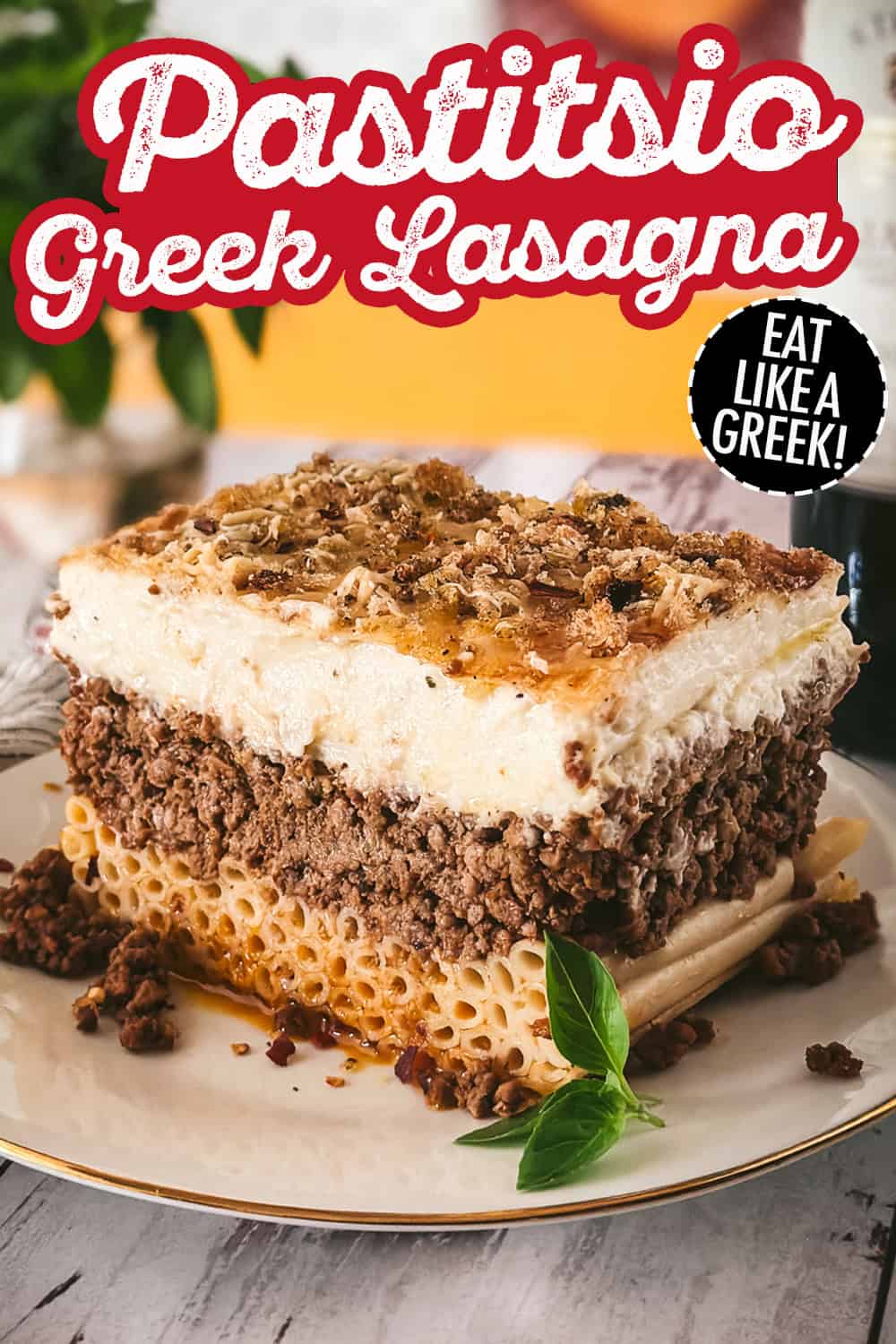

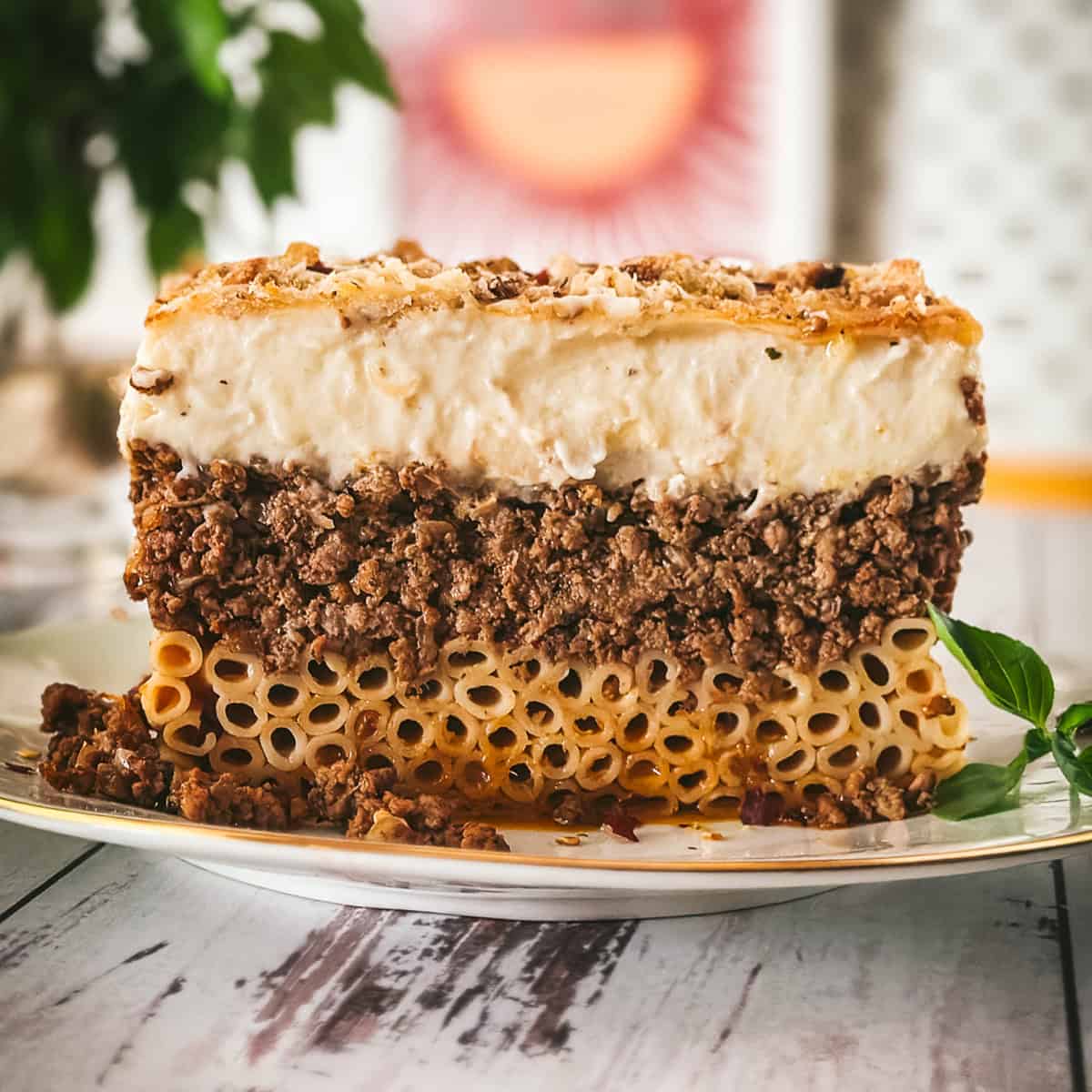
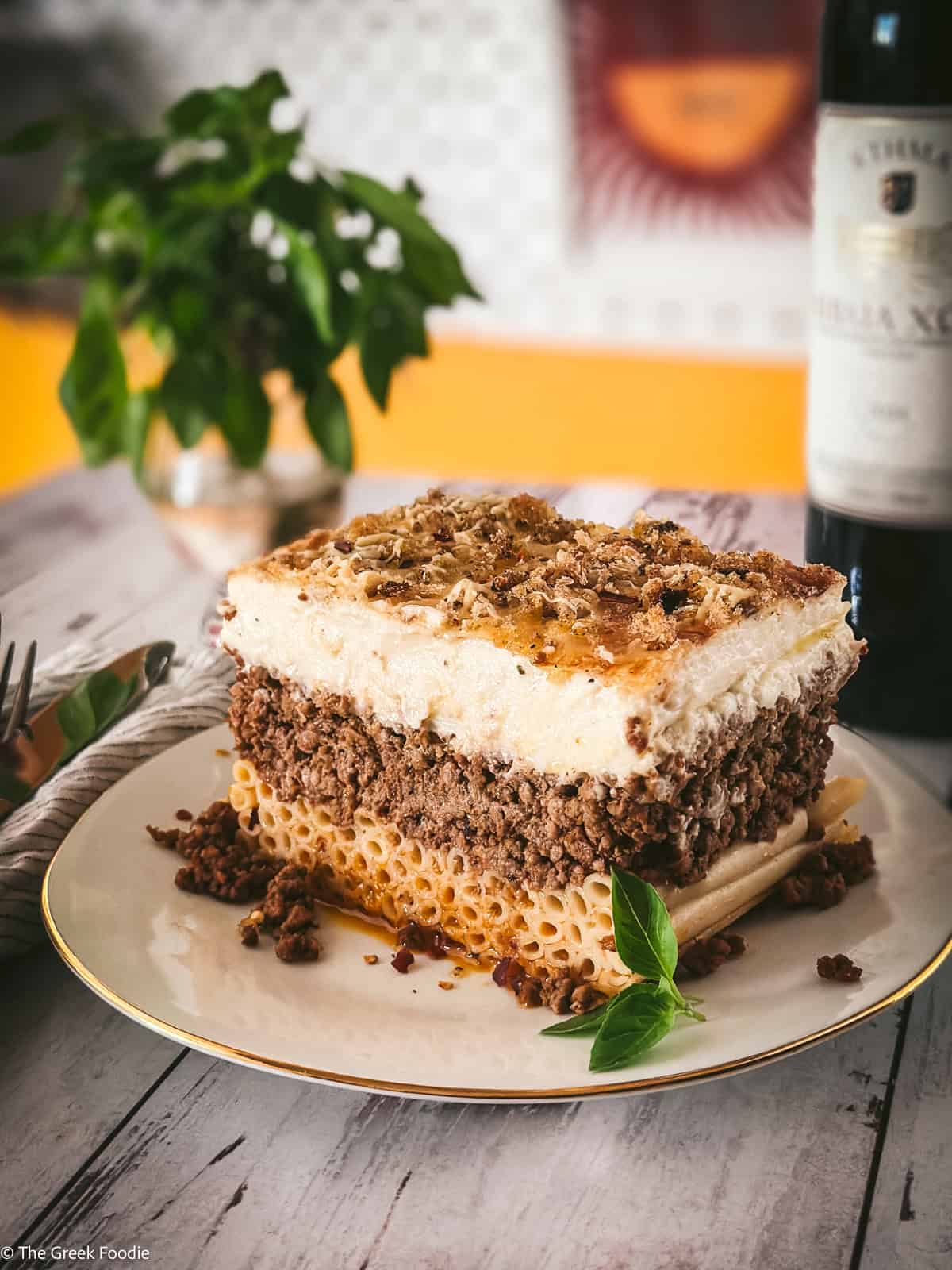
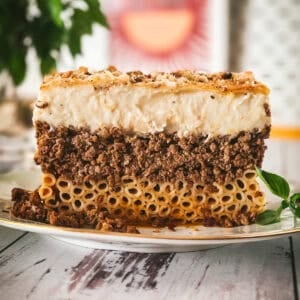
Pastitsio is Greece’s answer to lasagna — and honestly, I think we win. Layers of thick tubular pasta, a slow-simmered beef ragù scented with cinnamon, and a blanket of creamy béchamel baked until golden. Cut into it and you get those three perfect stripes in every slice. This is the pastitsio I grew up eating in Greece, made the way Greek home cooks actually make it with no shortcuts, and no “Mediterranean-inspired” anything.
It’s a Sunday dish, a name-day dish, the dish your mom makes when the whole family is coming. And like the Ancient Greeks used to say: Go big or go home.
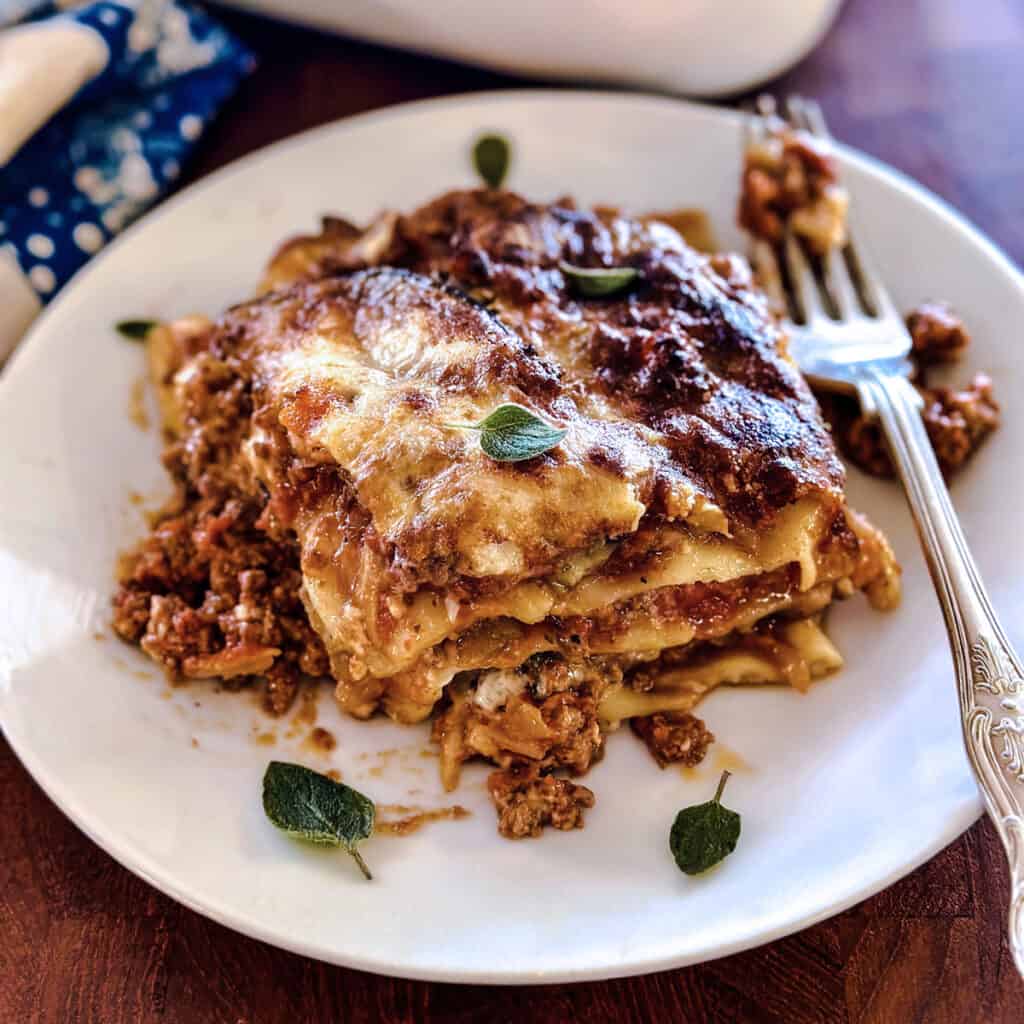
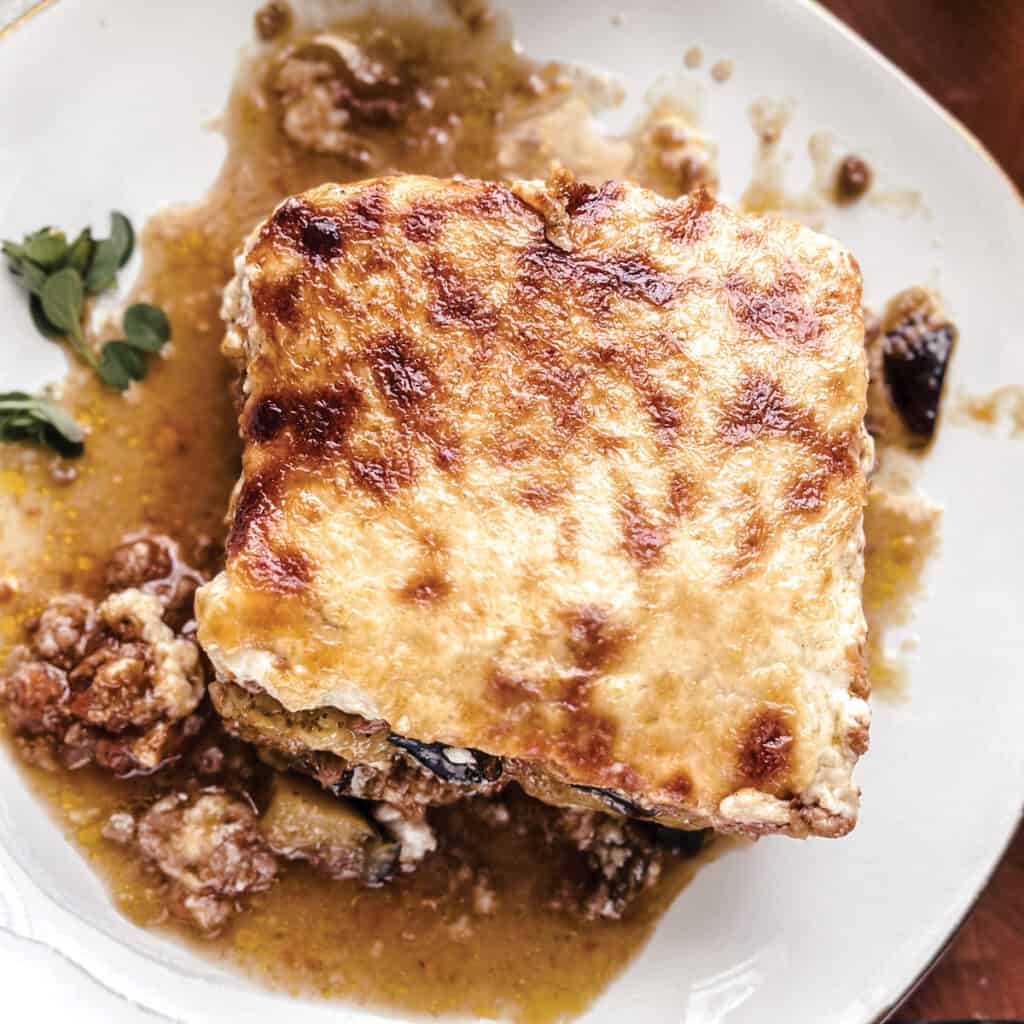
If you love our Pastitsio, you will also love Moussaka casserole, Makaronia me Kima-Pasta with Ground Beef Sauce or Greek Style Chicken Bolognese!
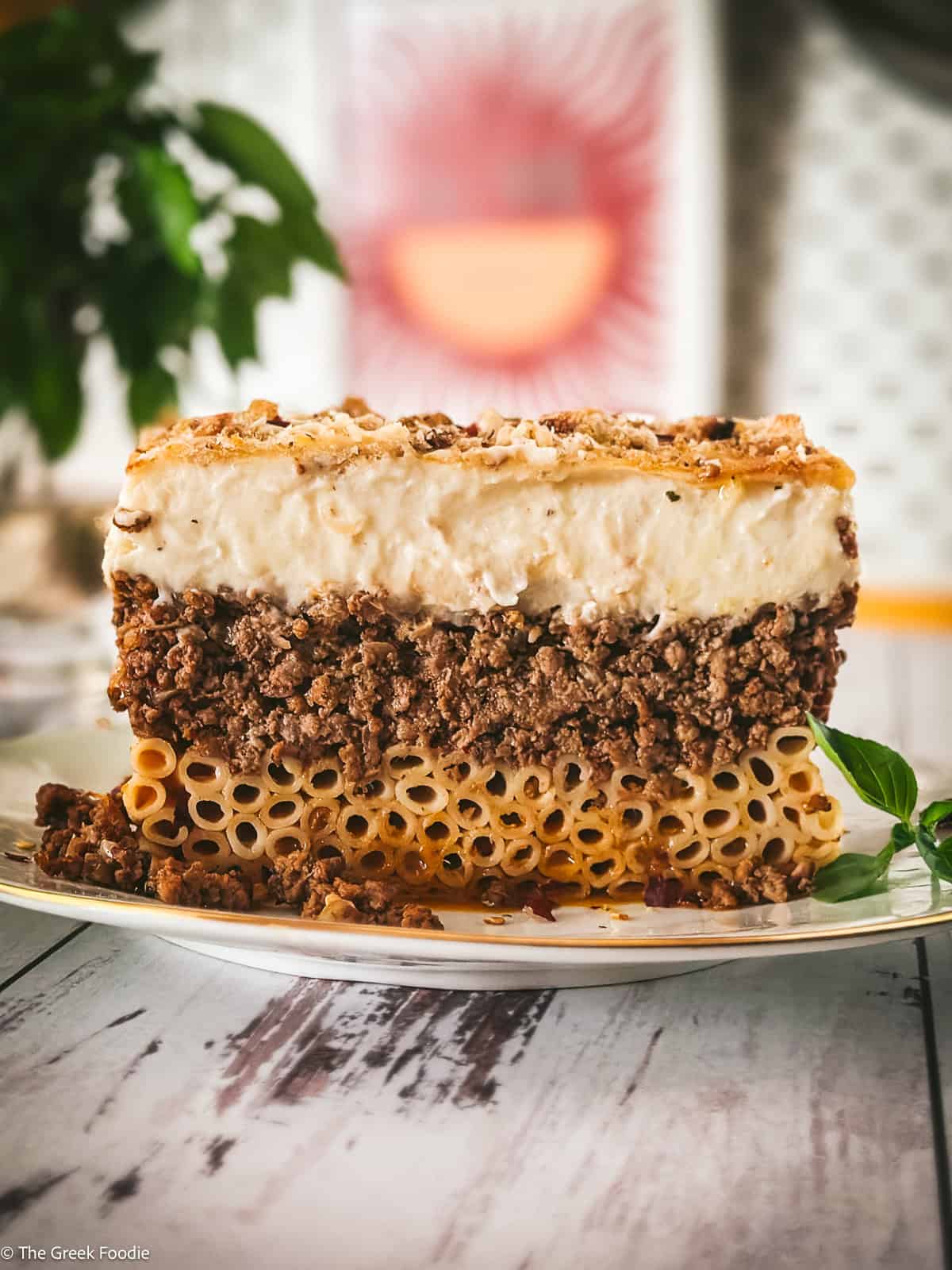
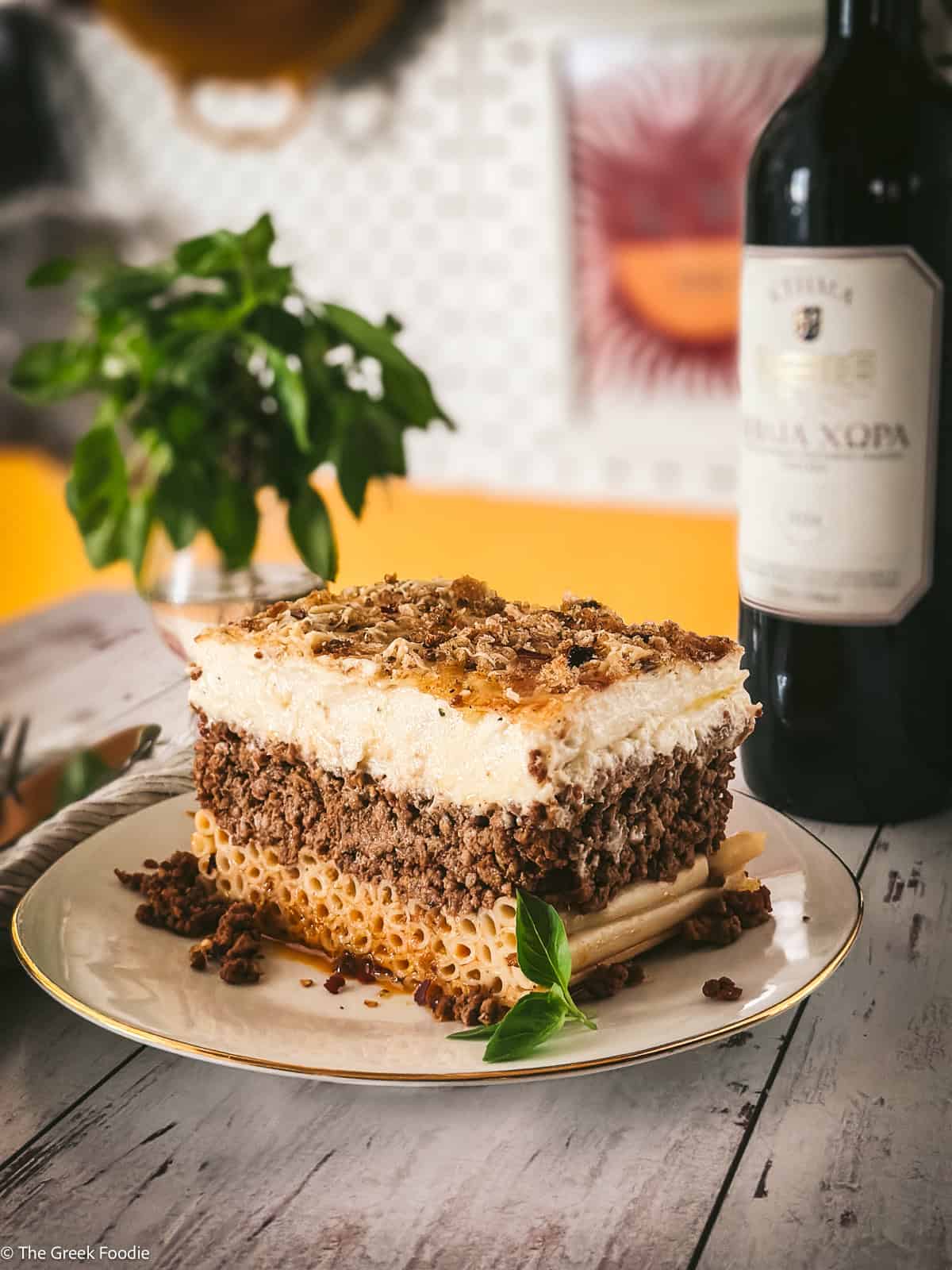
What is pastitsio?
Pastitsio (παστίτσιο, pronounced pah-STEE-tsee-oh) is a baked Greek pasta dish with three layers: long tubular pasta, a rich ground beef sauce with tomato and warm spices, and a thick béchamel on top that turns golden in the oven. You’ll also see it spelled pastichio or pasticcio — same glorious dish.
People call it Greek lasagna, and the comparison makes sense: layers, meat sauce, creamy topping. But pastitsio is its own thing. The pasta is thick, hollow bucatini-style noodles laid in one direction — not flat sheets — so when you slice it, you see the tubes lined up like little soldiers. The meat sauce carries cinnamon and nutmeg instead of Italian herbs. And the béchamel layer is tall, enriched with egg yolks and cheese, closer to a custard than a sauce.
The dish took its modern form in the 1920s, when the famous Greek chef Nikolaos Tselementes gave it the French-style béchamel topping we know today. Every Greek family has their version and this one is mine. Enjoy!
Why you will love pastitsio
Here is what you need
for the meat sauce and pasta
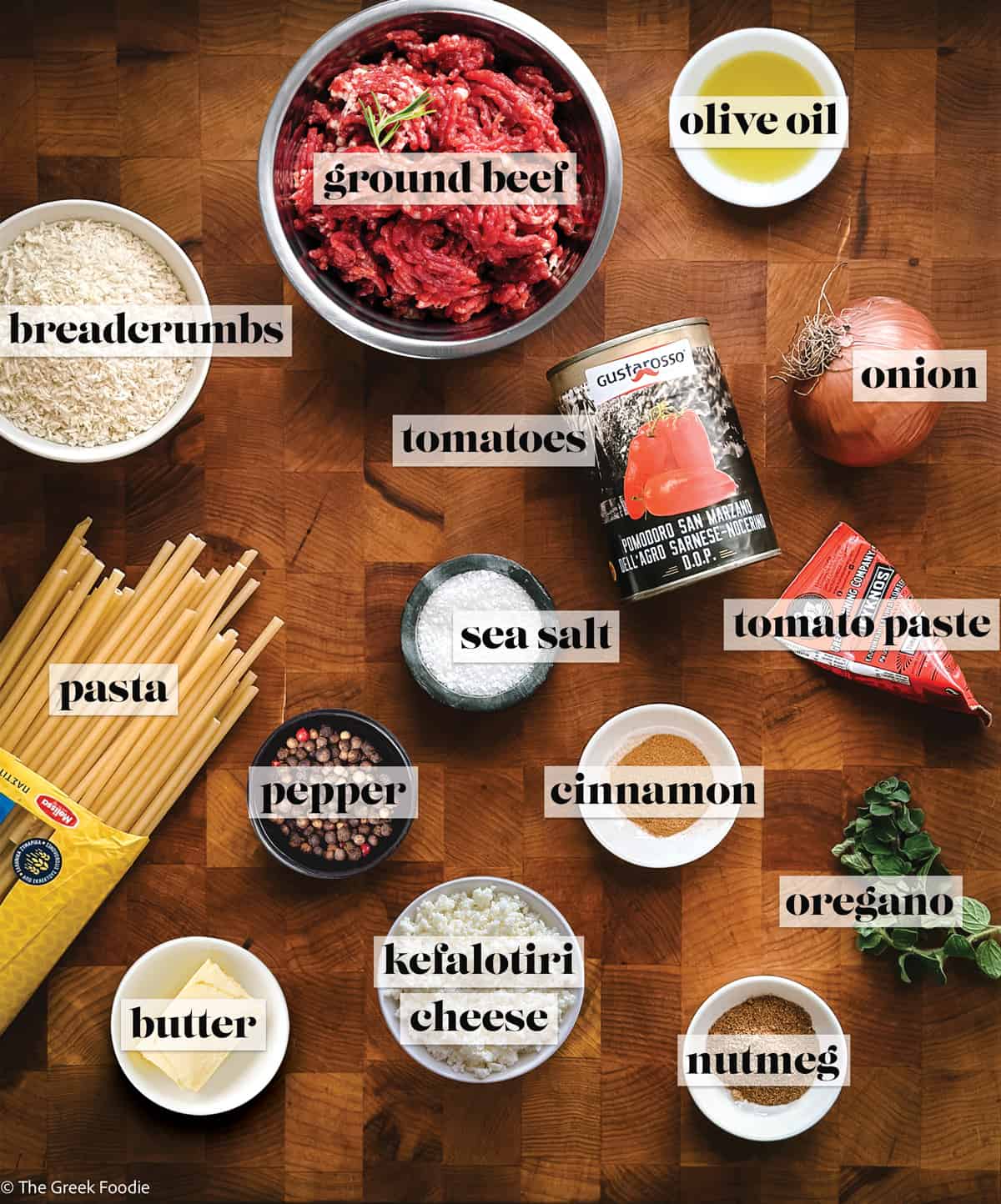
- Long tubular pasta. The tubular “fat” pasta noodle used for pastitsio is a perfect vehicle for sauces and an excellent base for pasta-baked casseroles. In the USA, you can find pastitsio LOI pasta in many supermarkets. Greek pasta like Melissa or MISKO No 5 are available in Greek markets. Feel free to substitute with penne or rigatoni. Both will work just fine.
- Ground beef.
- Onion.
- Oregano, fresh, or dried or both.
- Tomatoes and tomato paste. My go-to tomatoes are authentic San Marzano.
- Kefalotiri cheese. Grated. This is a salty, hard cheese Greeks use with pasta. You can also use pecorino romano, it is the easy US substitute.
- Extra virgin olive oil, nutmeg, cinnamon, sea salt and freshly ground pepper
for the white sauce
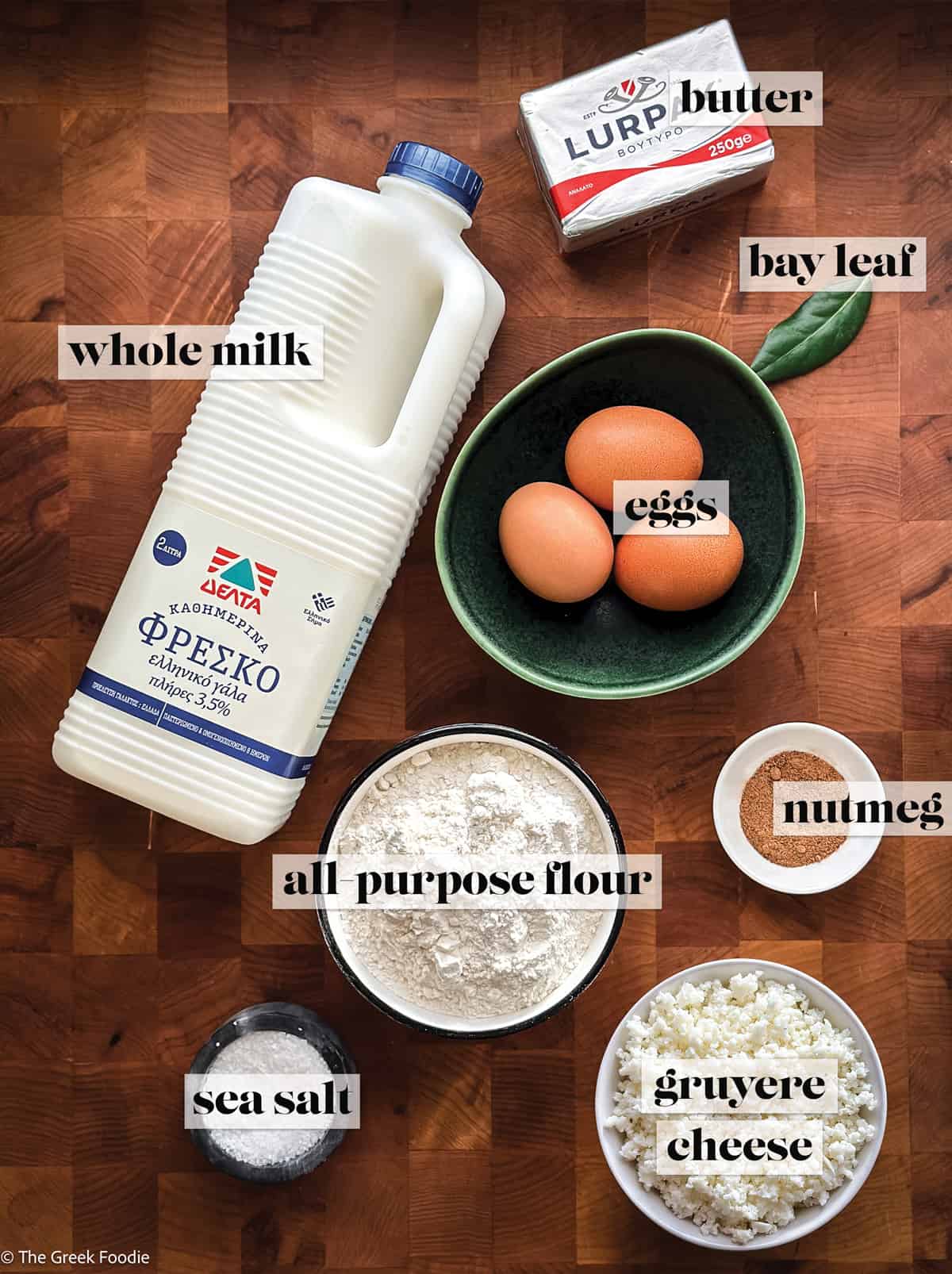
- Butter
- All-purpose flour
- Whole milk.
- Bay leaf.
- Gruyère cheese, grated. In Greece I use Graviera, the Greek equivalent to gruyère.
- Egg yolks from medium size eggs.
- Ground nutmeg and sea salt.
Substitutions: No Greek pasta? Penne, rigatoni, or bucatini all work. No kefalotiri? Pecorino romano or parmesan. No gruyère? Use more kefalotiri or parmesan. Ground lamb or a beef-lamb mix is also wonderful here.
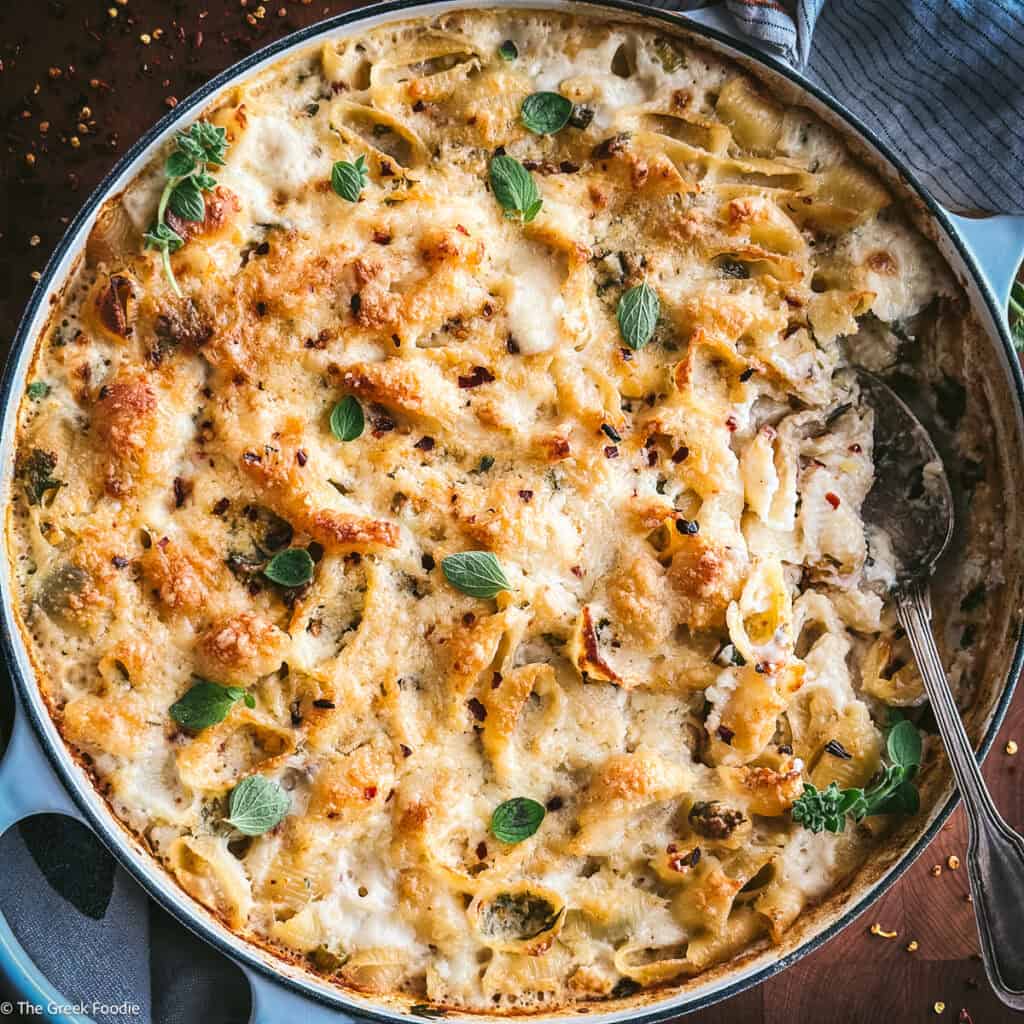
Love bakes pasta dishes? Try our Greek Mac and Cheese, and Eggplant Lasagna with Béchamel.
How to make this pastitsio
Make the beef ragu
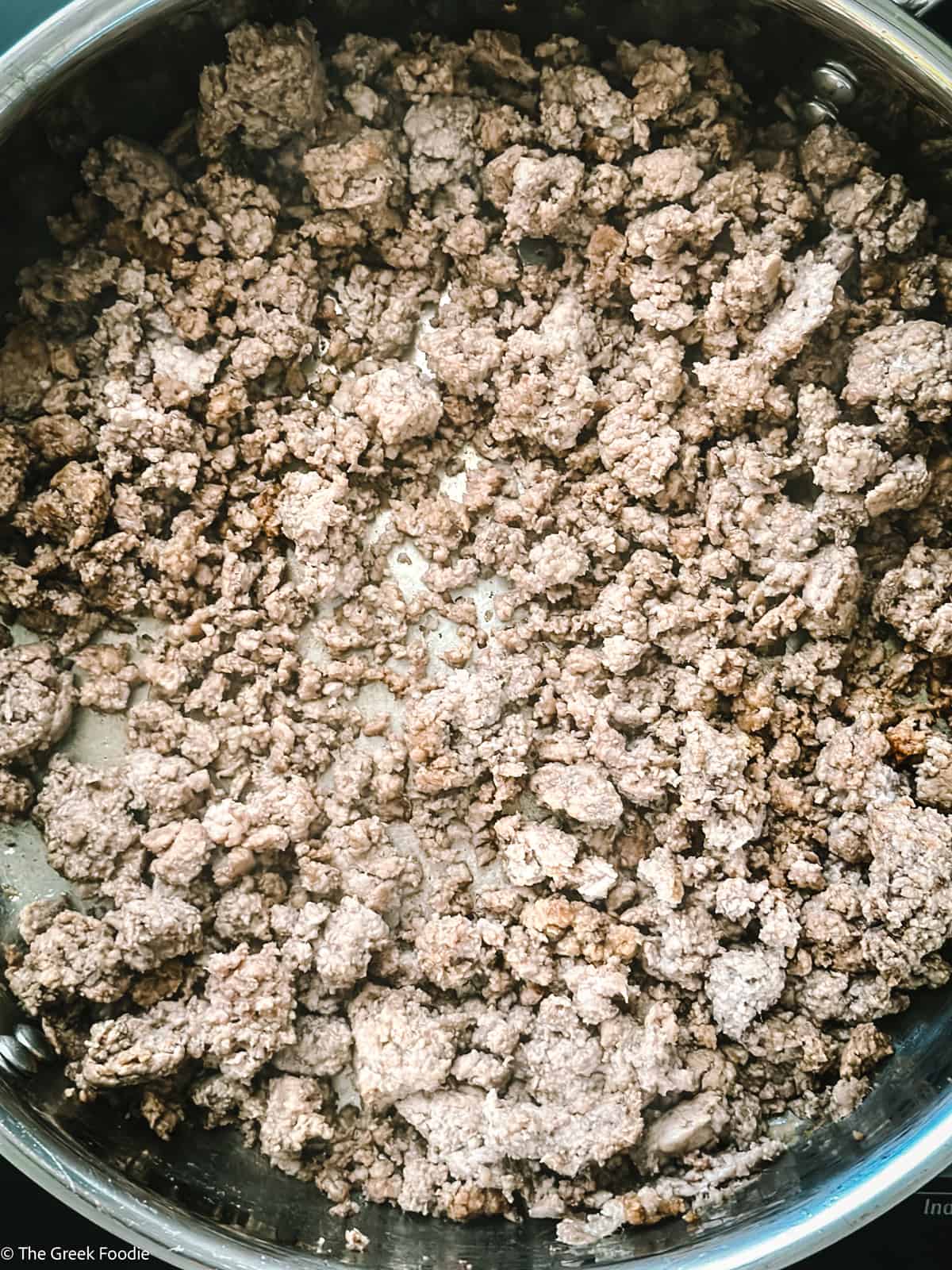
- Place a wide large skillet on the stove over high heat, without any oil. When skillet is hot add the ground meat. Using a wooden spoon, break the meat as it browns. Brown while breaking and stirring constantly for 5-6 minutes, until the ground beef is well browned all over.
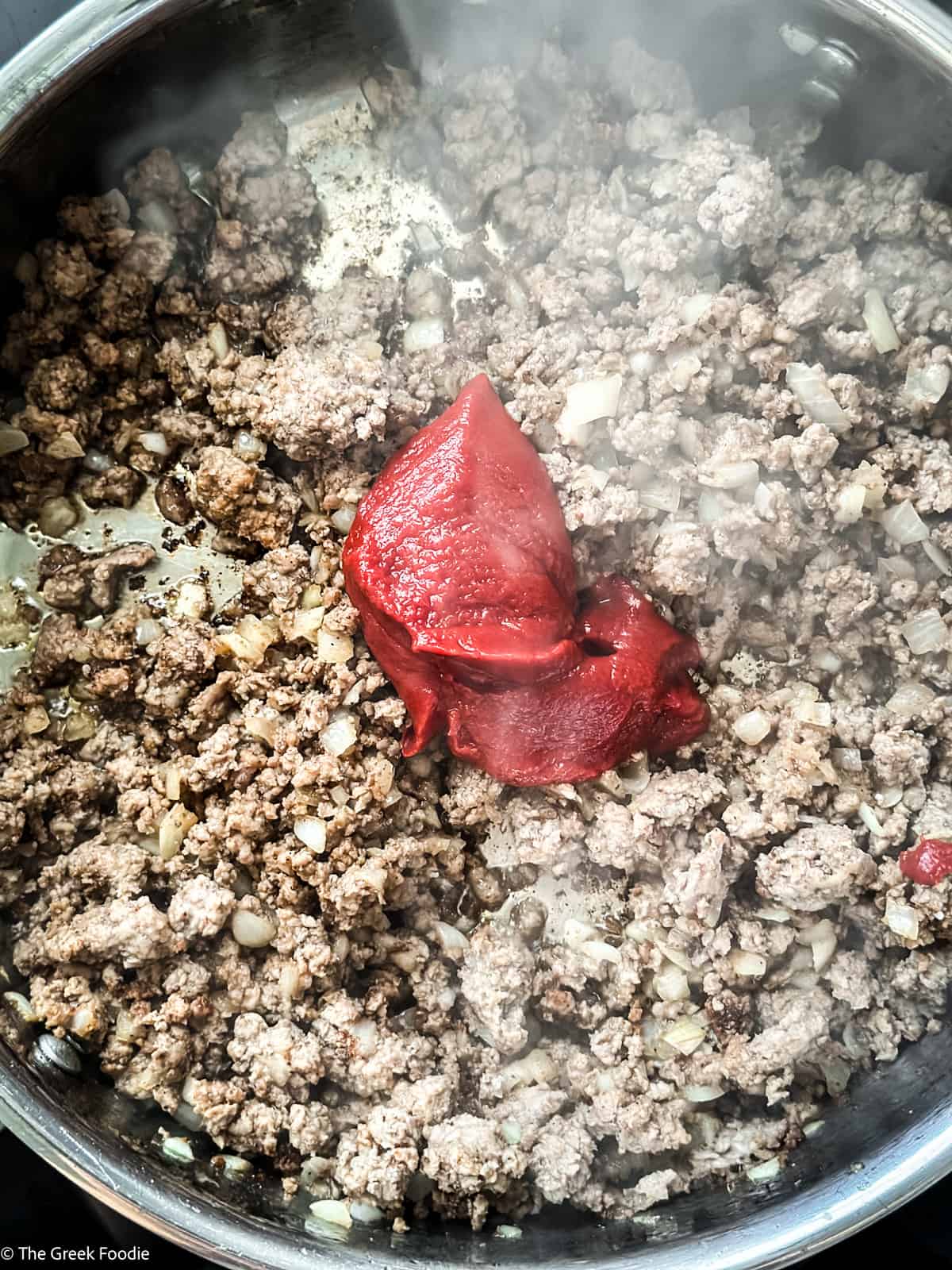
2. Add the onion, and olive oil to the skillet and continue sautéing for another 1-2 minutes.
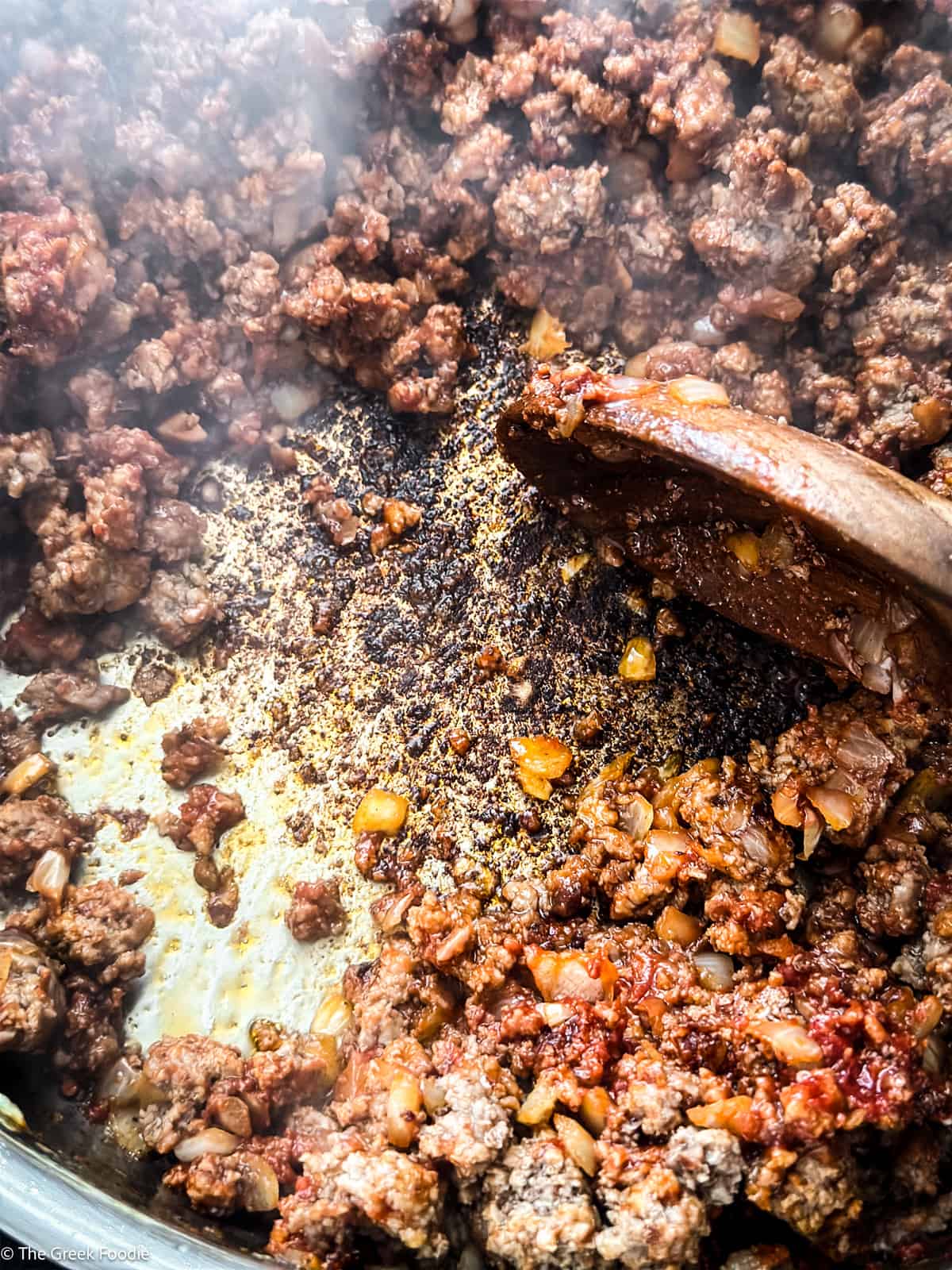
3. Add the tomato paste and stir. Cook for 1-2 minutes. Scrape the burnt bits from the bottom of the pot with a wooden spoon as you stir.
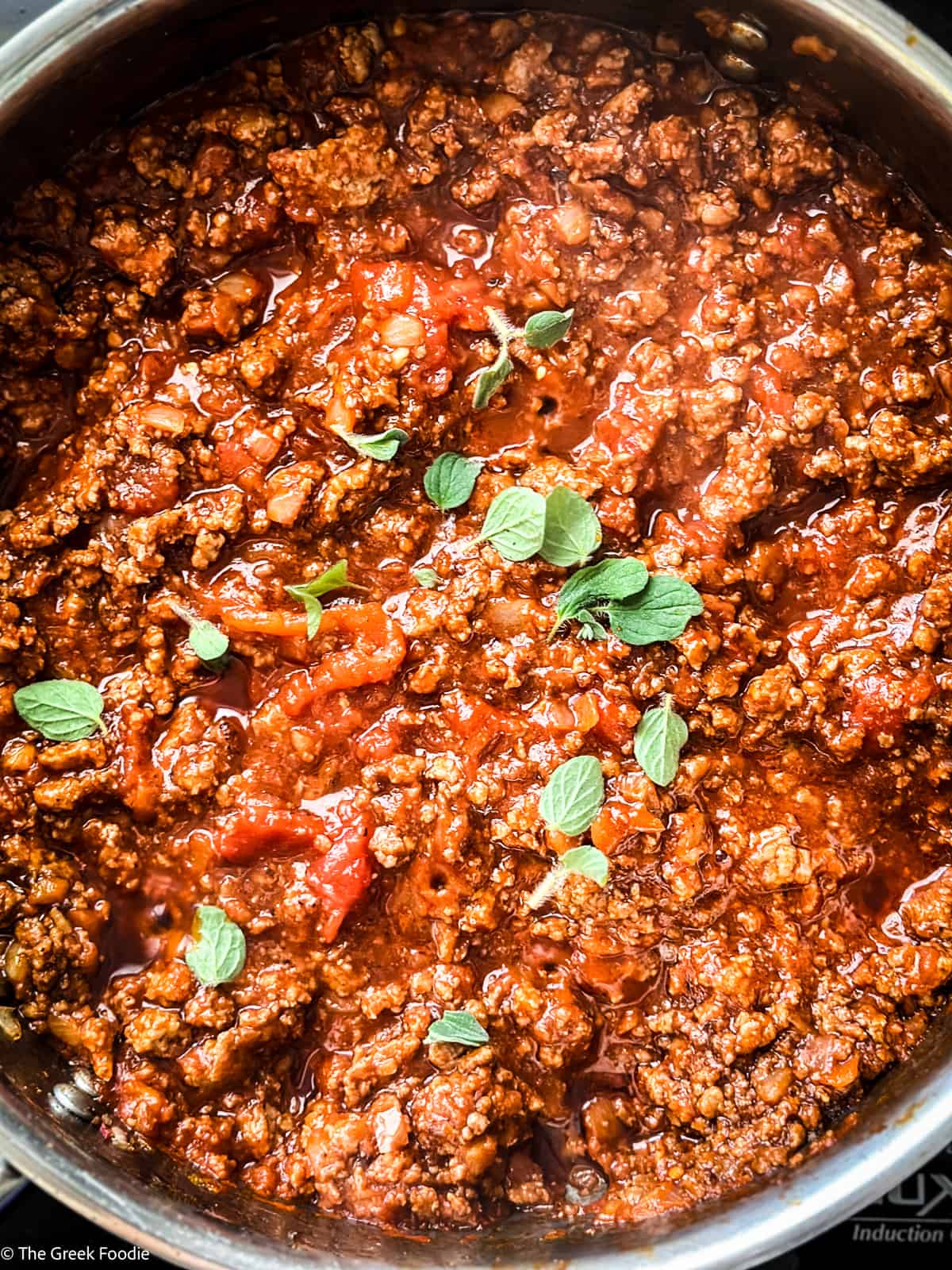
4. Add the tomatoes, cinnamon, nutmeg, and fresh oregano leaves, and stir. Lower the heat and cook the beef for about 30 minutes, until it’s tender and all its juices have evaporated.
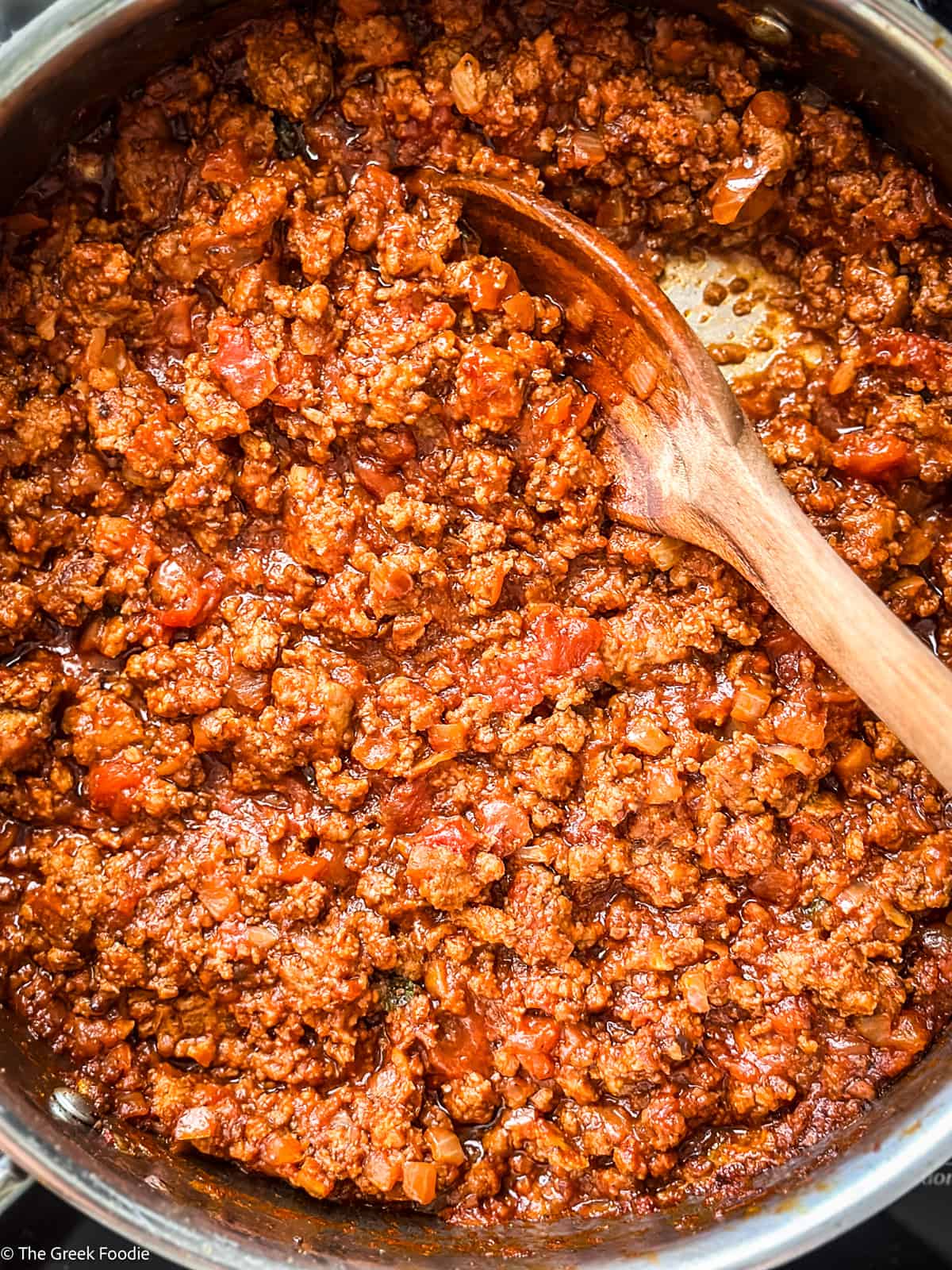
5. Leave the meat to cool. Season with sea salt and freshly ground pepper.
Make the pasta
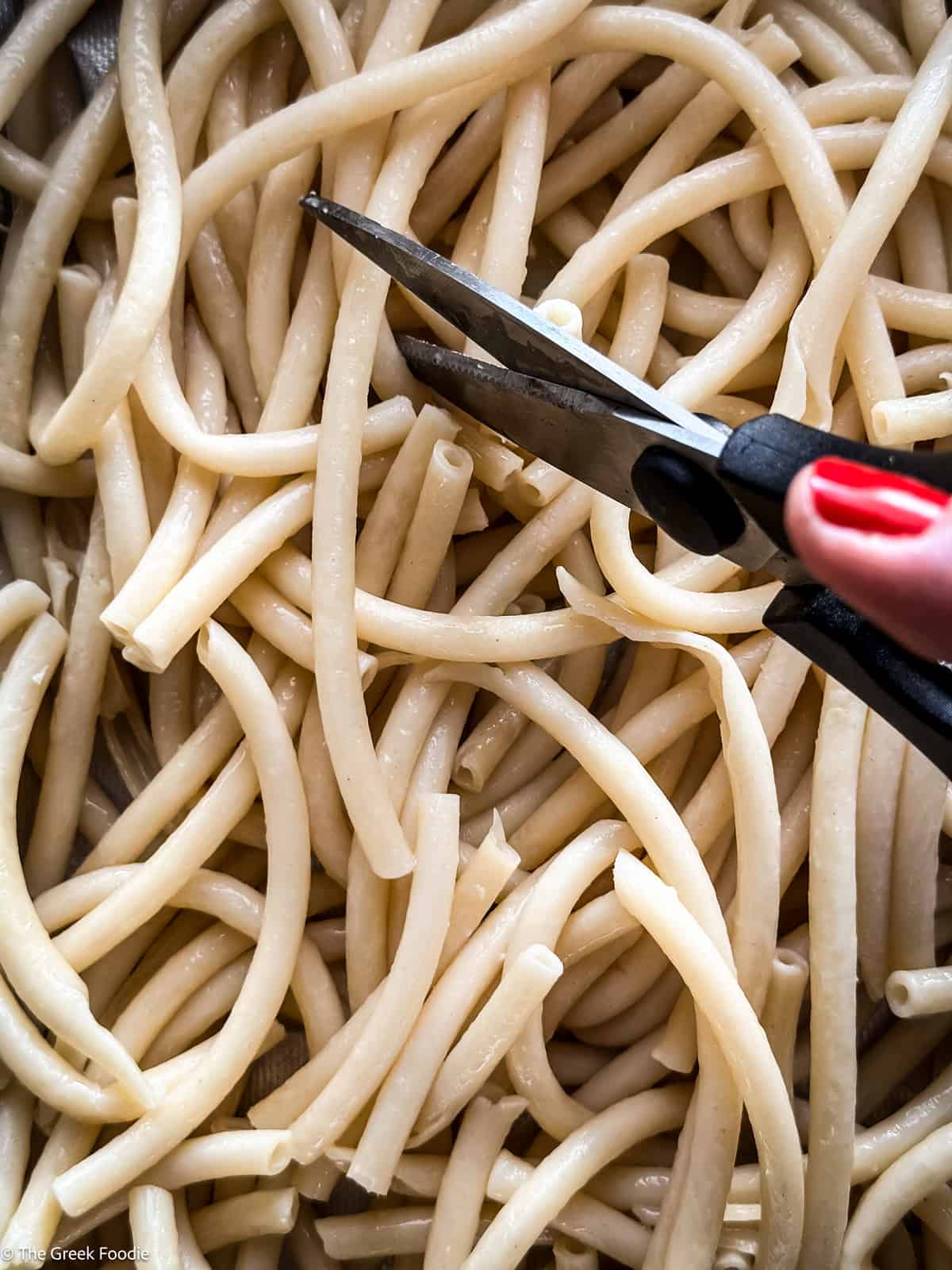
- Boil the pasta in plenty of salted boiling water for 8 minutes, until tender. Drain pasta well and place it back in the pot. Add the butter and toss.
- With kitchen scissors, cut the pasta here and there into smaller pieces, so that they are not too long. Shorter pieces mean every slice cuts cleanly instead of dragging whole noodles out.
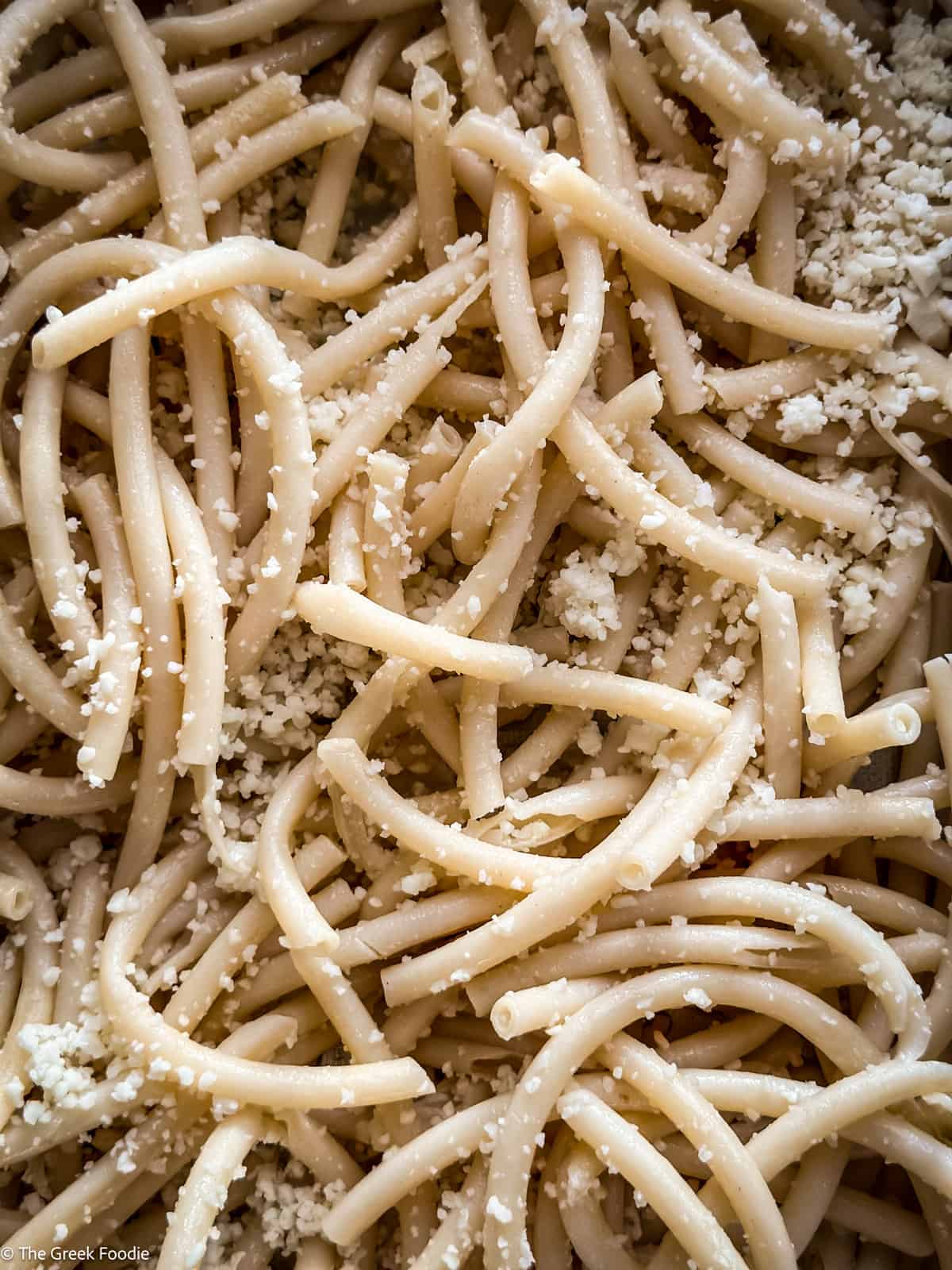
8. Sprinkle 1/2 cup of kefalotiri cheese and toss pasta.
Make the white sauce
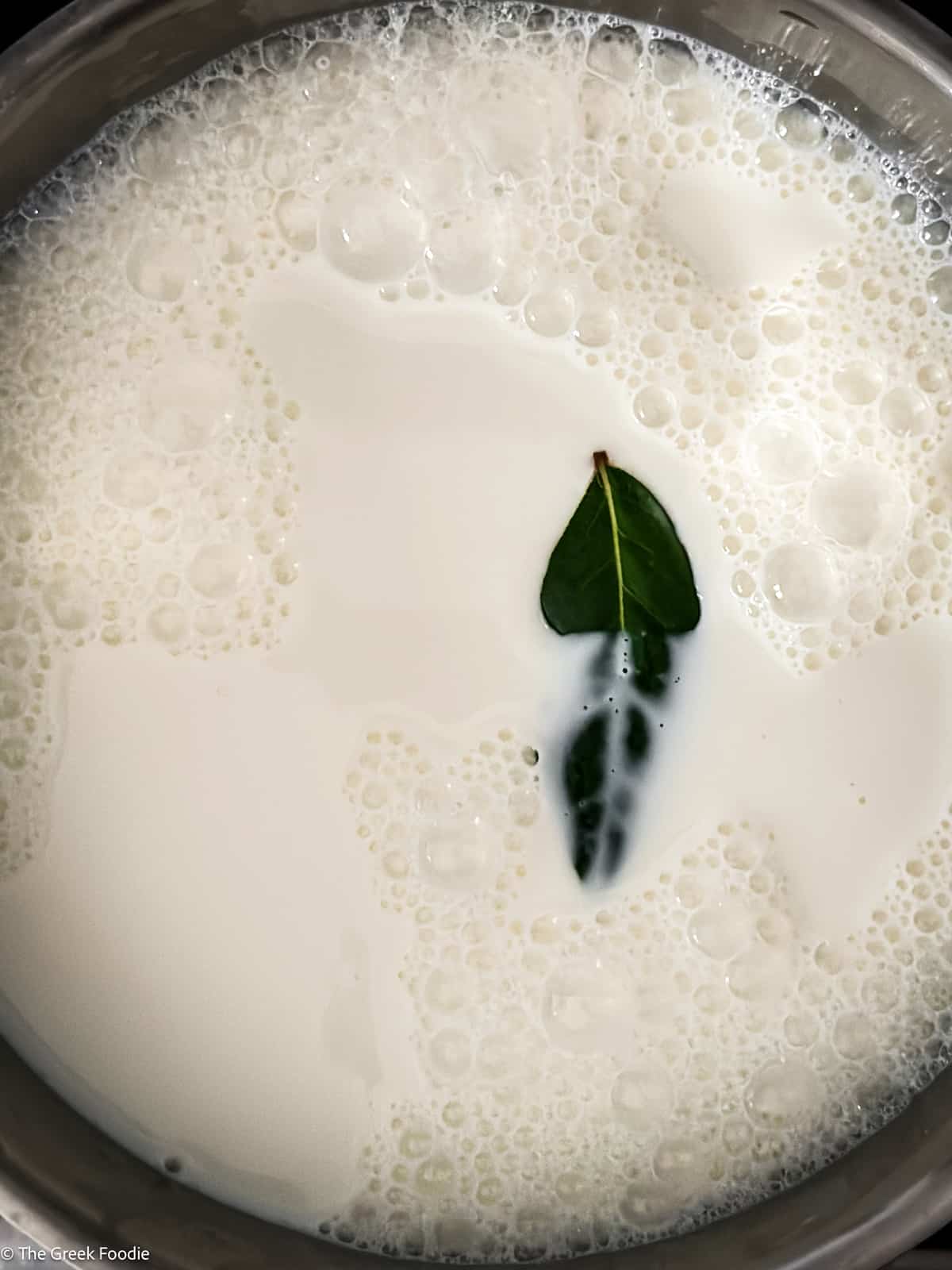
9. Heat the milk slowly in a saucepan with the fresh bay leaf.
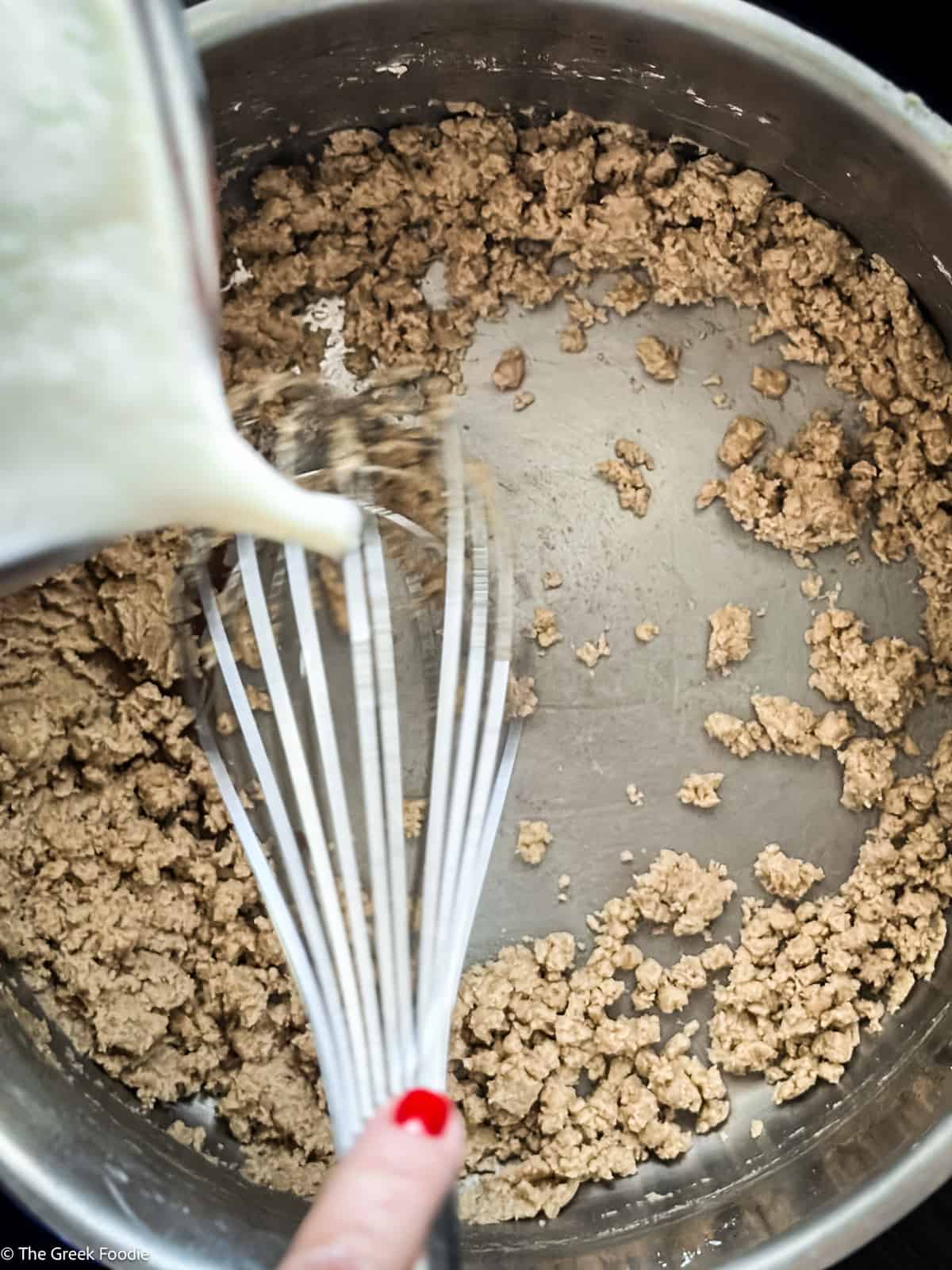
- Melt the butter over medium-low heat in a deep saucepan. Pour in the flour all together and continue to mix on medium to low heat.
- Continue stirring for 3-4 minutes on low heat to cook the flour without darkening.
- Pour in the milk and the bay leaf. Increase the heat a little and continue stirring nonstop to gradually dissolve the lumps that form. You can’t avoid lumps; they will dissolve with continuous stirring. It doesn’t need to be perfect, do the best you can.
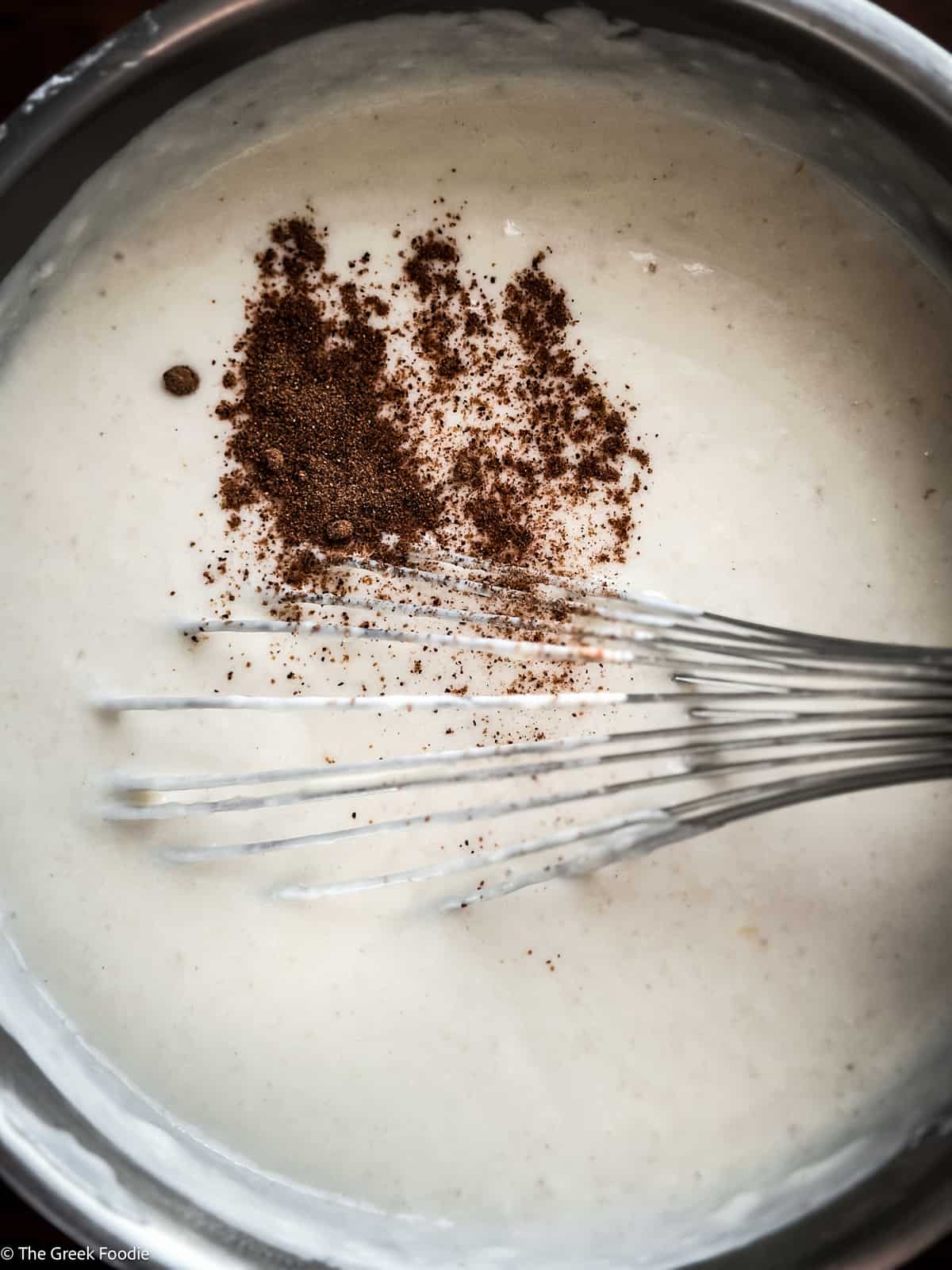
13. Add the nutmeg. Simmer the sauce over low heat for about 15 minutes, stirring often. It will thicken.
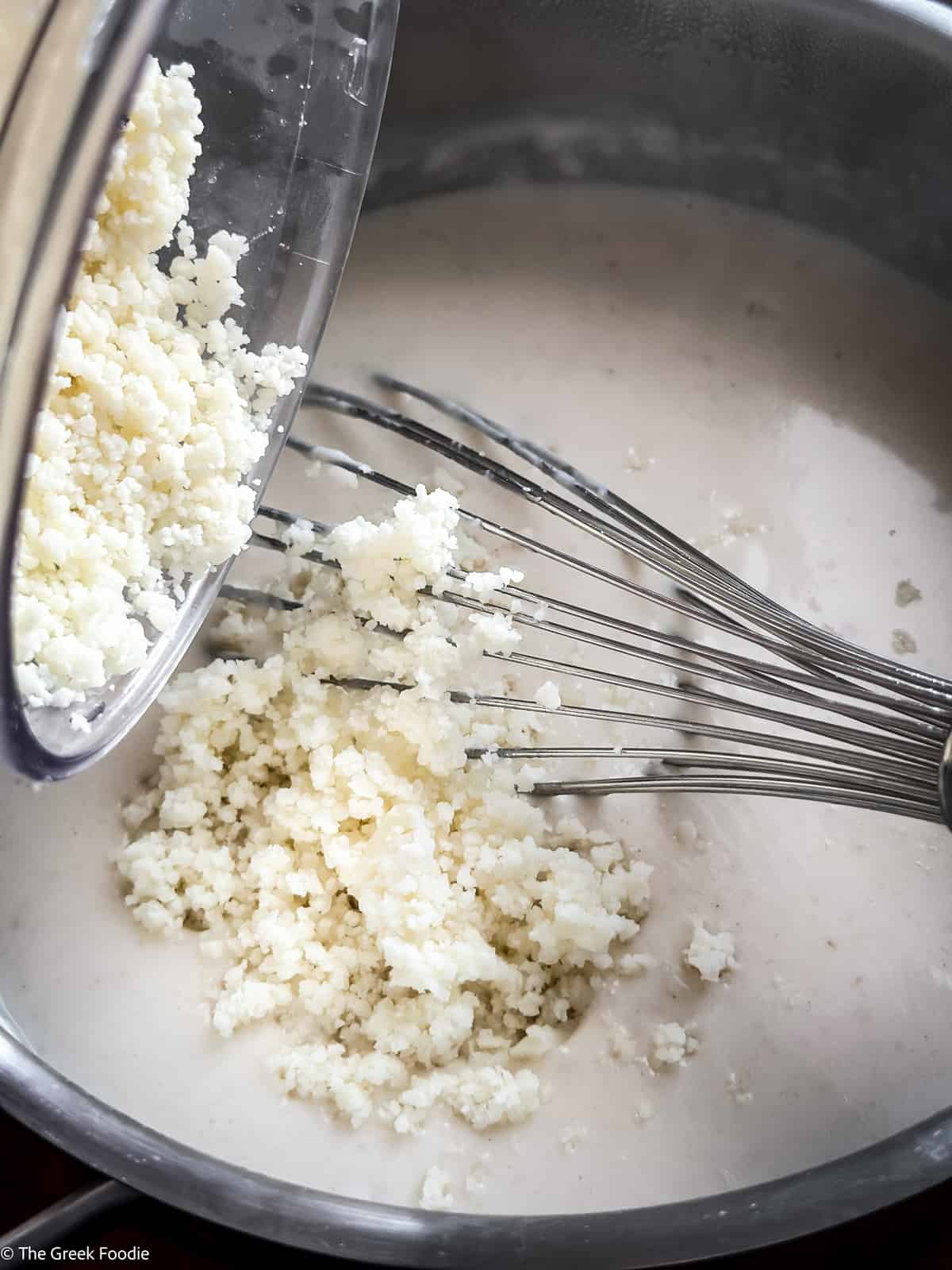
14. Add the gruyere cheese and immediately remove the sauce from the heat. Stir again well.
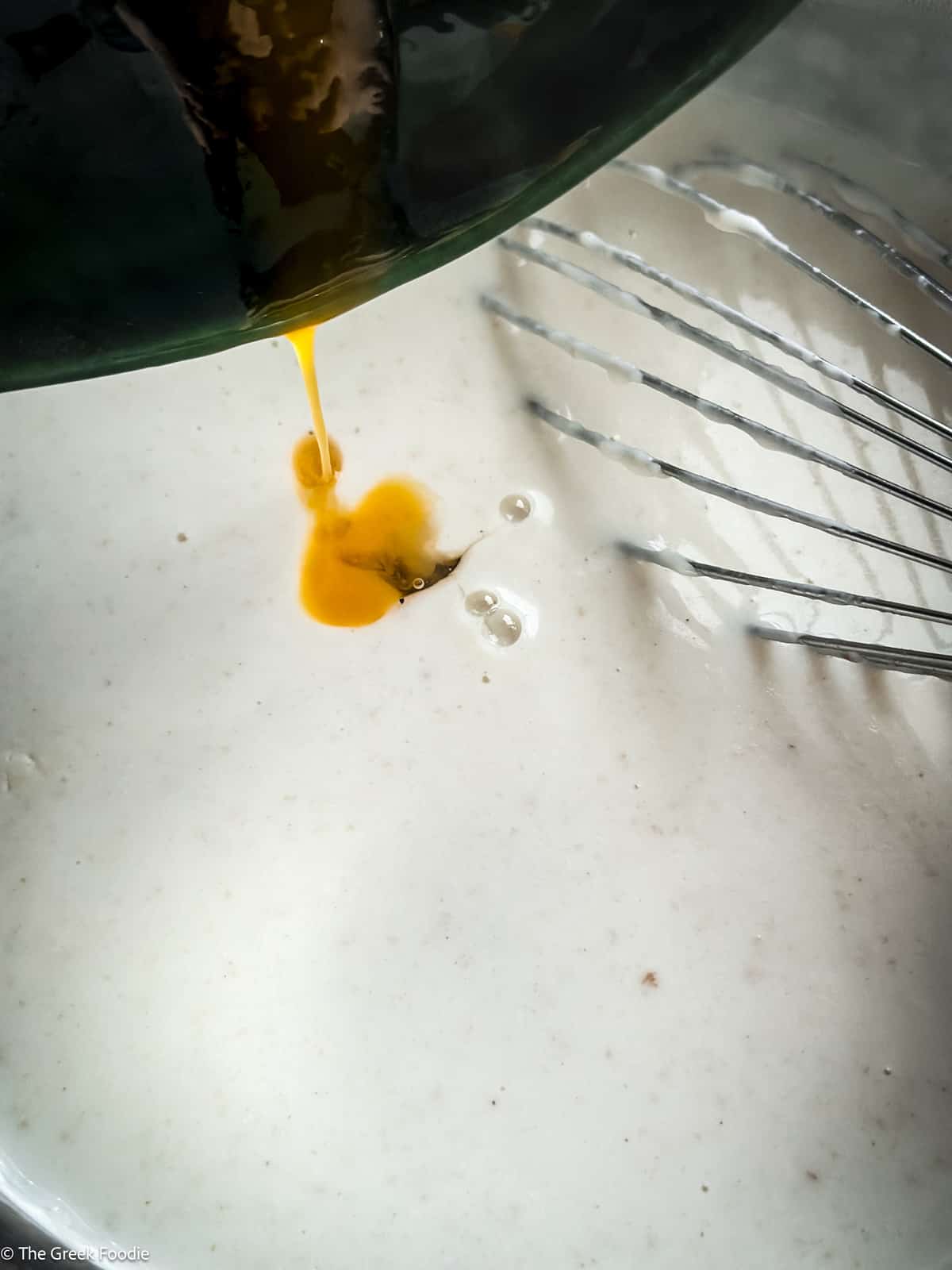
15. Throw in the yolks and continue mixing with the whisk.
Assemble
- Preheat oven to 180°C / 350°F.
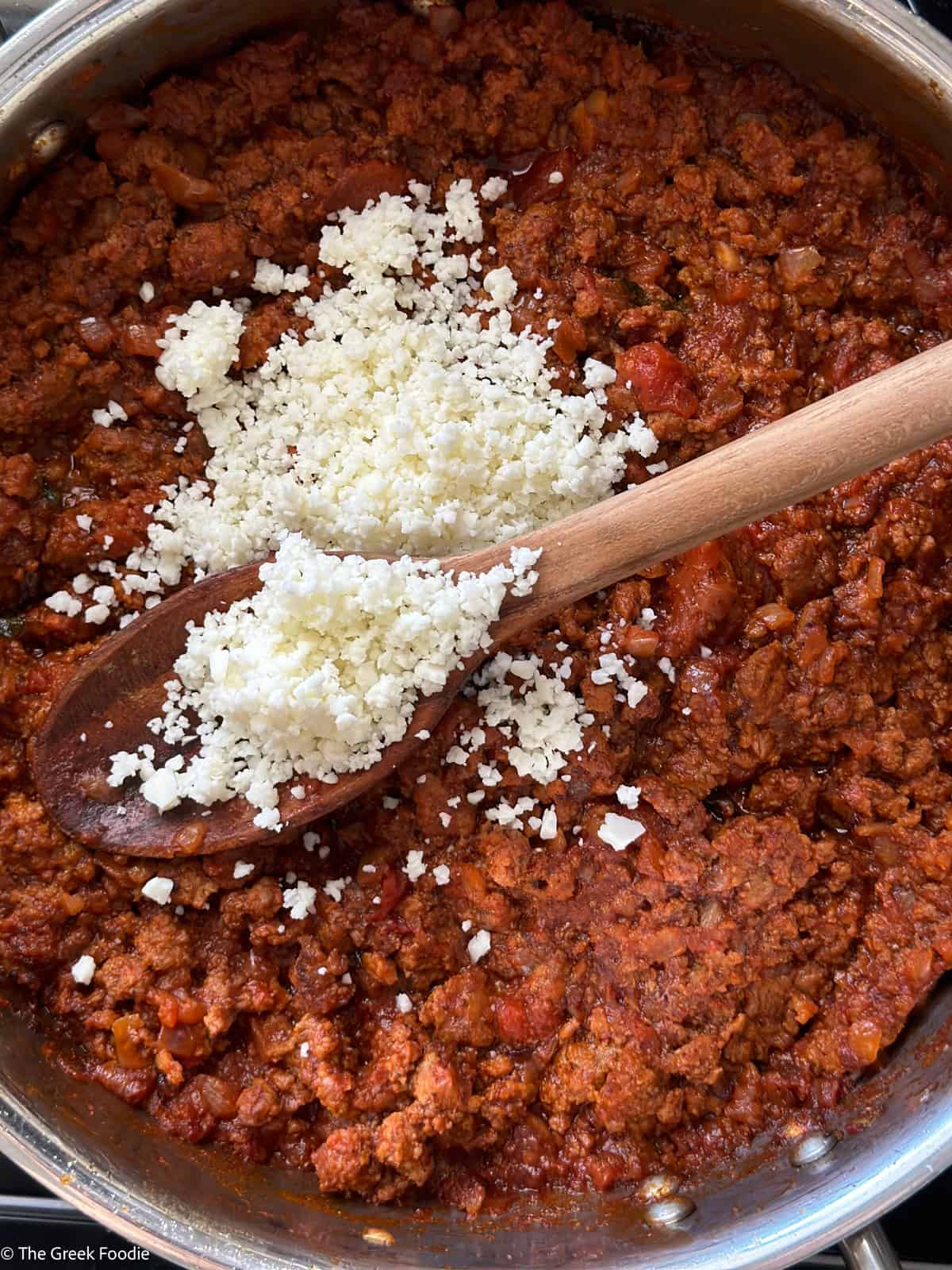
17. Right before assembling add ½ cup of grated kefalotiri cheese in the meat sauce and stir.
- Lay the pasta in a rectangular lasagna pan.
- Layer all the meat sauce on top of the pasta.
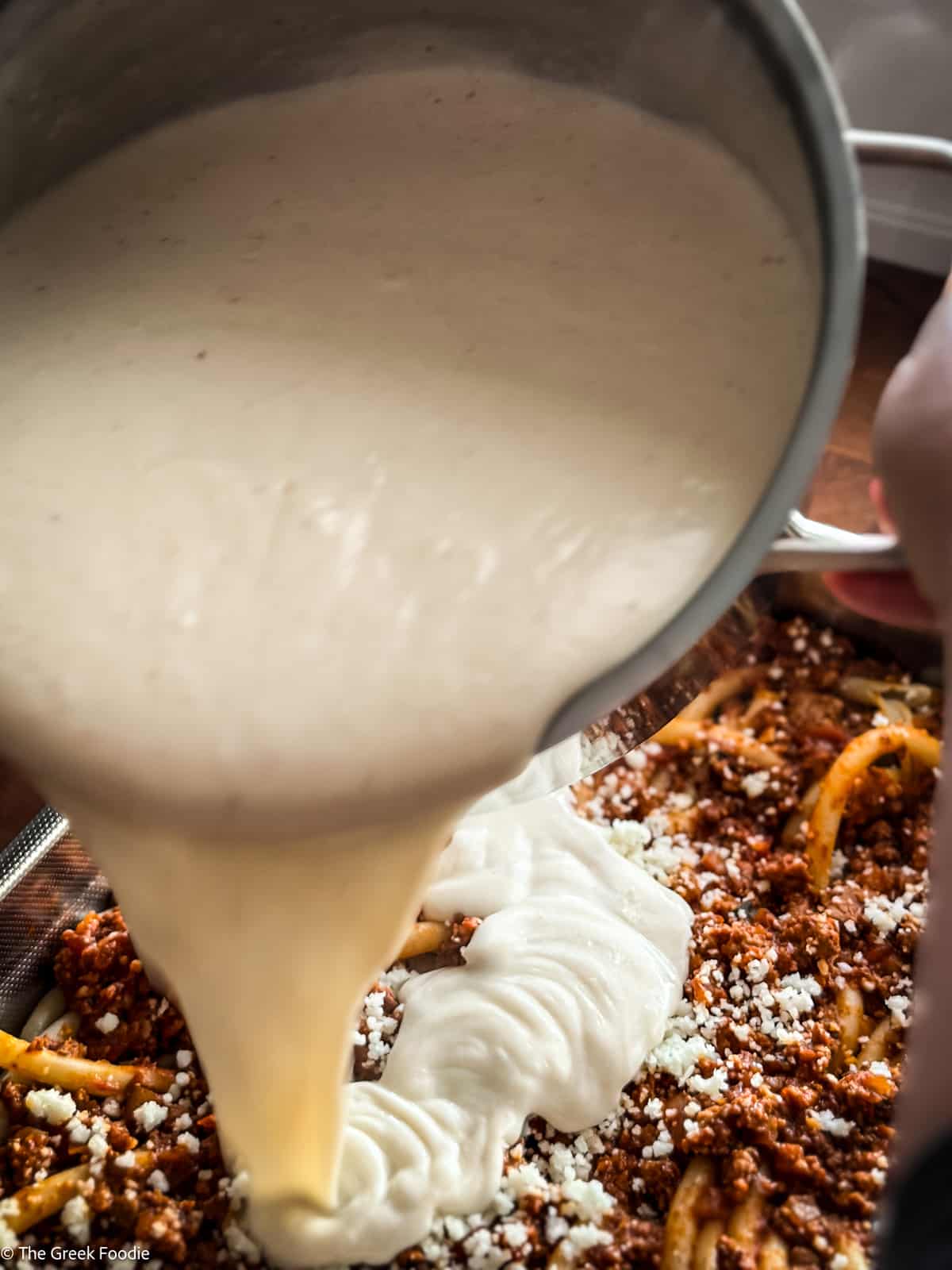
- Finally, pour the béchamel on top and smooth the surface with a spatula.
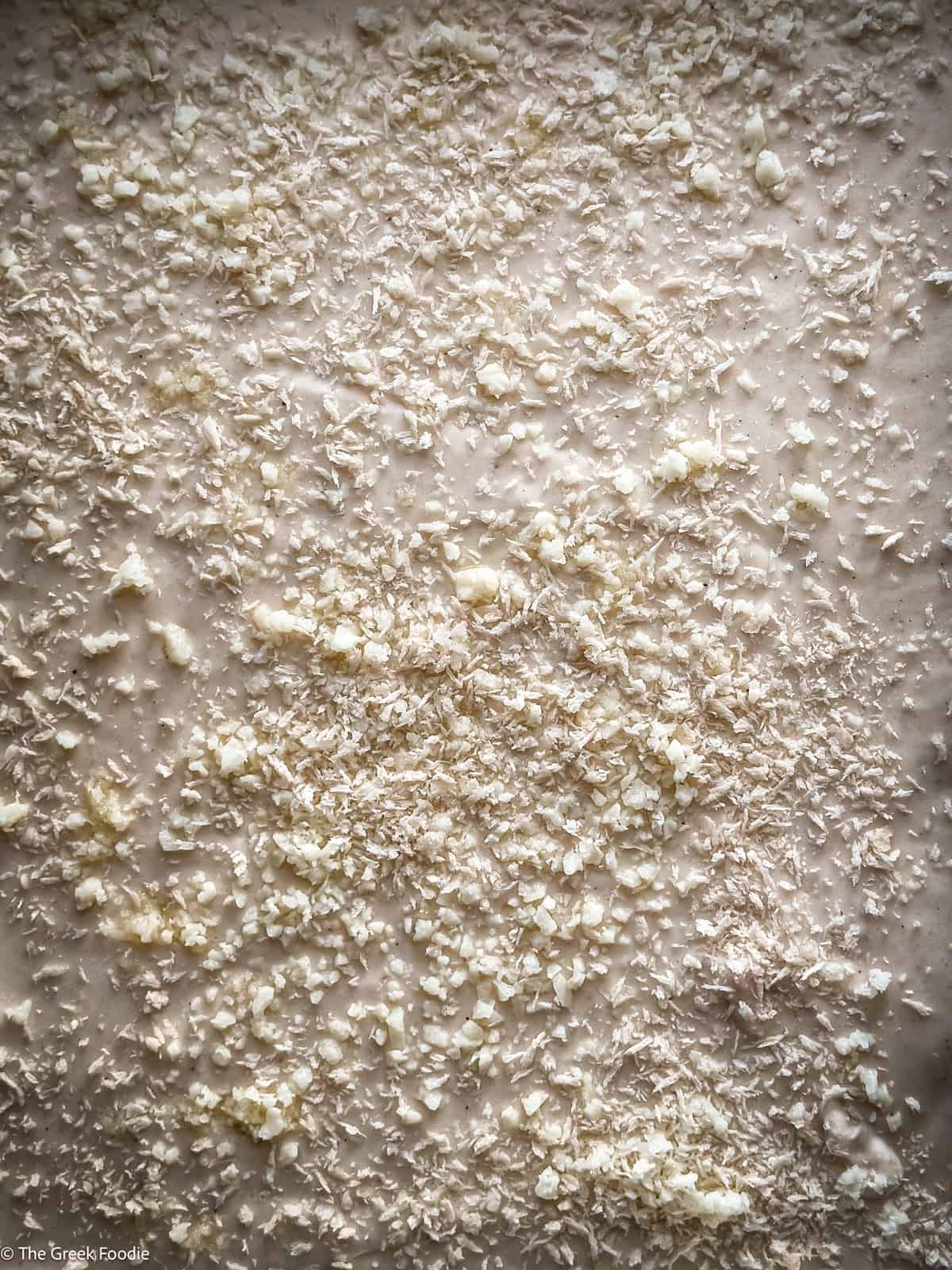
- Top pastitsio with the breadcrumbs and grated gruyere cheese.
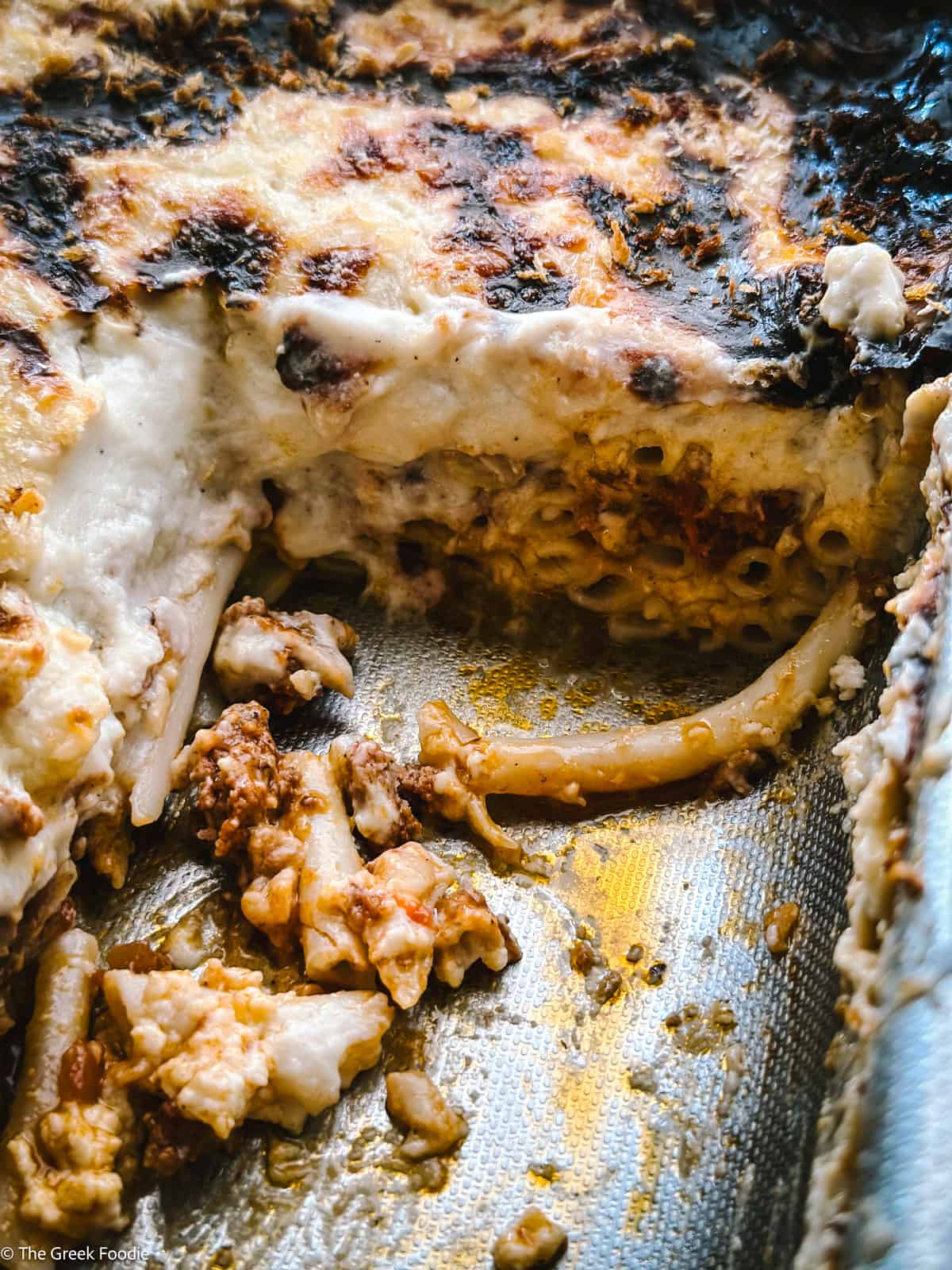
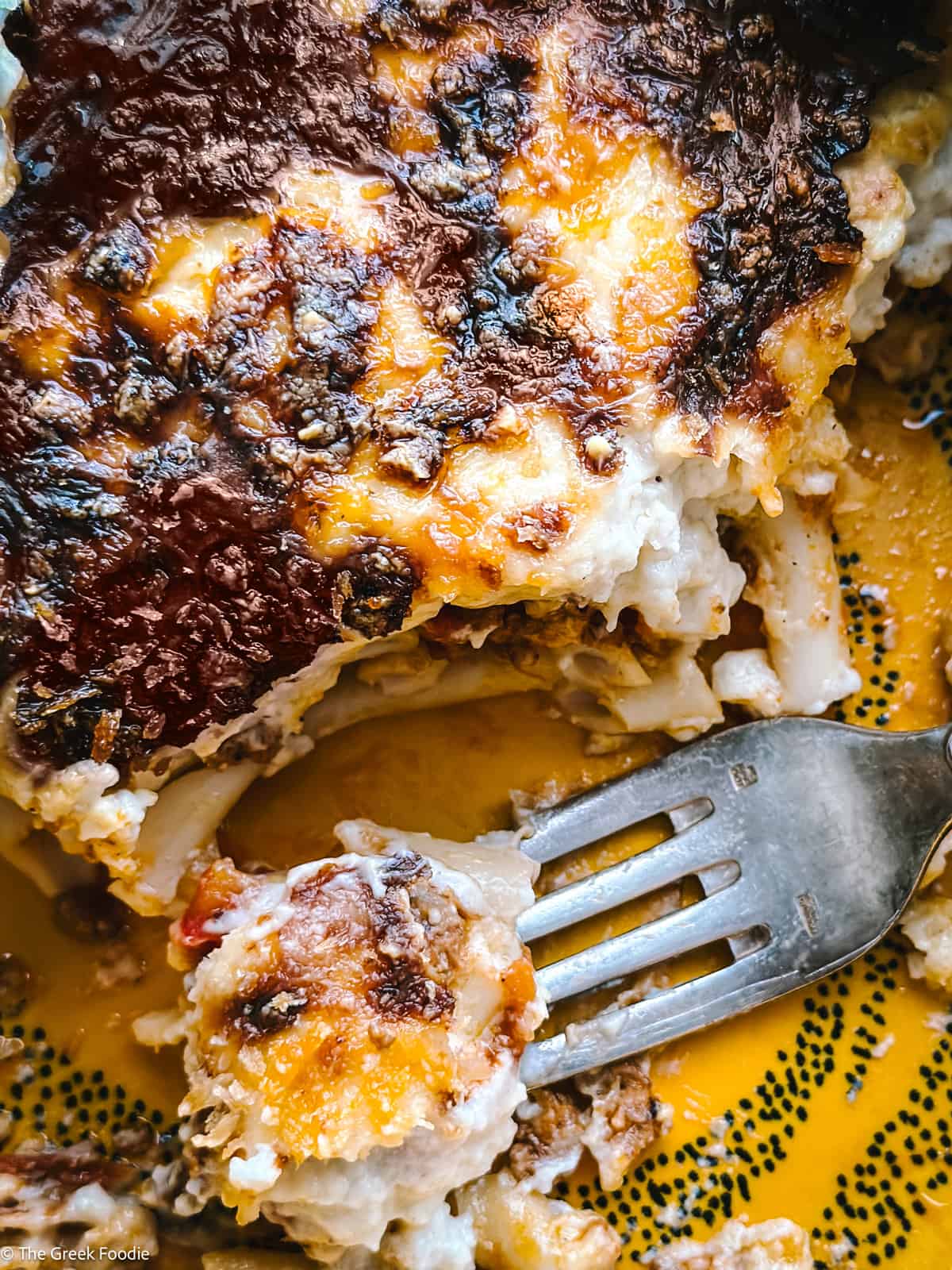
- Bake the pastitsio for about 60 minutes, until it forms a smooth and golden crust on top.
- Let it cool for 15 minutes at least and serve.
My tips for perfect pastitsio
- Brown the meat in a dry, hot pan. No oil at first — the meat browns instead of steaming, and those browned bits are pure flavor.
- Make extra béchamel. Trust me on this. Leftover white sauce over fried potatoes or steak with black pepper is a gift to your future self.
- Let it rest 30 minutes before cutting. I know. But this is the difference between clean layered slices and a delicious mess.
- Perfectionist move: pass the béchamel through a fine sieve before pouring.
What to serve with pastitsio
Pastitsio is a rich, hearty dish and pairs well with a leafy green salad like our maroulosalata. Add a couple of slices of warm bread with dipping olive oil, marinated olives with feta and you are all set for an unforgettable meal.
Storage, freezing & reheating
- In the fridge: Cover and refrigerate baked pastitsio for up to 3 days.
- To reheat from the fridge: Individual slices: microwave 2 minutes, or cover with foil and warm in a 180°C / 350°F oven for about 20 minutes. Whole pan: cover with foil and reheat at 180°C / 350°F for 30–40 minutes, until hot in the center.
- To freeze unbaked: Assemble, wrap the pan tightly in heavy-duty foil, label and date it, freeze up to 3 months. Bake from frozen, covered, at 180°C / 350°F for about 1½ hours, uncovering for the last 20 minutes to brown the top.
- To freeze baked: Cool completely, wrap tightly, freeze up to 3 months — individual slices in freezer containers make the easiest weeknight dinners. Reheat covered at 180°C / 350°F for about 1 hour (whole pan) or 25–30 minutes (slices).

FAQ
You may also like
Cooked it? Rate it!
If you tried this recipe, I’d love to know how you liked it — drop a comment below or tag me on Instagram @thegreekfoodie__.


Pastitsio (Greek Lasagna With Béchamel)
Equipment
- 1 lasagna pan 26 x 35cm / 10" x 14"
Ingredients
for the beef ragù
- 1.2 lb ground beef, 500 grams
- 1/2 cup extra virgin olive oil
- 1 onion , diced
- 14 oz San Marzano tomatoes, chopped
- 2 tablespoons tomato paste
- 1 teaspoon ground nutmeg
- 1 teaspoon ground cinnamon
- 2 tablespoons fresh oregano leaves , or 1 tablespoon dried oregano
- sea salt
- freshly ground pepper
for the white sauce
- ⅔ cup butter
- 1 cup all-purpose flour
- 8 cups whole milk, 2 lt, warm
- 1 bay leaf
- ⅔ cup gruyere cheese, grated
- 3 egg yolks, from medium size eggs
- 1 teaspoon ground nutmeg
- sea salt
for the pasta
- 11 oz tubular pasta
- sea salt
- ½ cup kefalotiri cheese, or pecorino romano, grated
- freshly ground pepper
- 3 tablespoons butter
For the top
- ⅓ cup gruyere cheese, grated
- ¼ cup breadcrumbs , or panco
Instructions
Make the beef ragu
- Place a wide large skillet on the stove over high, without any oil, on a. When skillet is hot add the ground meat. Using a wooden spoon, beak the meat as it browns. Brown while breaking and stirring constantly for 5-6 minutes, until the ground beef is well browned all over.1.2 lb ground beef
- Add the onion, and olive oil to the skillet and continue sautéing for another 1-2 minutes.1 onion , 1/2 cup extra virgin olive oil
- Add the tomato paste and stir. Cook for 1-2 minutes. Scrape the burnt bits from the bottom of the pot with a wooden spoon as you stir.2 tablespoons tomato paste
- Add the tomatoes, cinnamon, nutmeg, and fresh oregano leaves, and stir. Season with sea salt and plenty of freshly ground pepper. Lower the heat and cook the beef for about 30 minutes, until it's tender and all its juices have evaporated.14 oz San Marzano tomatoes, 1 teaspoon ground nutmeg, 1 teaspoon ground cinnamon, 2 tablespoons fresh oregano leaves , sea salt, freshly ground pepper
- Leave the meat to cool. Season with sea salt and freshly ground pepper.
Make the white sauce
- Heat the milk slowly in a saucepan with the fresh bay leaf.8 cups whole milk, 1 bay leaf
- Melt the butter over medium-low heat in a deep saucepan.⅔ cup butter
- Pour the flour in batches and stir continuously on medium to low heat. Continue stirring for 3-4 minutes on low heat to cook the flour.1 cup all-purpose flour
- Pour in the milk, all together with it, along with the bay leaves. Increase the heat a little and continue the non-stop stirring to gradually dissolve the lumps that form. You can't avoid lumps, they just dissolve with continuous stirring.8 cups whole milk
- Add the nutmeg. Simmer the sauce over low heat for about 15 minutes, stirring very often with a wooden spoon. The béchamel will thicken.1 teaspoon ground nutmeg
- Add the cheese and immediately remove from the heat. Stir well.⅔ cup gruyere cheese
- Throw in the yolks and continue mixing, with the whisk. If you are not using immediately cover sauce with a cling film and press it lightly on the surface so that it does not form a crust.3 egg yolks
Make the pasta
- Boil the pasta in plenty of salted boiling water for 8 minutes, until tender. Drain pasta well and place it back in the pot. Add on the butter and toss.11 oz tubular pasta , 3 tablespoons butter
- With kitchen scissors, cut the pasta here and there into smaller pieces, so that they are not too long. Sprinkle ½ cup of grated kefalotiri cheese and toss pasta.½ cup kefalotiri cheese
Assemble
- Preheat oven to 180°C / 350°F.
- Lay the pasta in a rectangular lasagna pan.
- Add ½ cup of grated kefalotiri cheese in the meat sauce and stir.
- Layer all the meat sauce on top of the pasta.
- Finally, pour the béchamel on top and smooth the surface with a spatula.
- Top pastitsio with the breadcrumbs and grated gruyere cheese.¼ cup breadcrumbs , ⅓ cup gruyere cheese
- Bake the pastitsio for about 60 minutes, until it forms a smooth and golden crust on top.
- Let it cool for 15 minutes at least and serve.
Notes
- Keep more milk and flour around than you might actually need. Just in case an adjustment in the thickness of the sauce is needed.
- I always make more white sauce than I need. It is better to have extra than less, trust me on this. Refrigerate leftover sauce for up to three days. It must be covered with a transparent film right on the surface of the sauce, so that it does not form a crust. Use it over steak with lots of black pepper, fried potatoes, potato fritters or make macaroni and cheese.
- Allow pastitsio to sit for 30 min before serving. It will be easier to cut and serve.
- If you’re a perfectionist do this: Pass the béchamel through a fine sieve, pressing it with a wooden spoon so that the tiniest clumps of flour don’t remain.
- Refrigerate already cooked pastitsio for up to three days.
- Pastitsio freezes and reheats beautifully. For uncooked pastitsio: Assemble as directed and wrap the baking pan tightly with heavy-duty foil. Make sure to label and date the foil. Consume within 3 months. For baked pastitsio: Let the food cool completely, wrap the pan tightly with heavy-duty foil, label and date it and freeze for up to 3 months.
Nutrition