

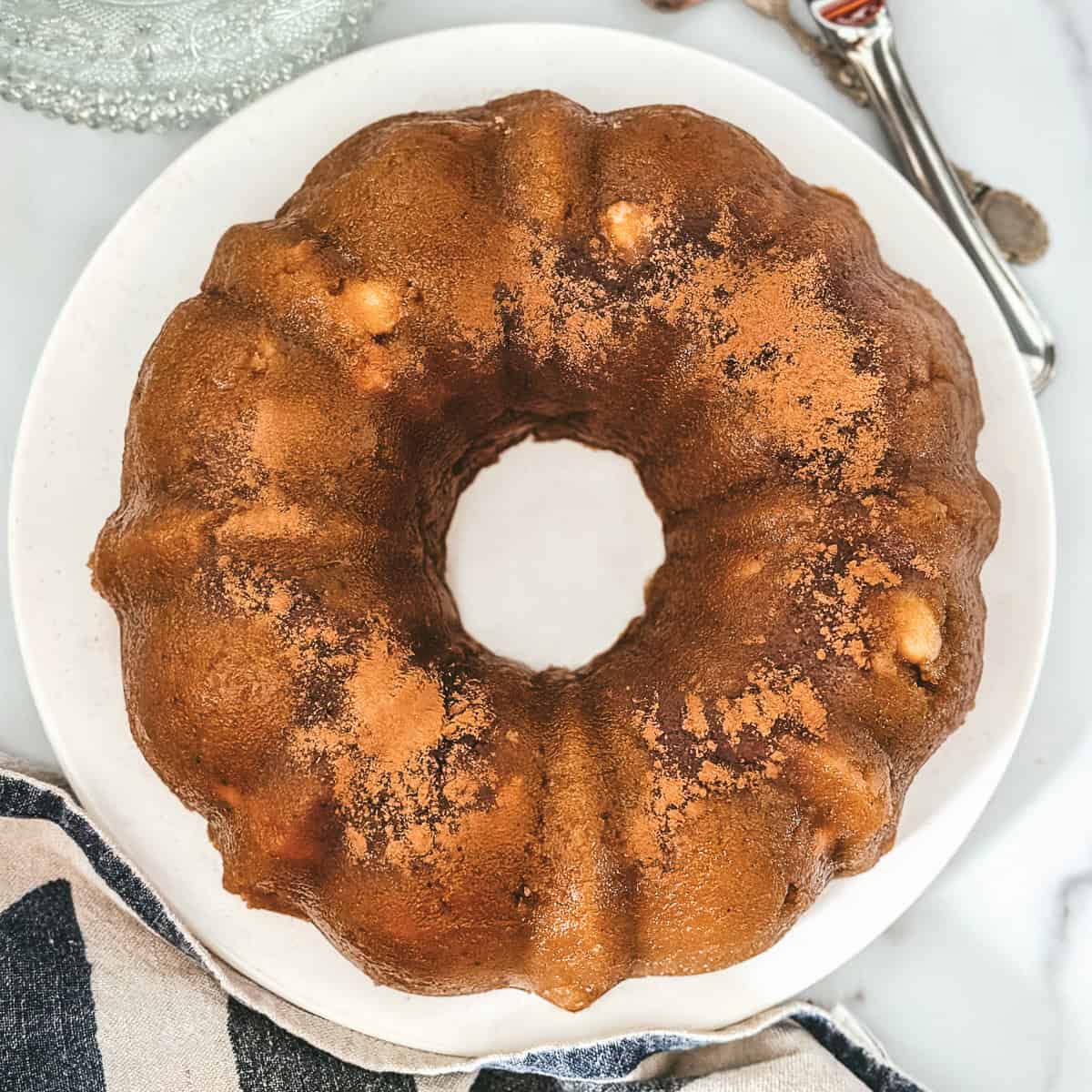
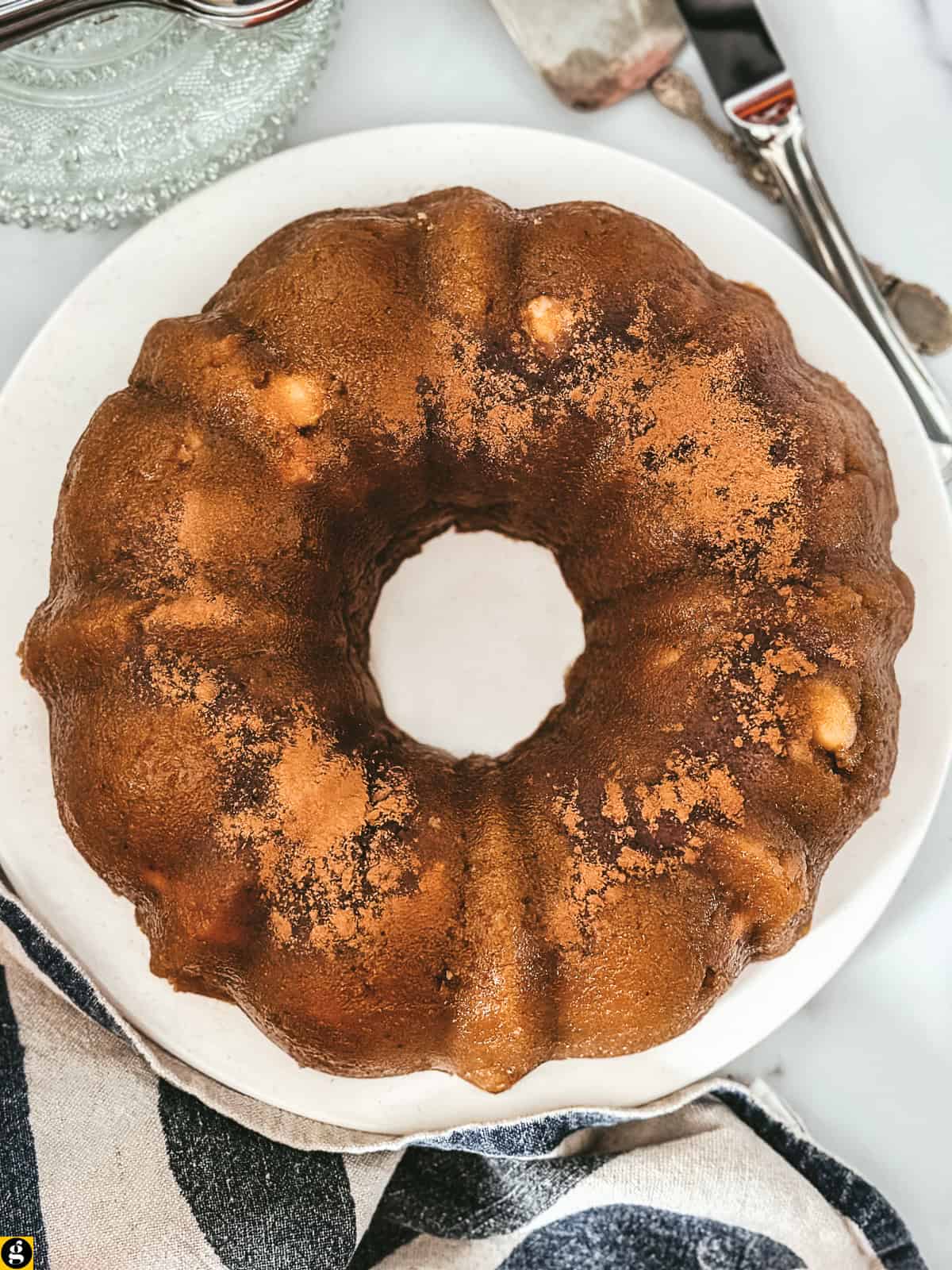
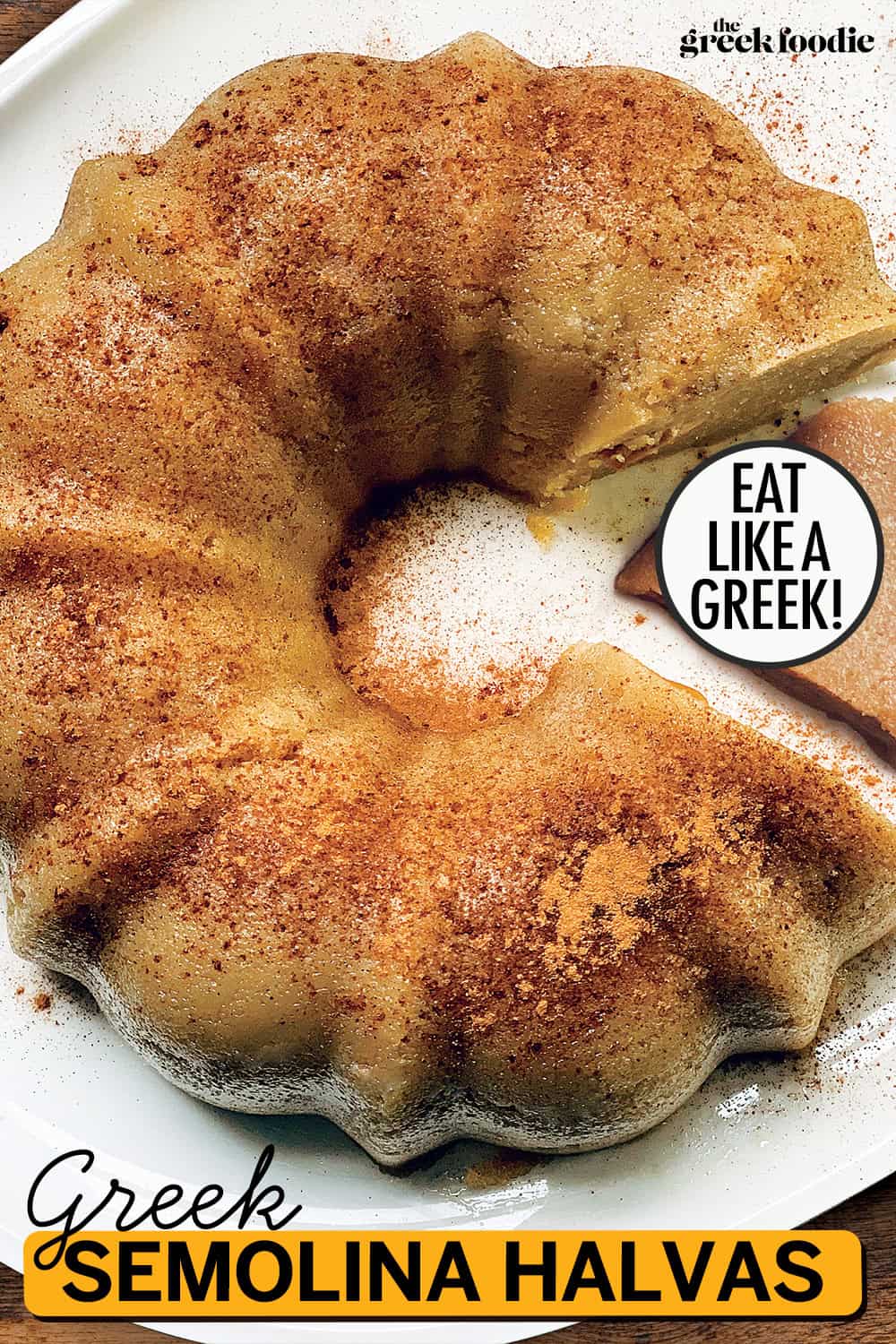
Greek halva (halvas) is a no-bake semolina dessert. You toast coarse semolina in olive oil until it smells like warm cookies, simmer it with brown sugar, water, cinnamon, and cloves, then press it into a bundt pan and let it set. It turns into a tender, spoonable-meets-sliceable ring studded with toasted almonds. You need no eggs, no butter, and no oven, so it’s naturally vegan.
Halva was one of my mom’s go-to sweets. She made it often when I was growing up, and we always enjoyed it as our dessert. It’s still the halva I think of first: simple, fragrant with cinnamon, and gone faster than you’d expect.
What is Greek halva?
Greek halva is a dessert made from semolina toasted in olive oil and cooked with a sweet, spiced syrup until thick, then set in a mold. The word comes from the Arabic halwa, meaning “sweet,” and versions of it are made from the Balkans to India.
When a Greek says they’re making halva at home, they almost always mean semolina halva. However, in Greece, “halvas” can mean three different things:
- Semolina halva (halvas simigdalenios): the homemade kind, and the recipe on this page. It’s soft, moist, and cinnamon-scented.
- Tahini halva (Macedonian halva): the dense, crumbly sesame block you buy at the store, sometimes marbled with chocolate or studded with almonds or pistachios. It’s made commercially, not at home. If you love sesame, try my pasteli.
- Halvas Farsalon: a caramelized, chewy, jelly-like specialty from Farsala in Thessaly, made with cornstarch rather than semolina.
What does Greek halva taste like?
Think of a cross between a moist spice cake and a firm pudding. The toasted semolina gives it a nutty, almost buttery flavor (from olive oil, not butter). Brown sugar adds a light caramel note, and cinnamon and cloves make the whole kitchen smell like the holidays. The almonds keep every bite a little crunchy.
Why you will love Greek halva
The 1-2-3-4 rule
Ask any Greek grandmother for her halva recipe and you’ll probably hear “ena, dio, tria, tessera”: one part olive oil, two parts semolina, three parts sugar, four parts water. It’s so easy to remember that most Greeks never write it down.
This recipe follows the rule exactly: 1 cup of olive oil, 2 cups of semolina, 3 cups of brown sugar, and 4 cups of water.
Ingredients
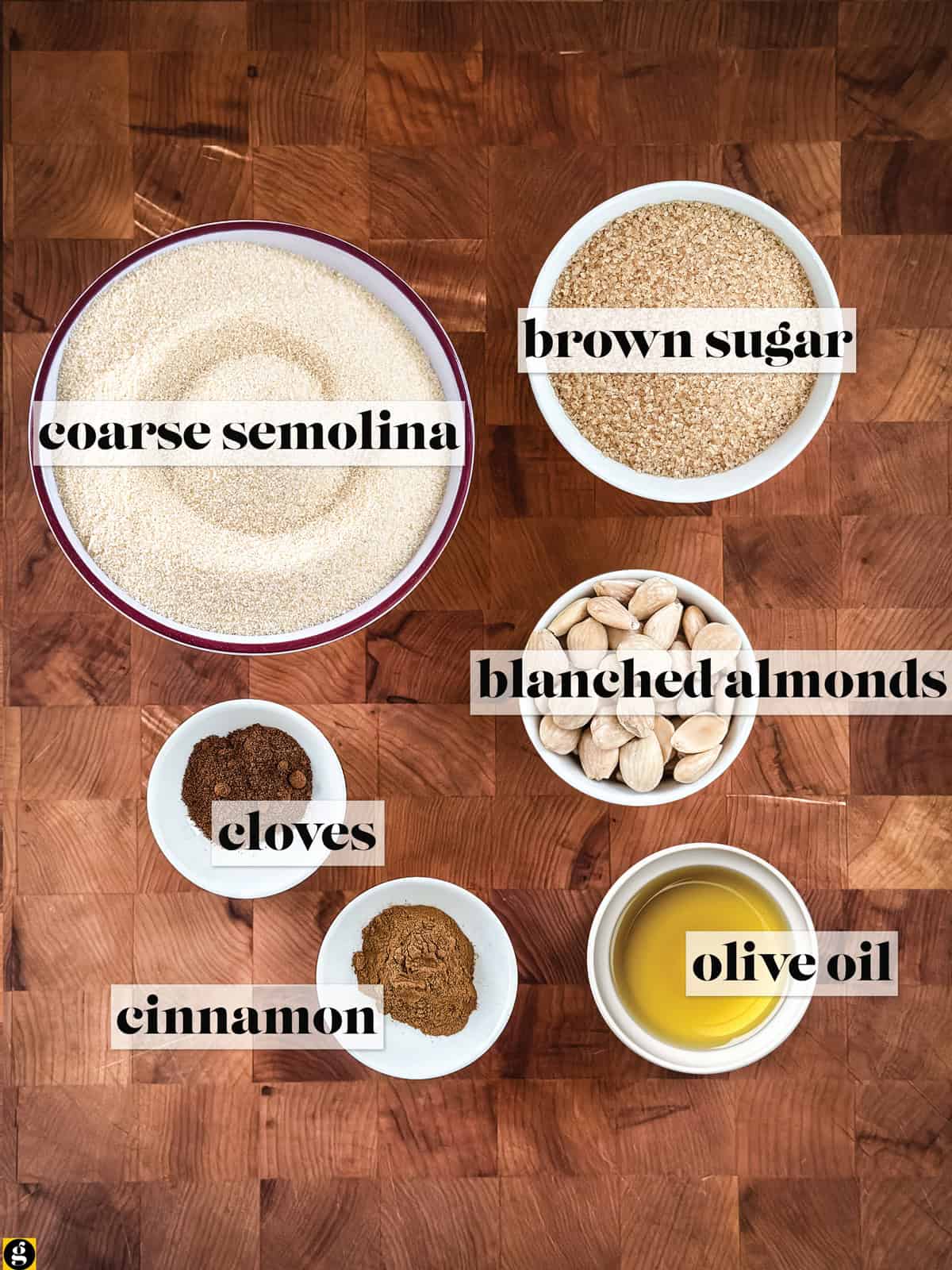
- Coarse semolina. Look for “coarse semolina” at Greek or Middle Eastern markets or online. It gives halva its classic grainy, cake-like crumb. The finer “semolina flour” sold at US supermarkets works too; the halva will just be smoother and a little softer. You can also do half fine, half coarse.
- Extra virgin olive oil. It’s the only fat, so use one you like the taste of.
- Brown sugar. It adds a light caramel flavor. Raw (demerara) sugar or white sugar works if that’s what you have.
- Whole blanched almonds. Toasted first for crunch. This is how most Greeks make it. Slivered almonds, pine nuts, pistachios, or walnuts all work too.
- Ground cinnamon and ground cloves. Plus extra cinnamon for dusting.
The exact quantities are in the recipe card below.
How to make Greek halva
Halva is made entirely on the stovetop. You toast the almonds, toast the semolina in olive oil, add the sugar, spices, and water, and stir until thick. Then you press it into a bundt pan and let it set for 3 to 4 hours.
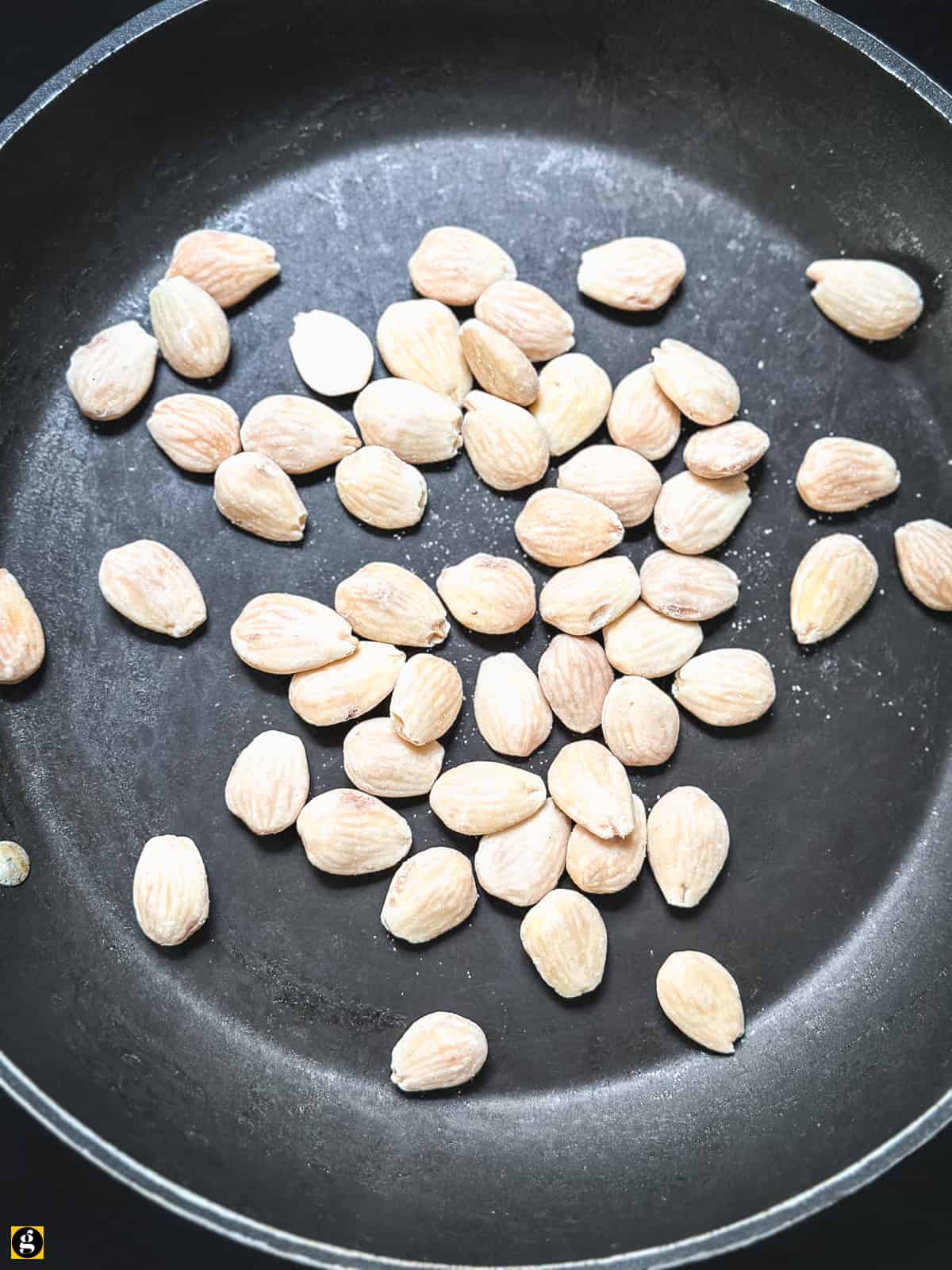
STEP 1. Toast the whole almonds in a large, deep pot over medium heat for 4–5 minutes, stirring, until fragrant and lightly golden. Transfer to a plate.
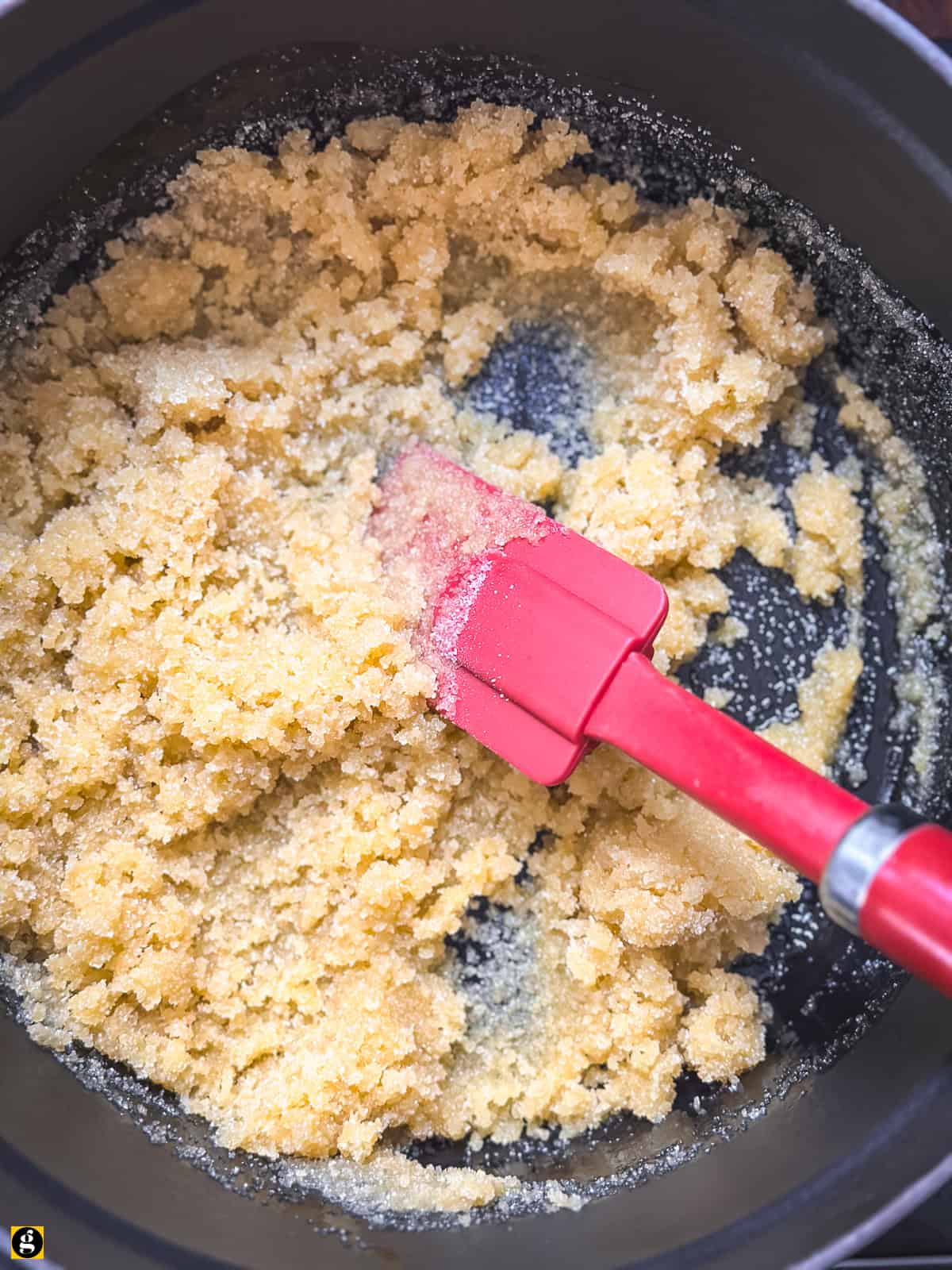
STEP 2. Add the olive oil and semolina to the pot. Toast over medium-low heat, stirring constantly, for 4–5 minutes, until the semolina is golden and smells nutty. Don’t rush this step; semolina goes from golden to burnt quickly.
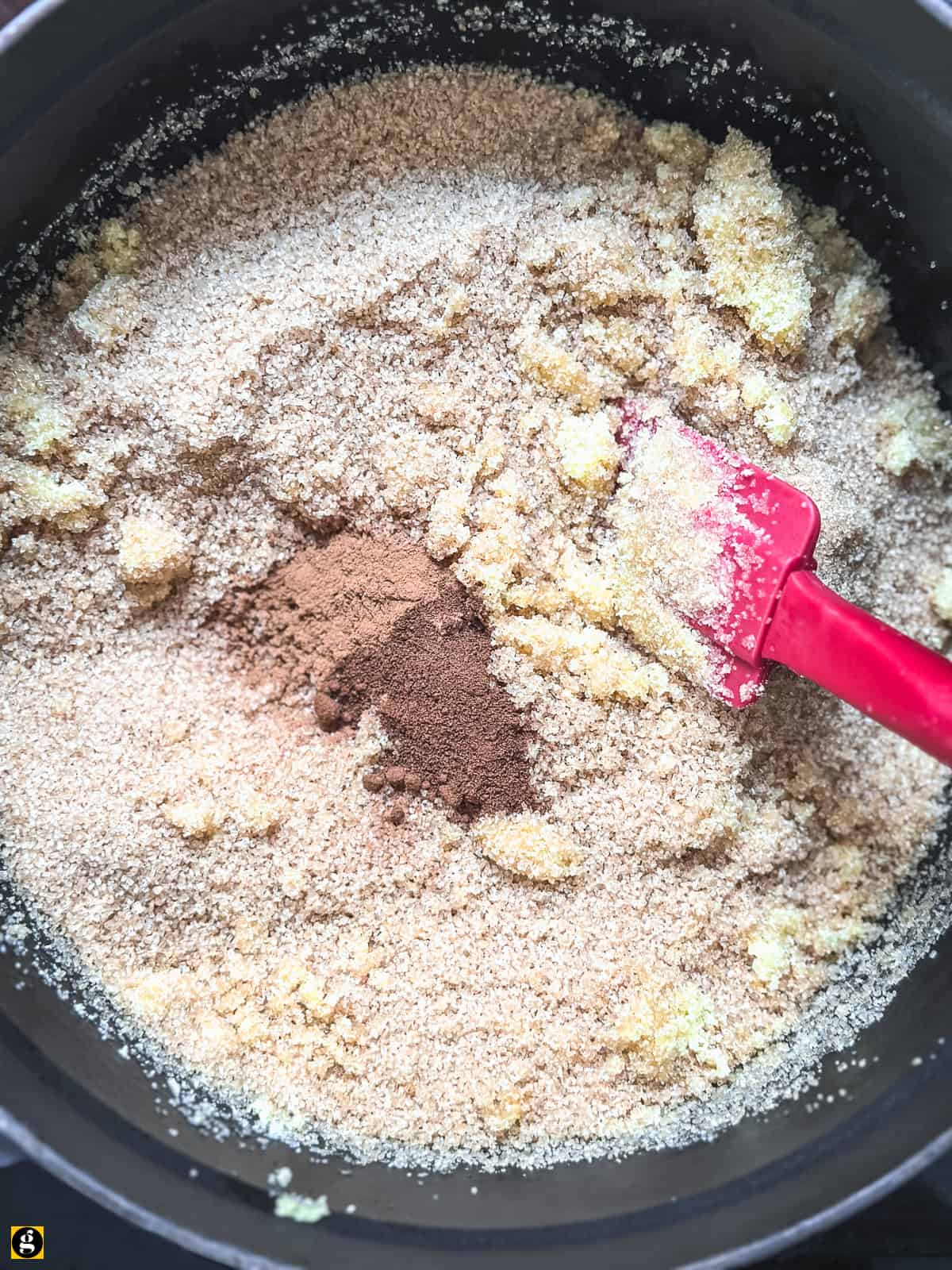
STEP 3. Add the brown sugar, cinnamon, and cloves.
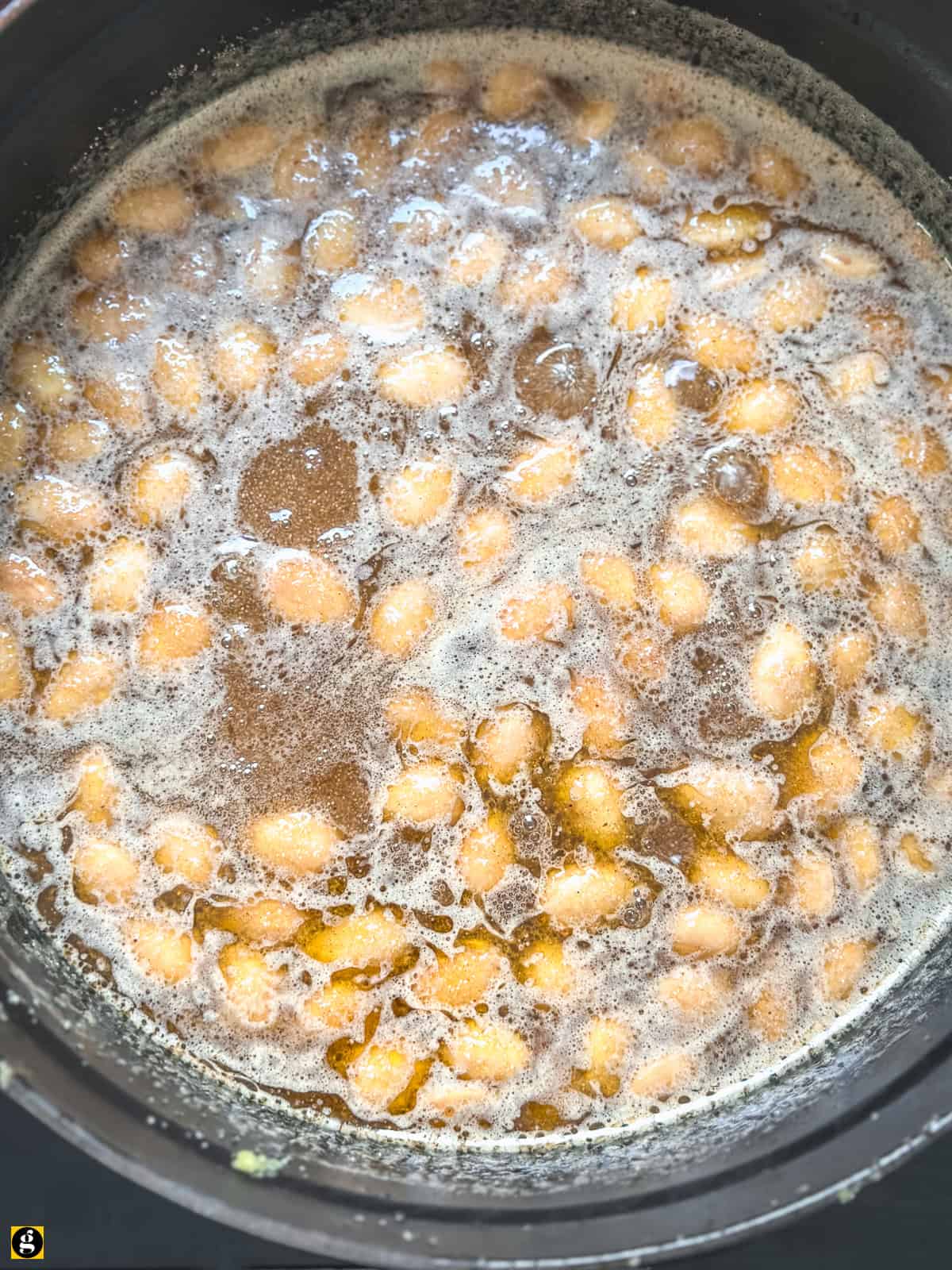
STEP 4. Stir in the almonds, then pour in the water slowly. Stand back: the hot semolina will spit and steam hard. A long-handled wooden spoon helps.
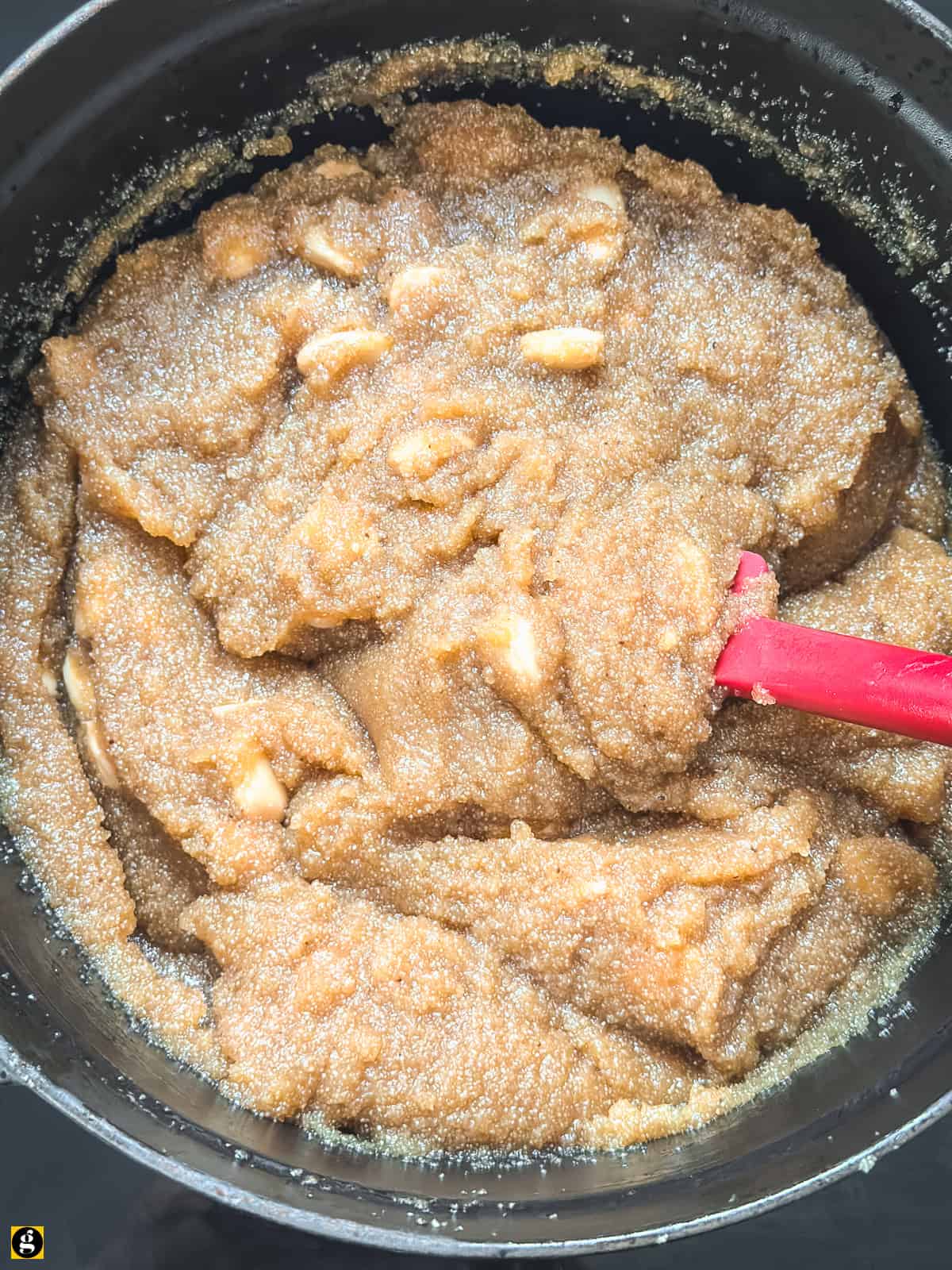
STEP 5. Keep stirring for about 10 minutes, until the mixture is thick, bubbling, and pulls away from the bottom and sides of the pot in one mass. Cover with a kitchen towel and let it cool slightly.
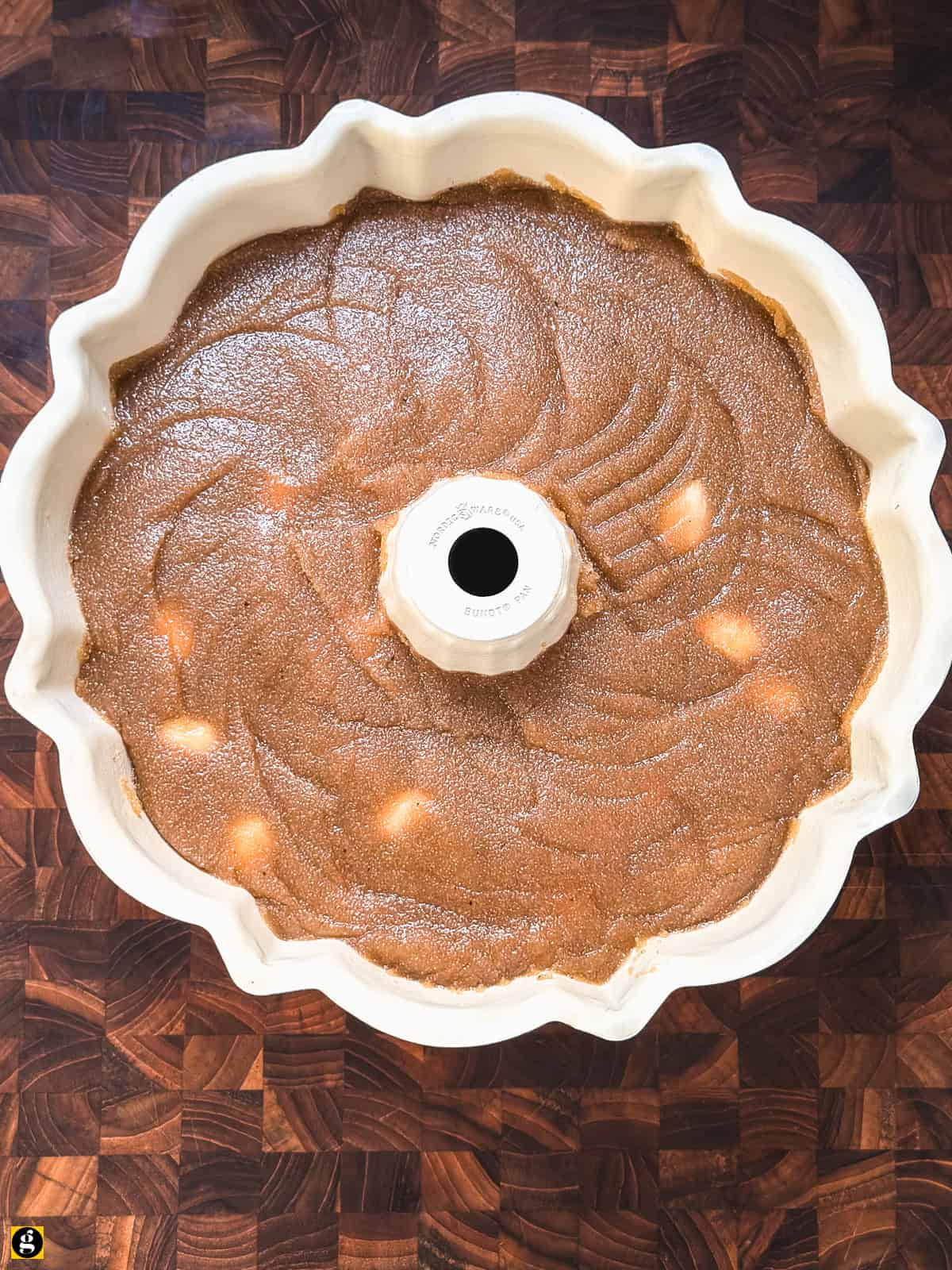
STEP 6. Brush a nonstick bundt pan with a little olive oil. Spoon in the halva and press it gently so there are no gaps. Tap the pan on the counter to settle it. Don’t pack it too hard, or it will be dense.
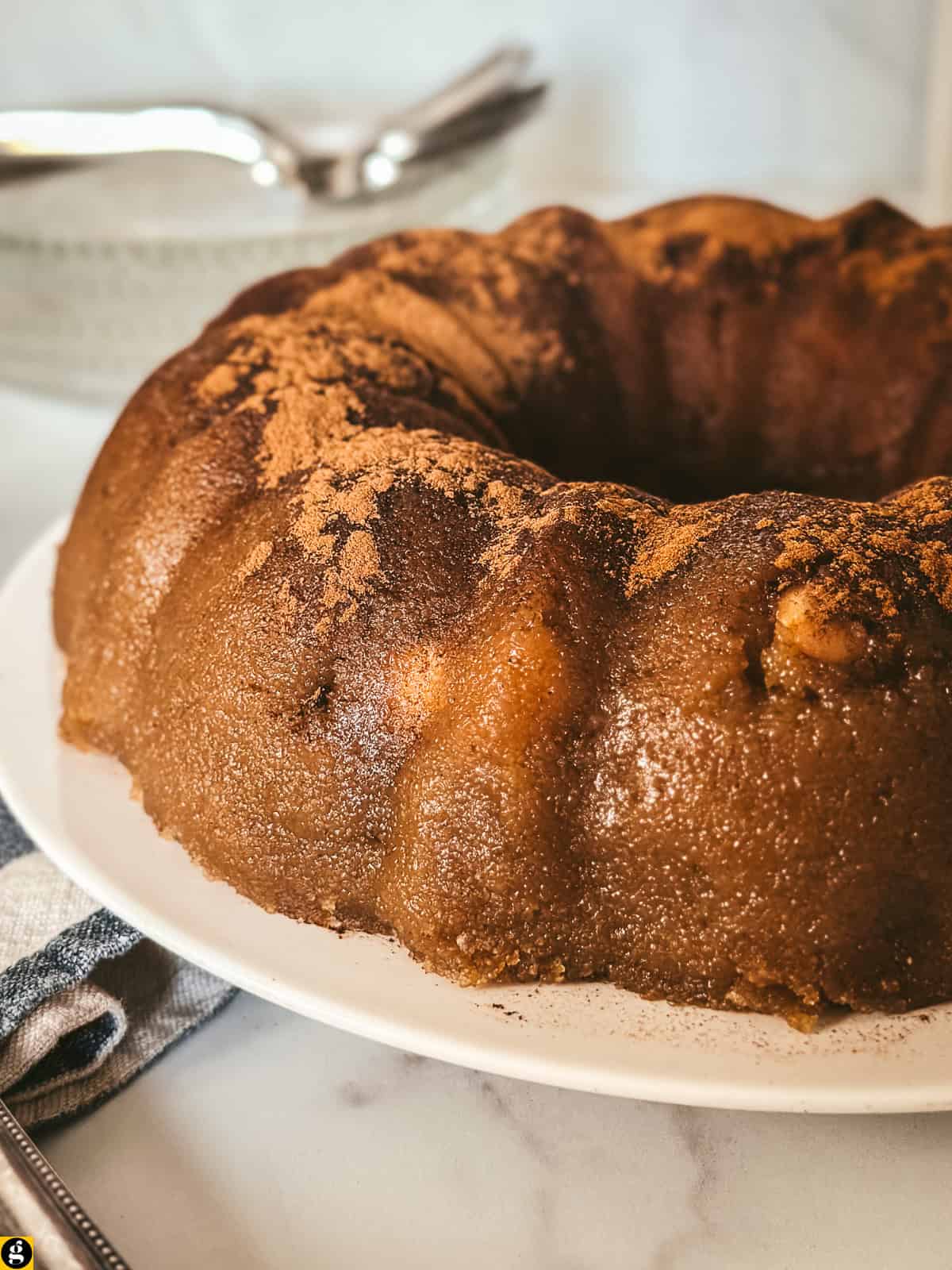
STEP 7. Once set, turn the halva out onto a serving platter, dust with cinnamon, and slice.
Tips for perfect halva
- Toast the semolina low and slow. The color you get here is the flavor of the finished halva. Aim for golden, not brown.
- Add the water carefully. It will spatter when it hits the hot semolina. Pour slowly and stir as you go.
- Know when it’s done. The mixture should pull away from the pot in one mass. If it’s still loose, it won’t set.
- Halva too soft to unmold? It needs more time. Give it the full 3–4 hours at room temperature.
- Halva too hard or dry? It cooked too long or was packed too firmly into the pan. Press gently next time.
Variations
- Not keeping it vegan? Replace a few tablespoons of the olive oil with butter for a richer flavor.
- Swap the nuts: pine nuts, pistachios, or walnuts.
- Add dried fruit: a handful of golden raisins or chopped dried apricots with the almonds.
- Citrus: add the zest of one orange with the spices.
How to serve Greek halva
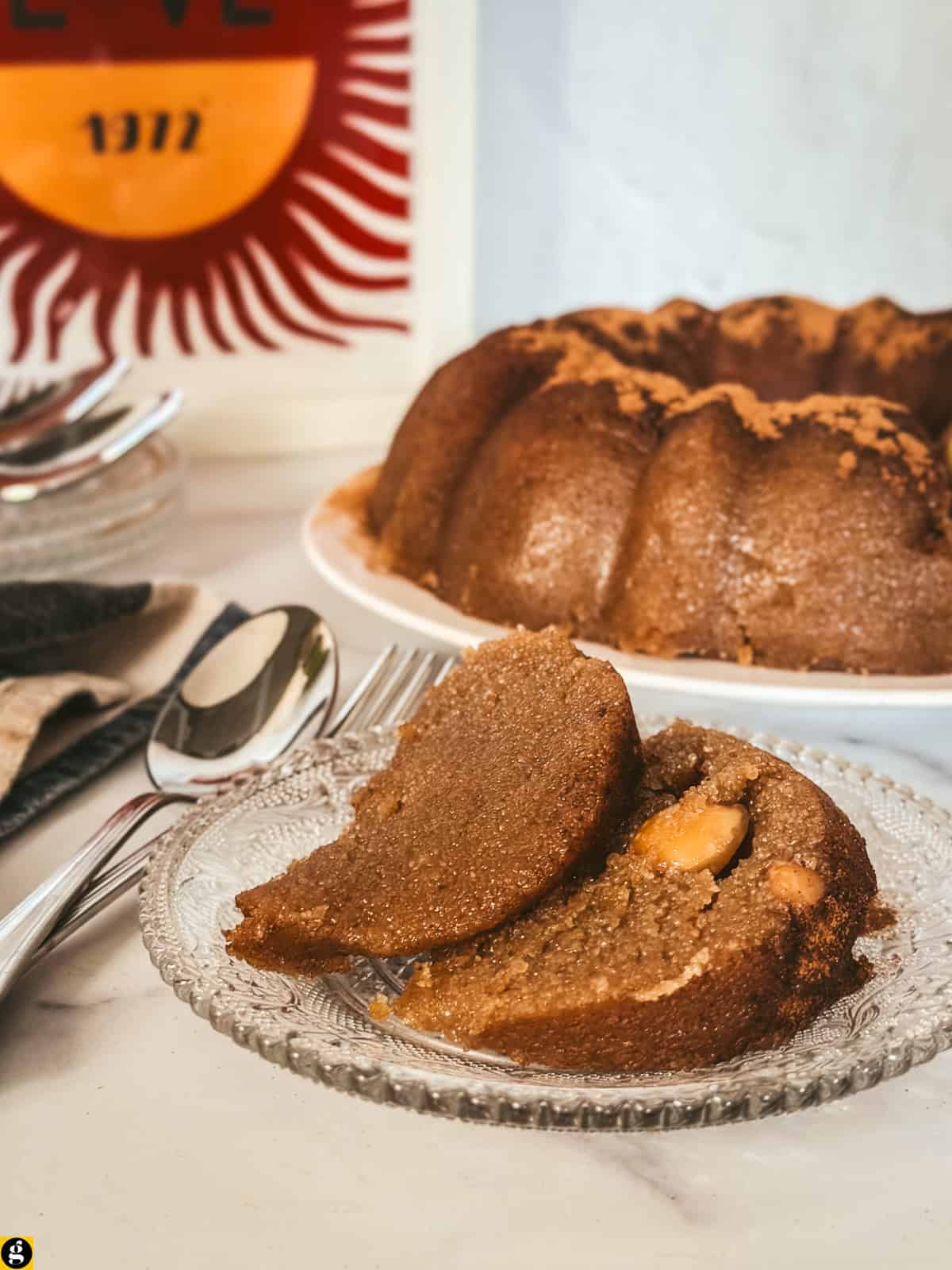
Serve halva at room temperature, sliced into wedges and dusted with cinnamon. In Greece it’s an afternoon sweet as much as a dessert, with a Greek coffee or a cup of tea. A spoonful of Greek yogurt on the side is lovely if you’re not keeping it vegan.
How to store halva
Cover the halva and keep it at room temperature for up to 3 days, or in the fridge for up to a week. Let refrigerated halva come to room temperature before serving, since it firms up in the cold.
When Greeks make halva
Halva is a fasting (nistisimo) dessert: it contains no eggs, dairy, or butter. That’s why it shows up on almost every Greek table during Lent, especially on Clean Monday (Kathara Deftera), alongside taramosalata and lagana bread. But it’s made all year round, whenever someone wants something sweet without turning on the oven.

Greek halva FAQ
Morev Greek desserts you will love
Cooked it? Rate it!
If you tried this recipe, I’d love to know how you liked it — drop a comment below or tag me on Instagram @thegreekfoodie__.



Greek Halva (Semolina Halvas)
Ingredients
- 1 cup whole blanched almonds, (about 140 g)
- 1 cup extra virgin olive oil, (240 ml)
- 2 cups coarse semolina , (about 340 g)
- 3 cups brown sugar, (about 435 g) or raw (demerara) sugar or white sugar, loosely measured (not packed)
- 1 teaspoon ground cinnamon, plus more for dusting
- 1½ teaspoon ground cloves
- 4 cups water, 950 ml
Instructions
- Toast the almonds in a dry skillet over medium heat for 4–5 minutes, stirring, until fragrant and lightly golden. Transfer to a plate and set aside.1 cup whole blanched almonds
- Add the olive oil and semolina to a large Dutch oven (26 cm / about 5½ quarts). Toast over medium-low heat, stirring constantly, for 4–5 minutes, until the semolina is golden and smells nutty. Take your time; semolina burns easily.1 cup extra virgin olive oil, 2 cups coarse semolina
- Add the brown sugar, cinnamon, cloves, and almonds. Slowly pour in the water, standing back, because the mixture will spatter and steam. Stir for about 10 minutes, until the mixture thickens, bubbles, and pulls away from the bottom of the pot in one mass.3 cups brown sugar, 1 teaspoon ground cinnamon, 1½ teaspoon ground cloves, 4 cups water
- Remove from the heat, cover the pot with a kitchen towel, and let it cool slightly.
- Brush a 10-inch nonstick bundt pan with a little olive oil. Spoon in the halva and press it gently so there are no gaps; tap the pan on the counter to settle it. Don't pack it too hard. Cover with a kitchen towel and let it rest for 3–4 hours, until completely firm.
- Turn the halva out onto a large serving platter. Dust with cinnamon, slice, and serve.
Notes
- Do not rush toasting the semolina with the olive oil since it can burn easily.
- You can use slivered almonds instead of whole.
- Substitute the almonds with pine nuts, pistachios, or walnuts and add raisins if you like.
- If you can not find coarse semolina, just use fine semolina. You can also mix one cup of regular semolina with one cup of coarse semolina.
- Hit the bundt pan on a hard surface to make sure the mixture settles and all gaps are filled nicely.
- Store covered at room temperature for up to 3 days, or refrigerated for up to a week.
Nutrition
I love the sound of this cake. I am not a sweets person, so this is right up my alley. I would even eat this for breakfast LOL….pairs perfectly with coffee all day long.
Yum! Never tried this before but your Vegan Semolina Halva Cake looks super delicious and I can’t wait to hvae a bite!
This is a sweet treat that you won’t feel weighed down and can be whipped up because it takes basic pantry ingredients to make.
This halwa is similar to sooji halwa made in India. It is also used as a offering to Goddess Durga. Raisins taste real good too along with almonds and cashews.
Oh I love halvah and semolina and dense cakes, so this is one recipe I need to try! Thanks for sharing.
Wow what a fabulous cake! I’m so intrigued by this one! Such a dense cake…I bet it is so delicious ^_^
I’ve got to say, I’ve never tried halva cake before. It looks delicious and just what I would love to experiment with. I am so surprised to see how little you need to make it though!
What a unique recipe! Love the idea of olive oil here, and it looks super moist, too! yum!
This halwa cake looks incredible!! I love that it is vegan and the flavours sound absolutely mouthwatering. I cannot wait to give this one a try!
Semolina halva is a regularly made at home, and my kids absolutely love it. I love the idea of making a cake of it. Wonderful idea, gonna try this.
Oh my – halva itself is so delicious. I had no idea you could use it to make a cake. This cake looks so scrumptious and delicious!
La halva es el postre imprescindible de la cocina turca. La halva, cuyas raíces se extienden a una geografía amplía desde el Oriente Medio hacia Asia Central, lleva significados más allá de ser un postre ordinario en la cultura turca.
¡Gracias por tu comentario! Tienes toda la razón: la halva se prepara en muchísimos lugares, desde Turquía y Oriente Medio hasta la India, y cada cocina tiene su propia versión. Esta es la versión griega, con sémola tostada en aceite de oliva, canela y clavo, la que hacía mi madre. ¡Espero que la pruebes!
Hi! As another Greek I love this recipe and it tastes amazing. However, I found around 3/4 cups of olive oil could be used instead of 1 and around 4 cups of water instead of 6. It gets very watery+ excess oil and makes it a bit messy when we just want the water to evaporate away.
Overall love the recipe and so did my family.
Hi Athena,
I glad you adjusted the recipe. You are right, the water is too much, it was an error. We have revised the recipe and fixed the typo. I will also add a note to the post with your suggestions about the olive oil.
Thank you so much,
x Jenny