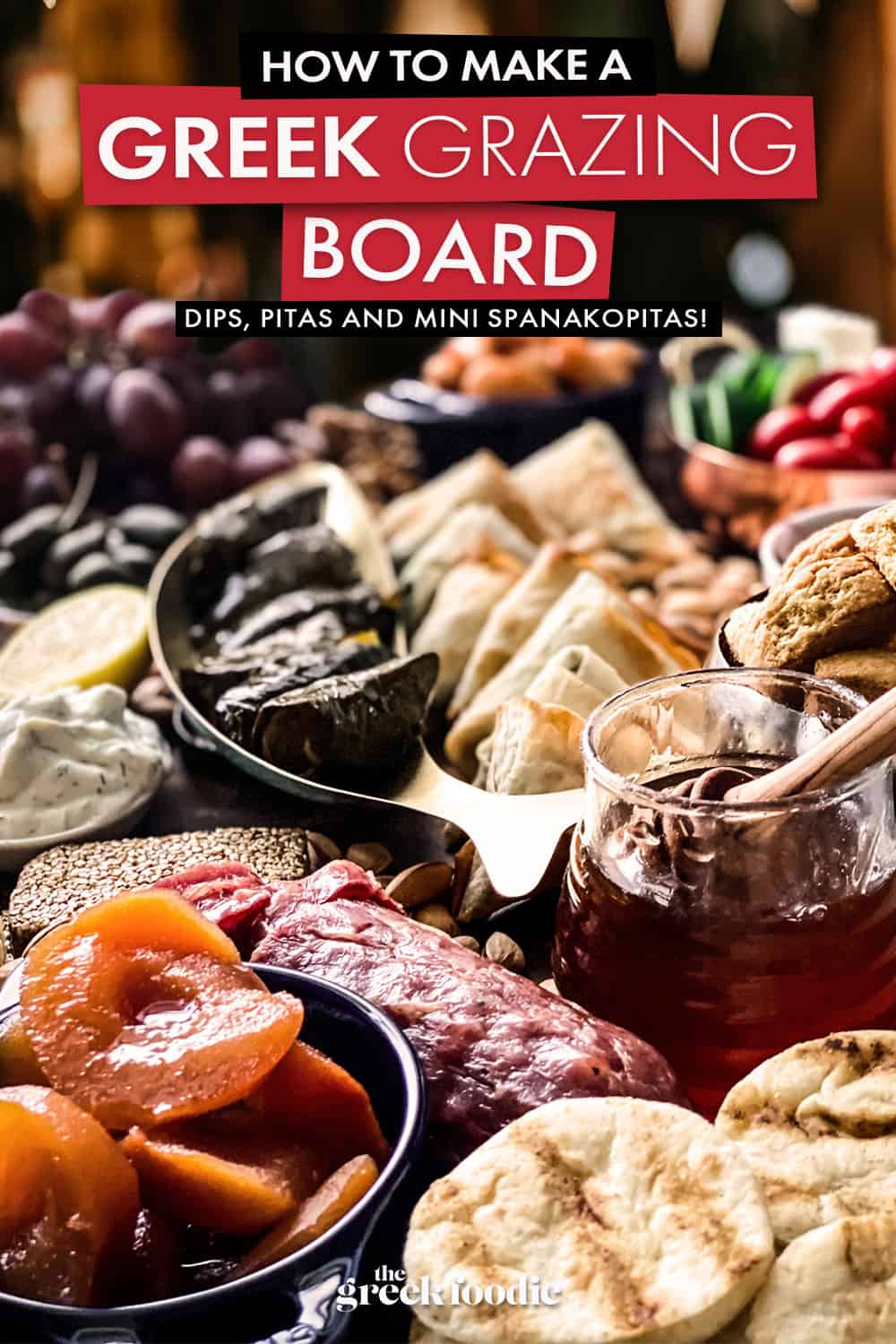

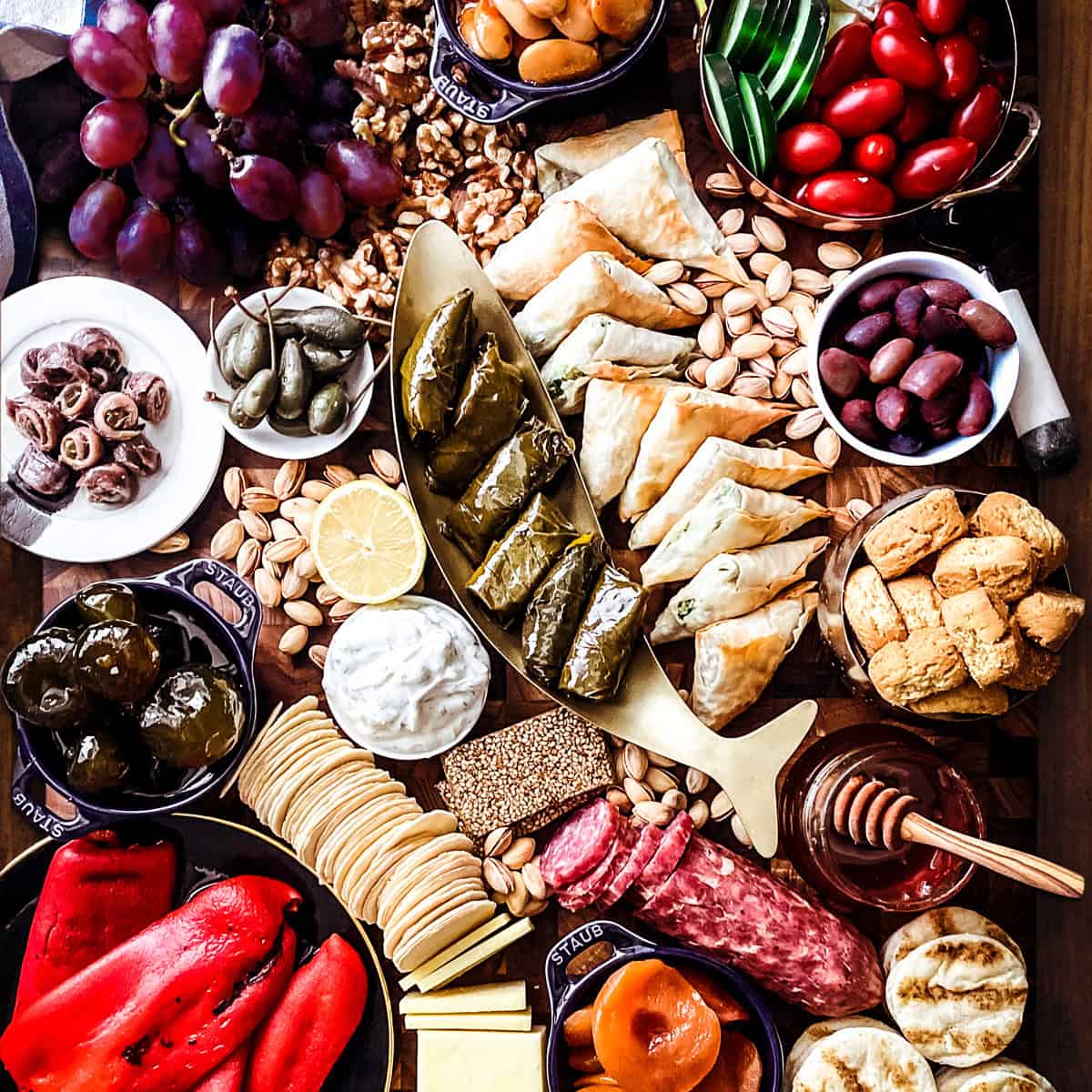
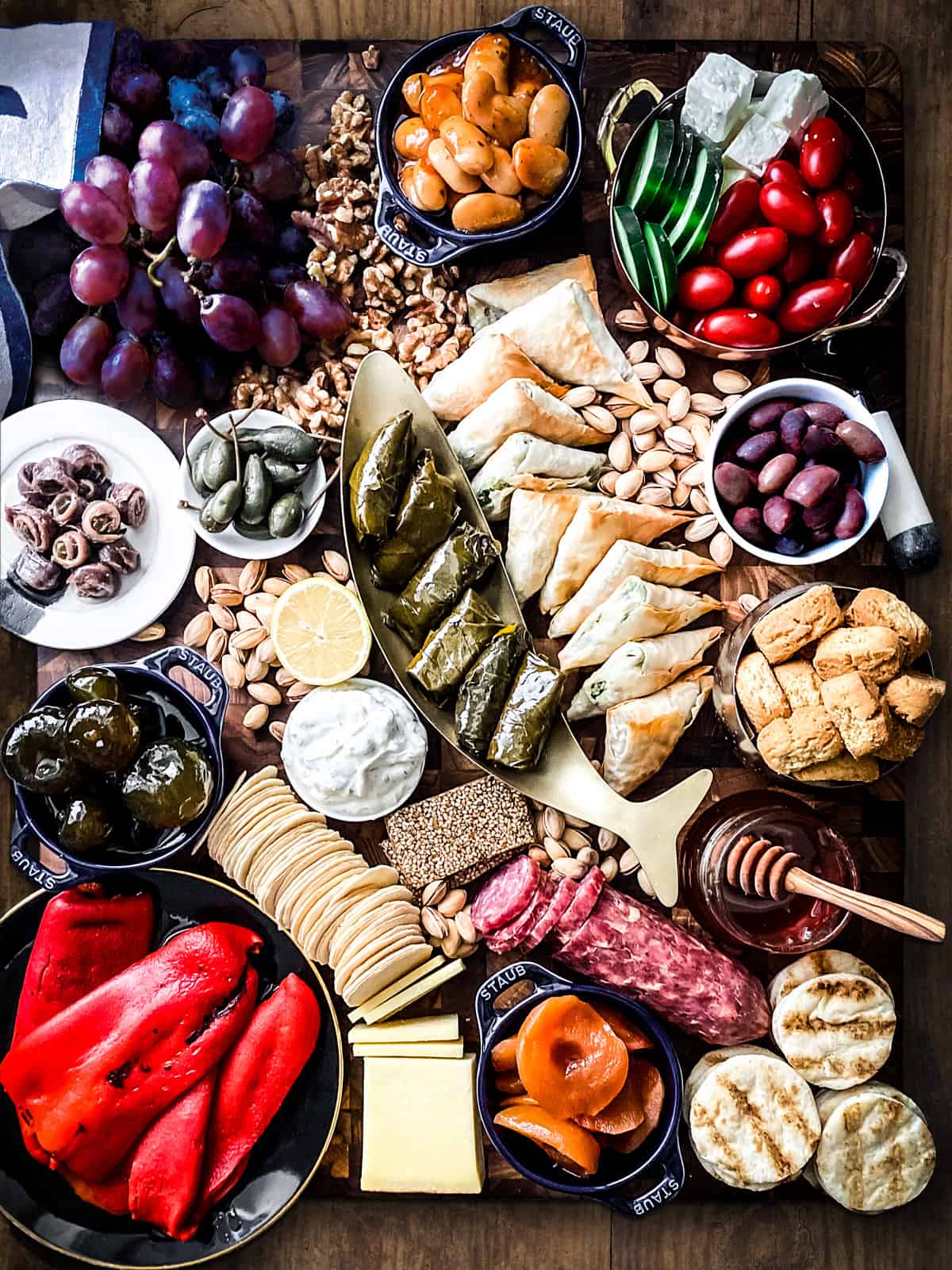
This Greek grazing board is the easiest way I know to feed a crowd over the holidays: a whole meze table on one board. Tzatziki and tirokafteri for dipping, feta and graviera, dolmadakia and crispy spanakopitakia, olives, little marinated fish, warm pita and crackers, and then the sweet bites that make it unmistakably Greek, like spoon sweets, honey, and a bar of pasteli.
Almost everything can be made ahead or picked up at a good Greek market, so on the day you just warm a few things and arrange. Below I’ll walk you through how I build mine, layer by layer, plus the recipes I make when I want the board fully homemade.
Looking for the perfect dips to go with this? I have all my favorite Greek dip recipes in one place — 8 classics worth making.
What is a grazing board?
A charcuterie board is, strictly speaking, cured meats arranged on a board. A grazing board goes further, mixing cheese, dips, bread, fruit, nuts, and sweets so guests can pick at it all evening.
A Greek grazing board builds that board from the Greek meze table. Meze (meh-ZEH) means small plates for sharing, usually with ouzo, tsipouro, or wine, and the flavors are what you’d find at any Greek taverna or family table: salty feta, briny olives, herby dips, phyllo pies, cured meats, and something sweet from the pantry.
It looks like hours of work, but it isn’t. The dips keep for days in the fridge, most of the board comes from a Greek market, and building it takes about 20 minutes.
Love feta? Try our Whipped Feta Dip (Tirokafteri) — a creamy, spicy Greek dip made with roasted peppers, hot peppers, and olive oil. It’s bold, tangy, and ready in 20 minutes.
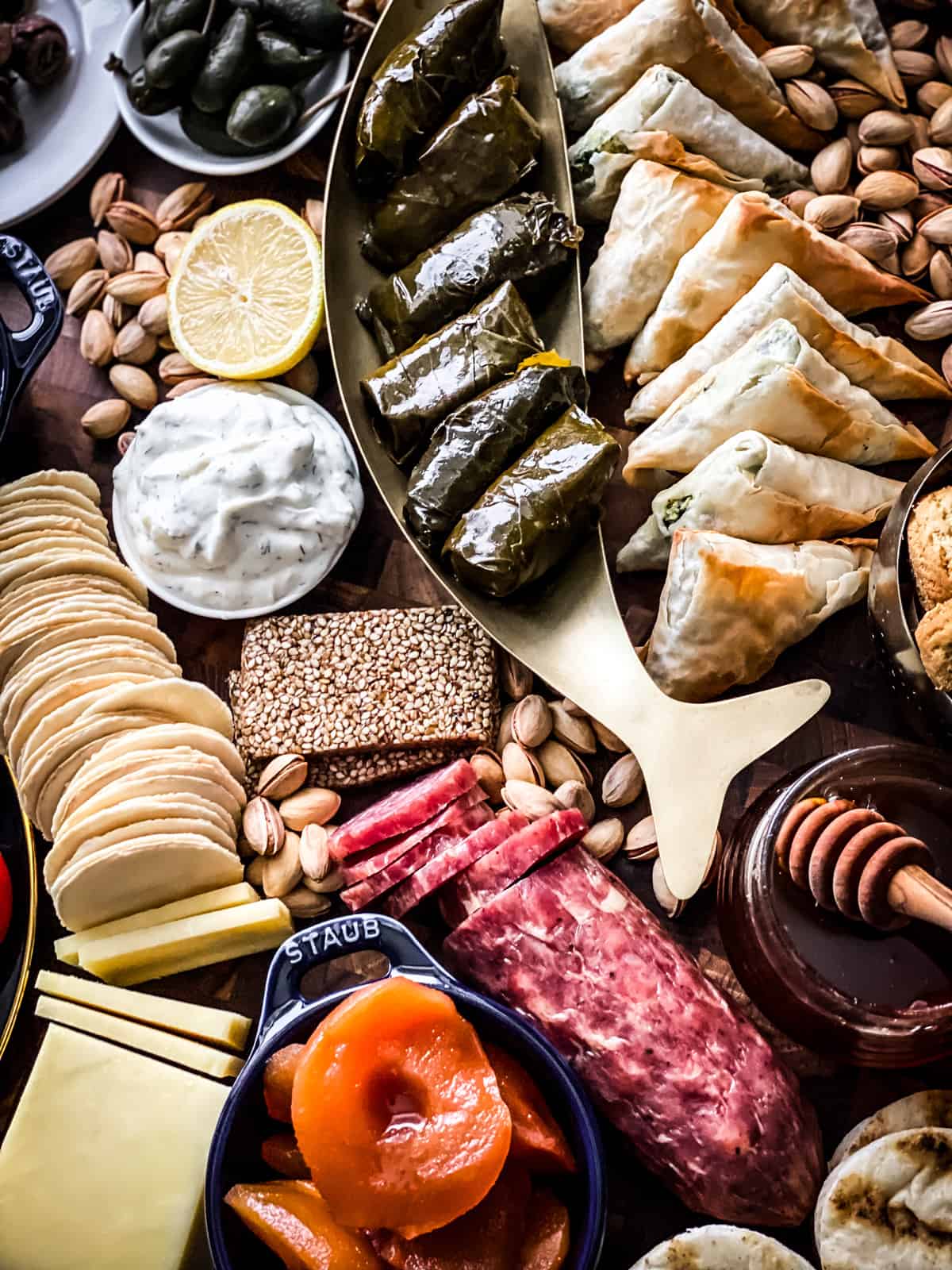
How to build a Greek grazing board
Start with the dips and spreads
Bowls go on the board first, because everything else fills in around them. I always want at least one creamy dip and one with a kick: tzatziki, tirokafteri, smoky melitzanosalata, or taramosalata, all of which you can make a day or two ahead.
Then add a sweet bowl or two. Spoon sweets (glyka tou koutaliou) are the Greek way to do it: whole figs, apricots, or bitter orange preserved in syrup, which are wonderful with salty cheese. Add a pot of thyme honey with a dipper and, if you like, a small bowl of spicy tomato relish.
Cheese, cured meats, and little fish
Next come the cheeses, with a couple of serving knives. Feta is non-negotiable, cut in thick slabs or cubes. Add a hard cheese like graviera (gruyère is similar) or kasseri (think provolone). For a showstopper, bake a block of feta with honey and thyme and set it in the middle, warm.
A good uncured salami is next. I also love to add sliced pastourma (or pastirma). It is not exclusively Greek, more like Turkish, but my grandma always offers it at her dinner table, and I like to follow her lead.
A meze table in Greece almost always has little fish. I buy gavros, anchovies marinated in vinegar and oil, at the Greek market in Astoria. If I can’t find them, rolled anchovies with a caper in the middle are just as good.
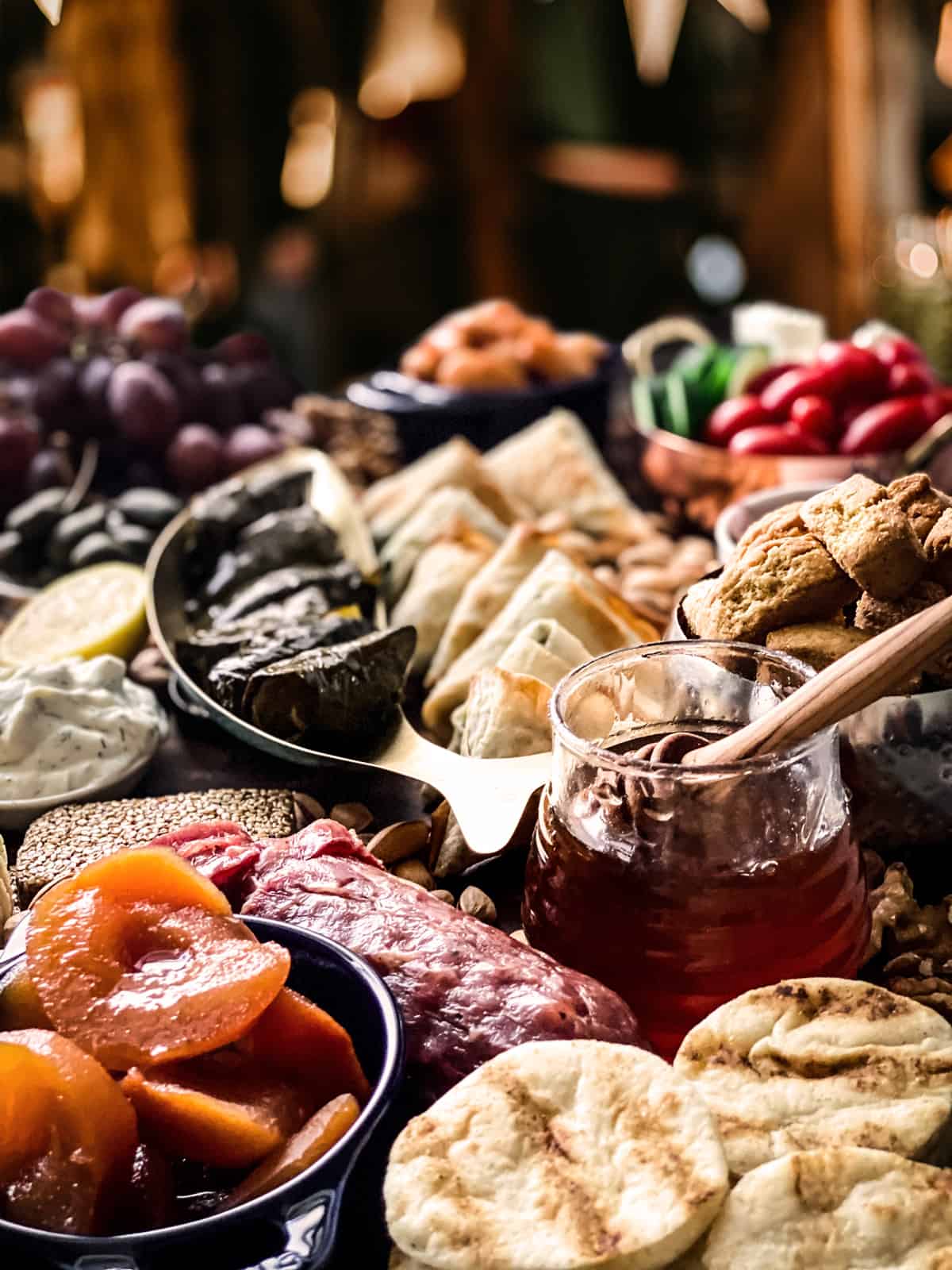
Warm Greek bites
This is what turns a cheese board into a Greek one. Crispy phyllo triangles, either tiropitakia or little spanakopitakia made with my spanakopita filling, and dolmadakia with lemon wedges for squeezing. A small pot of gigantes plaki, giant beans baked in tomato sauce, is delicious at room temperature. For a heartier board, add a few keftedes on toothpicks.
Pita, crackers, and paximadakia
Add plenty of things to scoop and stack. Cut warm pita bread into wedges or use small grilled pita rounds, and add crisp crackers. My homemade seeded olive oil crackers are perfect here. A bowl of paximadakia, the small, crunchy Greek rusks, gives the board real Greek crunch and holds up beautifully under dips and spoon sweets.
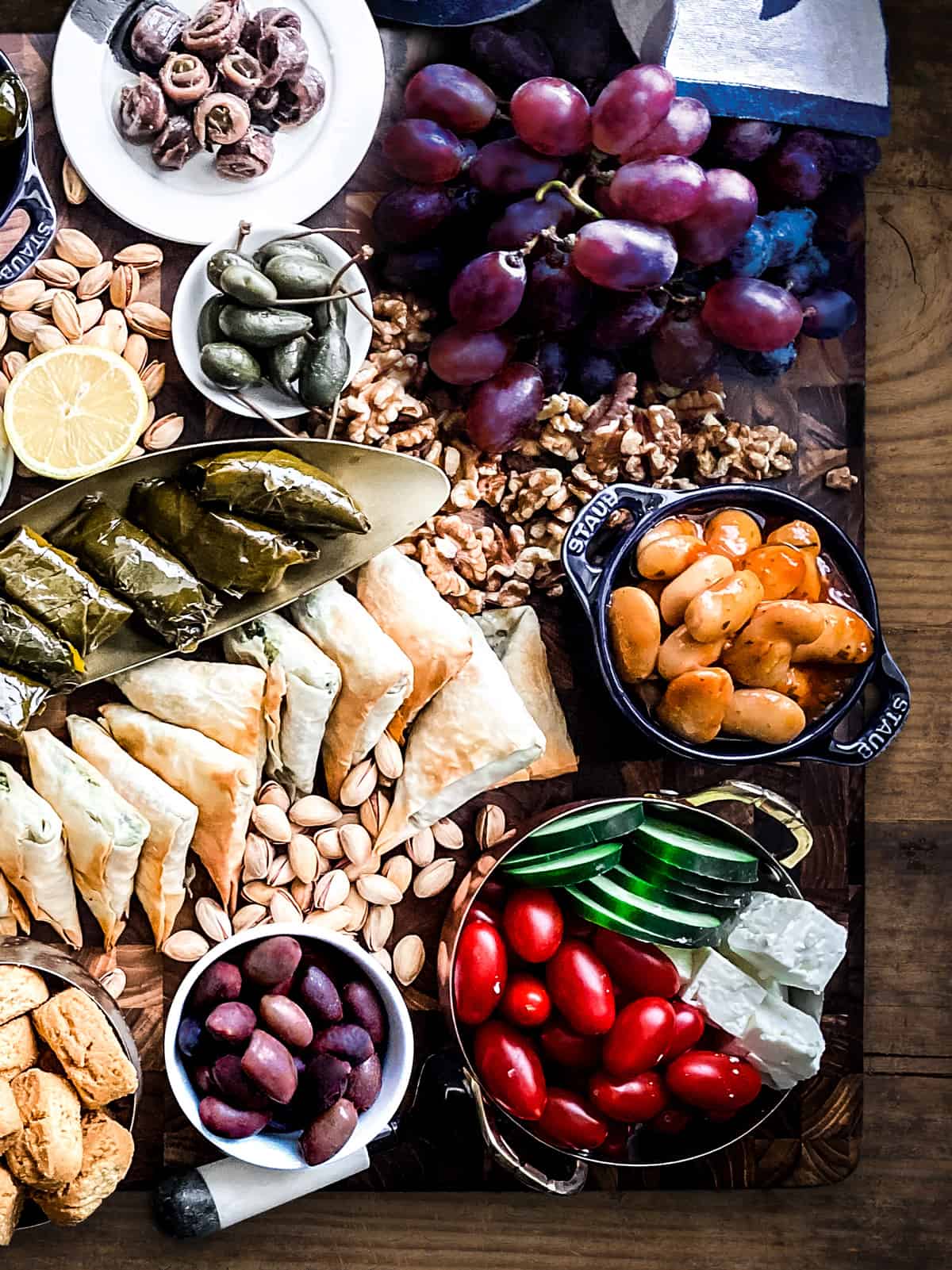
Olives and vegetables
Kalamata olives, caper berries, and roasted red peppers are must-haves on the Greek table. Add a bowl of cherry tomatoes and sliced cucumbers tossed with a pinch of oregano, sea salt, and a drizzle of olive oil. They bring freshness to all that salt and richness.
Fruit, nuts, and something sweet
Fill every gap with fruit and nuts. Grapes and fresh figs are my favorites when they’re in season. In the colder months, I reach for pomegranate, mandarins, pears, and dried figs or apricots. Pistachios and walnuts add crunch, and a bar of pasteli, Greek sesame and honey candy, is the sweet bite everyone ends up fighting over.
Make it a festive Greek board
Over the holidays, I let the board lean sweet. Tuck in a few melomakarona cookies and kourabiedes, scatter pomegranate seeds over the feta, and add clementines and roasted chestnuts. Serve it with ouzo, tsipouro, or a crisp Greek white wine.
For a bigger party, make it a full meze spread. Pair the board with a few hot dishes from my Greek meze feast.
Tips for the best grazing board
- Start with the biggest board you own. A crowded board looks generous; a sparse one looks unfinished.
- Bowls first, then the large items, then fill the gaps. Small things like nuts and grapes go in last to hide any wood.
- Mix flavors as you go. Put something salty next to something sweet, and something creamy next to something crunchy, so every corner of the board has a perfect bite.
- Make the dips ahead. Tzatziki, tirokafteri, melitzanosalata, and taramosalata all keep in the fridge, and most taste better on day two.
- Warm the pita and phyllo bites last. Everything else can sit out while guests arrive.
Cooked it? Rate it!
If you tried this recipe, I’d love to know how you liked it — drop a comment below or tag me on Instagram @thegreekfoodie__.


How To Make A Greek Grazing Board
Ingredients
Dips and spreads
- tzatziki
- tirokafteri
- melitzanosalata
- taramosalata
- fig or apricot spoon sweets
- thyme honey
Cheese, meats, and fish
- Greek marinated feta
- graviera or kasseri
- sliced dry uncured salami
- pastourma, sliced (optional)
- marinated anchovies (gavros) , or rolled anchovies with capers
Bread and crackers
Olives and vegetables
- Kalamata olives
- caper berries
- roasted red peppers
- cherry tomatoes
- cucumber, sliced
- olive oil, dried oregano, sea salt
Fruit, nuts, and sweets
- grapes
- fresh or dried figs
- pistachios
- walnuts
- pasteli
- lemon, cut in wedges
- fresh mint or basil
Instructions
- Dips and spreads: Spoon the dips, spoon sweets, and honey into small bowls and place them around the board first.
- Cheese, meats, and fish: Add the feta and graviera with serving knives, then the salami, pastourma, and a small plate of anchovies.
- Warm bites: Warm the phyllo triangles in the oven and add them with the dolmadakia, lemon wedges, and gigantes.
- Olives and vegetables: Toss the tomatoes and cucumber with olive oil, oregano, and sea salt, and add them with the olives, caper berries, and roasted peppers.
- Bread and crackers: Tuck the warm pita, crackers, and paximadakia near the dips and cheese.
- Fruit, nuts, and sweets: Fill every gap with grapes, figs, pistachios, walnuts, and pasteli. Garnish with fresh herbs and serve.
Notes
- This is a guideline, not a rule. Use what’s in season and what you love.
- The dips can be made 1–2 days ahead and kept covered in the fridge.
- In fall and winter, swap the grapes and fresh figs for pomegranate, mandarins, pears, and dried fruit.
- For a festive board, add melomakarona, kourabiedes, and roasted chestnuts.
Nutrition