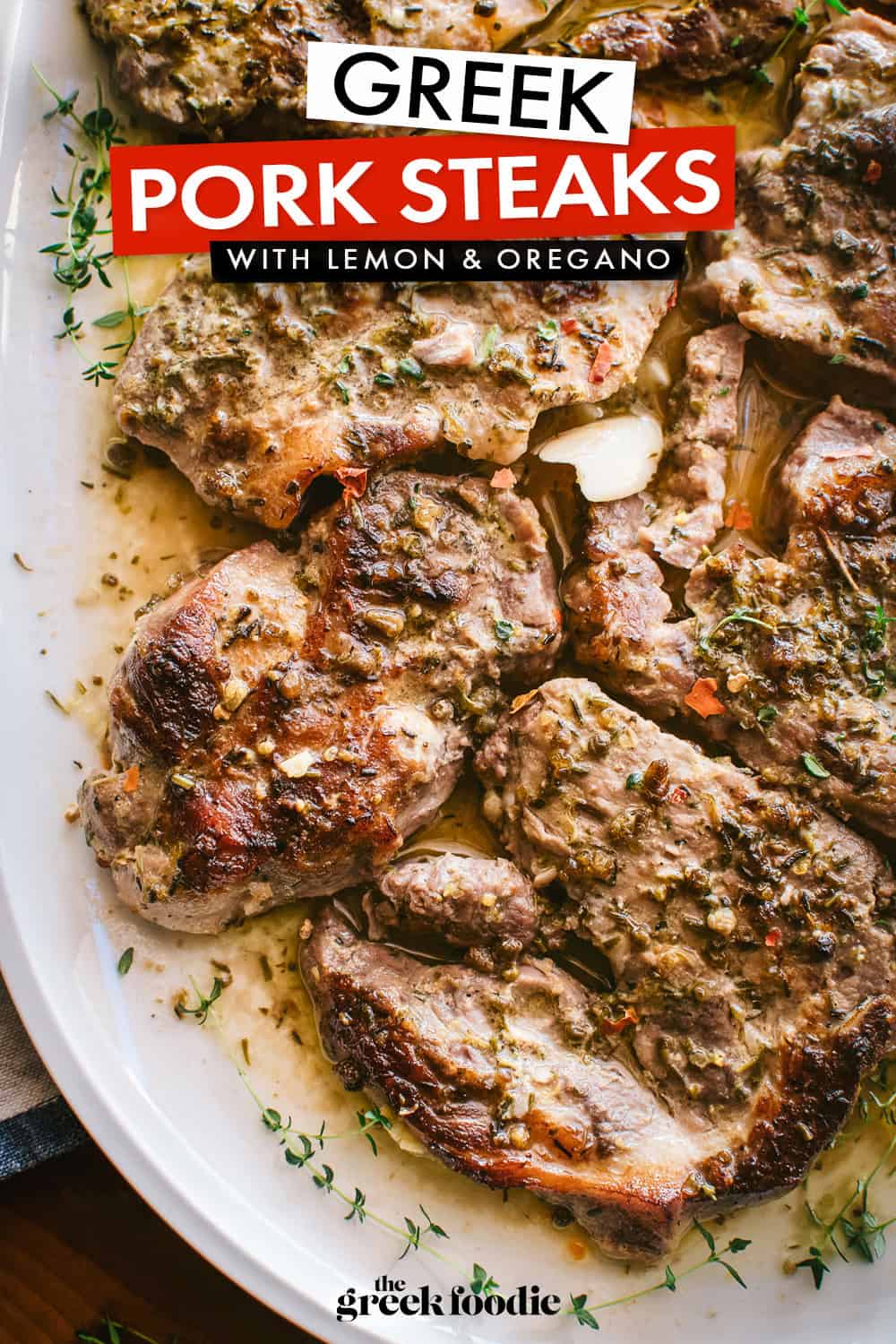

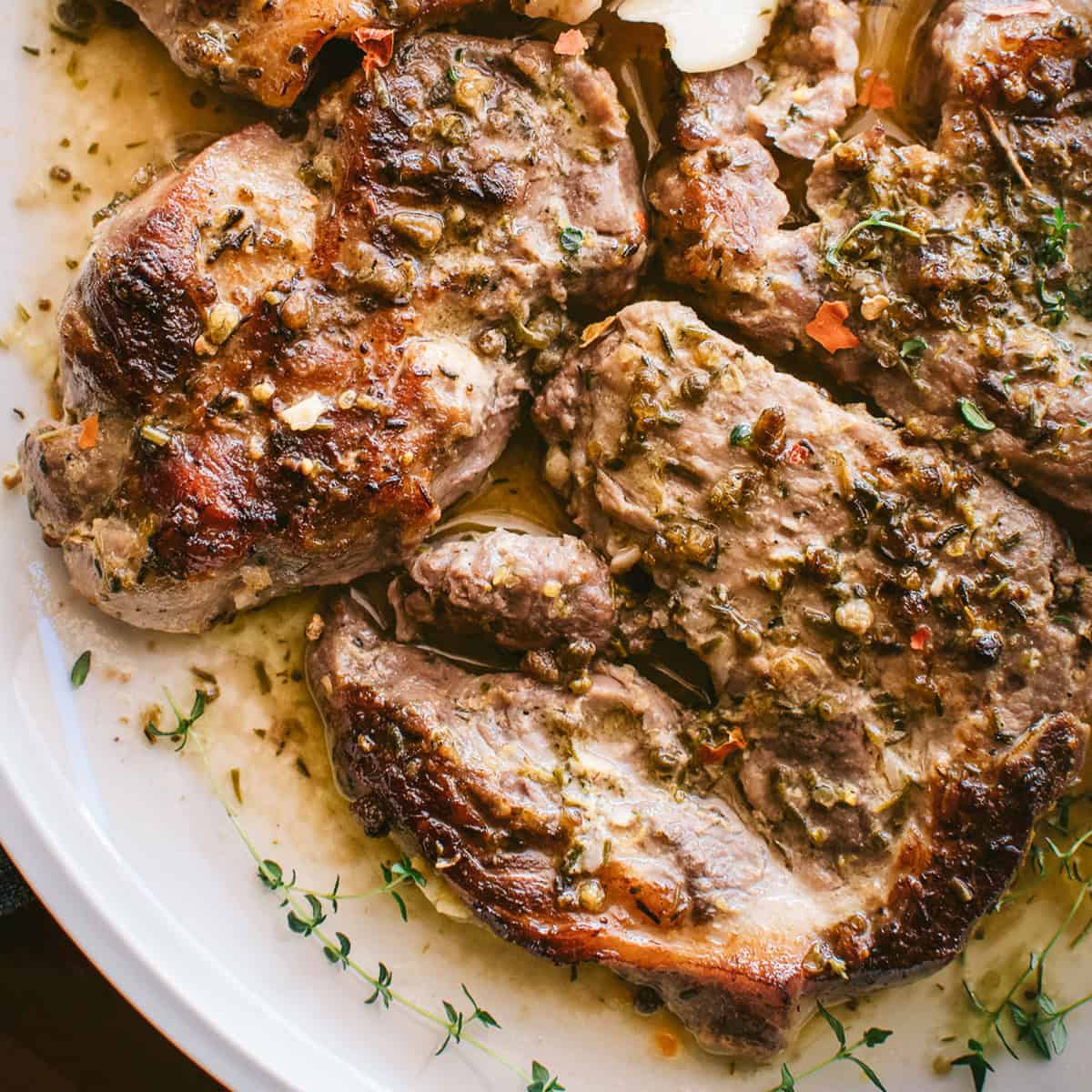
Have you ever tried Greek Pork Steaks? The marinade includes lemon, oregano, olive oil, mustard and some honey, making the meat tender and flavorful. Lemon and honey are a perfect combination. The lemon cuts the richness of the pork while the honey caramelizes and chars. Enjoy these delicious pork steaks with rice, pasta, mashed potatoes, tomato salad, or boiled greens.
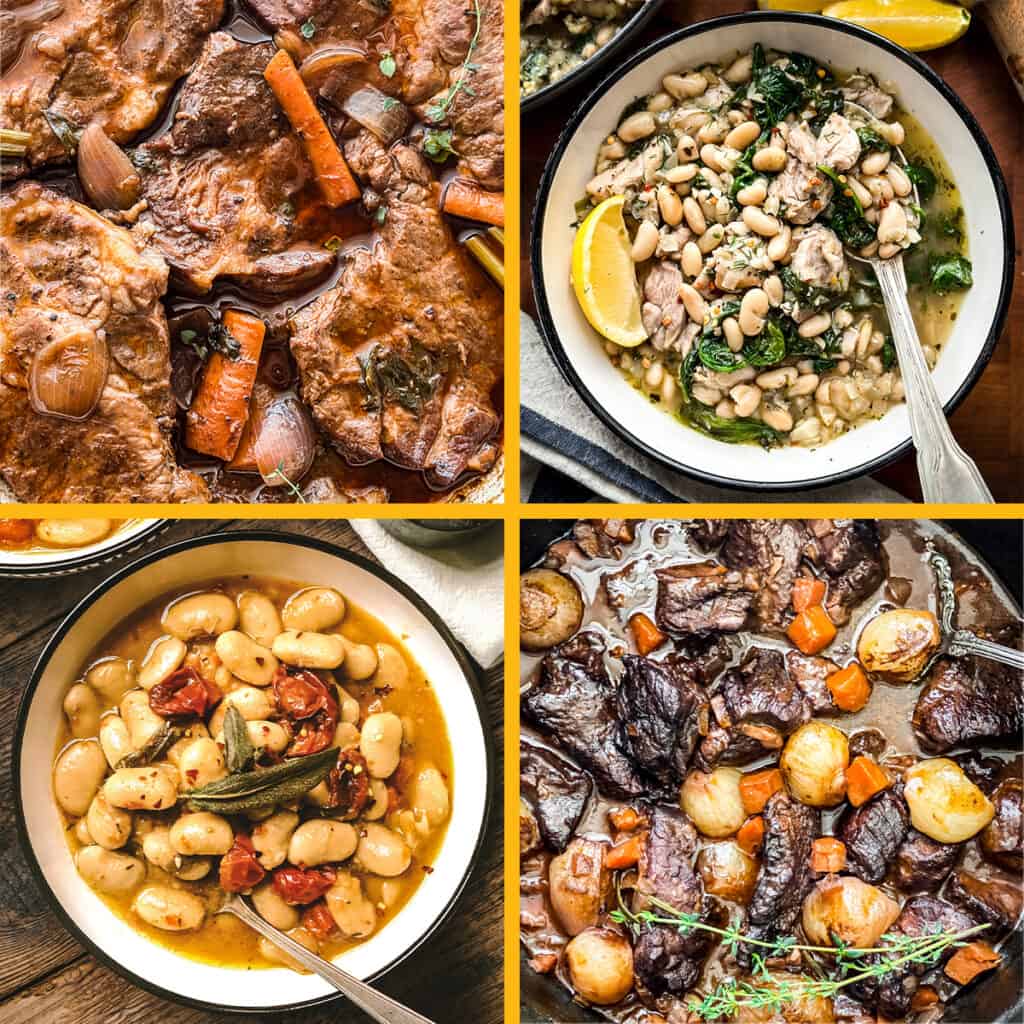
If you love these Greek Pork Steaks, you will also love this Cretan Pork with Beans, Pork Stew with Chickpeas or Braised Pork Shoulder!
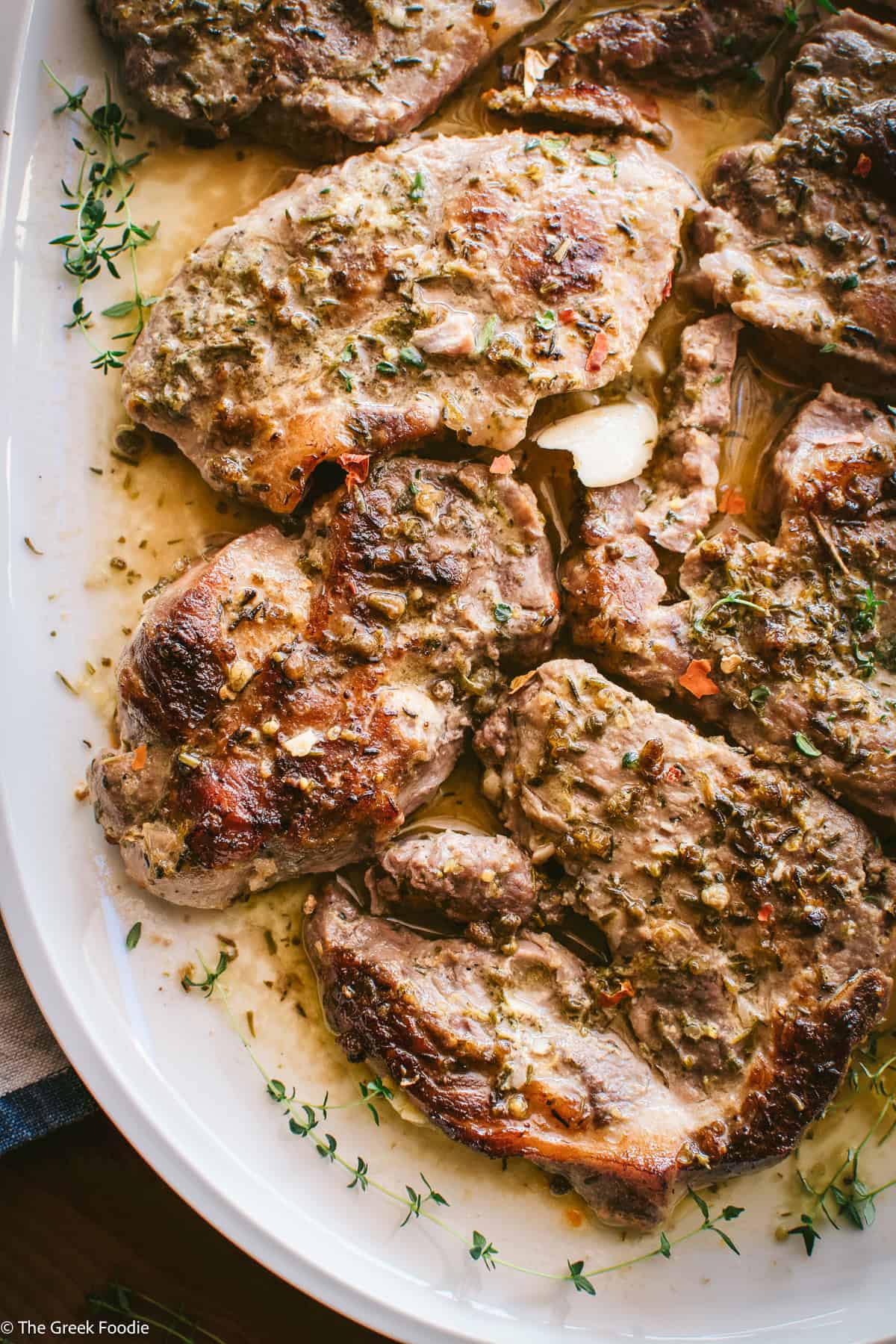
What is a pork steak?
A pork steak is cut from the shoulder — the same big, marbled muscle that gives you pulled pork. You’ll see it sold as pork blade steak, shoulder steak, or Boston butt steak, and it can come bone-in or boneless. I use boneless, cut about ¾ inch thick, which is what my butcher hands me when I ask for pork steaks.
Here is the thing people get wrong: a pork steak is not a pork chop. A chop comes from the loin, it’s lean, and it dries out the second you overcook it. A shoulder steak is the opposite — it’s full of fat and collagen, which means it’s cheap, it’s forgiving, and it gets better the longer it cooks. Rush it and it’s chewy. Give it time and it falls apart.
What to ask for at the butcher. Boneless pork shoulder, cut into ¾-inch steaks. If they only have a whole boneless shoulder, ask them to slice it for you, or do it yourself at home with a sharp knife. Anything thinner than ½ inch will dry out in a long roast, and anything much thicker will need more time in the oven.
Bone-in works too. Same method, same temperatures — just add about 10 minutes to the covered roasting time. The bone gives you a little more flavor in the sauce, but boneless is easier to serve and easier to slice for leftovers.
How to cook pork steaks so they are tender
This is the whole secret, so I’ll be direct about it: you should not cook a shoulder steak like a steak.
Every tough thing about this cut is collagen. Collagen doesn’t soften at a nice medium — it needs time at a temperature well above “done” to melt into gelatin, and that gelatin is what makes the meat silky and the sauce glossy. Pull the pork off at 145°F, which is the safe temperature for a pork chop, and you will get a perfectly safe piece of meat that fights you back.
So we take it much further, on purpose:
- Marinate. The lemon juice and mustard start softening the surface of the meat, and the olive oil carries all that oregano and thyme into it.
- Roast covered, in liquid. Foil on, chicken stock in the pan, 190°C – 375°F for an hour. This is a braise, even though we’re calling it a roast. The steam keeps everything moist while the collagen does its work.
- Roast uncovered. Foil off for another 30 to 60 minutes, flipping halfway. The honey and the pork fat caramelize, the edges go deep golden, and the stock reduces into that lemony sauce.
The number to aim for is 195–200°F in the thickest part. That sounds alarmingly high if you’re used to cooking chops — it isn’t. At that point a fork should slide in with almost no resistance and the meat should pull apart at the edges.
If your steaks are still tough, they aren’t overcooked. They’re undercooked. Put the foil back on, add a splash of stock, and give them another 20 minutes.
Why you will love these pork steaks
Here is what you need

- Pork steaks. Also called pork blade steaks or boston butt, they are slowly cooked in the lemony broth and come out tender and delicious.
For the marinade
- Dijon mustard. I love the spicy note Dijon gives to this pork steak recipe. You can substitute it with your favorite mustard or ground mustard.
- Honey. It caramelizes and chars the fat with delicious results!
- Lemons. Juiced and zested, they add brightness to the pork steaks.
- Dried oregano and dried thyme.
- Extra virgin olive oil.
For roasting
- Chicken stock. You can also use vegetable broth or water.
- Garlic head. More garlic is always better!
You also need
- Sea salt, freshly ground pepper(not shown above), and chili flakes for serving (optional).
About the marinade
The marinade does two jobs here — flavor, obviously, but also that gorgeous caramelized crust at the end. Each thing in it earns its place:
- Lemon juice and zest. The acid tenderizes and cuts the richness of the shoulder. The zest is where the perfume is, so don’t skip it.
- Dijon mustard. It clings to the meat, adds a spicy backbone, and helps the marinade emulsify so it coats rather than slides off.
- Honey. Just one tablespoon. This is what browns and chars in the uncovered stage. Without it the steaks come out pale and a little sad.
- Dried oregano and thyme. Dried, not fresh — dried Greek oregano is far more pungent and it stands up to two hours in a hot oven. Fresh herbs would just burn.
- Extra virgin olive oil. The carrier for everything else.
How long to marinate. One hour is enough to make a real difference. Overnight, up to 12 hours, is better — the flavor goes deeper and the meat is noticeably more tender. I usually mix it all in the roasting pan the night before so there’s one less bowl to wash.
Don’t go past 24 hours. With this much lemon juice the surface of the meat starts to go soft and a little mealy.
This marinade is also excellent on pork chops, lamb steaks, and chicken thighs — same quantities, much shorter cooking time.
How to make Greek pork steaks
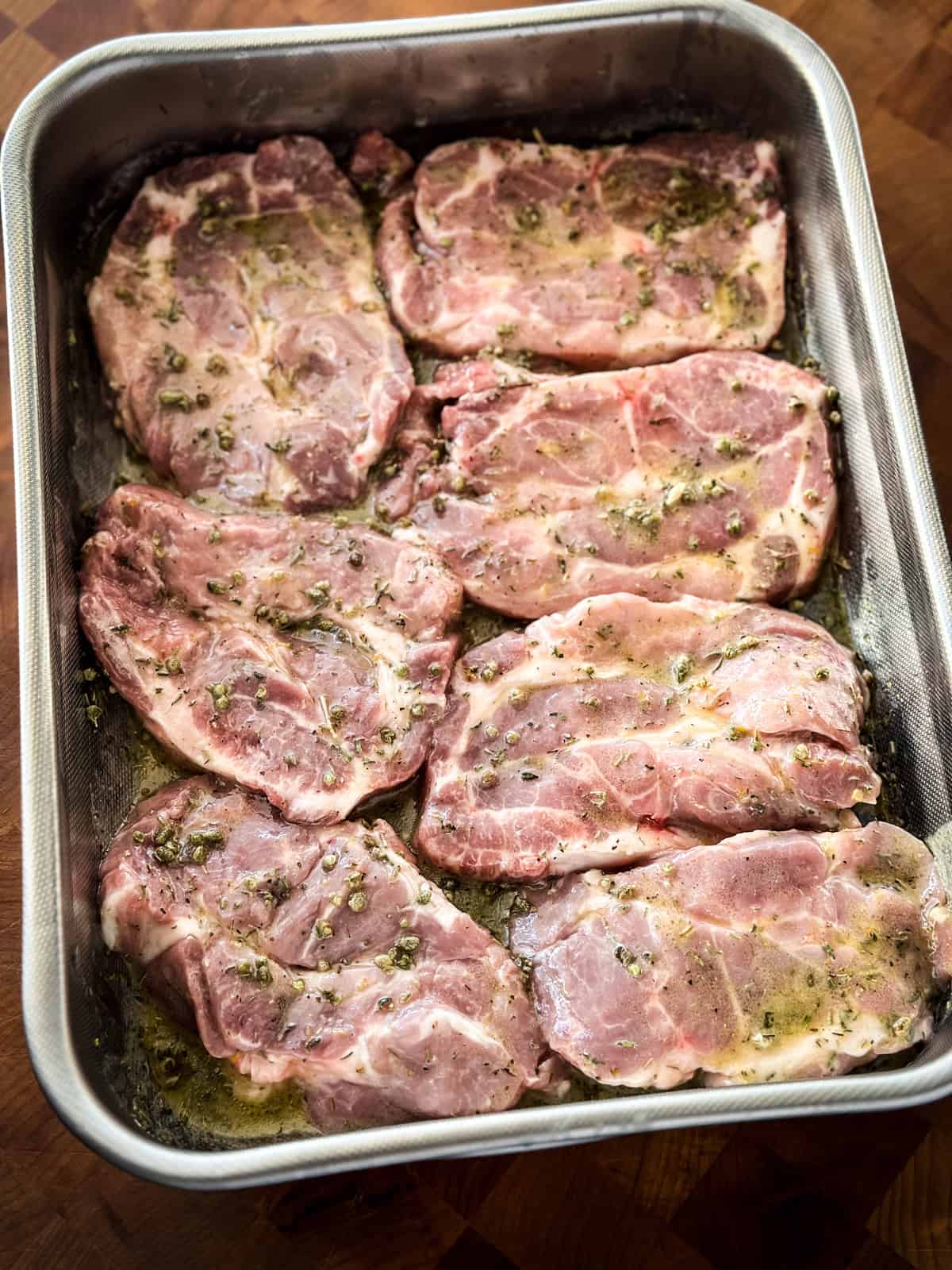
Step 1: Add all the marinade ingredients to a large roasting pan. Mix well and add the pork steaks. Rub the marinade all over the pork steaks, cover and refrigerate from one hour up to twelve hours.
When it is time to cook
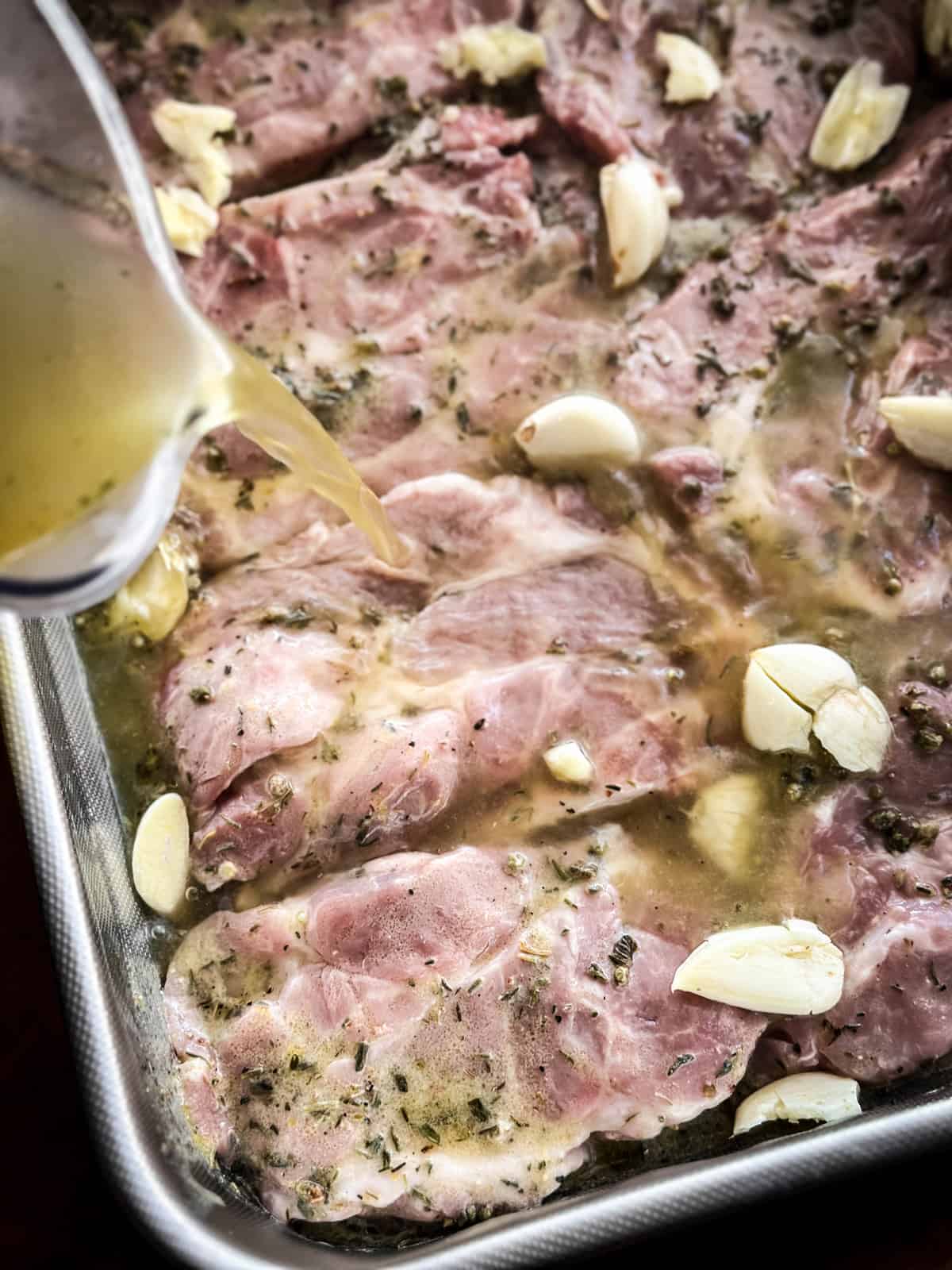
Step 2: Preheat the oven to 190°C / 374° F. Pour the stock, garlic cloves, and herbs over the steaks, mix lightly, cover again well with aluminum foil, and roast for one hour.
Remove the aluminum foil and roast for 30 minutes up to an hour. The chops will start getting golden and caramelize, so halfway flip them to get golden on the other side.
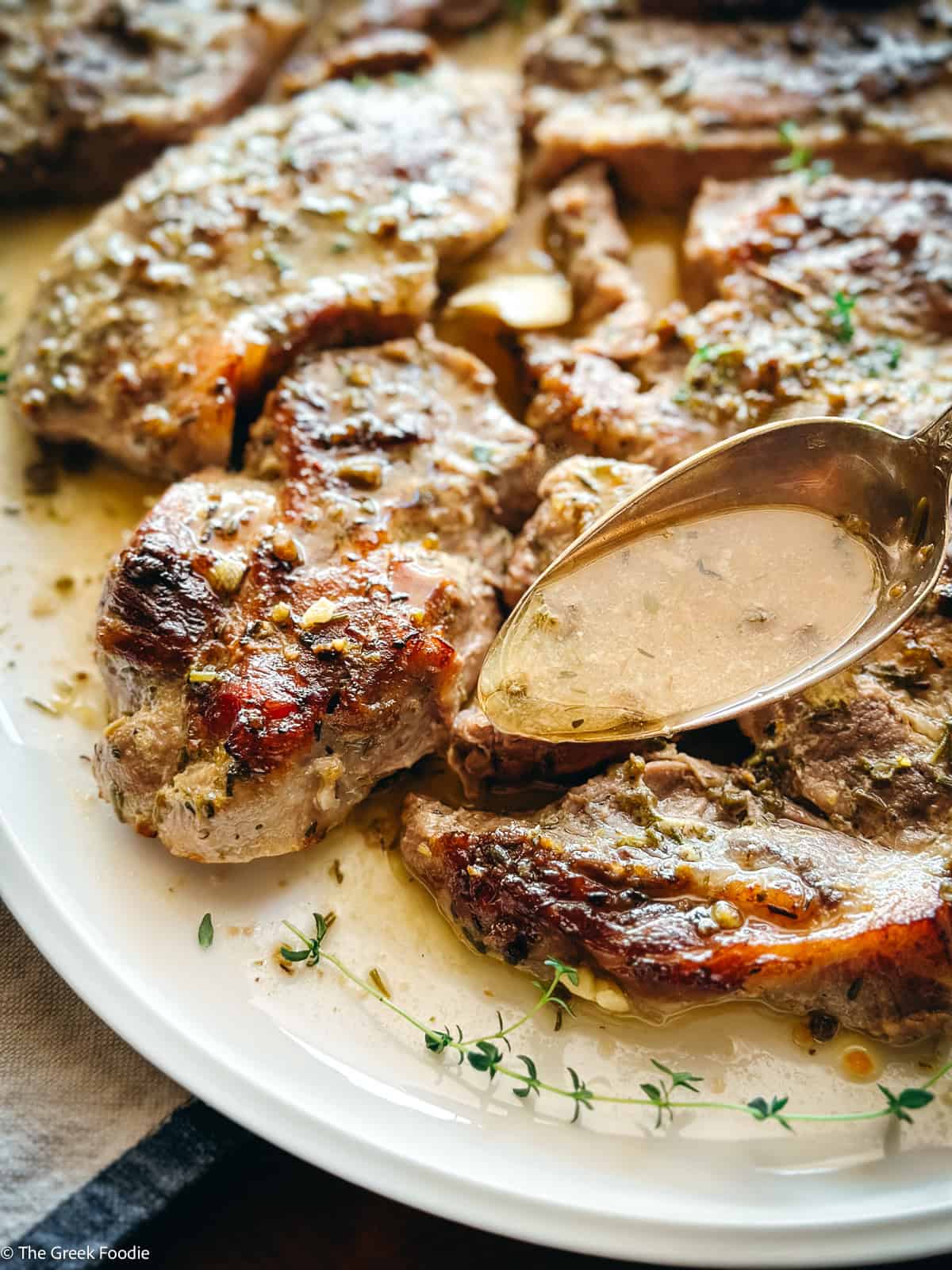
Serve the pork steaks with a generous amount of sauce on the side.
Timing and doneness
Times are for boneless shoulder steaks at 375°F / 190°C. Add about 10 minutes to the covered stage if yours are bone-in.
| Thickness | Covered (foil on) | Uncovered (foil off) | Total |
|---|---|---|---|
| ½ inch | 45 minutes | 25–30 minutes | About 1 hr 15 min |
| ¾ inch (what I use) | 1 hour | 30–40 minutes | About 1 hr 40 min |
| 1 inch | 1 hr 15 min | 40–45 minutes | About 2 hours |
A few things to watch:
- Keep liquid in the pan. By the end there should still be enough sauce to spoon over the meat. If the pan is running dry during the uncovered stage, add a splash of stock or water — this is the one way to ruin an otherwise foolproof recipe.
- Flip halfway through the uncovered stage so both sides get golden.
- Ovens lie. If yours runs hot, check at the earlier end of every range.
- Rest for 10 minutes before serving. The sauce thickens slightly as it sits.
Side dishes for Greek pork steaks
Many great side dishes pair well with pork steaks. Here are a few ideas:
- Mashed Potatoes – creamy mashed potatoes are always a crowd-pleaser and make a great side dish for pork steaks.
- Garlic parmesan potatoes – a perfect side dish for the steaks with plenty of lemony gravy.
- Rice – make our fluffy pilaf and pour over it the lemony sauce for a terrific side dish.
- Spanakorizo – rice with spinach and lemon is a classic Greek dish that goes well with this recipe.
- Greek lettuce salad – this fresh salad with crunchy lettuce, cucumbers, and a tangy vinaigrette is a great way to balance out the richness of the pork steaks.
- Roasted Cauliflower Steaks – they are always perfect as a side dish to roasts and anything grilled.
Variations
On the grill. Boneless shoulder steaks don’t love a long, slow grill. They’re better sliced thinner for this. Cut them to about ½ inch, marinate as written, and grill over medium-high heat for 4 to 5 minutes a side until charred at the edges. This is closer to a taverna brizola than the oven version: chewier in a good way, smoky, meant to be eaten straight off the grill with lemon squeezed over the top.
In the slow cooker. Marinate as written, then transfer everything to the slow cooker with 1 cup of stock instead of 2, much less evaporates. Cook on low for 6 to 7 hours or high for 3½ to 4. The meat will be beautifully tender but pale, so finish it: move the steaks to a sheet pan, spoon a little of the sauce over, and broil for 4 to 5 minutes until the edges caramelize. Don’t skip that step, it’s where the flavor is. Save the remaining sauce for serving.
In the air fryer. Same caveat as the grill — go thinner, about ½ inch, and treat it as a quick-cook rather than a braise. 375°F for 8 minutes a side. You won’t get the lemony pan sauce, so serve with plenty of lemon wedges instead.
Make it a full sheet-pan dinner. Add halved baby potatoes, thick cut carrots and large wedges of onion to the pan at the start of the covered stage. They soak up the lemon and the pork fat and you have the whole meal in one dish.
Storage and leftovers
In the fridge. Store the steaks in their sauce in an airtight container for up to 4 days. The sauce is what keeps them from drying out, so don’t strain it off.
In the freezer. Up to 3 months, again in the sauce. Thaw overnight in the fridge.
Reheating. Covered, in a 325°F oven, with a splash of stock or water in the dish, for 15 to 20 minutes. The microwave will work in a pinch but it toughens the edges — if you must, do it at half power with a damp paper towel over the top.
Leftovers are honestly the best part. Slice the meat and warm it in the sauce with a handful of pasta and a lot of grated parmesan. Or pile it into a pita with garlic aioli and sliced tomato. Or chop it over a big crunchy salad with plenty of lemon.

FAQ
You may also like



Cooked it? Rate it!
If you tried this recipe, I’d love to know how you liked it — drop a comment below or tag me on Instagram @thegreekfoodie__.


Lemon Oregano Greek Pork Steaks
Ingredients
- 3.5 lbs pork steaks, 1.5 kg.
For the marinade
- ⅓ cup extra virgin olive oil
- 2 tablespoons Dijon mustard
- 1 tablespoon honey
- 2-3 lemons, juiced and zested
- 1 tablespoon dried oregano
- 1 tablespoon dried thyme
For roasting
- 2 cups chicken stock
- 1 garlic head
You also need
- sea salt
- freshly ground pepper
- chili flakes, for serving, optional
Instructions
- Mix the olive oil, a teaspoon of sea salt, freshly ground pepper, dijon mustard, lemon zest, lemon juice, oregano, thyme, and honey in a large roasting pan. Add the pork steaks to the marinade and massage the meat well to get to every nook and cranny.If you have time, cover them with aluminum foil, refrigerate and let them marinate for up to 12 hours. 3.5 lbs pork steaks ⅓ cup extra virgin olive oil 2 tablespoons Dijon mustard 1 tablespoon honey 2-3 lemons 1 tablespoon dried oregano 1 tablespoon dried thyme sea salt freshly ground pepper
When ready to cook
- Preheat the oven to 190°C / 374° F.Pour the stock and crushed and peeled garlic cloves over the steaks, mix lightly, cover again well with aluminum foil, and roast for one hour. 2 cups chicken stock 1 garlic head
- Remove the aluminum foil and roast for 30 minutes up to an hour. The steaks will start getting golden and caramelize, so halfway flip them to get golden on the other side.
- Serve the pork steaks with a generous amount of sauce on the side.
Notes
Nutrition