

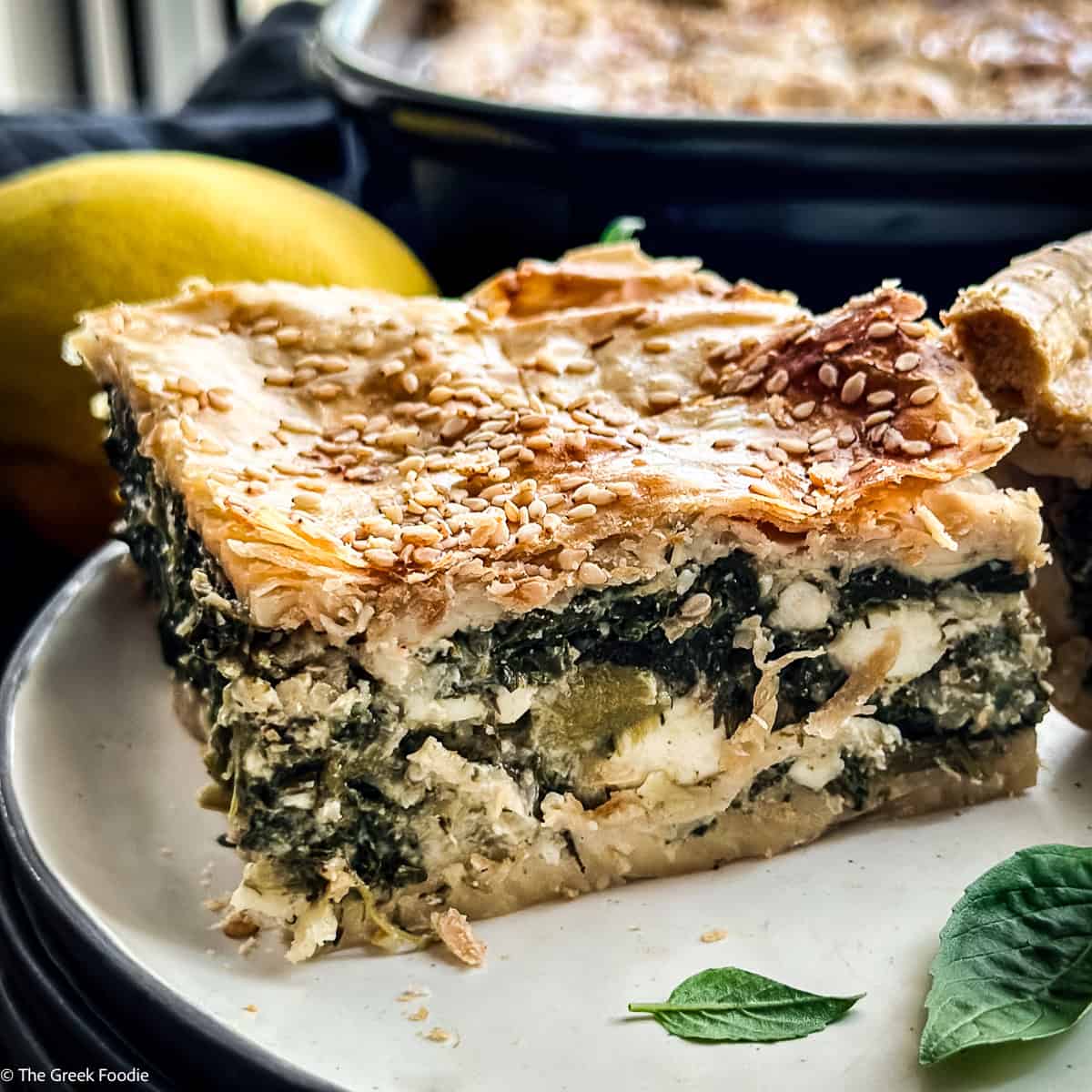
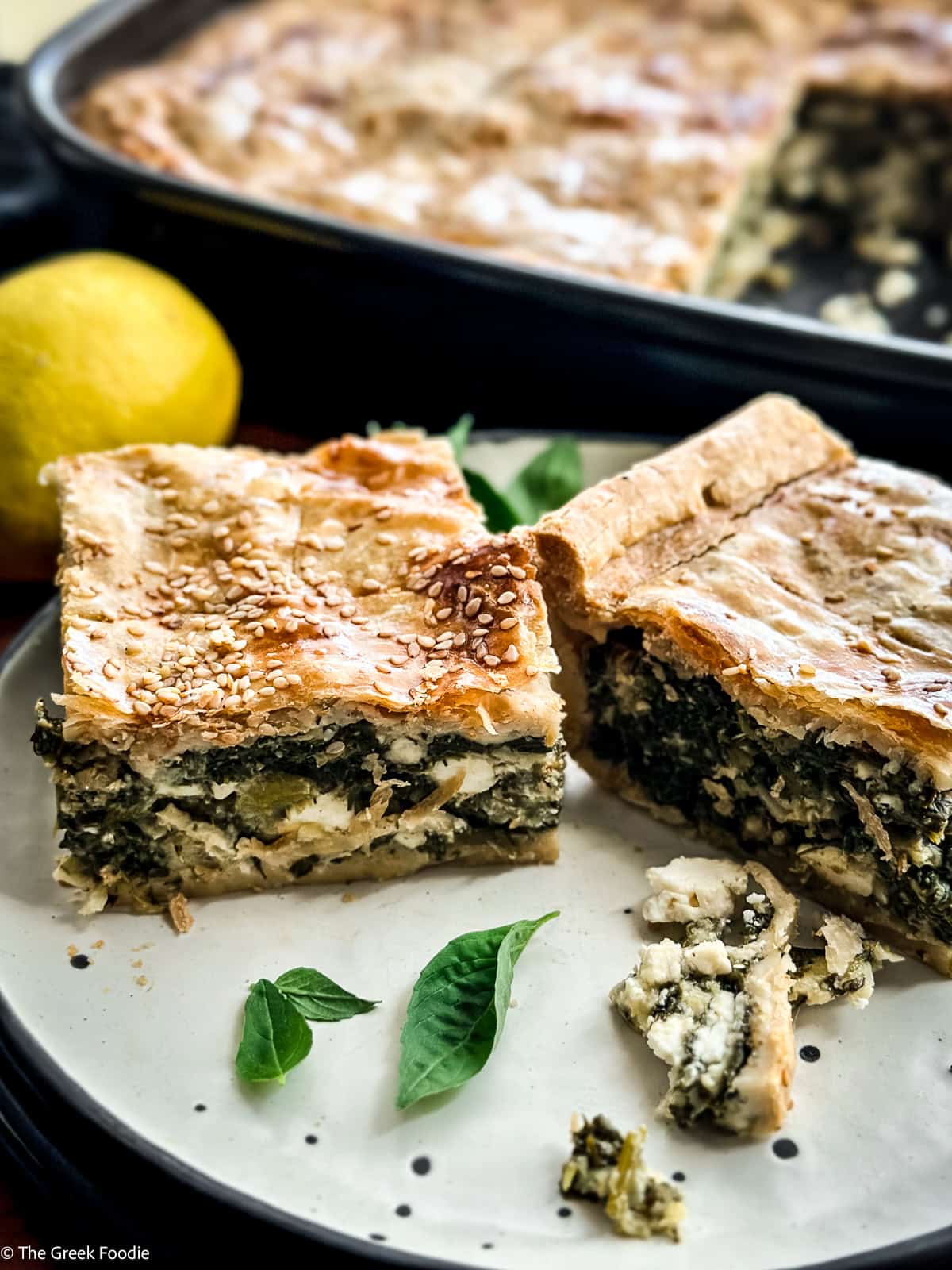
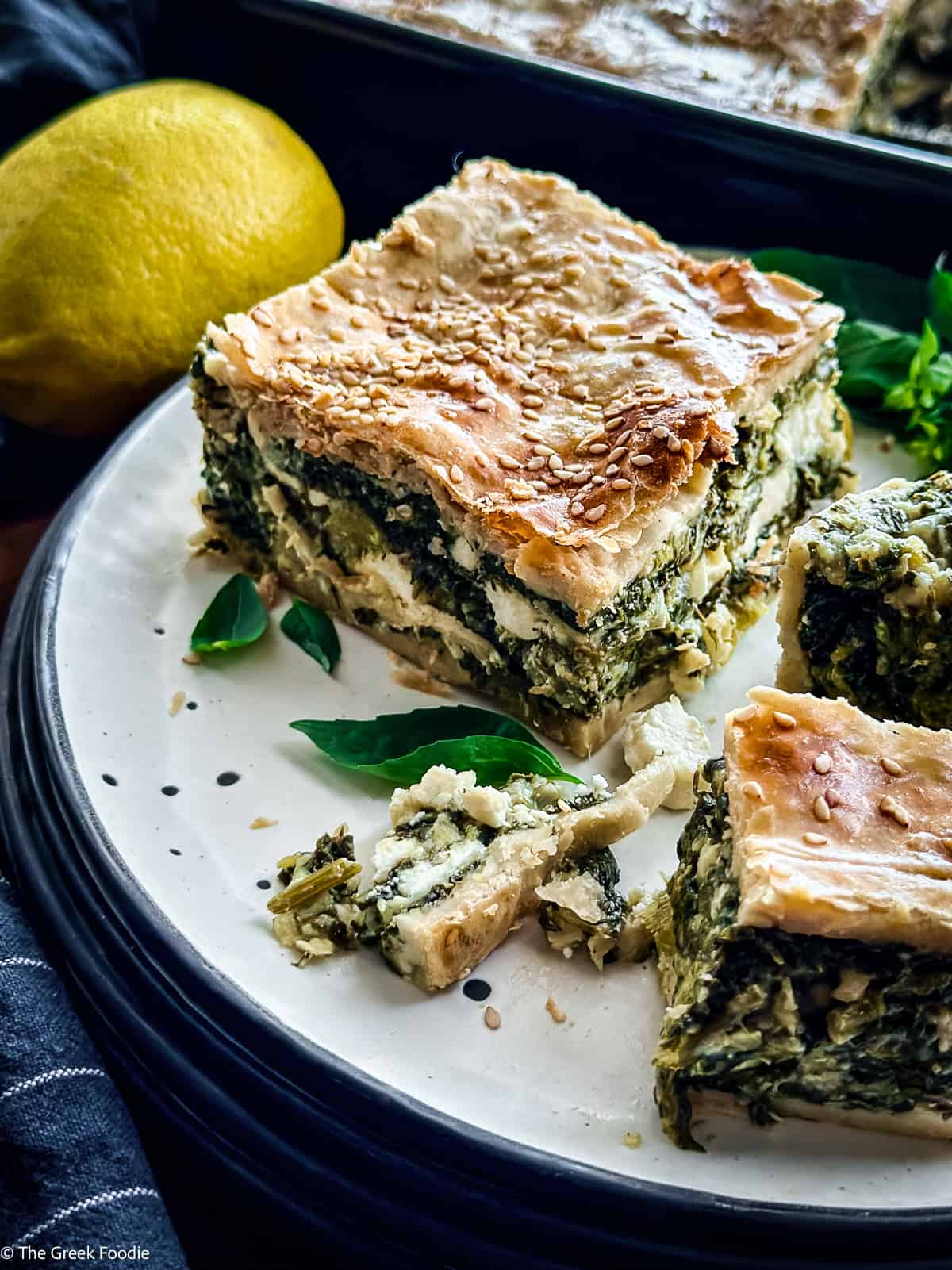
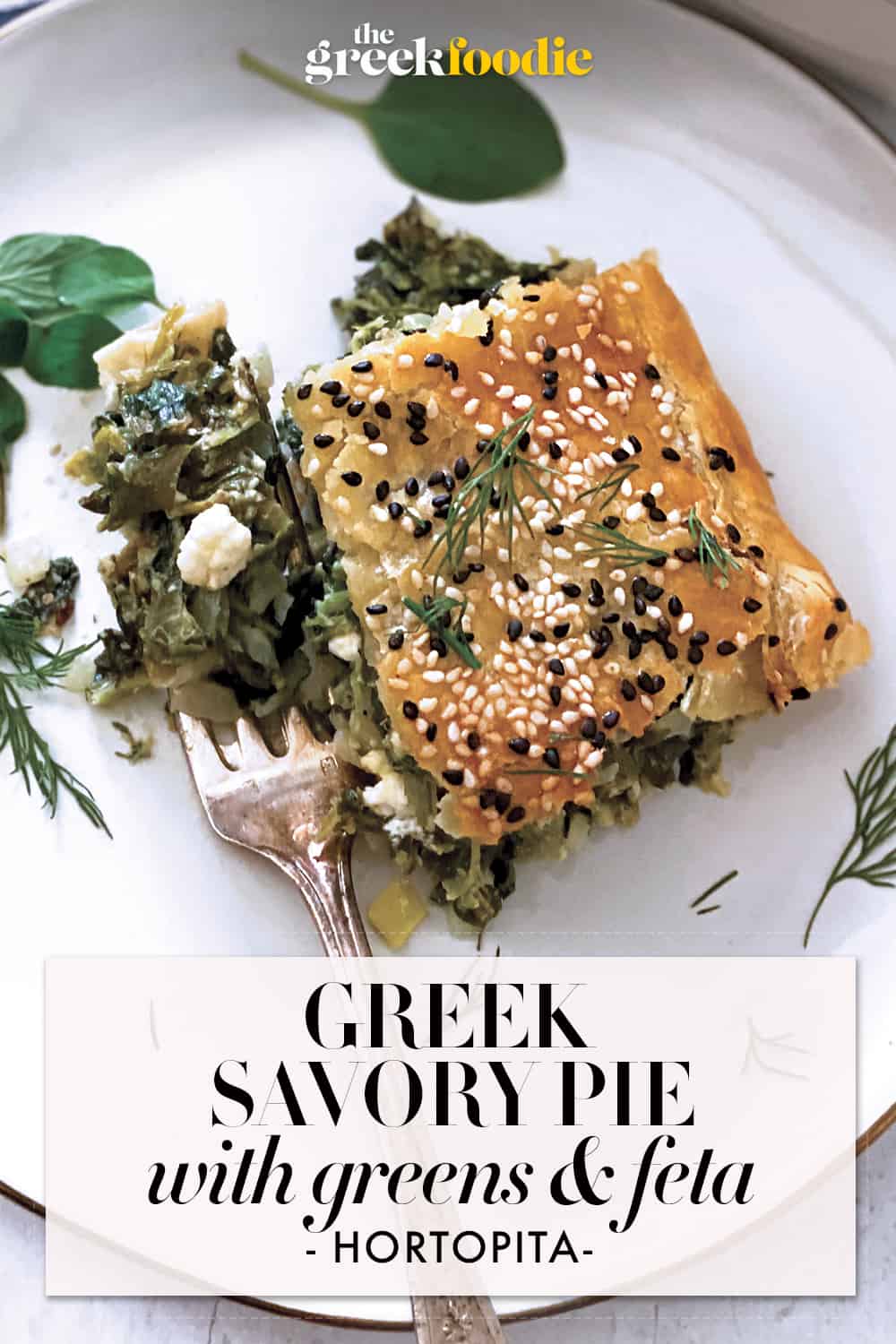
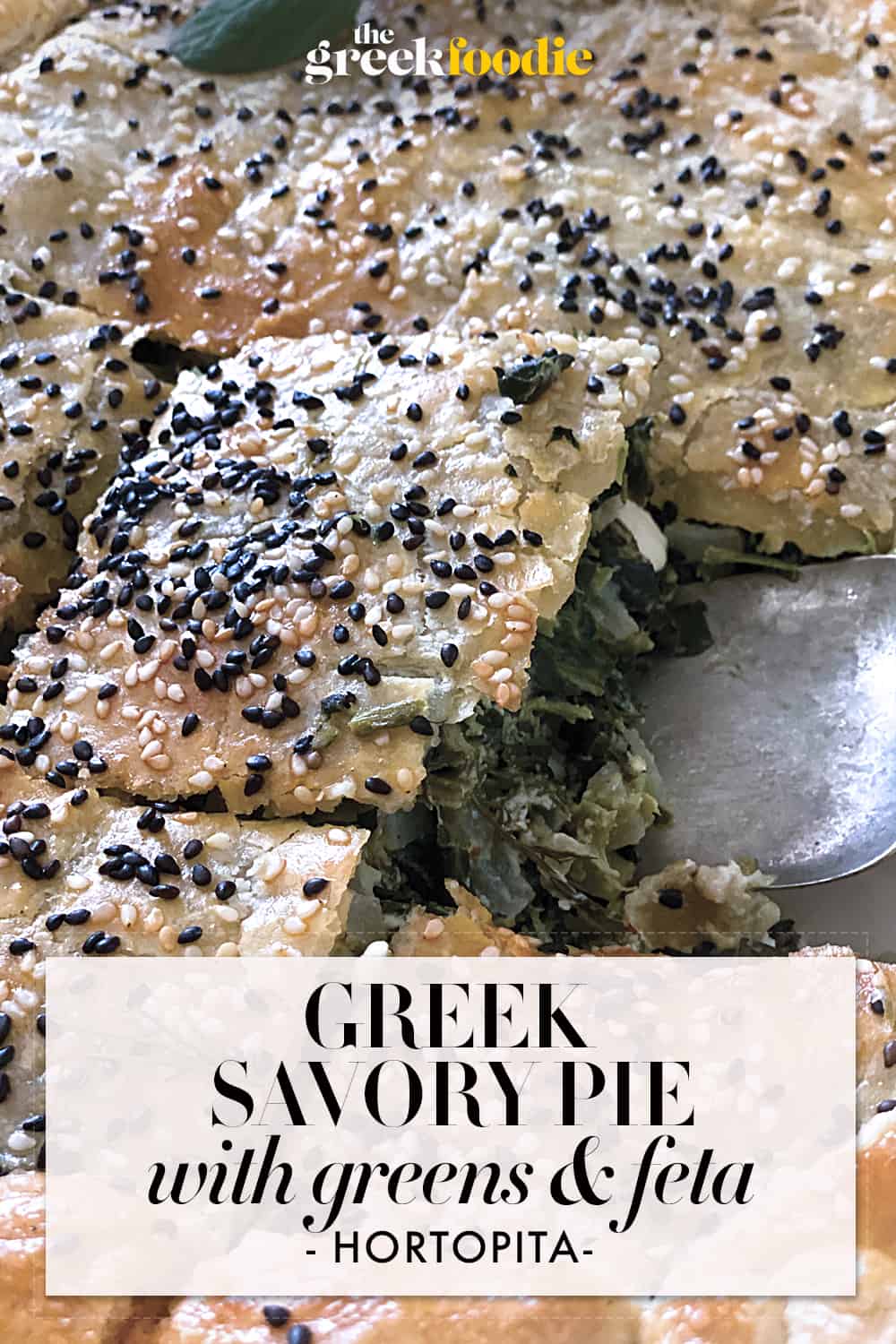
Hortopita is the Greek savory pie of mixed greens, fresh herbs and feta, baked in a flaky, golden crust. It’s the rustic older cousin of spanakopita — less polished, more herbaceous, and honestly the one I make more often.
I grew up with this pie made from whatever greens were in season. Here I’ve rebuilt it for the greens you can actually buy at a regular supermarket, and I’ve added everything I’ve learned about the one thing that ruins a greens pie: water.
If you love Hortopita, you will also love Horta, Greens with Olive oil and Lemon, Spinach and feta tortillas or Spanakorizo rice with Spinach and Lemon!
Why you will love this hortopita
What is a hortopita
Hortopita is a traditional Greek savory pie filled with mixed wild or cultivated greens (horta), fresh herbs, olive oil and usually feta, wrapped in phyllo or puff pastry. The name is literally horta (greens) + pita (pie).
It predates spanakopita and it’s still what most Greek grandmothers make in spring, when the hillsides are full of tender greens. Every region has its own version and every family, really.
Horta are a genuine staple of the Greek diet, not a garnish. We boil them and dress them with olive oil and lemon as a side dish, and we bake them into pies like this one. Wild varieties like myronia (wild chervil), stamnagathi (Cretan wild chicory), vlita (amaranth greens) and kafkalithres (Mediterranean hartwort) are everywhere in Greece and almost nowhere else.
Plenty of Greeks keep a knife and a cloth bag in the car for exactly this, pulling over on a mountain road or at the edge of a field in suburban Athens. Knowing which greens are worth eating and which are hortaria (fit only for the goats) is knowledge that gets handed down, not looked up.
Hortopita vs Spanakopita
Both are Greek savory pies wrapped in pastry. The difference is what goes inside.
| Hortopitahorta = wild greens | Spanakopitaspanaki = spinach | |
|---|---|---|
| Greens | A mix — wild greens, Swiss chard, dandelion, chicory, spinach | Spinach, almost always on its own |
| Flavor | Grassy and herbaceous, with a welcome bitter edge | Milder, sweeter, softer |
| Herbs | Lots — dill, mint, fennel, parsley, oregano | Usually just dill |
| Cheese | Feta, and sometimes none at all | Feta, nearly always |
| Origin | Older and rural — built from whatever grew nearby | The famous, more standardized version |
The short answer Spanakopita is a hortopita that decided to specialize. If spinach is all you can find, you are making something closer to spanakopita — and that is perfectly fine. It will still be delicious.
Here is what you need
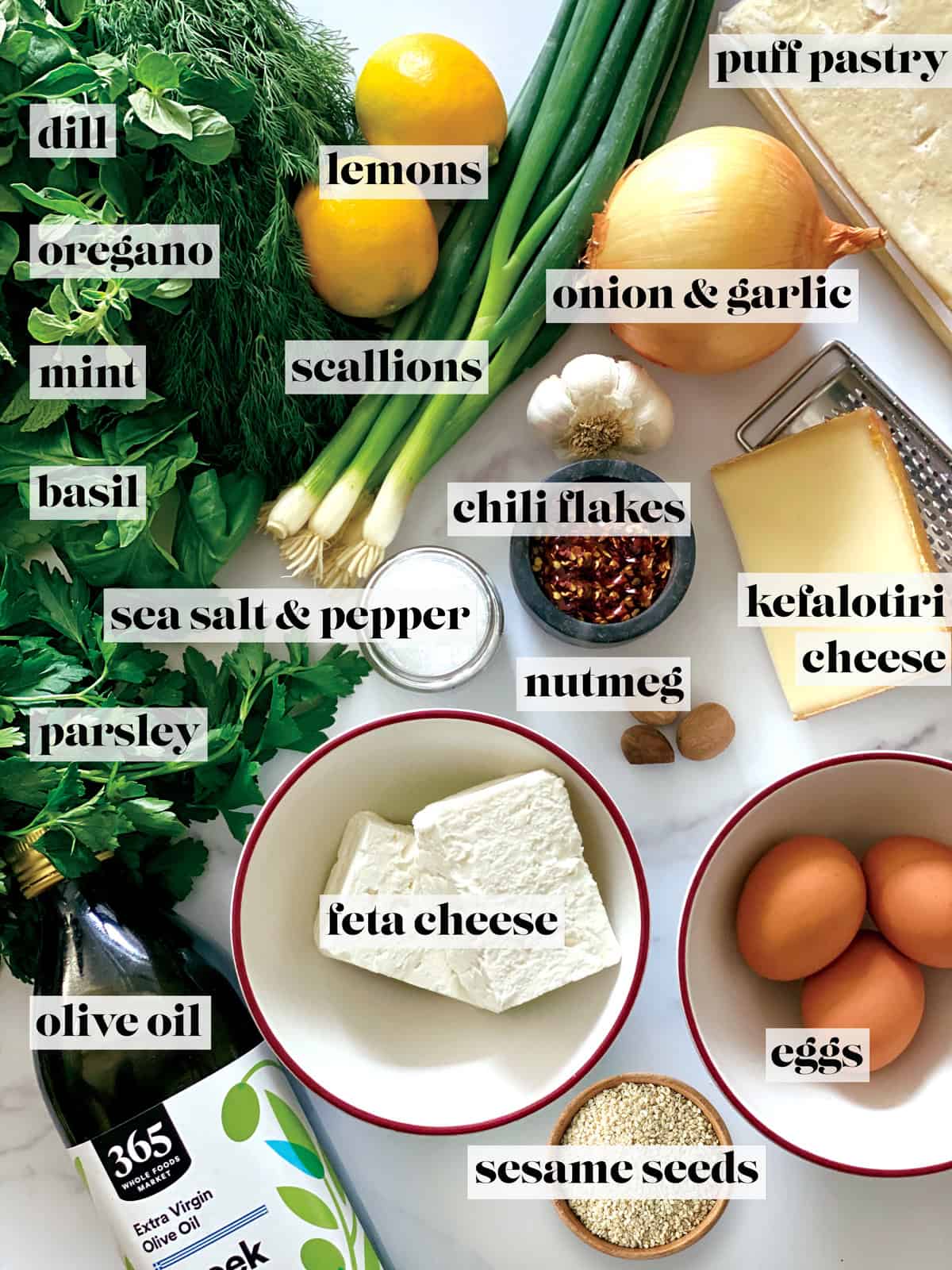
- Greens. Three pounds sounds absurd until you cook them. See the section below on which ones to use and how to handle each.
- Feta. Buy a block in brine and crumble it yourself — the pre-crumbled stuff is dry and chalky and it will show. I break it into large, pea-sized pieces so you get pockets of it, not a paste.
- Kefalotiri cheese. It is a hard cheese similar to Pecorino Romano. It adds a savory salty flavor in hortopita. Substitute with grated Pecorino, Gruyere or Graviera.
- Dill, mint, parsley, oregano and basil. This is not the place to economize. The herbs are what make it hortopita and not a spinach pie. Use as many as you like of what you can get.
- Onion and scallions. Sweetness from the onion, a little pepperiness from the scallions.
- Garlic. Obviously.
- Eggs. Three in the filling to bind it, one more beaten for the wash.
- Lemon. Zest and juice. This is the thing people leave out and then wonder why the pie tastes flat. Greens plus feta plus pastry is rich — the lemon cuts through all of it.
- Nutmeg. Warmth. It belongs with greens and cheese and you’d miss it if it were gone.
- Extra virgin olive oil. In the filling and in the pan. It’s a Greek pie.
- Puff pastry. Two sheets. This is the shortcut that makes hortopita a weeknight recipe instead of a project. Phyllo instructions are below if you want the traditional route.
- Sesame seeds. Blond, black or both on top. For looks, and a slight crunch, totally worth it.
Which greens to use
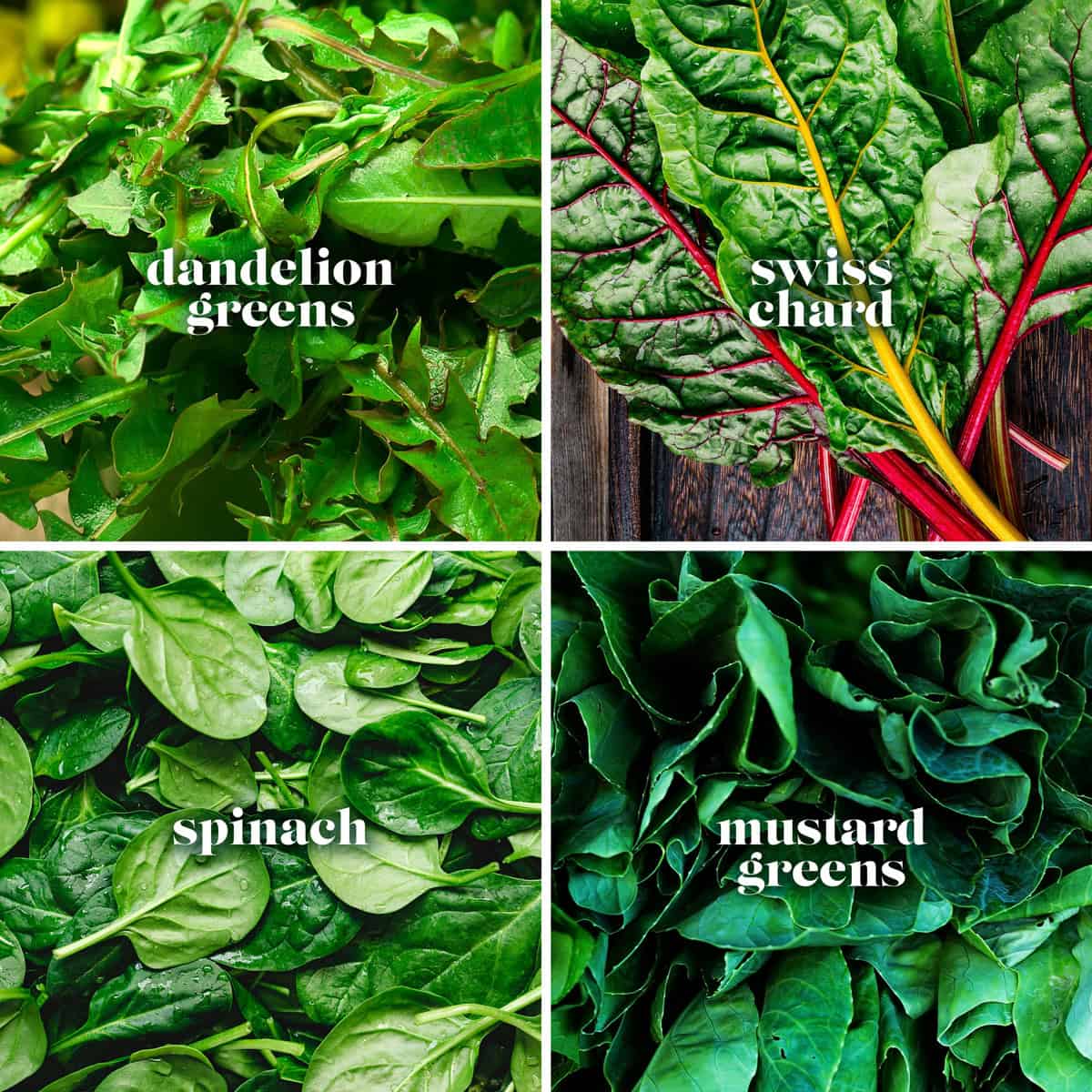
Wild Greek horta are hard to find outside the Mediterranean. Here is what to reach for at a regular supermarket
| Green | What it brings | Prep |
|---|---|---|
| Spinach | Mild, soft, the easiest of the bunch | No pre-cookingGoes straight into the skillet |
| Swiss chard | Earthy and sturdy, holds its texture | Wilt firstSlice stems thin, chop the leaves |
| Dandelion greens closest to wild horta | Properly bitter — the most authentic flavor here | Wilt firstBest as part of a mix, not on its own |
| Mustard greens | Peppery and sharp, wakes the filling up | Wilt firstChop and wilt as usual |
| Kale | Sturdy, and turns sweet once cooked | Wilt firstStrip out the tough center stems |
| Escarole or chicory Greek radikia | Gently bitter, the nearest thing to what we use in Greece | Wilt firstRinse very well, grit hides in the leaves |
My rule Build a mix, never use one green alone. Roughly half something mild like spinach or chard, half something with an edge like dandelion, mustard or escarole. All spinach is pleasant, but it is not hortopita — you want a little bitterness fighting the feta.
How to prep tougher greens
- Rinse very well — grit hides in chard and dandelion — then dry in a salad spinner or with towels.
- Slice thick stems thin and chop the leaves.
- Squeeze them dry. Cool enough to handle, then wring them out with your hands or in a clean kitchen towel.
Choose the crust that works for you
Any of these three will give you a good hortopita. Pick whichever you have, whichever you like, or whichever is already in your freezer.
Puff pastry is what I use here. Two sheets, one under the filling, one over. It’s forgiving, it goes from freezer to pan, and it bakes up golden and shattery.
Phyllo is the traditional route and the lightest of the three. Use about 10 sheets: five on the bottom, five on top, brushing each one with olive oil or melted butter as you go. (If you’ve never layered phyllo before, I walk through it step by step in my spanakopita recipe.) Score the top layers into portions before baking, or you’ll shatter the whole thing trying to cut it afterward.
Ready-made pie crust — the refrigerated kind from the supermarket — works too, and it’s the easiest of all. In Greece we reach for zymi kourou for exactly this. One crust underneath, one on top, pressed together at the edges. It bakes into something sturdier and more biscuity than puff pastry, which makes it excellent for picnics and lunchboxes.
Whichever you choose, thaw it in the refrigerator overnight rather than on the counter.
How to make hortopita
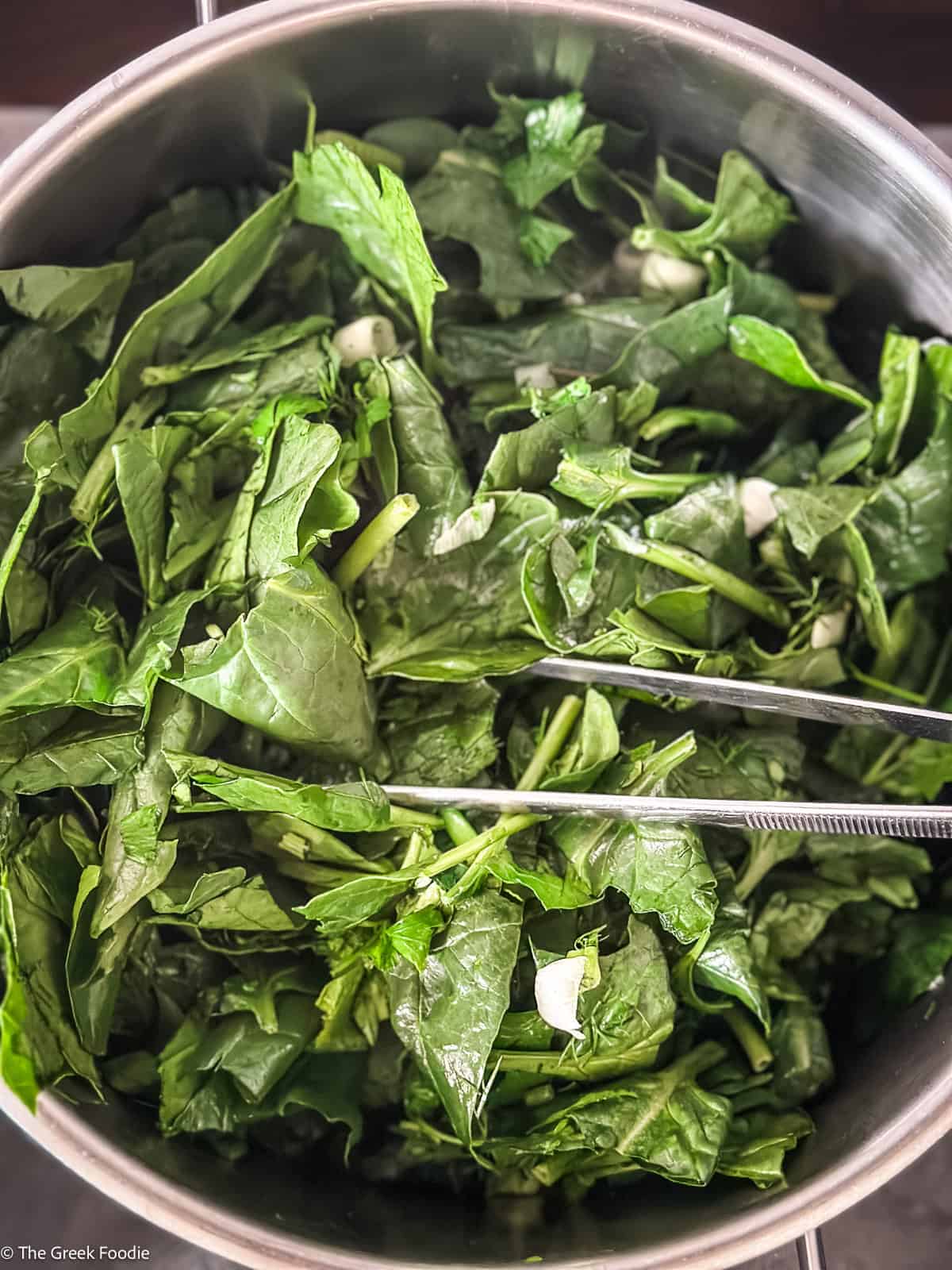
STEP 1. Soften the aromatics and wilt the greens. Heat 3 tablespoons of olive oil in a large skillet over medium. Cook the onion until it softens, about 4 minutes, then add the scallions and cook 4 minutes more — tender, not browned. Season with salt and pepper.
Add the greens and garlic and cook 4–5 minutes, until everything has collapsed. (If you pre-wilted tough greens, they just need a minute to meet the onions.)
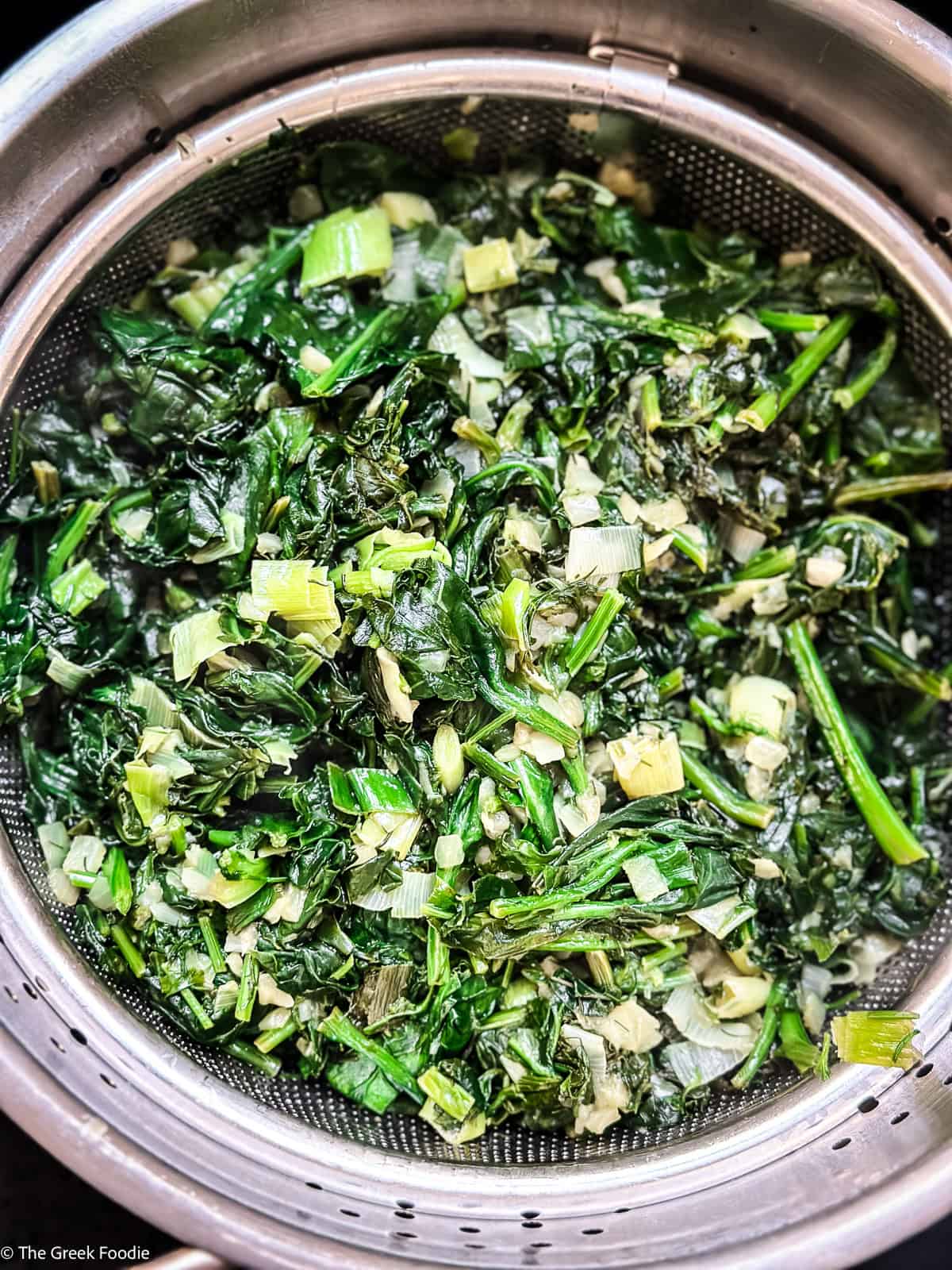
STEP 2. Drain — and then drain again. Tip everything into a colander in the sink. Let it sit 10 minutes, then press down hard with the back of a spoon or your hands. You should be left with about 2½ pounds (1.2 kg) of greens. Let it cool.
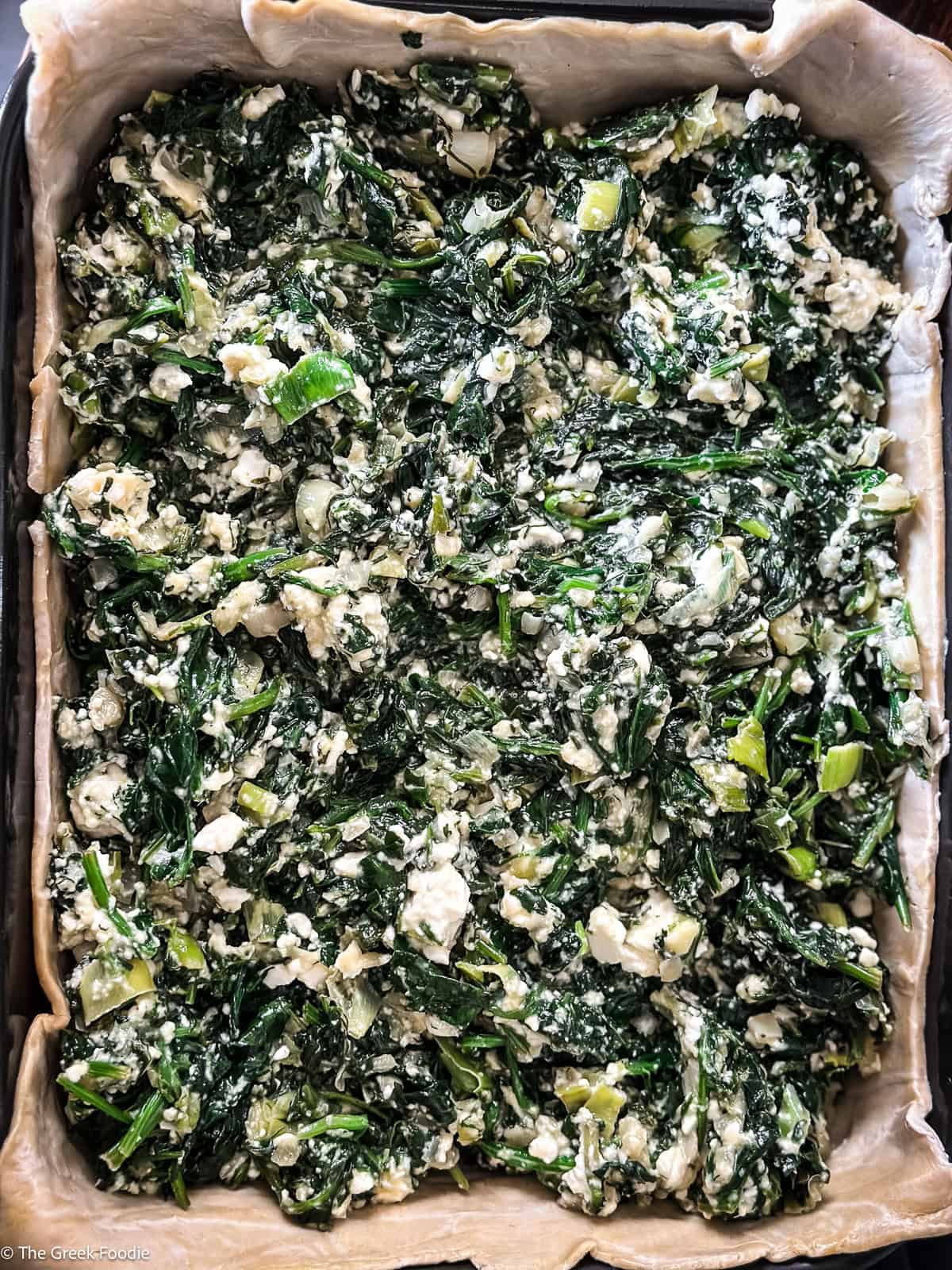
STEP 3. Build the filling. In a large bowl, combine the drained greens with the eggs, all the chopped herbs, 3 tablespoons of olive oil, the nutmeg, red pepper flakes, and the lemon zest and juice. Season with pepper, then taste before adding any salt — between the feta and the kefalotiri, you may not need much. Fold in the cheeses gently; you want visible pieces of feta, not a paste.
Assemble. Lay one pastry sheet in the oiled pan and let it hang over the sides. (Roll it out a little on a floured surface if it doesn’t reach.) Spread the filling and smooth it with the back of a spoon. Lay the second sheet on top and tuck the overhang down into the sides of the pan.
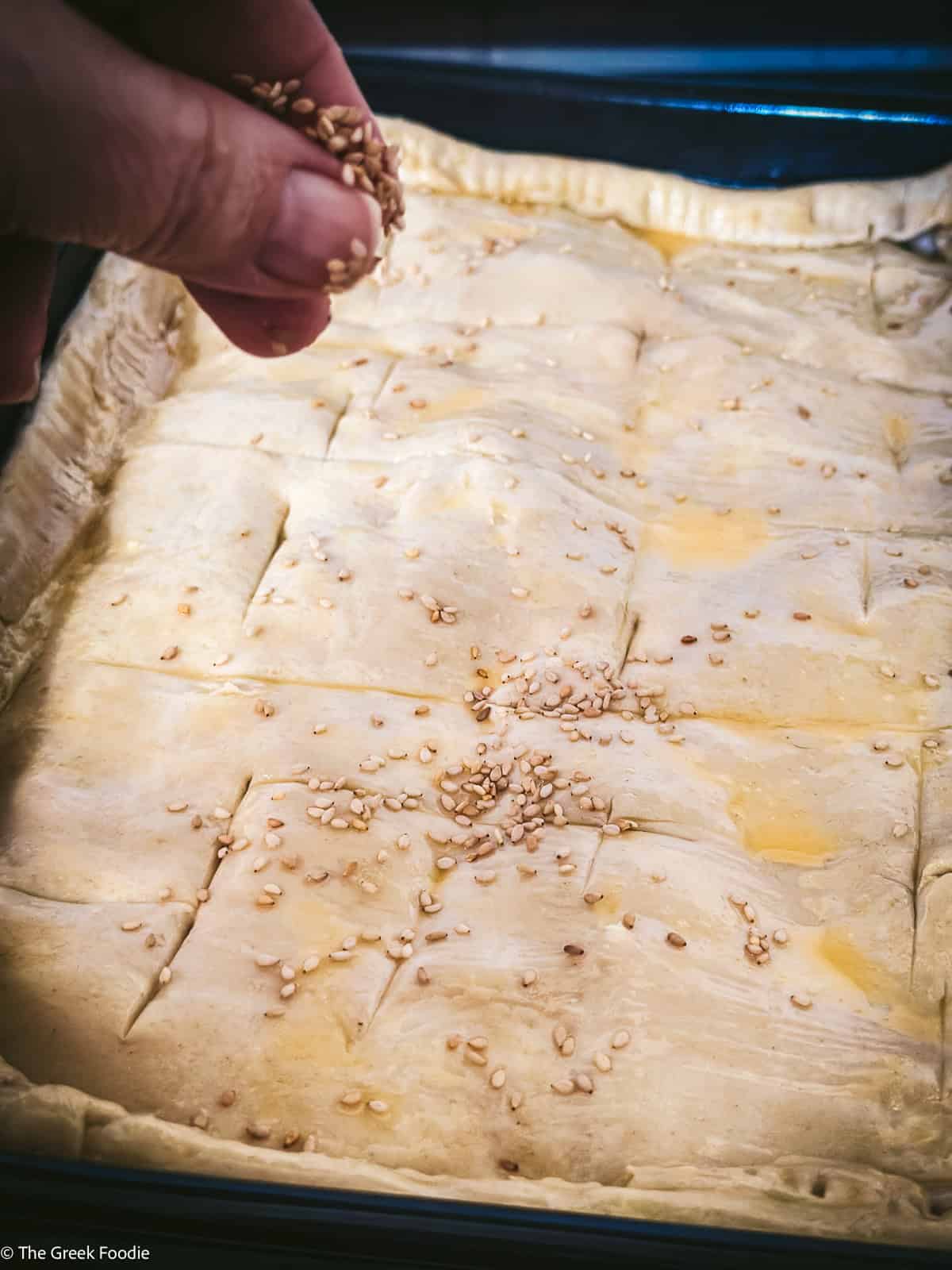
STEP 4. Wash and score. Brush the top with the egg wash, score it into portions with a sharp knife — just through the top layer — and sprinkle with sesame seeds.
Bake in two stages. Start at 200°C / 400°F for 20 minutes — the initial blast of heat sets the bottom crust and gets the pastry puffing before the filling has a chance to soak in. Then lower the oven to 180°C / 350°F and bake about 40 minutes more, until deeply golden and firm. Tent with foil if the top is browning faster than the middle is setting.
Rest 20 minutes. You must let it cool down a little. Cut it hot and the filling slumps out.
Pro tips
- Press the greens harder than you think you need to. Three pounds of greens hold a shocking amount of water, and every drop you leave behind goes into your bottom crust. Let the colander do its work for a full 10 minutes, then press again.
- Cool the filling before it touches the pastry. Warm filling steams the dough from the inside and the bottom never crisps.
- Dust the bottom sheet with a spoonful of fine semolina or breadcrumbs before adding the filling. It’s an old trick and it absorbs whatever moisture you missed.
- Bake on the lowest rack, or on a preheated sheet pan. Direct bottom heat sets the base crust fast. This is the single best fix for a pale, damp bottom.
- Taste the filling before it goes in. Feta varies enormously in salt. Adjust then, not later.
- Don’t skip the lemon. It’s the difference between a good pie and a heavy one.
- Score before baking, cut after resting. Scoring lets steam escape and gives you clean portions.
- Use the herbs generously. If it tastes like a spinach pie, you didn’t use enough.
Variations
Vegan / Lenten hortopita (nistisimi). Skip the cheese and eggs entirely, bump up the herbs and lemon, and add a handful of toasted pine nuts or a little rice to the filling for body. Pepperidge Farm puff pastry is vegan. Greek phyllo sheets are also vegan. We make this version all through Lent, and it’s genuinely good — and not a compromise.
With leeks. Swap the onion for two thinly sliced leeks, cooked slowly. Sweeter, softer, closer to prasopita.
With rice or bulgur. A half cup of cooked rice folded into the filling soaks up moisture and stretches the pie. Common in northern Greece.
Extra tang. A few spoonfuls of Greek yogurt in the filling, or a handful of crumbled anthotyro or ricotta alongside the feta.
Individual pies. Cut puff pastry into squares, spoon filling into the center, fold into triangle pies. Same filling, party format.
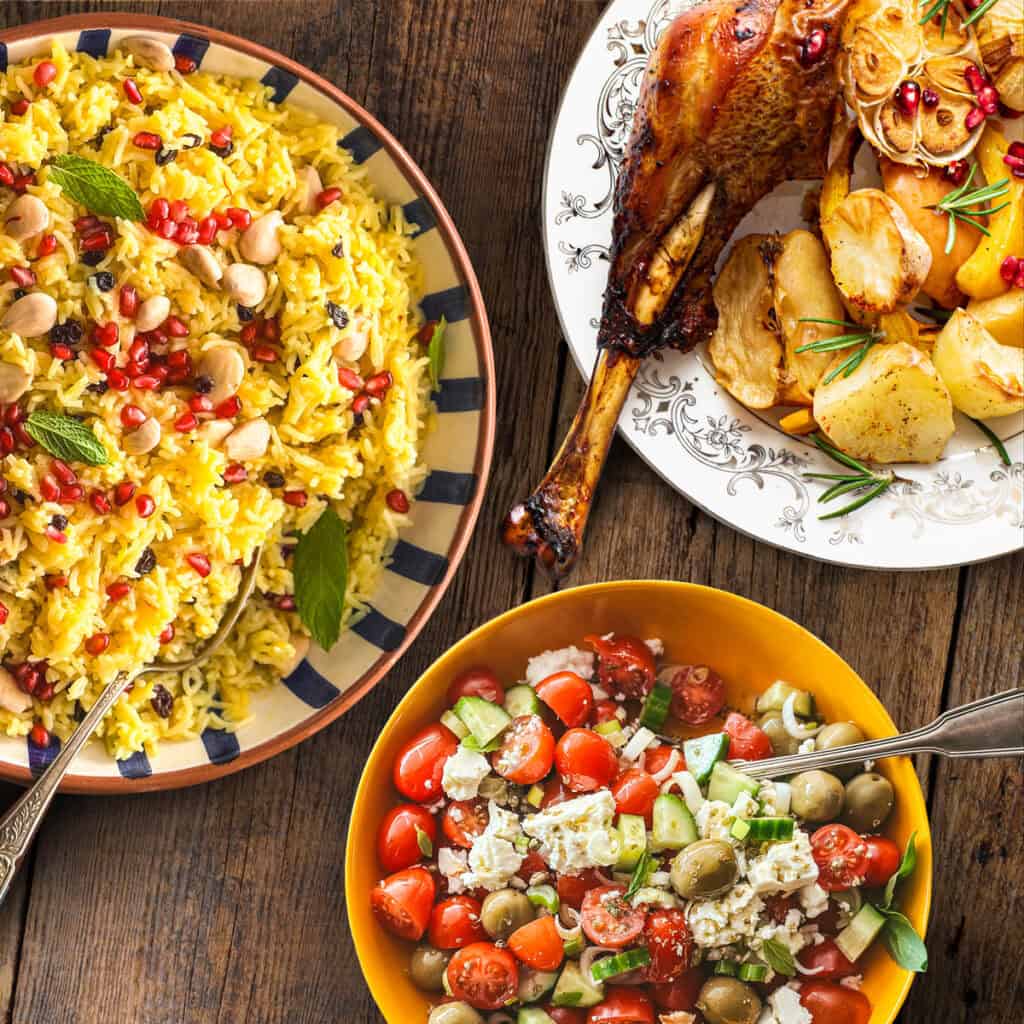
What to serve with hortopita
Hortopita is a full meal with nothing more than a salad, but if you’re building a table:
- A Greek tomato salad — the acidity is exactly right against the pastry
- Chicken souvlaki or thinly sliced pork gyro
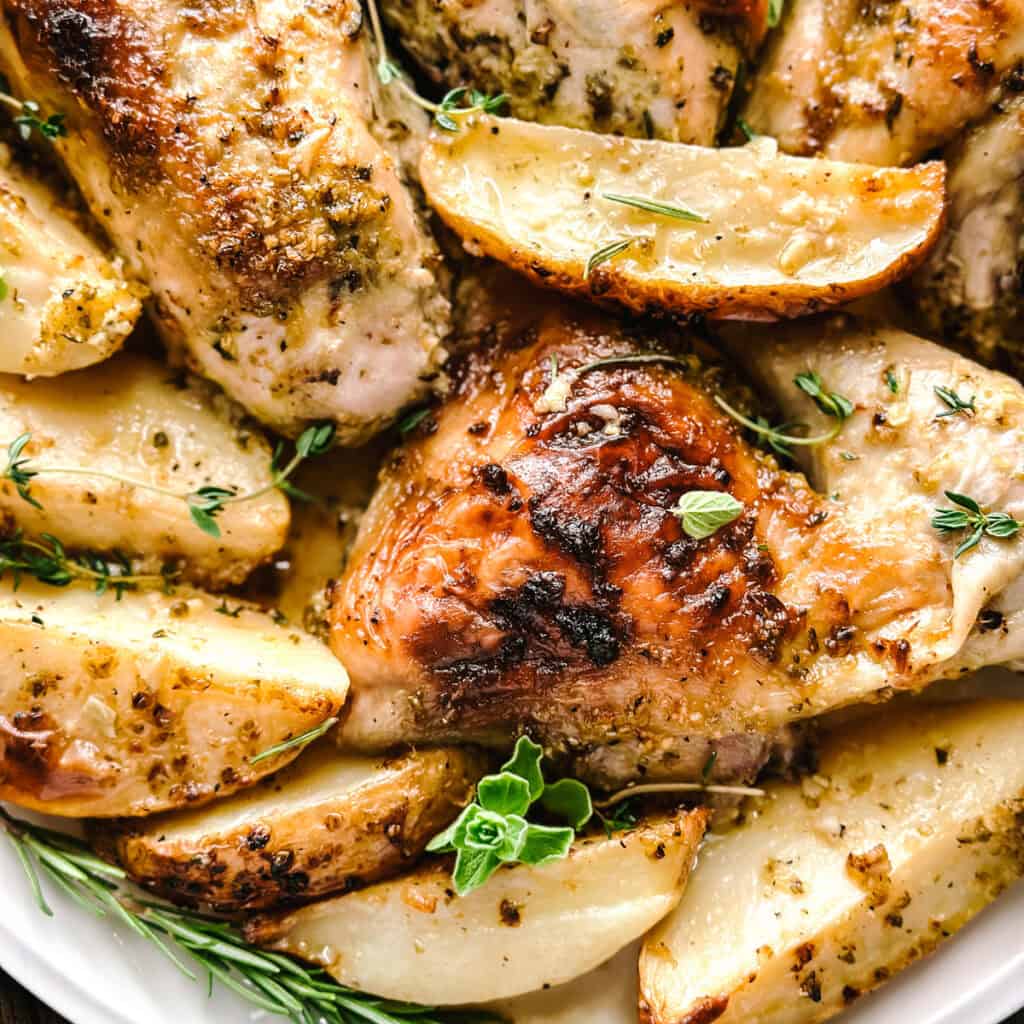
- Lemon potatoes with garlic and oregano
- Plain thick Greek yogurt, spooned alongside
- A few olives and a glass of cold white — Assyrtiko or Moschofilero
Storage, make-ahead and freezing
Storing. Cool completely, then refrigerate covered for up to 4 days. I think it’s better on day two.
Reheating. Uncovered in a 350°F oven for 15 minutes, until hot and crisp again. An air fryer at 325°F for 6–8 minutes works beautifully for single slices. Skip the microwave unless you’ve made peace with a soft crust.
Make ahead — the filling. Make it up to 2 days ahead and keep it refrigerated. Drain off any liquid that collects before assembling.
Make ahead — the whole pie. Assemble it completely, don’t egg-wash, cover and refrigerate overnight. Egg-wash and bake straight from the fridge, adding 5–10 minutes.
Freezing unbaked. Assemble in a freezer-safe pan, wrap tightly in plastic and then foil, freeze up to 3 months. Bake from frozen — don’t thaw — adding about 20 minutes and covering with foil if it browns early. This is my preferred way.
Freezing baked. Cool completely, cut into portions, freeze on a tray then bag them. Reheat from frozen at 350°F for about 20 minutes.

FAQ
More Greek savory pies
You may also like
Cooked it? Rate it!
If you tried this recipe, I’d love to know how you liked it — drop a comment below or tag me on Instagram @thegreekfoodie__.


Greek Savory Pie with Greens and Feta – Hortopita
Equipment
- 11" x 8" baking pan
Ingredients
- 3 lbs greens, roughly 6 cups packed, rinsed, spun dry, stems thinly sliced, and leaves chopped
- 6 scallions, white and green parts, sliced into ¼ inch pieces
- 1 onion, diced
- ½ bunch flat-leaf parsley, coarsely chopped
- 1 bunch fresh mint leaves, coarsely chopped
- ½ bunch fresh dill, coarsely chopped
- ½ cup fresh basil leaves, coarsely chopped
- ½ cup fresh oregano , coarsely chopped
- 4 garlic cloves, minced
- 3 eggs
- 2 cups Greek feta , crumbled into large, pea-sized pieces
- 1 cup Kefalotiri cheese, grated
- 2 puff pastry sheets
- 6 tablespoons extra virgin olive oil, divided
- 1 teaspoon ground nutmeg
- 1 teaspoon chili flakes
- 1 lemon , juiced and zested
- sea salt
- freshly ground pepper
For the egg wash
- 1 egg, beaten with 1 teaspoon of water
For the top
- sesame seeds, optional
Instructions
- Preheat the oven to 190°C – 375°F
- Heat 3 tablespoons cup of olive oil in a large skillet over medium heat.Sauté the onions until they begin to soften, about 4 minutes, then add the scallions, cooking another 4 minutes or until tender but not browned. Season with a pinch of salt and freshly ground pepper.
- Stir in the greens and garlic and continue to sauté until the greens are limp, about 4-5 minutes.Remove from heat and transfer in a colander in the sink to cool and drain liquids.
- Place the greens mixture in a large bowl and add three eggs, dill, basil, oregano, parsley, mint, and three tablespoons of olive oil—season with sea salt and freshly ground pepper. Add the red pepper flakes and nutmeg.The juice and zest of one lemon are added to the mixture.Thoroughly combine the ingredients and gently fold in the crumbled feta and kefalotiri, careful not to over-mix to where the cheese dissolves.
- Lay one puff pastry sheet in the pan, allowing the edges to evenly hang over the pan's sides.
- Place the greens mixture on top of the sheet and press down gently with the back of a large spoon to smooth the filling.
- Layer the other pastry sheet on top. Gently tuck the pastry hanging over the edges of the pan down into the sides of the dish.
- Beat 1 egg with a teaspoon of water to make the egg wash.Brush the egg wash all over the top of the pie. Gently score the puff pastry and sprinkle some black and blond sesame seeds (optional).
- Bake the pie in the middle of the oven for approximately 60 minutes. If the puff pastry browns too quickly, cover with aluminum foil and uncover the last 5-10 minutes of cooking.After removing from the oven, let the pie rest for 15-20 minutes.
Notes
When using greens like swiss chard, dandelions, mustard greens because they are tougher, do the following:
- Rinse greens well, dry them in a salad spinner or with kitchen towels.
- Suppose you are using greens with long, strong stems such as swiss chard; thinly slice the stems. Chop the leaves.
- Place the chopped greens in a microwave-safe bowl (no need to cover) and microwave for 3- 4 minutes or until wilted but still bright green.
- Empty the greens into a colander and when cool enough, use your hands to squeeze out as much liquid as possible. Then proceed to saute with onions and garlic in olive oil.
Nutrition

Now this is my kind of dinner. I LOVE pies!! Greek flavours happen to be a favourite around here. I need to get these ingredients on my shopping list. This is on my “to make” list for this week.
So glad you are making it. Thank you so much, Gloria! x Jenny
Last night we had a great feed of Swiss Chard and I just can’t get enough greens lately. I love that some Greeks are still into foraging, it’s not as prevalent here in Canada. If I was making this with local foraged greens, I would try using stinging nettle and watercress.
Love stinging nettle and watercress for this pie. Thank you so much, Bernice!
x Jenny
This crispy crust and the perfect combination of ingredients takes this recipe to the next level. Thank you for sharing!
So glad you liked it. Thank you so much, Natalia! x Jenny
My sons are coming over this weekend. This Greek Savory Pie with Greens and Feta – Hortopita will be perfect for our family meal.
So glad you are making it. Thank you so much, Dennis! x Jenny
I have a get-together this weekend with a few friends. Was thinking of what to cook. This looks just the recipe I was looking for. Trying this pie for sure.
So glad you are making it. Thank you so much, Aditi! x Jenny
I am a big fan of Greek food. And this pie looks really great. I am looking forward to trying it myself. Many thanks for sharing this.
Thank you so much, Kate! x Jenny
I love pies, but I must admit I don’t have enough savory pies. I love Greek food though and this looks amazing! Looking forward to try this soon.
Thank you so much! x Jenny
What an awesome way to eat greens for dinner, totally decadent and totally delicious. Drying the greens in a salad spinner is genius!
Thank you so much, Silvia! x Jenny
This was absolutely wonderful! The feta filling was so flavorful, and I loved every flaky bite thanks to the puff pastry. We will definitely make this again and again!
So glad you liked it Amanda.
Thank you so much!
x Jenny
This pie looks like a dream! Greeks sure know how to make incredible pies, and this new one looks so much easier to prep than spanakopita!
Thank you so much Ksenia! x Jenny
Wow, this pie looks amazing. Look at that crust. And the filling is so healthy and delicious. I just saved your recipe. I can’t wait to cook this for my family. Thanks!
This recipe turned out fantastic. It was a cinch to make following your excellent instructions and tips. This recipe will definitely become part of our dinner rotation. Have a great day!
So delicious and simpler to make than I thought. I will definitely have this recipe on rotation for a while. Thank you!
I cannot wait to try this! It looks so darn good. As soon as I can get my hands on some Kefalotiri cheese, I will be making this. I love all the fresh herbs that are incorporated.
I had never heard of this before. This sounds incredible. Being Italian totally understand the foraging of greens. Thanks souch for enlightening us further in Greek cuisine!
Lovely post!😋🥰
What a great recipe that’s honestly perfect any time of the year! Adding this to our meal plan for sure!
Puff pastry sheets are a blessing and this is such a great recipe to make for dinner. I used a mixture of greens this time (thanks to your suggestion) and loved it.
This Greek savory pie is so perfect and delicious! Love that it is made with puff pastry, makes it so flaky and fancy.
I’m a big fan of Mediterranean food and this recipe looks really savory and flavorful.
Brilliant that you suggest veg alternatives. I’m baking your pie this weekend for family lunch. Almost forgot- thank you x
Thank you so much Kathy, for trying this recipe! x Jenny
I am making this now. The recipe doesnt explain when to add the lemon. Im going to put it in with the greens when I am cooking them? Please let me know if this is what you do. Thanks.
Hi Amy,
Yes, you are doing the right thing. We missed it and will fix the recipe asap.
Thank you so much for trying this recipe!
x Jenny
I make this quite often but my prep is quite different. Also, in Australia it is quite easy to find plenty of chicory and greek horta, especially if you grow it yourself in Sydney. I use lots of chicory, as many dandelions as I can find in my back yard, amaranth, a couple of bunches of watercress, some kale, lots of English spinach , nettles and a big bunch of silverbeet. I also use leeks together with white onion for a sweet taste. After washing and rinsing my greens, I steam each individual type in a dry pan with lid on, after adding a touch of water. after a minute or so, everything has reduced and I add to a sink of cold water to keep the colour. Then, once all done, I squeeze out all the water. I find this is an easier option. I don’t use eggs to bind, as personally I don’t think it’s necessary. Like you, I prefer to make this with puff. Your recipe is quite good and authentic. Interesting that all Greeks and Cypriots have their own version.
Hi Savva!
I like your prep for this pie. Very good. I will try your method.
Thank you so much for your comment and for liking the recipe!
x Jenny!
Oops. The recipe is subtitled “This classic Greek savory pie has lots of greens, creamy feta, gruyere, and a crisp, puff pastry crust.” I assume the “gruyere” is meant to be Kefalotiri. Which, as soon as I find some, will mean I can try this delicious sounding recipe. I will then have the energy to continue to proofread the internet!
Hi Son of Heracles!
In Greece we have Graviera cheese, which is the Greek version of Gruyere cheese. The flavor can vary in every region. My preference is mild and nutty Graviera from Crete. So in this recipe Gruyere is exactly what it means. I use the packaged Gruyere from the deli section of my supermarket. If I am lucky and close to a Greek supermarket in Astoria I get Graviera from Crete. Kefalotyri is too salty and best used on pasta or for saganaki.
Thanks so much!
Jenny