

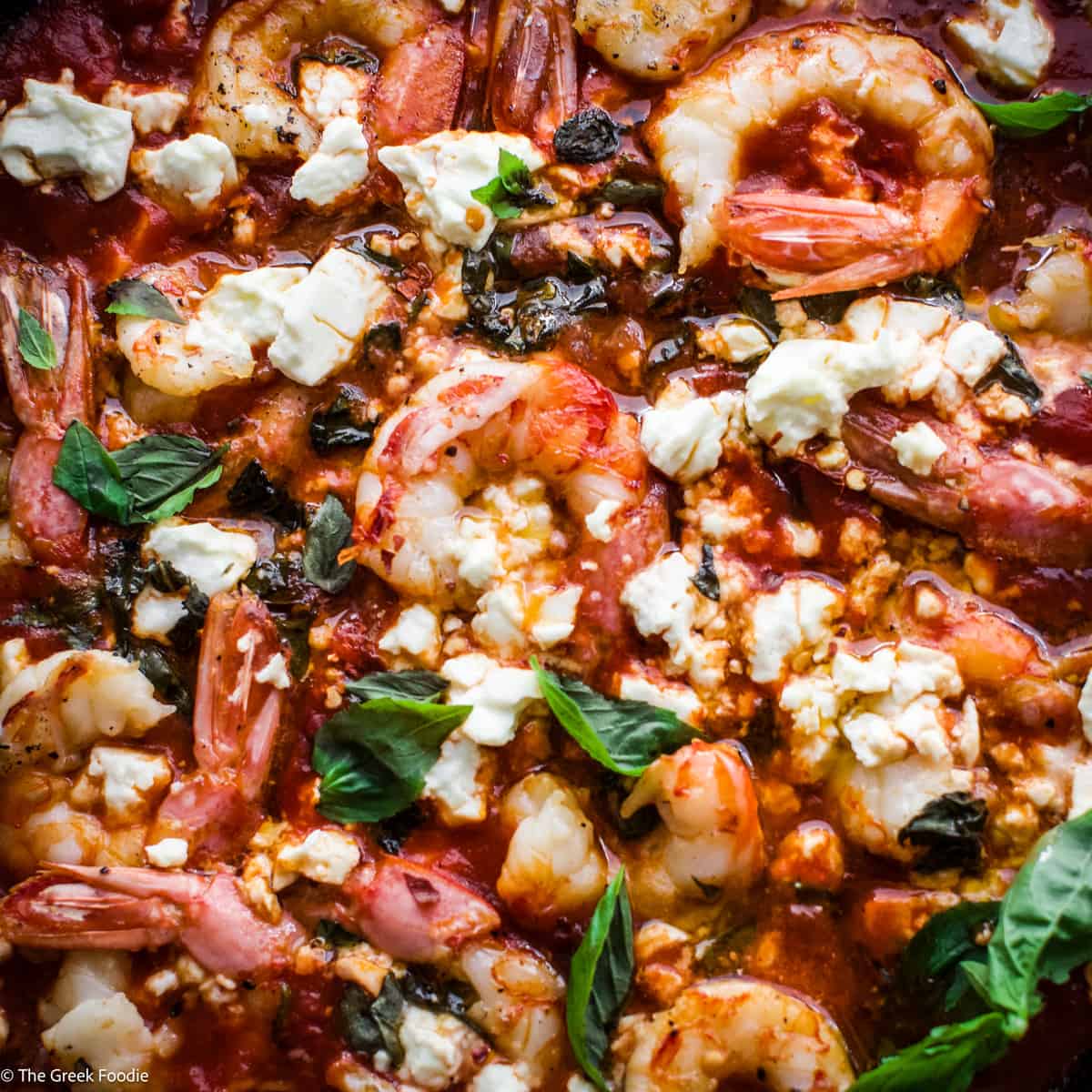
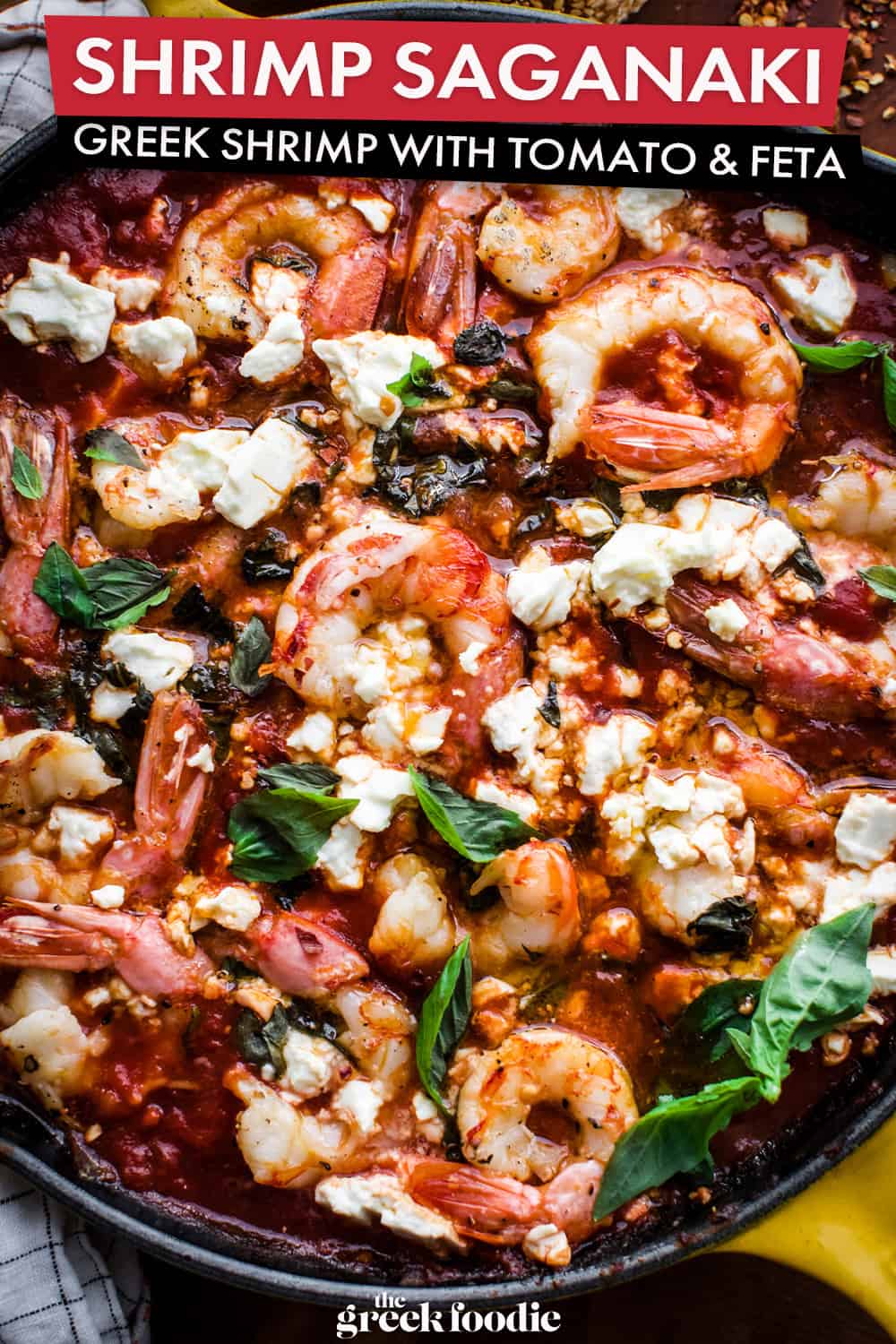
Shrimp saganaki is the Greek appetizer I make every time I want to guarantee a quiet table, because everyone stops talking and starts eating.
It’s a dish that belongs to the category Greeks call mezedes, plates meant for sharing, paired with cold white wine or a shot of ouzo. In every taverna by the Aegean, you’ll find a version of this: shrimp in a bubbling tomato sauce, crumbled feta melting on top, the whole thing arriving at your table still sizzling in the pan.
This recipe uses a few simple ingredients — juicy canned tomatoes, real Greek feta in brine, a shot of ouzo, and a star anise — to build a sauce that tastes like you spent the whole afternoon cooking. You didn’t. It comes together in under 40 minutes, most of which is hands-off oven time.
Shrimp saganaki works as a starter for a dinner party, and as a light weeknight dinner with crusty bread.
If you love this Shrimp Saganaki-Greek Shrimp with Feta and Tomato, you will also love this Garlicky Shrimp Orzo, and Shrimp Spaghetti (Garidomakaronada)!
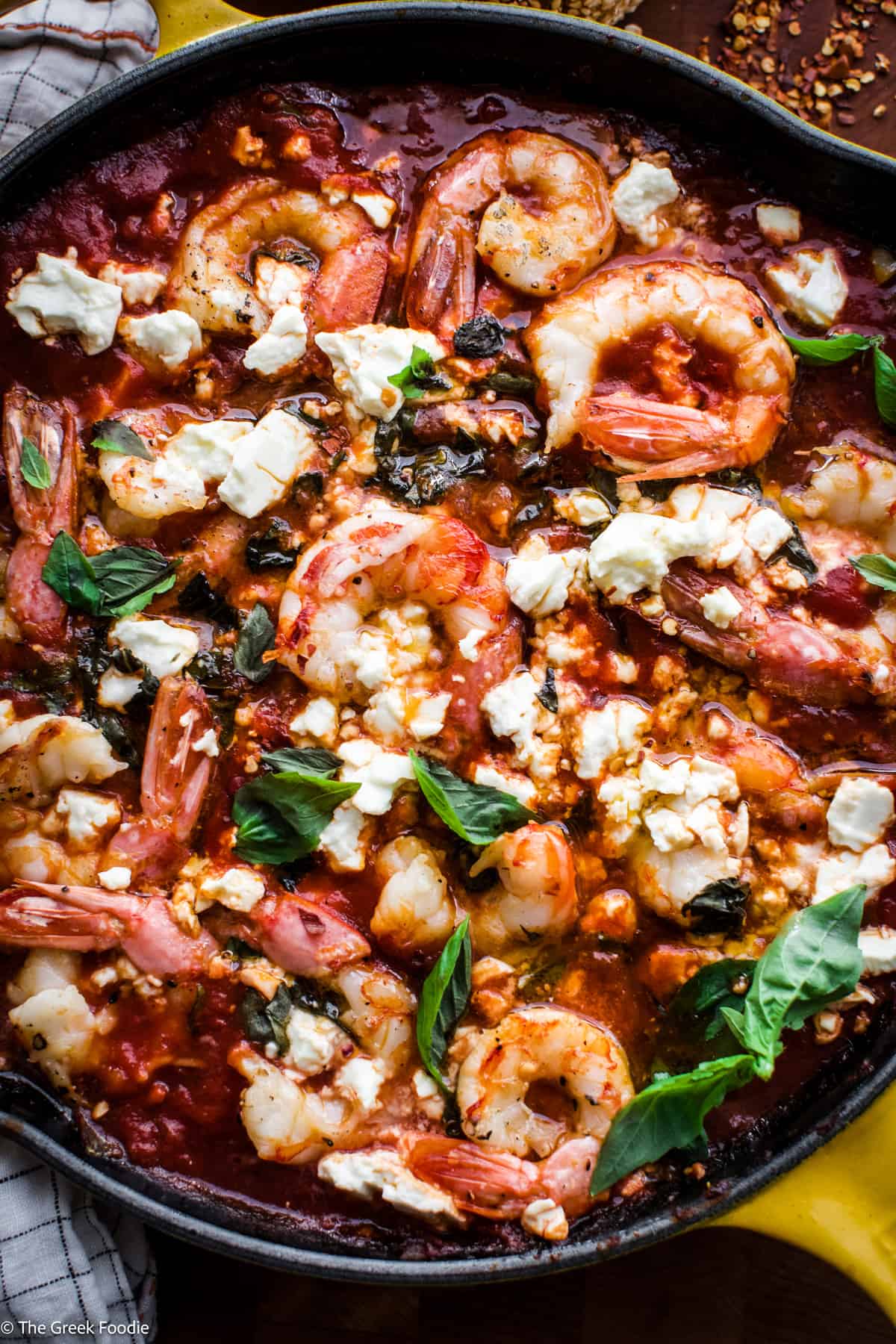
What Is Shrimp Saganaki?
Saganaki (σαγανάκι) takes its name from the small two-handled frying pan, the sagani, traditionally used to cook it. Any dish prepared and served in this pan can technically be called saganaki — the most famous being the fried cheese version. Shrimp saganaki, or γαρίδες σαγανάκι in Greek, is the seafood version: shrimp cooked in a spiced tomato sauce, finished with feta cheese.
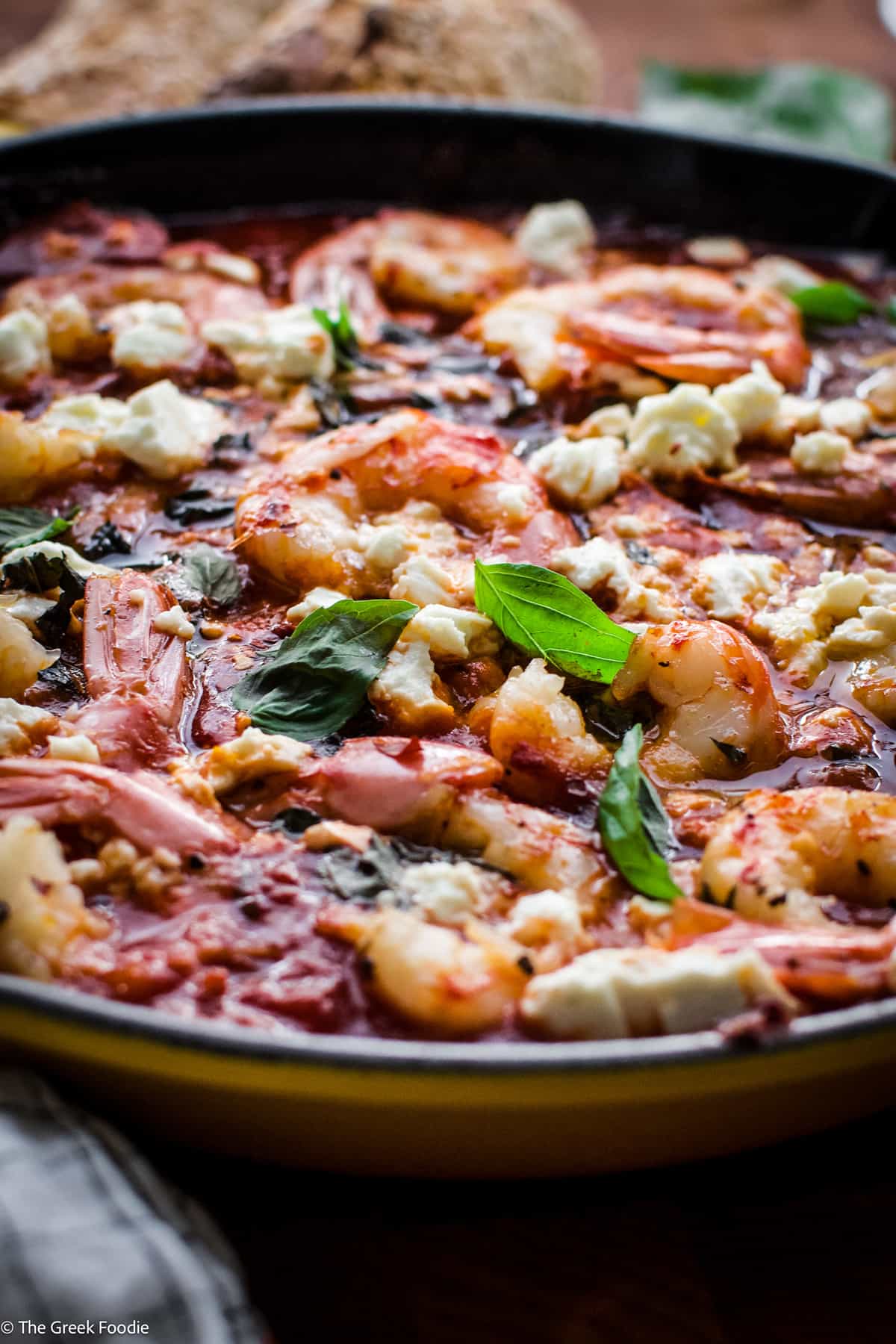
It’s a staple in Greek coastal tavernas and a fixture on any good mezze table. Unlike the flambéed cheese version, shrimp saganaki is not flamed at the table — it’s baked in the oven until the feta softens into the sauce and the shrimp are perfectly cooked. The result is somewhere between a braise and a bake, rich and saucy, meant to be eaten with bread.
Why you will love shrimp saganaki
Bring the Greek taverna home with more ideas from my Mediterranean diet dinner recipes.
Here is what you need
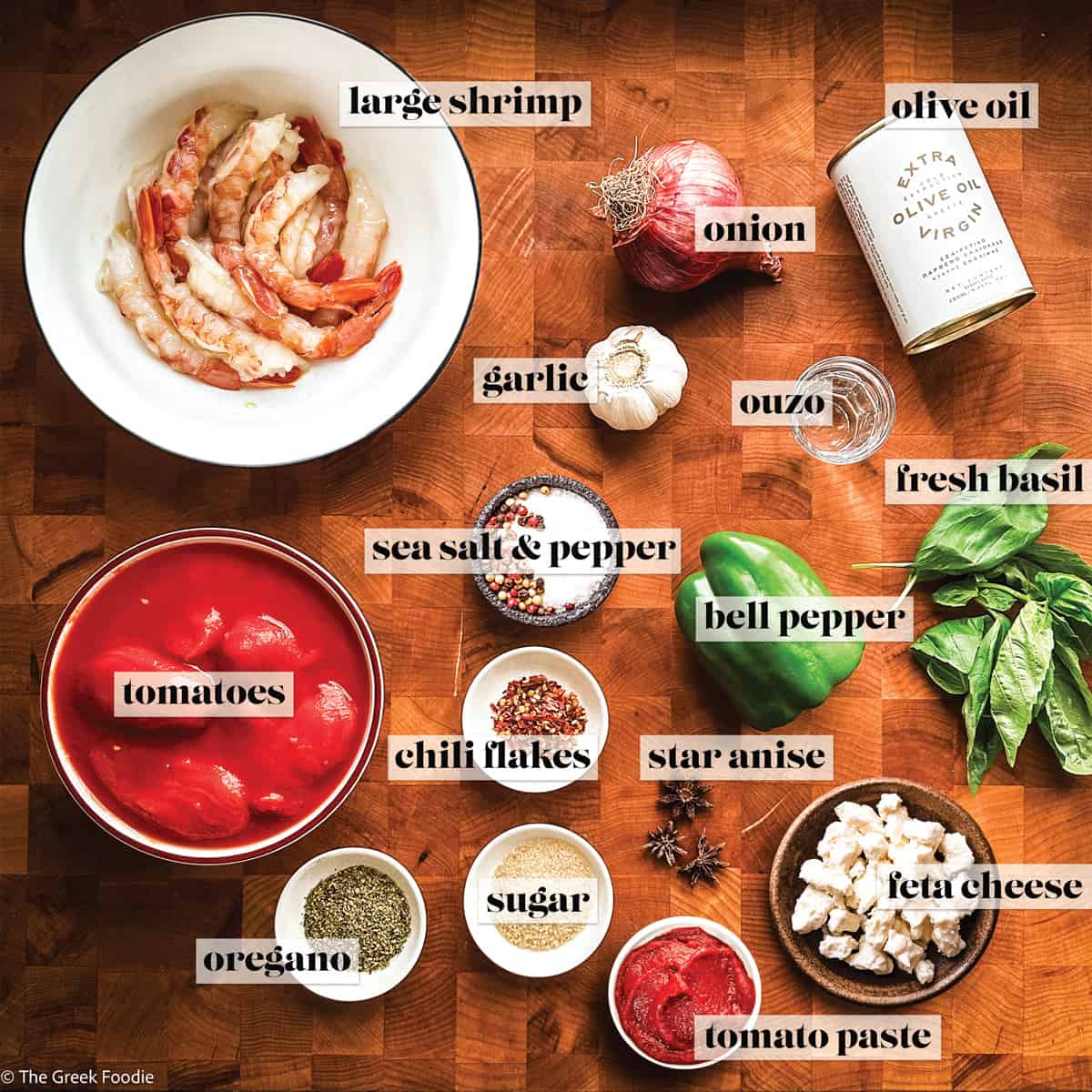
- Shrimp. I usually buy large shell-on shrimp and ask my fishmonger to remove the shells and devain.
- Green bell peppers, onion and garlic.
- Tomatoes and fresh basil. I use good quality canned tomatoes like San Marzano. They are sweet and wonderful, like summer tomatoes. Also, a key ingredient is the tomato liquids in the can, an important element to the sauce of this recipe.
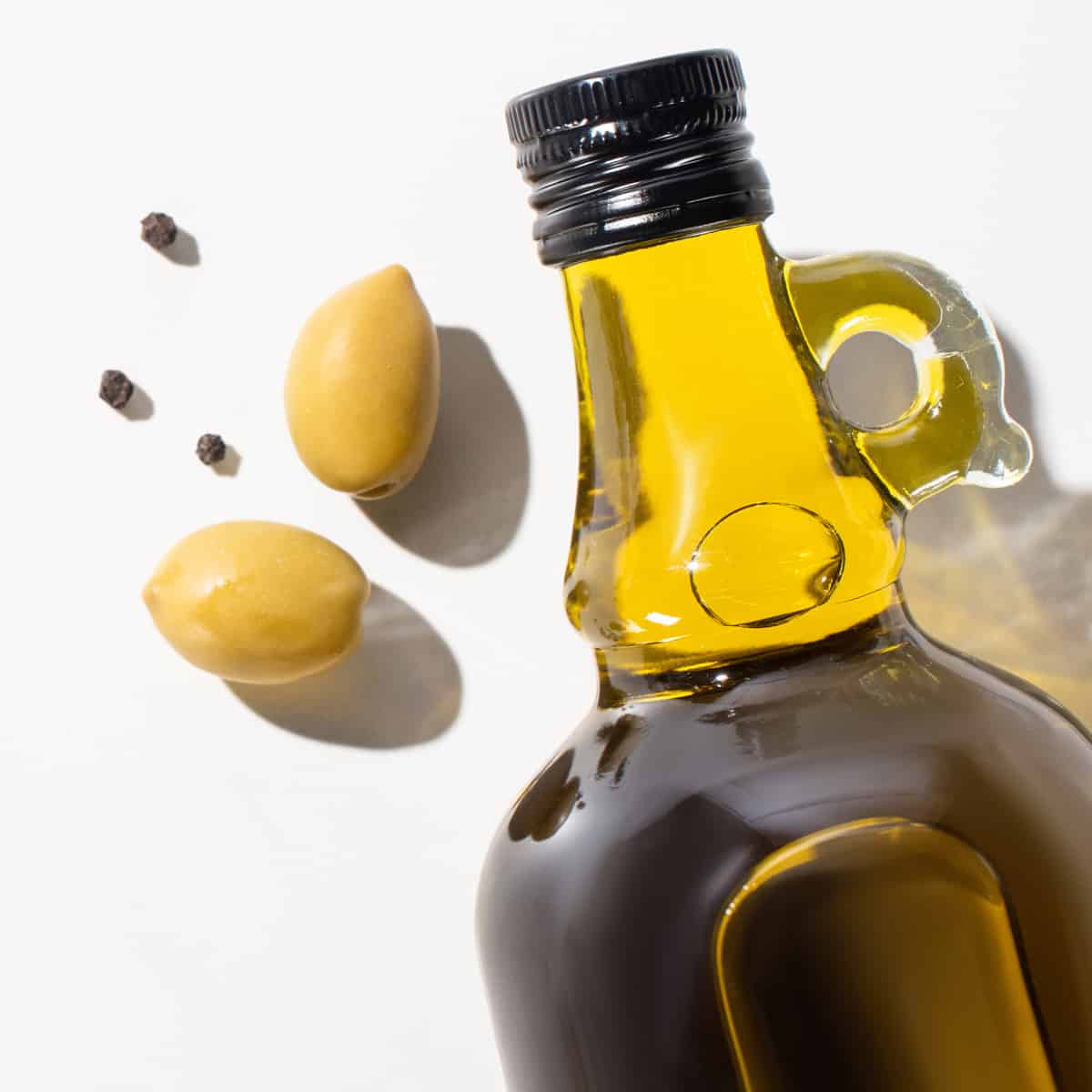
- Extra virgin olive oil. My favorite olive oil in the US is Athena Kolimbari Olive oil. My local supermarket, Whole Foods, and other stores carry it. Check before you buy for the best price because it varies between stores.
- Tomato paste. To build a deeper sauce flavor.
- Ouzo. Ouzo is a dry anise-flavored aperitif that is widely consumed in Greece. Its taste resembles other anise liquors like pastis and sambuca. This aromatic Greek spirit pairs so well with shrimp. I love using it in my seafood recipes, like this shrimp spaghetti dish.
- Greek feta cheese. Always buy a bock of Greek feta in brine. Avoid plastic containers with crumbled feta and French fat-free feta; they are not real Greek products and are flavorless and dry.
- Sea salt, freshly ground pepper, chili flakes, star anise and sugar. The latter is used to bring out the sweetness of the tomatoes. Star anise has a wonderful aroma, similar to the ouzo.
Step by step making shrimp saganaki
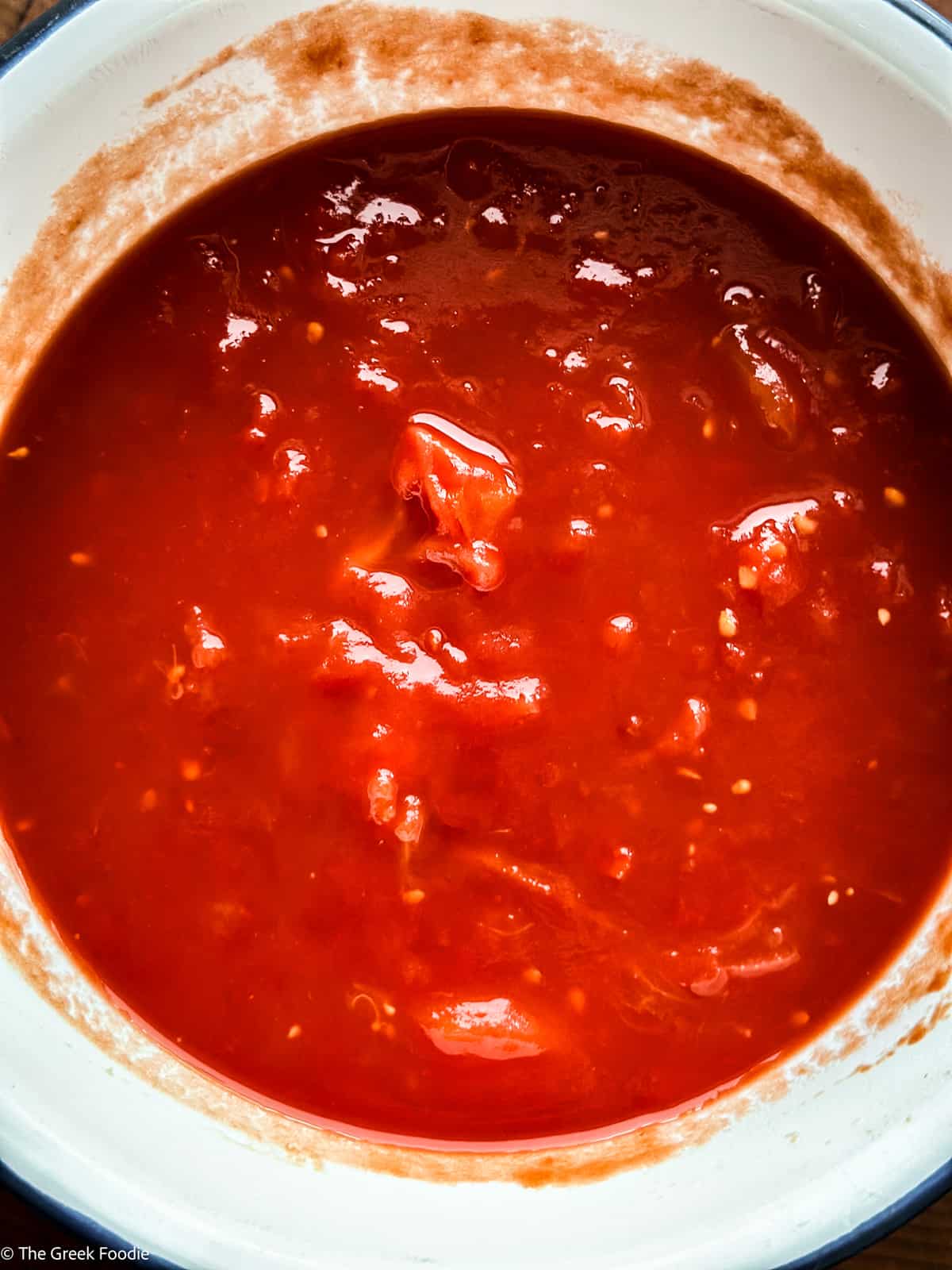
- Preheat oven to 390°F.
- Place the tomatoes in a bowl and smash them with your hands. Add the sugar and stir.
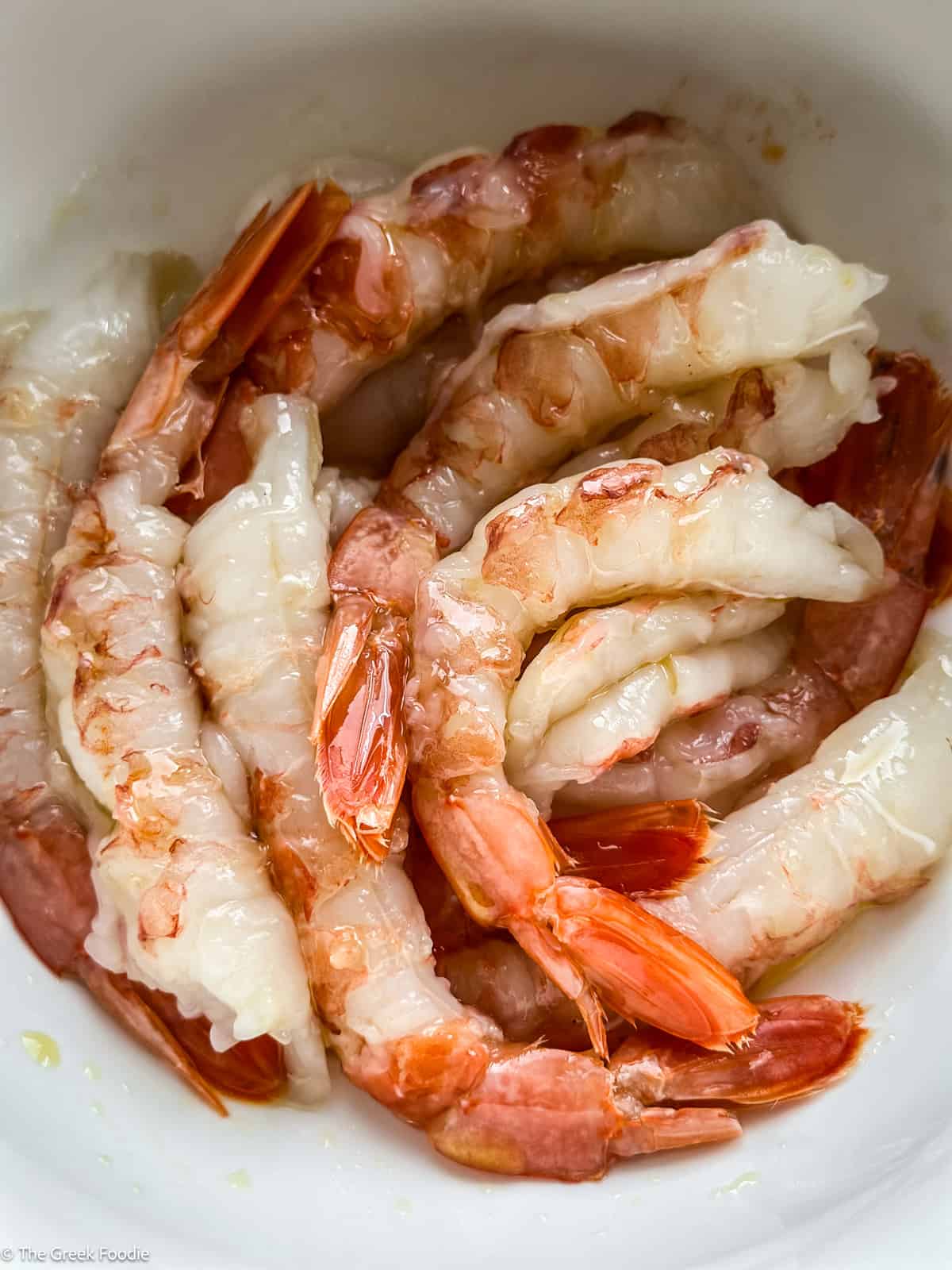
- Place the shrimp in a large bowl and drizzle with 1-2 tbs olive oil—season with sea salt, and freshly ground pepper. Mix well gently.
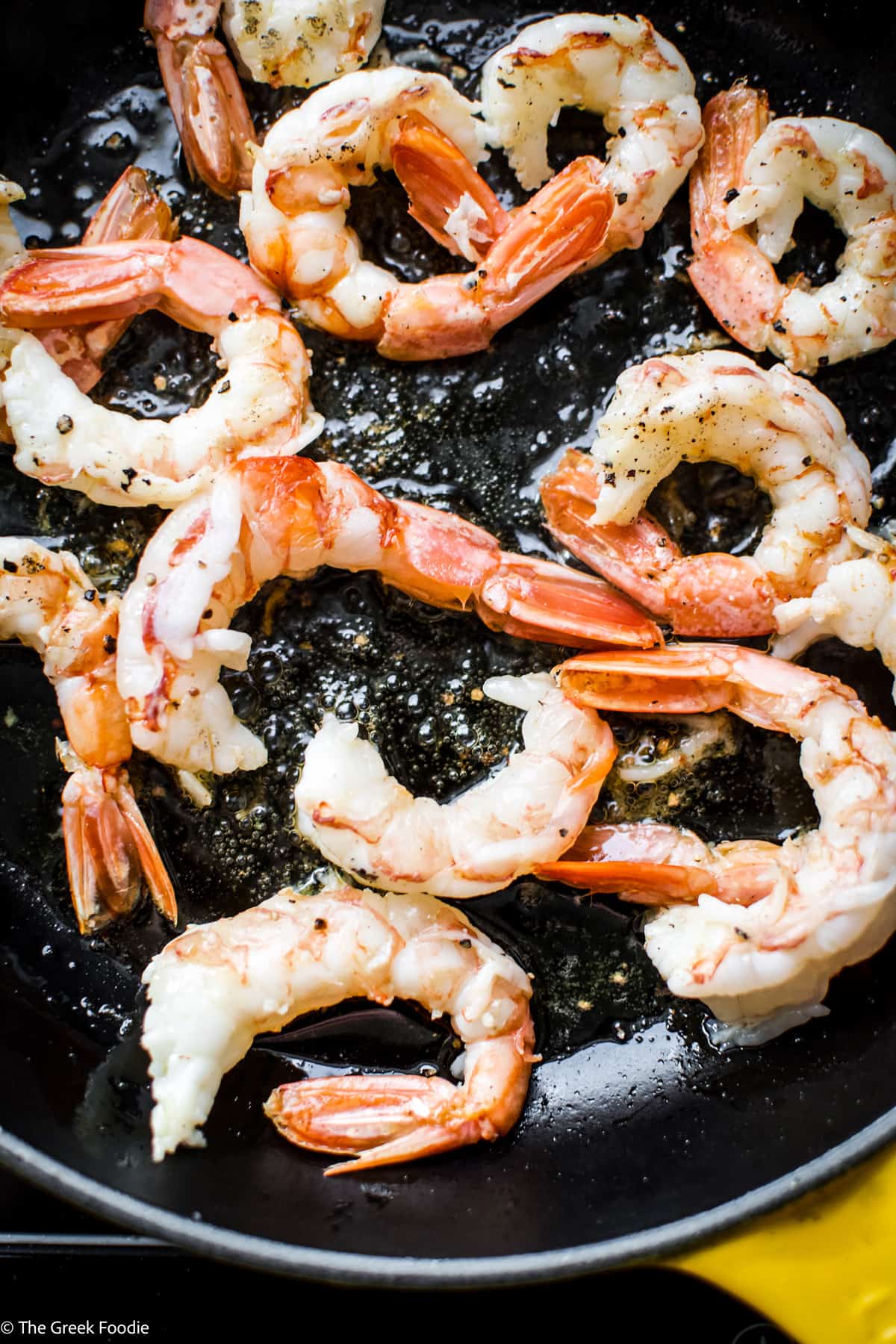
- Place a large cast-iron pan (or large skillet) over high heat. Add the shrimp. Sauté for 1 minute total, until they are golden all over. Remove shrimp on a plate and set aside.
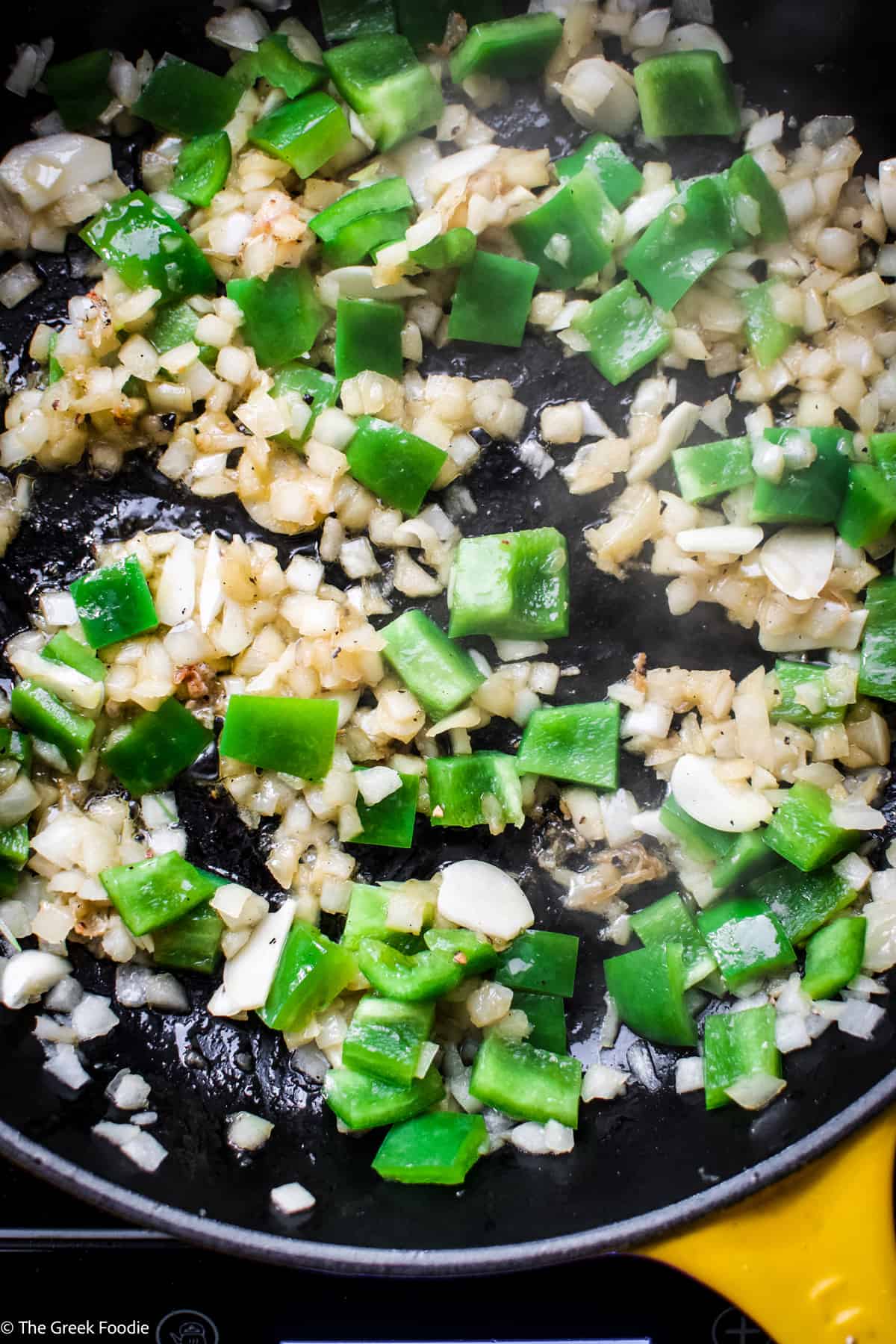
- Using the same pan, on medium heat, add 1-2 tbs olive oil. Add the onions. Sauté for 1-2 minutes; make them sweat a little. Add the garlic. Stir and add the bell pepper.
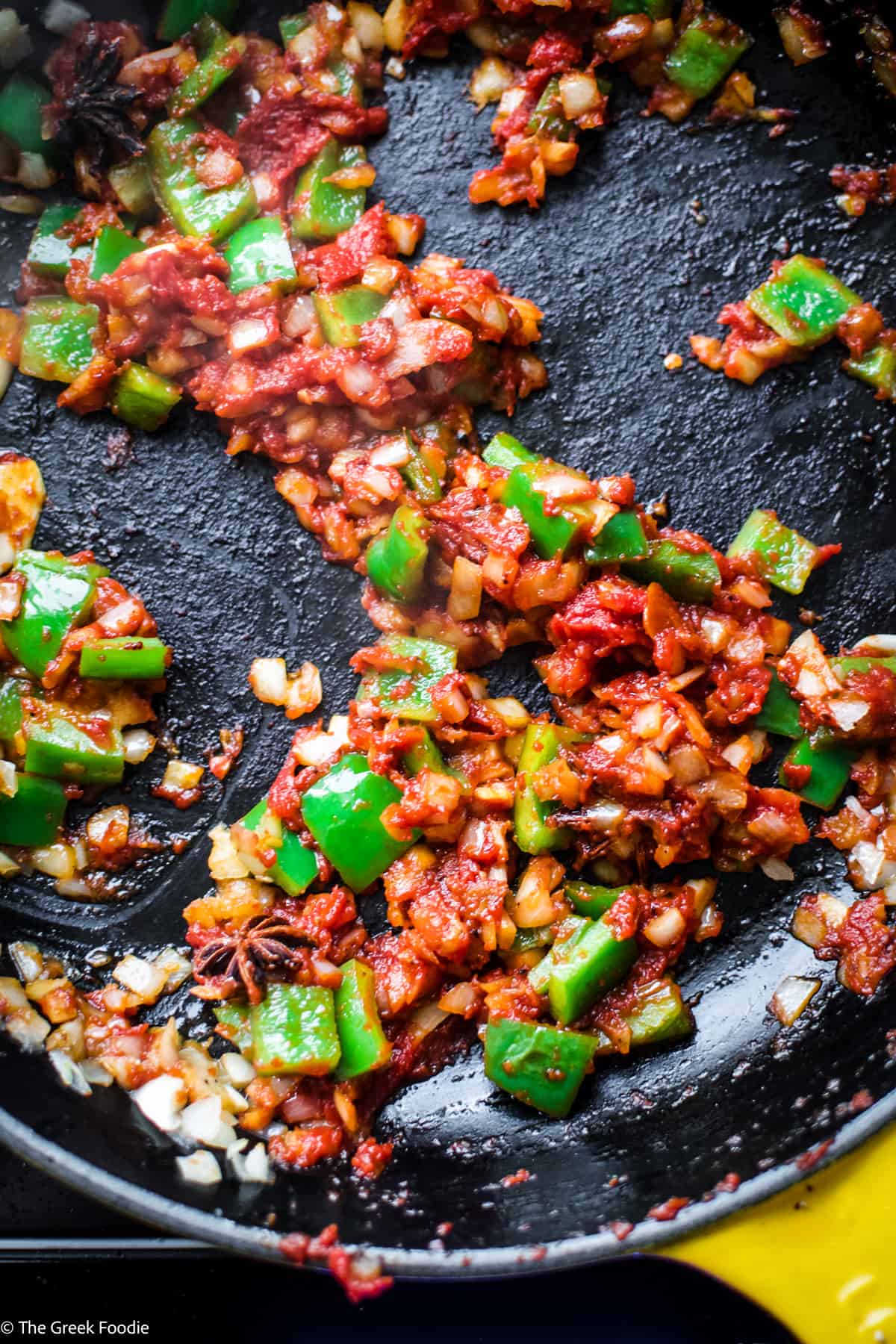
- Season with sea salt and fresh ground pepper. Add the tomato paste and star anise and stir well. Sprinkle some red pepper flakes and dried oregano. Sauté for 1-2 min on medium heat.
- Carefully add the shot of ouzo and let it evaporate. (If you have a gas range, lower the heat to a minimum to not accidentally set the pan on fire.)
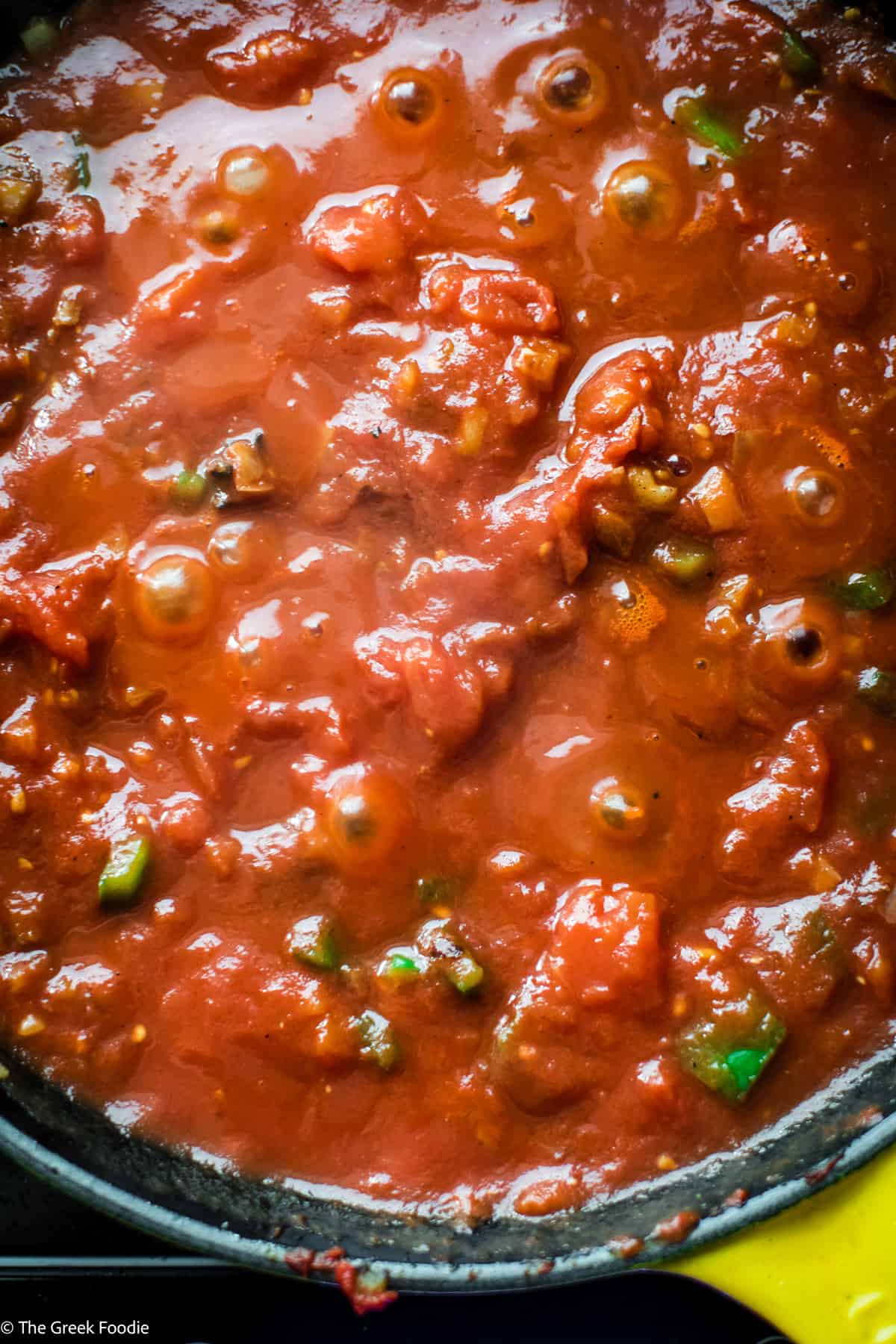
- Add the tomatoes. Stir well. Bring to a boil for half a minute or so.
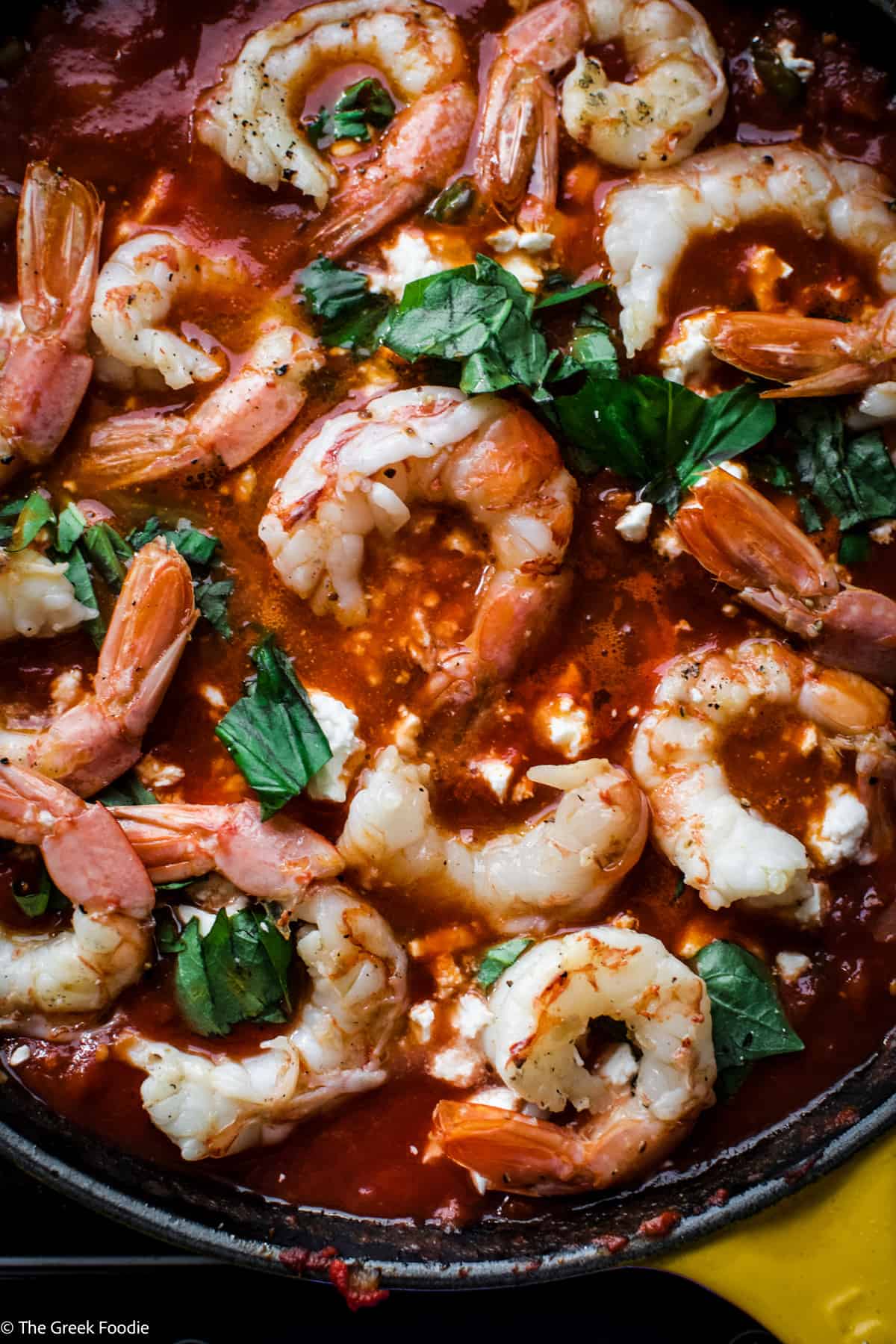
- Sprinkle half of the chopped basil and add half of the crumbled feta cheese all over.
- Place the shrimp in the sauce, pressing gently—no need to fully incorporate it. Halfway is fine.
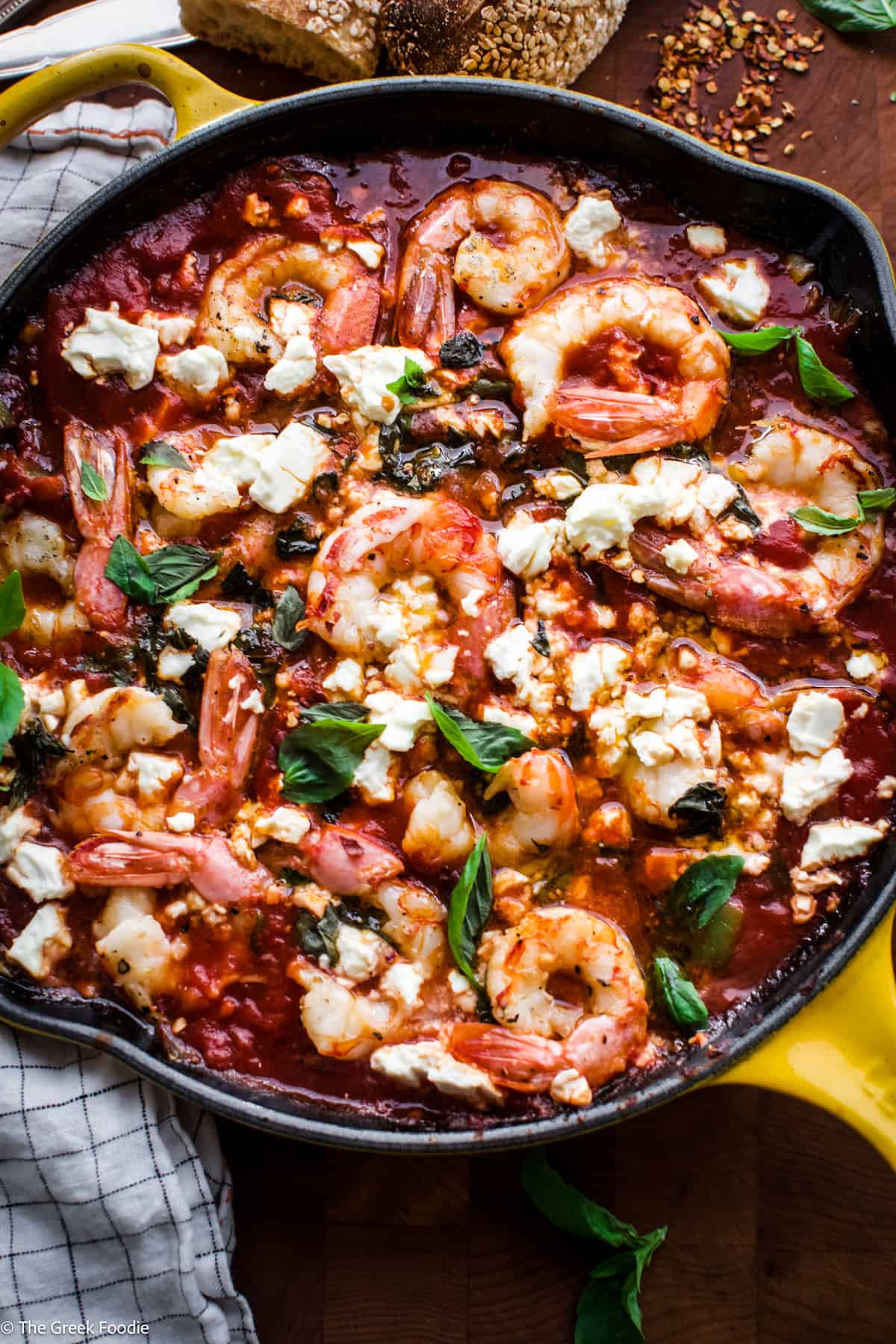
- Add the rest of the feta cheese, sprinkle some chopped basil and some oregano, and drizzle 1-2 tbsp extra virgin olive oil.
- Bake for 25 minutes.
- Enjoy!
Tips for the Best Shrimp Saganaki
- Make sure the pan has plenty of tomato liquid. Good juicy tomatoes are mainly responsible for the flavor and success of this recipe.
- Authentic San Marzano tomatoes are worth it. Their lower acidity and natural sweetness build the sauce’s depth. Use all the liquid in the can — it’s essential to the sauce. If you only have fresh tomatoes, peel and crush them, and add a splash of water.
- Make this recipe in the summer with fresh, ripe, juicy tomatoes. Grate the tomatoes and add them to the pan with their liquids and half a cup of water(or a little more if you feel it is needed).
- Use dry herbs in a pinch instead of fresh herbs. Dried oregano is a Greek staple and works well with tomatoes, basil, and olive oil.
- Use the right shrimp size. Large or jumbo shrimp (16/20 count or similar) work best — they hold up in the sauce and stay juicy after baking. Smaller shrimp overcook easily.
- Buy real Greek feta in brine: Always a block, never pre-crumbled. The brine-packed feta has the right creamy texture and salt level. French feta and the plastic tubs of crumbles are bland and dry — not what this dish needs.
- The star anise is the secret. It reinforces the ouzo’s anise notes and adds a subtle warmth to the sauce. Remove it before serving. Don’t skip it.
- Don’t skip the ouzo.It’s not just for flavor — the alcohol deglazes the pan and the anise notes complement the shrimp beautifully. If you don’t have ouzo, dry white wine works as a substitute, though the flavor changes. No alcohol? Add one more star anise.
- Don’t overcook the shrimp. Sauté them for just 1 minute to get color, then let them finish in the oven. They’re done when they curl and turn pink-opaque. Overcooked shrimp turn rubbery — the bake time is calibrated to avoid this.
- Cast iron is ideal. It holds heat evenly and goes from stovetop to oven seamlessly. If you don’t have one, any oven-safe skillet works.
- Adjust the heat level. The recipe uses chili flakes for gentle warmth. Add more if you like it spicy, or leave them out for a milder version. Both are traditional.
What to serve with shrimp saganaki
Shrimp saganaki is traditionally served immediately, piping hot as a starter, but it’s substantial enough to anchor a light meal. Here’s how to build a full Greek table around it:
- Bread is non-negotiable: You need something to drag through that tomato-feta sauce. A good sourdough, village bread, or flat bread pita is mandatory. This is not optional.
Make It a Mezze Spread.
- Tzatziki, the cool cucumber yogurt dip is a natural counterpoint to the warm, spiced shrimp.
- Fried zucchini or eggplant — crispy and simple, they hold up well alongside the rich sauce.
- Crispy country-fried potatoes — if you’re going the full dinner route, these are perfect.
- Horta (boiled greens with olive oil and lemon) — a classic Greek side that cleanses the palate.
- Greek horiatiki salad — tomato, cucumber, Kalamata olives, feta. Never underdressed.
Storage and leftovers
Refrigerator
Store leftovers in an airtight container for up to 2 days. The tomato sauce keeps well; the shrimp are best eaten as quickly as possible since they can turn rubbery when reheated. If you’re planning ahead, consider making the sauce in advance and adding the shrimp fresh.
Freezer
Not recommended. Shrimp do not freeze well once cooked — the texture suffers significantly. The tomato sauce (without the shrimp and feta) can be frozen for up to 2 months.
Reheating
Reheat gently on the stovetop over low heat with a splash of water to loosen the sauce. Avoid the microwave if possible — it makes shrimp rubbery. Warm just until heated through.
Make-Ahead Tips
- The tomato sauce can be made up to 2 days ahead and stored in the refrigerator. When ready to serve, reheat the sauce, add the raw shrimp and feta, and bake as directed.
- The shrimp can be cleaned and seasoned up to 24 hours ahead — keep covered in the fridge.
- This is not a dish that benefits from being made and reheated fully assembled. For best results, serve it straight from the oven.

FAQs
More seafood Greek recipes you’ll love

Cooked it? Rate it!
If you tried this recipe, I’d love to know how you liked it — drop a comment below or tag me on Instagram @thegreekfoodie__.


Shrimp Saganaki-Greek Shrimp with Feta and Tomato
Equipment
- large cast iron skillet
Ingredients
- 1 lb large shrimp, shell removed, deveined, tail intact
- 1/2 cup extra virgin olive oil total
- 3 cups grated ripe tomatoes, a 28 oz can of Gustarosso San Marzano tomatoes
- 1 teaspoon sugar
- 1 onion, diced
- 3 cloves garlic, thinly sliced
- 1 green bell pepper, diced
- 1 teaspoon tomato paste
- 2 star anise
- 1 shot Greek ouzo
- 2 handfulls fresh basil chopped
- 1.5 cups Greek feta cheese
- dried oregano
- sea salt
- chili flakes
- freshly ground pepper
Instructions
- Preheat oven to 200°C / 390°F.
- Place the grated tomatoes in a bowl. Add the sugar and stir.
- Place the shrimp in a large bowl, drizzle with 1-2 tablespoons olive oil. Mix well gently.
- Place a large cast-iron skillet over high heat. Add the shrimp. Season with salt and pepper. Sauté for 1 minute total, until they are golden all over. Remove shrimp on a plate and set aside.
- Using the same pan, on medium heat, add 1-2 tablespoons of olive oil. Add the onions. Sauté for 1-2 minutes; make them sweat. Add the garlic, stir, and add the bell pepper.
- Season with sea salt and fresh ground pepper. Add the tomato paste and stir. Sprinkle some chili flakes and add the star anise. Sauté for 1-2 min on medium heat.Carefully add the shot of ouzo and let it evaporate. (If you have a gas range, lower the heat to a minimum so as not to accidentally set the pan on fire.)Add the tomatoes. Stir well. Bring to a boil for half a minute or so.
- Sprinkle half of the chopped basil and add half of the crumbled feta cheese all over.
- Start placing the shrimp in the sauce, pressing gently a little. No need to fully incorporated into the sauce, half way is fine.
- Add the rest of the feta cheese, sprinkle some chopped basil, and some oregano leaves and drizzle 1-2 tablespoons extra virgin olive oil.Bake for 25 minutes.
- Serve immediately with a lot of crusty fresh bread for wild dipping!
Notes
- This recipe yiels 4 servings as an appetizer and 2 servings as main dish.
- I prefer using good-quality canned tomatoes for this recipe, especially if I can’t find ripe, fragrant fresh tomatoes. I recommend authentic San Marzano D.O.P. tomatoes; they are the best. My favorite San Marzano D.O.P. are Gustarosso. San Merican tomatoes are also good if you can’t find authentic San Marzano.
- San Marzano tomatoes are my favorite, but I make this summer recipe with fresh, ripe, juicy tomatoes. Grate them and add them to the pan with their liquids and half a cup of water(or a little more if you feel it is needed).
- If you want to use fresh tomatoes out of season, try Campari tomatoes. They are sweet and lovely. The only downside considering Campari is that they are small, and you will need 3-4 instead of one regular tomato.
- Substitute white wine for ouzo. If alcohol is not desirable, substitute with broth.
- Use dry herbs in a pinch instead of fresh herbs.
- You can use a large, deep skillet and transfer the shrimp saganaki to an ovenproof pan before adding the last batch of feta cheese and fresh basil.
Nutrition
Thank you for this amazing recipe! Cooked it at home and it was a total success 🙂
Thank you so much Laura!
This looks incredibly flavorful! And I totally agree with you on San Marzanos – they are such little gems! Saving this to try as soon as we can have people over again – I’m dreaming of gathering around this skillet with a big hunk of crusty bread to share!
Oh my…. I MUST make this asap. Looks amazing!!! I love the flavors and all the ingredients in this recipe. Such a lovely dinner option. Can’t wait to make this. Thanks!
Lovely dish for my loved ones. Could definitely have this for my weekend meal planning. Looks yumv
It is really good, hope you will like it Veena. Thank you!
Love shrimp but never tried it this way. Great dish with amazing flavors.
It is a really good dish! Hope you will like it. Thank you, Kushigalu!
The sauce must be the bomb. I’ve heard so much about San Marzano tomatoes. How they are the tastiest! Those colors are beautiful too. It’s making my mouth water.
It is a really good dish! Hope you will like it. Thank you, Naiby
The flavors in this are outstanding! I love your tip about using san marzano tomatoes. It really does make a difference with this shrimp bake! Delicious and satisfying!
Can’t do without my San Marzano tomatoes! Thank you Jamie!
It is a really good dish! Hope you will like it as much as we do! Thank you, Maggie
This was the best shrimp saganaki recipe I’ve tried, and I’ve tried a few. I added some kalamata olives for additional brininess. I thought perhaps 1.5 C was a misprint so only started out with around 1/2 -3/4 C, but ended up adding the additional feta at the end; it’s key to the recipe. I couldn’t find any star anise in the little Florida town we were vacationing so omitted it and it was still delicious. I served over rice and it was a big it! Thank you for this recipe!
Thank you, Karen! Your comment made me very happy today. It is one of my favorites recipes, so glad you liked it!
Thank you so much for sharing this amazing greek shrimp bake garides saganaki recipe! Will surely have this again! It’s really easy to make and it tasted so delicious! Highly recommended!
This sounds amazing! I was just looking for more ways to use Ouzo but I never thought to use it in cooking besides just cocktails. Can’t wait to try this dish!
I wish you could filter out the 5 star reviews that are followed by “I can’t wait to try this.” Makes me not trust the ratings.
This is a good idea! We will start doing that. BTW the recipe is actually really good. Thank you! X Jenny
Great recipe. I didn’t have ouzo so used vodka plus the star anise…loved all the flavors!
It’s one of my favorite recipes! So happy you enjoyed this dish. Thank you Cat! x Jenny