

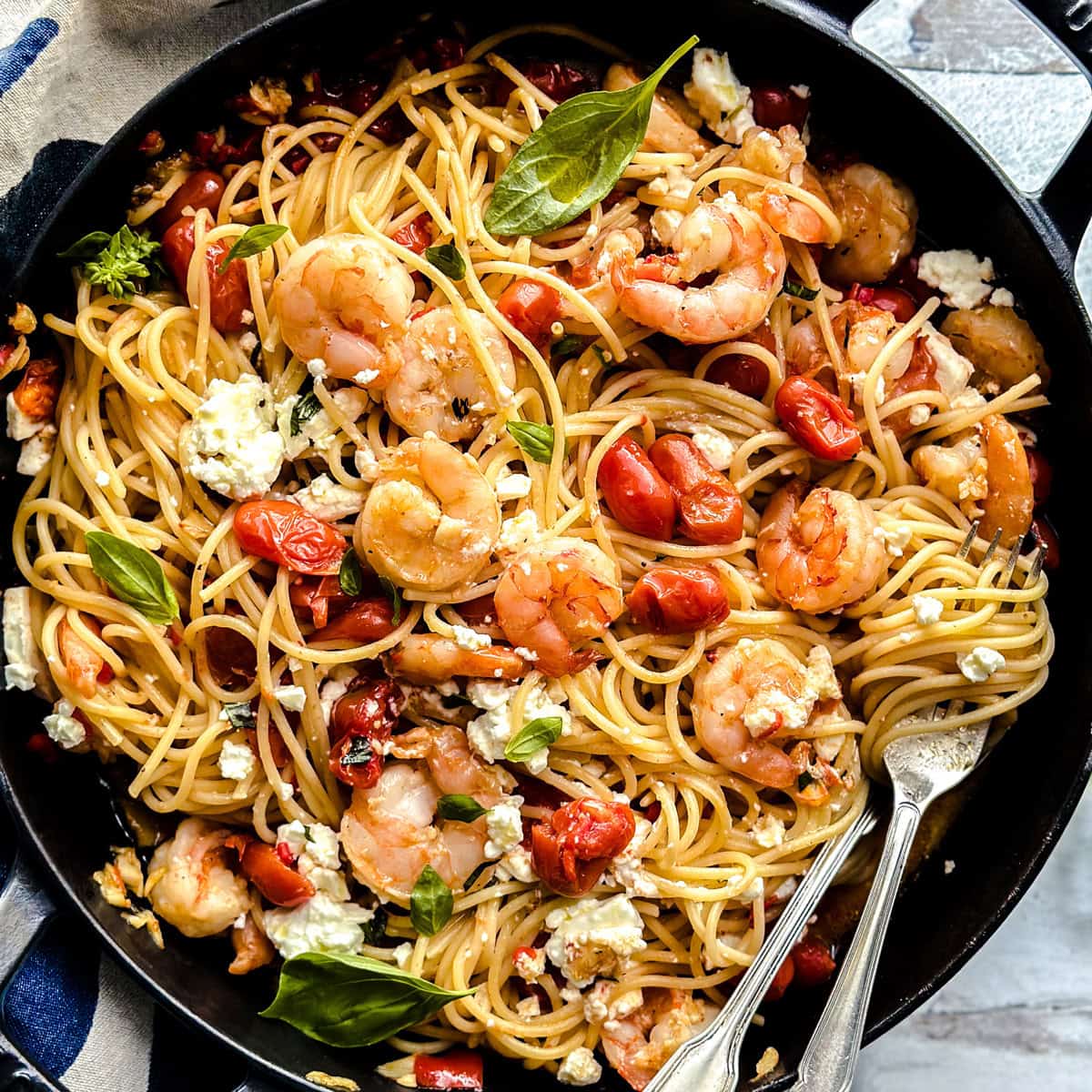
This spicy shrimp spaghetti is the Greek taverna version of shrimp pasta: garlicky shrimp seared with chili and a splash of ouzo, then tossed with spaghetti and cherry tomatoes cooked down until they burst into their own sauce. A handful of feta goes in at the end and melts into creamy, salty pockets. No cream, no butter, and most of the cooking time is hands-off.
In Greece, we call it garidomakaronada, and my version borrows a little from another taverna classic, shrimp saganaki.
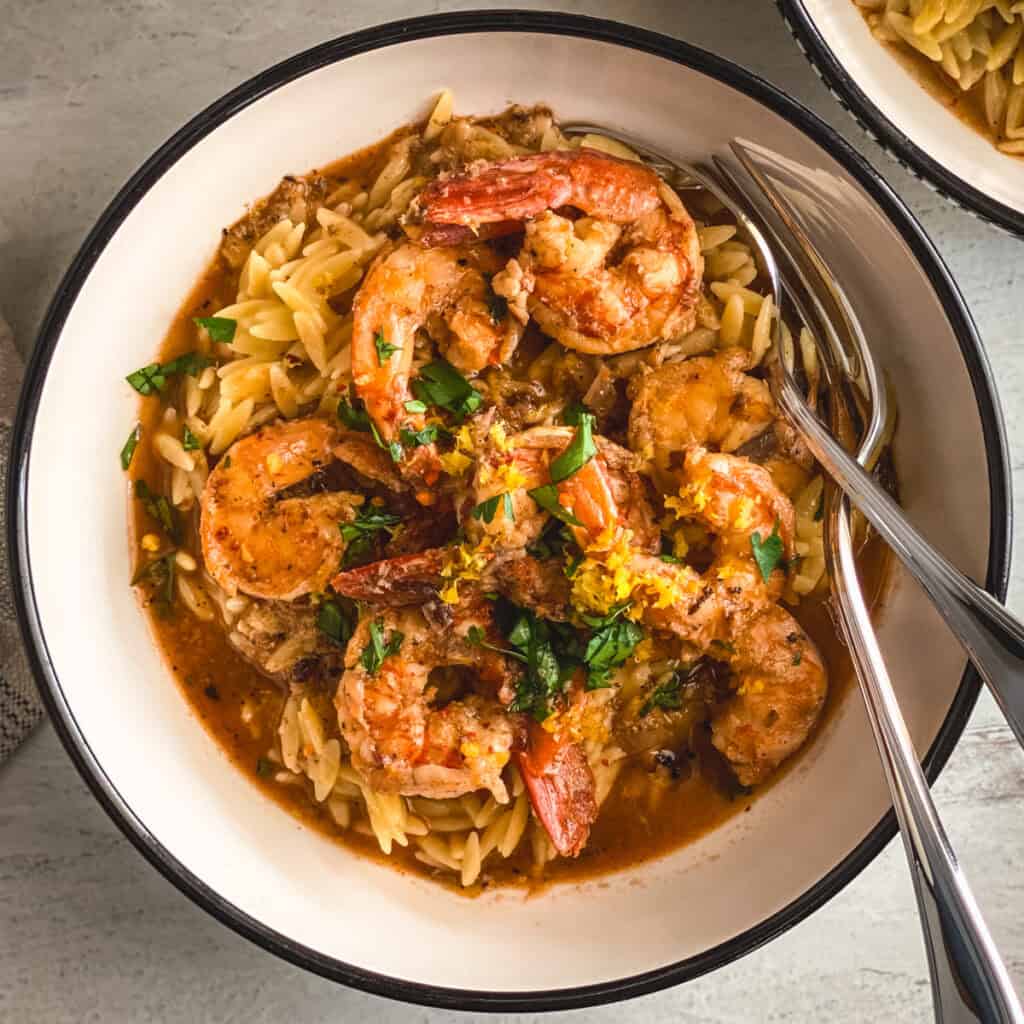
If you love this shrimp spaghetti, you’ll also love my lemon garlic shrimp orzo, shrimp saganaki, and my everyday Greek tomato sauce.
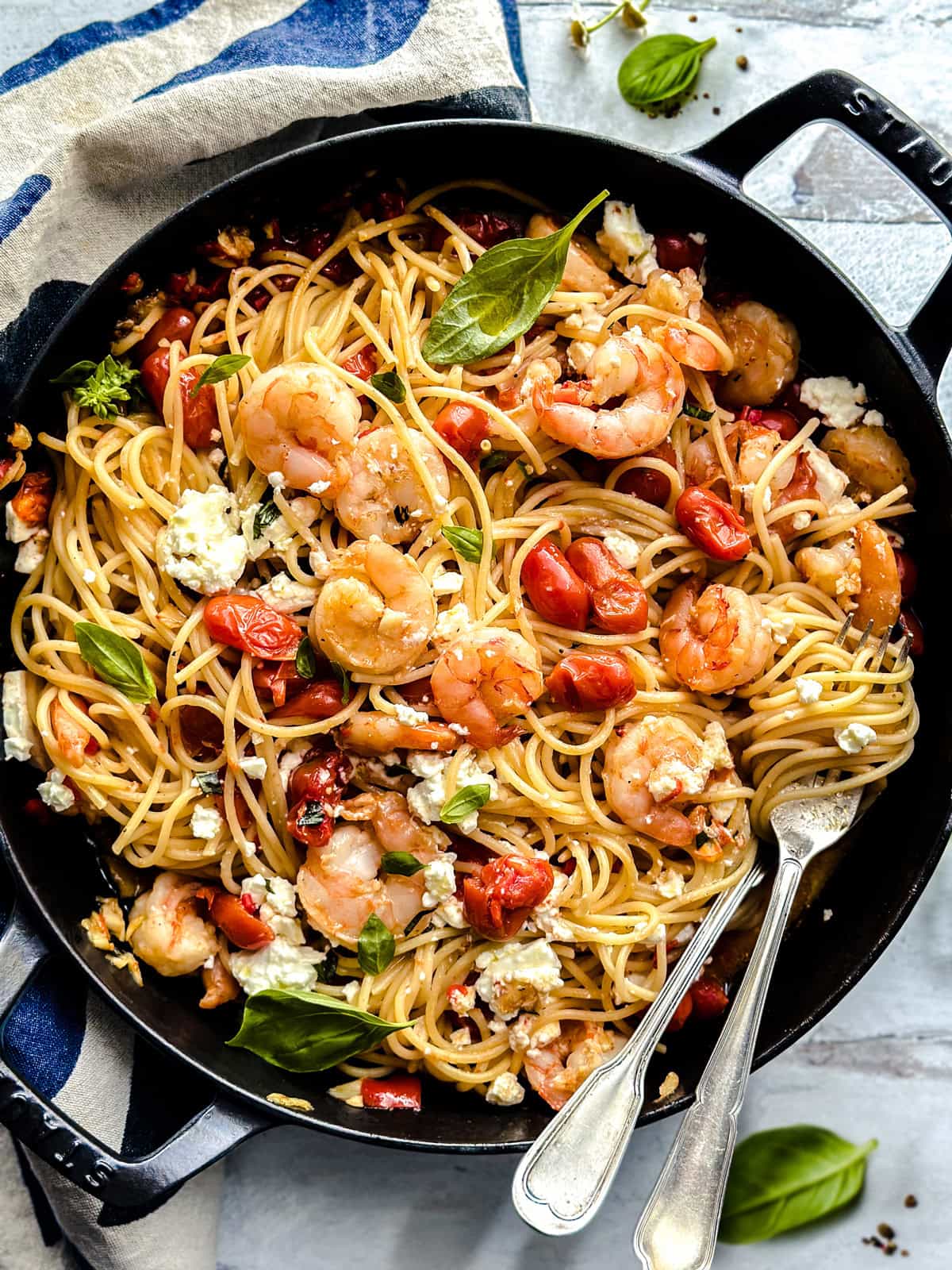
Why you’ll love this spicy shrimp spaghetti
What is garidomakaronada?
Garidomakaronada (γαριδομακαρονάδα) is Greek for shrimp spaghetti: garida means shrimp, and a makaronada is a spaghetti dish. It’s one of Greece’s most-loved seafood pastas, served at seaside tavernas all summer long: spaghetti tossed in a tomato sauce with shrimp, often whole and head-on, because the heads give the sauce a deep, sweet flavor.
Taverna versions usually don’t include feta. Mine borrows two things from shrimp saganaki, the classic of shrimp baked in tomato sauce with feta: a splash of ouzo and crumbled feta stirred in at the end. Shrimp, tomato, and feta is a combination Greeks know well, and it turns a simple shrimp pasta into something special.
Find more seaside fish taverna ideas in my Greek Mediterranean diet dinner recipes.
Ingredients for shrimp spaghetti
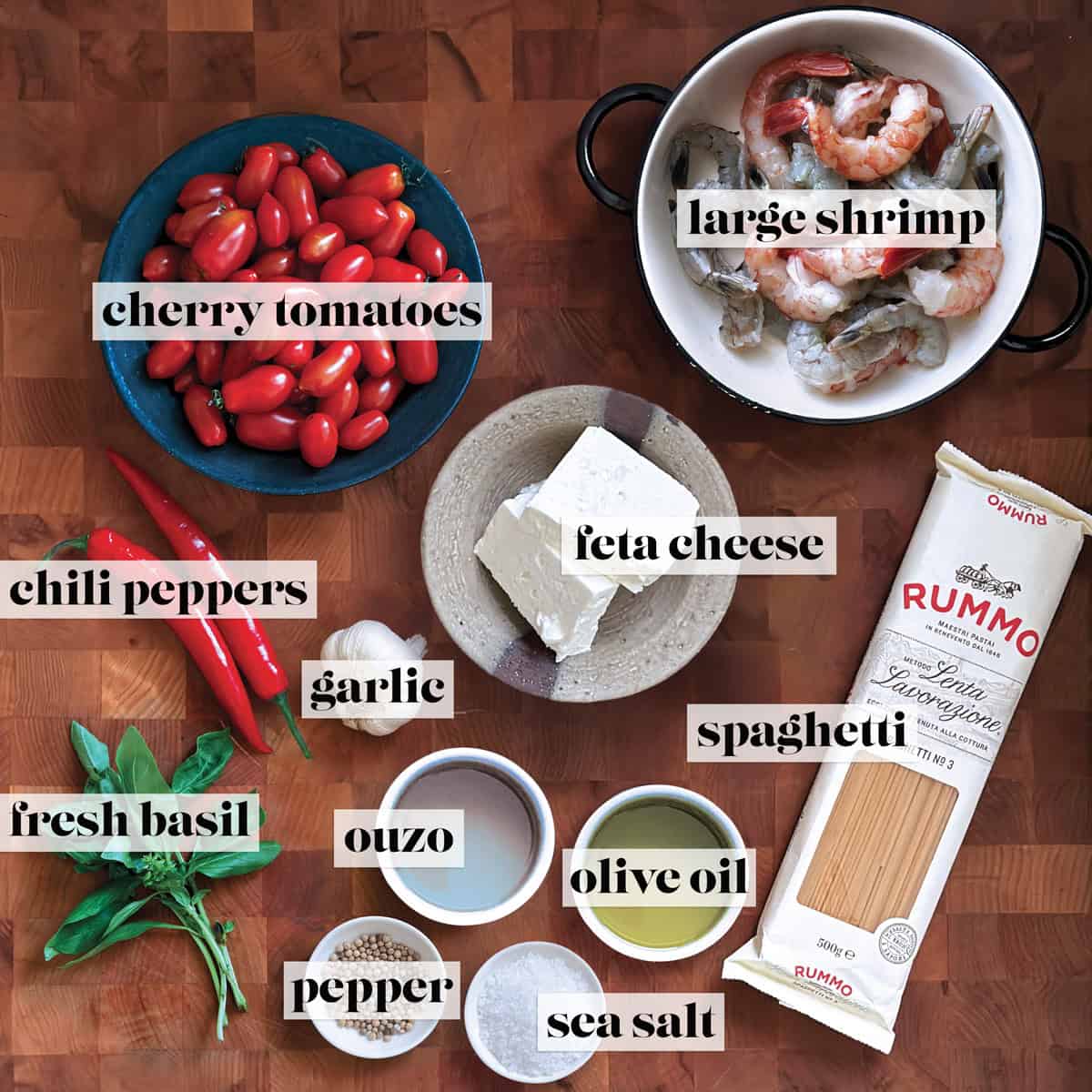
- Large shrimp. Extra jumbo (16/20 per pound) or colossal. Ask the fish counter to peel and devein them. Frozen shrimp work well: thaw overnight in the fridge (or in a colander under cold running water) and pat dry.
- Greek feta cheese. Always buy a block of feta in brine. Greek feta is the best (obviously!), but Bulgarian and Israeli feta are great as well. Avoid dry-as-a-bone packaged crumbled feta or fat-free feta (there’s no such thing sold in Greece).
- Garlic. As much or as little as you like. I use at least four large cloves, roughly chopped.
- Fresh red chili peppers. In Greece I use small hot red peppers; in the US, Fresno or red jalapeño are good choices. Use one, two, or three; it’s all about how you handle spicy food. Red pepper flakes work too.
- Cherry tomatoes. They cook down into a sweet, jammy sauce on their own. Out of season, a 28-ounce can of San Marzano tomatoes, crushed, works too.
- Sugar. Optional but recommended: just ½ teaspoon over the tomatoes softens any acidity and adds a light layer of sweetness. (Not shown in the photo.)
- Ouzo. The dry, anise-flavored Greek aperitif adds brightness and a sweet note to the sauce. Dry white wine or broth are good substitutes.
- Fresh basil. For a fresh, fragrant finish.
- Spaghetti. Linguine, fettuccine, or bucatini work just as well. So does short pasta.
- Extra virgin olive oil, sea salt, and freshly ground black pepper.
How to make garidomakaronada

Step 1: Season the shrimp. In a bowl, toss the shrimp with 1 tablespoon olive oil, a good pinch of sea salt, and freshly ground pepper. Set aside.

Step 2: Warm the garlic and chili. Pour 2 tablespoons olive oil into a large, deep skillet over low heat. Add half the garlic and the chili peppers and cook, stirring, until fragrant, about 1 minute. Don’t let the garlic brown.

Step 3: Sear the shrimp. Raise the heat to medium-high, add the shrimp, and cook, stirring occasionally, until they turn pink on the outside, about 2 minutes. They’ll finish cooking in the sauce.

Step 4: Add the ouzo. Take the pan off the heat, pour in the ouzo, then return it to the heat for about 1 minute, until the alcohol cooks off. Lift the shrimp out with a slotted spoon onto a plate, leaving the pan juices in the skillet.

Step 5: Cook the tomatoes. Add the remaining olive oil and garlic to the skillet, then the cherry tomatoes. Sprinkle the sugar and a pinch of salt over the tomatoes. Cook over medium-low heat, stirring occasionally, until the tomatoes burst, release their juices, and turn saucy, 25 to 30 minutes. Press a few with the back of a spoon to help them along.
Step 6: Cook the spaghetti. While the tomatoes cook, bring a large pot of well-salted water to a boil. Cook the spaghetti until al dente, about 10 minutes (or according to the package). Scoop out 1 cup of pasta water before you drain anything.

Step 7: Finish the shrimp. Return the shrimp and any juices on the plate to the tomato sauce and simmer on low just until the shrimp are opaque throughout (145°F/63°C), 1 to 2 minutes.

Step 8: Toss with the pasta and feta. Set the pasta pot next to the skillet and use tongs to transfer the spaghetti straight into the sauce. A little pasta water coming along is a good thing.

Take the pan off the heat, add the feta, and toss well. Add a splash of pasta water to loosen the sauce if needed. Season with salt and pepper to taste.
Serve. Serve in pasta bowls with chopped fresh basil and a drizzle of olive oil.
Tips for the best shrimp spaghetti
- Pat the shrimp dry. Wet shrimp steam instead of sear.
- Pull the shrimp early. They finish in the sauce. Shrimp curled into a loose C are done; a tight O means overcooked.
- Be patient with the tomatoes. The sauce is ready when most of them have collapsed and the juices look glossy and slightly thick. Rushing it gives you watery sauce.
- Keep the garlic pale. Low heat in step 2; browned garlic turns bitter.
- Add the feta off the heat. It softens into creamy pockets instead of melting into a grainy sauce.
- Use the pasta water. The starch helps the olive oil and tomato juices cling to the spaghetti.
Variations and substitutions
- No alcohol: use broth in place of the ouzo, plus a squeeze of lemon at the end.
- Milder: one chili, seeds removed, or a pinch of red pepper flakes.
- Taverna style: use whole, head-on shrimp and cook them a minute or two longer. The heads add flavor, and it’s very Greek.
- Canned tomatoes: a 28-ounce can of San Marzano tomatoes, crushed by hand, simmered 15 to 20 minutes.
- Lenten (nistisimo): leave out the feta. Shellfish are allowed during Greek Orthodox fasting periods, including the Christmas fast, so this makes a festive fasting-day dinner.
- Meatless: for a spicy tomato pasta without shrimp, try my spicy pasta with tomatoes and kefalotiri.
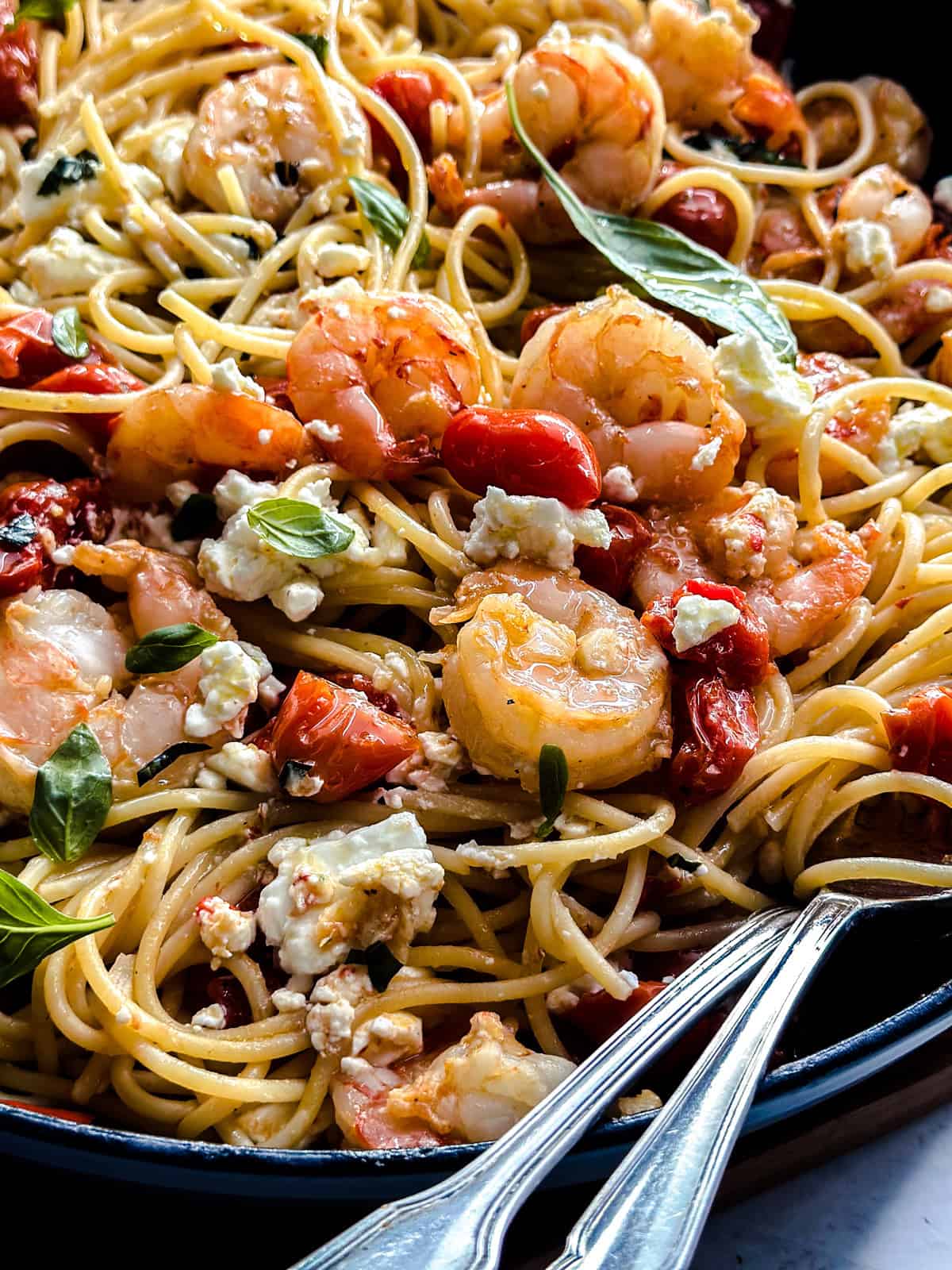
Side dishes for shrimp spaghetti
- Horiatiki Salad– Tomatoes, cucumbers, red onion, olives, and feta dressed with olive oil and oregano. Fresh and acidic to balance the shrimp.
- Horta boiled wild greens– Dandelion or other wild greens, simply dressed with lemon and olive oil. Earthy and cleansing.
- Crusty Greek bread with oregano and olive oil– For soaking up sauce and balancing flavors.
- Taramosalata dip– Creamy fish roe dip made with olive oil and lemon. Salty and smooth, pairs beautifully with crusty bread.
- Crispy fried calamari kalamarakia tiganita– Lightly battered squid served with lemon — great contrast in texture.
- A glass of crisp Greek white wine, such as Assyrtiko from Santorini or a Moschofilero.
Storage and leftovers
- Fridge: store leftovers in an airtight container for up to 3 days.
- Reheat: warm gently in a skillet over low heat with a splash of water, just until heated through. Shrimp toughen if reheated hard.
- Freezing: not recommended; the shrimp turn rubbery and the pasta goes soft.

Shrimp spaghetti FAQ


Cooked it? Rate it!
If you tried this recipe, I’d love to know how you liked it — drop a comment below or tag me on Instagram @thegreekfoodie__.



Spicy Shrimp Spaghetti (Garidomakaronada)
Ingredients
- 2 lb large shrimp, extra jumbo 16/20 or colossal, peeled and deveined; thawed if frozen
- 1 cup Greek feta cheese, cubed (about 5 oz)
- 4–5 garlic cloves, chopped, divided
- 2–3 fresh red chili peppers, such as Fresno or red jalapeño, seeded and finely diced, or ½–1 teaspoon red pepper flakes
- 2 lb cherry tomatoes, larger ones halved, small ones left whole
- ½ teaspoon sugar, optional
- ⅓ cup Greek ouzo, or dry white wine or broth
- ⅓ cup extra virgin olive oil, divided, plus more for serving
- 4 tablespoons fresh basil, chopped
- 12 oz spaghetti
- sea salt
- freshly ground black pepper
Instructions
- Season the shrimp. In a bowl, toss the shrimp with 1 tablespoon olive oil, a good pinch of sea salt, and freshly ground pepper. Set aside.
- Warm the garlic and chili. Pour 2 tablespoons olive oil into a large, deep skillet over low heat. Add half the garlic and the chili peppers and cook, stirring, until fragrant, about 1 minute. Don’t let the garlic brown.
- Sear the shrimp and add the ouzo. Raise the heat to medium-high, add the shrimp, and cook, stirring occasionally, until they turn pink on the outside, about 2 minutes. They’ll finish cooking in the sauce. Take the pan off the heat, pour in the ouzo, then return it to the heat for about 1 minute, until the alcohol cooks off. Lift the shrimp out with a slotted spoon onto a plate, leaving the pan juices in the skillet.
- Cook the tomatoes. Add the remaining olive oil and garlic to the skillet, then the cherry tomatoes. Sprinkle the sugar and a pinch of salt over the tomatoes. Cook over medium-low heat, stirring occasionally, until the tomatoes burst, release their juices, and turn saucy, 25 to 30 minutes. Press a few with the back of a spoon to help them along.
- Cook the spaghetti. While the tomatoes cook, bring a large pot of well-salted water to a boil. Cook the spaghetti until al dente, about 10 minutes (or according to the package). Scoop out 1 cup of pasta water before you drain anything.
- Finish the shrimp. Return the shrimp and any juices on the plate to the tomato sauce and simmer on low just until the shrimp are opaque throughout (145°F/63°C), 1 to 2 minutes.
- Toss with the pasta and feta. Set the pasta pot next to the skillet and use tongs to transfer the spaghetti straight into the sauce. A little pasta water coming along is a good thing. Take the pan off the heat, add the feta, and toss well. Add a splash of pasta water to loosen the sauce if needed. Season with salt and pepper to taste.
- Serve. Serve in pasta bowls with chopped fresh basil and a drizzle of olive oil.
Notes
Nutrition

Wow! Such a great-looking spaghetti dish! Looks incredibly so yummy and very delicious! As my saying goes “Whenever I SEA food, it gets me hungry”. Plus we can never go wrong with pasta! Loved it!
Oh my gosh, this pasta recipe makes my mouthwatering!
It look so easy to make and look so delicious!