

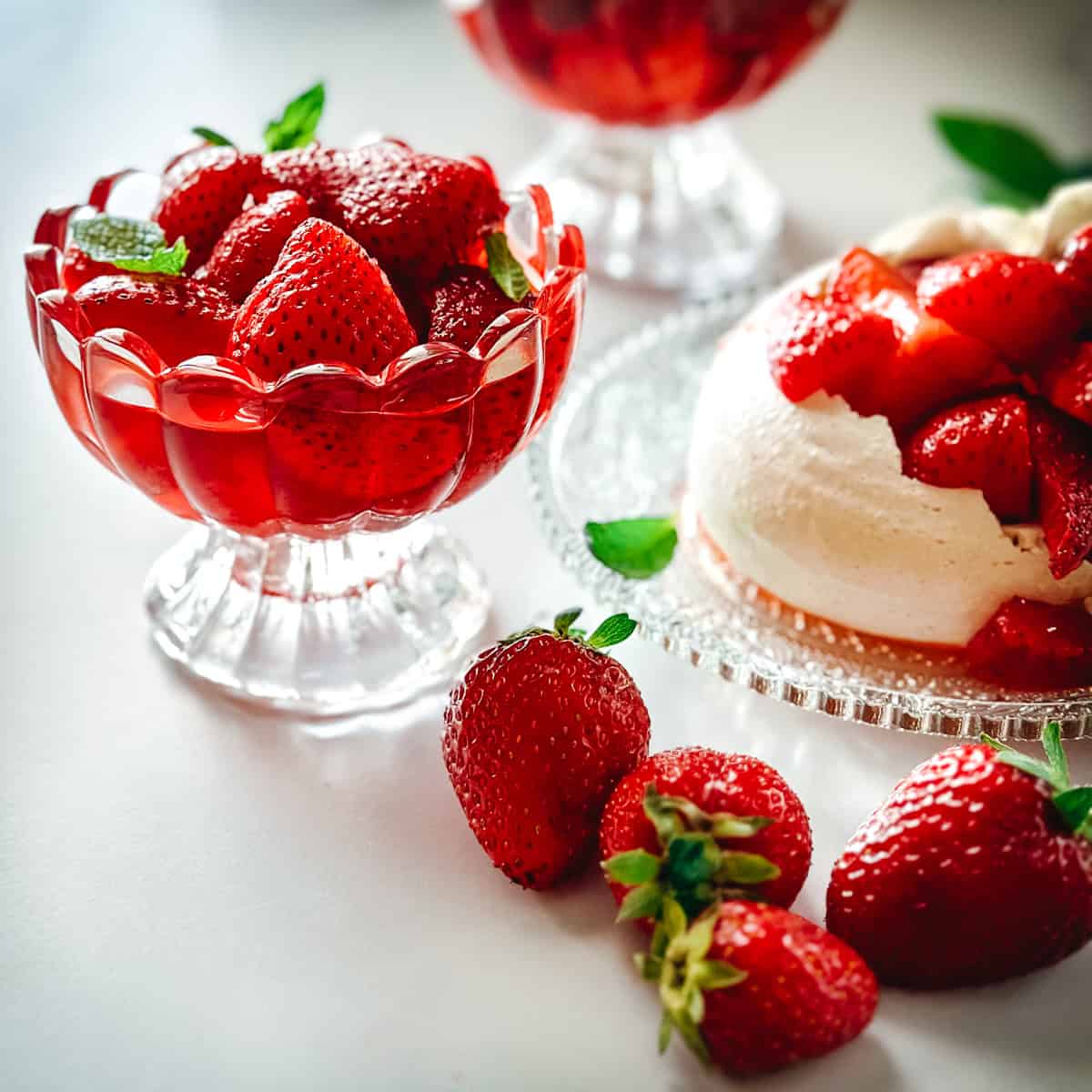
My mother made macerated strawberries all summer long, though I’m certain she never once called them that. To her, they were just strawberries with sugar (fraoules me zahari)— a bowl of berries she’d slice, sweeten, and slide into the fridge. By the next day, they had collapsed into themselves and were sitting in the most beautiful glossy, garnet-red syrup, cold from the fridge. We spooned them over everything. Often, I just ate them straight from the bowl, tipping it back to drink the syrup at the end.
That’s all maceration really is: fruit and sugar, given a little time. The sugar draws the juices out of the berries, those juices dissolve the sugar, and you’re left with softened, intensely flavored strawberries swimming in their own ruby syrup.
If these strawberries are your kind of dessert — good fruit, very little fuss — you’ll love my Greek Yogurt with Honey, Figs, Walnuts and Mint, this crisp Fig Tart with Phyllo, and the Berry Mascarpone Tart with Shortbread Crust for when summer fruit deserves something a little grander.
What are macerated strawberries?
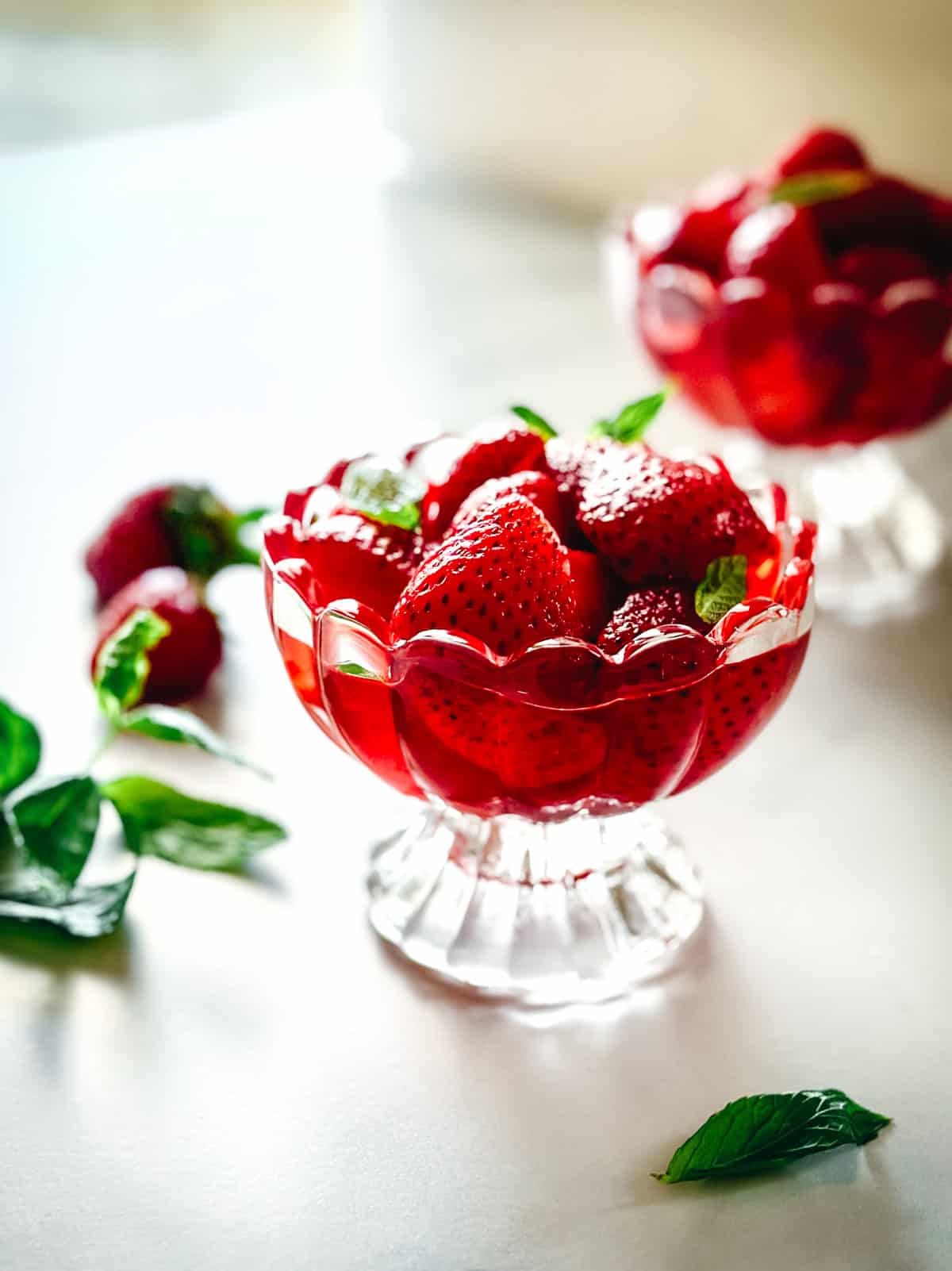
Macerated strawberries are simply fresh strawberries that have been tossed with sugar (and often a splash of liquid, like liqueur, lemon juice, or vinegar) and left to sit until they soften and release their juices.
The word macerate means to soften something by soaking it. As the strawberries rest, osmosis pulls water out of the fruit; the sugar dissolves into that liquid, resulting in plump, syrupy berries with a concentrated, sweet-tart flavor. No cooking, no heat, just time doing the work for you.
It’s the same idea as a quick strawberry sauce, but fresher, brighter, and far less fussy.
Why you will love macerated strawberries
Ingredients
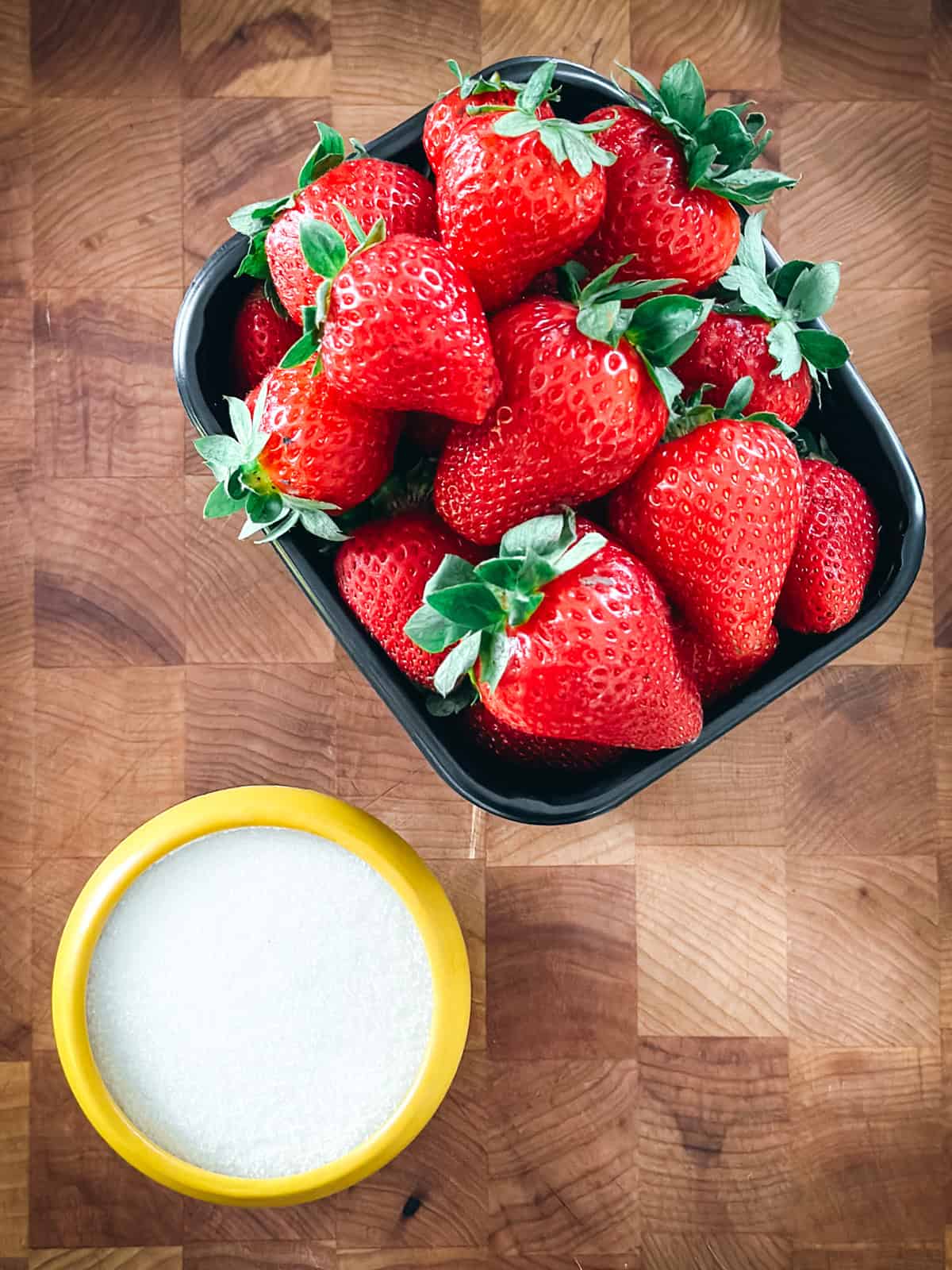
Strawberries. Use the ripest, most fragrant berries you can find — this is a recipe where the fruit has nowhere to hide. In peak summer, even slightly soft, very ripe strawberries are wonderful here, because maceration is forgiving. Hull them and slice them evenly so they soften at the same rate. I usually halve small ones and quarter large ones.
Sugar. Plain granulated sugar is all you need, though caster (superfine) sugar dissolves a touch faster if you have it. Start with less than you think, you can always stir in more. Sweeter, riper berries need very little; tart early-season ones can take a bit more. Brown sugar works too and gives a deeper, almost caramel note.
Brandy or rum. Optional. Mom occasionally would add a tiny amount of Metaxa brandy. A tablespoon of brandy is classic, dark rum is gorgeous and a little warmer. If you decide to add some, don’t overdo it. You want a whisper of it in the background, not a cocktail.
How to make macerated strawberries
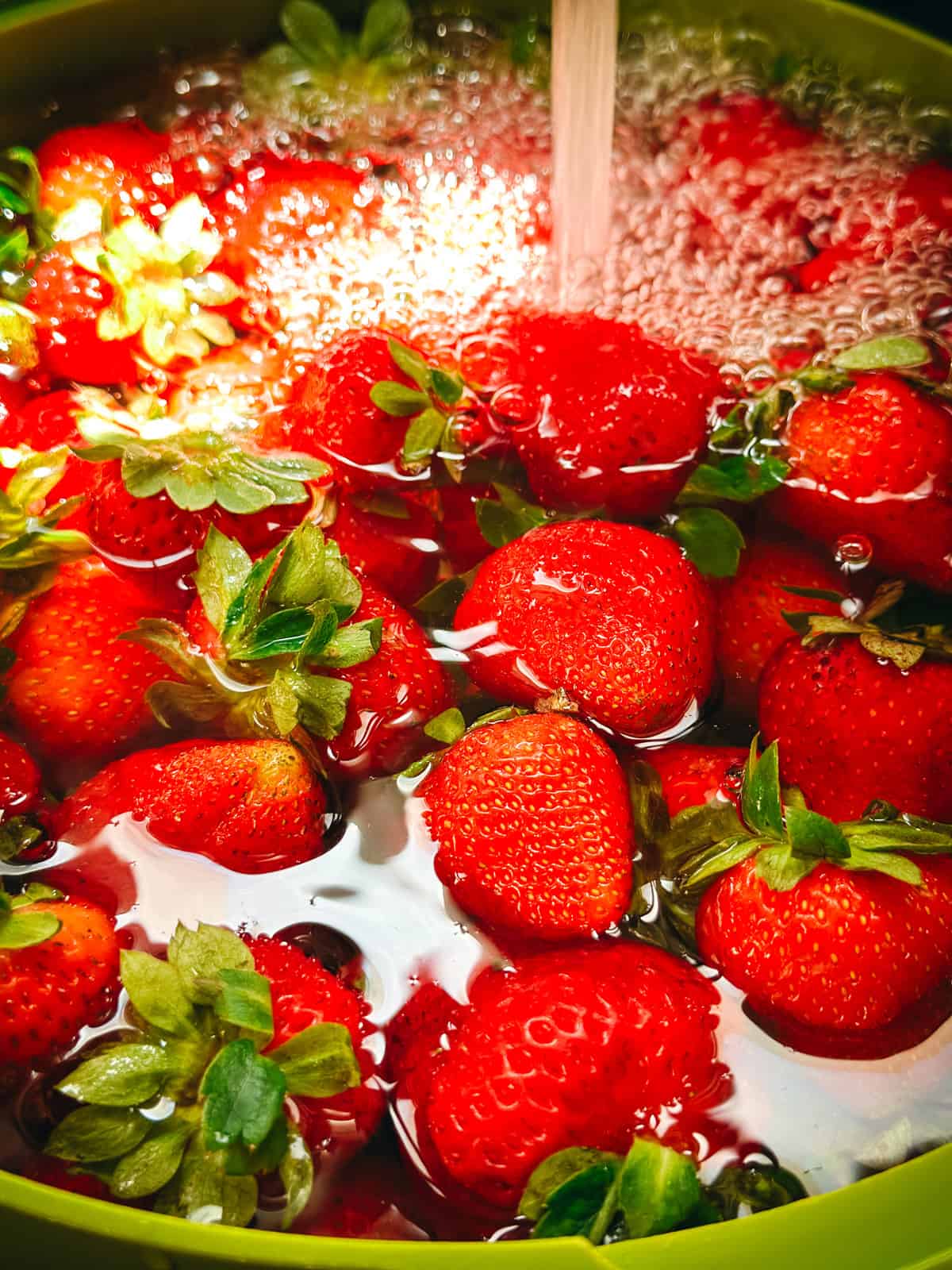
1. Wash them well. Put the strawberries in a large bowl or colander and cover them with plenty of cold water. Swish them around gently with your hands, you’ll see the dirt and grit sink to the bottom. Let them sit for a minute or two, then lift them out (don’t pour the water off over them, or you’ll tip the grit right back on). Drain well and pat them dry.
Keep the green hulls on while you wash. They act like little stoppers — once you hull a strawberry, it soaks up water like a sponge, and waterlogged berries make a watery syrup.
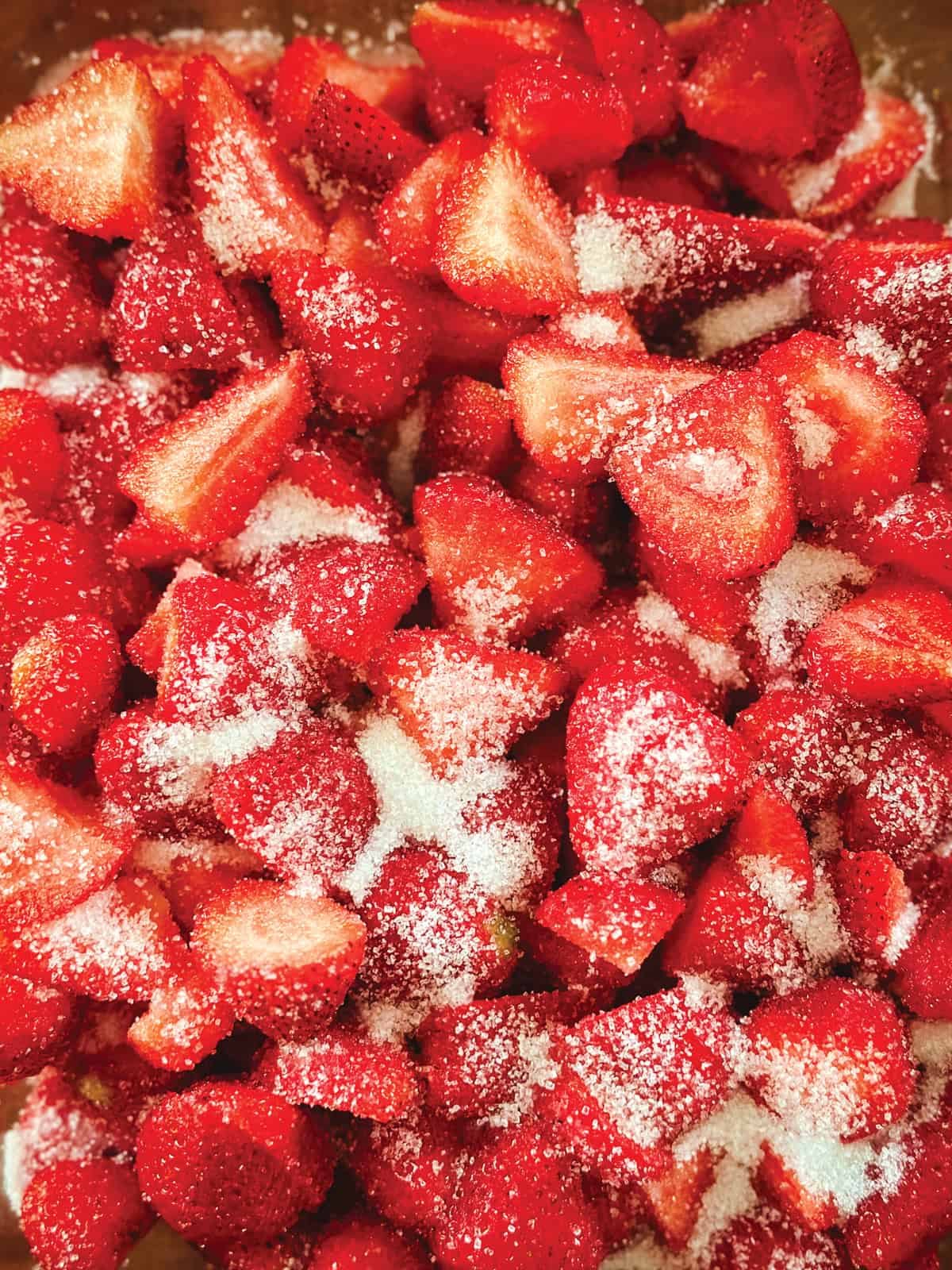
2. Slice the strawberries. Now hull them and slice them into halves or quarters, depending on size. Try to keep the pieces fairly even so they soften at the same rate. Add them to a medium bowl.
3. Add the sugar. Scatter the sugar over the strawberries and give everything a gentle toss so every piece is lightly coated.
Optional. Add the brandy. Pour in the brandy (or rum) and toss again, gently — you don’t want to bruise the berries into mush.
Let them sit. Cover the bowl and leave it on the counter at room temperature for at least 30 minutes and up to 2 hours. Give it one gentle stir halfway through. You’ll know they’re ready when the strawberries have softened and there’s a pool of glossy red syrup at the bottom of the bowl.
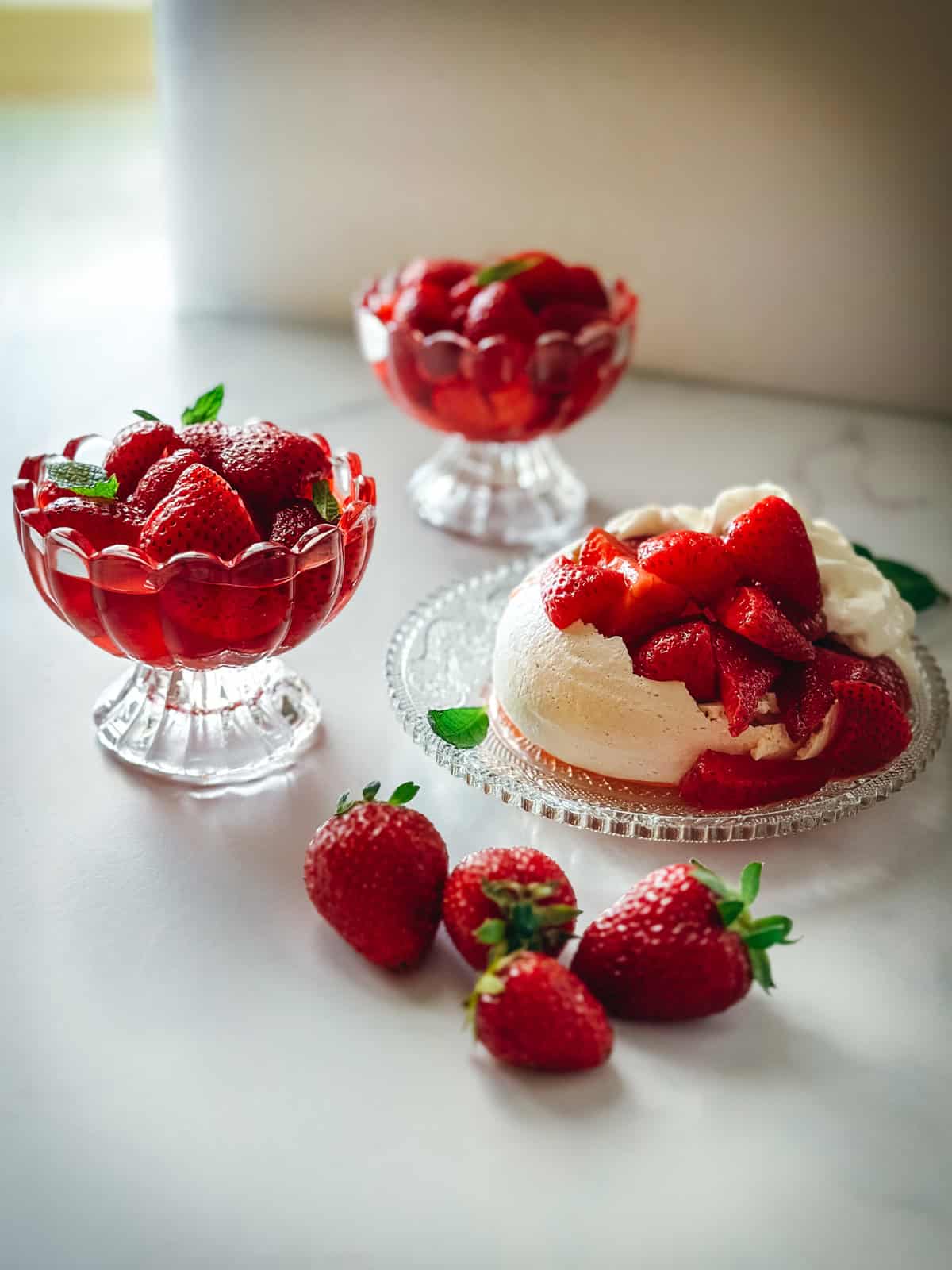
Serve. Spoon the berries and all of that syrup over whatever you like — and make sure no one leaves the syrup behind. The hardest part is waiting.
Tips for success
Room temperature is quickest, but the fridge works beautifully too. Warmth helps the juices release faster, so if you want them ready in 30 minutes, leave the bowl on the counter. But you can absolutely macerate them in the fridge — it just takes longer.
My mother’s way: macerate overnight in the fridge. This is how I grew up eating them. She’d make the bowl in the evening, slide it into the fridge, and by the next day the strawberries were deeply softened, swimming in cold syrup, and somehow even better. In the Greek summer heat, everything lives in the fridge anyway — and there’s something wonderful about cold macerated strawberries on a hot day. Make them the night before and thank yourself in the morning.
Wash with the hulls on, and dry them well. Strawberries are little sponges once hulled. Soak them whole, drain thoroughly, and pat dry — otherwise you’ll water down that gorgeous syrup.
Don’t over-sugar. Taste your berries first. Truly ripe summer strawberries barely need any sugar at all; let the fruit lead.
Slice evenly. Uniform pieces soften uniformly. Big chunks sitting next to thin slices give you an uneven bowl.
Resist over-mixing. A gentle toss at the start is enough. Stir too aggressively and you’ll turn beautiful berries into jam.
The longer they sit, the softer and saucier they get. Thirty minutes gives you fresh, just-softened berries. Two hours gives you a looser, syrupier, almost sauce-like bowl. Both are right — it depends on what you’re spooning them over.
Variations
- Balsamic macerated strawberries. Swap the brandy for 1–2 teaspoons of good balsamic vinegar and a grind of black pepper. It sounds strange and tastes incredible, the balsamic makes the strawberries taste more like themselves. A classic for a reason.
- Add fruit. Add a tablespoon of fresh orange or lemon juice. Lovely, family-friendly, and still wonderfully syrupy.
- With herbs. A few torn basil or mint leaves stirred in at the end make these taste like high summer.
- Other berries. This works beautifully with a mix — strawberries, raspberries, blackberries — for a bowl of macerated berries instead.
How to serve macerated strawberries
- Enjoy them as they are served in a dessert bowl with plenty of their syrup.
- Over a bowl of thick, cold Greek yogurt, drizzled with honey (my everyday way).
- Spooned over vanilla ice cream — the warm syrup against the cold ice cream is unbeatable.
- Piled onto a strawberry tart or split biscuits with whipped cream.
- Over pancakes, waffles, or tsoureki french toast for a weekend breakfast that feels like a treat.
- Folded into whipped cream or mascarpone for the easiest dessert imaginable.
- Spooned over meringues, olive oil pound cake, cheesecake, or panna cotta.
- Stirred into a glass of prosecco or sparkling water — syrup and all.
How long do macerated strawberries last?
Macerated strawberries are best enjoyed the day you make them, while the berries still have a little structure. That said, they keep well in an airtight container in the fridge for 2 to 3 days.
Just know that they’ll continue to soften the longer they sit — by day two, they’re more of a loose, saucy compote than distinct berries, which is honestly delicious in its own right (especially over yogurt or ice cream). The syrup also gets even better. I wouldn’t keep them for much more than three days, as the texture goes from soft to mushy.
You can macerate them up to a few hours ahead for a dinner party — just keep them at room temperature if they’re within a couple of hours of serving, or refrigerate them and bring them back to room temperature before serving.
More Greek dessert recipes
Cooked it? Rate it!
If you tried this recipe, I’d love to know how you liked it — drop a comment below or tag me on Instagram @thegreekfoodie__.



Macerated Strawberries
Ingredients
- 1 lb fresh strawberries, (450 g) hulled and sliced
- 2–3 tablespoons granulated sugar, (adjust to taste)
- 1–2 tablespoons brandy , or dark rum, optional
Instructions
- Wash. Place the strawberries (hulls still on) in a bowl of plenty of cold water. Swish gently to loosen any dirt and grit, let sit 1–2 minutes, then lift out, drain well, and pat dry.1 lb fresh strawberries
- Slice. Hull and slice the strawberries into even halves or quarters. Add to a medium bowl.
- Sweeten. Scatter the sugar over the surface and toss gently to coat.2–3 tablespoons granulated sugar
- Optional. Add the brandy. Pour in the brandy (or rum), if using. Toss gently again.1–2 tablespoons brandy
- Macerate. Cover and leave at room temperature for 30 minutes to 2 hours, stirring once halfway, until the berries soften and release a glossy red syrup.
- Serve. Enjoy them as they are served in a dessert bowl with plenty of their syrup. Or spoon the strawberries and syrup over ice cream, yogurt, shortcake, or anything you love.
Notes
- Use the ripest, most fragrant strawberries you can find — the fruit is the whole show here.
- For the quickest version, macerate at room temperature; for my mom’s way, cover and chill in the fridge overnight, and enjoy them cold the next day, perfect for a hot summer.
- Start with less sugar than you think and taste — ripe berries need very little.
- For a booze-free version, swap the brandy for a tablespoon of fresh orange or lemon juice.
- Don’t waste the syrup. It’s the best part.
Nutrition






Best desert I’ve had this year. It’s addictive.
It really is! Thank you darling!