
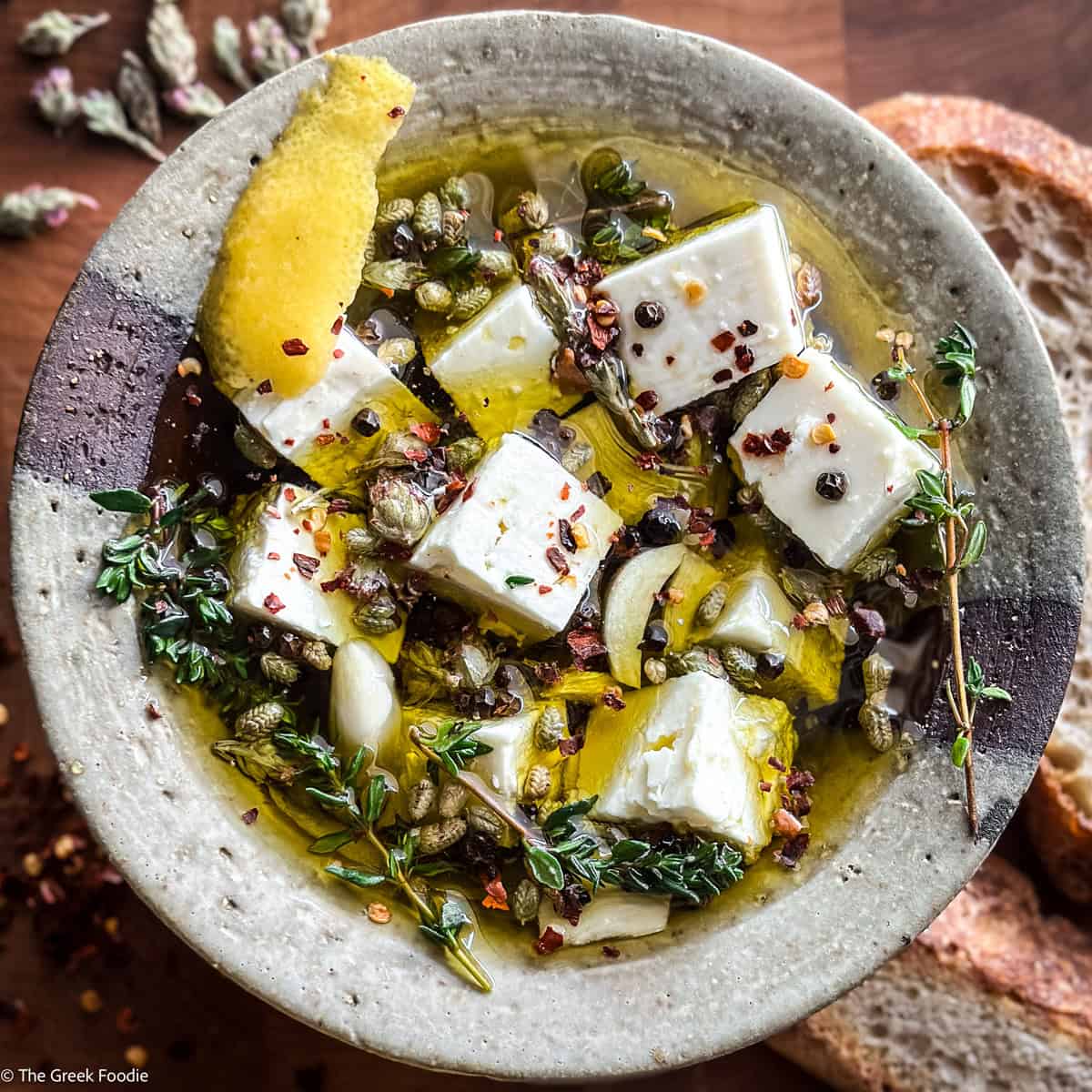
Marinated feta has become one of those recipes everyone seems to be making, and once you try it, you’ll understand why. But here’s a little truth from someone who grew up eating feta at every meal: in Greece, we don’t marinate it in jars. We set a block on the table, drizzle some olive oil, add a pinch of oregano, and call it done. This is a delicious modern spin on that tradition. Greek at heart, easy to make, and honestly? It disappears fast.
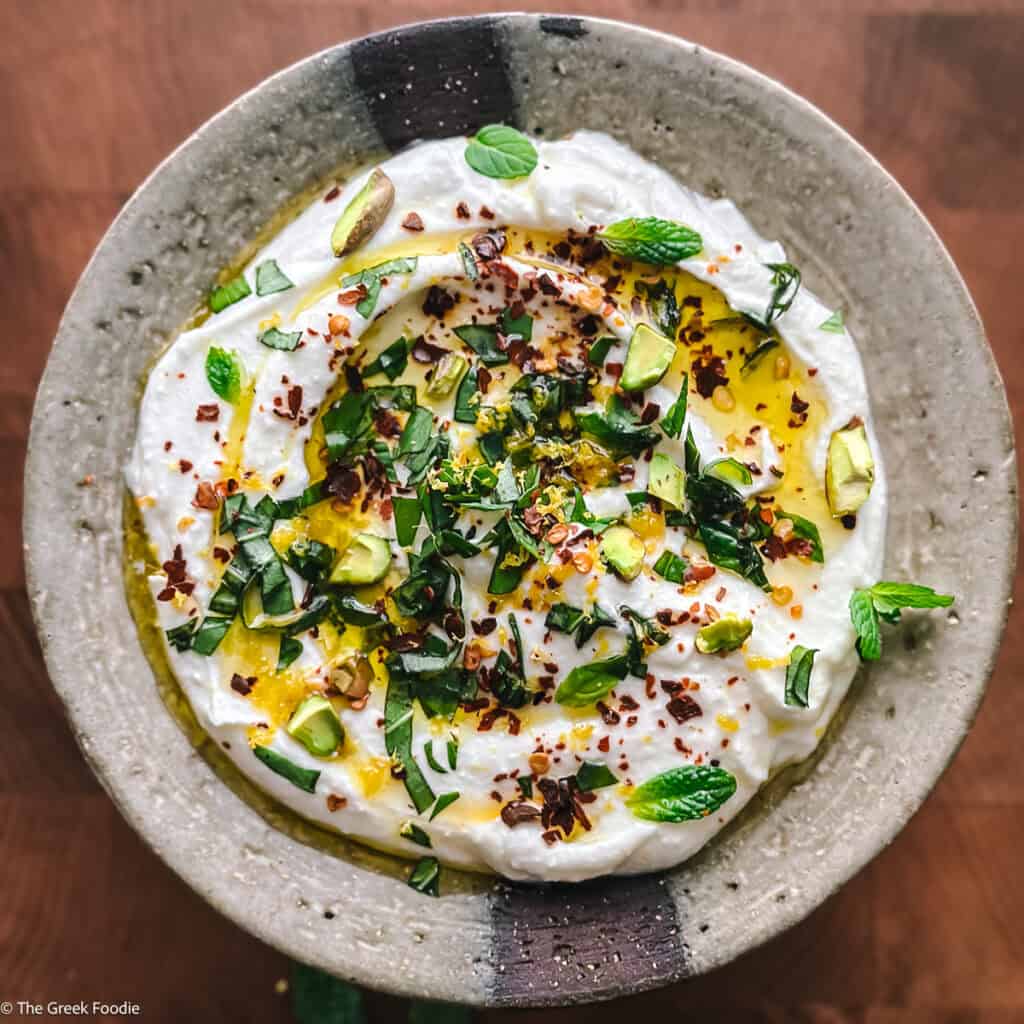
Love feta? Try our Whipped Feta Dip (Tirokafteri) — a creamy, spicy Greek dip made with roasted peppers, hot peppers, and olive oil. It’s bold, tangy, and ready in 20 minutes.
How Greeks actually eat feta
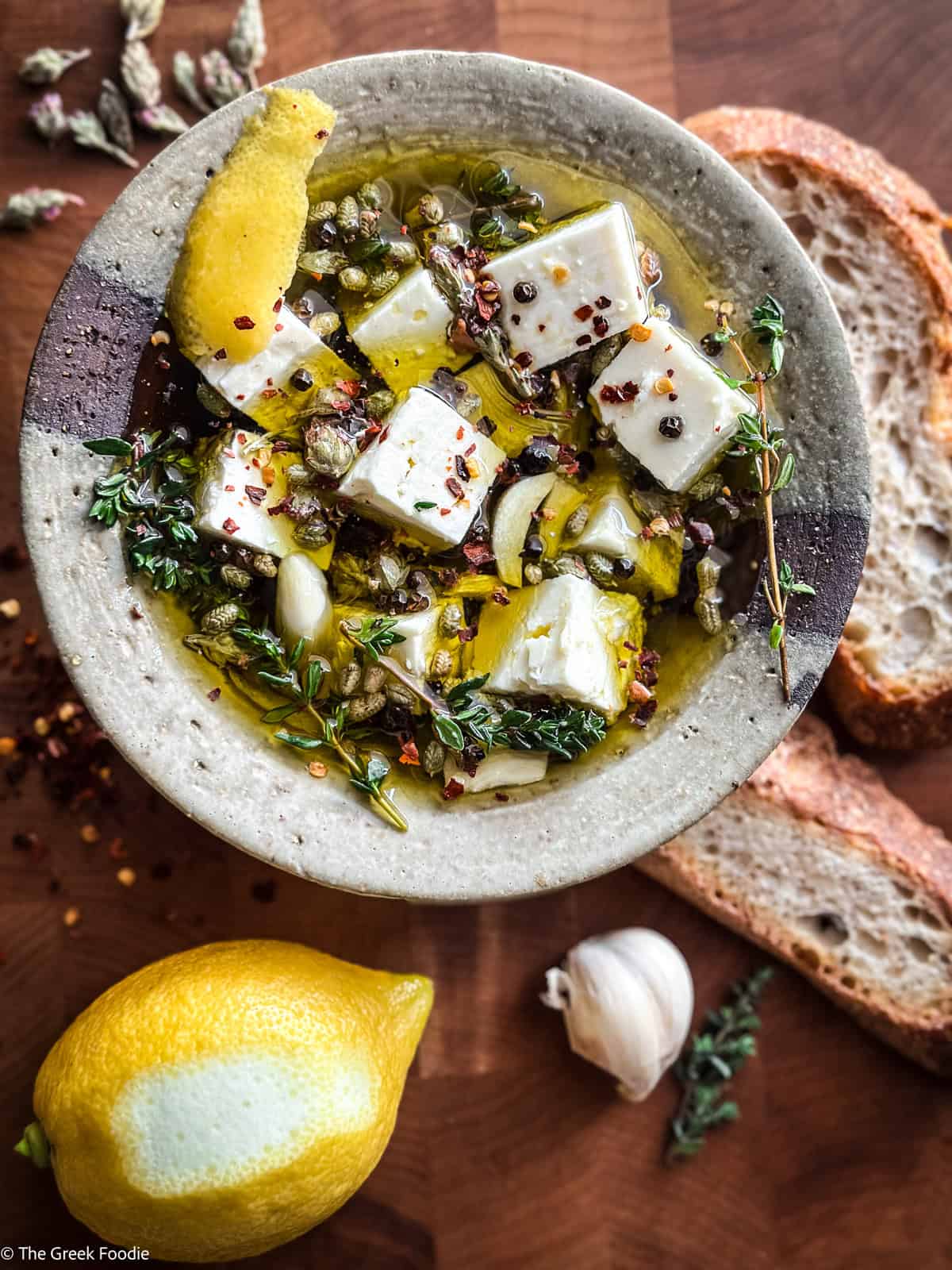
If you visit Greece, you won’t find marinated feta in a mason jar on the table. What you’ll find is a generous slab of brined feta, drizzled with fruity olive oil and a pinch of dried oregano, sometimes with a few olives alongside. Simple, unadorned, and completely satisfying. That’s the original. This recipe takes those same building blocks and turns them into something a little more elaborate and make-ahead friendly. Both are worth making. But the classic is worth knowing.
Why you will love our marinated feta
Ingredient notes

- Feta cheese: Use PDO Greek feta, the kind made from sheep’s milk, brined and tangy. You’ll find it in the specialty cheese section at most grocery stores. Avoid pre-crumbled feta from a tub; it’s too soft and will fall apart in the oil.
- Olive oil: Use the best extra virgin olive oil you have. Greek olive oils tend to be more robust and peppery, which is ideal here. The oil itself becomes deeply infused and delicious, so don’t skimp.
- Dried oregano: Use whole dried oregano flowers if you can find them — this is how oregano is sold and used in Greece, still on the stem with the tiny flowers intact. The aroma and flavor are far more complex than the pre-ground powder in most supermarket spice racks. Look for it at a Greek or Middle Eastern grocery store. Regular dried oregano works perfectly fine if that’s what you have.
- Dried thyme flowers: Whole dried thyme flowers are more delicate than thyme leaves and add a subtle, almost floral, herby note. They also look stunning in the jar. Look for them at a specialty or Mediterranean grocery store. Regular dried thyme works just as well, just use a little less, as it can be more intense.
- Chili flakes: A small amount adds gentle warmth without real heat. Aleppo pepper is a lovely alternative — fruitier and milder.
- Lemon peel: Use a wide strip or two of fresh lemon peel rather than zested lemon. It infuses the oil more slowly and gently, giving a clean citrus background without the sharper bite that fine zest can sometimes add. Just peel it with a vegetable peeler, avoiding the white pith, which can turn bitter.
How to marinate feta

- Prepare the feta. Cut the feta into generous 1-inch cubes. Pat dry gently with a paper towel to remove excess brine. This keeps the oil clear and helps the marinade stick.
- Layer the jar. Use a clean wide-mouth pint mason jar. Add a few garlic slices and peppercorns to the bottom, then layer in the feta. Tuck the thyme sprigs and lemon zest in around the cheese.
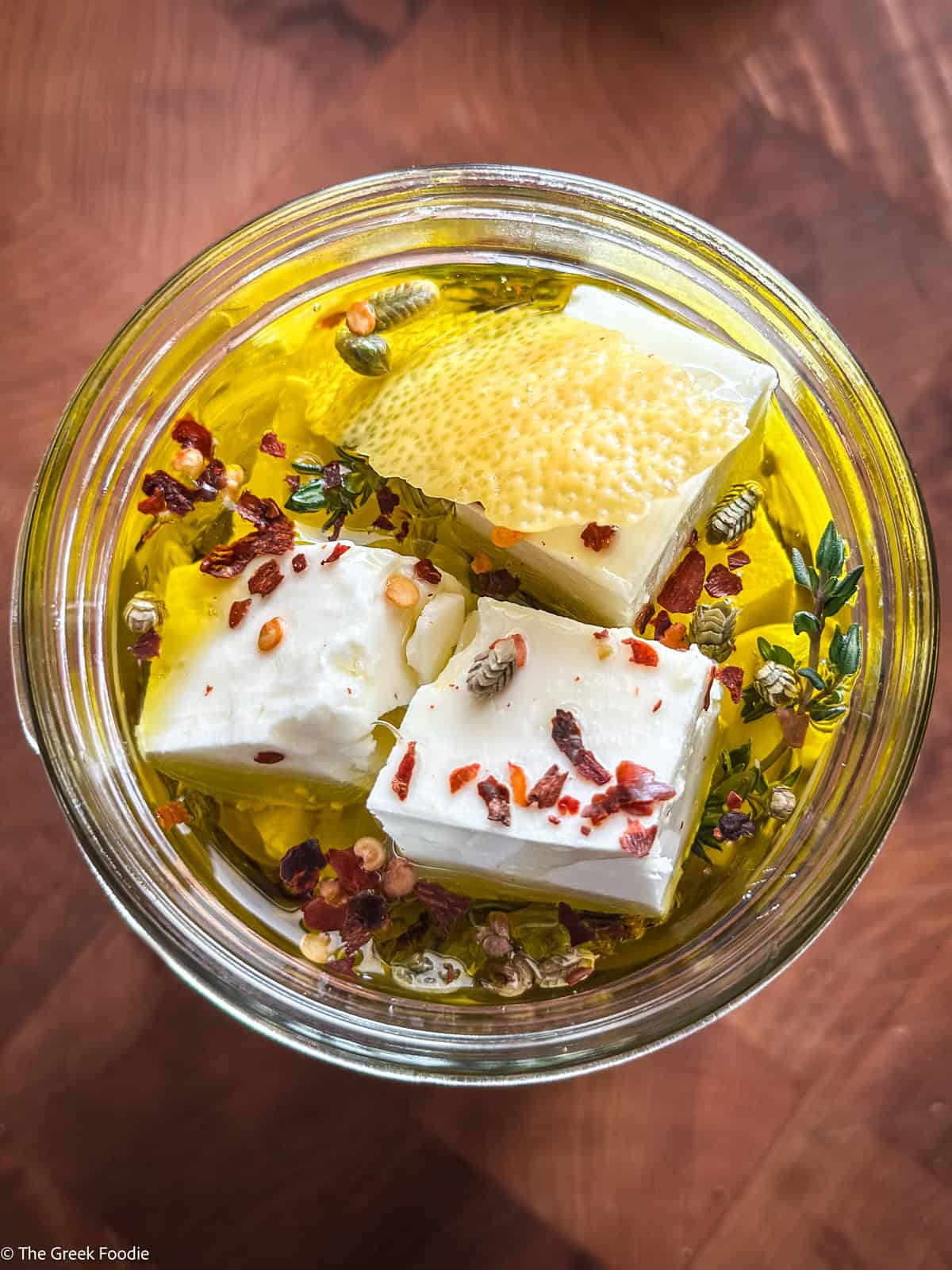
- Add the oil. Pour the olive oil over the feta until it’s mostly or fully submerged. Press the cheese down gently if needed.
- Season and seal. Sprinkle the chili flakes and dried oregano over the top. Seal the jar and give it a gentle swirl to distribute everything.
- Rest. You can eat it right away, but the flavors bloom after a few hours and are exceptional the next day. Let it come to room temperature before serving — the oil will solidify slightly in the fridge, which is completely normal.

It pairs beautifully with our Greek meatballs (keftedes) and fried crispy eggplant!
Pro tips
- Let it come to room temperature first. Cold feta straight from the fridge mutes the flavor. Give it 15–20 minutes before serving — the oil loosens, and everything opens up.
- Don’t discard the oil. When the feta is gone, the infused oil is incredible. Use it as salad dressing, a dip for bread, or drizzle it over roasted vegetables or pasta.
- Pat the feta dry before marinating. It keeps the oil from going cloudy and helps the aromatics adhere.
- Whole slab vs. cubes: Cubes marinate faster and look beautiful in a jar. A whole slab is more dramatic on a cheese board — break or slice it at the table.
Storage and leftovers
- Marinated feta keeps in the fridge for up to 2 weeks in a sealed jar, fully submerged in oil. The olive oil will solidify in the cold — this is totally normal. Just take it out 15–20 minutes before serving to let everything loosen up.
- Do not freeze marinated feta — the texture of the cheese will suffer.
- This is an ideal make-ahead recipe. Make it on a Sunday and you’ll have something beautiful to pull out all week.

Serving suggestions
- On a mezedes board: Arrange with olives, pita, and roasted peppers. Scatter a few torn fresh basil leaves and a sprig of thyme or oregano over the top, it looks beautiful, and the aroma is incredible.
- Over salad: Spoon a cube or two over a simple tomato-cucumber salad. The infused oil doubles as a dressing.
- With eggs: Crumble a piece over scrambled eggs or a Greek-style omelette for a salty, herby hit.
- On toast: Thick sourdough, a piece of marinated feta, a drizzle of the infused oil, and fresh basil on top. Done.
- As part of a meze spread: Serve alongside Greek Fava Dip, Spanakopita Puff Pastry, or Potato Fritters with Feta for a full Greek table.

FAQs
More Greek recipes with feta you’ll love



Cooked it? Rate it!
Please leave a comment, we love hearing from you! Please subscribe to our newsletter for the latest updates.



Greek Marinated Feta with Olive Oil and Herbs
Equipment
- wide-mouth pint mason jar
Ingredients
- 8 oz Greek feta cheese cut into cubes or left whole
- 1 cup extra virgin olive oil enough to mostly submerge the feta
- 5 garlic cloves thinly sliced
- 1 teaspoon whole black peppercorns
- 1 teaspoon chili flakes
- 1 teaspoon dried oregano flowers or regular dried oregano
- 1 teaspoon dried thyme flowers or ½ teaspoon regular dried thyme
- 1 lemon for the peel
- 2-3 sprigs fresh thyme optional
For serving:
- fresh oregano or thyme sprigs optional
- chili flakes optional
- crusty bread or pita
Instructions
- Cut the feta into generous cubes, roughly 1-inch pieces. Or leave it in a whole slab if you're going for that rustic, elegant look in the jar. Pat the feta dry gently with a paper towel to remove excess brine.8 oz Greek feta cheese
- Use a clean glass jar (a wide-mouth pint mason jar works perfectly). Add a few garlic slices and peppercorns to the bottom, then lay in your feta. Tuck the thyme sprigs, dried oreano and thyme flowers, and lemon peel (avoid the pith when you peel it) around the cheese.5 garlic cloves, 1 teaspoon whole black peppercorns, 1 teaspoon dried oregano flowers, 1 teaspoon dried thyme flowers, 1 lemon, 2-3 sprigs fresh thyme
- Pour the olive oil over the feta until it's mostly or fully submerged. Press the cheese down gently if needed.1 cup extra virgin olive oil
- Sprinkle the chili flakes over the top. Seal the jar and give it a very gentle swirl to distribute everything.1 teaspoon chili flakes
- You can eat it immediately, but the flavors bloom beautifully after a few hours, and it's exceptional the next day. Let it come to room temperature before serving, as the olive oil will solidify slightly in the fridge.fresh oregano or thyme sprigs, crusty bread or pita
Notes
Nutrition