

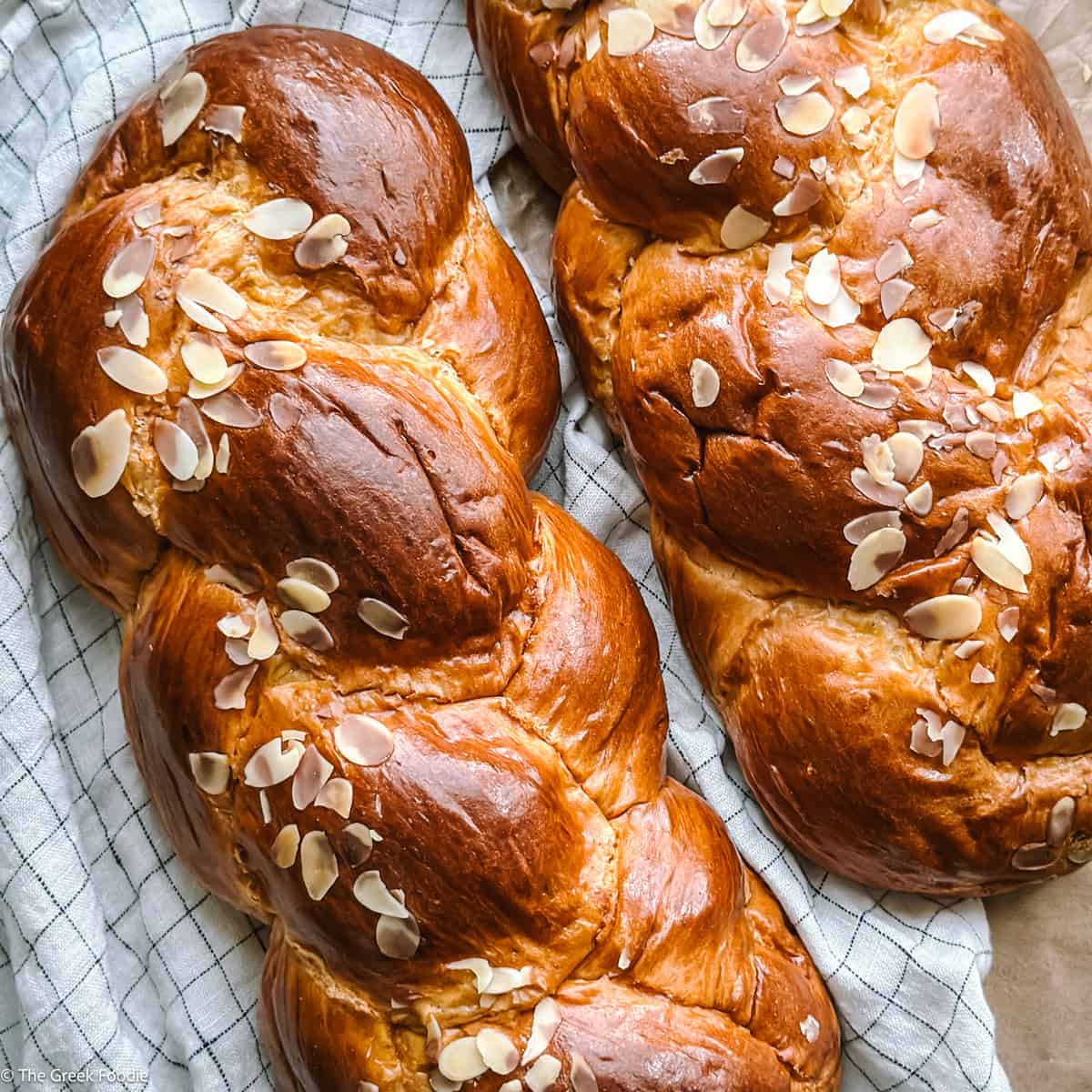
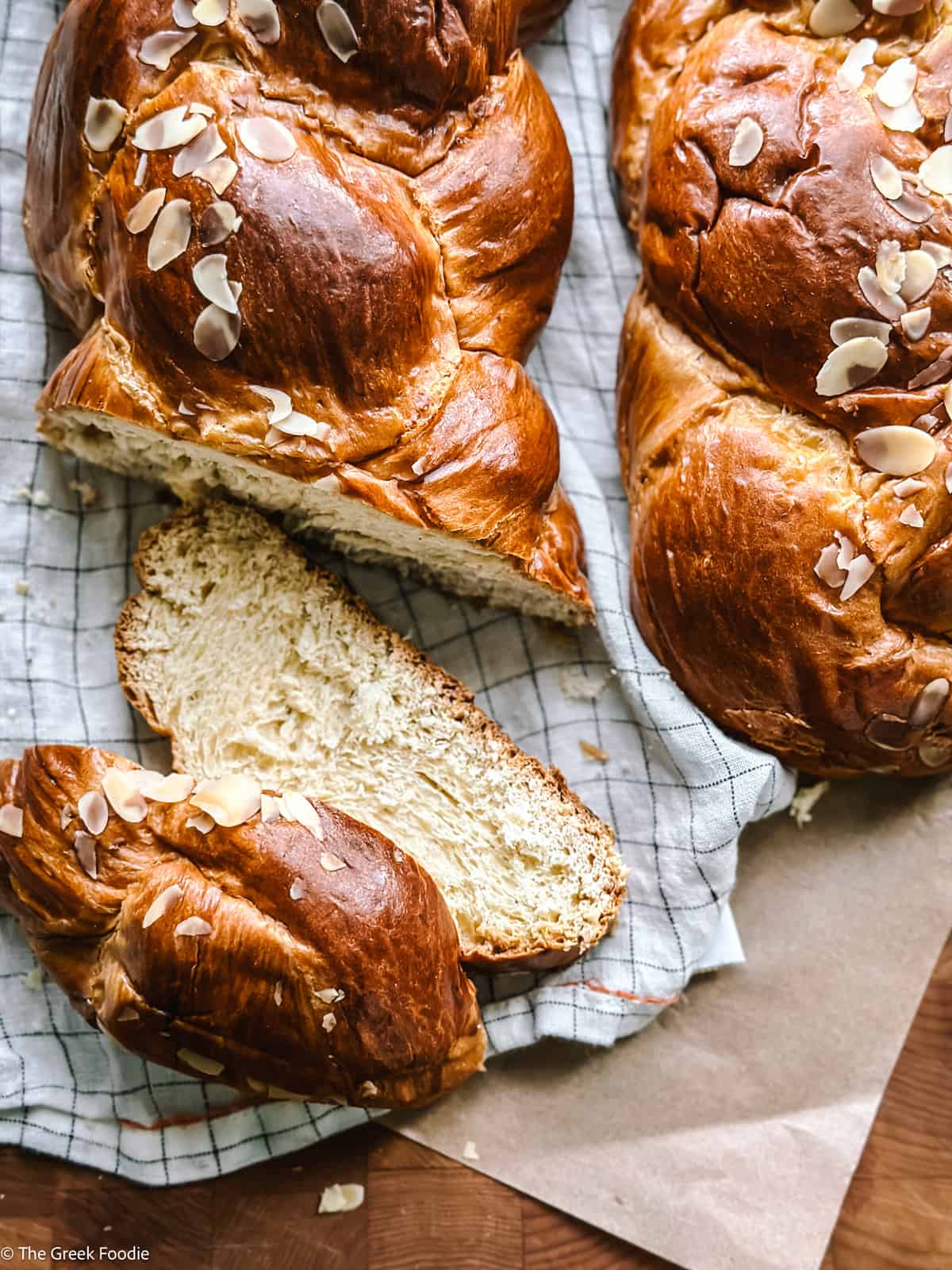
If you’ve ever walked through a Greek neighborhood during Holy Week, you know that smell — sweet, warm, faintly spiced, unmistakably tsoureki. This is Greece’s treasured Easter bread, a braided semi-sweet loaf scented with mastic and mahlepi that has no real equivalent in American baking. It’s softer than challah, more aromatic than brioche, and completely its own thing.
In my family, making tsoureki was a sacred ritual. Every year during Megali Evdomada — Holy Week — my grandma would wake before dawn to start the dough. She kneaded it by hand, proved it twice, braided it into loaves, and somehow produced five or six perfect tsoureki by afternoon. As grandchildren, we hovered nearby, knowing exactly how good the house was about to smell.
This recipe is hers, passed to me, and now to you. It makes three beautiful loaves, enough to share, gift, and keep one all for yourself.
If you love this Traditional Tsoureki Greek Easter Bread, you will also love this Tsoureki French Toast, Rustic Bread with Olive Oil or Greek Pita Bread!

Why you will love tsoureki bread
The spices that make tsoureki unique
What is mastic?:
Mastiha, or mastic, is a resin derived from the mastiha tree, Pistacia lentiscus. It has a sweet, herbal flavor like rosewater. Mastic resin has been harvested on Chios since antiquity. Mastiha is used in various ways, from bread to dessert to liqueurs. You can find whole or ground Mastiha tears in Greek food shops and online at Amazon and www.titanfoods.com
What is mahlepi
Mahlepi (Mahleb) is a spice made from the black cherry stone(Prunus mahaleb). It is ground in small quantities to sharpen sweet foods and cakes. The flavor is similar to bitter almonds, cherries, and marzipan. Whole or ground Mahlepi can be found in Greek and Middle Eastern food shops and online at Amazon and www.titanfoods.com.
Ingredient notes
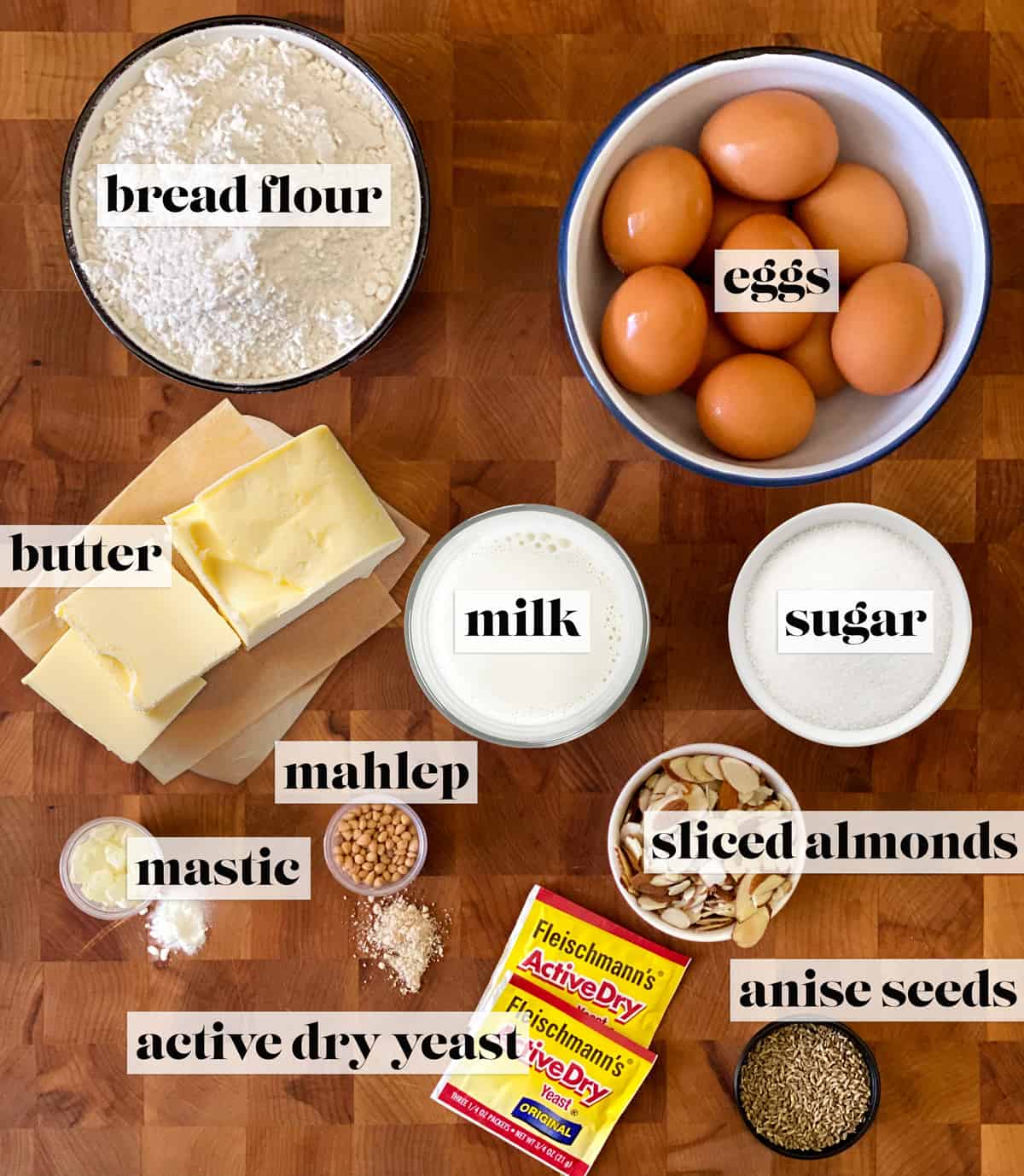
Strong bread flour — Look for flour with at least 12–13% protein (King Arthur bread flour works beautifully). High-protein flour gives tsoureki its characteristic chewy-yet-soft crumb.
Mastic (mastiha) — A resin harvested exclusively on the Greek island of Chios, with a uniquely sweet, piney, almost floral flavor. You can buy it as whole “tears” or pre-ground. If using whole tears, freeze them for 15 minutes, then grind with a little sugar using a mortar and pestle — the sugar prevents clumping.
Mahlepi (mahleb) — Ground from the pits of wild cherries, with a flavor somewhere between bitter almonds and marzipan. It’s subtle but essential. Greek and Middle Eastern grocery stores carry it, and it’s easy to find on Amazon.
Yeast — Fresh yeast is traditional and gives a slightly better rise, but three envelopes of active dry yeast work perfectly. Just make sure your milk is at 104°F/40°C — too hot kills the yeast, too cool and it won’t activate.
Butter — Grandma used a mix of cow’s milk butter and goat butter, and if you can find goat butter, it’s worth using. The flavor is slightly richer and tangier. But any good unsalted butter at room temperature will do the job beautifully.
Anise seed tea — This is Grandma Evgenia’s touch, and it’s one I’ll never skip. Steeping anise seeds in hot water and using the cooled tea to wet your hands while kneading transfers just a whisper of anise into the dough, barely detectable but beautifully present in the finished bread. You can find anise seeds at your local supermarket or online.
Pro Tips for Perfect Tsoureki
- Don’t rush the proofs. Both rises are essential. The first develops flavor; the second develops structure. A warm, draft-free spot is your best friend here — I use the microwave above my stove with the hood light on.
- The dough should be sticky at first. Resist the urge to add too much flour. As you knead and wet your hands with the anise tea, it will come together. The stickiness is what gives tsoureki its tender, soft crumb.
- Watch the oven closely. Fifteen to twenty minutes at 390°F is all it takes. Tsoureki burns easily on top because of the egg wash and the sugar content of the dough. Check at 15 minutes — you want deep golden, not brown.
- Cool completely before slicing. I know it’s hard to wait, but the crumb needs time to set. Slice too early and it will be gummy. Give it at least 30–45 minutes.
How to make tsoureki bread
- Boil two cups of water. Add the anise seeds and let them steep for 10-15 minutes. Remove the seeds and let the anise tea cool down.
- Warm up the milk.
- Add the yeast to the lukewarm milk and let it stand for 10 minutes. Stir to dissolve it, and let it stand for another 5-6 minutes to expand and foam.
- Add 200g warm water to the yeast mixture and stir to combine.
- Mix the flour with the mahlep, mastic, sugar, and salt in a bowl.
- Put ⅓ of the flour mix in the mixer.
- Beat for half a minute to combine.
- Add the butter, eggs, and yeast mixture. Beat for 3-5 minutes while adding the flour little by little.
- The dough will be sticky.
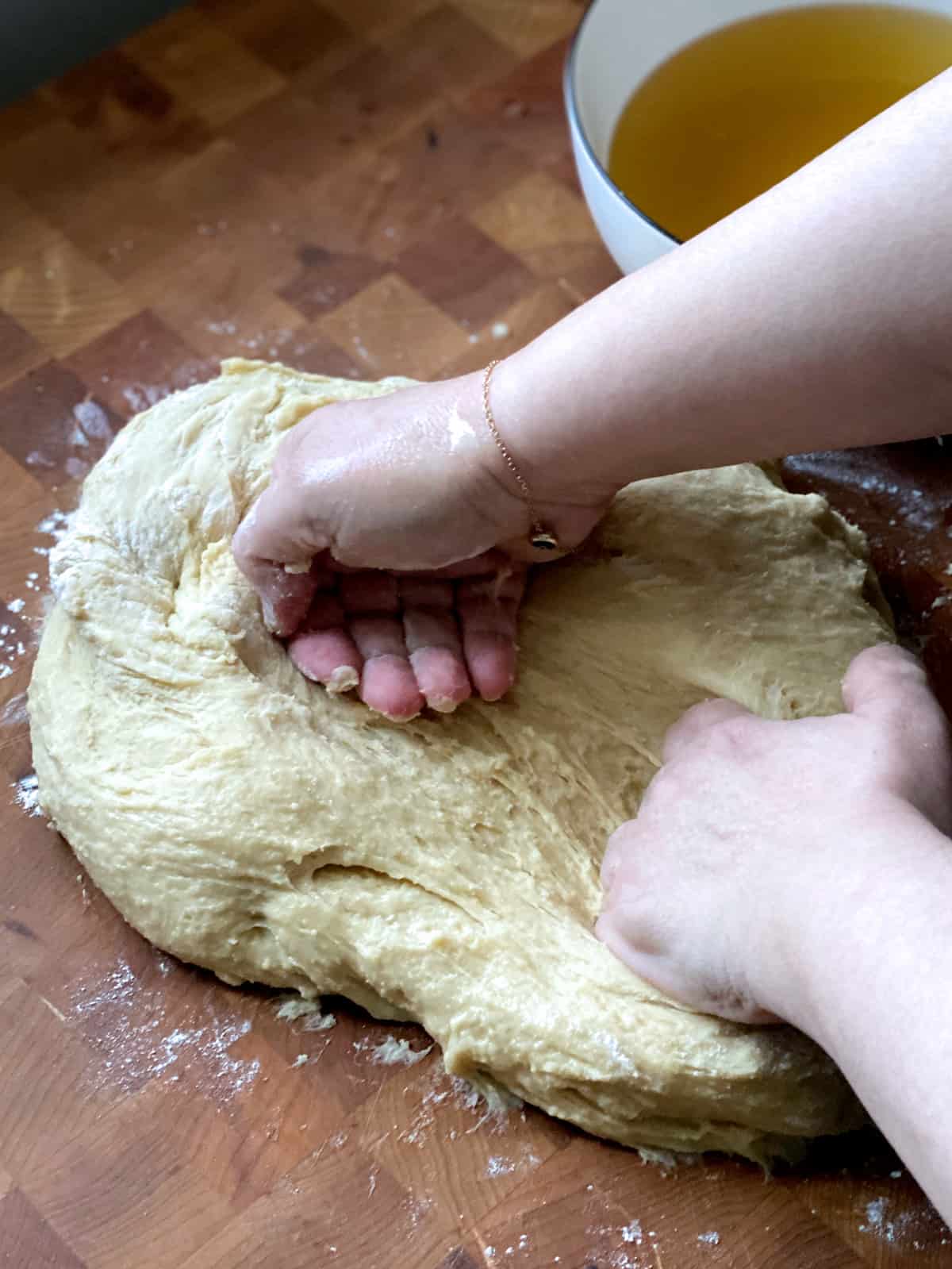
- Remove dough from the mixer on a working surface.
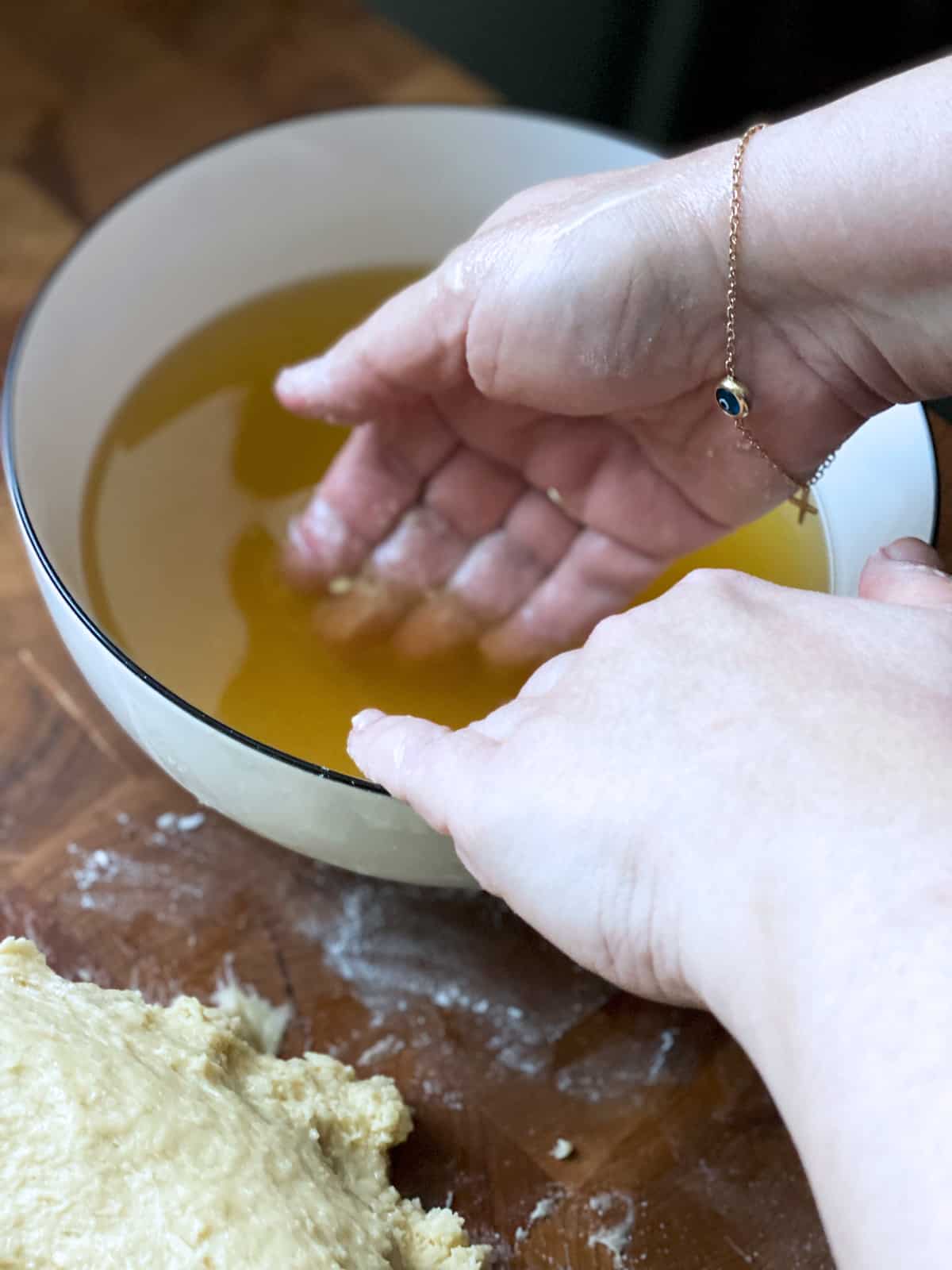
- If necessary, use very little flour on the work surface and knead, wetting your hands occasionally with the anise tea until the dough becomes soft and elastic and does not stick to your hands.
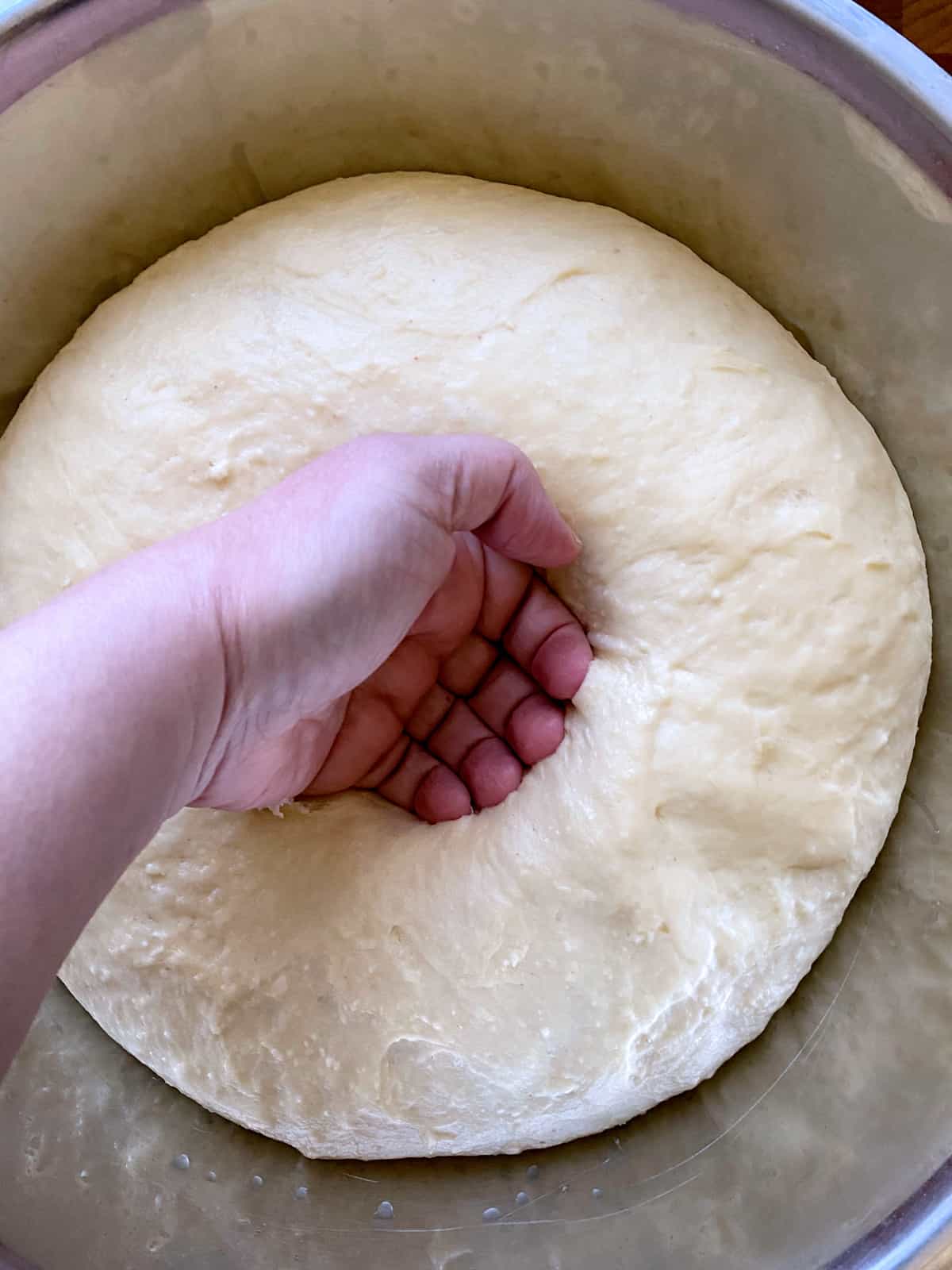
- Move the dough to a large bowl, cover it with plastic wrap and a towel, and place it in a warm place to do the first proof. (I use my microwave oven over the stove; the light under it keeps a perfect temperature for proofing).
- The dough is ready when doubled.
- Punch it lightly and transfer it to your working space. Knead the dough for 2-3 more minutes.
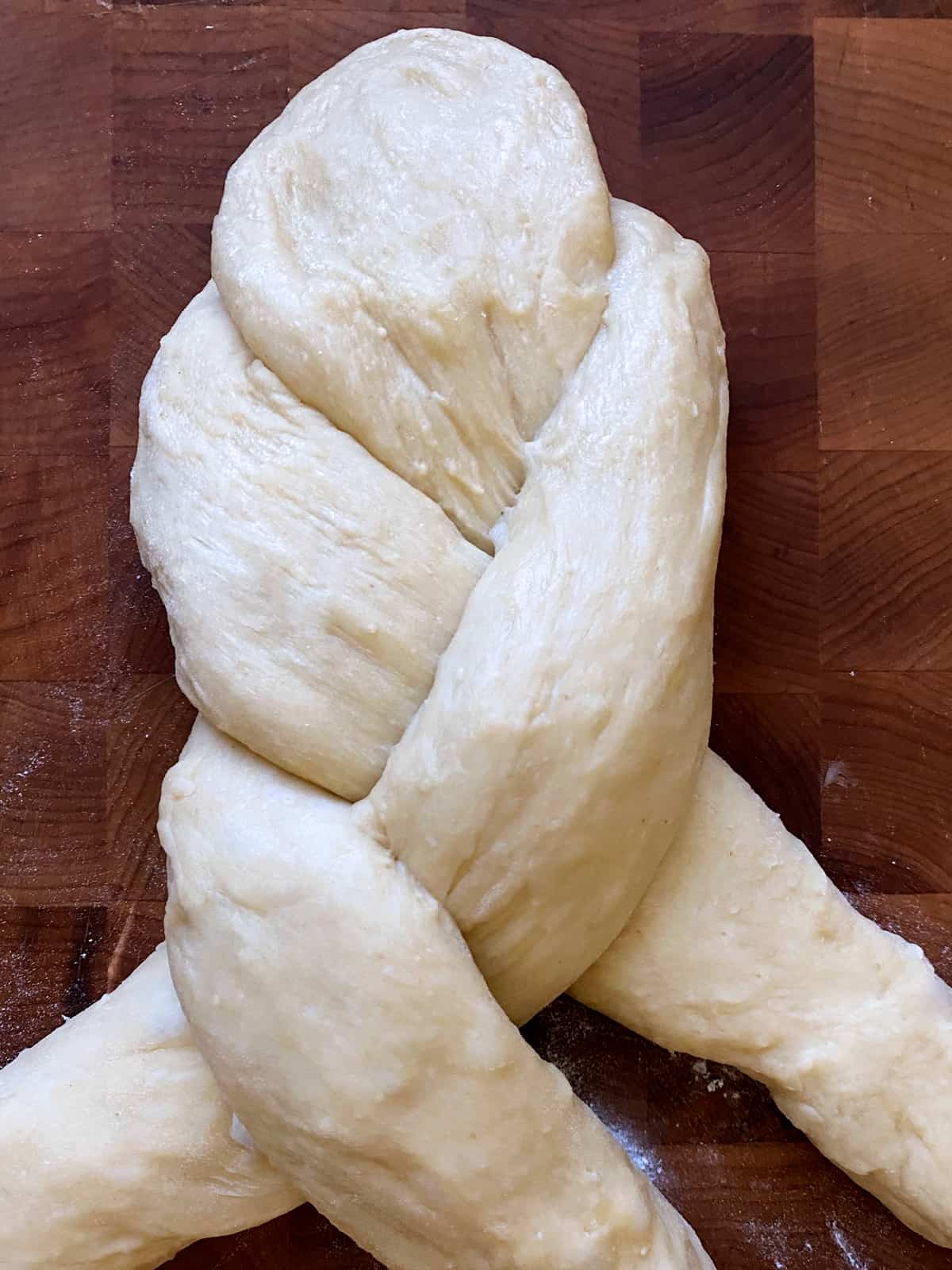
- Divide dough into three equal pieces. Cover the two with a towel and set them aside.
- With one of the dough pieces, create three long ones. Braid them into a loaf. Set on a parchment-covered baking sheet.
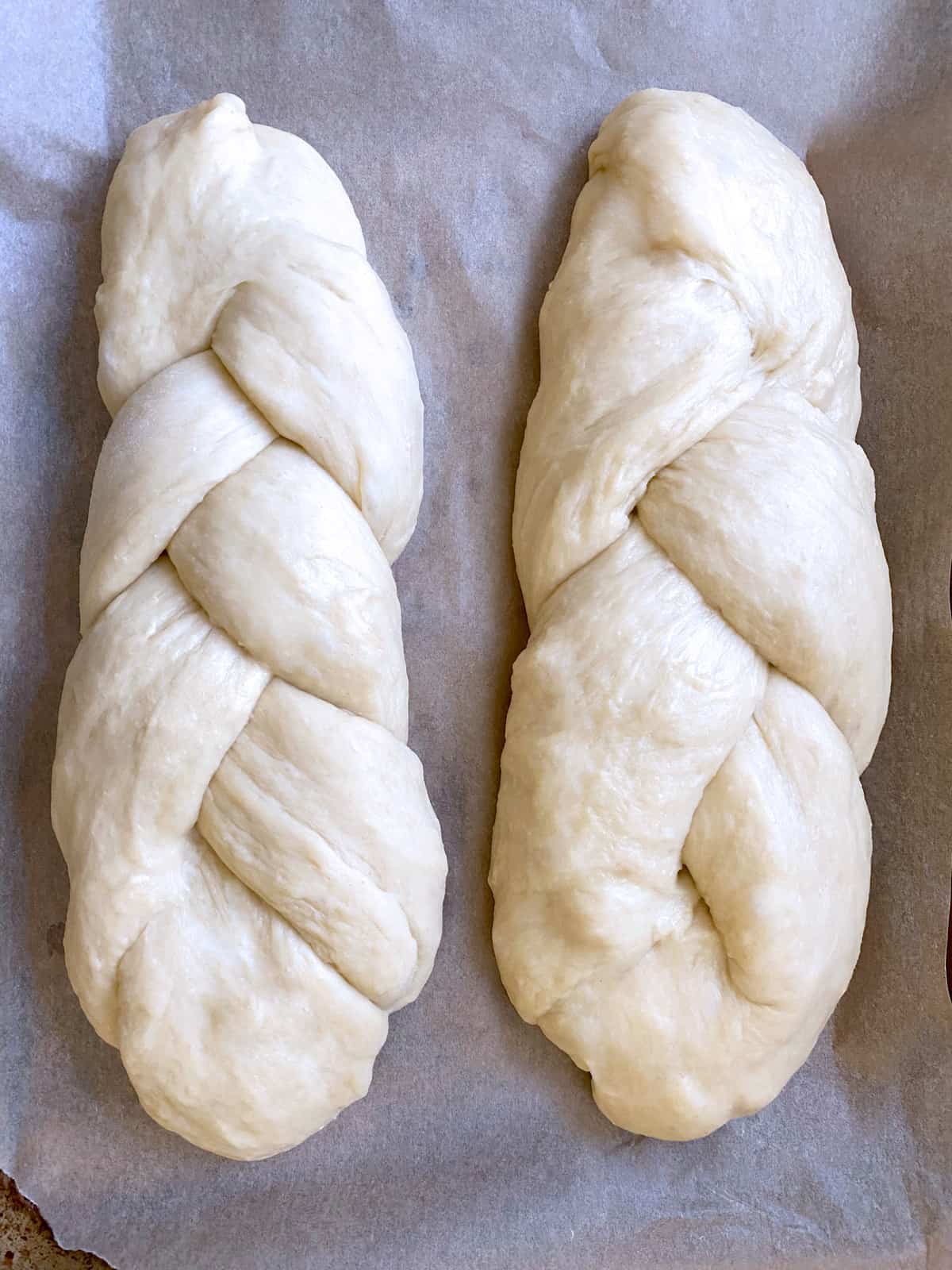
- Repeat the same process with the other two pieces to create three loaves in total.
- Transfer to a warm place, cover with plastic and a towel, and let them prove for a second time. When the loaves have doubled in size, they are ready.
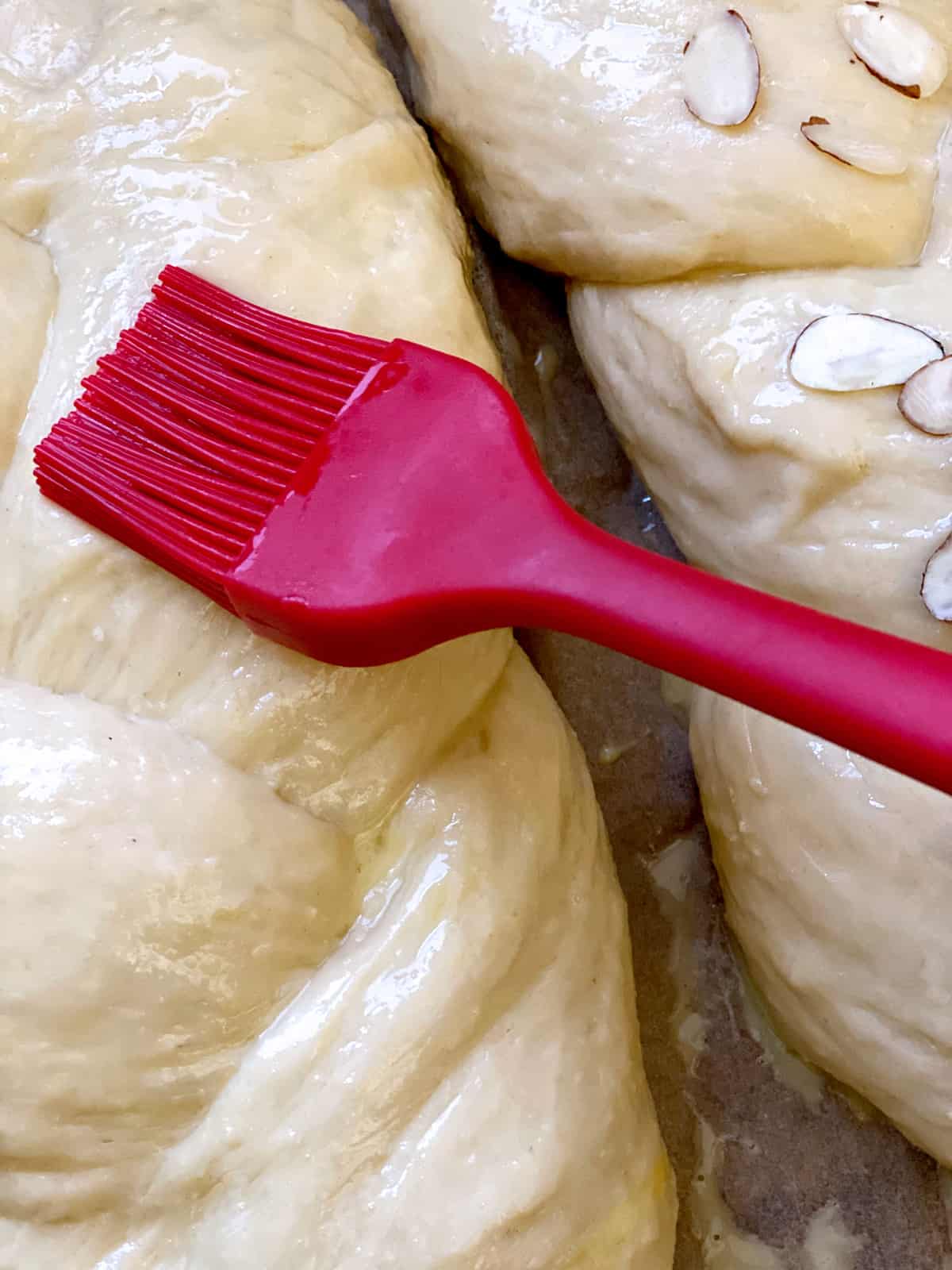
- Beat an egg with a tablespoon of water. Brush the loaves with the egg wash and sprinkle almond slices on top.
- Bake in 390°F / 200° C for 15-20 minutes tops.
- Don’t overbake!
Detailed measurements and instructions can be found on the recipe card at the bottom of the page.

Tsoureki Variations
Tsoureki isn’t just for Easter. Greeks bake it throughout the year for different holidays, each with its own traditions and decorations.
For Greek Easter, the loaves are often braided around one or two hard-boiled red eggs (kokkina avga), which are tucked into the dough before the second rise and baked right in. The red egg is a symbol of resurrection in the Greek Orthodox tradition — it makes the finished loaf as beautiful as it is meaningful.
At Christmas, tsoureki is decorated with whole walnuts, sesame seeds, and slivered almonds. The dough sometimes includes dried fruit, orange zest, cinnamon, cloves, or cardamom alongside the mastic and mahlepi — a warmer, spicier variation that feels right for the winter holidays.
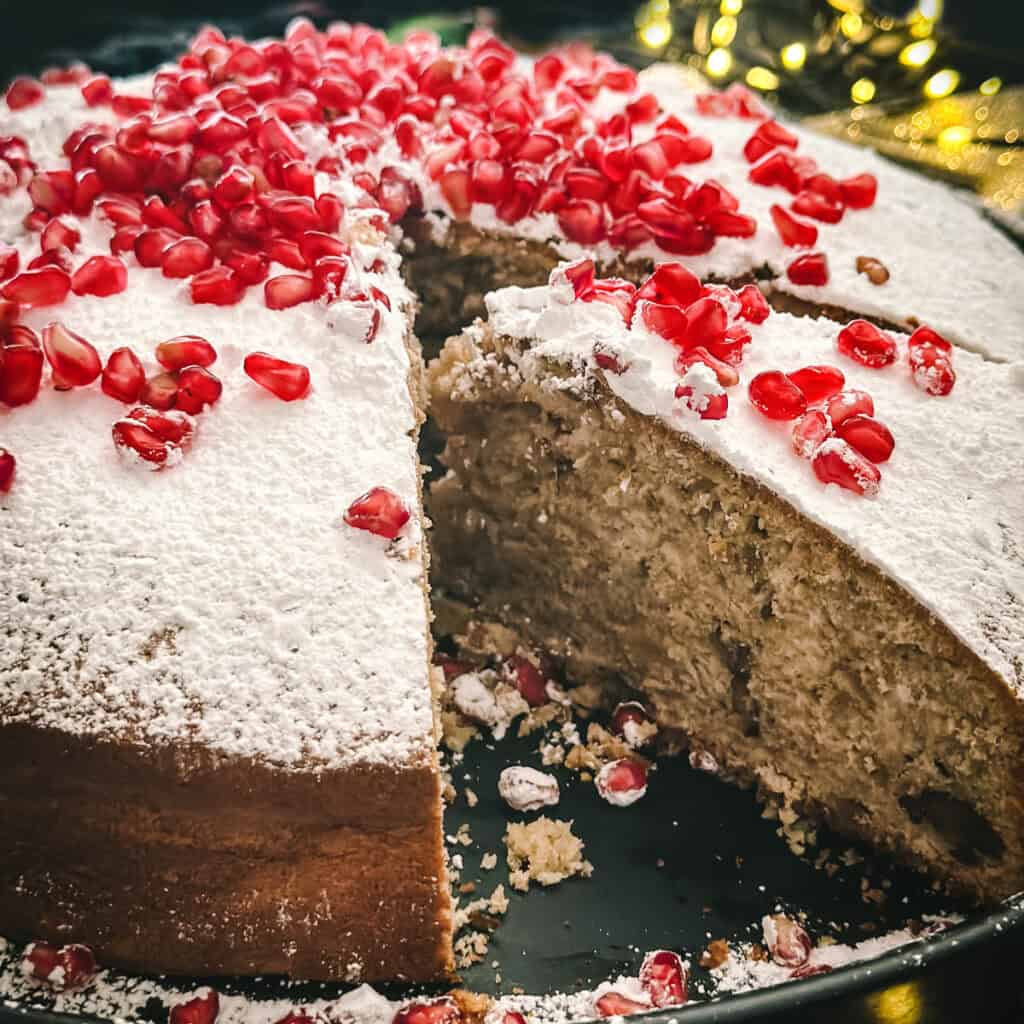
For New Year’s, a special loaf called Vasilopita is baked with a coin hidden inside. On New Year’s Day, the family gathers to cut it, and whoever finds the coin is said to have good luck for the entire year. Vasilopita comes in two forms — one is a round loaf of bread similar to tsoureki, and the other is a spiced vanilla cake topped with powdered sugar. My Vasilopita recipe is the cake version, and it is absolutely worth making come December.

How to Store Tsoureki
- Tsoureki stays fresh at room temperature, wrapped tightly in plastic or stored in an airtight bag, for 3–4 days. It actually gets better on day two once the flavors meld.
- To freeze, wrap individual loaves tightly in plastic wrap and then in foil. They freeze beautifully for up to 2 months. Thaw at room temperature overnight.
- Day-old tsoureki is phenomenal as French toast — see my Tsoureki French Toast for the recipe.

Serving Suggestions
- The classic way to eat tsoureki is simple: a thick slice with good butter and a drizzle of honey, alongside a Greek coffee or freddo cappuccino. It’s also perfect with Nutella — don’t judge until you’ve tried it.
- For Easter specifically, tsoureki is served alongside hard-boiled red eggs (kokкina avga), the traditional Greek Easter symbol of resurrection. The red egg is often baked directly into the braid for decoration.
- Leftover tsoureki makes the world’s best French toast — rich, custardy, and lightly sweet without being overwhelming.

FAQs
More Greek recipes you’ll love


Cooked it? Rate it!
Please leave a comment, we love hearing from you! Please subscribe to our newsletter for the latest updates.



Tsoureki – Traditional Greek Easter Bread (Brioche-Style)
Equipment
- Rimmed baking sheets
- Parchment paper
- Mixer (hand mixer or tabletop) with a dough hook
Ingredients
- 1200 gr bread flour
- 80 gr fresh yeast or 3 envelopes of active dry yeast
- 70 gr cow's milk butter soft, room temperature
- 70 gr goat butter soft, room temperature
- 320 gr sugar
- 200 gr whole milk warm at 40°C or 104°F
- 6 eggs
- ⅔ teaspoon salt
- 2 teaspoons mahlep Check recipe notes for resources.
- 1 teaspoons mastic Check recipe notes for resources.
To make the for kneading
- ½ cup anise seeds Check recipe notes for resources.
for the egg wash
- 1 egg beaten with 1 tablespoon of water
topping
- ½ cup blanched almonds thinly sliced
Instructions
Make the anise seed tea
- Boil 2 cups of water. Add the anise seeds and let them steep for 10-15 minutes. Remove the seeds and let anise tea cool down.
Prepare the yeast
- Warm up the milk up to 40°C / 104° F.Add the yeast in the lukewarm milk and leave it for 10 minutes, stir it to dissolve, and leave it for another 5-6 minutes to expand and foam.Add 200 gr warm water to the yeast mixture and stir to combine.
Prepare the dough
- Mix the flour with the mahlep, mastic, sugar, and salt in a bowl. Put ⅓ of the flour mix in the mixer. Beat for half a minute to combine. Add the soft butter, eggs, and yeast mixture. Beat for 3-5 minutes while adding the flour little by little. The dough will be sticky.
- Remove dough from the mixer on a working surface. Using very little flour if you need to, knead, wetting your hands from time to time with the anise tea, until dough becomes soft and elastic and does not stick to your hands.
First rise
- Move dough to a large bowl, cover with plastic wrap and a towel, and place in a warm place to do the first rise*.
- The dough is ready when it is double the size. Punch it lightly to deflate and transfer it to your working space. Knead the dough for 2-3 more minutes.Divide dough into three equal pieces. Cover the two with a towel and set them aside.
- With your dough create three long pieces. Braid them into a loaf. Move loaf on a parchment-covered baking sheet.
- Repeat the same process with the other two pieces to create three loaves total.
Second rise
- Transfer to a warm place, cover with plastic and a towel and let them prove for a second time. When the loaves are doubled in size they are ready.
Bake
- Beat an egg with a tablespoon of water. Brush the loaves with the egg wash and sprinkle almond slices on top.Bake in a 390°F / 200° C for 15-20 minutes tops. Don't overbake!
Notes
Nutrition




Thank you so much for sharing this amazing recipe! Will surely have this again! It’s really easy to make and it tasted so delicious! Highly recommended!
So happy you liked it Alyssa! Thank you so much!
This bread was delicious served with a big cup of coffee! It was so interesting reading about the ingredients. Will be making again!!
So happy you liked it! I adore dipping it in my coffee. Thanks so much Tristin!
There is nothing better than fresh-baked bread. I love this recipe and the fact that it was passed down in the family.
Thanks so much Sharon!
I love brioche and can’t wait to try your recipe. It looks amazing. Thanks for sharing!
I hope you like it Marta! Thanks so much!
I love making homemade bread and cannot wait to give this recipe a try! Sounds so delicious!
Thanks so much Gwynn!
We love brioche so much and haven’t had it in quite some time, so this would be perfect to make up for all those days we haven’t eaten it! Thank you for sharing this recipe, I cant wait to make this!
I hope you like it Ramona! Thanks so much!
This brioche was so delicious!
So happy you liked it! Thanks so much Kayla!
As a baker/pastry chef these doughs are my absolute favorite. Silly smooth, not sticky, fluffy and just the right amount of sweet. Last week I did a Mazanec with sourdough starter (Czech Easter Bread) which has a very similar dough.Love it.
Hi Lauren,
Thank you! They are my favorite as well. I will check out Mazanec, the Czech Easter bread, I am intrigued!
Thank you again?
x Jenny
It is so nice to be able to make this at home from scratch. The bread turns out so delicious and pretty.
I love trying different bread recipes! Thanks for the share!
Thank you so much Liz!
What a gorgeous bread with the perfect crumb! Love having a slice with chocolate spread! So good!
It is good, isn’t it! Thank you so much, Loreto and Nicoletta!
This is probably one of the best and most authentic bread recipes I have come across. The use of mahlepi and mastic is absolutely delicious. The texture of the bread is just out of this world!
Thank you so much, Annie! So happy you loved it.
Hi!
Lovely recipe, but you never mention when to add the mastic or mahlepi. Should it go in with the other dry ingredients, into the flour mixture?
Also, is should the butter be cold, room temp or melted?
Thank you!
Hi James
Thank you for letting me know. I edited the copy of the recipe recently and missed those two key points. The mastic and mahlepi go in with the flour. The butter is room temperature, soft but not melted.
Thanks again, hope the tsoureki comes out amazing! x Jenny
MANY, MANY THANKS TO YOU!
I have been living in Greece and successfully experimenting with Greek cuisine for a while now, but tsoureki was the one thing my Greek partner adores that I didn’t manage to get right…Enter YOUR RECIPE, he was almost in tears over how good this tsoureki was! Thanks tons for the tips and recipe!
That’s so wonderful Marie! You made my day with your comment! Thank you so much, x Jenny