

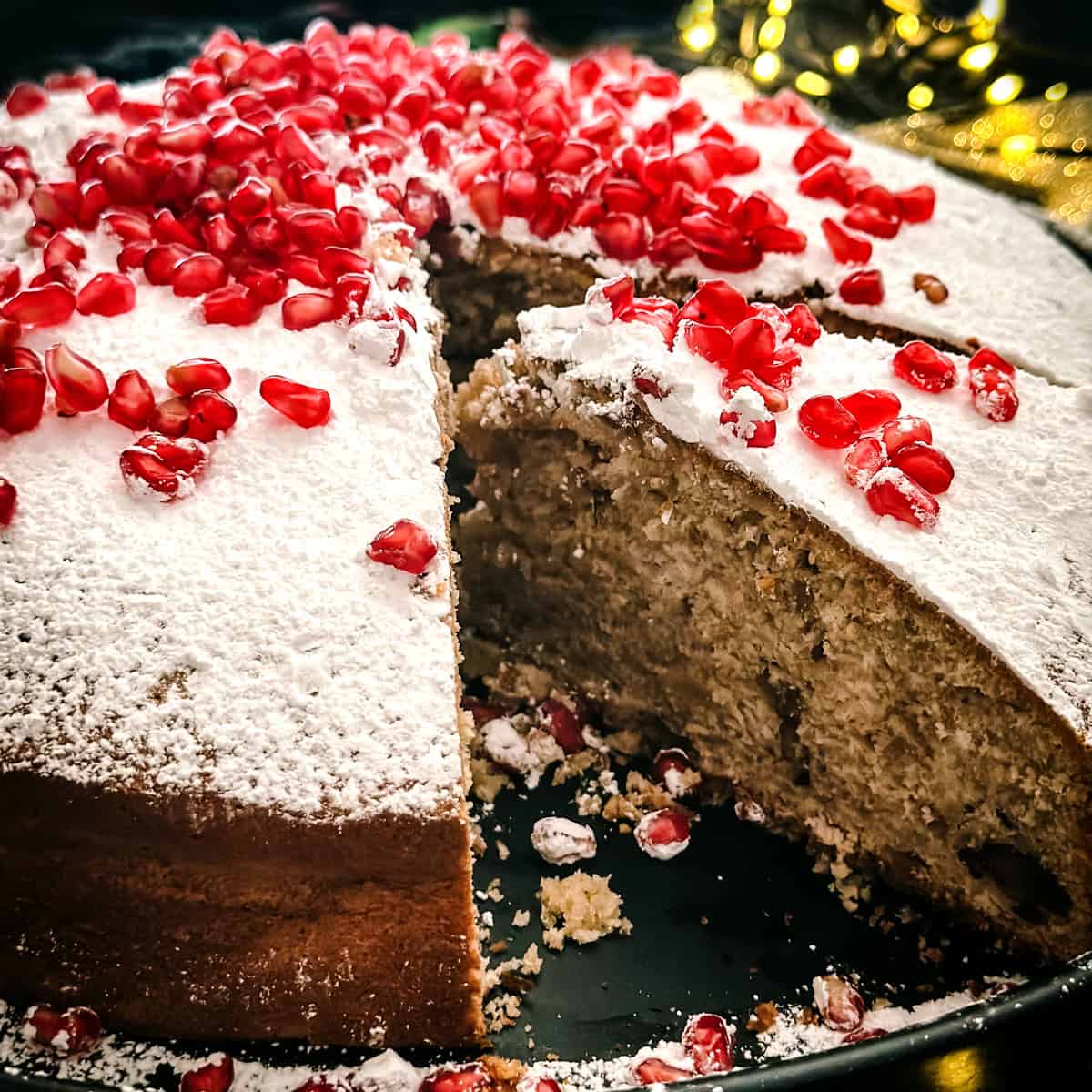
Vasilopita is the Greek New Year’s cake: soft, fluffy, scented with orange, cinnamon and a splash of brandy, and baked with a coin hidden inside. At midnight, or on New Year’s Day, the cake is cut and shared, and whoever finds the coin in their slice is lucky for the whole year.
In my family, my mom always made the vasilopita. And if we rang in the New Year somewhere else, at friends’ or family, it didn’t matter: the next morning, back home, we’d gather around the table and cut our own. The new year didn’t really start until we did.
Every Greek family has its own version. Some make it as a sweet yeasted bread, some with olive oil or yogurt. This is my butter version: light, tender and fragrant, with crushed walnuts in the crumb.
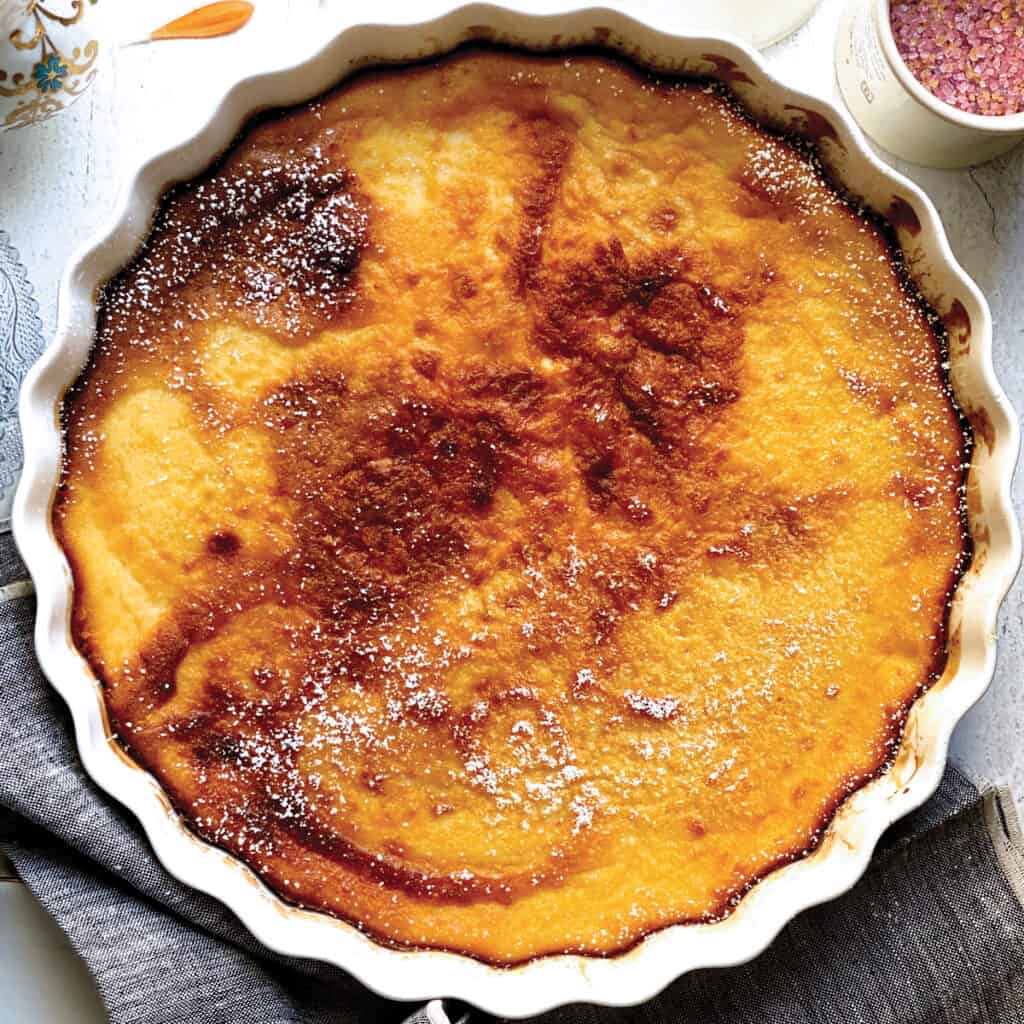
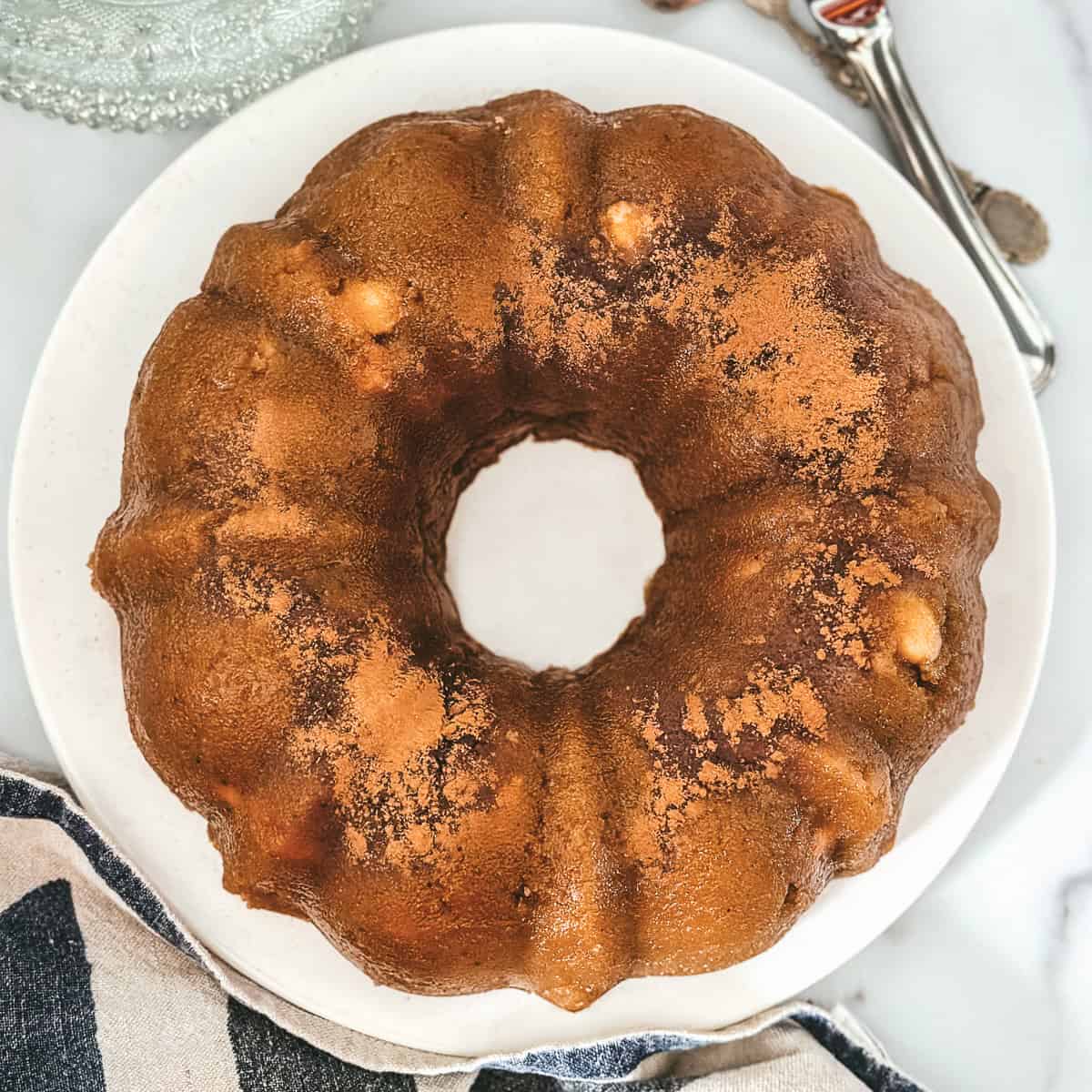
If you love this vasilopita, you’ll also love my Karidopita – Greek Walnut Cake, Portokalopita – Greek Orange Phyllo Cake and Galatopita (Greek Milk Pie). For the whole holiday table, see my Greek Christmas Food guide.
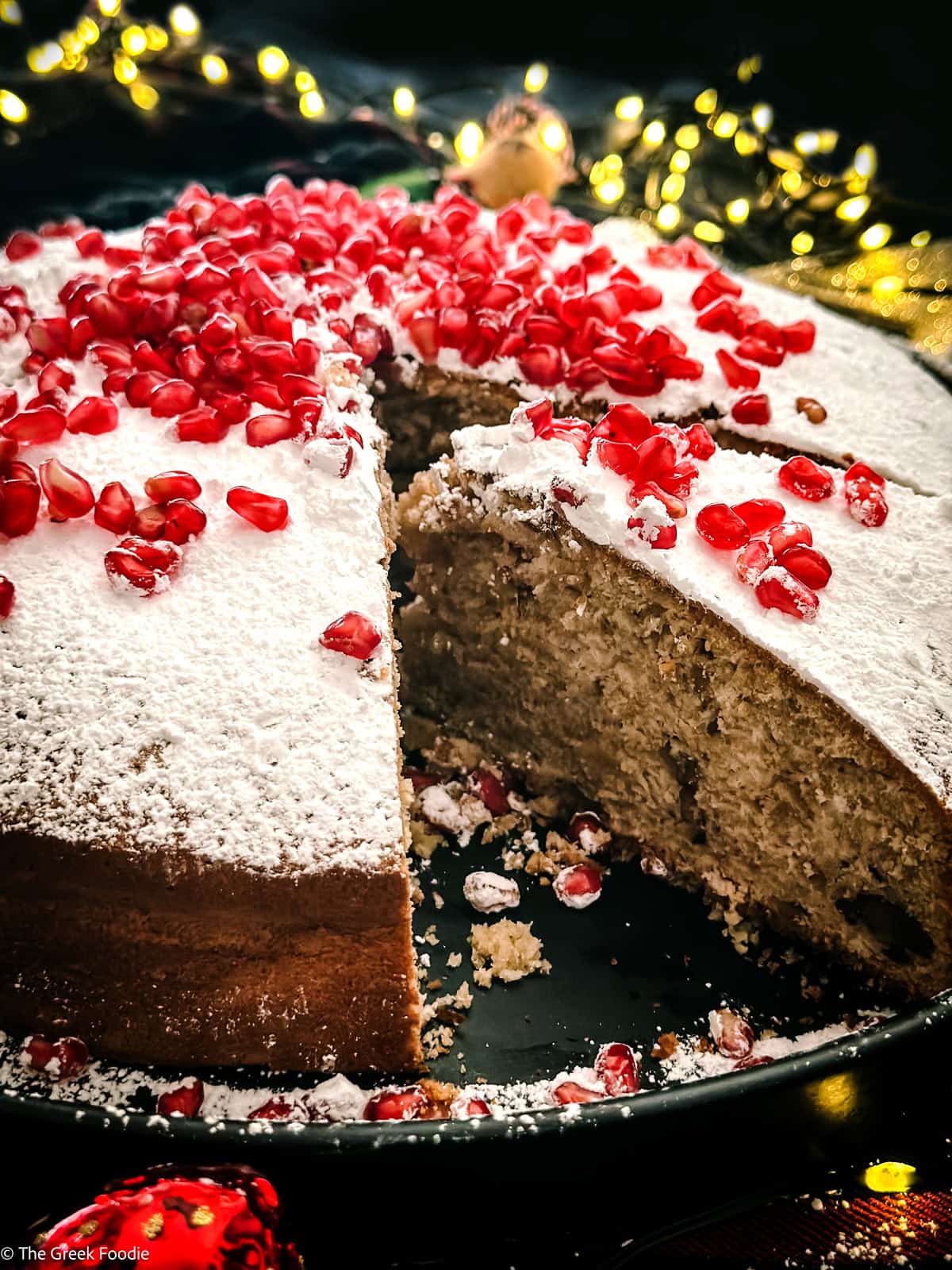
More than a cake: The heartbeat of Greek New Year’s
This isn’t just dessert; it’s a living tradition that bridges generations and stitches meaning into every bite. In Greece, people bake and share Vasilopita at midnight on New Year’s Eve or on New Year’s Day to honor Agios Vasilios (Saint Basil the Great), a fourth-century bishop known for his generosity and devotion.
Slicing a vasilopita cake is a ritual:
- A cross is etched on the top before cutting to bless the home for the year ahead.
- Each slice is portioned not only to family members by age, but often to symbolic “guests” like the house, the poor, saints, and even the year itself.
The magic moment? Finding the hidden coin. That lucky person is said to enjoy good fortune, health, and blessings all year long, and sometimes even a small gift accompanies the coin as a fun modern twist.
In Greece, Saint Basil is also the one who brings children their presents. Greek kids wait for Agios Vasilis on New Year’s Eve, the way American kids wait for Santa on Christmas Eve.
What is vasilopita?
Vasilopita (βασιλόπιτα, pronounced va-see-LOH-pee-tah) means “Basil’s cake,” from Vasilios (Basil) and pita (cake or pie). It’s the cake Greeks bake to welcome the new year, always round and always with a coin inside. You’ll sometimes see it spelled vassilopita.
What goes into it depends on where in Greece you are. In Athens and much of the mainland it’s a fluffy, cake-like vasilopita, like this one. Other families make it as a sweet yeasted bread, close to tsoureki bread. In parts of Macedonia it’s even a savory phyllo pie with cheese. The coin is the one thing they all share.
Why you will love Vasilopita
The story of Saint Basil and the coin
Saint Basil was bishop of Caesarea in Cappadocia in the fourth century. The same city gave its name to my Kaisareia pie with pastirma. The best-known legend says the city was forced to pay a heavy tax, and the people handed over their coins and jewelry. When the tax was lifted, Basil had no way of knowing what belonged to whom. So he had the valuables baked into loaves of bread and handed them out to the townspeople. Miraculously, everyone got back exactly what was theirs.
That’s the coin in every vasilopita today. In Greek, it’s called the flouri.
How to cut vasilopita
Cutting the vasilopita is a little ceremony, and every family does it a bit differently. Here’s how it usually goes:
- Bless the cake. The head of the household makes the sign of the cross over the cake with the knife, usually three times.
- The first slices are symbolic. The first is for Christ, the next for the Virgin Mary or Saint Basil, then one for the house. Many families also cut one for the poor, and some for the year itself or for absent loved ones.
- Then the family, oldest to youngest. Each slice is named as it’s cut.
- Find the flouri. Whoever gets the coin is lucky all year. If it lands in the house’s slice, the whole household shares the luck.
Vasilopita isn’t only cut at home. In Greece, businesses cut one when the office opens after the holidays, and schools, clubs and associations cut theirs all through January. Whoever finds the coin often wins a small prize.
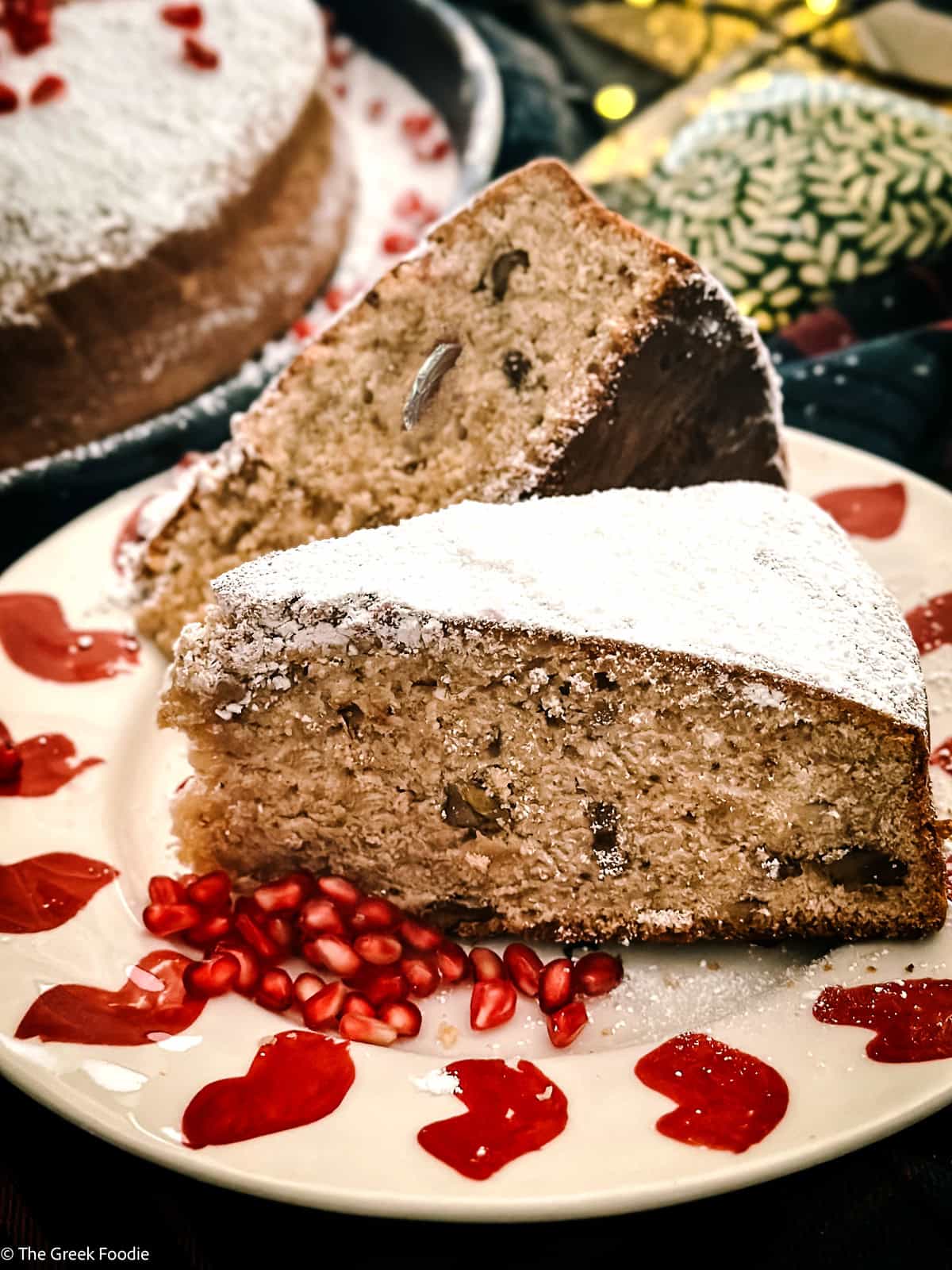
Where “Vasilopita” Comes From
The name Vasilopita literally translates to “Basil’s bread/cake” — from Vasilios (Basil) and pita (cake or pie). It’s tightly woven into Greek Orthodox holiday rhythms and, whether it’s a sweet cake or a bread-style version, it holds the same intent: luck, community, and grace for the year ahead.
Vasilopita ingredients
- All-purpose flour, spooned and leveled.
- Baking powder and baking soda. The baking soda goes into the orange juice, where it fizzes up and helps the cake rise.
- Butter, at room temperature.
- Granulated sugar, plus powdered sugar for the top.
- Ground cinnamon and clove.
- Oranges. You need the zest of one and ½ cup of fresh juice, about 2 oranges in all.
- Eggs, at room temperature, separated.
- Milk.
- Vanilla extract.
- Brandy, or dark rum.
- Crushed walnuts.
- A coin, washed and wrapped tightly in foil.
Step by step

STEP 1: Prep. Preheat the oven to 340°F / 170°C and place a rack in the lowest position. Butter an 11-inch (28 cm) springform or loose-bottom pan and line it with parchment. Whisk the flour, baking powder, and salt in a bowl.
Beat the butter and sugar on high for a few minutes, until pale and creamy. Add the orange zest, cinnamon, clove, and vanilla and beat to combine.

STEP 2. Add the yolks one at a time, letting each one mix in before adding the next.

STEP 3. Whip the egg whites in a clean bowl on medium speed until tripled in volume, white, with soft peaks.

STEP 4. Finish the batter. Stir the baking soda into the orange juice (it will foam) and add it to the batter on low speed. Add the flour mixture in parts, alternating with the milk and brandy, starting and ending with flour. Mix in the walnuts. Then fold in the whites by hand, one heaping spoonful at a time. Be gentle and don’t rush.

STEP 5. Add the coin. Drop the foil-wrapped coin into the batter.

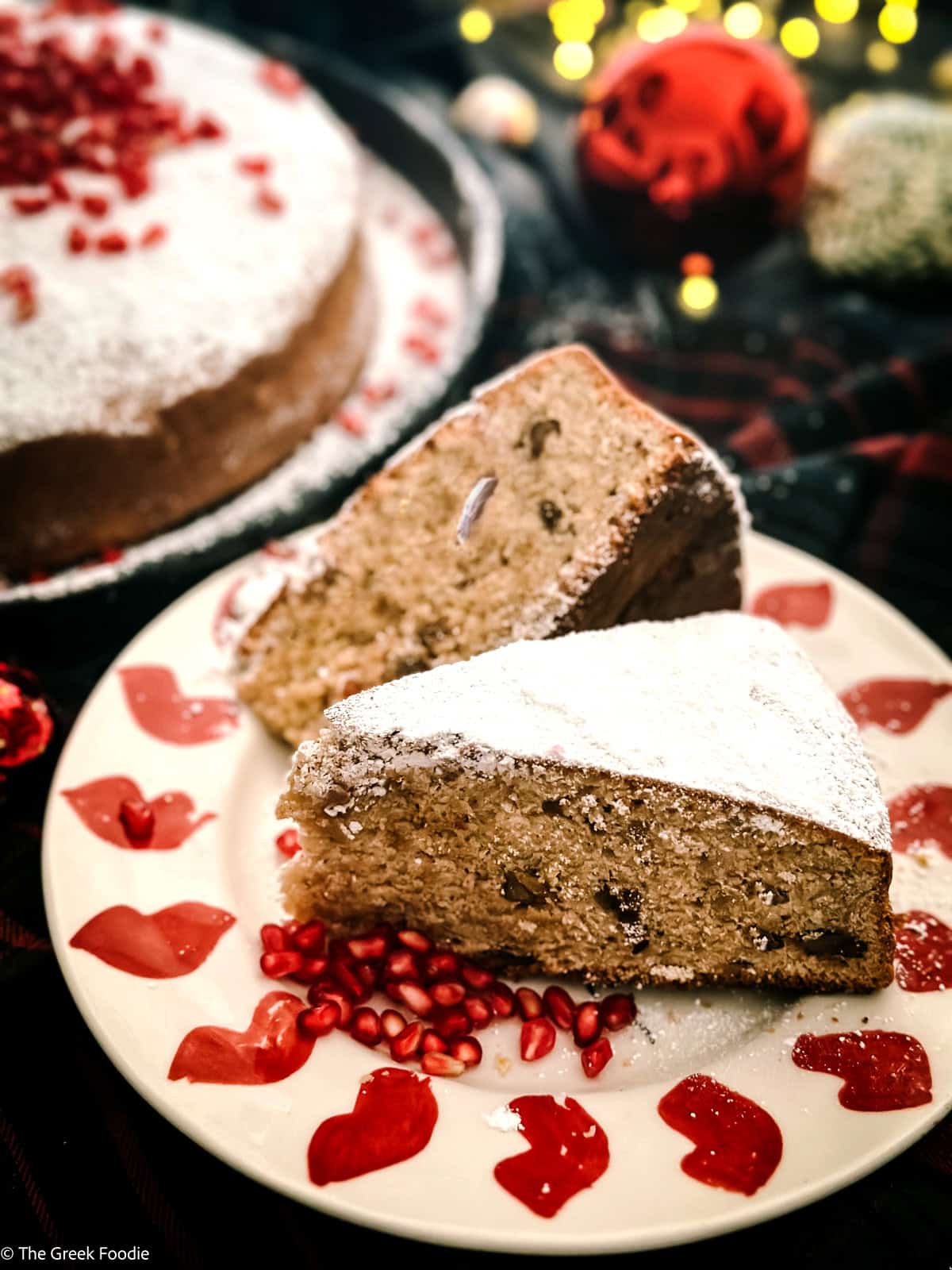
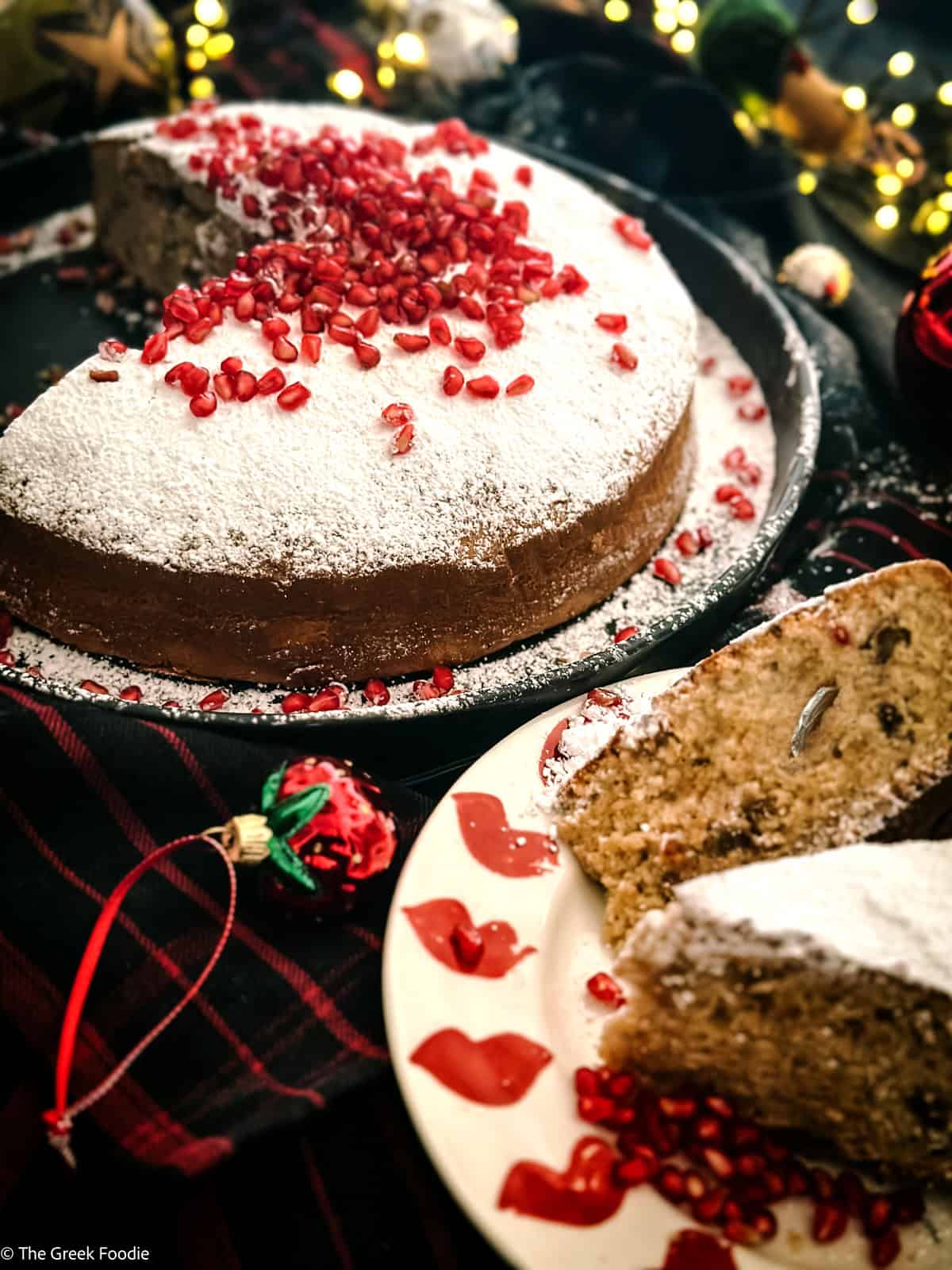
STEP 6. Bake. Pour the batter into the pan and bake for 50–60 minutes, until golden and a tester comes out clean. Cool for 15 minutes, then unmold onto a platter. When completely cool, dust with powdered sugar and decorate.
Tips for the fluffiest vasilopita
- Coin tradition: Wrap the coin tightly in foil before placing it in the batter so it’s safe and easy to find.
- Flavor boost: Add a splash of brandy or cognac for a richer aroma.
- Texture secrets: Use room-temperature butter and eggs for the fluffiest crumb.
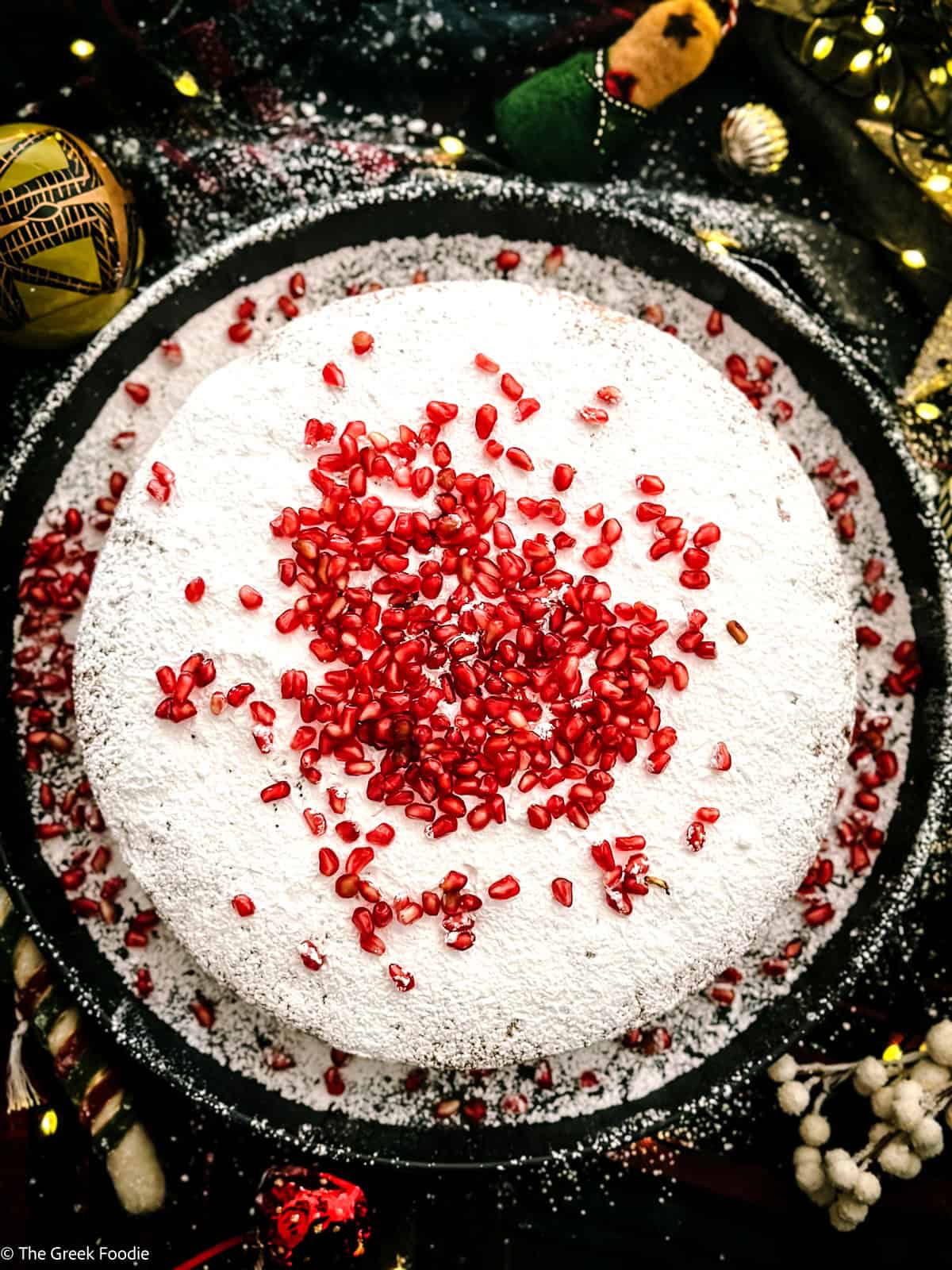
- Presentation: Dust generously with powdered sugar, and decorate with the year using almonds or a stencil.
- Fold the whites in gently. They’re what makes vasilopita light. Stir too hard and the cake turns dense.
- Don’t open the oven for the first 40 minutes, or the cake can sink.
- Write the year on top. Lay a number stencil on the cooled cake and dust powdered sugar over it, or arrange walnuts or almonds into the year.
A note on the coin: let everyone know there’s a coin in the cake before you serve it, and keep an eye on small children. The foil makes the coin easy to spot.
How to store vasilopita
- Room temperature: covered, up to 3 days.
- Fridge: in an airtight container, up to 5 days. Let slices come to room temperature before serving.
- Freezer: wrap slices individually, without the powdered sugar, and freeze for up to 2 months. Thaw at room temperature and dust with sugar before serving.
- Make ahead: bake it the day before, wrap it well once cool, and decorate just before serving.
Serving suggestions
- Serve slices with an espresso, warm rakomelo drink, Greek traditional coffee, or hot mountain tea after the midnight toast.
- Pair with a glass of sparkling wine or champagne for a festive touch.
- Offer alongside other Greek holiday treats like kourabiedes Christmas butter cookies and melomakarona honey cookies.

FAQ
More Greek cakes & desserts

Cooked it? Rate it!
If you tried this recipe, I’d love to know how you liked it — drop a comment below or tag me on Instagram @thegreekfoodie__.



Vasilopita (Greek New Year’s Cake)
Equipment
- 11-inch (28 cm) springform or loose-bottom cake pan
- stand mixer or hand held mixer
- 2 mixer bowls
Ingredients
- 4 cups all-purpose flour, spooned and leveled, 500 g
- 1 tablespoon baking powder
- 1 cup plus 2 tablespoons unsalted butter, 250 g, softened, plus more for the pan
- 2 cups granulated sugar, 400 g
- 1 teaspoon ground cinnamon
- ½ teaspoon ground clove
- zest of 1 orange
- 5 large eggs, at room temperature, separated
- ½ cup milk, 120 ml
- ¼ teaspoon fine sea salt
- ½ cup fresh orange juice, 120 ml
- 1 teaspoon vanilla extract
- ½ teaspoon baking soda
- ⅓ cup brandy or dark rum, 80 ml
- ⅔ cup walnuts, crushed, 75 g
- powdered sugar, for decorating
- 1 coin, washed and wrapped tightly in foil
Instructions
- Preheat the oven to 340°F / 170°C, with a rack in the lowest position. Butter an 11-inch (28 cm) springform or loose-bottom pan and line it with parchment.
- Whisk the flour, baking powder and salt in a bowl. Set aside.
- In a stand mixer with the whisk attachment, beat the butter and sugar on high for 3–4 minutes, until pale and creamy. Add the orange zest, cinnamon, clove and vanilla and beat to combine.
- Add the egg yolks one at a time, letting each one mix in before adding the next.
- In a separate clean bowl, whip the egg whites on medium speed until tripled in volume, white, with soft peaks. Set aside.
- Stir the baking soda into the orange juice; it will foam. With the mixer on low, add it to the batter.
- Add the flour mixture in parts, alternating with the milk and brandy: flour, milk, flour, brandy, then the rest of the flour.
- Mix in the walnuts on low speed.
- Remove the bowl from the mixer. Fold in the egg whites by hand, one heaping spoonful at a time. Be gentle and don’t rush.
- Drop the foil-wrapped coin into the batter and pour the batter into the pan.
- Bake for 50–60 minutes, until golden and a tester inserted in the center comes out clean.
- Cool in the pan for 15 minutes, then unmold, peel off the parchment and set the cake on a platter. Let it cool completely.
- Dust with powdered sugar and decorate as you like. Cut at midnight on New Year’s Eve or on New Year’s Day. Whoever finds the coin is lucky all year!
Notes
- Lay number stencils on the cooled cake and dust powdered sugar over them to write the year.
- Or decorate with pomegranate seeds, walnuts, and candied orange or ginger slices.
Nutrition



This Greek New Year’s Eve cake is outstanding. It’s apparent the ingredients have been carefully selected. As a result the cake has nuance. The end result for me was a happy palate and a smile. Loved it!.
Thank you so much Darly! x J