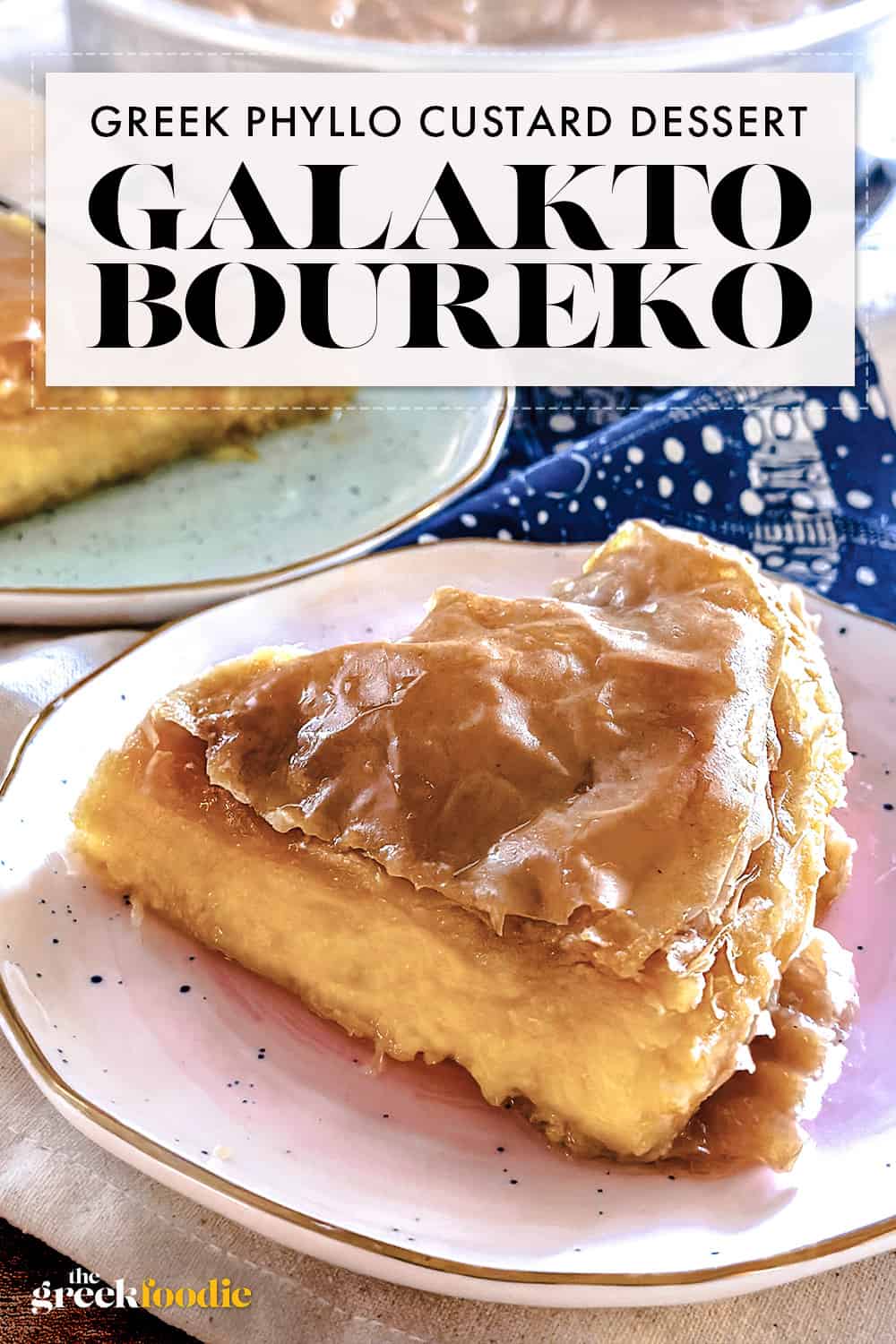

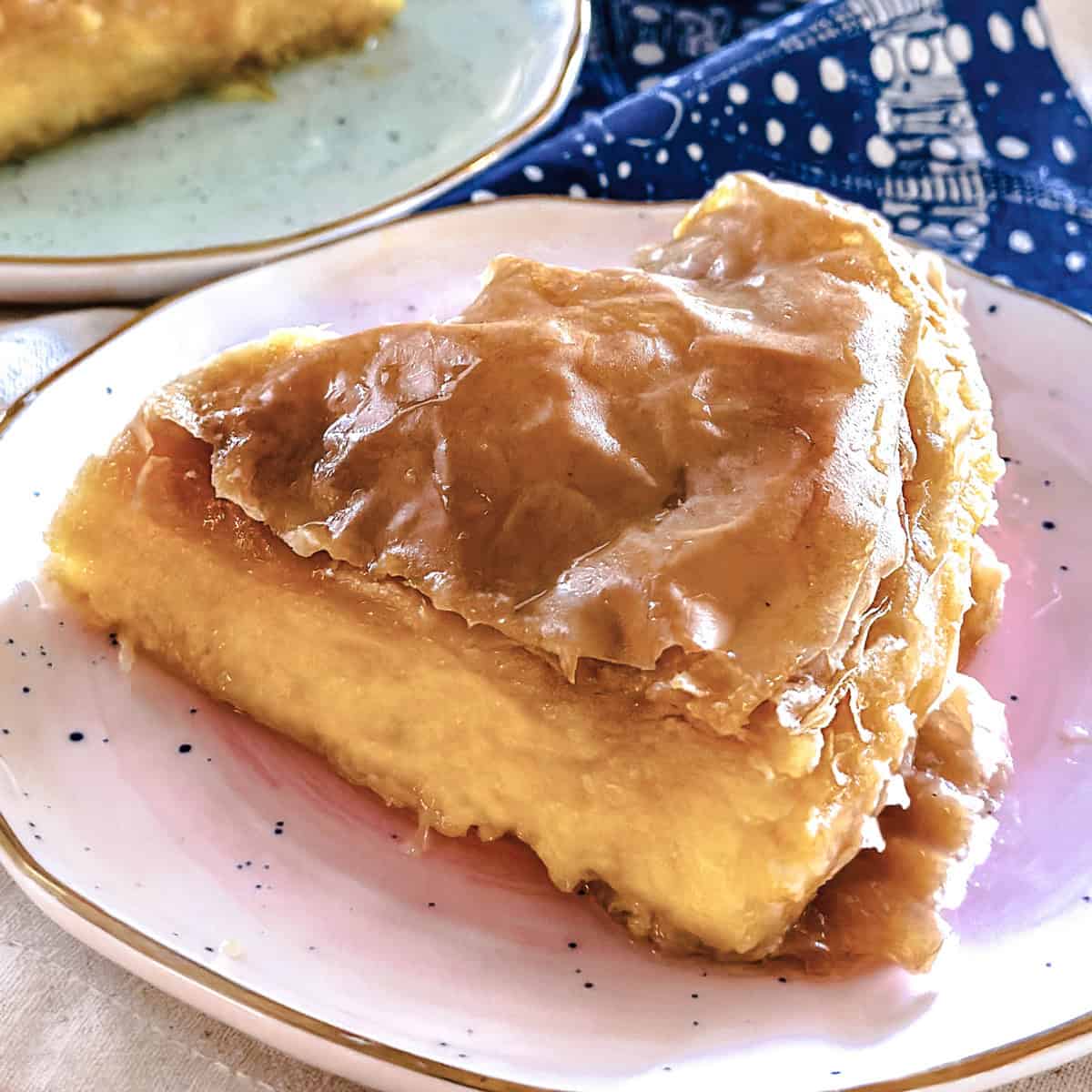
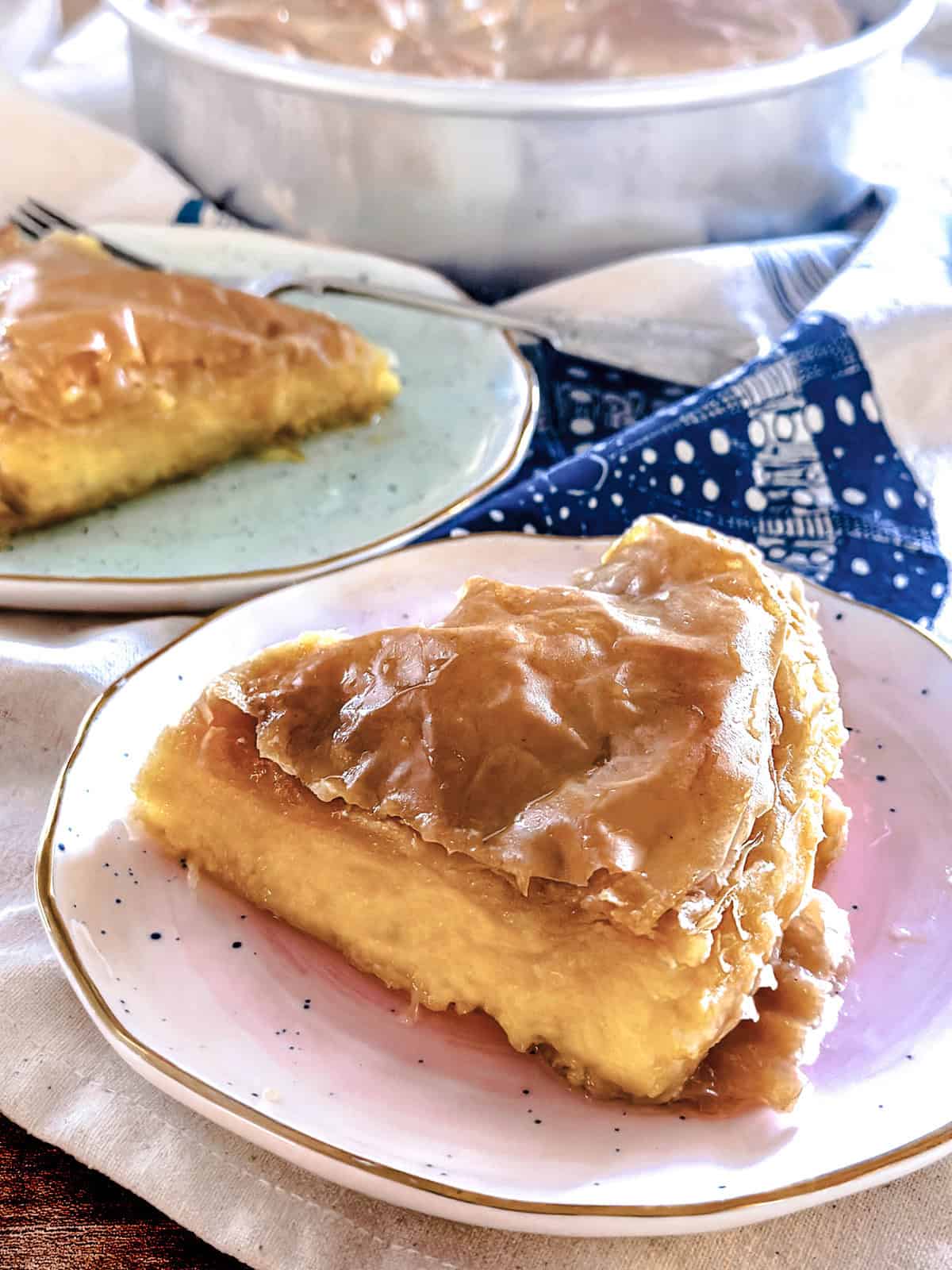
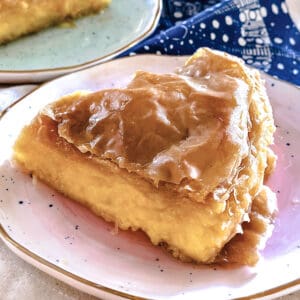
Galaktoboureko is one of those Greek desserts that stops you mid-bite. Layers of crisp, butter-soaked phyllo wrapped around a silky custard cream, drenched in cool lemony syrup the moment it comes out of the oven. Galaktoboureko is rich, aromatic, and deeply satisfying in that particular way that only Greek pastry can be.
This recipe comes from Stelios Parliaros, one of Greece’s most celebrated pastry chefs and the country’s undisputed authority on Greek sweets. His galaktoboureko has no semolina in the filling but is a classic crème pâtissière — egg yolks, cornstarch, whole milk, and heavy cream — thickened into a custard that is genuinely smooth, rich, and light all at once. It is a small departure from tradition but once you try it, I think you will understand why.
If you love Galaktoboureko, you will also love this Pistachio Baklava, Portokalopita – Greek Orange Phyllo Cake, or Bougatsa Chaniotiki-Cheese Phyllo Pastry from Chania!
Why you will love this galaktoboureko
Ingredient notes
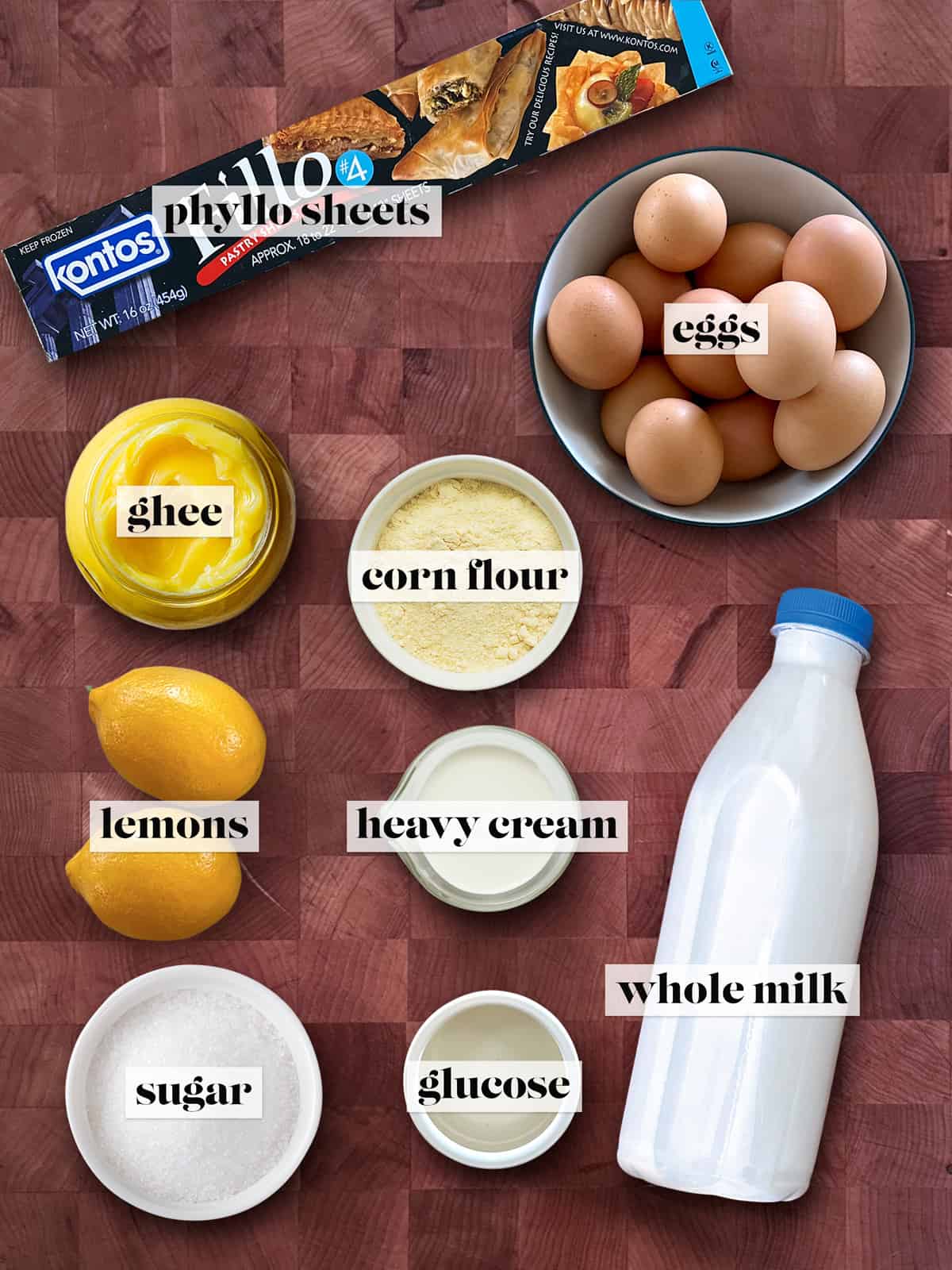
For the custard
Whole milk + heavy cream. The combination is key to Parliaros’s crème pâtissière approach. The cream adds richness and body; the milk keeps it light enough to pour over the phyllo before baking. Do not substitute low-fat milk — the texture will suffer.
Egg yolks. Ten yolks. This is a serious pastry cream and it shows. The yolks give the custard its golden color, its richness, and its silky structure. Save the whites for meringues or Greek almond cookies.
Cornstarch (corn flour). This is the thickener. It gives the custard a smoother, more delicate texture than semolina would, which is exactly the point of this recipe. Measure by weight for accuracy.
Sugar. Split between the custard and added to the warm milk separately — this technique helps the custard come together without lumps.
Lemon zest. Just one lemon, but it matters. It perfumes the custard with a brightness that cuts through the richness. Use an unwaxed lemon if you can find one, or scrub the skin well.
For the phyllo
Phyllo sheets. Look for thin phyllo (sometimes labeled “phyllo #4” or “baklava-style”) rather than the thicker country-style sheets. Athens or Fillo Factory brands are widely available in US grocery stores. Keep phyllo covered with a slightly damp kitchen towel at all times — it dries out fast.
Clarified butter/ghee. Parliaros calls for clarified butter in the original. You have two options: make your own (see note below) or use store-bought ghee, which is essentially the same thing. Ghee is sold at most grocery stores, Trader Joe’s, and Indian markets and is usually more economical. Either works beautifully here — both give you the pure, concentrated butterfat that makes the phyllo crisp and golden without burning.
To clarify your own butter: melt 350g (12 oz) of unsalted butter in a small saucepan over low heat. Let it simmer gently — do not stir. A white foam will rise to the top; skim it off. The milky solids will settle at the bottom. Carefully pour the clear golden liquid through a fine-mesh strainer lined with cheesecloth, leaving the solids behind. You’ll have approximately 250g (9 oz) of clarified butter.
For the syrup
Sugar + water. The base of a classic Greek syrup. The ratio here (500g sugar to 300g water) makes a medium syrup — not too thick, not too thin — that soaks evenly into the phyllo without making it soggy.
Glucose syrup. This is the secret weapon. Glucose prevents the syrup from crystallizing as it cools, keeping it clear and fluid so it absorbs evenly into the pastry. Find it at specialty baking stores, online (Amazon), or at cake decorating supply shops. Corn syrup can substitute in a pinch, though the flavor is slightly different.
Lemon peel. A few wide strips from one lemon, added to the syrup while it boils. Remove before using. This is what gives the syrup its aromatic lift.
The hot-cold rule. Hot pastry + cold syrup = crispy phyllo. This is non-negotiable in Greek syrup pastries. Make the syrup first so it has plenty of time to cool completely before the galaktoboureko comes out of the oven.
Step by step
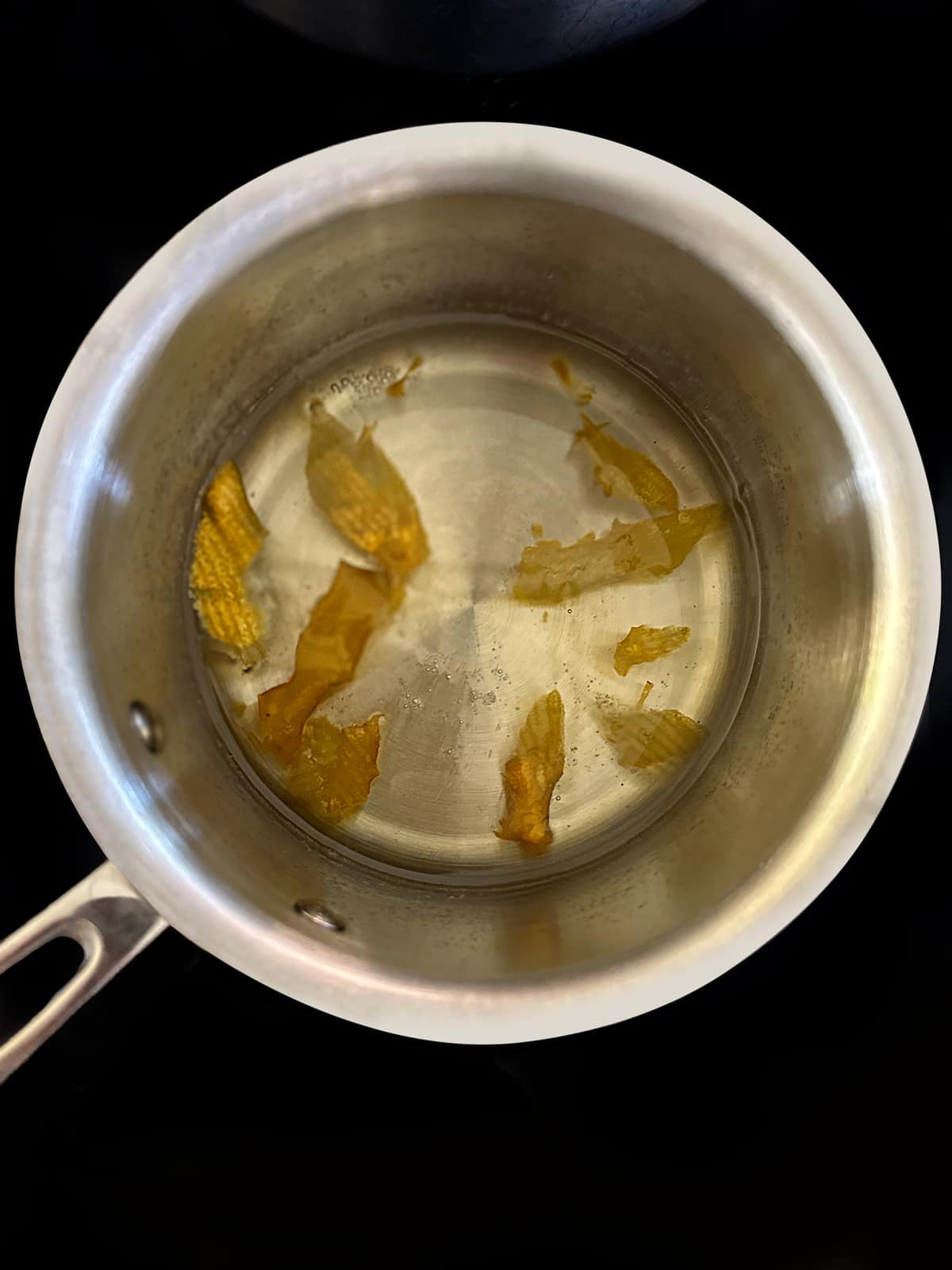
STEP 1. Make the syrup. Add all the syrup ingredients to a medium saucepan. Stir and bring to a boil. Let the syrup boil for 4 minutes.
Remove from heat and let it cool.
Preheat the oven to 160°C / 320°F
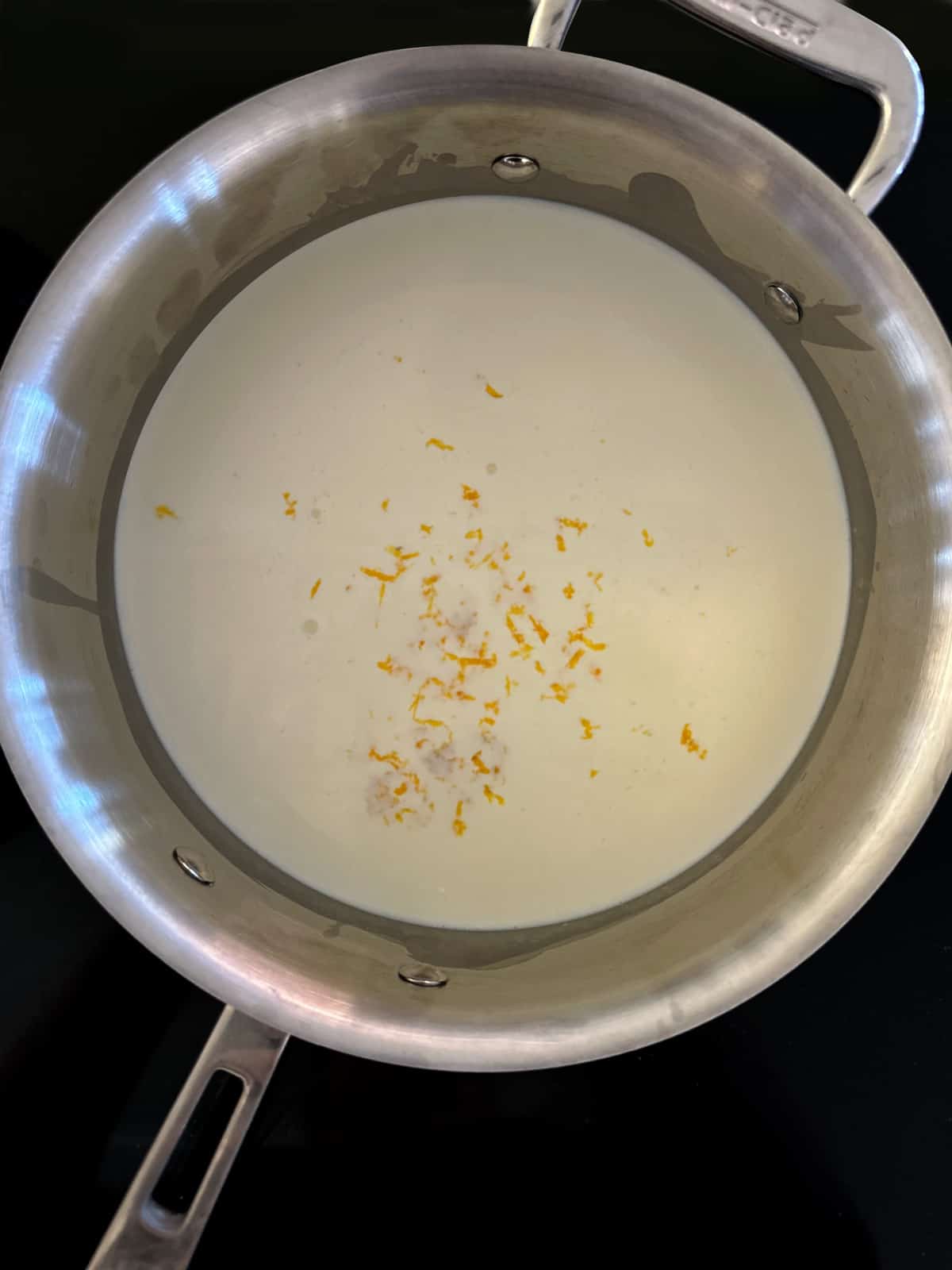
STEP 2. Make the custard. Put the milk, heavy cream, half the sugar, and the lemon zest in a saucepan and warm over medium heat.
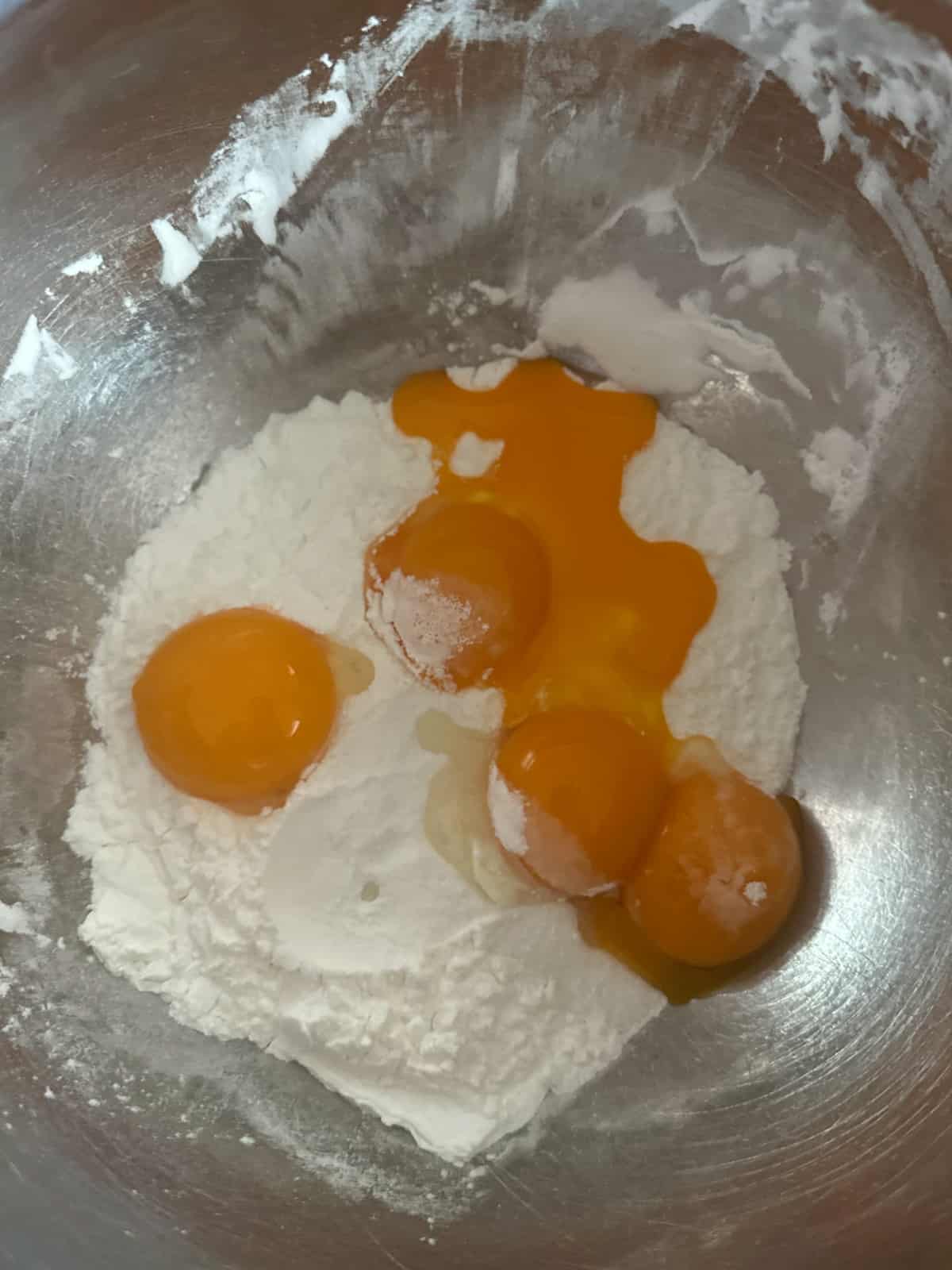
STEP 3. Using a whisk, mix the rest of the sugar with the corn flour and the egg yolks in a bowl.
Just before the milk comes to a boil, pour ⅓ into the egg mixture and mix.
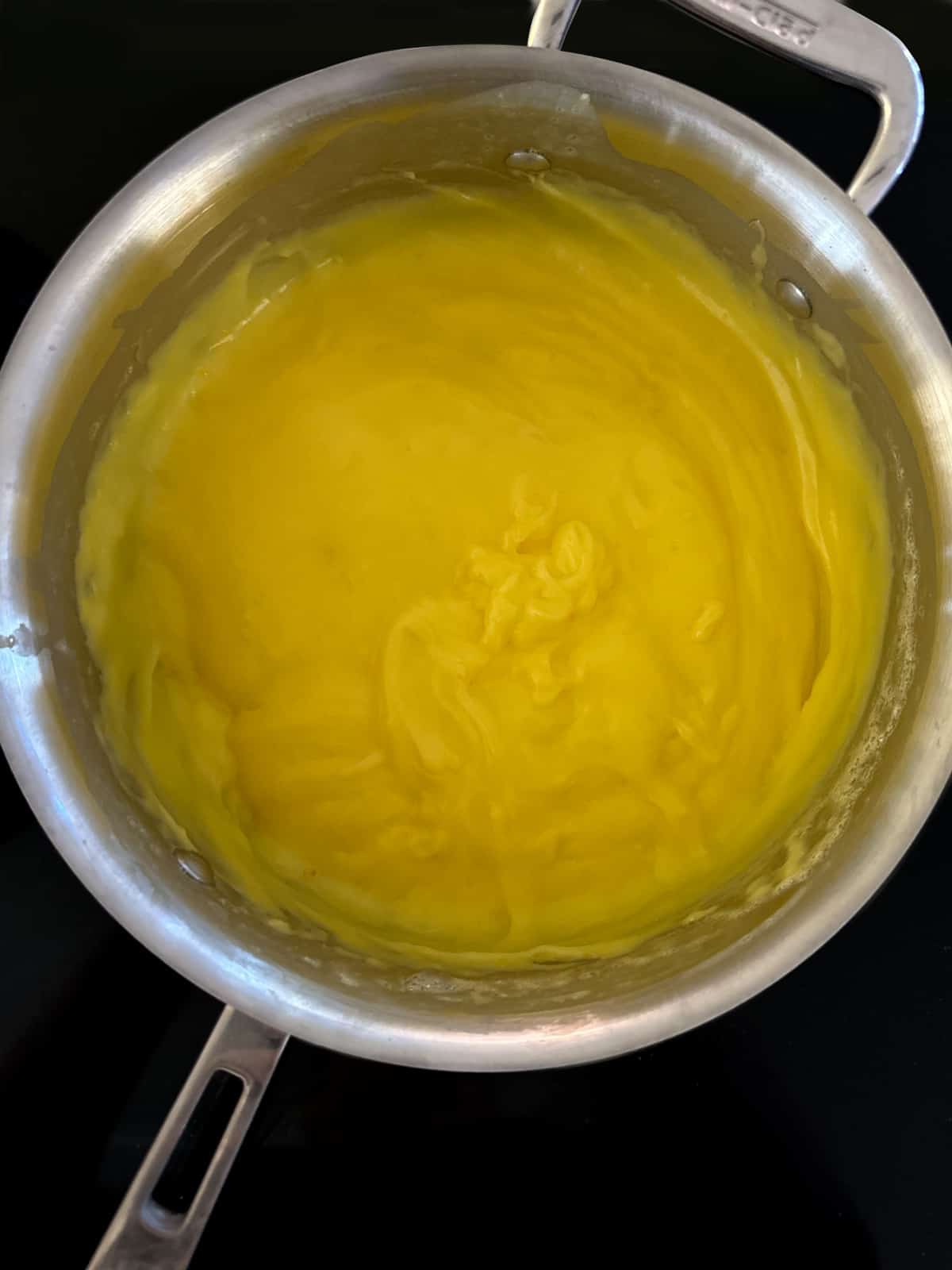
STEP 4. Pour the egg mixture into the pot with the rest of the milk. Continue mixing until the cream thickens and begins to curdle. Remove from heat and pour over the phyllo sheets.
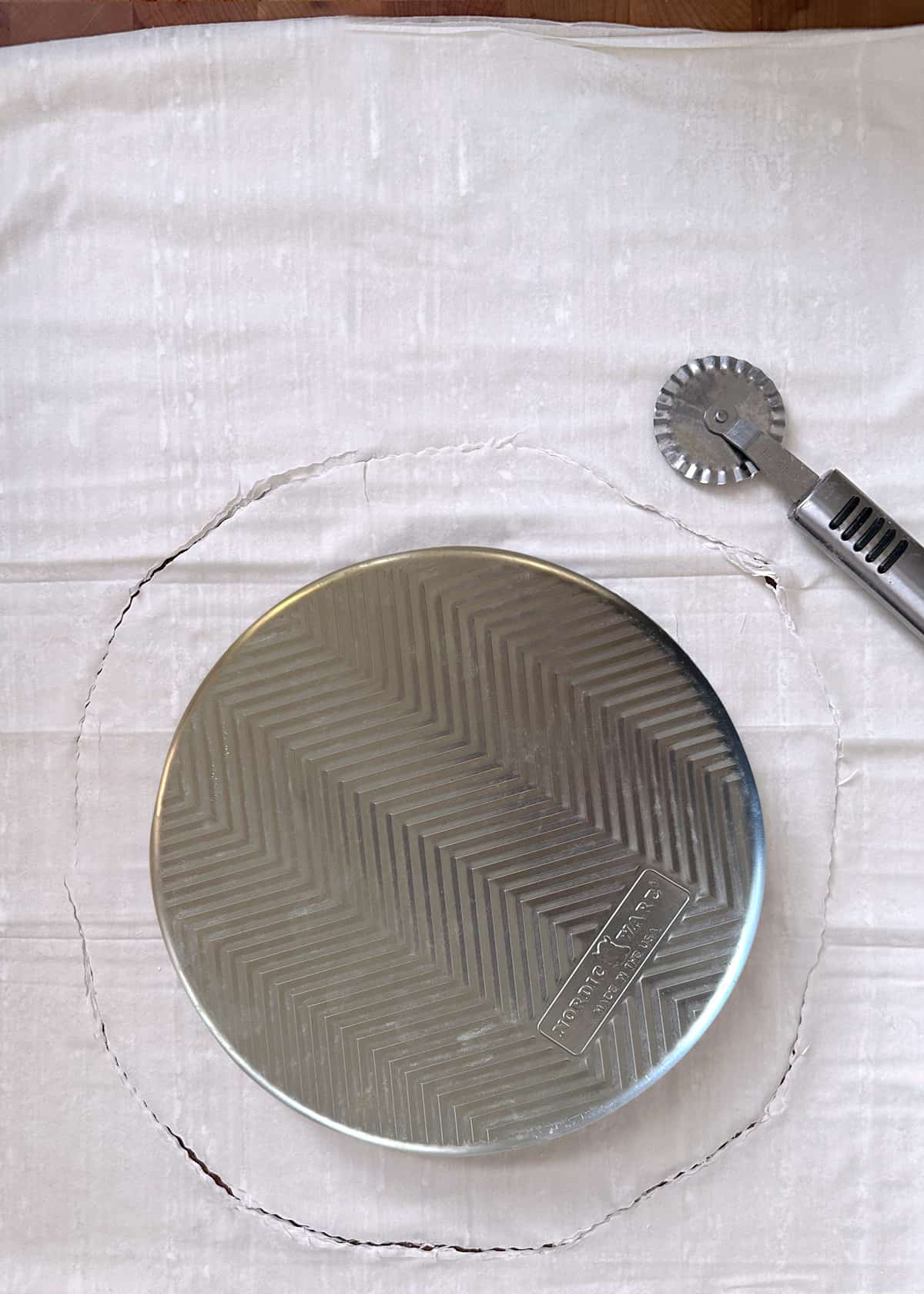
STEP 5. Prepare the phyllo sheets and baking pan.
- Melt the clarified butter in the microwave or on the stove.
- Brush butter in a 12-inch diameter round pan or a rectangular baking pan 28 x 32 cm (11 x 13 inch) — both hold approximately 5.4 liters / 5.7 quarts.
- Divide the phyllo sheets into two packs. Usually, there are twenty sheets per whole package. If quantity differs, just divide by two. Put one pack of ten aside, covered with the package’s protective plastic so it doesn’t dry out.
- Take the first ten sheets.
- Trace a circle about an inch wider than the diameter of your pan. Cut the sheets with the sharp tip of a knife into this circular shape. Cover sheets with a damp kitchen towel to keep them soft.
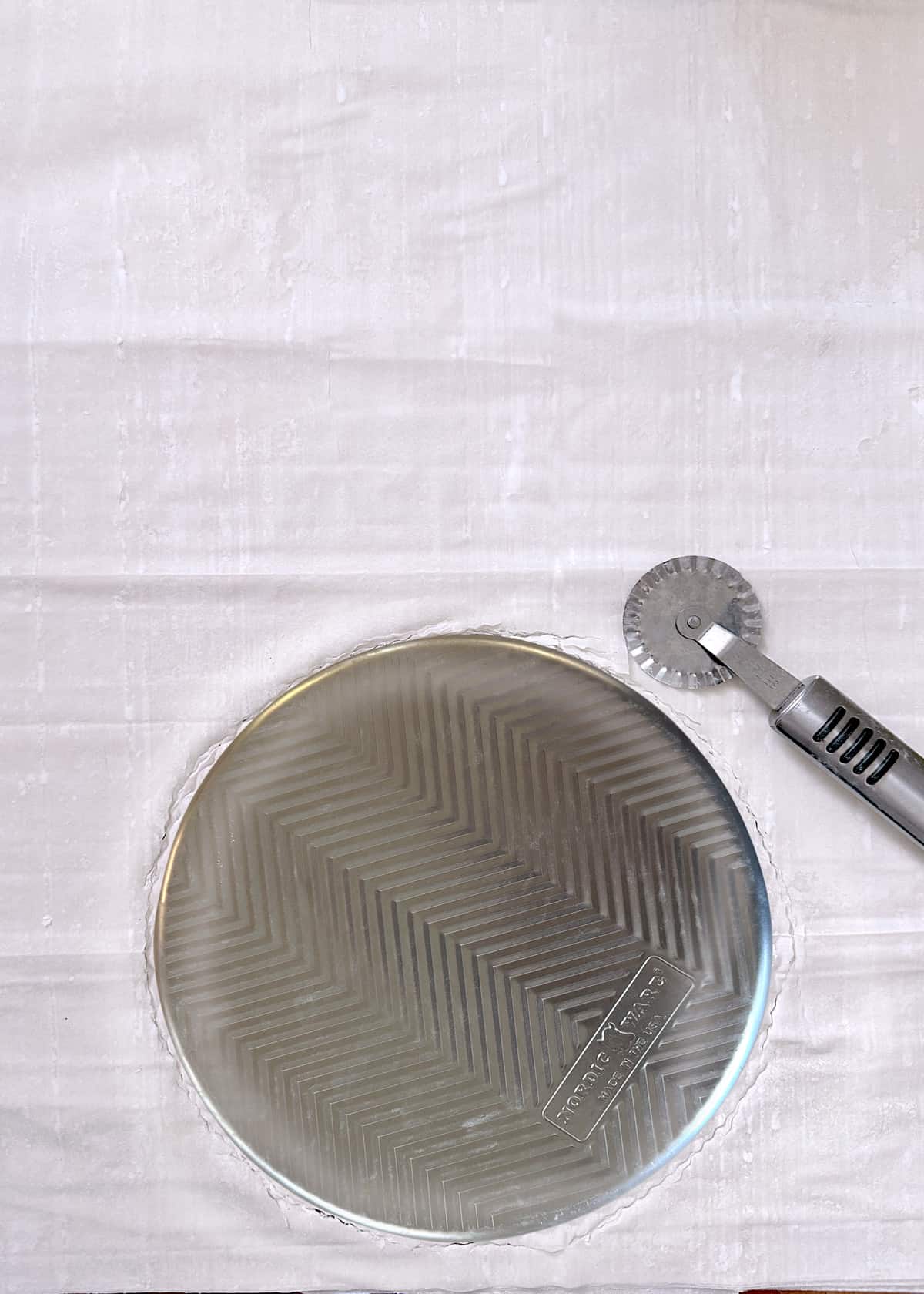
STEP 6. Take the other ten and trace a circle in exactly the diameter of your pan. Cut the sheets with the sharp tip of a knife into this circular shape. Cover the cut sheets with a damp kitchen towel to keep them soft.*
* You can save the extra pieces of phyllo sheets in the freezer wrapped in plastic to make a small batch of hand pies, cheese pies, etc.
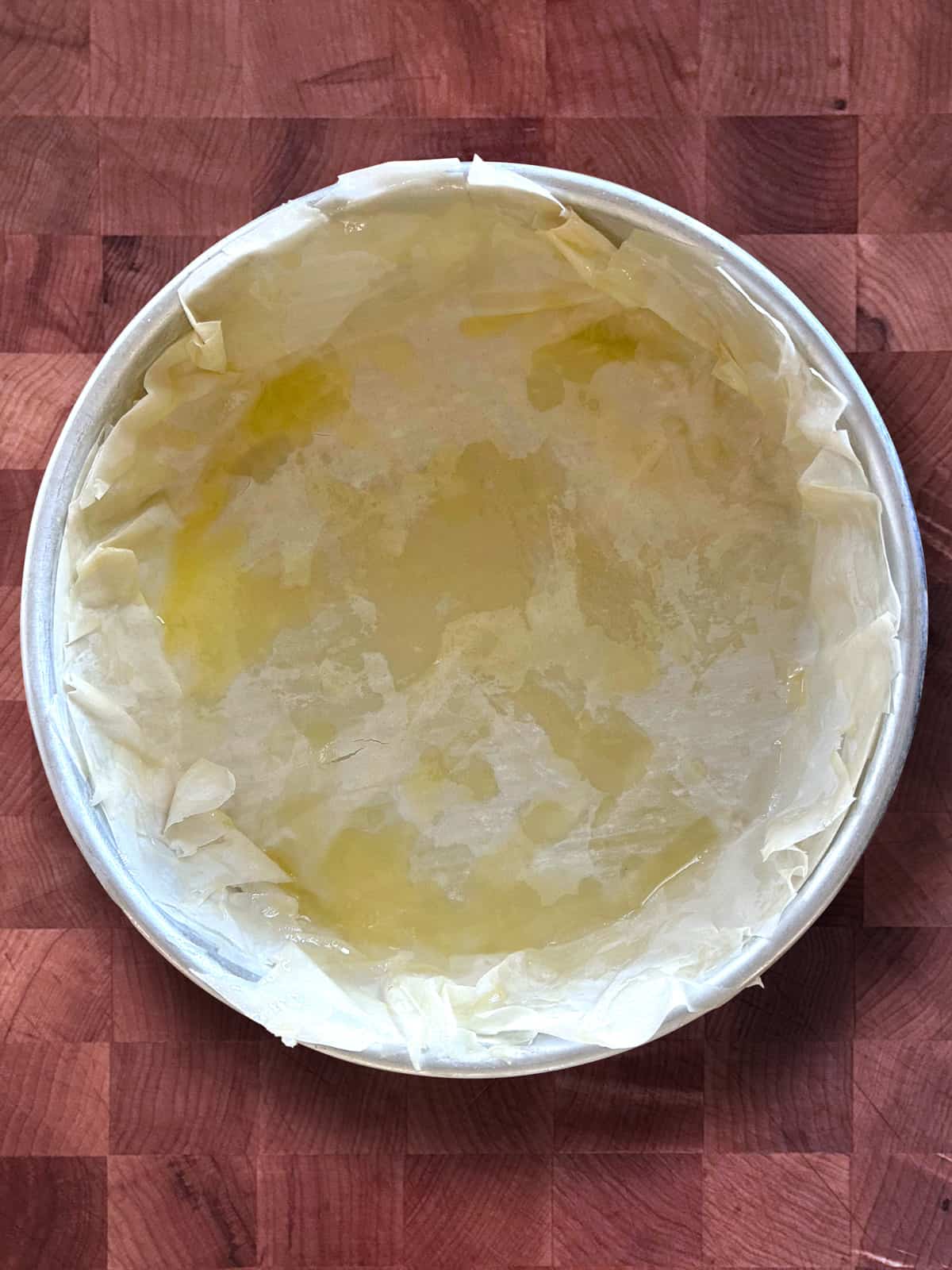
STEP 1. Starting with the larger phyllo sheets, brush each one with butter and layer them on top of each other at the bottom of the pan.
Build a wall with the extra phyllo on the wall of your pan—brush sheets with more ghee to help them stick together.
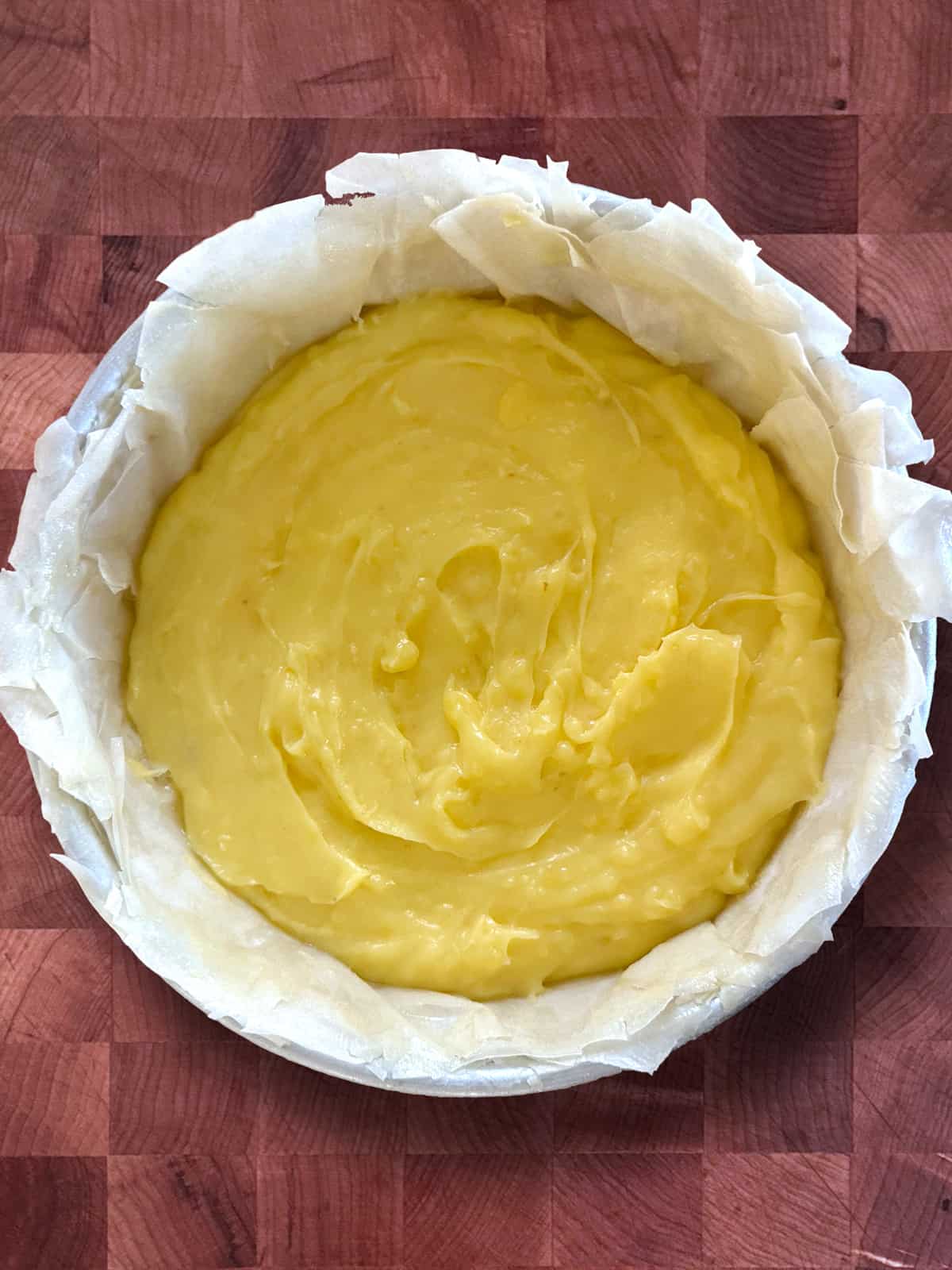
STEP 2. Pour the hot custard into the pan, and spread it evenly.
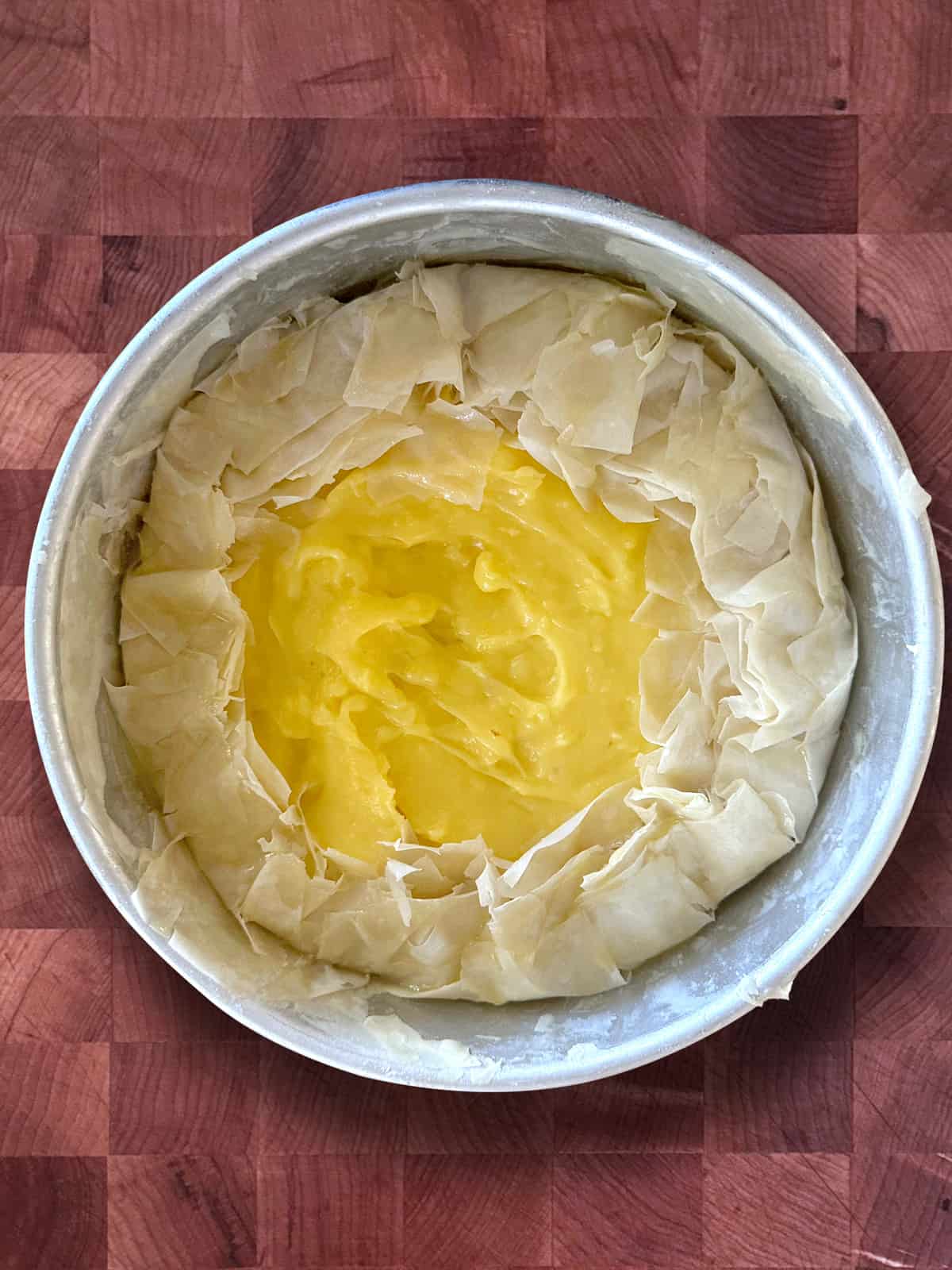
STEP 3. Fold the edges of the phyllo over the custard.
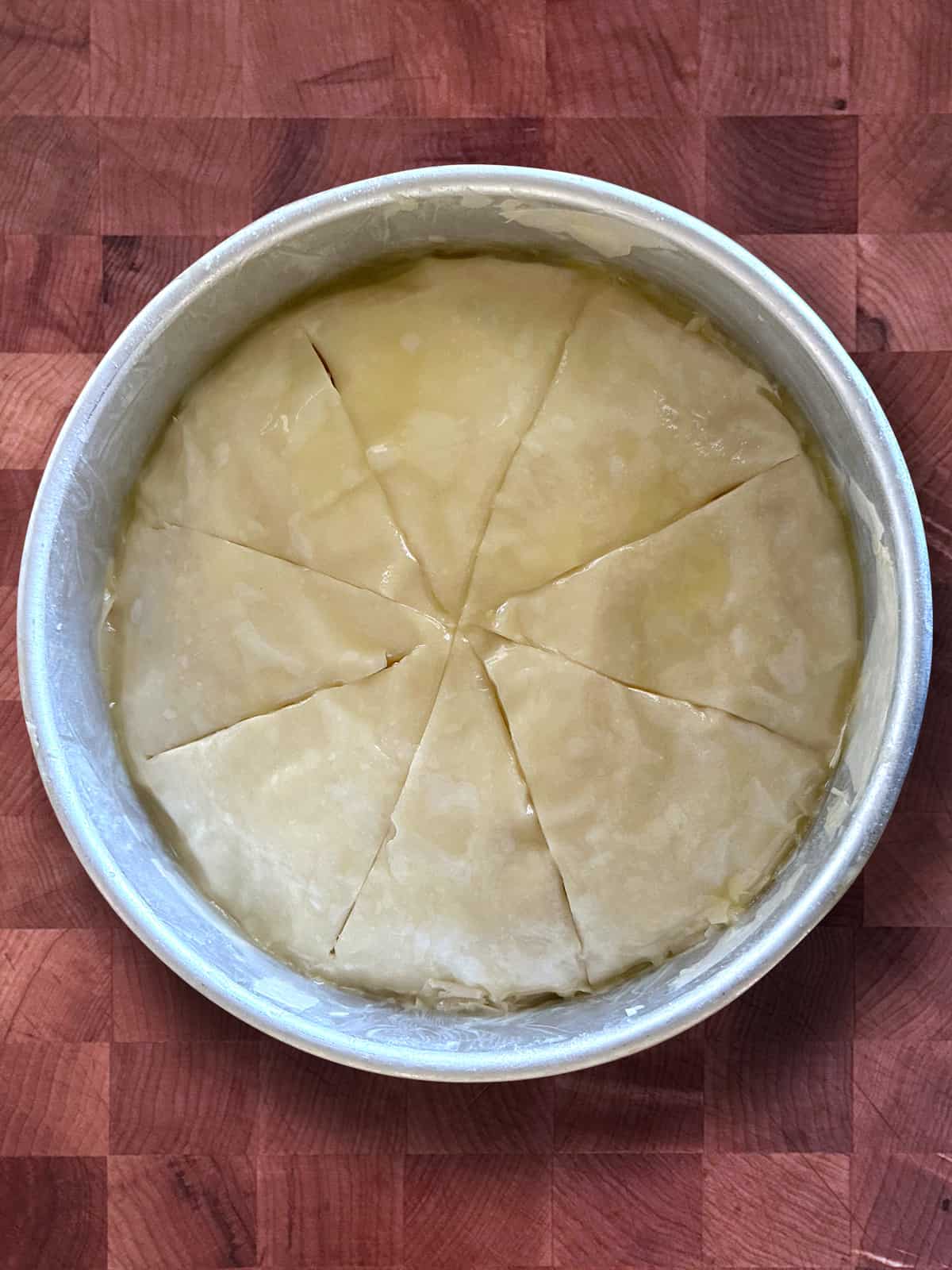
STEP 4. Take the smaller phyllo sheets, brush each one with butter, and layer them on top of the custard. Tuck the sides in all around the pan.
Lightly score the galaktoboureko into pieces (the knife should not reach all the way down). Bake for about 1 hour, until the top is golden brown.
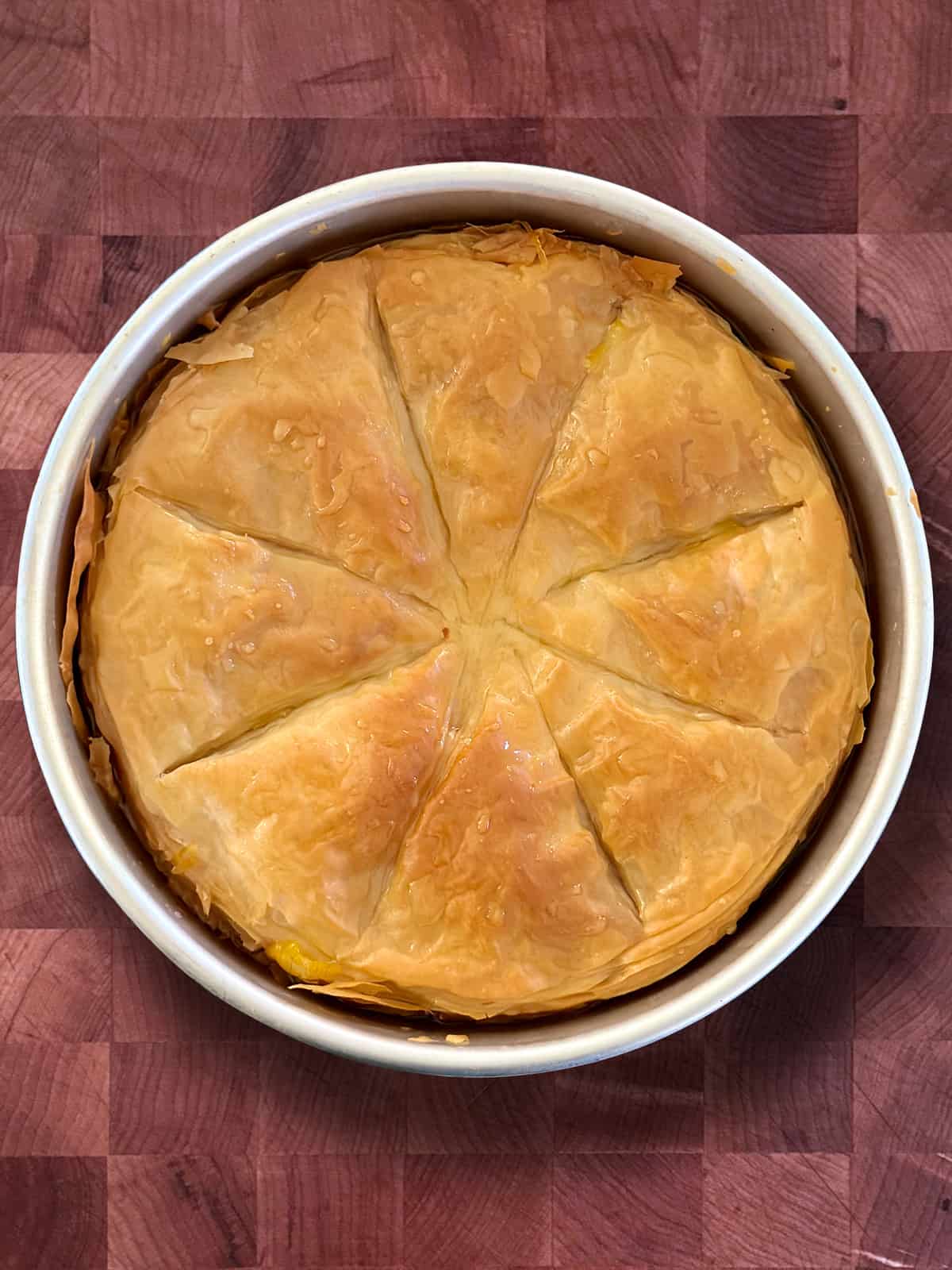
STEP 5. Take the galaktoboureko out of the oven and immediately pour the cold syrup all over the phyllo sheets with a ladle. Allow the syrup be fully absorbed.
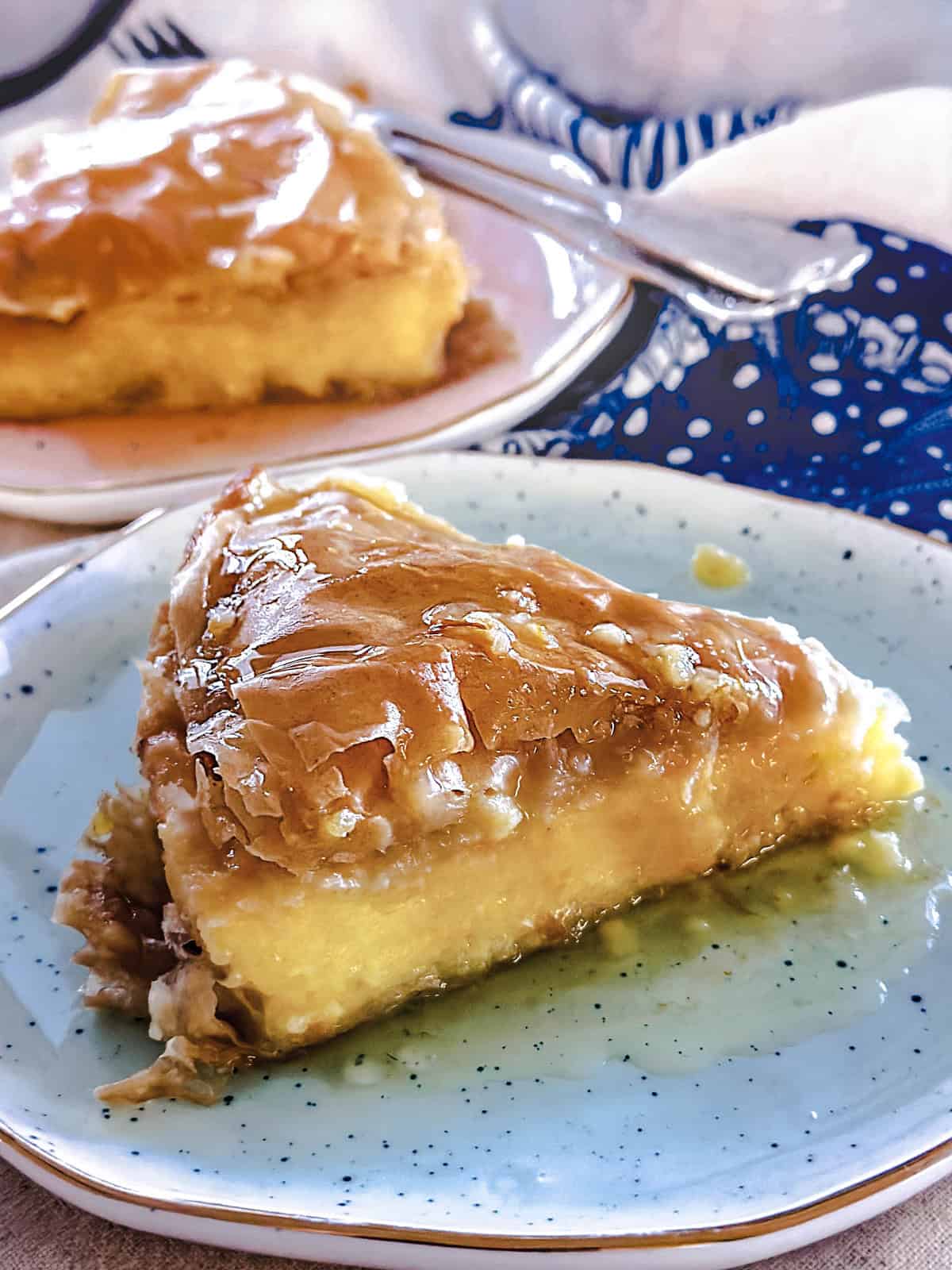
STEP 6. Let the galaktoboureko cool, cut and serve. It is best enjoyed at room temperature.
Pro tips
- Work in stages. Make the syrup first and let it cool completely. Then butter and prepare your pan with the bottom phyllo layers. Cover with a damp towel while you make the custard. This way everything is ready and you can work fast once the custard is hot.
- Pour the custard while it’s hot. Hot custard is fluid and pourable; as it cools it thickens. Don’t let it sit — get it into the pan immediately after it comes off the heat.
- Score before baking, cut after syruping. Lightly score the top phyllo layers into portions before it goes in the oven (don’t cut all the way through — just mark the top). Once baked and syruped, let it rest at least 30 minutes before cutting fully through. This gives the syrup time to absorb.
- The syrup goes on hot. The moment the galaktoboureko comes out of the oven, ladle the cold syrup all over it slowly and evenly. You’ll hear it sizzle. Use every last drop.
- Patience with resting. It will look like there’s too much syrup. There isn’t. Give it at least 30–45 minutes before serving. The phyllo will absorb what it needs and the custard will set just enough to cut cleanly.
- Serve at room temperature. Galaktoboureko is at its best served the day it’s made, at room temperature. Cold from the fridge is fine, but the phyllo softens and the custard loses some of its silk.
Storage and leftovers
- Galaktoboureko does not keep well in the refrigerator right away — the cold and the sealed environment will cause the phyllo to go soft. For the first two days, simply cover the pan with a clean kitchen towel and keep it in a cool spot at room temperature. Even if you have just a few pieces left, resist the urge to put them in a container, a closed lid traps moisture and the phyllo will lose its crispness almost immediately.
- After two days, transfer any remaining pieces to a container, lay a paper towel directly on top of the galaktoboureko before sealing the lid, this absorbs excess moisture and helps the phyllo hold up as best it can. Refrigerate for up to 3 more days. The phyllo will be softer than when freshly made, but the custard and syrup will still taste wonderful. Bring to room temperature before serving.

FAQ
More Greek desserts you’ll love

Cooked it? Rate it!
If you tried this recipe, I’d love to know how you liked it — drop a comment below or tag me on Instagram @thegreekfoodie__.


Galaktoboureko – Greek Custard Dessert
Equipment
- 1 28 x 32 cm (11 x 13 inch) rectangular baking pan, or a 12 x 3-inch round pan
Ingredients
For the syrup
- 500 grams sugar, 2½ cups
- 300 ml water, 1¼ cups
- 100 ml glucose, ⅓ cup
- Peel of 1 lemon (wide strips, white pith removed)
For the custard cream
- 1 liter whole milk
- 250 ml heavy cream, 1 cup
- 250 grams sugar, 1¼ cups, divided
- 10 large egg yolks
- 100 grams corn starch, ¾ cup + 1 tbsp
- zest from one lemon
For the phyllo sheets
- 1 phyllo sheets packet, baklava-style
- 250 grams clarified butter or ghee , 9 oz / 1 cup + 2 tbsp, (if clarifying your own butter, start with approximately 350g / 12 oz unsalted butter — see notes)
Instructions
Make the syrup first
- Combine all syrup ingredients in a medium saucepan. Stir and bring to a boil over medium-high heat. Once boiling, cook for exactly 4 minutes. Remove from heat and set aside to cool completely. The syrup must be fully cold before you use it.500 grams sugar, 100 ml glucose, Peel of 1 lemon (wide strips, white pith removed), 300 ml water
Prepare the pan and phyllo
- Preheat the oven to 160°C / 320°F (conventional oven, not fan/convection).Brush your baking pan generously with clarified butter or ghee.Open your phyllo package and divide the sheets into two equal stacks. Cover each stack with the packaging plastic and then a slightly damp kitchen towel — phyllo dries out very quickly.1 phyllo sheets packet, 250 grams clarified butter or ghee
Layer the bottom phyllo
- Working with the first stack of sheets, lay each one in the pan and let the edges drape over the sides — alternate the direction of the overhang with each sheet so you have phyllo hanging over all sides of the pan. Brush each sheet generously with clarified butter before placing the next. Keep unused sheets covered at all times.Once the full stack is layered, cover the pan with a damp kitchen towel while you make the custard.
Make the custard
- Combine the milk, heavy cream, half the sugar (125g / a generous ½ cup), and the lemon zest in a medium saucepan. Warm over medium heat, stirring occasionally.In a large bowl, whisk together the remaining sugar, cornstarch, and egg yolks until smooth and pale.Just before the milk mixture comes to a boil, slowly ladle about ⅓ of it into the egg mixture while whisking constantly — this tempers the eggs and prevents scrambling. Pour the tempered mixture back into the saucepan with the remaining milk.Cook over medium heat, stirring continuously with a whisk, until the custard thickens and begins to bubble. Remove from heat immediately.1 liter whole milk, 250 ml heavy cream, 250 grams sugar, 10 large egg yolks, 100 grams corn starch, zest from one lemon
Assemble
- Pour the hot custard directly into the prepared pan over the layered phyllo. Spread evenly with a spatula.Fold the overhanging phyllo edges up and over the custard, brushing them with clarified butter as you fold.Take the second stack of phyllo sheets. Trim them to fit the exact dimensions of your pan so they don't hang over the edges. Layer them one by one over the custard, brushing each sheet generously with clarified butter. Tuck the edges in neatly all around.Finish with a generous final brush of clarified butter over the top sheet.
Score and bake
- Using a sharp knife, lightly score the top into serving portions — the knife should mark through the top phyllo layers but not cut all the way through to the custard.Bake for approximately 1 hour, until the top is deep golden and the phyllo is crisp and fragrant.
Syrup and rest
- Remove from the oven. Immediately and slowly ladle the cold syrup all over the hot galaktoboureko — do this gradually, a ladleful at a time, so it absorbs rather than pools. Use every last drop of syrup.Let the galaktoboureko rest for at least 30–45 minutes before cutting through fully and serving. It is best enjoyed at room temperature.
Notes
Nutrition