

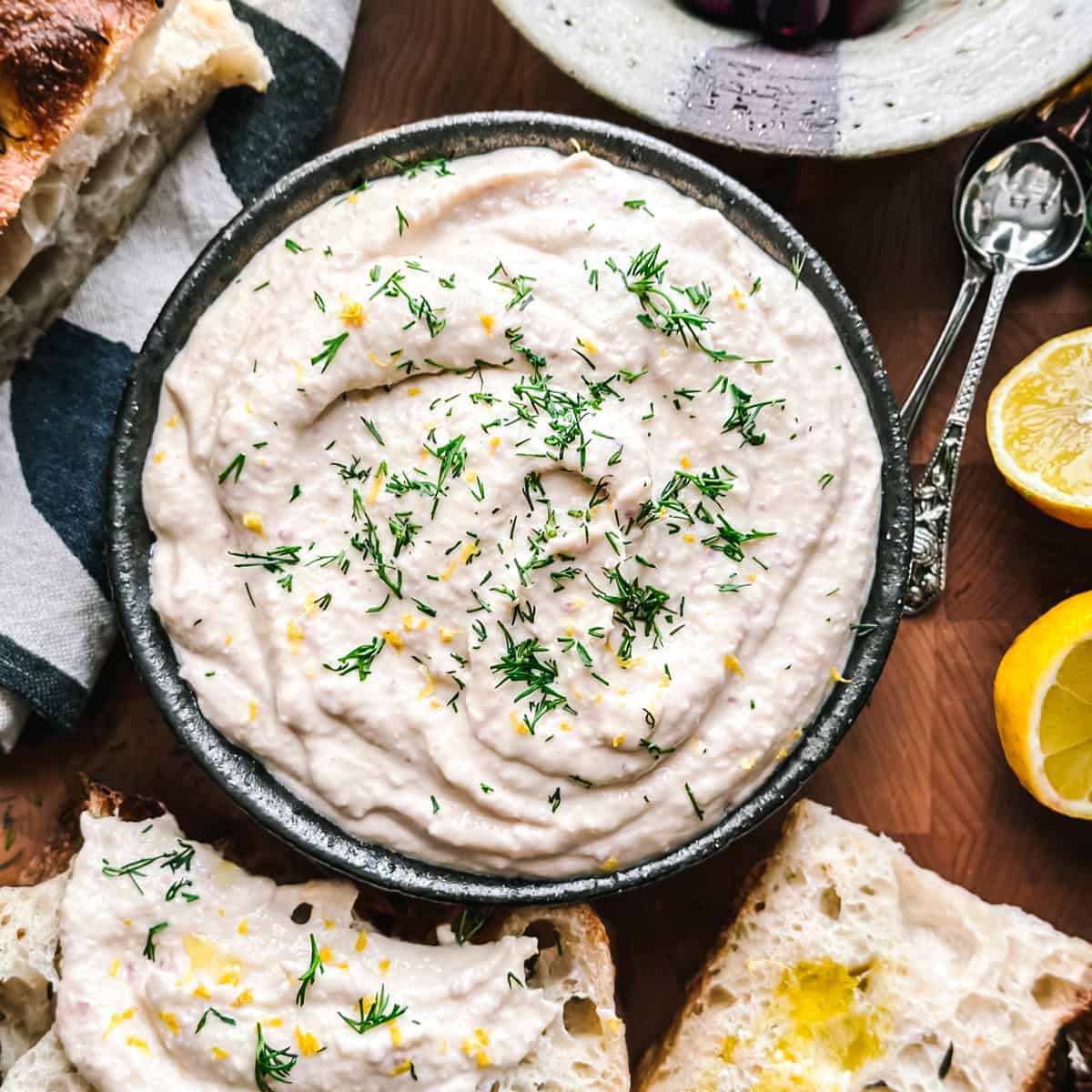
Taramosalata — also spelled taramasalata in English — is one of the great Greek mezze recipes, and one that earns its place on the table every single time. Velvety, briny, bright with lemon, and impossibly creamy, it’s the kind of dip that disappears before anything else on the spread. Made with tarama (salted and cured fish roe), extra virgin olive oil, soft soaked bread, and plenty of fresh lemon juice, taramosalata comes together in minutes with nothing more than a food processor. No cooking, no fuss — just a handful of honest ingredients doing exactly what they’re supposed to do.
In Greece, taramosalata is deeply tied to Clean Monday (Kathara Deftera), the first day of Orthodox Lent, when it appears on tables alongside olives, lagana bread, and other Lenten favorites. But Greeks don’t wait for a fasting holiday to enjoy it — this dip shows up year-round at mezze tables, taverna spreads, and family lunches, served with warm pita, crunchy vegetables, or thick slices of crusty bread.
If you’ve only ever tasted the bright-pink jarred version from the supermarket, this is going to be a revelation.
Planning meals for Lent? Browse our 17 Greek Recipes for Lent — easy, flavorful dishes the whole family will love, from traditional to flexible options.
Why you will love taramosalata
What Is Taramosalata?
Taramosalata (ταραμοσαλάτα in Greek, sometimes spelled taramasalata in English) is a traditional Greek dip made from tarama — salted and cured fish roe — blended with olive oil, lemon juice, and a starchy base of soaked bread or mashed potato. The result is a smooth, creamy spread with a distinctly savory, briny flavor that’s become a staple of Greek mezze culture.
The roe is typically from cod, carp, or grey mullet. High-quality tarama is pale beige in color. The neon-pink versions you’ll find in supermarkets are made with lower-grade roe and food coloring — homemade is a completely different experience.
Here is what you need
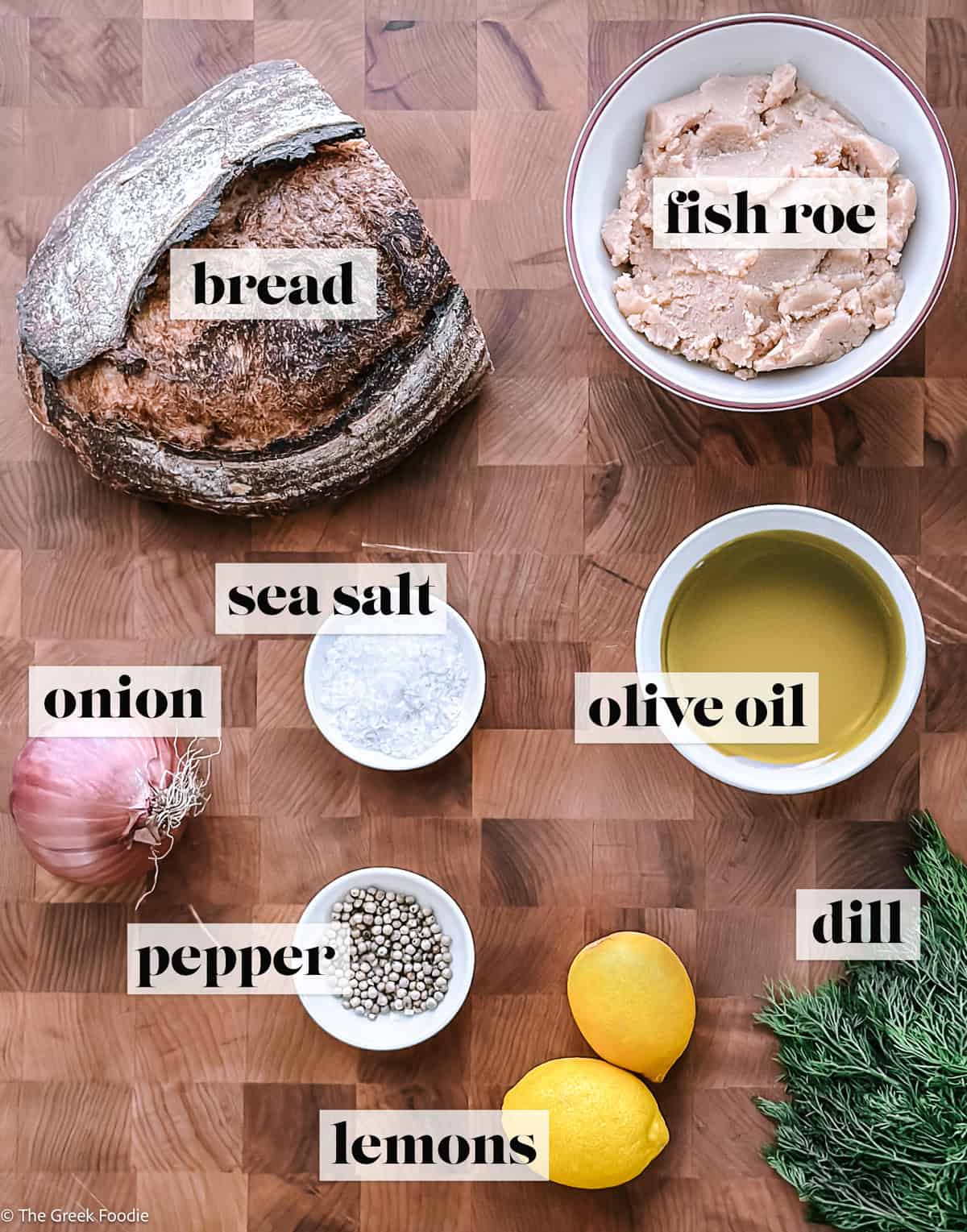
- Fish roe (tarama). The star of the show. Look for salted and cured carp or cod roe — pale beige in color, not bright pink. The flavor is rich, savory, and distinctly briny. Find it at Greek or Mediterranean grocery stores, or order online through Amazon or Instacart (Krinos is a widely available brand in the US).
- Stale bread. Day-old white bread with the crusts removed is the traditional base. It gets soaked in water, squeezed dry, and blended to give taramosalata its creamy, fluffy body. Use a good-quality sandwich loaf or country white — nothing too dense.
- Onion. A small onion (or half a regular one) is grated directly in the food processor. It adds a subtle sharpness that balances the richness of the roe without being detectable as “oniony” in the finished dip.
- Lemons. You’ll use both the juice and the zest. The juice provides acidity and brightness; the zest adds a fragrant citrus note that lifts the whole dip. Use fresh, bottled juice won’t do the same job here.
- Extra virgin olive oil. This is what turns the mixture into something silky and luxurious. Use a good-quality Greek extra virgin olive oil for the best flavor.
- Fresh dill. Completely optional, but a little chopped dill on top adds color and a gentle herbal note that pairs beautifully with the briny roe.
- Sea salt and white pepper. Taste before adding, tarama is naturally very salty. Most of the time, you won’t need extra salt at all.
Love a good meze spread? These 17 Light Greek Appetizers & Mezedes have all my favorite dips, fritters, and pies for easy spring entertaining.
Pro tips
- Choose high-quality tarama. Look for beige or light tan roe. This is the good stuff. Bright pink tarama usually means added coloring and lesser quality.
- Soak the bread well. The bread must be fully saturated and squeezed dry. Any excess water can make the dip too loose or dilute the flavor.
- Add the olive oil slowly. This is the difference between fluffy, luxurious taramosalata and a sad, oily puddle. Pour in a thin, steady stream while blending.
- Taste as you go. Taramas varies wildly in saltiness. Adjust lemon and bread quantity to balance flavor and texture.
- Serve it slightly chilled. Taramosalata tastes best after resting in the fridge for at least 30 minutes so the flavors can settle.
- Use a food processor. You can use a mortar and pestle, but the processor gives that signature silky, airy texture you want.
Step by step
STEP 1. Soak the bread in plenty of water, then squeeze it well with your hands to remove as much liquid as possible.
(You can also place the soaked bread in a clean kitchen towel, wrap it tightly, and squeeze until the excess water is gone.)
Zest and juice two lemons.
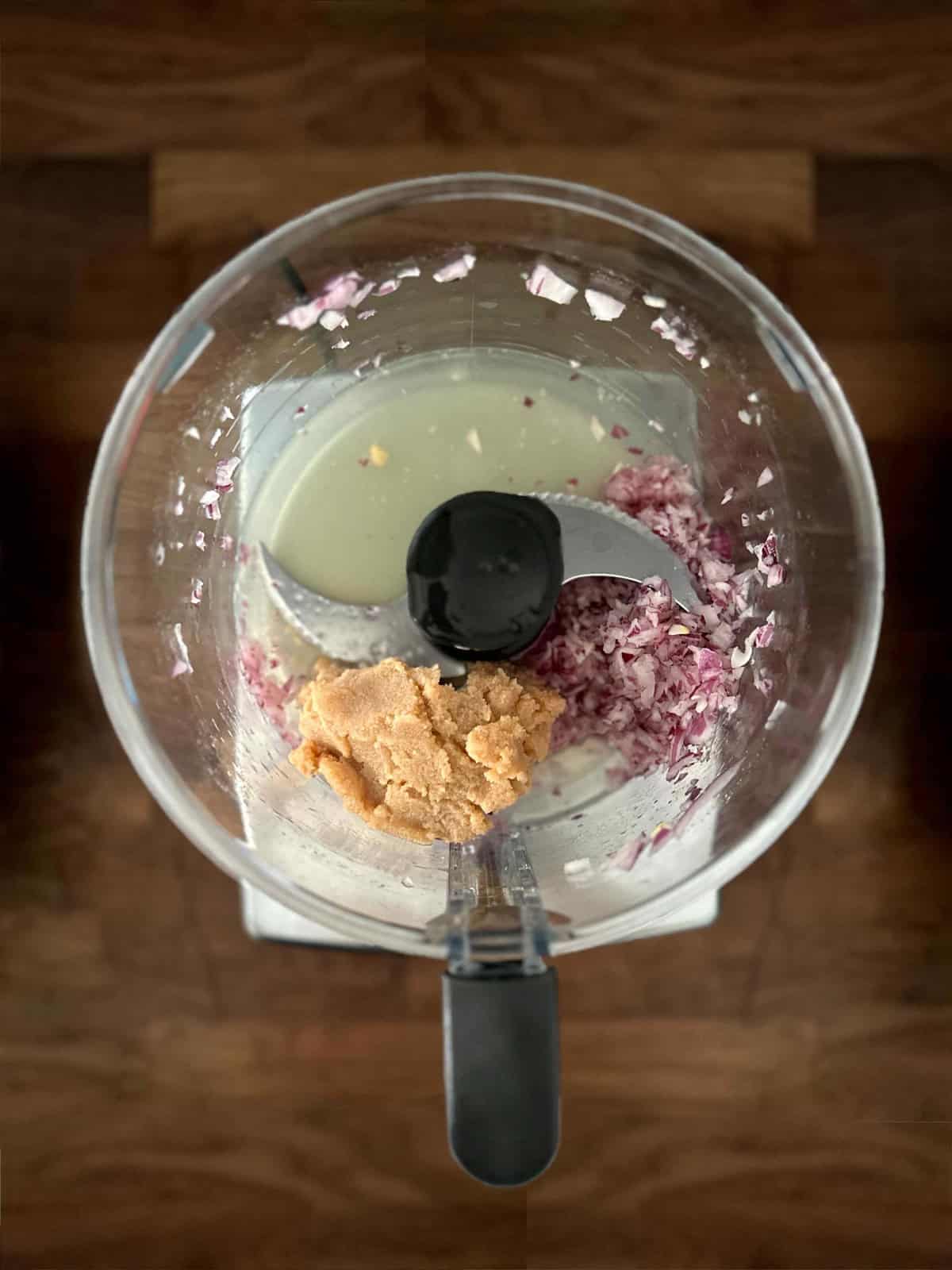
Using a food processor, grate a small onion. Add the fish roe (taramas), lemon zest, and lemon juice.
Blend until the mixture looks smooth and creamy.
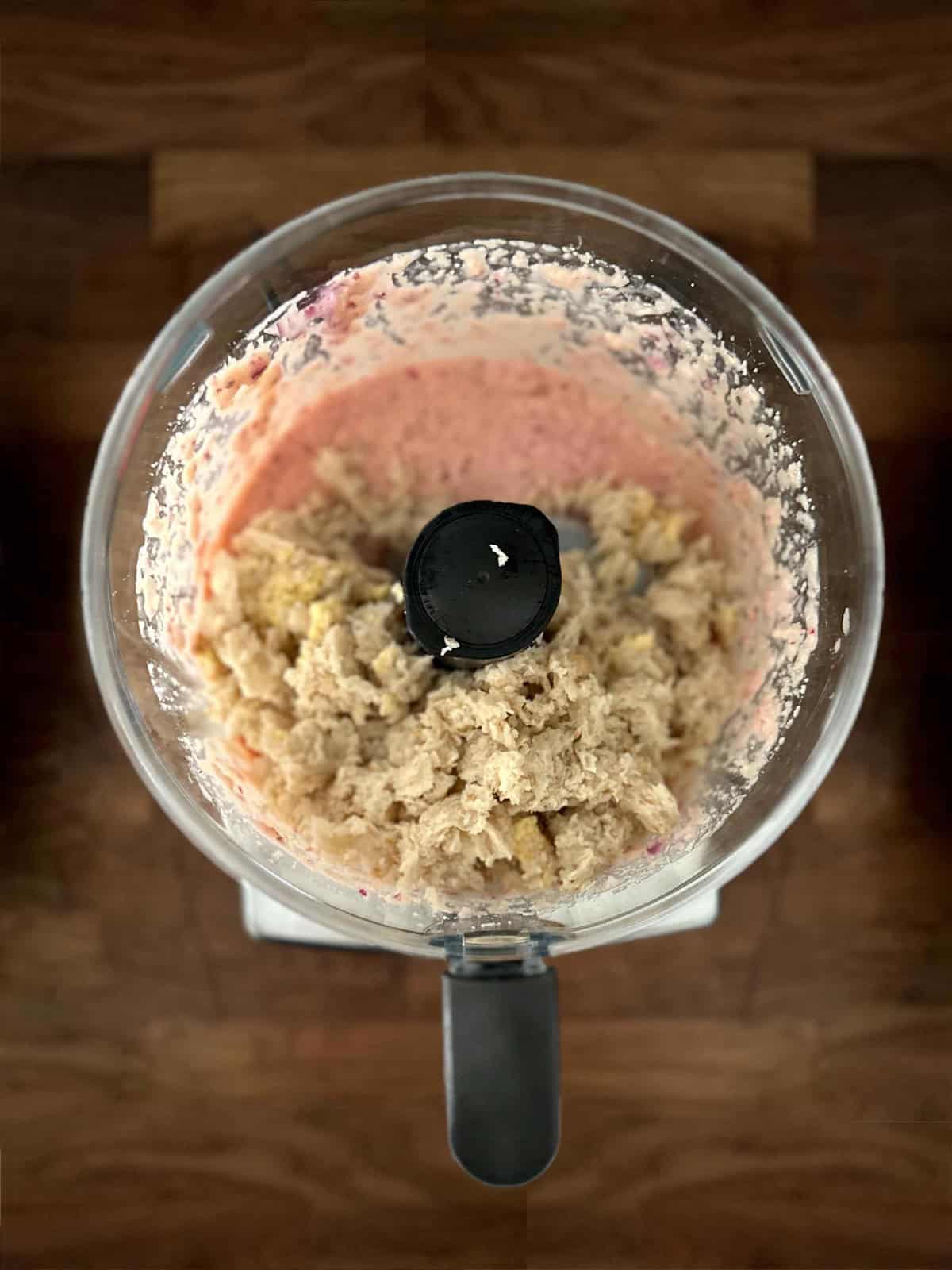
Step 2. Add the squeezed bread to the processor and blend again until fully incorporated.
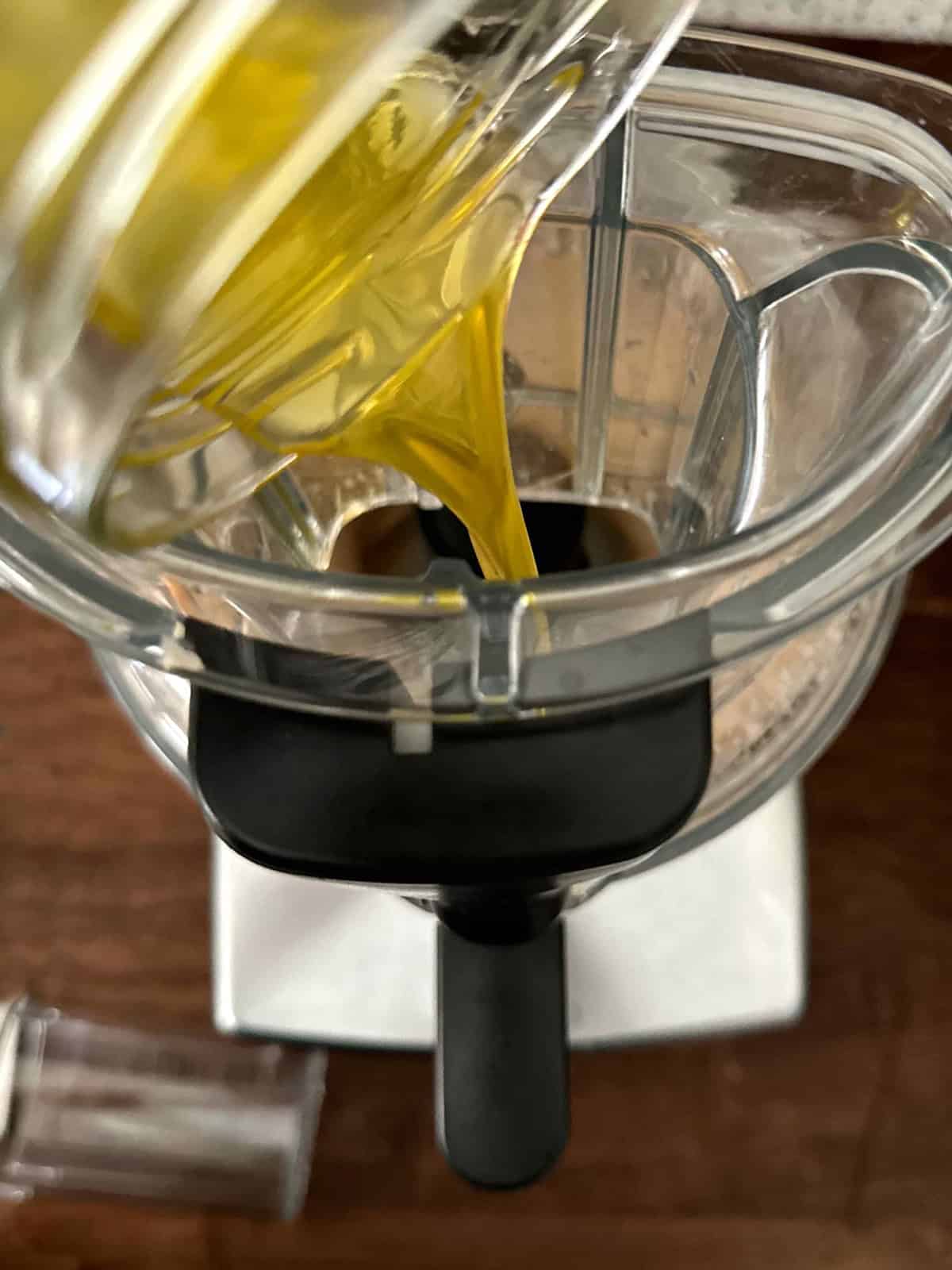
STEP 3. With the processor running, slowly pour in the olive oil.
Keep blending until the mixture becomes pale, fluffy, and silky.
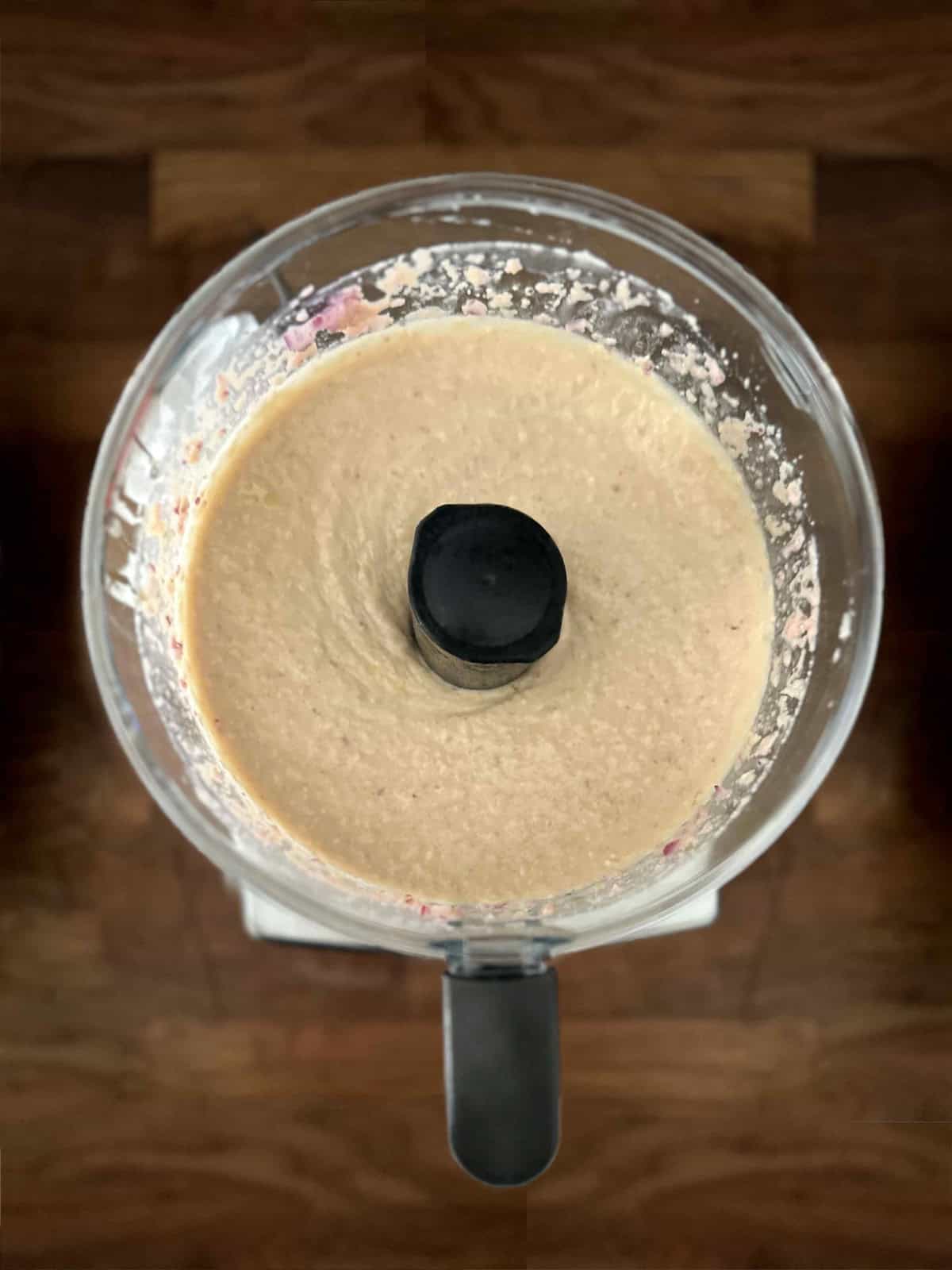
Step 4. Your taramosalata is ready!

FAQs
Storage and reheating
- Refrigeration: Store taramosalata in an airtight container for 4–5 days. The flavor actually improves on day two as the lemon and roe mellow and marry together.
- Avoid cross-contamination: Always use a clean spoon — taramosalata can spoil quickly if exposed to germs or double dipping.
- Freezing: Not recommended. The emulsion breaks after thawing and the texture becomes grainy and oily.
- Make-ahead: Taramosalata is even better when made earlier in the day or the night before serving. It firms up and develops a deeper flavor.
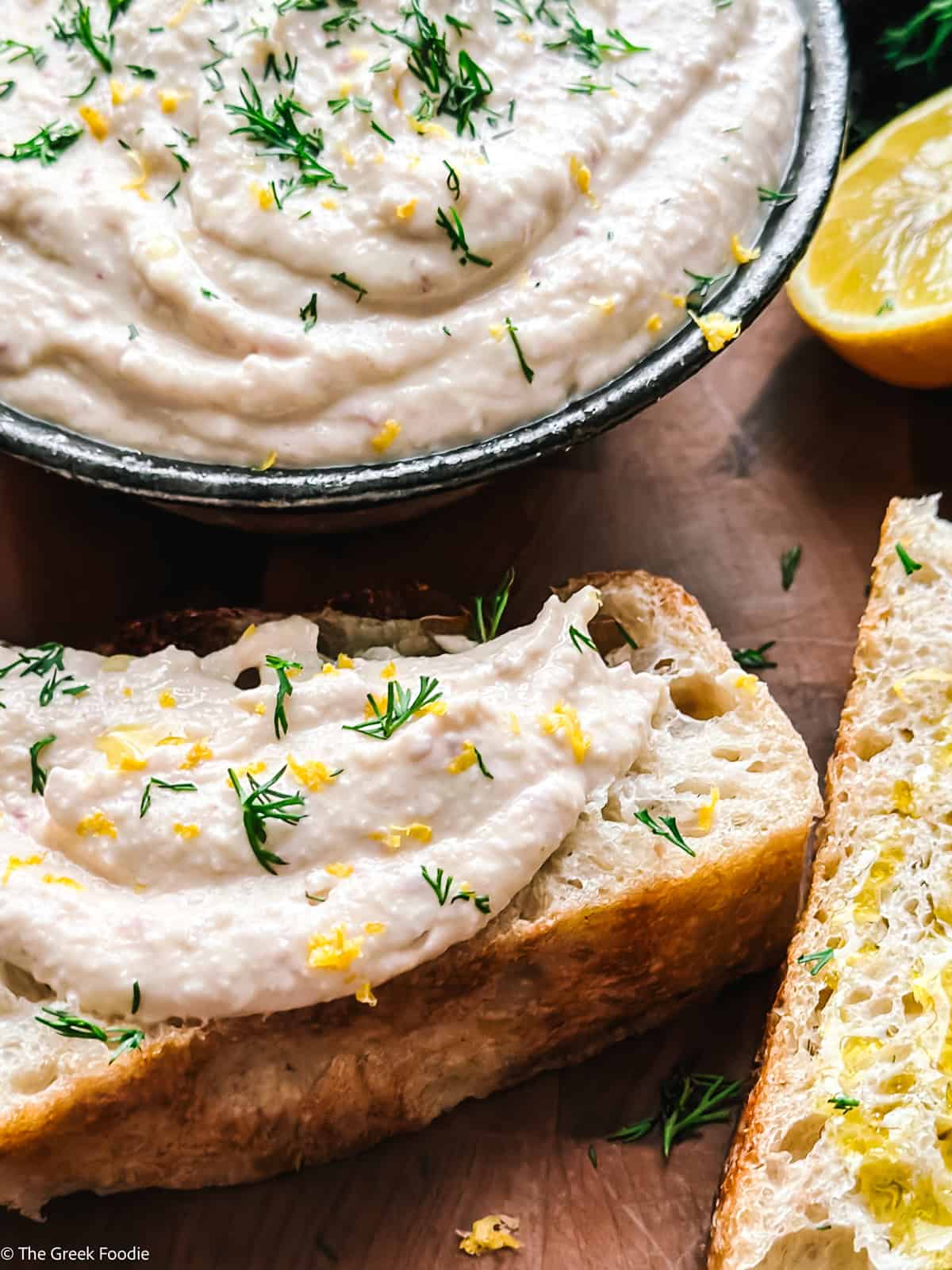
Serving suggestions
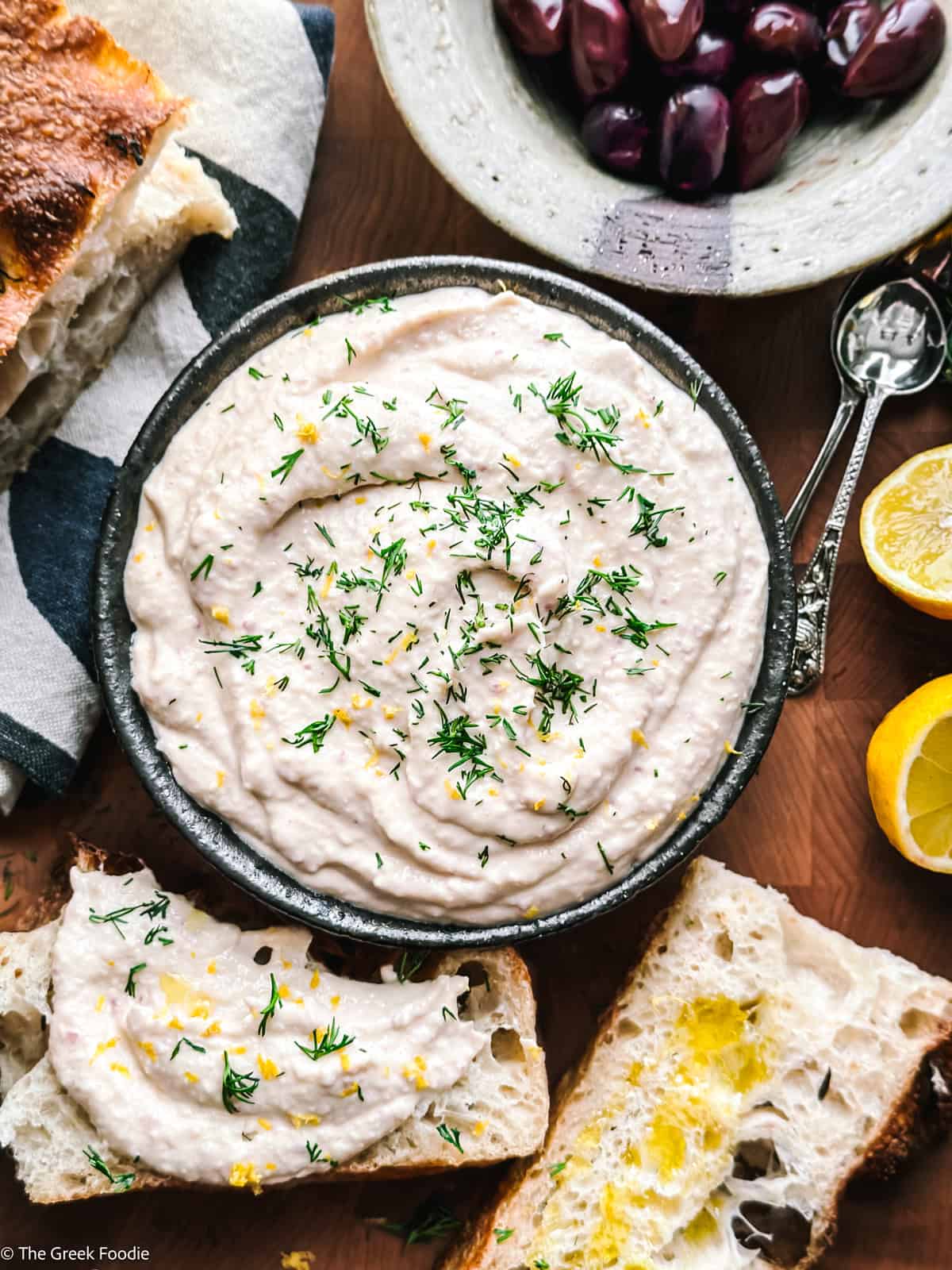
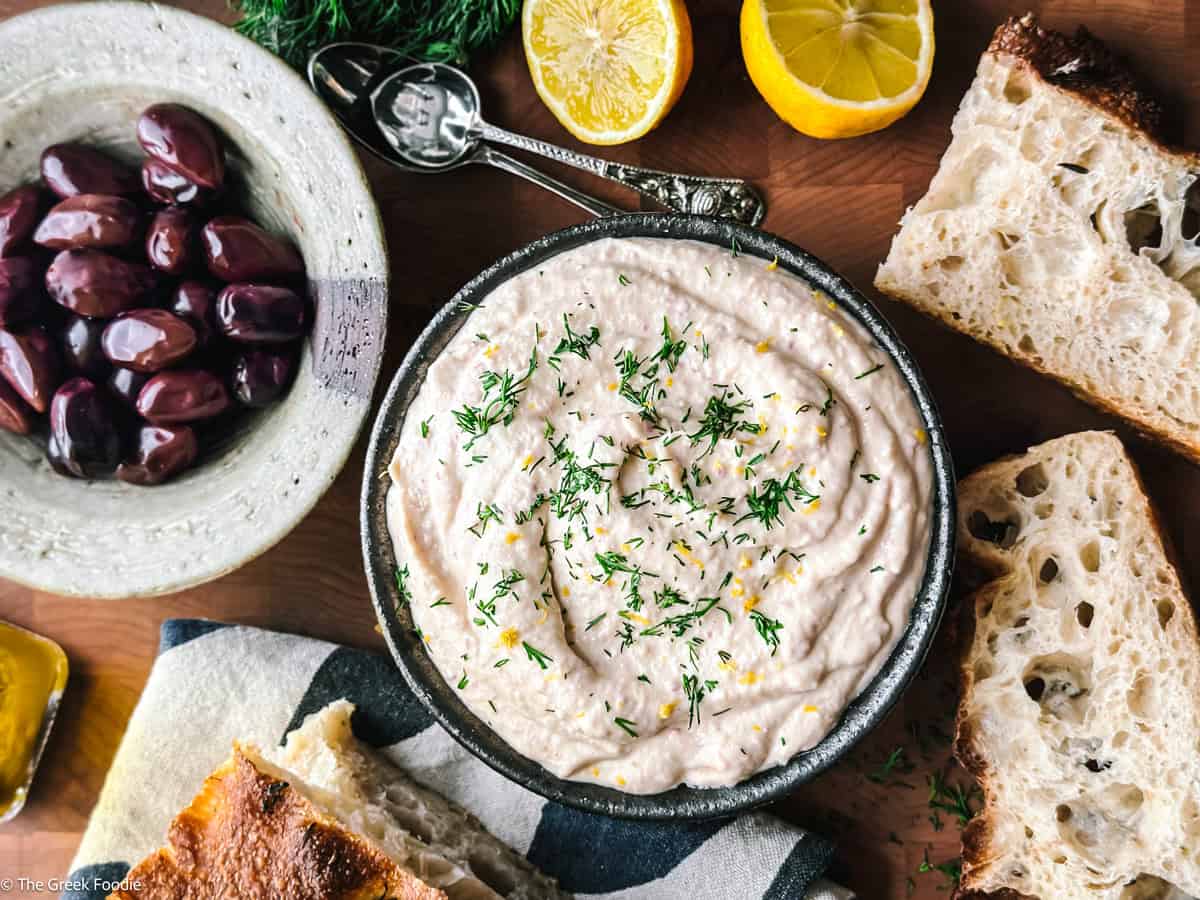
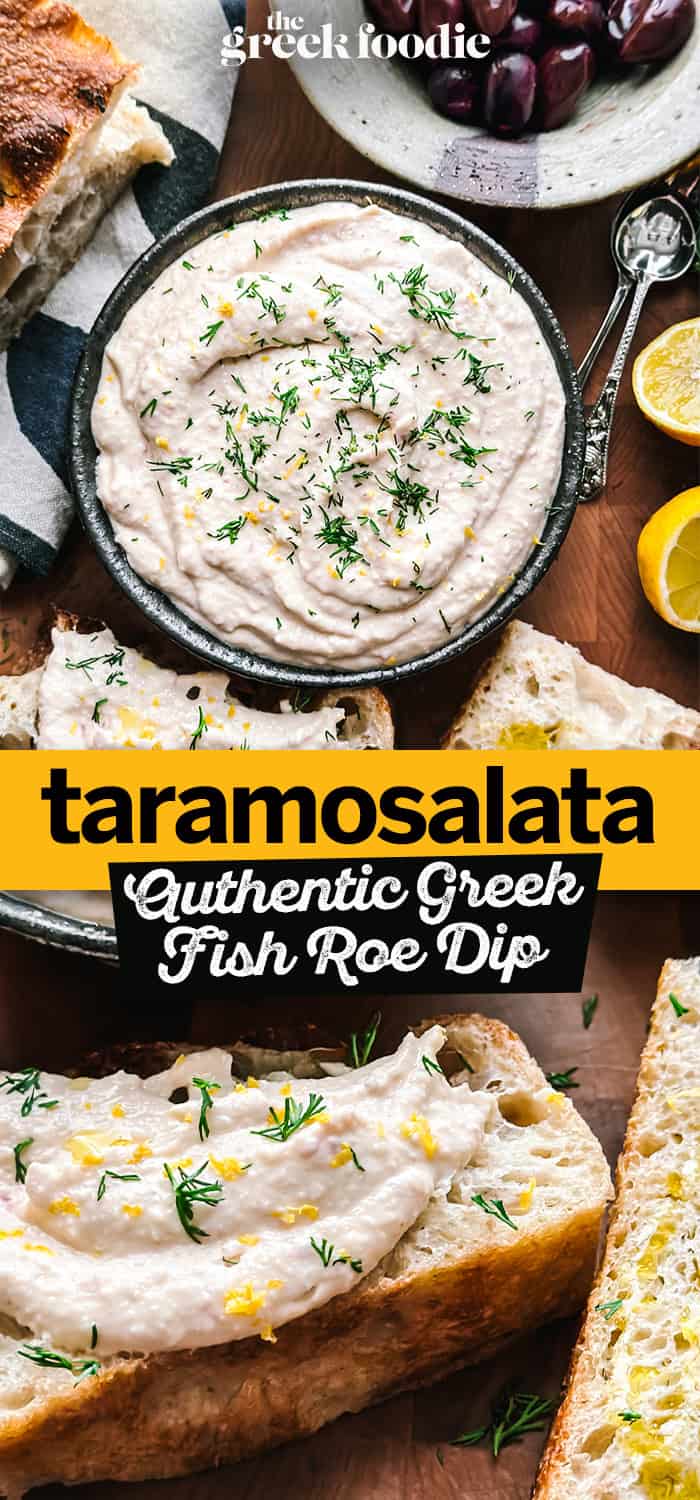
- Scoop the taramosalata into a shallow bowl and finish with a drizzle of extra virgin olive oil, a pinch of lemon zest, and a sprinkle of fresh dill if you like a bright herbal note. Serve it mezze-style with:
- Warm Greek bread brushed with olive oil and oregano
- Toasted pita wedges
- Gigantes beans or roasted Greek lima beans
- Marinated olives with feta
- Crisp vegetables like cucumbers, radishes, and celery for dipping
- Fried calamari or grilled shrimp for a seafood pairing that sings
- This spread turns any table into a taverna moment.
More Greek dips you’ll love
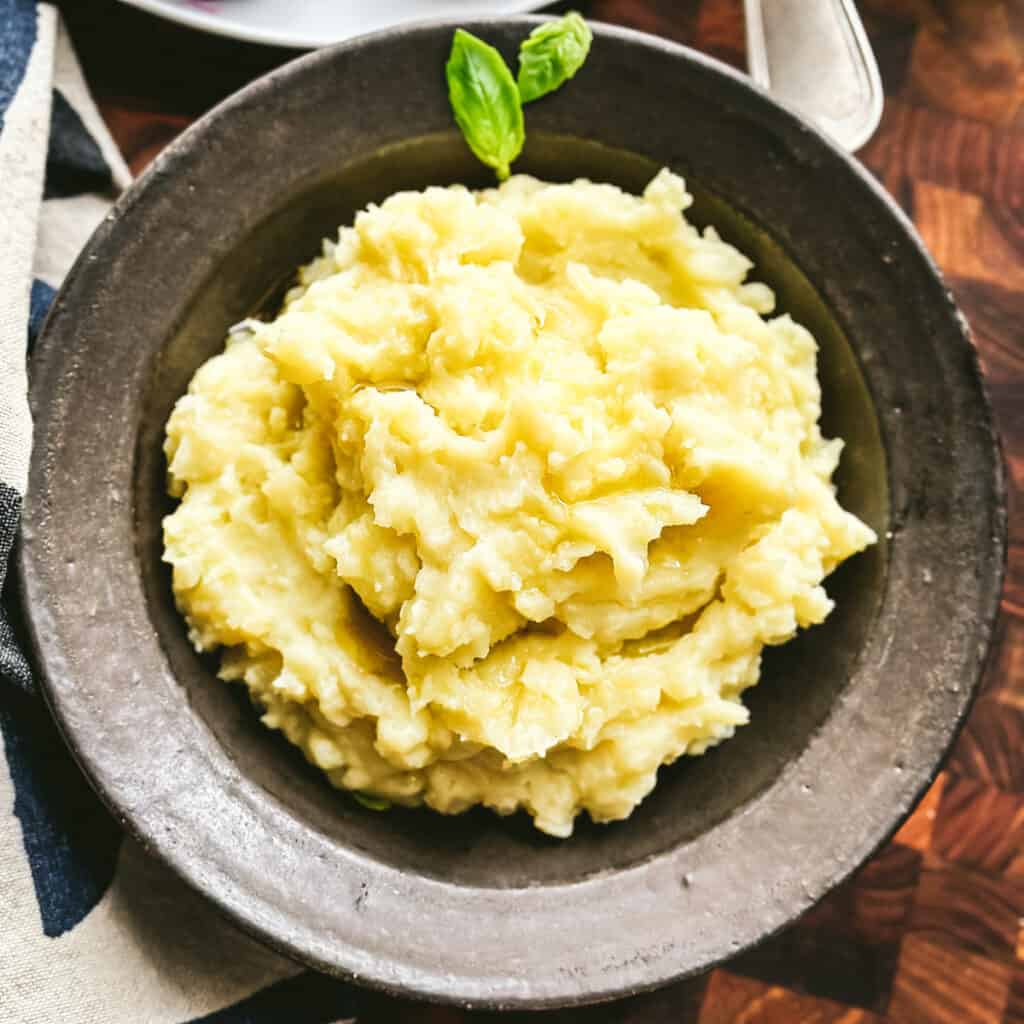
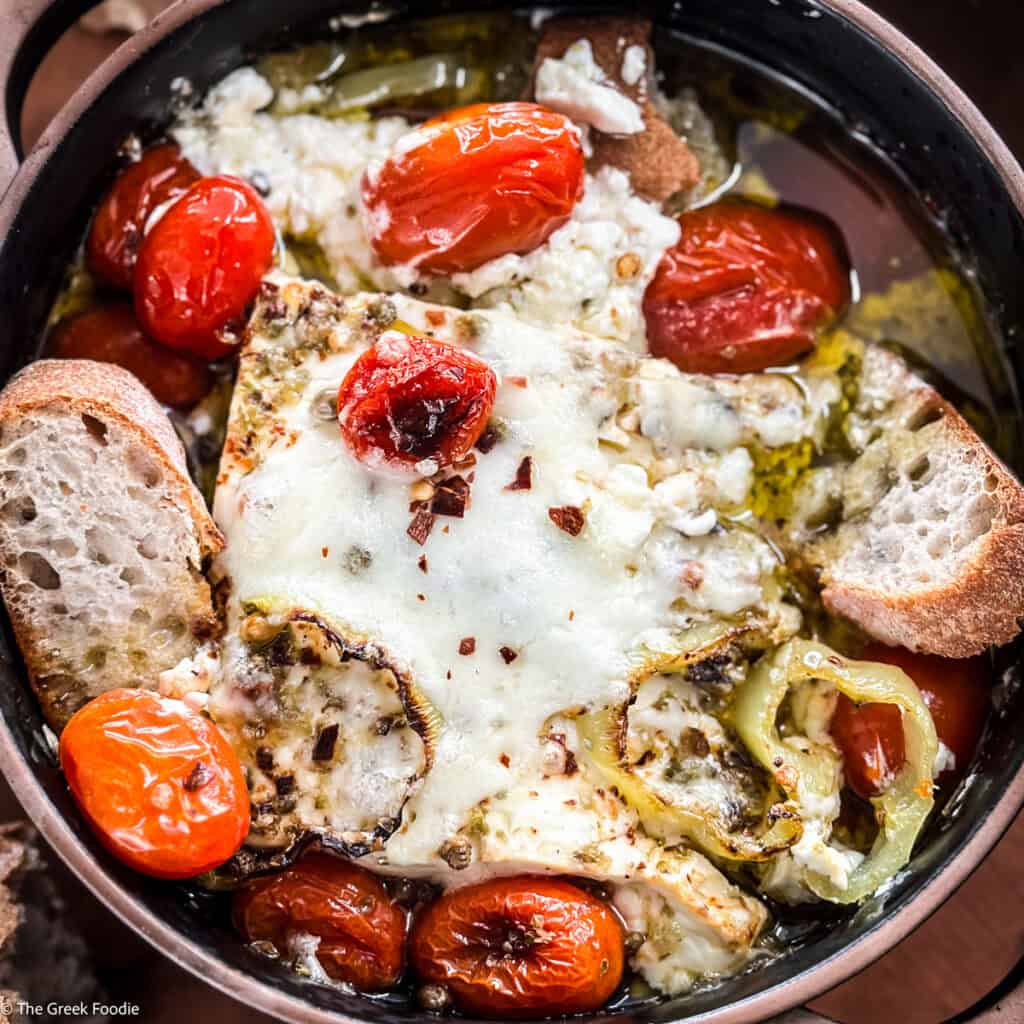
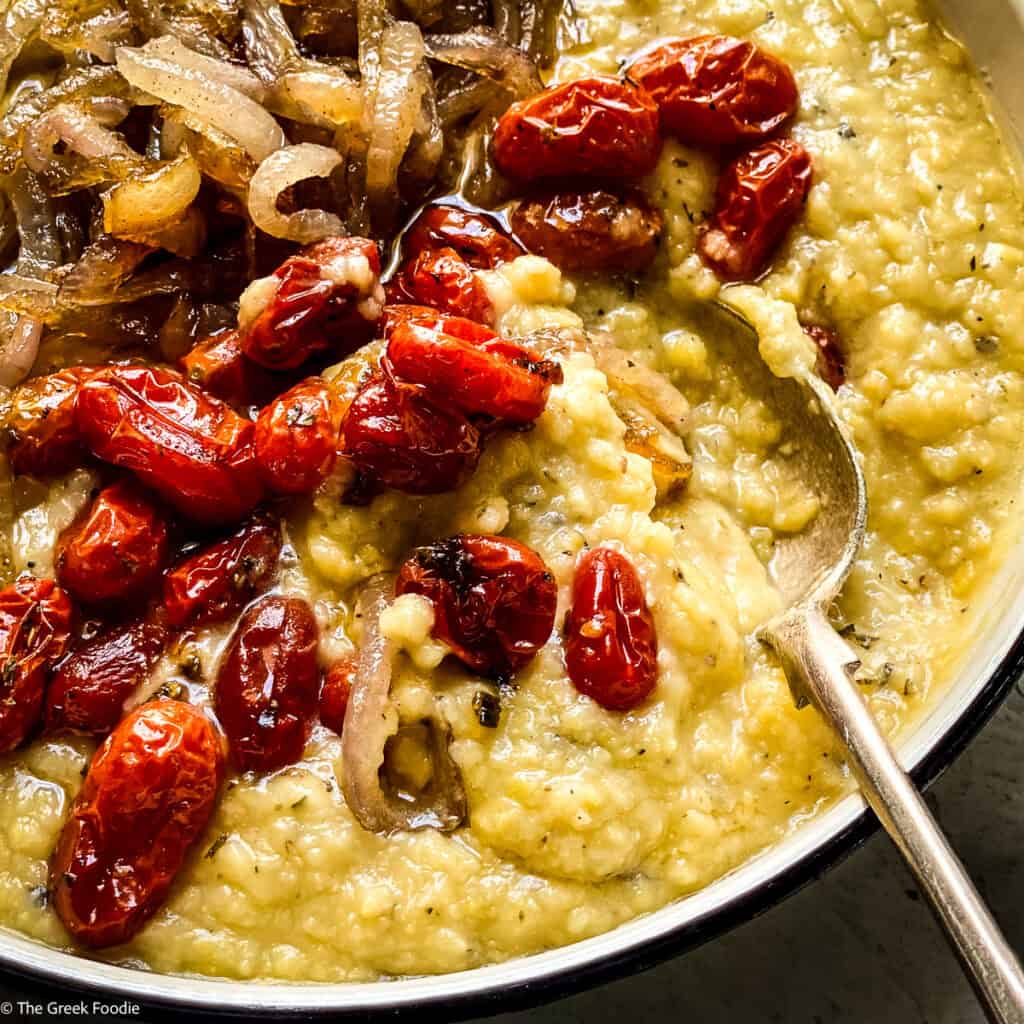
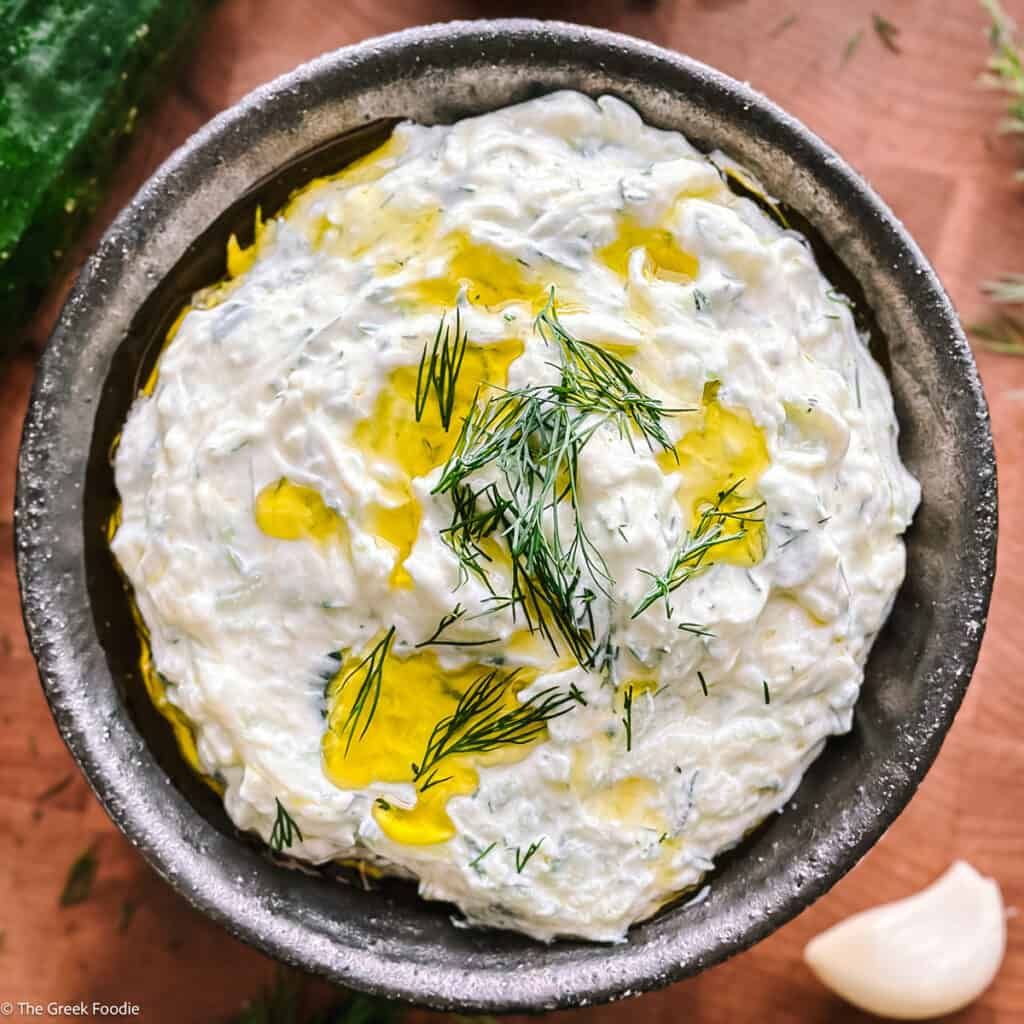
Cooked it? Rate it!
If you tried this recipe, I’d love to know how you liked it — drop a comment below or tag me on Instagram @thegreekfoodie__.


Taramosalata (Taramasalata) – Authentic Greek Fish Roe Dip
Equipment
- Food processor
Ingredients
- 120 gr fish roe, tarama. 4.2 oz
- 200 gr stale bread, with no crust. About ¾ of a cup , soaked with water removed
- 80 ml fresh lemon juice, or the juice from two lemons
- 300 ml extra virgin olive oil, Approximately 1.2 cups
- 1 small size onion, or half a regular size onion
For serving
- 2 tablespoons fresh dill, optional
- lemon zest
Instructions
- Soak the bread in plenty of water. Squeeze with your hands to remove most of the liquid. (You can place the bread in a kitchen towel, wrap and squeeze until all liquid is out).
- Zest and extract the juice from two lemons.
- Using a food processor, grate a small onion.1 small size onion
- Add in the fish roe and the lemon juice and beat until creamy.120 gr fish roe, 80 ml fresh lemon juice
- Add the bread, start beating, and gradually pour the olive oil. Pulse until the taramosalata is creamy, like mayonnaise.The longer you beat, the creamier it will get. Check the texture with a spoon and pulse to your liking.200 gr stale bread, 300 ml extra virgin olive oil
- Pour dip into a bowl, sprinkle lemon zest, and chopped dill if you like, and serve tapas style with bread, crackers, and olives.lemon zest, 2 tablespoons fresh dill
Notes
- Use day-old bread. It gives better texture and absorbs the lemon and roe beautifully.
- Squeeze the bread well after soaking. Extra water will dilute the dip and make it gummy.
- Use white tarama (not the neon-pink mass-produced stuff). The flavor is cleaner and more delicate.
- Add the olive oil slowly while blending to help the dip emulsify and turn velvety.
- Taste before seasoning — tarama is naturally salty, and you may not need extra salt at all.
- If the dip feels too thick, whisk in a spoonful of cold water or lemon juice to loosen it.
- Make it one hour ahead for best flavor — the lemon and roe settle into a perfect balance.
Nutrition

Yum yum! I bought a jar of roe from Titan the other day. This recipe was god sent! Thank you!
Thank you so much for this recipe, Jenny. I made this yesterday for brunch and everybody absolutely loved it! A keeper!
I have not heard of this dip before, but sounds like a fun one to try! Thanks for the recipe share!
This recipe sounds very interesting! In the midwest, we don’t have a lot of fish options, so I am going to have to keep my eye out for fish roe.
Such a great-looking greek dip recipe! It looks so delicious and very appealing! The color and creamy texture look perfect and added a tempting vibe to this!
It looks like a good and tasty dip to make, and this sounds like a perfect dip for my veggie snacks.
Oh wow, this is perfect! I am so excited to make this this weekend. Thank you so much for this recipe 🙂
This dip turned out wonderful, and I wasn’t too sure how the fish roe would make it taste but it was delicious. Great for serving with crackers, olives, and homemade pita bread.
This dip turned out delicious. I made it with sourdough bread as suggested and added a garlic clove to the processor with the onion. It tasted great!
This taramosalata is a simple snack or appetizer that has the best combination of flavors. The lemon adds a zesty bite to it that I love.
Thanks so much Sharon!
I love taramosalata and have had it in Greece and the UK where it’s popular! But I never realized it’s made with bread and in a very similar way to Italian pesto! It’s not so easy to find cod or carp roe where I live but mullet roe is a possibility. Going to ask the fishmonger!
Hi Jaqueline,
mullet roe can work!
Thank you so much, x Jenn
I made this and I love how easy this recipe is. Everyone in our house loves it!
Taramosalata was shipped to me in Florida without ice. Is it dangerous to eat?
Hi Diane,
Better be safe than sorry. It would be best to purchase it from a local store if possible. I understand it’s not easy to find locally sometimes.
Since it is seafood based I would not consume it if it has been out of the refrigerator for a while.
x Jenny