

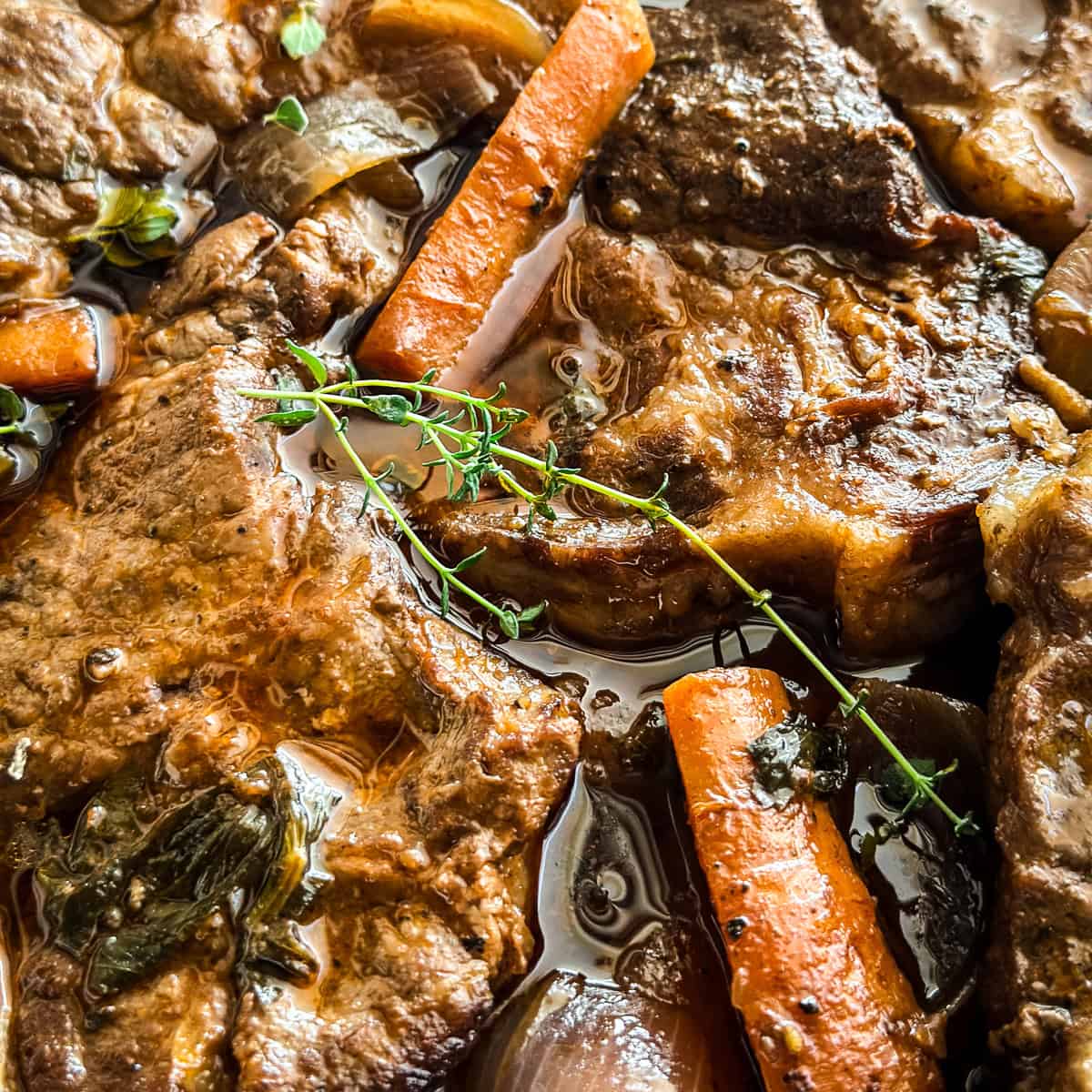
Our braised pork shoulder is slow-cooked in red wine with cinnamon, cloves and bay leaves until the meat gives way at the touch of a fork. It’s a one-pot Greek dish with a handful of pantry ingredients and a sauce so good you will want bread on the table for the sole purpose of mopping it up.
This is Greek home cooking at its most honest, no shortcuts, no long ingredient list, just time doing what time does to a tough cut. Serve it with roasted lemon potatoes, olive oil mashed potatoes, or crusty peasant bread and you have a Sunday lunch worth clearing the afternoon for.
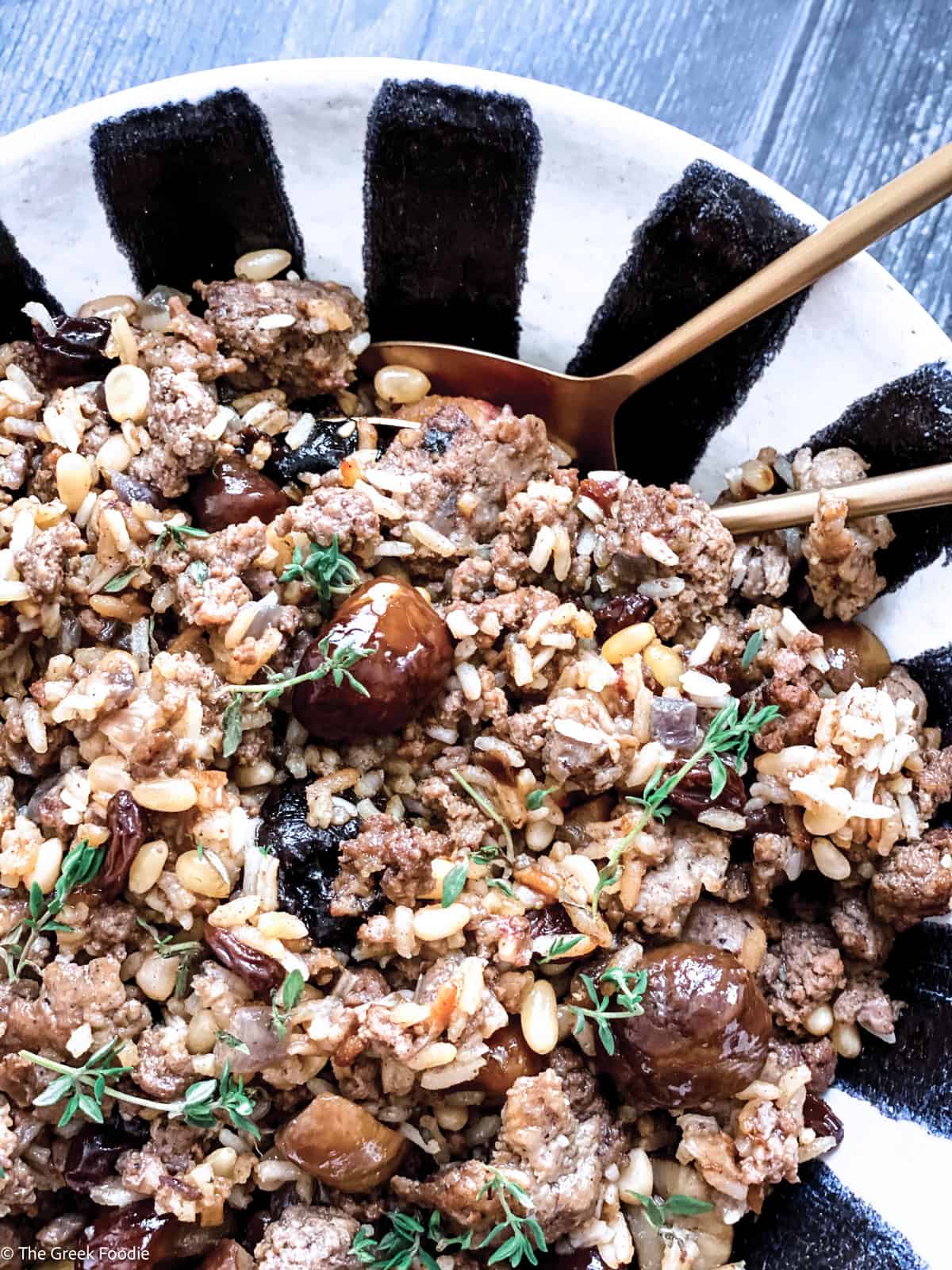
If you love this braised pork shoulder, you’ll also love our Greek pork and beans, pork stew with chickpeas, Greek pork steaks, and pork pot roast with chestnuts and figs!
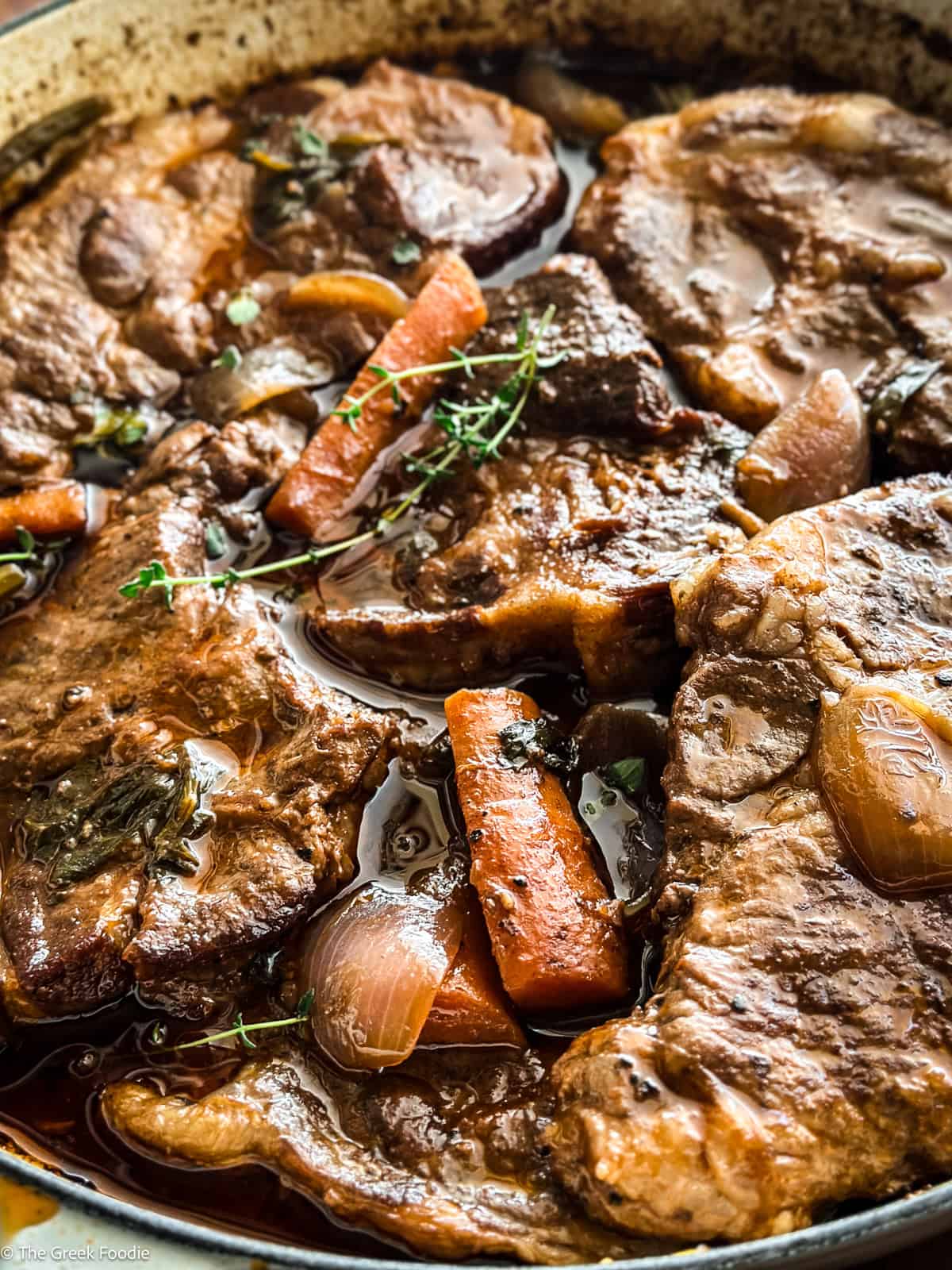
Why you will love Greek braised pork shoulder
What is Braised Pork Shoulder?
Braising means cooking a tough cut slowly in a small amount of liquid in a covered pot. The meat is browned first to build flavor, then simmered gently — on the stovetop, in a low oven, or in a slow cooker — until the collagen in the muscle breaks down into gelatin.
Pork shoulder is the ideal candidate. It’s a hard-working muscle, well marbled and streaked with connective tissue, which makes it too tough to roast fast but perfect for a long braise. Cooked quickly it’s chewy; cooked slowly, it turns silky and the fat bastes the meat from the inside.
The other thing braising gives you is the sauce. Unlike roasting, where the juices mostly evaporate, everything the pork releases stays in the pot and concentrates. That sauce is half the reason to make this dish.
Here is what you need
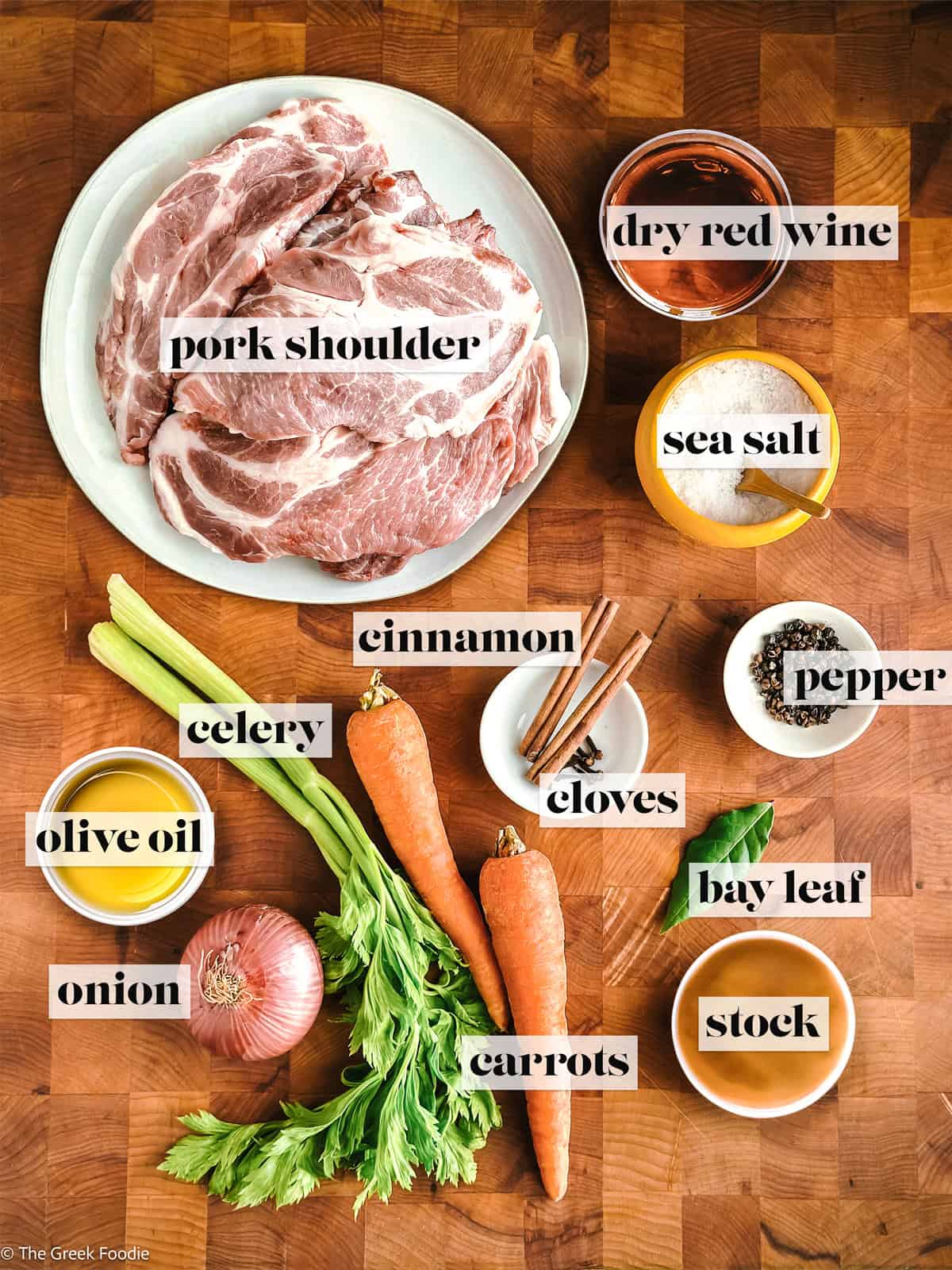
Pork shoulder. I use boneless pork shoulder here, cut into thick slices or large stew pieces. It has enough fat and connective tissue to stay succulent through a long braise.
Carrots, celery and onion. Cut chunky, not fine — they should hold their shape and end up as part of the dish, not disappear into the sauce. Use the celery leaves too; they carry a lot of flavor.
Dry red wine. The backbone of the sauce. A Greek red like Agiorgitiko or Xinomavro is beautiful here, but any dry red you’d happily drink will work. Avoid anything sweet or heavily oaked.
Tomato paste. Cooked out for a couple of minutes before the wine goes in — a small step that makes a real difference to the depth of the finished sauce.
Cinnamon sticks, whole cloves and bay leaf. The Greek signature. Whole spices, never ground, so they perfume the sauce and can be lifted out at the end.
Stock. Beef, chicken or vegetable — whatever you have.
Extra virgin olive oil, sea salt, freshly ground pepper. My notes on choosing a good olive oil are in my Greek pantry staples.
See the recipe card for complete information on ingredients and quantities.
Which cut of pork to use
The names on the label are genuinely confusing, so here’s the plain version:
- Pork shoulder (picnic shoulder) — the lower portion of the front leg. Leaner, often skin-on, slightly more sinew. Excellent for braising.
- Pork butt (Boston butt) — despite the name, this is the upper shoulder. Fattier, more evenly marbled, and the most forgiving choice of all. If your market only sells “pork butt,” you are in good hands.
- Pork collar — the cut Greek butchers reach for and my favorite when I can get it. Beautifully marbled and tailor-made for slow cooking.
Bone-in or boneless? Bone-in gives a richer sauce and is harder to overcook, but it needs an extra 30–45 minutes and is more awkward to slice. Boneless is easier to portion and what I use here. Either works.
How much to buy: about 6–7 oz (180–200 g) of raw boneless pork per person. Shoulder loses a fair amount of weight as it cooks, so err generous.
What not to use: pork loin or tenderloin. They have almost no connective tissue and will go dry and stringy long before they go tender. Save those for a quick sear.
Step by step
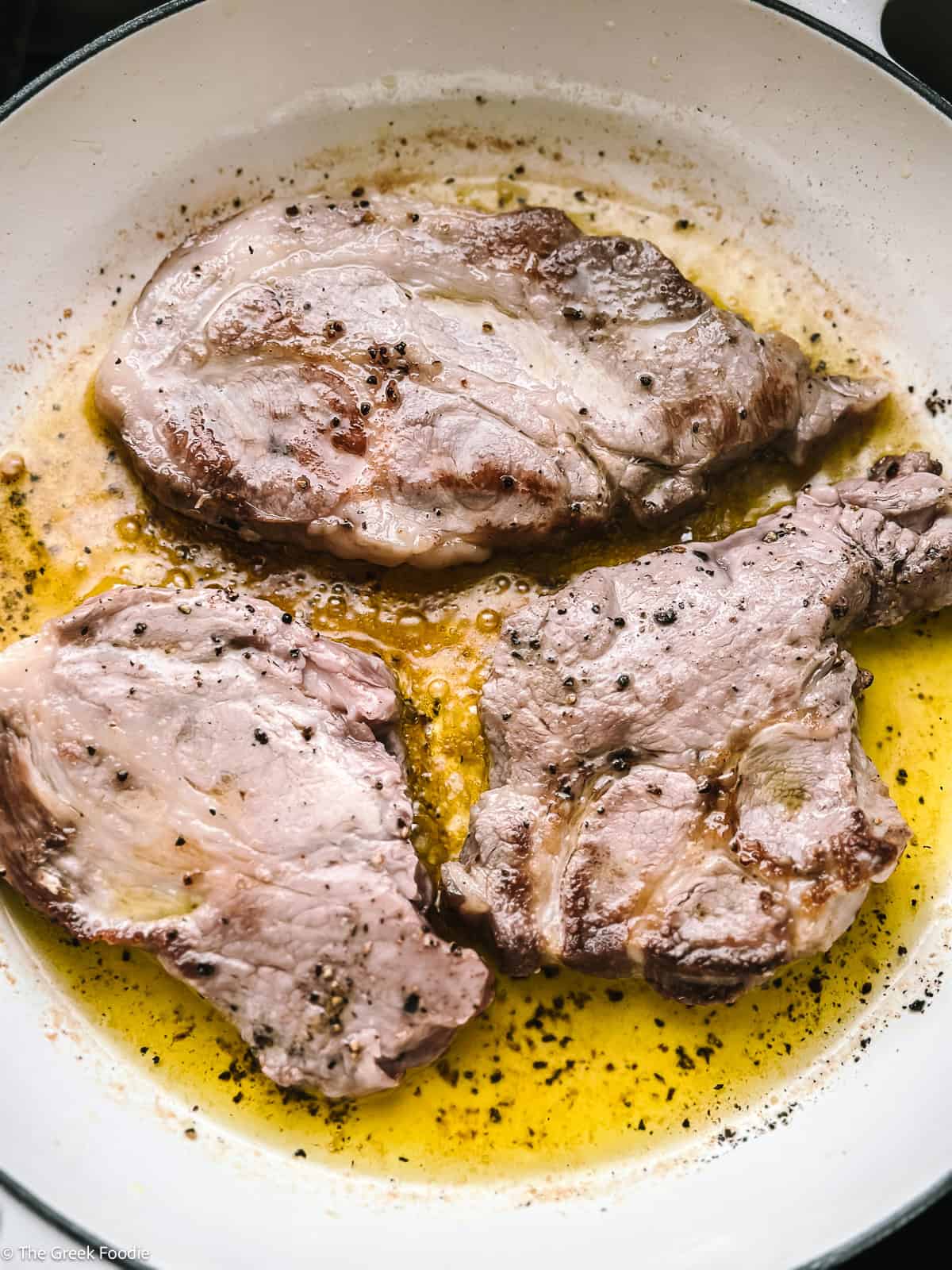
Step 1: Brown the pork. Season the pork pieces generously with sea salt and freshly ground pepper. Heat the olive oil in a Dutch oven or heavy lidded pot over medium-high heat and brown the pieces in batches, 3–4 minutes per side, until deeply browned all over.
Don’t crowd the pot. If the pieces touch, they steam instead of browning and you lose the fond — those dark sticky bits on the bottom of the pan that turn into the sauce. Give each piece room and take the extra five minutes.
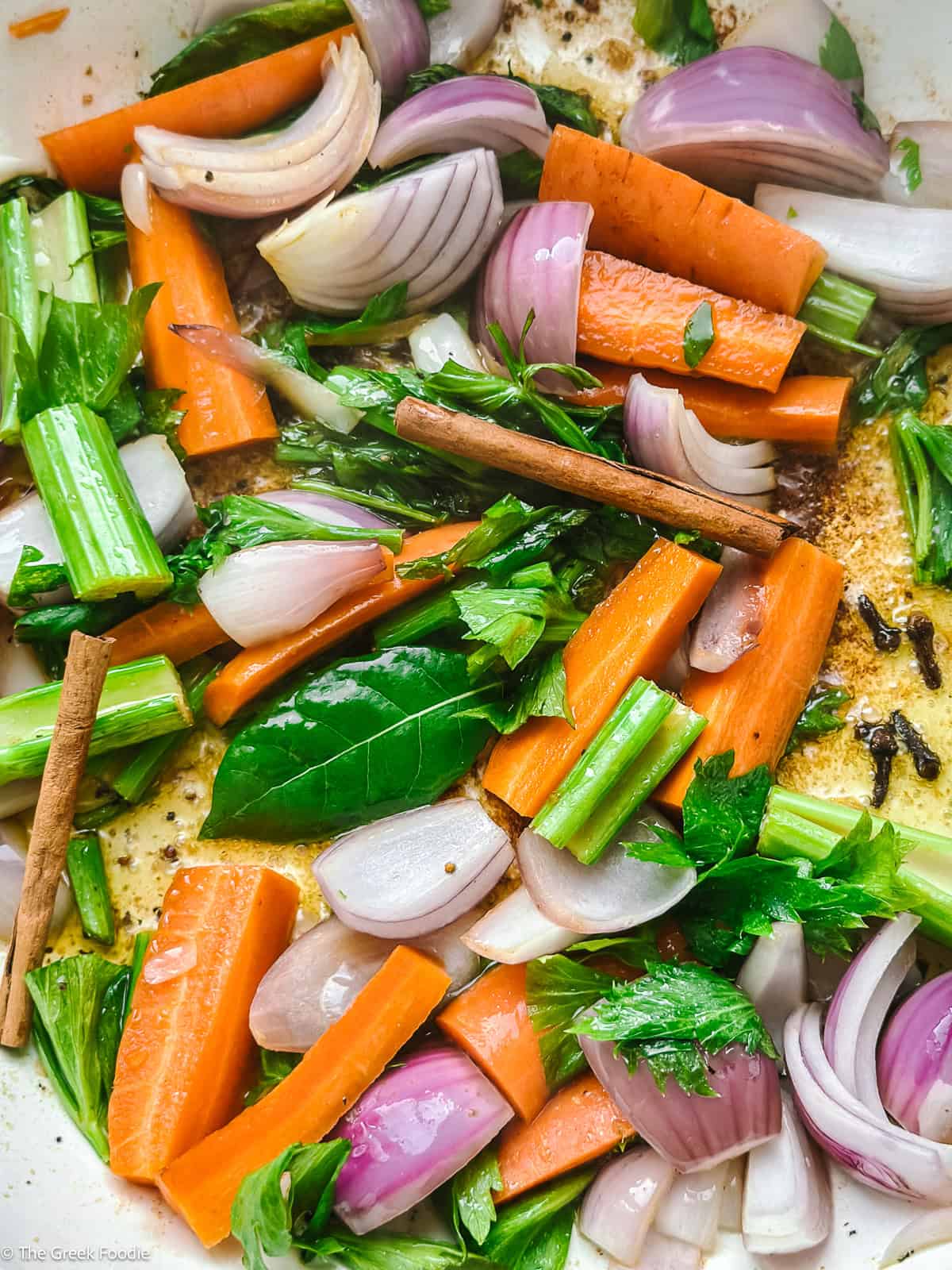
Step 2: Soften the vegetables. Transfer the pork to a platter. Add the chopped onion, celery and carrots to the same pot. Add the bay leaf, cinnamon sticks, cloves, salt and pepper and cook, stirring, for 3–4 minutes until the onion turns translucent and the spices smell fragrant.
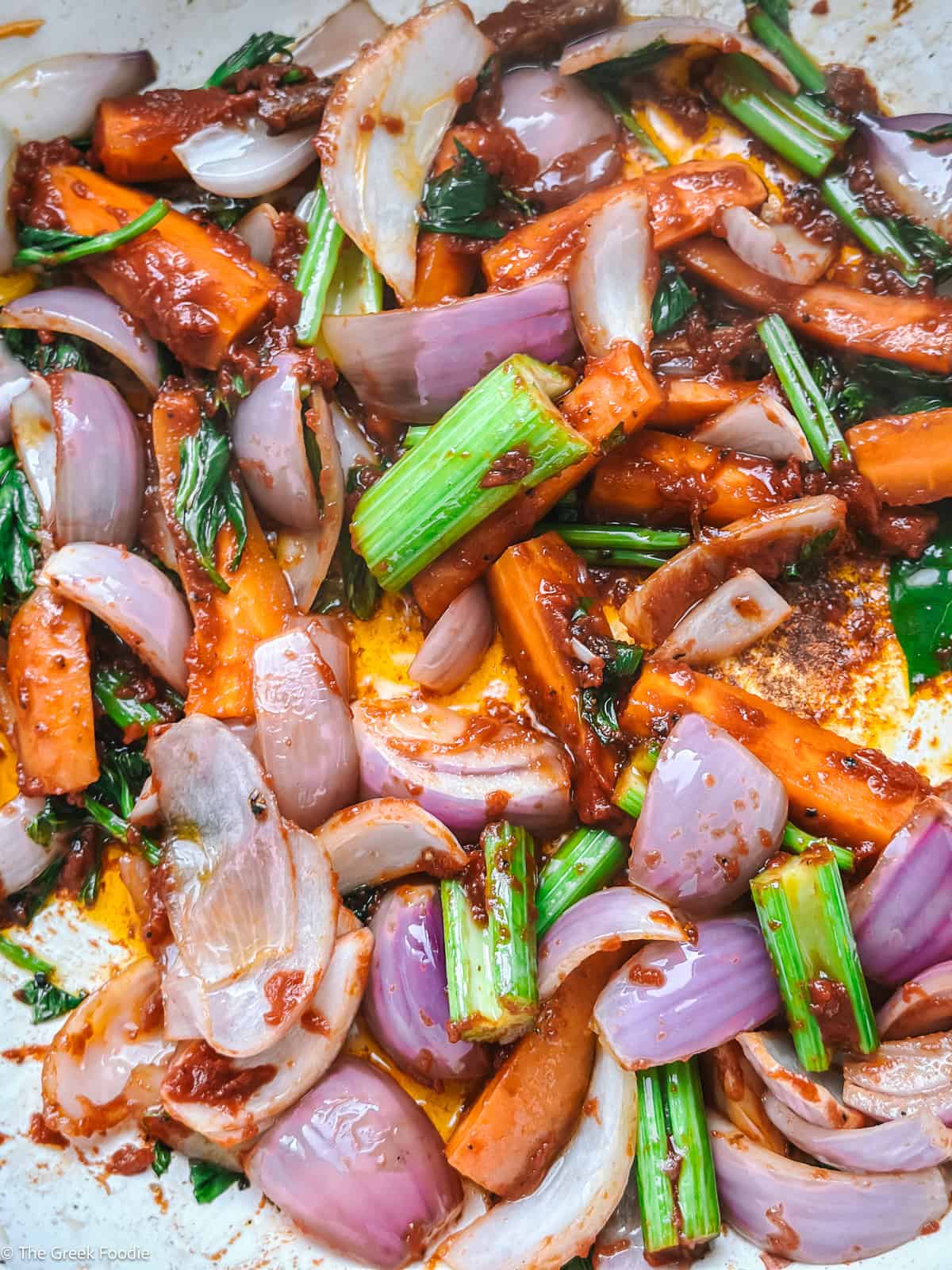
Step 3: Cook out the tomato paste. Add the tomato paste and keep stirring for 2–3 minutes. It will darken from bright red to a deeper brick color — that’s the raw edge cooking off and the sweetness developing. Don’t skip this.
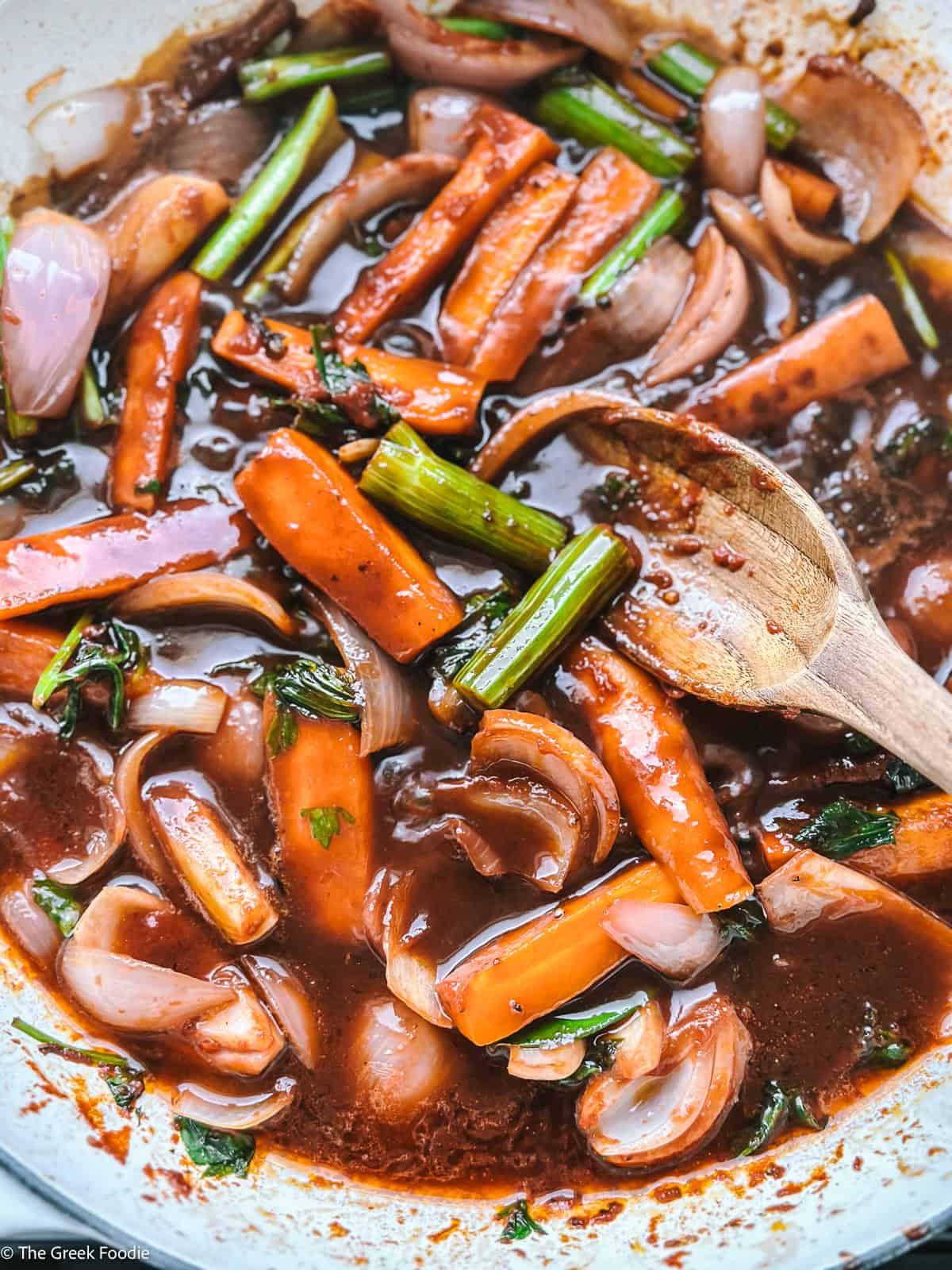
Step 4: Deglaze with the wine. Pour in the red wine and stir, scraping the bottom of the pot to lift every browned bit. Let it bubble for 2–3 minutes so the alcohol cooks off.
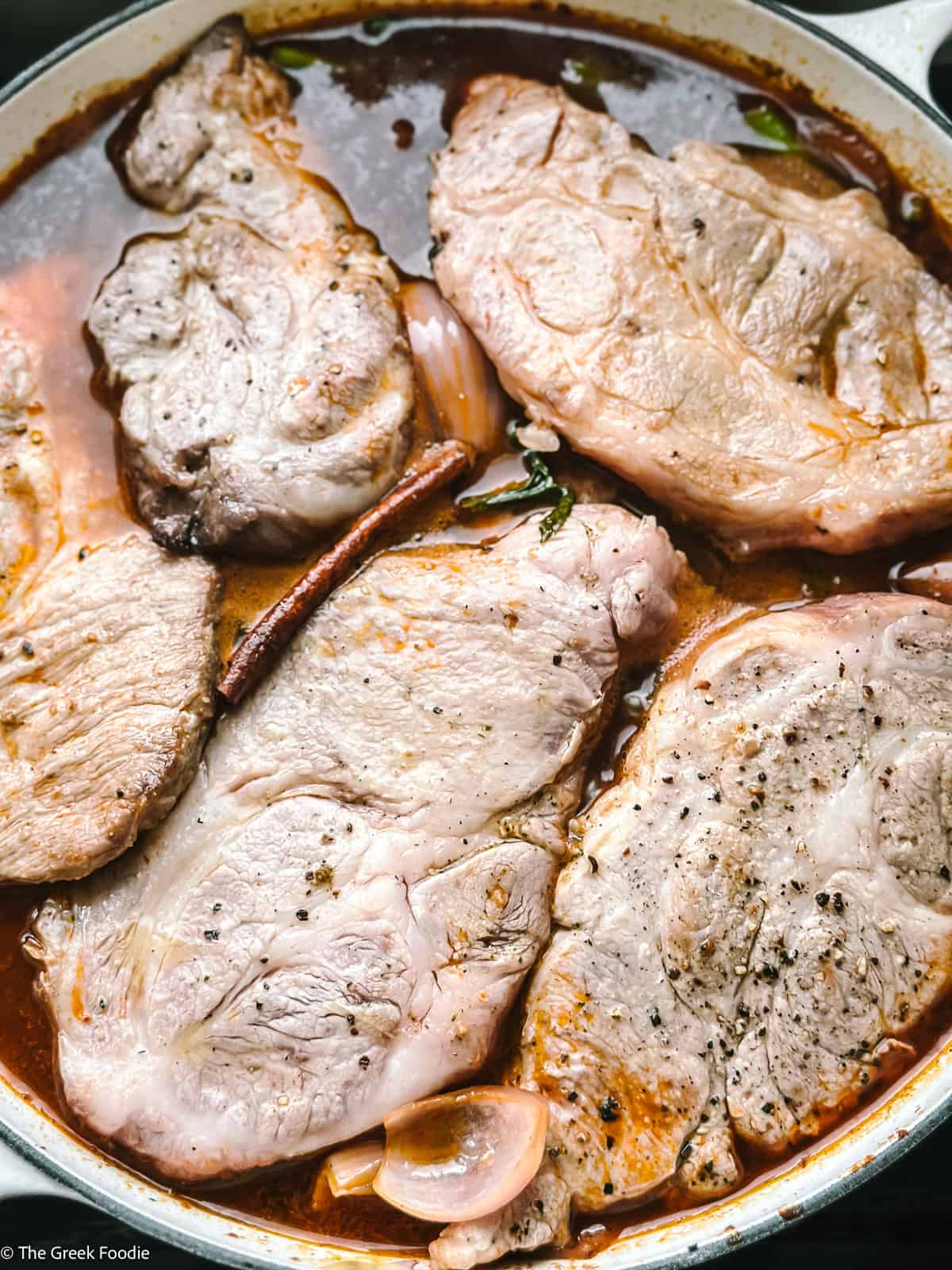
Step 5: Braise. Return the pork and any juices to the pot. Add the stock — the liquid should come about halfway up the meat, not cover it. Bring to a gentle simmer, then reduce the heat to low, cover, and cook for about 2 to 2½ hours, until the pork is fork-tender.
You’re looking for the barest simmer — an occasional bubble breaking the surface. A hard boil will tighten the meat and make it stringy. Check once an hour and add a splash of stock or water if the level drops too far.
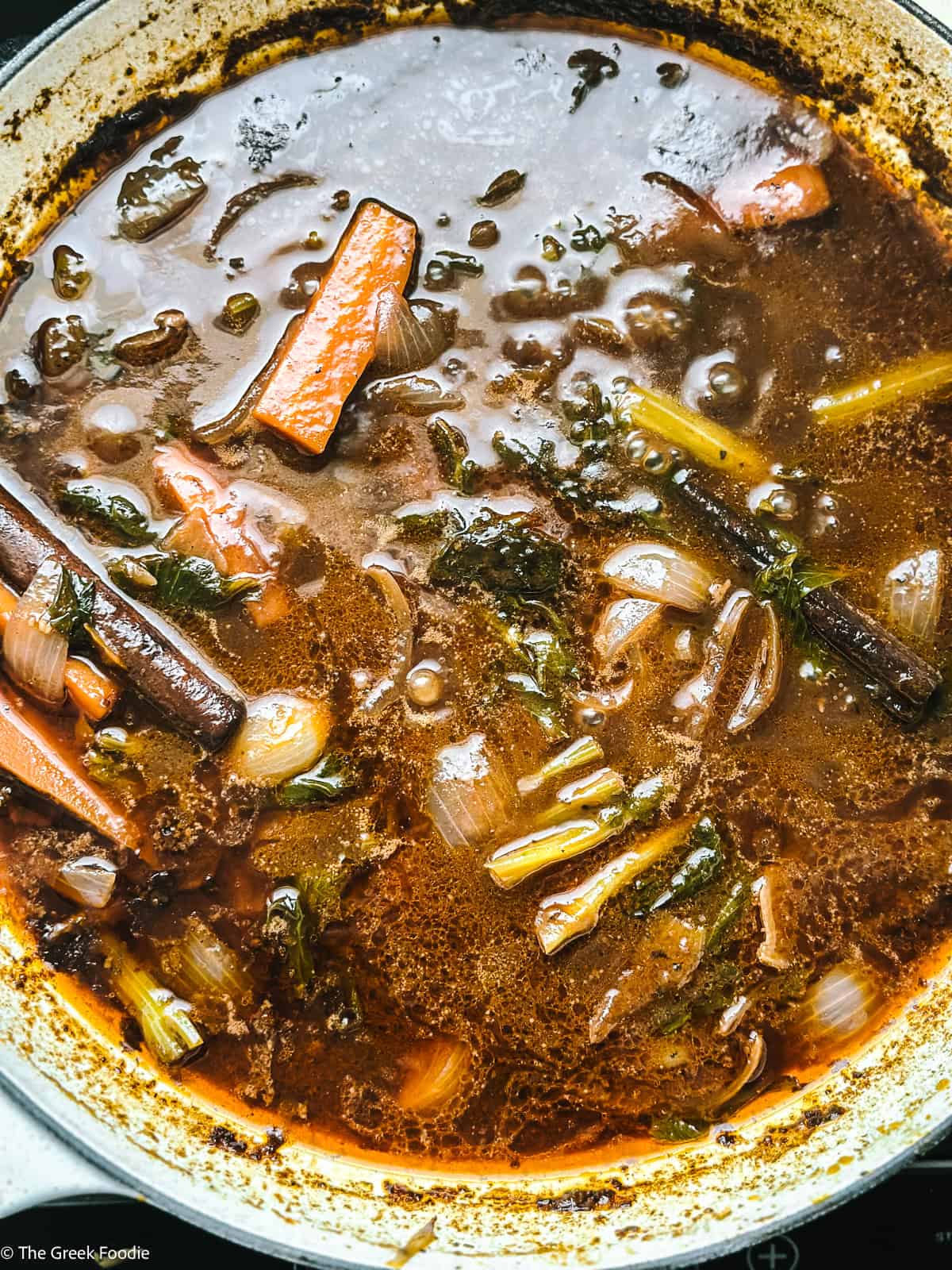
Step 6: Reduce the sauce. When the pork is tender, lift it out onto a platter and tent it with foil. Fish out the cinnamon sticks, cloves and bay leaf. Bring the sauce to a boil, then simmer over medium-high heat for 10–15 minutes until it thickens and coats the back of a spoon. Taste and adjust the salt. Return the pork to the pot and serve immediately, with plenty of sauce spooned over.
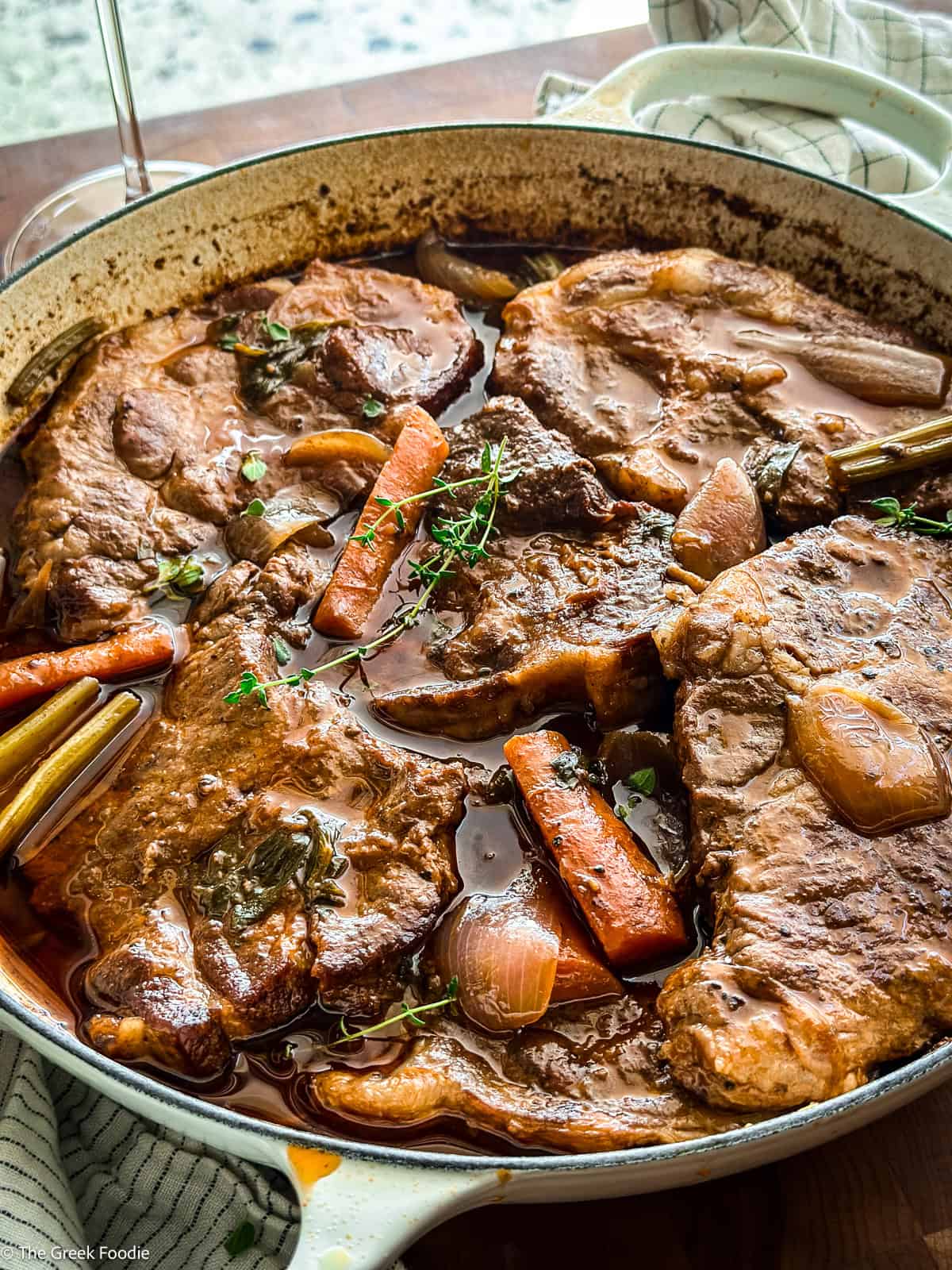
Three ways to cook braised pork shoulder
The stovetop method above is how I make it most often. Both alternatives below give you the same result with slightly different demands on your attention.
Dutch oven in the oven
My preference when I have guests, because the heat surrounds the pot and nothing catches on the bottom. Follow steps 1–4 on the stovetop, then cover and transfer to a 325°F / 165°C oven for 2½ to 3 hours. Reduce the sauce on the stovetop at the end as usual.
Slow cooker
Brown the pork and build the sauce base in a skillet first — this genuinely matters, a slow cooker cannot brown. Transfer everything to the slow cooker and cook on LOW for 7–8 hours or HIGH for 4–5 hours. Slow cookers don’t evaporate liquid, so use about ⅓ less stock, and finish by reducing the sauce in a saucepan on the stovetop.
How to tell when it’s done
Ignore the clock and use a fork. Twist it into the thickest part — if the meat resists or springs back, it needs more time. When it’s ready the fibers separate with almost no pressure. Pork shoulder is very hard to overcook in a braise, so if in doubt, give it another twenty minutes.
Tips for the best braised pork shoulder
- Salt early and generously. A big cut needs more salt than feels right. Season before browning, then taste and correct the sauce at the end.
- Take the browning seriously. It’s the single biggest lever on the finished flavor and it’s the step everyone rushes.
- Don’t drown it. Halfway up the meat is right. Fully submerged is boiling, not braising, and the sauce will be thin.
- Cook it a day ahead. The flavor deepens overnight and the fat sets on top so you can lift it off cleanly if you want a lighter sauce. Reheat gently.
- Rest before slicing. Fifteen minutes under foil keeps the juices in the meat instead of on the board.
- Keep the whole spices whole. Ground cinnamon turns the sauce muddy and gritty. Sticks and whole cloves perfume it and lift out.
Side dishes for braised pork shoulder
The sauce is the point, so serve something that can carry it.
- Olive oil mashed potatoes — the classic pairing, and the one my family asks for.
- Roasted lemon potatoes with garlic and oregano — bright and lemony against the rich, spiced sauce.
- Crispy Greek fries — not traditional alongside a braise, entirely wonderful anyway.
- Greek rice pilafi — fluffy and neutral, soaks up everything.
- Maroulosalata — cool romaine, dill, olives and feta. The acidity cuts the richness.
- Horta with olive oil and lemon — the way it would actually be served in a Greek home.
- Warm pita or olive oil bread with oregano — non-negotiable, really.
- Wine: pour the same red you cooked with. A medium-bodied Agiorgitiko or a Xinomavro with some age both stand up to the cinnamon and clove.
Storage and reheating
- Fridge: Cool completely, then store in an airtight container with its sauce for up to 4 days.
- Freezer: Portion the meat with plenty of sauce into freezer-safe containers and freeze for up to 3 months. Thaw overnight in the fridge before reheating.
- Reheating: Gently, in a covered saucepan over low heat, with a splash of stock or water to loosen the sauce. The microwave works but it tightens the meat — low and slow is kinder.
What to do with leftovers
- Shred the meat into the sauce and spoon it over rice pilafi or polenta.
- Pile it into warm pita with red onion and a spoonful of yogurt.
- Toss shredded pork and sauce through pappardelle with grated cheese — a ragù by another name.Rustic sandwiches on peasant bread with something sharp and pickled.

FAQ
More Greek Roasts and Braises
- Greek Leg of Lamb (Slow Roasted to Perfection)
- Pork Pot Roast with Chestnuts & Figs
- Braised Short Ribs
- Greek Pork and Beans with Butter Beans & Greens
- Pork Stew with Chickpeas
Cooked it? Rate it!
If you tried this recipe, I’d love to know how you liked it — drop a comment below or tag me on Instagram @thegreekfoodie__.


Greek Braised Pork Shoulder
Equipment
- Dutch oven or heavy lidded pot
Ingredients
- 3.5 lb pork shoulder , 1.5 kg, without the bone, sliced thick or cut in stew portions
- ¼ cup extra virgin olive oil
- 2 celery sticks, cut in chunky pieces, including the leaves
- 1 onion, roughly chopped
- 2 carrots, cut in chunky pieces
- 3 cloves
- 1 bay leaf
- 2 cinnamon sticks
- 2 tablespoons tomato paste
- ⅔ cup dry red wine, 200 ml
- 2 cups stock, beef, chicken or vegetable
- sea salt
- freshly ground pepper
Instructions
- Season the pork pieces with sea salt and freshly ground pepper. Heat the olive oil in a Dutch oven or heavy pot over medium-high heat and brown the pieces in batches for 3-4 minutes, until well browned on all sides.
- Tranfer the pork to a platter and add the chopped onions, celery and carrots to the skillet. Add bay leaf, cinnamon, cloves, sea salt and pepper and cook stirring for 3-4 minutes.
- Add the tomato paste and continue cooking, stirring for 2-3 minutes to build up flavor.
- Add the wine and stir. Allow alcohol to evaporate for a couple of minutes.
- Return the pork and its juices to the pot. Add the stock — it should come about halfway up the meat, not cover it. Bring to a gentle simmer, lower the heat, cover, and cook for 2 to 2½ hours, until the pork is fork-tender.
- When the pork is cooked to your liking, transfer it to a platter and cover it with aluminum foil. Bring the sauce to a boil, adjust the heat to medium-high high and simmer until the sauce has thickened, about 10-15 minutes. When the sauce has thickened, serve the pork pieces on a serving platter with the sauce all over them.
Notes
- Oven method: after adding the stock, cover and transfer to a 325°F / 165°C oven for 2½–3 hours.
- Slow cooker method: brown the pork and build the sauce in a skillet first, then transfer to the slow cooker with ⅓ less stock. Cook on LOW 7–8 hours or HIGH 4–5 hours. Reduce the sauce on the stovetop to finish.
- Doneness: twist a fork into the thickest piece. If it resists, it needs longer. Pork shoulder is very difficult to overcook in a braise.
- Make ahead: better on day two. Refrigerate in the sauce and reheat gently.
- Cuts: pork butt (Boston butt) or pork collar both work. Bone-in needs 30–45 minutes longer. Do not use loin or tenderloin.
Nutrition

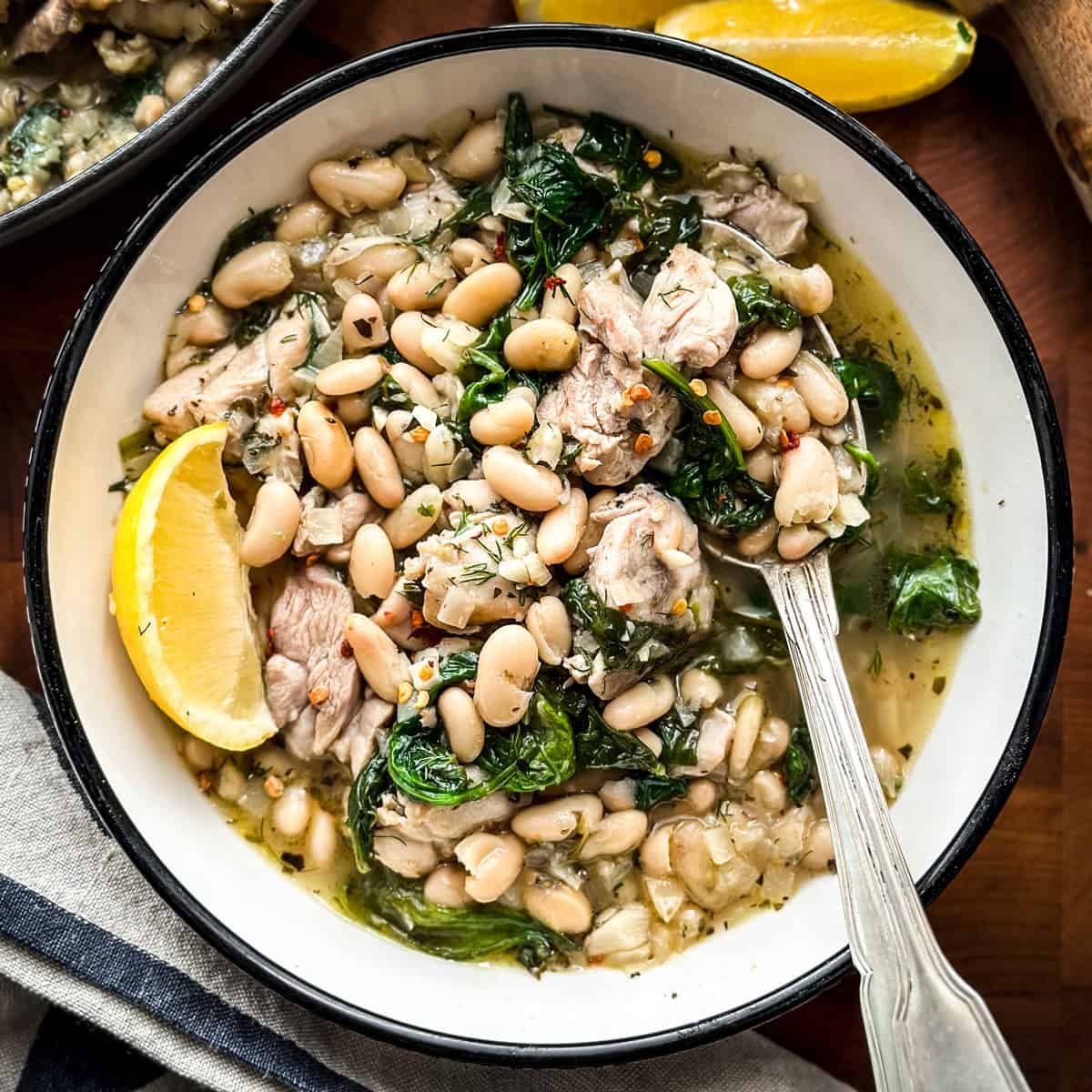
I experienced this delicious pork shoulder dish yesterday. It was delicious. Fortunately there are leftovers. 😊
Thank you so much Darly!
Καλημέρα Jenny!
Can I use a pork tenderloin for this????
Thank you!
Καλημέρα Στέλλα!
Yes, you can! It will be great. Cut it in thick pieces like I did with my pork shoulder or braise it whole. You might need to adjust cooking time so measure temp while you are cooking so you won’t overcook. Cooked temp should be between 145°-160° F.
Let me know how it came out! Thanks so much,
x Jenny
Hello Jenny,
Last week I was at the supermarket in Pylos (Messinia) and bought some nice pork meat with bone and fat.
I wanted to make something like I had years ago in Kreta with lamb: lamb in red wine sauce from the oven.
I made a search on the internet on pork, red wine and oven, and came across your website.
This morning I started cooking your recipe.
I had it for 3 ½ hours in the oven.
Tonight we had it for dinner, pork in red wine with cauliflower and cooked potatoes with a red Merlot wine from Theodoros Dereskos Winery.
Everything was more than delicious.
I will browse through your great website to look for other nice recipes.
I think the next one will be chicken in lemon sauce.
Best regards from Gialova.
Dear Hendrik,
I am delighted that you loved this recipe. Could not read better words this morning. You made my day!
Thank you so much,
x Jenny