

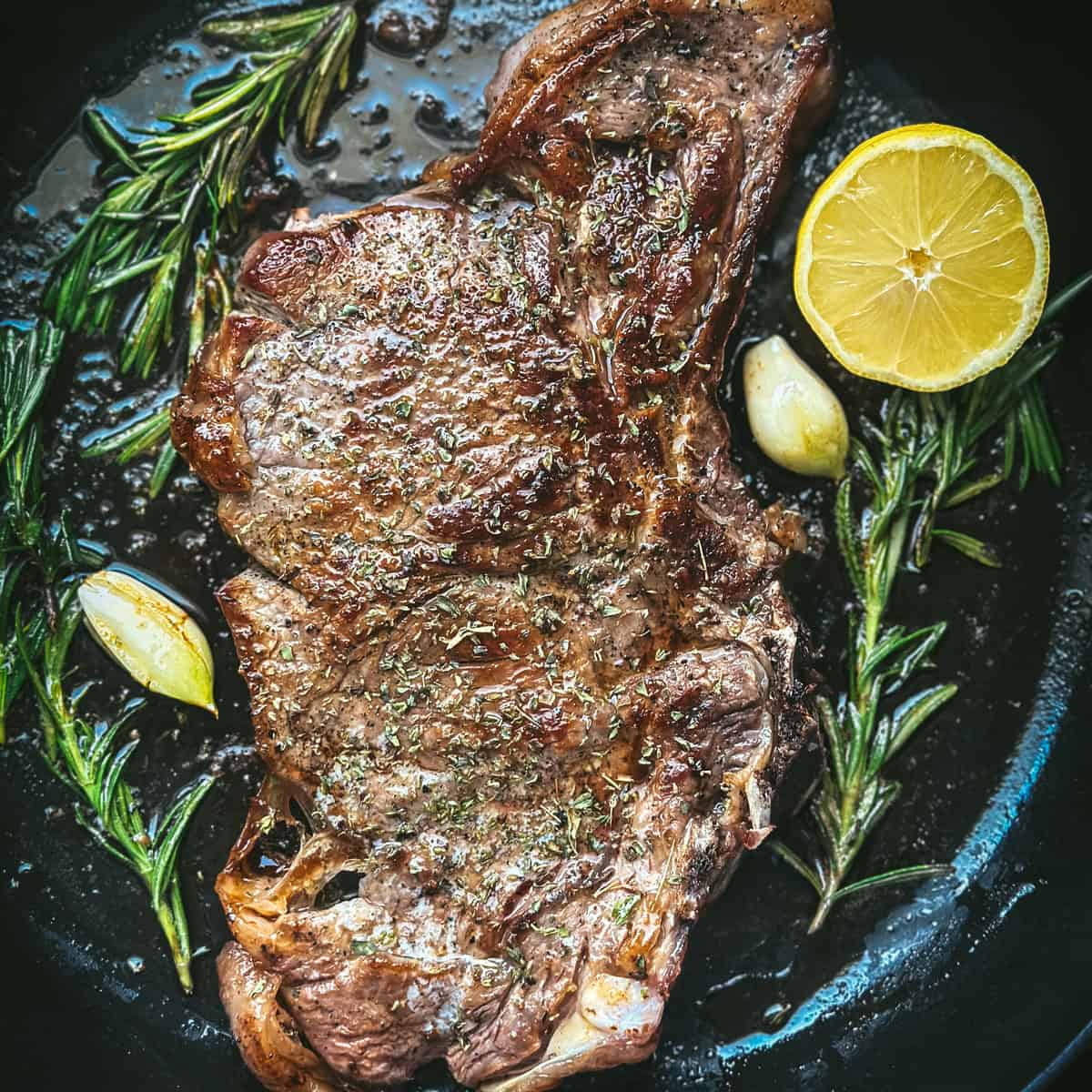
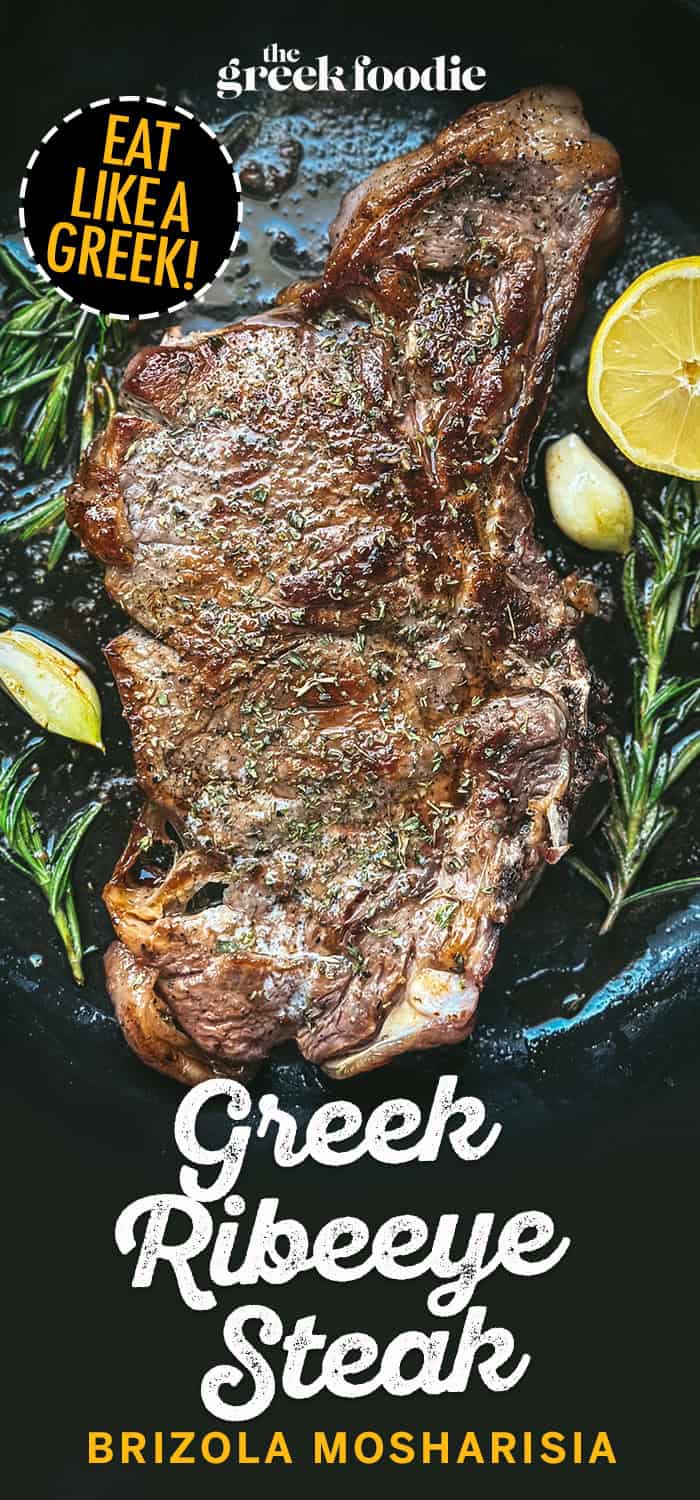
Greece’s answer to the ribeye steak is the spalobrizola, and it is one of the most satisfying things you will ever eat. A Greek brizola is deeply flavored and always properly charred. At a taverna, a Greek steak is served with lemon wedges on the side, fried potatoes, thinly sliced crispy eggplant, maybe a plate of horta, horiatiki salata, and tzatziki within reach.
Learn how to cook a Greek brizola at home on a screaming-hot cast-iron pan and with one secret weapon the charcoal grill doesn’t have. Your Greek steak might actually be better.
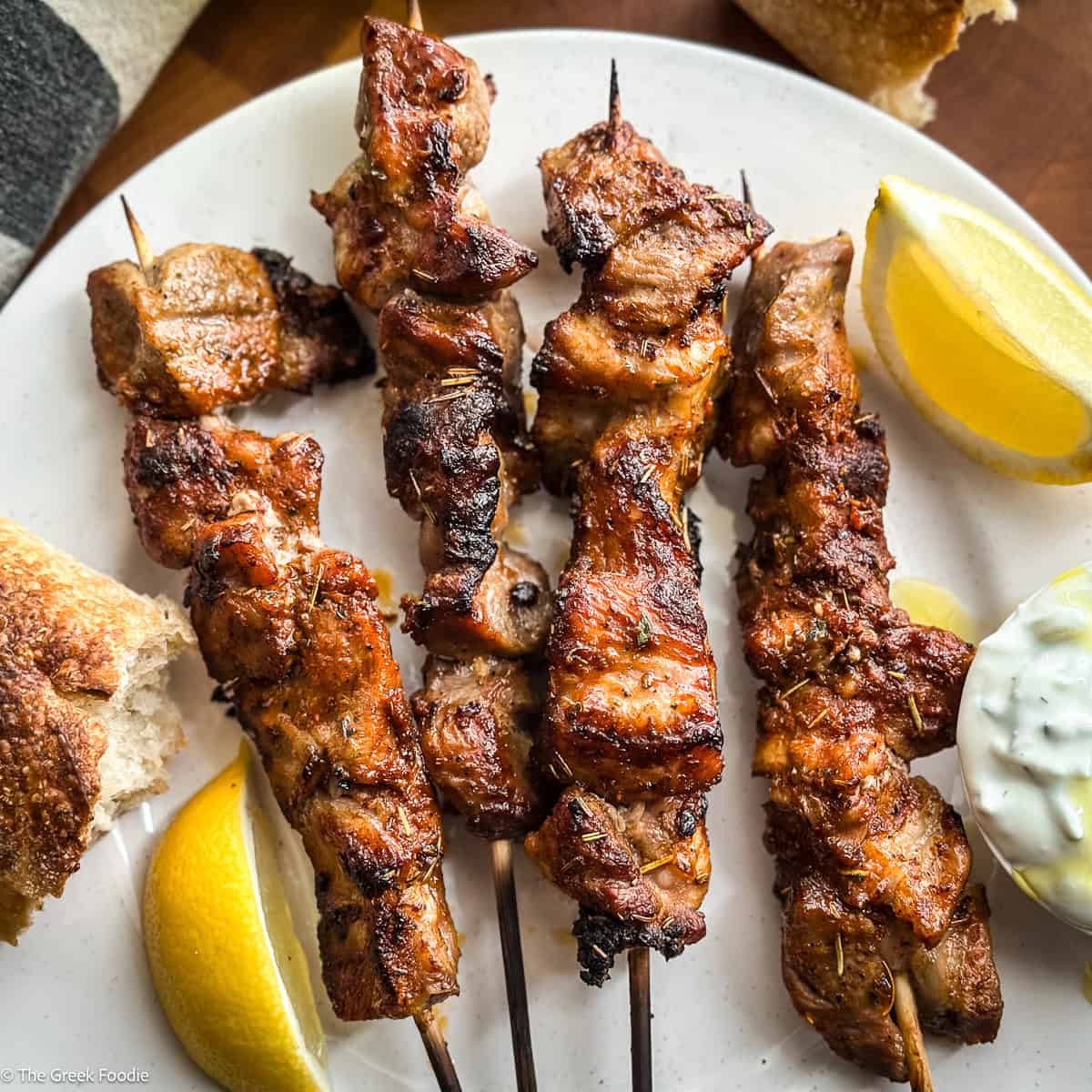
If you love this Greek Steak-Brizola, you will also love this Pork Steaks, Chicken Chops and Paidakia Lamb Chops!
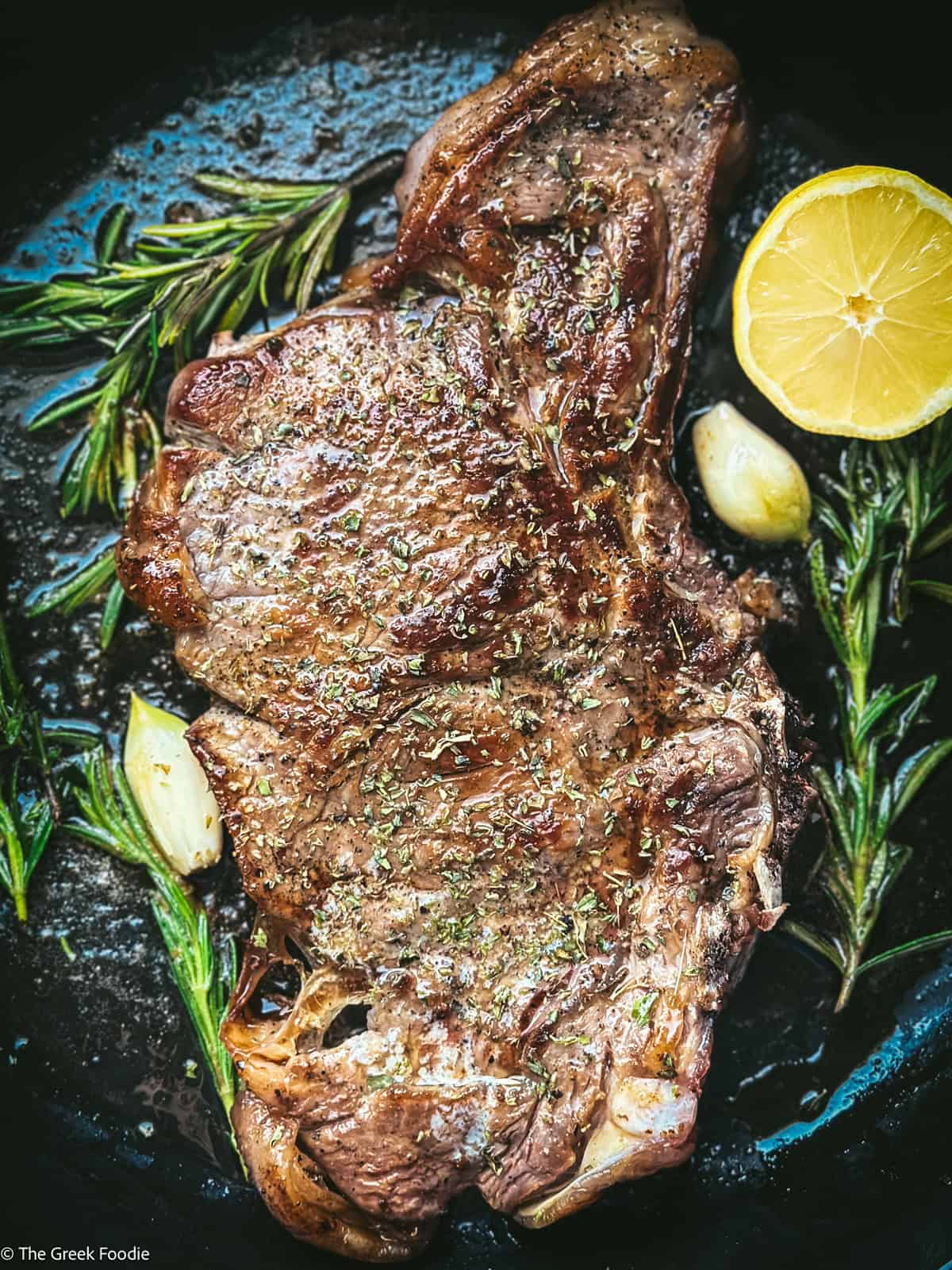
What is Brizola?
Brizola (μπριζόλα) is the Greek word for steak. In Greece, brizola mosharisia is always beef, don’t let anyone tell you otherwise. You’ll find pork chops are called brizola too (brizola hirini).
Spalobrizola (σπαλομπριζόλα) is the cut you want — it comes from the shoulder-rib area and is the closest Greek equivalent to a ribeye or chuck-eye steak. It has generous marbling, a rich deep flavor, and enough fat to stay juicy under high heat. If your butcher doesn’t know the term, ask for ribeye. You’re in the right neighborhood.
Cast Iron vs. Charcoal: A note on method
At a traditional Greek taverna, brizola is cooked over live charcoal and that smoky, slightly charred crust is part of what makes it taste the way it does. If you can get your grill going, nothing beats it.
But one of the best steaks I’ve ever made came from a cast iron pan.*
When charcoal isn’t happening, the cast iron method is not a compromise. Done right, it is extraordinary. The secret weapon is a little butter at the end. My neighborhood taverna would never, but your guests will thank you.
*Carbon steel pan is also great for cooking steak.
Ingredient notes
The steak: Look for spalobrizola or ribeye, bone-in or boneless, at least 2.5 cm (about 1 inch) thick. Thicker is better. It gives you a proper crust on the outside while keeping the inside at the doneness you want. Look for visible marbling throughout the meat. Beef from older cattle has a deeper, more complex flavor than young veal. If your butcher has it, ask for it. Don’t be shy about asking them to cut you a thicker piece
The salt: Coarse salt only, preferably sea salt. Nothing else goes on this steak before it hits the pan.
The butter: Unsalted, a few tablespoons, added at the end.
The oregano: Dried oregano goes in with the butter at the end — not before, not during the sear. Added to the foaming butter, it blooms instantly and bastes into the crust with every spoonful. This is the detail that makes this Greek, along with the lemon. Rigani — Greek dried oregano — is worth seeking out if you can find it. It is more intense and floral than the Italian variety, and you can taste the difference.
The pan: Your heaviest cast iron skillet or a carbon-steel pan.
Optional aromatics: A garlic clove, a sprig of thyme or rosemary added with the butter, never before.
How to season your rib-eye
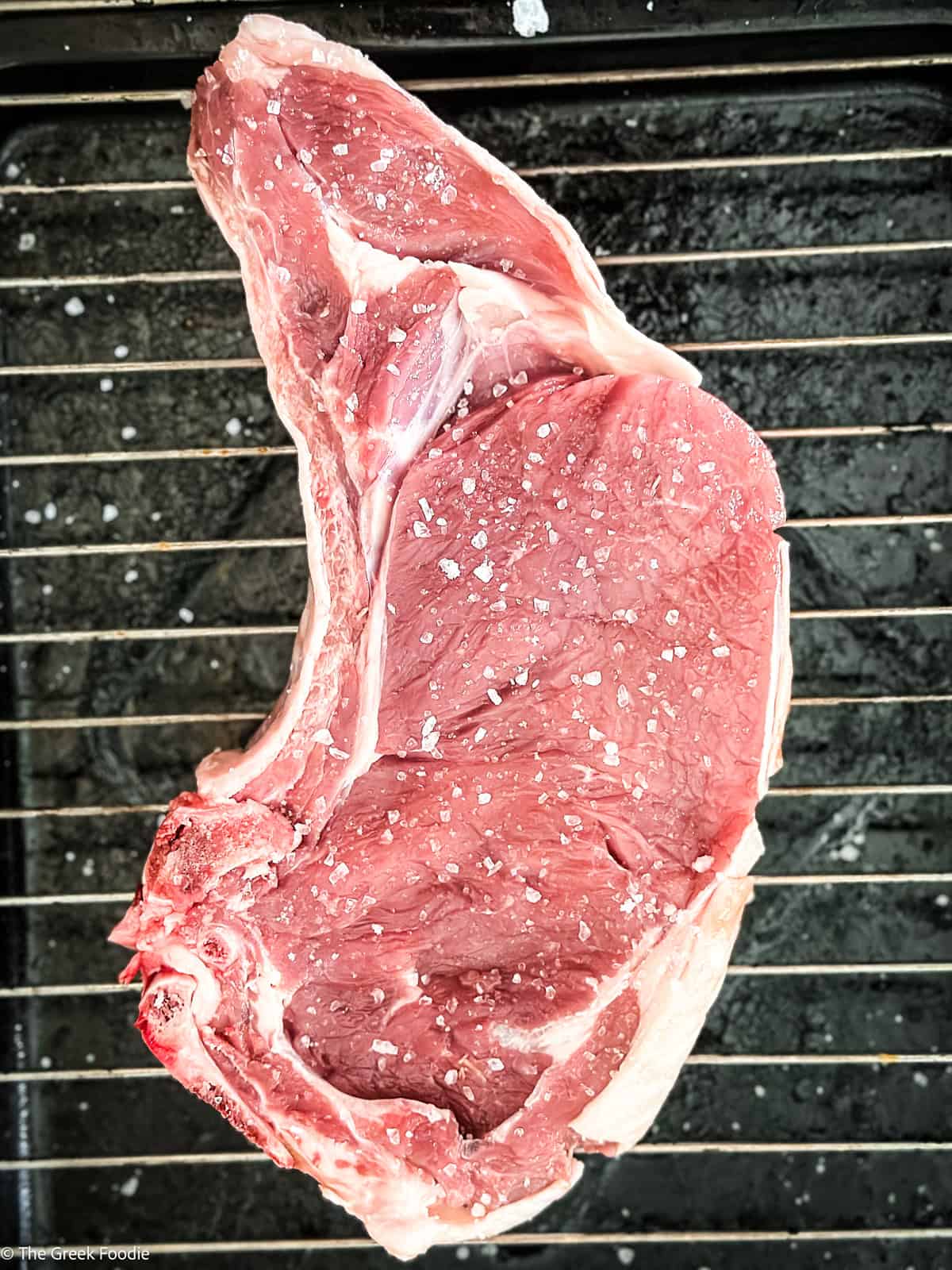
Seasoning with sea salt is everything, and timing matters.
Take your steak out of the fridge 30 minutes to 1 hour before cooking. Pat it completely dry with paper towels. A dry surface gives you a crust, a wet surface gives you steam.
Salt it generously with coarse salt as soon as it comes out of the fridge.
30-minute salt: The everyday method. The salt draws out a little surface moisture, which is then reabsorbed, seasoning the meat and helping to form a dry crust. This is what I do most of the time.
24-hour salt: If you have the fridge space and the patience, salt the steak the night before. Place it on a rack over a tray, uncovered, and let it air-dry overnight. The result is a more concentrated flavor and an even better crust. Worth it when you’re cooking for someone you want to impress.
Do not add pepper or any other spices before cooking. High heat will burn them before they can do anything useful. If you want pepper, add it after.
Cooking the Brizola
Step 1: Get the pan screaming hot
Place your cast iron pan over the highest heat your stove will give you. Let it heat until it just begins to smoke — this takes longer than you think, at least 3–5 minutes. Do not rush this. The crust you’re going for only happens when the surface of the meat hits extreme heat immediately.
No oil in the pan. No oil on the steak. The fat in the meat is enough, and oil will only get in the way of the color you’re building.
Step 2: Sear, flip often
Place the steak in the pan. You will hear exactly what you want to hear.
Flip every minute or so. This sounds counterintuitive if you’ve been told to leave a steak alone, but flipping frequently actually builds a thinner, more even crust on both sides. If your steak has a thick fat cap on the edge, hold it upright with tongs and render that fat directly against the pan until it’s golden.
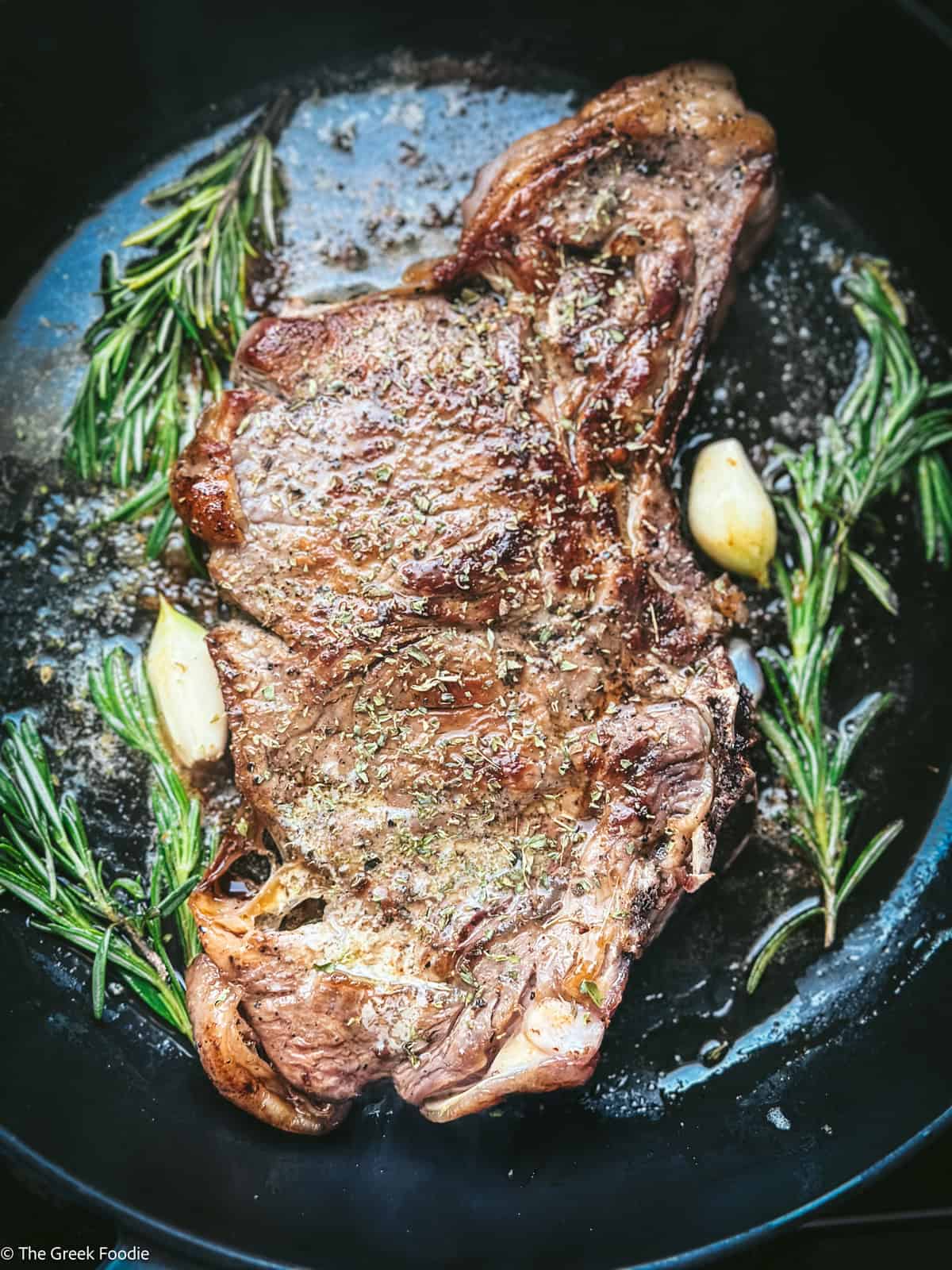
Step 3: The butter finish
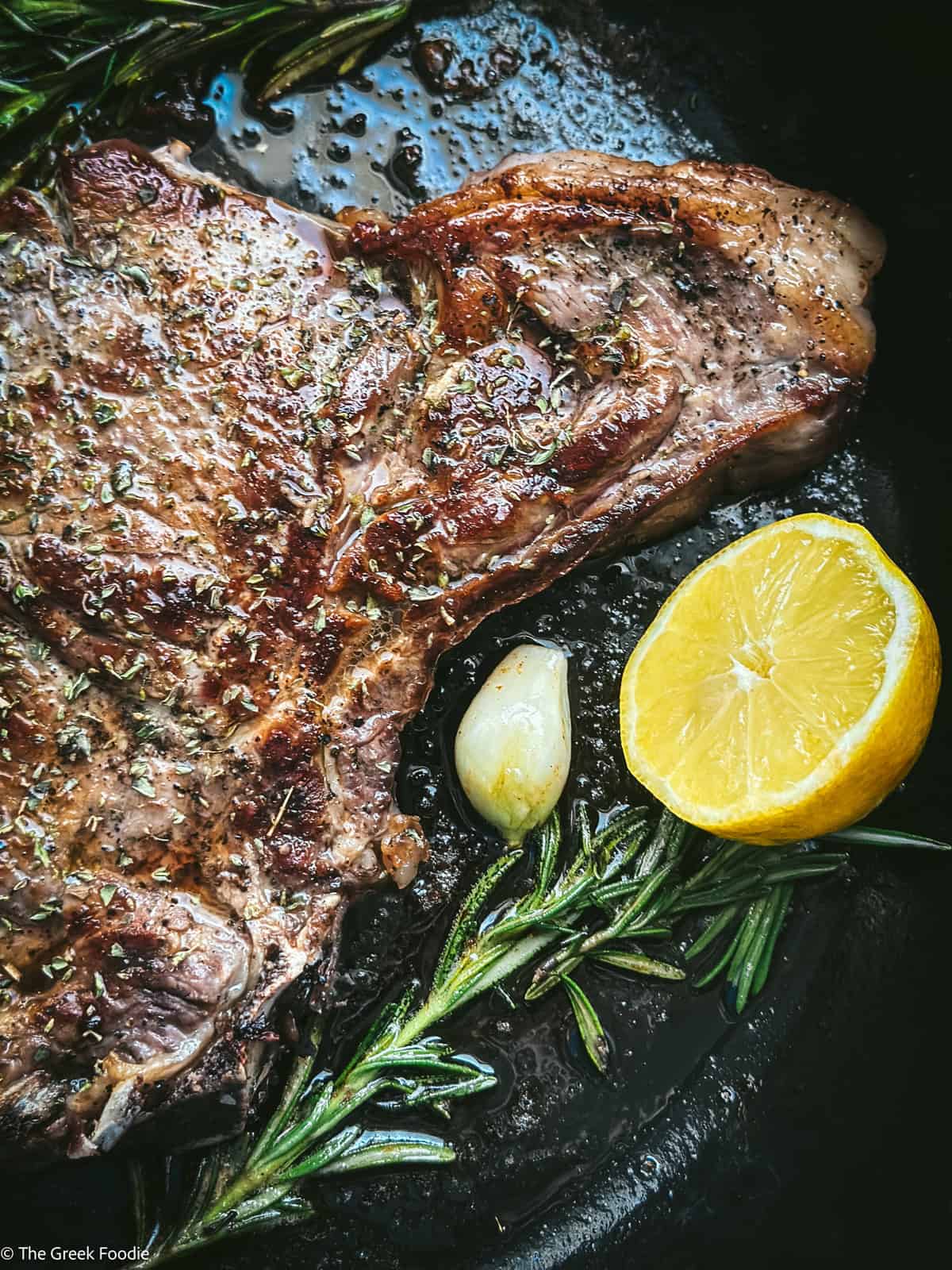
Halfway through cooking, add 2–3 tablespoons of unsalted butter to the pan. Add the garlic and any fresh herbs, like rosemary or thyme. Sprinkle a generous pinch of dried oregano and plenty of freshly ground pepper, they will bloom instantly. The butter will foam, use a large spoon to baste the steak continuously, tilting the pan and spooning the hot butter over the meat. Keep basting until the steak reaches your desired doneness.
Approximate cooking times for a 2.5 cm steak:
- Rare: ~6 minutes, remove at 52°C / 125°F
- Medium-rare: ~8 minutes, remove at 57°C / 135°F
- Medium: ~10 minutes, remove at 63°C / 145°F
- Medium-well: ~12 minutes, remove at 68°C / 155°F
- Well-done: ~12–14 minutes, remove at 71°C / 160°F
A note on doneness: at a Greek taverna, medium is the default. A properly marbled spalobrizola cooked to medium is deeply flavorful and juicy. That said, if you prefer yours με το αίμα της — with the blood, as Greeks say — meaning medium-rare or medium-well, go right ahead. Cook it how you love it.
Let It Rest
Transfer the steak to a cutting board and let it rest for 2–3 minutes before cutting. It’s a small step and worth doing. The juices redistribute, and you lose less when you slice.
How to Serve Brizola, the Greek Way
At a taverna, brizola comes with lemon wedges. Squeeze fresh lemon juice over the steak right before you eat. The acid cuts through the fat and lifts the whole thing. Try it if you haven’t.
Around the steak, the table usually holds:
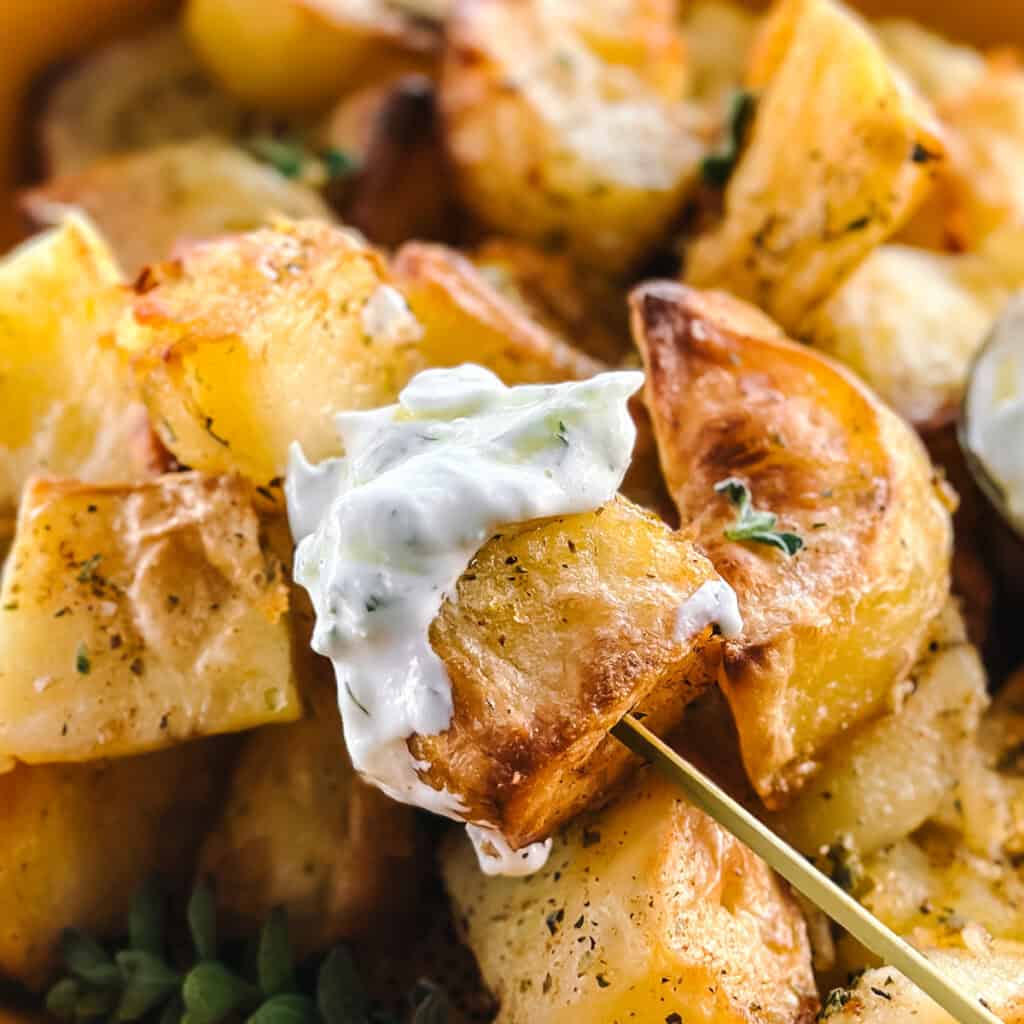
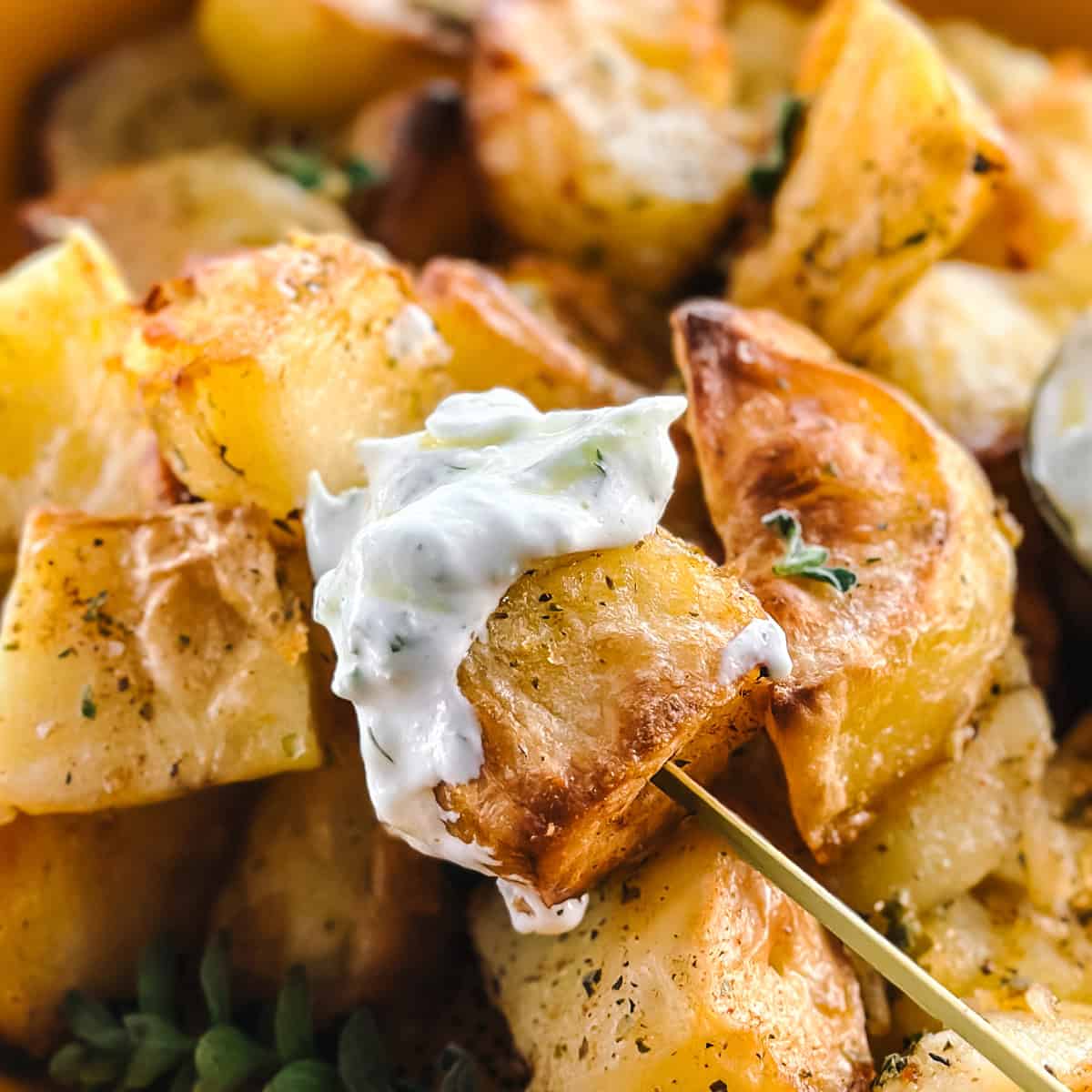
- Patates tiganites — thick-cut fried potatoes, not fries, proper chunks
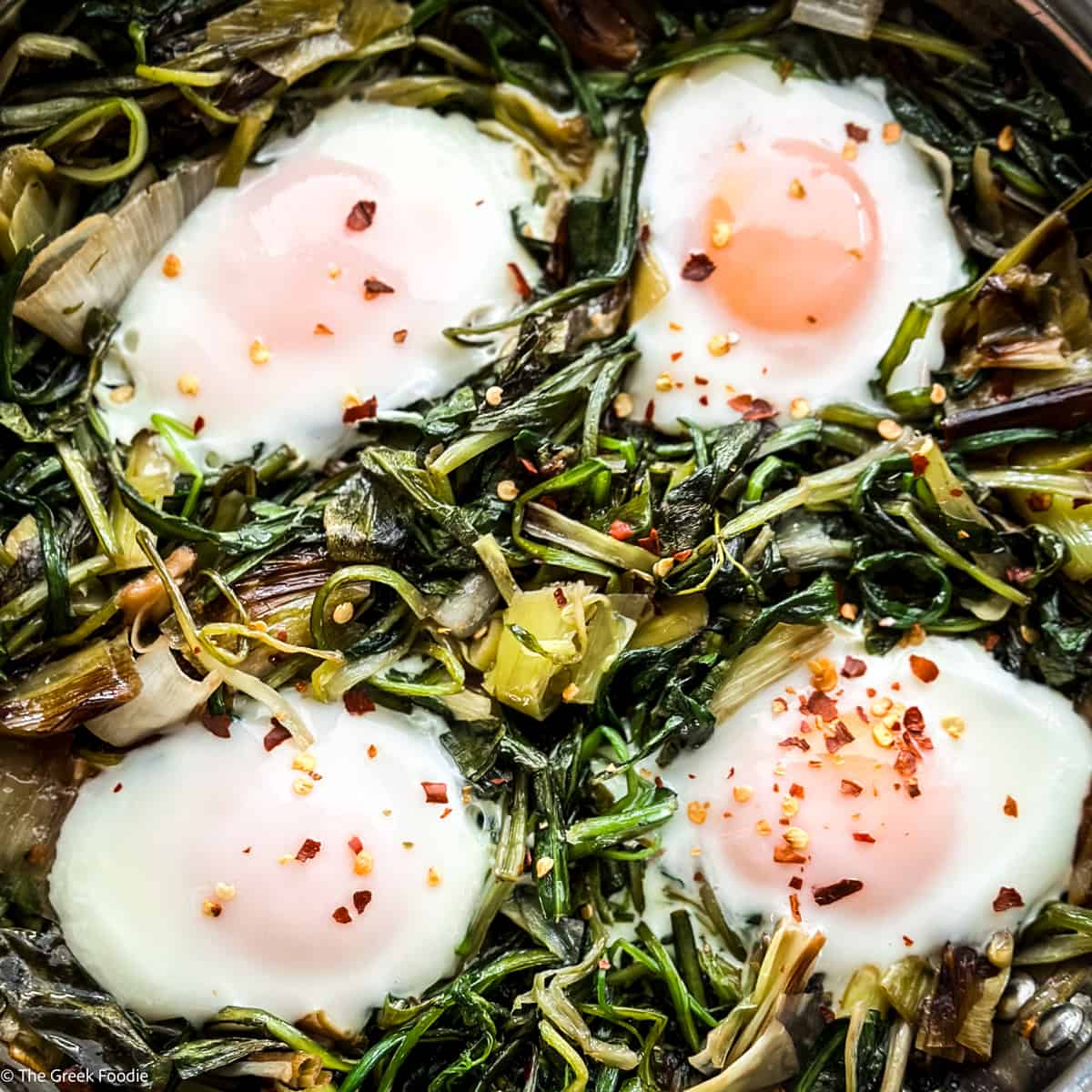
- Horta — boiled greens, dressed with olive oil and lemon
- Tzatziki sauce or melitzanosalata dip on the side
- Fresh crusty bread to catch the juices
Serve each steak whole, on a warm plate, with that lemon wedge.
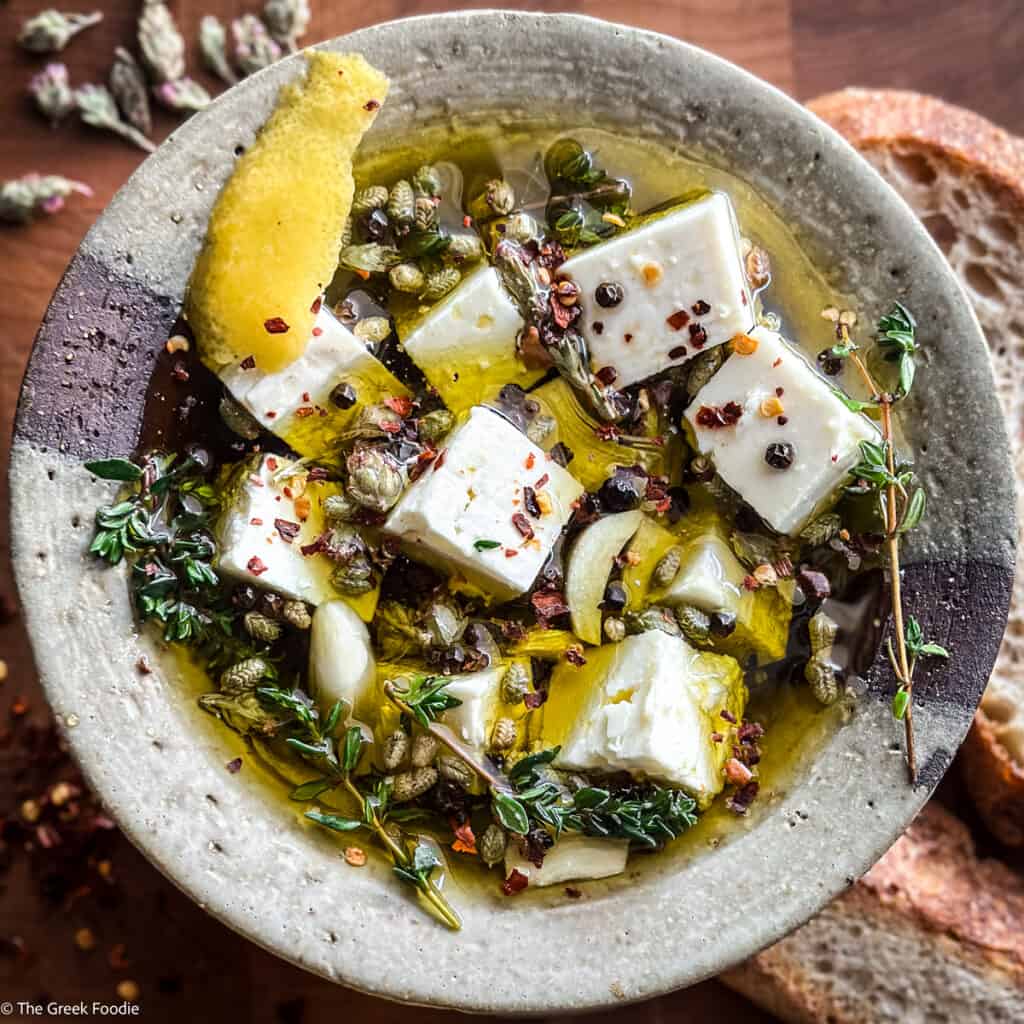
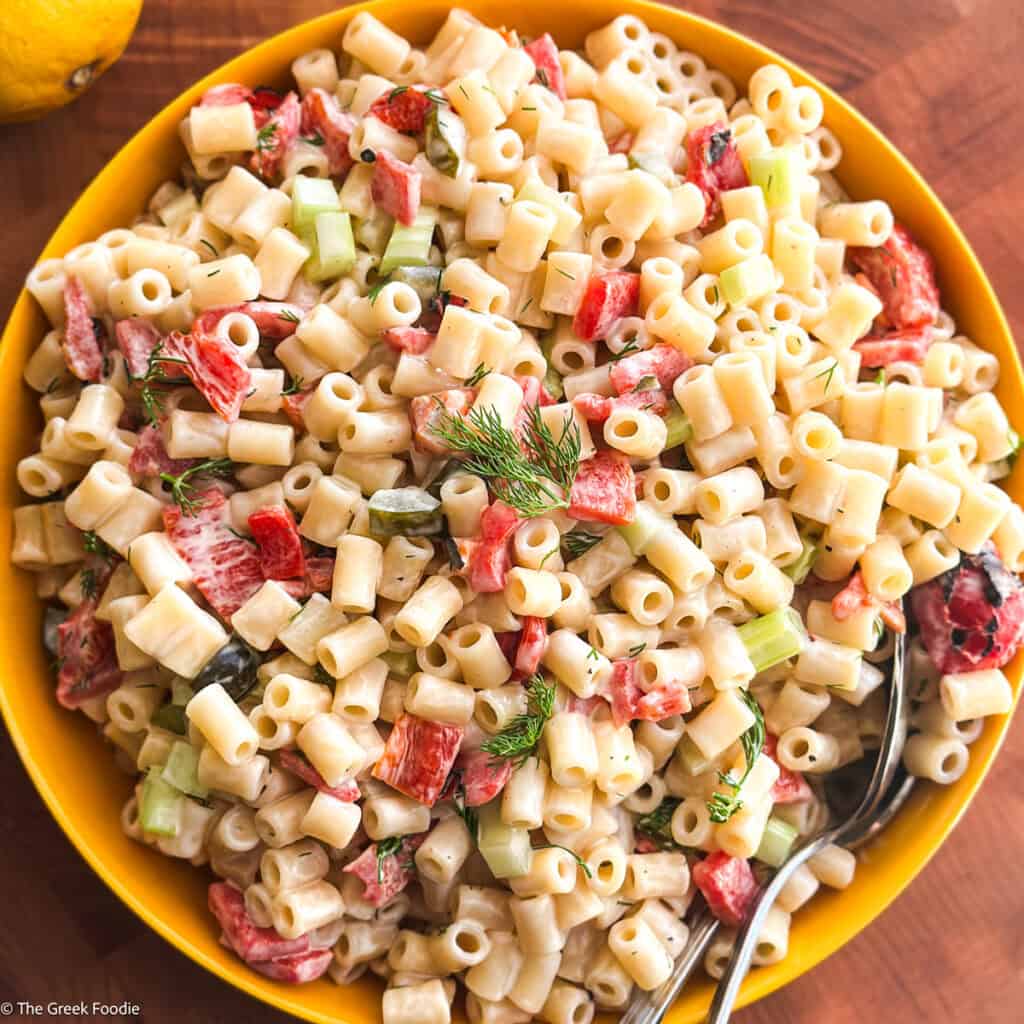
Side dishes for Greek brizola
Cooked it? Rate it!
If you tried this recipe, I’d love to know how you liked it — drop a comment below or tag me on Instagram @thegreekfoodie__.


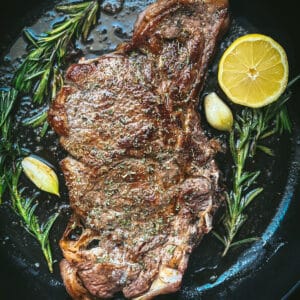
Greek Brizola — How to Cook a Greek Steak at Home
Equipment
- Cast iron pan
Ingredients
- 1 ribeye steaks (spalobrizola), bone-in or boneless, at least 2.5 cm thick
- 1 tablespoon coarse sea salt
- 3 tablespoons unsalted butter
- 2 garlic cloves, lightly crushed
- 1 fresh rosemary sprig
- dried oregano
- freshly ground pepper
to serve
- 1 lemon, cut into wedges
Instructions
- Salt and rest at room temperature: Remove the steak from the fridge 30 minutes to 1 hour before cooking. Pat completely dry with paper towels. Season generously all over with 1 tablespoon coarse salt. Leave uncovered at room temperature — this dries the surface and sets you up for a proper crust.
- Heat the pan: Place a heavy cast-iron skillet over the highest heat your stove will provide. Let it heat for at least 3–5 minutes, until it just begins to smoke. Do not add oil to the pan or the steak.
- Sear the steak: Place the steak in the hot pan. Flip every minute for even browning and a thin, uniform crust on both sides. If the steak has a thick fat cap on the edge, hold it upright with tongs until that fat is golden and rendered.
- Butter baste: Halfway through cooking, add 3 tablespoons unsalted butter, 2 garlic cloves, lightly crushed, and 1 fresh rosemary sprig to the pan. The butter will foam. Immediately add a generous pinch of dried oregano and plenty of freshly ground pepper (or to taste)into the foaming butter. Tilt the pan and use a large spoon to continuously baste the steaks with the hot herb butter until they reach your desired doneness. For medium-well, aim for 68°C / 155°F on a meat thermometer. For medium-rare, remove at 57°C / 135°F. For medium, remove at 63°C / 145°F.
- Rest: Transfer the steaks to a cutting board and rest for 2–2 minutes 02:00 before slicing or serving.
- Serve: Serve whole on a warm plate, with lemon wedges on the side. Squeeze the lemon over the steak just before eating. Enjoy the steak with thick-cut fried potatoes, horta, and tzatziki or melitzanosalata.
Notes
Nutrition
Delicious steak with lots of flavor! Lovely pairing with KIR-GIANNI TWO OLIVES 2020 RED.
Yes! Perfect pairing! x Jenny