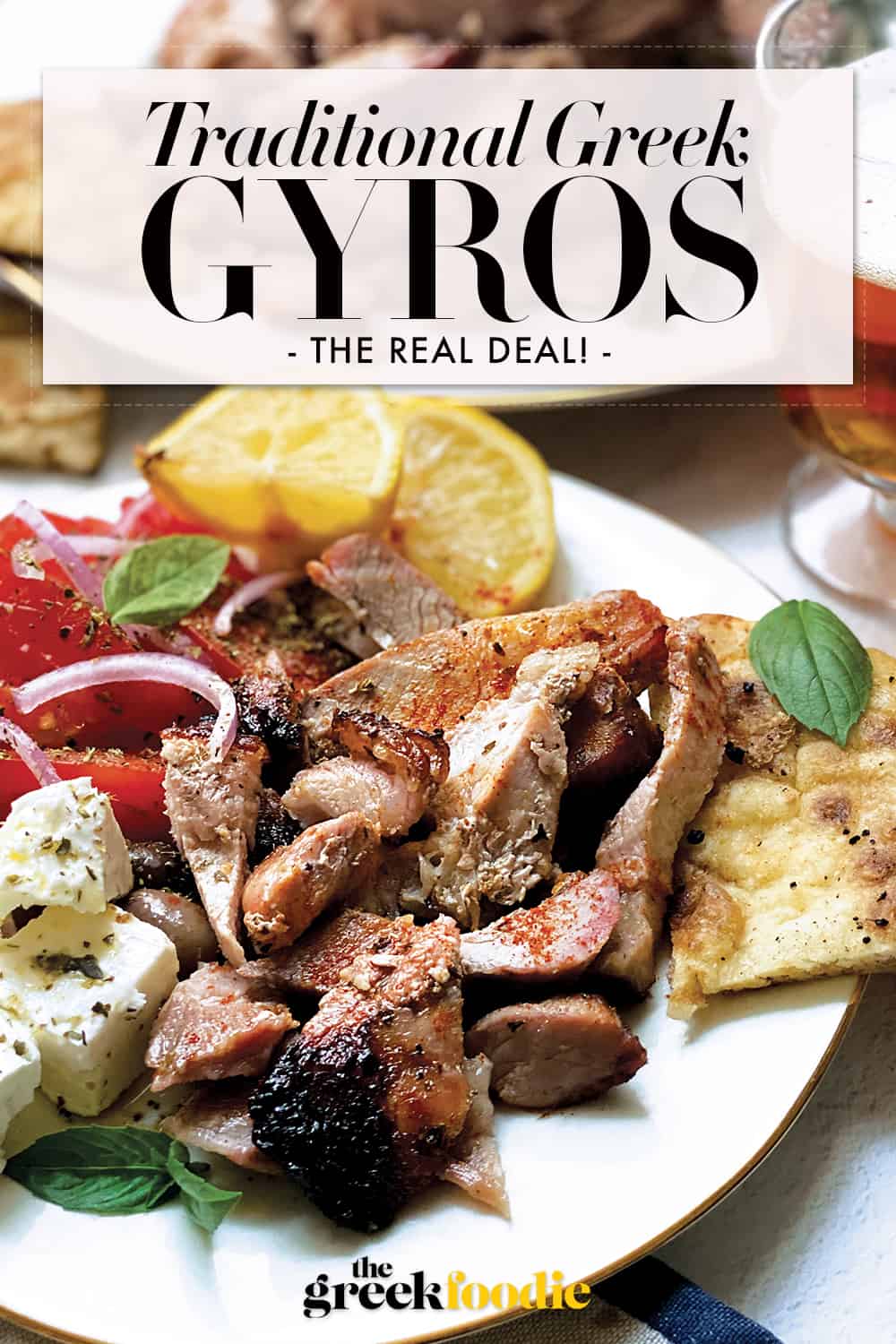

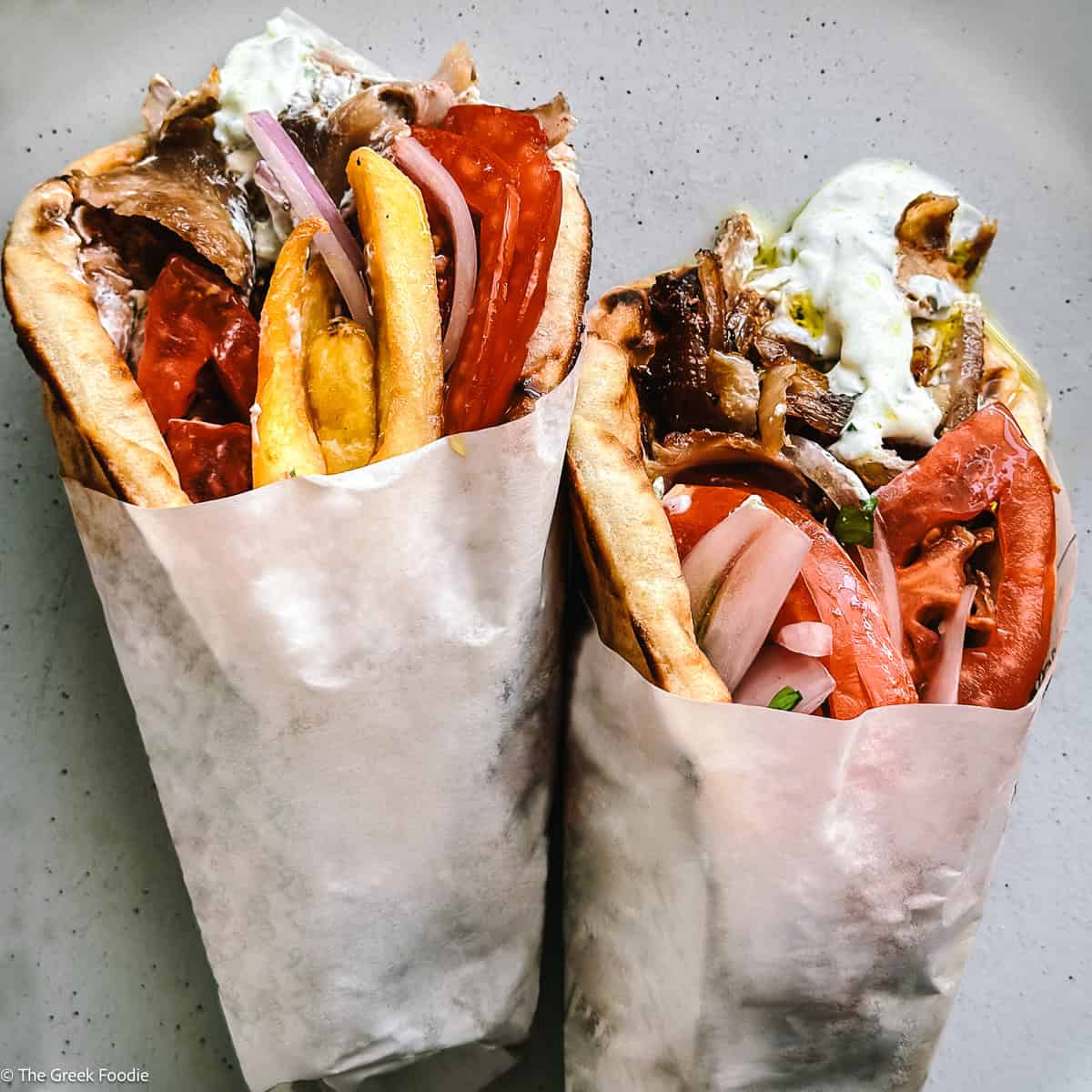
This is the Greek gyros recipe you’ve been looking for — not the American döner-style version, and not chicken. This is authentic Greek pork gyros: pork shoulder and pork belly, brined overnight, marinated in olive oil, oregano, and sumac, then cooked on a vertical rotisserie until the edges turn golden and crispy. Exactly the way they make it back home in Greece.
I grew up eating gyros from the neighborhood gyradiko — the gyros shop — where the spit turns all day and you can smell it from a block away. In Greece, gyros is pork. Chicken gyros exists too, but pork is the soul of it. What you find in many American restaurants — a pressed loaf of ground beef and lamb — that’s actually much closer to Turkish döner kebab. We call it doner in Greece too. It’s delicious, but it is not gyros.
This homemade Greek gyros recipe is the real deal. The brine makes the pork impossibly tender and juicy. The marinade is deeply aromatic. The vertical rotisserie — which you can rig at home with just a few wooden skewers if you don’t have one — does the rest. Serve it wrapped in warm pita with tzatziki, sliced tomatoes, and fries for a proper gyros pita, or plate it up Greek taverna-style with olives and feta on the side.
If you love this Homemade traditional Greek Pork Gyro, you will also love these Pork Skewers With Yogurt Lemon Sauce, Chicken Skewers Orzo Bowls with Lemon, or Bifteki-The Greek Burger!
How this Greek gyros recipe was born
It‘s a well-known fact that I make souvlaki with pita every time I feel homesick. It is also my most-requested dish whenever we have guests. I make versions with chicken and pork, wrapped in homemade pitas, and served with lots of veggies, sauces, and fries.
This time, I was on a quest to make authentic traditional Greek pork gyro on a vertical rotisserie. Lacking the outdoor grill, I found a relatively small vertical rotisserie I could use in my oven. It took a few tries to perfect this recipe. Lots of cuts of meat went on that rotisserie, and Daryl had to sample my homemade gyros versions daily for a week. He was not complaining; he is, after all, my trusted recipe tester, but let’s say he had had enough of my gyro escapades. I consulted my butcher for what cut would be perfect for traditional Greek pork gyros at home. Extensive research was conducted to identify the perfect marinade and authentic seasonings to achieve the unmistakable flavor of pork gyros. We tried various combinations, and the perfect Greek gyros is finally here. It was a major win to perfect the tenderness of the salty, crispy meat that is such a popular, delicious food back home in Greece.
Why you will love Greek pork gyro
What is gyro meat made of
Traditional Greek gyros is prepared mainly with pork or chicken on a vertical metal spit that turns on its axis, cooking over a fire on one side. The cooked meat is cut into small vertical slices with a sharp knife, then wrapped in pita bread with sliced tomatoes, onions, and tzatziki sauce. We call it gyros pita. It is also served on a platter paired with the same ingredients.
Lebanese shawarma and Mexican tacos al pastor are all similar to gyros. All are descended from the Turkish döner kebab (from Turkish dönmek = to turn) created in the city of Bursa in the mid-19th century.
Döner kebab consists of lamb, beef, or chicken; however, a pork-based variant prevailed in Greece. At first in Greece, the gyros were called doner (or doner kebab), but in the early 1970s, the Greek term “gyros” (from the Greek word γύρος gyros, ‘circle’ or ‘turn’) was adopted.
In the US, a ground beef-and-lamb version is marketed as “gyros,” but this preparation is actually closer to döner kebab, which is what Greeks also call it. Authentic Greek gyros is made with real cuts of pork, not ground meat.
What makes Greek gyros different from what you find in America
If you’ve searched for a Greek gyros recipe and kept landing on chicken or ground-beef versions, you’re not alone — and now you understand why those results feel wrong.
In Greece, gyros is pork. That’s the default, the classic, the one you get handed wrapped in paper at a street gyradiko at midnight. Traditional Greek pork gyros is made with actual cuts of meat — shoulder for the lean, belly for the fat that renders and crisps on the spit.
What most Americans know as “gyros” — the compressed loaf of ground beef and lamb sliced off a rotating cone — is not Greek gyros. It is döner kebab, the Turkish preparation that spread across Europe and arrived in the US market, rebranded as “gyros.” In Greece, we call that doner. It’s a different dish: different meat, different texture, different tradition. Both are delicious. But only one is actually Greek gyros.
The seasoning of authentic Greek gyros is also distinctly Greek: oregano, garlic, sometimes sumac, always good olive oil. No cumin, no compressed loaf. Just well-seasoned pork, a hot spit, and time. That’s what this recipe gives you.
How to make pork gyros at home
To make a great traditional Greek gyro, the meat must be tender and not too lean. The fat adds so much flavor and makes the food crispy and delicious. A lean cut with no fat will produce a dry, tough gyro. The best combination is pork shoulder cutlets with some sliced pork belly. All the meat is brined for 24 hours. Then it marinates for a good amount of time before getting on the skewer. This preparation seems long, but it is easy and worth it. Trust me!
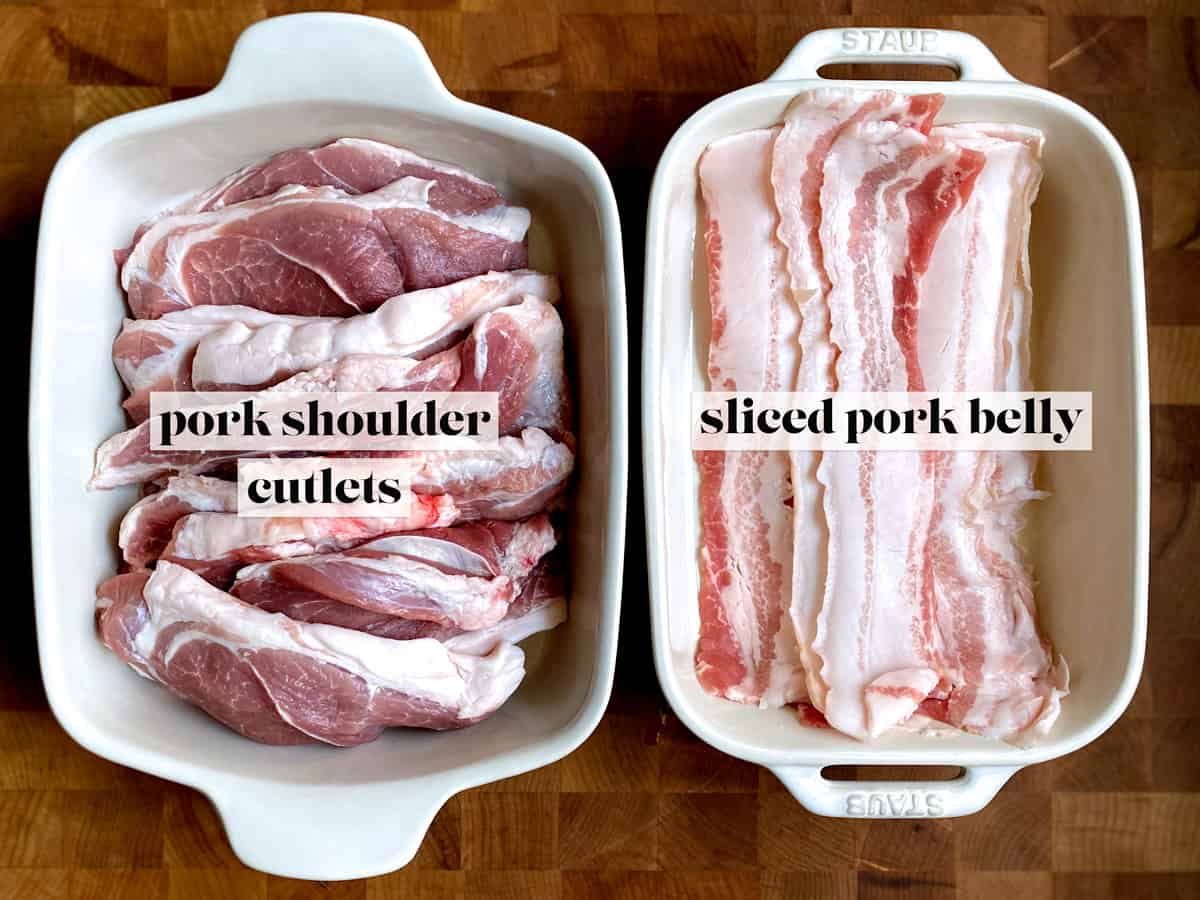
Step 1. Brine
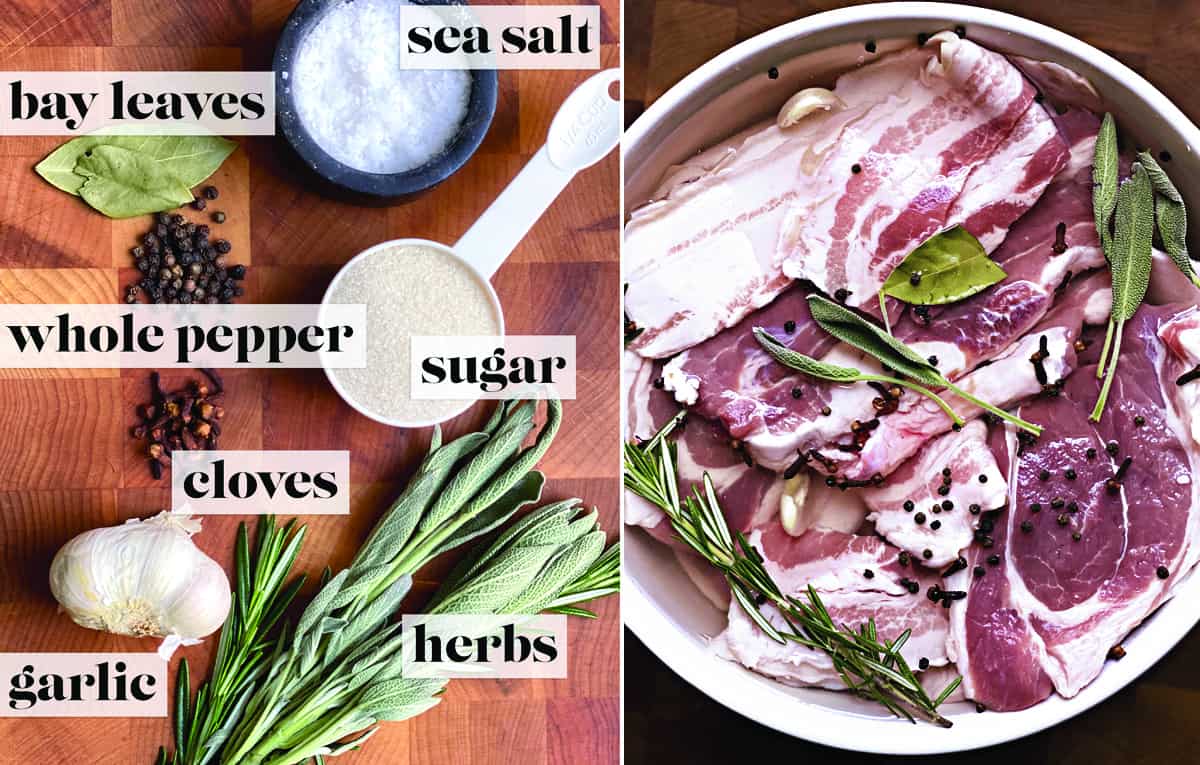
Fill a small saucepan with water. Add the salt and sugar and simmer over medium-low heat for 3-4 minutes until the sugar and salt have diluted. Fill a large container with water and mix in the sugar/salt mixture. Stir well. Add all the other brine ingredients. Stir and add the meat. Make sure it is covered fully with water. Place in the fridge and brine, if possible, for 24 hours. It will result in very tender, juicy meat.
Step 2. Marinate
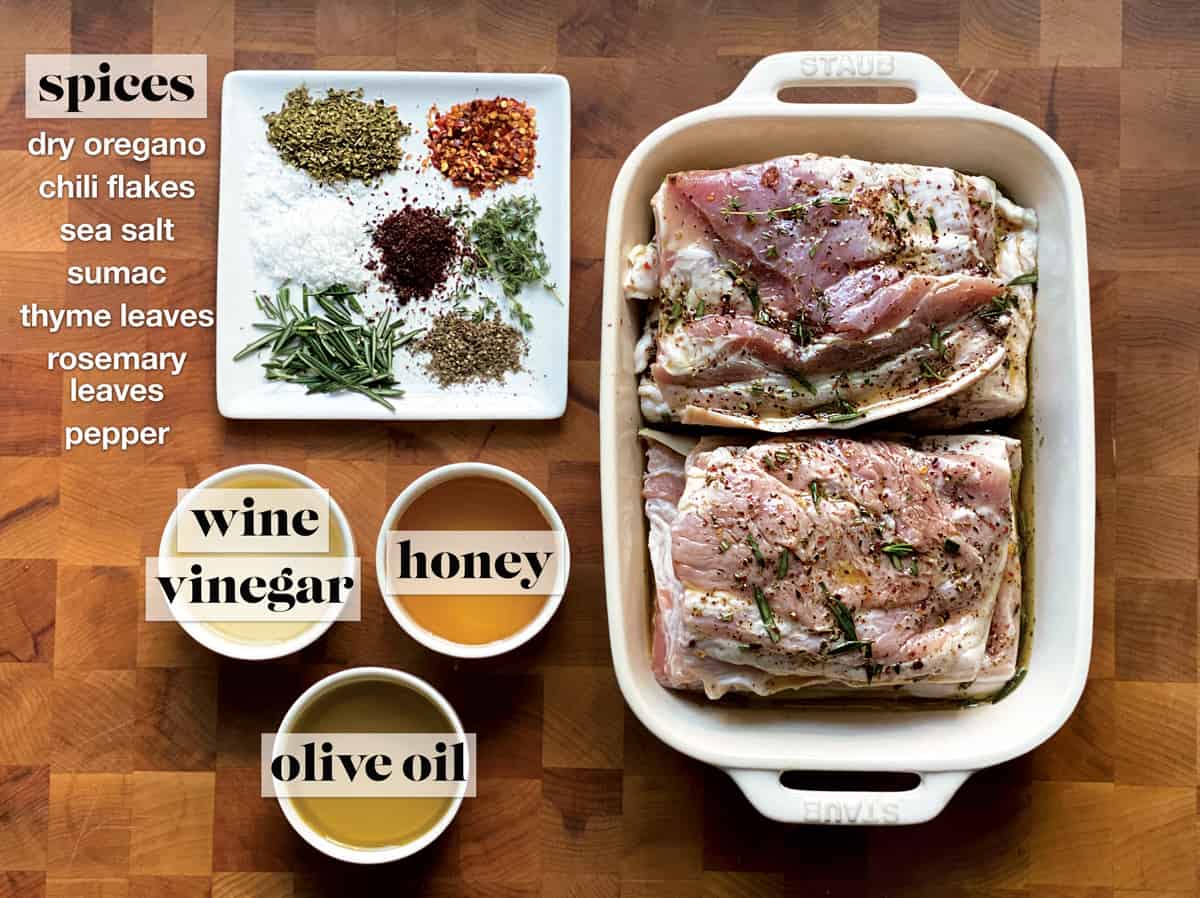
- The marinade intensifies the gyro’s flavor, making it delicious and aromatic. The longer you leave the meat in the marinade, the more it will absorb the seasonings. If you want to marinate meat quickly, use the vacuum-seal method. Get the right equipment; you can vacuum-seal your meat, shortening the time you need to wait before cooking.
- Mix all the ingredients together in a bowl. Make sure the honey is well-fixed with everything. Rub the marinade on the meat, place it in the fridge, and marinate for 3 hours or overnight.
Step 3. Make the pork gyro
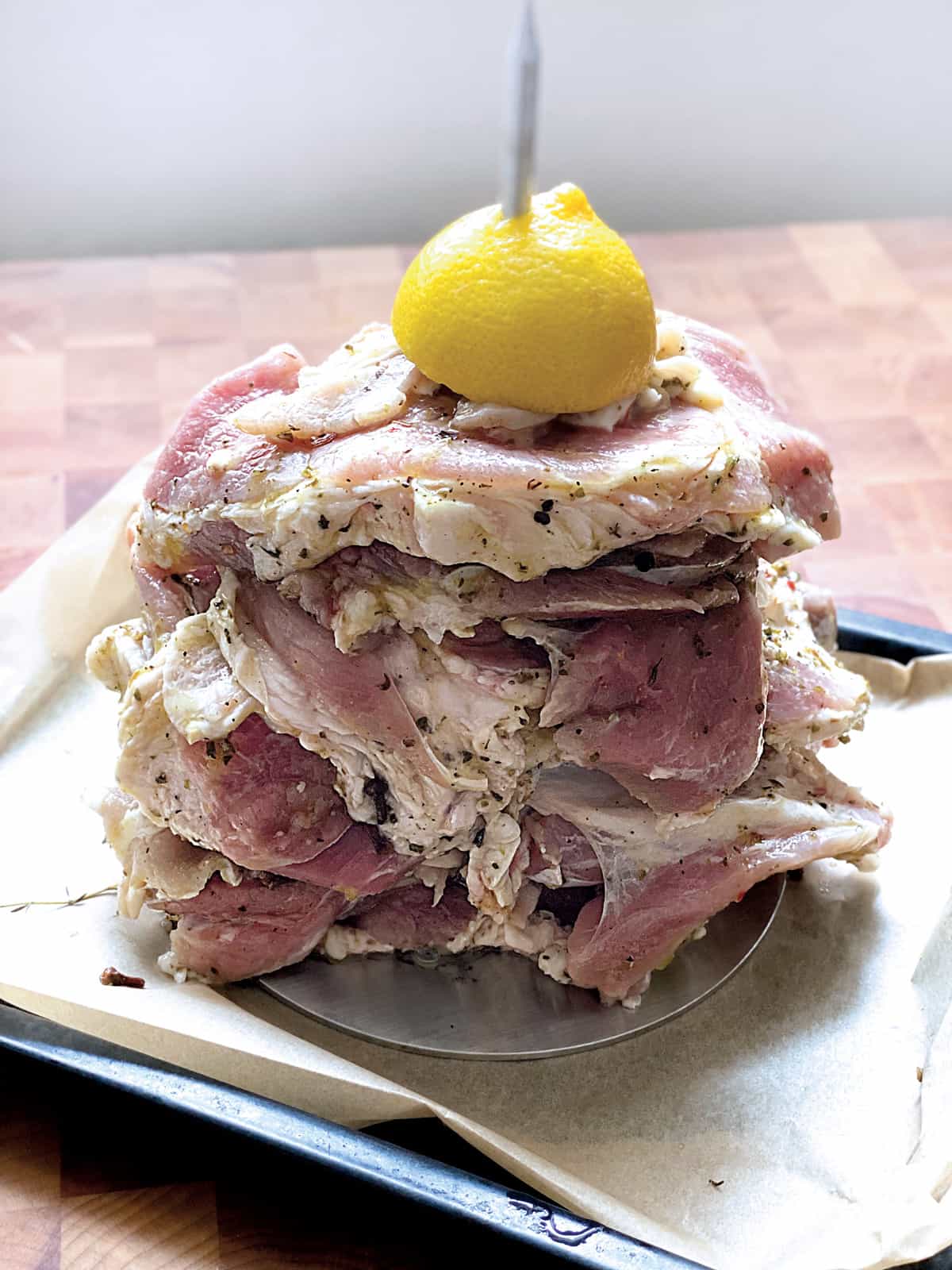
- Preheat the oven to 175°C / 350°F.
- Place the vertical skewer on a baking sheet and stack the cutlets by piercing them in the middle. Cut the pork belly slices in half and place them in between the pork cutlets. Trim some fat from the pork belly if you feel it is too much. I concentrate on placing the more meaty parts of the pork belly slices on the skewer and trimming most of the fat. I leave just enough for crispiness and flavor. Otherwise, the gyros might be too fatty and rich.
- Place on top half a lemon or half an onion—Cook in the oven for 1 hour and thirty minutes. Rotate the pan in the oven every half hour to cook evenly.
- Let the gyro rest for 10-15 minutes. Using a sharp knife, slice/shave the gyros vertically to serve.
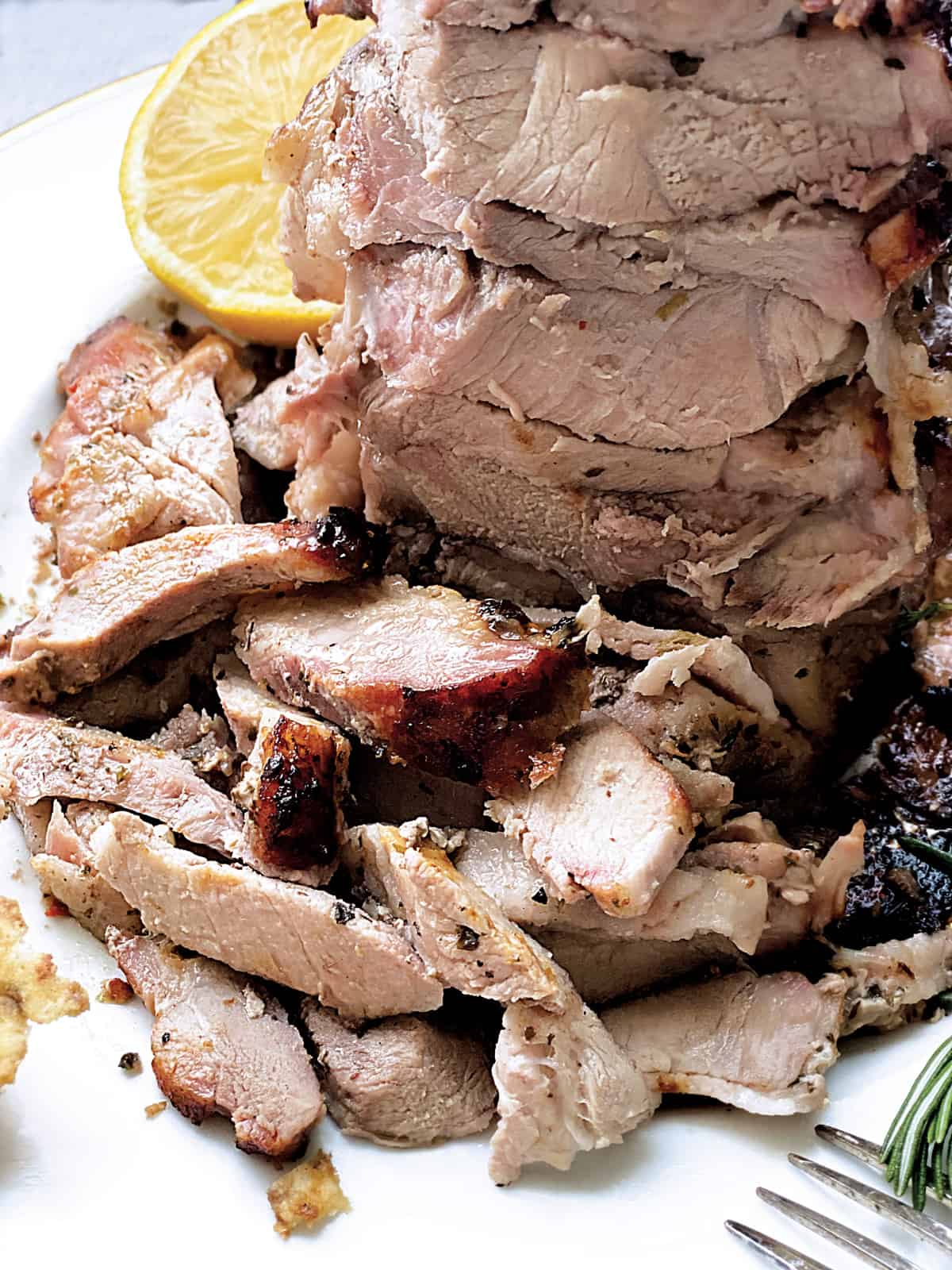
Pro tips
- Some grills have a rotisserie; you can use it for cooking the gyro. Remember to set the rotisserie to rotate often to cook the gyro evenly.
- You can improvise and make a vertical rotisserie of 3-4 wooden skewers. Stuck them on top of the onion and lemon halves—stack the meat as directed in the recipe and cook. The skewers will work well and deliver terrific results.
- You can also substitute chicken for pork. Use skinless, boneless thighs and skip the brine; marinate the chicken for 3-4 hours or overnight. Cook for 45 minutes, then check every 15 minutes with a meat grilling thermometer if the chicken has reached 165°F and juices run clear. Be careful not to overcook. Cover with aluminum foil if the edges are crisping up too quickly.
How to eat pork gyro
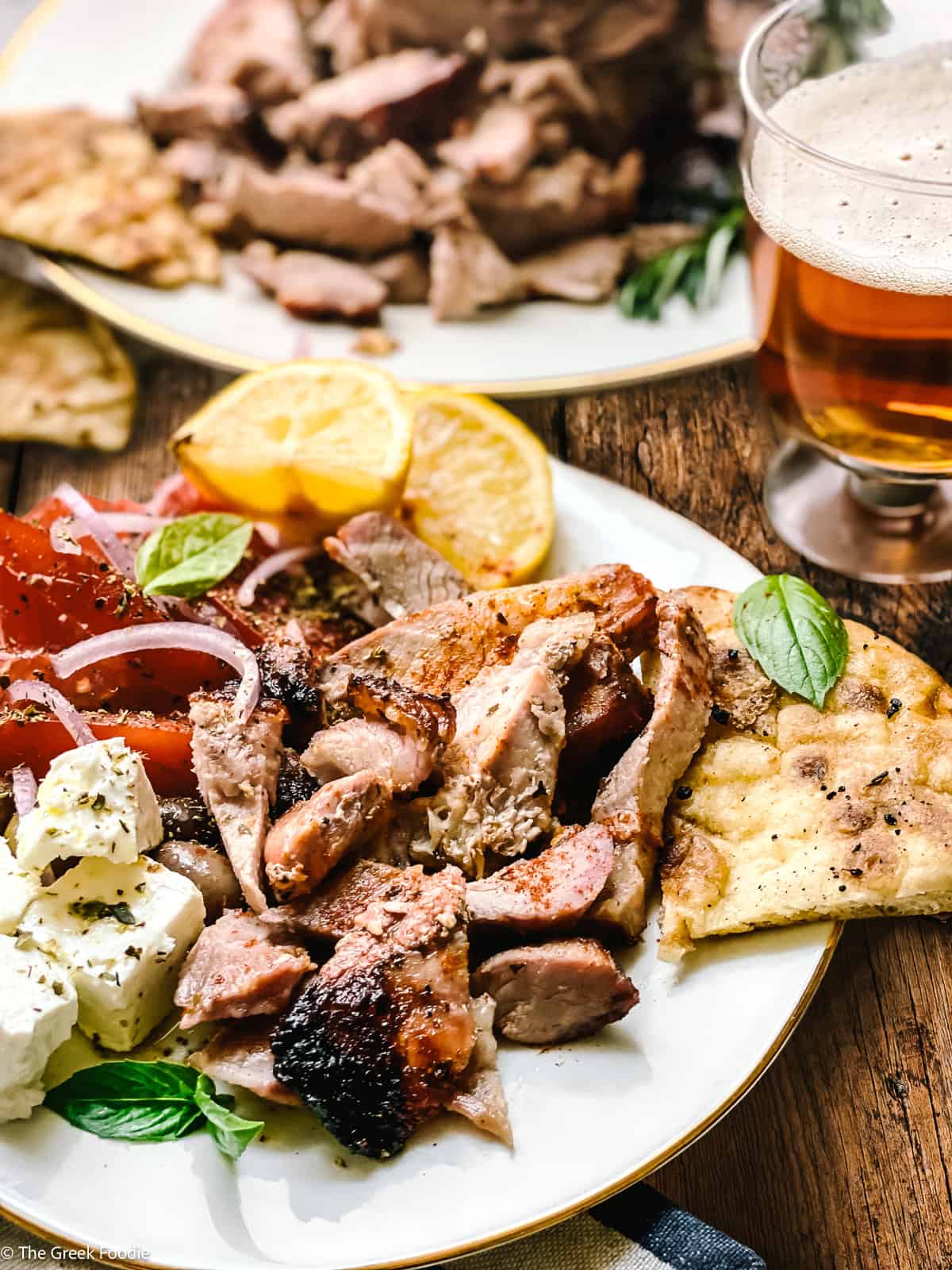
Serve thinly sliced gyro on a platter with a cut-up warm pita, sliced tomatoes, tzatziki, spicy whipped feta, olives, and lemon slices to squeeze for a bright note. Add a sprinkle of smoked paprika before serving.
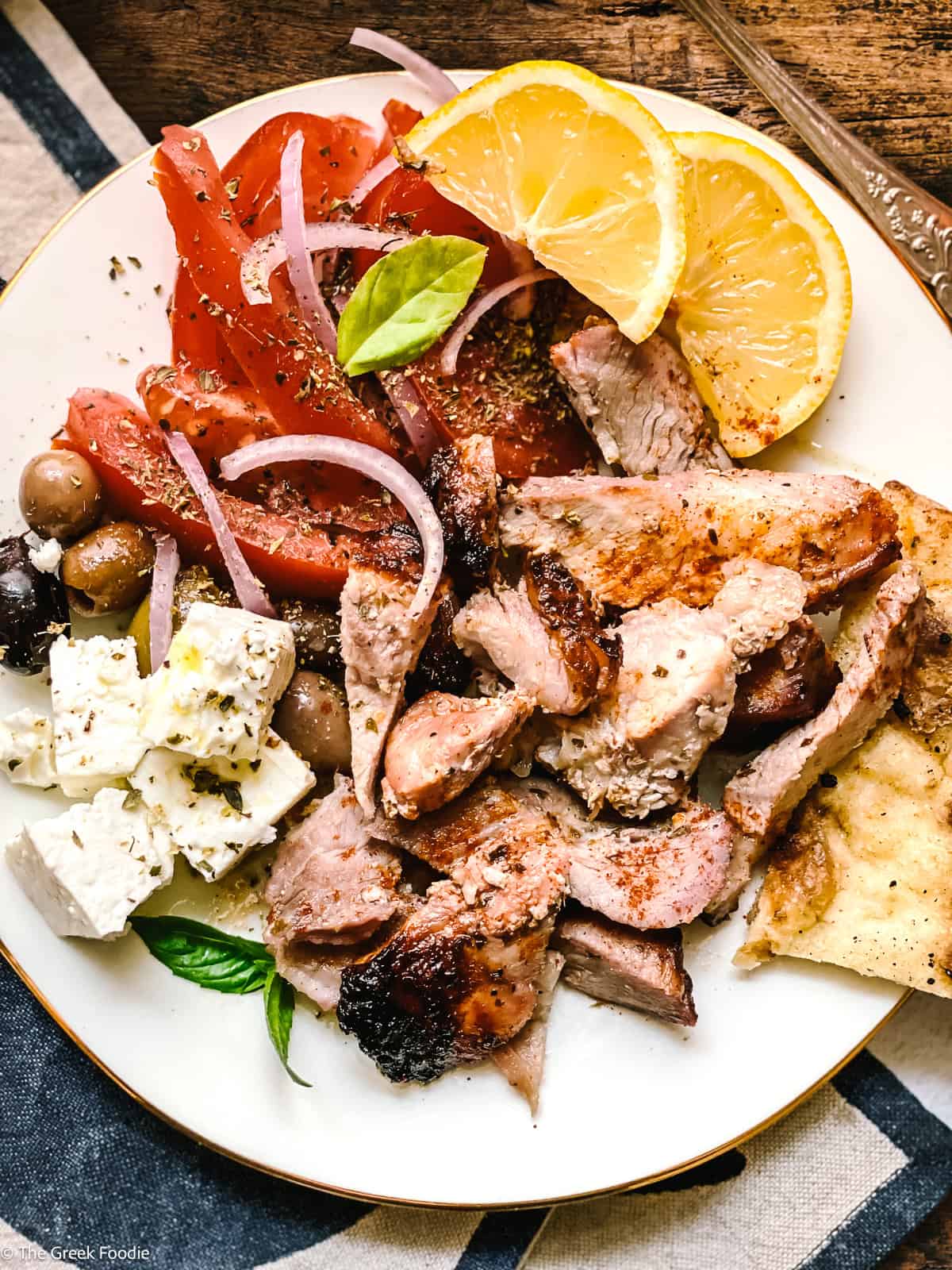
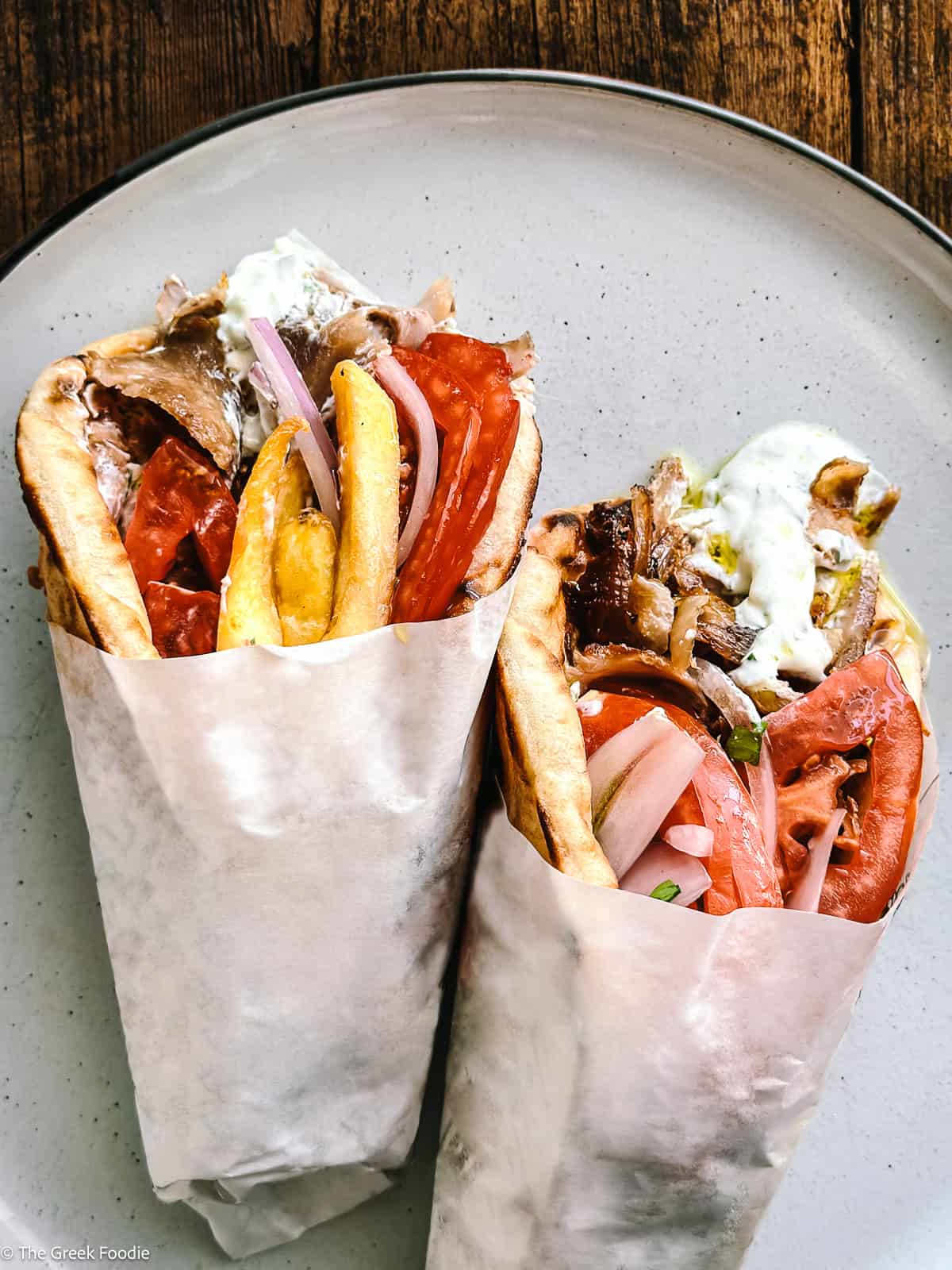
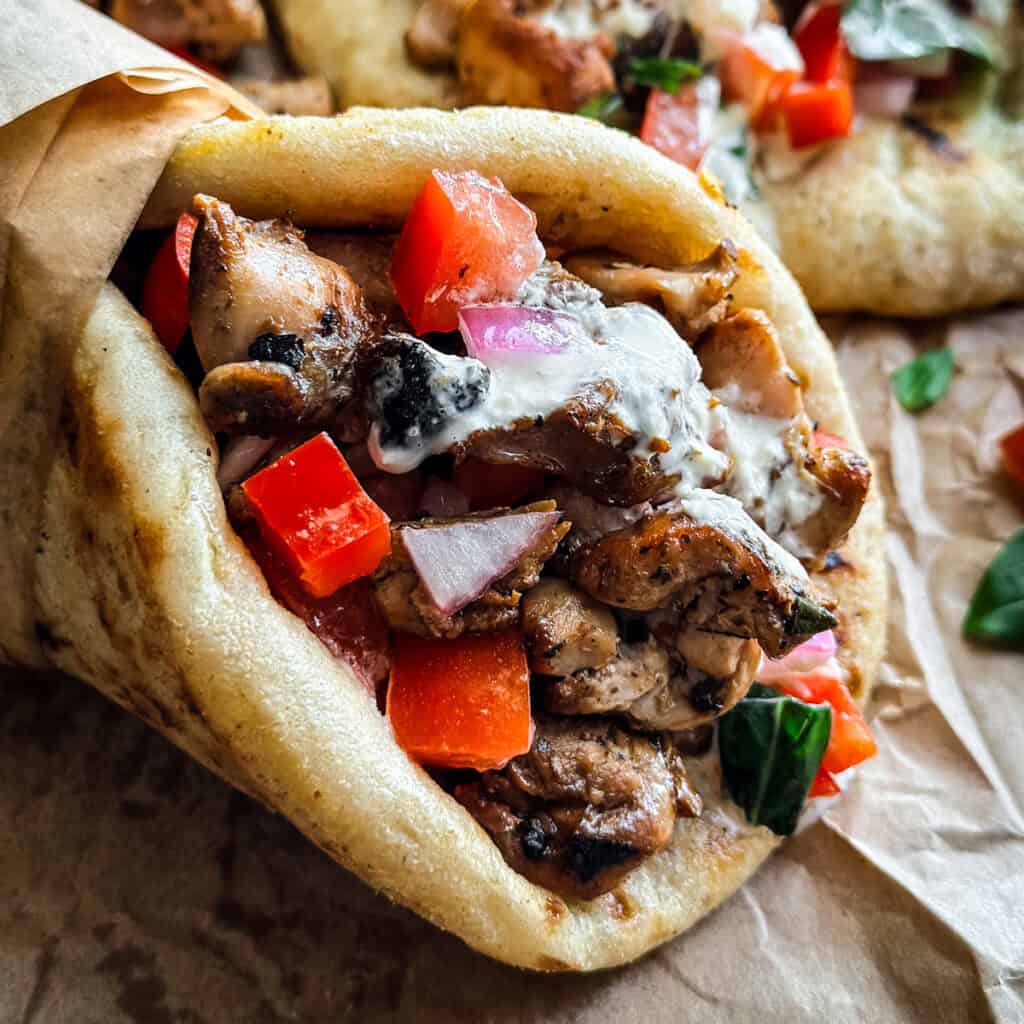
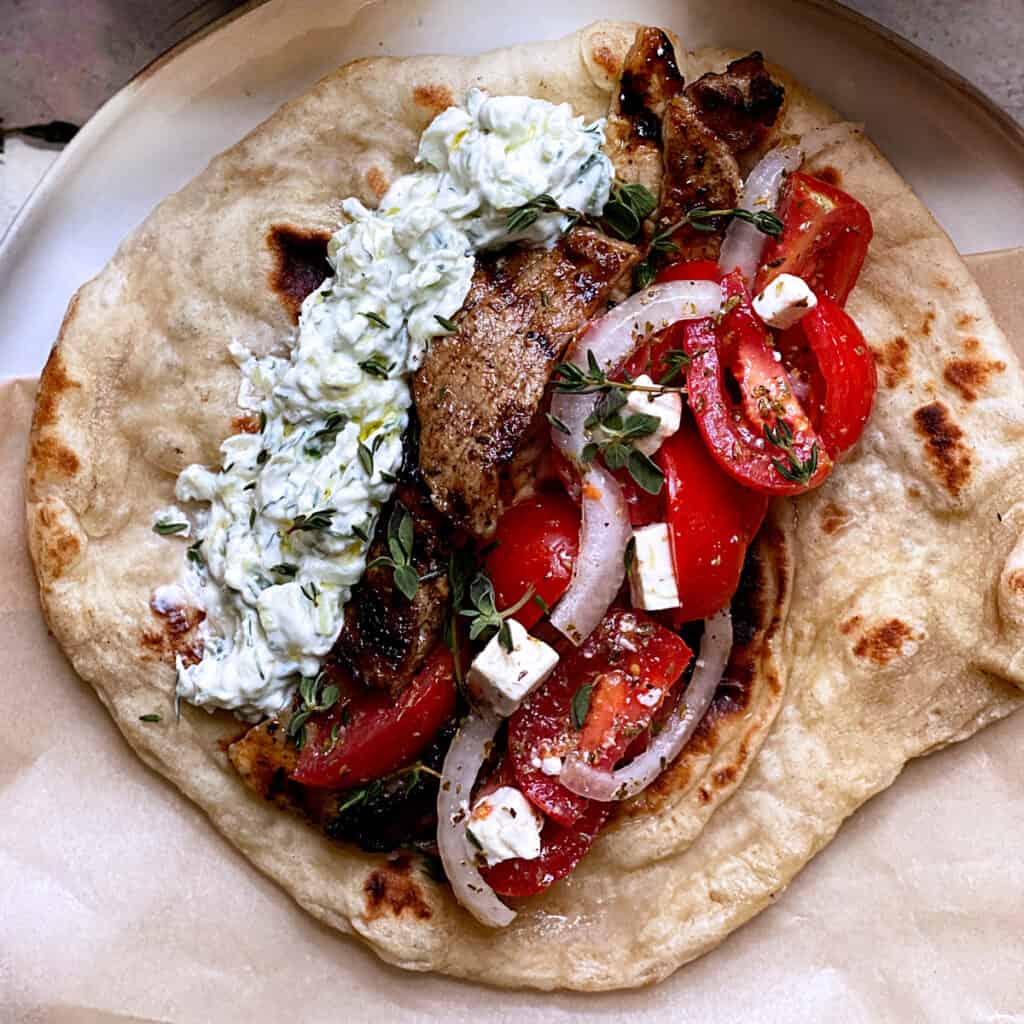
You can also make gyros pita souvlaki. Brush a pita with a little olive oil and warm it on a cast-iron or on a baking sheet in the oven. Place some gyro shavings in the middle of the pita. Add a generous tablespoon of sliced tomatoes, onions, and a tablespoon of tzatziki sauce. Check our homemade souvlaki recipe for inspiration.

FAQs
More authentic greek recipes you’ll love
Cooked it? Rate it!
If you tried this recipe, I’d love to know how you liked it — drop a comment below or tag me on Instagram @thegreekfoodie__.



Greek Pork Gyros – Authentic Homemade Greek Gyros Recipe
Equipment
- large baking pan
- A vertical rotisserie
- Rimmed baking sheet
Ingredients
The meat
- 4 lbs pork shoulder cutlets
- 1 lb pork belly, thinly sliced
For the brine
- ¼ cup sea salt
- ¼ cup brown sugar
- 1-2 bay leaves
- 1 tablespoon whole peppercorns
- 2-3 fresh herb sprigs , Like sage and rosemary sprigs
- 3-4 cloves
- 4 garlic cloves , crushed
For the marinade
- ½ cup extra virgin olive oil
- 2 tablespoons white wine vinegar
- 1 tablespoon honey
- 1 tablespoon sumac
- 1 tablespoon dry oregano
- 1 tablespoon fresh ground pepper
- 1 teaspoon chili flakes
- 2 teaspoons sea salt
- 2 tablespoons fresh herbs, roughly chopped, like fresh thyme, oregano, rosemary, sage
For serving
- smoked paprika, optional
- lemon slices, optional
Instructions
Brine the pork
- For the brine, place the sugar, salt, in a sauce pan with a cup of water. Simmer on medium heat for 3-4 minutes until sugar and salt have dissolved.
- Fill a large container or pot with the sugar-salt mixture and water. Add the bay leaves, peppercorns, cloves, garlic, and herbs. Stir well. Place the pork in the brine. Make sure it is fully immersed and cover with water. Chill overnight.
Marinate
- Remove the meat add dry the pieces well with a paper towel.
- In a bowl, mix ½ cup of olive oil, 1 tablespoon white wine vinegar, 1 tablespoon honey, 1 tablespoon dry oregano, 1 tablespoon sumac, 2 teaspoons sea salt, roughly chopped, like fresh thyme, oregano, rosemary, sage and some freshly ground pepper.
- Place meat pieces in a pan and pour the marinade all over. Rub pieces with marinade. Let pork belly sit for 3 hours or overnight.
Roast
- Preheat the oven to 350°F.
- Pierce the pork pieces on the vertical rotisserie. Add the pork belly slices between the cutlets. Add half a lemon on top or half an onion. Place meat on a rimmed baking sheet. Bake in the oven for 1 hour and 30 minutes. Turn pork around every 30 minutes to ensure even cooking.
Notes
Nutrition