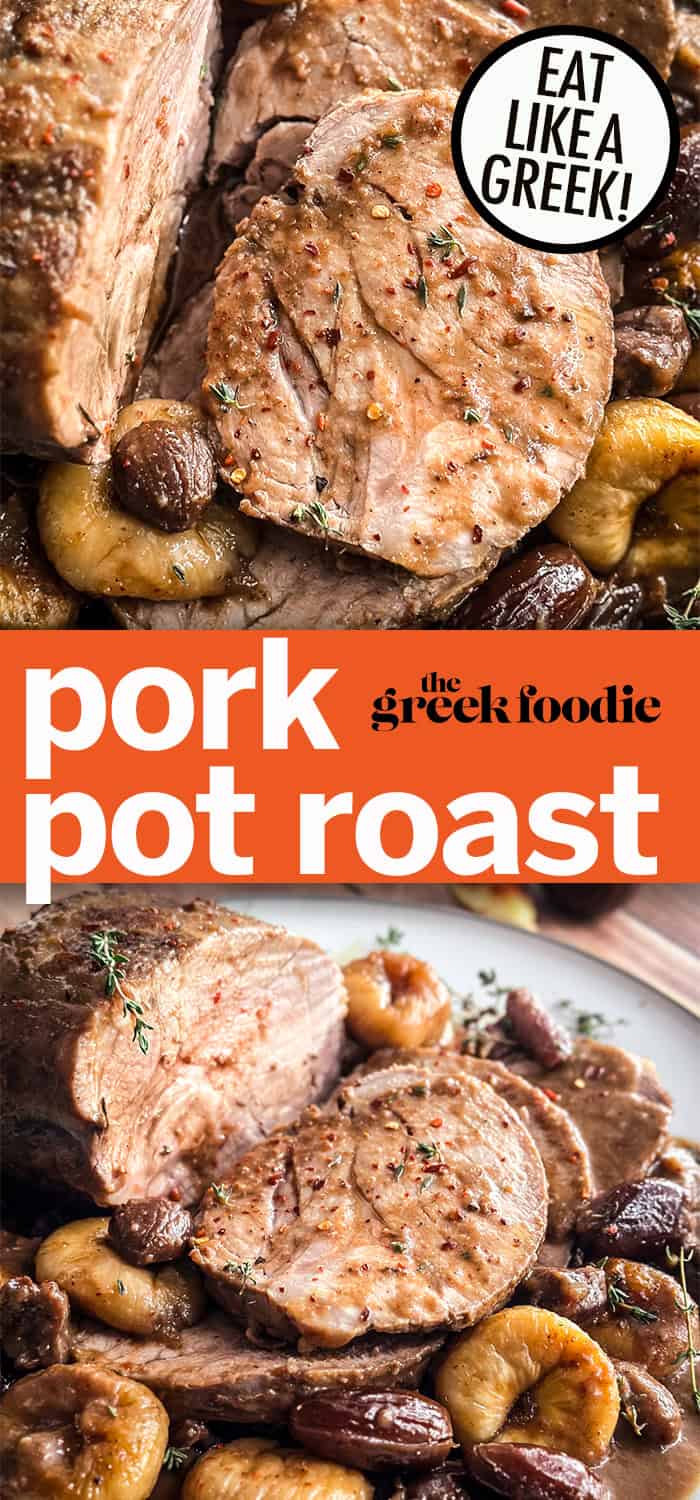

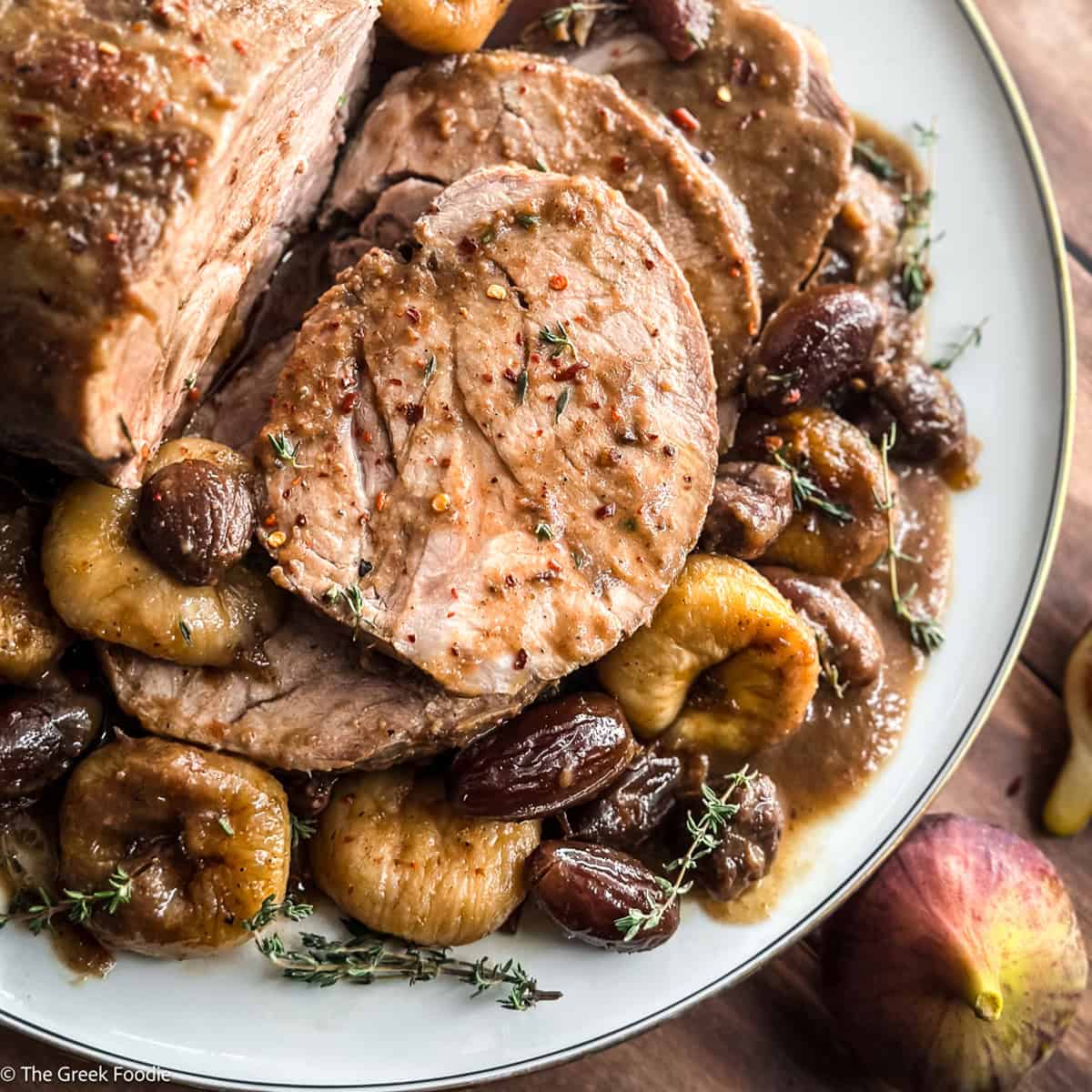
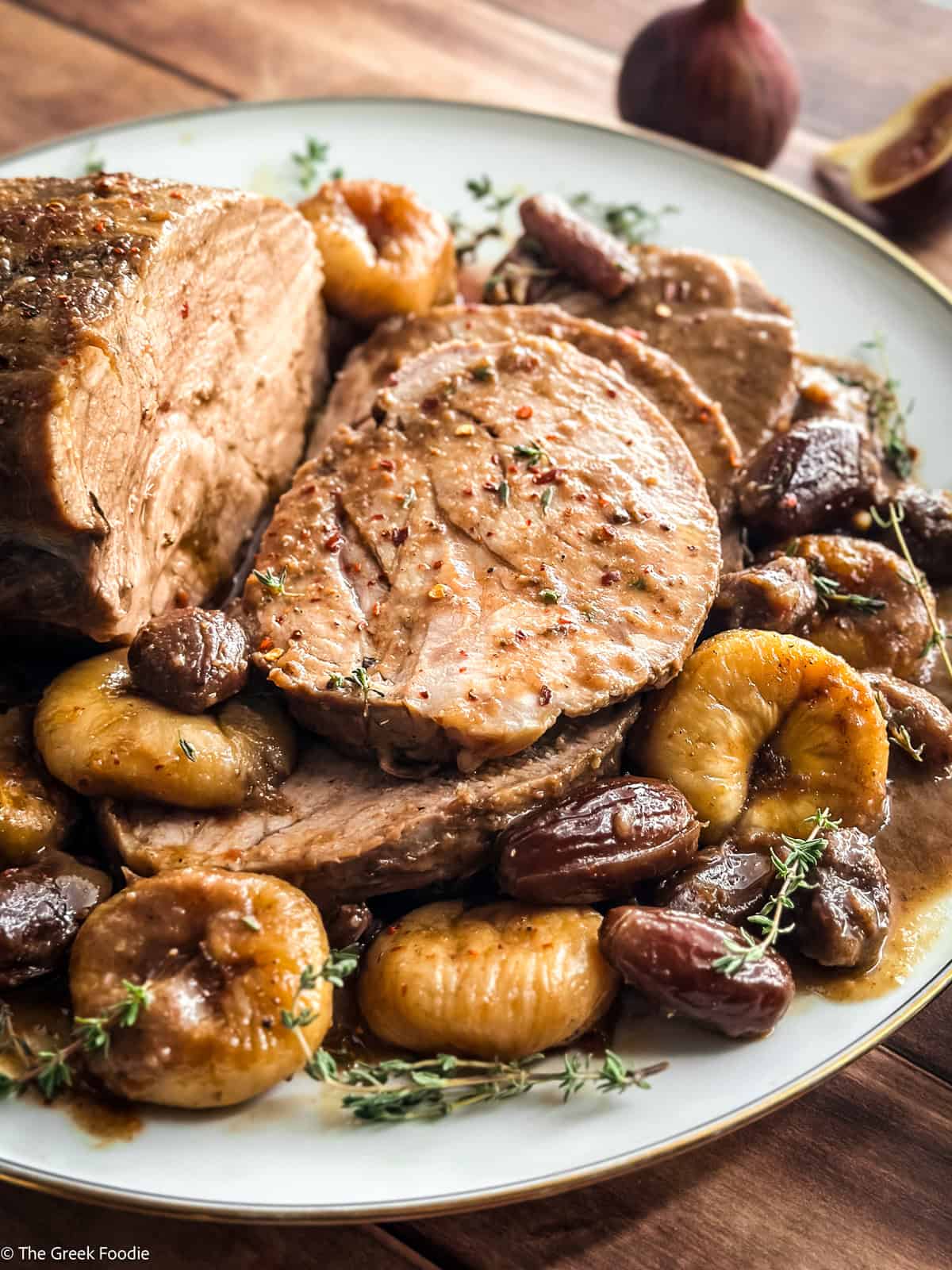
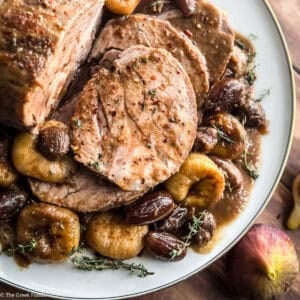
This Greek pork pot roast with figs, dates and chestnuts is what I make when dinner needs to feel like an occasion. A whole pork shoulder goes into the pot and braises slowly on the stovetop with warm spices — cardamom, nutmeg, cloves — and a splash of dark rum give it depth. The dried fruit melts into the sauce and turns it dark, glossy and faintly sweet.
It’s a centerpiece for Christmas or New Year’s, absolutely. But this is a winter dish before it’s a holiday dish, and I make it well past the point when the tree comes down. Serve it with buttery mashed potatoes and a good spoonful of the sauce over everything.
Why this pork roast has fruit in it
Sweet and savory together isn’t a twist on Greek cooking, it’s a whole branch of it.
My father’s mother, Evgenia, was from Constantinople, and Politiki cuisine (Politiki Kouzina) runs warmer and more aromatic than what most people picture as Greek food. Cardamom, nutmeg, cloves. Dried fruit going into the pot with the meat rather than turning up at dessert. My mother’s side is Cretan, from Chania, where the cooking is leaner and more herbal, olive oil, wild greens, lemon. I write from both tables, but this roast is entirely Grandma Evgenia’s.
Christmas Day was at Grandma Evgenia’s, and the pork roast was the centerpiece, winter fruit, a sauce worth fighting over, the whole house smelling of it before you’d got your coat off. Sweet and savory at the same time.
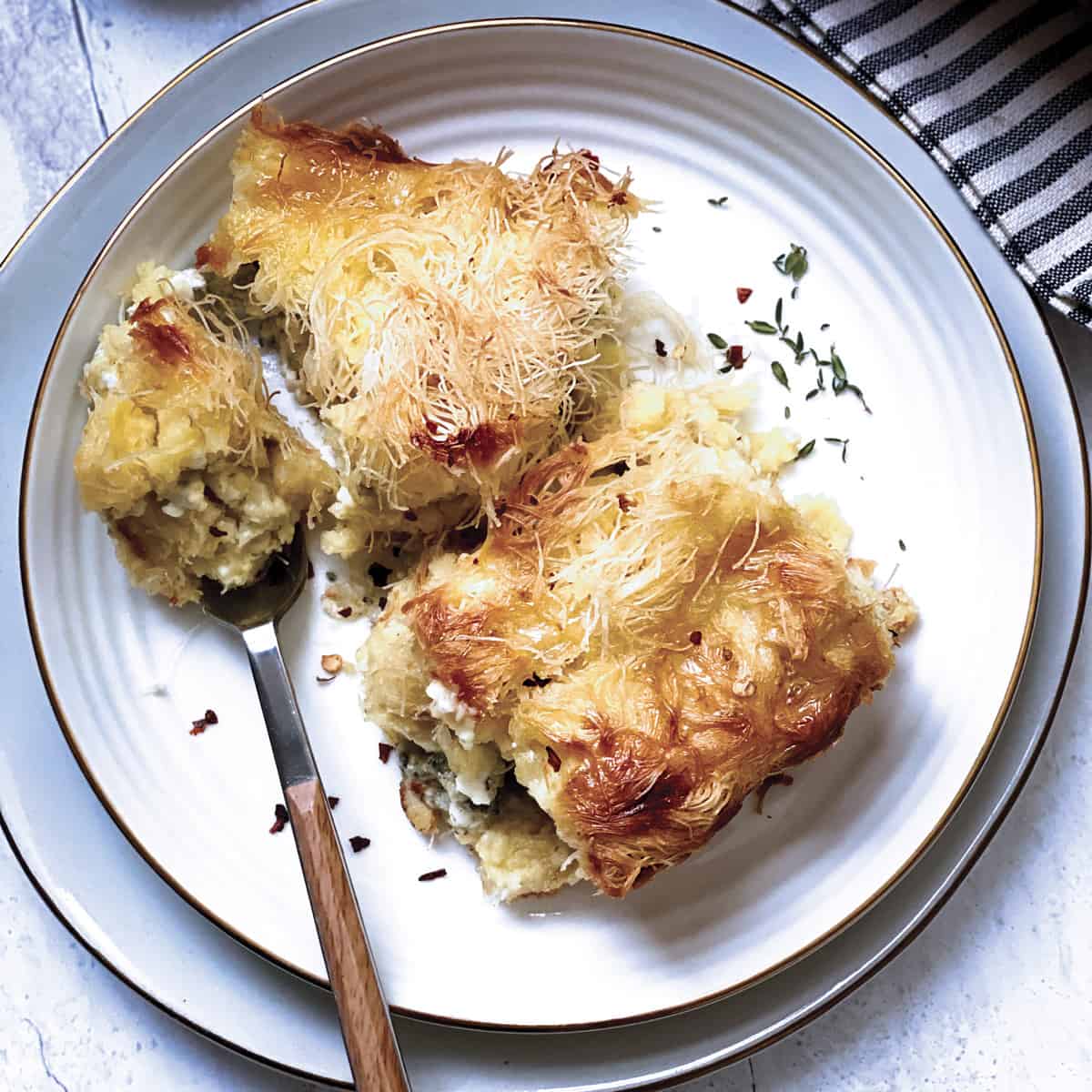
Around the roast: a kaisareia pie with kasseri and pastourma, russian salad, wedges of graviera, roquefort and feta, a generous pilafi, warm bread rolls, and a row of mustards from mild to fierce to eat with the pork. Roasted lemon potatoes, a large green salad and buttery Brussels sprouts finished it.
That’s the table this recipe comes from. The fruit was never the novelty on it, it was just how pork was cooked.
The dried fruit softens, swells, and gives its sugars up to the sauce, which is what turns the braising liquid dark and syrupy without a spoonful of added sugar. It’s also why the sauce tastes sweet but the dish doesn’t. The sweetness dissolves into the pork fat and the spices instead of sitting on top of them.
Why you will love our pork pot roast
Want this without the festive treatment? My braised pork shoulder is the same slow-braised technique, stripped back to red wine and vegetables — a proper pot roast for an ordinary Tuesday.
Here is what you need
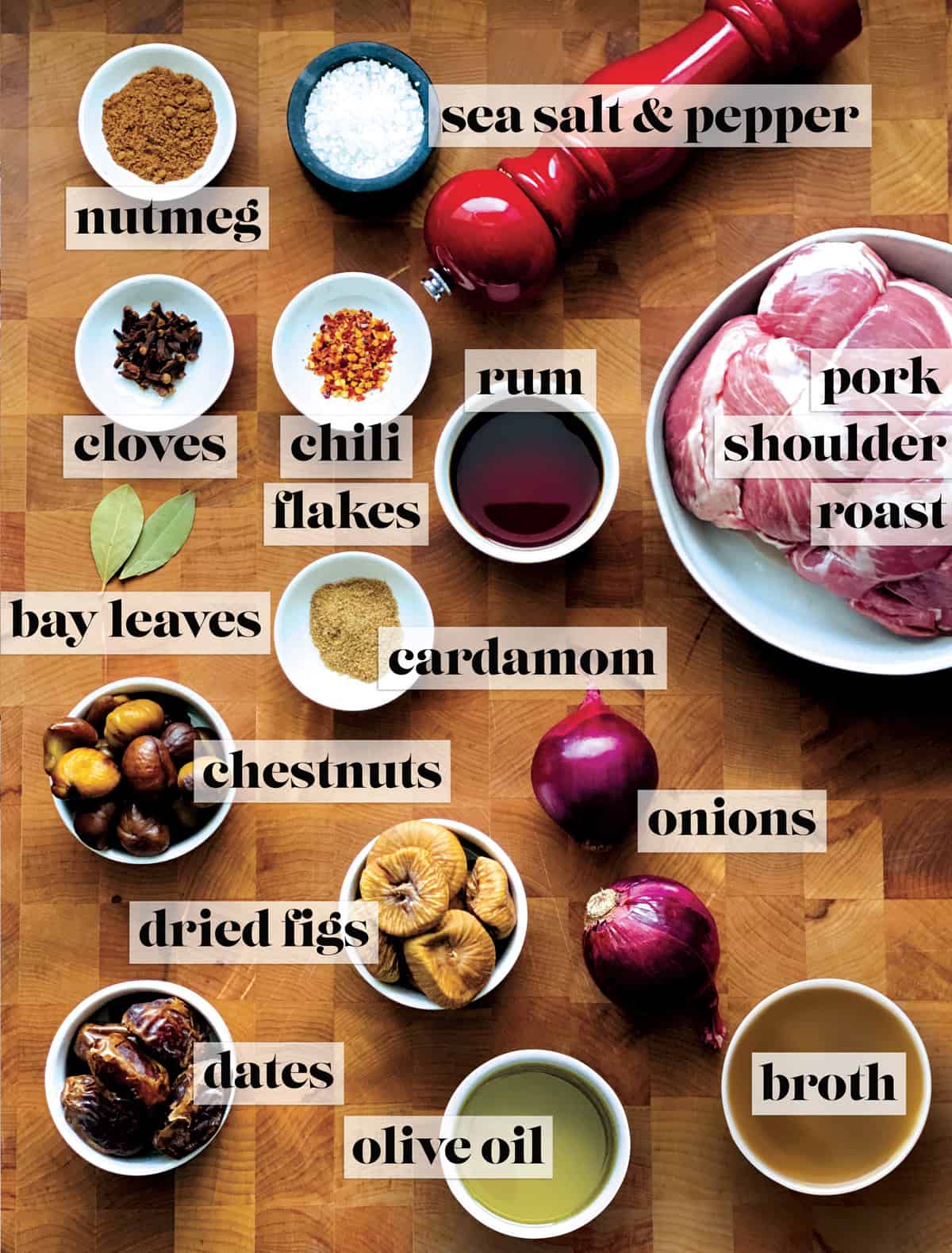
Pork shoulder (boneless). Ask for it tied. An untied shoulder splays open in the pot, cooks unevenly, and won’t give you clean slices. If it comes in a net, leave the net on through the braise and cut it off before carving. Boston butt and picnic shoulder both work; butt is fattier and more forgiving.
Dried figs. Look for figs that still give a little when you press them. Rock-hard figs never fully come back, even in a long braise. Sun-dried Kalamata figs have a honeyed, almost caramel depth; golden California figs are milder and hold their shape a bit better. I leave them whole — halved figs tend to disintegrate into the sauce.
Dates. Medjool, always, and check that they’re pitted. They’re softer than the figs and will break down more, which is part of what thickens the sauce.
Chestnuts. Vacuum-packed cooked and peeled chestnuts are what I use and I don’t apologize for it — peeling your own is a genuinely miserable afternoon. If you do roast fresh ones, you’ll need about 1¼ lbs in the shell to get a cup peeled. Add them at the same point as the fruit; any earlier and they turn to mush.
Dark rum. Adds a molasses-like depth that plays off the dried fruit. Brandy or whiskey both work. For a non-alcoholic version use half cup apple or white grape juice plus half a cup water, and pick juice with no added sugar, since the fruit brings plenty.
Spices. Cardamom, nutmeg and cloves are doing the heavy lifting here — they’re what keep the fruit from reading as dessert. Grate the nutmeg fresh if you can; the pre-ground loses most of what makes it worth having.
Step by step
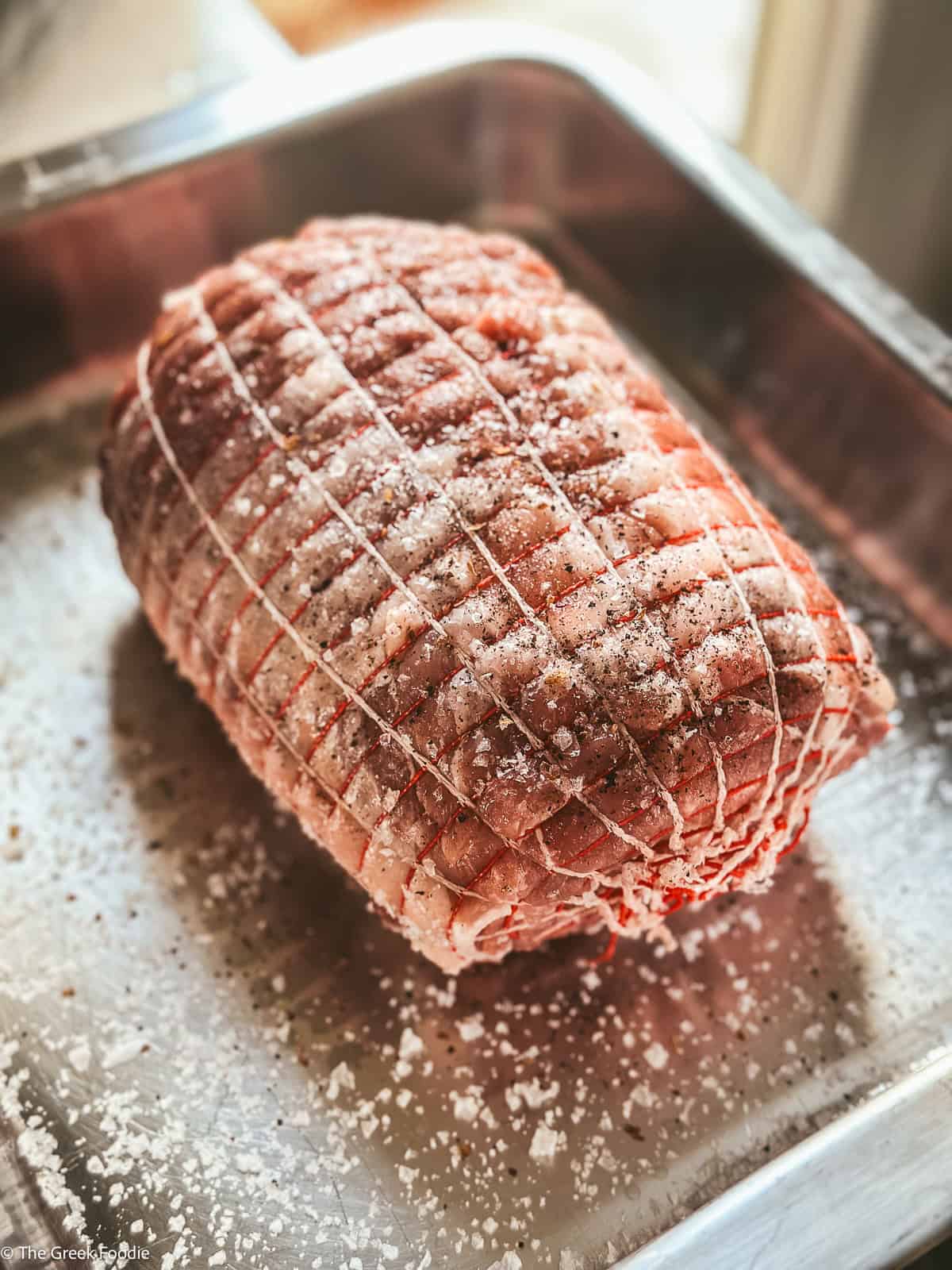
Step 1 – Prepare the pork
Season the pork shoulder generously with sea salt and freshly ground pepper on all sides. Let it rest at room temperature for about an hour so the meat cooks more evenly later.
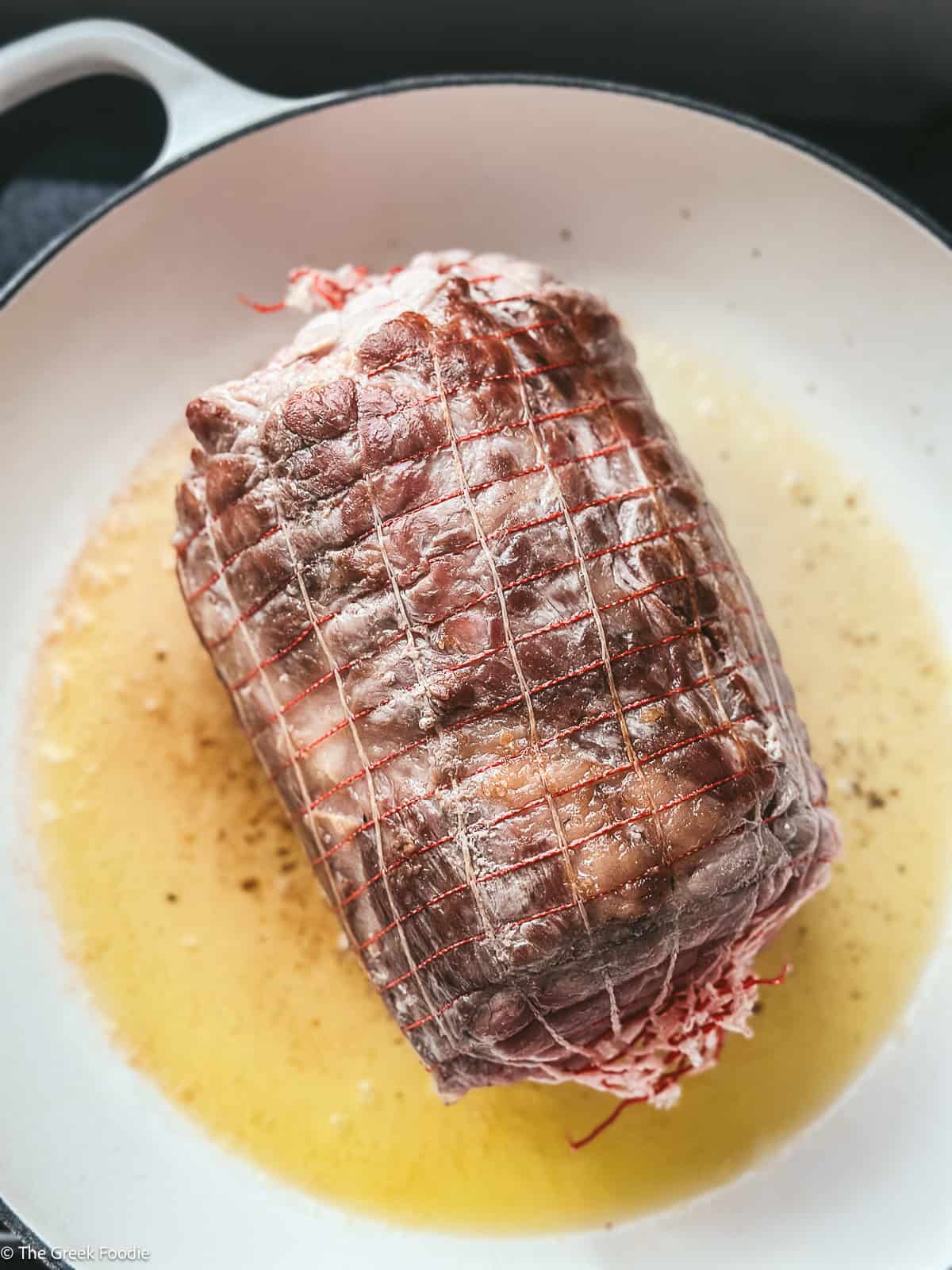
Step 2 – Sear for flavor
In a large, heavy pot, heat two tablespoons of olive oil over medium-high heat. Sear the pork for about 6–7 minutes, turning to brown it evenly on all sides. This step adds a deep, caramelized flavor to the finished roast.
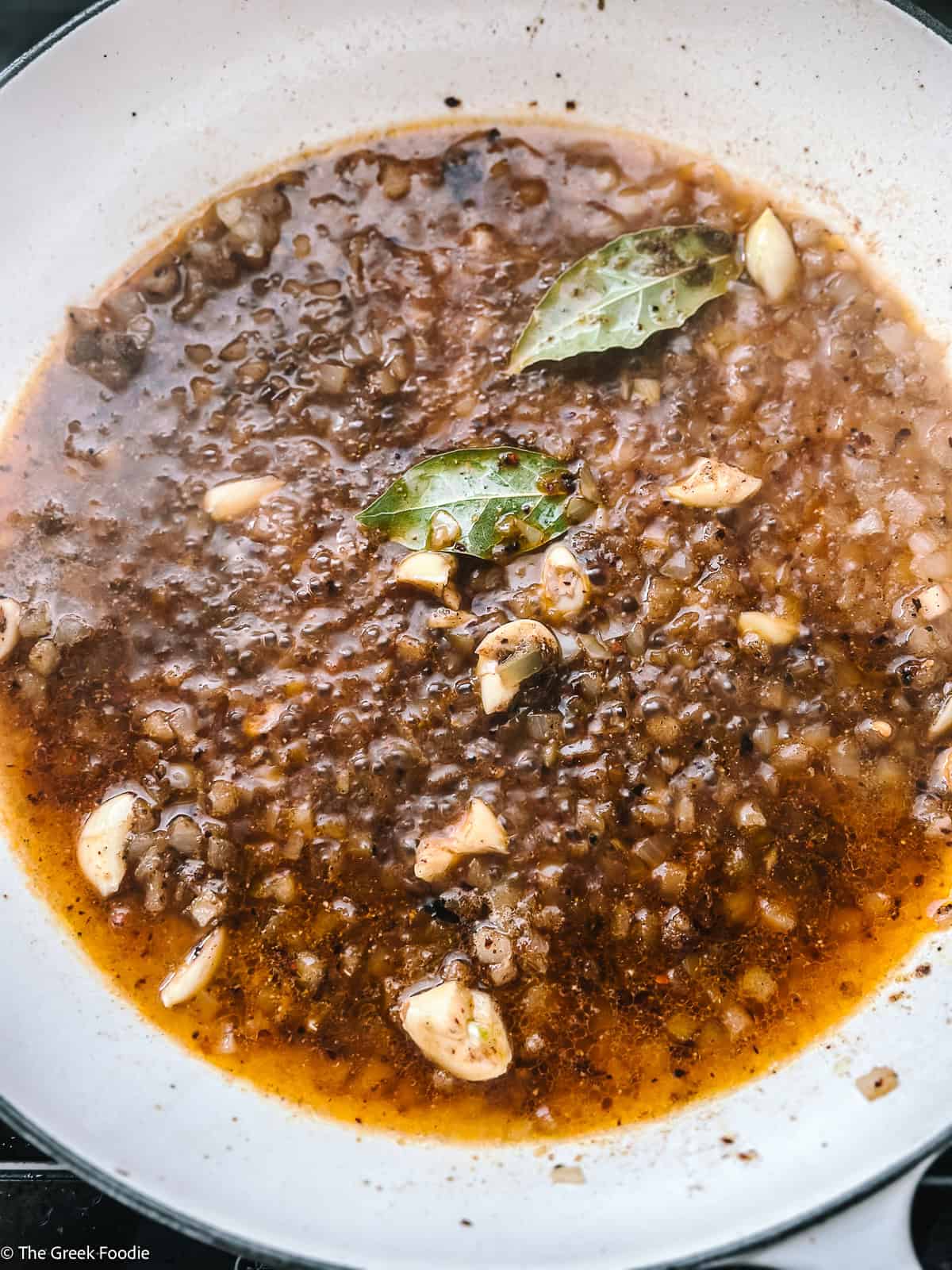
Step 3 – Build the base
Transfer the pork to a plate and stir in the spices, bay leaves, garlic cloves, and diced onions. Sauté gently for 2–3 minutes until fragrant. Cook for one to two minutes stirring, then add the dark rum (or apple or grape juice for a non-alcoholic option) and let it simmer briefly so the liquid reduces slightly and releases its aroma.
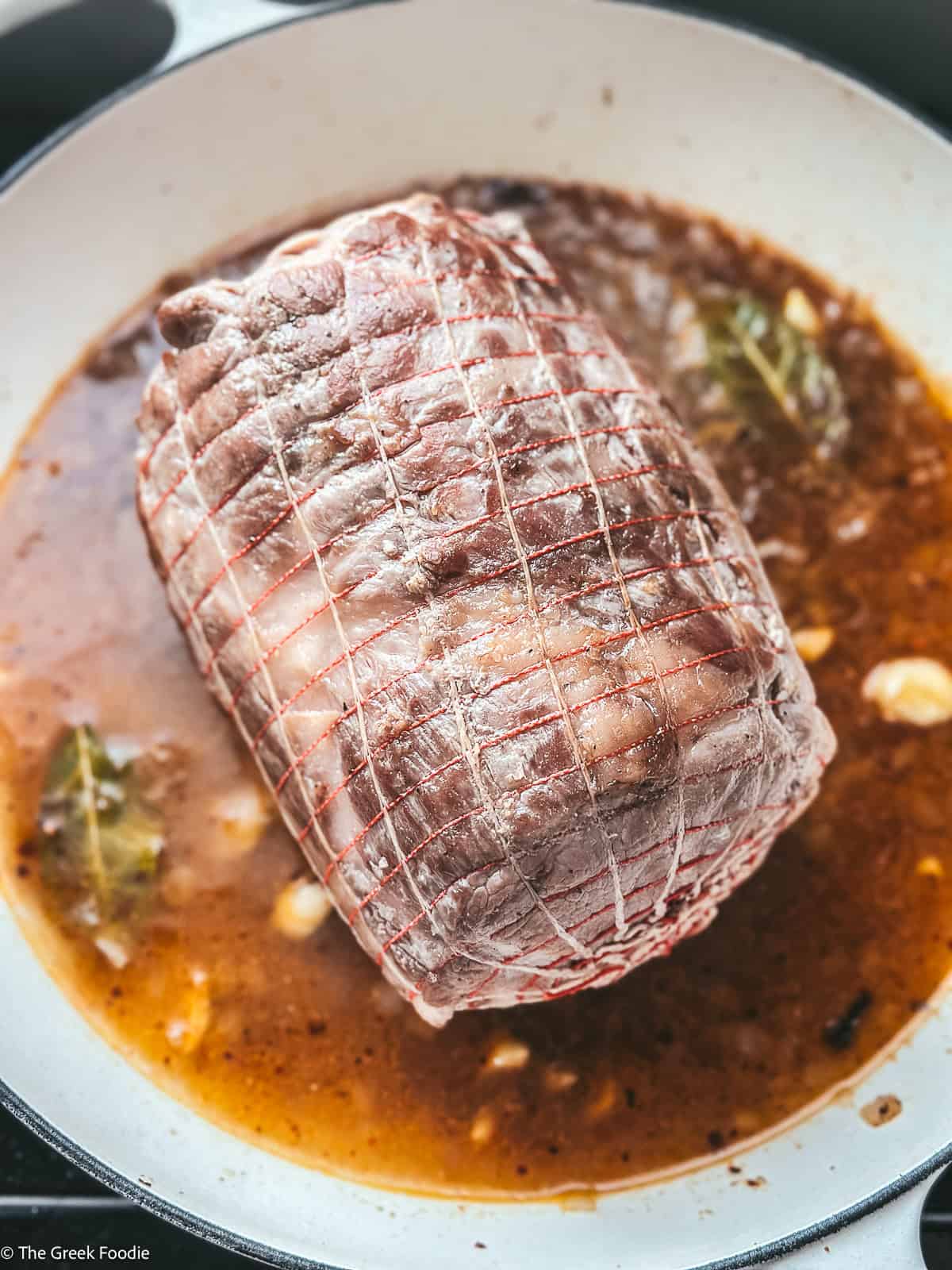
Step 4 – Slow cook to perfection
Return the pork to the pot. Pour in the broth and bring everything to a gentle boil. Lower the heat, cover the pot, and let the pork cook slowly for about 1½ to 2 hours, or until it becomes tender and easy to pierce with a fork.
Stir in the dried figs, dates, and roasted chestnuts. Continue cooking over very low heat for another 30 minutes, allowing the sauce to thicken and the flavors to meld beautifully.
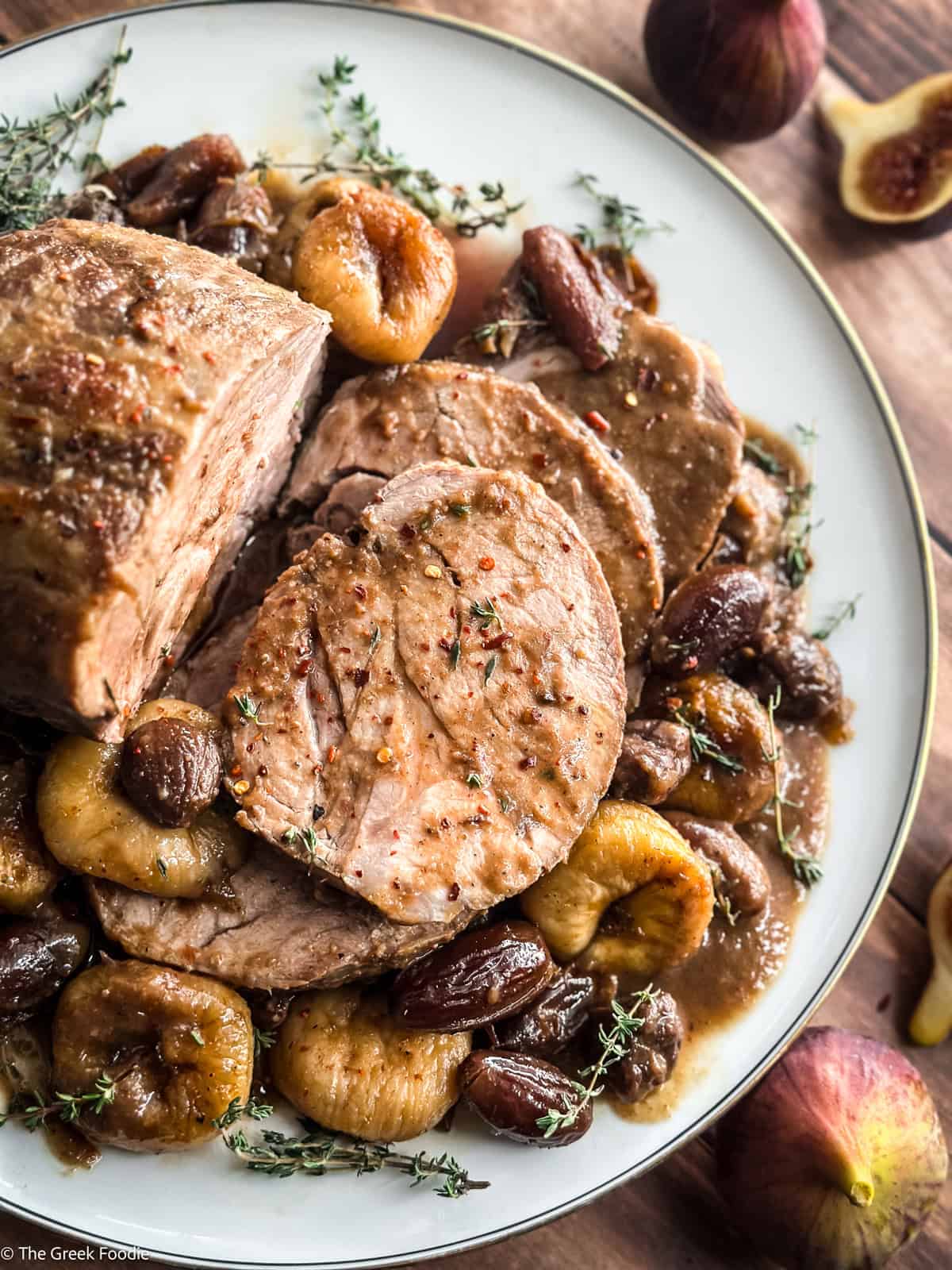
Step 5 – Serve. Carefully transfer the pork, fruit, and chestnuts onto a warm serving platter. Strain or ladle the sauce into a gravy boat and serve alongside. It’s terrific with mashed potatoes, roasted vegetables, or even simple rice.
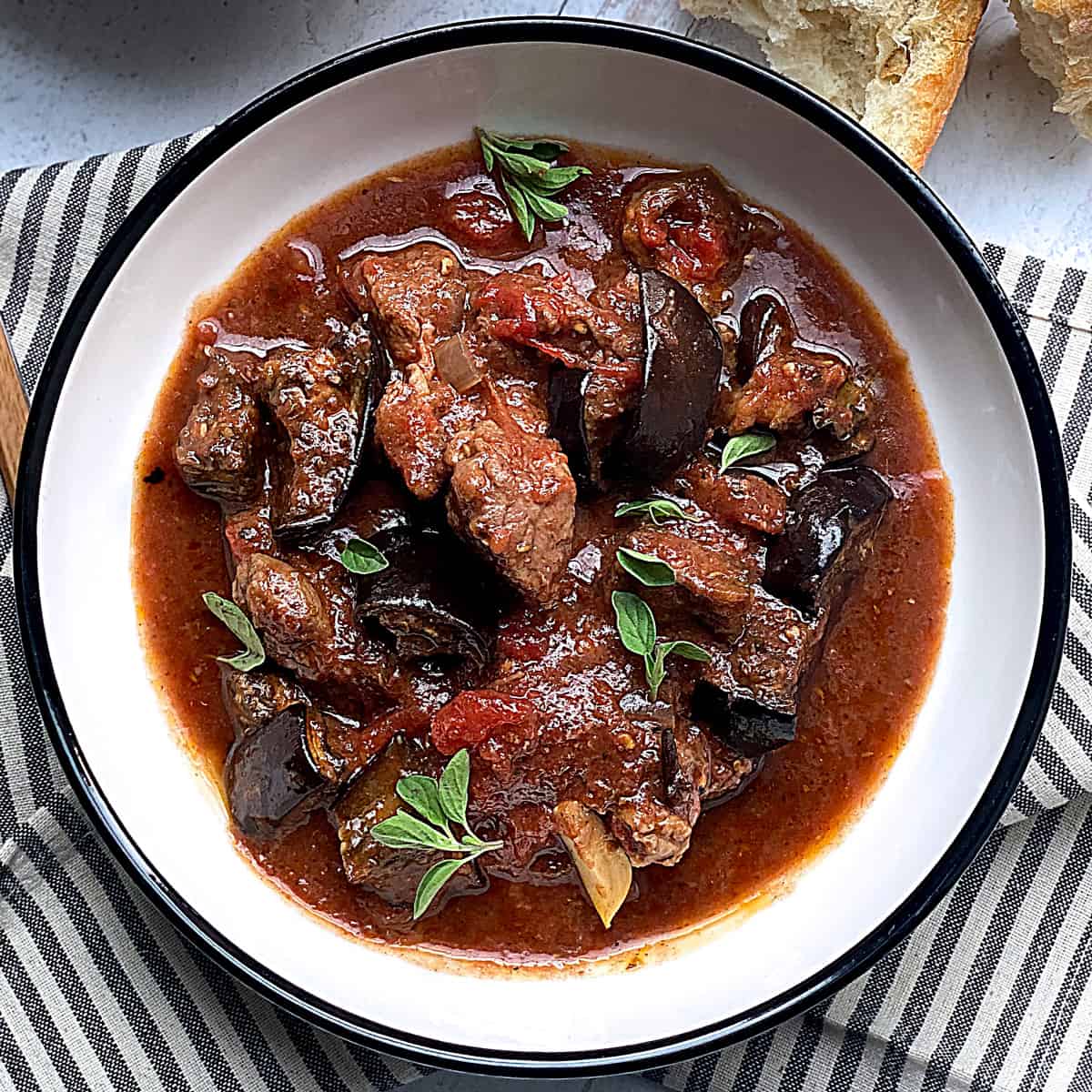
More Greek pork, slowly cooked. Pork and Beans and Pork Stew with Chickpeas are both cold-weather standbys in my kitchen.
How long to cook a pork pot roast
The thermometer decides, not the clock. A pork pot roast is done when the center reads 145°F (63°C), and the shape of the roast affects that as much as the weight does — a long, thin shoulder cooks faster than a compact one of the same size.
| Boneless shoulder | Estimated braise | Done at |
|---|---|---|
| 2–2.5 lbs (0.9–1.1 kg) | 1¼–1½ hrs | 145°F / 63°C |
| 2.5–3 lbs (1.1–1.4 kg) | 1½–2 hrs | 145°F / 63°C |
| Bone-in | Add roughly 30 minutes | 145°F / 63°C |
These are estimates for a covered pot over very low heat, and they don’t include the final 30 minutes with the fruit. Larger roasts need proportionally longer. Start checking at the one-hour mark, then every 15 minutes after that.
Pull the roast at 145°F (63°C) and let it rest — it’ll carry over a few degrees while the fruit and chestnuts finish in the sauce.
Making it in the oven
The stovetop is how I make this, but the oven gives you a more even, hands-off braise and is easier if you’re cooking other things at the same time.
Sear the pork and build the sauce exactly as written, on the stovetop, in a Dutch oven. Once the broth is in and simmering, put the lid on and move the whole pot to a 325°F (165°C) oven. Figure roughly 2 to 2½ hours for a 3 lb roast — again, go by temperature. Add the fruit and chestnuts for the last 30 minutes with the lid back on.
A lower oven than you’d use for a dry roast is deliberate. At 350°F the liquid moves closer to a boil and the meat tightens; 325°F keeps it at a bare simmer, which is what you want.
Making it ahead
This is better on day two, and I mean that literally rather than as a throwaway line. The sauce thickens as it cools, the spices settle, and the fruit finishes giving up its sugars.
The day before: cook it completely. Let it cool, then refrigerate the roast whole, sitting in its sauce — don’t slice it. Slicing before it’s chilled loses juice, and cold meat carves far more cleanly anyway.
The day of: lift off any fat that’s set on the surface. Reheat the whole thing gently, covered, over low heat or in a 300°F oven for about 40 minutes, with a splash of broth if the sauce has tightened. Carve once it’s warmed through.
Two to three days ahead is fine too, though I’d stop there, the fruit gets soft.
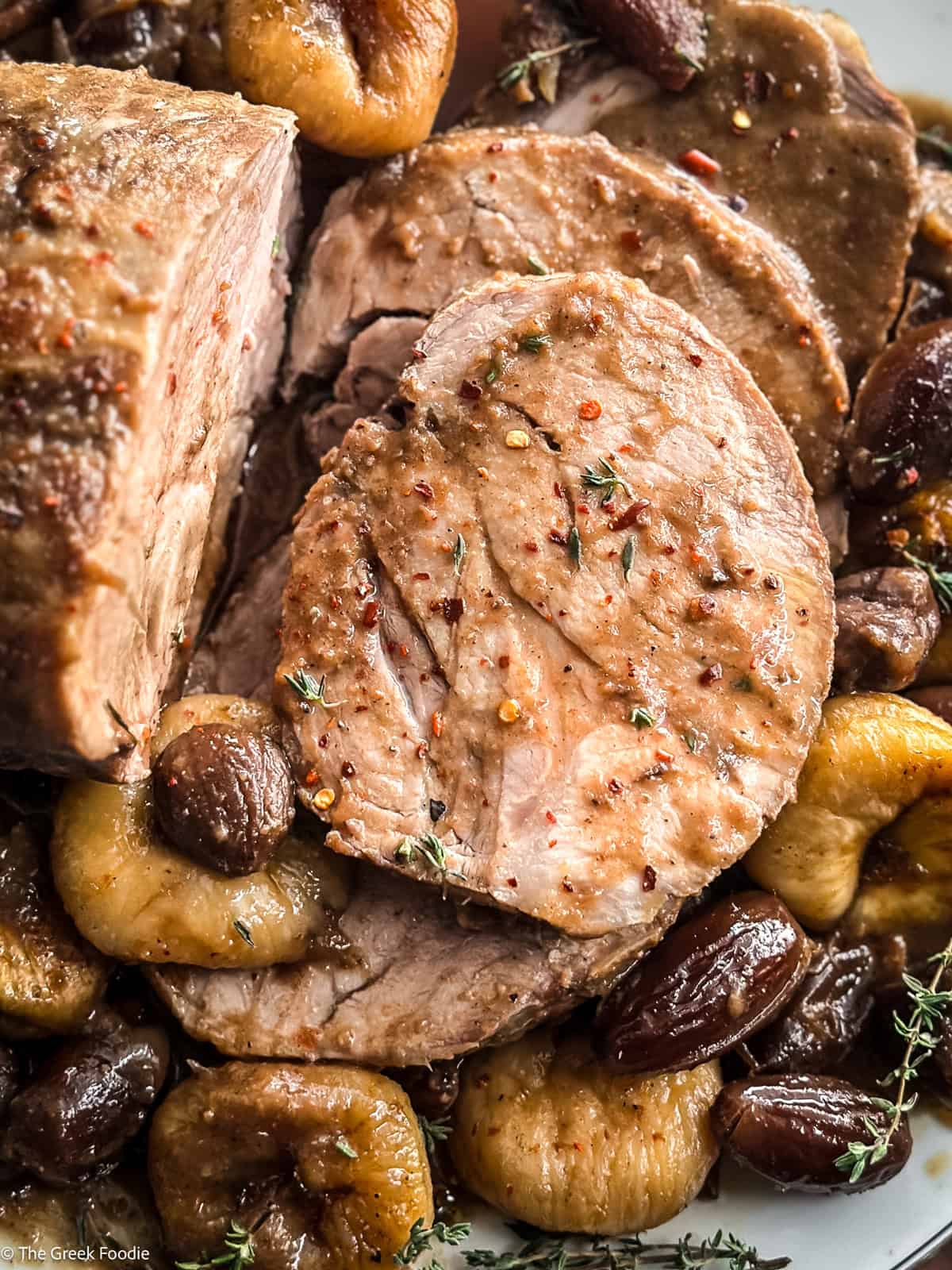
Serving suggestions
This pork pot roast deserves sides that are just as comforting and full of flavor. These Greek-inspired favorites complement its rich, aromatic sauce beautifully:
- Creamy mashed potatoes – Perfect for soaking up every drop of that luscious sauce.
- Roasted lemon potatoes – A bright, citrusy contrast that lifts the dish and adds a touch of sunshine to your table.
- Greek rice pilaf (pilafi) – Light yet full of Mediterranean flavor, this rice is a colorful, rustic side that pairs wonderfully with the roast.
- Country bread or olive oil oregano bread – Ideal for dipping into the sauce — it’s impossible to resist.
- Maroulosalata (Greek green salad) – Crisp and refreshing, it balances the richness of the pork and brings freshness to the meal.
- Traditional cheese pie (tiropita) – A festive touch that makes any holiday menu feel complete.
Wine & Drink Pairing
- This pork pot roast pairs beautifully with a medium-bodied dry red wine — something with soft tannins that complements the sweet, rich notes of the chestnuts and dried fruit. A Merlot, Xinomavro, or Grenache blend works perfectly.
- For a non-alcoholic option, try a sparkling pomegranate or grape juice served in wine glasses for a festive touch. Both balance the dish’s depth and make your holiday table shine.
Storage and reheating
- Refrigerate: Store leftovers in an airtight container in the fridge for up to 3 days.
- Reheat: Warm gently in a covered pot over low heat, adding a splash of broth or water to loosen the sauce.
- Freeze: You can freeze the pork (sliced or shredded) with some sauce in freezer-safe containers for up to 3 months. Defrost overnight in the fridge before reheating.

FAQ
This recipe was originally published in December 2021 and updated in August 2026 with clearer instructions, tips and advice. The original Pork Pot Roast recipe remains unchanged. Enjoy!
Cooked it? Rate it!
If you tried this recipe, I’d love to know how you liked it — drop a comment below or tag me on Instagram @thegreekfoodie__.


Pork Pot Roast with Chestnuts, Figs and Dates
Equipment
- Thick bottom large pot or dutch oven
- Meat thermometer
Ingredients
- 3 lbs pork shoulder roast, boneless
- 2 tablespoons extra virgin olive oil
- 1 cup onions, diced
- 2 bay leaves
- 1 teaspoon ground cardamom
- 1 teaspoon ground nutmeg
- 3-4 cloves
- 1 teaspoon chili pepper flakes
- 4 garlic cloves, crushed and roughly chopped
- ⅔ cup dark rum, or brandy or apple or grape juice for a non-alcoholic option
- 1 cup Medjool dates, pitted
- 1 cup chestnuts , cooked, whole
- 1 cup dried figs
- 1 cup organic broth, chicken or vegetable
- freshly ground pepper
Instructions
- Season the pork shoulder generously with sea salt and freshly ground pepper on all sides. Let it rest at room temperature for about an hour.
- In a large, heavy pot, heat two tablespoons of olive oil over medium-high heat. Sear the pork for about 6–7 minutes, turning to brown it evenly on all sides.
- Transfer the pork to a plate and stir in the spices, bay leaves, garlic cloves, and diced onions. Sauté gently for 2–3 minutes until fragrant. Add the dark rum (or apple or grape juice for a non-alcoholic option) and let it simmer briefly so the liquid reduces slightly and releases its aroma.
- Return the pork to the pot. Pour in the broth and bring everything to a gentle boil. Lower the heat, cover the pot, and let the pork cook slowly for about 1½ to 2 hours, until a thermometer reads 145°F (63°C) at the thickest point.Stir in the dried figs, dates, and roasted chestnuts. Continue cooking over very low heat for another 30 minutes, allowing the sauce to thicken and the flavors to meld beautifully.
- Transfer the pork, and fruit onto a warm serving platter. Strain or ladle the sauce into a gravy boat and serve alongside. Serve the pot roast with mashed potatoes, roasted vegetables, or even simple rice.
Notes
Nutrition