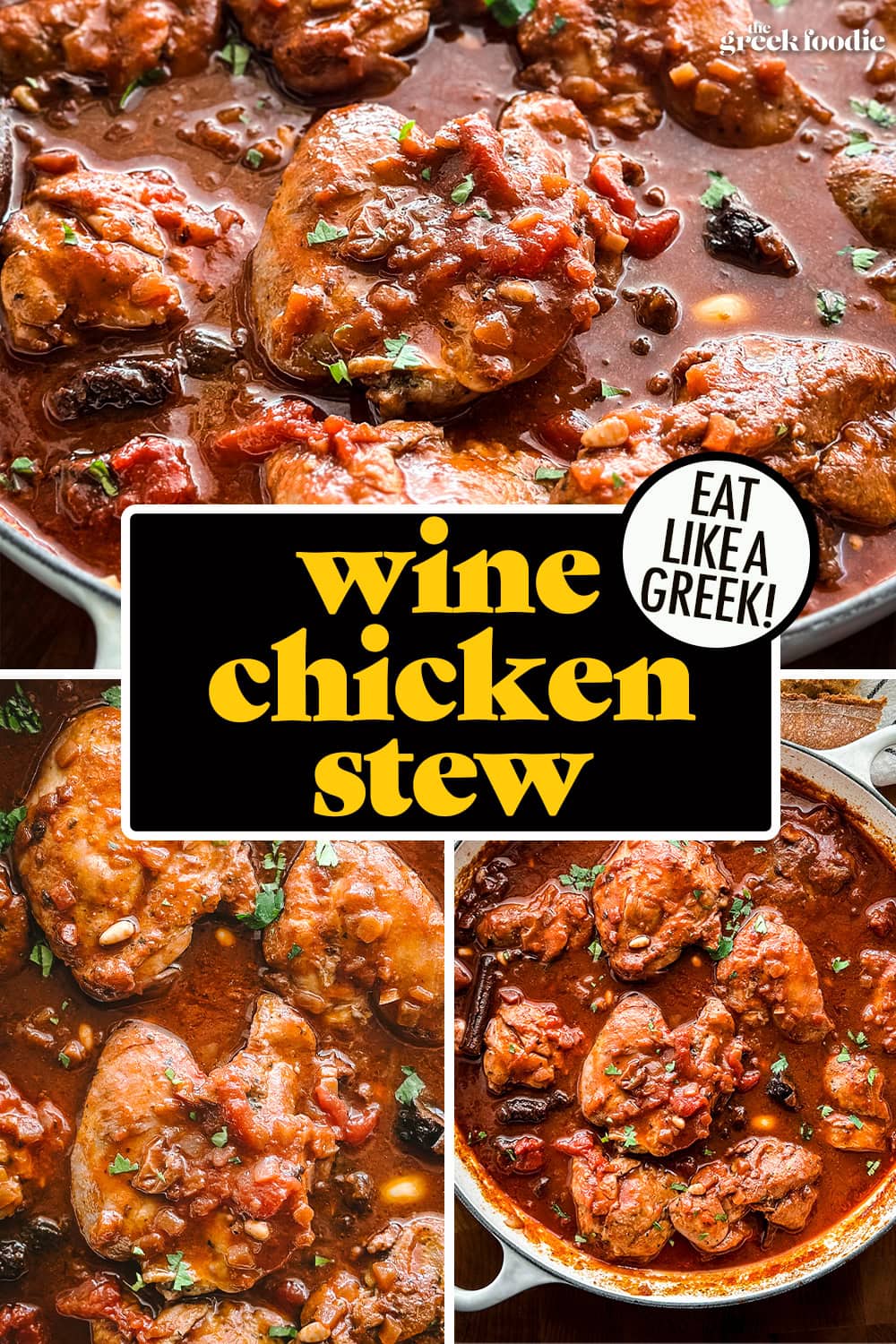

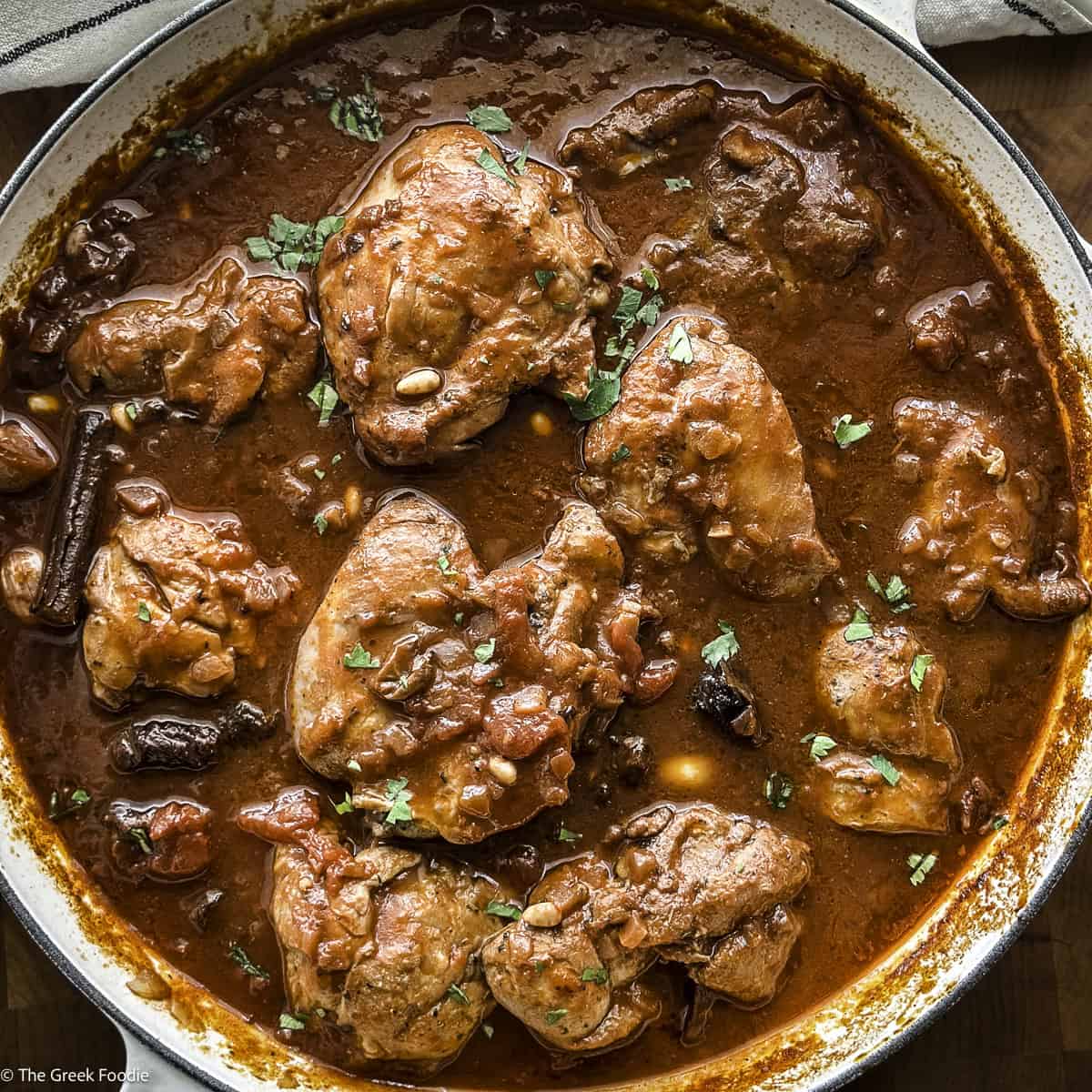
Chicken kapama is one of those Greek dishes that smells like a holiday long before it tastes like one. Chicken thighs braise, covered, in tomato and dry red wine with cinnamon sticks, whole cloves, and a bay leaf. In my version, prunes, raisins, and pine nuts add little sweet surprises to every spoonful. It’s sweet, savory, and rich without being heavy, and it’s on the table in about an hour.
My first memory of kapama is my grandmother Chrysoula’s. She made it with fresh, ripe Cretan tomatoes and Cretan red wine, and we ate it with potatoes fried in olive oil. For us, it was a real treat.
In Greek, it’s kotopoulo kapama (κοτόπουλο καπαμά).

What is kapama?
Kapama is less a single recipe than a way of cooking. The name comes from the Turkish word for closing or covering, and that’s the whole idea. Meat goes into a pot with tomato and warm spices, the lid goes on, and it braises gently until tender.
You’ll find kapama made with chicken, lamb, and beef, and every family and region seems to have its own version. Cinnamon runs through almost all of them, often joined by cloves or allspice. Some cooks add wine and some don’t. Some serve it over pasta with plenty of grated cheese, others with fried potatoes or rice.
Kapama vs. kokkinisto
If you know kokkinisto, you’re halfway there. Both are red, tomato-based braises. Kokkinisto (literally “reddened”) is savory and simple. Kapama brings in the warm, sweet spices. For the kokkinisto side of the family, try my braised Greek chicken in tomato sauce or my kokkinisto with beef.
If you love this Chicken Kapamas, you will absolutely love my Sicilian Chicken Recipe. It shares the same soul but takes a bold Sicilian turn with capers, raisins, toasted almonds, and a gorgeous agrodolce glaze.
Why you will love chicken kapama
Our Favorite
More Greek recipes with cinnamon
Here is what you need

Chicken thighs. I use boneless, skinless thighs. I like my stews uninterrupted by bones or skin, so I can dig straight into a bowl. Bone-in thighs or a whole chicken cut into 8 pieces work beautifully too; see the tips below for timing.
Whole warm spices. Two cinnamon sticks, three whole cloves, and a bay leaf. Whole spices infuse the sauce slowly without making it gritty or muddy.
Garlic, two ways. Garlic powder seasons the chicken. Whole, unpeeled garlic cloves go into the sauce, where they turn sweet and soft.
Tomatoes. Tomato paste for depth, plus a can of whole peeled San Marzano tomatoes that you crush right in the pan.
Dry red wine. It gives the sauce its main flavor. Use any medium-bodied dry red you’d happily drink, such as Agiorgitiko. Chicken or vegetable stock works as a substitute.
Prunes, raisins, and pine nuts. They bring a sweet surprise and a different texture.
Extra virgin olive oil. A generous amount, because it carries the spices through the sauce.
Step by step
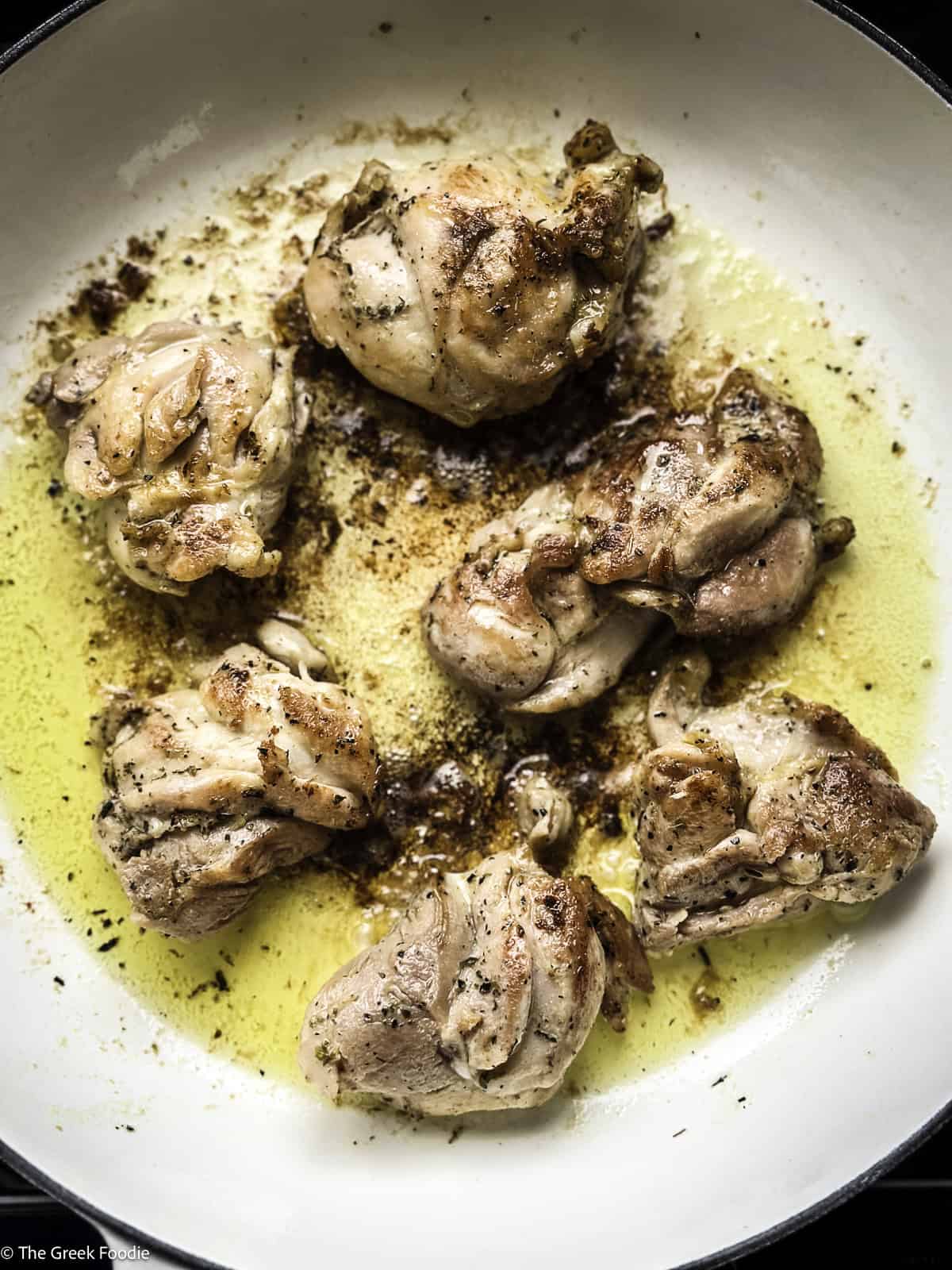
STEP 1. Season the chicken with sea salt, freshly ground pepper, and garlic powder. Let it sit for 10 minutes at room temperature.
Heat 1 tablespoon of the olive oil in a deep skillet over medium-high heat. Brown the chicken in batches for 2–3 minutes per side, until golden. Transfer to a plate.
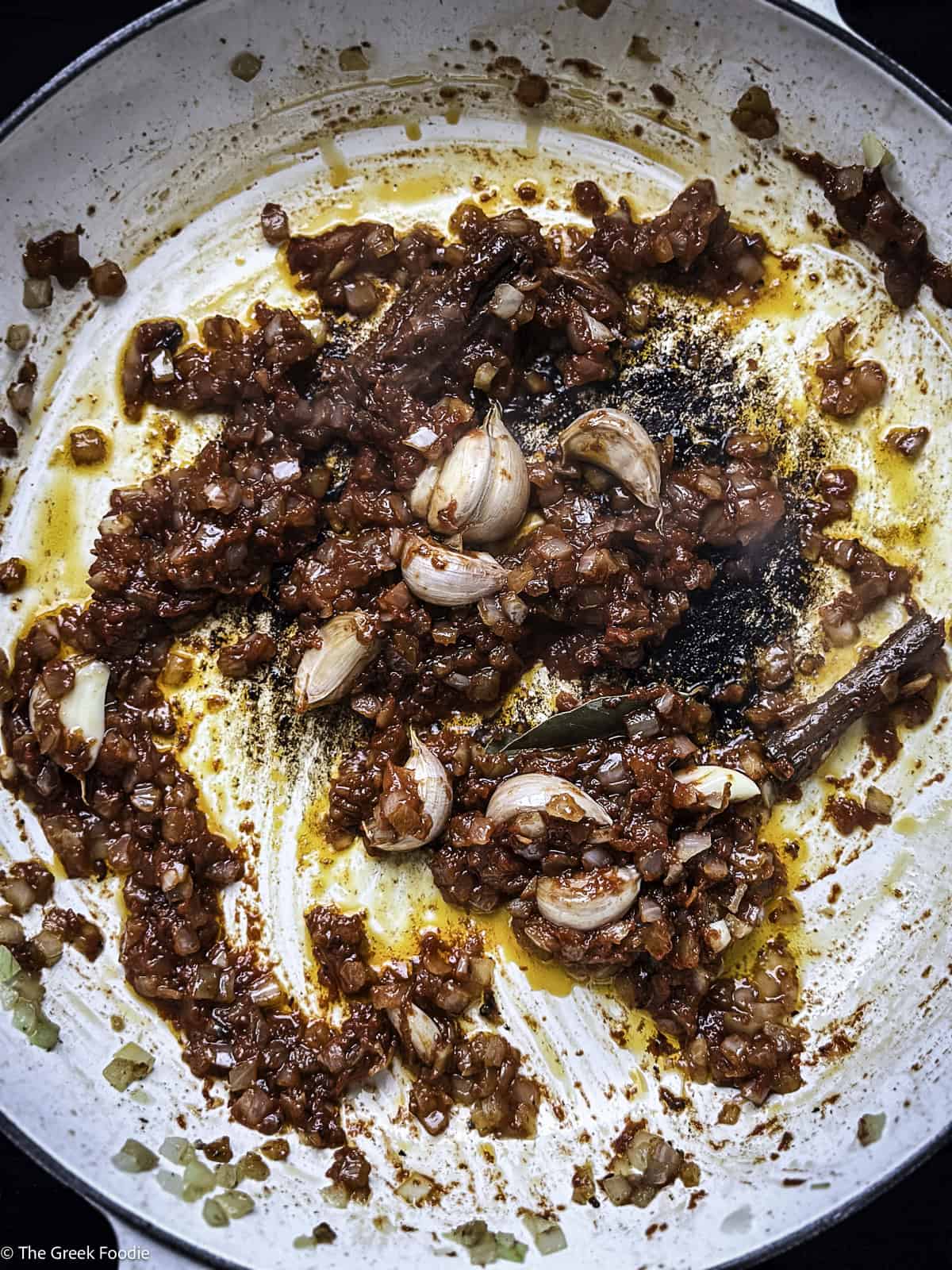
STEP 2. Add the rest of the olive oil to the same skillet. Add the onion, whole garlic cloves, cinnamon sticks, cloves, and bay leaf. Sauté for 2 minutes, stirring occasionally.
Add the tomato paste and cook for 2 minutes, stirring, until it darkens slightly.
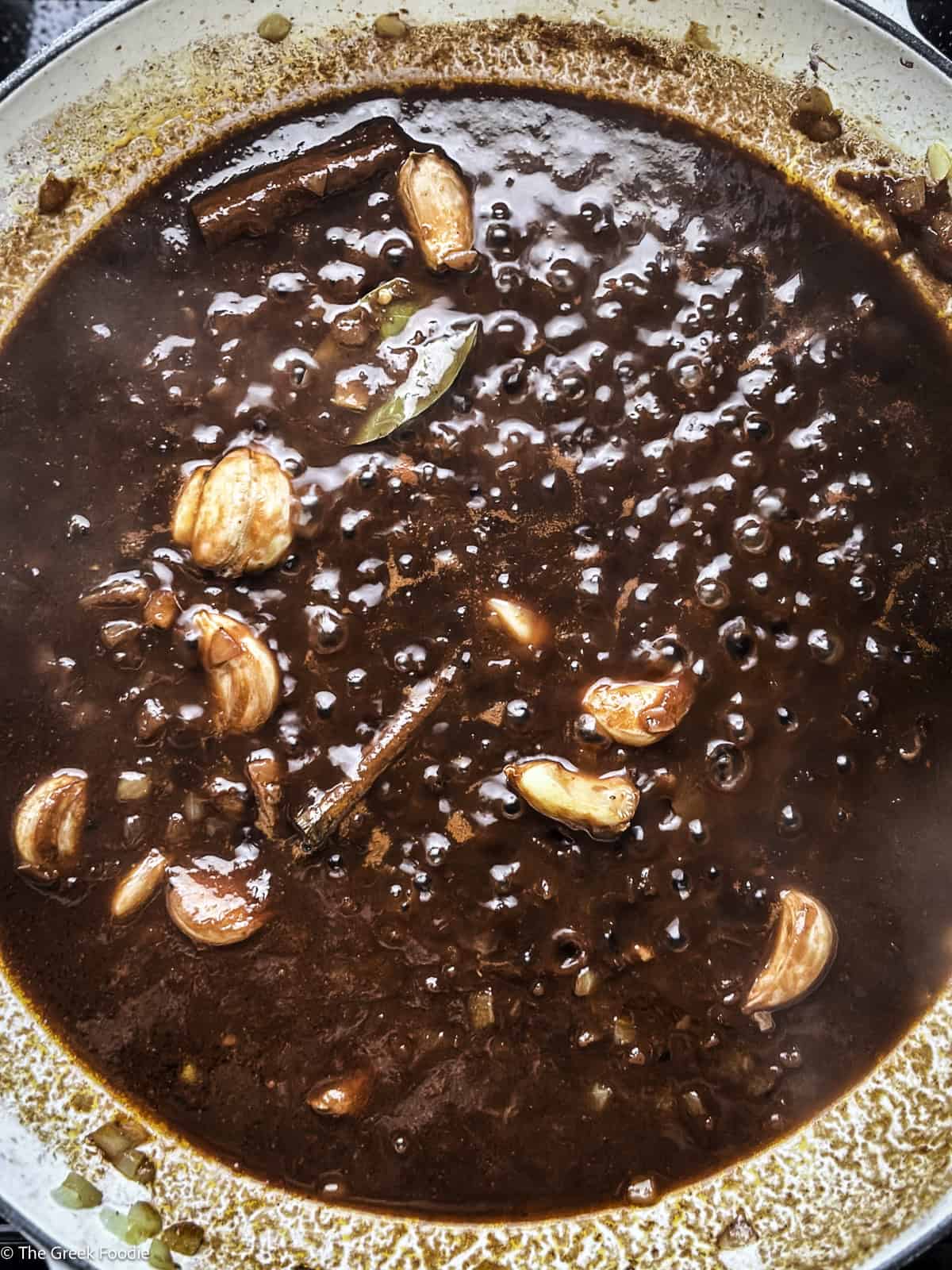
STEP 3. Pour in the wine and deglaze the pan, scraping up the sticky bits from the bottom. Let the alcohol cook off for 1 minute over high heat.
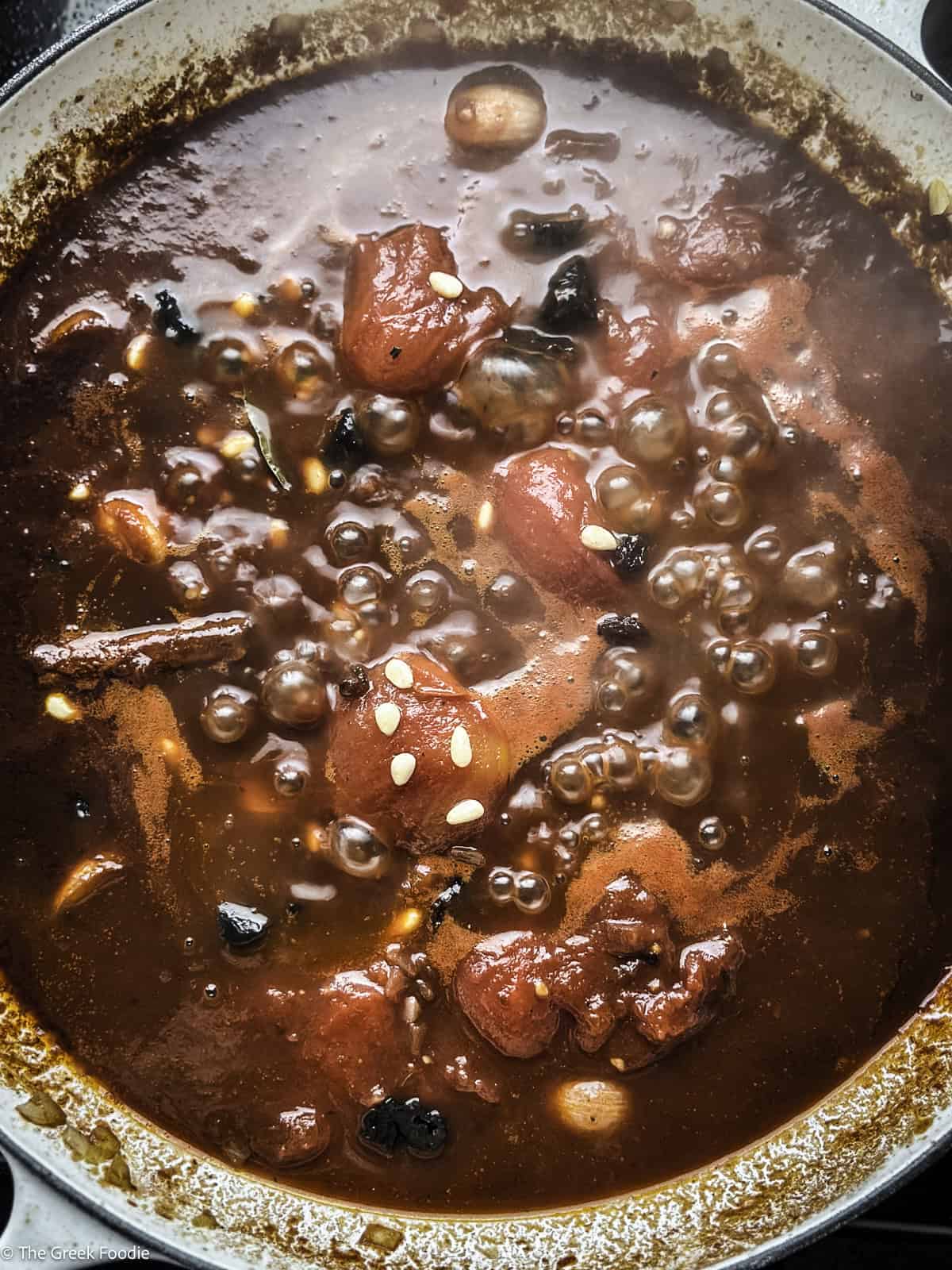
STEP 4. Add the tomatoes, prunes, raisins, and pine nuts. Stir to combine. Cook for 2 minutes over medium heat, pressing the tomatoes lightly with the back of a wooden spoon to break them up.
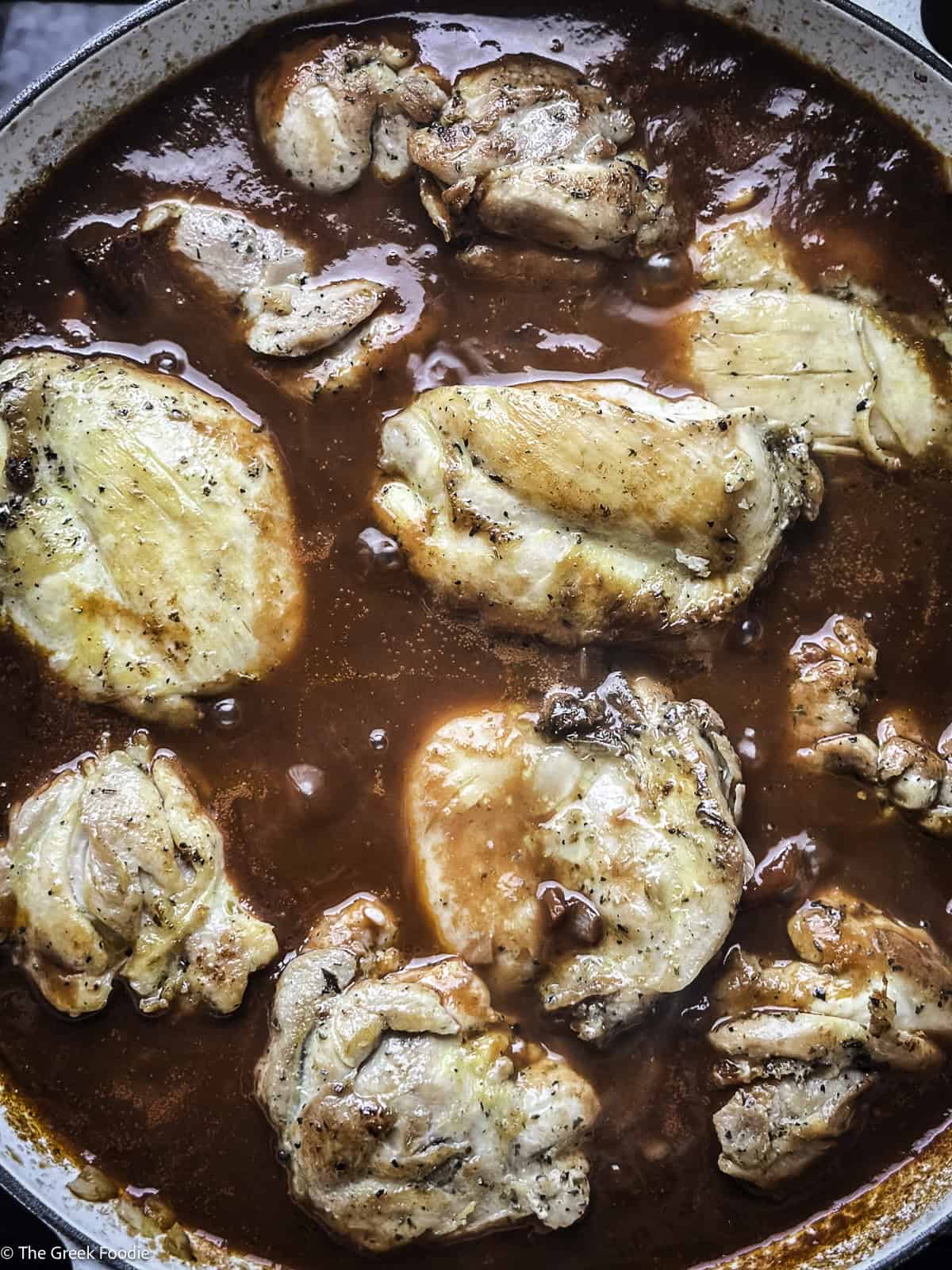
STEP 5. Nestle the chicken on top, along with any juices from the plate. Cover, lower the heat to medium-low, and simmer for 25 minutes, until the chicken is tender and reaches 165°F (74°C).
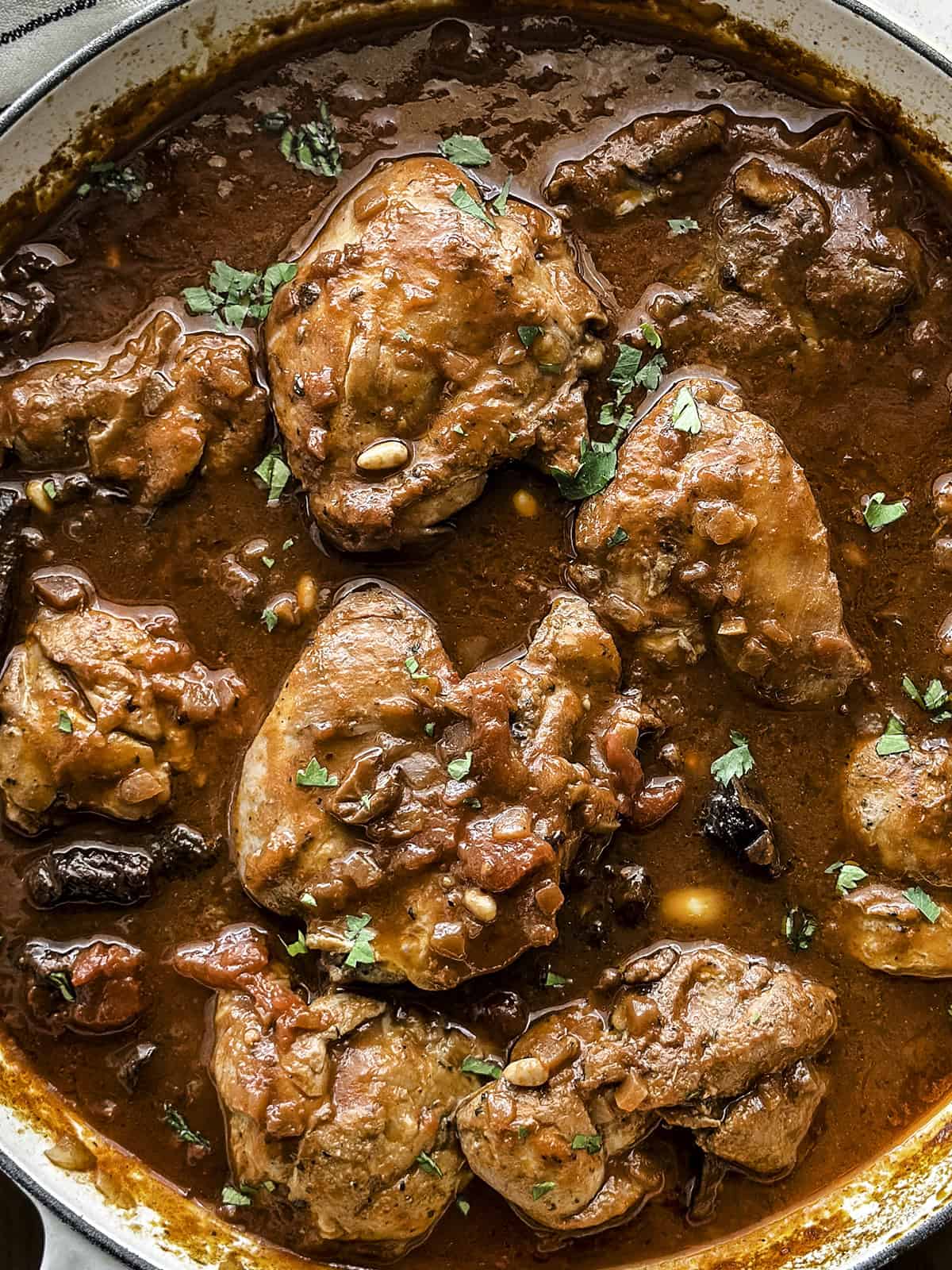
STEP 6. Uncover and let the kapama rest for 10 minutes. Remove the cinnamon sticks and bay leaf, and fish out the cloves if you can find them. Serve.
Garlic tip: I learned this from Jamie Oliver. Leave the garlic cloves whole, in their papery skins. They steam inside the sauce and turn sweet and jammy, completely different from chopped or minced garlic. Squeeze them out onto your bread at the table.
Tips for the best chicken kapama
- Don’t crowd the pan. Brown the chicken in batches. Too many pieces at once and they steam instead of turning golden.
- Let the tomato paste darken. Those two minutes cook off the raw, tinny taste and deepen the sauce.
- Using bone-in chicken? Braise covered for 40–45 minutes, until the thickest piece reaches 165°F (74°C) near, but not touching, the bone.
- Using chicken breast? It works, but check it at 15 minutes; breast dries out quickly. Thighs are more forgiving.Count your cloves. Whole cloves are easy to lose in the sauce and not pleasant to bite into. Count them in and count them out.
- Make it ahead. Like most braises, kapama tastes even better the next day, once the spices have settled in.
- Use fresh tomatoes in summer. This is how my grandmother Chrysoula made it, with ripe Cretan tomatoes. Swap the can for about 1 lb (450 g) of ripe tomatoes. Halve them and grate the cut sides on a box grater, discarding the skins. Fresh tomatoes are juicier, so let the sauce simmer for 4–5 minutes in step 4, instead of 2, before adding the chicken.

What to serve with chicken kapama
- Pasta. One traditional way: kapama spooned over spaghetti, hilopites, or orzo, with a generous handful of grated kefalotiri or mizithra.
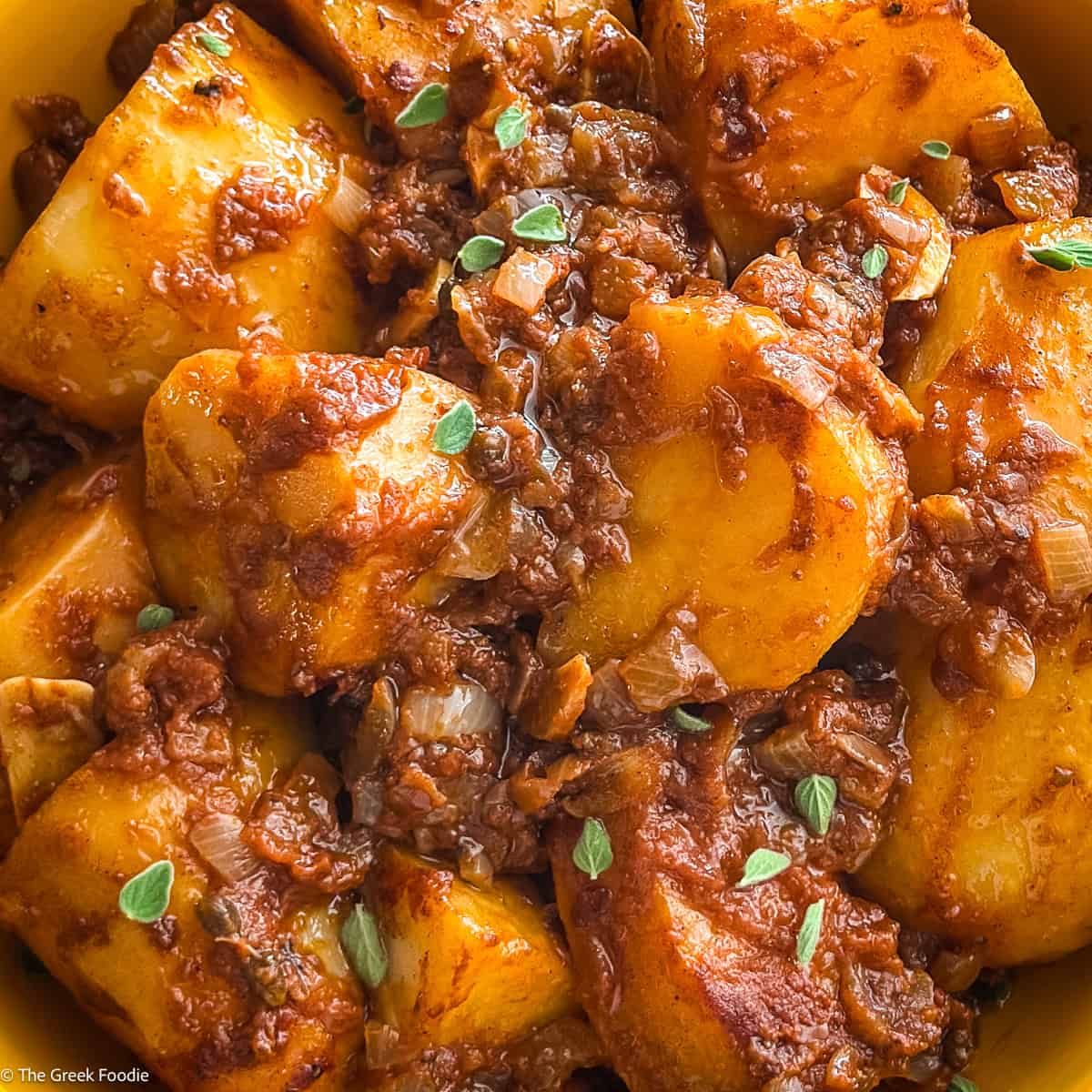
- Potatoes fried in olive oil. The other traditional way, and how we ate kapama at my grandmother Chrysoula’s table. The fries soak up the spiced red wine sauce beautifully. For homemade fries, see my Greek loaded fries.
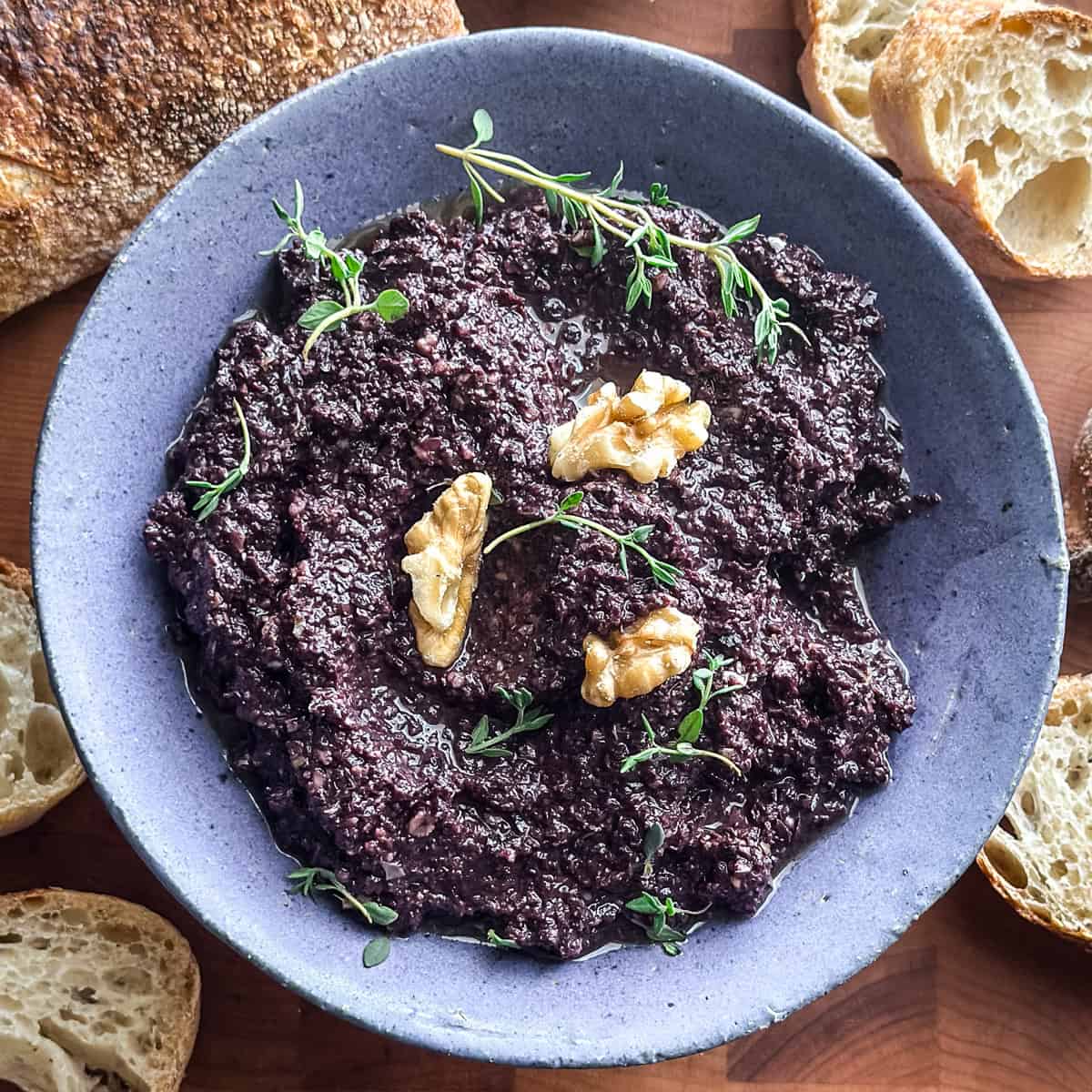
- Bread. Dipping bread in the sauce for a papara bite is non-negotiable! Today, papara means a piece of bread dipped in sauce; in the old days, it was a whole meal of stale bread and milk. Try my peasant loaf or my olive oregano loaf.
- Mashed potatoes. Heaven is here. Try my olive oil mashed potatoes.
- Rice. Try it embellished with dried fruit and nuts, like my festive pilafi, or keep it simple with a fragrant basmati.
- Cheese. Shaved Parmigiano or kefalotiri on top, fresh feta on the side, or a baked feta dip like bouyourdi.
If you love the sweet-savory balance here, you’ll also love my Sicilian chicken in wine sauce. It shares the same soul but takes a bold Sicilian turn with capers, raisins, toasted almonds, and a gorgeous agrodolce glaze.
Storage and reheating
- Fridge: Keep leftovers in an airtight container for 3–4 days.
- Freezer: Freeze for up to 3 months.
- Reheating: Warm gently in a covered saucepan over medium-low heat, adding a splash of water or stock if the sauce has thickened.

Chicken kapama FAQ
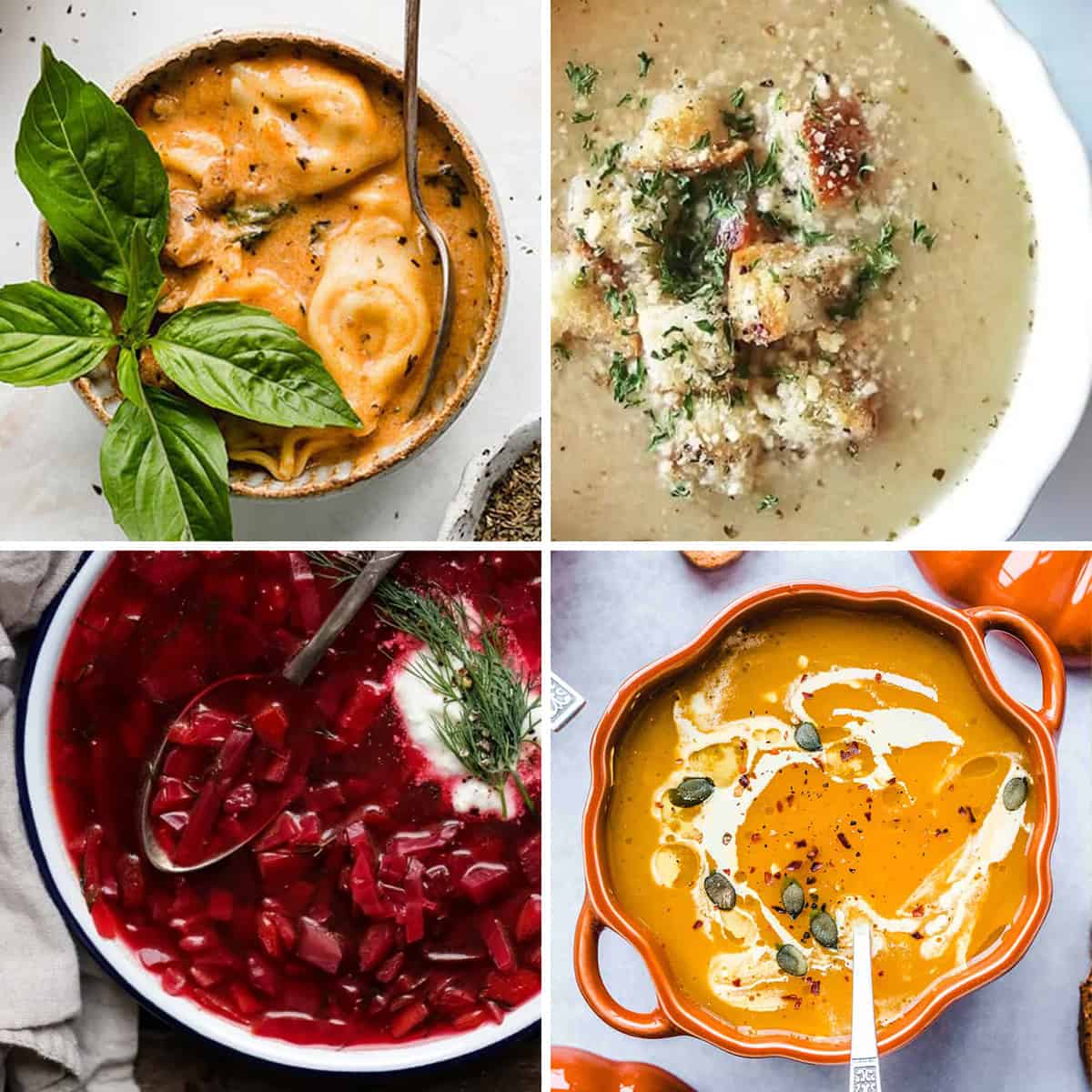
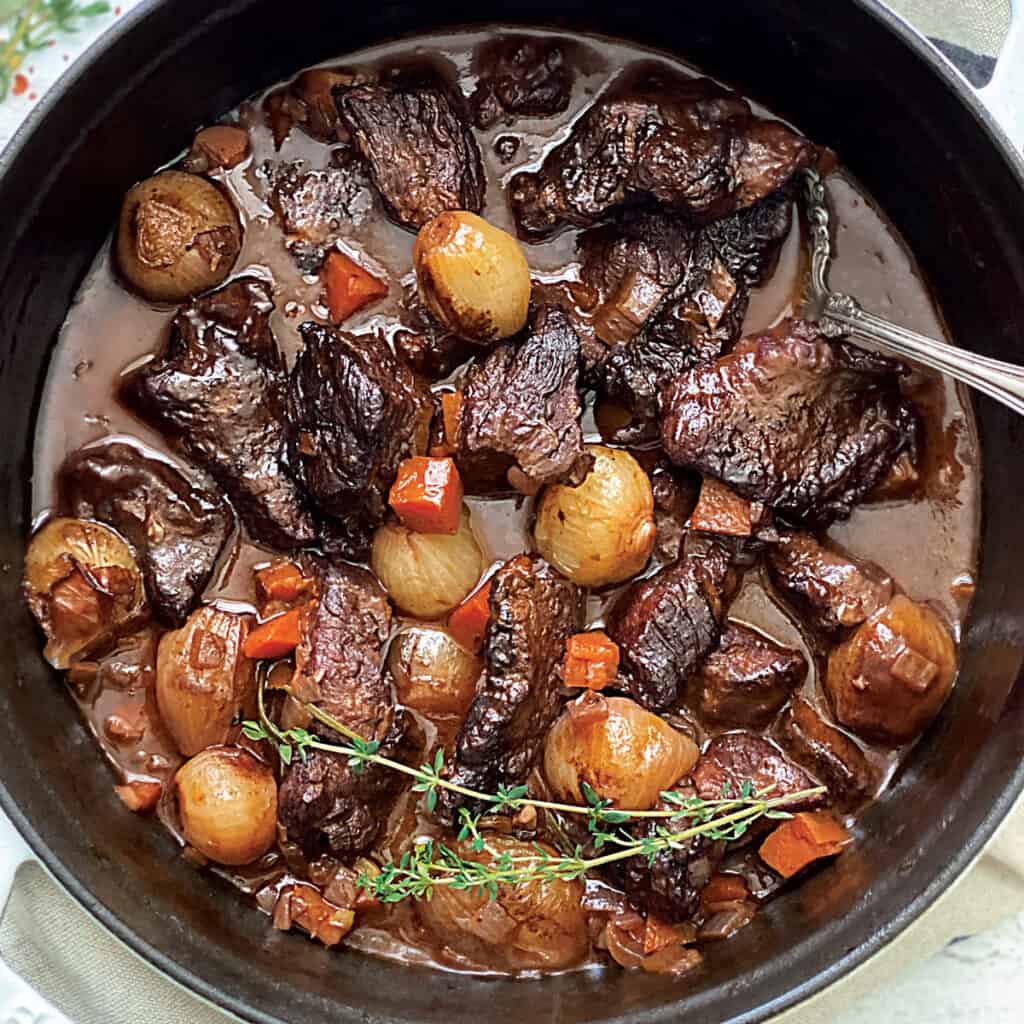
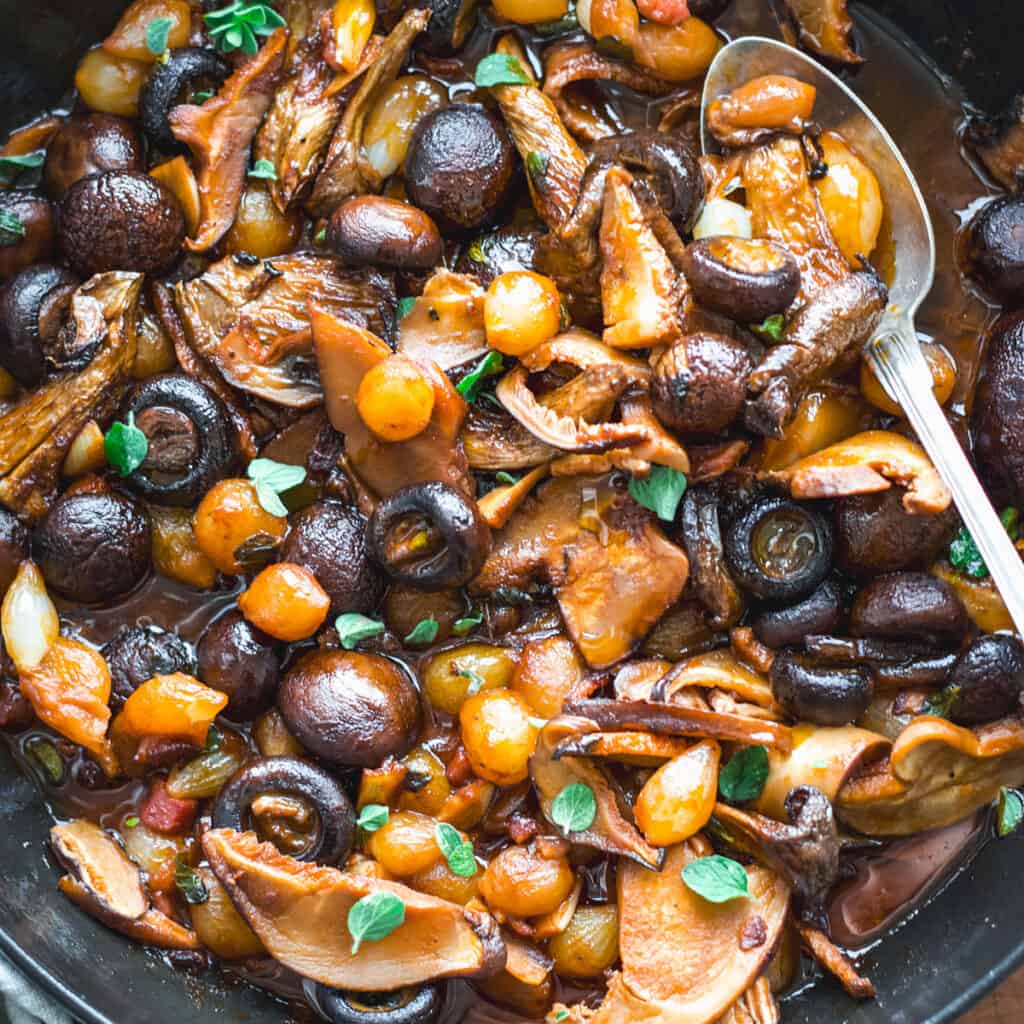
More Greek stews
Cooked it? Rate it!
If you tried this recipe, I’d love to know how you liked it — drop a comment below or tag me on Instagram @thegreekfoodie__.



Chicken Kapama
Ingredients
- 2 lb boneless, skinless chicken thighs
- 1 teaspoon garlic powder
- sea salt, to taste
- freshly ground pepper, to taste
- ⅓ cup extra virgin olive oil
- 1 onion, diced
- 5 garlic cloves, whole and unpeeled
- 2 cinnamon sticks
- 3 whole cloves
- 1 bay leaf
- 2 tablespoons tomato paste
- 1 cup dry red wine, (or chicken stock)
- 14 oz can whole peeled San Marzano tomatoes
- ¼ cup prunes, quartered
- ¼ cup raisins
- 1 tablespoon pine nuts
Instructions
- Season the chicken with sea salt, pepper, and garlic powder. Let it sit for 10 minutes at room temperature.
- Heat 1 tablespoon of the olive oil in a deep skillet over medium-high heat. Brown the chicken in batches for 2–3 minutes per side, until golden. Transfer to a plate.
- Add the remaining olive oil to the skillet. Add the onion, whole garlic cloves, cinnamon sticks, cloves, and bay leaf. Sauté for 2 minutes, stirring occasionally.
- Add the tomato paste and cook for 2 minutes, stirring, until it darkens slightly.
- Pour in the wine and deglaze, scraping up the browned bits from the bottom of the pan. Let the alcohol cook off for 1 minute over high heat.
- Add the tomatoes, prunes, raisins, and pine nuts. Stir and cook for 2 minutes over medium heat, pressing the tomatoes with a wooden spoon to break them up.
- Nestle the chicken and its juices into the sauce. Cover, reduce the heat to medium-low, and simmer for 25 minutes, until tender and 165°F (74°C).
- Uncover and rest for 10 minutes. Remove the cinnamon sticks, bay leaf, and cloves before serving.
Notes
- No wine: Use 1 cup chicken or vegetable stock plus 1 teaspoon red wine vinegar.
- Bone-in chicken: Braise covered for 40–45 minutes.
- Chicken breast: Braise for about 15 minutes; check early.
- Fresh tomatoes: Replace the can with about 1 lb (450 g) ripe tomatoes, grated and skins discarded. Simmer 4–5 minutes in step 6 before adding the chicken.
- Make ahead: Tastes even better the next day.
- Storage: Refrigerate for 3–4 days or freeze for up to 3 months. Reheat gently over medium-low heat with a splash of water or stock.
Nutrition