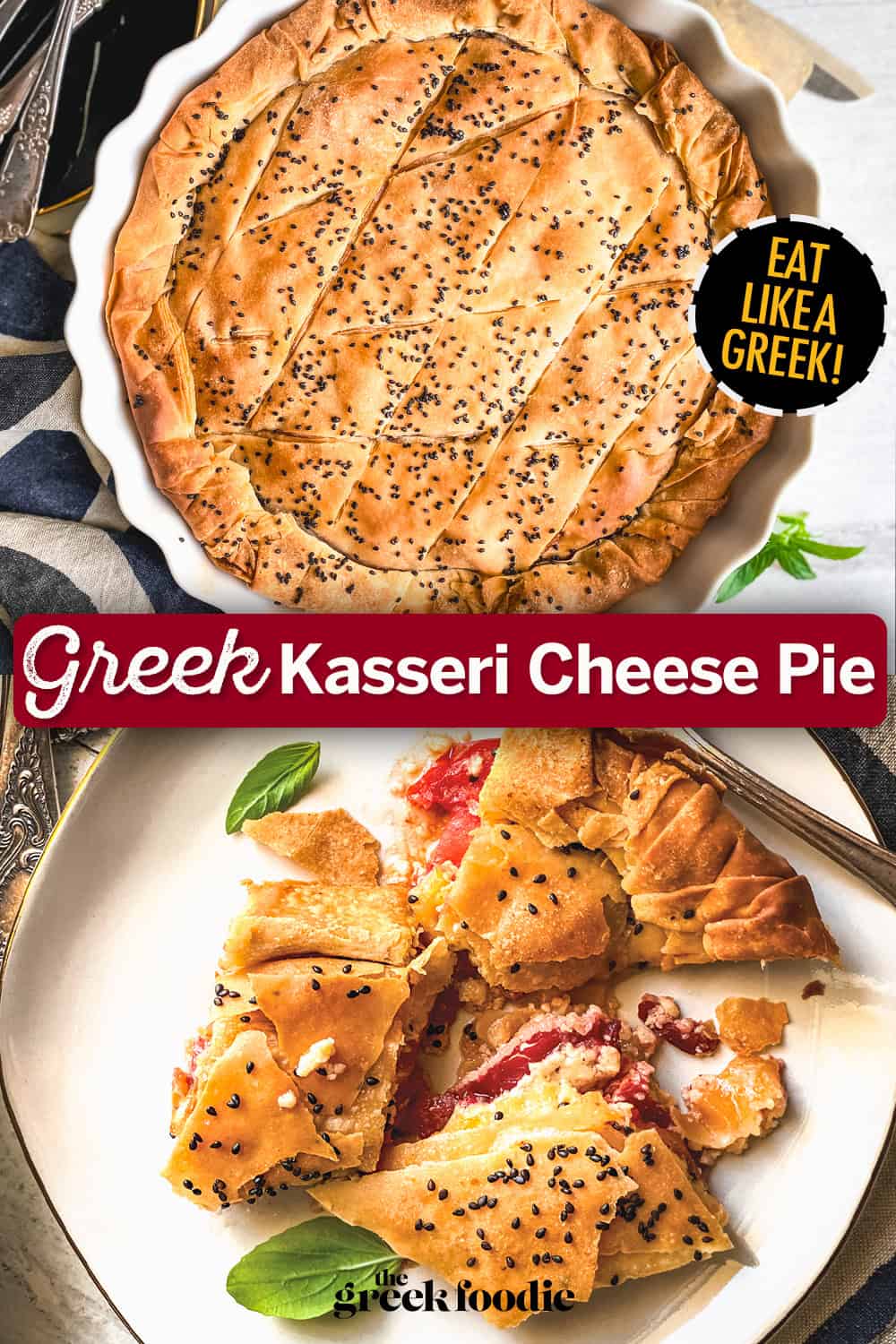

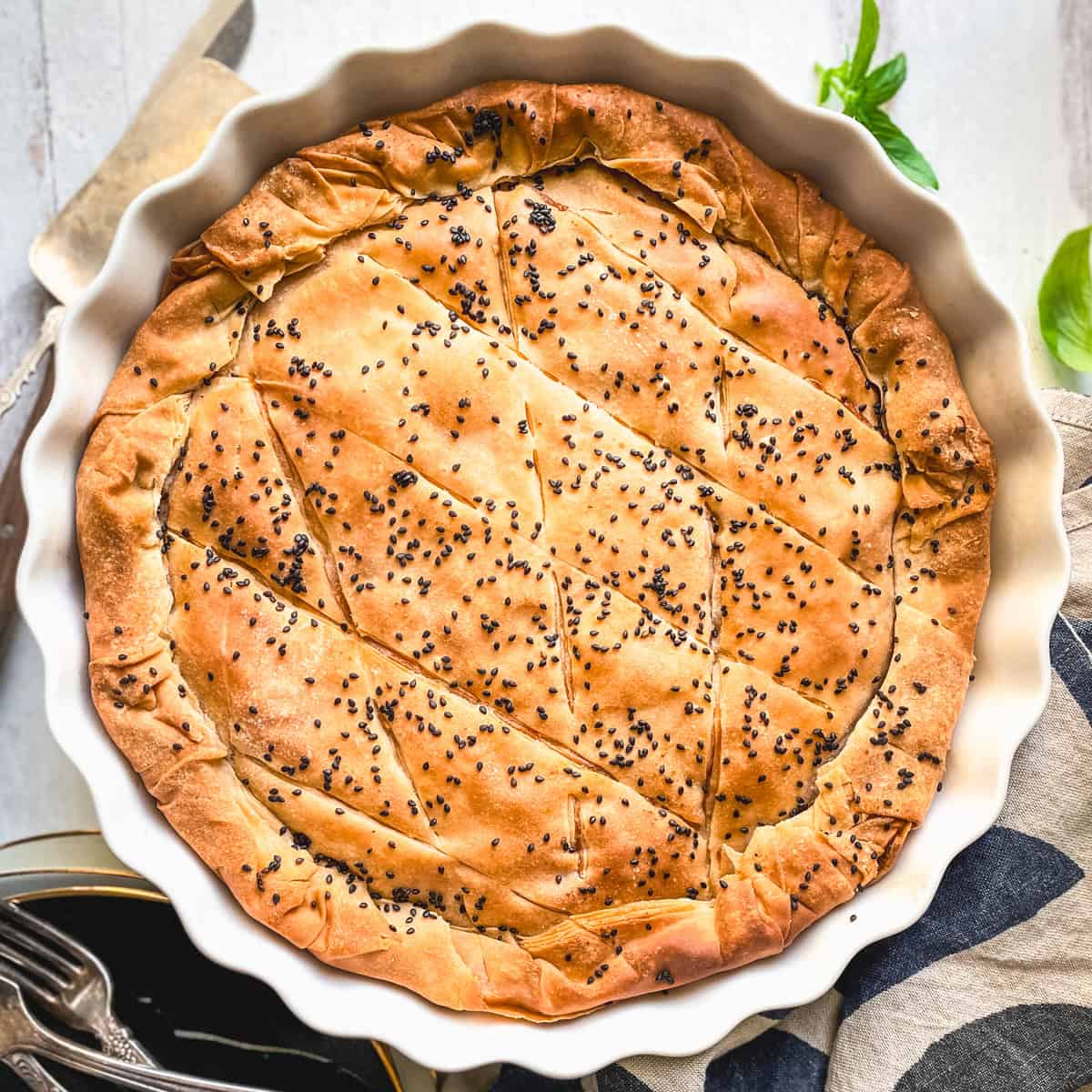
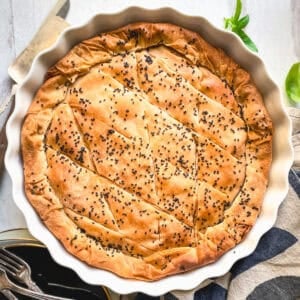
This kasseri cheese pie is crisp buttered phyllo layered with melting kasseri, thin slices of spiced pastirma and ripe tomato, with a pinch of cumin and black sesame on top. It’s salty, a little spicy from the pastirma’s coating, and the cheese stays soft and stretchy inside the crackling crust.
In Greece it’s called pita Kaisareias, Kaisareia pie, after the city in Cappadocia famous for its pastirma. It came to my family through my grandmother Evgenia, who was from Constantinople, and it’s one of the easiest phyllo pies I make: no filling to cook, just layer and bake.
Serve it warm, cut into squares for meze, or in big slices for brunch with a salad.
If you love this kasseri cheese pie, you will also love this Potato and Zucchini Pie, Leek and Potato Galette or this Pie with Greens and Feta!
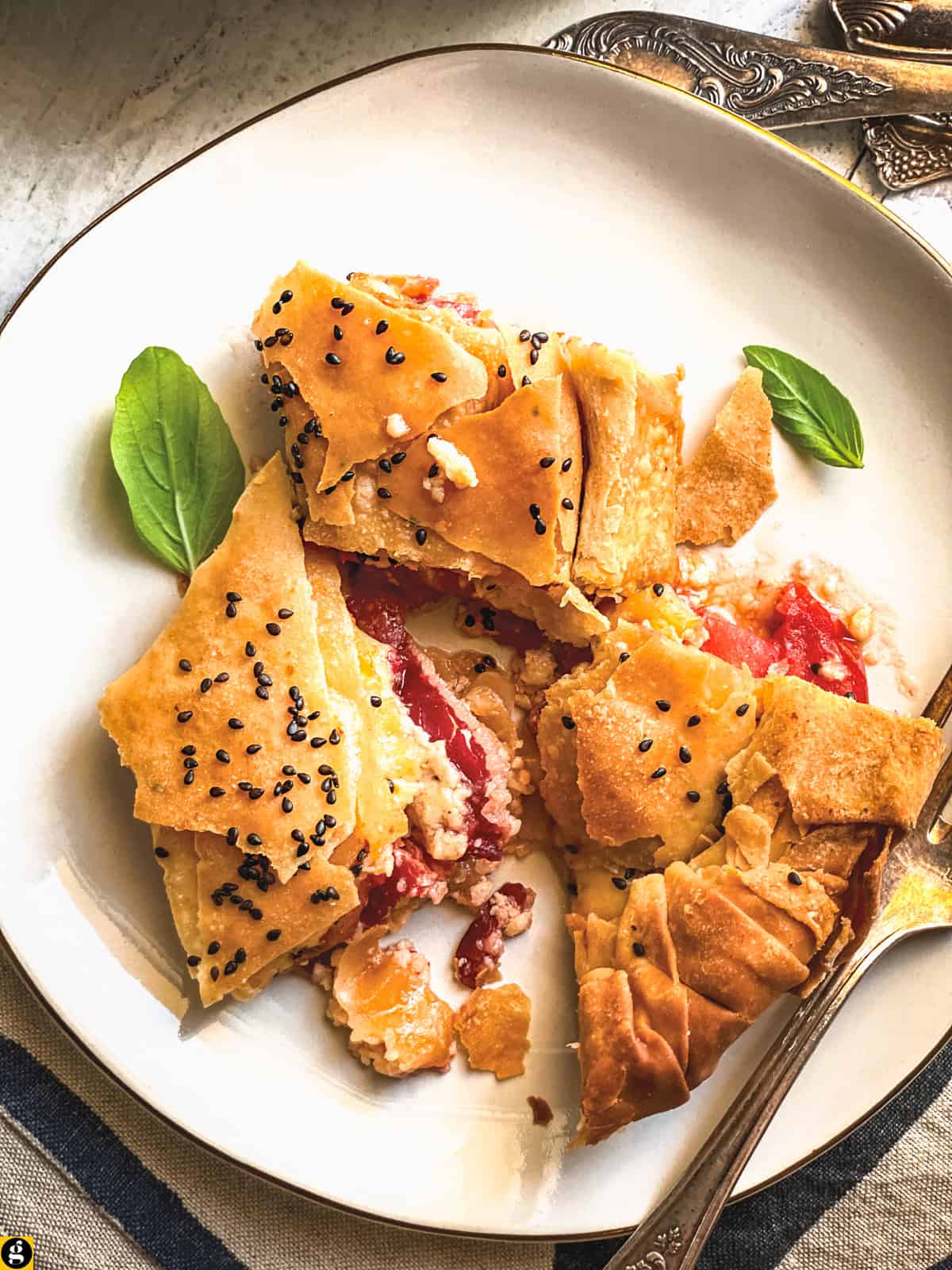
Why you will love this pie
What is kasseri cheese?
Kasseri is a semi-hard Greek cheese made from sheep’s milk, with up to 20% goat’s milk. It’s pale yellow, mild, buttery and lightly salty, with a faint sweetness and a dense but pliable texture. In Greece it’s a protected PDO cheese.
Kasseri is a stretched-curd cheese, like provolone, which is why it melts so well. Greeks eat it on its own, grilled or fried, in sandwiches and tost, and baked into pies like this one.
What does kasseri taste like? Mild, buttery and nutty, saltier than mozzarella and gentler than feta or kefalotiri.
Where to buy kasseri: Greek and Middle Eastern markets, good cheese counters, or online. I buy mine at Titan Foods in Astoria. Kasseri made in the US is usually cow’s milk and milder; for the Greek flavor, look for PDO kasseri from Greece on the label.
Kasseri cheese substitute
Provolone is the best substitute: it’s also a stretched-curd cheese, with a similar texture and mild, salty flavor. Use mild (dolce) provolone, not sharp. A young graviera or kefalograviera works too, though it’s nuttier.
What is pastirma (pastourma)?
Pastirma is air-dried cured beef coated in a spice paste, made from ground fenugreek, garlic and red pepper. Greeks call the paste tsimeni (τσιμένι); in Turkish it’s çemen. Pastirma is sliced paper-thin and tastes salty, garlicky and gently spicy. In Greek it’s pastourmas (παστουρμάς); in Armenian and Arabic shops you’ll see it as basturma or basterma.
The city of Kayseri in Cappadocia, Kaisareia in Greek, is famous for it, and Greeks from Cappadocia and Constantinople brought it to Greece. That’s why pastourmadopita is so loved in Greek homes with Asia Minor roots, like my grandmother’s.
Is pastirma the same as pastrami? No. The names are related, but pastrami is brined, smoked and steamed. Pastirma is salted, pressed, air-dried and coated in tsimeni, so it’s drier, more intense and more garlicky.
Where to buy it: Greek, Armenian, Turkish and Middle Eastern markets, usually pre-sliced, or online. Substitute: thinly sliced bresaola or prosciutto. You’ll lose the spice, so add an extra pinch of cumin and a little sweet paprika.
Too spicy? Leave the tsimeni on for the full flavor, or scrape it off the edge of each slice for a milder pie.
Here is what you need
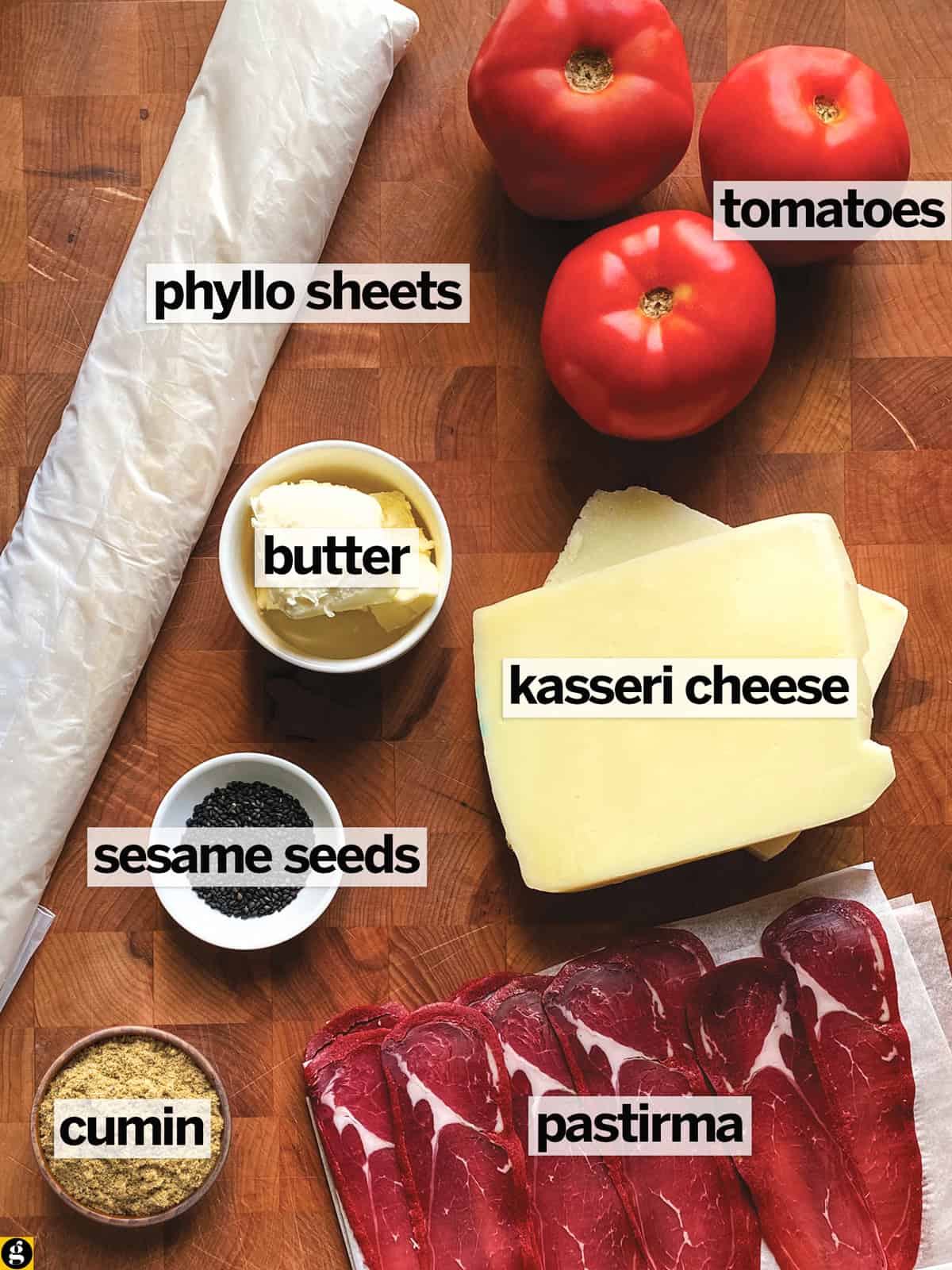
- Phyllo dough. Thin #4 phyllo (8 sheets) or thick village-style phyllo (4 sheets). In the US I use Fillo Factory #4, 14×18 inches.
- Kasseri cheese, grated or thinly sliced. Grated covers the pie in an even, melting layer; slices give you longer cheese pulls. Provolone is the best substitute.
- Pastirma (pastourma), thinly sliced, 13–15 slices. Keep the spice coating on, or scrape it off for a milder pie. Bresaola or prosciutto in a pinch.
- Two large ripe tomatoes, thinly sliced. In winter I use Campari tomatoes; they’re the closest to Greek tomatoes and you’ll find them year-round.
- Butter, salted or unsalted, melted.
- Ground cumin. My favorite spice.
- Black sesame seeds, for the top. White sesame or poppy seeds work too.
How to make kasseri cheese pie
- Prep the tomatoes. Slice them 2–3 mm thick and drain them on paper towels or in a strainer for 5 minutes. Wet tomatoes make soggy phyllo.
- Heat the oven to 380°F / 190°C and lightly butter a 12-inch round tart dish.
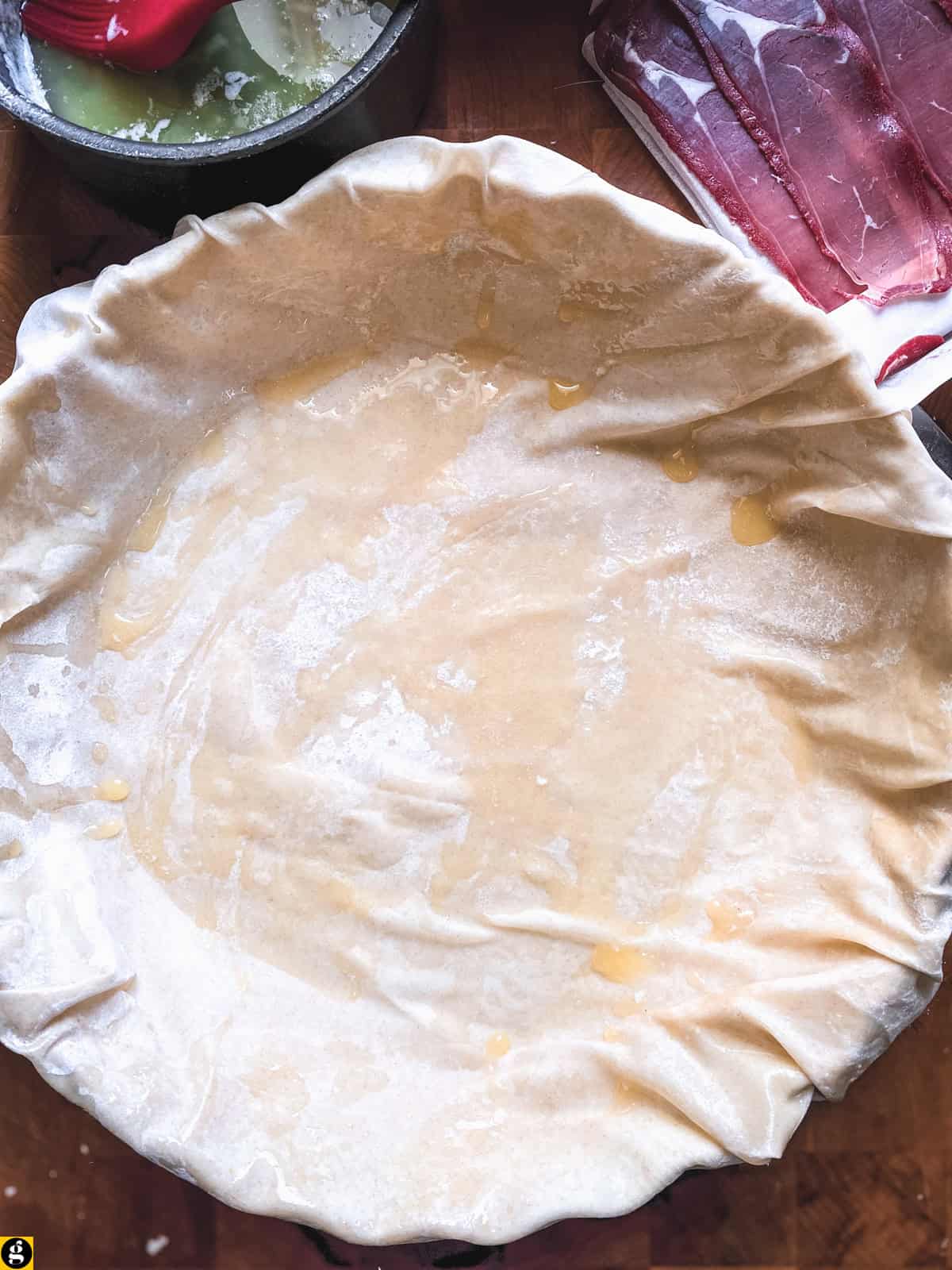
- Build the bottom. Brush a phyllo sheet with butter and lay it in the dish with the edges hanging over. Brush a second sheet and lay it across the first. Repeat with two more, so the overhang covers all sides.
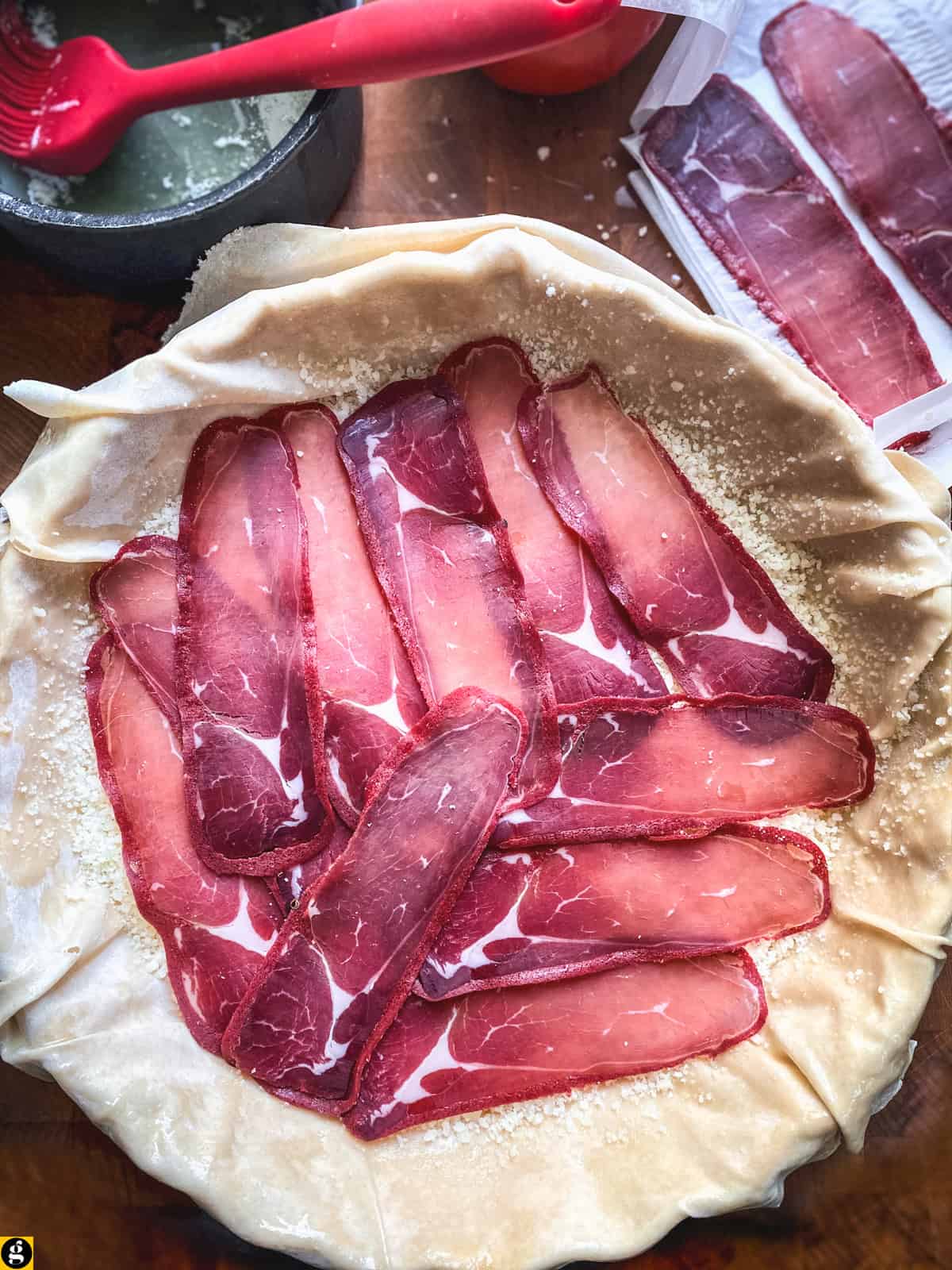
- Add the pastirma. Lay the slices over the phyllo, overlapping them a little so they cover the bottom. For a milder pie, scrape the spice coating off the edges first.
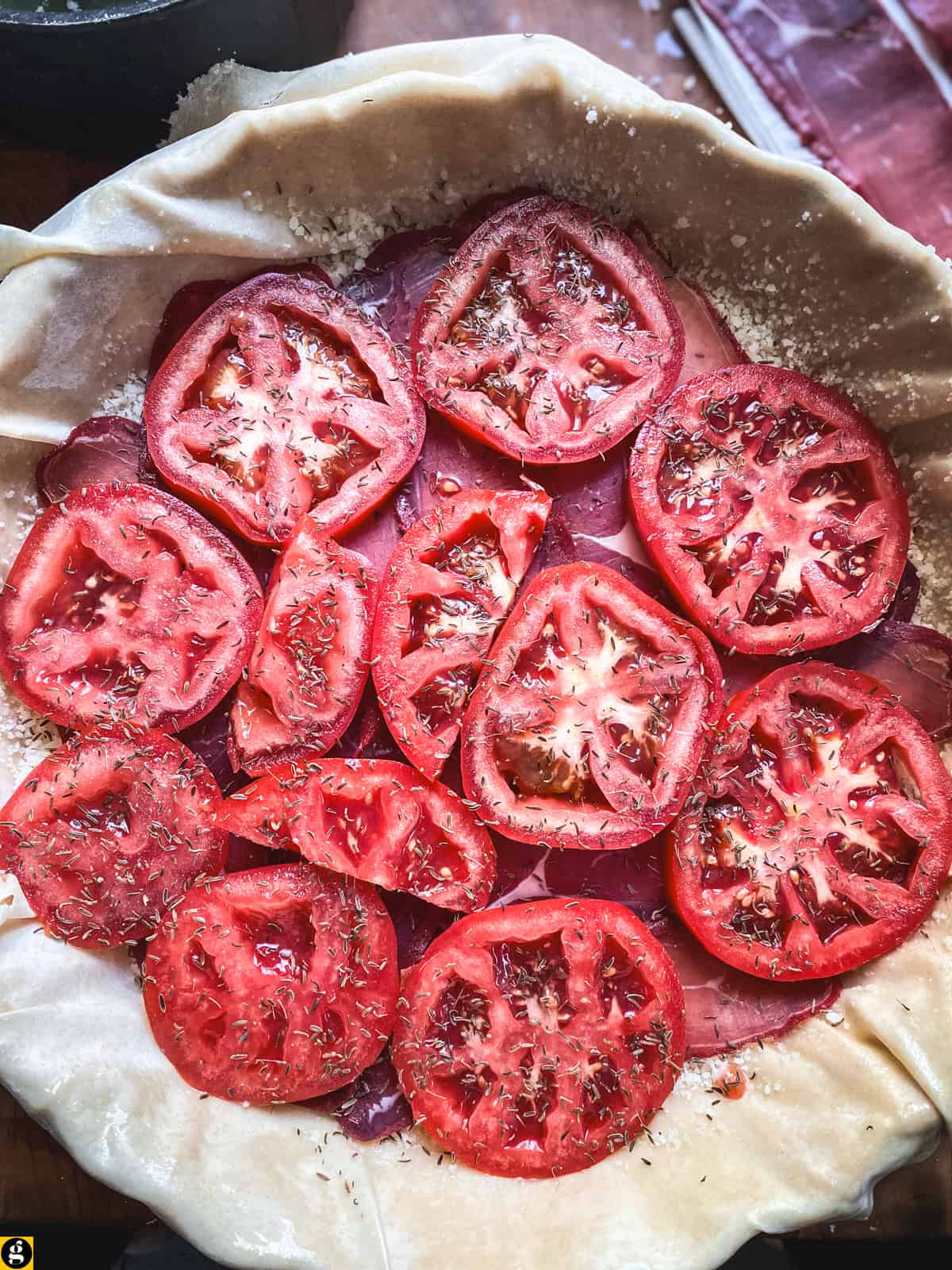
- Add the tomatoes. Arrange the tomato slices in a single layer over the pastirma and sprinkle with the cumin.
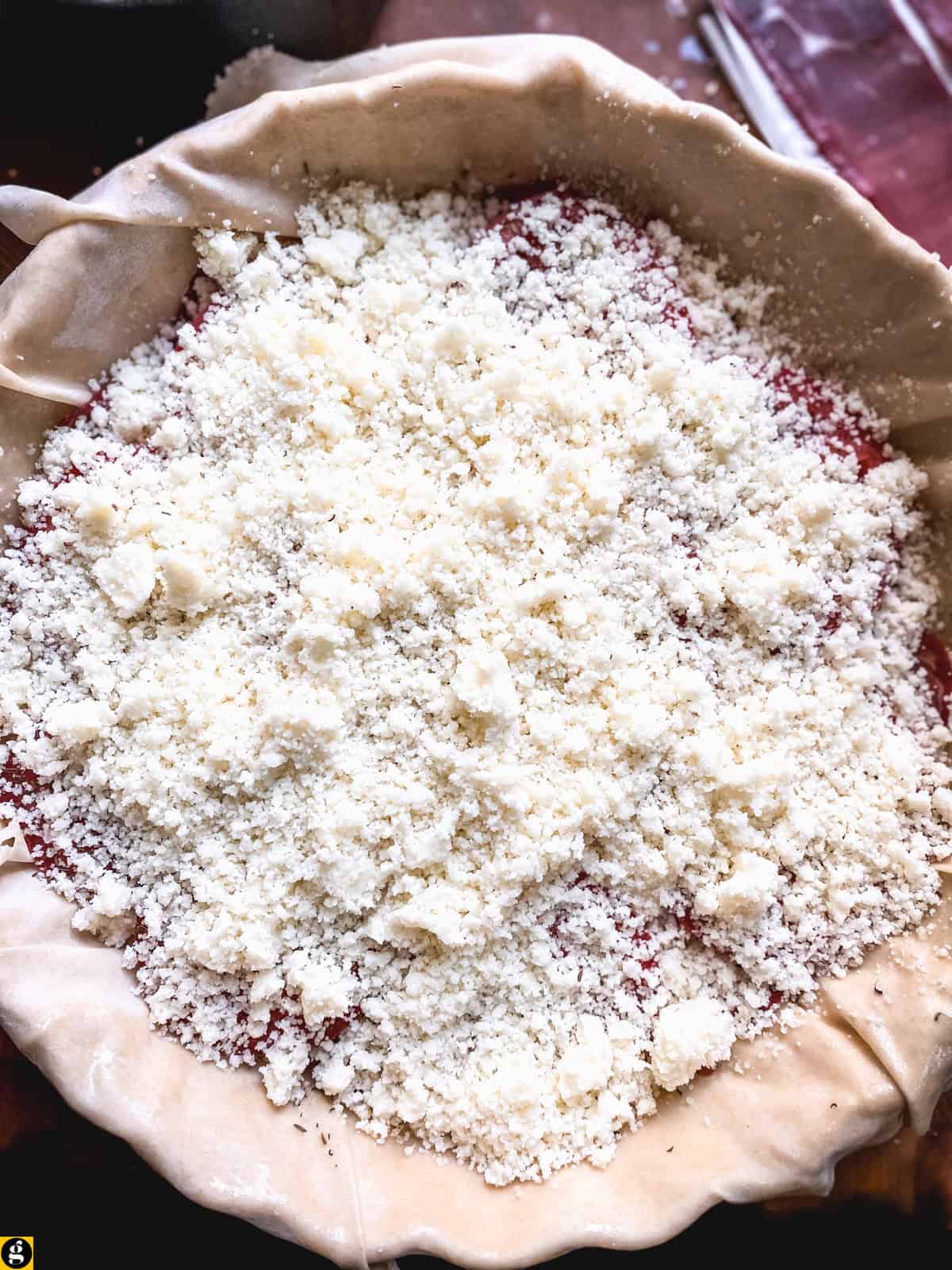
- Add the kasseri. Scatter the grated kasseri evenly over the tomatoes, or cover them with the slices.
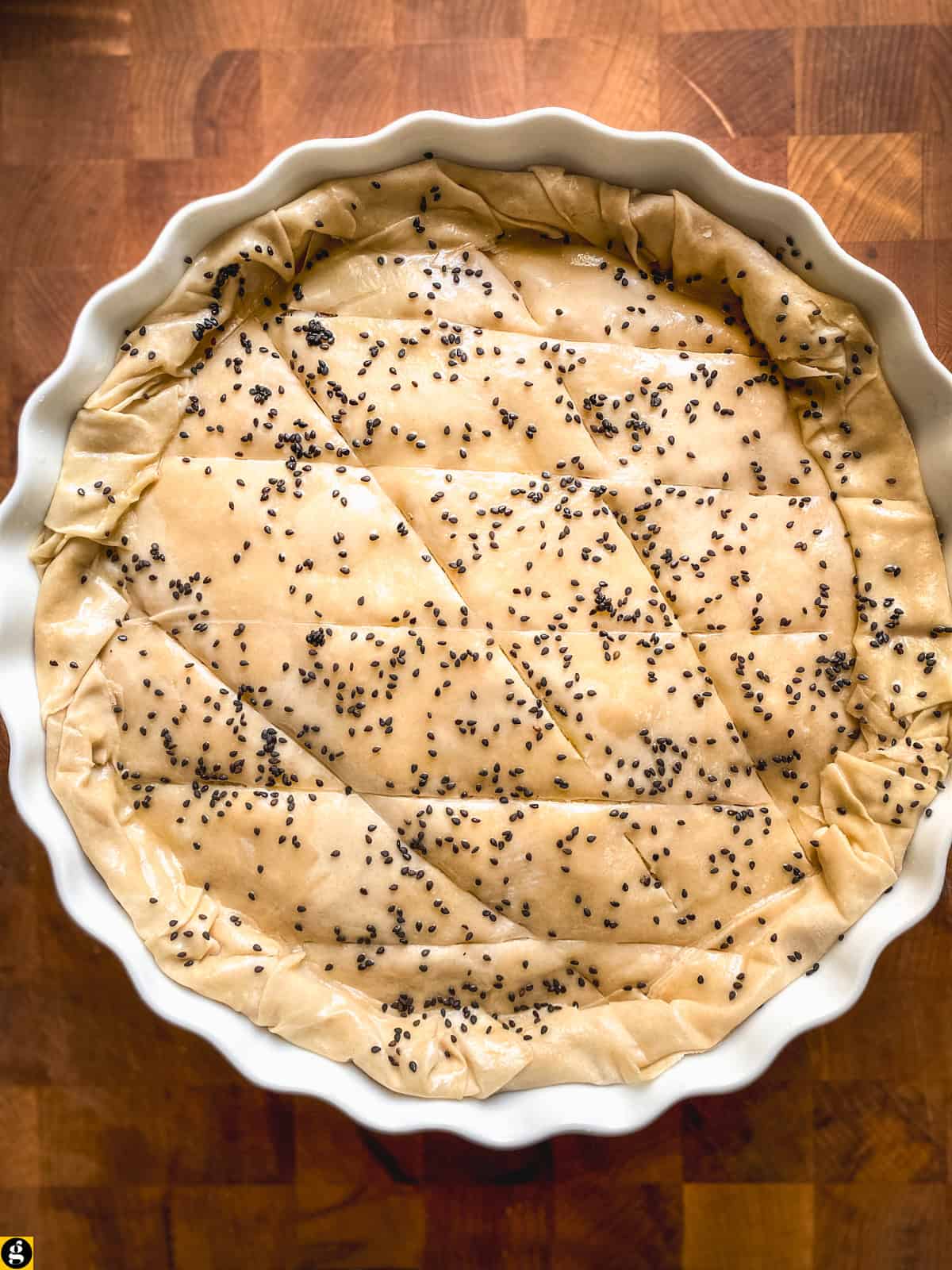
- Cover. Top with 4 more buttered phyllo sheets, laid crosswise the same way. Trim the overhang if it’s very long, then roll it inward to make a rustic edge.
- Score and seed. Brush the top with butter, score it into pieces with a sharp knife, and sprinkle with black sesame.
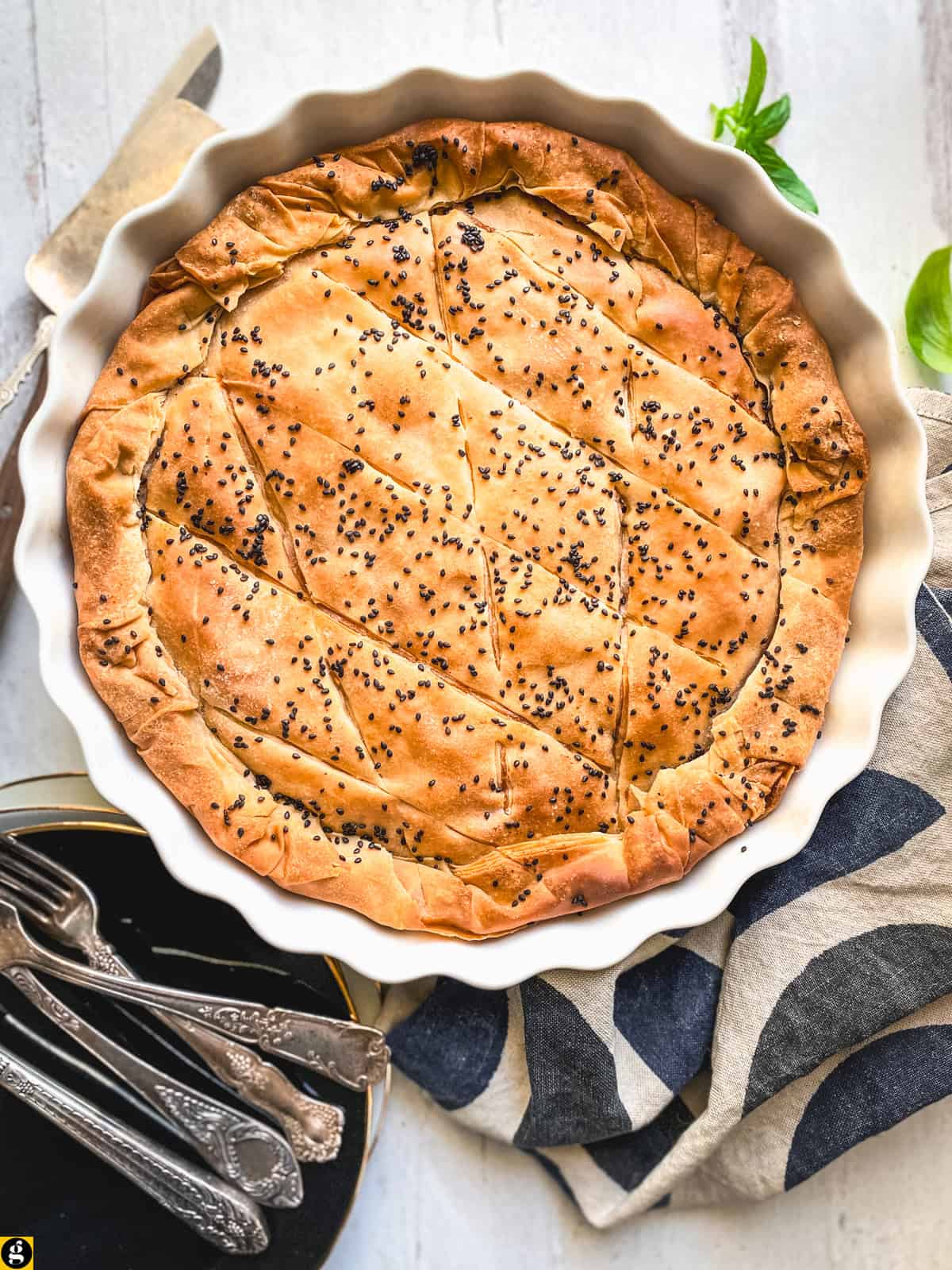
- Bake for about 50 minutes, until the top is golden and crisp. Let it rest 10 minutes before cutting, so the cheese sets and the slices hold.
Keep the phyllo moist while you work: cover the stack with a damp kitchen towel, and mist the overhanging edges lightly with water if they start to dry.
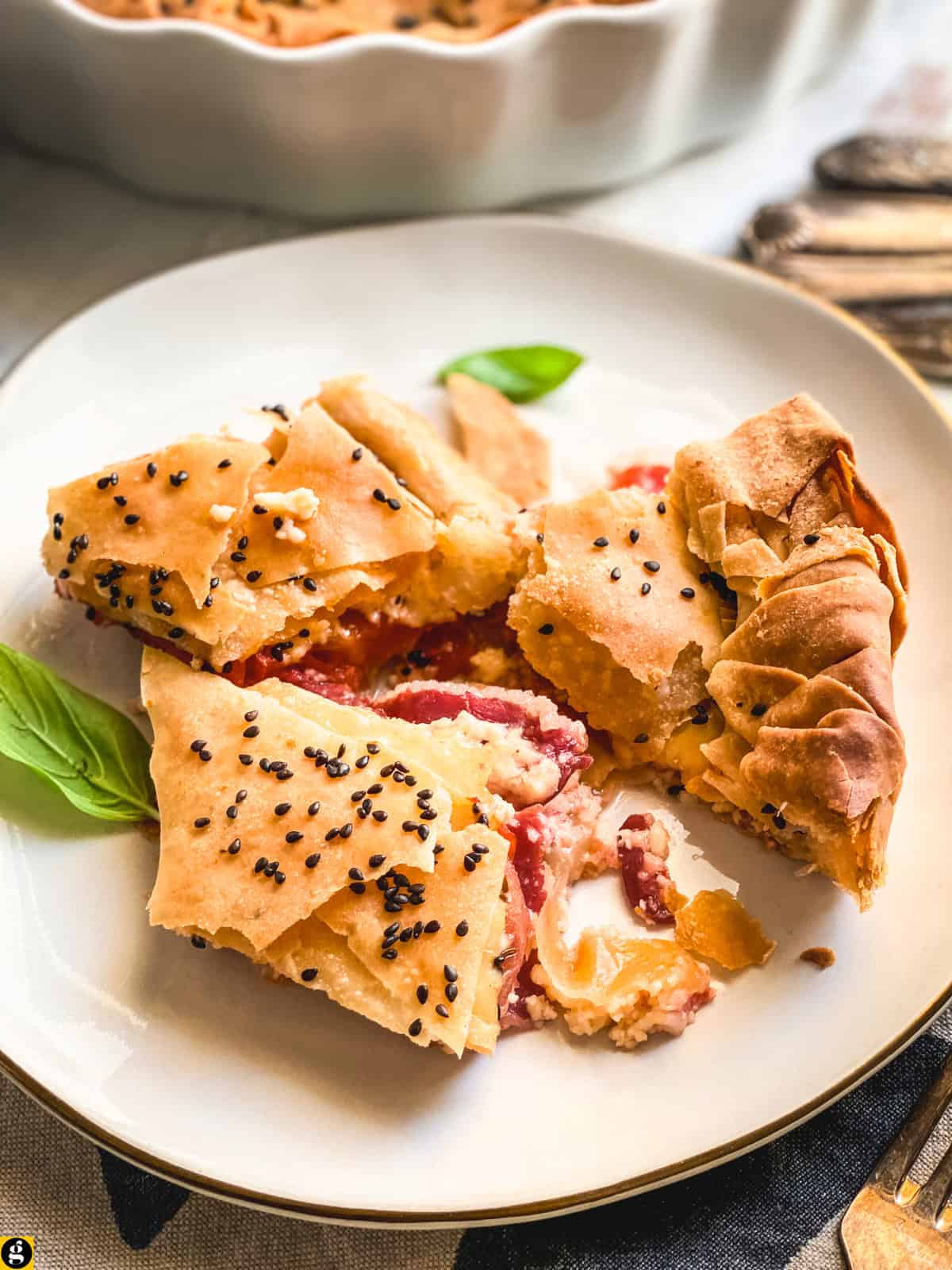
My grandmother Evgenia’s Christmas pie
Christmas Day was always at my grandmother Evgenia’s, and this pie was always on the table. Grandma was a fierce cook, so it had serious competition: roasts, decadent potatoes, other pies. It always won, and there was always a polite fight over the last slices.
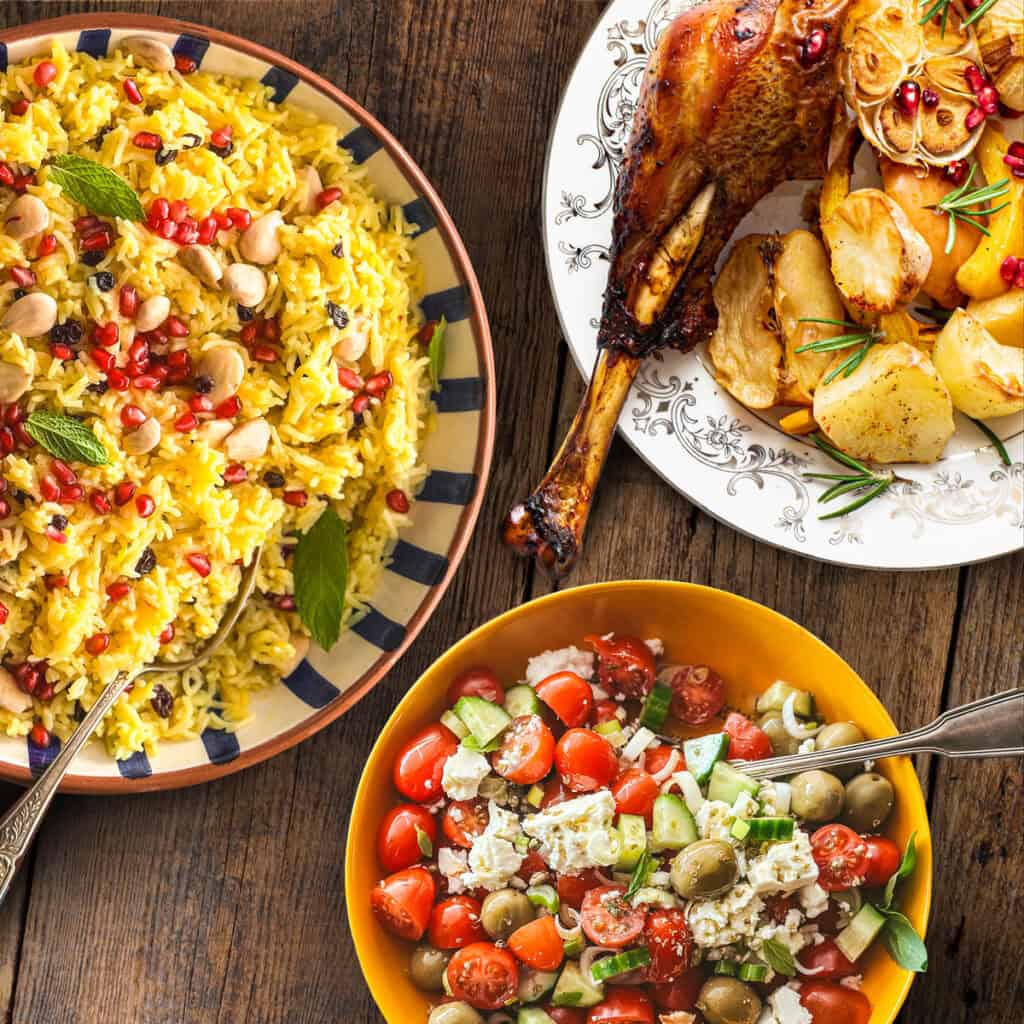
If you’re planning the whole holiday table, see my Greek Christmas food menu, with Grandma Evgenia’s pork roast with figs and chestnuts and her saffron pilafi.
Pro tips
- Drain the tomatoes. It’s the one step that keeps the bottom crisp.
- Grated or sliced kasseri both work. Grated melts into an even layer; thin slices give stretchier pulls. Either way, cover the tomatoes completely so they don’t steam the top crust.
- Control the heat. The pastirma’s spice coating (tsimeni) carries the heat. Keep it for a kick; scrape it off for kids or anyone who likes it mild.
- Use mild provolone if you can’t find kasseri. Sharp provolone overpowers the pastirma.
- Thick phyllo, homemade crust or puff pastry all work. For a homemade crust, use the one from my spanakopita recipe. For puff pastry, bake at 400°F / 200°C until puffed and golden, about 35–40 minutes.
What to serve with it
- As meze. Cut into small squares alongside tiropitakia, phyllo cup appetizers and a Greek grazing board.
- For brunch. A big slice with a horiatiki salad or the pomegranate salad with radicchio and quince.
- On a holiday table. Next to a roast, the way Grandma Evgenia served it.
Storage and leftovers
- Fridge: up to 3 days, covered.
- Reheat: in a 350°F / 175°C oven for 10–15 minutes, until the phyllo crisps again. Skip the microwave; it makes phyllo chewy.
- Make ahead: bake it a day ahead and reheat. Don’t assemble it ahead and refrigerate unbaked; the tomatoes will soak the phyllo.
- Freezer: wrap the cooled, baked pie well and freeze up to 1 month. Reheat from frozen at 350°F / 175°C for 25–30 minutes.

Kasseri cheese pie FAQ
You may also like
Cooked it? Rate it!
If you tried this recipe, I’d love to know how you liked it — drop a comment below or tag me on Instagram @thegreekfoodie__.


Kasseri Cheese Pie with Pastirma (Pita Kaisareias)
Equipment
- 12-inch (30.5 cm) round porcelain tart dish, about 2½ inches (6 cm) deep
- pastry brush
Ingredients
- 8 sheets thin #4 phyllo, 14×18 inches, thawed, or 4 sheets thick village-style phyllo
- 12 oz 350 g kasseri cheese, grated or thinly sliced
- 4-5 oz 120–150 g thinly sliced pastirma (pastourma), about 13–15 slices
- 2 large ripe tomatoes, sliced 2–3 mm thick
- 5 tablespoons 70 g butter, melted
- 1 teaspoon ground cumin
For the top
- 1 teaspoon black sesame seeds, optional (or white sesame or poppy seeds)
Instructions
- Slice the tomatoes 2–3 mm thick and drain on paper towels or in a strainer for 5 minutes.
- Heat the oven to 380°F / 190°C. Lightly butter the bottom and sides of the tart dish.
- Brush a phyllo sheet with butter and lay it in the dish with the edges hanging over. Brush a second sheet and lay it crosswise on top. Repeat with 2 more sheets.
- Layer the pastirma over the phyllo, then the tomatoes in a single layer. Sprinkle the tomatoes with the cumin.
- Cover the tomatoes completely with the kasseri, grated or sliced.
- Top with the remaining 4 phyllo sheets, brushing each with butter and laying them crosswise. Trim the overhang if needed, then roll it inward to form a border.
- Brush the top with butter, score into pieces and sprinkle with sesame seeds.
- Bake for about 50 minutes, until golden and crisp. Let rest 10 minutes before cutting.
Notes
- Pastirma heat: the spice coating (tsimeni) can stay on, or scrape it off for a milder pie.
- Kasseri: grated gives an even, melting layer; thin slices give stretchier pulls.
- Thick phyllo: use 2 sheets for the bottom and 2 for the top.
- Keep phyllo moist: cover the stack with a damp towel while you work; mist the overhanging edges lightly with water if they dry out.
- Kasseri substitute: mild provolone.
- Pastirma substitute: bresaola or prosciutto, plus an extra pinch of cumin and sweet paprika.
- Puff pastry: bake at 400°F / 200°C for 35–40 minutes.
- Storage: fridge up to 3 days; reheat at 350°F / 175°C for 10–15 minutes.
Nutrition