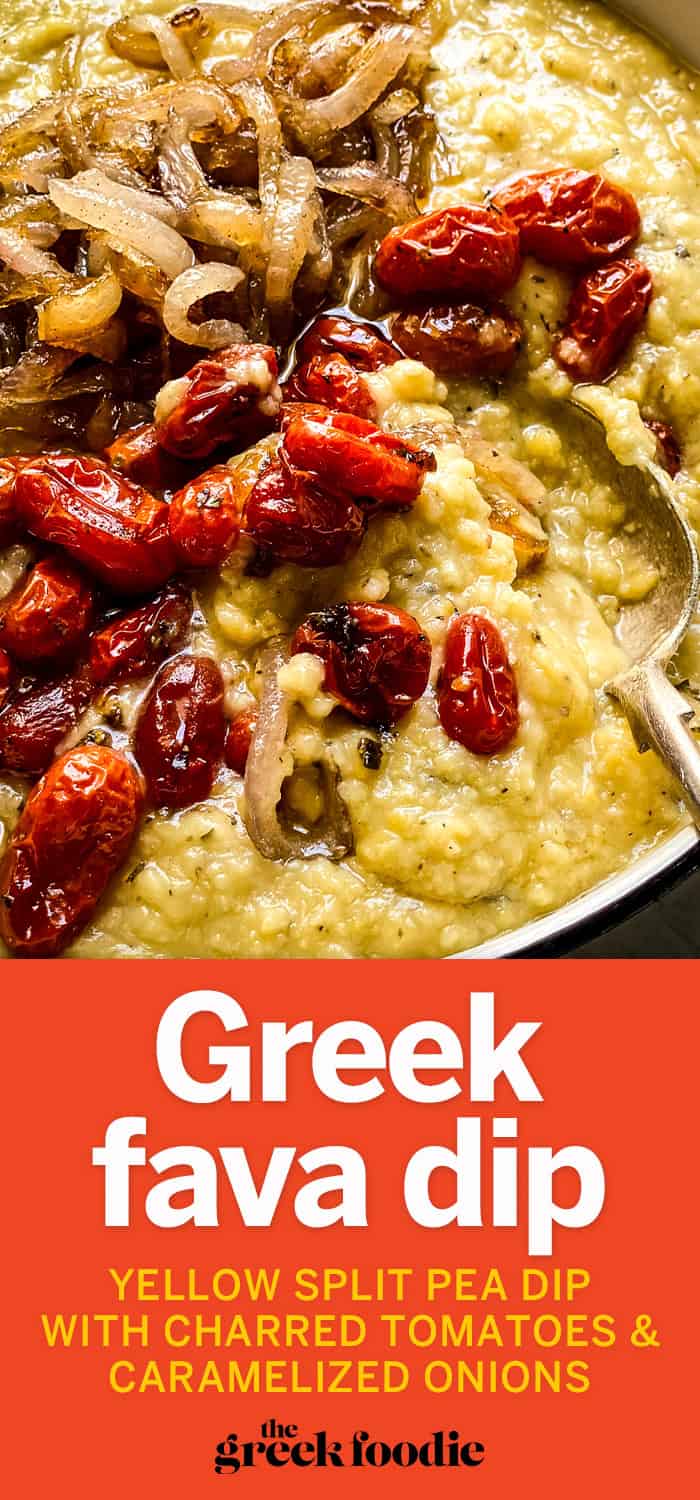

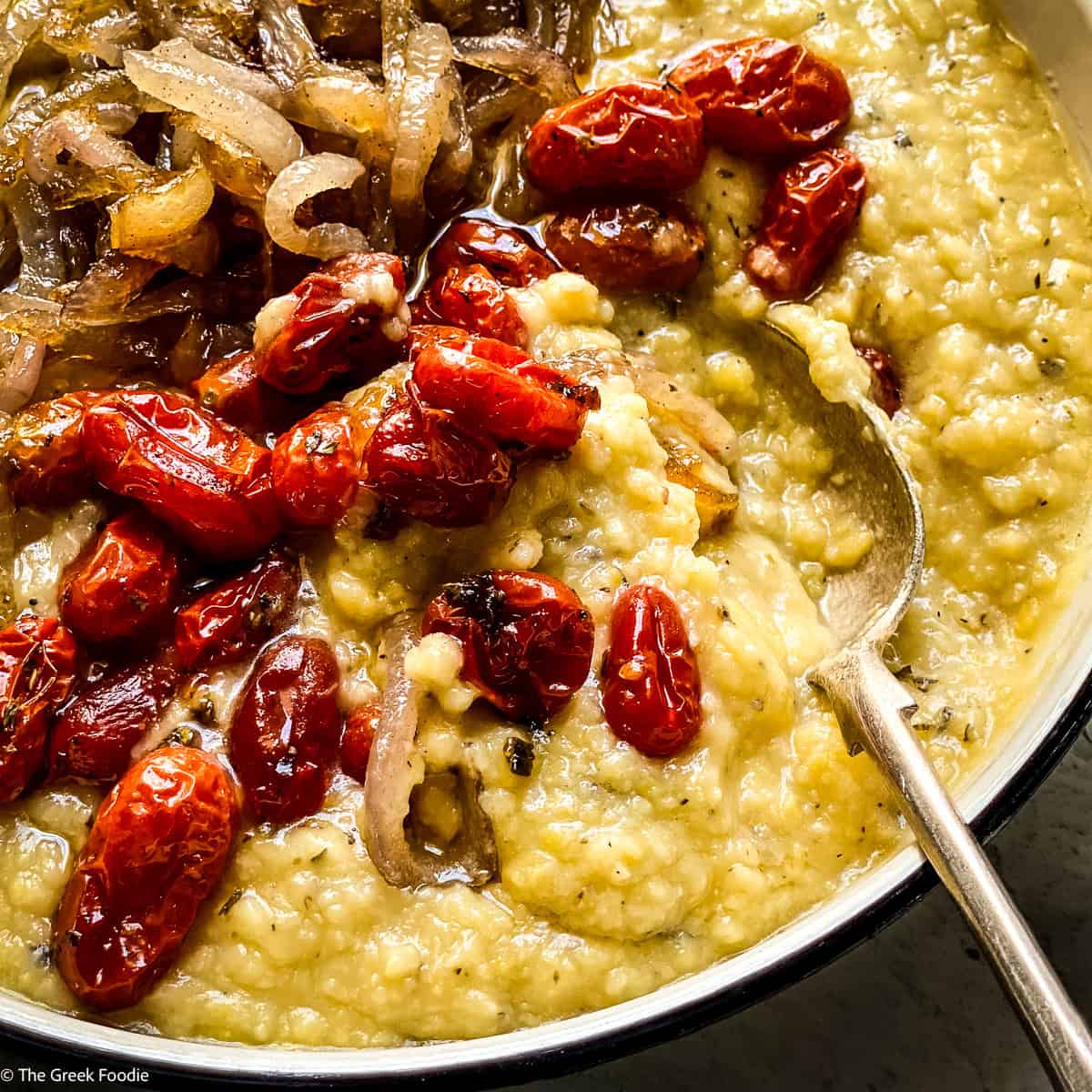
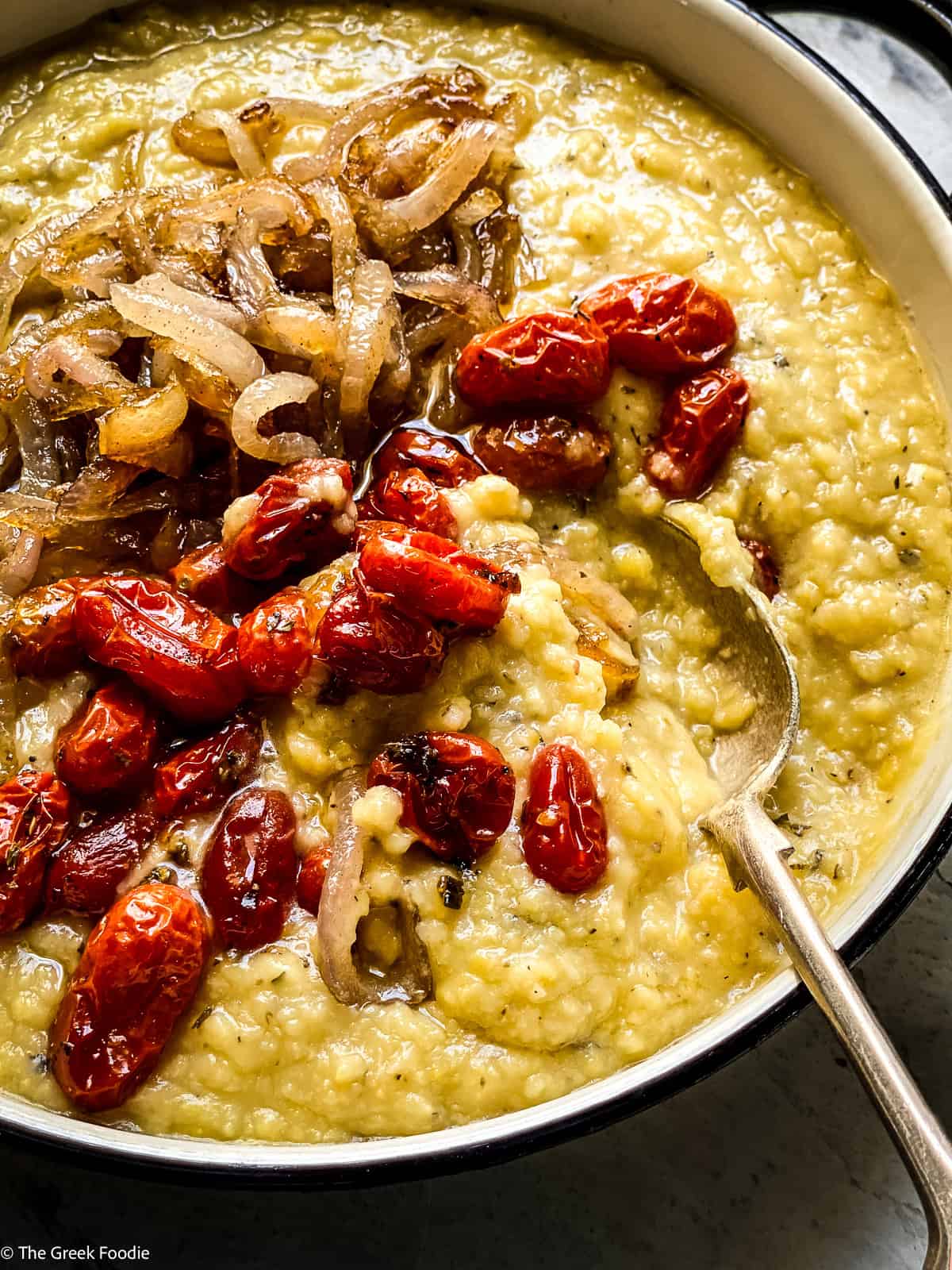
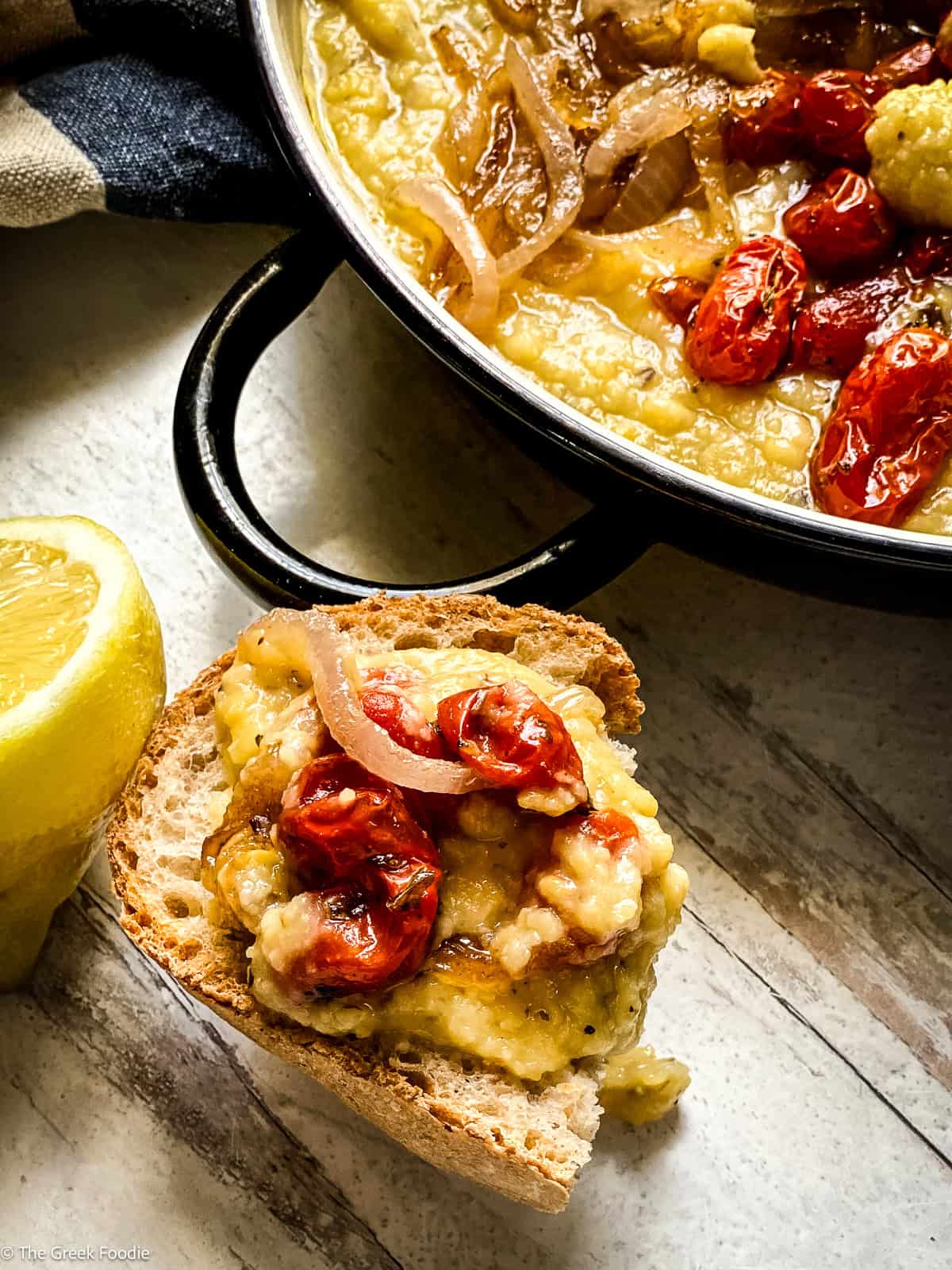
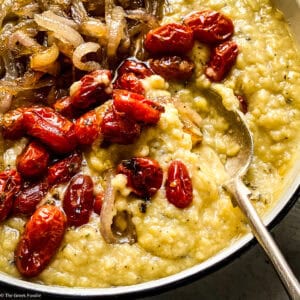
This creamy, golden Greek fava dip is made from yellow split peas simmered until they practically melt, then mashed with good olive oil and plenty of lemon. It’s one of the most beloved appetizers across Greece, especially on the islands, where it shows up on nearly every taverna table. In this version, I top the fava with roasted cherry tomatoes and sweet caramelized onions — a combination the Greeks call “pantremeni fava” or “married fava.” The jammy tomatoes and the soft cinnamon-kissed onions turn this humble dip into something you genuinely cannot stop eating. Scoop it up with crusty bread, homemade pita bread, or crackers and call it dinner.
Love a good meze spread? These 17 Light Greek Appetizers & Mezedes have all my favorite dips, fritters, and pies for easy spring entertaining.
Why you will love Greek fava dip
Planning meals for Lent? Browse our 17 Greek Recipes for Lent — easy, flavorful dishes the whole family will love, from traditional to flexible options.
Here is what you need
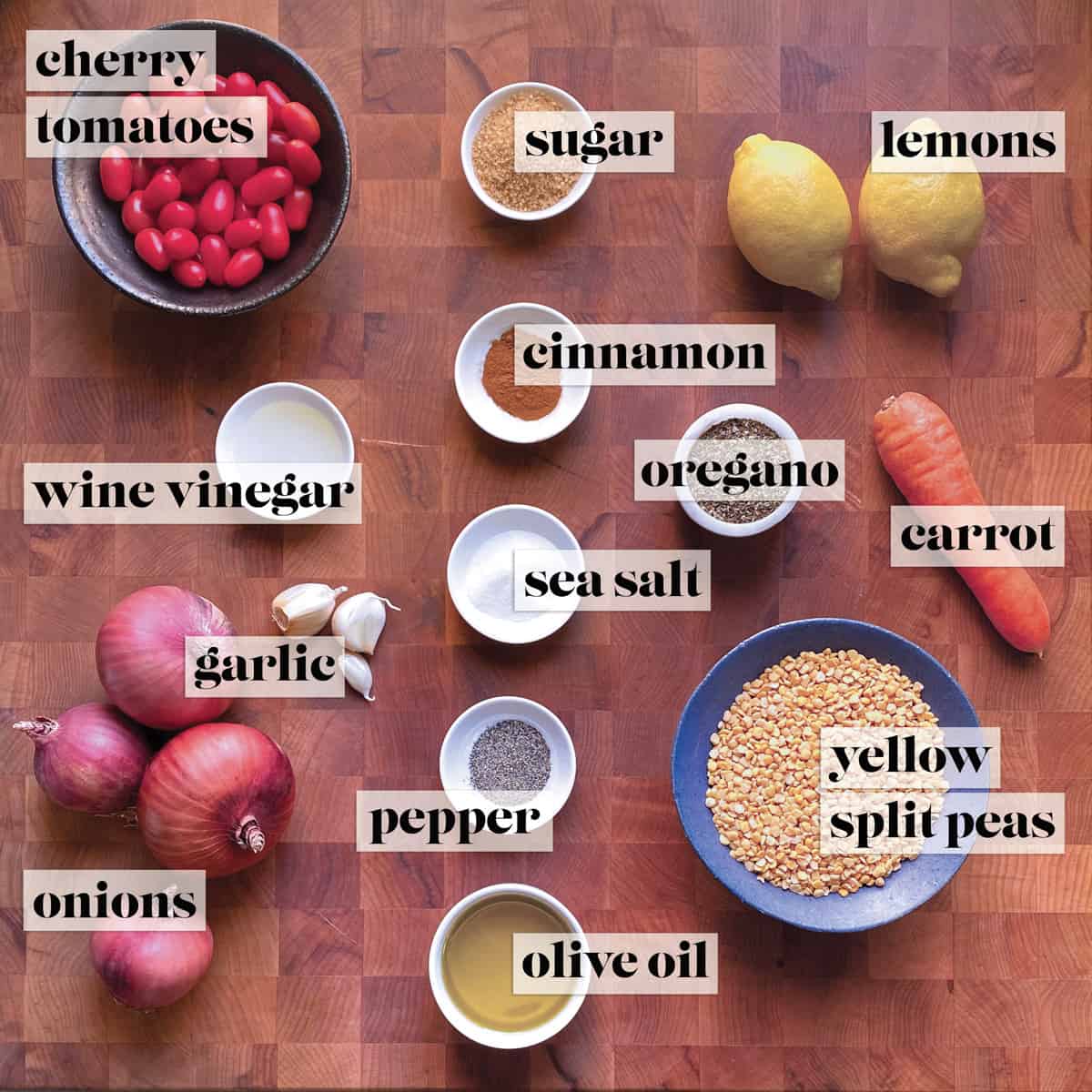
- Yellow split peas – These are the heart of fava. The gold standard is Santorini yellow split peas (sometimes labeled “Santorini fava“), which have PDO (Protected Designation of Origin) status. They’ve been grown in the volcanic soil of the Cycladic islands for over 3,500 years and produce a naturally sweeter, silkier dip. You can find them on Amazon or at Greek specialty grocers. That said, they’re pricey and not always easy to track down, even in Greece. Any good-quality yellow split peas from your regular grocery store will work beautifully. Look for them in the dried beans aisle, often near lentils. Note: These are NOT the same as green split peas (which Greeks use for a different dish called “prasini fava”) or fava beans/broad beans.
- Onions – You’ll use onions in two ways here. One goes into the pot whole (halved) to flavor the split peas as they cook — you discard it after. The other onions are sliced thin and slowly caramelized with cinnamon and olive oil for the topping. Red onions give the best color and sweetness for the caramelized topping.
- Lemons – Use them generously. Fresh lemon juice goes into the fava itself and is also squeezed on top when serving. This is non-negotiable. The brightness is what makes fava sing. Plan on 2–3 lemons total.
- Carrot – A whole peeled carrot goes into the pot with the split peas and onion. It adds subtle sweetness during cooking and gets discarded at the end.
- Extra virgin olive oil – Use a good one here, because you’ll taste it. Greek extra-virgin olive oil is ideal, but any high-quality EVOO works. It goes into the dip itself and is also drizzled on top for serving.
- Cherry tomatoes – For roasting. Grape tomatoes, small Campari tomatoes, or multi-colored minis all work. You want them to burst and get jammy in the oven.
- Garlic, white wine vinegar, and brown sugar – These go into the tomato roasting mixture. The sugar helps the tomatoes caramelize, the vinegar adds tang, and the garlic infuses flavor (discard it after roasting).
- Cinnamon – Just a whisper (1/4 teaspoon) goes into the caramelizing onions. This is a classic Greek touch that adds warmth without making the dish taste like dessert. Trust me on this one.
How to make Greek fava
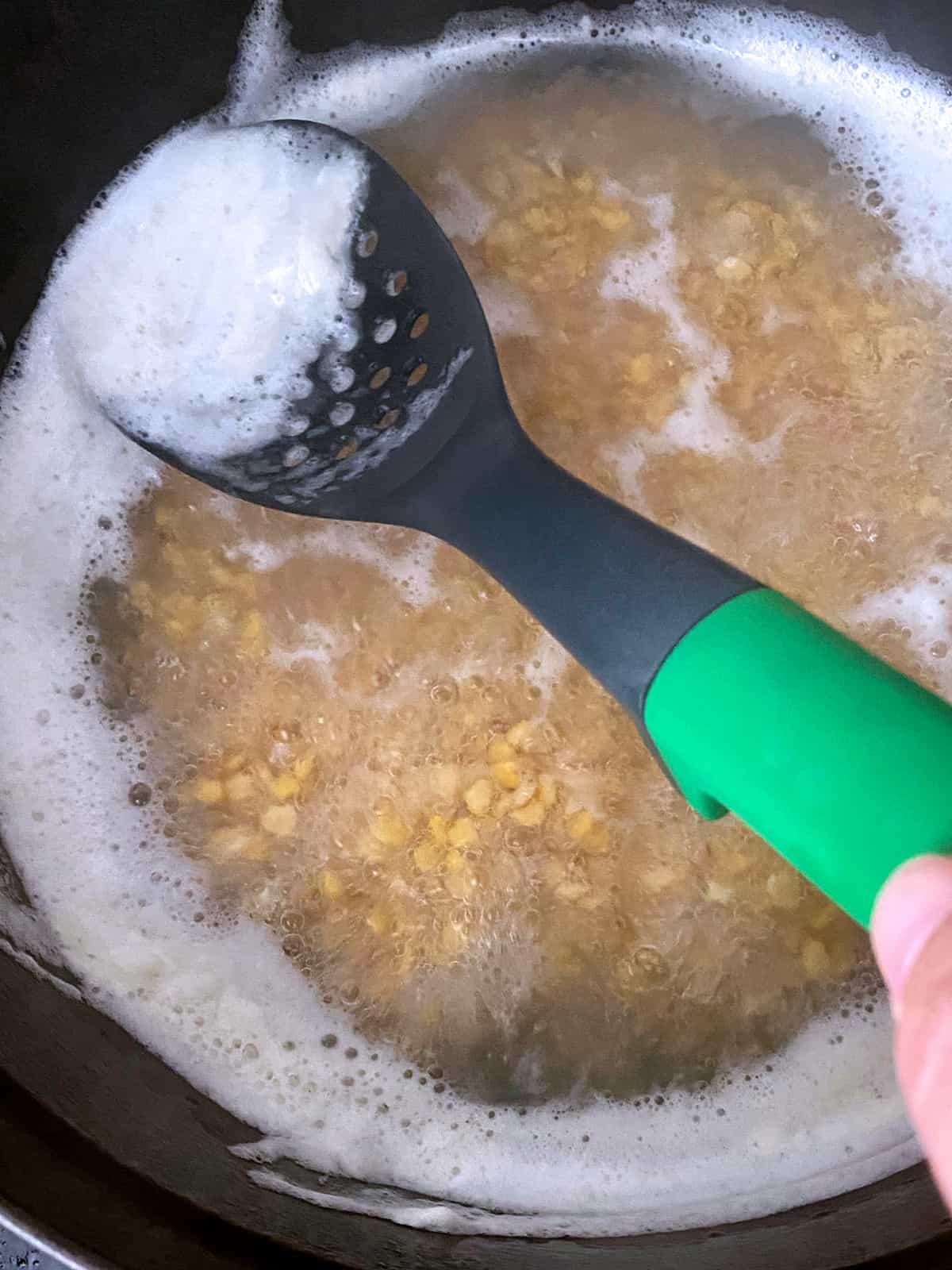
- Put the yellow split peas in a strainer and rinse them well with cold water.
- Place into a stockpot, add 3.5 cups / 850 ml of water, and place on high heat for about 5 minutes until it starts to boil.
- Lower heat and skim the fava beans with a slotted spoon for about 5 – 10 minutes until the foaming slows down considerably.
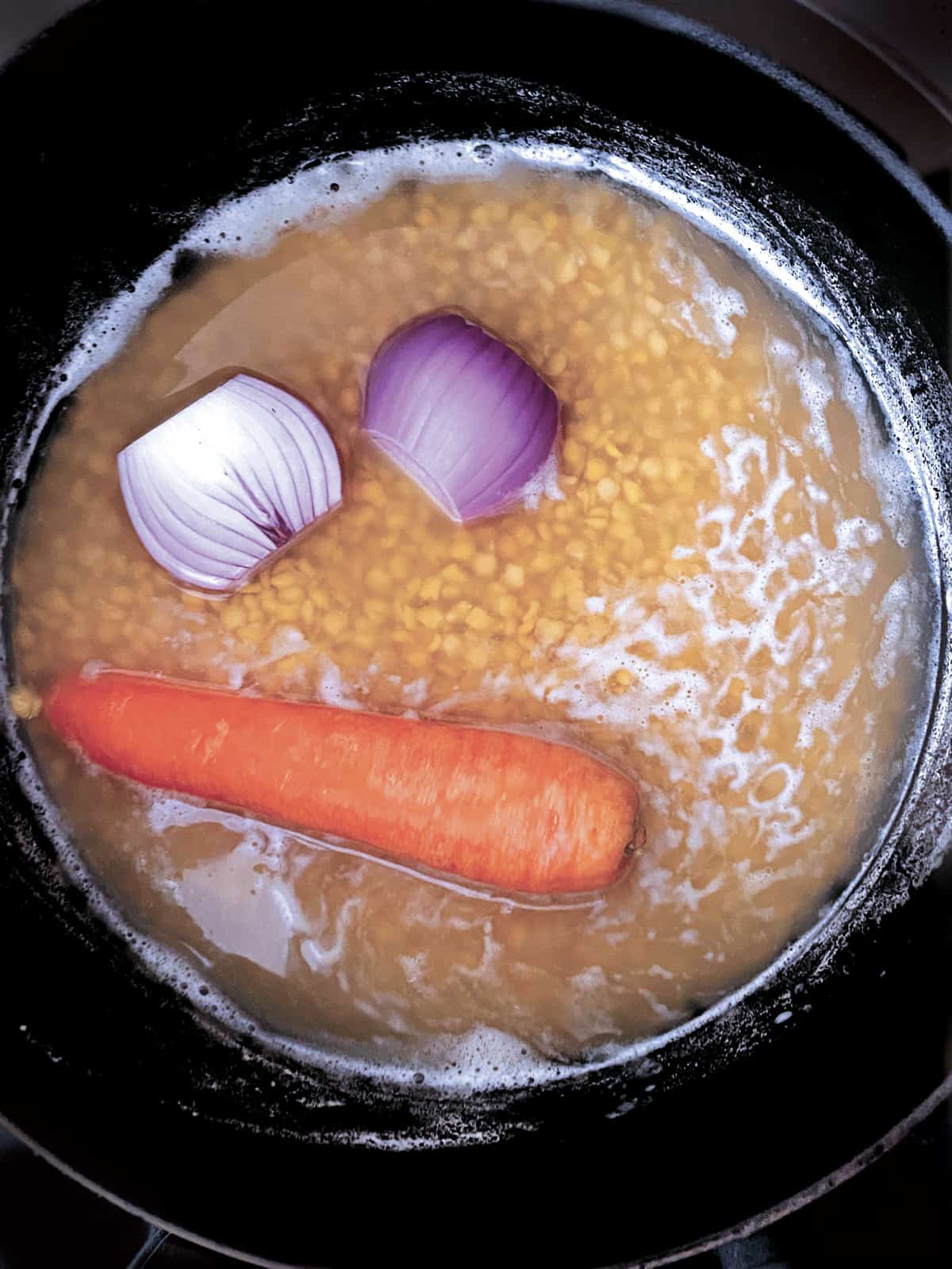
- Add the carrot and onion, cover the pot with the lid and simmer for 50 to 60 minutes, until the peas are mushy and all the water is absorbed.
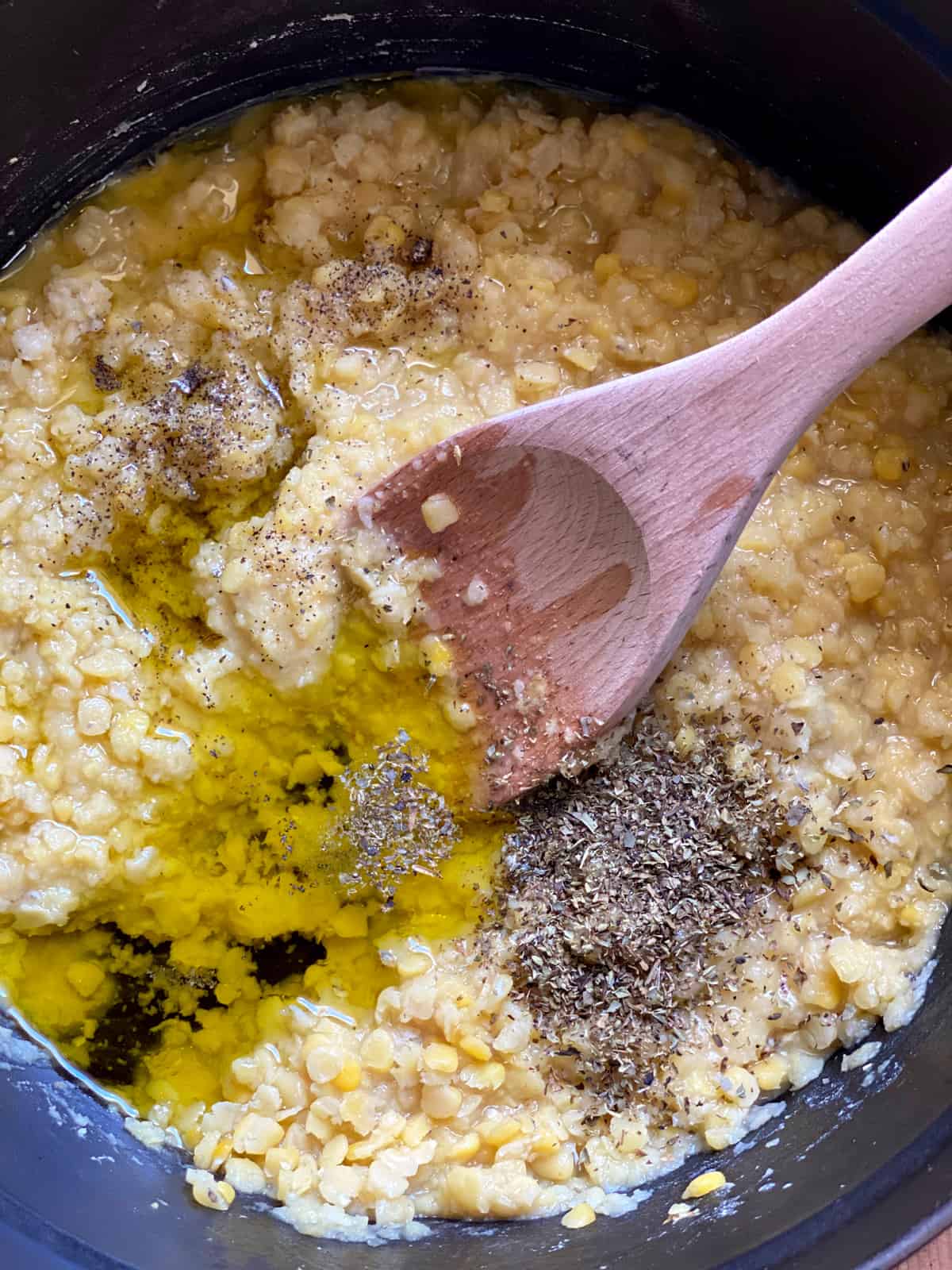
- Remove from heat and discard the carrot and onion. Add sea salt and pepper, olive oil, and lemon juice and mix with a wooden spoon until peas are mashed and creamy.
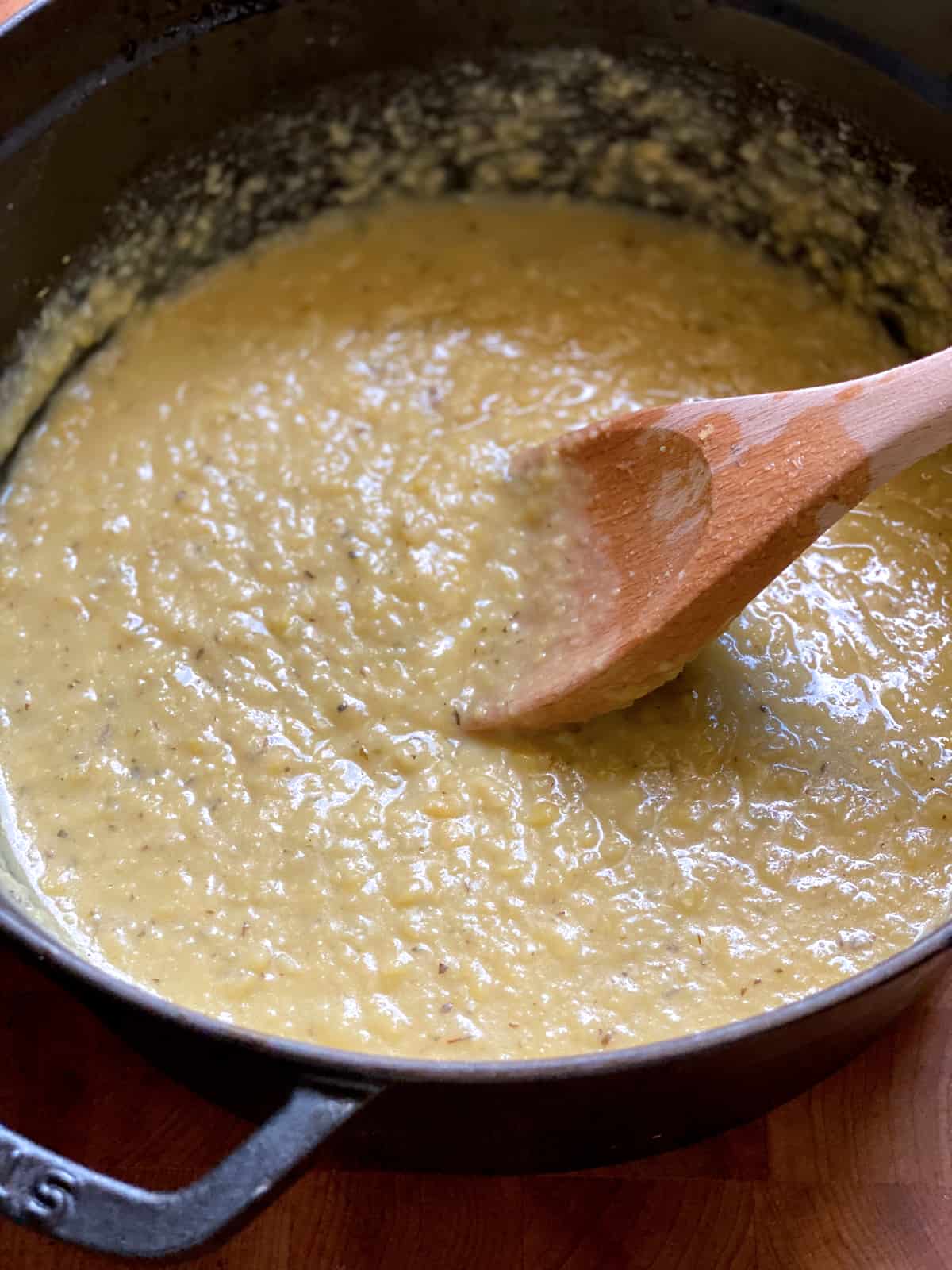
- You can use a food processor or hand blender for a smoother, creamier texture.
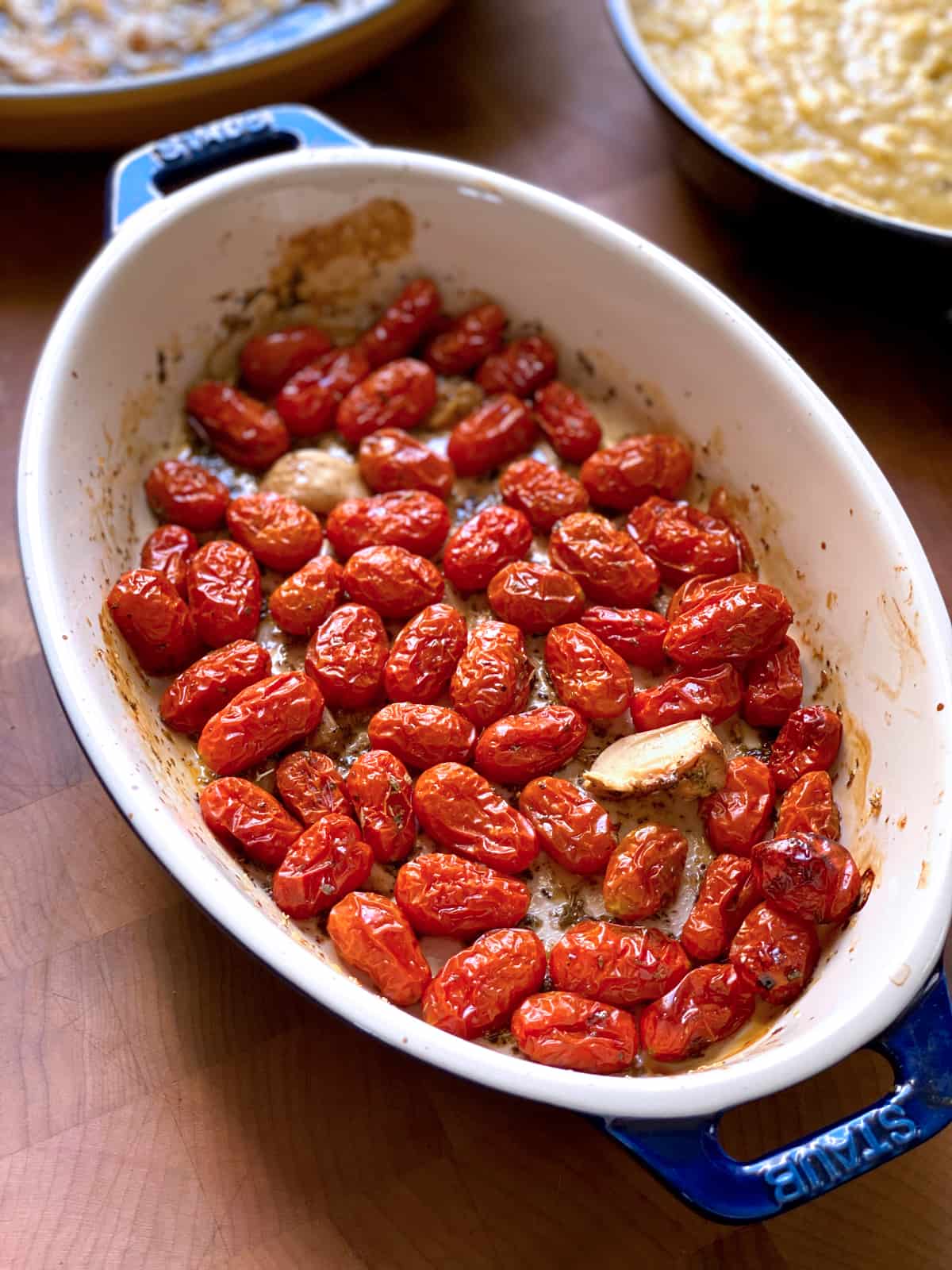
- Preheat the oven to 180°C. In a medium bowl, mix the cherry tomatoes with the brown sugar, garlic, wine vinegar, dried oregano, sea salt, and freshly ground pepper. Pour into a baking pan and spread them in a single layer. Bake for about 30 to 40 minutes until they are soft. Remove from the oven and discard the garlic.
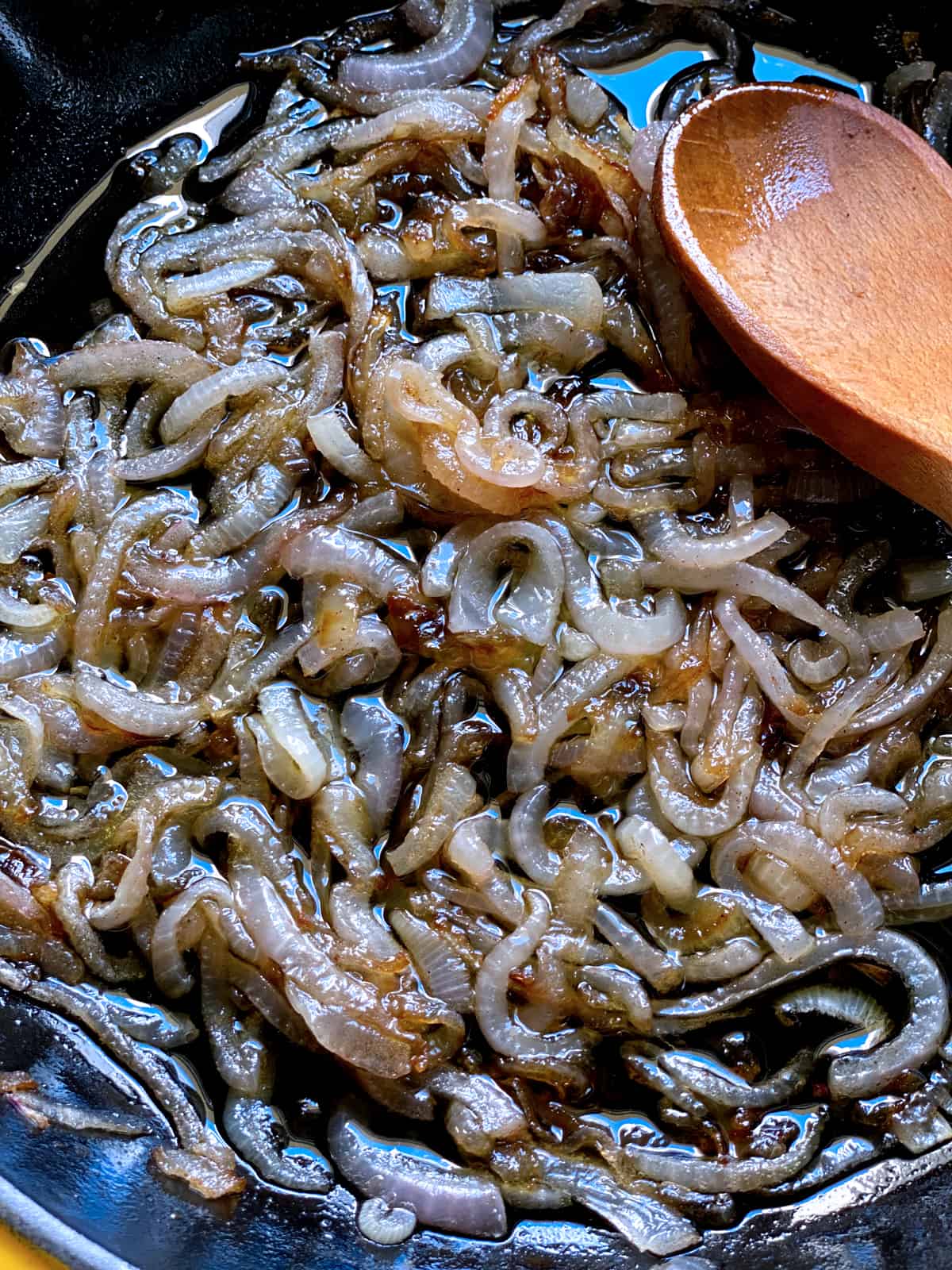
- Cut the onions into thin slices. Place a medium frying pan on low to medium heat, add the onions, sea salt, cinnamon, and extra-virgin olive oil, and sauté, stirring often, for about 30 minutes, until the onions are soft and caramelized.
- Transfer the fava to a serving plate, place some of the roasted cherry tomatoes and caramelized onions on top, and serve with crusty bread, cut-up pita bread, or crackers.
A Little Greek Fava Tradition
- In Greece, fava isn’t a trendy appetizer. It’s an everyday staple, especially on the Cycladic islands, where it’s cooked every single Wednesday without fail. The traditional way to serve it is simple: a generous mound on a plate, drizzled with extra virgin olive oil, topped with chopped raw onion, and served with plenty of lemon wedges and olives on the side.
- When there’s leftover fava the next day, it gets dressed up with roasted tomatoes and caramelized onions — and that version has a name. The Greeks call it “pantremeni fava,” which translates to “married fava.” The toppings are “married” to the dip, and honestly, it’s even better than the original. That’s the version in this recipe.
- Fava is always served family-style at room temperature or slightly warm, set out on the table alongside other dishes — smoked mackerel, grilled sardines, marinated anchovies (gavros), crispy fried eggplant, stuffed zucchini blossoms, whatever the table calls for. It’s not a fussy dish. It’s the kind of food that just belongs on a table with good company.
What to Serve With Greek Fava Dip
Fava is a mezze staple, meant to be shared family-style alongside other dishes. Here are some of my favorite pairings:
- For dipping: Homemade pita bread, crusty sourdough, warm flatbread, pita chips, or simple crackers.
- As part of a mezze spread: Set it out alongside tzatziki dip, taramosalata, spicy red pepper tomato relish, or fried halloumi and tomato toast. Add some olives, marinated peppers, and you’ve got a full Greek spread.
- With seafood: Fava and seafood are a classic Greek combination, especially on the islands. Try it next to grilled sardines, smoked mackerel, marinated anchovies (gavros), or Greek shrimp saganaki.
- With vegetables: It’s beautiful alongside crispy fried eggplant, stuffed zucchini blossoms, or a simple Greek tomato salad.
- As a side dish: Serve it room temperature with crispy fried potatoes or chickpea fritters for a satisfying plant-based meal.

FAQs
How to Store and Reheat
- Storage: Transfer leftover fava dip to a glass container (not plastic — fava absorbs odors from plastic). It keeps in the fridge for up to 5 days.
- Store the roasted tomatoes and caramelized onions separately if possible, so they stay at their best.
- Freezing: The plain fava dip (without toppings) freezes well for up to 3 months in a freezer-safe glass container or zip-top bag. Thaw overnight in the fridge before serving.
- Reheating: Fava is traditionally served at room temperature or slightly warm, so you may not need to reheat it. Just pull it from the fridge 20–30 minutes before serving and give it a good stir with a drizzle of olive oil. If you prefer it warm, gently cook the fava on the stovetop over low heat with a splash of water or olive oil to loosen it — it will thicken significantly in the fridge. Stir frequently. You can also microwave it in short bursts, stirring in between.
Greek main dishes to serve with fava
Cooked it? Rate it!
If you tried this recipe, I’d love to know how you liked it — drop a comment below or tag me on Instagram @thegreekfoodie__.


Greek Fava Dip – Santorini-Style With Roasted Tomatoes
Ingredients
For the fava dip
- 1 cup yellow split peas, 250 grams
- 1 onion, cut in half
- 1 medium carrot, cleaned
- ½ cup extra virgin olive oil
- sea salt
- dried oregano
- freshly ground black pepper
For the roasted tomatoes
- 1 cup cherry tomatoes, about 250 grams
- 3 garlic cloves
- 2 teaspoons brown sugar
- 1 teaspoon dried oregano
- 2 tablespoons wine vinegar
- sea salt
- freshly ground black pepper
For the onions
- 3 red onions, sliced
- ¼ teaspoon cinnamon
- ⅓ cup extra virgin olive oil
- sea salt
Instructions
- Put the yellow split peas in a strainer and rinse them well with cold water.
- Place peas into a stockpot, add 3.5 cups / 850 ml of water and place on high heat for about 5 minutes, until the liquids start to boil.
- Lower heat and skim the fava beans with a slotted spoon for about 5 – 10 minutes, until the foam stops.
- Add the carrot and onion, cover the pot with the lid and simmer for 50-60 minutes, until the peas are mushy and all the water is absorbed.
- Remove from heat. Discard the carrot and onion. Add salt and pepper, olive oil, and lemon juice and mix with a wooden spoon until peas are mashed and creamy. You can use a food processor or hand blender for a smoother, creamier texture.
Make the tomatoes and onions
- Preheat the oven to 180°C / 360°F
- In a bowl, mix 1 cup / 250 gr. cherry tomatoes, with two teaspoons of brown sugar, three cloves of garlic, two tablespoons of wine vinegar, one teaspoon of dried oregano, sea salt, and freshly ground pepper. Pour into a baking pan and spread them in a single layer. Bake for about 30 to 40 minutes until they are soft. Remove from the oven and discard the garlic.
- Cut three onions into thin slices.Place a medium frying pan on low to medium heat. Add onions, sea salt, 1/4 teaspoon cinnamon, and 40 ml of olive oil and saute, often stirring, for about 30 minutes, until soft and caramelized.
- Pour the fava on a serving plate, place the roasted cherry tomatoes and caramelized onions on top, and serve.
Notes
Nutrition