

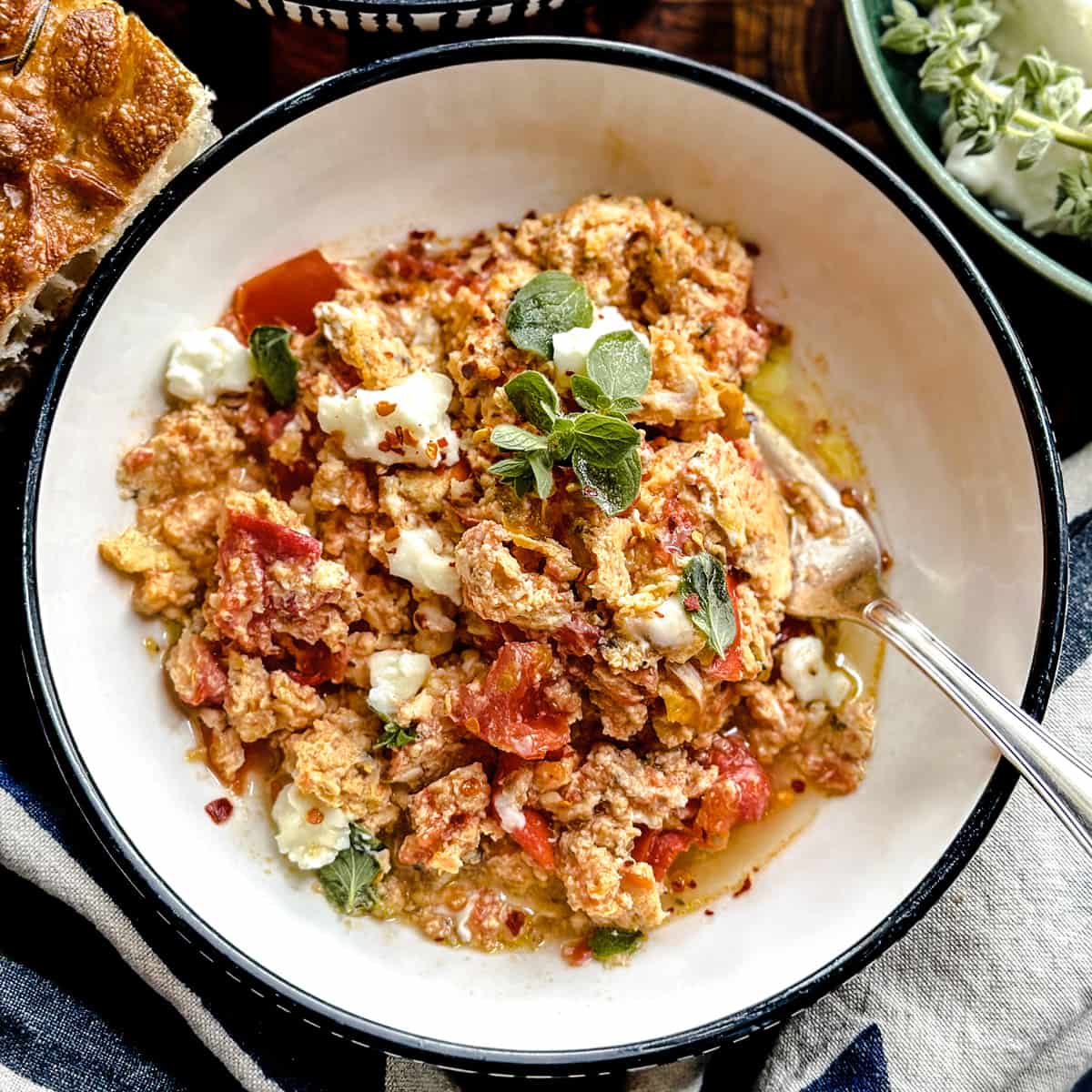
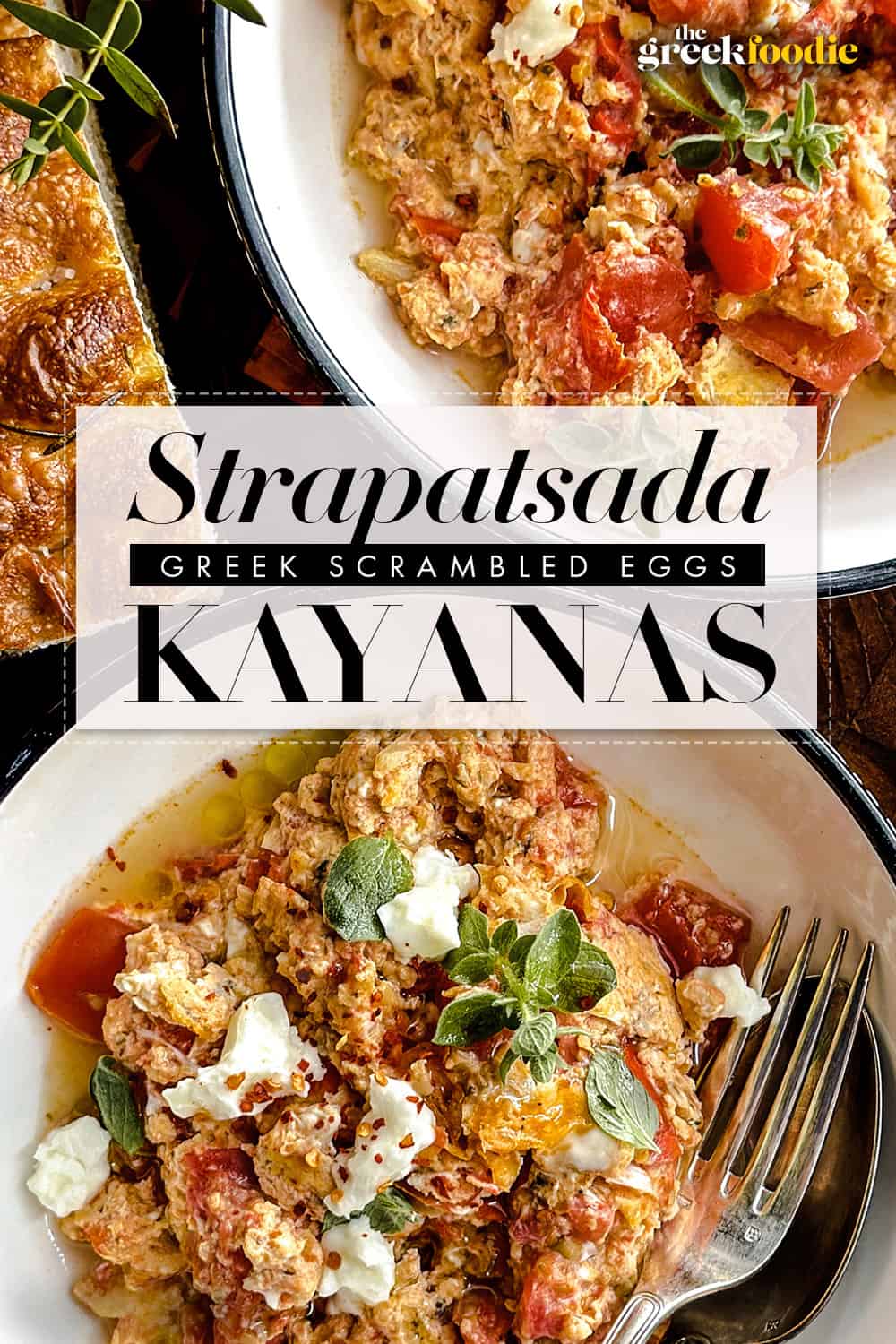
Strapatsada is one of those Greek dishes that sounds humble until you eat it. Ripe tomatoes, eggs, and crumbled feta, cooked together in olive oil until something quietly magical happens. It’s been a staple of Greek tables forever — a quick meze, a lazy lunch, a light dinner — and it’s one of the first things I reach for when summer tomatoes finally show up at the market. We also call it kayanas, depending on where in Greece you’re from, but whatever you call it, the result is the same: the best 15-minute meal you’ll make all week.
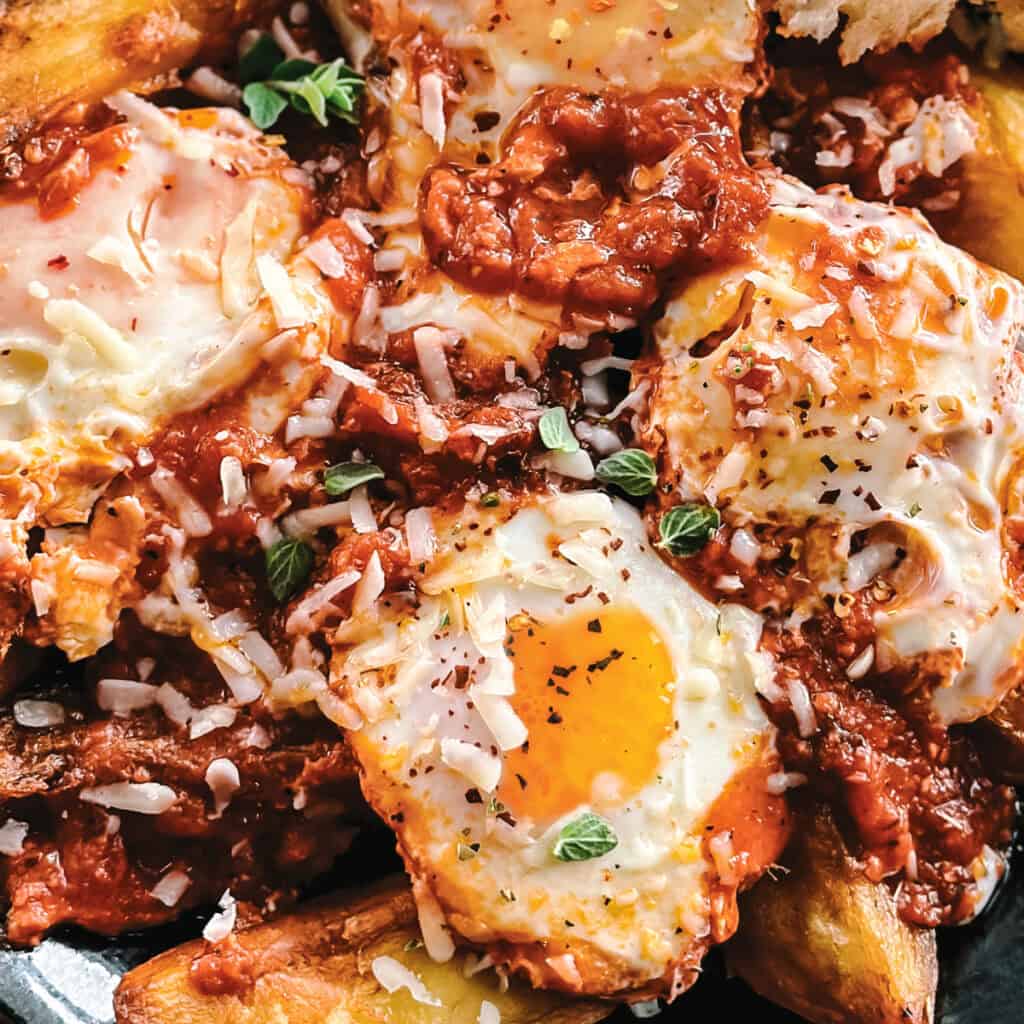
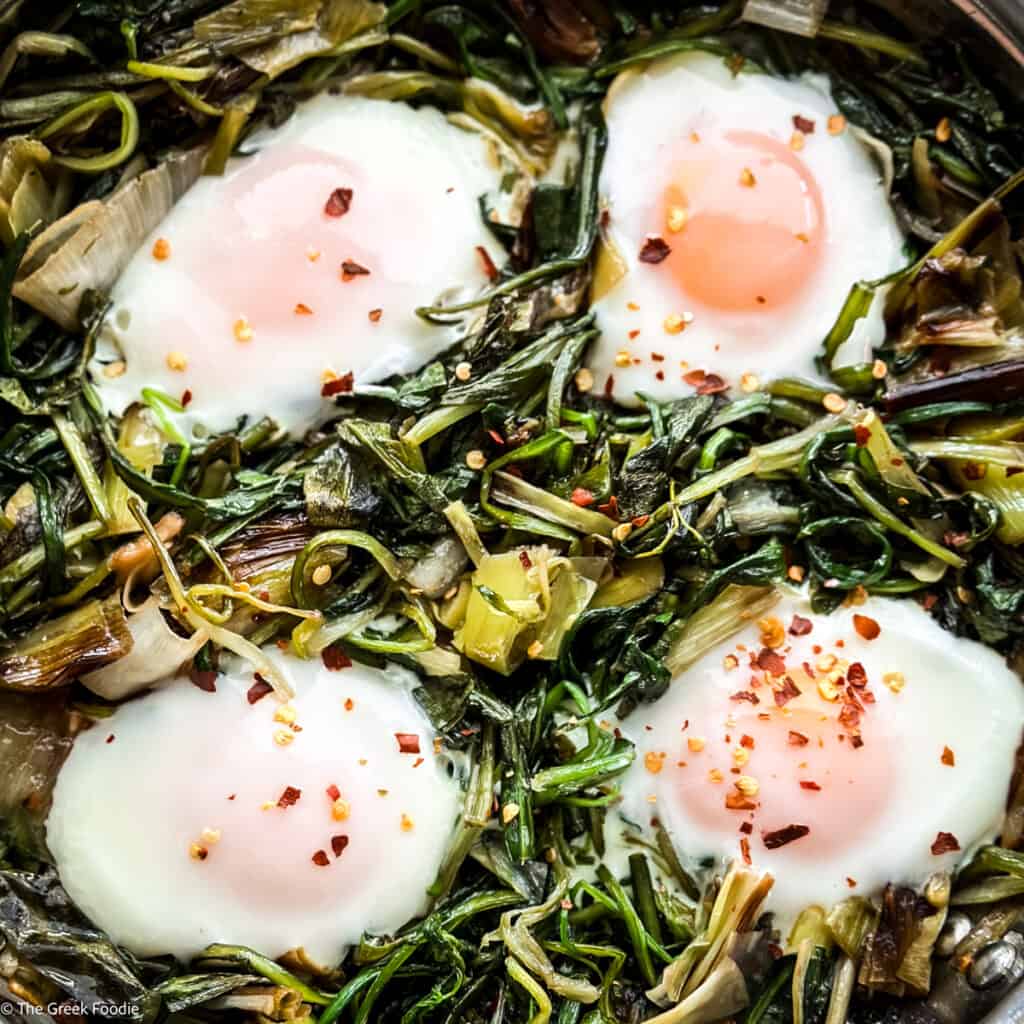
If you love these Eggs Strapatsada, you will also love these Fried Eggs and Fries-Avga me Patates, Eggplant Shakshuka or Eggs and tomatoes!
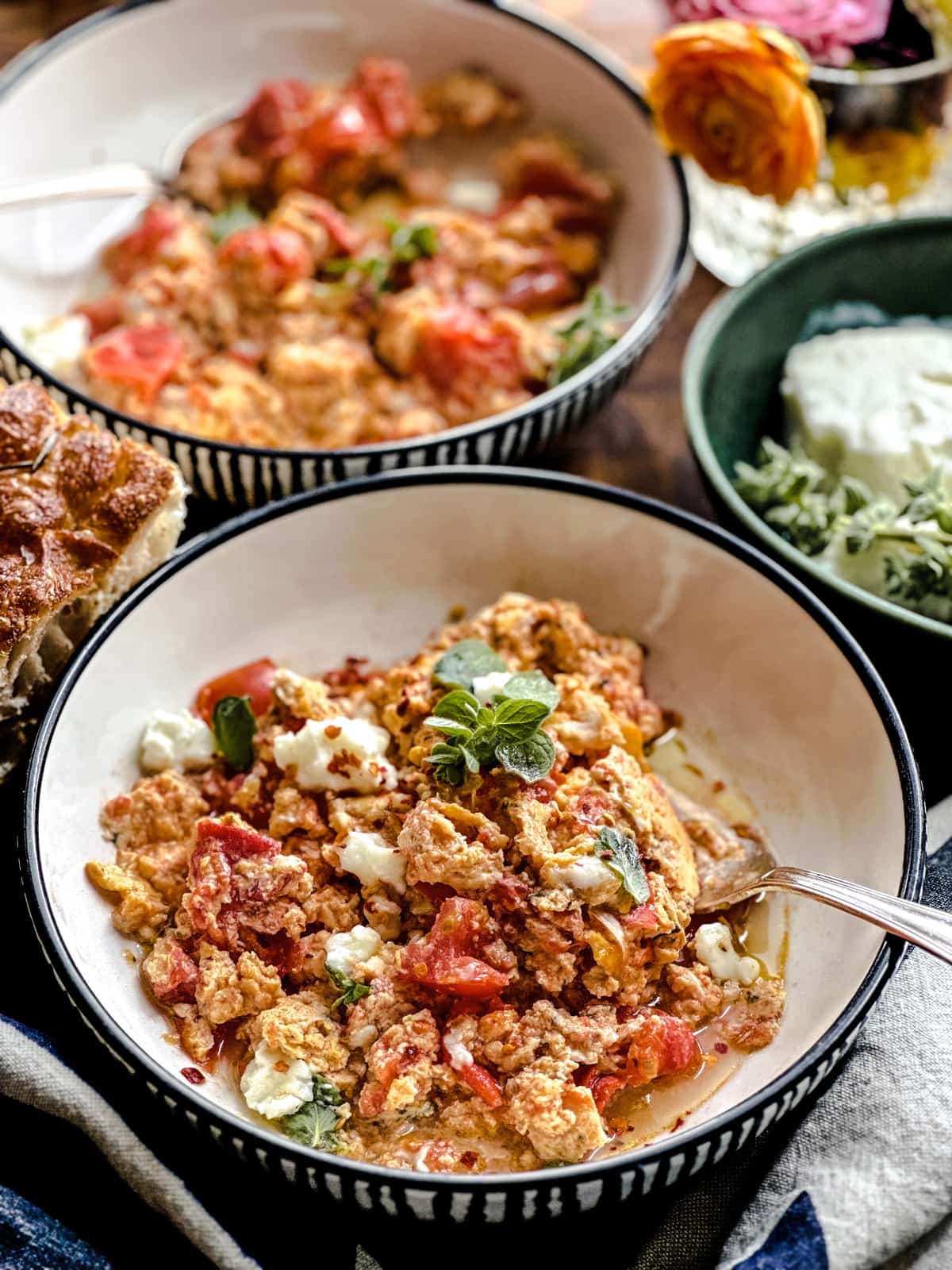
Strapatsada my way — a few things I do differently
Traditionally, strapatsada is made by grating the tomatoes and discarding the skin. Honestly? I can’t be bothered. I don’t mind the subtle texture the skin adds — and the better the tomato, the thinner and sweeter that skin will be anyway. If you prefer the traditional method, go for it. But don’t let it stop you from making this on a Tuesday evening.
The other thing I do differently: I barely stir. Purists will tell you to cook the tomatoes down properly and mix everything together well. I tried it that way for years and always found the eggs came out heavier. My version keeps the tomatoes aromatic and barely cooked, the eggs soft and just set, and the whole thing feels lighter, more like a lazy summer lunch than a brunch-menu scramble. The contrast in textures is half the point.
Why you will love strapatsada
Here is what you need
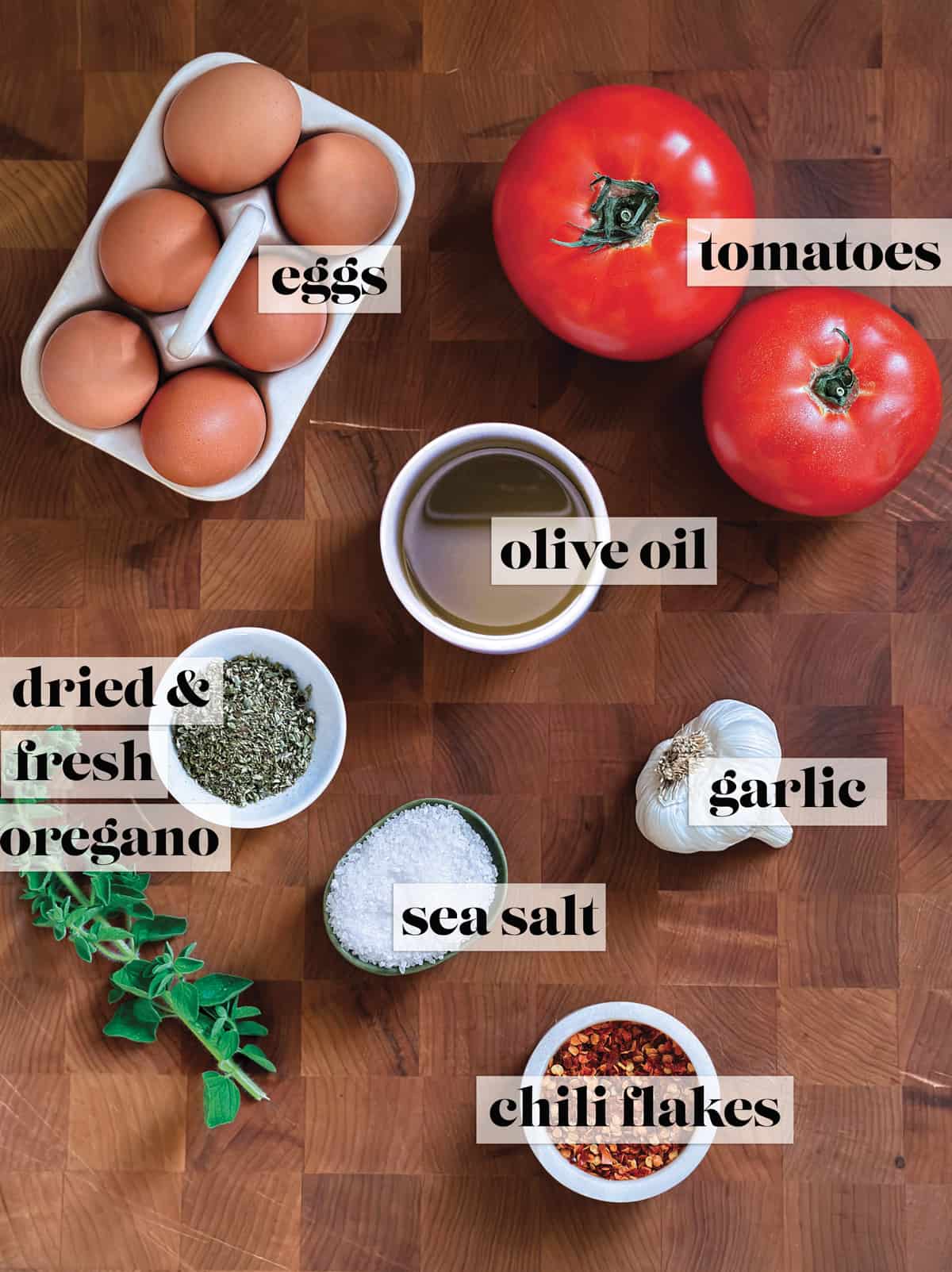
- Ripe tomatoes. Get the best you can find. They are the key ingredient for this recipe. If out of season, go for a package of Campari tomatoes.
- Eggs. Ideally, get free-range organic eggs.
- Garlic. Two or three cloves of garlic will do.
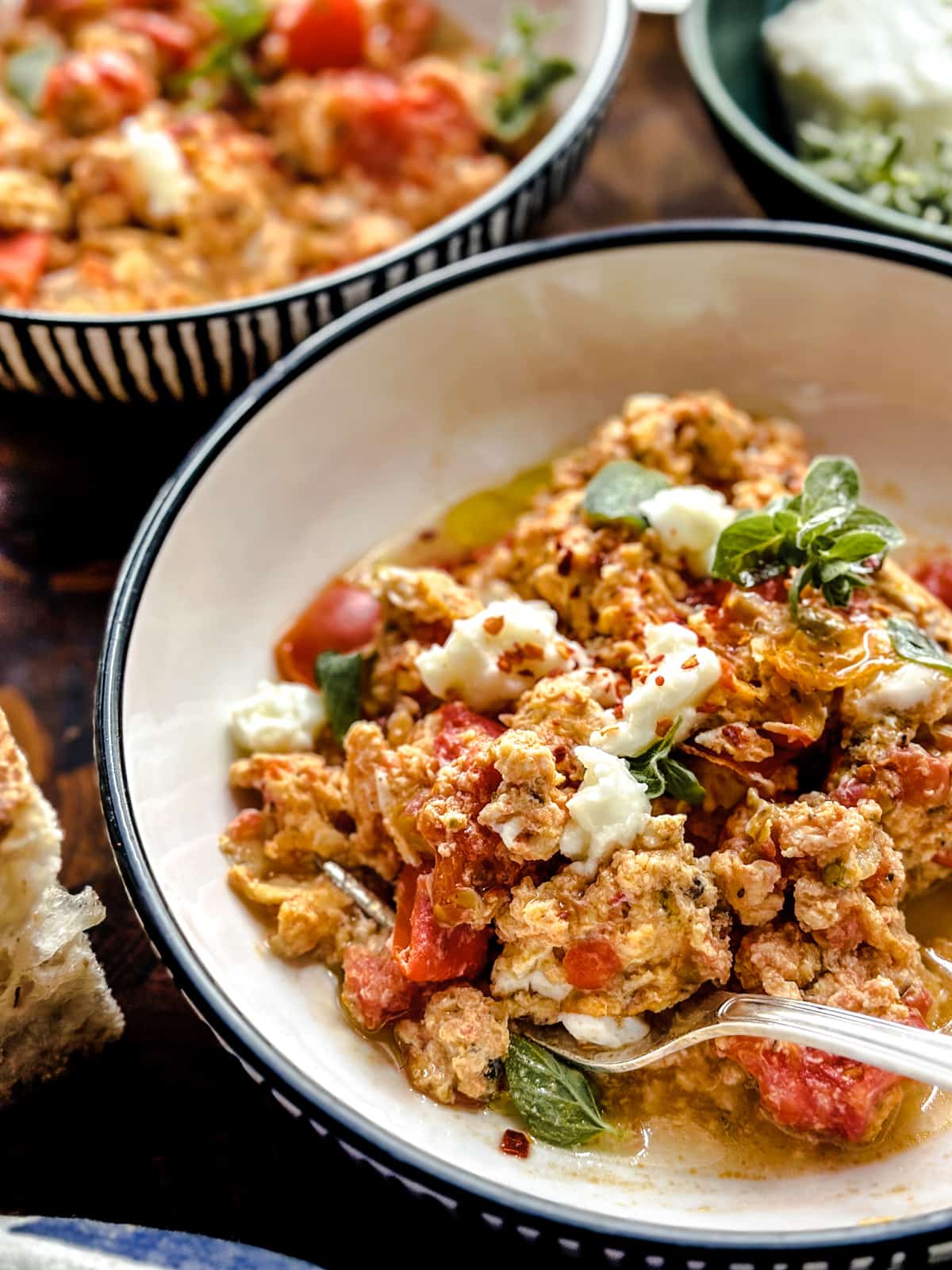
- Oregano. Dried oregano goes into the egg mixture. Fresh oregano leaves (optional) can be a garnish and add freshness.
- Chili flakes and feta for serving. Both are optional. I love a little kick from the flakes, and the feta adds a salty component to the sweet, umami tomatoes.
- Extra virgin olive oil. This is the only fat we use for these eggs. Butter or another vegetable oil is a big no. A drizzle of extra virgin olive oil over the finished dish adds a luxurious note.
Cooking your way through tomato season? This one’s part of my full collection of Greek tomato recipes — 21 ways we cook them in Greece.
How to make strapatsada-eggs kayana
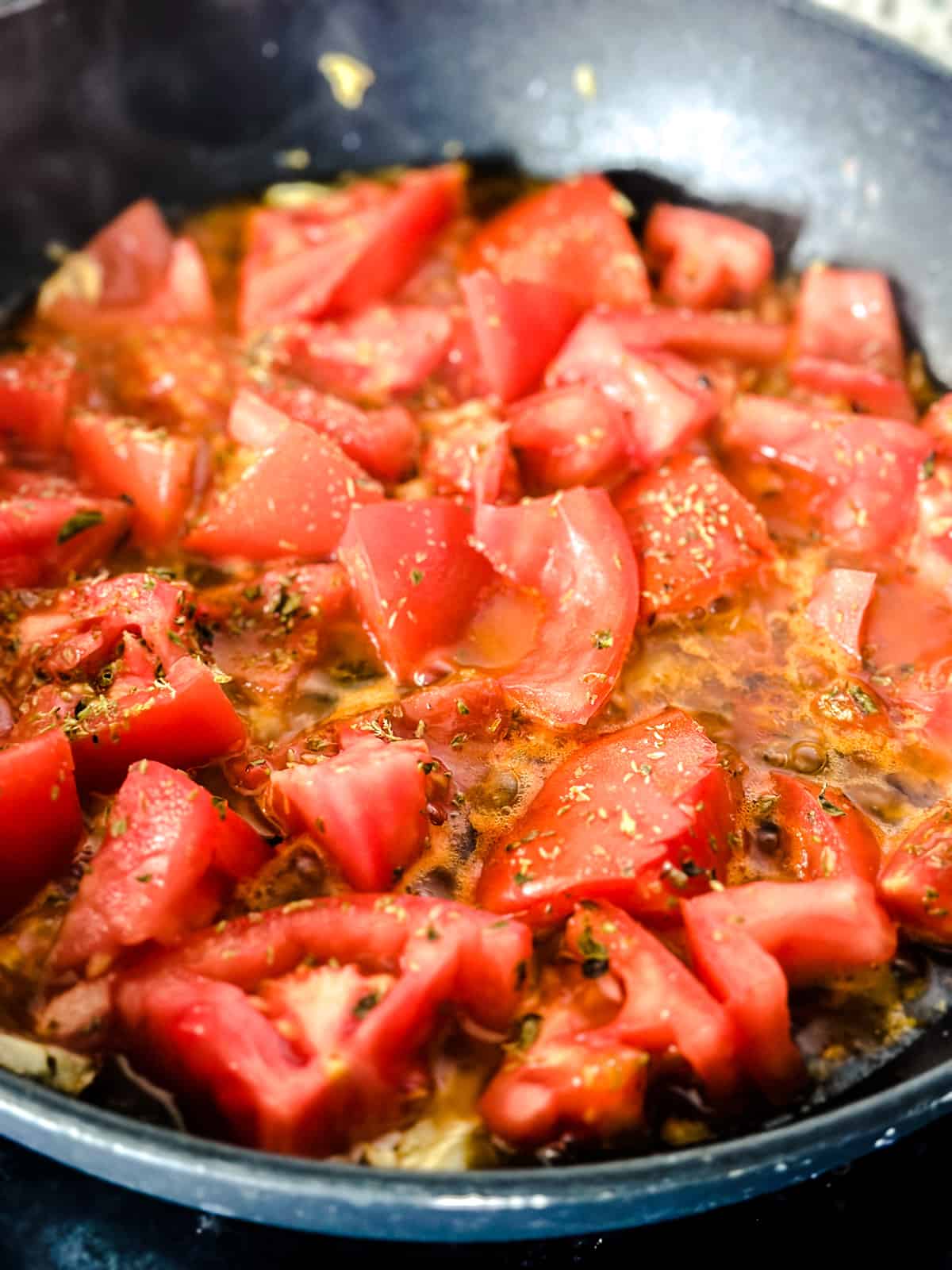
STEP 1. Place a skillet over medium heat.Add the olive oil, chopped garlic, and sauté for 1-2 minutes.
Add the chopped tomatoes. Season with sea salt. Sprinkle all over one tablespoon of oregano. Stir tomatoes and cook for 5-6 minutes, occasionally stirring. Don’t break the tomatoes too much.
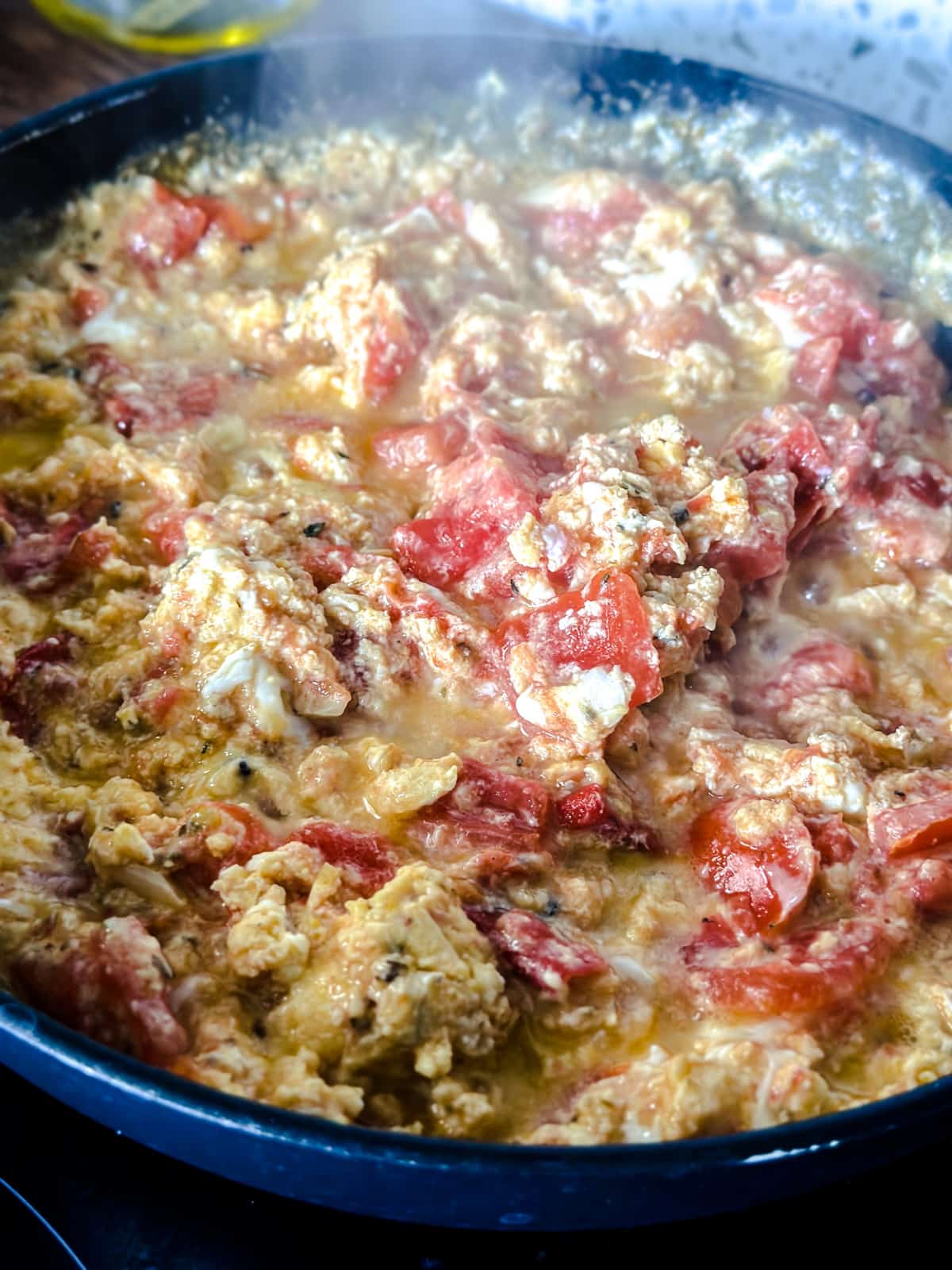
STEP 2. Add the beaten eggs to the skillet and mix gently. Cook eggs to your desired texture.
While cooking, stir a couple of times but don’t overdo it.
Pro tips
Use the ripest tomatoes you can find — and in winter, go Campari. This dish lives and dies by the tomato. Peak summer tomatoes need nothing. Off-season ones will taste flat no matter what you do. If you’re in the US and it’s not tomato season, reach for Campari tomatoes — they’re smaller and sweeter than standard supermarket tomatoes, and their flavor is the closest thing I’ve found to a proper Mediterranean tomato outside of summer. You’ll need two to three Campari tomatoes to replace one regular-sized tomato in this recipe.
Don’t overcook the eggs. Pull them off the heat while they still look just slightly underdone — they’ll finish in the pan. Overcooked strapatsada is a sad thing.
Be generous with the olive oil. This is not the moment for restraint. A good glug at the start is what makes the tomatoes sweet and the whole dish silky.
Extra feta on top. Always. It’s a non-negotiable for Greeks.
Serving suggestions
Strapatsada is one of those dishes Greeks make when there is nothing else in the fridge — and it somehow ends up being the best thing on the table. All you really need is good sourdough bread to scoop it up with and extra crumbled feta on top. That’s it. That’s the meal.
But if you’re putting together a meze spread, strapatsada fits right in. Serve it alongside marinated olives, saganaki, kalitsounia, and a dip like melitzanosalata — and suddenly your “nothing in the fridge” moment has turned into a proper Greek table. That’s the magic of this food. Simple, honest, and always enough.
Storage
Honestly? There are never leftovers. Strapatsada is best eaten straight from the pan — the eggs are soft, the tomatoes are fresh, and the feta is still warm. If you do somehow have some left, store it in an airtight container in the fridge for up to a day, but I won’t promise it’ll be the same. Make it fresh. It only takes 15 minutes.

FAQs
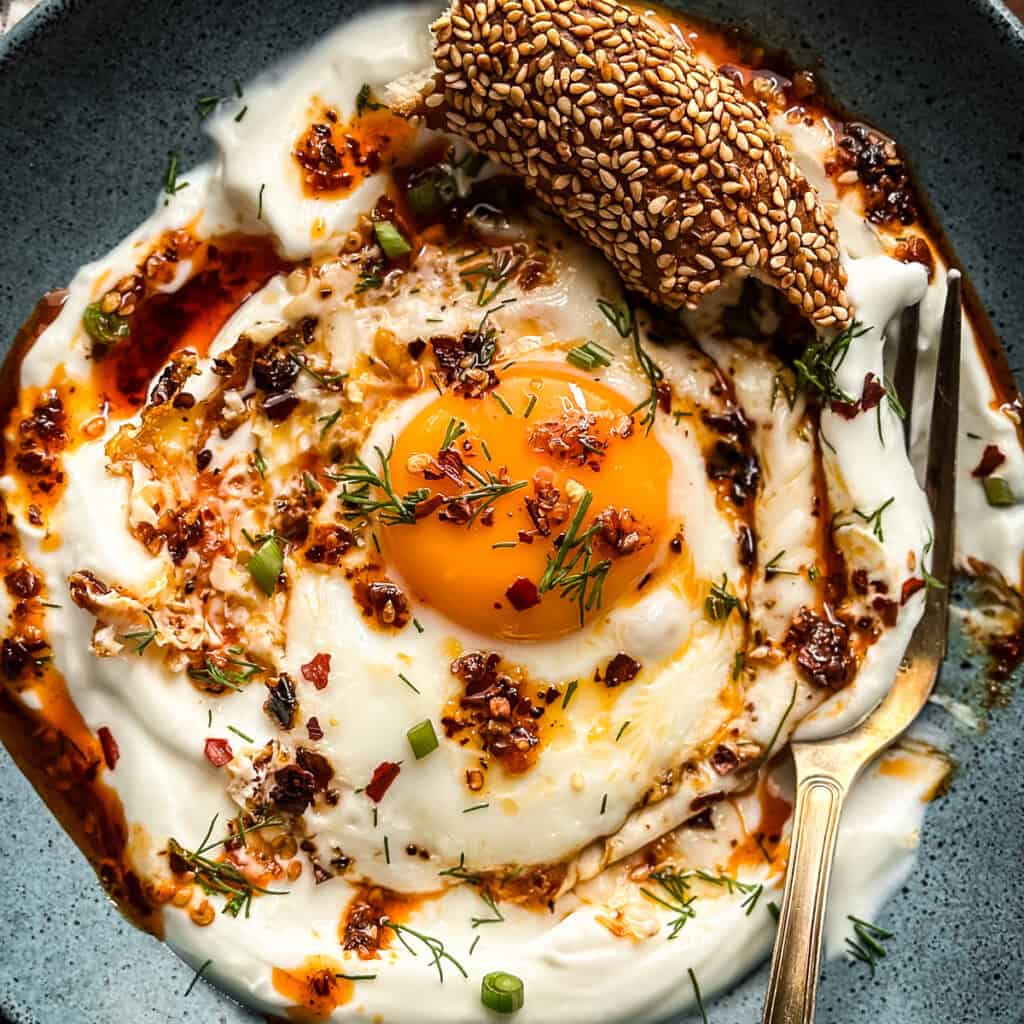
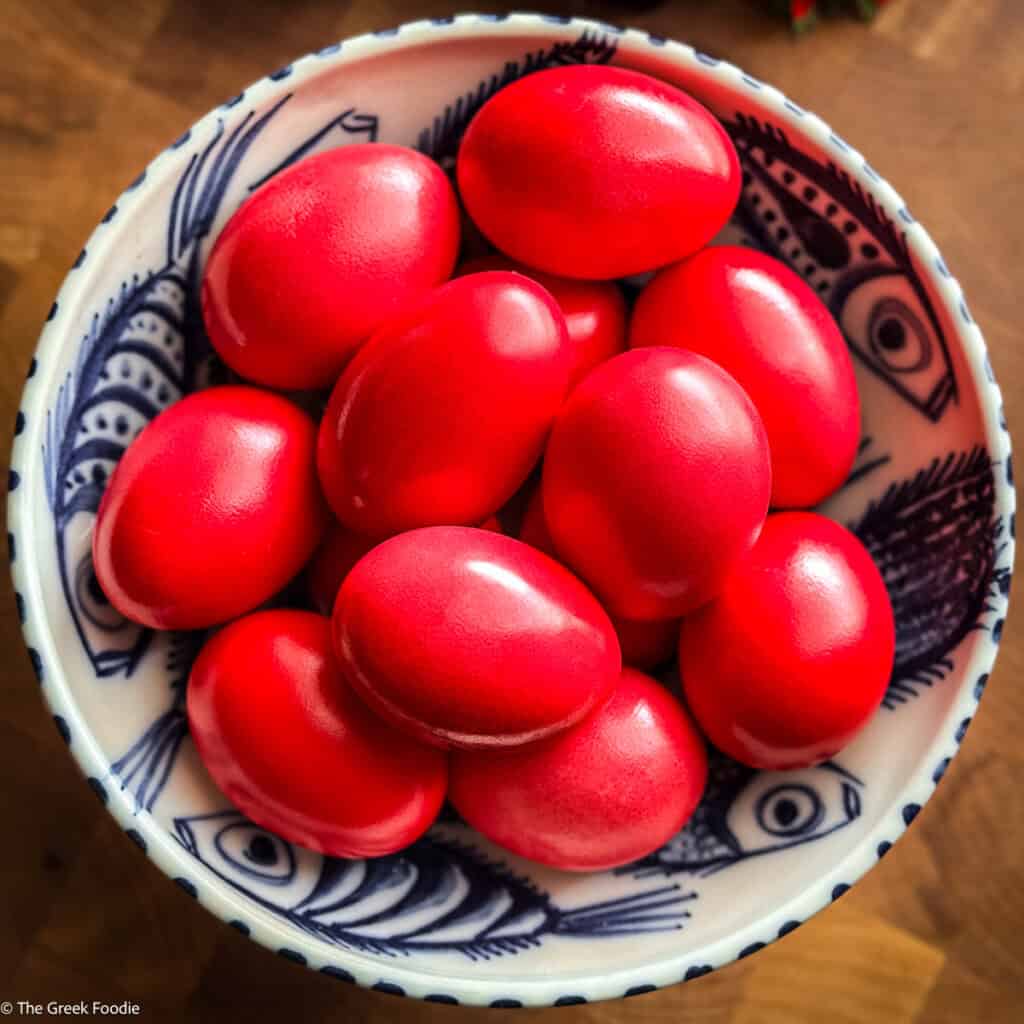
More Greek egg dishes
Cooked it? Rate it!
If you tried this recipe, I’d love to know how you liked it — drop a comment below or tag me on Instagram @thegreekfoodie__.



Greek Eggs Strapatsada-Kayanas
Equipment
- Skillet
- Medium bowl
- Whisk
Ingredients
This recipe makes two servings. You can easily double or triple the recipe to cater to more people.
- 2 ripe tomatoes , cut in large chunks
- 6 eggs, organic free range
- 3 cloves garlic , roughly chopped
- 3 tablespoons extra virgin olive oil
- dried oregano
- sea salt
- freshly ground pepper
For serving
- Greek feta cheese
- chili flakes
- fresh oregano leaves, optional
Instructions
- Add the olive oil in a skillet. In medium heat, add the chopped garlic and sauté for 1-2 minutes. Add the chopped tomatoes. Season with sea salt and sprinkle all over one tablespoon of dried oregano. Stir tomatoes and cook for 5-6 minutes, occasionally stirring. Don't break the tomatoes too much.
- Beat the eggs and add them to the skillet. Cook eggs to your desired texture. While cooking, stir a couple of times but don't overdo it.Serve immediately with crumbled feta cheese, some fresh oregano leaves (optional), and a sprinkle of chili flakes—drizzle a bit of extra virgin olive oil if you like.
Notes
Nutrition

This sounds like a perfect breakfast or brunch. In fact, breakfast for dinner is a great option too. Eggs are great in recipes.
Looks delicious!
I love starting my day with eggs for breakfast, so I have no doubt that this recipe will be right up my street! Addition of crumbled feta cheese and chilli flakes makes it even more delicious!
Thanks so much Anna!
This recipe for Greek Eggs Kayanas was so wonderful. I get bored at breakfast sometimes and this was the perfect pick me up! The husband had seconds he loved it so much.
Thanks so much Heidi! So happy you all enjoyed the eggs!
I had this for breakfast this morning. I LOVE all of the flavors that are in the dish. Combined it is totally amazing. In fact, it’s so good I like breakfast for dinner and I know this would be so satisfying at night time when I’m too tired to cook something long and complicated. We usually have the ingredients on hand so it will be easy to make when the mood strikes.
Thanks so much Marisa! So happy you liked them!
Grating tomatoes?! That sounds like a huge pain in the butt. Your version sounds way better. 🙂
This looks like such a filling and delicious balanced breakfast meal! Can’t wait to try
Fabulous way to start a day and such a delicious recipe to have handy. Definitely adding it to my to-try list to cook ASAP! Love that I only need a few ingredients for it.
Love this recipe! It has all the stuff I like too, and it looks super tasty!
Perfect recipe for a Saturday brunch! We tried this weekend and love it!
This is such a wonderful idea to change up breakfast a little bit – I love savoury breakfasts. All of the ingredients that you have used sound delicious and I am inspired to try it 🙂
Love eggs in all forms. Would love to eat this any time if the day- breakfast, lunch and dinner! Looks very delicious
I was watching “From Russia With Love” this morning and when 007 ordered “Greek Eggs” from room service, I thought “Why not?”. They were delicious. Great simple recipe.
Oh, I love this! I am going to watch the movie too, I want to see the scene. Thanks so much! x Jenny
So delicious- just like we had in Greece!
That’s awesome Georgia! Thank so much! x Jenny
Scrumptious!!!!!
Wow, thank you Paula!
Efcharisto poli, thank you! Nice recipe, I will try it soon! Nice, easy and light for the warm season in Germany where I live! Unfortunately not in greece! 😿 Yia sou, laters, Bye Bye! Wolf 🐺 🇬🇷❤️
I hope you like the eggs, Wolf! They will be great, even in Germany😊. Thank you so much! x Jenny