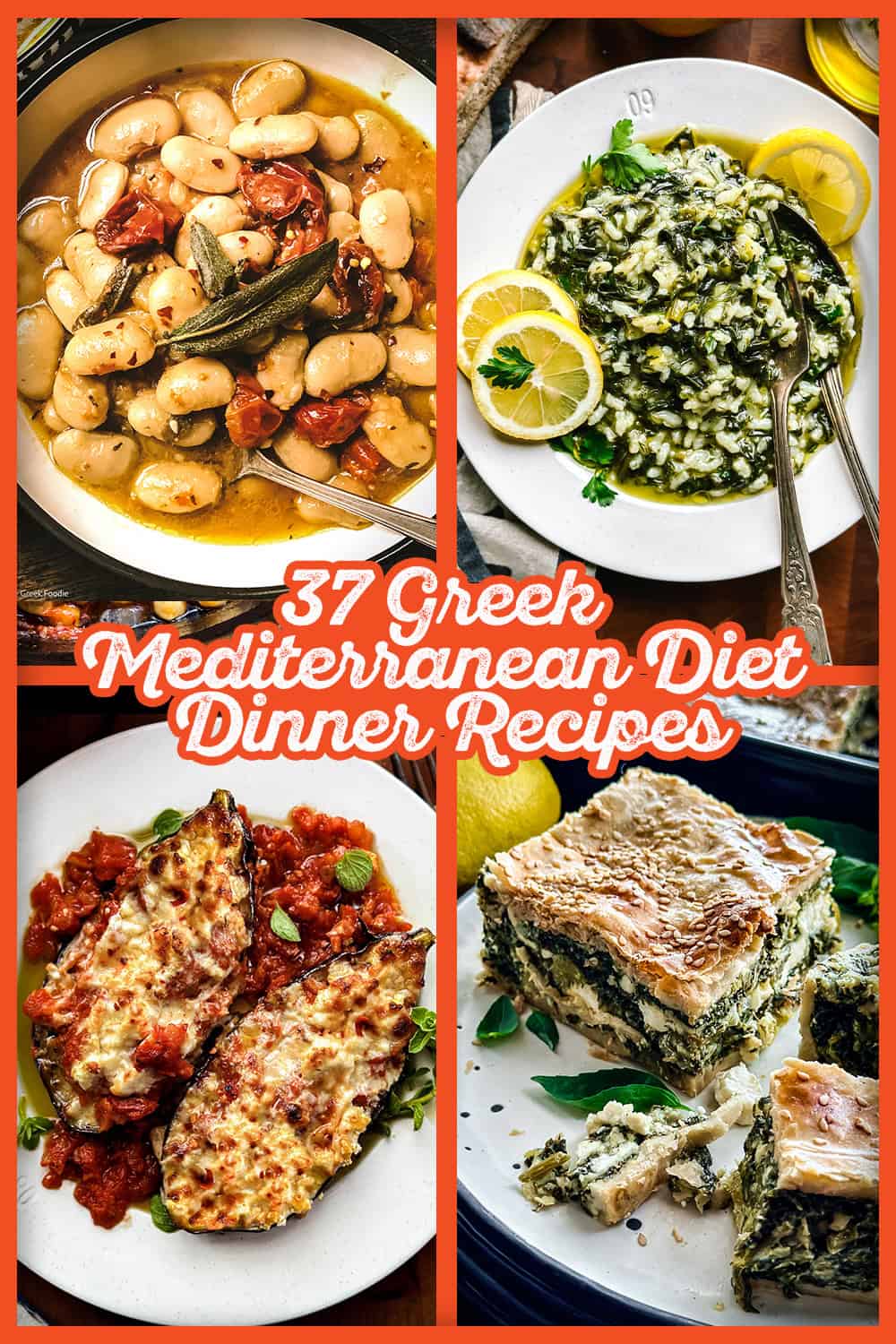
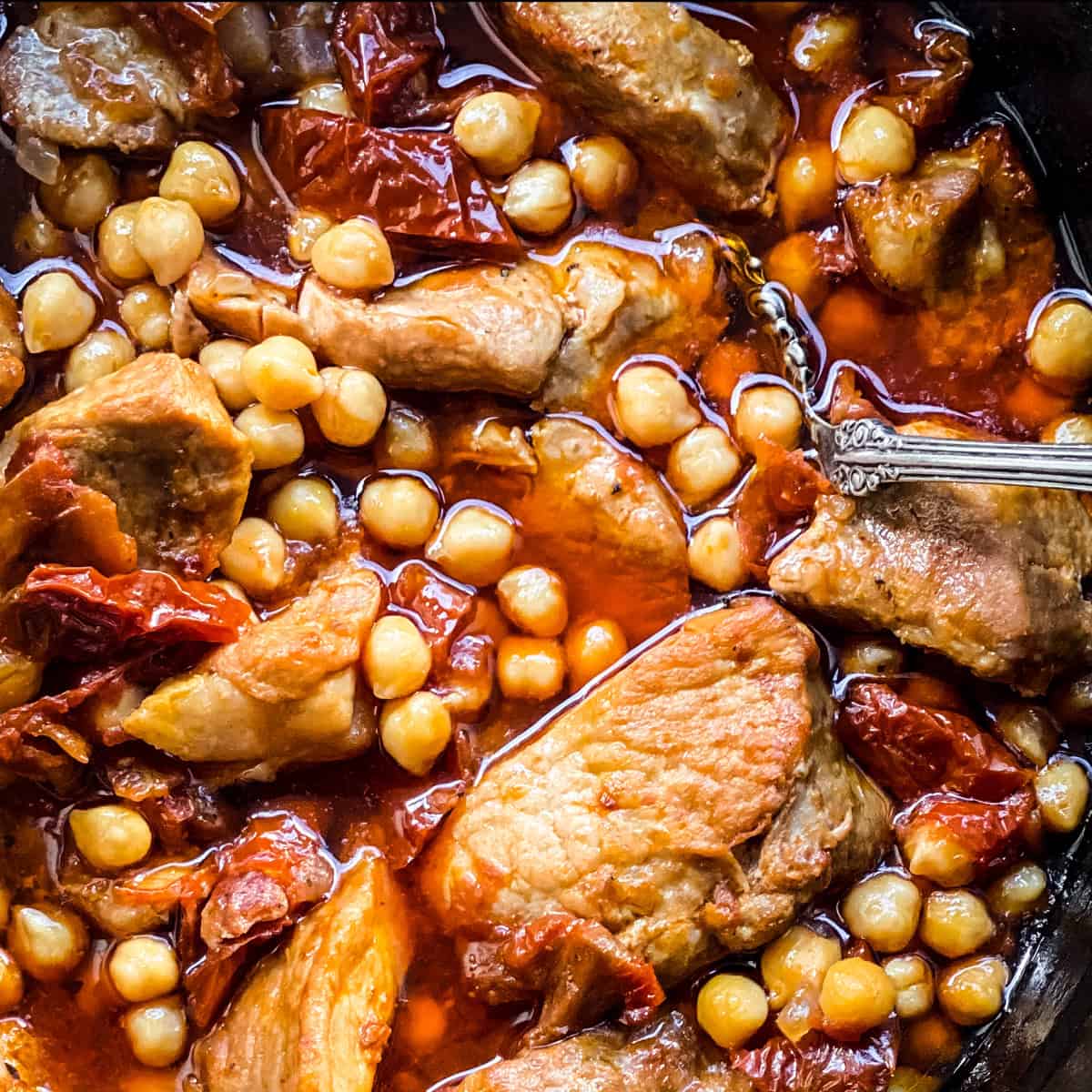
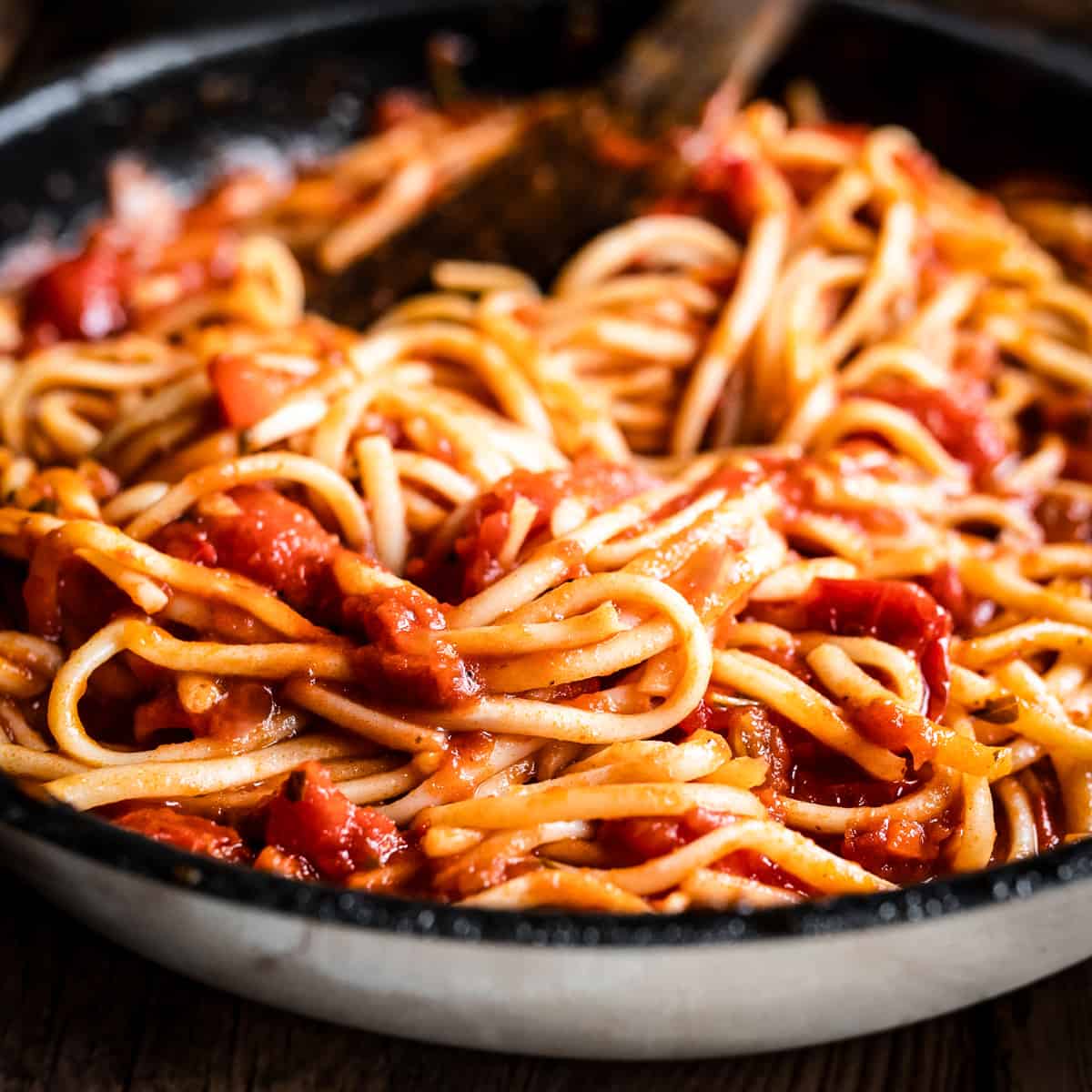
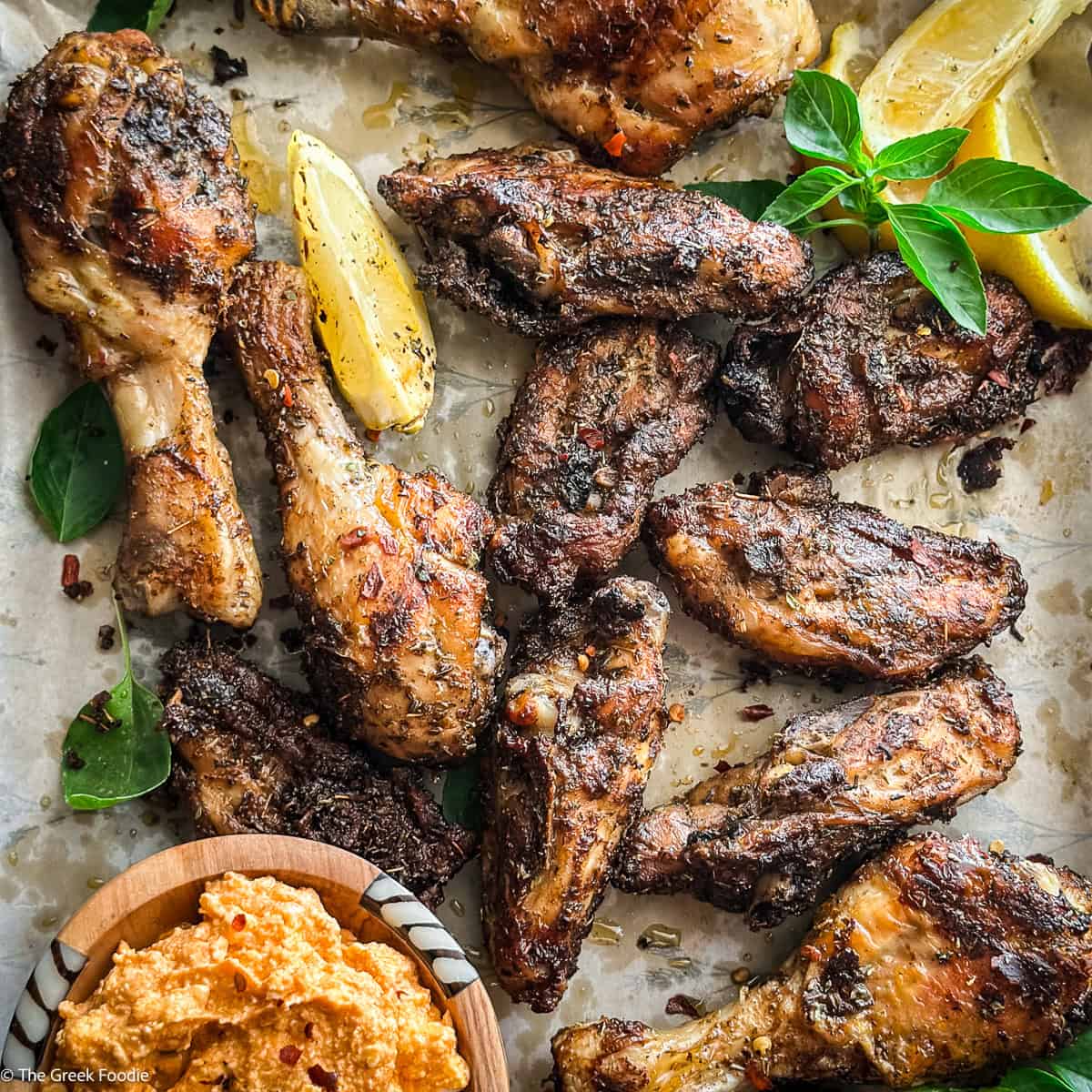
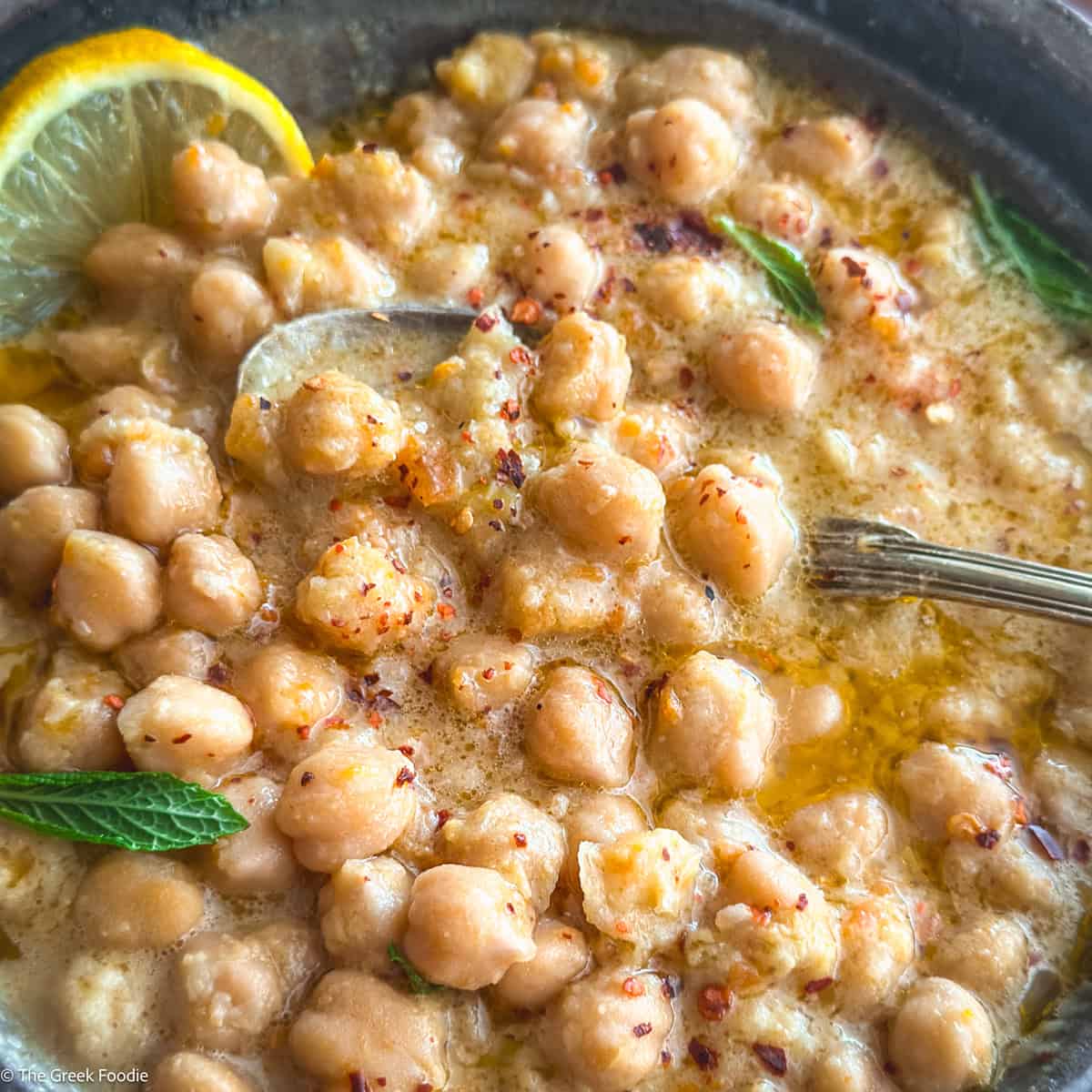
These are the Mediterranean diet dinner recipes we actually eat in Greece. We don’t call it a diet, it’s just dinner with real ingredients, good olive oil, and all the food is made from scratch.
The rhythm of a Greek week is simple. Most nights it’s vegetables and beans, cooked slowly in olive oil and tomato, with bread for the sauce and a piece of feta on the side. Some nights it’s skewers from the grill of the near by souvlaki shop. Fish is on the table often, whenever the fishmonger has something fresh. And Greeks eat out a lot: evenings at tavernas and mezedopolia sharing small plates and family-style dishes, or at the little neighborhood place with cheap, good fish and meze. And Sunday is the big family lunch, when the oven goes on and everyone stays at the table a little longer.
Overview
So this isn’t a list of “light” recipes. A phyllo pie full of greens counts. So does a pork souvlaki in a warm pita with tomatoes, onions and tzatziki. What matters is that you cook it yourself, from ingredients you can recognize.
Below you’ll find 38 Greek dinners, organized the way we eat them through the week.
Weeknight vegetables and legumes
This is the heart of Greek home cooking: ladera (vegetables cooked slowly in olive oil), beans, and pies full of greens. Most of them taste even better the next day, so make a big pot and eat it twice.
Instant Pot gigantes with roasted tomatoes
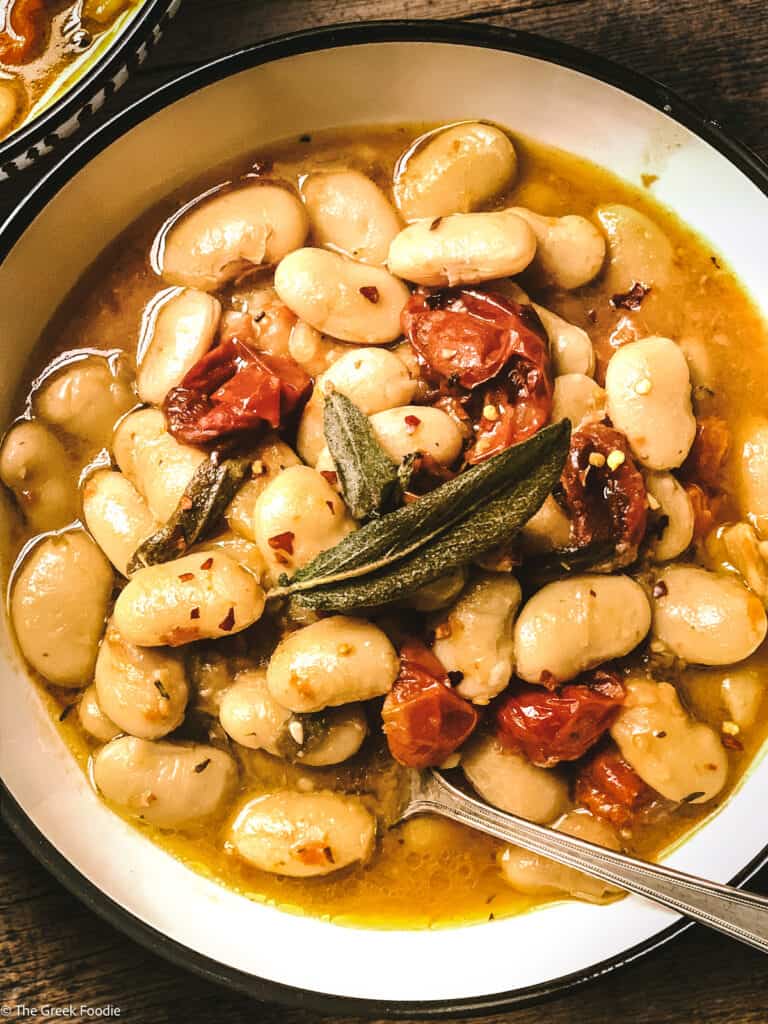
Giant butter beans in a thick tomato sauce, the kind every Greek taverna serves. Roasting the tomatoes first gives the sauce a deeper, sweeter flavor, and the Instant Pot cuts hours off the cooking time. Serve with crusty bread and a slab of feta.
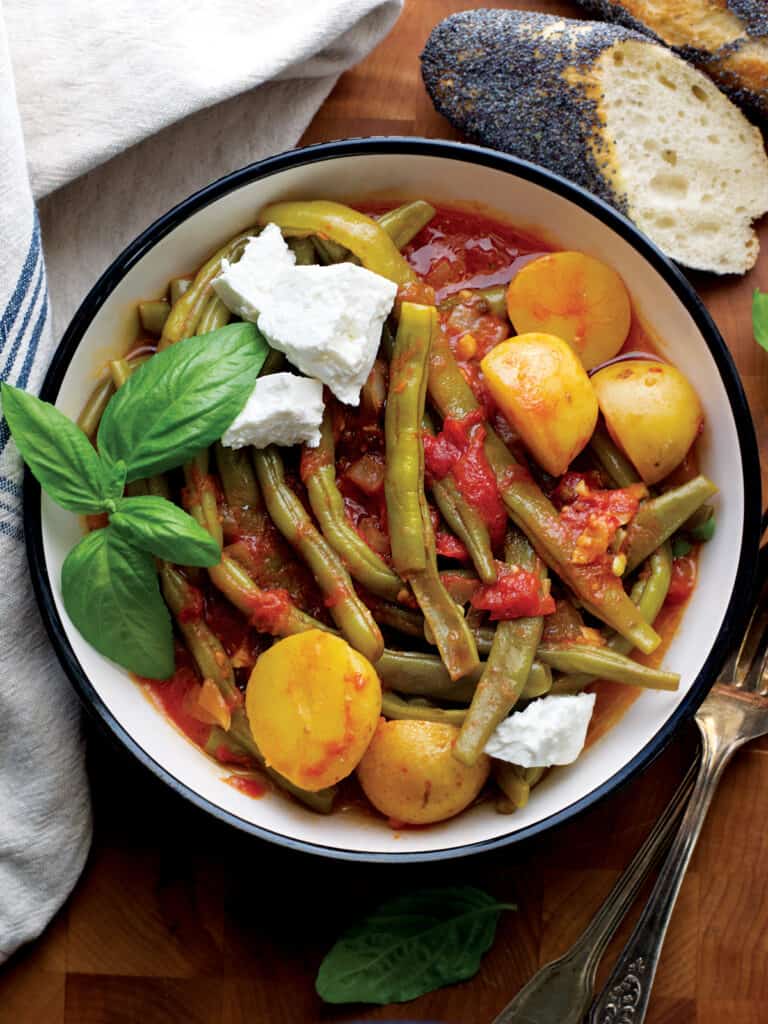
Green beans and potatoes stewed in olive oil and tomato until they're soft and silky. It's the dish that sums up ladera: humble vegetables, plenty of good olive oil, and time. Eat it warm or at room temperature with feta and bread.
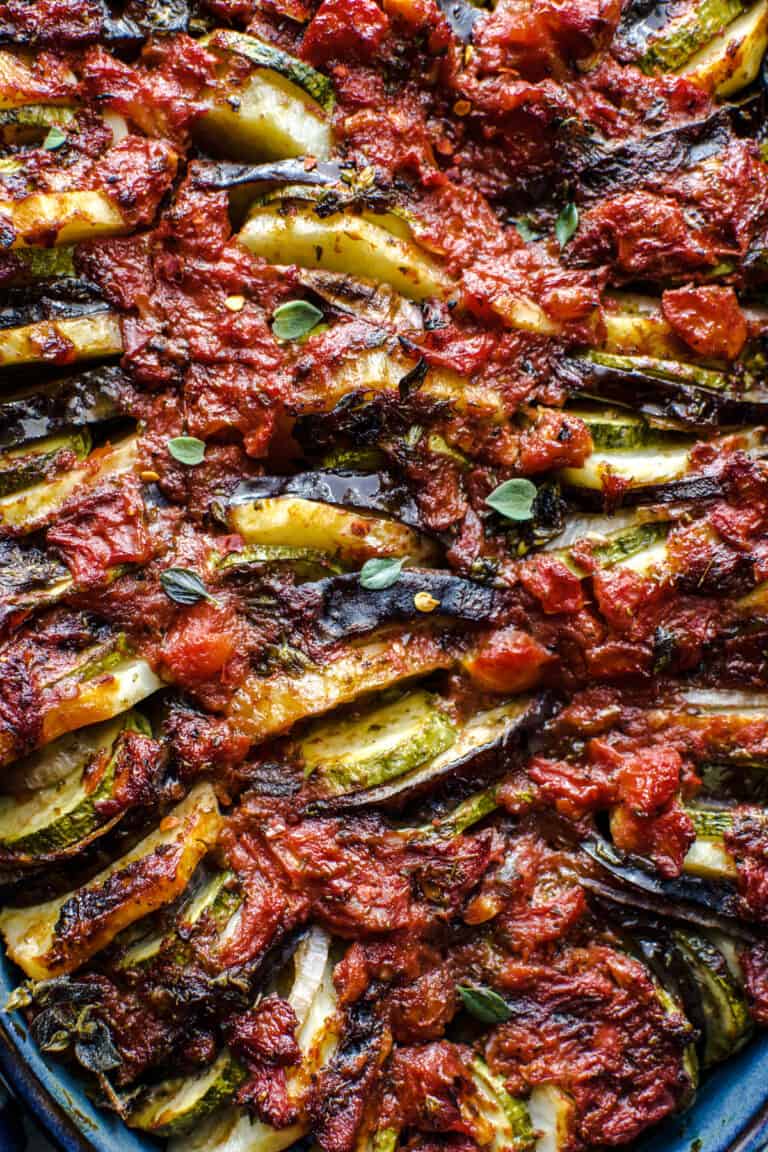
Greece's answer to ratatouille. Eggplant, zucchini, potatoes and tomatoes roast together in one pan until the edges caramelize and everything melts into the olive oil. Make it at the end of summer, when the vegetables are at their best.
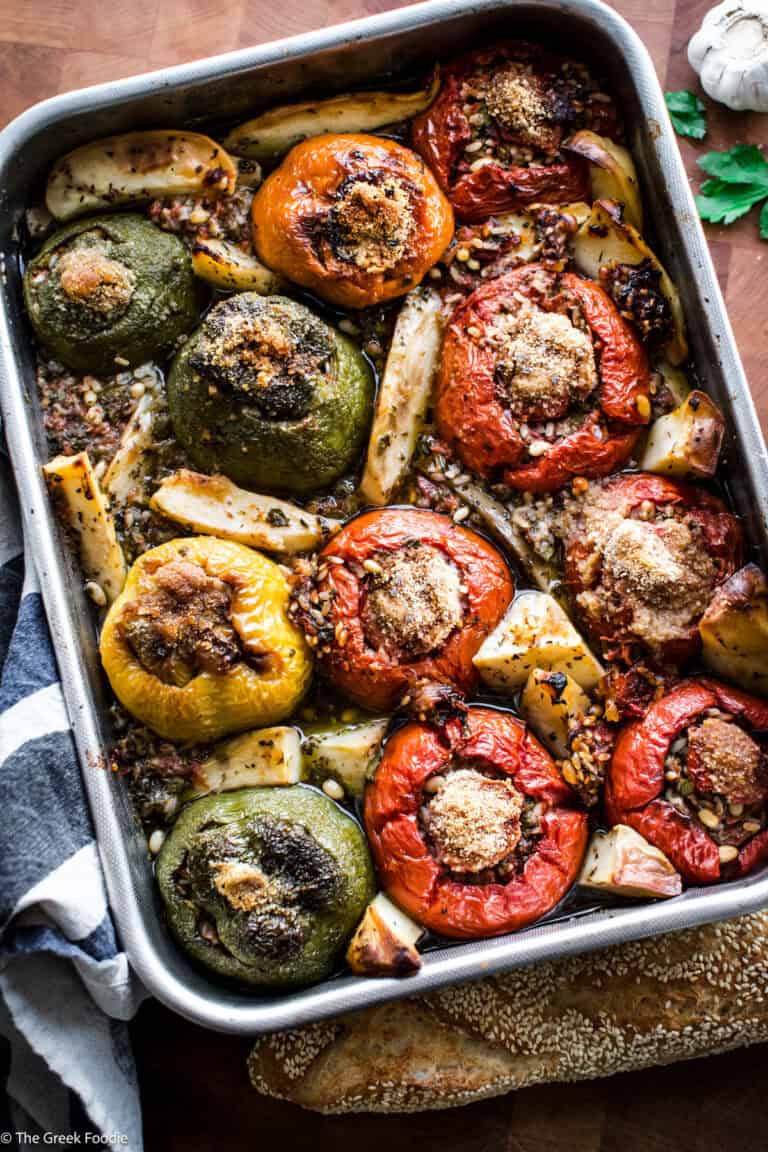
Tomatoes and peppers filled with herbed rice and baked with potato wedges tucked in between. The rice cooks in the vegetables' juices, so every bite tastes of summer.
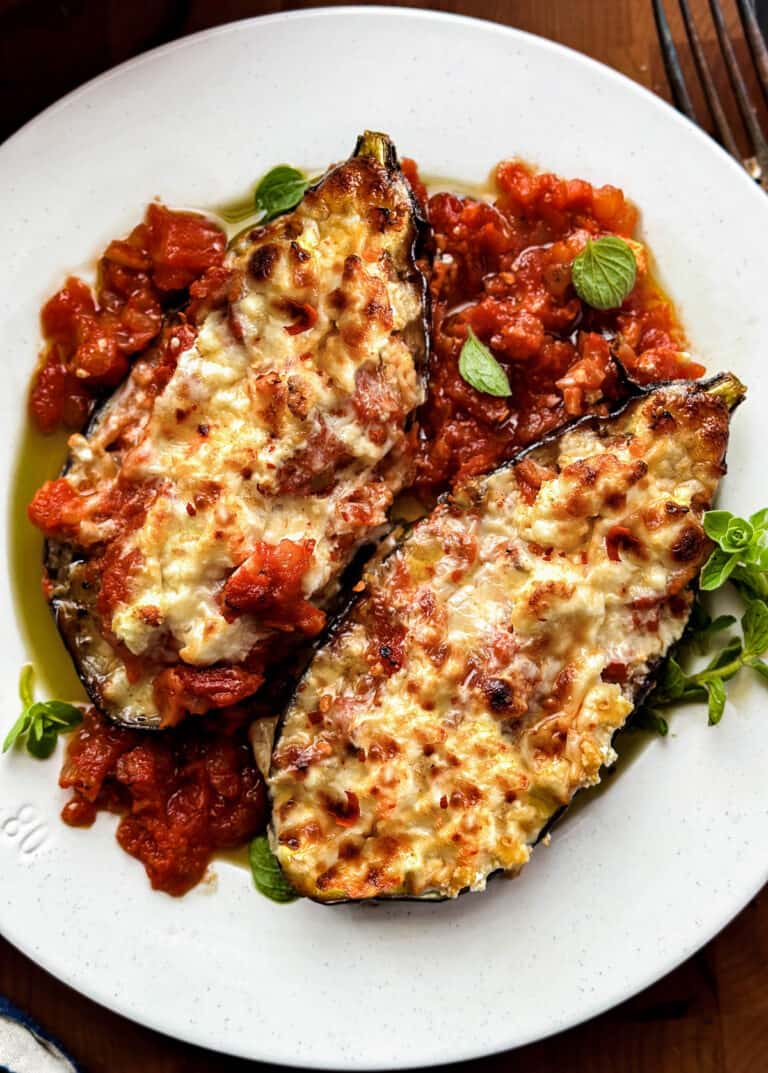
Papoutsakia means “little shoes,” and that's exactly what these baked eggplant halves look like. My version is meatless and easy enough for a weeknight.
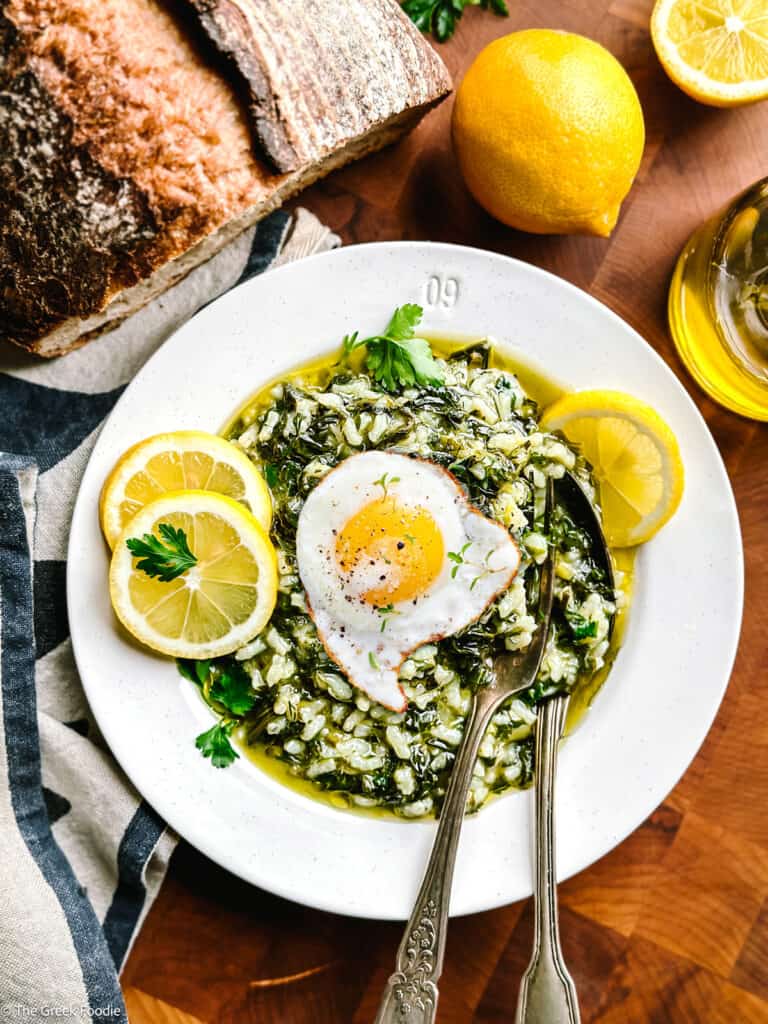
Spinach and rice cooked together in one pot with lots of lemon and dill. It's simple, cheap, and one of the dinners Greeks eat most often during Lent. Crumble feta on top and squeeze over extra lemon at the table.
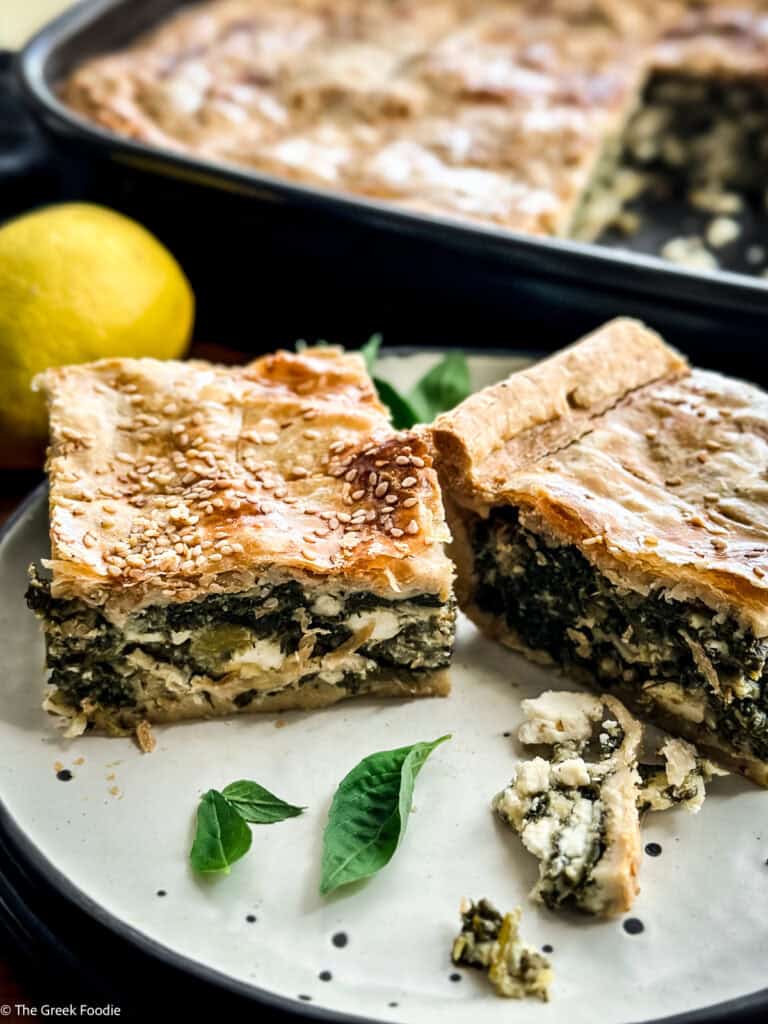
A phyllo pie packed with as many greens as you can fit, plus feta and herbs. Phyllo belongs on a Mediterranean table: the filling is mostly vegetables, and a square with a salad is a complete dinner.
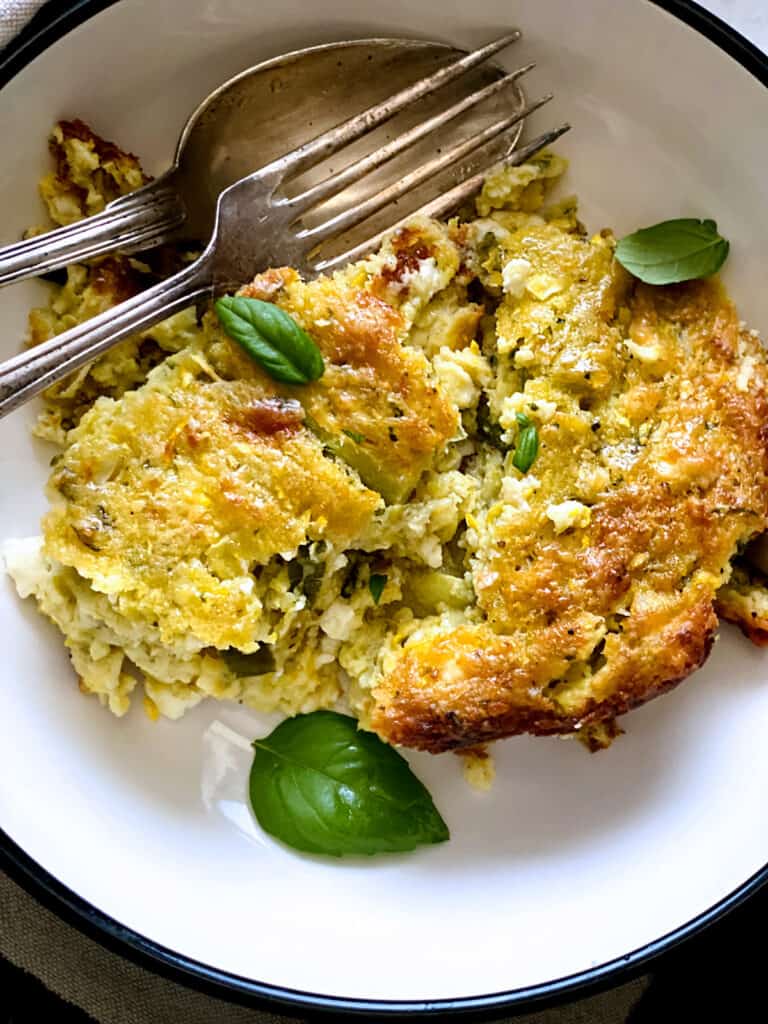
All the flavor of a zucchini pie without the phyllo: grated zucchini, feta, eggs and herbs baked until golden. It's just as good at room temperature, so it's great for lunch boxes, too.
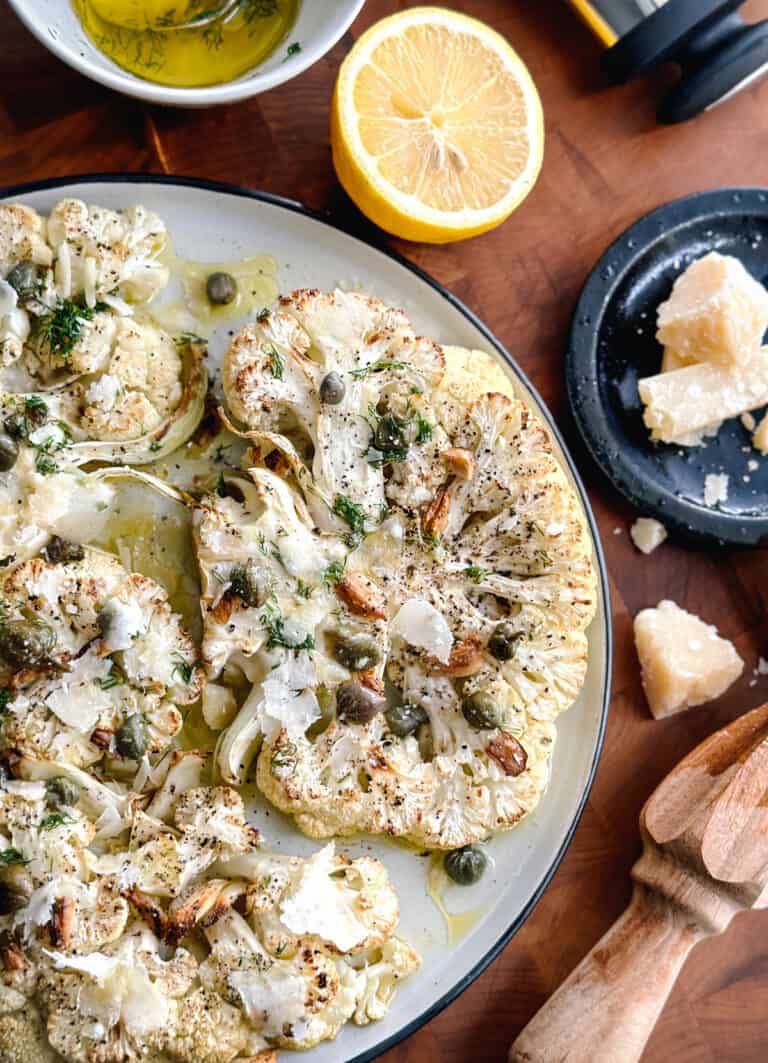
Roasted cauliflower steaks with parmesan, lemon and capers
Thick slices of cauliflower roasted until crisp at the edges, then finished with lemon, capers and parmesan. My parents ate plain boiled cauliflower every day, and this is the version I make instead.
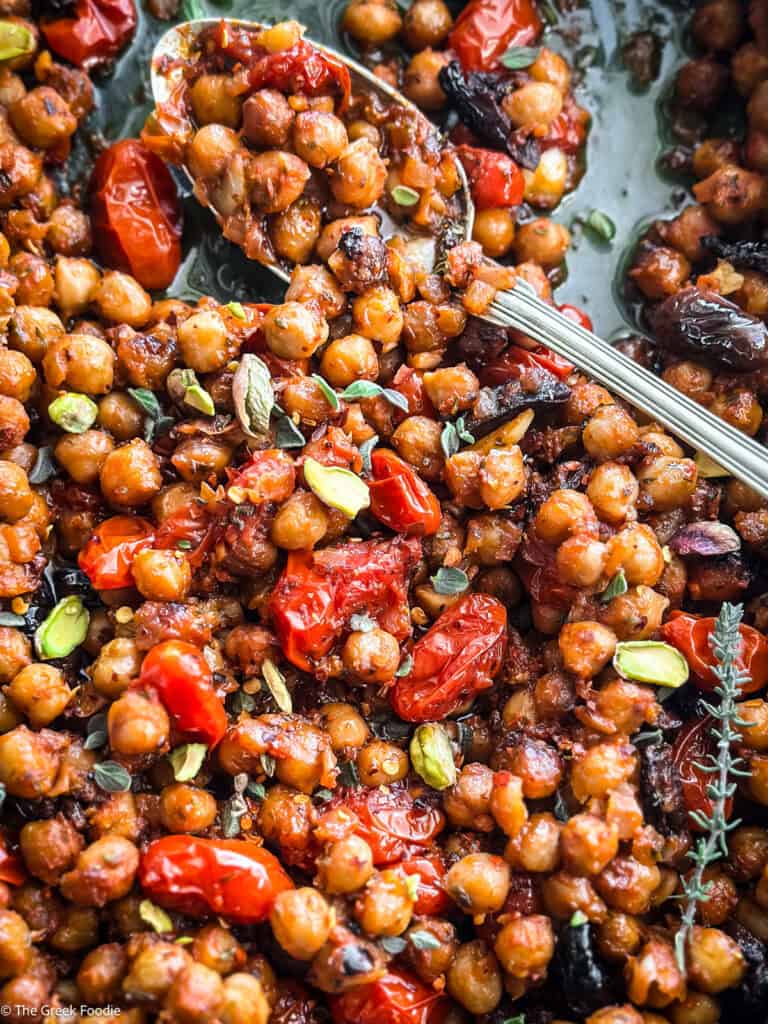
Chickpeas, tomatoes and pistachios tossed in a lemony dressing. Serve it warm on a cool night or at room temperature in summer. Add some feta and bread and you're done.
Greek lentil salad with sun-dried tomatoes and feta
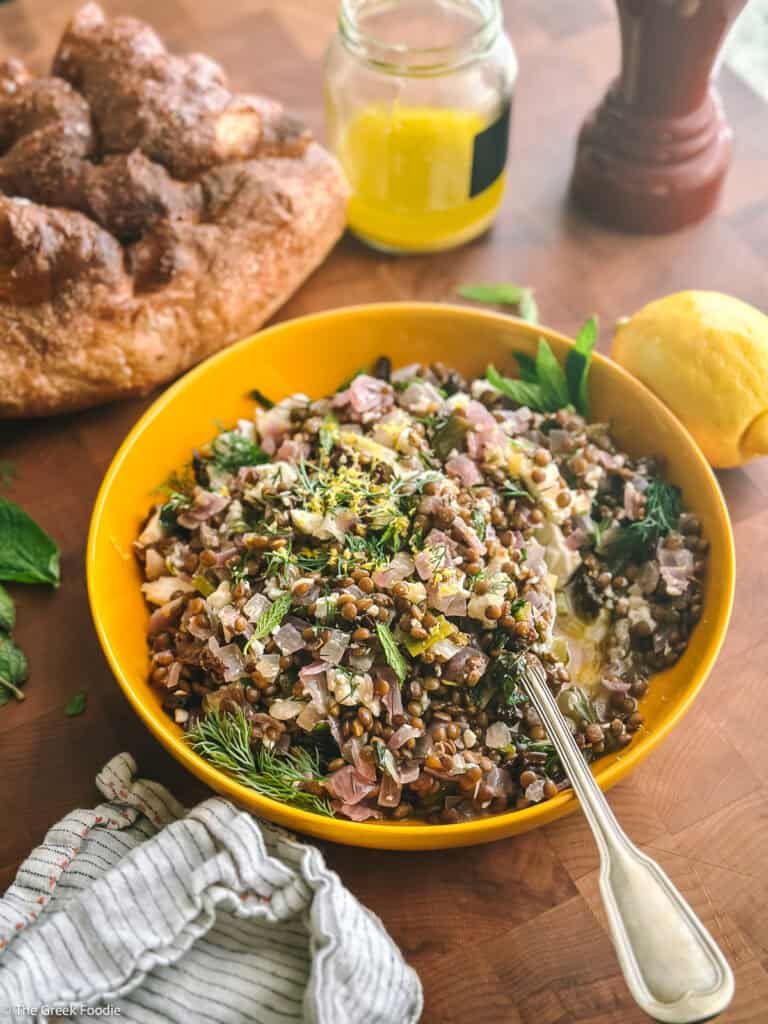
Beluga lentils hold their shape beautifully, which makes them perfect for a salad. Sun-dried tomatoes, feta and herbs give it plenty of flavor, and it's ready in the time it takes the lentils to cook.
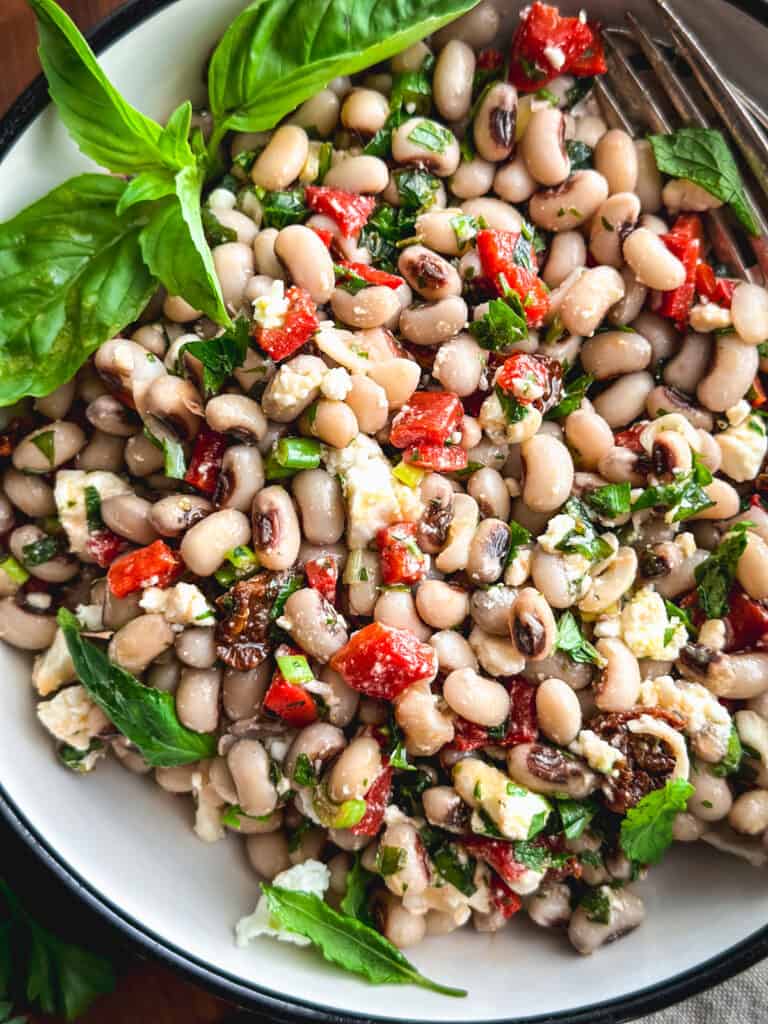
Black-eyed peas with fresh herbs, onion and a sharp olive oil dressing. It's one of the easiest legume dishes to make, and it tastes better after a night in the fridge.
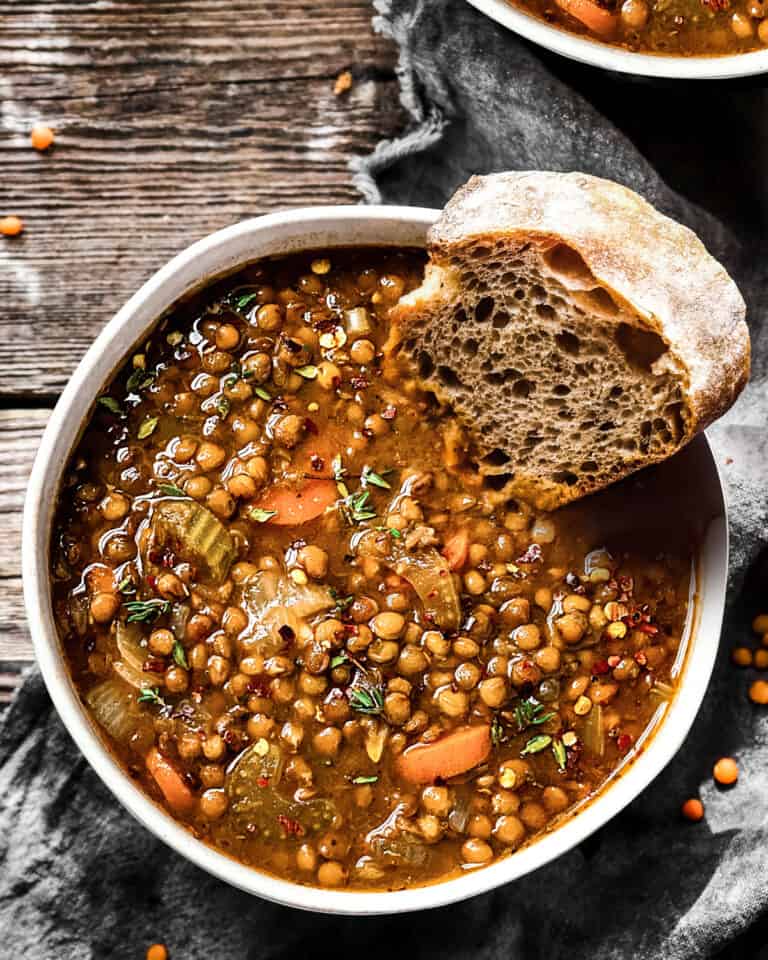
Lentils simmered with tomato, garlic and bay leaf until thick and hearty. Greeks add a splash of red wine vinegar at the table, and it makes all the difference.
Many Greeks call fasolada the national dish. White beans, carrots, celery and tomato cook slowly in olive oil into a thick, comforting soup. It's cheap, filling, and better the next day.
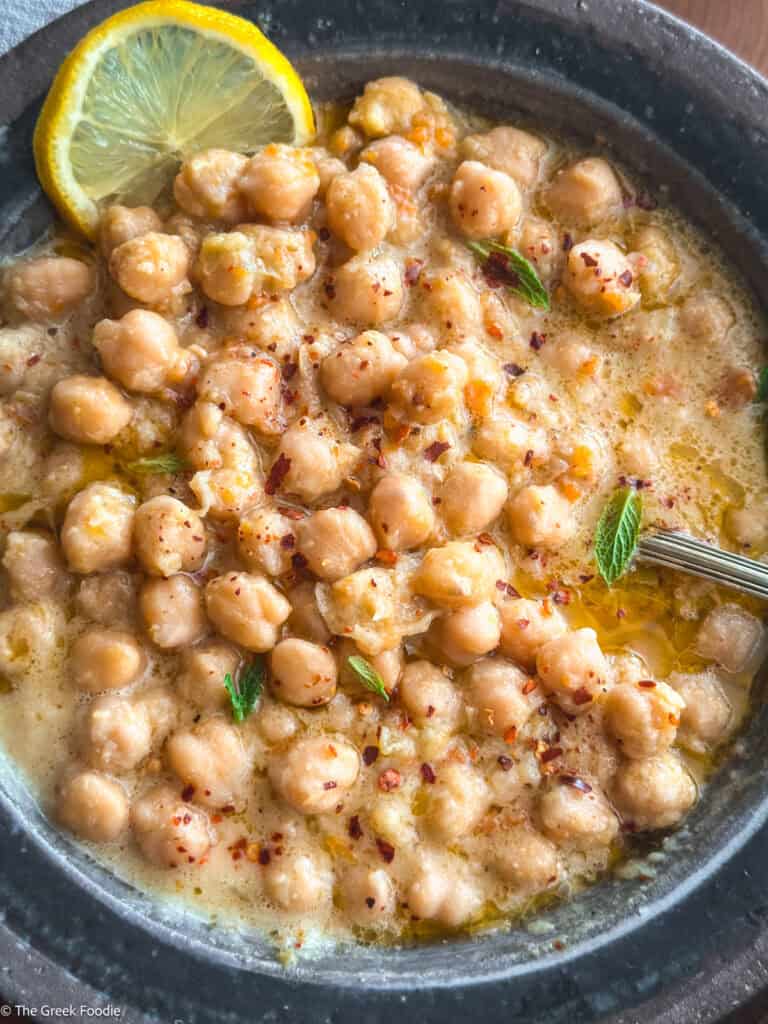
Chickpeas simmered slowly with onion and olive oil until they turn creamy and the broth thickens, finished with plenty of lemon. It's a cheap, filling pantry staple and a Lenten classic.
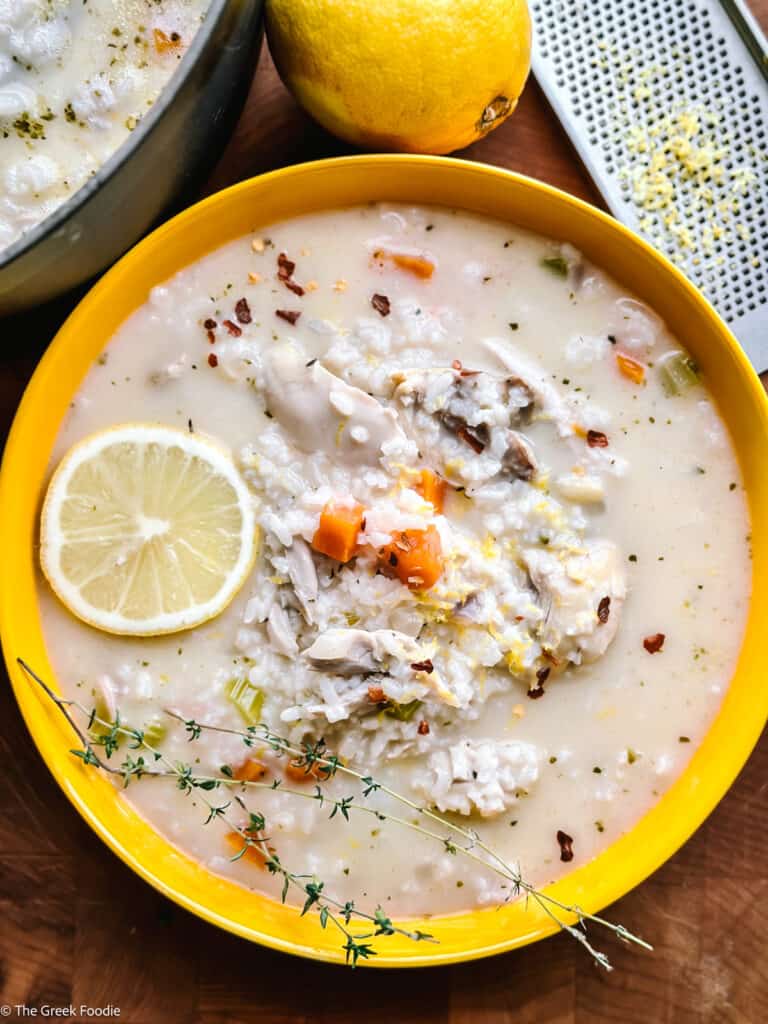
Chicken soup with rice, thickened with egg and lemon until silky. It's the soup Greeks make when someone needs looking after, and the one I crave all winter.
Chicken shows up on Greek tables a couple of times a week, almost always with lemon, oregano and olive oil.
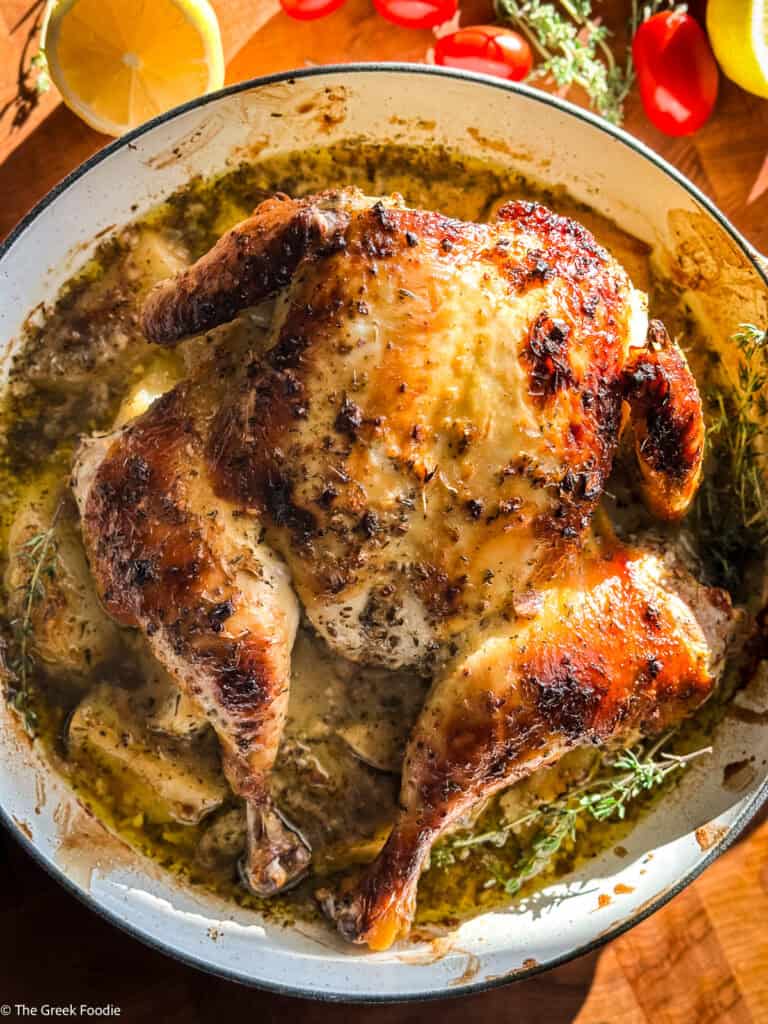
Greek roast chicken with lemon and rosemary
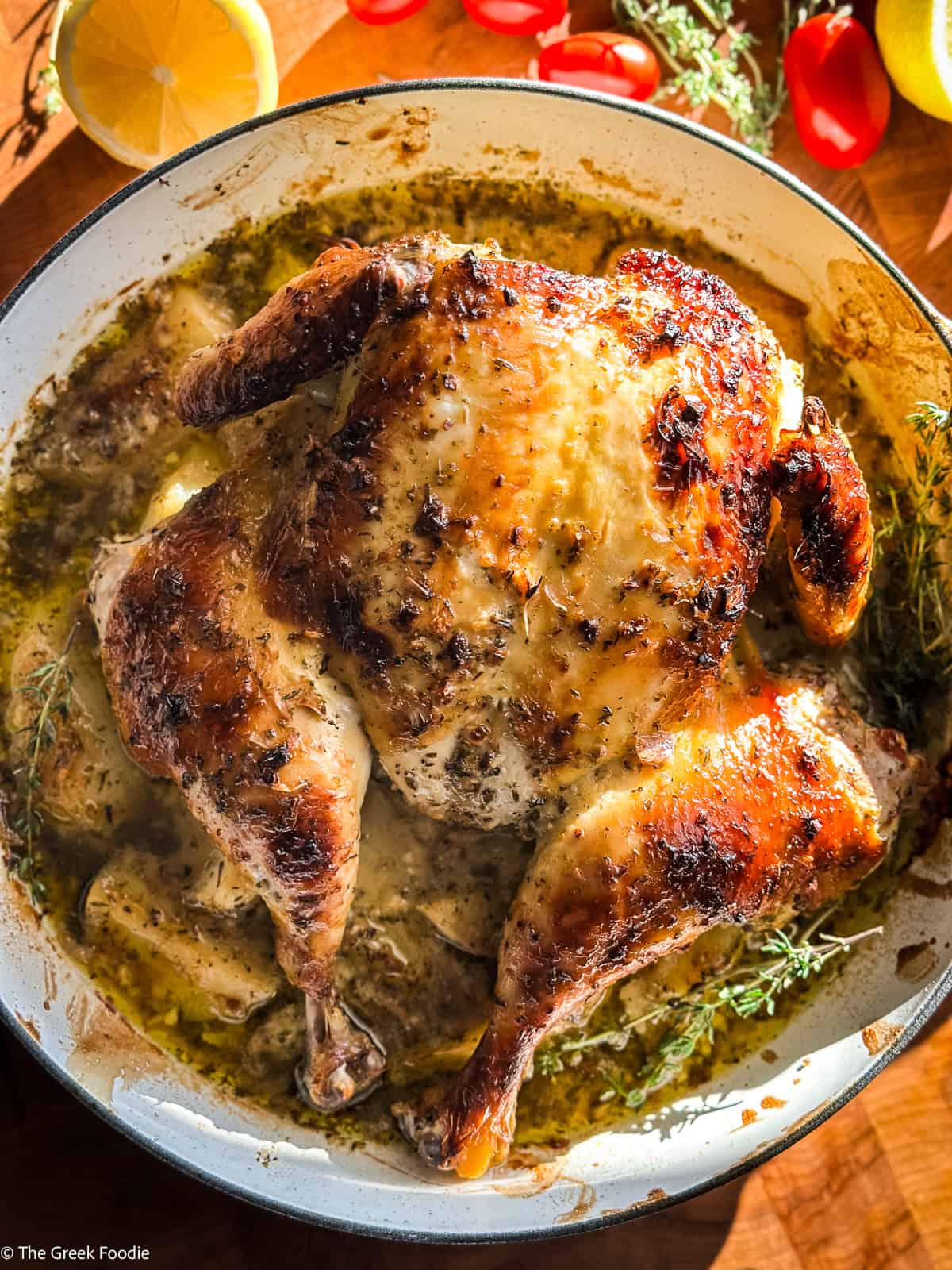
A whole spatchcocked chicken roasts flat, so it cooks faster and stays juicy, with crisp skin all over. Lemon, garlic and rosemary do the rest. Serve it with a big salad and the pan juices.
Three skewers and a horiatiki is a great meal. This is how Greeks eat out on a weeknight, and it’s just as easy at home: marinate in the morning, grill in minutes.
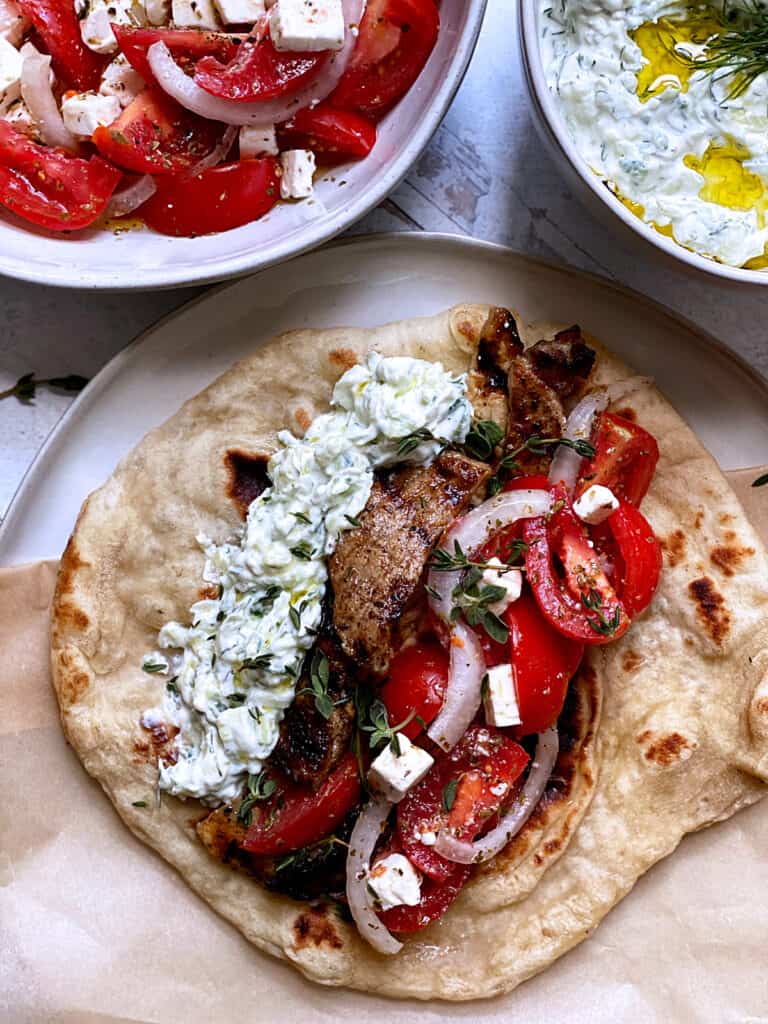
Pork souvlaki with pita
Warm pita wrapped around grilled pork, tomatoes, onions and tzatziki. Made at home from good ingredients, it's real food: protein, vegetables, yogurt and bread in one hand.
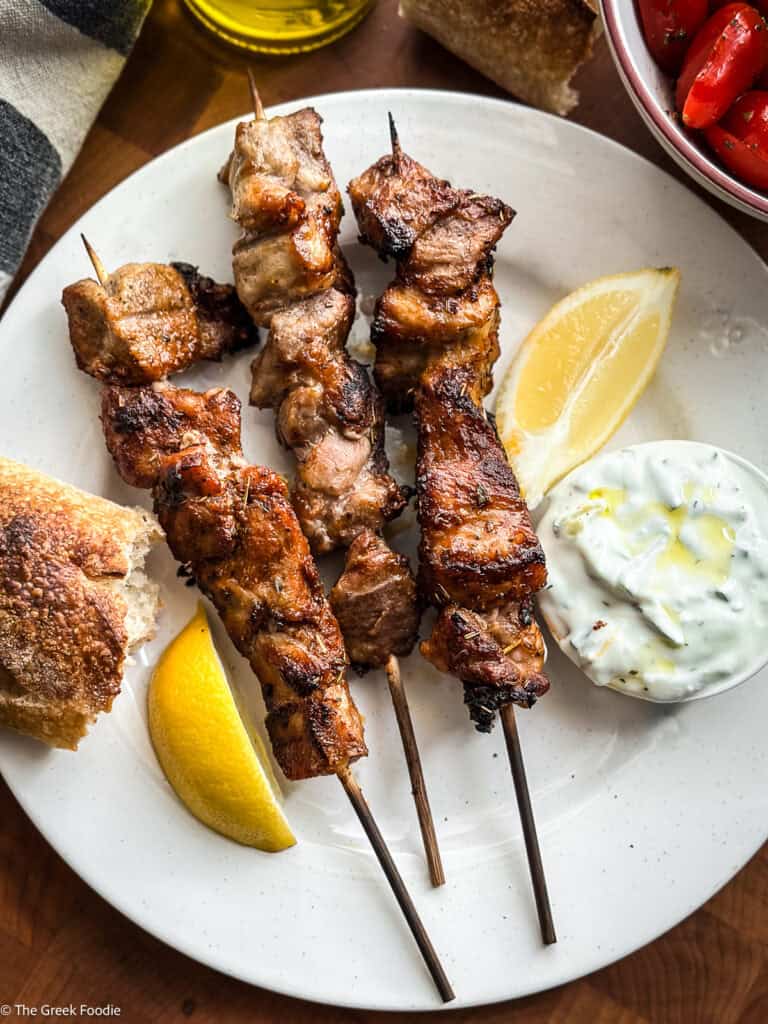
Tender marinated pork skewers served with a cool yogurt sauce. Grill them outside or cook them in a grill pan. Serve with lemon wedges and toasted bread.
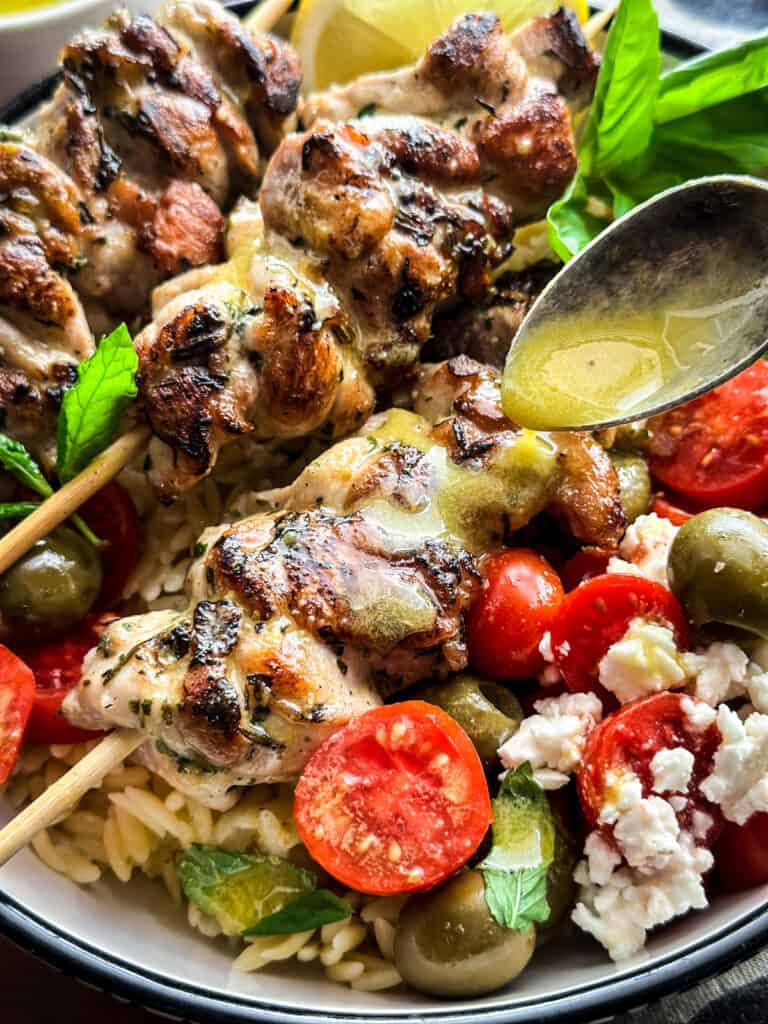
The classic chicken kalamaki, marinated in lemon, olive oil, garlic and oregano. Thread them on the morning you want them, and dinner takes about 15 minutes.
Greece is surrounded by sea, and fish is everyday food here. If the calamari looks good at the fishmonger, that’s dinner. Greeks also eat a lot of their fish out: at the fish tavernas on the coast, or the small neighborhood spots where the fish is fresh, cheap and comes with a table full of meze. These recipes bring that taverna table home.
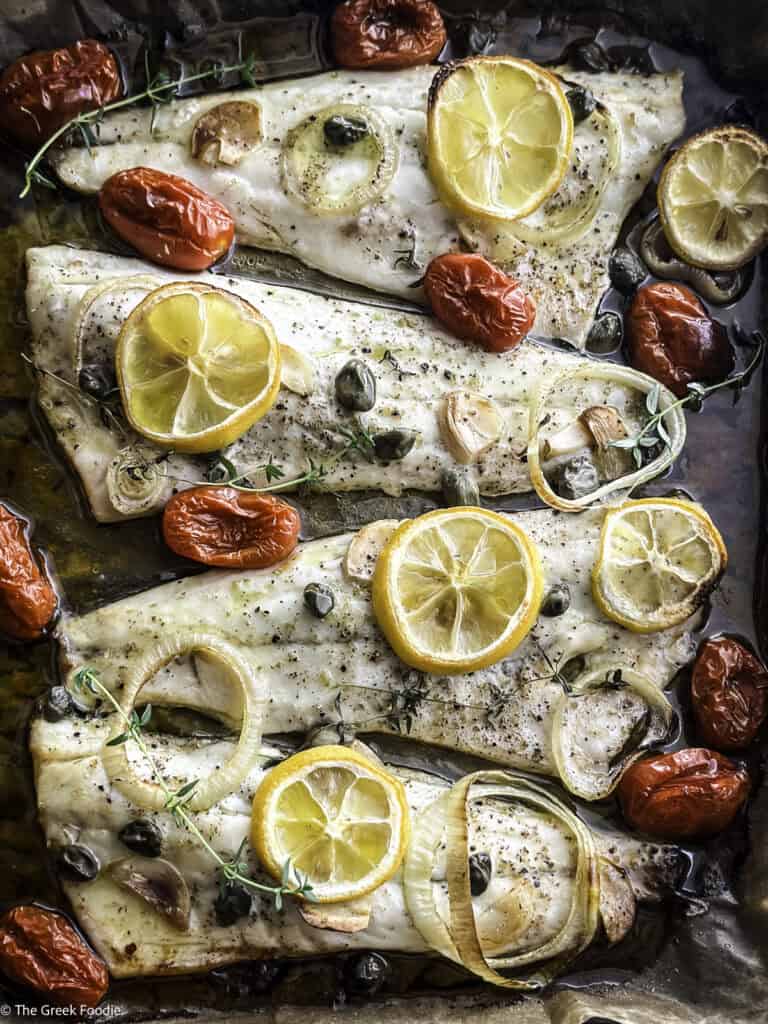
Roasted branzino with lemon and garlic
Branzino fillets roasted with cherry tomatoes, lemon and garlic in under 20 minutes. It's simple enough for a weeknight but looks and tastes like a night out.
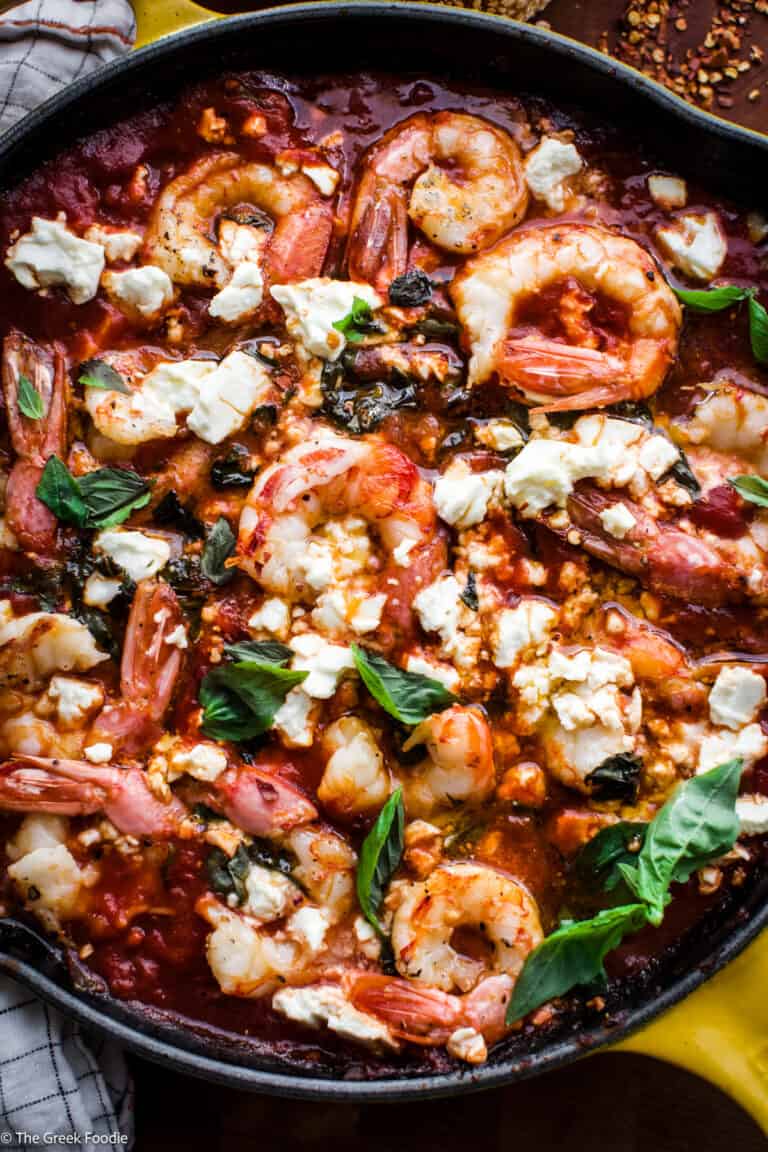
Shrimp baked in a rich tomato sauce with feta crumbled on top. It's a classic taverna meze that easily becomes dinner. Don't forget the bread for the sauce.
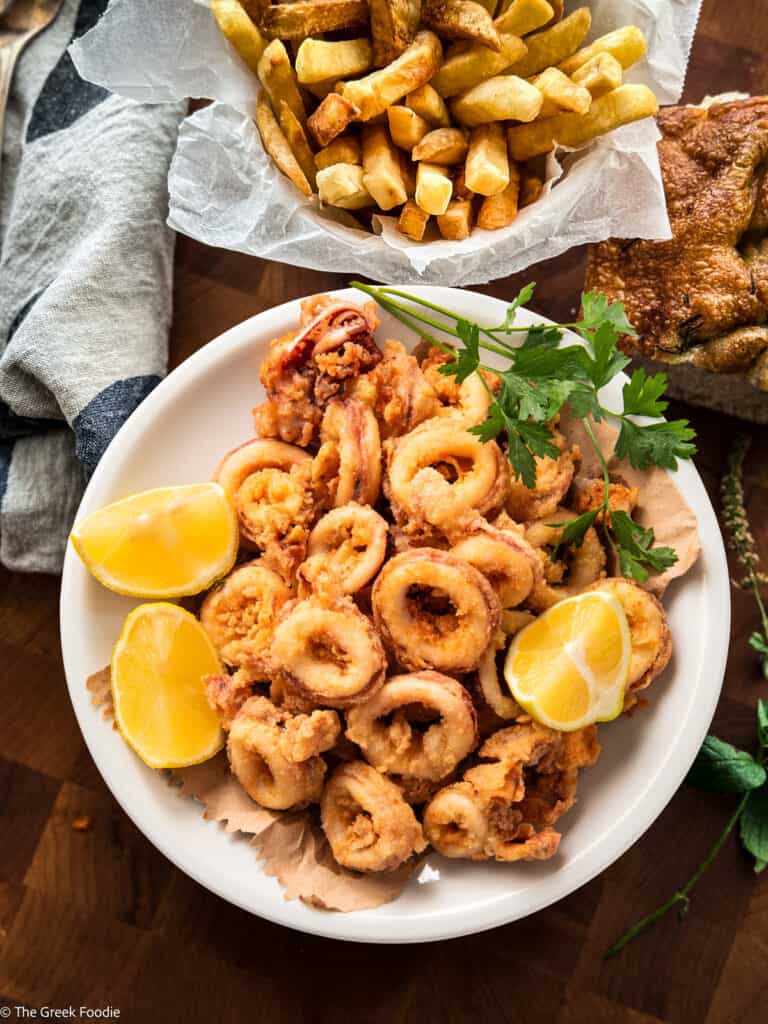
Crispy fried calamari with lemon wedges, the way every taverna serves it. In Greece it's not a special-occasion dish: when the calamari is fresh, it's dinner, with a horiatiki and bread.
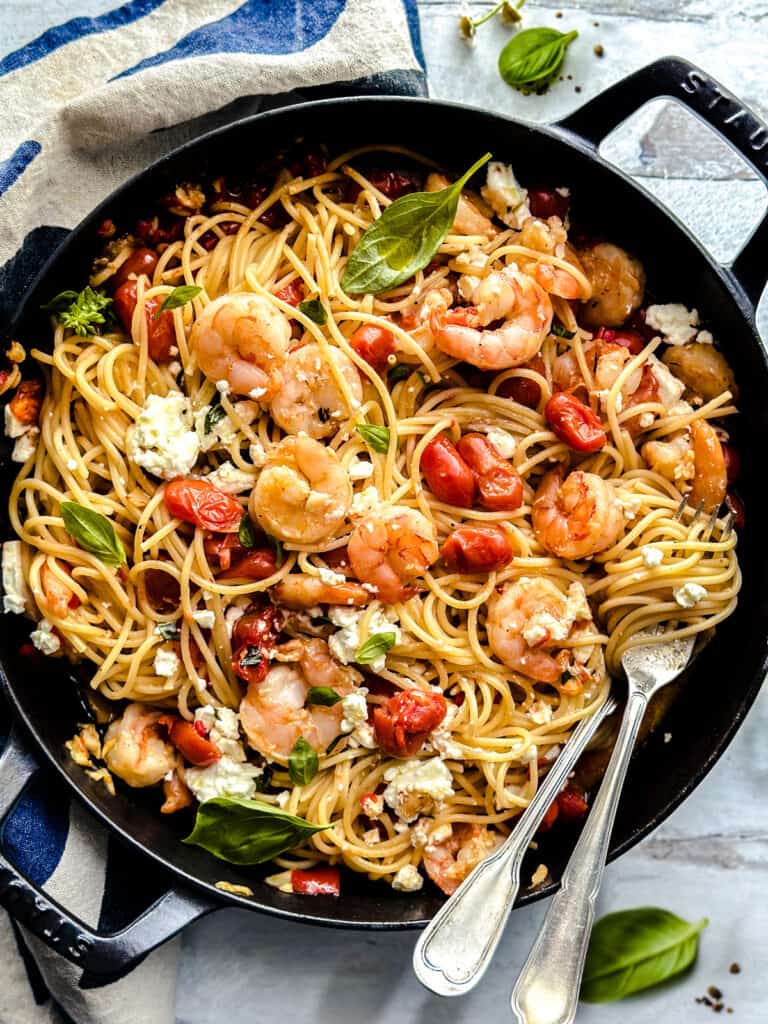
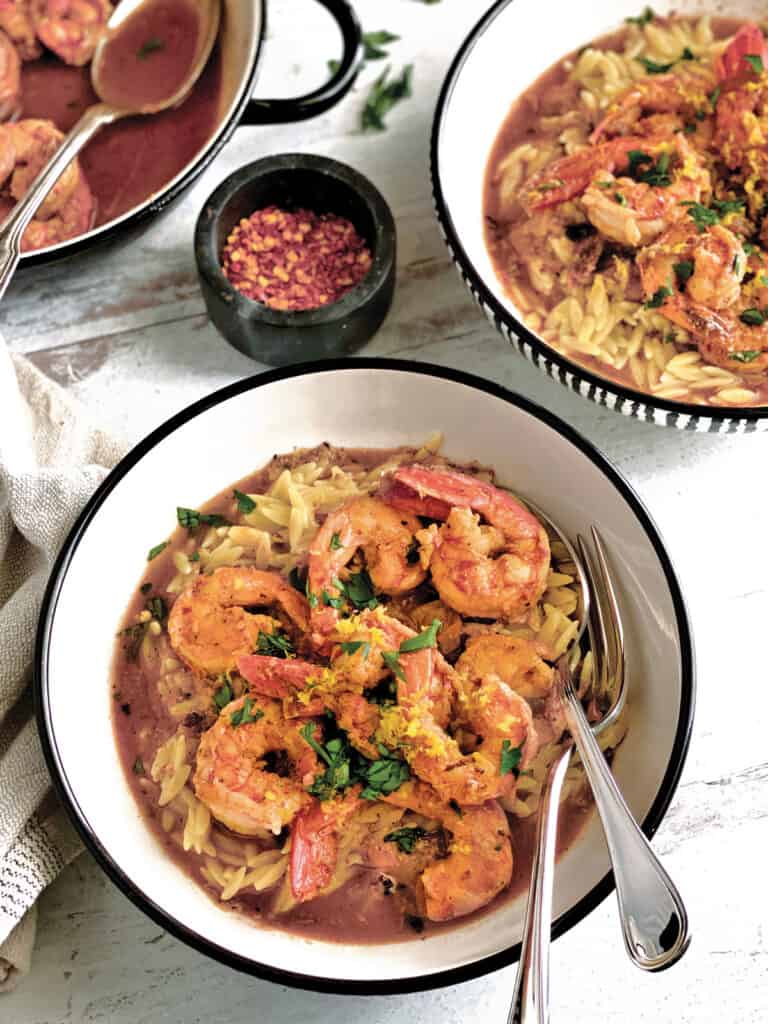
The shrimp pasta Greeks order at a seaside fish taverna: spaghetti in a cherry tomato and feta sauce, with the shrimp cooked just right. Make it at home when you want that posh fish taverna night without leaving the house.
Sunday is the big meal of the week in Greece. The oven goes on in the morning, the family gathers in the afternoon, and everyone stays at the table a little longer.
Greek lemon chicken and potatoes
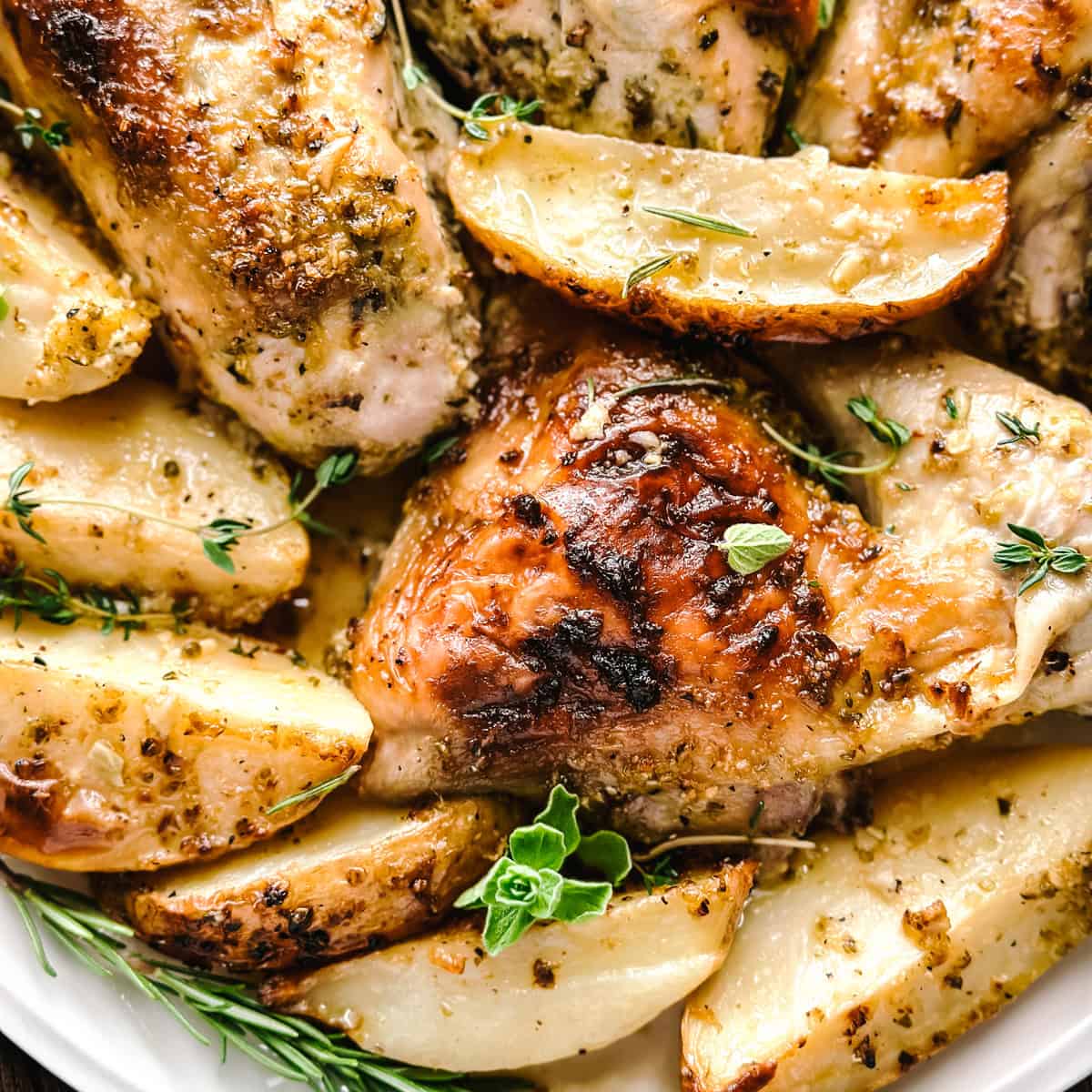
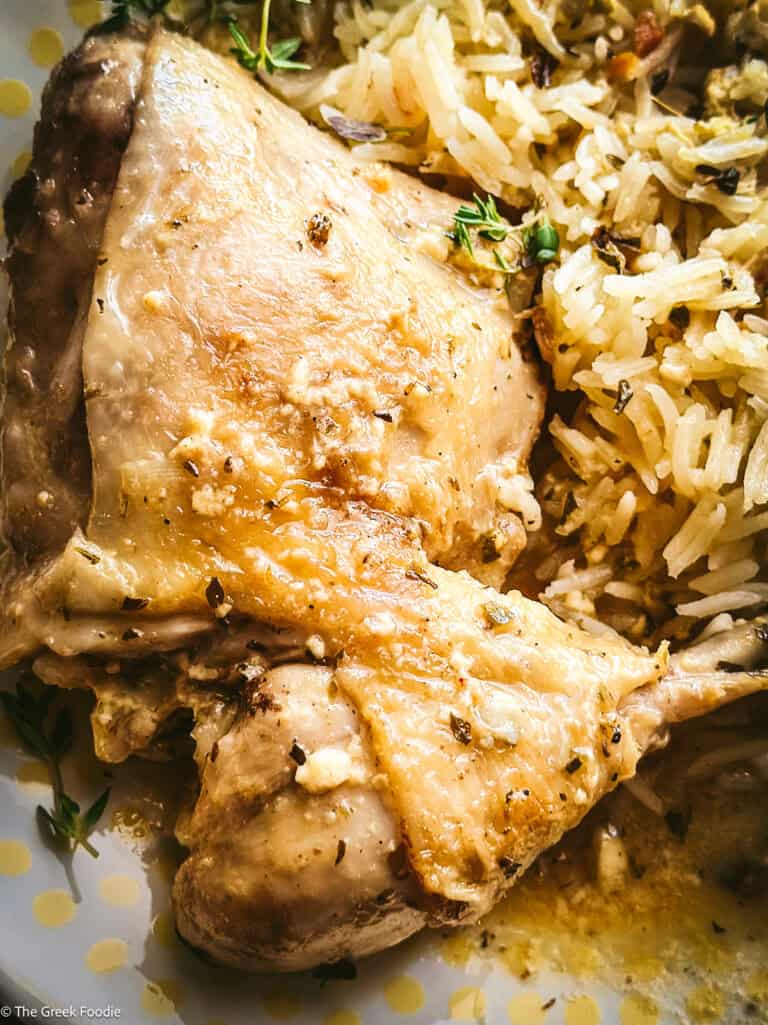
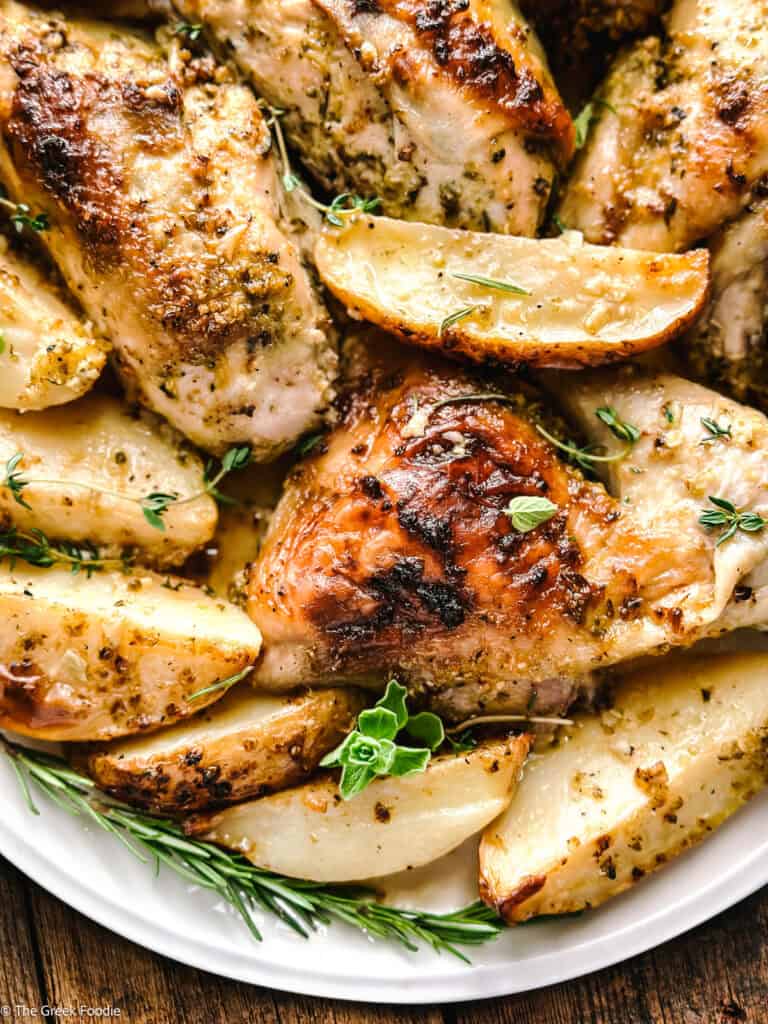
The one-pan Sunday classic. Chicken and potatoes roast together in lemon, olive oil and oregano, and the potatoes soak up every drop of the juices. It's the dish that brings everyone to the table.
Lahanodolmades (stuffed cabbage rolls in avgolemono)
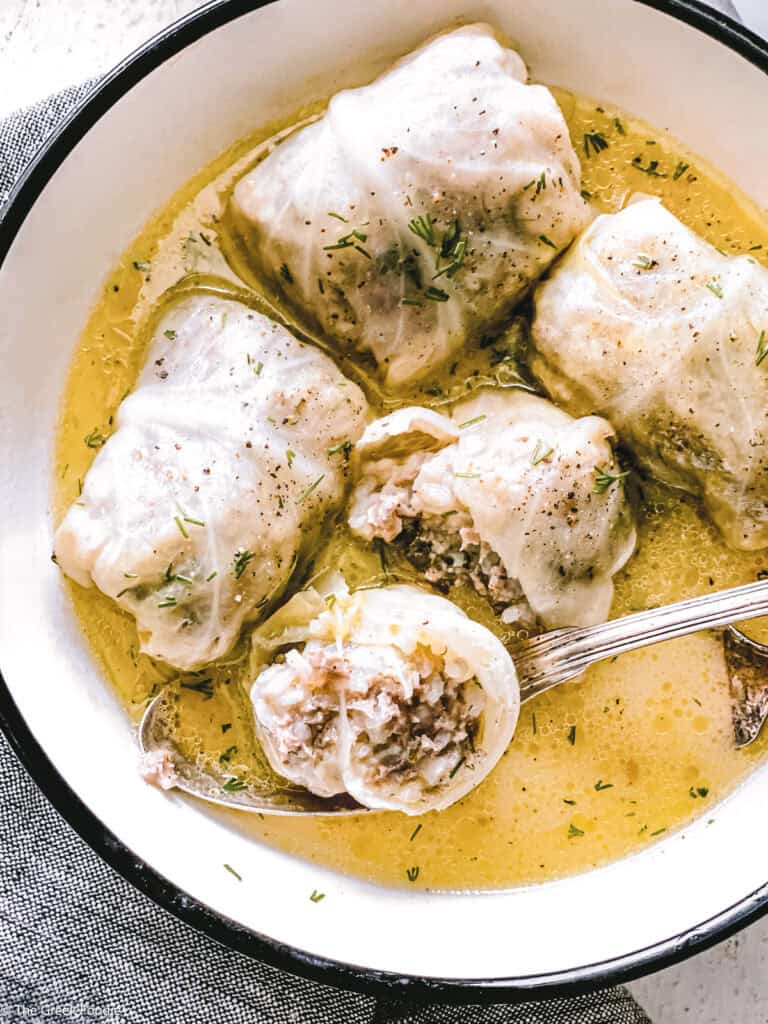
Cabbage leaves wrapped around a ground meat, rice, and herb filling, simmered slowly and finished with a silky egg-lemon sauce. They take an afternoon, which is exactly what Sundays are for.
Every Greek dinner comes with a salad. Dress it simply with olive oil and vinegar or lemon, or try one of my three ways to dress a Greek salad.
Horta (Greek boiled greens)
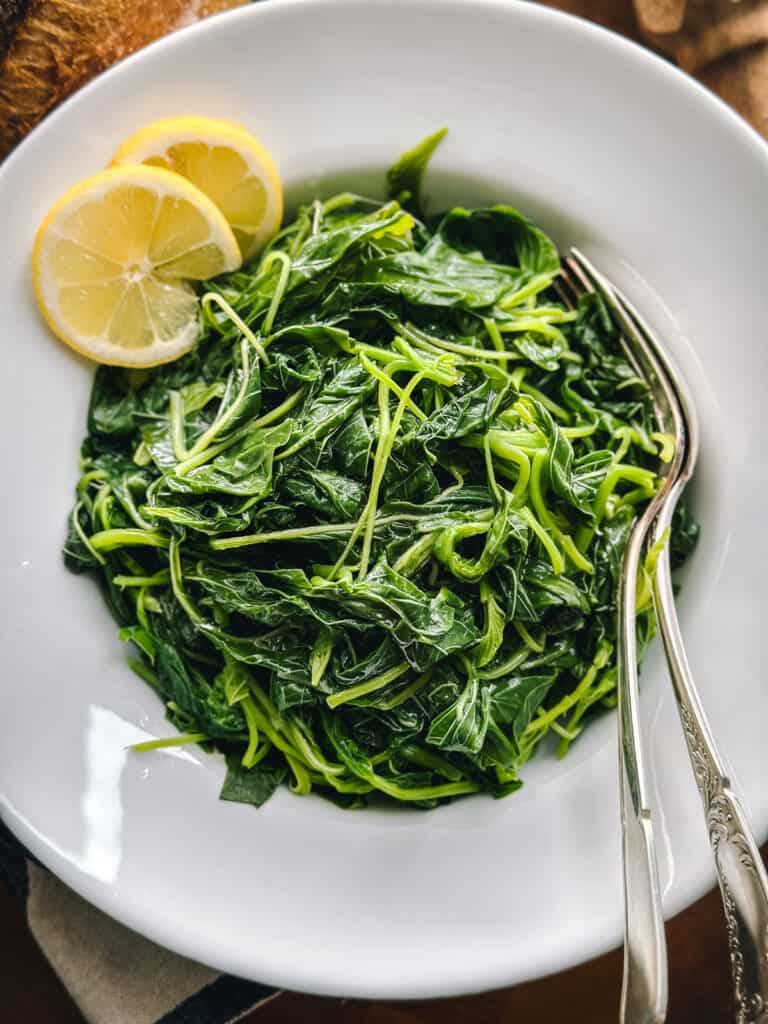
In fall and winter, the salad on a Greek table is often a plate of horta: greens boiled until tender and dressed with olive oil and lemon. Use dandelion, chicory, chard or whatever greens you find, and make extra, because they keep for days.
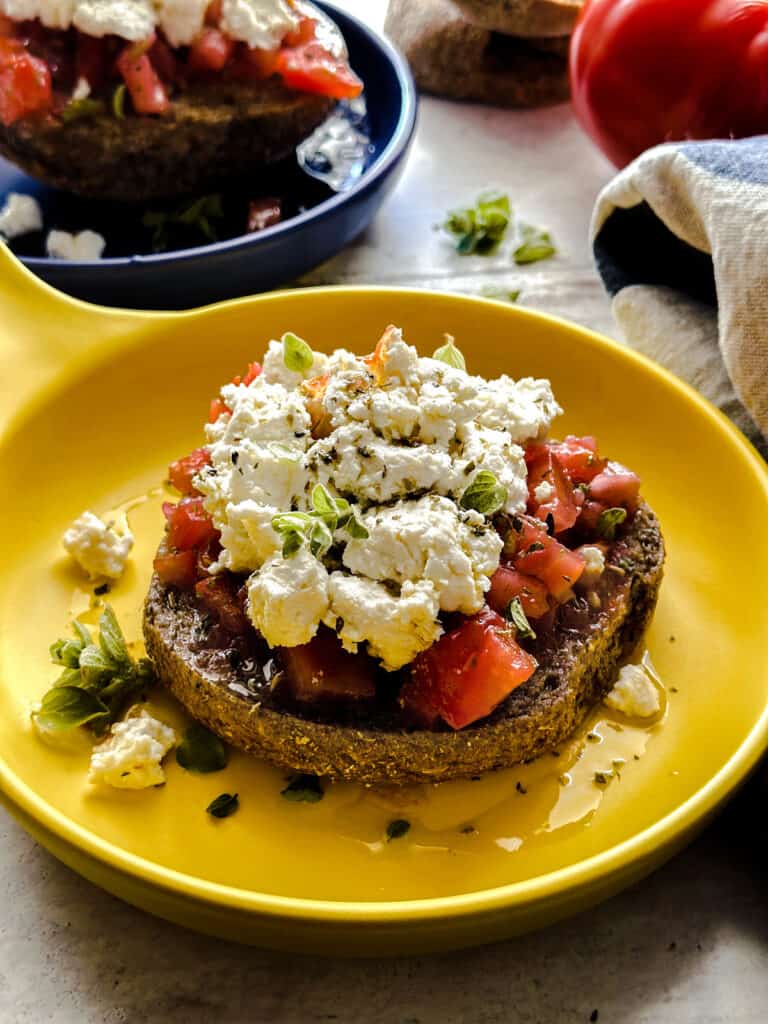
Barley rusks topped with grated tomato, mizithra cheese, oregano and olive oil. The rusk softens as it soaks up the tomato, and it's my favorite taste of Crete.
Semolina halva is the traditional Greek pudding-cake, warm with cinnamon and toasted almonds.
How to eat like a Greek through the week
Vegetables and beans on most nights, skewers or chicken once or twice, fish whenever it’s fresh, a night out at a taverna, and the big meal on Sunday. Here’s what a week could look like:
A Greek week of dinners
Day
Dinner
Monday
Fasolada with bread, olives and feta
Tuesday
Spanakorizo with extra lemon
Wednesday
Chicken souvlaki skewers and a horiatiki
Thursday
Gigantes with a plate of horta
Friday
Roasted branzino for date night
Saturday
Hortopita and maroulosalata
Sunday lunch
Greek lemon chicken and potatoes
Sunday evening
Something light: leftovers, or yogurt with honey and figs
Cook once, eat twice: most of the bean and vegetable dishes keep for 3–4 days, so Monday’s pot covers a lunch later in the week.
In Greece, it’s usually a vegetable or bean dish cooked in olive oil, with bread, a salad and a little cheese. Meat and fish show up a few times a week, not every night.
Yes. Potatoes are a whole food, and Greeks cook them with olive oil, lemon and herbs, not deep-fried from a bag. Try my Greek lemon potatoes.
Yes, in moderation. In a Greek home, chicken or pork might come a couple of times a week, with a bigger meat dish for Sunday lunch.
Greek home cooking is one of the traditions the Mediterranean diet was built on: olive oil, vegetables, legumes, bread, fish and a little meat and cheese.
Start with one bean or vegetable dish, add a salad and bread, and save the bigger meals for the weekend. The weeknight section above is a full week of ideas.