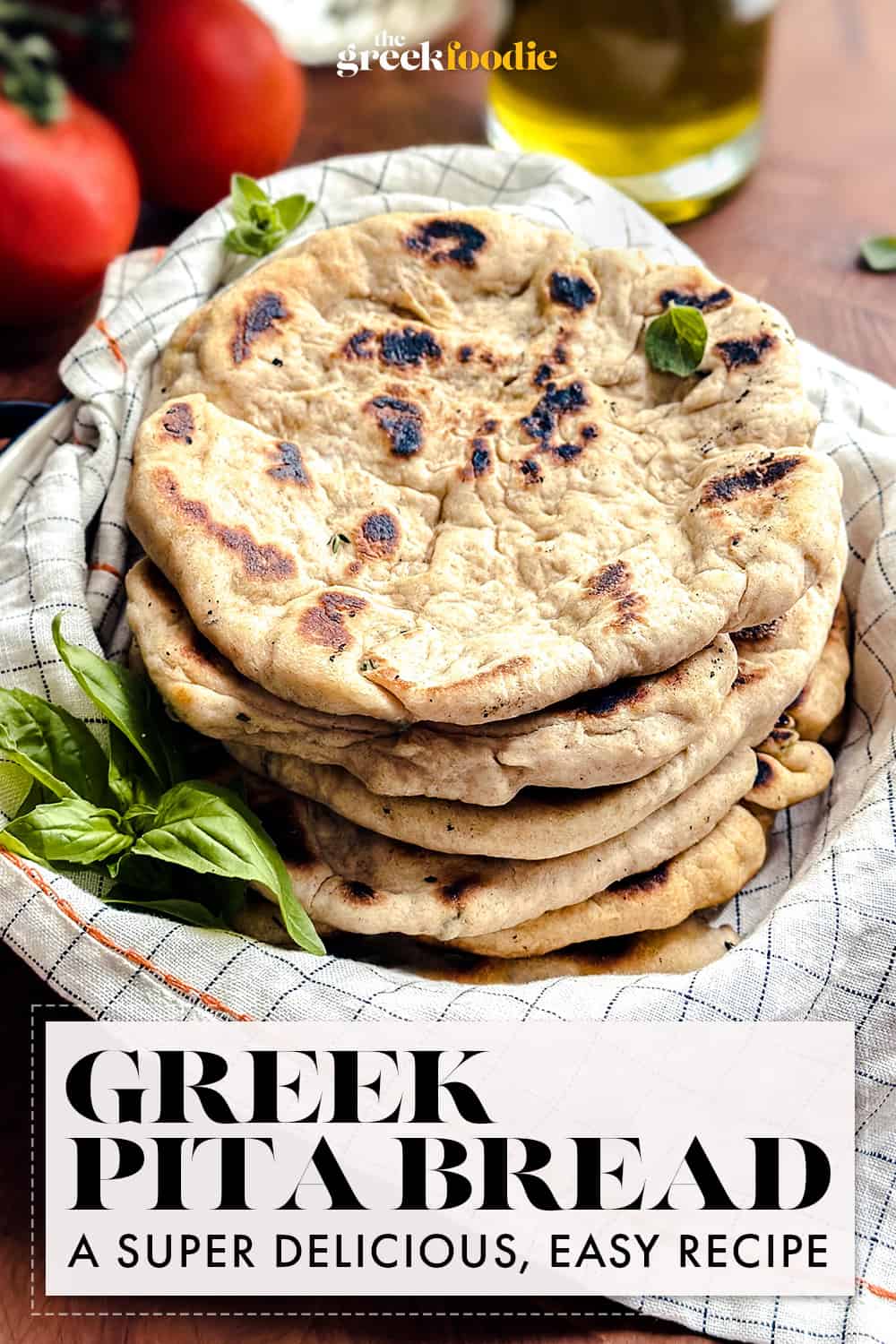

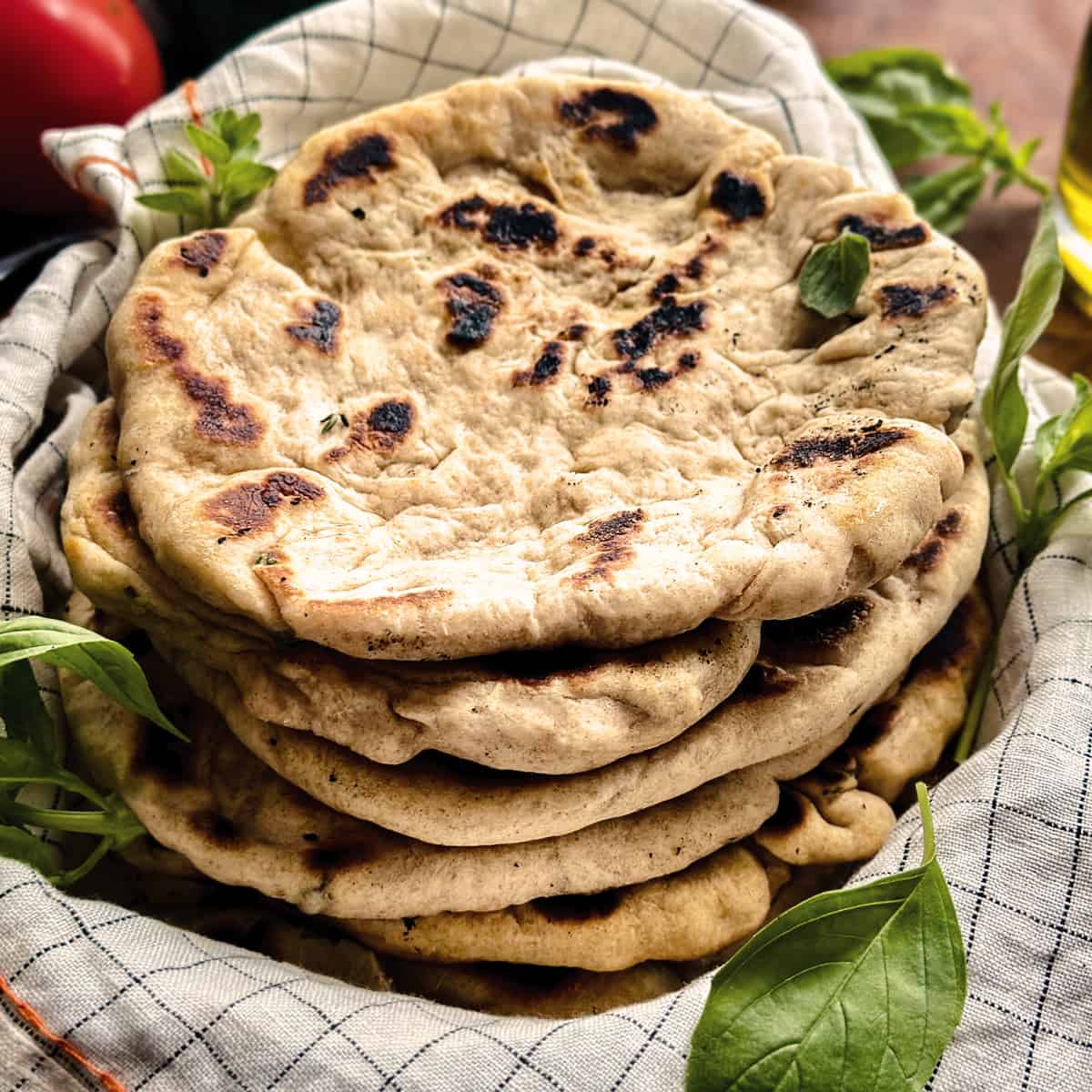
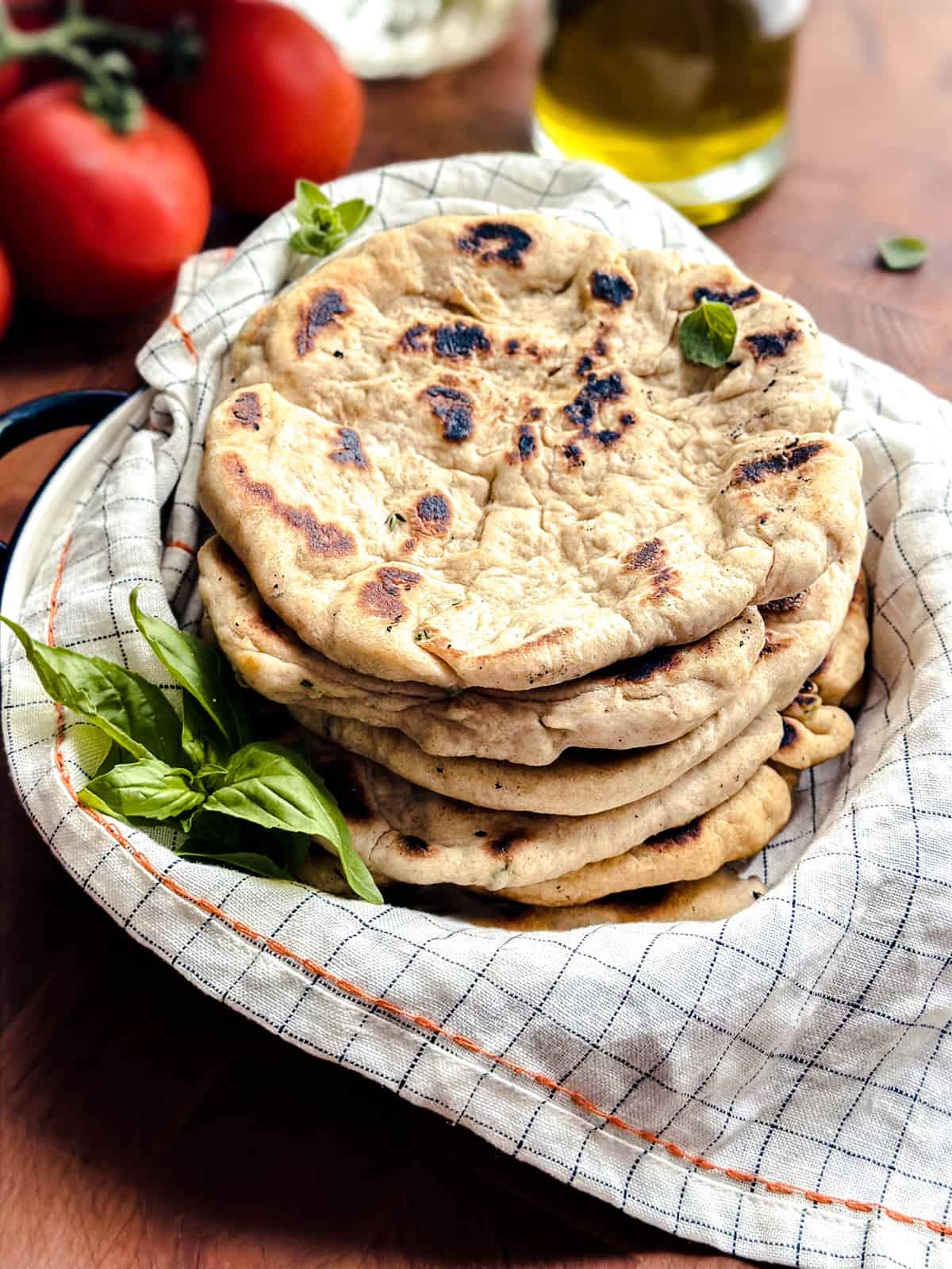
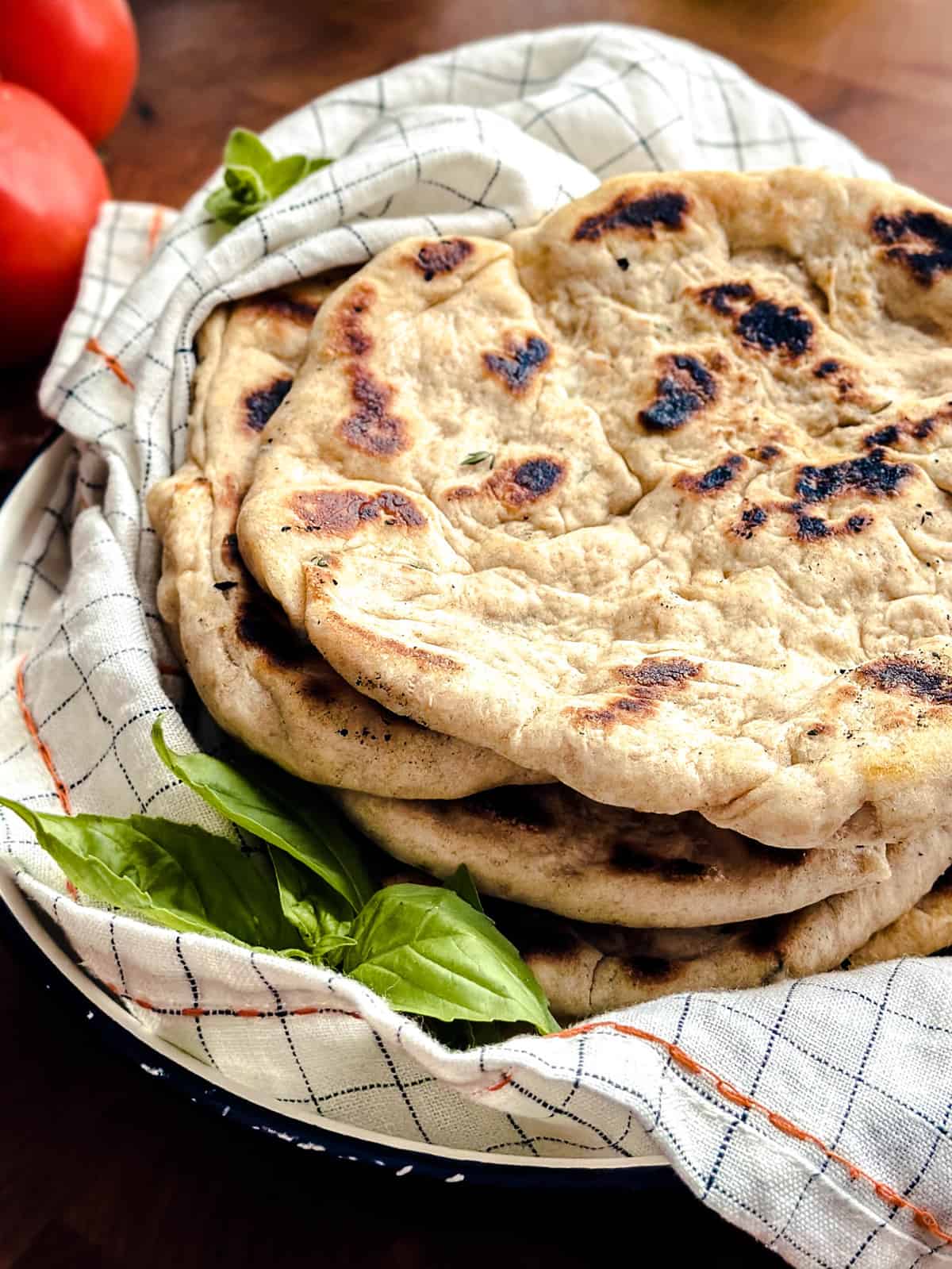
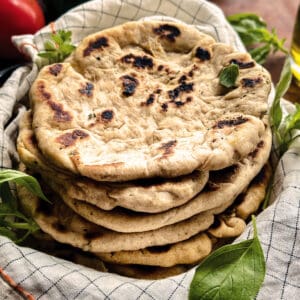
Greek pita bread is the soft, thick, pocketless pita bread wrapped around every souvlaki in Greece, and you can make it at home in a skillet in about an hour. It puffs a little in the hot pan, picks up a few charred spots, and stays soft enough to fold around gyros without cracking.
It’s the pita I get with a gyros at my local souvlaki shop in Athens, and the one I make at home when I want souvlaki night to taste like Greece. This Greek pita recipe needs flour, yeast, milk, olive oil and a little fresh thyme, no special equipment, and no oven.
If you love this Greek pita bread, you’ll also love my Greek souvlaki with pita, homemade pork gyros, Greek chicken souvlaki skewers and tzatziki chicken bowls.
What cooks say:
“OMG, this pita was sooooo yummy. I made it with my 10-year-old daughter this afternoon, and it was so easy, and the whole family absolutely loved it. Thank you!!”
Julie
Why you’ll love this pita bread
What is Greek pita bread?
Greek pita bread is a soft, round yeasted flatbread, about ½ inch thick, with no pocket. Most pita bread sold in American supermarkets is the Middle Eastern pocket style, baked very hot so it balloons and splits into two thin layers you can stuff. Greek pita stays in one soft layer, so you wrap fillings around it instead of putting them inside. That’s why it’s the bread for souvlaki and gyros.
In Greek it’s simply pita (πίτα). At a souvlaki shop you’ll hear pita gyro or pitakia. And because pita also means “pie” in Greek, the same word gives you spanakopita and tiropita. Context does the rest.
Is pita Greek?
The English word “pita” comes from Greek, but flatbreads like it are baked across the eastern Mediterranean and the Middle East, and every kitchen has its own version. The thick, pocketless, pan-cooked pita in this recipe is the Greek one.
Here is what you need
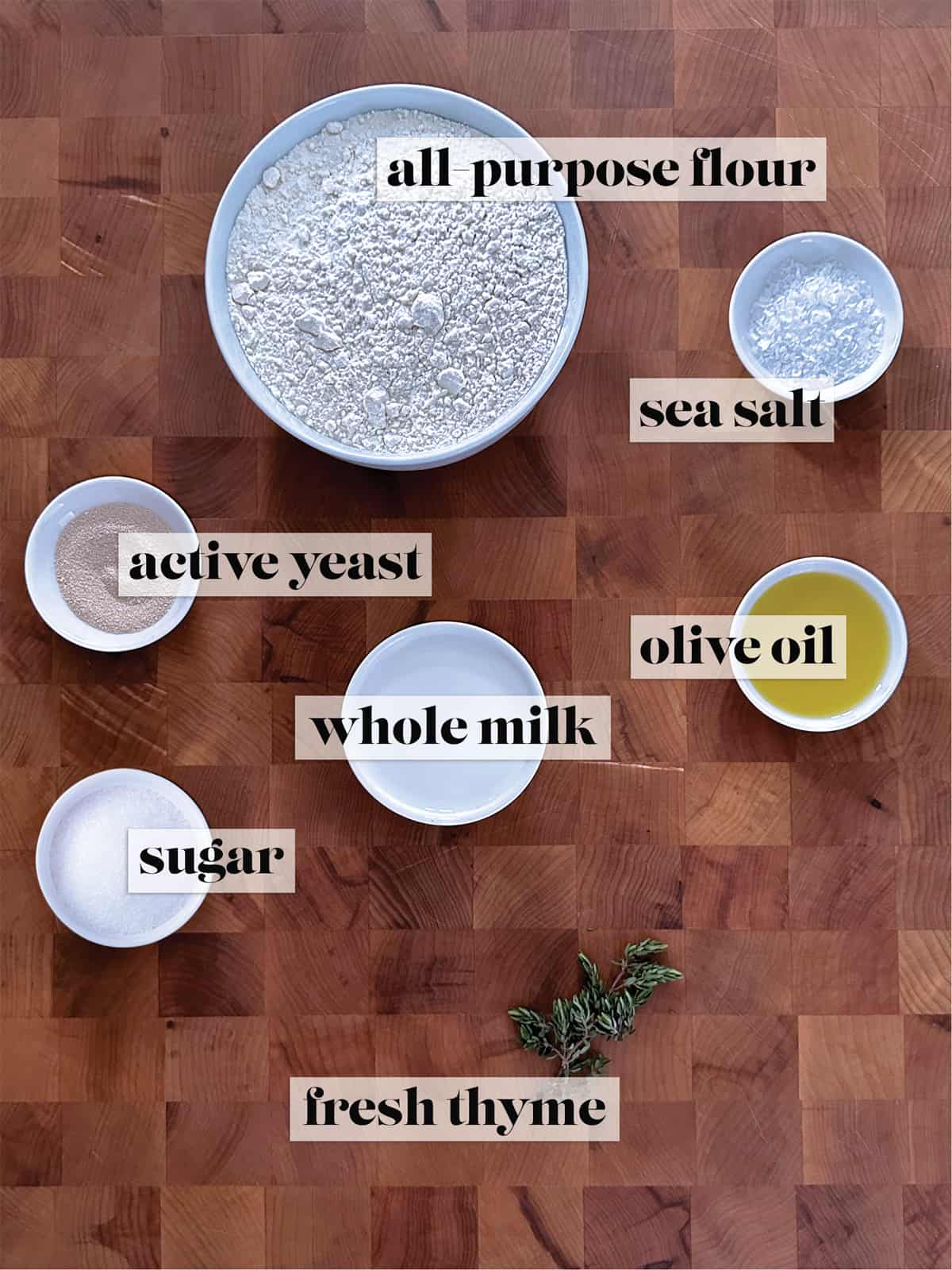
- All-purpose flour. Swap up to 1 cup for whole wheat flour for a nuttier pita.
- Active dry yeast. Instant yeast works too (see the FAQ).
- Lukewarm water and milk. I prefer whole milk for a softer pita; skim works, and plant milk makes the pita bread vegan.
- Sugar. White or brown, same result. It feeds the yeast.
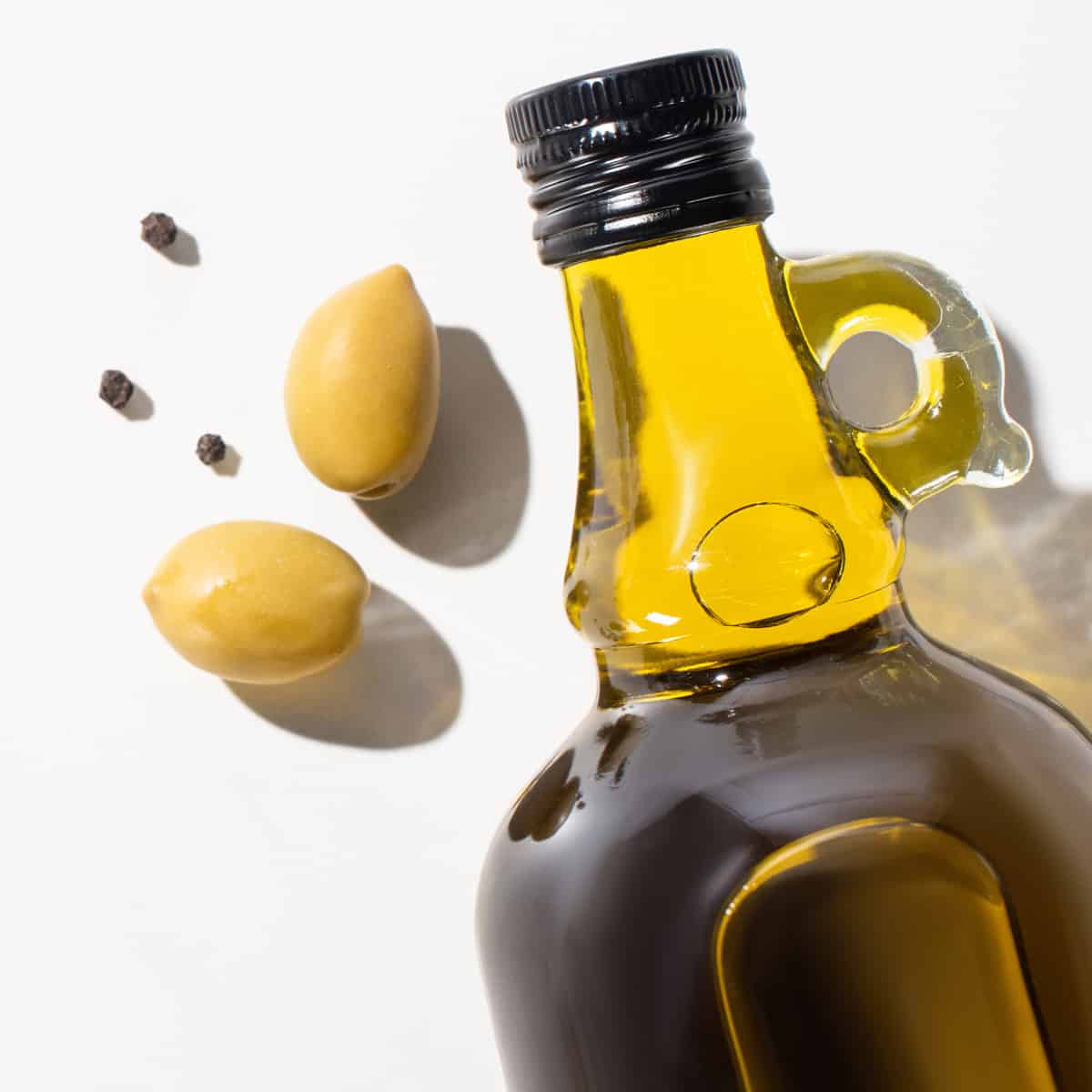
- Extra virgin olive oil. In the dough and in the pan.
- Kosher salt.
- Fresh thyme leaves. My touch. Swap in fresh oregano, or a pinch of dried thyme or oregano.
Step by step
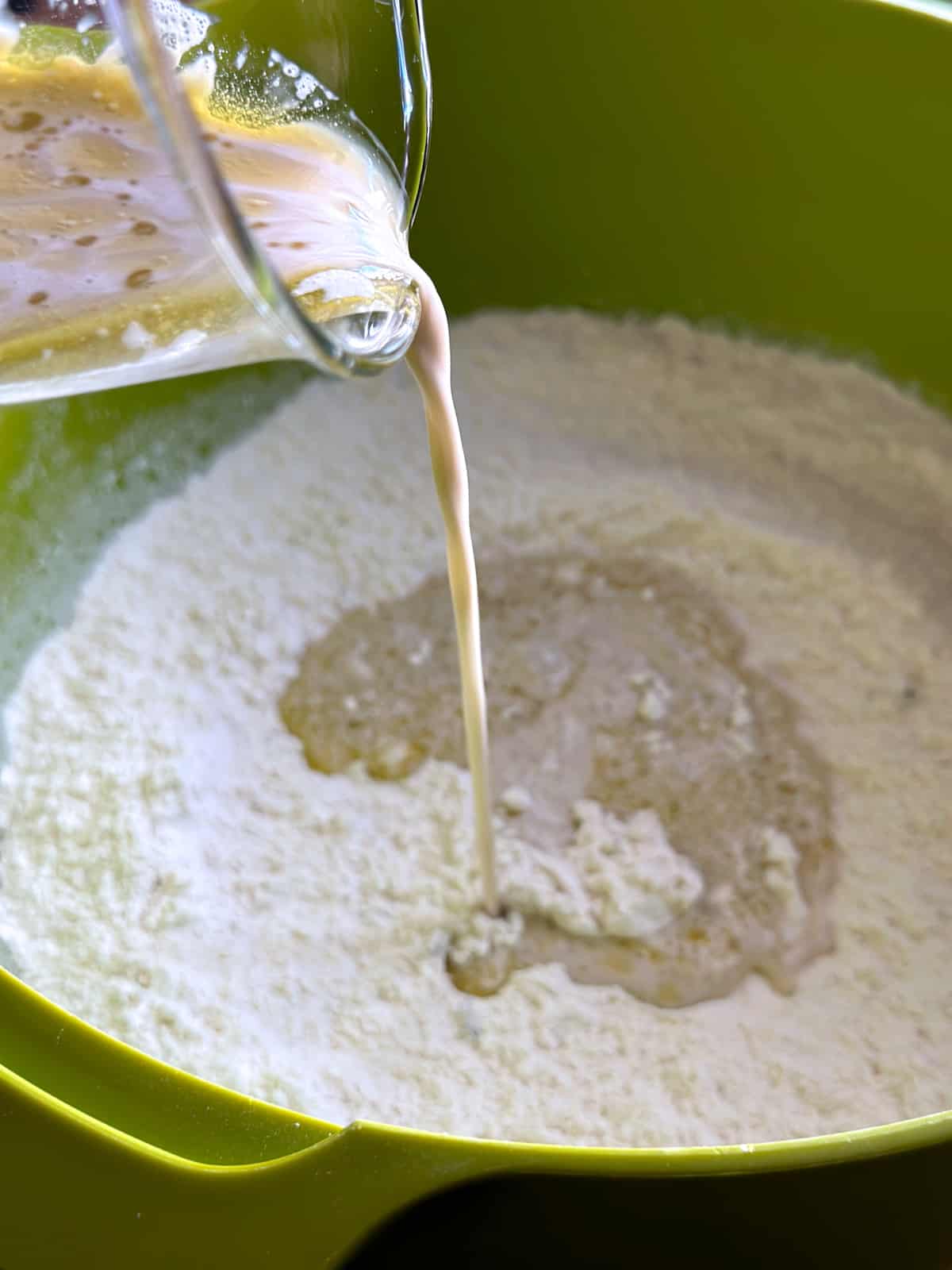
- Wake up the yeast. In a bowl or large cup, stir the sugar and yeast into the lukewarm water and milk. Set aside for 5 minutes, until foamy. Stir in the olive oil.
- Mix the dry ingredients. In a large bowl, combine the flour, salt and thyme.
- Make the dough. Pour the yeast mixture into the flour a little at a time, mixing after each addition, until a shaggy dough forms.
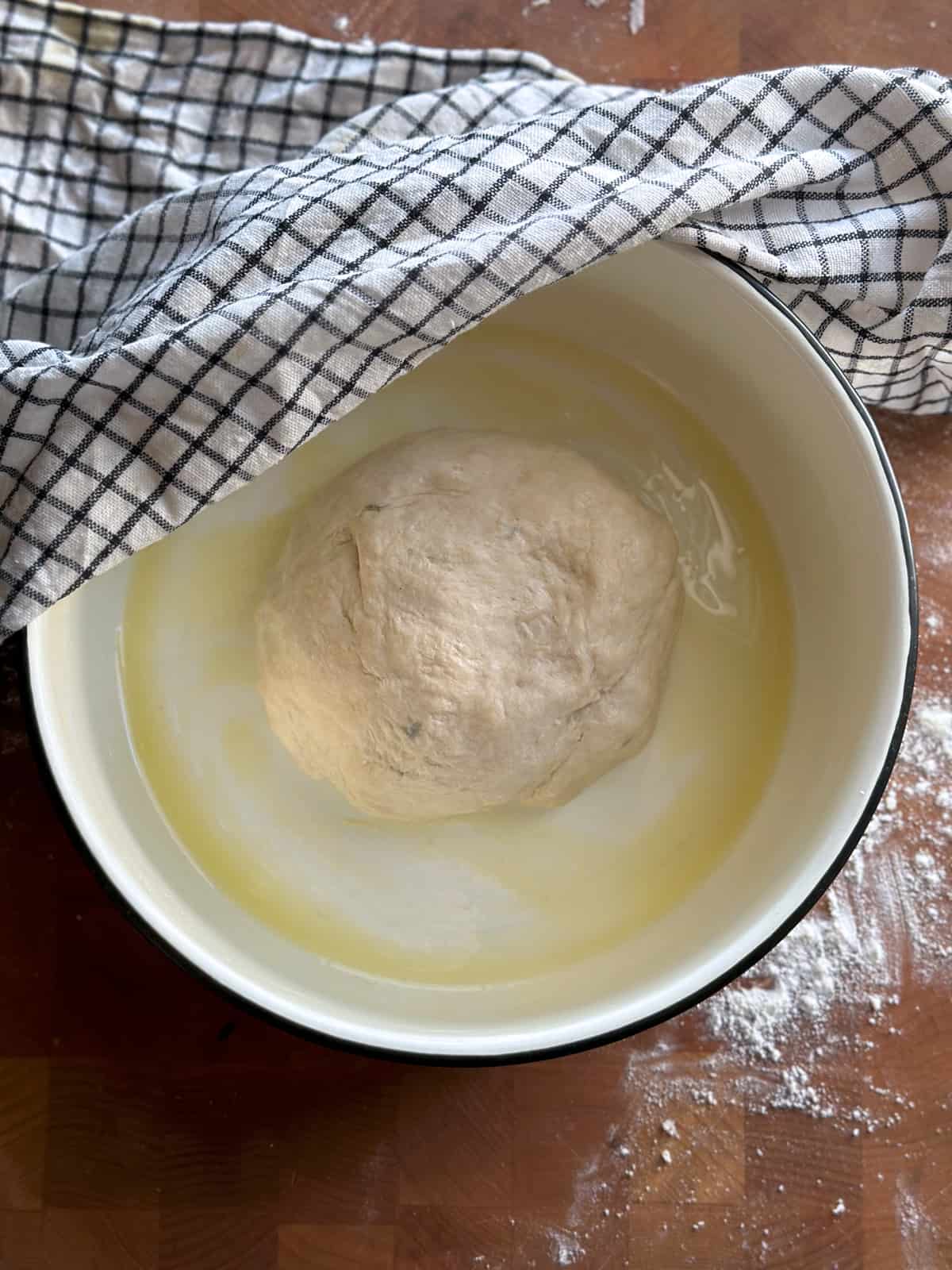
- Knead. Turn the dough out onto a lightly floured surface and knead for 4–5 minutes, until smooth and soft.
- Let it rise. Brush a clean bowl with olive oil, add the dough and turn it to coat.
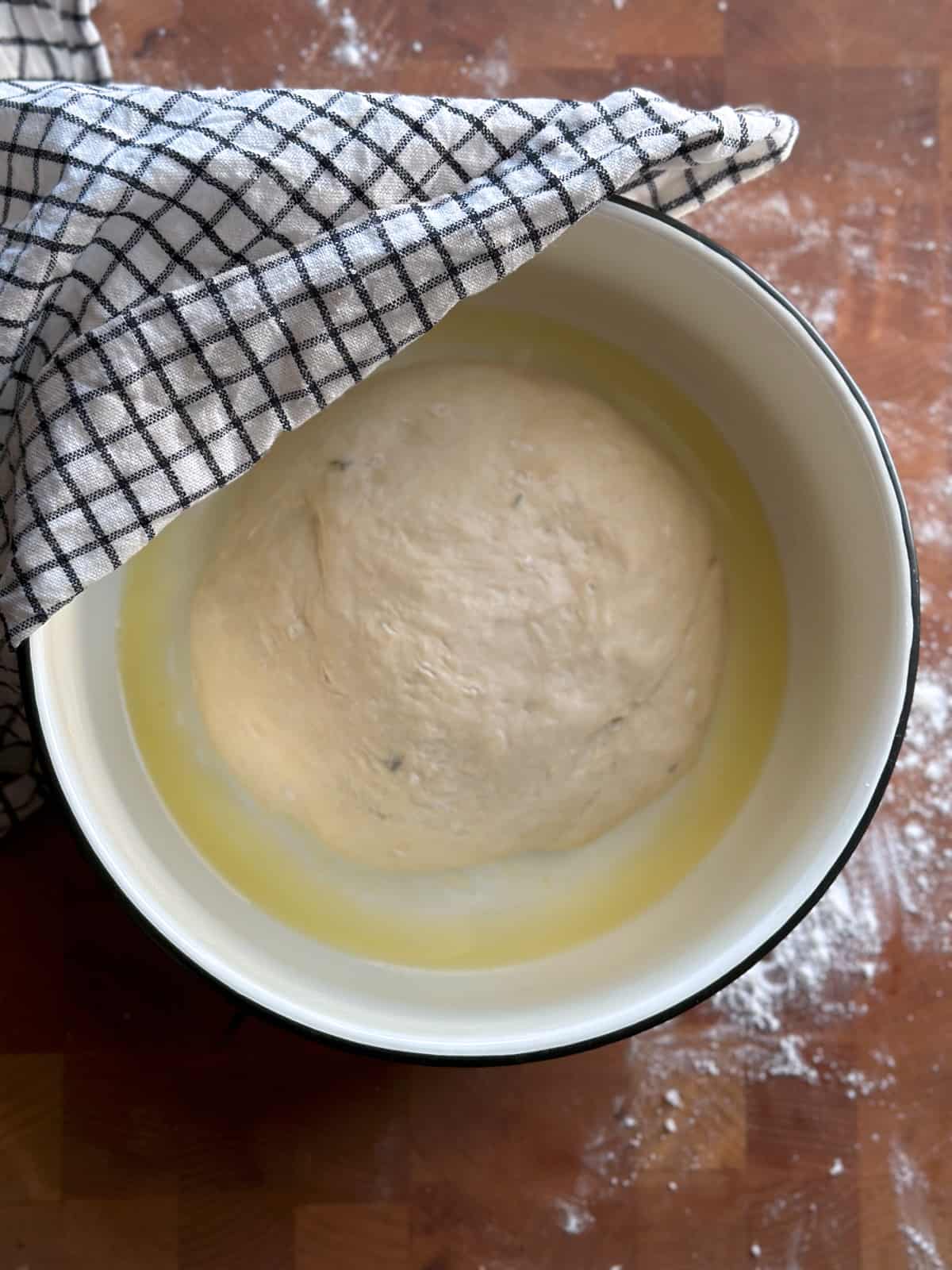
- Cover with a damp, warm towel and let it rise in a warm spot for 40 minutes to an hour, until doubled.
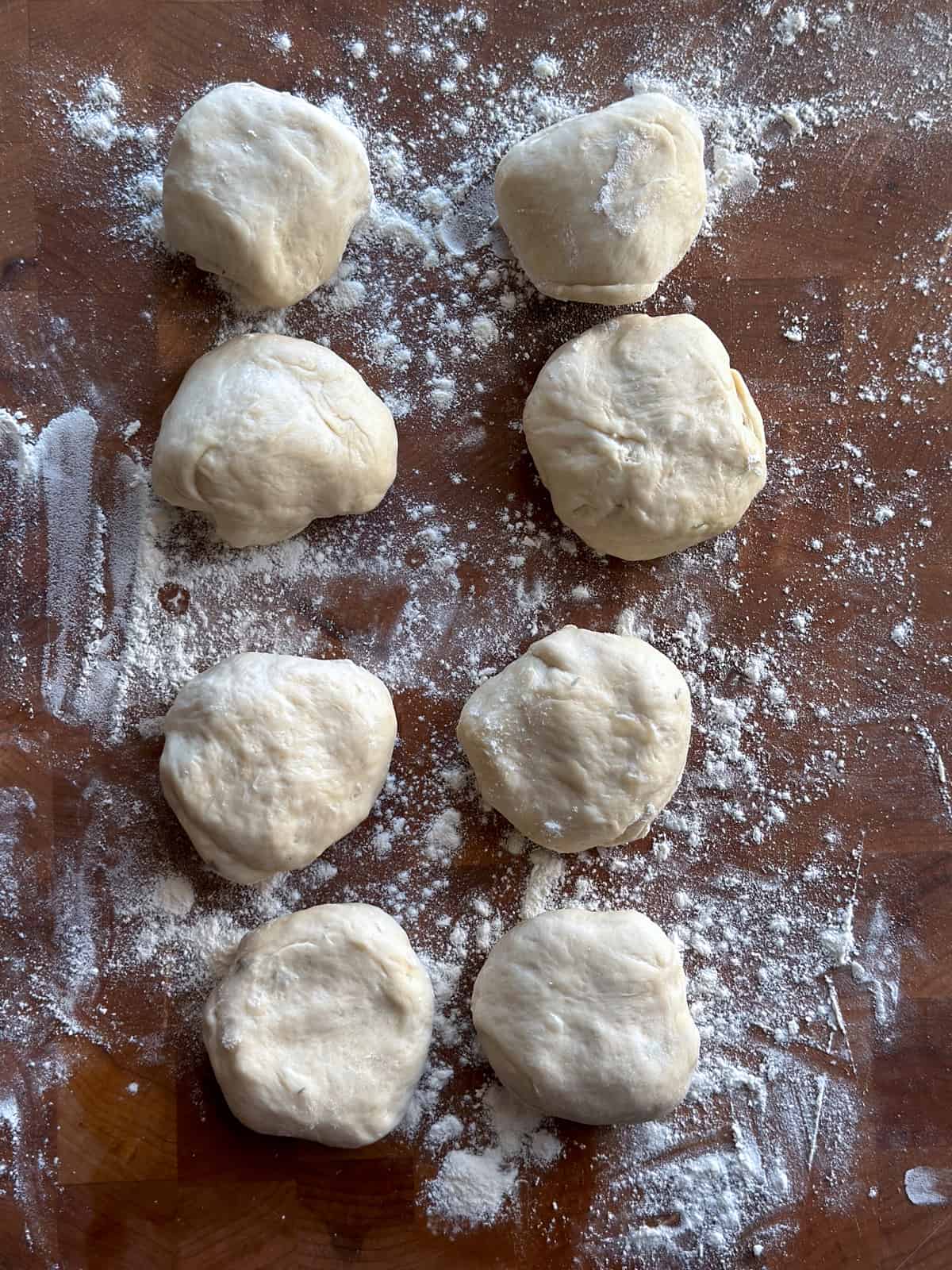
- Divide and shape. Cut the dough into 8 equal pieces and roll each into a ball.
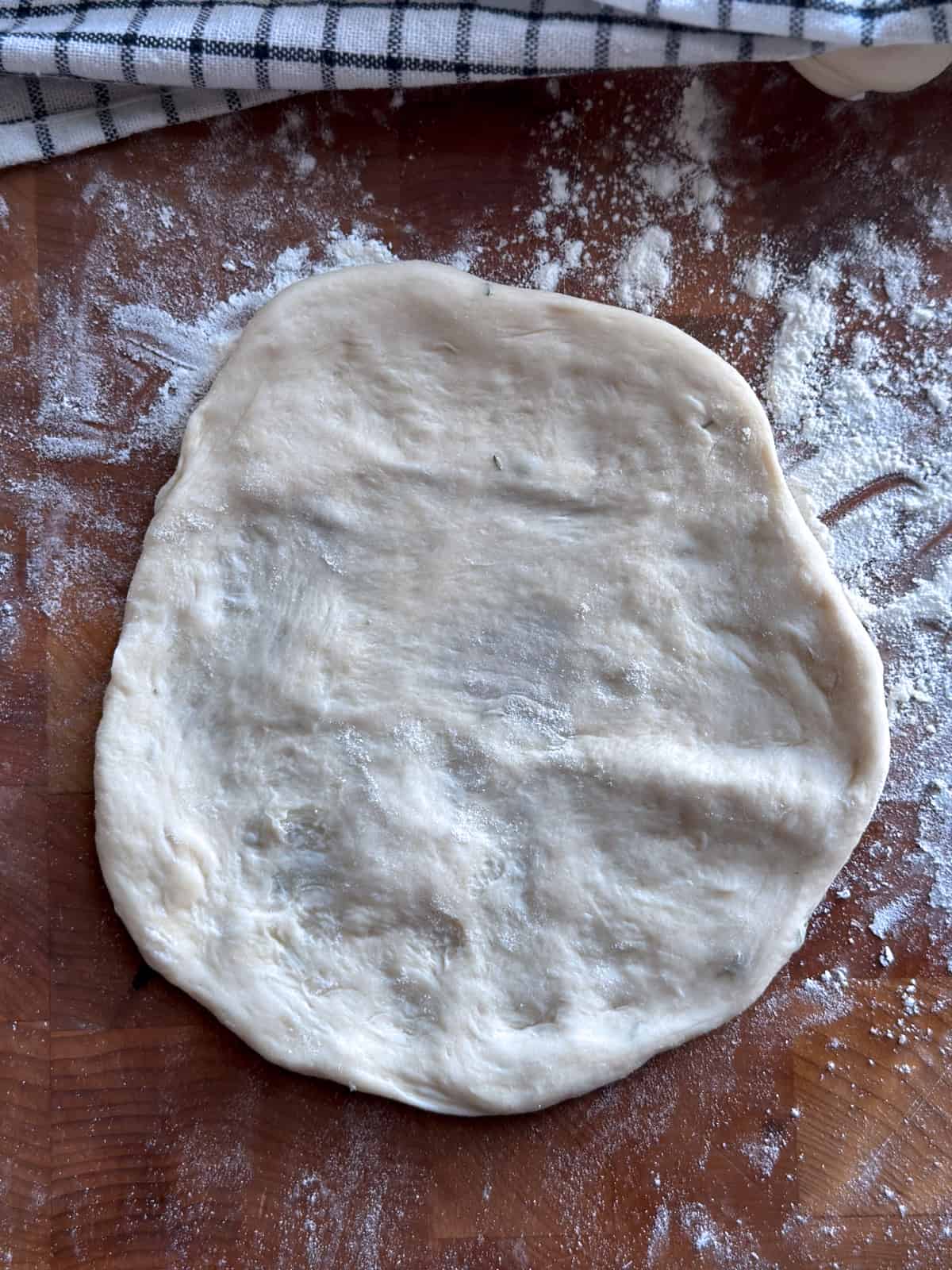
- Flatten each ball, then gently stretch it with your hands into a 7–8 inch round, like a small pizza.
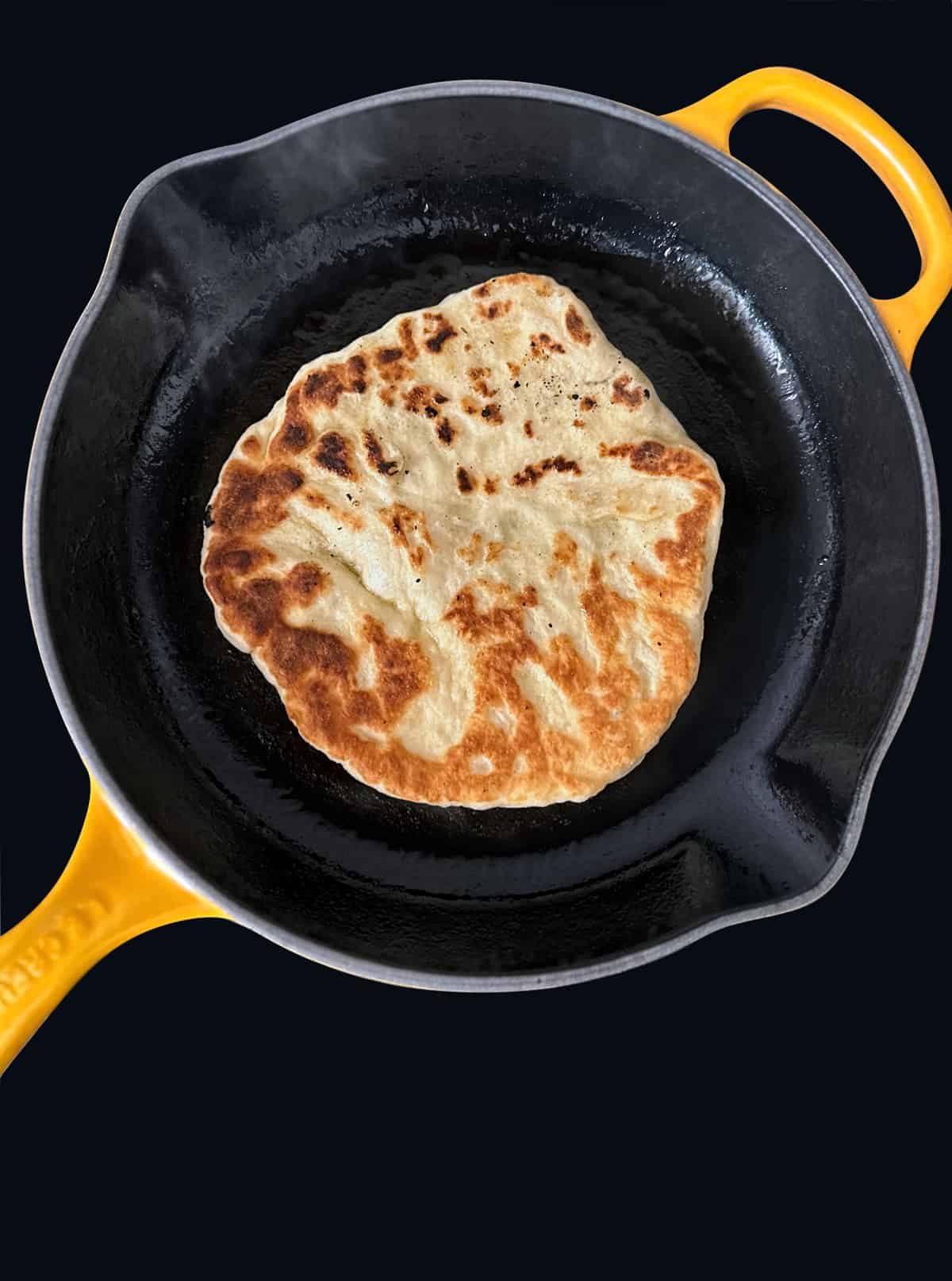
- Cook. Heat a cast-iron skillet over high heat and add 1 teaspoon olive oil. Cook one pita at a time for about 1 minute per side, until it puffs a little and browns in spots. Add a little oil every one or two pitas. A few charred patches add flavor.
- Keep them soft. Stack the cooked pitas in a clean kitchen towel as you go. The trapped steam keeps them soft and foldable.
On the grill: brush the pitas with a little olive oil and grill for about a minute per side.
Tips for soft Greek pita bread
- Stretch, don’t roll. Stretching by hand keeps air in the dough and gives you a fluffier pita. A rolling pin presses it out.
- Get the pan hot. A properly hot skillet makes the pita puff and blister in a minute. Too cool and it dries out before it browns.
- Don’t skip the towel. Pita stacked under a towel stays soft for wrapping; pita left out on a rack firms up.
- Make a double batch. Pita bread freezes well, so you’ll always have some for souvlaki night.
Pita bread for gyros, souvlaki and dips
- Gyros and souvlaki. Wrap warm pita around pork gyros, chicken gyro or souvlaki with tzatziki, tomato and onion, the way it’s done at every souvlaki shop in Greece. Wrap it in parchment to keep it together.
- Meze and dips. Cut pita into wedges for tzatziki, tirokafteri (spicy whipped feta) or melitzanosalata, or set it out on a Greek grazing board.
- Bowls. Tear warm pita over a chicken gyro bowl or grilled chicken bowl with tzatziki.
- Pita pizza. Top with cheese and bake for one of my easy pita pizzas.
- Crispy pita. Brush with olive oil, sprinkle with oregano and sea salt, and toast in a dry skillet until crisp. Serve with a horiatiki salad.
Storage and leftovers
- Room temperature: wrap tightly in foil or a zip-top bag and keep for 2–3 days, away from heat and moisture.
- Fridge: up to 5–6 days in an airtight bag. The fridge dries pita out a little, so always warm it before serving.
- Freezer: stack with parchment between each pita, wrap in plastic or foil, then seal in a freezer bag. Keeps for up to 3 months.
- Reheat: in a dry skillet for 30–60 seconds per side (my favorite), or wrapped in foil in a 350°F / 175°C oven for 5–7 minutes.

Greek pita bread FAQ
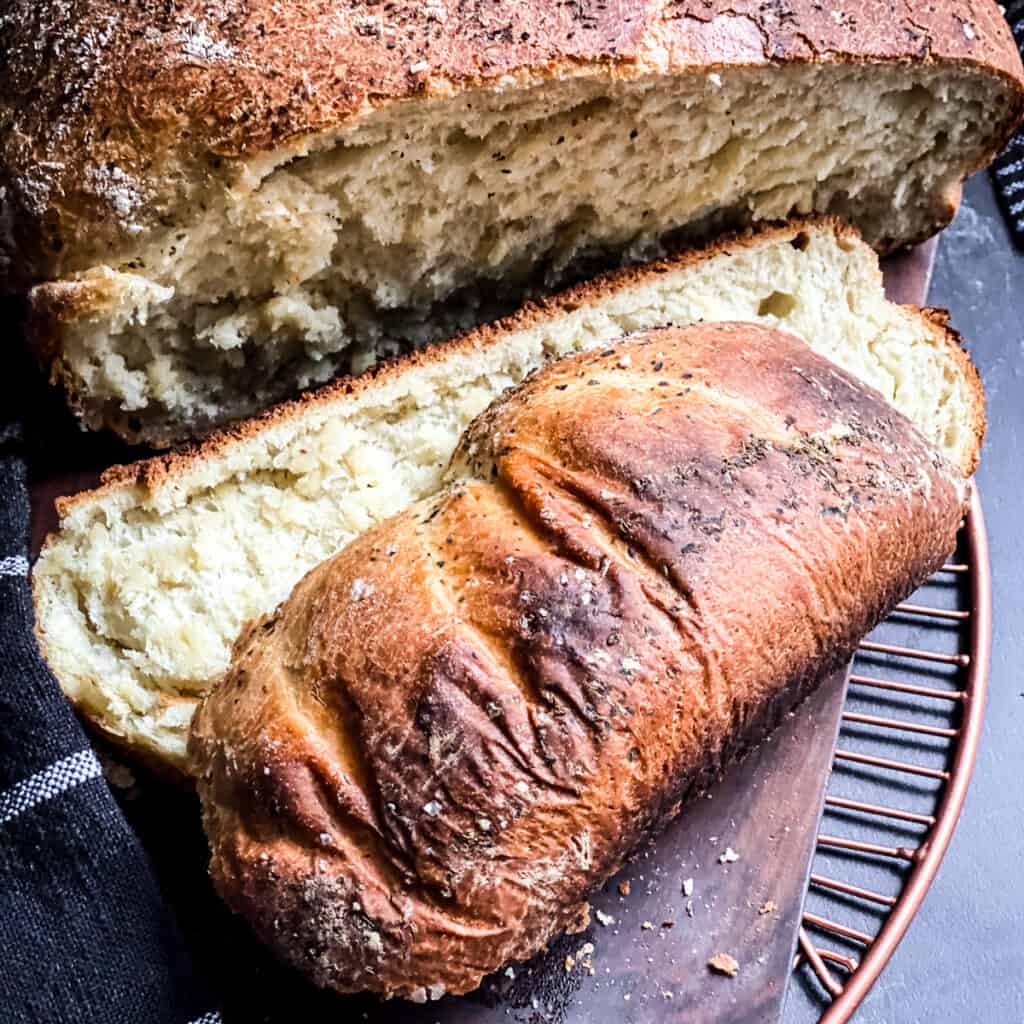
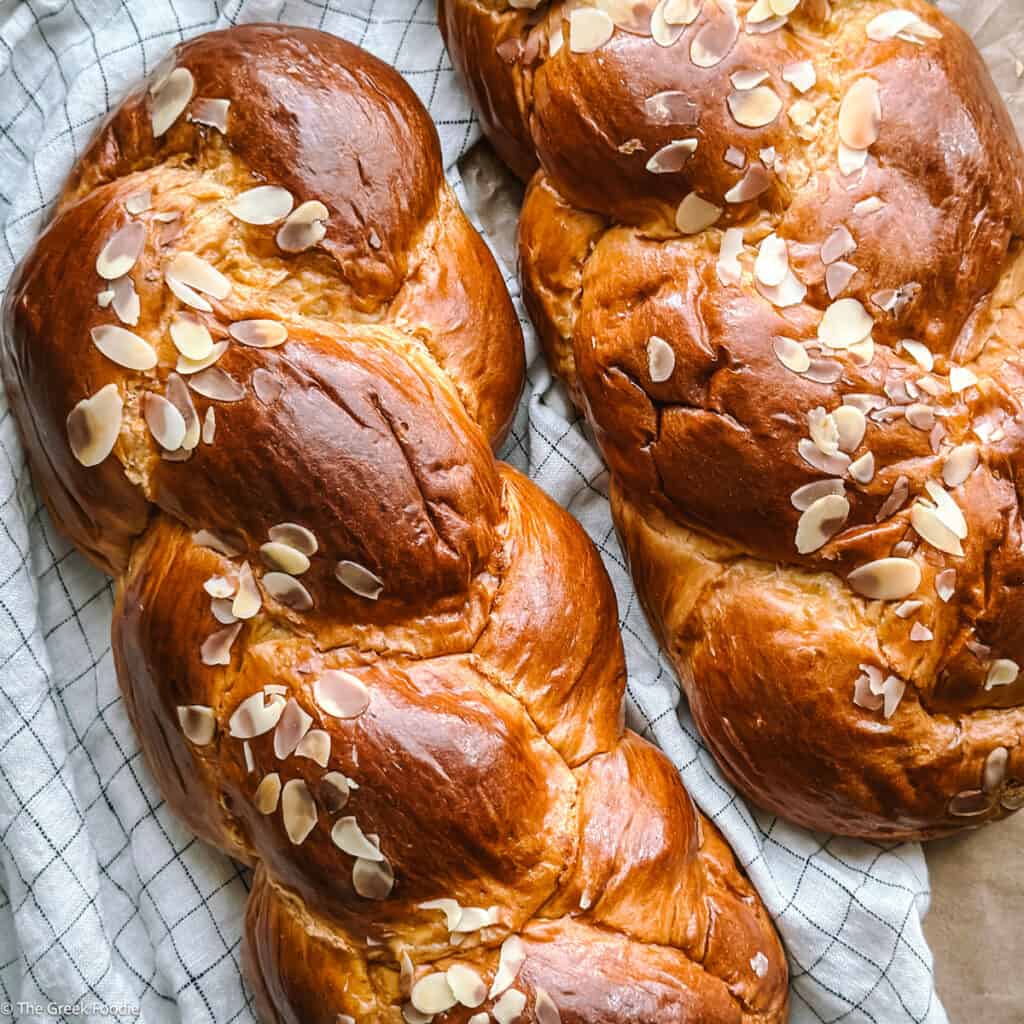
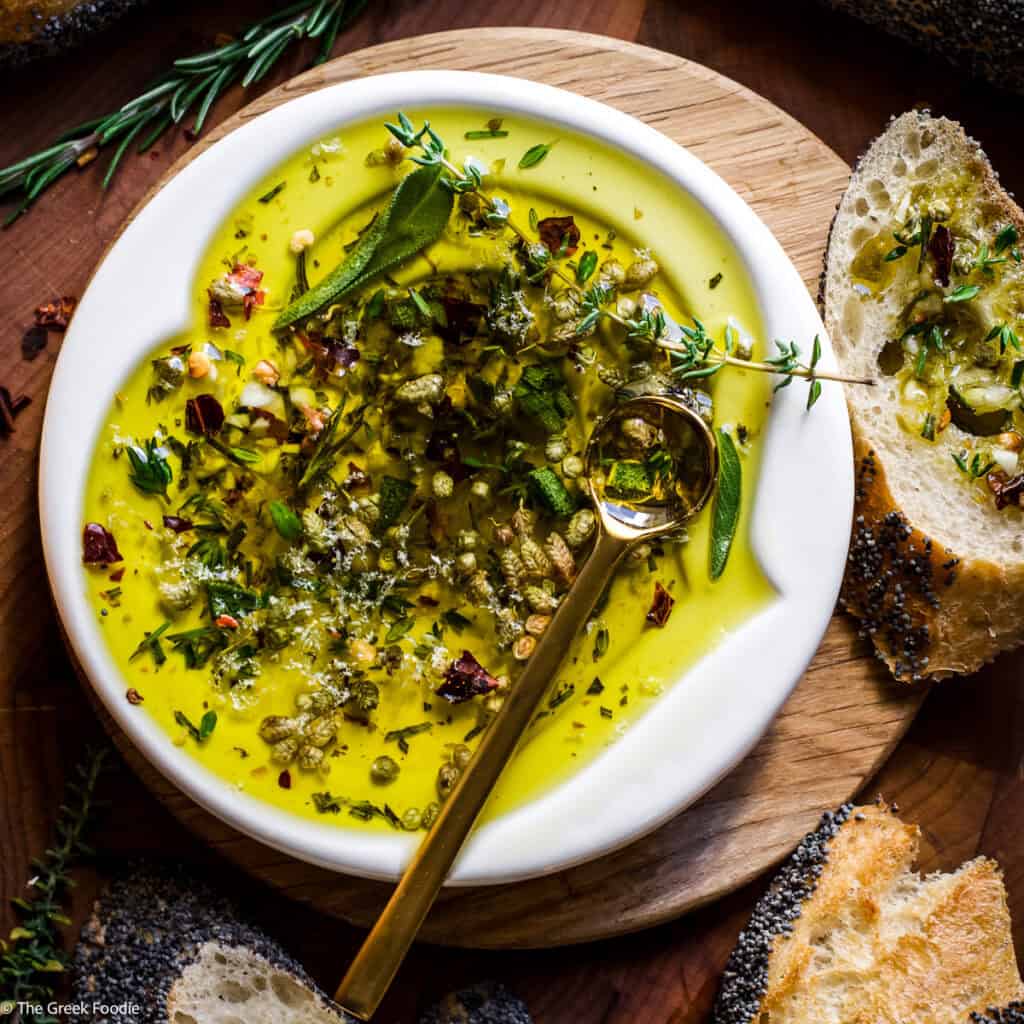
More Greek breads

Cooked it? Rate it!
If you tried this recipe, I’d love to know how you liked it — drop a comment below or tag me on Instagram @thegreekfoodie__.


Greek Pita Bread
Equipment
- Cast iron pan
- 2 medium-large bowls
Ingredients
- 2 ½ cups all purpose flour, (315 g)
- 1 teaspoon kosher salt
- 1 teaspoon fresh thyme leaves, finely chopped
For the yeast mixture
- 2 teaspoons active dry yeast
- 1 teaspoon sugar
- 1/2 cup lukewarm water, (120 ml)
- 1/4 cup lukewarm milk, (60 ml)
- 2 tablespoons extra virgin olive oil , (30 ml)
You will also need
- extra virgin olive oil, for the bowl and the pan
- all purpose flour, for the work surface
Instructions
- Combine the sugar, yeast, lukewarm water, and milk in a bowl. Set aside for 5 minutes, until foamy. Stir in the olive oil.
- In a large bowl, combine the flour, salt and thyme.
- Gradually add the yeast mixture to the flour, mixing after each addition, until a dough forms.
- Turn the dough out onto a lightly floured surface and knead for 4–5 minutes, until smooth.
- Brush a bowl with olive oil, add the dough and turn to coat. Cover with a damp towel and let rise in a warm spot for 40 minutes to 1 hour, until doubled.
- Cut the dough into 8 equal pieces and shape each into a ball. (new step)
- Flatten each ball and gently stretch it with your hands into a 7–8 inch round.
- Heat a cast-iron skillet over high heat and add 1 teaspoon olive oil.
- Cook one pita at a time for about 1 minute per side, until it puffs slightly and browns in spots. Add a little oil after every 1–2 pitas. Stack the cooked pitas in a clean kitchen towel to keep them soft.
Notes
- Herbs: no fresh thyme? Use fresh oregano or sage, or a pinch of dried oregano, thyme, Italian seasoning or herbes de Provence. (fixes “herbs de Provence”)
- Instant yeast: use 1½ teaspoons and add it straight to the flour; no proofing needed.
- Whole wheat: swap up to 1 cup of the flour for whole wheat flour.
- Vegan: use plant milk.
- On the grill: brush the pitas with olive oil and grill for about a minute per side.
- Storage: room temperature 2–3 days, freezer up to 3 months. Reheat in a dry skillet.
Nutrition