

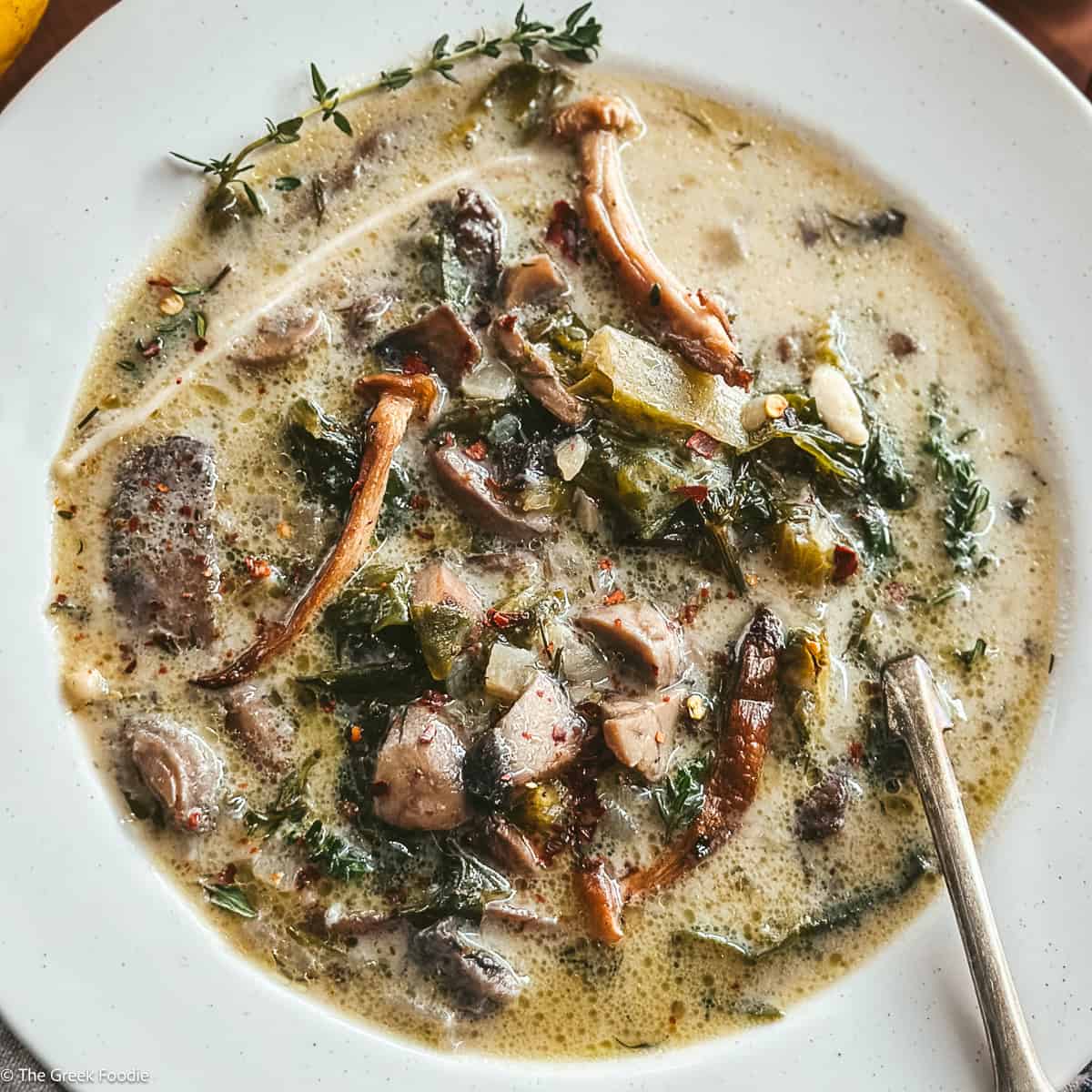
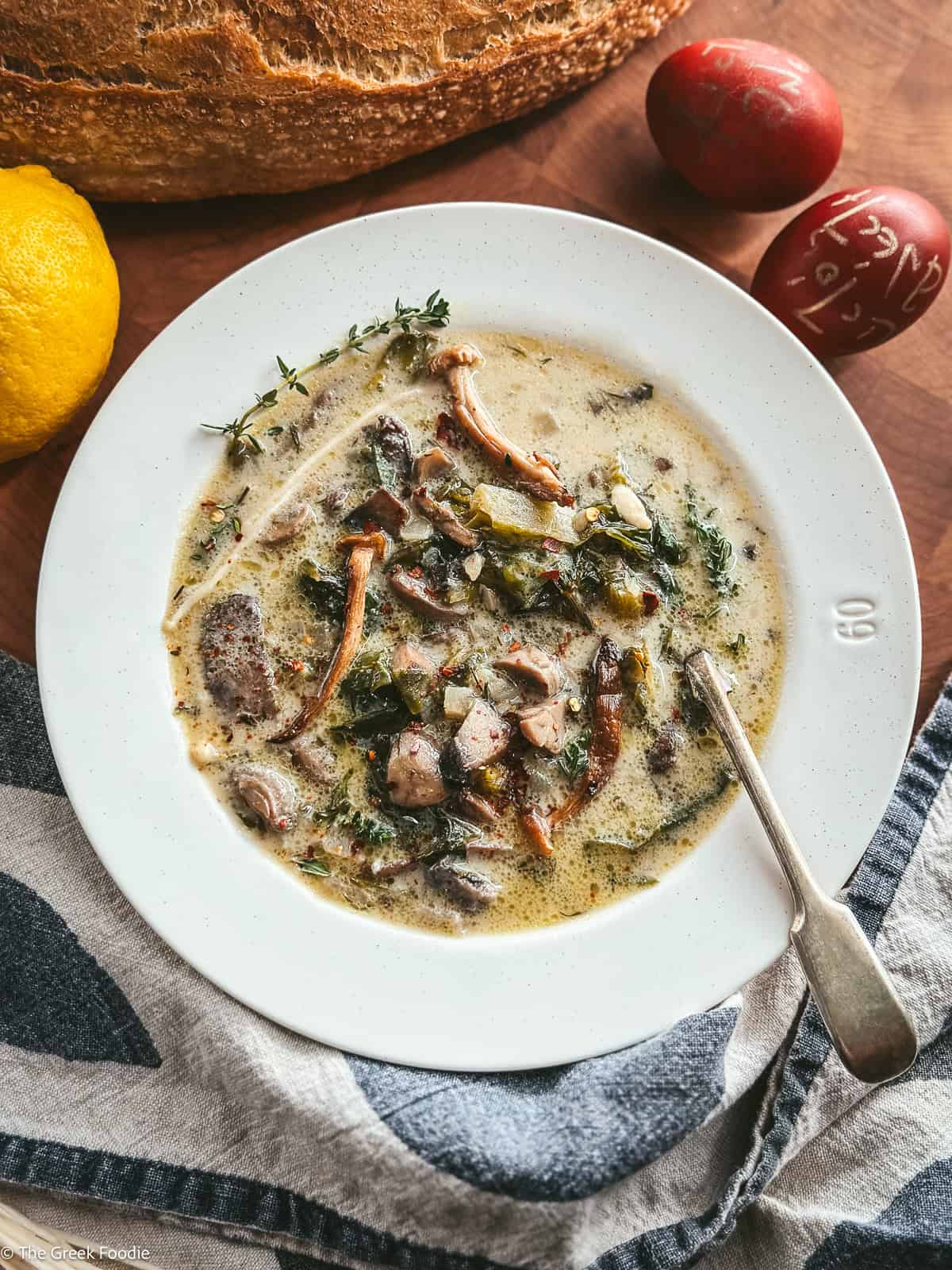
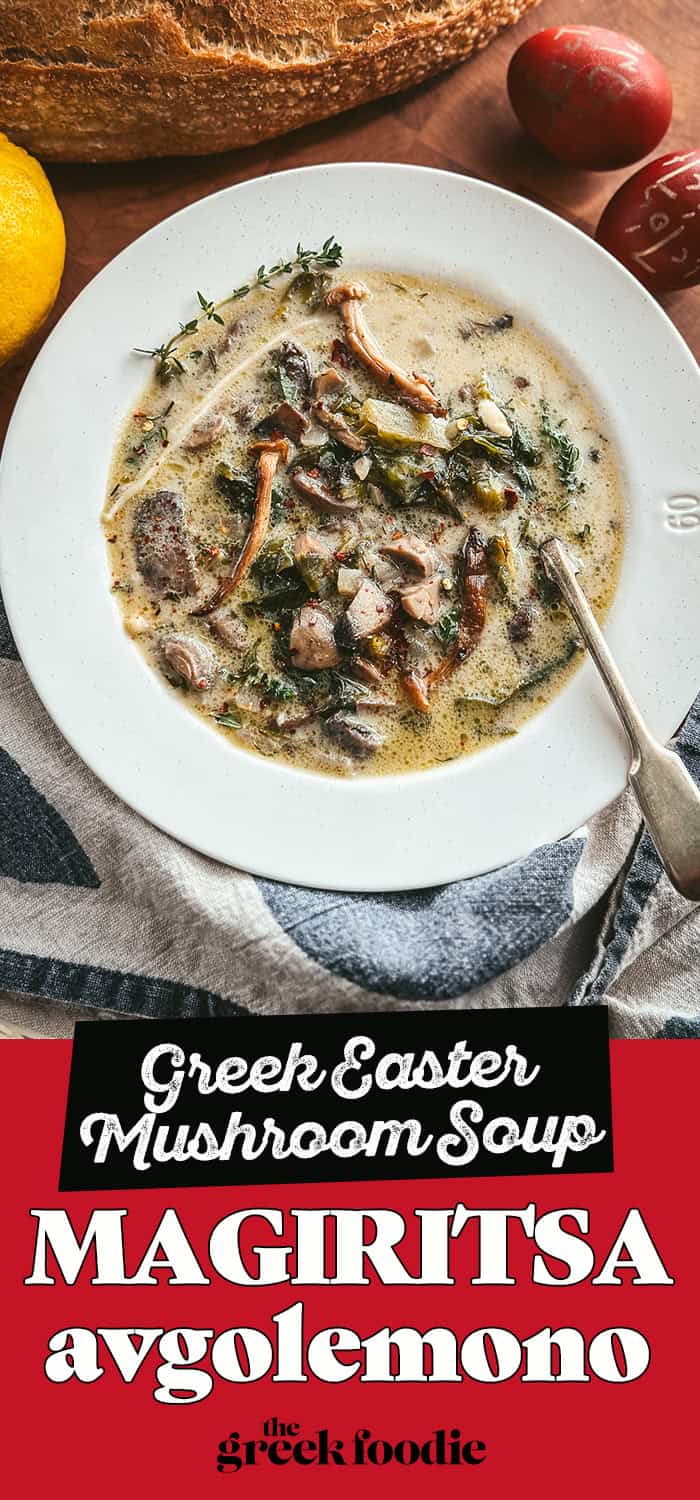
Every Greek Easter table has a pot of magiritsa waiting after midnight liturgy — the soup that breaks the Lenten fast. Traditionally made with lamb offal, it’s deeply savory, lemony, and warming in the way only a soup eaten at 1 am after church can be.
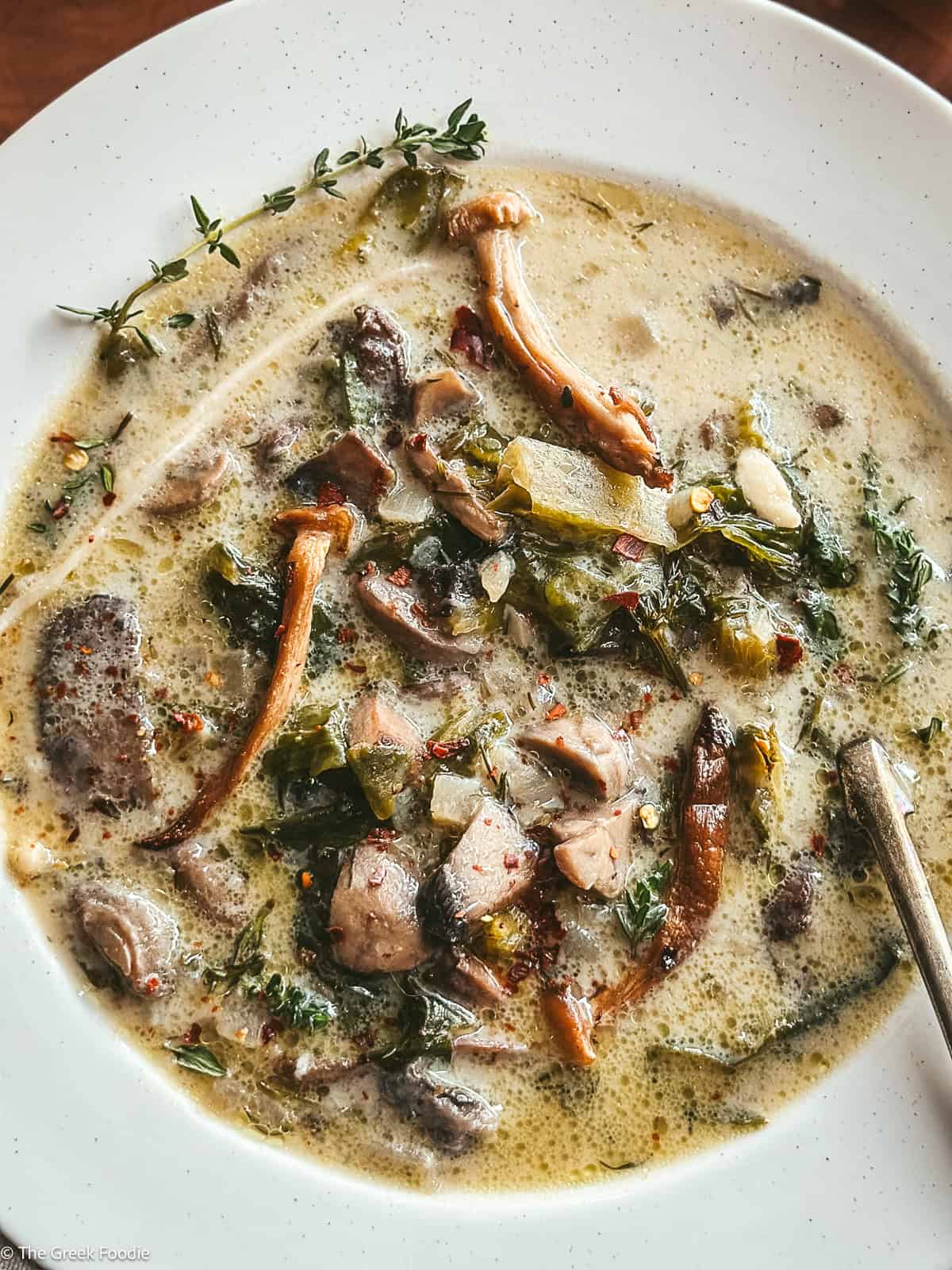
This version skips the offal and goes all-in on mushrooms. Not as a compromise — as a genuine choice. A mix of white mushrooms, portobello, oyster, shimeji, and enoki gives you layers of earthy, smoky, and faintly floral flavor that hold up beautifully to the avgolemono finish. No cream anywhere. Just eggs, lemon, and a good long simmer.
It’s the magiritsa I’d make for anyone at the Easter table who doesn’t eat meat, and honestly, one I’d make any time I want a bowl of something deeply satisfying and a little special.
Looking for fresh summer dinner ideas? Check out our 17 Mediterranean Summer Recipes — light, flavorful dishes that don’t require a grill, perfect for easy weeknight meals all season long.
Why you will love this magiritsa soup
If the avgolemono finish won you over completely, you need to try Youvarlakia soup — tender beef and rice meatballs simmered in broth and finished with that same silky egg-lemon sauce. One of the most beloved soups in the Greek home kitchen, and for very good reason.
Ingredient notes
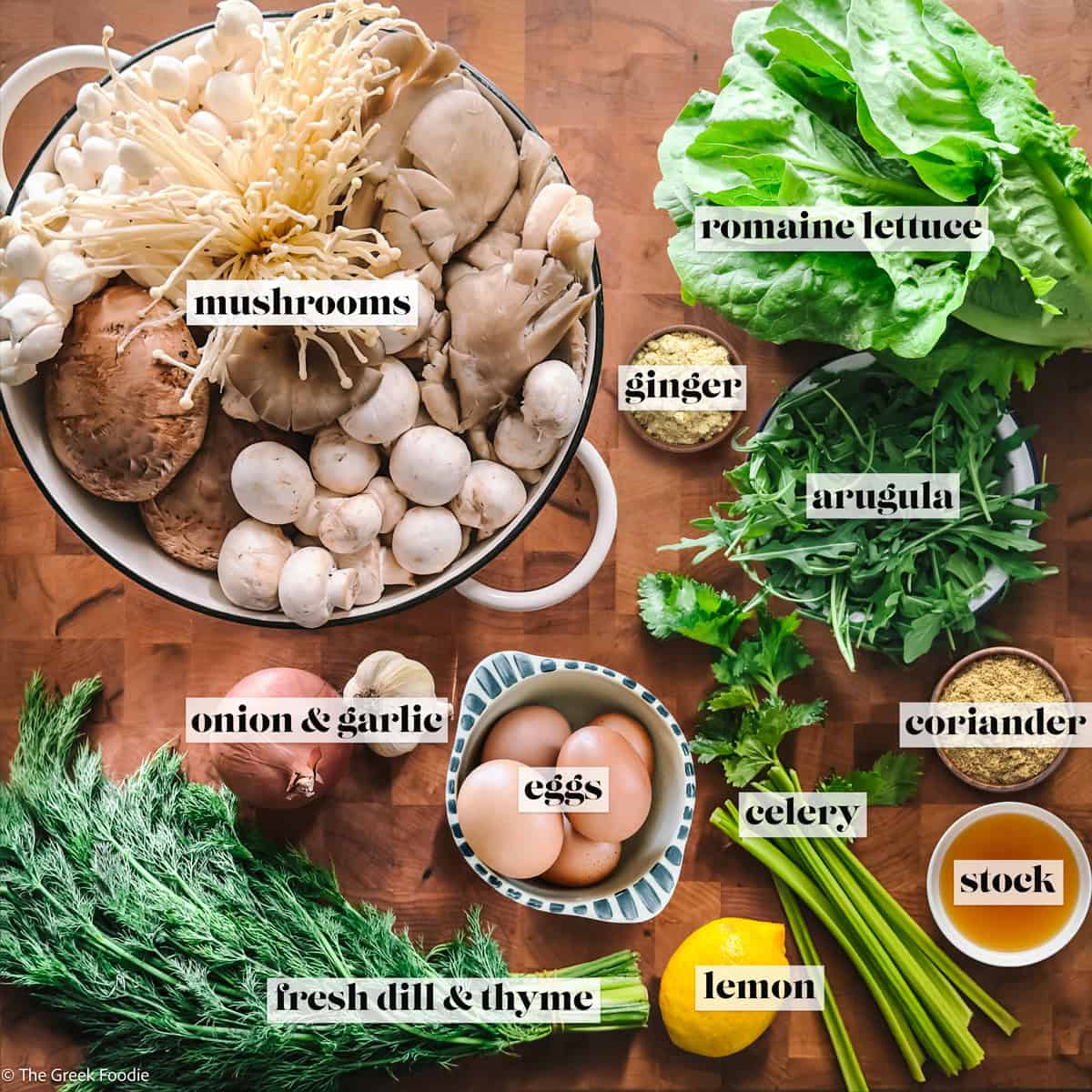
The mushrooms – The mix is what makes this soup. White button mushrooms are your workhorse base — mild and meaty. Portobello adds deep, savory richness. Oyster mushrooms bring a delicate texture and absorb the broth beautifully. Shimeji mushrooms have a distinctive shape and a subtle, slightly smoky, nutty aroma — sauté them separately and add them at serving for texture and a beautiful finish. Enoki are mild, and earthy with a crisp, crunchy texture when cooked — they go in at the very last minute, straight into the hot broth. If you can only find two or three varieties, that’s fine — just make up the total weight with what you have.
Romaine lettuce – This is the traditional magiritsa green — and it belongs here. Use a whole head, chopped roughly. It wilts down significantly, so don’t be shy with it. It adds a gentle, slightly sweet note. Add it at the end with the arugula and dill — it only needs the residual heat of the broth.
Stock – Use a good quality stock; a weak or overly salty one will affect the final flavor. Homemade is ideal but a good store-bought works perfectly.
Celery – Often overlooked but important. It adds a quiet savory note that rounds out the onion and garlic without announcing itself.
Thyme and a bay leaf – Fresh thyme is ideal, but dried works well.
Ground ginger and coriander – A subtle but deliberate addition. For a gentle warmth that plays well with the mushrooms and the lemon.
Arugula – This is where the recipe departs from the traditional magiritsa greens (usually romaine and dill). Arugula brings a peppery bite that holds its own against the earthiness of the mushrooms. Add it at the very end — it only needs the residual heat of the broth.
Fresh dill – Dill is one of the defining herbs of traditional magiritsa and it belongs here. It goes in at the very end with the arugula — just enough heat to wilt it slightly and release its fragrance without cooking off the flavor. Save a few fronds for garnish. Dried dill won’t give you the same result here; fresh is worth it.
Eggs and lemon — the avgolemono – Use the best eggs you can find. Free-range or organic eggs have richer yolks and make a noticeably more golden, silky avgolemono. The lemon quantity is up to you — start with one and taste. The brightness should lift the soup without overpowering it.
Looking for a hearty vegetarian soup beyond magiritsa? Greek Lentil Soup (Fakes) is the one to bookmark. Earthy, nourishing, and made almost entirely from pantry staples — lentils, olive oil, vegetables, and herbs. One pot, no fuss, deeply satisfying.
Step by step
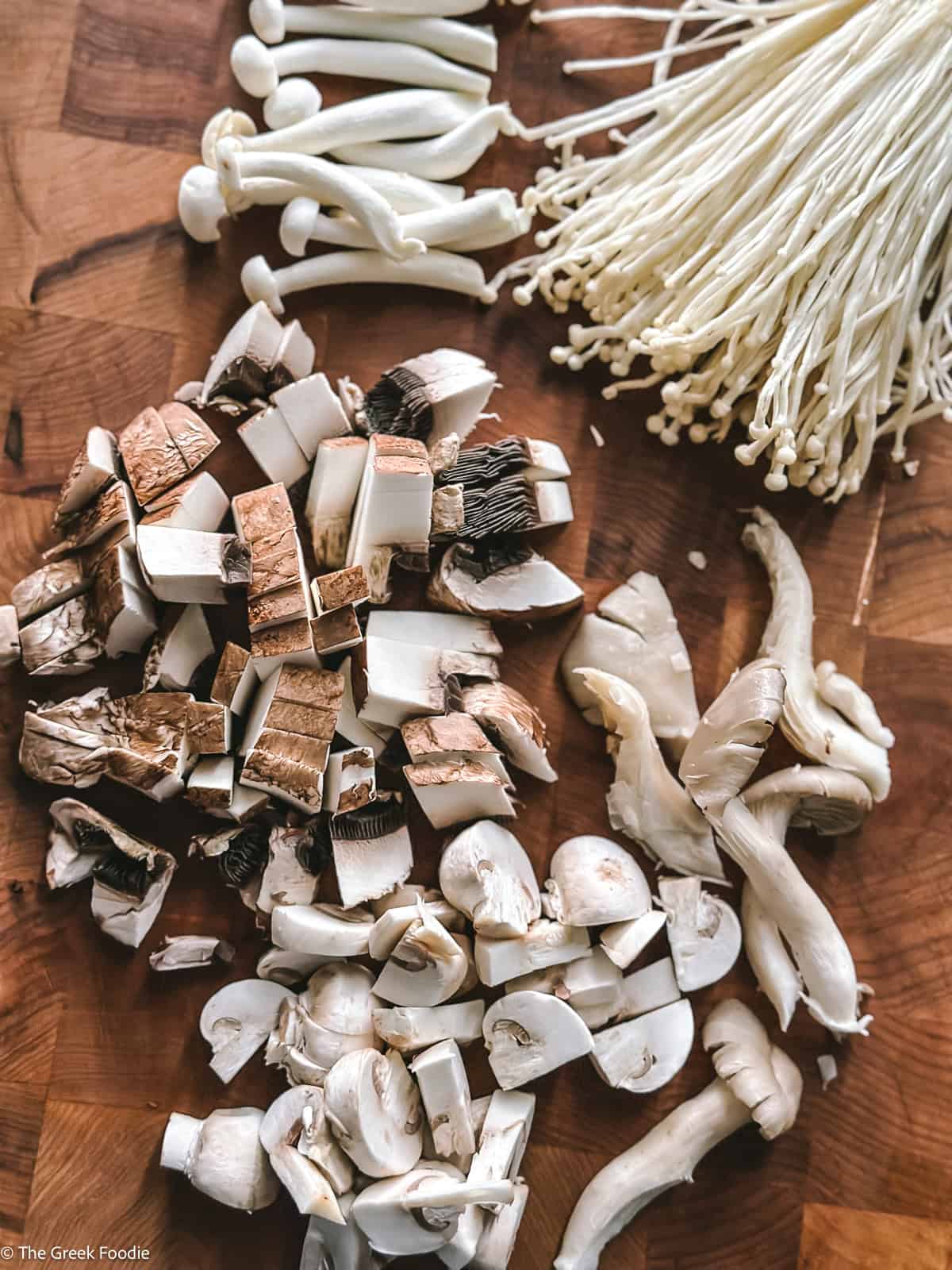
STEP 1. Prep the mushrooms. Wipe all mushrooms clean with a damp paper towel. No washing — they’ll absorb water. Trim tough stems from oyster mushrooms; cut away any hard stem ends from button and portobello. Quarter large button mushrooms, cube portobello and oyster. Leave shimenji and enoki whole but trim the stem ends.
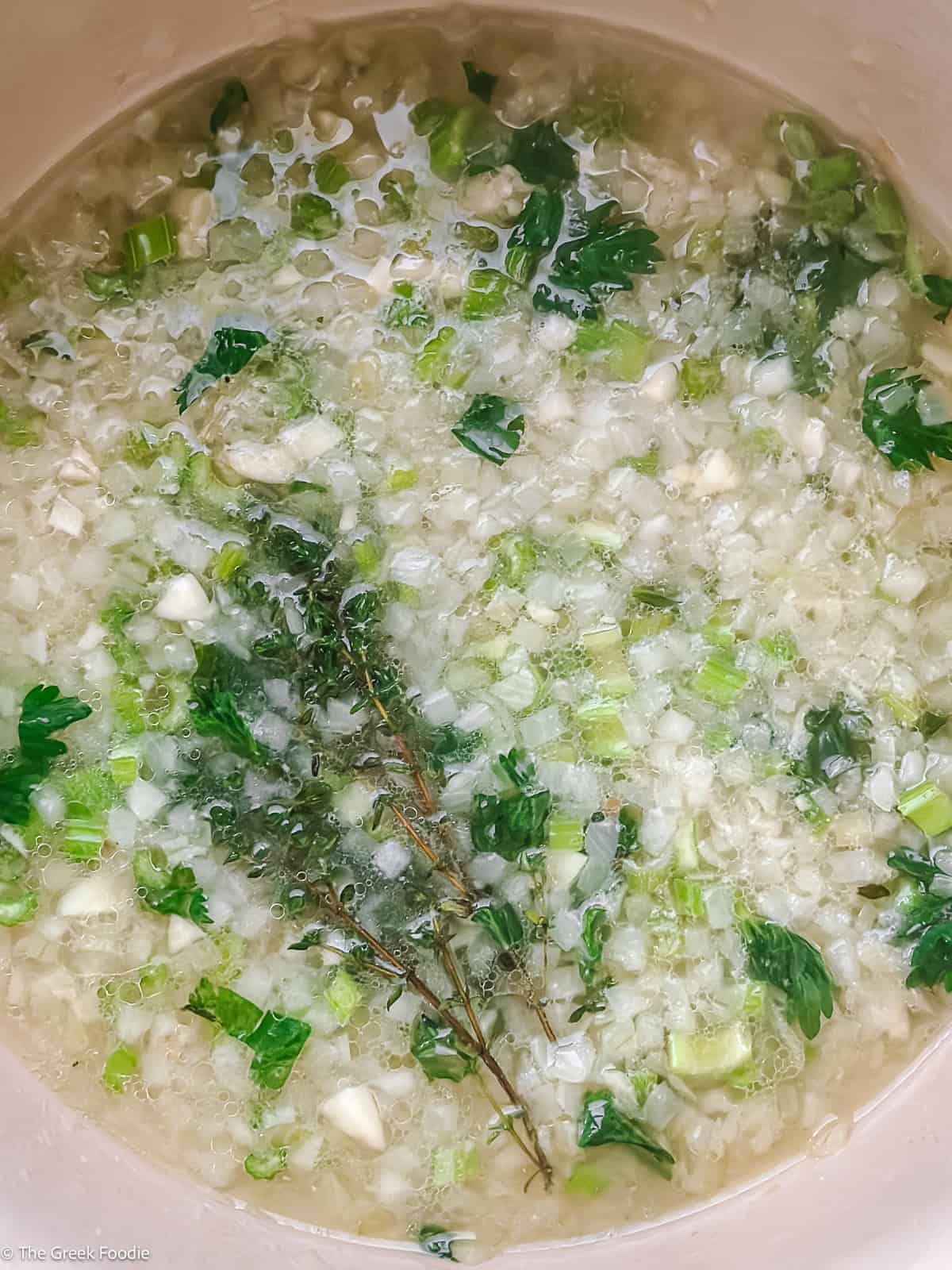
STEP 2. Build the base. In a large stock pot, sauté onion, garlic, and celery in olive oil over medium heat until softened, 4–5 minutes. Add stock, bay leaf, and thyme. Let the aromatics bloom while you sauté the mushrooms.
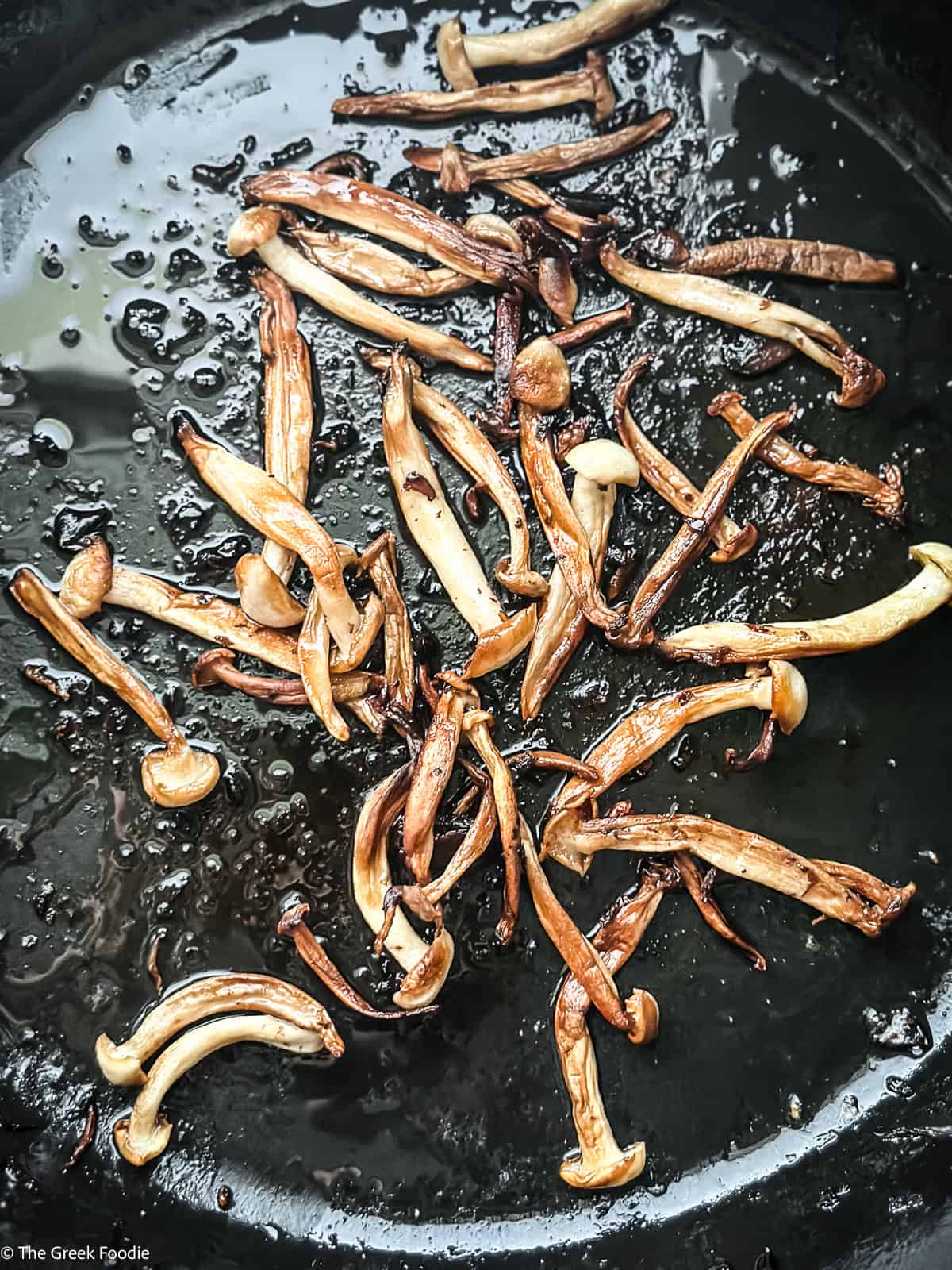
STEP 3. Sauté the mushrooms. Working in batches, in a large skillet over very high heat, sauté button mushrooms in a tablespoon of olive oil until deeply browned. Don’t crowd the pan. Repeat with portobello, then oyster mushrooms. Each batch goes straight into the stock pot, except the shimenji, save them for serving. Don’t cook the enoki, they will go in at the end of cooking.
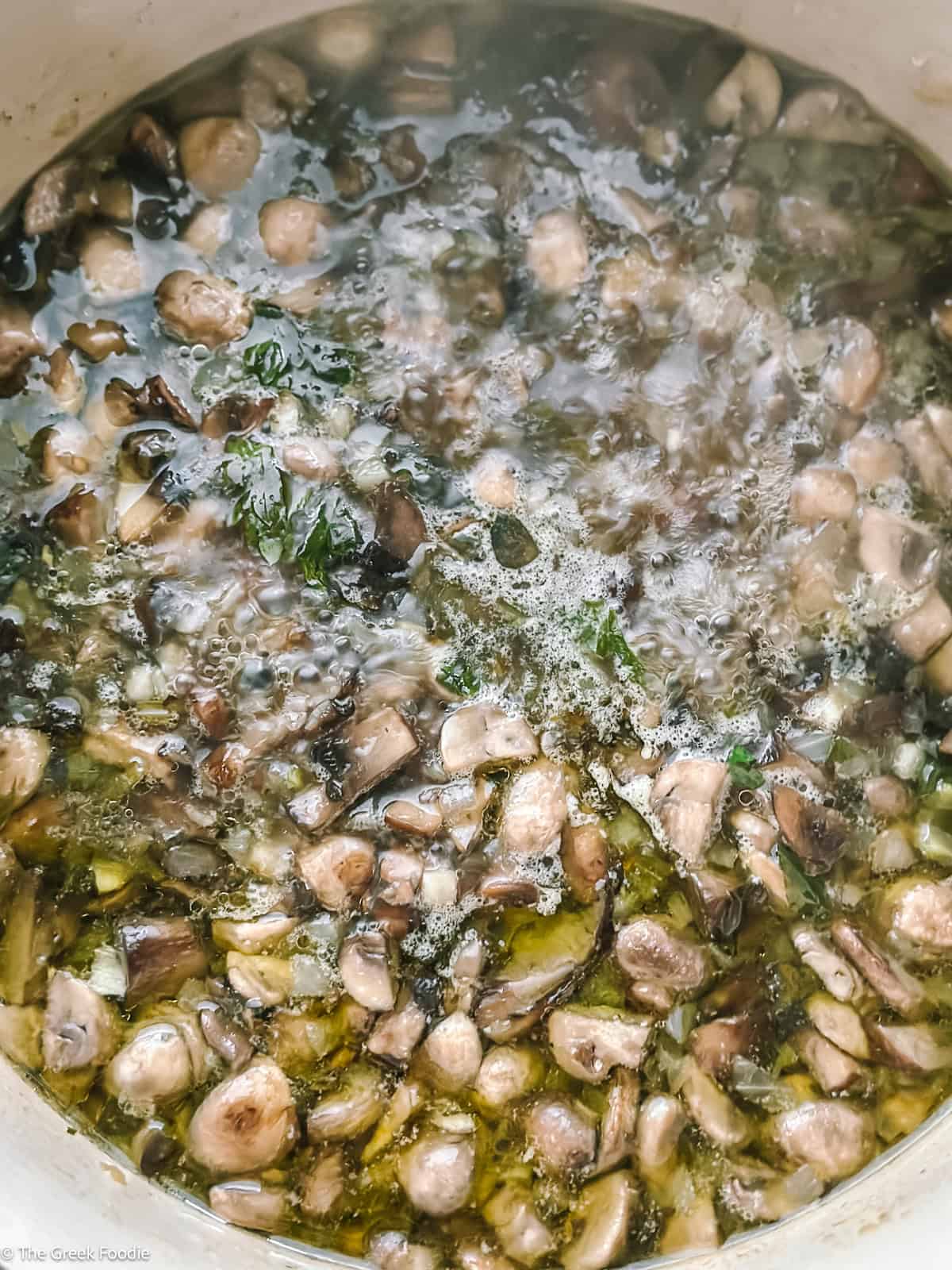
STEP 4. Simmer. Add enough water to cover the mushrooms well. Add the ground coriander and ginger and simmer on low for 30 minutes, skimming any foam.
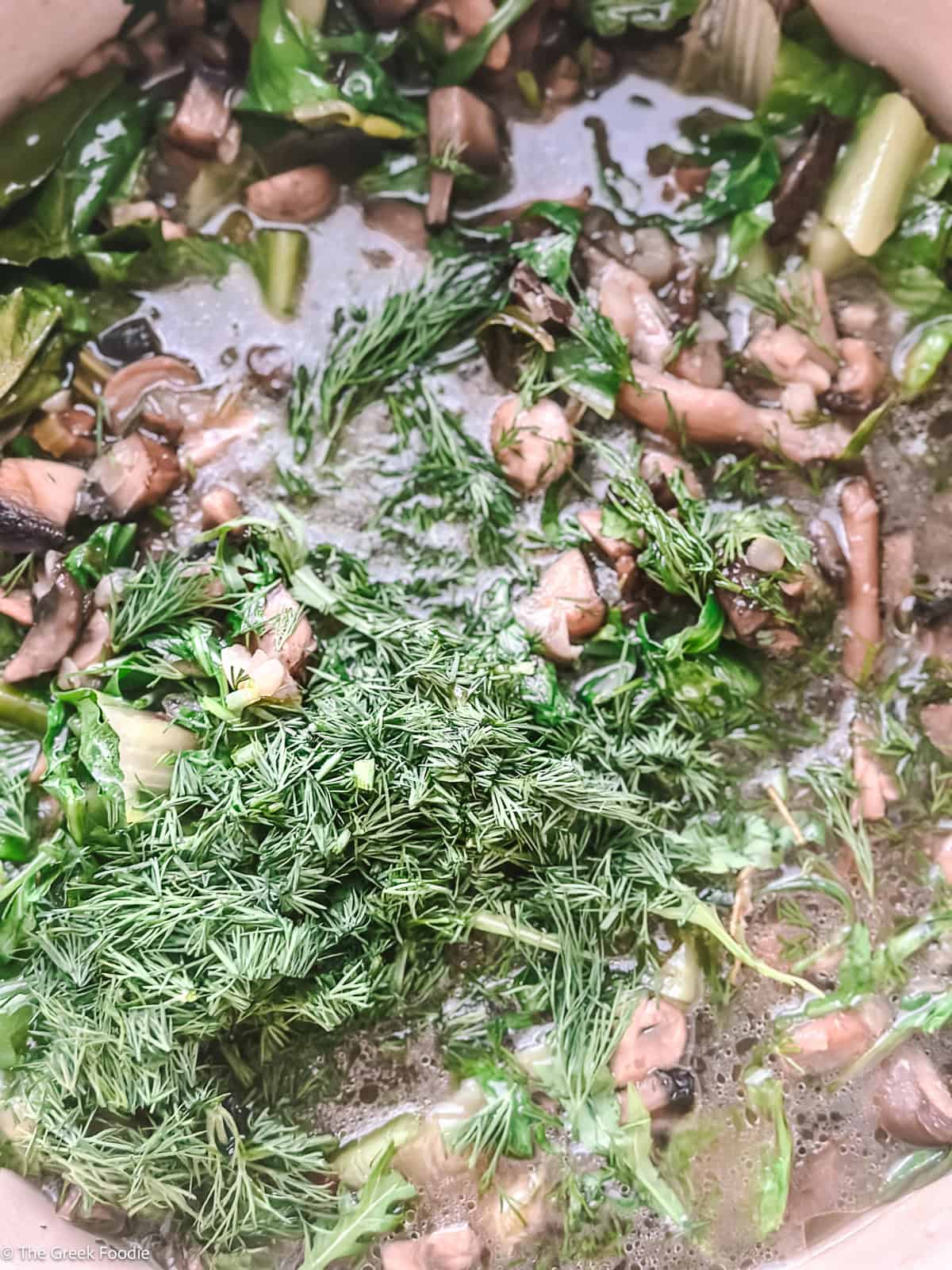
STEP 5. Stir in the chopped lettuce, arugula and dill and remove from heat.
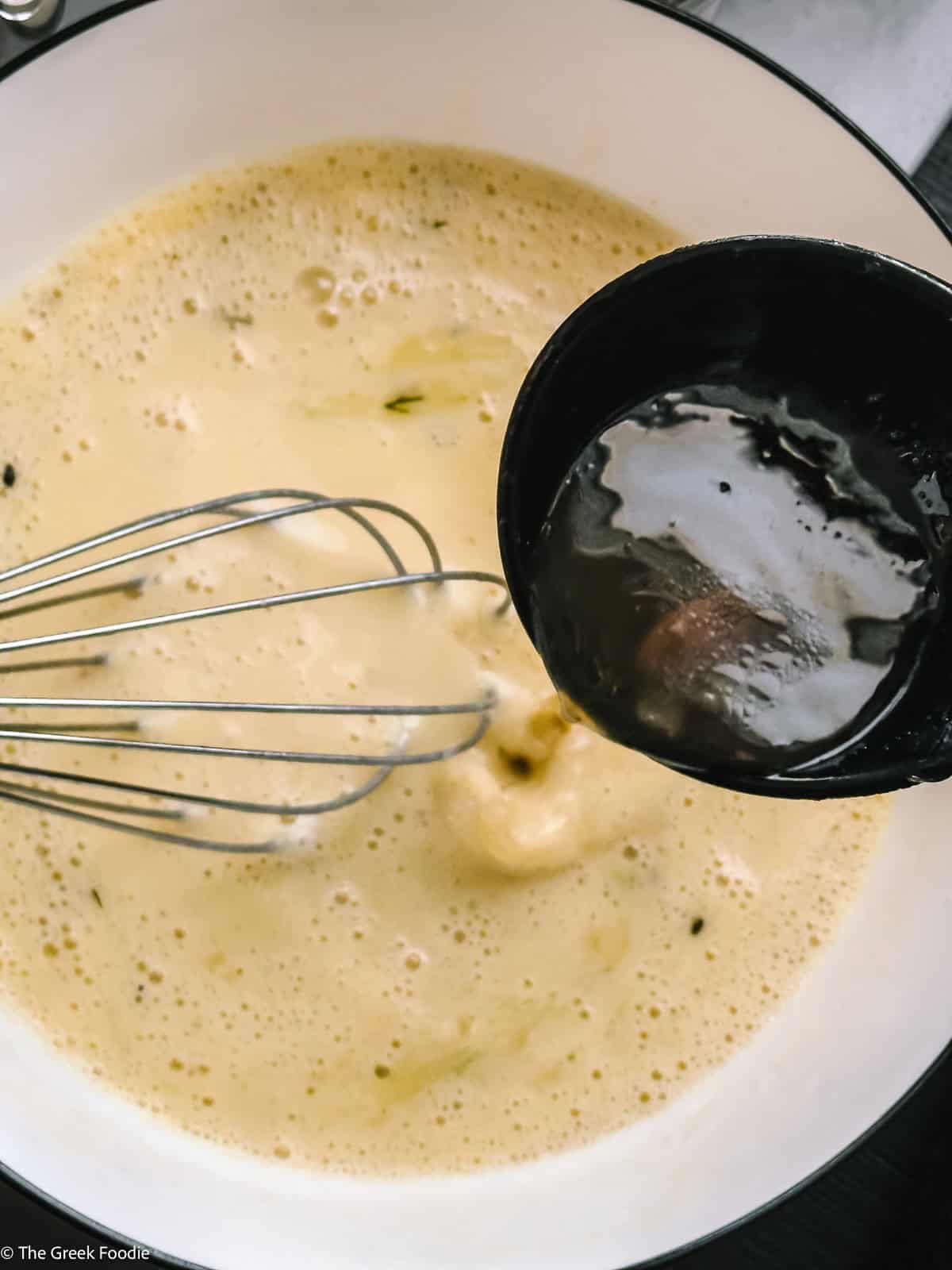
STEP 6. Finish with avgolemono. Whisk eggs and lemon juice together in a bowl. Slowly ladle hot broth into the egg-lemon mixture, whisking constantly to temper.
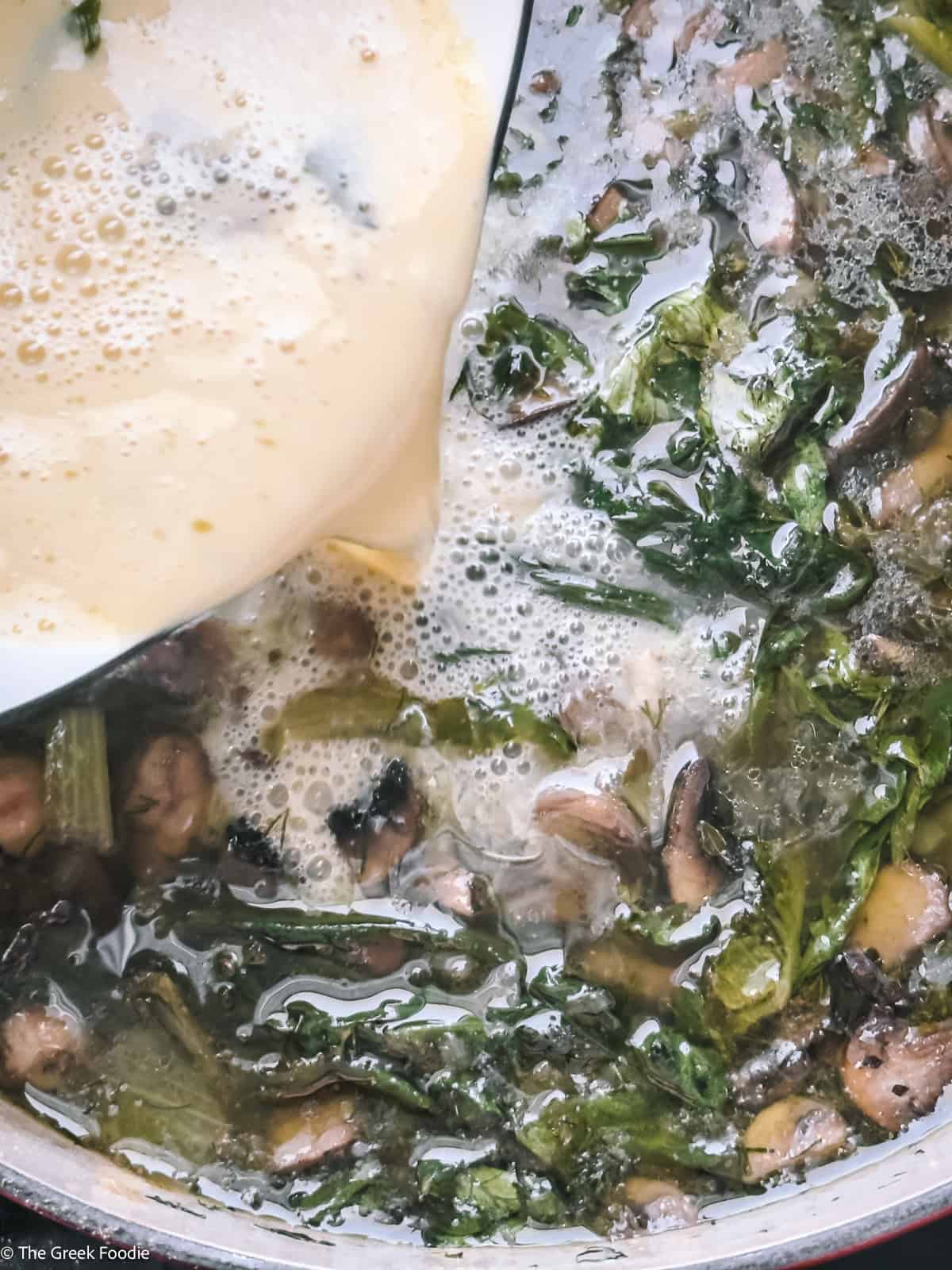
STEP 7. Pour the avgolemono back into the pot and swirl gently to combine.
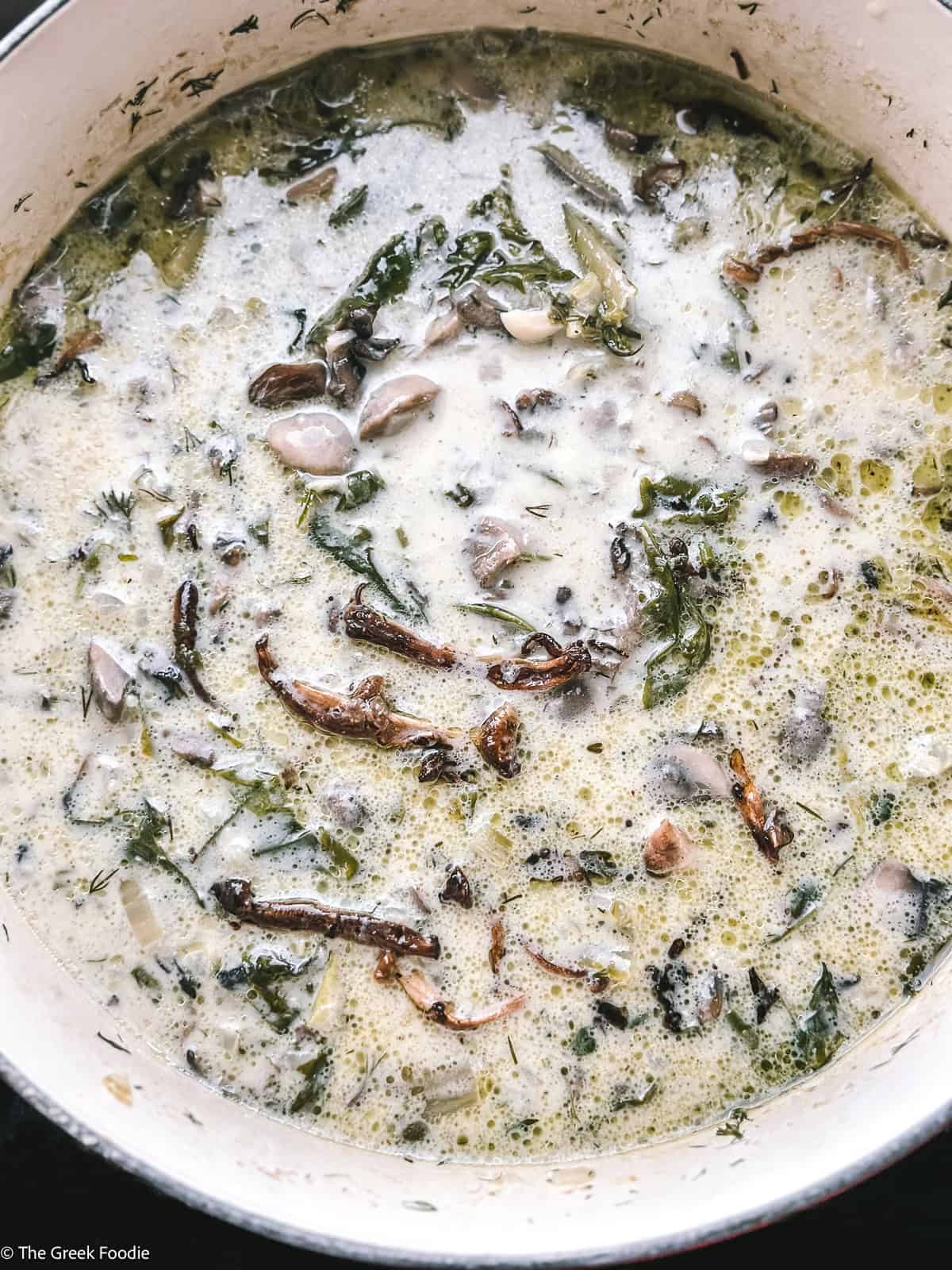
STEP 8. Stir in the delicate enoki mushrooms and the crispy shimeni and serve immediatelly.
Pro tips
- Don’t skip the high-heat sauté. Browning the mushrooms before adding them to the pot is what gives this soup its depth. A crowded pan steams instead of sears — work in batches.
- Temper the eggs carefully. Add the hot broth to the egg-lemon mixture slowly and keep whisking. If you rush it, you’ll scramble the eggs.
- Go easy on the water. The mushrooms release liquid as they cook. Add just enough water to cover and taste the broth before adding more, you want it rich, not watery.
- Arugula is the twist. Traditional magiritsa uses romaine or dill-heavy greens. The arugula here adds a pleasant peppery bite that works beautifully with the lemon.
If you love the avgolemono in this soup, try Greek Chicken Avgolemono Soup (Kotosoupa) — the classic. Tender shredded chicken, rice, and the same silky egg-lemon broth, made from scratch with a homemade stock that fills the whole kitchen with the best smell. Pure Greek comfort in a bowl.
Storage and leftovers
The avgolemono base means this soup doesn’t reheat well over high heat — the eggs can curdle. Store leftovers in the fridge for up to 3 days and reheat gently over low heat, stirring frequently. Do not boil.
Serving suggestions
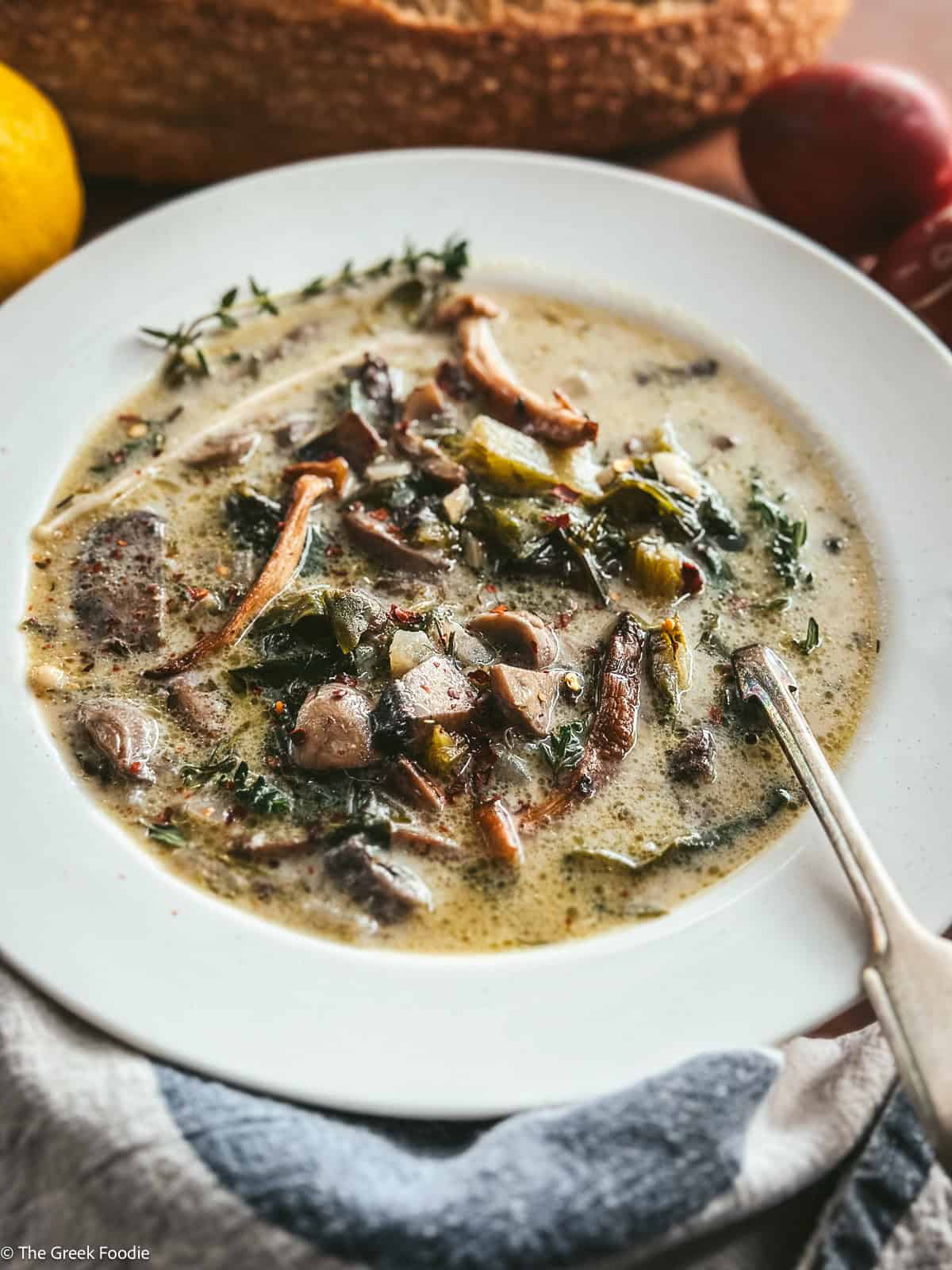
Magiritsa is traditionally the centerpiece of the Easter midnight table — the soup that everything else is arranged around. But it’s also just a deeply satisfying bowl on any cold night, and it pairs beautifully with simple sides.
- For the Easter table, serve it alongside warm, crusty Greek Peasant Bread (Horiatiko Psomi) — you’ll want something to soak up every drop of that avgolemono broth. A platter of Koulourakia (Greek Easter Cookies) and a loaf of Tsoureki complete the spread perfectly.
- As a meal on its own, a slice of Spanakopita or Tiropita (Greek Cheese Pie) alongside the soup turns it into a full vegetarian dinner that feels genuinely special.
- For a lighter pairing, a simple horiatiki tomato salad or Greek Potato Salad (Patatosalata) on the side works beautifully — the brightness of both cuts through the richness of the avgolemono.

FAQs
More Greek traditional soups you’ll love

Cooked it? Rate it!
Please leave a comment, we love hearing from you! Please subscribe to our newsletter for the latest updates.



Vegetarian Mushroom Magiritsa with Avgolemono
Ingredients
- 1 lb white button mushrooms (500g) halved or quartered, depending on size
- 1 lb portobello mushrooms cut into cubes
- 1 lb oyster mushrooms tough stems removed, torn or cubed
- 10 oz shimeji mushrooms (300g) trimmed at the base and separated
- 7 oz enoki mushrooms (200g) trimmed at the base and separated
- ⅓ cup olive oil (80ml)
- 1 large yellow onion finely chopped
- 5 garlic cloves finely chopped
- 2 celery stalks finely chopped
- 1 cup good quality vegetable broth (250ml) or chicken
- 1 bay leaf
- Leaves from ½ bunch fresh thyme, or 1 tsp dried thyme, crumbled
- 1 teaspoon ground coriander
- 1 teaspoon ground ginger
- ½ cup fresh dill roughly chopped (about ½ bunch)
- 2 large handfuls of arugula (rocket) coarse stems removed, roughly chopped
- 1 head romaine lettuce roughly chopped
- 5 eggs preferably organic/free-range
- Juice of 1 lemon or to taste
- sea salt
- freshly ground black pepper
Instructions
- Wipe all mushrooms clean with a damp paper towel to remove any dirt. Don't wash them — they'll absorb water and won't sauté properly.1 lb white button mushrooms, 1 lb portobello mushrooms, 1 lb oyster mushrooms, 10 oz shimeji mushrooms, 7 oz enoki mushrooms
- Trim the tough stems from the oyster mushrooms and cut away any hard stem ends from the button and portobello mushrooms. Trim the stem edges from the shimeji and the enoki.
- Cut button mushrooms in half (small) or quarters (large). Cut oyster and portobello mushrooms into rough cubes. Leave trumpet and chanterelle mushrooms whole.
- In a large pot, heat 2 tablespoons of the measured olive oil over medium heat. Add the onion, garlic, and celery, and cook for 4–5 minutes until softened.⅓ cup olive oil, 1 large yellow onion, 5 garlic cloves, 2 celery stalks
- Add the broth, bay leaf, and thyme. Let it cook while you sauté the mushrooms.1 cup good quality vegetable broth, Leaves from ½ bunch fresh thyme,, 1 bay leaf
- In a large skillet over very high heat, sauté the button mushrooms, portobello, and oyster mushrooms in batches with the remaining olive oil — about 4–5 minutes per batch, until nicely browned. Don't crowd the pan. Add each finished batch to the pot.
- In the same skillet, sauté the shimeji mushrooms over high heat for 3–4 minutes until golden and slightly crisp at the edges. Set aside — these are for serving.
- Once the three mushroom types are sautéed and in the pot, add enough water to cover well. Add the ground coriander, and the ginger. Bring to a low simmer and cook for about 30 minutes, skimming any foam from the surface with a large spoon.1 teaspoon ground coriander, 1 teaspoon ground ginger
- If needed, add a small splash of hot water — just enough to keep the mushrooms covered. Don't add too much or the broth will be thin.
- Stir in the chopped dill, arugula, and lettuce and remove from heat.½ cup fresh dill, 2 large handfuls of arugula (rocket), 1 head romaine lettuce
- In a bowl, whisk together the eggs and lemon juice. Slowly ladle several scoops of hot broth into the egg mixture, whisking constantly, to temper it.5 eggs, Juice of 1 lemon
- Pour the tempered avgolemono back into the pot and gently swirl to combine.
- Add the crispy shimeji and the enoki mushrooms directly to the hot soup. The enoki need only 1–2 minutes in the residual heat — do not boil them.
- Season with salt and pepper to taste and serve immediately.sea salt, freshly ground black pepper
Notes
Nutrition

We processed our mushrooms to create a creamy rich soup. The flavors were nuanced and delicious. Yummy!
The soup is delish, isn’t ? Thank you Darly!