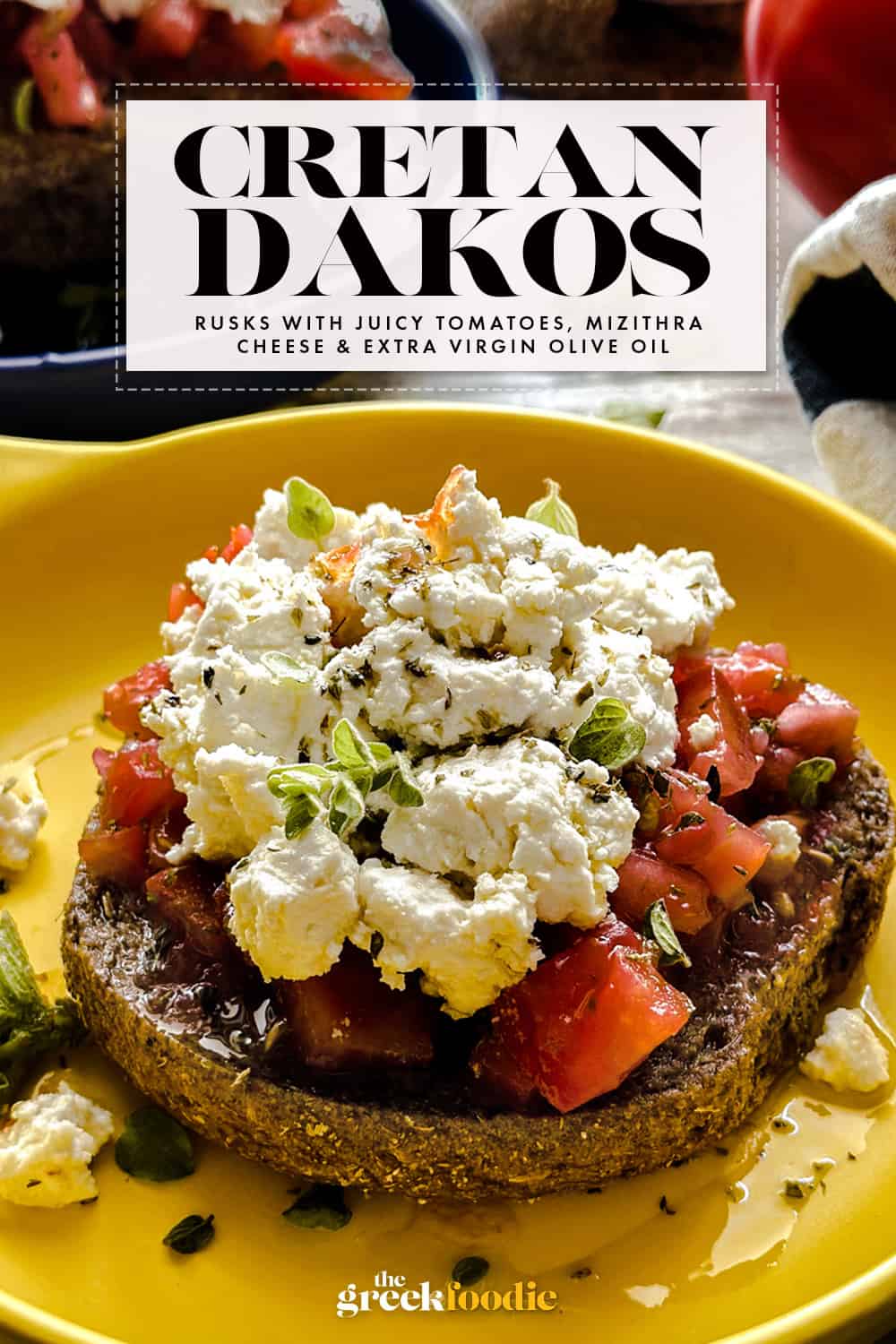

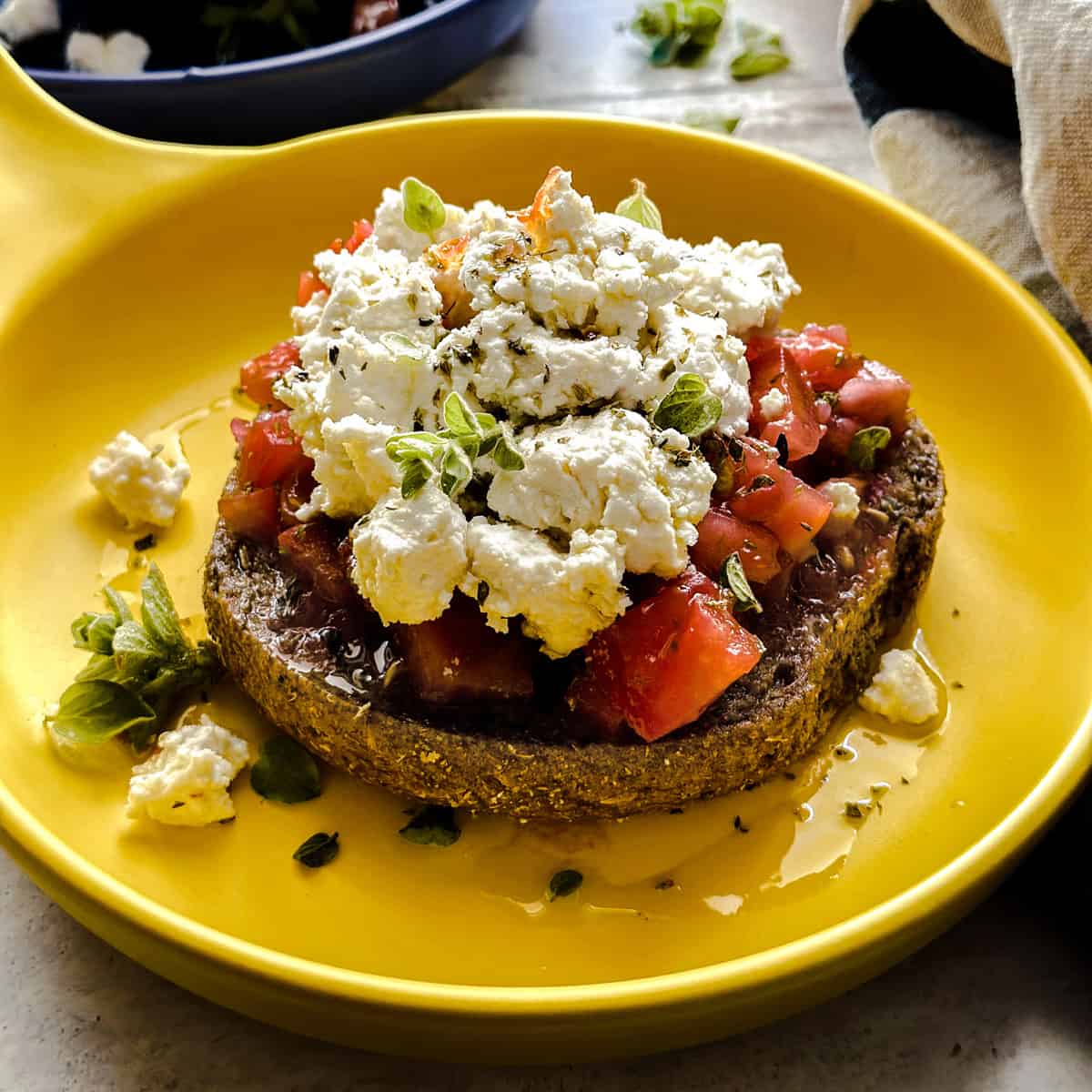
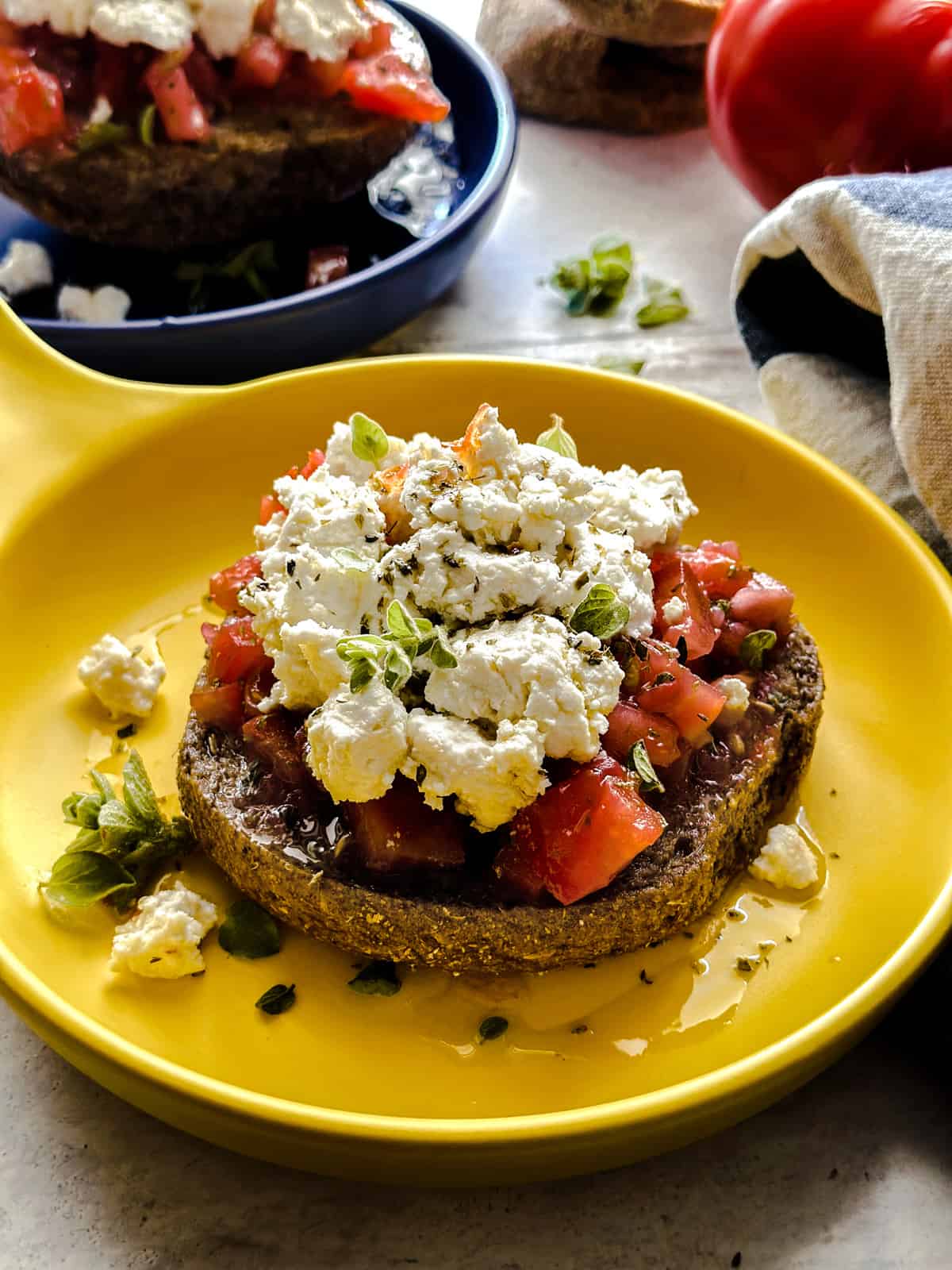
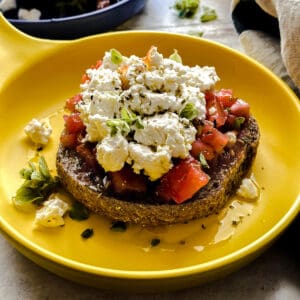
Cretan dakos salad — or dakos kritikos, as we call it back home — is one of Crete’s most iconic light meals, and easily one of the simplest. You take a paximadi (a double-baked barley rusk), pile it high with ripe, juicy tomatoes, creamy, sour mizithra, fresh oregano, and a generous pour of good extra-virgin olive oil. No cooking needed, under 10 minutes from start to plate.
It’s a dish made with humble pantry ingredients turned into something you’ll keep thinking about long after summer ends. Outside Crete, you’ll hear it called a Greek dakos salad, or just a Cretan salad, but whatever you call it, one bite and you’ll understand why it travels so well.
What cooks say:
“Made this on a whim, so no time to order the cheese or rusks ahead of time. With some modifications based on available ingredients, it turned out great and as simple and quick as promised. […..] Given how fast these disappeared, I probably should have made more! YUMMY”
VALERIE TETRO
If you love this Cretan Dakos Salad, you will also love this Cherry Tomato Salad, Roasted Corn Tomato Salad, or Beluga Lentils Salad!
What is Dakos?
Dakos is a traditional salad from the Greek island of Crete, made by topping a double-baked barley rusk (paximadi) with ripe tomato, sour mizithra cheese, oregano, and extra virgin olive oil. The rusk softens just enough under the tomato juices to turn tender — but never soggy. You’ll also see it called Cretan dakos, dakos kritikos, or a Greek rusk salad.
Think of it as Crete’s older, simpler answer to bruschetta: built for hot days when no one wants to turn on a stove. On the island, it shows up everywhere, as a meze, a fast lunch, even breakfast, and it’s been feeding Cretans this way for a very, very long time.
Why you will love Cretan dakos salad
Ingredients for authentic Dakos
Rusks
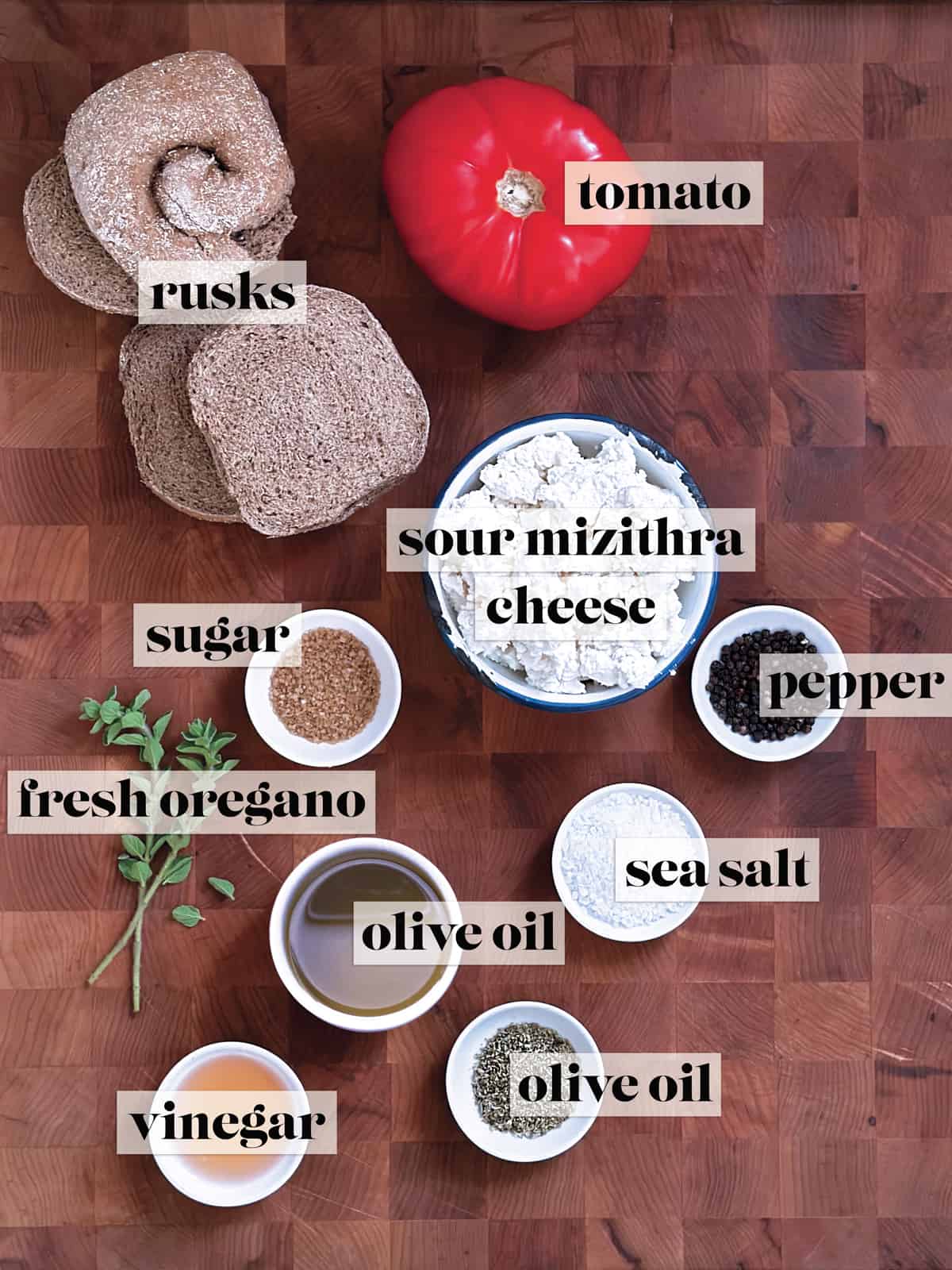
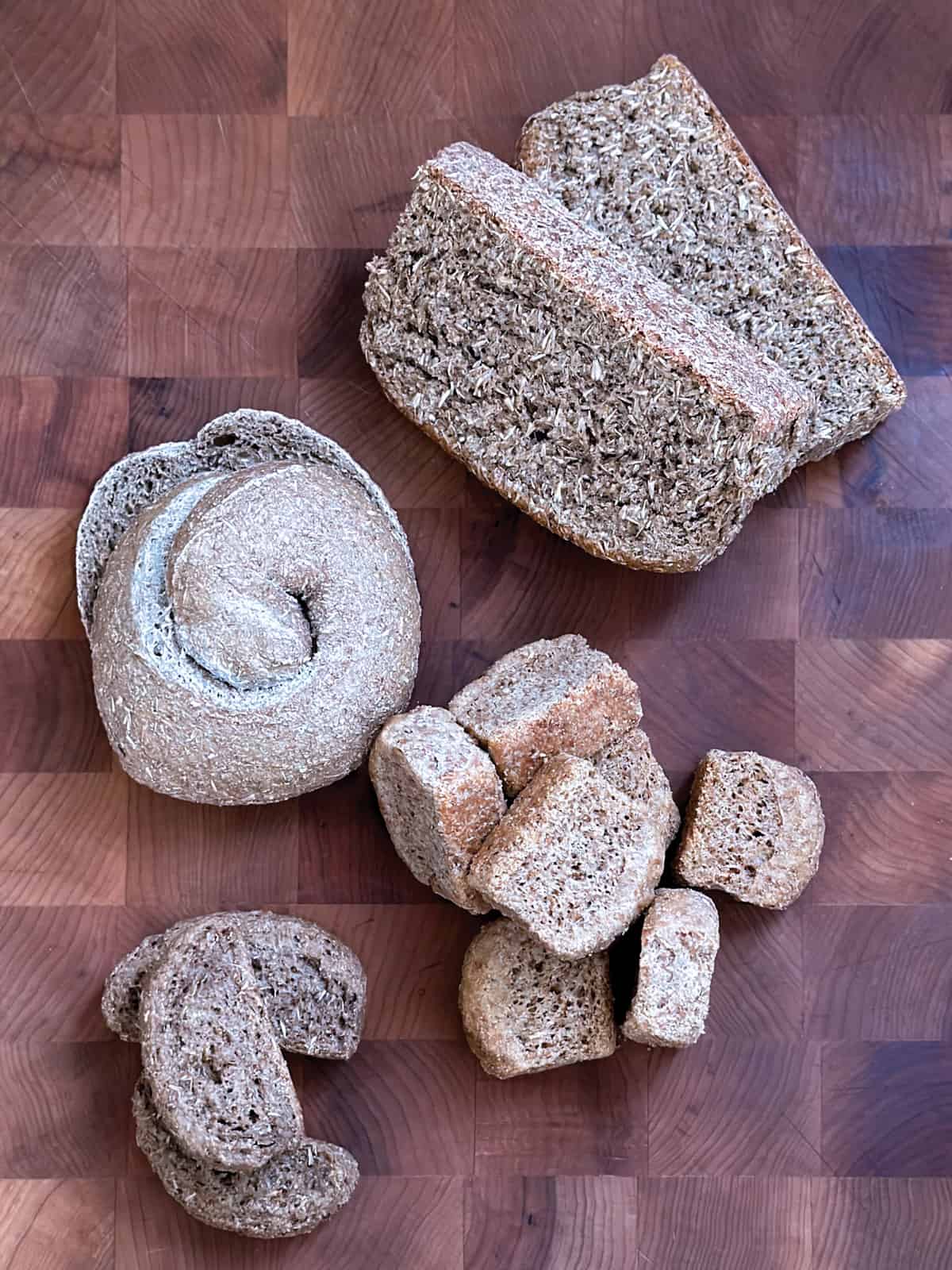
Use either rectangular or round Greek rusks. Barley paximadia are the traditional choice. Both work beautifully. The magic is in their crunch — they soften just enough under the tomatoes and olive oil but never fall apart.
Cheese
Sour Mizithra Cheese – Choose soft sour mizithra, ideally Xynomizithra Kritis PDO. It’s creamy, tangy, and essential for authentic Cretan dakos. Tip: Avoid the hard, grated mizithra sold for pasta. You want the spreadable kind. Find it at Greek/Mediterranean shops like Titan Foods (Astoria, NY) or similar markets.
Tomatoes
Any juicy, in-season tomato will do — heirloom, cherry, sugar bombs. If you’re making dakos in winter (hey, cravings happen), go for Campari tomatoes. They have a reliable sweetness and a texture close to that of Greek tomatoes.
Fresh Herbs – Fresh oregano is classic. Fresh basil, parsley, or spearmint also work, adding a lovely lift.
Dried Herbs – Traditional dakos uses dried oregano. Thyme, dried basil, or dried spearmint are fine substitutes if needed.
Sugar (just a pinch) – A tiny bit of sugar rounds out the acidity and makes the tomatoes taste extra sweet and “sun-kissed,” even when they’re not at their seasonal best.

Dakos FAQ
How to make dakos salad
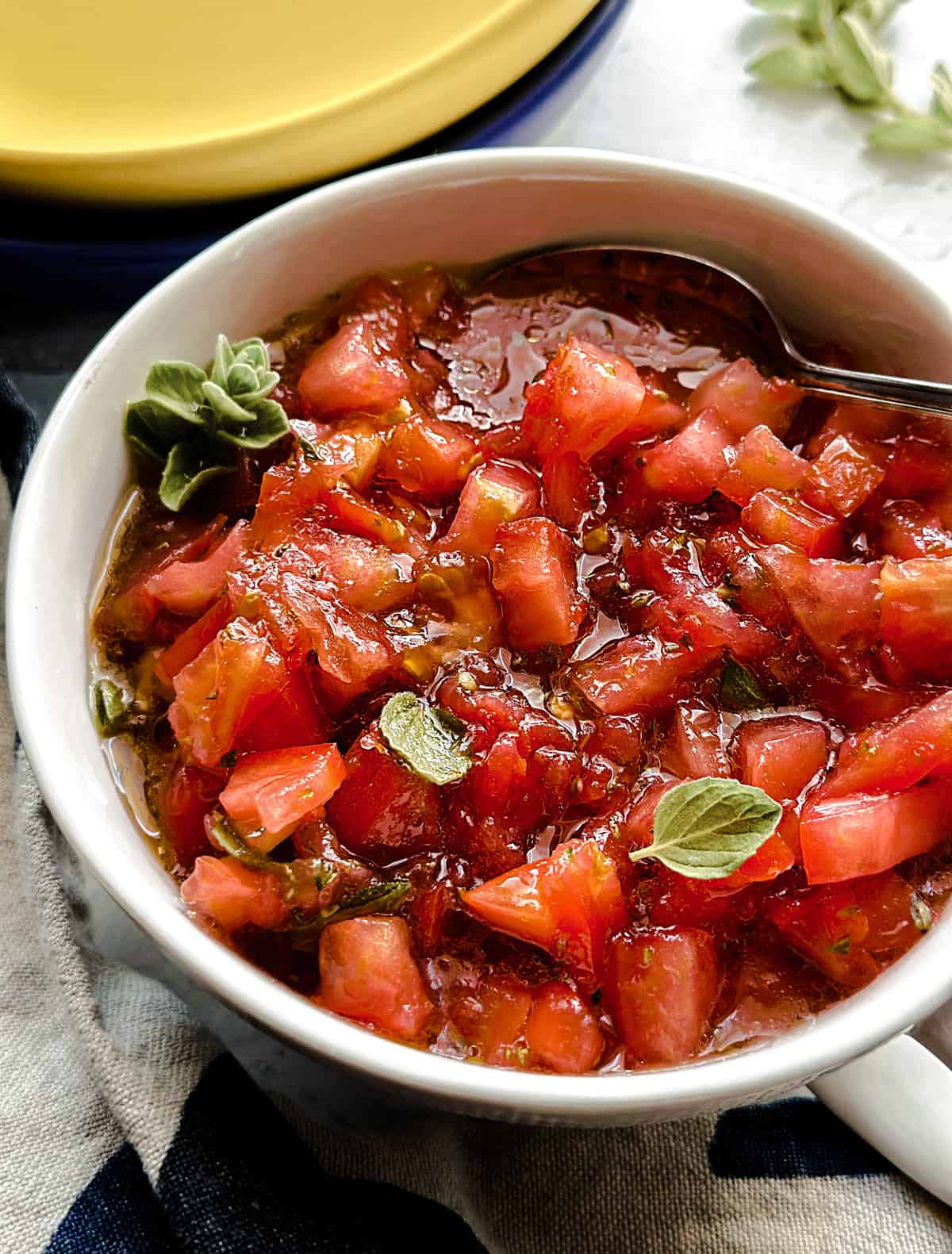
STEP 1. Put half the extra virgin olive oil, tomatoes, sugar, red wine vinegar, dried oregano, and a teaspoon of fresh oregano leaves in a bowl.
Mix gently and let it sit for 15 minutes.
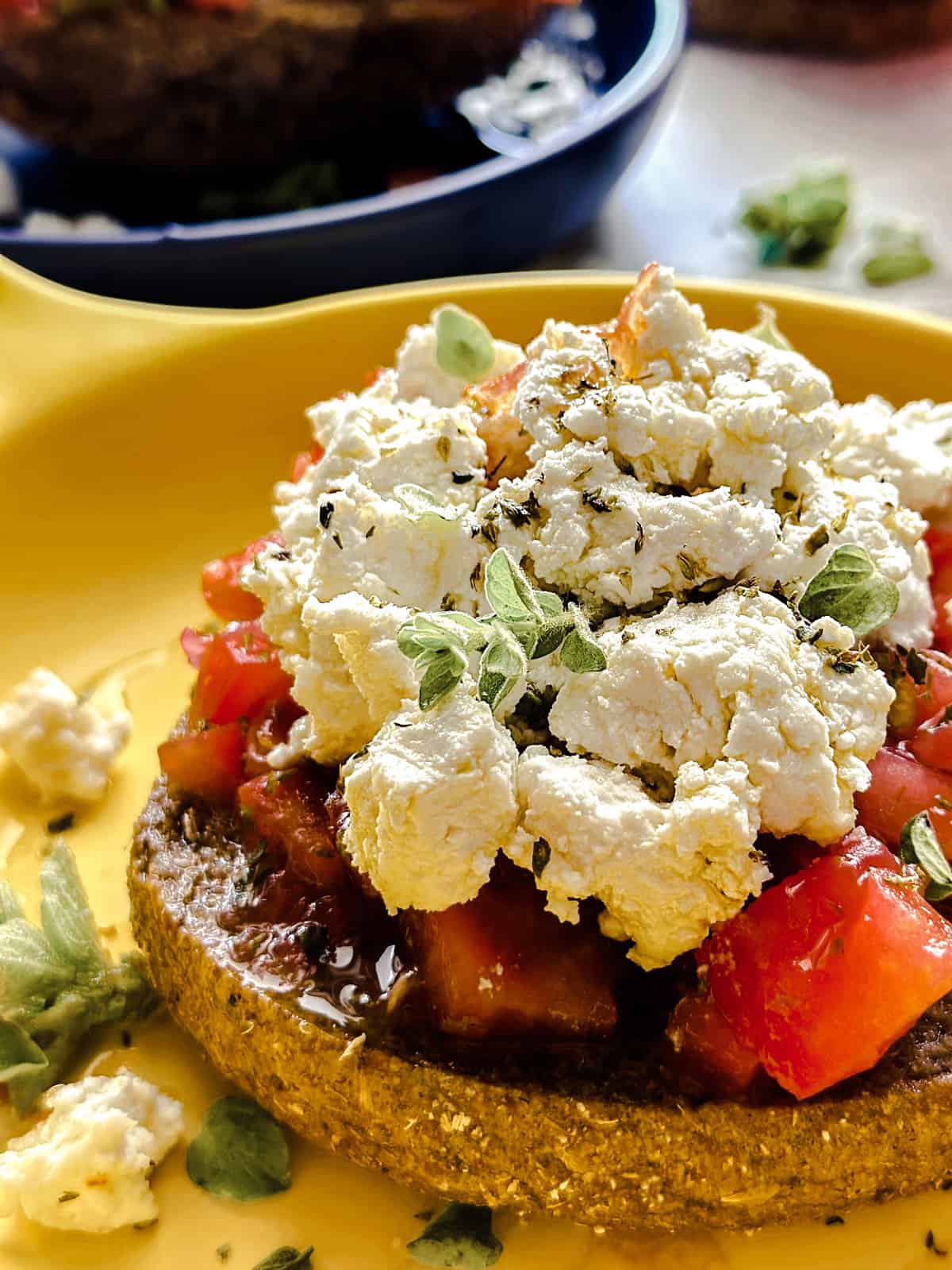
STEP 2. Place each rusk on a plate or all on a platter.
Drizle the rusks with a bit of olive oil. Divide the tomatoes on top of the risks equally. Top each rusk with the xinomyzithra.
Let the loaded dako sit for a few minutes to soak up the tomato juices.
Drizzle on top the remaining oil, sprinkle fresh oregano and serve immediately after assembling so the rusk is slightly softened but not soggy.
Pro Tip: If your rusks are extra hard, dip them in water for one quick second or run them under water very briefly. They soften fast, so don’t overdo it.
Additional toppings for dakos
- Balsamic vinegar (or balsamic cream). Swap the sugar and vinegar in the tomato mixture with a teaspoon of balsamic for deeper sweetness. Drizzle a little on top before serving for a glossy, tangy finish.
- Olives. Use sliced pitted olives or add a few whole ones (pits removed, obviously — unless you enjoy chaos). They add briny depth and pair beautifully with ripe tomatoes.
- Capers. Add a handful of whole capers or chop them into the tomato mix. Capers bring that salty, seaside punch that makes dakos even more irresistible.
- Zakynthos-style toppings. On the island of Zakynthos, dakos gets its own regional twist. Rusks are topped with tomatoes, olive oil, oregano, and prenza, a homemade cheese spread. Another local favorite is ladotyri, a spicy cheese preserved in olive oil. You’ll often find their dakos topped with extras like olives, anchovies, sardine paste, or even herring for a bold, savory finish.
How to serve dakos
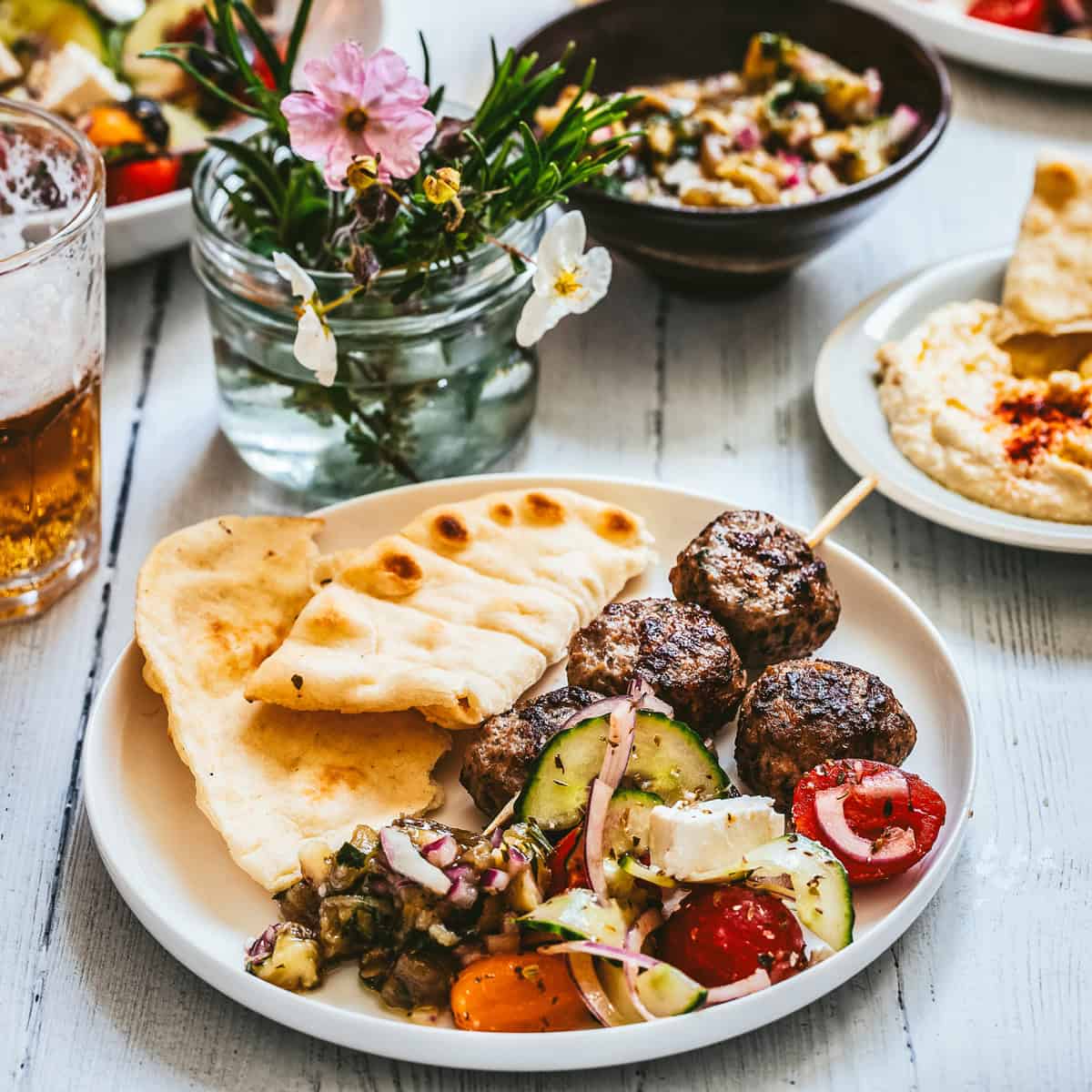
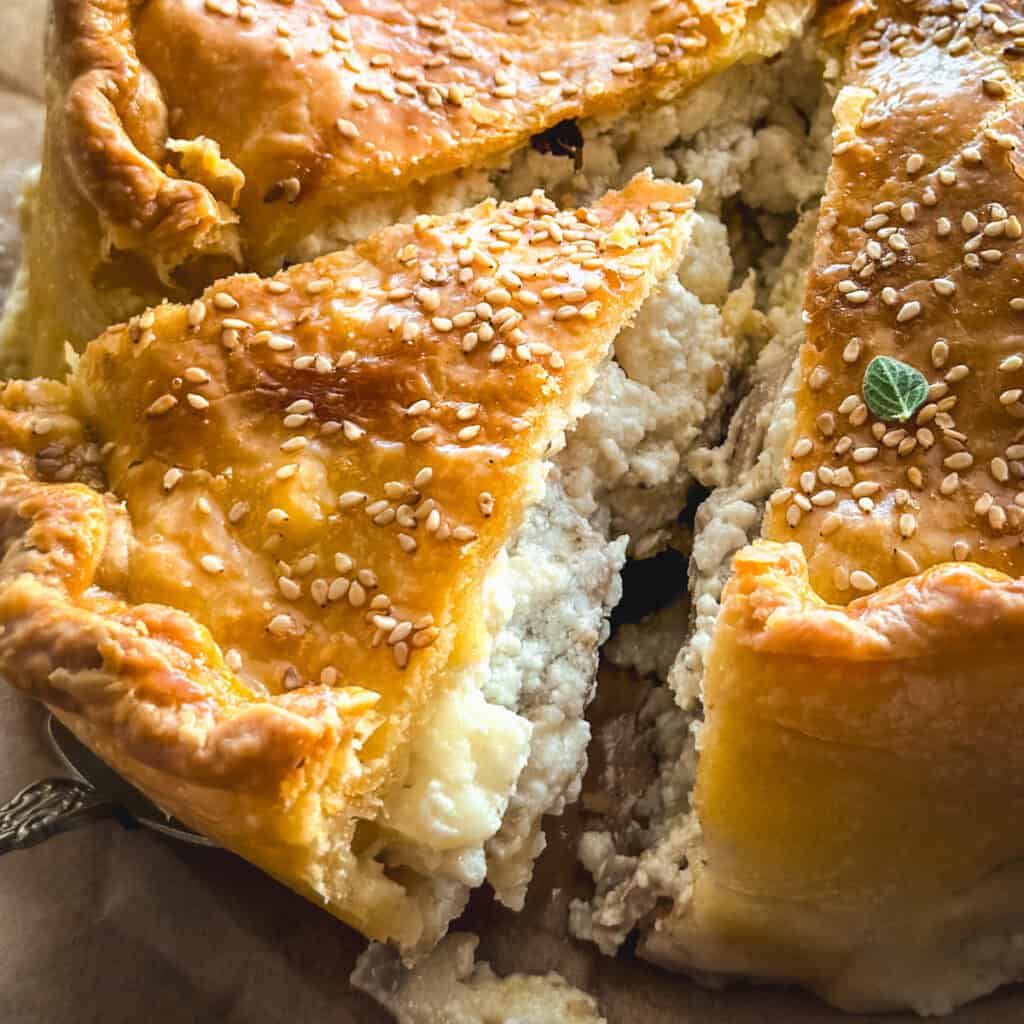
- As an appetizer. Serve dakos as part of a classic Greek meze spread. Pair it with Cretan kalitsounia (cheese hand pies), marinated olives, fried calamari (kalamarakia), or a bowl of gigantes beans. It fits right in with anything bright, briny, crunchy, or fried.
- On a platter. Arrange several dakos on a large platter for family-style eating or entertaining. Load each rusk generously and let everyone grab their favorite one. It’s the easiest way to feed a crowd with zero effort — and it always looks stunning in the center of the table.
- As a light meal. A couple of dakos with extra cheese, olives, and a side of cucumbers or peppers becomes a refreshing summer lunch or dinner. Add a cold glass of white wine, and you’re basically in Crete.
- With protein. Serve dakos alongside grilled fish, chicken skewers, or pork steaks. The tomatoes and mizithra balance rich meats beautifully.

Cooked it? Rate it!
If you tried this recipe, I’d love to know how you liked it — drop a comment below or tag me on Instagram @thegreekfoodie__.


Cretan Dakos Salad
Ingredients
- 4 round rusks
- 1½ cups soft sour mizithra cheese, or feta
- 1 large ripe tomato, cubed or
- 1 cup extra virgin olive oil, total
- fresh oregano sprigs
- 1 teaspoon dried oregano
- sea salt
- freshly ground pepper
- ½ teaspoon sugar
- 1 tablespoon red wine vinegar
Instructions
- Put half the extra virgin olive oil, tomatoes, sugar, red wine vinegar, dried oregano, and a teaspoon of fresh oregano leaves in a bowl. Mix gently and let it sit for 15 minutes.
- Place each rusk on a plate or all on a platter.Drizzle the rusks with a bit of olive oil. Divide the tomatoes on top of the risks equally. Top each rusk with the xinomyzithra.Let the loaded dako sit for a few minutes to soak up the tomato juices.
- Drizzle the remaining oil and sprinkle fresh oregano.Enjoy!
Notes
-
- Rusks. You can use both rectangular or round rusks. Every Greek and Mediterranean grocery store will have at least one kind of rusk. You can also find them online at Titanfoods and Amazon.
- The tomato juices are enough to soften the rusk. In case it is really hard, immerse it for a second in a deep dish of water or pass it under running very quickly.
- Sour mizithra cheese. You can find soft sour mizithra in Greek and Mediterranean stores like Titanfoods in Astoria, NY. Don’t get the hard mizithra that is used for pasta. I make a mix of half ricotta cheese and feta to create a similar taste and texture to sour mizithra. Or I crumble a block of feta and use it as a topping.
- Ripe tomatoes. Any kind. Heirlooms, cherry tomatoes, and sugar bombs are all great as long as they are in season. If an out-of-season dakos craving happens to you, use Campari tomatoes. They are sweet and similar to Greek tomatoes.
- Fresh oregano. Substitute with fresh basil, spearmint, or parsley.
- Dried oregano. Dried basil, thyme, or spearmint works just as well.
Additional toppings
-
- Balsamic vinegar. Or balsamic cream. You can add a teaspoon to the tomato mixture instead of sugar and vinegar and drizzle a bit on the top of the dakos for serving.
-
- Olives. Slice some pitted olives or use three or four whole (without the pit).
-
- Capers. Add a hand full of capers or chop them up and add them to the tomato mix.
-
- On the island of Zakynthos in the Ionian Sea, they make their own type of dakos. They serve them with tomatoes, olive oil, oregano, and prenza, a type of homemade cheese salad. Or they use local ladotiri cheese. It is a spicy cheese preserved in olive oil in clay jars. Soft in the early stages of maturation, it gets spicy as it matures. They also add olives, anchovies, sardine paste, or herring.
Nutrition