

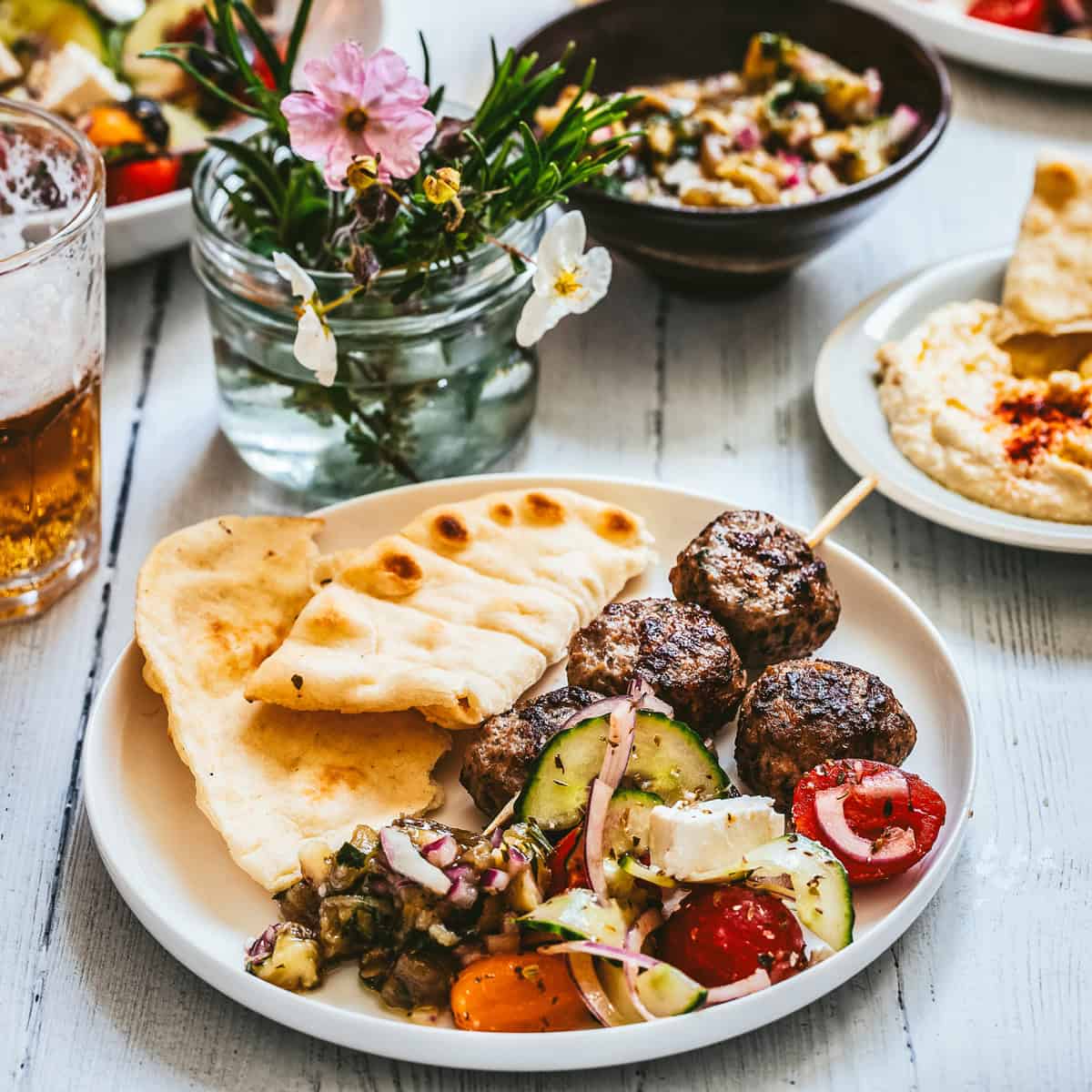
Greek meze has always been more than food. It’s a way of gathering. A table that fills slowly, laughter that builds gently, and small meze plates that invite conversation as much as they tempt the appetite. — Anonymous Greek meze aficionado*
* In Greece, this is not a niche interest. Every Greek is a meze expert, a food critic, and a firm believer that our mother makes it best.
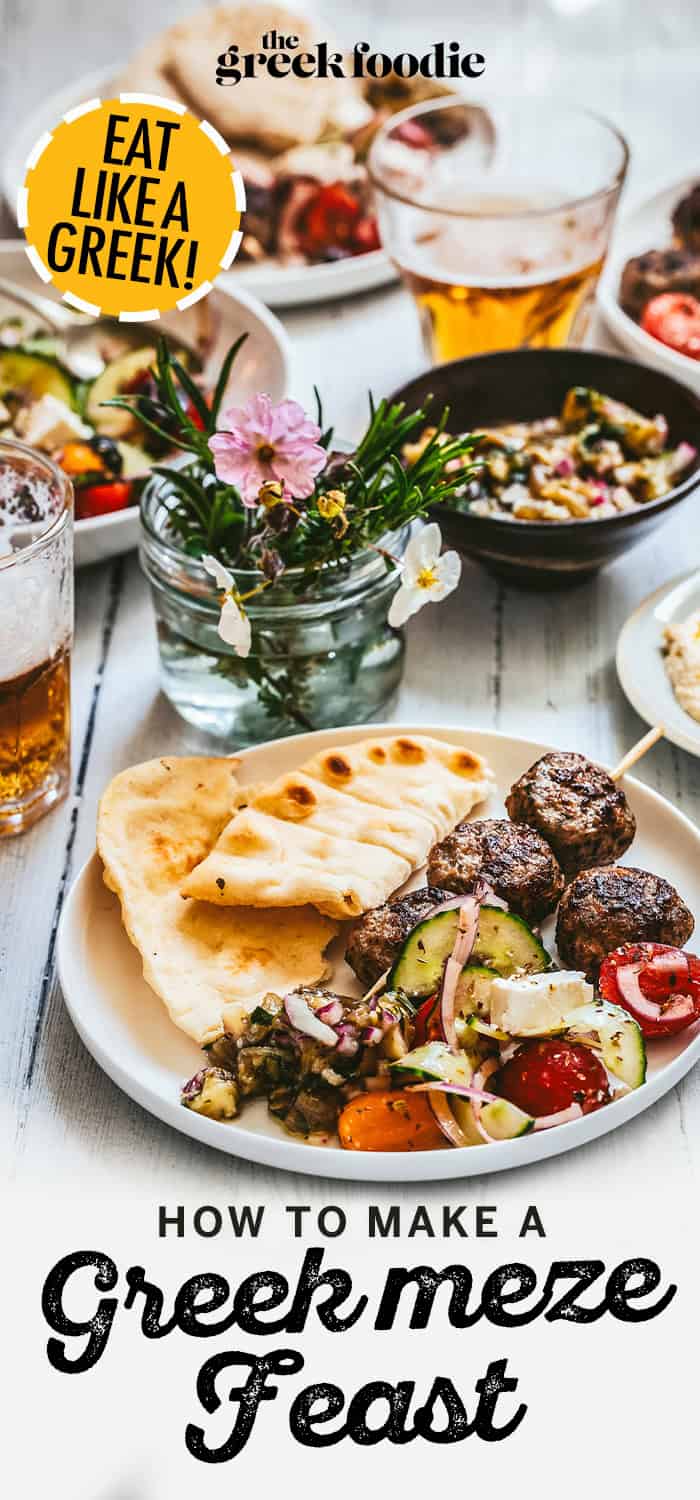
Meze is a way of living for the Greeks. In this post, I show you exactly how to build your own Greek meze table at home. Everything you need to know to build the ultimate table of small plates, from creamy dips to sizzling cheese, fried fritters, and a glass of something cold.
Whether it’s a lazy Sunday lunch, a dinner party starter spread, or an entire evening of small plates and ouzo, this guide covers everything — which recipes to make, how to plan ahead, and how to serve it all with the ease of a Greek who has done this a thousand times before.
Looking for the perfect dip to go with this? I have all my favorite Greek dip recipes in one place — 8 classics worth making.

START HERE
The Dips & Spreads
Every meze table starts with the dips. They anchor the spread, invite people to tear bread immediately, and set the tone. Make these a day ahead — they only get better.
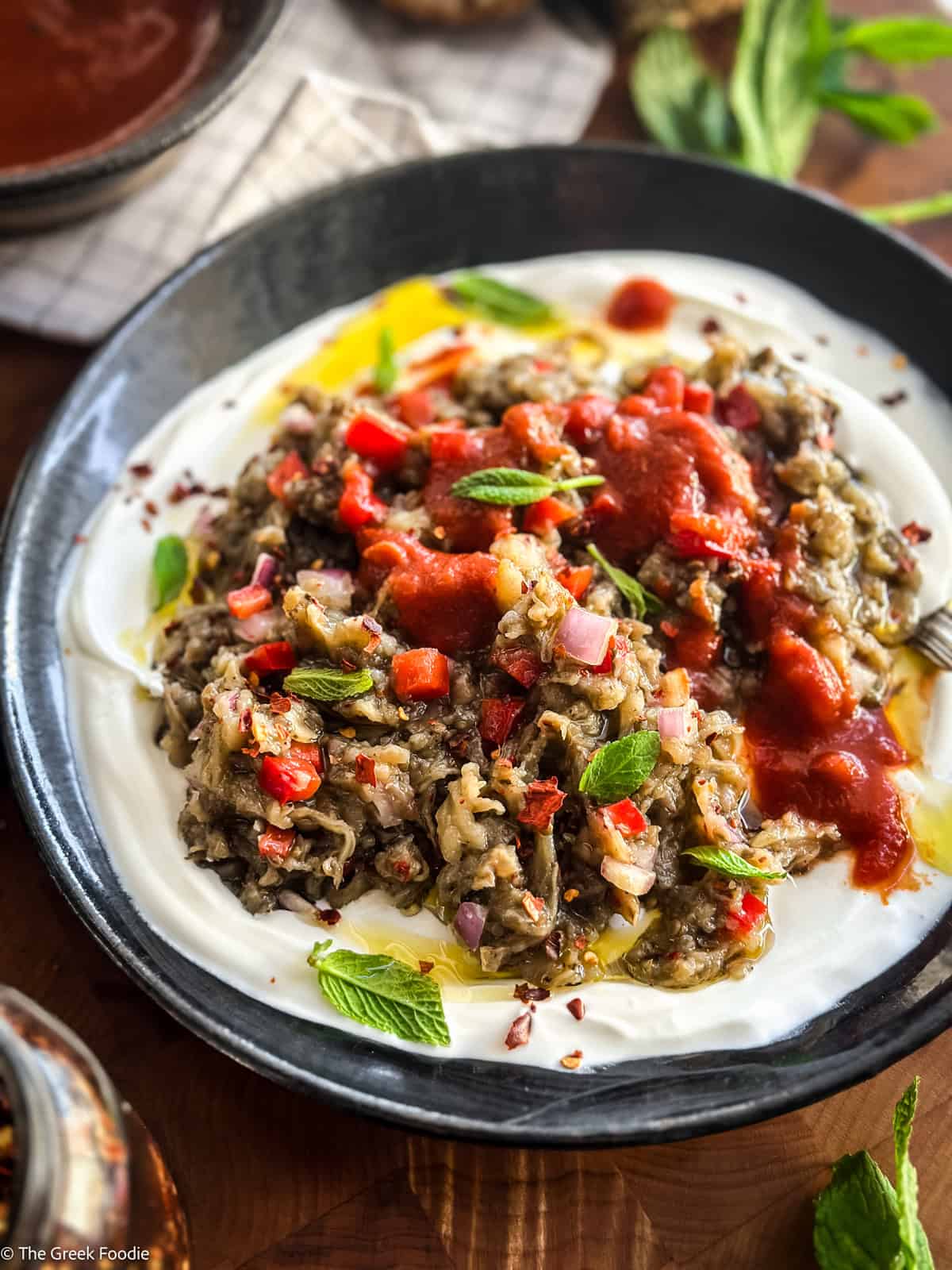
Melitzanosalata
Smoky, traditional eggplant dip
The soul of the Greek meze table. Charred eggplant, fine olive oil, a squeeze of lemon, and parsley — this is the dip that makes people reach for more bread. I char mine directly on the gas flame for maximum smokiness. Add a spoonful of capers if you like a little sharpness.
View melitzanosalata dip recipe →
Tirokafteri
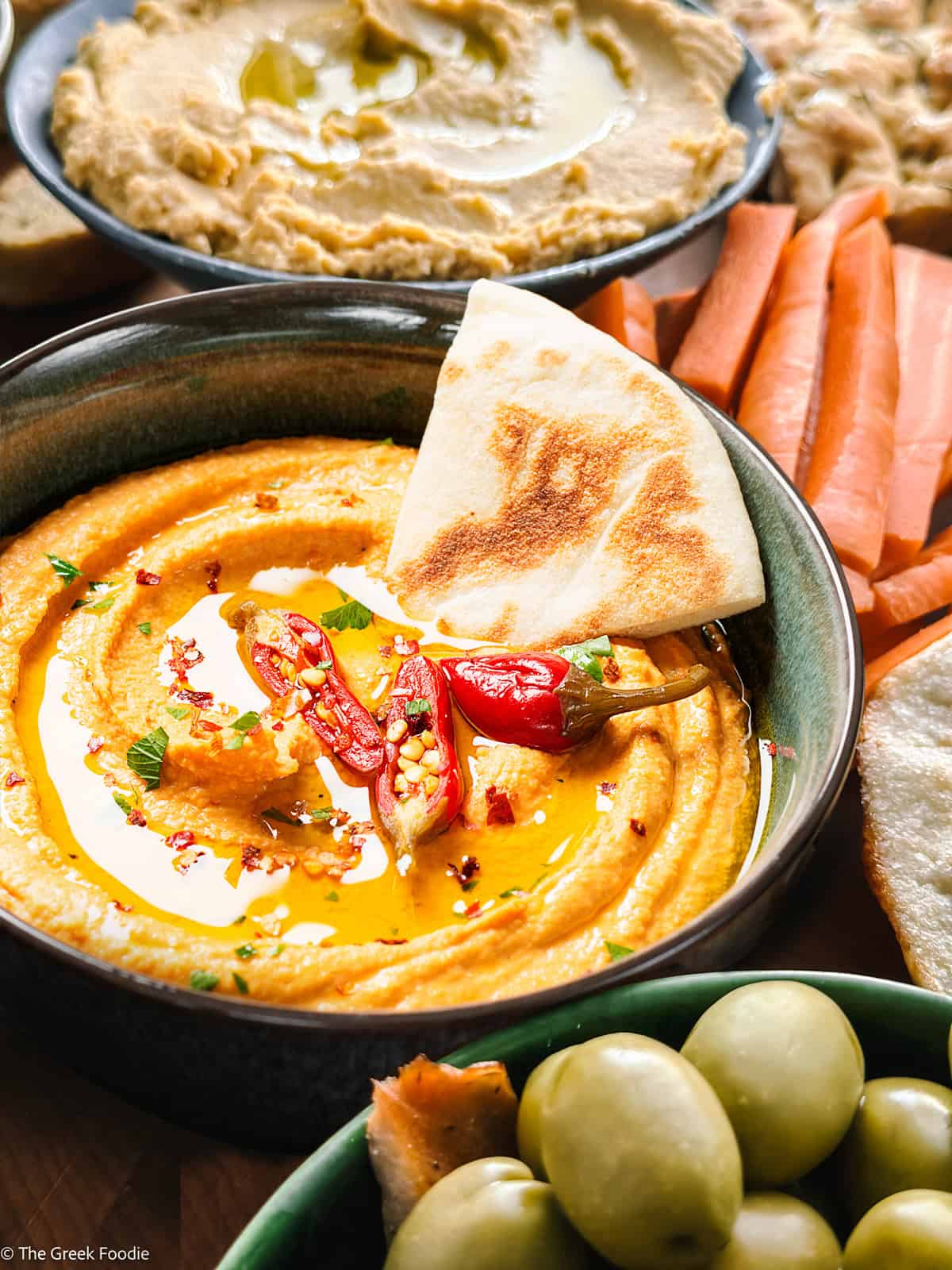
Spicy whipped feta dip with roasted peppers
Greece’s answer to heat and creaminess in one bowl. Tirokafteri is a whipped feta dip with roasted red peppers and a kick of chili — silky, sharp, with a warmth that builds slowly. It belongs on every meze table alongside the olives and the bread basket. Make it the night before and let it sit; the flavor only deepens.
View tirokafteri dip recipe →
Taramosalata
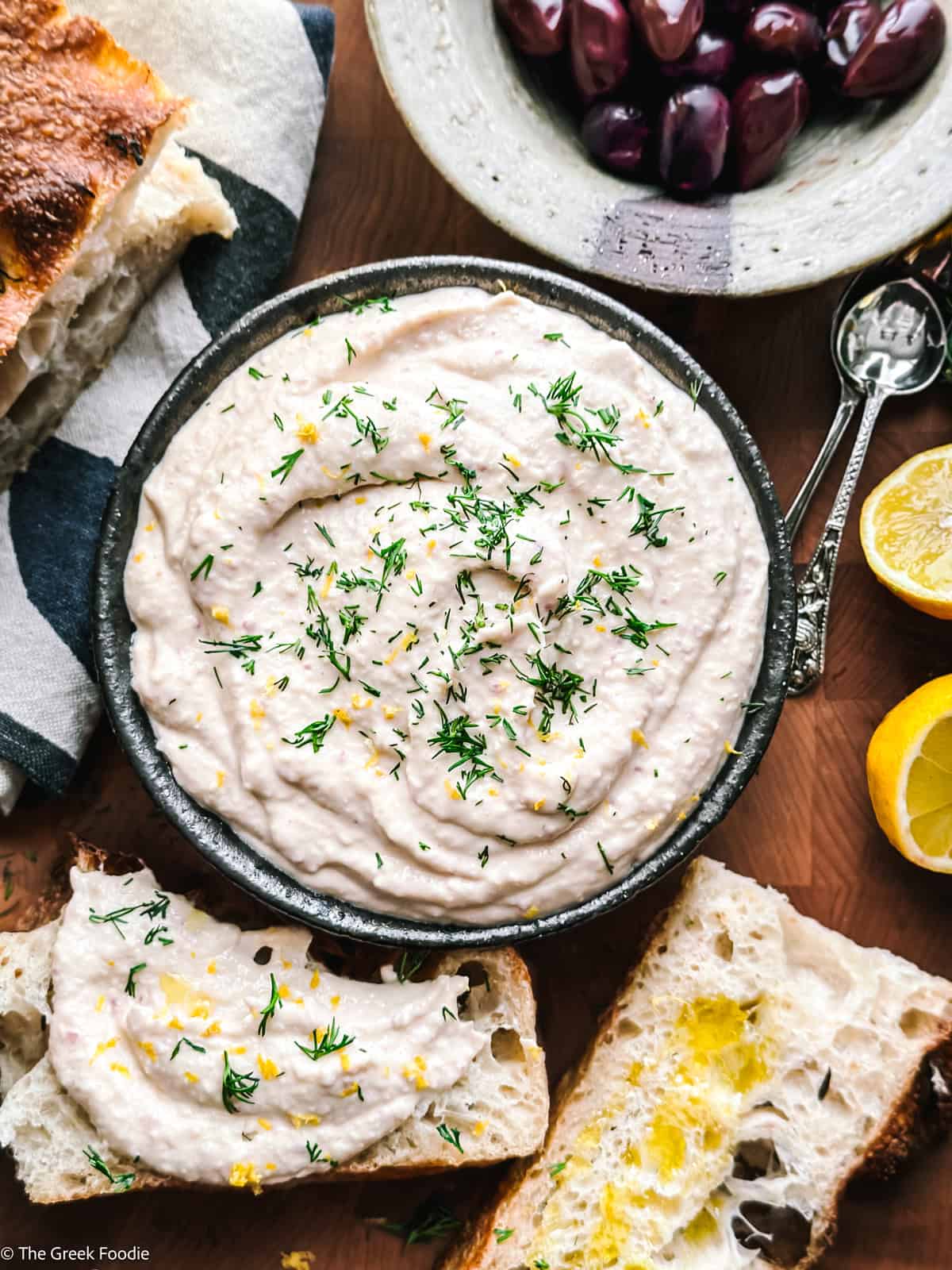
Creamy Greek fish roe dip
The real taramosalata — made with proper fish roe, day-old bread, and a river of olive oil blended slowly until silky and pale pink. Nothing like the neon-pink tub from the supermarket. Serve with bread, crackers, or alongside everything else.
View taramosalata dip recipe →
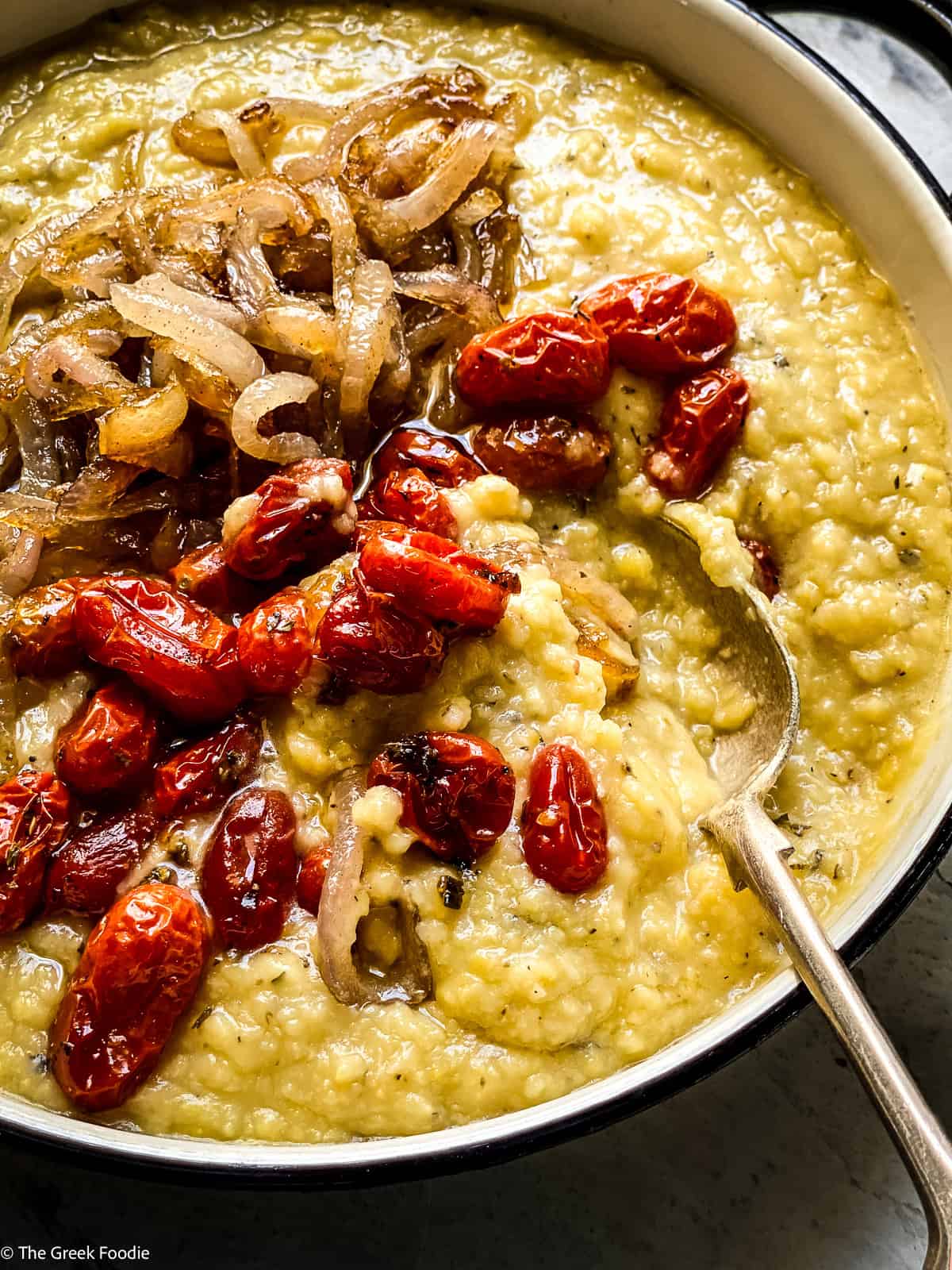
Fava Dip with Charred Onions
Creamy Santorini-style yellow split pea dip
Inspired by the famous fava of Santorini, this golden, velvety split pea purée is finished with a pile of grill-charred onion petals and a drizzle of good olive oil. Simple and deeply satisfying — a dish that proves Greek cooking doesn’t need complexity to be extraordinary.
View fava dip recipe →
Tzatziki
Cool, garlicky Greek yogurt dip with cucumber and dill
No meze table is complete without it. Strained Greek yogurt, cucumber squeezed bone-dry, plenty of garlic, a little white wine vinegar, fresh dill and a good pour of olive oil. Tzatziki is the dip that cools everything down — the one you reach for between the spicy bites, the fried things, the salty cheese. Get the texture right: thick enough to coat a pita, loose enough to scoop cleanly.
View tzatziki dip recipe →

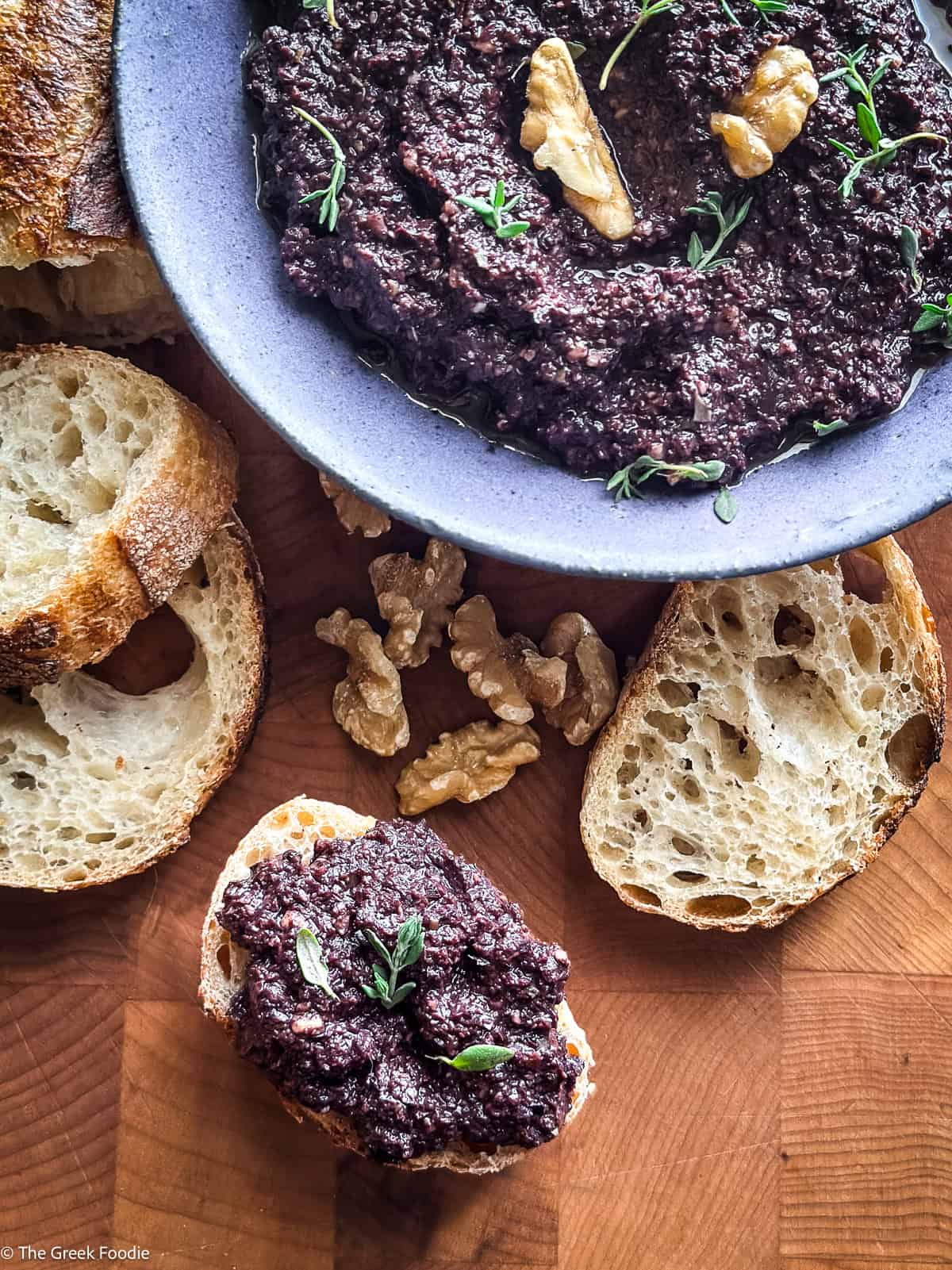
Kalamata Olive Tapenade
Bold, velvety Greek olive spread with capers and walnuts
Rich, deeply savory and ready in 15 minutes. This is the dip that makes people ask what’s in it. Kalamata olives are blended with capers, anchovies, walnuts, and good olive oil until silky and smooth. Spread it on toasted bread, serve it alongside the other dips, or eat it straight off the spoon. We won’t judge.
View kalamata olive tapenade →
ESSENTIAL
The Fritters & Vegetables
The heart of any meze spread is the fritters — crispy on the outside, tender within, and impossible to stop eating. These are the dishes people hover near.
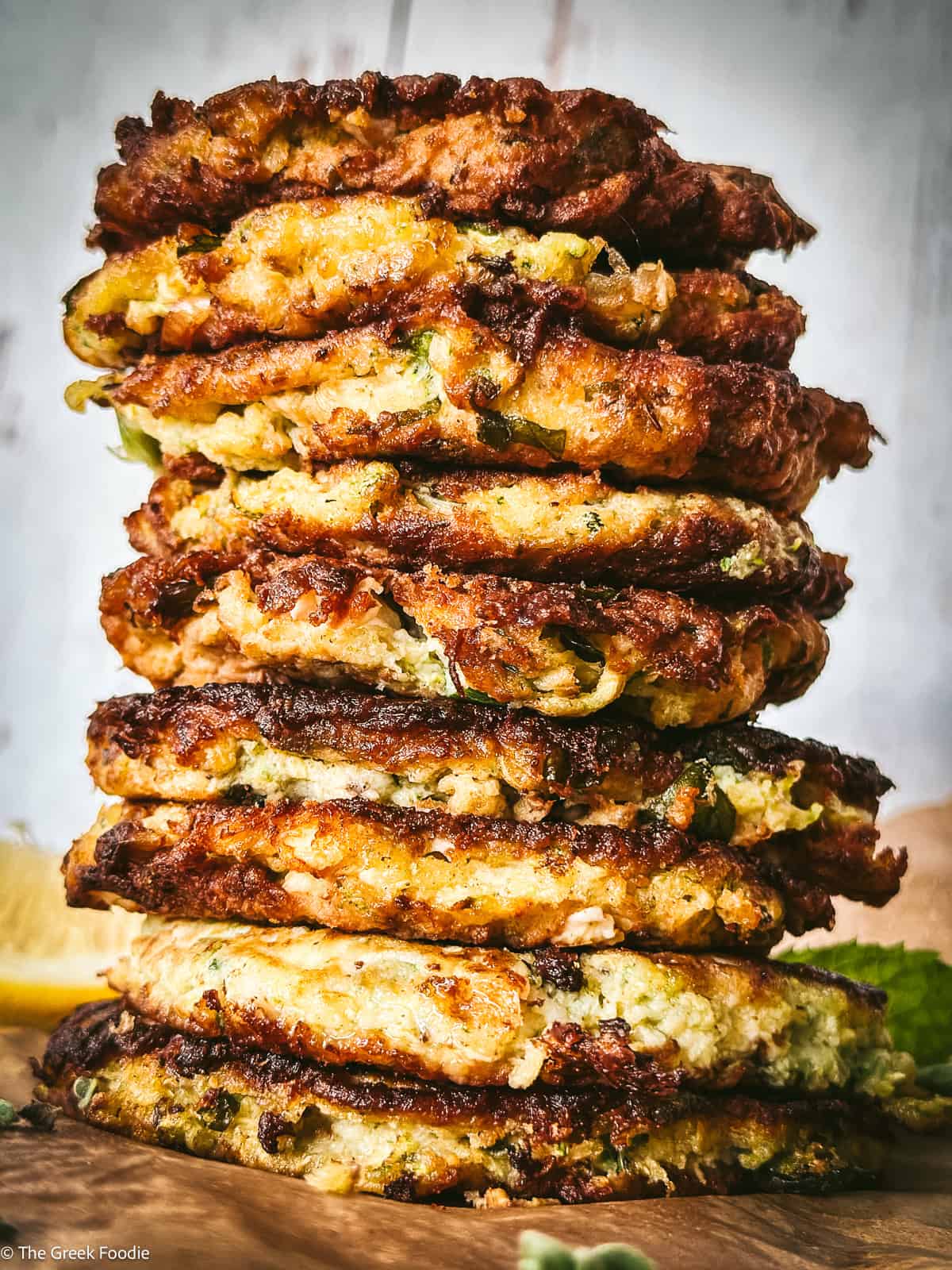
Kolokithokeftedes
Classic Greek zucchini fritters with feta and greens
The meze fritter everyone knows, and everyone loves. Grated zucchini, crumbled feta, dill, and parsley — shaped into little patties and fried until deeply golden. I always make a double batch because the first one disappears before it reaches the table. You can bake them too, rolled in breadcrumbs, but honestly, fried is better.
View kolokithokeftedes recipe →
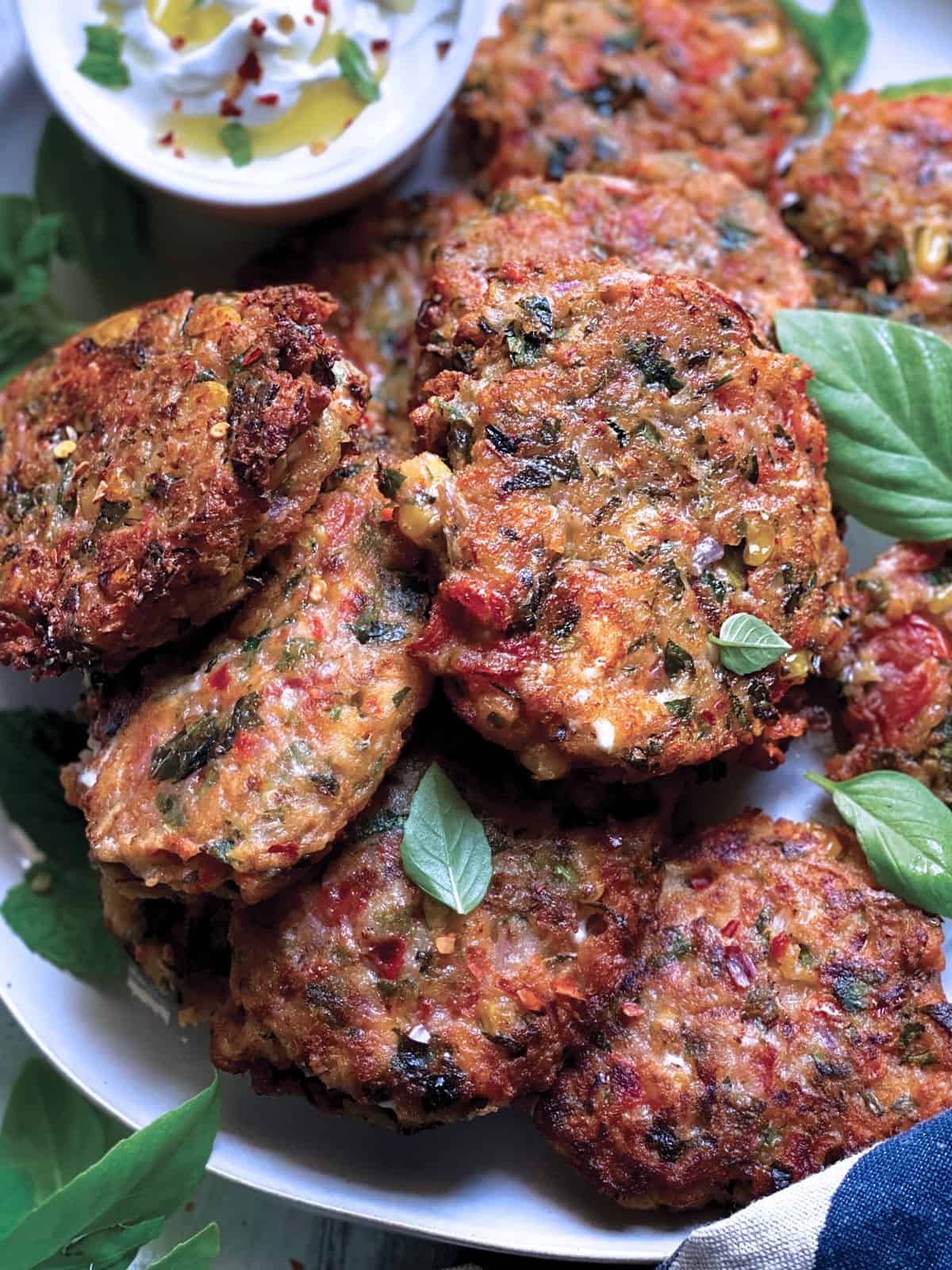
Tomatokeftedes
Sun-ripened Santorini tomato fritters with mint
Santorini’s most iconic meze. Ripe tomatoes grated and drained until their juices concentrate, then folded with onion, scallions and fresh mint into a thick batter that fries up into something extraordinary — deeply savory, slightly sweet, with a color that looks like the island itself. The secret is patience: let the tomatoes drain for a full hour.
View tomatokeftedes recipe →
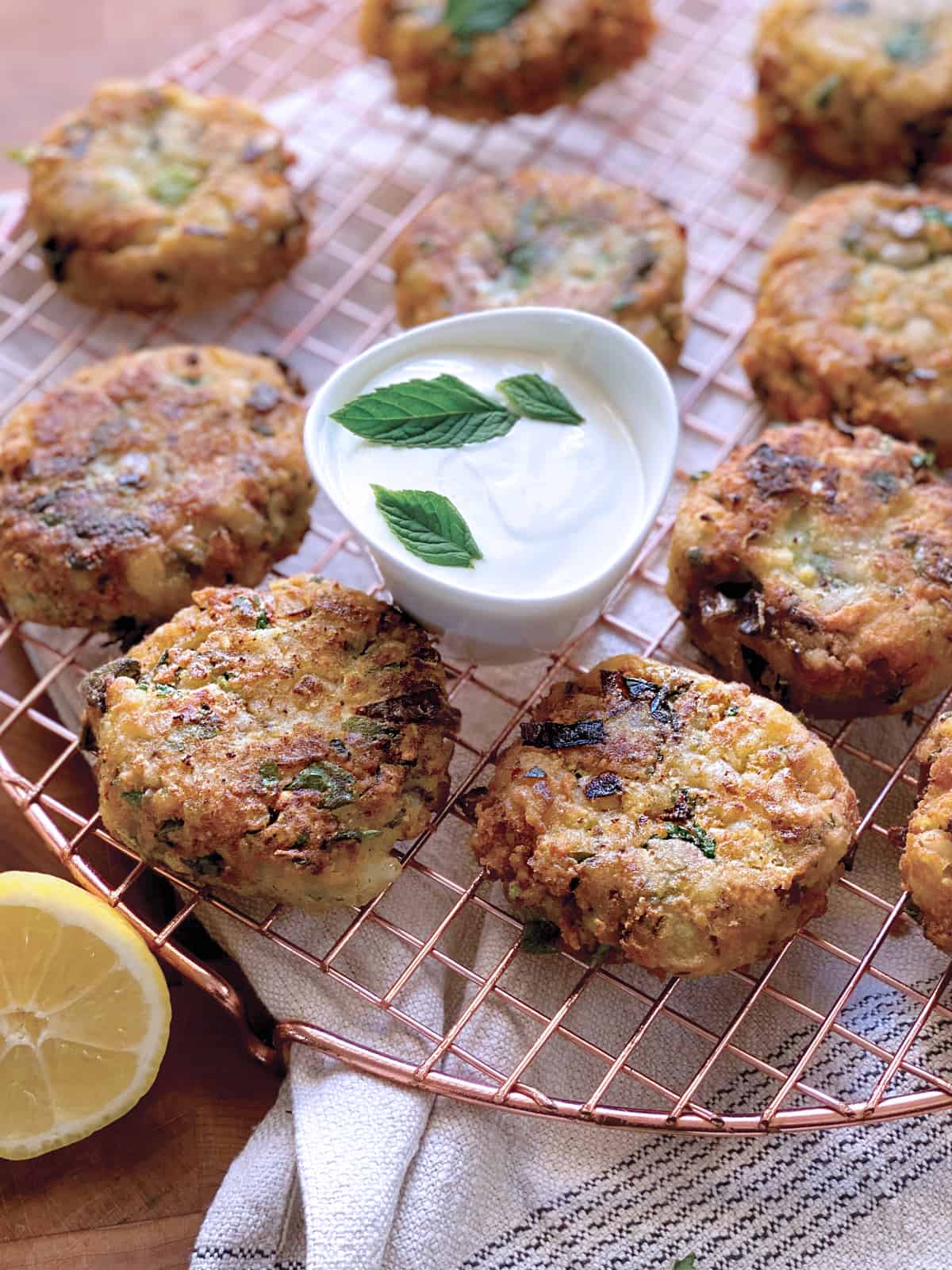
Revithokeftedes
Traditional Sifnos-style chickpea patties
Sifnos is the island of chickpeas, and these patties are its greatest contribution to the meze table. Mashed chickpeas, fresh mint, cinnamon, clove and paprika — shaped, floured and fried until golden all over. Earthy, fragrant, and completely addictive. Serve with thick yogurt or a pile of boiled greens on the side.
View revithokeftedes recipe →
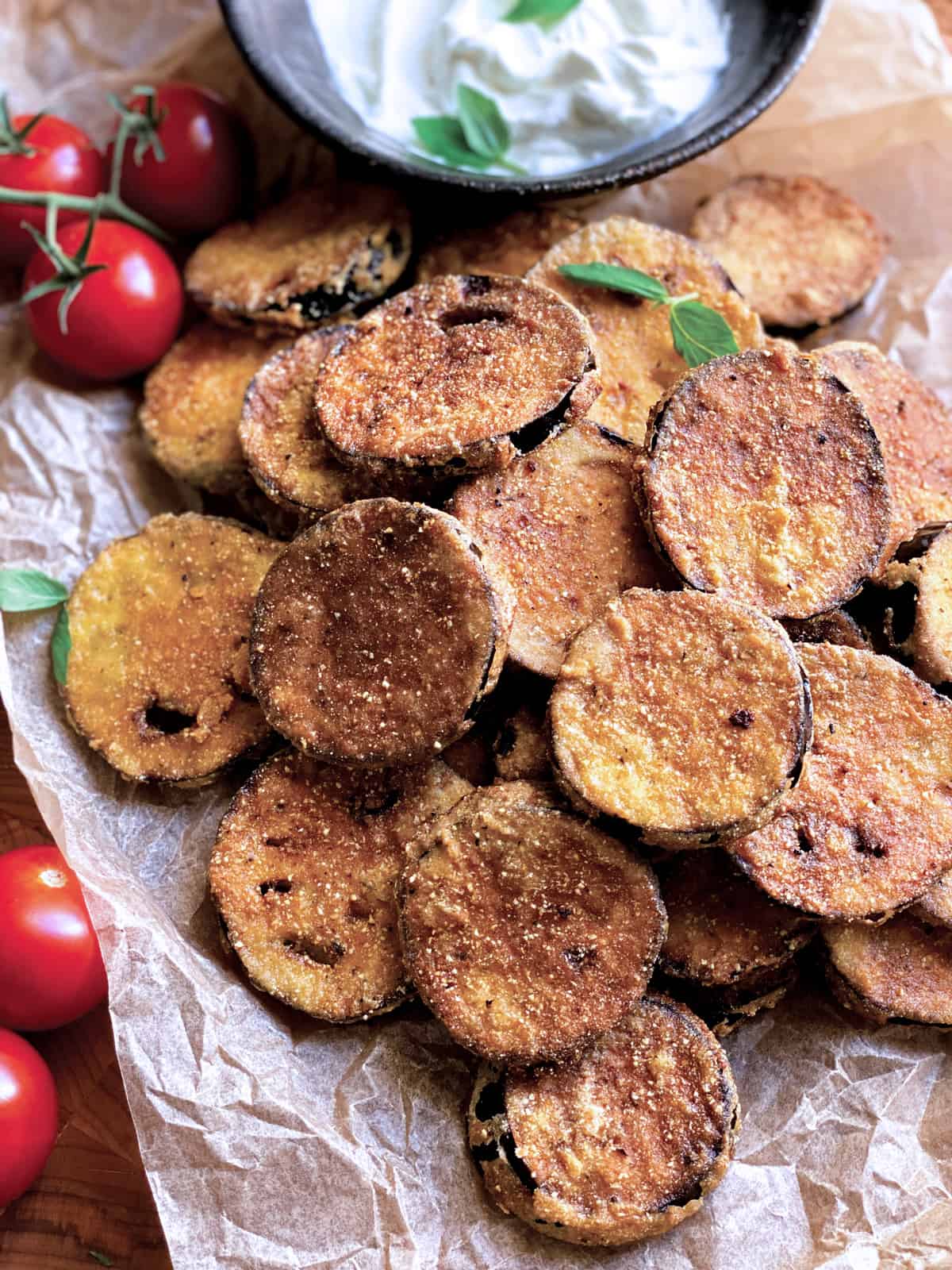
Crispy Fried Eggplant
A classic, ultra-simple meze
This is the fried eggplant you get at every good taverna — and it tastes nothing like what you make at home, until now. The coating is a mix of cornflour, semolina, paprika and oregano. The technique is the thing: soak the slices, dry them, flour them, then dip each one briefly in cold water before it goes straight into the oil. That flash of steam is what creates the shattering crisp crust. Serve with tzatziki, or simply as is.
View fried eggplant recipe →
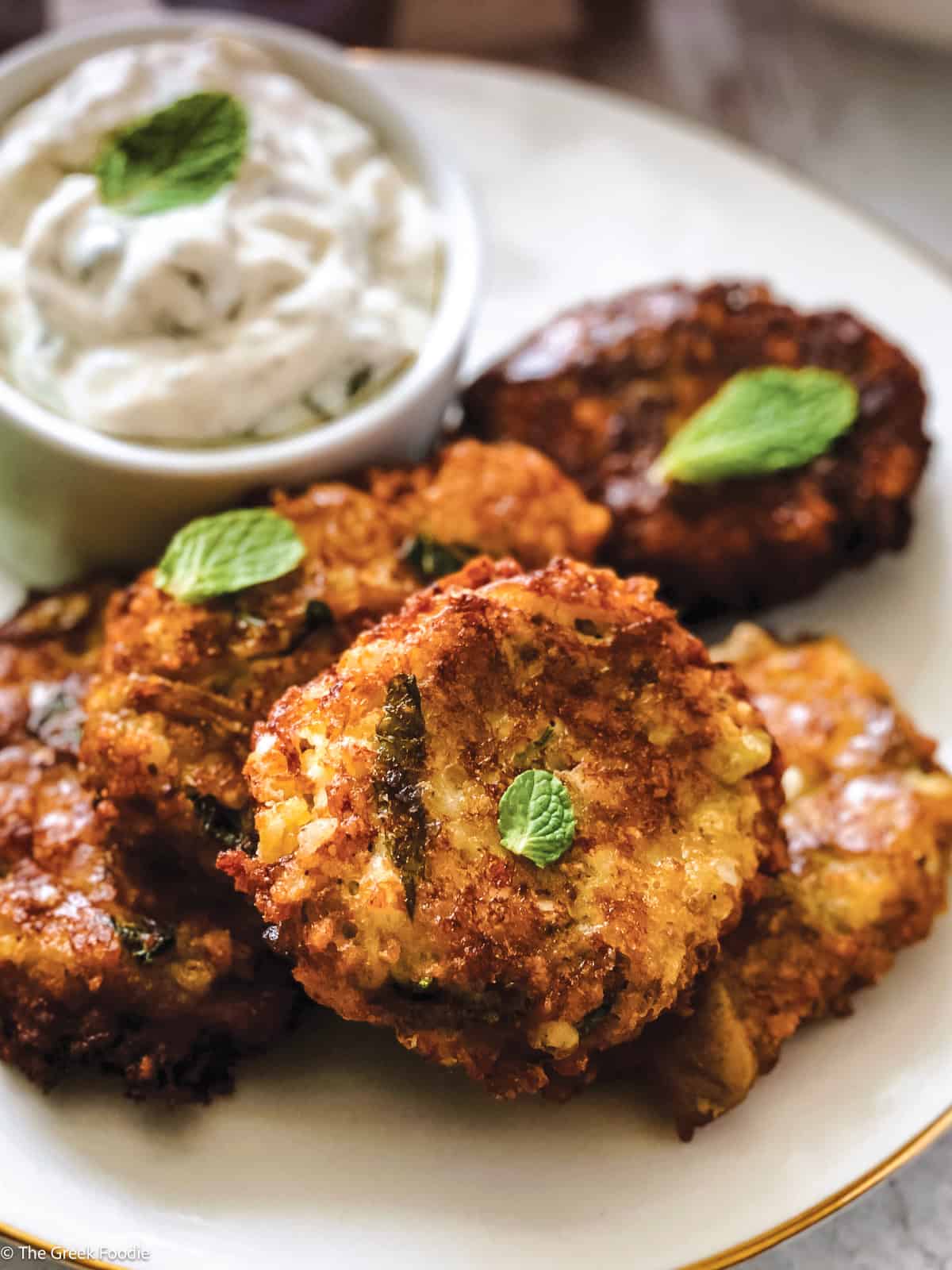
Eggplant Fritters
Summer-bright, herby fritters with feta and basil
A more elaborate take on fried eggplant — here, the flesh is cubed small and mixed with diced tomato, horn pepper, garlic, fresh basil, a splash of wine vinegar, and crumbled feta, then tossed in a herby batter. The vinegar brightens everything; the feta keeps each fritter moist at the center. These are summer on a plate. Don’t skip the soak in salted water — it draws out bitterness and excess liquid in one step.
View eggplant fritters recipe →
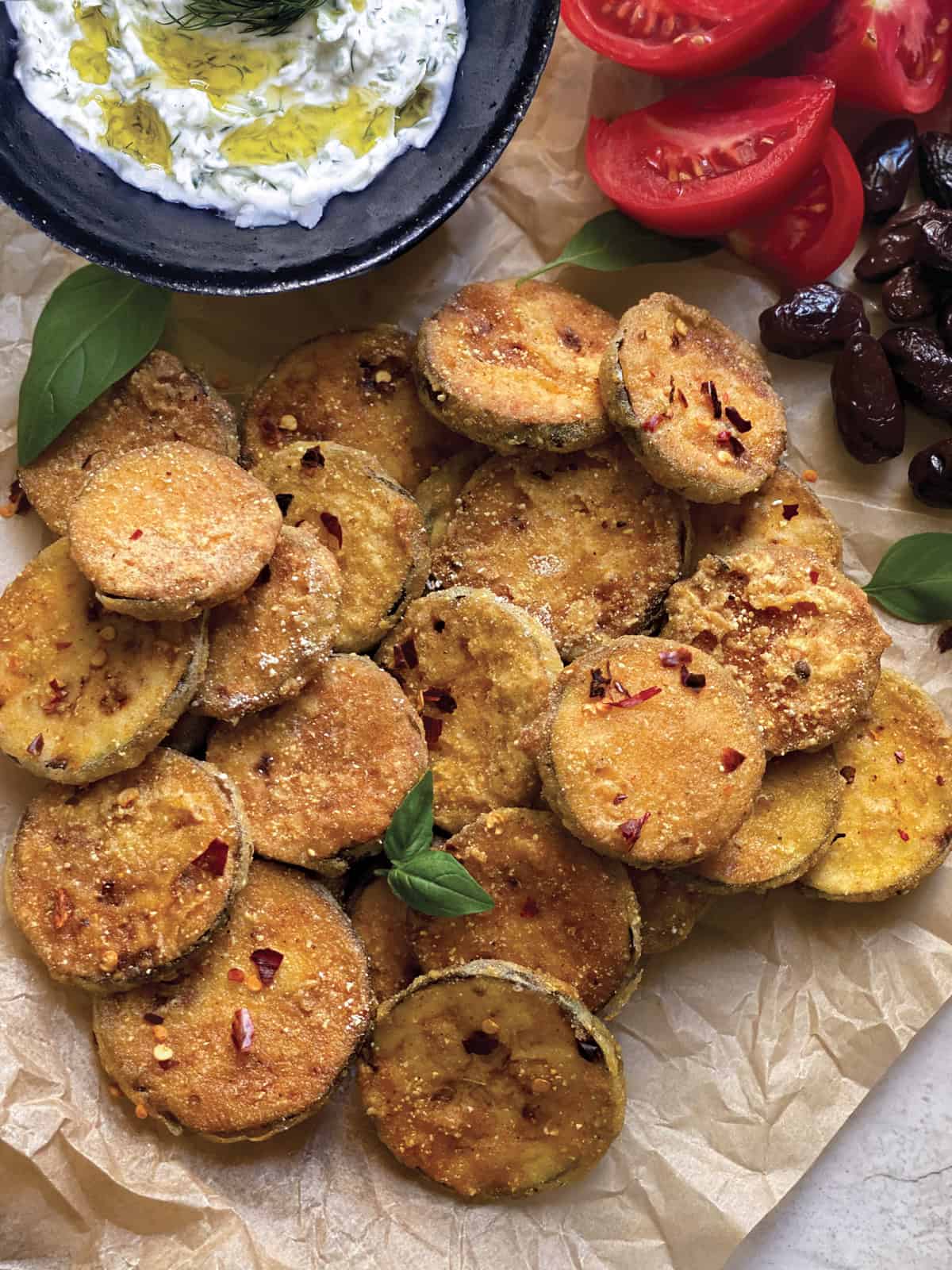
Crispy Fried zucchini
Golden, crisp rounds — the simplest thing on the table
Thin zucchini rounds, coated in a light semolina-and-flour dusting, fried in hot olive oil until their edges go deeply golden and their centers stay just tender. This is the dish that disappears fastest. No feta, no herbs needed — just good salt the moment they come out of the oil. Serve with tzatziki alongside, or eat them standing at the stove before they even reach the table. No one will blame you.
View fried zucchini recipe →
FROM THE SEA
Seafood Mezedes
In Greece, seafood and meze are inseparable. Whether you’re at a table by the water or in your kitchen in the city, these are the dishes that bring that feeling home. The rule is simple: good oil, high heat, and don’t overcook anything.
Kalamarakia
Light, fragrant, golden-fried calamari
In Greece, seafood and meze are inseparable. Whether you’re at a table by the water or in your kitchen in the city, these are the dishes that bring that feeling home. The rule is simple: good oil, high heat, and don’t overcook anything.
View kalamarakia recipe →

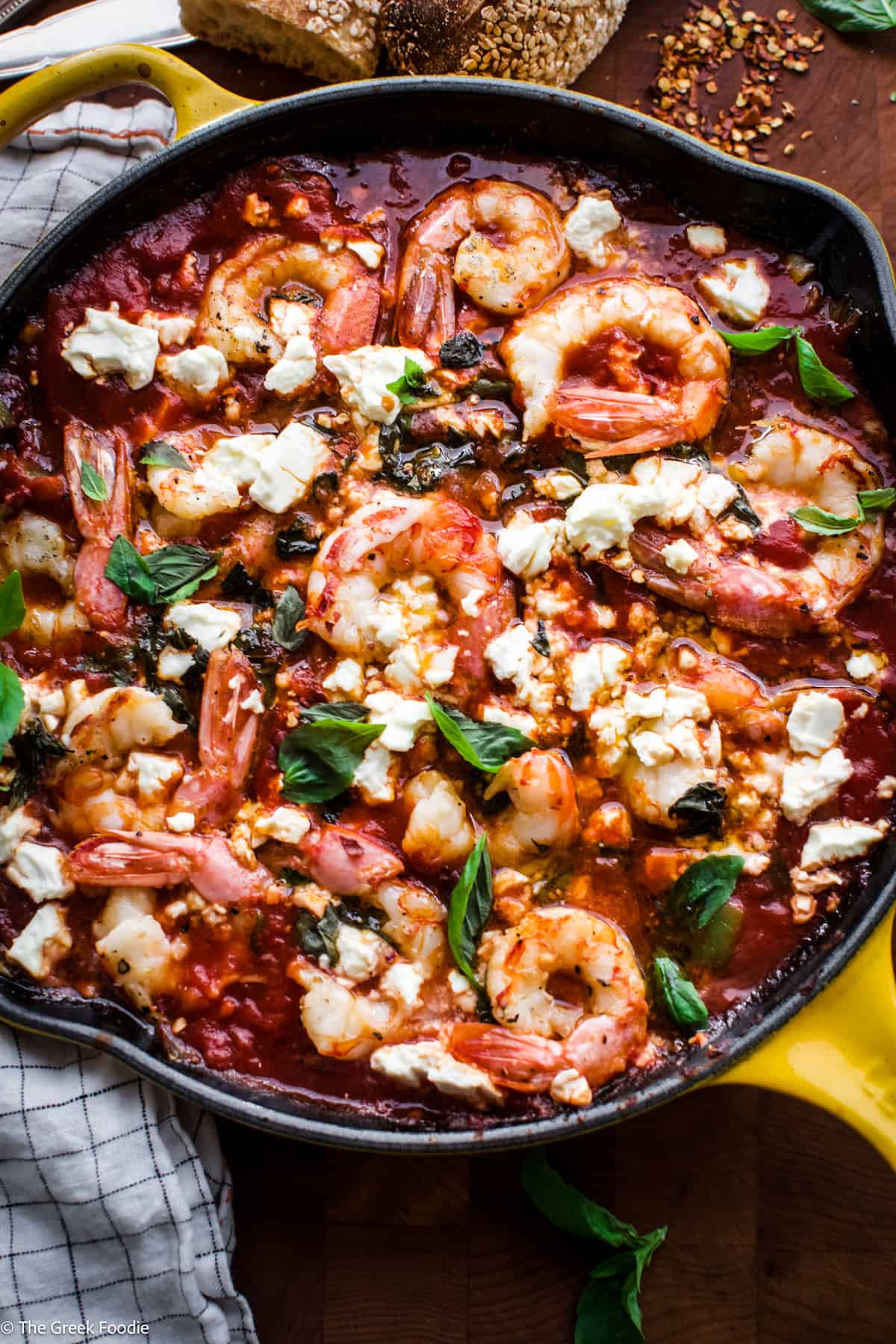
Shrimp Saganaki
Spicy and aromatic with tomatoes, feta, ouzo and mint
Plump shrimp cooked in a sauce of grated tomatoes, ouzo, garlic and chili, finished with crumbled feta and fresh mint just before it comes off the heat. The ouzo lifts everything; the feta melts into the sauce in soft, salty pockets. This is the dish that clears the table of bread in minutes. Use the largest shrimp you can find, and don’t overcook them.
View shrimp saganaki recipe →
SHOWSTOPPERS
The Cheese & Egg Mezedes
If you’re only making two or three things for a quick meze night, make these. They’re fast, dramatic, and everyone talks about them.
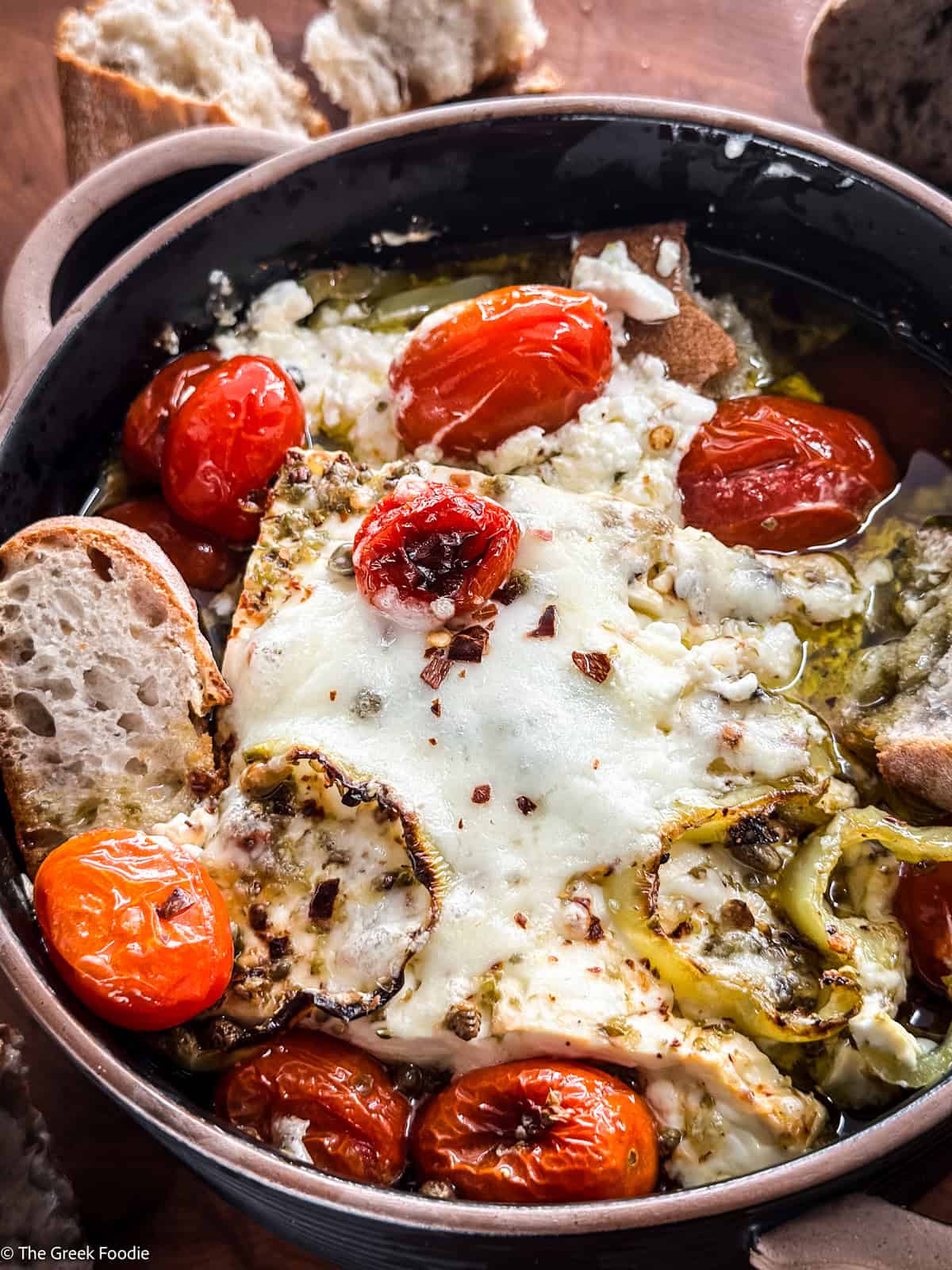
Bouyourdi
Spicy baked cheese meze from Thessaloniki
Feta and kasseri baked together with tomatoes, hot horn pepper, chili flakes, fresh oregano, and a flood of olive oil. It comes out of the oven bubbling, spicy, fragrant — serve immediately with a stack of warm bread. This is Thessaloniki in a dish.
View bouyourdi dip recipe →
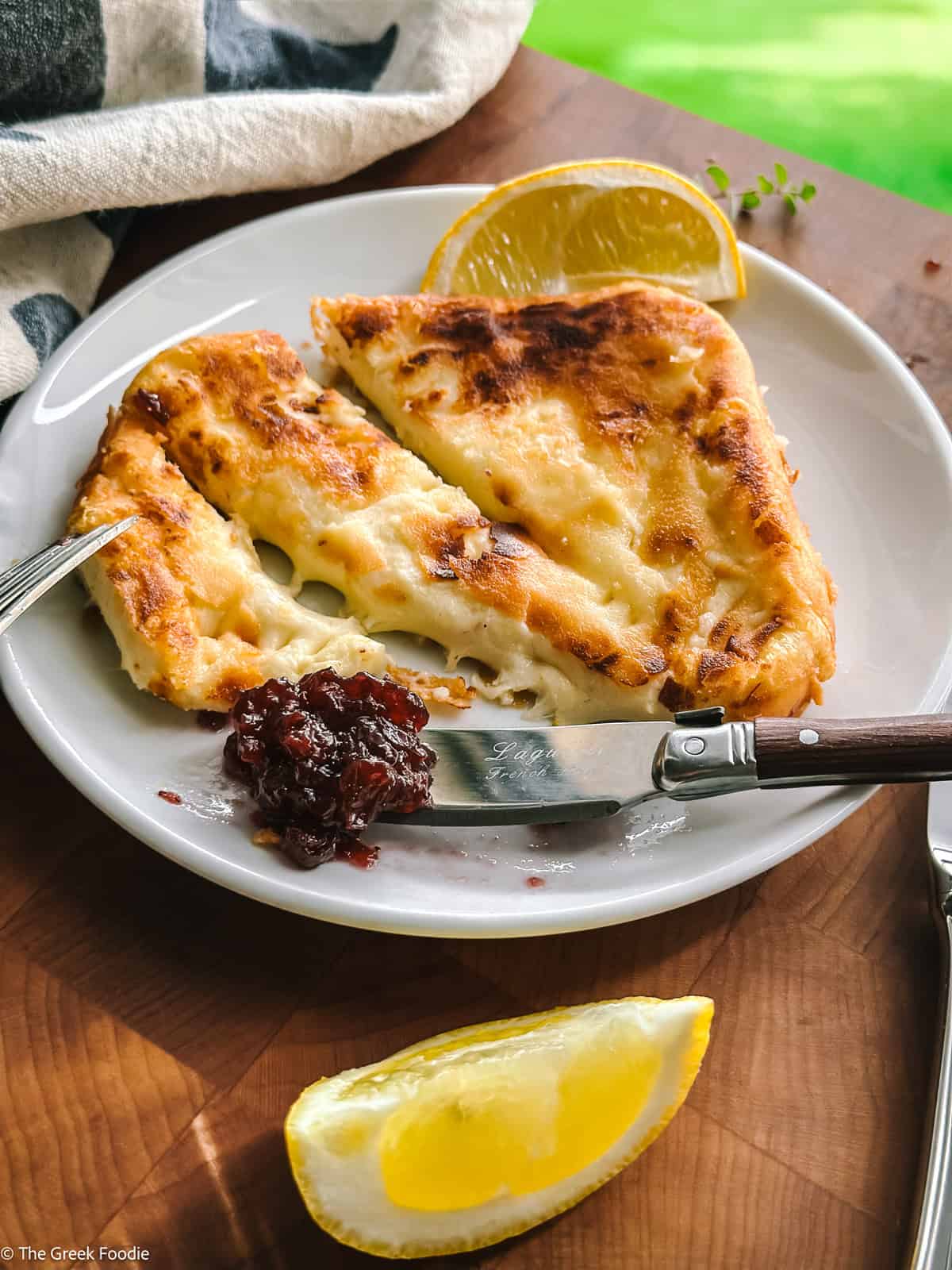
Cheese Saganaki
Sweet-savory molten fried cheese
Thick graviera (Greek gruyère) slices, dampened, dusted in flour, and fried until golden and molten at the center. Served immediately with fig jam on the side. That combination of salty, caramelised cheese and sweet fig is the reason people go to Greek tavernas.
View cheese saganaki recipe →
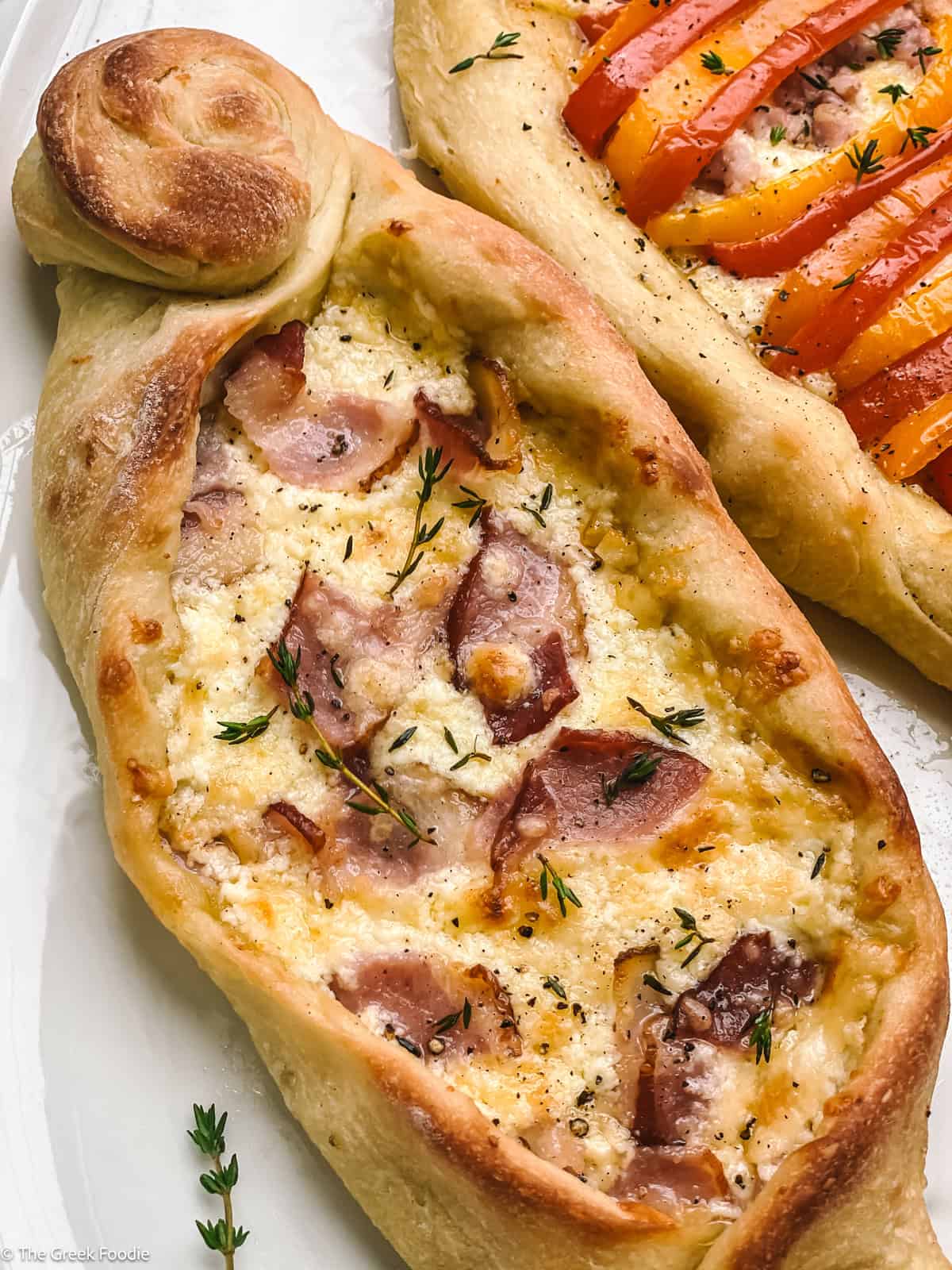
Peinirli
Open boat-shaped pizza with cheese and toppings
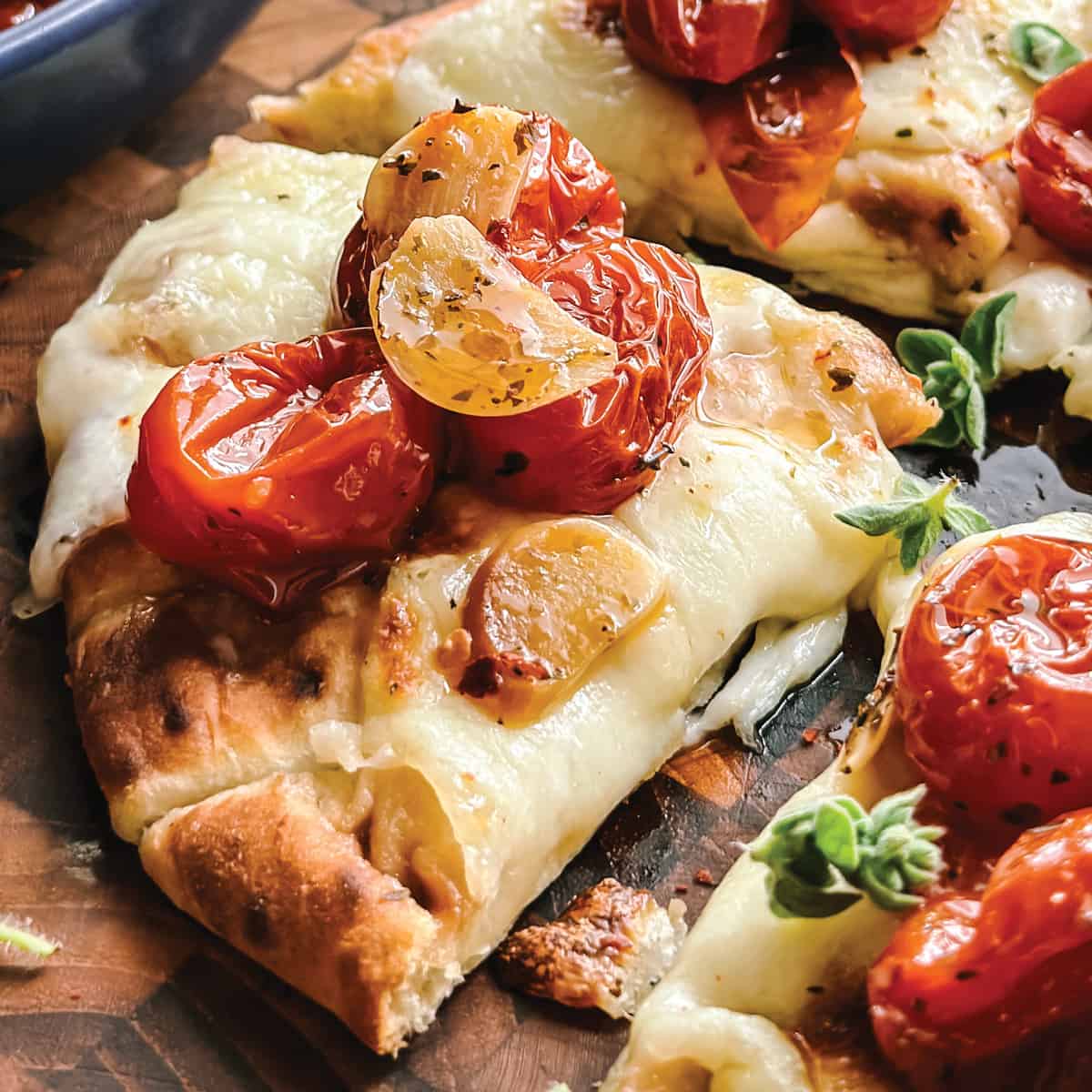
Think of peinirli as Greece’s answer to a small, open-faced pizza — a soft, boat-shaped dough baked until golden at the edges and molten in the middle with kasseri, a cracked egg, and whatever else you like: pastourma, mushrooms, speck. They come from Constantinople, and they’ve never gone out of fashion. Cut them into strips and eat them straight from the tray, while the cheese is still pulling.
View peinirli pizza recipe →
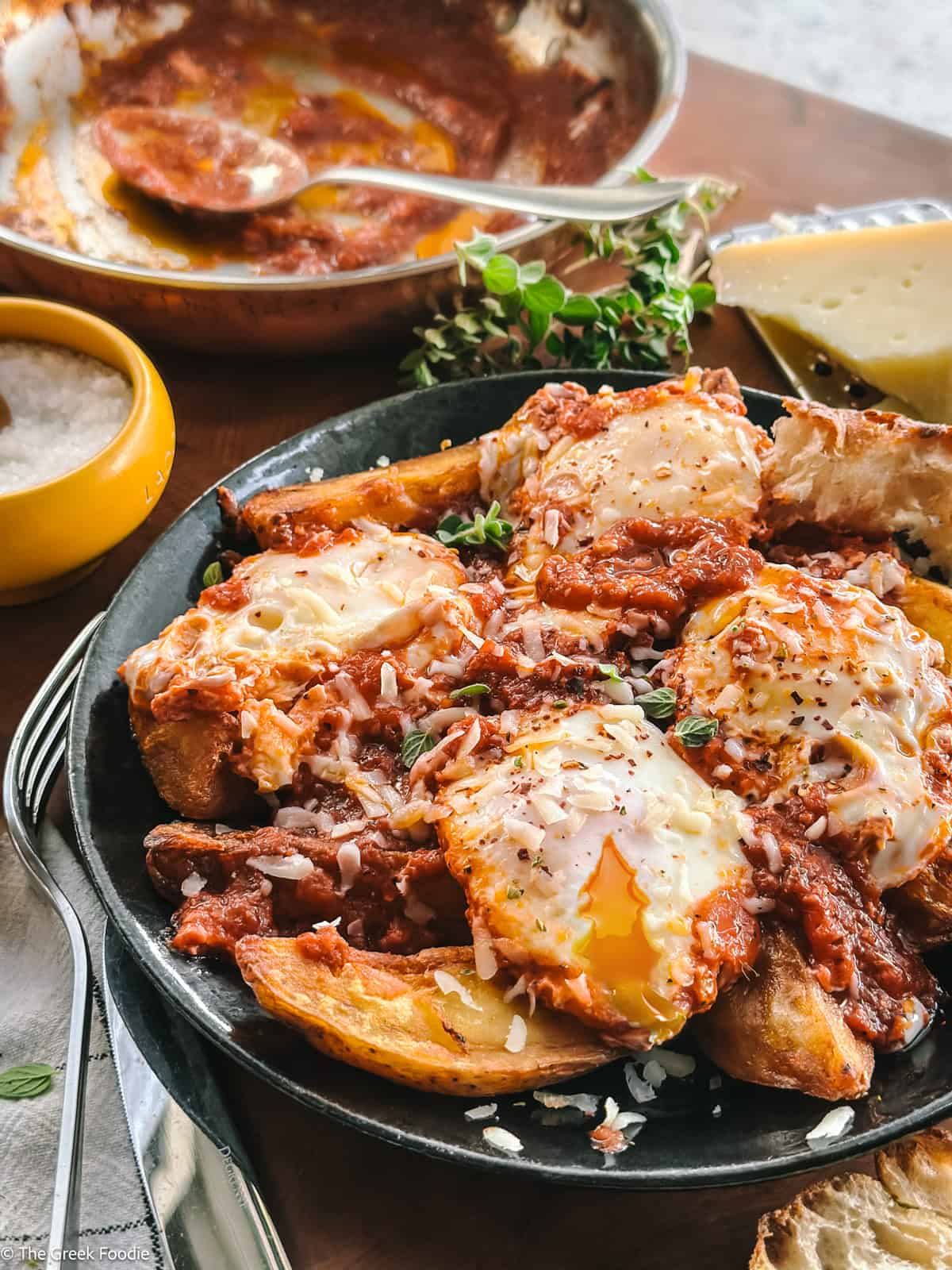
Eggs in a tomato sauce
Softly set eggs in a spiced, garlicky tomato base served over fries
Ripe tomatoes cooked down with garlic, olive oil and a pinch of chili into a thick, fragrant sauce, then eggs cracked in and the lid put on until the whites are just set and the yolks still run. Scatter feta and fresh herbs over the top and bring the pan straight to the table. This is the kind of meze that exists in every Greek kitchen and never makes it onto a restaurant menu — which is exactly why it deserves a place on yours.
View eggs in a tomato sauce recipe →
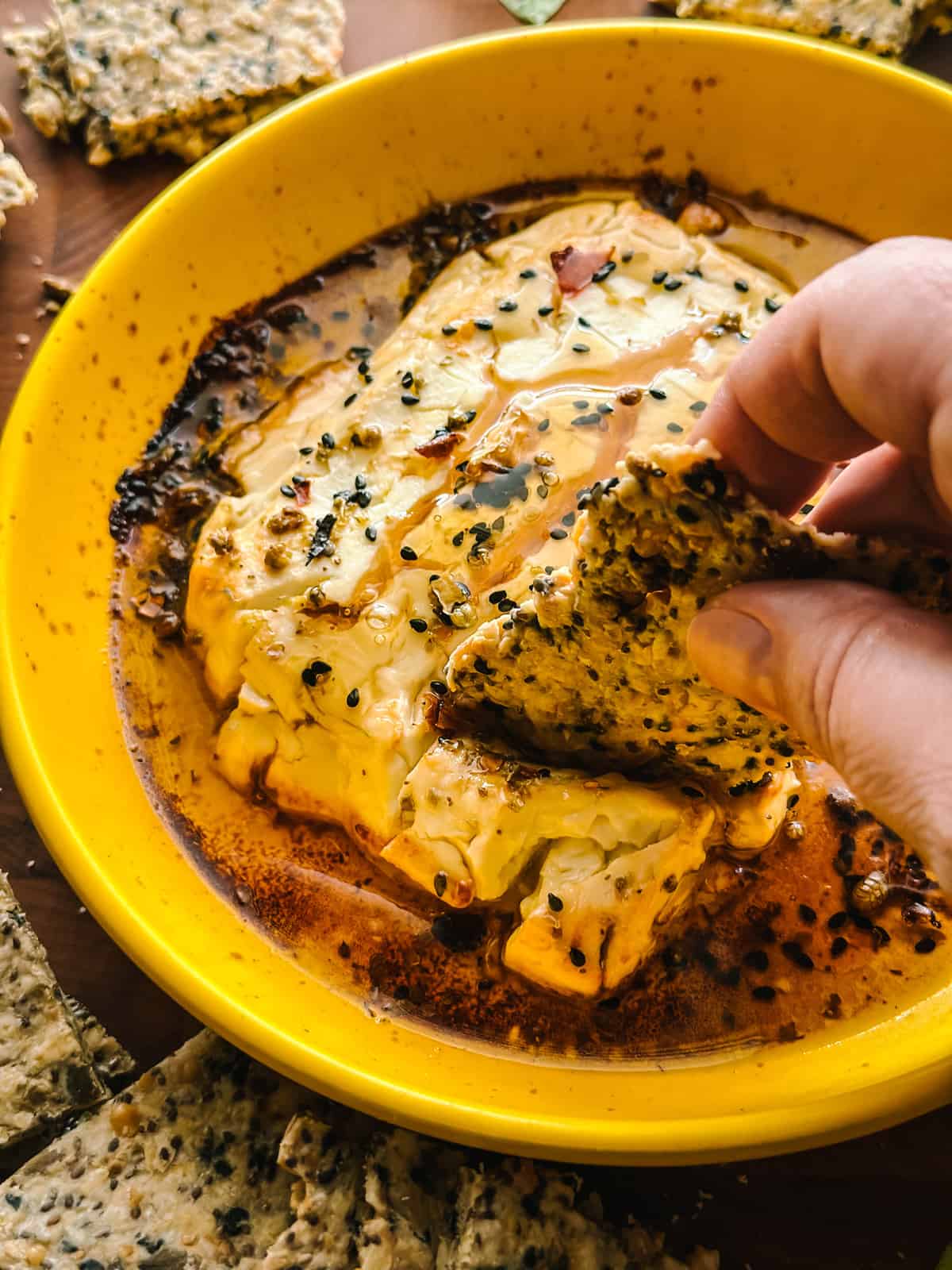
Baked feta with honey and sesame
Crisp, golden, sweet-salty and completely irresistible
A thick slab of feta wrapped in sesame-coated filo and baked until the pastry is shatteringly crisp and the cheese inside softens and warms through. Drizzle with good thyme honey the moment it comes out of the oven. Sweet, salty, crunchy, creamy — all four things at once. Cut it at the table and watch it disappear in under a minute.
View baked feta with honey and sesame recipe →
REGIONAL & UNEXPECTED
The Ones to Discover
If you’re only making two or three things for a quick meze night, make these. They’re fast, dramatic, and everyone talks about them.
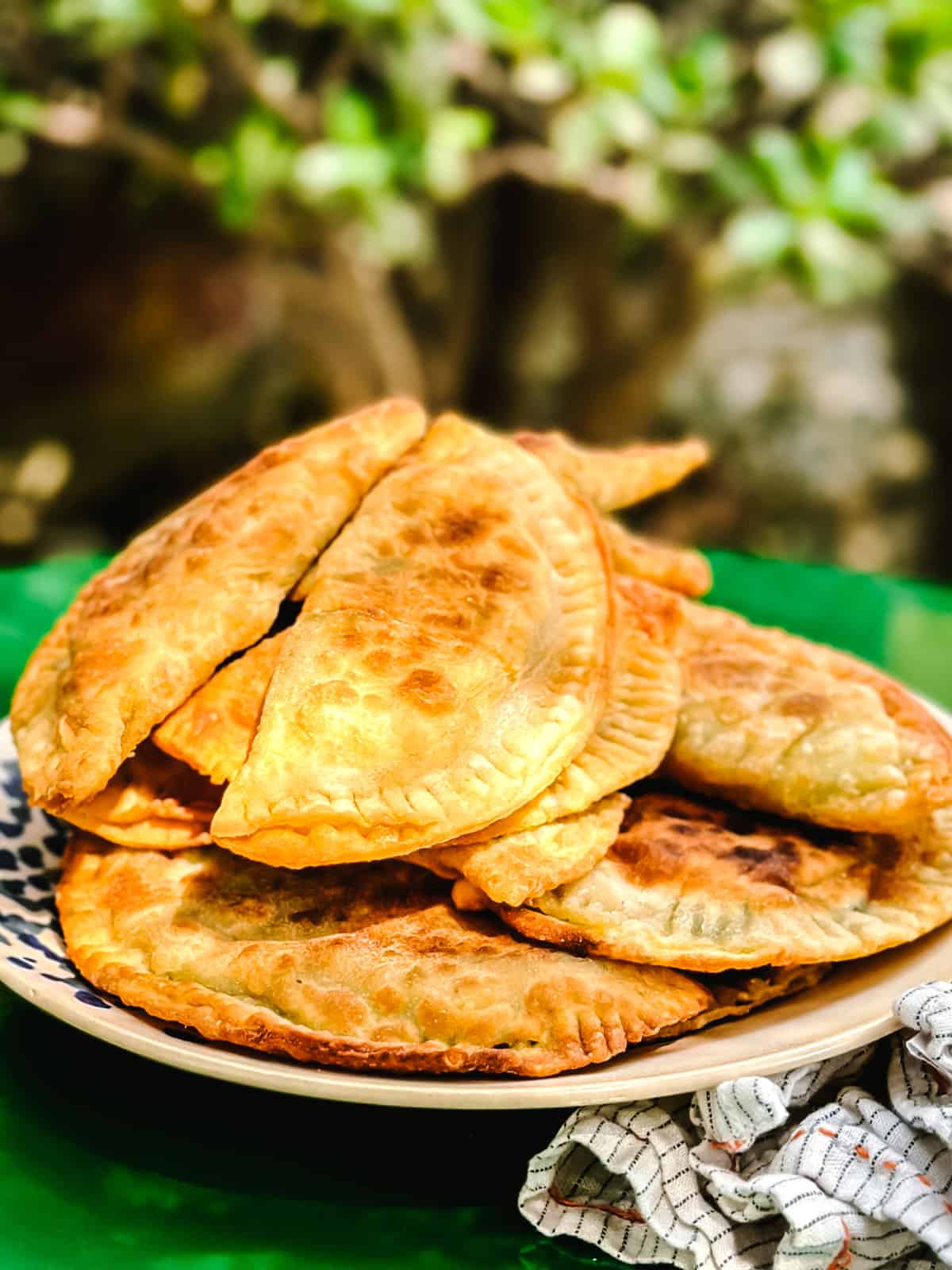
Kalitsounia from Chania
Cretan phyllo pastries filled with fresh mizithra and greens
Small, half-moon pastries from the old city of Chania, filled with fresh mizithra cheese and greens, then fried until golden and puffed. These are the kind of thing you eat at a kafeneion in Chania’s covered market at 10 am and think about for years afterwards.
View kalitsounia recipe →
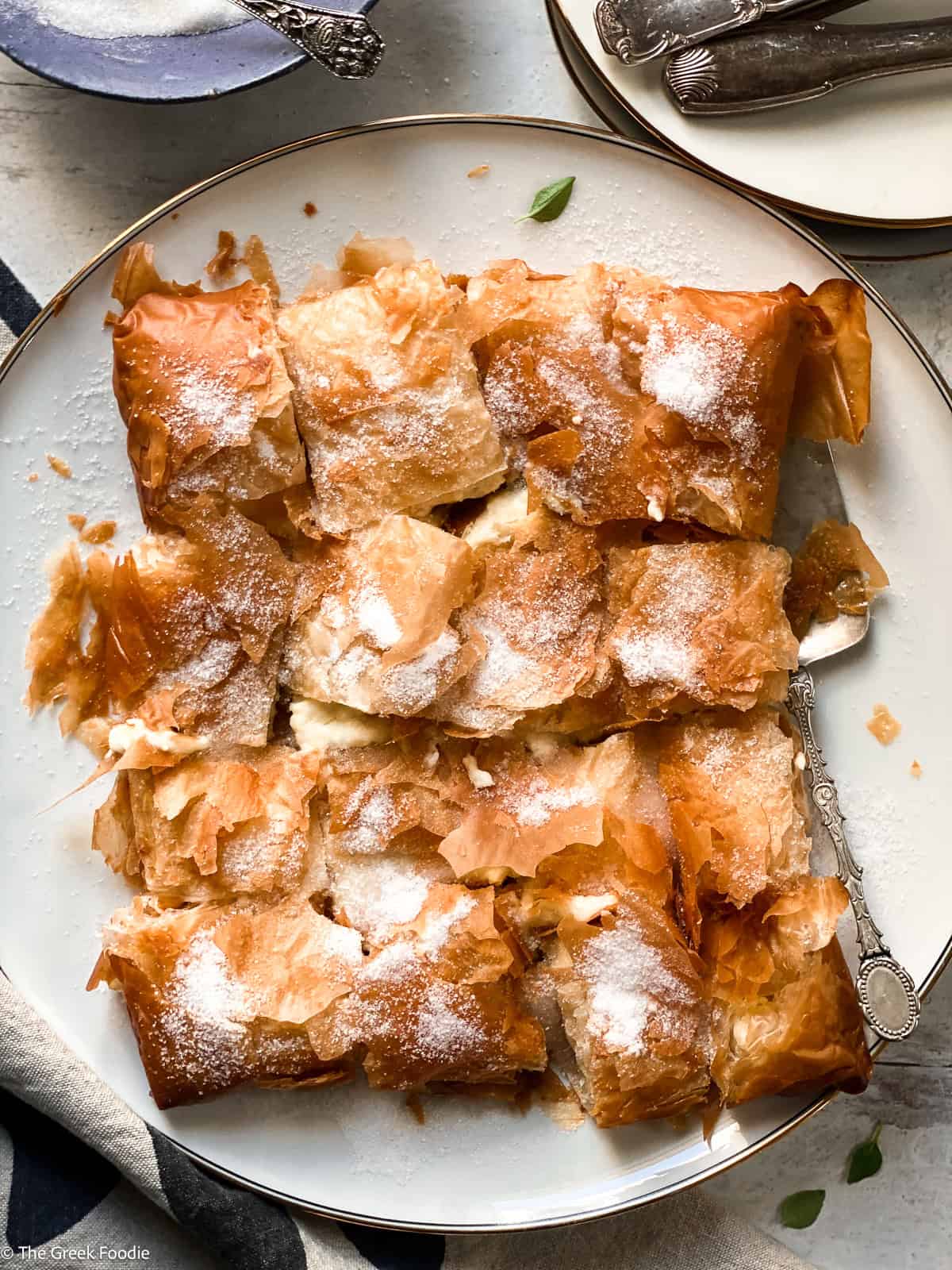
Bougatsa Chaniotiki
Flaky Cretan phyllo pie with mizithra filling
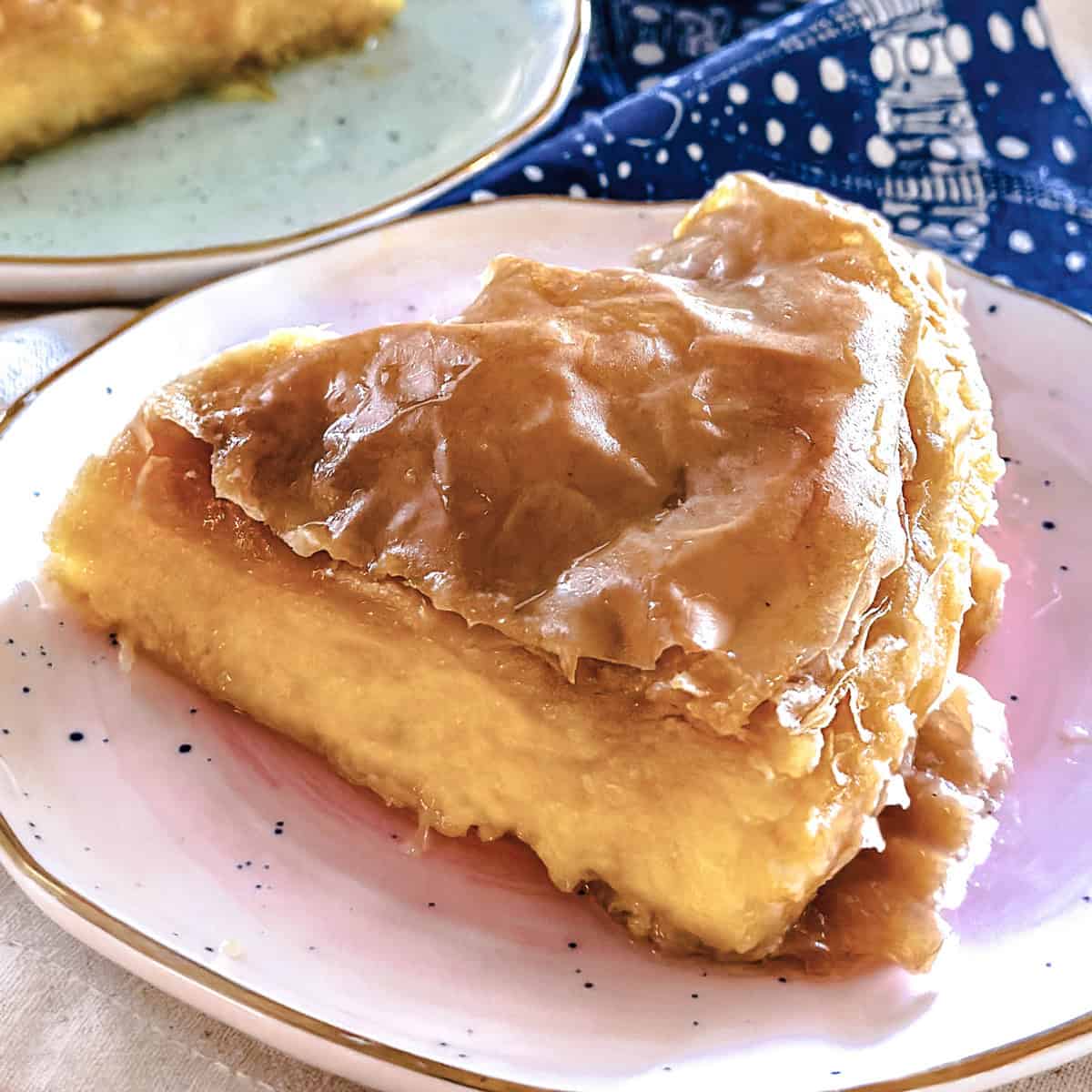
Chania’s bougatsa is its own thing entirely — thicker phyllo, a creammy filling from mizithra and staka, cut into generous squares and dusted heavily with sugar. It comes from the bougatsa shops that open before dawn and close when they sell out, usually by 10am. As a meze, serve it cut into small warm squares alongside savory plates — the sweetness is a welcome counterpoint. Completely unlike anything else on this list, and completely essential.
View bougatsa chaniotiki recipe →
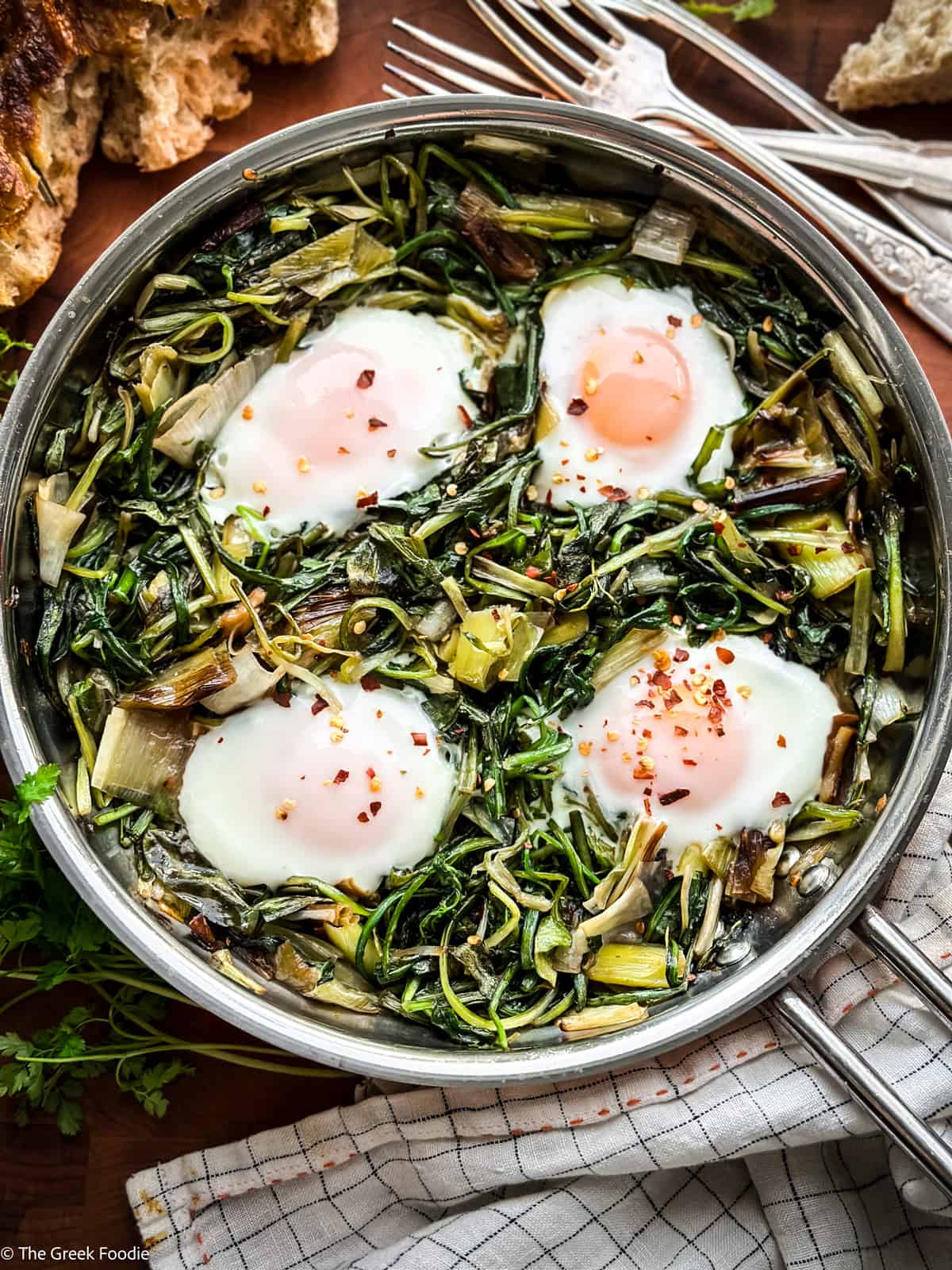
Eggs with greens (Green Shakshuka)
Softly set eggs in wilted greens
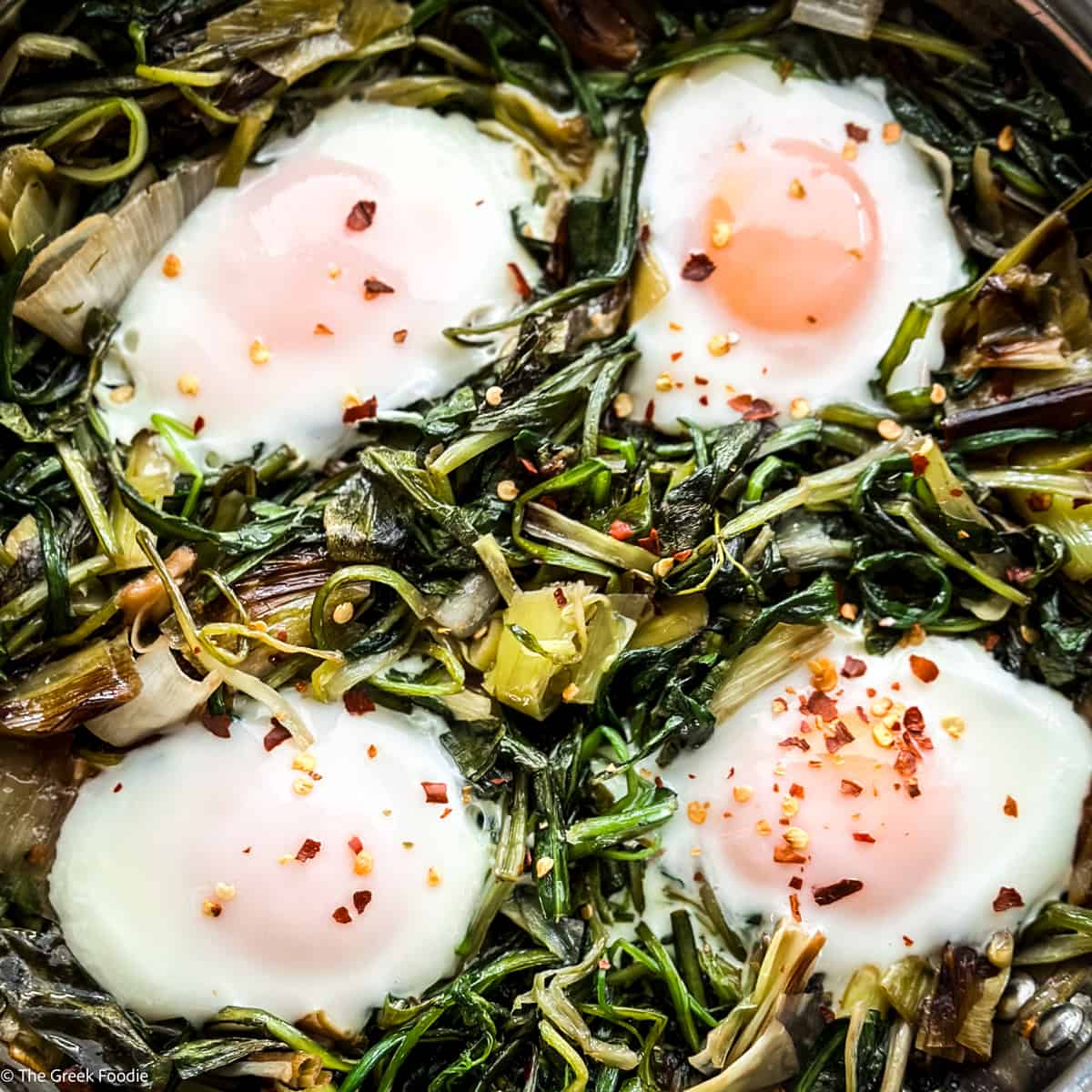
Spinach, silverbeet or whatever greens you have — wilted in olive oil with garlic, scallions and a pinch of chili, then eggs nested into the pan and cooked until the whites are just set. Call it green shakshuka if you like, but in Greek kitchens it has no name, it’s just what you make when the garden is full and the fridge has eggs.
View eggs with greens recipe →
No meze spread is complete without something on bread. This tomato toast with mizithra is the easiest thing on the table. Golden sourdough, creamy mizithra, and marinated tomatoes that have been sitting in olive oil and oregano. Pure Greek summer.
MEAT & HEARTIER PLATES
The Taverna Classics
These are the dishes that turn a meze spread into a proper occasion. Heavier, slower, more generous — the kind of plates that arrive mid-table and make everyone lean in. Serve them later in the meal, with cold wine and plenty of bread, and let the conversation do the rest.
Bekri Meze
Simple, quick, irresistibly savory braised pork
Bekri means drunkard in Greek, and this is the dish that arrives in front of you at the tsipouradiko without being ordered. Pork shoulder cut into bite-sized pieces, seared hard until properly caramelized, then braised in white wine with garlic, oregano, thyme, and a squeeze of lemon until the sauce thickens and clings. The key is patience with the initial sear — let the meat color deeply before you turn it. Everything else follows. Serve with fried potatoes or just crusty bread to mop up the pan.
View bekri meze recipe →
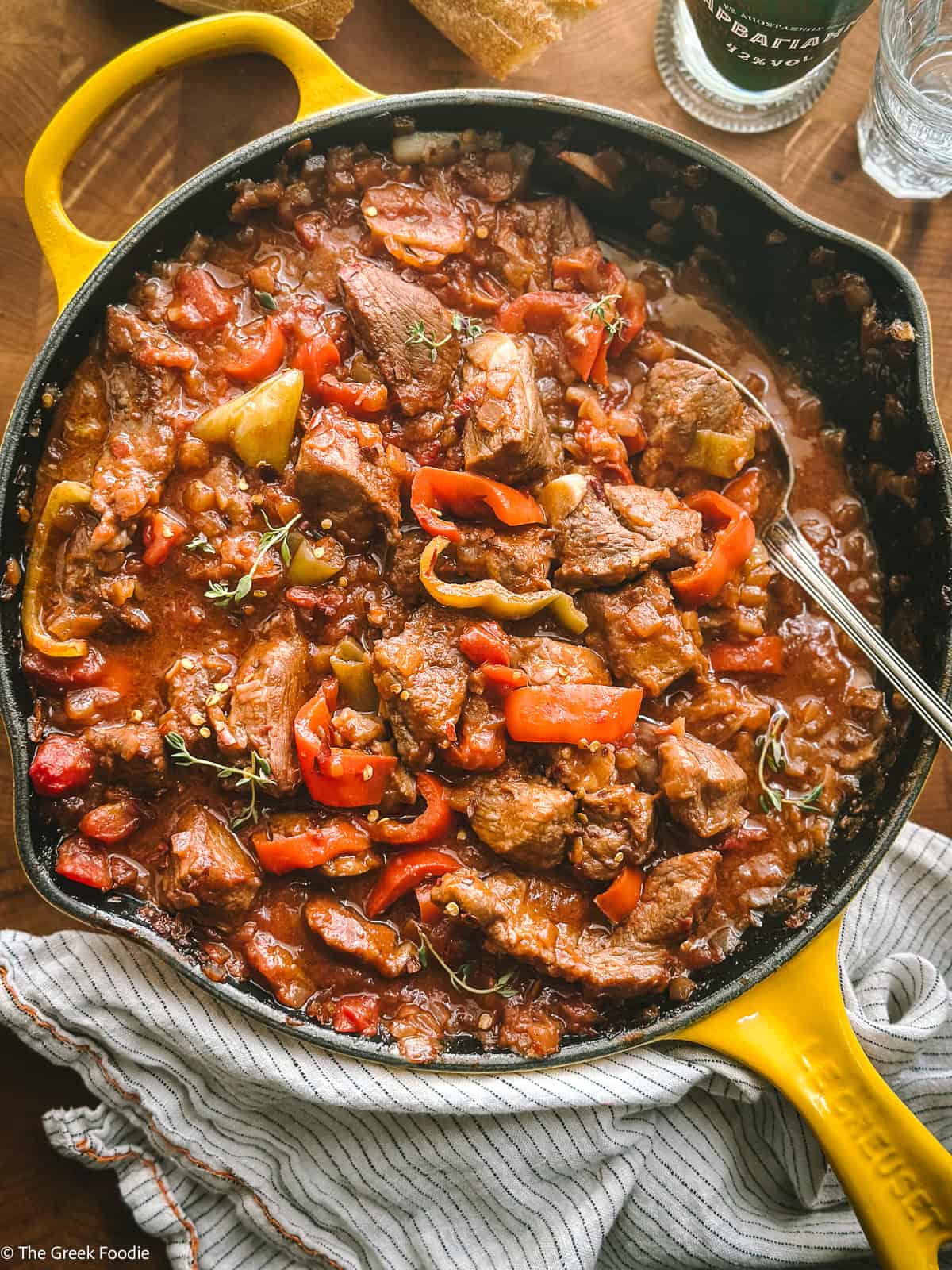
Dolmadakia
Classic stuffed vine leaves with rice, dill and lemon
These are the dolmades of patience and reward. The filling is rice with a generous amount of olive oil, sweet onions, scallions, dill, mint, and lemon juice. They cook slowly in a covered pot until tender, then cool completely in their own liquid. Serve them at room temperature, with a cool yogurt dip. Made to be eaten the next day, they only get better.
View dolmadakia recipe →
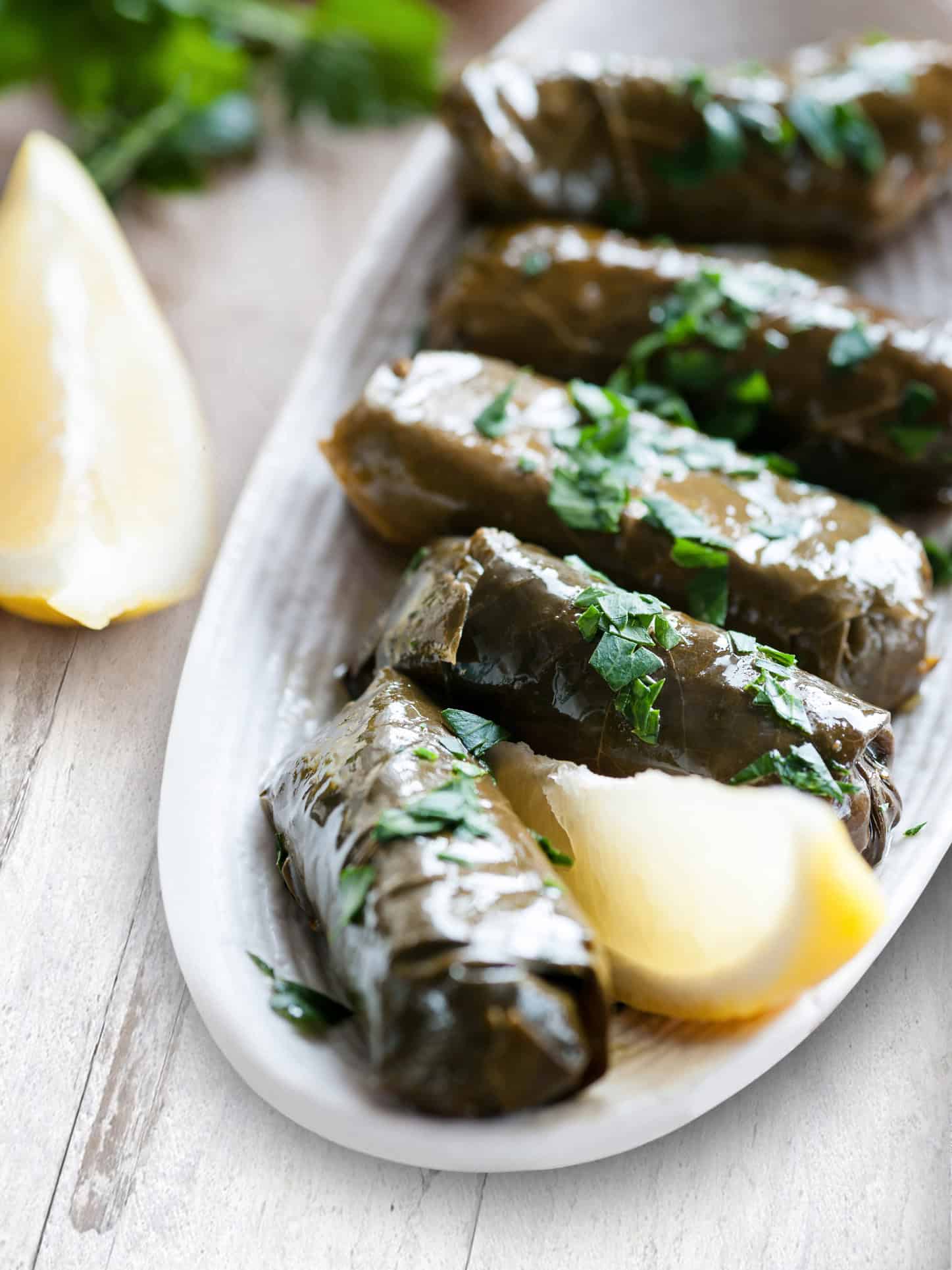
Greek Potato Salad
Warm, herb-dressed potatoes with capers and olives
Not the cold, mayo-dressed kind — this is the Greek version, and it is better in every way. Warm waxy potatoes dressed while still hot with olive oil, red wine vinegar, Dijon, capers, Kalamata olives, parsley and spring onion. The potatoes drink the dressing as they cool, and the result is something deeply savory and bright at the same time. Make it two hours ahead and serve at room temperature. It belongs on every meze table.
View Greek potato salad recipe →
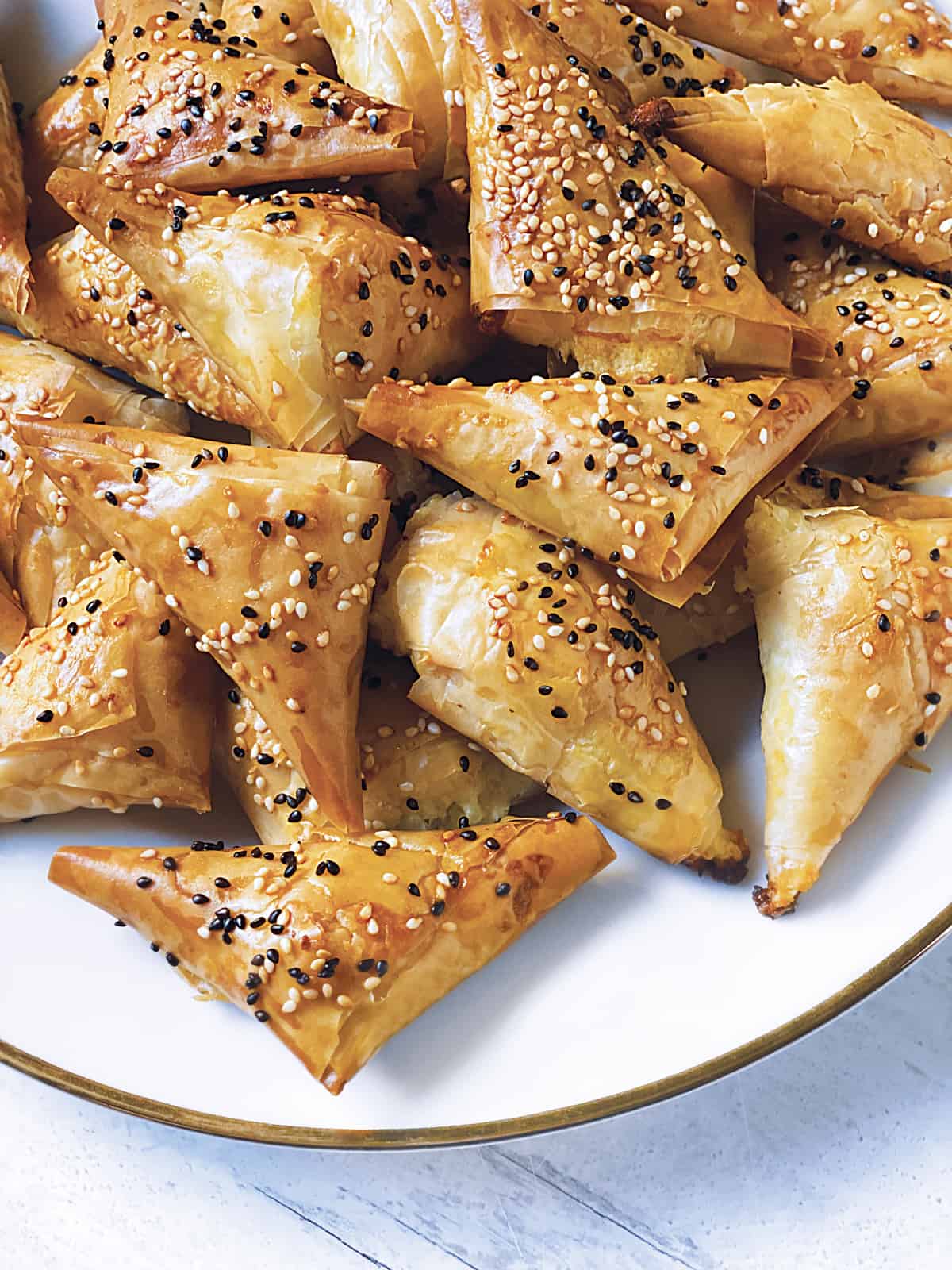
Tiropitakia
Crispy baked cheese pie triangles
Small triangle-shaped pastries filled with a mix of feta, graviera and fresh herbs, wrapped in puff pastry and baked until golden and flaky. These are the pastries that appear at every Greek gathering without anyone organizing them — someone always brings them, and everyone always eats them all. Make a big batch; they reheat beautifully in the oven the next day.
View tiropitakia recipe →
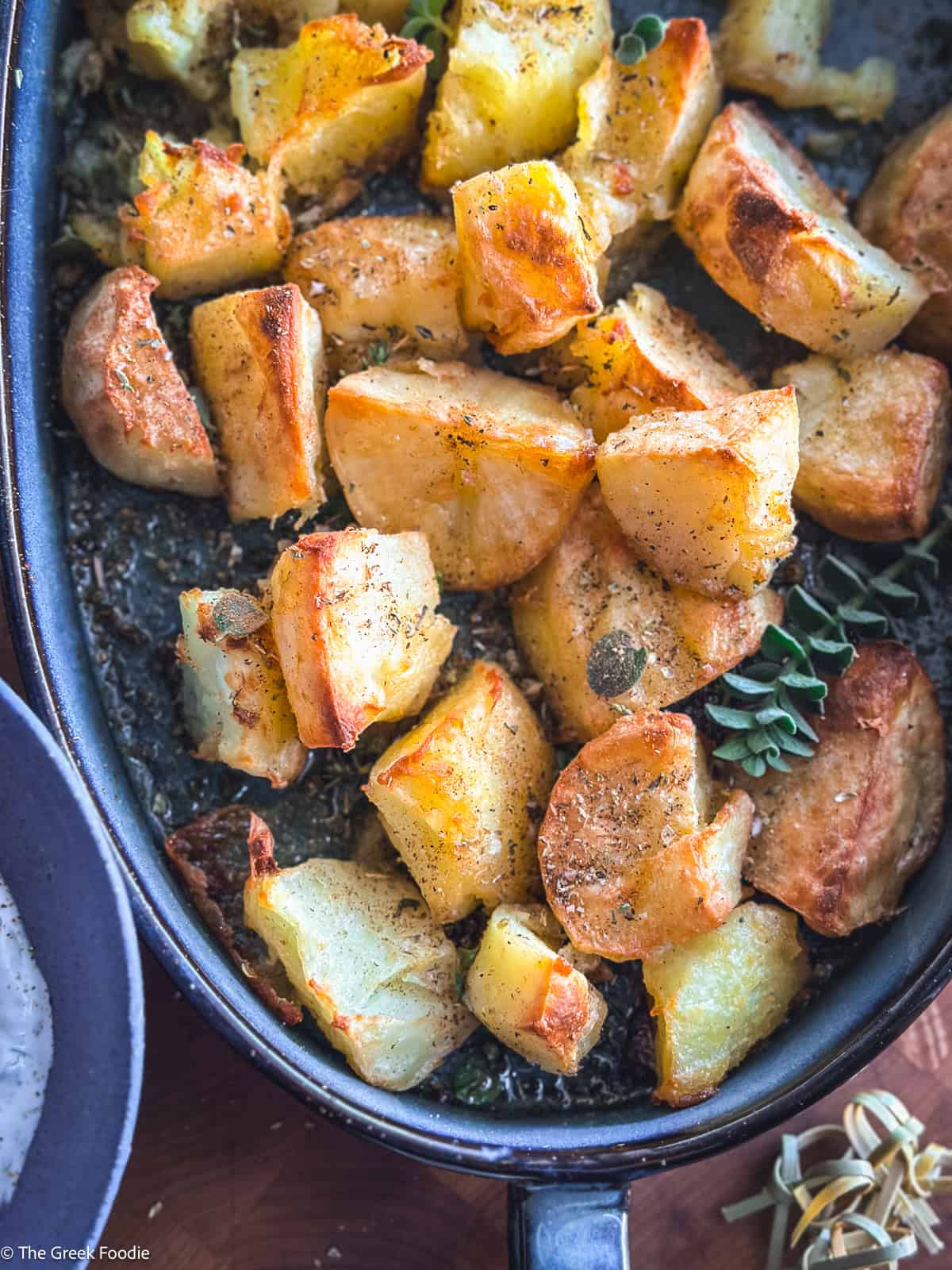
Crispy Potato Bites
Golden fried potatoes served with tzatziki
Thick-cut potato wedges baked in olive oil until golden then served with tzatziki dip. These disappear faster than almost anything else on the table. Serve with tzatziki alongside, or just with extra lemon.
View potato bites recipe →
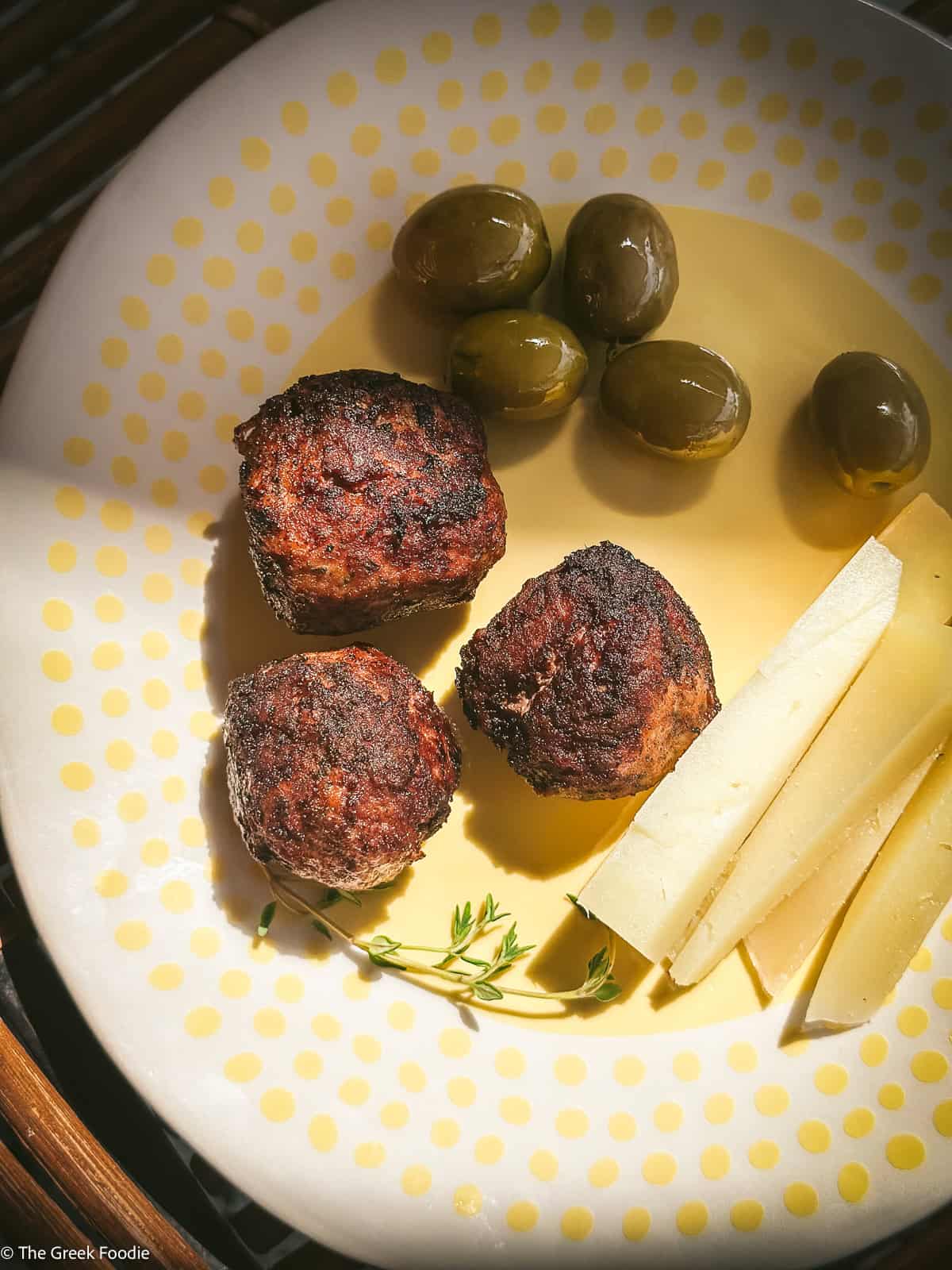
Keftedakia
Small meatballs with ouzo and graviera cheese
Small meatballs with grated onion, garlic, mint, and oregano are fried until golden and just cooked through. Served with a small glass of ouzo, a handful of olives, and wedges of graviera on the side. This is the classic Greek aperitif combination. It happens in every Greek home while the roast is in the oven and everyone is circling the kitchen pretending they’re not starving.
View keftedakia recipe →
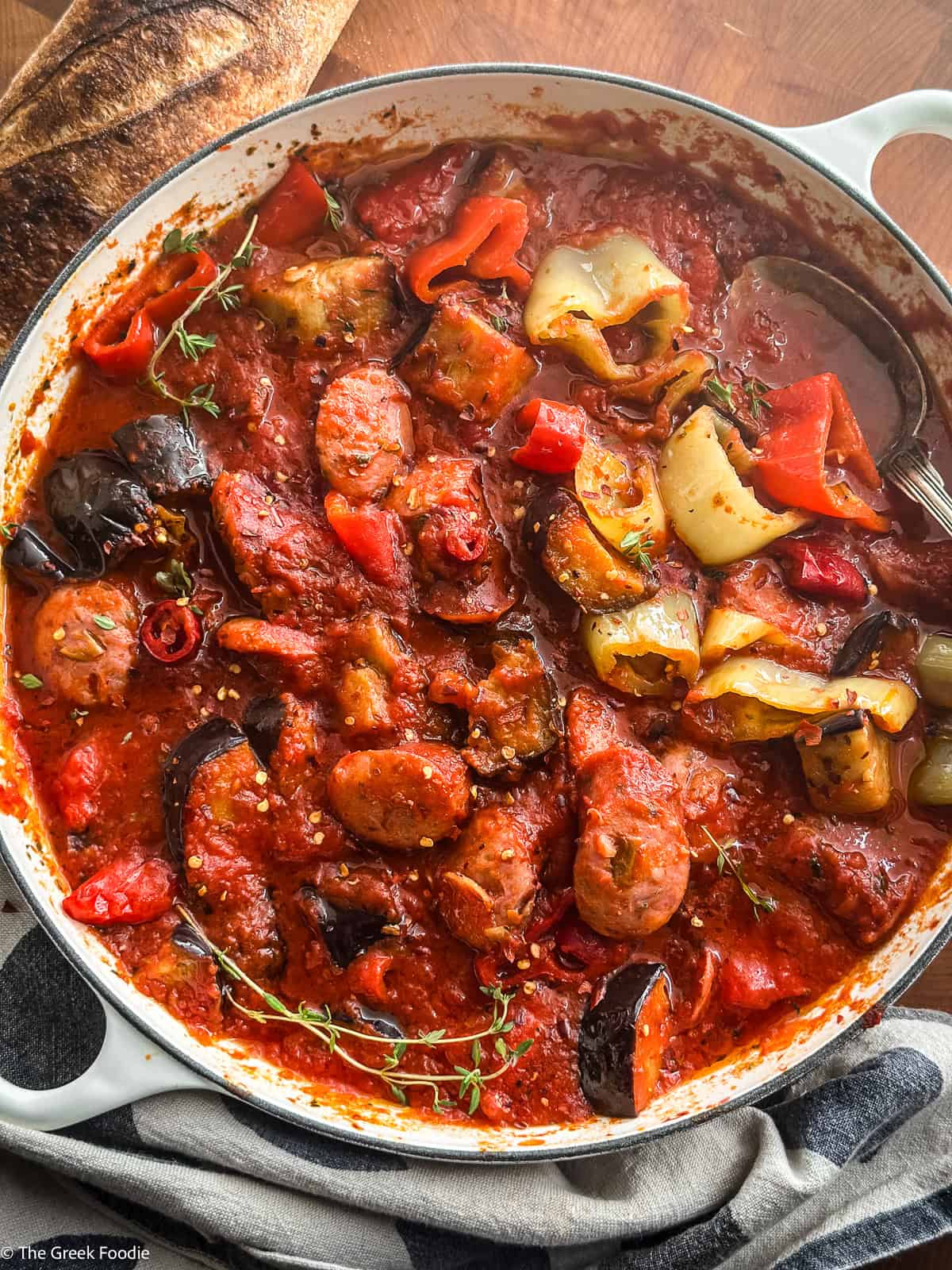
Spetzofai
Spicy Greek sausage and peppers stew from the Pelion peninsula
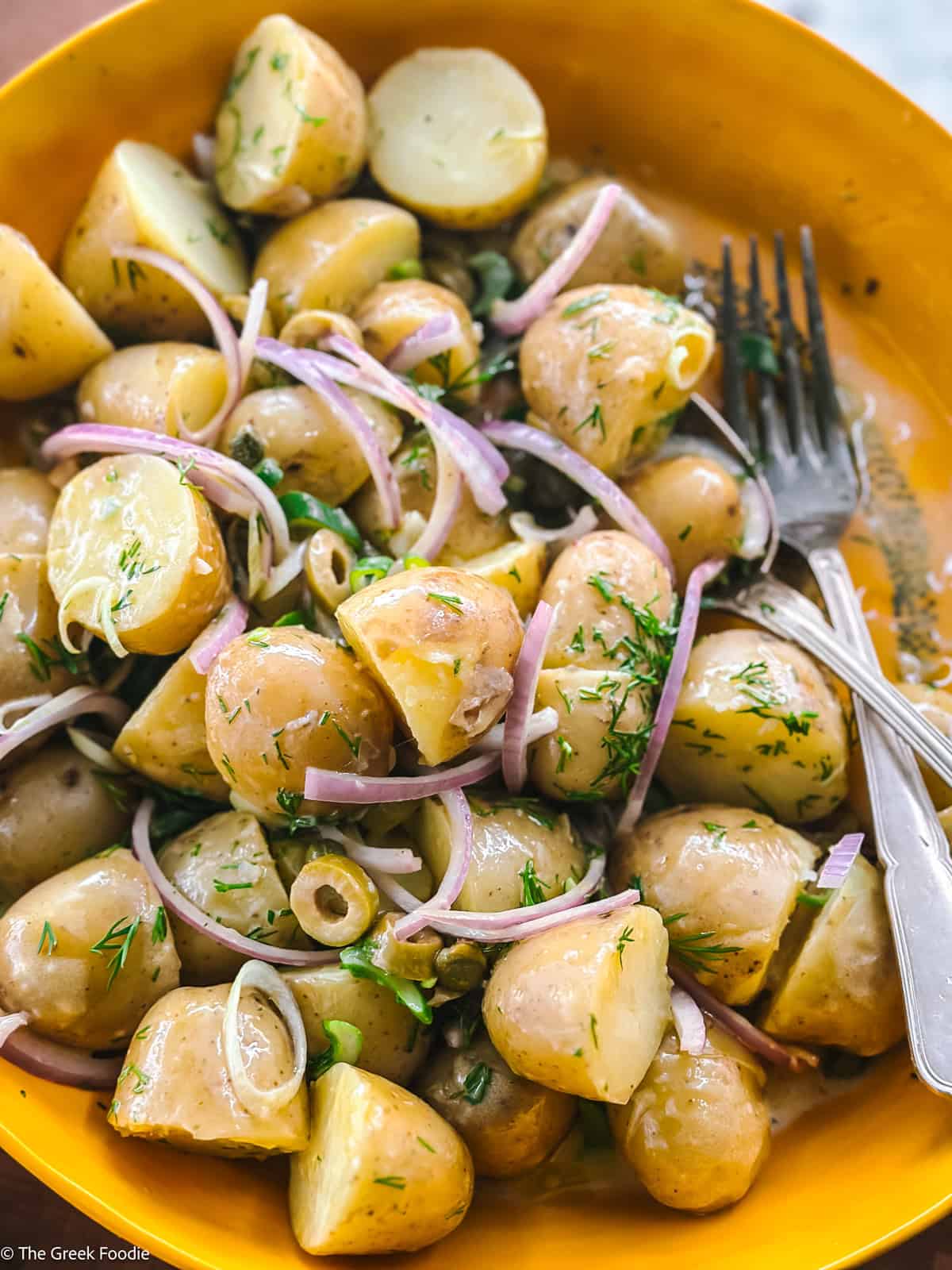
The legendary dish of Volos — rustic loukaniko sausage, sweet Florina peppers, meaty eggplant and a thick tomato sauce, all simmered in one pot until bold, smoky and deeply satisfying. The name comes from spetzakia, the Greek word for the small fiery chili that gives it its heat. The golden rule: don’t stir with a spoon — shake the pot. Serve hot with a slab of feta, a handful of olives, and the best bread you can find.
View spetzofai recipe →
How to Build Your Meze Table
- Plan by timeline, not by dish count. Dips (melitzanosalata, taramosalata, fava) can all be made a day ahead and only improve overnight. Fritters fry best just before serving. Cheese and egg dishes take under 15 minutes, so save them for last.
- Bread is non-negotiable. A warm pita, a thick sourdough crust, or a barley rusk — something for tearing and scooping must always be on the table. Double what you think you need.
- Match the drink to the mood. Ouzo with seafood, cold white wine with dips, tsipouro with the heavier meat mezedes. Ice-cold beer works with everything. Always: Gia mas first.
- Aim for contrast on the table. One creamy dip, one crunchy fritter, one warm cheese dish, one cold plate. Vary temperatures, textures, and intensity, that rhythm is what makes meze feel like a feast.
- Everything is meant to be shared. No plating, no portioning, no serving order. Just plates in the middle, hands reaching, conversation starting. That’s the whole point.
With thanks to Gastronomos for the inspiration behind this post. If you read Greek, go explore — it’s a treasure.
More Greek meze ideas you will love



Just found your web-site when looking for an interesting Greek pork dish to cook for some friends, and now I have a lot more ideas of what to do for friends as I love Greek cuisine. Thank you.
I love this, am so happy you found us Alan! Thank you so much, x Jenny